I received a free copy of this book in exchange for a fair and honest review. All opinions are my own.
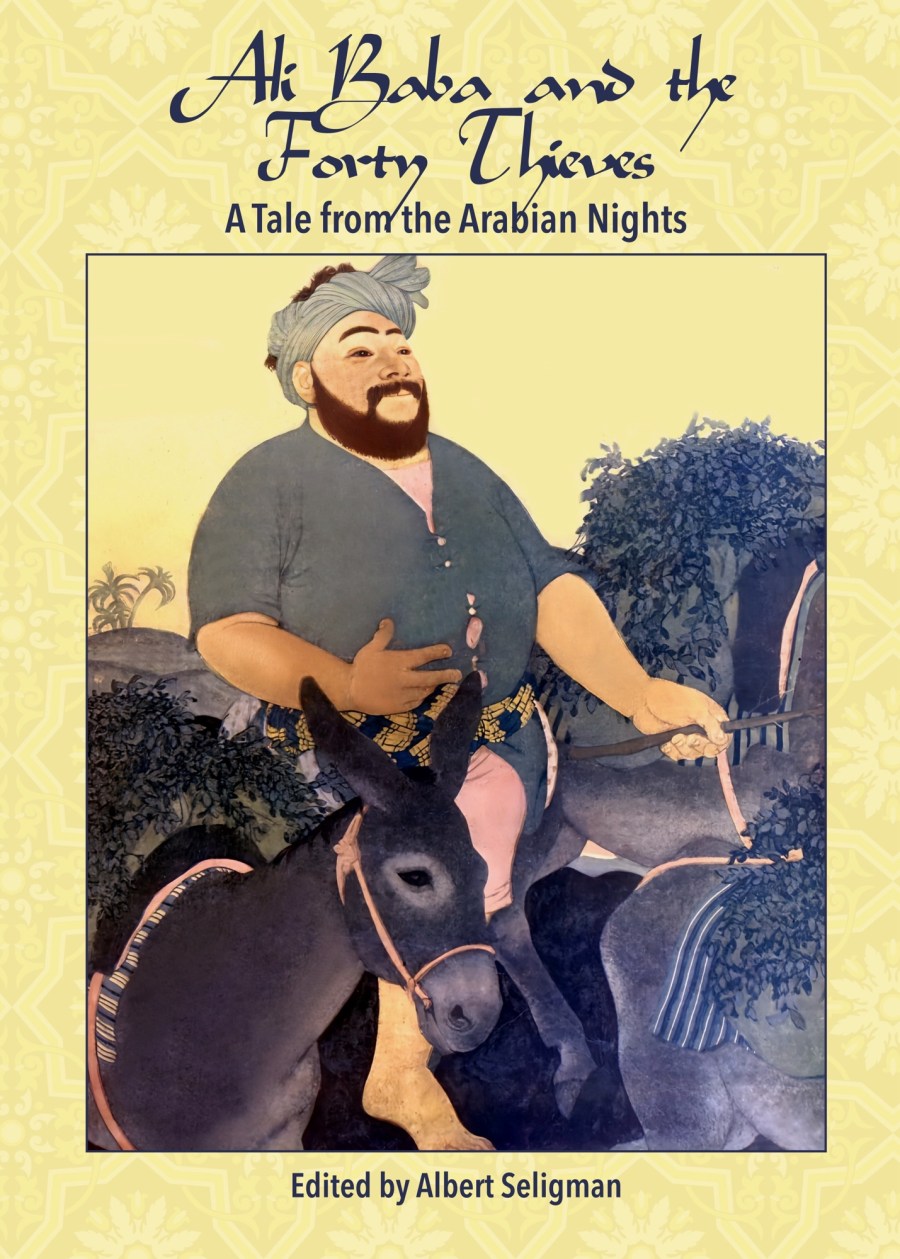
Albert Seligman returns with a brand new edition of the classic tale of Ali Baba with brand new illustrations in the book “Ali Baba and the Forty Thieves.”
The Synopsis
This edition is fully illustrated with over 60 color and line drawings
- Full-color illustrations by Edmund Dulac, René Bull, Maxfield Parrish, VF Sterrett, Helen Stratton, MS Orr, Walter Crane, WH Robinson and others
- Line drawings by the finest Victorian and Edwardian illustrators, including Eric Pape, Walter Strang, JC Clark, T Dalziel, Louis Rhead, HG Fell, Alessandro Castelli and others
- One illustration on every page
- Full bibliography of all illustrated editions from 1800-1950, including artist, date and publisher
The Arabian Nights tale of ‘Ali Baba and the Forty Thieves’ is among the most popular and frequently retold. The original manuscript doesn’t seem to have been one of those first translated into French by Antoine Galland, and may be one he wrote himself.
The story is about two brothers whose father died and left them little. Ali Baba married a poor woman and lived frugally, but Cassim married a woman who soon inherited a fortune and lived in luxury. One day while Ali Baba was in the forest cutting wood to sell he saw a great cloud of dust approaching and the sound of many riders. He feared for his life, so he hid his three donkeys and hid himself in a tree. The band of forty riders and their leader stopped in front of a cave. When the leader said “ Open Sesame” the door of the cave magically opened. The whole troop went inside while Ali Baba stayed hidden. When he was sure they had gone, he approached the cave door and said “ Open Sesame” himself as the cave door magically opened to his command. Inside the cave he saw vast riches and golden coins, which he liberally took for himself and returned home with his donkeys, remembering to properly close the cave door with the “Shut Sesame “ command.
His wife was astonished at all the gold coins he brought home and wanted to count them before Ali buried them in his yard. As there were too many to count, she borrowed a measuring cup from her sister-in-law. She was curious as to what they might have to measure something, so she cleverly put some suet on the bottom to see what would stick. After the cup was returned with a gold coin stuck to the bottom, she called her husband Cassim to tell him what happened.
Cassim went to Ali’s house and demanded to know how he got a gold coin, and Ali told him everything, including the magic password. Cassim was very greedy, so the next day he set out with many donkeys to find the cave and removed as much treasure for himself as possible. In his haste, he forgot the magic words to open the cave and was trapped inside when the robbers returned. They killed him and cut his body in pieces.
When Cassim didn’t return, Ali feared the worst and returned to the cave to find him. He found his brother’s body and returned to town. He knew the robbers would find out if anyone had been murdered in such a fashion, so they sewed Cassim’s body back together and pretended he died a natural death.
The robbers sent scouts to town to determine if anyone had died and discovered Ali Baba’s house. The captain of the robbers disguised himself as an oil merchant and hid his band in leather jars planning to murder all the household. When Morgiana, Ali Baba’s clever slave girl discovers the ruse, she murders all the robbers. The captain flees, but soon returns in another disguise to take his revenge. Again she discovers him, plunges a dagger into his heart and saves her master.
If you enjoy this tale, I’m sure you will enjoy the whole series on Amazon. The other titles include-
- Scheherazade
- The Enchanted Horse
- The Caliph Haroun al Rashid
- Aladdin and the Wonderful Lamp
- The Seven Voyages of Sindbad the Sailor
The Review
This was another exhilarating and fantastic adaptation of the classic story of Ali Baba. The original writing and the classic style of writing the author/editor kept in place for the narrative portion of the book was astonishing, and allowed the reader to feel immersed into the book’s narrative. The fast pacing of the story and the piercing imagery of the writing itself instantly draws the reader in and refuses to let go.
The heart of this book was in the vast amount of powerful illustrations the author infused into the narrative and the authenticity the author brought to the book. While not the original writer, Albert Seligman continued to bring the story of Ali Baba to life with precision and skill, and the strong themes and nostalgic emotions the iconic story brings to mind for literary lovers everywhere made this a compelling book to get lost in.
The Verdict
VIvid, nostalgic, and engaging, author and editor Albert Seligman’s “Ali Baba and the Forty Thieves” is a rich remaster of an iconic tale and features some of the most beautiful and authentic illustrations and imagery to life. The creativity and detail that made this story so memorable still holds to this day, and the attention to detail helps bring the culture and themes of that era to life in great detail. If you haven’t yet, be sure to grab your copy today!
Rating: 10/10
About the Editor

I am a lifelong fan of illustrated books and magazines and passed many pleasant hours collecting books and sharing information and images with fellow collectors and dealers. I was especially interested in the “Golden Age of Illustration” between 1875-1925. I was a strong collector of Edmund Dulac illustrated books, and was able to photograph the complete collection of his ‘American Weekly’ magazine illustrations from the San Francisco Academy of Comic Art owned by Bill Blackbeard. ‘The American Weekly’ was the Sunday supplement for the WR Hearst newspaper chain, and boasted over 50 million readers in over 20 major markets. The complete collection of 106 illustrations is now housed at The Ohio State University in the Billy Ireland Comic Art Museum. These ‘American Weekly’ illustrations have rarely appeared in print since their publication, and this is the first complete edition.
These print editions and eBooks are intended to make more of Edmund Dulac’s beautiful watercolors and illustrations available for everyone to enjoy. The publishing business has changed considerably over the last 30 years and by taking advantage of digital technology I have been able to publish many of his famous and lesser known illustrations in my editions.
The restored collection of all 106 American Weekly front covers is available as “The American Weekly Covers of Edmund Dulac- 100th Anniversary Edition” as both an eBook and paperback. A fully restored crop of each illustration is available in the series of six smaller books, also published as an eBook or paperback. These are grouped by themes, and includes the original newspaper caption or story, when available. Some original Dulac artwork and sketches are also included.
The final publication of the series is “Edmund Dulac His American Weekly Collection” written with an introduction by Ann Hughey, who wrote the bibliography of Dulac’s book illustrations. This features the illustrations cropped and fully restored, with the original newspaper captions. All of the final series ‘Tales from the Arabian Nights’ from 1951 stories are also included.
As I wind down editions of Dulac’s ‘American Weekly’ artwork, I’ll be publishing more of other Golden Age Illustrators. “Arabian Nights Illustrated” is my first book of the series including fifty other illustrators who illustrated editions of the 1001 nights in English language editions between 1800-1950. The illustrations follow the history of printing images in books, from the earliest copper engravings through woodblocks and the development of color printing through photoproduction. I published six more Arabian Nights books, all with illustrations by Victorian and Golden Age artists and illustrators. All are available as both paperbacks and eBooks.
If anyone is wondering if I am the same author of “The Sport Band System”, indeed I am. Unfortunately, the Sport Bands are no longer being produced. After writing this instruction manual I spent my last years in the training profession at UCSF in the Dept. of Neurology. There I had the privilege of working with medical professionals and patients developing physical training rehabilitation programs for MS, stroke, PD, SCI and other neurological related maladies. I retired in 2008 and now I am enjoying my “Golden Years” working with the Dulac eBooks project.
Discover more from Author Anthony Avina
Subscribe to get the latest posts sent to your email.
