After the end of the Clone Wars but before the Rebellion, a former Jedi finds herself struggling with the memories of the past as the evil Empire’s rise continues in author E.K. Johnston’s “Star Wars: Ahsoka”.
Advertisements
The Synopsis
Fans have long wondered what happened to Ahsoka after she left the Jedi Order near the end of the Clone Wars, and before she re-appeared as the mysterious Rebel operative Fulcrum in Rebels. Finally, her story will begin to be told. Following her experiences with the Jedi and the devastation of Order 66, Ahsoka is unsure she can be part of a larger whole ever again. But her desire to fight the evils of the Empire and protect those who need it will lead her right to Bail Organa, and the Rebel Alliance….
The Review
As a longtime Star Wars fan, I can easily say Ahsoka is one of the greatest modern characters in the franchise. Her rise from a Jedi Padawan to a powerful Jedi in her own right to leaving the Order right before its demise makes her character arc so intriguing. Knowing her future thanks to the shows Rebels and The Mandalorian, it’s great that this author has found a way to highlight the early years after the Empire’s rise, and how much she had to endure before she became the rebel known as Fulcrum.
The story feels like a natural and engaging new chapter in the Star Wars mythos. Having the story focus on aspects of her journey like having her powers and connection to the force dulled was an incredible detail to add to the story. The novel itself feels like a great character study for such an integral part of the Clone Wars/Rebels saga of storytelling. The imagery really made the story feel alive and like I was in that fabled galaxy far, far away, and the author’s attention to detail in the mythology itself really sold this story overall.
The Verdict
An action-packed, faithful, and entertaining read, author E.K. Johnston’s “Ahsoka” is a must-read Star Wars story. The attention to detail for longtime fans of the series and its mythos will absolutely love this dive into the narrative. A beautiful blend of the end of the Clone Wars and the rise of the Empire, this story showcases how in one of the franchise’s darkest moments, the hope that the Jedi once represented is still alive and thriving in the legacy of Ahsoka Tano. If you haven’t yet, be sure to grab your copy today!
Rating: 10/10
Advertisements
About the Author
E.K. Johnston had several jobs and one vocation before she became a published writer. If she’s learned anything, it’s that things turn out weird sometimes, and there’s not a lot you can do about it. Well, that and how to muscle through awkward fanfic because it’s about a pairing she likes.
You can follow Kate on Twitter (@ek_johnston) to learn more about Alderaanian political theory than you really need to know, or on Tumblr (ekjohnston) if you’re just here for pretty pictures.
I received a free copy of this book in exchange for a fair and honest review. All opinions are my own.
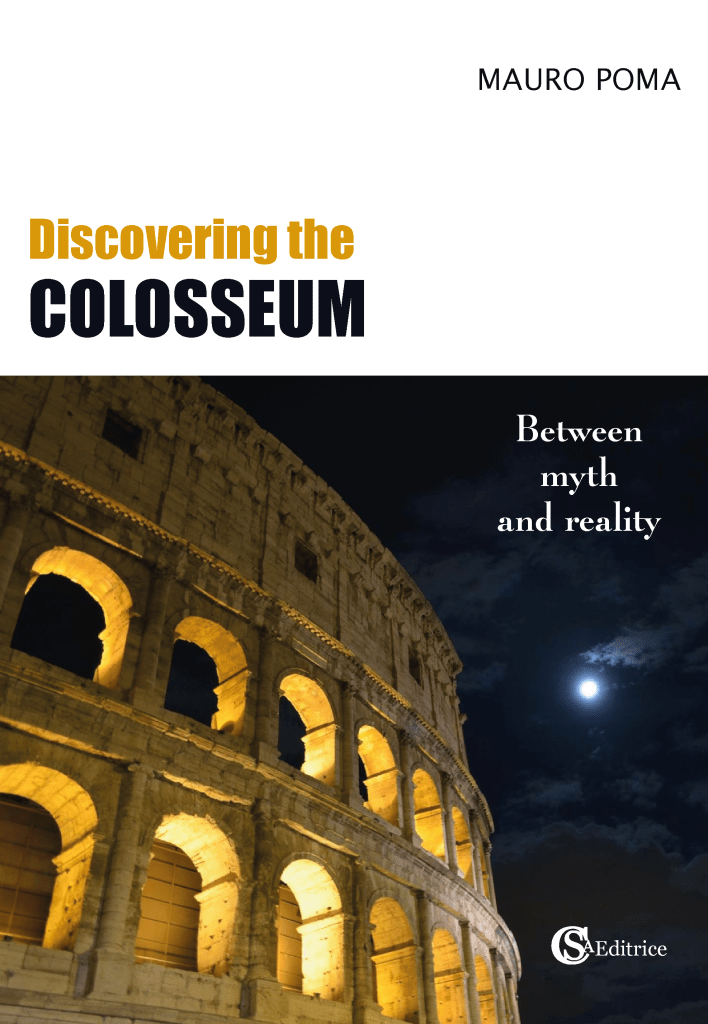
Author Mauro Poma takes readers on an exciting journey into the heart and history of the infamous Roman Colosseum in the book “Discovering the Colosseum”.
Advertisements
The Synopsis
A fascinating journey into the world of the largest amphitheater in Roman history to explore its curiosities, stories, characters, animals, gladiators, and much more. . . The author will help you discover the tricks used by the Romans to build this giant of history, describe the atmosphere of the events, the animals employed, and their fate. Who was in the audience? How were death sentences executed? What happened in the hypogeum? With a compelling style the author will also describe the great and undisputed protagonists of the games: the gladiators. Where did they come from? Who were they? Why did they fight? Why did they keep their helmets on before being killed? Where did their blood go when they died? He will also take a look at some of the mistakes in the film “Gladiator”, starting with the famous gesture of thumbs down. . . Discover the Colosseum: a monument, once abandoned, that has given shelter to criminals and prostitutes. It has been transformed into a fortress and sacred place, a bomb shelter, and huge roundabout; it has also hosted millions of spectators in its time, along with visitors, tourists, pilgrims, and the many plants that grow within its unforgettable arches.
The Review
As a longtime history buff, I was instantly drawn to this book. One thing that has always fascinated me is the line that so often blurs between pop culture and entertainment and the facts of history, and the author does a great job of really delving into the real history and culture of the infamous Colosseum.
The author does a fantastic job of balancing the statistics and facts of the Colosseum and its history, from the hunts and how the Romans would bring in the powerful animals featured in the games, with the more personal and approachable writing style that allows the reader to feel like they are in a conversation with the author, rather than being lectured or talked to. The landmark’s history just comes to life right off the page, really allowing the reader to feel transported back to the Colosseum at the height of its power.
The Verdict
An informative, engaging, and thought-provoking history-driven book, author Mauro Poma’s “Discovering the Colosseum” is a must-read non-fiction book. The amount of history, culture, and facts the author provides to the reader complements the author’s natural and personable writing style and encourages the reader to want to visit this landmark for themselves. If you haven’t yet, be sure to grab your copy today!
Rating: 10/10
Advertisements
About the Author
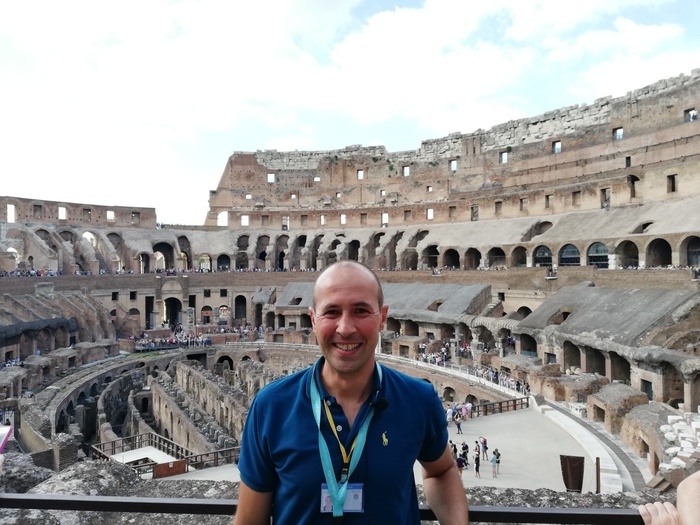
Born and raised in Rome, scholar of the Eternal City, Mauro Poma is a qualified tour guide of Rome, a writer and a lecturer. He has got two degrees: one in History and Conservation of the Artistic and Archaeological Heritage and one in Political Sciences. He is the author of the book “Discovering the Colosseum”, that is the revised and enlarged English edition of “Alla scoperta del Colosseo”. He works as lecturer at Dante Alighieri association, the most prestigious Italian cultural association in the world.
I received a free copy of this book in exchange for a fair and honest review. All opinions are my own.
A former antiquities thief turned lynchpin to the fate of the world in a supernatural civil war must find the legendary Tiger Thieves in an effort to stop the rising threat of the Electric Samurai in author Kristi Charish’s “Owl and the Tiger Thieves”, the 4th book in The Owl series.
Advertisements
The Synopsis
In this fourth Owl novel, Kristi Charish (The Voodoo Killings) melds sparkling fantasy with the grit of urban underbelly—with a detour through the world’s most spectacular cities. This is perfect for fans of Kim Harrison, Jim Butcher, Jennifer Estep, Jenn Bennett, and fantasy lovers everywhere.
Through no fault of her own, Alix has found herself essential to the fate of the world as we know it. She didn’t mean for this to happen—she was quite happy being merely the notorious antiquities thief, and ex-archeologist, known as Owl.
However, years ago, Owl reluctantly entered the secret world of the supernatural. Her goals: complete one job, escape one bounty on her head, continue her thieving in peace.
Fast forward to today. Now, she has become a key player in a brutal paranormal civil war that is rapidly getting out of hand. The leader of one of these factions—a lethal opponent called the Electric Samurai—grows more powerful by the second. To stop him, Owl sets out to find the long-lost, legendary group known as the Tiger Thieves.
But will it be too little too late? One thing Owl misses about “normal” archaeology: there are few emergencies with thousand-year-old relics.
The Review
This is what the fantasy genre is all about! While I am a newcomer to this series, the author does a fantastic job of drawing new readers and established fans of the series alike into the narrative. The blend of Indiana Jones-style character development with supernatural and fantasy-based storytelling is an inspired choice for the book.
From what I understand of the previous books, this story flips the script on readers by making this story more personal. While previous installments focused on quest-based storytelling, the author takes readers on an emotional and action-focused adventure that sees the protagonist looking for an ancient order in an effort to rescue someone close to her from a deadly foe. The evolution of Alix as a character that sees her struggling with her desire to go back to being an antiquities thief but constantly pulled into this dangerous and deadly world of supernatural beings is what really draws the reader in and keeps them wanting more.
The Verdict
A haunting, action-packed, and entertaining read, author Kristi Charish’s “Owl and the Tiger Thieves” is the perfect next chapter in this growing supernatural and fantasy series. A must-read for fans of this genre, the blend of intrigue and mystery with adventure and a balance between mythology and character growth make this a fantastic book that you don’t want to miss. Be sure to grab your copy today!
Rating: 10/10
Advertisements
About the Author
Kristi is the author of OWL AND THE JAPANESE CIRCUS (Simon and Schuster Canada/Pocket Books), an urban fantasy about a modern-day “Indiana Jane” who reluctantly navigates the hidden supernatural world, and THE VOODOO KILLINGS (Random House Canada), an urban fantasy/mystery about a voodoo practitioner living in Seattle with the ghost of a deceased grunge rocker.
She writes what she loves; adventure heavy stories featuring strong, savvy female protagonists, pop culture, and the occasional RPG fantasy game thrown in the mix. She’s also a co-host for the Adventures in Sci-Fi Publishing Podcast.
Before becoming an author Kristi was a research scientist. She holds a BSc and MSc from Simon Fraser University in Molecular Biology and Biochemistry and a PhD in Zoology from the University of British Columbia. Her specialties are genetics, cell biology, and molecular biology, all of which she draws upon in her writing. She is represented by Carolyn Forde at Westwood Creative Artists.
I received a free copy of this book in exchange for a fair and honest review. All opinions are my own.
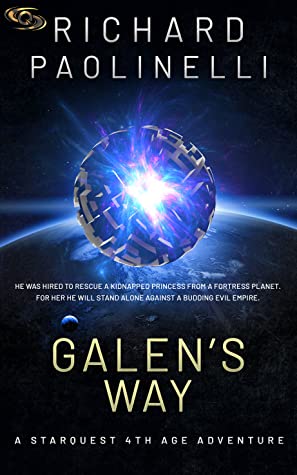
Tackling award winning author John C. Wright’s “Starquest” series, author Richard Paolinelli explores the 4th Age of this saga as a lone mercenary must rescue a Princess who’s safety will determine the fate of the Andromeda Galaxy as he discovers his true destiny in the epic space-opera “Galen’s Way”.
Advertisements
The Synopsis
A KIDNAPPED PRINCESS.
A FEARED MERCENARY.
AN EVIL EMPIRE ABOUT TO BE BORN.
The Princess Rhiannon of Salacia has been kidnapped and is being held for ransom on the fortress planet Nammu. Galen Dwyn, the most feared mercenary in the Andromeda Galaxy has been hired to rescue her and bring her home.
He will soon find himself on the run with the Princess and right in the middle of a web of political intrigue even as he begins to fall for the Princess. For her love, he will stand alone against the forces looking to establish a new, and very evil, empire.
Galen will look to keep her safe and bring the budding empire to a halt before it can gain a foothold in the galaxy. He will choose to do so the only way he knows how.
Galen’s Way.
Dragon Award finalist Richard Paolinelli takes us on a grand adventure in this space Opera offering set in the 4th age of Dragon Award winner John C. Wright’s Starquest universe.
The Review
A truly perfect and engaging sci-fi opera! The author has managed to capture the politics, the adventure, and the almost mythical quality of the genre. The sense of imagery the author includes really does an amazing job of painting a picture of the characters and various settings this story utilizes, and while I myself am not familiar with the original series from John C. Wright, newcomers will have no problem delving into this vast world the author has brought to life.
The characters really jump off the page of this story. Galen Dwyn is the perfect blend of characters like Han Solo of the Star Wars franchise or Captain Malcolm Reynolds of the Firefly series, exuding confidence and steely-determination while boasting a blend of humorous interactions and deadly accuracy, and yet he also feels so much more complex and drawn out as a protagonist, which draws the reader in immediately. The backstory of humanity’s migration to the Andromeda and the sense of destiny that the story set’s up just really help the novel as a whole to coalesce, making for a fun read.
The Verdict
A masterful, adventurous, and engaging read, author Richard Paolinelli’s “Galen’s Way” is a must-read sci-fi epic that really encapsulates the space opera genre perfectly. Readers really get to experience the classic “hero’s journey” storytelling device and the larger-than-life mythos that this story explores will keep readers wanting more and more. Be sure to grab your copy today!
Rating: 10/10
Advertisements
About the Author
Richard Paolinelli began his writing career as a freelance writer in 1984 in Odessa, TX and gained his first fiction credit serving as the lead writer for the first two issues of the Elite Comics sci-fi/fantasy series, Seadragon. In 1991 Richard began his sports writing career at the Gallup Independent before moving on to work for the Modesto Bee, Turlock Journal, Merced Sun-Star, Tracy Press, San Mateo County Times and the San Francisco Examiner. He also served as an editor and photographer with some of the newspapers. He won the 2001 California Newspaper Publishers Association award for Best Sports Story while at the Turlock Journal.
In 2010, Richard retired as a sportswriter and decided to return to his fiction writing roots. He released two short stories – The Invited and Legacy of Death – as well as a full-length sci-fi novel, Maelstrom. In 2015, Richard completed nearly two years of research and interviews and published, From The Fields: A History of Prep Football in Turlock, California, chronicling 95 years of high school football in his hometown. One month later, the first book of the Jack Del Rio series, Reservations, was published by Oak Tree Press.
In 2016, Richard was one of a dozen authors selected to participate in, Beyond Watson, an anthology of original Sherlock Holmes stories and was one of 20 writers involved in a second Holmes Anthology, Holmes Away From Home, released in December. Perfection’s Arbiter, a biography of National League Umpire, Babe Pinelli, was released on October 8th. W & B Books acquired the Jack Del Rio series and released the second book, Betrayals, in November. The remaining two books in the Jack Del Rio series will follow in 2017 & 2018.
In January of 2017, Richard returned to his science fiction roots with the release of the novel, Escaping Infinity, and will release another sci-fi novel, When The Gods Fell, on September 4, 2018.
I received a free copy of this book in exchange for a fair and honest review. All opinions are my own.
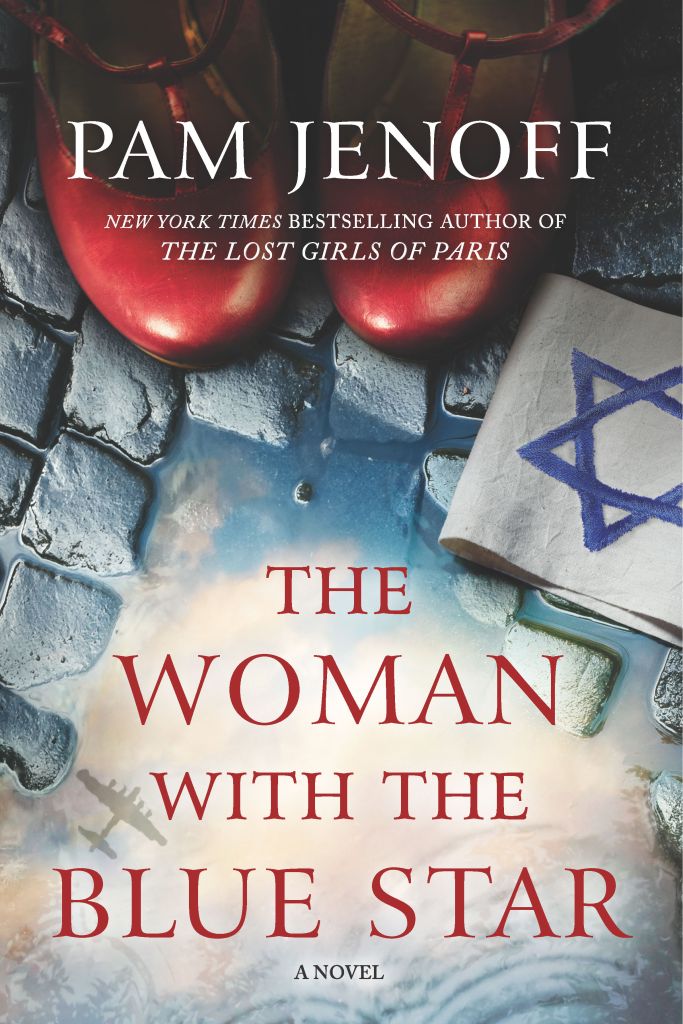
Two young women in very different circumstances during the German occupation of WWII find themselves becoming quick friends, but soon that friendship is tested as the war grows far deadlier in author Pam Jenoff’s “The Woman with the Blue Star”.
Advertisements
The Synopsis
From the New York Times bestselling author of The Lost Girls of Paris comes a riveting tale of courage and unlikely friendship during World War II.
1942. Sadie Gault is eighteen and living with her parents in the Kraków Ghetto during World War II. When the Nazis liquidate the ghetto, Sadie and her pregnant mother are forced to seek refuge in the perilous tunnels beneath the city. One day Sadie looks up through a grate and sees a girl about her own age buying flowers.
Ella Stepanek is an affluent Polish girl living a life of relative ease with her stepmother, who has developed close alliances with the occupying Germans. While on an errand in the market, she catches a glimpse of something moving beneath a grate in the street. Upon closer inspection, she realizes it’s a girl hiding.
Ella begins to aid Sadie and the two become close, but as the dangers of the war worsen, their lives are set on a collision course that will test them in the face of overwhelming odds. Inspired by incredible true stories, The Woman with the Blue Star is an unforgettable testament to the power of friendship and the extraordinary strength of the human will to survive.
The Review
The author does a truly fantastic and haunting job of capturing the horrors of WWII and the conditions that so many were forced to live in. Right off the bat readers are shown the pain of loss that one of the protagonists goes through in the heart-pounding moments a family attempts to find an escape from the overwhelming German forces. The imagery and sense of setting really are powerful in this story, as readers are immediately brought to the very different and distinct lives that separated those being hunted by the German occupation and those living “normally” during the occupation.
What really stands at the heart of this story however is the relationship between the two young women that become the protagonists of the story. Sadie and Ella’s stories are heartbreaking and heartwarming all at once, highlighting their individual struggles in this time of war while also showcasing how friendship, love, and relationships, in general, can give those in a time of need or struggle the hope they need to either endure or overcome those struggles. Readers will instantly be drawn into their friendship and the path their lives take during this tumultuous time.
The Verdict
A mesmerizing, haunting, and emotional historical-fiction read, author Pam Jenoff’s “The Girl with the Blue Star” is a must-read novel and the perfect historical-fiction read for the upcoming summer season. For those who love history and stories that delve into personal relationships that help overcome struggles, this is a truly engaging and intriguing read that cannot be missed. Be sure to grab your copy today!
Rating: 10/10
Advertisements
About the Author
Pam Jenoff is the author of several books of historical fiction, including the NYT bestseller The Orphan’s Tale. She holds a degree in international affairs from George Washington University and a degree in history from Cambridge, and she received her JD from UPenn. Her novels are inspired by her experiences working at the Pentagon and as a diplomat for the State Department handling Holocaust issues in Poland. She lives with her husband and 3 children near Philadelphia, where she teaches law.
Everything changed the day they came for the children.
I was supposed to have been in the attic crawl space of the three-story building we shared with a dozen other families in the ghetto. Mama helped me hide there each morning before she set out to join the factory work detail, leaving me with a fresh bucket as a toilet and a stern admonishment not to leave. But I grew cold and restless alone in the tiny, frigid space where I couldn’t run or move or even stand straight. The minutes stretched silently, broken only by a scratching—unseen children, years younger than me, stowed on the other side of the wall. They were kept separate from one another without space to run and play. They sent each other messages by tapping and scratching, though, like a kind of improvised Morse code. Sometimes, in my boredom, I joined in, too.
“Freedom is where you find it,” my father often said when I complained. Papa had a way of seeing the world exactly as he wanted. “The greatest prison is in our mind.” It was easy for him to say. Though he manual ghetto labor was a far cry from his professional work as an accountant before the war, at least he was out and about each day, seeing other people. Not cooped up like me. I had scarcely left our apartment building since we were forced to move six months earlier from our apartment in the Jewish Quarter near the city center to the Podgórze neighborhood where the ghetto had been established on the southern bank of the river. I wanted a normal life, my life, free to run beyond the walls of the ghetto to all of the places I had once known and taken for granted. I imagined taking the tram to the shops on the Rynek or to the kino to see a film, exploring the ancient grassy mounds on the outskirts of the city. I wished that at least my best friend, Stefania, was one of the others hidden nearby. Instead, she lived in a separate apartment on the other side of the ghetto designated for the families of the Jewish police.
It wasn’t boredom or loneliness that had driven me from my hiding place this time, though, but hunger. I had always had a big appetite and this morning’s breakfast ration had been a half slice of bread, even less than usual. Mama had offered me her portion, but I knew she needed her strength for the long day ahead on the labor detail.
As the morning wore on in my hiding place, my empty belly had begun to ache. Visions pushed into my mind uninvited of the foods we ate before the war: rich mushroom soup and savory borscht, and pierogi, the plump, rich dumplings my grandmother used to make. By midmorning, I felt so weak from hunger that I had ventured out of my hiding place and down to the shared kitchen on the ground floor, which was really nothing more than a lone working stove burner and a sink that dripped tepid brown water. I didn’t go to take food—even if there had been any, I would never steal. Rather, I wanted to see if there were any crumbs left in the cupboard and to fill my stomach with a glass of water.
I stayed in the kitchen longer than I should, reading the dog-eared copy of the book I’d brought with me. The thing I detested most about my hiding place in the attic was the fact that it was too dark for reading. I had always loved to read and Papa had carried as many books as he could from our apartment to the ghetto, over the protests of my mother, who said we needed the space in our bags for clothes and food. It was my father who had nurtured my love of learning and encouraged my dream of studying medicine at Jagiellonian University before the German laws made that impossible, first by banning Jews and later by closing the university altogether. Even in the ghetto at the end of his long, hard days of labor, Papa loved to teach and discuss ideas with me. He had somehow found me a new book a few days earlier, too, The Count of Monte Cristo. But the hiding place in the attic was too dark for me to read and there was scarcely any time in the evening before curfew and lights-out. Just a bit longer, I told myself, turning the page in the kitchen. A few minutes wouldn’t matter at all.
I had just finished licking the dirty bread knife when I heard heavy tires screeching, followed by barking voices. I froze, nearly dropping my book. The SS and Gestapo were outside, flanked by the vile Jüdischer Ordnungsdienst, Jewish Ghetto Police, who did their bidding. It was an aktion, the sudden unannounced arrest of large groups of Jews to be taken from the ghetto to camps. The very reason I was meant to be hiding in the first place. I raced from the kitchen, across the hall and up the stairs. From below came a great crash as the front door to the apartment building splintered and the police burst through. There was no way I could make it back to the attic in time.
Instead, I raced to our third-floor apartment. My heart pounded as I looked around desperately, wishing for an armoire or other cabinet suitable for hiding in the tiny room, which was nearly bare except for a dresser and bed. There were other places, I knew, like the fake plaster wall one of the other families had constructed in the adjacent building not a week earlier. That was too far away now, impossible to reach. My eyes focused on the large steamer trunk stowed at the foot of my parents’ bed. Mama had shown me how to hide there once shortly after we first moved to the ghetto. We practiced it like a game, Mama opening the trunk so that I could climb in before she closed the lid.
The trunk was a terrible hiding place, exposed and in the middle of the room. But there was simply nowhere else. I had to try. I raced over to the bed and climbed into the trunk, then closed the lid with effort. I thanked heavens that I was tiny like Mama. I had always hated being so petite, which made me look a solid two years younger than I actually was. Now it seemed a blessing, as did the sad fact that the months of meager ghetto rations had made me thinner. I still fit in the trunk.
When we had rehearsed, we had envisioned Mama putting a blanket or some clothes over the top of the trunk. Of course, I couldn’t do that myself. So the trunk sat unmasked for anyone who walked into the room to see and open. I curled into a tiny ball and wrapped my arms around myself, feeling the white armband with the blue star on my sleeve that all Jews were required to wear.
There came a great crashing from the next building, the sound of plaster being hewn by a hammer or ax. The police had found the hiding place behind the wall, given away by the too-fresh paint. An unfamiliar cry rang out as a child was found and dragged from his hiding place. If I had gone there, I would have been caught as well.
Someone neared the door to the apartment and flung it open. My heart seized. I could hear breathing, feel eyes searching the room. I’m sorry, Mama, I thought, feeling her reproach for having left the attic. I braced myself for discovery. Would they go easier on me if I came out and gave myself up? The footsteps grew fainter as the German continued down the hall, stopping before each door, searching.
The war had come to Kraków one warm fall day two and a half years earlier when the air-raid sirens rang out for the first time and sent the playing children scurrying from the street. Life got hard before it got bad. Food disappeared and we waited in long lines for the most basic supplies. Once there was no bread for a whole week.
Then about a year ago, upon orders from the General Government, Jews teemed into Kraków by the thousands from the small towns and villages, dazed and carrying their belongings on their backs. At first I wondered how they would all find places to stay in Kazimierz, the already cramped Jewish Quarter of the city. But the new arrivals were forced to live by decree in a crowded section of the industrial Podgórze district on the far side of the river that had been cordoned off with a high wall. Mama worked with the Gmina, the local Jewish community organization, to help them resettle, and we often had friends of friends over for a meal when they first arrived, before they went to the ghetto for good. They told stories from their hometowns too awful to believe and Mama shooed me from the room so I would not hear.
Several months after the ghetto was created, we were ordered to move there as well. When Papa told me, I couldn’t believe it. We were not refugees, but residents of Kraków; we had lived in our apartment on Meiselsa Street my entire life. It was the perfect location: on the edge of the Jewish Quarter but easy walking distance to the sights and sounds of the city center and close enough to Papa’s office on Stradomska Street that he could come home for lunch. Our apartment was above an adjacent café where a pianist played every evening. Sometimes the music spilled over and Papa would whirl Mama around the kitchen to the faint strains. But according to the orders, Jews were Jews. One day. One suitcase each. And the world I had known my entire life disappeared forever.
I peered out of the thin slit opening of the trunk, trying to see across the tiny room I shared with my parents. We were lucky, I knew, to have a whole room to ourselves, a privilege we had been given because my father was a labor foreman. Others were forced to share an apartment, often two or three families together. Still, the space felt cramped compared to our real home. We were ever on top of one another, the sights and sounds and smells of daily living magnified.
“Kinder, raus!” the police called over and over again now as they patrolled the halls. Children, out. It was not the first time the Germans had come for children during the day, knowing that their parents would be at work.
But I was no longer a child. I was eighteen and might have joined the work details like others my age and some several years younger. I could see them lining up for roll call each morning before trudging to one of the factories. And I wanted to work, even though I could tell from the slow, painful way my father now walked, stooped like an old man, and how Mama’s hands were split and bleeding that it was hard and awful. Work meant a chance to get out and see and talk to people. My hiding was a subject of much debate between my parents. Papa thought I should work. Labor cards were highly prized in the ghetto. Workers were valued and less likely to be deported to one of the camps. But Mama, who seldom fought my father on anything, had forbidden it. “She doesn’t look her age. The work is too hard. She is safest out of sight.” I wondered as I hid now, about to be discovered at any second, if she would still think she was right.
The building finally went silent, the last of the awful footsteps receding. Still I didn’t move. That was one of the ways they trapped people who were hiding, by pretending to go away and lying in wait when they came out. I remained motionless, not daring to leave my hiding place. My limbs ached, then went numb. I had no idea how much time had passed. Through the slit, I could see that the room had grown dimmer, as if the sun had lowered a bit.
Sometime later, there were footsteps again, this time a shuffling sound as the laborers trudged back silent and exhausted from their day. I tried to uncurl myself from the trunk. But my muscles were stiff and sore and my movements slow. Before I could get out, the door to our apartment flung open and someone ran into the room with steps light and fluttering. “Sadie!” It was Mama, sounding hysterical.
“Jestem tutaj,” I called. I am here. Now that she was home, she could help me untangle myself and get out. But my voice was muffled by the trunk. When I tried to undo the latch, it stuck.
Mama raced from the room back into the corridor. I could hear her open the door to the attic, then run up the stairs, still searching for me. “Sadie!” she called. Then, “My child, my child,” over and over again as she searched but did not find me, her voice rising to a shriek. She thought I was gone.
“Mama!” I yelled. She was too far away to hear me, though, and her own cries were too loud. Desperately, I struggled once more to free myself from the trunk without success. Mama raced back into the room, still wailing. I heard the scraping sound of a window opening and felt a whoosh of cold air. At last I threw myself against the lid of the trunk, slamming my shoulder so hard it throbbed. The latch sprang open.
I broke free and stood up quickly. “Mama?” She was standing in the oddest position, with one foot on the window ledge, her willowy frame silhouetted against the frigid twilight sky. “What are you doing?” For a second, I thought she was looking for me outside. But her face was twisted with grief and pain. I knew then why Mama was on the window ledge. She assumed I had been taken along with the other children. And she didn’t want to live. If I hadn’t freed myself from the trunk in time, Mama would have jumped. I was her only child, her whole world. She was prepared to kill herself before she would go on without me.
A chill ran through me as I sprinted toward her. “I’m here, I’m here.” She wobbled unsteadily on the window ledge and I grabbed her arm to stop her from falling. Remorse ripped through me. I always wanted to please her, to bring that hard-won smile to her beautiful face. Now I had caused her so much pain she’d almost done the unthinkable.
“I was so worried,” she said after I’d helped her down and closed the window. As if that explained everything. “You weren’t in the attic.”
“But, Mama, I hid where you told me to.” I gestured to the trunk. “The other place, remember? Why didn’t you look for me there?”
Mama looked puzzled. “I didn’t think you would fit anymore.” There was a pause and then we both began laughing, the sound scratchy and out of place in the pitiful room. For a few seconds, it was like we were back in our old apartment on Meiselsa Street and none of this had happened at all. If we could still laugh, surely things would be all right. I clung to this last improbable thought like a life preserver at sea.
But a cry echoed through the building, then another, silencing our laughter. It was the mothers of the other children who had been taken by the police. There came a thud outside. I started for the window, but my mother blocked me. “Look away,” she ordered. It was too late. I glimpsed Helga Kolberg, who lived down the hall, lying motionless in the coal-tinged snow on the pavement below, her limbs cast at odd angles and skirt splayed around her like a fan. She had realized her children were gone and, like Mama, she didn’t want to live without them. I wondered whether jumping was a shared instinct, or if they had discussed it, a kind of suicide pact in case their worst nightmares came true.
My father raced into the room then. Neither Mama nor I said a word, but I could tell from his unusually grim expression that he already knew about the aktion and what had happened to the other families. He simply walked over and wrapped his enormous arms around both of us, hugging us tighter than usual.
As we sat, silent and still, I looked up at my parents. Mama was a striking beauty—thin and graceful, with white-blond hair the color of a Nordic princess’. She looked nothing like the other Jewish women and I had heard whispers more than once that she didn’t come from here. She might have walked away from the ghetto and lived as a non-Jew if it wasn’t for us. But I was built like Papa, with the dark, curly hair and olive skin that made the fact that we were Jews undeniable. My father looked like the laborer the Germans had made him in the ghetto, broad-shouldered and ready to lift great pipes or slabs of concrete. In fact, he was an accountant—or had been until it became illegal for his firm to employ him anymore. I always wanted to please Mama, but it was Papa who was my ally, keeper of secrets and weaver of dreams, who stayed up too late whispering secrets in the dark and had roamed the city with me, hunting for treasure. I moved closer now, trying to lose myself in the safety of his embrace.
Still, Papa’s arms could offer little shelter from the fact that everything was changing. The ghetto, despite its awful conditions, had once seemed relatively safe. We were living among Jews and the Germans had even appointed a Jewish council, the Judenrat, to run our daily affairs. Perhaps if we laid low and did as we were told, Papa said more than once, the Germans would leave us alone inside these walls until the war was over. That had been the hope. But after today, I wasn’t so sure. I looked around the apartment, seized with equal parts disgust and fear. In the beginning, I had not wanted to be here; now I was terrified we would be forced to leave.
“We have to do something,” Mama burst out, her voice a pitch higher than usual as it echoed my unspoken thoughts.
“I’ll take her tomorrow and register her for a work permit,” Papa said. This time Mama did not argue. Before the war, being a child had been a good thing. But now being useful and able to work was the only thing that might save us.
Mama was talking about more than a work visa, though. “They are going to come again and next time we won’t be so lucky.” She did not bother to hold back her words for my benefit now. I nodded in silent agreement. Things were changing, a voice inside me said. We could not stay here forever.
“It will be okay, kochana,” Papa soothed. How could he possibly say that? But Mama laid her head on his shoulder, seeming to trust him as she always had. I wanted to believe it, too. “I will think of something. At least,” Papa added as we huddled close, “we are all still together.” The words echoed through the room, equal parts promise and prayer.
Excerpted from The Woman With the Blue Star @ 2021 by Pam Jenoff, used with permission by Park Row Books.
Advertisements
Q&A With Author Pam Jenoff
Why did you decide to write this story?
While looking for an idea for my next book, I discovered the incredible story of a group of Jewish people who had hidden from the Nazis by living for many months in the sewers of Lviv, Poland. I was struck by the horrific circumstances which they endured, as well as their ingenuity and resilience in surviving there. I was also moved by the selflessness of those who helped them, most notably a sewer worker, and by their search for human connection in such a dark and isolated place.
After twenty-five years of working with World War II and the Holocaust, I find a story that makes me gasp, I know I am onto something that will make my readers feel the same way. This was certainly the case with the true inspiration for The Woman With The Blue Star.
How much research went into your story?
Immersing myself in the world where my story is set, whether the circus in The Orphan’s Tale or the sewer in The Woman With The Blue Star, is always one of the most rewarding and challenging aspects of beginning a book. I had so many questions: What did the sewer look and feel like? How was it possible to eat and sleep and even see in the dark underground space? Fortunately, there was an excellent non-fiction book, In The Sewers of Lvov by Robert Marshall, that explained so much of it. I learned that there were so many dangers beyond getting caught by the Germans, from drowning to floods. Every day was a battle for survival.
When I decided to move the story to Krakow, Poland (where I had lived for several years), I planned a research trip there. Those plans were scuttled by the pandemic, but I am lucky enough to still have good friends there who put me in touch with experts on the sewer and the city to help me (hopefully) get it right.
What takeaway message do you hope readers get from your book?
Sadie and Ella, two women from completely different worlds, form a deep bond that has profound and lasting consequences. I hope readers will see in them the ways in which we can transcend our differences and connect. I also hope readers recognize the ways in which reaching out to someone, even in the smallest or most fleeting way, can have a tremendous impact on that person’s life as well as his or her own.
What can you tell me about your next project?
My new book is set in Belgium and inspired by the incredible true story of the only Nazi death train ever to be ambushed on its way to Auschwitz.
Do you have any specific writing rituals, such as a certain pen, drink, outfit, etc?
I find that my writing routine has evolved over the years. For example, at one point I went in to my office to write, at another I went to a coffeeshop, now sometimes I am on the couch. I have written in castles and mountain getaways, but I have also written in my doctor’s waiting room and in my car. There are certain constants, though. I love the early morning and I would write from five to seven every day if I had the chance. I just love getting that first burst in before the day gets hectic. I am a short burst writer, which means I have no stamina. If you give me eight hours in a day, I don’t know what to do with that. I would much rather have an hour seven days per week. And as much caffeine as possible!
Which character is most like you and why?
In this book, I suppose I relate to Sadie because her sense of isolation in some ways reflects what we have all felt during this pandemic.
Readers can’t get enough of WWII stories. Why the interest?
Personally, m love for the World War II era comes from the years I spent working in Krakow, Poland as a diplomat for the State Department. During that time. I worked on Holocaust issues and became very close to the surviving Jewish community in a way that deeply moved and changed me. More globally, I think World War II has great resonance for authors and readers. There is a drive to capture and tell stories from survivors now while we still have a chance. There is also a great deal of archival material that became available to authors as researchers after the Cold War ended that provides new ideas for books. And as an author, my goal is to take my reader and put her or him in the shoes of my protagonist so she or he asks, “What would I have done?” World War II, with its dire circumstances and stark choices, is incredibly fertile ground for storytelling.
Your stories are always Jewish related. What is the universal idea that captures readers of all backgrounds?
I would not describe my stories as “always Jewish related” but rather predominantly set around World War II and the Holocaust. This era is not only important in its own right but has many uniersal themes regarding human rights, prejudice and hate that are very relevant for our times.
Where do your stories come from? Do you do research?
I do research for new ideas and I am generally looking for two things. First, I would like to take a true bit of history and illuminate it so that readers can learn. Second, I am looking for an incredible, untold story. I have worked with World War II and the Holocaust for twenty-five years and if I find an idea that makes me gasp with surprise, I’m hopeful readers will feel the same way.
Do you work from an outline or do you write from the seat of your pants?
Well, I’m a “pantser” and that means I write by the seat of my pants and not from an outline, at least most of the time. So I don’t have a neat idea of where the book will wind up. I have an opening image and some general idea of where I will wind up and if I am lucky there are one or two high moments that I can see along the way, like lighthouses to guide me. But I am sometimes surprised by the end and that was certainly the case with The Woman With The Blue Star. That moment when you realize it is all going to come together is just one of the best feelings ever.
You are a bestselling author. How many books are expected from you per year? How many edit passes does your novel go through?
I used to write a book a year, but I’ve slowed down and now it is more like 18-24 months. I really prefer that creatively. My manuscripts go through many rounds of edits. The first round of changes are usually big picture and then it goes back and forth with the feedback getting increasingly more granular with each round of revision until my editor, agent and I are all satisfied.
Is there anything about you or your work that you’d like to share with readers?
I consider my books that are set around World War II and the Holocaust to be love songs to the people who lived through that most horrific period. I try to approach it with a great deal of respect and do them justice. On a very different note, I’d like to share that I always love connecting with readers. I invite each reader to find me online – through my website, Facebook author page, Twitter, Instagram or wherever they are hanging out.
I received a free copy of this book in exchange for a fair and honest review. All opinions are my own.
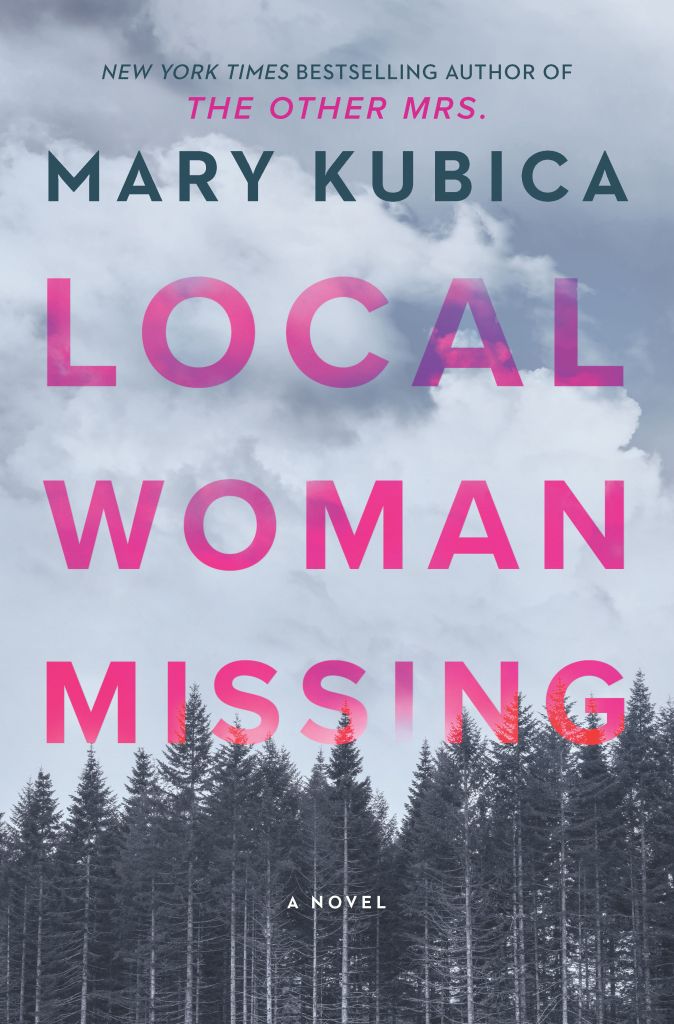
A young girl who disappeared over a decade earlier along with two older women returns and brings with her a shocking twist of domestic secrets that will shake a local community to the core in author Mary Kubica’s “Local Woman Missing”.
Advertisements
The Synopsis
People don’t just disappear without a trace…
Shelby Tebow is the first to go missing. Not long after, Meredith Dickey and her six-year-old daughter, Delilah, vanish just blocks away from where Shelby was last seen, striking fear into their once-peaceful community. Are these incidents connected? After an elusive search that yields more questions than answers, the case eventually goes cold.
Now, eleven years later, Delilah shockingly returns. Everyone wants to know what happened to her, but no one is prepared for what they’ll find…
In this smart and chilling thriller, master of suspense and New York Times bestselling author Mary Kubica takes domestic secrets to a whole new level, showing that some people will stop at nothing to keep the truth buried.
The Review
This was such a compelling read. The author does an incredible job of weaving together a complex narrative that keeps the reader guessing the entire story. The characters feel alive and do a marvelous job of engaging the reader on an entirely different level, eliciting emotions like sadness and rage to disbelief and heartbreak. The alternating timelines and POV’s were an inspired choice, as they really help the story connect with the mystery and intrigue the author has established here.
What will draw the reader in is the intensity of the narrative and how the author manages to weave each POV and timeline to keep the mystery alive. The story shifts and changes so many times that readers are constantly shocked to discover new secrets and new suspects in this growing case, as the true mystery doesn’t even begin until after Delilah returns home.
The Verdict
A brilliant, thought-provoking, and heart-pounding thriller, author Mary Kubica’s “Local Woman Missing” is the perfect suspense novel for fans of the genre this summer. Written in a way that screams for a cinematic or miniseries adaption, the twists and turns will keep readers engaged throughout the entirety of the novel, and by the book’s end readers will be shocked as the final revelations are shown. If you haven’t yet, be sure to grab your copy today!
Rating: 10/10
Advertisements
About the Author
Mary Kubica is the New York Times and USA Today bestselling author of six novels, including THE GOOD GIRL, PRETTY BABY, DON’T YOU CRY, EVERY LAST LIE, WHEN THE LIGHTS GO OUT, and THE OTHER MRS. A former high school history teacher, Mary holds a Bachelor of Arts degree from Miami University in Oxford, Ohio, in History and American Literature. She lives outside of Chicago with her husband and two children. Her last novel THE OTHER MRS. was an instant New York Times bestseller; is coming soon to Netflix; was a LibraryReads pick for February 2020; praised by the New York Times; and highly recommended by Entertainment Weekly, People, The Week,Marie Claire, Bustle, HelloGiggles,Goodreads, PopSugar, BookRiot, HuffingtonPost, First for Women, Woman’s World, and more.Mary’s novels have been translated into over thirty languages and have sold over two million copies worldwide. She’s been described as “a helluva storyteller,” (Kirkus Reviews) and “a writer of vice-like control,” (Chicago Tribune), and her novels have been praised as “hypnotic” (People) and “thrilling and illuminating” (Los Angeles Times). LOCAL WOMAN MISSING is her seventh novel.
The text comes from a number I don’t know. It’s a 630 area code. Local. I’m in the bathroom with Leo as he soaks in the tub. He has his bath toys lined up on the edge of it and they’re taking turns swan diving into the now-lukewarm water. It used to be hot, too hot for Leo to get into. But he’s been in there for thirty minutes now playing with his octopus, his whale, his fish. He’s having a ball.
Meanwhile I’ve lost track of time. I have a client in the early stages of labor. We’re texting. Her husband wants to take her to the hospital. She thinks it’s too soon. Her contractions are six and a half minutes apart. She’s absolutely correct. It’s too soon. The hospital would just send her home, which is frustrating, not to mention a huge inconvenience for women in labor. And anyway, why labor at the hospital when you can labor in the comfort of your own home? First-time fathers always get skittish. It does their wives no good. By the time I get to them, more times than not, the woman in labor is the more calm of the two. I have to focus my attention on pacifying a nervous husband. It’s not what they’re paying me for.
I tell Leo one more minute until I shampoo his hair, and then fire off a quick text, suggesting my client have a snack to keep her energy up, herself nourished. I recommend a nap, if her body will let her. The night ahead will be long for all of us. Childbirth, especially when it comes to first-time moms, is a marathon, not a sprint.
Josh is home. He’s in the kitchen cleaning up from dinner while Delilah plays. Delilah’s due up next in the tub. By the time I leave, the bedtime ritual will be done or nearly done. I feel good about that, hating the times I leave Josh alone with so much to do.
I draw up my text and then hit Send. The reply is immediate, that all too familiar ping that comes to me at all hours of the day or night.
I glance down at the phone in my hand, expecting it’s my client with some conditioned reply. Thx.
Instead: I know what you did. I hope you die.
Beside the text is a picture of a grayish skull with large, black eye sockets and teeth. The symbol of death.
My muscles tense. My heart quickens. I feel thrown off. The small bathroom feels suddenly, overwhelmingly, oppressive. It’s steamy, moist, hot. I drop down to the toilet and have a seat on the lid. My pulse is loud, audible in my own ears. I stare at the words before me, wondering if I’ve misread. Certainly I’ve misread. Leo is asking, “Is it a minute, Mommy?” I hear his little voice, muff led by the ringing in my ears. But I’m so thrown by the cutthroat text that I can’t speak.
I glance at the phone again. I haven’t misread.
The text is not from my client in labor. It’s not from any client of mine whose name and number is stored in my phone. As far as I can tell, it’s not from anyone I know.
A wrong number, then, I think. Someone sent this to me by accident. It has to be. My first thought is to delete it, to pretend this never happened. To make it disappear. Out of sight, out of mind.
But then I think of whoever sent it just sending it again or sending something worse. I can’t imagine anything worse.
I decide to reply. I’m careful to keep it to the point, to not sound too judgy or fault-finding because maybe the intended recipient really did do something awful—stole money from a children’s cancer charity—and the text isn’t as egregious as it looks at first glance.
I text: You have the wrong number.
The response is quick.
I hope you rot in hell, Meredith.
The phone slips from my hand. I yelp. The phone lands on the navy blue bath mat, which absorbs the sound of its fall.
Meredith.
Whoever is sending these texts knows my name. The texts are meant for me.
A second later Josh knocks on the bathroom door. I spring from the toilet seat, and stretch down for the phone. The phone has fallen facedown. I turn it over. The text is still there on the screen, staring back at me.
Josh doesn’t wait to be let in. He opens the door and steps right inside. I slide the phone into the back pocket of my jeans before Josh has a chance to see.
“Hey,” he says, “how about you save some water for the fish.”
Leo complains to Josh that he is cold. “Well, let’s get you out of the bath,” Josh says, stretching down to help him out of the water.
“I need to wash him still,” I admit. Before me, Leo’s teeth chatter. There are goose bumps on his arm that I hadn’t noticed before. He is cold, and I feel suddenly guilty, though it’s mired in confusion and fear. I hadn’t been paying any attention to Leo. There is bathwater spilled all over the floor, but his hair is still bone-dry.
“You haven’t washed him?” Josh asks, and I know what he’s thinking: that in the time it took him to clear the kitchen table, wash pots and pans and wipe down the sinks, I did nothing. He isn’t angry or accusatory about it. Josh isn’t the type to get angry.
“I have a client in labor,” I say by means of explanation. “She keeps texting,” I say, telling Josh that I was just about to wash Leo. I drop to my knees beside the tub. I reach for the shampoo. In the back pocket of my jeans, the phone again pings. This time, I ignore it. I don’t want Josh to know what’s happening, not until I get a handle on it for myself.
Josh asks, “Aren’t you going to get that?” I say that it can wait. I focus on Leo, on scrubbing the shampoo onto his hair, but I’m anxious. I move too fast so that the shampoo suds get in his eye. I see it happening, but all I can think to do is wipe it from his forehead with my own soapy hands. It doesn’t help. It makes it worse.
Leo complains. Leo isn’t much of a complainer. He’s an easygoing kid. “Ow,” is all that he says, his tiny wet hands going to his eyes, though shampoo in the eye burns like hell.
“Does that sting, baby?” I ask, feeling contrite. But I’m bursting with nervous energy. There’s only one thought racing through my mind. I hope you rot in hell, Meredith.
Who would have sent that, and why? Whoever it is knows me. They know my name. They’re mad at me for something I’ve done. Mad enough to wish me dead. I don’t know anyone like that. I can’t think of anything I’ve done to upset someone enough that they’d want me dead.
I grab the wet washcloth draped over the edge of the tub. I try handing it to Leo, so that he can press it to his own eyes. But my hands shake as I do. I wind up dropping the washcloth into the bath. The tepid water rises up and splashes him in the eyes. This time he cries.
“Oh, buddy,” I say, “I’m so sorry, it slipped.”
But as I try again to grab it from the water and hand it to him, I drop the washcloth for a second time. I leave it where it is, letting Leo fish it out of the water and wipe his eyes for himself. Meanwhile Josh stands two feet behind, watching.
My phone pings again. Josh says, “Someone is really dying to talk to you.”
Dying. It’s all that I hear.
My back is to Josh, thank God. He can’t see the look on my face when he says it.
“What’s that?” I ask.
“Your client,” Josh says. I turn to him. He motions to my phone jutting out of my back pocket. “She really needs you. You should take it, Mer,” he says softly, accommodatingly, and only then do I think about my client in labor and feel guilty. What if it is her? What if her contractions are coming more quickly now and she does need me?
Josh says, “I can finish up with Leo while you get ready to go,” and I acquiesce, because I need to get out of here. I need to know if the texts coming to my phone are from my client or if they’re coming from someone else.
I rise up from the floor. I scoot past Josh in the door, brushing against him. His hand closes around my upper arm as I do, and he draws me in for a hug. “Everything okay?” he asks, and I say yes, fine, sounding too chipper even to my own ears. Everything is not okay.
“I’m just thinking about my client,” I say. “She’s had a stillbirth before, at thirty-two weeks. She never thought she’d get this far. Can you imagine that? Losing a baby at thirty-two weeks?”
Josh says no. His eyes move to Leo and he looks saddened by it. I feel guilty for the lie. It’s not this client but another who lost a baby at thirty-two weeks. When she told me about it, I was completely torn up. It took everything in me not to cry as she described for me the moment the doctor told her her baby didn’t have a heartbeat. Labor was later induced, and she had to push her dead baby out with only her mother by her side. Her husband was deployed at the time. After, she was snowed under by guilt. Was it her fault the baby died? A thousand times I held her hand and told her no. I’m not sure she ever believed me.
My lie has the desired effect. Josh stands down, and asks if I need help with anything before I leave. I say no, that I’m just going to change my clothes and go.
I step out of the bathroom. In the bedroom, I close the door. I grab my scrub bottoms and a long-sleeved T-shirt from my drawer. I lay them on the bed, but before I get dressed, I pull my phone out of my pocket. I take a deep breath and hold it in, summoning the courage to look. I wonder what waits there. More nasty threats? My heart hammers inside me. My knees shake.
I take a look. There are two messages waiting for me.
The first: Water broke. Contractions 5 min apart.
And then: Heading to hospital.—M.
I release my pent-up breath. The texts are from my client’s husband, sent from her phone. My legs nearly give in relief, and I drop down to the edge of the bed, forcing myself to breathe. I inhale long and deep. I hold it in until my lungs become uncomfortable. When I breathe out, I try and force away the tension.
But I can’t sit long because my client is advancing quickly. I need to go.
Excerpted from Local Woman Missing @ 2021 by Mary Kyrychenko, used with permission by Park Row Books.
I received a free copy of this book in exchange for a fair and honest review. All opinions are my own.
Author Kristine Raymond brings readers four original short stories exploring romance in the various seasons of the year in the hit short story collection, “Seasons of Love”.
Advertisements
The Synopsis
Four couples. Four seasons. A lifetime of love.
Dogwoods in Springtime
Still in mourning three years after her husband’s death, Caroline Ballard’s solitary life in rural Kentucky is disrupted by a broken water line, of all things. As if the lack of running water wasn’t bad enough, her immediate attraction to plumbing contractor Rick Spencer unearths emotions long thought buried. Opening her heart to love for a second time, a malicious lie told by his ex-wife threatens to end the budding relationship before it begins.
Seashells in Summer
Having adopted her four-year-old daughter, Lily, at birth, Taylor Brightman is suspicious when former Marine Sergeant Grant Cutler appears on her Nantucket Island doorstep claiming to be the girl’s biological father. Wary of his motives, his good looks and charming personality win her over, but can she trust that she won’t lose custody along with her heart?
Aspens in Autumn
Ramsey Fiorentino is having a bad day. On the run for her life after witnessing a murder, she’s being pursued by none other than Bishop Hamilton, a private investigator hired by the person who committed the crime. When he catches up to her and the truth comes out, they flee to the mountains of Flagstaff, Arizona to hide, but it’s only a matter of time before their newfound romance is tested in the wake of a deadly confrontation.
Snowflakes in Winter
When New Hampshire State Trooper Alex Ballard becomes stranded during a blizzard in the middle of the night, he seeks refuge at a local bed and breakfast, surprised to discover the owner, Chloe Mancuso, is the sole occupant. A passionate night spent in each other’s arms ignites feelings neither thought possible, but there’s someone else with his eye on Chloe and he’s not willing to share.
The Review
A truly fantastic collection of short stories, the author has done a wonderful job of creating well-rounded characters and evenly-paced stories that really capture the reader’s attention. The interesting thing about this collection is not only how the stories end up connecting to one another, but how each story incorporates various genres into the narratives, ranging from drama and loss to mystery and suspense, all against the backdrop of romance.
The really interesting thing however comes in the use of seasons for the narrative of each story. Utilizing this storytelling device, the author has found a way to make the seasons themselves not only part of the tapestry of the narrative but characters themselves. The writing does a great job of navigating the subtle nuisances of each story’s narrative, ranging from building tension to passionate romance and so much more.
The Verdict
An emotional, heartfelt, and enrapturing read, author Kristine Raymond’s “Seasons of Love” is a must-read short story collection. Perfectly written for those who love romance stories that incorporate many other genres into their narratives and romantic pairings that draw the reader in immediately, be sure to grab your copy of this incredible collection today!
Rating: 10/10
Advertisements
About the Author
It wasn’t until later in life that Kristine Raymond figured out what she wanted to be when she grew up, an epiphany that occurred in 2013 when she sat down and began writing her first novel. Over a dozen books in multiple genres later, there are a multitude of ideas floating around in her head thus assuring she’ll never be idle. When a spare moment does present itself, she fills it by navigating the publishing and promotional side of the business. When not doing that, she spends time with her husband and fur-babies (not necessarily in that order) at their home in south-central Kentucky, gardens, reads, or binge-watches Netflix. To find out more, please visit her website at www.kristineraymond.com
I received a free copy of this book in exchange for a fair and honest review. All opinions are my own.
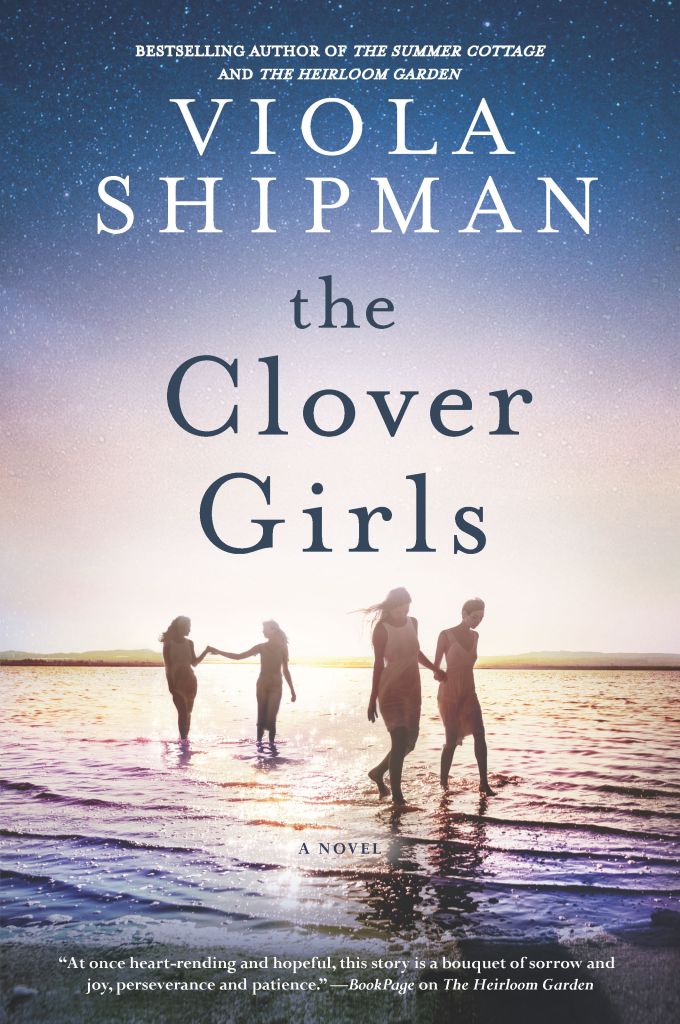
Three friends from their youths must reunite when their fourth friend dying of cancer summons them to the summer camp they spent their youth in, and must find the dreams they left behind as they face the challenges of their own lives in author Viola Shipman’s “The Clover Girls”.
Advertisements
The Synopsis
As comforting and familiar as a favorite sweater, Viola Shipman’s novels never fail to deliver a heartfelt story of friendship and familty, encapsulating summer memories in every page. Fans of Dorthea Benton Frank and Nancy Thayer will love this new story about three childhood friends approaching middle age, determined to rediscover the dreams that made them special as campers in 1985.
Elizabeth, Veronica, Rachel and Emily met at Camp Birchwood as girls in 1985, where they called themselves The Clover Girls (after their cabin name). The years following that magical summer pulled them in very different directions and, now approaching middle age, the women are facing new challenges: the inevitable physical changes that come with aging, feeling invisible to society, disinterested husbands, surley teens, and losing their sense of self.
Then, Elizabeth, Veronica and Rachel each receive a letter from Emily – she has cancer and, knowing it’s terminal, reaches out to the girls who were her best friends once upon a time and implores them to reunite at Camp Birchwood to scatter her ashes. When the three meet at the property for the first time in what feels like a lifetime, another letter from Emily awaits, explaining that she has purchased the abandoned camp, and now it belongs to them – at Emily’s urging, they must spend a week together remembering the dreams they’d put aside, and find a way to become the women they always swore they’d grow up to be. Through flashbacks to their youthful summer, we see the four friends then and now, rebuilding their lives, flipping a middle finger to society’s disdain for aging women, and with a renewed purpose to find themselves again.
The Review
Such an incredible and emotional story, author Viola Shipman has crafted a truly beautiful and heartbreaking story of lost friendship, loss, and regaining that which has been lost in our lives. The multiple POV of these characters really brings a sense of wholeness and driven narratives to their story.
So often in life friends drift away, becoming busy with their growing lives and diverging paths that take them away from one another. Yet less often is the events that bring us back together again. This narrative does a fantastic job of exploring the uncharted path towards unification with the people who made us feel like ourselves again.
The setting and imagery of the narrative felt alive and become a character all on their own. I love the flashbacks and letters from the early days of the Clover Girls that really captured the essence of the 80’s style era that part of the narrative took place in, and the pacing really helped with the friend’s journey to not only find themselves but to find the friendship that brought them so much happiness and joy.
The Verdict
A mesmerizing, emotionally driven, and engaging read, author Viola Shipman’s The Clover Girls is the perfect summer read for those who love women’s fiction and tales of friendship and the bonds we share with others. The author takes the readers on such an emotional journey and showcases how the painful reality of loss can sometimes bring and heal those who have been lost to each other back together again. If you haven’t yet, be sure to grab your copy today!
Advertisements
About the Author
Viola Shipman is the pen name for Wade Rouse, a popular, award-winning memoirist. Rouse chose his grandmother’s name, Viola Shipman, to honor the woman whose heirlooms and family stories inspire his writing. Rouse is the author of The Summer Cottage, as well as The Charm Bracelet and The Hope Chest which have been translated into more than a dozen languages and become international bestsellers. He lives in Saugatuck, Michigan and Palm Springs, California, and has written for People, Coastal Living, Good Housekeeping, and Taste of Home, along with other publications, and is a contributor to All Things Considered.
Fizzy water (cherry, lime, watermelon, mixed berry)
Chips (lentil, quinoa, kale, beet)
Cereal (Kashi, steel-cut oats, NO GMOs! VERY IMPORTANT!)
Whatever happened to one kind of milk from a cow, one kind of water from a faucet and one kind of chip from a potato?
My teenage children are seated on opposite ends of the massive, modern, original Milo Baughman circular sofa that David and I ordered for our new midcentury house in Los Angeles. Ashley and Tyler are juggling drinks while pecking at their cells, and it takes every fiber of my soul not to come unglued. This is the most expensive piece of furniture I have ever purchased in my life. More expensive even than my first two years of college tuition plus my first car, a red Reliant K-car that would stall at stoplights.
I still don’t know what the K stood for, I think. Krappy?
That was a time, long ago, when that type of negative thought would never have entered my mind, when the K would have stood only for Konfident, Kool or Kick-Ass. But that was a different world, another time, another life and place.
Another me.
Another V.
I steady my pen at the top of a pad of paper emblazoned with the logo of my husband’s architectural firm, David Berzini & Associates.
Los Angeles is the latest stop for us. My family has hopscotched the world more than a military brat as David’s architectural career has exploded. He is now one of the world’s preeminent architects. David studied under and worked with some of the most famous midcentury modern architects—Albert Frey, William Krisel, Donald Wexler—and has now taken over their mantles, especially as the appreciation for and popularity of midcentury modern architecture has grown. Now he is working on a stunning new public library in LA that will be his legacy.
I glance up from my pad. A selection of magazines—Architectural Digest, Vogue, W—are artfully strewn across a brutalist coffee table. The beautiful models stare back at me.
That was my legacy.
“Mom, can I get something to eat?”
This is now my legacy.
I glance at my children. Everything old has come back en vogue. Ashley is wearing the same sort of high-waisted jeans that I once wore and modeled in the ’80s, and Tyler’s hair—razored high by a barber and slicked back into a big black pompadour—looks a lot like a style I sported for a Robert Palmer video when every woman wanted to look like a Nagel woman.
Yes, everything has made a comeback.
Except me.
I look at my list.
And carbs.
My kids, like my husband, have never met a Pop-Tart, a box of Cap’n Crunch, a Jeno’s Pizza Roll or a Ding Dong. My entire family resembles long-limbed ponies, ready to race. I grew up when the foundation of a food pyramid was a Twinkie.
I again put pen to paper, and in my own secret code I write the letter L above the first letter of my husband’s name. If someone happened to glance at the paper, they would simply think I had been doodling. But I know what “LD” means, and it will remind me once I get to the store.
Little Debbies.
You know, I actually hide these around our new home, which isn’t easy since the entire space is so sleek and minimal, and hiding space is at a premium. It took a lot of effort, but I, too, used to be as sleek and minimal as this house, as angular and arresting as its architecture. Anything out of place in our butterfly-roofed home located in the Bird Streets high above Sunset Strip—where the streets are named after orioles and nightingales, and Hollywood stars reside—is conspicuous.
Even now, on yet another perfect day in LA, where the sunshine makes everything look lazily beautiful and dipped in glitter, I can see a layer of dust on the terrazzo floors. Although a maid comes twice a week, the dust, smog and ash from nonstop fires in LA—carried by hot, dry Santa Ana winds—coat everything. And David notices everything.
Swiffers, I write on the pad, before outlining “LD” with my pen.
David hates that I have gained weight. He is embarrassed I have gained weight.
Or is just my imagination? Am I the one who is embarrassed by who I’ve become?
David never says anything to me, but he attends more and more galas alone, saying I need to watch the kids even though they no longer need a babysitter and that it’s better for their stability if one parent is with them. But I know the truth.
What did he expect would happen to my body after two children and endless moves? What did he expect would happen after losing my career, identity and self-esteem? It’s so ironic, because I’m not angry at him or my life. I’m just…
“Why don’t you just put all of that in the notes on your phone?”
“Or just ask the refrigerator to remember?”
“Yeah, Mom,” my kids say at the same time.
I look over at them. They have my beauty and David’s drive. Ash and Ty lift their eyes from their phones just long enough to roll their eyes at me, in that way that teens do, the way teens always have, in that there-couldn’t-be-a-more-lame-uncool-human-in-the-world-than-you-Mom way. And it’s always followed by “the sigh.”
“I like to do it this way,” I say.
“NO ONE writes anything anymore,” Ashley says.
“NO ONE, Mom!” Tyler echoes.
“Cursive is dead, Mom,” Ashley says. “Get with the times.”
I stare at my children. They are often the sweetest kids in the world, but every so often their evil twins emerge, the ones with forked tongues and acerbic words.
Did they get that from me? Or their father? Or is it just the way kids are today?
The sun shifts, and the reflection of water from the pool dances on the white walls, making it look as if we are living in an aquarium. I glance down the long hallway where the pool is reflecting, the place David has allowed me to have my only “clutter”: a corridor of old photos, a room of heirlooms.
My life flashes before me: our family in front of the Rockefeller Center Christmas tree in New York at the holidays, eating colorful French macarons at a café in Paris, lying out on Barcelona’s beaches, and fishing with my parents at their summer cottage on Lake Michigan. And then, in the ultimate juxtaposition, there is an old photo of me, teenage me, in a bikini at Lake Birchwood hanging directly next to an old Sports Illustrated cover of me. In it, I am posing by the ocean where I met David. I am crouched on the beach like a tiger ready to pounce. That was my signature pose, you know, the one I invented that all the other models stole, the Tiger Pose.
I was one of the one-name girls back then: Madonna, Iman, Cher, V. All I needed was a single letter to identify myself. Now V has Vanished. I have one name.
“Mom!”
“Lunch. Please!”
My eyes wander back to our pool. I would be mortified to wear a bikini today. I am not what most people would deem overweight. But I have a paunch, my thighs are jellied and my chin is starting to have a best friend. It was that photo in all of the gossip magazines a year or so ago that did it to me. Paparazzi shot me downing an ice cream cone while putting gas in my car. I had shuttled the kids around all day in 110-degree heat, and I was wearing a billowy caftan. I looked bigger than my SUV. And the headlines:
Voluminous!
V has Vanished Inside This Woman!
If you saw me in person, you’d likely say I’m a narcissist or being way too hard on myself, but it’s as hard to hide fifteen pounds in LA as it is to hide an extra throw pillow in this house. I get Botox and fillers and do all the things I can to maintain my looks, but I am terrified to go to the gym here. I am mortified to look for a dress in a city where a size two is considered obese. The gossip rags are just waiting for me to move.
My eyes wander back to the photos.
I no longer have an identity.
I no longer have friends.
“Earth to Mom? Can you make me some lunch?” Tyler looks at me. “Then I need to go to Justin’s.”
“And you have to drive me to Lily’s at four, remember?”
I shudder. A two-mile drive in LA takes two hours.
“Mom?”
Ashley looks at me.
There is a way that your children and husband look at you—or rather don’t look at you at a certain point in your life—not to mention kids in the street, young women shopping, men in restaurants, David’s colleagues, happy families in the grocery.
They look through you. Like you’re a window.
It’s as if women over forty were never young, smart, fashionable, cool…were never like them, never had hopes, dreams and acres of life ahead of them.
What is with American society today?
Why, when women reach a “certain age,” do we become ghosts? Strike that. That’s not an accurate analogy: that would imply that we actually invoke a mood, a scare, a feeling of some sort. That we have a personality. I could once hold up a bag of potato chips, eat one, lick my fingers and sell a million bags of junk food for a company. Now I’m not even memorable enough to be a ghost. This model has become a prop. A piece of furniture. Not like the stylish one my kids are stretched out on, but the reliable, sturdy, ever-present, department store kind, devoid of any depth or substance, one without feeling, attractiveness or sexuality. I am just here. Like the air. Necessary to survive, but something no one sees or notices.
I used to be noticed. I used to be seen. Desired. Admired. Wanted.
I was the ringleader of friends, the one who called the shots. Now, I am Uber driver, Shipt delivery, human Roomba and in-home Grubhub, products I once would have sold rather than used.
I take a deep breath and note a few more grocery items on my antiquated written list and stand to make my kids lunch.
They are teen health nuts, already obsessed with every bite they consume. Does it have GMOs? What is the protein-to-carb differential?
Did I do this to them? I don’t think so.
Even as a model, I ate pizza, but that’s back in the day when a curve was sexy and a bikini needed to be filled out. I pull out some spicy tuna sushi rolls I picked up at Gelson’s and arrange them on a platter. I wash and chop some berries and place them in a bowl. I watch my kids fill their plates. Ashley is a cheerleader and wannabe actress, and Tyler is a skateboarding, creative techy applying to UCLA to study film and directing. Ashley wants to go to Northwestern to major in drama. They will both be going to specialty camps later this summer, Ashley for cheerleading and acting, Tyler for filmmaking and to boost his SAT scores. My eyes drift back to my photo wall, and I smile. They will not, however, spend their days simply having fun, singing camp songs, engaging in color wars, shooting archery, splashing in a cold lake, roasting marshmallows and making friends. A kid’s life today, especially here in LA, is a competition, and the competition starts early.
There is a rustling noise outside, and Ashley tosses her plate onto the sofa and rushes to the door. In LA, even the postal workers are hot, literally and figuratively, and our mailman looks like Zac Efron. She returns a few seconds later, fanning herself dramatically with the mail.
“You’re going to be a great actress,” I say with a laugh. Ashley starts to toss the mail onto the counter, but I stop her. “Leave the mail in the organizer for your dad.”
Yes, even the mail has its own home in our home.
“Hey, you got a letter,” she says.
“Who writes letters anymore?” Tyler asks.
“Old people,” Ashley says. The two laugh.
I take a seat at the original Saarinen tulip table and study the envelope. There is no return address. I feel the envelope. It’s bulky. I open it and begin to read a handwritten letter:
Dear V:
How are you? I’m sorry it’s been a while since we’ve talked. You’ve been busy, I’ve been busy. Remember when we were just a bunk away? We could lean our heads over the side and share our darkest secrets. Those were the good ol’ days, weren’t they? When we were innocent. When we were as tight as the clover that grew together in the patch that wound to the lake.
How long has it been since you talked to Rach and Liz? Over 30 years? I guess that first four-leaf clover I found wasn’t so lucky after all, was it? Oh, you and Rach have had such success, but are you happy, V? Deep down? Achingly happy? I don’t believe in my heart that you are. I don’t think Rach and Liz are either. How do I know? Friend’s intuition.
I used to hate myself for telling everyone what happened our last summer together. It was like dominoes falling after that, one secret after the next revealed, the facade of our friendship ripped apart, just like tearing the fourth leaf off that clover I still have pressed in my scrapbook. But I hate secrets. They only tear us apart. Keep us from becoming who we need to become. The dark keeps things from growing. The light is what creates the clover.
Out the cabin door went all of our luck, and then—leaf by leaf—our faith in each other, followed by any hope we might have had in our friendship and, finally, any love that remained was replaced by hatred, then a dull ache, and then nothing at all. That’s the worst thing, isn’t it, V? To feel nothing at all?
Much of my life has been filled with regret, and that’s just an awful way to live. I’m trying to make amends for that before it’s too late. I’m trying to be the friend I should have been. I was once the glue that held us all together. Then I was scissors that tore us all apart. Aren’t friends supposed to be there for one another, no matter what? You weren’t just beautiful, V, you were confident, so funny and full of life. More than anything, you radiated light, like the lake at sunset. And that’s how I will always remember you.
I’ve sent similar letters to Rach and Liz. I stayed in touch with Liz…and Rach…well, you know Rach. For some reason, you all forgave me, but not each other. I guess because I was just an innocent bystander to all the hurt. My only remaining hope is that you will all forgive one another at some point, because you changed my life and you changed each other’s lives. And I know that you all need one another now more than ever. We found each other for a reason. We need to find each other again.
Let me get to the point, dear V. Just picture me leaning my head over the bunk and telling you my deepest secret.
By the time you receive this, I’ll be dead…
My hand begins to shake, which releases the contents still remaining in the envelope. A pressed four-leaf clover and a few old Polaroid pictures scatter onto the tabletop. Without warning, I groan.
“Are you okay, Mom?” Tyler asks without looking back.
“Who’s that from?” Ashley asks, still staring at her phone.
“A friend,” I manage to mumble.
“Cool,” Ashley says. “You need friends. You don’t have any except for that one girl from camp.” She stops. “Emily, right?”
The photos lying on the marble tabletop are of the four of us at camp, laughing, singing, holding hands. We are so, so young, and I wonder what happened to the girls we used to be. I stare at a photo of Em and me lying under a camp blanket in the same bunk. That’s when I realize the photo is sitting on top of something. I move the picture and smile.
A friendship pin stares at me, E-V-E-R shining in a sea of green beads.
I look up, and water is reflecting through the clerestory windows of our home, and suddenly every one of those little openings is like a scrapbook to my life, and I can see it flash—at camp and after—in front of me in bursts of light.
Why did I betray my friends?
Why did I give up my identity so easily?
Why am I richer than I ever dreamed and yet feel so empty and lost?
Oh, Em.
I blink, my eyes blur, and that’s when I realize it’s not the pool reflecting in the windows, it’s my own tears. I’m crying. And I cannot stop.
Suddenly, I stand, throw open the patio doors and jump into the pool, screaming as I sink. I look up, and my children are yelling.
“Mom! Are you okay?”
I wave at them, and their bodies relax.
“I’m fine,” I lie when I come to the surface. “I’m sorry. I didn’t mean to scare you.”
They look at each other and shrug, before heading back inside.
At least, I think, they finally see me.
I take a deep breath and go down once more. Underwater, I can hear my heart drum loudly in my ears. It’s drumming in such perfect rhythm that I know immediately the tune my soul is playing. I can hear it as if it were just yesterday.
I received a free copy of this book in exchange for a fair and honest review. All opinions are my own.
Three women struggling in their lives take the opportunity of a lifetime by heading off on a road trip like no other in author Sarah Morgan’s “The Summer Seekers”.
Advertisements
The Synopsis
Get swept into a summer of sunshine, soul-searching and shameless matchmaking with this delightfully bighearted road-trip adventure by USA TODAY bestselling author Sarah Morgan!
Kathleen is eighty years old. After she has a run-in with an intruder, her daughter wants her to move into a residential home. But she’s not having any of it. What she craves—what she needs—is adventure.
Liza is drowning in the daily stress of family life. The last thing she needs is her mother jetting off on a wild holiday, making Liza long for a solo summer of her own.
Martha is having a quarter-life crisis. Unemployed, unloved and uninspired, she just can’t get her life together. But she knows something has to change.
When Martha sees Kathleen’s advertisement for a driver and companion to share an epic road trip across America with, she decides this job might be the answer to her prayers. She’s not the world’s best driver, but anything has to be better than living with her parents. And traveling with a stranger? No problem. Anyway, how much trouble can one eighty-year-old woman be?
As these women embark on the journey of a lifetime, they all discover it’s never too late to start over…
The Review
This was a terrific and engaging women’s fiction story. The use of three protagonists, each from a different generation with their own worries and stress, really added much more engagement and emotional struggle to the story. The characters just jumped off the page, adding some personal relation to me as I recently had my grandmother pass a couple of years ago, and the years leading up to that did add some worry and stress to our lives as she was very dear to our hearts, so the worry and stress Liza is feeling is something that I can easily relate to.
However, it is the bond and connection these women share amongst themselves as well as the emotional journey of finding themselves and who they really are, that make this novel shine so brightly. The blend of adventure and heartbreak as the story progresses really draws the reader in, and the adventure along Route 66 really added an extra level of imagery as the trip is so iconic and dreamed of by so many.
The Verdict
An expertly crafted, eventful, and entertaining yet emotionally driven narrative, author Sarah Morgan’s “The Summer Seekers” is a must-read novel for the summer. A beautiful story that draws on the strengths and well-rounded personalities of these strong protagonists, this novel promises to draw readers in from the start and speaks to a wide array of readers as a whole. If you haven’t yet, be sure to grab your copy today!
Advertisements
About the Author
USA Today bestselling author Sarah Morgan writes hot, happy, contemporary romance and women’s fiction, and her trademark humor and sensuality have gained her fans across the globe. Described as “a magician with words” by RT Book Reviews, she has sold more than eleven million copies of her books. She was nominated three years in succession for the prestigious RITA® Award from the Romance Writers of America and won the award three times: once in 2012 for Doukakis’s Apprentice, in 2013 for A Night of No Return and in 2017 for Miracle on 5th Avenue. She also won the RT Reviewers’ Choice Award in 2012 and has made numerous appearances in their Top Pick slot. As a child, Sarah dreamed of being a writer, and although she took a few interesting detours along the way, she is now living that dream. Sarah lives near London, England, with her husband and children, and when she isn’t reading or writing, she loves being outdoors, preferably on vacation so she can forget the house needs tidying.
It was the cup of milk that saved her. That and the salty bacon she’d fried for her supper many hours earlier, which had left her mouth dry.
If she hadn’t been thirsty—if she’d still been upstairs, sleeping on the ridiculously expensive mattress that had been her eightieth birthday gift to herself—she wouldn’t have been alerted to danger.
As it was, she’d been standing in front of the fridge, the milk carton in one hand and the cup in the other, when she’d heard a loud thump. The noise was out of place here in the leafy darkness of the English countryside, where the only sounds should have been the hoot of an owl and the occasional bleat of a sheep.
She put the glass down and turned her head, trying to locate the sound. The back door. Had she forgotten to lock it again?
The moon sent a ghostly gleam across the kitchen and she was grateful she hadn’t felt the need to turn the light on. That gave her some advantage, surely?
She put the milk back and closed the fridge door quietly, sure now that she was not alone in the house.
Moments earlier she’d been asleep. Not deeply asleep—that rarely happened these days—but drifting along on a tide of dreams. If someone had told her younger self that she’d still be dreaming and enjoying her adventures when she was eighty she would have been less afraid of aging. And it was impossible to forget that she was aging.
People said she was wonderful for her age, but most of the time she didn’t feel wonderful. The answers to her beloved crosswords floated just out of range. Names and faces refused to align at the right moment. She struggled to remember what she’d done the day before, although if she took herself back twenty years or more her mind was clear. And then there were the physical changes—her eyesight and hearing were still good, thankfully, but her joints hurt and her bones ached. Bending to feed the cat was a challenge. Climbing the stairs required more effort than she would have liked and was always undertaken with one hand on the rail just in case.
She’d never been the sort to live in a just in case sort of way.
Her daughter, Liza, wanted her to wear an alarm. One of those medical alert systems, with a button you could press in an emergency, but Kathleen refused. In her youth she’d traveled the world, before it was remotely fashionable to do so. She’d sacrificed safety for adventure without a second thought. Most days now she felt like a different person.
Losing friends didn’t help. One by one they fell by the wayside, taking with them shared memories of the past. A small part of her vanished with each loss. It had taken decades for her to understand that loneliness wasn’t a lack of people in your life, but a lack of people who knew and understood you.
She fought fiercely to retain some version of her old self—which was why she’d resisted Liza’s pleas that she remove the rug from the living room floor, stop using a step ladder to retrieve books from the highest shelves and leave a light on at night. Each compromise was another layer shaved from her independence, and losing her independence was her biggest fear.
Kathleen had always been the rebel in the family, and she was still the rebel—although she wasn’t sure that rebels were supposed to have shaking hands and a pounding heart.
She heard the sound of heavy footsteps. Someone was searching the house. For what, exactly? What treasures did they hope to find? And why weren’t they trying to at least disguise their presence?
Having resolutely ignored all suggestions that she might be vulnerable, she was now forced to acknowledge the possibility. Perhaps she shouldn’t have been so stubborn. How long would it have taken from pressing the alert button to the cavalry arriving?
In reality, the cavalry was Finn Cool, who lived three fields away. Finn was a musician, and he’d bought the property precisely because there were no immediate neighbors. His antics caused mutterings in the village. He had rowdy parties late into the night, attended by glamorous people from London who terrorized the locals by driving their flashy sports cars too fast down the narrow lanes. Someone had started a petition in the post office to ban the parties. There had been talk of drugs, and half-naked women, and it had all sounded like so much fun that Kathleen had been tempted to invite herself over. Rather that than a dull women’s group, where you were expected to bake and knit and swap recipes for banana bread.
Finn would be of no use to her in this moment of crisis. In all probability he’d either be in his studio, wearing headphones, or he’d be drunk. Either way, he wasn’t going to hear a cry for help.
Calling the police would mean walking through the kitchen and across the hall to the living room, where the phone was kept and she didn’t want to reveal her presence. Her family had bought her a mobile phone, but it was still in its box, unused. Her adventurous spirit didn’t extend to technology. She didn’t like the idea of a nameless faceless person tracking her every move.
There was another thump, louder this time, and Kathleen pressed her hand to her chest. She could feel the rapid pounding of her heart. At least it was still working. She should probably be grateful for that.
When she’d complained about wanting a little more adventure, this wasn’t what she’d had in mind. What could she do? She had no button to press, no phone with which to call for help, so she was going to have to handle this herself.
She could already hear Liza’s voice in her head: Mum, I warned you!
If she survived, she’d never hear the last of it.
Fear was replaced by anger. Because of this intruder she’d be branded Old and Vulnerable and forced to spend the rest of her days in a single room with minders who would cut up her food, speak in overly loud voices and help her to the bathroom. Life as she knew it would be over.
That was not going to happen.
She’d rather die at the hands of an intruder. At least her obituary would be interesting.
Better still, she would stay alive and prove herself capable of independent living.
She glanced quickly around the kitchen for a suitable weapon and spied the heavy black skillet she’d used to fry the bacon earlier.
She lifted it silently, gripping the handle tightly as she walked to the door that led from the kitchen to the hall. The tiles were cool under her feet—which, fortunately, were bare. No sound. Nothing to give her away. She had the advantage.
She could do this. Hadn’t she once fought off a mugger in the backstreets of Paris? True, she’d been a great deal younger then, but this time she had the advantage of surprise.
How many of them were there?
More than one would give her trouble.
Was it a professional job? Surely no professional would be this loud and clumsy. If it was kids hoping to steal her TV, they were in for a disappointment. Her grandchildren had been trying to persuade her to buy a “smart” TV, but why would she need such a thing? She was perfectly happy with the IQ of her current machine, thank you very much. Technology already made her feel foolish most of the time. She didn’t need it to be any smarter than it already was.
Perhaps they wouldn’t come into the kitchen. She could stay hidden away until they’d taken what they wanted and left.
They’d never know she was here.
They’d—
A floorboard squeaked close by. There wasn’t a crack or a creak in this house that she didn’t know. Someone was right outside the door.
Her knees turned liquid.
Oh Kathleen, Kathleen.
She closed both hands tightly round the handle of the skillet.
Why hadn’t she gone to self-defense classes instead of senior yoga? What use was the downward dog when what you needed was a guard dog?
A shadow moved into the room, and without allowing herself to think about what she was about to do she lifted the skillet and brought it down hard, the force of the blow driven by the weight of the object as much as her own strength. There was a thud and a vibration as it connected with his head.
“I’m so sorry—I mean—” Why was she apologizing? Ridiculous!
The man threw up an arm as he fell, a reflex action, and the movement sent the skillet back into Kathleen’s own head. Pain almost blinded her and she prepared herself to end her days right here, thus giving her daughter the opportunity to be right, when there was a loud thump and the man crumpled to the floor. There was a crack as his head hit the tiles.
Kathleen froze. Was that it, or was he suddenly going to spring to his feet and murder her?
No. Against all odds, she was still standing while her prowler lay inert at her feet. The smell of alcohol rose, and Kathleen wrinkled her nose.
Drunk.
Her heart was racing so fast she was worried that any moment now it might trip over itself and give up.
She held tightly to the skillet.
Did he have an accomplice?
She held her breath, braced for someone else to come racing through the door to investigate the noise, but there was only silence.
Gingerly she stepped toward the door and poked her head into the hall. It was empty.
It seemed the man had been alone.
Finally she risked a look at him.
He was lying still at her feet, big, bulky and dressed all in black. The mud on the edges of his trousers suggested he’d come across the fields at the back of the house. She couldn’t make out his features because he’d landed face-first, but blood oozed from a wound on his head and darkened her kitchen floor.
Feeling a little dizzy, Kathleen pressed her hand to her throbbing head.
What now? Was one supposed to administer first aid when one was the cause of the injury? Was that helpful or hypocritical? Or was he past first aid and every other type of aid?
She nudged his body with her bare foot, but there was no movement.
Had she killed him?
The enormity of it shook her.
If he was dead, then she was a murderer.
When Liza had expressed a desire to see her mother safely housed somewhere she could easily visit, presumably she hadn’t been thinking of prison.
Who was he? Did he have family? What had been his intention when he’d forcibly entered her home? Kathleen put the skillet down and forced her shaky limbs to carry her to the living room. Something tickled her cheek. Blood. Hers.
She picked up the phone and for the first time in her life dialed the emergency services.
Underneath the panic and the shock there was something that felt a lot like pride. It was a relief to discover she wasn’t as weak and defenseless as everyone seemed to think.
When a woman answered, Kathleen spoke clearly and without hesitation.
“There’s a body in my kitchen,” she said. “I assume you’ll want to come and remove it.”