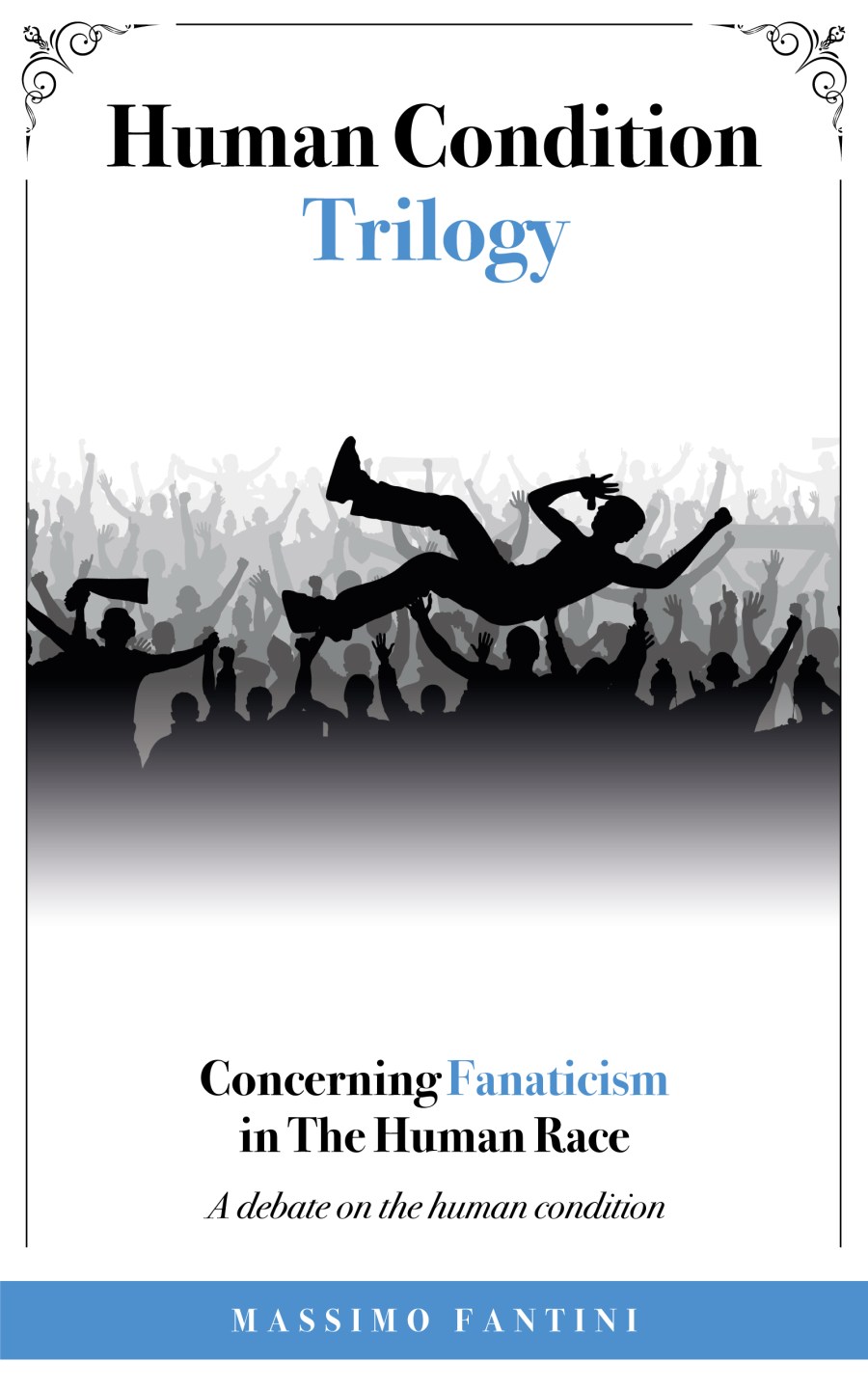
I received a free copy of this book in exchange for a fair and honest review. All opinions are my own.
A seemingly simple law dispute turns into a gripping look into the human condition in author Massimo Fantini’s “Concerning Fanaticism in The Human Race”, the latest book in the Human Condition Trilogy.
The Synopsis
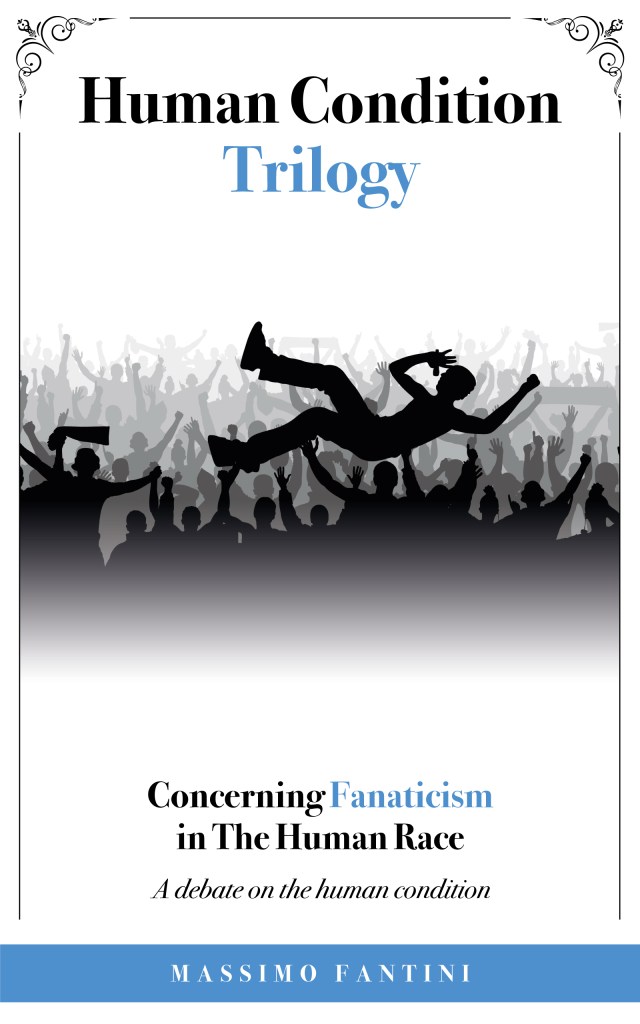
Elijah is a promising young lawyer, in love with his work and confident in the potential of the human race.
His law firm’s senior partner gives him his first important assignment. Elijah will have to follow the case of Leonard, an elderly engineer who lives in Montepastore, a small village in the Bolognese Apennines (Italy).
Leonard’s question concerns the supplementary contribution that engineers enrolled in the professional register are required to pay to Inarcassa, the Engineers’ Pension Fund. At first, the case seems simple. It was the subject of a previous ruling by the Court of Cassation. But Leonard is not satisfied with an institutional response. He wants to know why. He wants to know what hides behind the Supreme Court’s ruling.
Leonard’s demands grow meeting after meeting, and the subject of the dispute widens to include ethical, religious, and historical concerns.
As in the previous manuscripts, questions about the human condition are at the center of this philosophical debate. In the absence of answers, what is the point of writing about anything else?
The editing and translation of this book was done by Ian Zwaschka.
The Review
One of the most compelling questions a person can ask is whether or not to trust what is being told. The dialogue and character growth that the author brings to life on the page is rich and driven, allowing the reader to get lost in the narrative. The setting and atmosphere the author can develop and the mounting tension add to an already thoughtful story.
Yet the discussion and philosophical journey that readers are presented with makes this story so inviting. The ability to question authority and tackle mounting ethical dilemmas as they are presented to us delves into our philosophy and how we interact with religion, politics, and the human mind overall. The way the author presents this discussion to readers gets the reader’s minds working and does so without going over the line of being abstract, allowing the story to shine brightly.
The Verdict
Memorable, thoughtful, and gripping author Massimo Fantini’s “Concerning Fanaticism in the Human Race” is a must-read contemporary fiction that meets philosophical discussion. The twists in the narrative and the engaging character dynamics between Elijah and Leonard will keep readers on the edge of their seats while also looking inward at how we view blind faith and the ability to question authority for ourselves. If you haven’t yet, be sure to grab your copy today!
Rating: 10/10
About the Author

Greetings, readers.
I am Massimo Fantini, an Italian author and free thinker, writing from my home in the hills just outside Bologna. In quiet moments, when I am not writing, I enjoy classical music, particularly orchestral works for violin and the Italian opera.
I graduated from a university in Bologna with a degree in civil engineering. However, the studies of my youth do not represent my life’s obsession—that is, delving into those realities which unite all members of the human race: suffering, frustrations, conflicts, and the human reactions to these. They are the events and forces that take every human as an innocent in the crib and twist and turn them into 8.1 billion unique (but intimately connected) forms.
In short, I am obsessed with exploring the intimate recesses of the human condition.
In 2018, entirely dissatisfied with my job, I sought a new form of expression. Thus, I began to write. Incessantly.
I experimented with many kinds of writing. How best to give my ideas form? Then, I found my voice through stories, giving life to characters who explore, triumph, and fail for us to watch.
In each installment of my Human Condition Trilogy, these same all-encompassing issues are approached from different directions, under different circumstances, and by different characters.
Echoing the sentiment of Heraclitus, no two people may look at the same problem, because it is different to each. From the old cynical Leonard in Concerning Fanaticism to young Tommaso (a character inspired by my own youth) in Concerning Intellectual Suicide, I tried to cast a light on a path that is a constant part of our lives, but also constantly shifting.
Through my writing, I encourage readers to find their own perspective on life. Rather than embracing the comfortable mold which society provides, like a goldfish “free” to swim around in its little bowl, I hope my readers can use my books as a steppingstone toward their own unique way of thinking. And then, I wish them the freedom to pursue it.
Art is wonderful because it is a representation of what we otherwise cannot express. I seek not to provide myself and my readers with a mere distraction (what so often passes for “entertainment”). Not a hole in which to stick our heads for a few hours, only to emerge weakened and even less able to face our reality. Rather, I offer up a representation of our shared condition.
The Human Condition.
Discover more from Author Anthony Avina
Subscribe to get the latest posts sent to your email.

Pingback: Concerning Decay of the Human Race (Human Condition Trilogy) by Massimo Fantini Review – Author Anthony Avina's Blog