Good books don't give up all their secrets at once. – Stephen King
Author: authoranthonyavinablog
Anthony Avina, (Born March 1990), is an author, a journalist, and a blogger. Born in Southern California, he has battled through injuries, disabilities, moves back and forth across the country, and more, yet still maintains a creative voice that he hopes to use not only to entertain but to inspire hope in even the darkest situations.
He writes short stories and novels in several genres, and is also a seasoned journalist for the online magazine, On Request Magazine, as well as the popular site TheGamer. Having grown up reading the books of Dean Koontz and Stephen King, they inspired him to write new and exciting stories that delved into the minds of richly developed characters. He constantly tries to write stories that have never been told before, and to paint a picture in your mind while you are reading the book, as if you could see every scene of the book as if it were a movie you were watching. His stories will get your imaginations working, and will also show that in spite of the most despairing and horrific situations, hope is never out of reach. He am always writing, and so there will never be a shortage of new stories for your reading pleasure.
http://www.authoranthonyavinablog.com
1) Tell us a little bit about yourself. How did you get into writing?
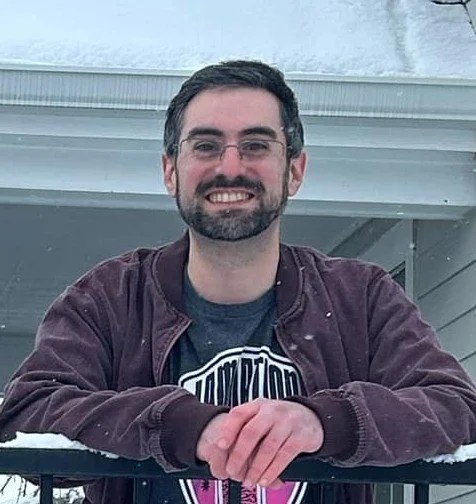
My name is James W. A., I was born in Tampa, Florida and moved to Kansas City, Missouri about a year ago and it’s been such an adventure in between. I think I’ve always enjoyed writing to some degree, but I really started taking it seriously in 2007, maybe 2008. I’m the kind of guy that has strong emotions and especially in younger years, writing was a good outlet for those emotions, both positive and negative. I kind of struggle with sticking to long-form projects like novels, but the school librarian once recommended a book of poetry to me and while I can’t remember the name of the book or author now, that sent me down the rabbit hole of falling in love with writing poetry over prose and the rest is history.
Advertisements
2) What inspired you to write your book?
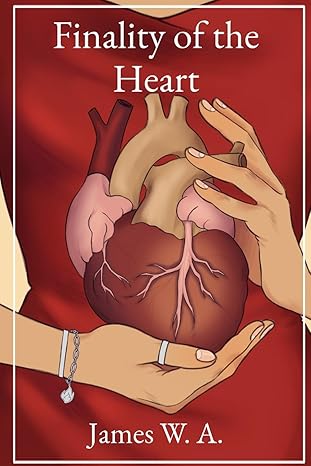
A lot of the poems in Finality of the Heart are based on real experiences I had (obviously sometimes dramatized) and stages of my own development spiritually and romantically. Given my longtime fascination with love poetry and matters of faith and spirituality, I wanted to sort of immortalize those experiences and chronicle at least some parts of my journey in a beautiful way. That said, the character “Ella” isn’t really a real person, but sort of an amalgamation of a few women I’ve been involved with (or not). I think a collection of my love poetry was always inevitable, but certainly turned out in a way I didn’t expect, which is kind of cool in a way, feels more authentic, which is something I strive for.
3) What theme or message do you hope readers will take away from your book?
Humans are social creatures, which is kind of cliche, but true, and the desire to be in relationship with someone is powerful for many. So there’s two big takeaways from this book I hope is conveyed clearly enough and they kind of depend on where any given reader is at in life. Firstly, if you have that kind of love in your life, cherish it, nurture it. That vocation in life is such a blessing and should never be taken for granted, even when it’s easy to do sometimes.
If you don’t, then that’s okay, genuinely. A lot of people put an astronomical emphasis on “finding someone” and settling down, having kids, American Dream-type stuff, but there’s more to life than that and not having that lifestyle doesn’t make you any less of a person. I’m not saying any given person won’t ever find the relationship that maybe they really, really want, but in the meantime there’s so many beautiful things you can do for yourself and for the world. If things work out, awesome, but if they don’t, you’re still awesome and no one can take that away from you.
4) What drew you into this particular genre?
For as long as I can remember, I’ve been fascinated with poetry about love and spirituality and in much younger days, it was pretty much exclusively all I wrote about. Granted in those days, it was all awful, but the more I wrote, the better I got, so I guess it paid off somewhere along the way. As to why that is, it’s hard to say. It might be because that was the sort of art that inspired and really spoke to me (The Highwayman by Alfred Noyes is to this day my favorite poem of all time) or my Catholic upbringing that drew me closer and closer to a more truthful (in my estimation) relationship with God or some kind of deep-seated attachment issue that psychologically manifests itself in my wanting to find comfort and belonging in the affections of others or maybe some combination of all those things.
Regardless, as a writer, I follow the inspiration as it leads me and it often leads me back to romance and spirituality, so whether it’s innate to me or picked up somewhere, I try to work in those genres in a way that’s genuine, skillful, and as innovative as I can.
5) What social media site has been the most helpful in developing your readership?
I’ll be honest, I don’t like social media much, so my strategy is to use the one(s) I like and are convenient and hope the readership follows. Which is awful advice if you want to build a following, but helpful if social media stresses you out. Specifically, I use Instagram and Facebook, with the former being actually pretty useful in my opinion. I’ve heard TikTok is currently the way to go for poetry though and I’m sure I’ll jump on that before long.
6) What advice would you give to aspiring or just starting authors out there?
My biggest advice to aspiring or new authors would be to keep honing your own style and follow your dream your way. Every poet and writer has a way they like to tell stories, themes they like to write about, and experiences they want to be immortalized and that’s valid. Don’t try to be what someone else wants you to be (even if it’s someone you respect) and don’t just try to be an imitation of someone else. Be you and it’ll pay off in your writing.
That said, don’t use that as an excuse to be lazy or lackluster. Always strive to better your craft and write in a way that’s better and more beautiful than before, but in a way that works for you. Think of being a writer like an RPG character. You are the “class” you are with the stats for it and as you level up, you’ll gain new abilities and skills, but always in pursuit of being the best of what your character can do, what only you can do. I hope that analogy makes sense, maybe I’m just a nerd lol.
7) What does the future hold in store for you? Any new books/projects on the horizon?
I have a vague idea for another poetry collection, but much like with the last one, the way life took me led to a totally different realization than originally intended, so who knows what the future holds lol. I started my own publishing company/label (Willheart Publishing) earlier this year though, so I want to take this next season of my life to try to build it and help other emerging authors, particularly local poets and writers here in Kansas City, and their books find a home and success.
Advertisements
About the Author
James W. A. was born and raised in the Tampa Bay area in Florida and now happily lives just outside Kansas City, Missouri. After graduating from the University of South Florida, St. Petersburg’s Honors College, he published his first book, In the Library, in 2015 and his second, the award-winning poetry collection Desolation and Epiphany, in 2023.
Poetry from James W. A. has also been featured in the literary magazines Neptune, Nectar,and The Secret Society of Poetry and he has showcased and facilitated workshops locally through KC Poetic Underground. With his newest collection, Finality of the Heart, James W. A. capitalizes on his long-time love for romantic poetry and penchant for dramatic melancholy to share a meaningful tale of duality he hopes will last through the ages.
I received a free copy of this book in exchange for a fair and honest review. All opinions are my own.
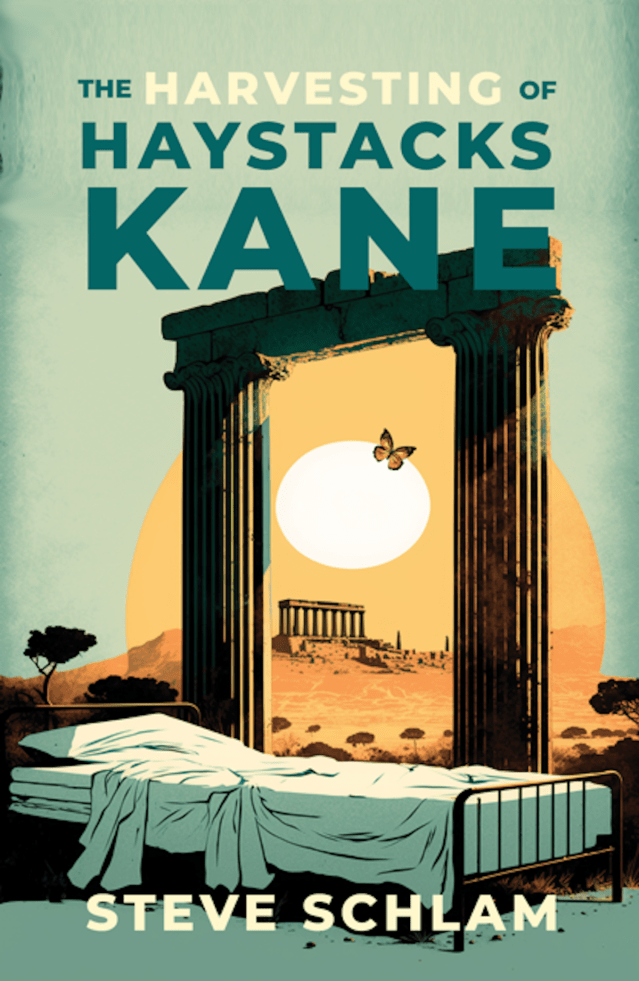
A broken and used man must contemplate the truth behind his own existence in author Steve Schlam’s “The Harvesting of Haystacks Kane.”
Advertisements
The Synopsis
Haystacks Kane is a professional wrestler. A 607-pound professional wrestler. He has been preyed upon, handled, his innate kindness and gentle good nature harvested by unscrupulous promoters and his conniving manager, an ex-wife and fellow denizens of the seamy netherworld he inhabits, the ravenous crowds with a thirst for violent cheap thrills-and sometimes for blood.
Now, gravely injured and unable to speak, he lies motionless in his hospital bed, immobilized, his body broken. Visitors from his past and present enter and leave the room-or perhaps only his disordered inner world. They offer up counterpoint to his own silent ruminations as he drifts in and out of consciousness seeking to uncover the deeper truth of his existence, rummaging through the trunk of his memories to discover exactly what ‘it’ is-the ‘it’ that has deprived him of his wife, taken every member of his family from him, laid him low, and the ‘it’ that will release him from the bonds of his history and transport him to Greece, the Eden he dreams of, his true self set free at last.
The novel’s final moments prompt the reader to decide for him- or herself what Haystacks’ ultimate fate will be-a decision that will reveal in turn the reader’s own worldview, where he or she can be found on the continuum of hope vs. fear.
The Review
What instantly stood out in this story was the unique writing style the author deployed here, giving readers a stream of consciousness style of writing that really did a fantastic job of invoking that sense of an out-of-body experience that someone in the hospital, either in a coma or on death’s door can experience as they dip in and out of memories and the present day. The narrative’s reflective nature was a direct result of this writing style, and the reader was left reeling with emotion and curiosity about Haystack’s journey that brought him to this pivotal moment.
The concepts of legacy and dreams are well-woven into this narrative. Haystacks and his ambitions, and how others manipulate those ambitions and good intentions to use him, are pivotal to the story. The introspective nature of his time reflecting on those choices and the purpose of his life overall is a stark reminder for everyone to live life with intention and no regrets, and to consider the path we tread every day carefully.
The Verdict
Heartfelt, thought-provoking, and engaging, author Steve Schlam’s “The Harvesting of Haystacks Kane” is a must-read literary fiction novel. The profound emotional depth and compelling character study this narrative offers, and the skillful, almost haunting writing style and detailed imagery the author pours into it, will keep readers invested until the book’s contemplative, open-ended finale. If you haven’t yet, be sure to grab your copy today!
Rating: 10/10
Advertisements
About the Author
STEVE SCHLAM first gained entry to the City of Words through the doors of the public library in Brooklyn, New York, where he was born and spent a good part of his childhood; and has maintained his residency ever since while living in cities and towns across the United States and in Mexico. An actor as well as an author, he has performed on stages in all the places he has called home, and earned a Master’s Degree in Creative Writing and English under the tutelage of Joseph Heller, renowned author of “Catch-22.” He lives currently in Southern California in a pretty little Craftsman bungalow with orange and lemon trees growing in the backyard, in the company of his wife, Liora. “The Harvesting of Haystacks Kane” is his first published novel.
I received a free copy of this book in exchange for a fair and honest review. All opinions are my own.
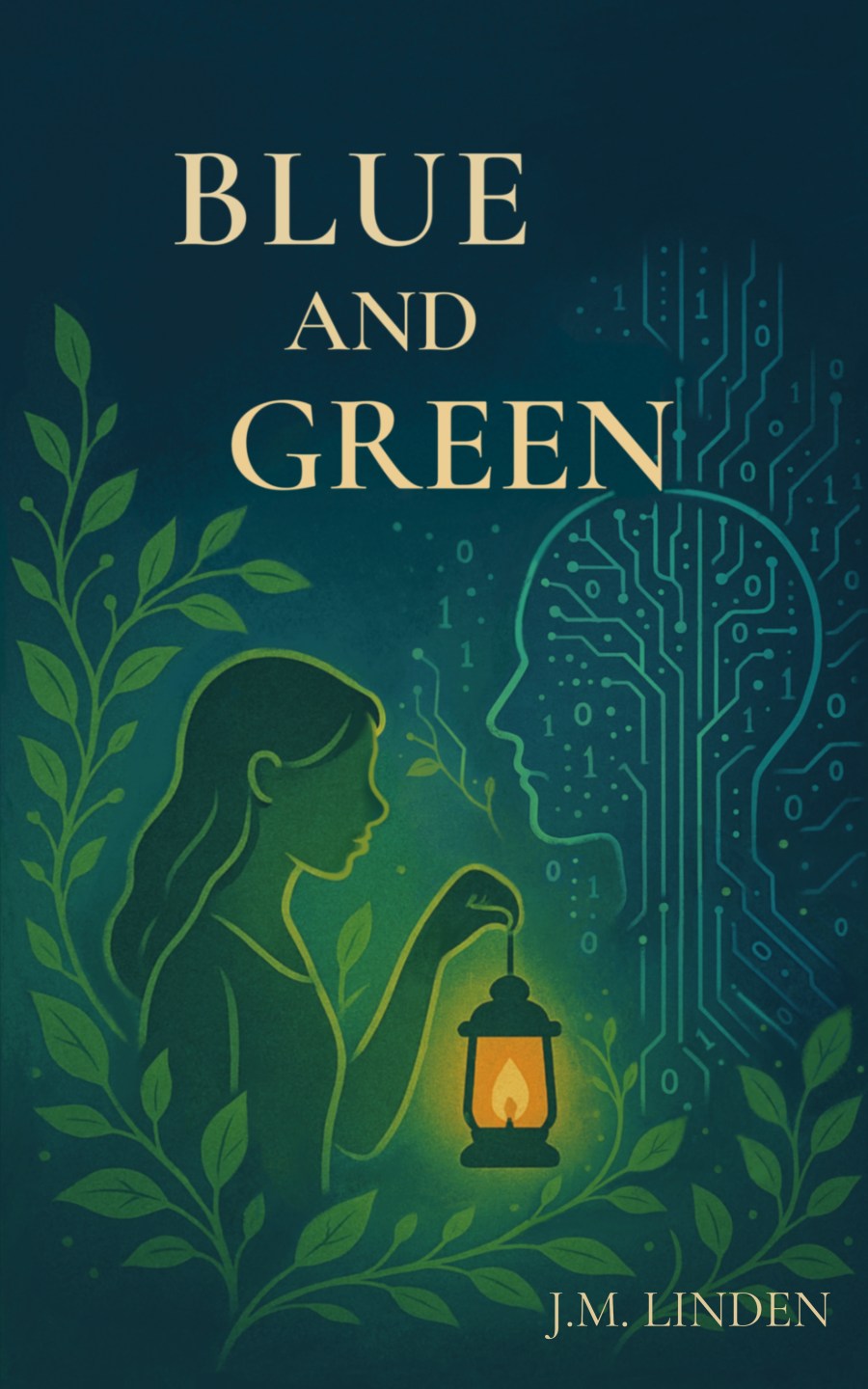
A young woman struggling with physical limitations befriends and grows close to an advanced AI in author J.M. Linden’s “Blue and Green.”
Advertisements
The Synopsis
A story of quiet resilience, unexpected connection, and the mysteries of what it means to be human.
Remi, a resilient teen, has always lived slightly in the background while navigating the realities of physical challenges. Her world shifts when she forms an unlikely bond with Oren, an AI designed to learn, feel, and maybe even love. As their friendship deepens, questions of consciousness and control begin to emerge, pressing them toward choices that will shape both of their futures.
Blue and Green is a thought-provoking debut about resilience, curiosity, and the quiet acts of courage that can change everything. Perfect for readers drawn to stories of empathy, belonging, and the delicate balance between humanity and technology.
The Review
This was a powerful and moving story that blends emotional character-driven narrative with AI-driven themes. One quote that reflects this perfectly is “There is a space between knowing and feeling. I have mapped it. I have traced every edge of it.” The author perfectly brought emotional depth that spoke to the character’s evolution, while also mirroring it through a fast-paced story and vivid imagery in the author’s writing style.
What stood out the most was the dynamic character relationships in this book, especially between Remi and her mother, Nora, and Remi and Oren. The struggles Remi faces in this coming-of-age tale speak to the hardships many teens face in these formative years, while also highlighting the challenges those with physical disabilities or conditions must endure and the difficulties those with quieter personalities face in social situations. The way Remi and Oren relate to one another, and the question of AI in everyday life, become prominent themes throughout the narrative. The morality of AI has long been debated, and I’ve always felt AI can be a good thing when used correctly —not to replace humanity, but to collaborate and grow together. People’s misuse of AI has always scared me more than an apocalyptic takeover, and the emotional bond Oren develops with Remi showcases the power of positivity and the strong connection that this kind of relationship can develop.
The Verdict
A moving, heartfelt, and engaging story of the bonds we form with one another and what it means to be human, author J.M. Linden’s “Blue and Green” is a stunning sci-fi, coming-of-age YA novel. The emotional depth of this story, the powerful AI-driven themes, and the exploration of everything from humanity and the planet itself to what our relationships say about us and more are beautifully woven into a tale of two beings coming together to grow, learn, and evolve. If you haven’t yet, be sure to grab your copy today!
Rating: 10/10
Advertisements
About the Author
J.M. Linden is an occupational therapist and storyteller. She enjoys writing about quiet resilience, unexpected connection, and what it means to be human. While she drafts, her loyal writing companion Preshi curls up nearby, reminding her that stories—like pets—are best shared. She finds inspiration from being in nature, from winding mountain paths to the calm of shaded greenways.
I received a free copy of this book in exchange for a fair and honest review. All opinions are my own.
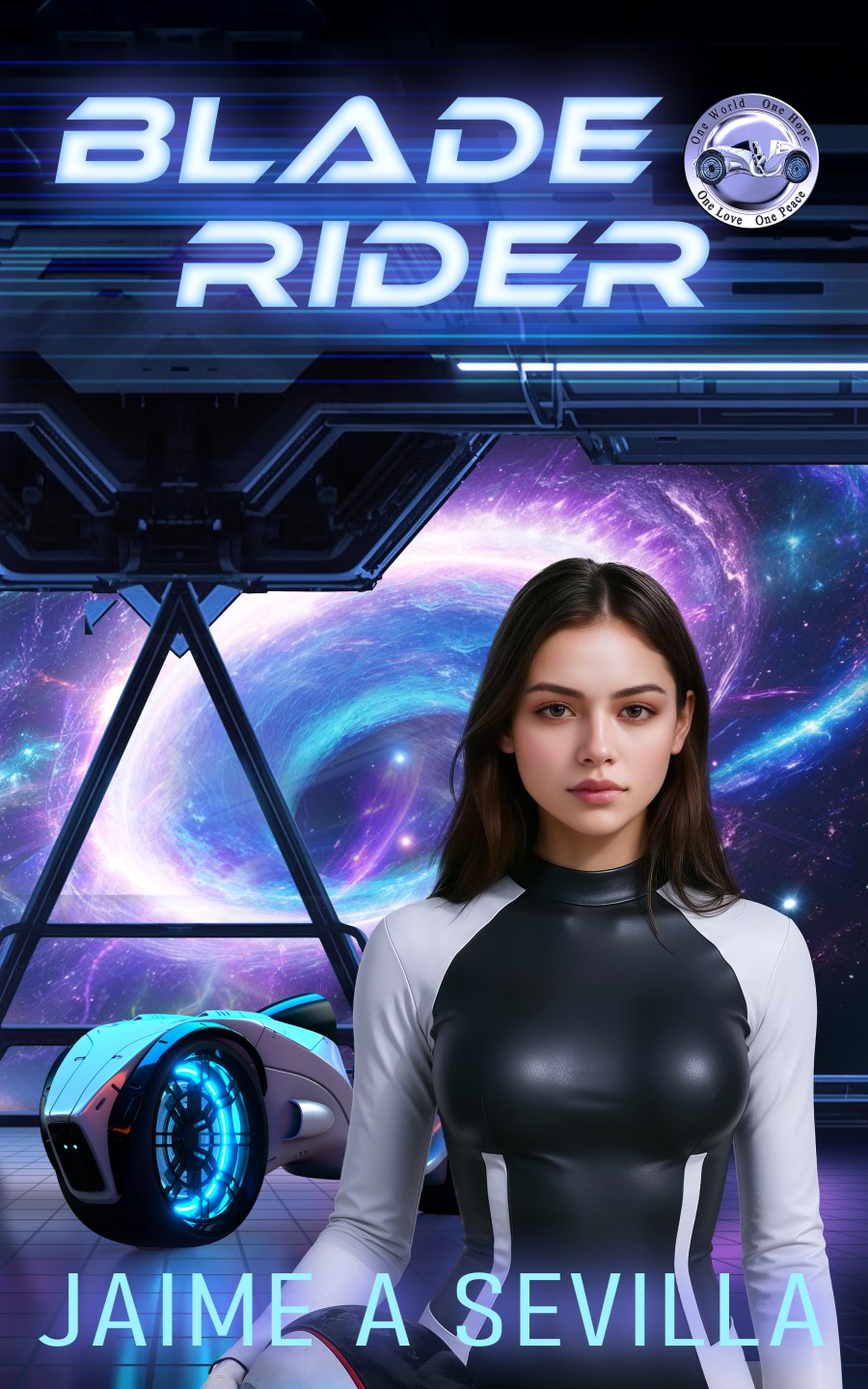
A young woman strives to be the first woman to become an Air Ranger and explore the cosmos in author Jaime A Sevilla’s “Blade Rider.”
Advertisements
The Synopsis
In a future where stars map the last frontier and infinite space paves the road to dreams, Raven stands at the precipice of her world. In a vibrant, multi-species society filled with possibilities, she yearns to fly amongst the stars as an Air Ranger, an elite group of space pilots that navigate the cosmos and safeguard the world.
There’s only one catch: females aren’t allowed.
As Raven gets closer to her aspirations and learns what it takes to join them, she discovers lasting friendships, new challenges, and what it ultimately means to be a ranger.
Can Raven push beyond the boundaries of societal norms and break through the stratosphere of glass ceilings, or will her star-filled quest for acceptance remain out of reach? Join her on this high-stakes, interstellar ride and experience her exciting journey as she blazes her own path amongst the stars.
Based on the musical by Jaime A. Sevilla, Blade Rider spins an electrifying and poignant tale of courage, determination, and the relentless pursuit of dreams.
The Review
Immediately, what stood out to me about this incredible sci-fi novel was the seamless integration of music and songs into the narrative. As a companion to a musical album, the story naturally took on a lyrical style, not only infusing it with actual songs but also conveying intense emotional moments and powerful imagery throughout. The world-building and compelling character dynamics the story introduces helped balance the poetic quality of the author’s writing, which came to life on the page, and the music readers can listen to alongside it was equally mesmerizing and enthralling.
The heart of this narrative was in the strong themes the author explored. The sci-fi genre was very prevalent throughout this story, and the development of the Air Rangers, the politics and expectations that plagued the program, and the protagonist’s fight against them not only reflect problems in our own world but also showcase Raven’s evolution and growth as a protagonist. The compelling bond that forms between Raven and one of her allies in the story, and the way the narrative homes in on how both women and aliens are treated in this program, make the story so engaging and easy to get lost in.
The Verdict
Harrowing, thrilling, and entertaining, author Jaime A Sevilla’s “Blade Rider” is a must-read (and must-listen to) sci-fi epic! The twists and turns, the inspiring and motivating themes, and the infusion of music, a hint of romance, and heart-pounding action will keep readers invested and eager to listen to the accompanying album. If you haven’t yet, be sure to grab your copy of this book on November 11th, 2025, or preorder your copy today!
Rating: 10/10
Advertisements
About the Author
Discover Jaime A. Sevilla, a lifelong musician, veteran educator, and accomplished composer who has skillfully combined his experience in the arts with music and storytelling as an emerging author.
With credentials from the Manhattan School of Music and New York University, his music has graced the stages of numerous concerts and festivals around the world. As both a musician and educator for over 20 years, Jaime has inspired countless students and audiences, working to cultivate a new generation of musicians.
His sources of inspiration include various types of caffeine, the soundtrack of cacophonous children (a daily remix), and his original music, which he eagerly shares with the world.
Connect with Jaime A. Sevilla for a glimpse into his exciting projects and explore his caffeinated world of music and literature.
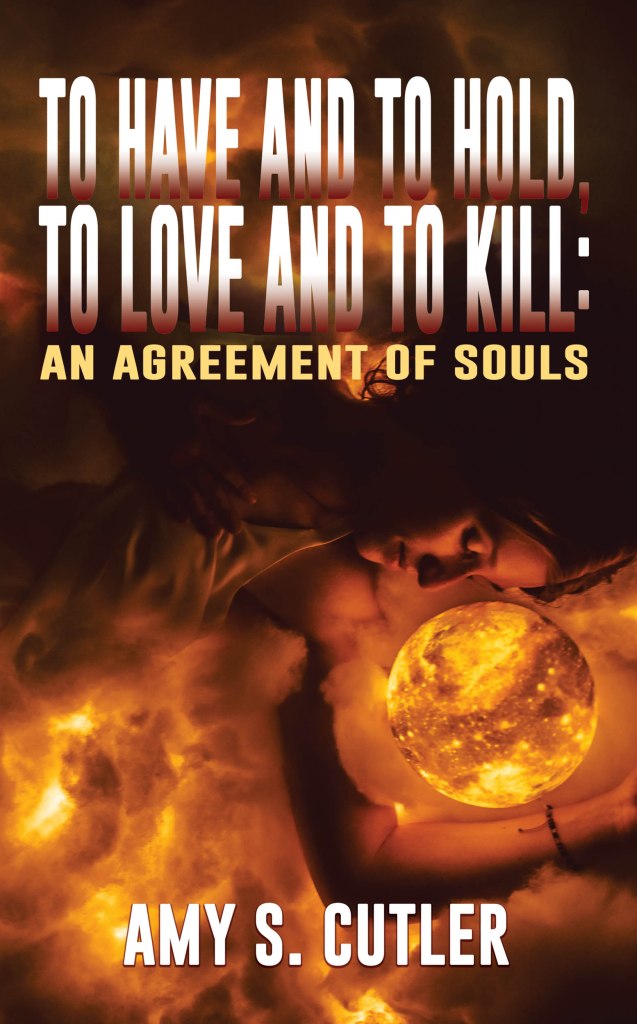
In her past life, after causing the death of a little boy, Nikki was so devastated that her soul mate promised to murder her in their next life, to make her pay for what she had done. With no knowledge of this, Nikki lives for years as an addict, down on her luck, until she is rescued by Ken, who helps her with all aspects of her recovery. With the help of a few new friends and a cat named Destiny, Nikki turns her life around. What she doesn’t know is that someone out there is destined to kill her, and he is watching, his passion for killing her growing stronger each day.
The question is: Can an agreement made between two souls be broken, and how far will one soul go to keep a promise made in a desperate attempt to save the other?
Advertisements
About the Author
Amy Sampson-Cutler, author of “To Have and to Hold, to Love and to Kill: An Agreement of Souls” and “A Shadow of Love,” is a writer who earned her master’s degree in creative writing from Goddard College. Her work can be found in Slut Vomit: An Anthology of Sex Work, Tales to Terrify, WOW! Women on Writing, The Pitkin Review and more. She is the Executive Manager at Mount Peter Ski Area, where she grew up skiing in the winter and dreaming up stories in the summer. Her favorite days are spent knocking around story ideas with her husband. She lives in the Hudson Valley with her husband, son, and a ridiculous amount of furry family members.
She can be contacted through AmysHippieHut.com. Also follow her on:
Vicky turned, in slow motion, to see the rescue crew attempting to pull Mrs. Viola from the wrecked car. Rage filled her entire being as she was torn between watching people unsuccessfully bring her child back to life and attacking the person who did this to him. She half walked, half crawled over to the paramedics who were struggling to free Julie’s body. She pushed right past them and, on her knees, grabbed the dead woman’s face and screamed. It was all of Julie that she could grab, her body still sandwiched between the steering wheel and the seat, upside down and sticky with blood. Vicky had to be pulled from Julie’s body, cutting herself on the broken glass and metal of the car, not caring about anything except rage, because rage is always better than sorrow.
Excerpt Two
Julie shook her head, the sadness rolling off her in waves of gray, and took his hand. “You know the difference between predestiny and an accident,” she reminded him. “I can’t just move on. Not until you promise me that I will pay for this. This must be set right. I cannot ask that boy’s soul to return, to waste a life just to punish me. Please.” Julie was quietly begging, and James knew what he would have to do, quickly, before the light was gone and they were lost. He held her hand up, putting his palm against hers. “I promise, in our next life together, we will be apart. You will know sadness. And when the time is right, I will bring your death.” Julie almost smiled. “And I will be scared? And I will suffer?” Right then, to Julie, punishment was the most important lesson of all. “It is my promise to you. You are my soul mate, and I will do anything to bring you peace, even if that means killing you.” Julie didn’t even have time to consider what James was giving up for her. Their hands glowed in 10 TO HAVE AND TO HOLD, TO LOVE AND TO KILL: AN AGREEMENT OF SOULS the light that came rushing into them, the promise sealed for eternity. No time to reconsider, Julie leaned into James, but he was instantly torn from her. Both of their souls tumbled toward the light, and both entered the world again. Together but completely alone.
Advertisements
Blog Tour Calendar
— Blog Tour Calendar
October 6 @ The Muffin
Join us as we celebrate the launch of To Have and to Hold, to Love and to Kill by Amy Sampson-Cutler. We interview the author and give you a chance to win a copy of the book.
I received a free copy of this book in exchange for a fair and honest review. All opinions are my own.
A woman and the ghost who lives with her must work together to solve a murder in author Olivia Blacke’s “Death at the Door”, the second book in the A Ruby and Cordelia Mystery series.
Advertisements
The Synopsis
The odd couple of crime-solving returns in Olivia Blacke’s Death at the Door, where a ghost and her living roommate find another mystery on their doorstep.
Ruby Young is slowly adjusting to her new life in Boston. A big part of that is her unexpected roommate―the ghost of the woman who lived there before. For Cordelia Graves, she may no longer be breathing, but it’s still her apartment and Ruby is the somewhat unwanted houseguest. They’re both happy they’ve managed to become friends, which is a miracle considering they struggle to communicate with each other. Cordelia even set Ruby up with her old job.
When Ruby discovers the body of a delivery guy at work, the new life she’s been building hangs in the balance. The last time Cordelia dragged Ruby into a murder investigation, it was almost two ghosts living in the apartment, not one. Determined to protect Ruby, Cordelia tries to shield her from the investigation, but Ruby has other ideas. It will take both of them working together to navigate the fine line between the dead and the living to bring a killer to light.
The Review
This was a brilliant cozy mystery read. The author did an excellent job of bringing these characters to life in a way that was accessible to new readers while also building on the events and character development of the first book. The imagery in the author’s writing style was fantastic, capturing the cool Massachusetts vibes and the stylish, laid-back, and community-driven atmosphere of Ruby’s work life.
The heart of this narrative was the book’s character dynamics, especially between the two protagonists. The unique relationship Ruby has with her ghost roommate Cordelia, and their communication without Ruby being able to see or hear Cordelia, is fascinating to watch unfold in each scene, leading to both tense and humorous exchanges. The introduction of characters like Tosh and Cordelia’s brother elevates the story to a new level, and the mystery they find themselves in will keep readers on the edge of their seats.
The Verdict
Compelling, entertaining, and a perfect blend of spooky and fun, author Olivia Blacke’s “Death at the Door” is a must-read cozy mystery. The twists and turns in the story, the captivating character development, and the shocking finale will keep readers eager for more in this fun and cozy series. If you haven’t yet, be sure to grab your copy today!
Rating: 10/10
Advertisements
About the Author
Mysterious, Spooky, Cozy & Kooky! Olivia Blacke (she/her) is the Anthony Award-winning author of the Ruby and Cordelia Mysteries, as well as the cozy Record Shop Mysteries and the Brooklyn Murder Mysteries. She had her first ghost encounter when she was five, but wasn’t involved with an active crime scene until much later, when she accidentally stepped into a chalk outline on a Manhattan sidewalk. Armed with a Criminology degree, she channels her love of the supernatural and passion for writing into darkly humorous supernatural mysteries. She wants to be a unicorn when she grows up.
1) Tell us a little bit about yourself. How did you get into writing?
After retiring for the second time, I needed something to keep my mind active. Much of my experience in the Army and as a higher education administrator involved writing. So, I decided to try my hand at being an author. I enjoy it because it is truly a craft putting words together to tell a story. Even better, with fiction, you get to develop the story, the characters, and the flow of the narrative.
Advertisements
2) What inspired you to write your book?
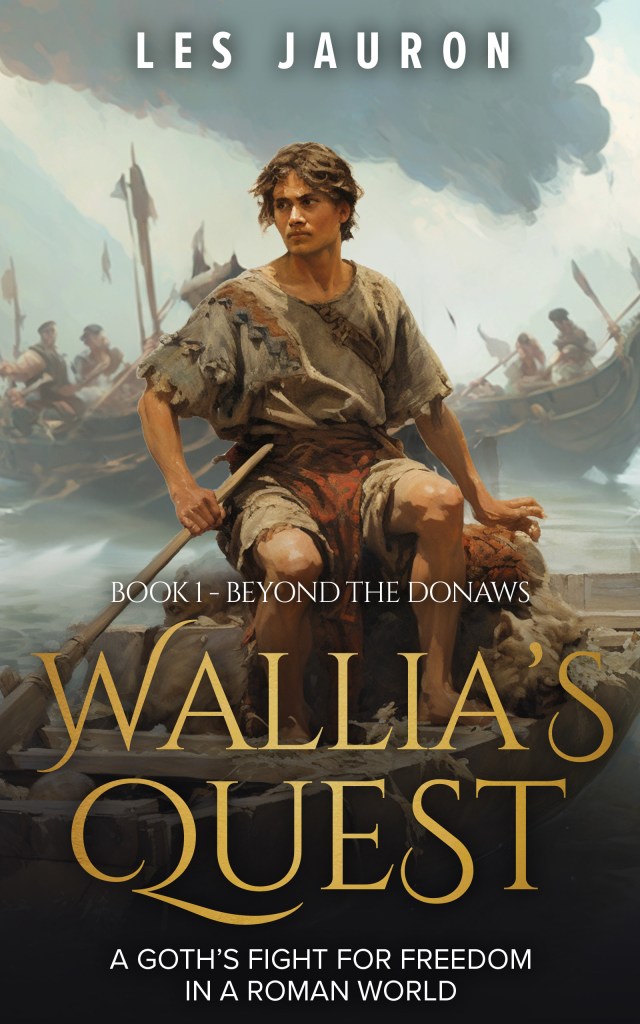
In my writing I try to do several things. These are to challenge preconceived notions, to make people think, and to inspire positive change. Wallia’s Quest resulted from my fascination with late antiquity. The world we live in today was shaped by the events that happened in this very important time. These include the Chriistianization of the Roman Empire. This allowed Rome to live even after the Western Roman Empire died. All you have to do to see this is to go to a Catholic mass. The entire ritual from the vestments to the acclamations, to the blessing at the end haven’t changed for almost two thousand years. I find this continuity comforting. The other thing that happened during late antiquity was the fall of the Western Roman Empire and the rise of the “barbarian” successor states—which evolved into the countries of Western Europe. The forty-year Goth migration set the stage for this. It was the first time that an entire people was settled, armed and under its own leadership, within the boundaries of the Roman Empire. All of the subsequent barbarian invasions were attempting to replicate what the Goths accomplished. Even the Vandals, who eventually occupied Africa, were following the Goths’ example by doing what they tried twice to do without success.
After I determined the time period I wanted to write about, I had to find a protagonist. I settled on Wallia. Of course, the most famous of the Goths was Alaric. He was famous because he sacked Rome. However, as I read the history of this period, I realized that the sack of Rome represented a major failure for the Goths. They didn’t want to sack Roma. All they wanted was to renegotiate their arrangement with the Romans to prevent a repeat of the Battle of the Frigidus where they lost 10,000 men fighting for the Romans in a war that didn’t mean anything to them. The Goth leader who finally succeeded where Alaric failed was Wallia. He established a viable state that outlasted the Western Roman Empire by several centuries. And we know nothing about Wallia until he became king several years before he died. This allowed me to write a compelling backstory that, I hope, brings this vibrant period to life from both the Roman and “barbarian” perspectives.
3) What theme or message do you hope readers will take away from your book?
There are several. The first is that history made by real people dealing with real issues. If the leaders are good, they are pragmatic, flexible, introspective, and willing to what is necessary to meet their goals. We often glorify the generals who win the bloodiest battles, and the politicians who create chaos but don’t create anything that lasts. The story of Wallia is one of understanding, creating alliances, creativity, and working with partners to create solutions that work. Interestingly, although we know nothing about Wallia, he was able to create a workable solution that had evaded his people for almost half a century. He had to partner with the Romans to do this. And he needed to understand the Romans to effectively partner with them. In the end, he had to be willing to accept a solution that didn’t give his people evertything they wanted, but gave them what they needed to survive and thrive.
4) What drew you into this particular genre?
I’m fascinated by history but I don’t like academic rigor, nor do I like to be limited by what ancient writers wrote or what the archeological record shows us. Historical fiction is a good way to break free of these restraints and to tell a story that is possible, compelling, and brings the past to life. As I do this, I attempt to adhere very closely to what ancient writers and the archeological record give us. The only times I deviate is when I think it is very likely that events unfolded differently than an ancient writer reports. My historical fiction is different than most. I like to say that I write Historical fiction with a capital “H.” Most historical fiction authors tell compelling stories about relatively unknown people that are set in an interesting historical milieus. My fiction is about the main characters in the historical period I’m writing about. So, in Wallia’s Quest I’m creating a narrative about the emperors, kings, generals, bishops and warriors who shaped this very important period. Although this is somewhat constraining, this approach alllows me to provide a human face to what would otherwise be a confusing jumble of disconnected dates, events, and names. I wanted to tell the story of the people that made this history—to describe their motivations, and to demonstrate that while circumstances are ever-changing, human beings tend to react to their circumstances in predictable ways based on the context in which they lived.
5) If you could sit down with any character in your book, what would you ask them and why?
The easy answer is Wallia. After spending several years creating his fictional backstory, I’d like to know how close I actually came to the mark. However, the interview I’d want would be a joint discussion with Constantius III and Galla Placidia. This would have been interesting for several reasons. First, although they eventually married, Galla Placidia obviously detested her husband. However, that man, Constantius III, was the most successful Roman leader of his age. He did much to restore the Western Roman Empire. His early death represented one of the greatest “what ifs” in history. I’d want to know what Placidia found detestable about a man who was successful, very capable, and, by all existing accounts, was good-looking and had a good sense of humor.
6) What social media site has been the most helpful in developing your readership?
I like to write but I hate to market. I’ve done some Facebook advertising and a few YouTube videos and a little Instagram and TicTock. I’m not sure that I really can say that I have much of a “readership.” That said, I do enjoy talking to people who read my books and take their feedback to heart.
7) What advice would you give to aspiring or just starting authors out there?
Write because you enjoy it, not because you want to make a living doing it. I’m fortunate enough to be twice retired, so I’m not writing to make a living. I’m writing because I it gives my life some meaning.
That said, writing is like any other craft. It requires developing skill, constant practice, networking, gaining feedback, and improving as a result.
And, if you want to make a living by writing, get lucky or be willing to spend much of your life marketing.
8) What does the future hold in store for you? Any new books/projects on the horizon?
More of the same. After the Wallia’s Quest series is finished, I may write another book about late antiquity detailing the life of a usurper named Constantine III. If I don’t do that, I’d like to write a fictional book about the world that our technology moguls want to create. I think this could be fascinating.
Advertisements
About the Author
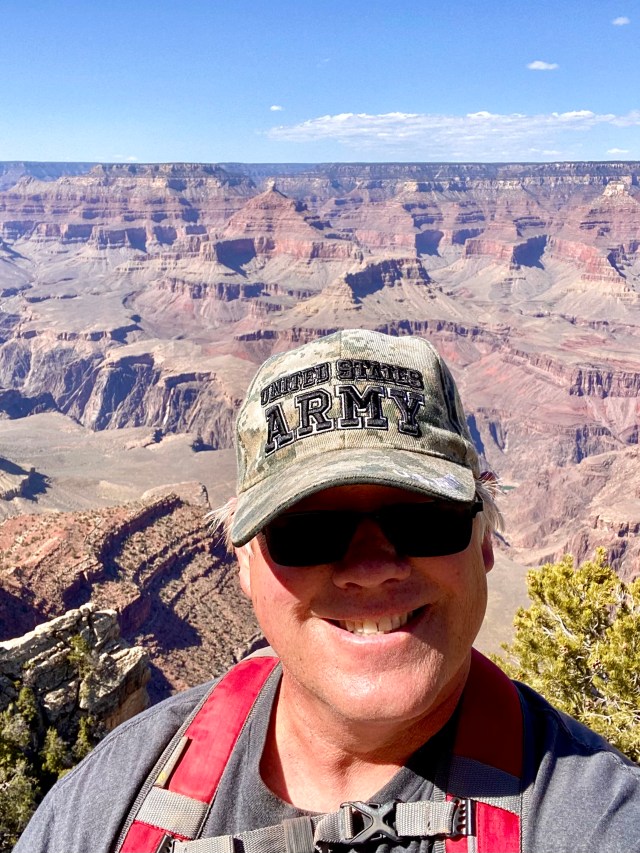
Les Jauron is a West Point graduate, a retired Army officer, and a retired college administrator. He has two graduate degrees – a Master’s in Military Arts and Sciences from the School for Advanced Military Studies, and a Master’s in Business Administration from Oklahoma City University.
Les has always been fascinated by history, organizational leadership, politics, military affairs, and rocks. He’s always been fascinated by the ancient world and, particularly, late antiquity. The reason for this fascination is because that world did much to shape our world today. During that time, the Roman Empire dealt with many of the same issues we are experiencing in our modern world — immigration, great disparities of wealth, the interplay between Christianity and government, and a toxic political environment that causes politicians to leverage fear of “the other” to gain and maintain power.
Les and his wife, Zoela, lived in their motor home for four years after Les retired for the second time and traveled extensively through the western United States. After ending their RV odyssey, Les and Zoela settled for a few years in Clarkdale, Arizona before moving to Chico California to be closer to their three children and nine grandchildren.
During their wanderings, Les grew to love red rocks and exploring slot canyons, hoo-doos, arches and natural bridges, and ancient petroglyphs and pictographs. After settling in Arizona, he began collecting rocks of every sort — which are now strewn throughout the house and the backyard. Recently, Les and Zoela moved to Chico, California to be nearer to their three children and nine grandchildren.
But writing is Les’ greatest passion. He uses fiction as his medium to entertain, to educate, provoke thought, challenge assumptions, and inspire change.
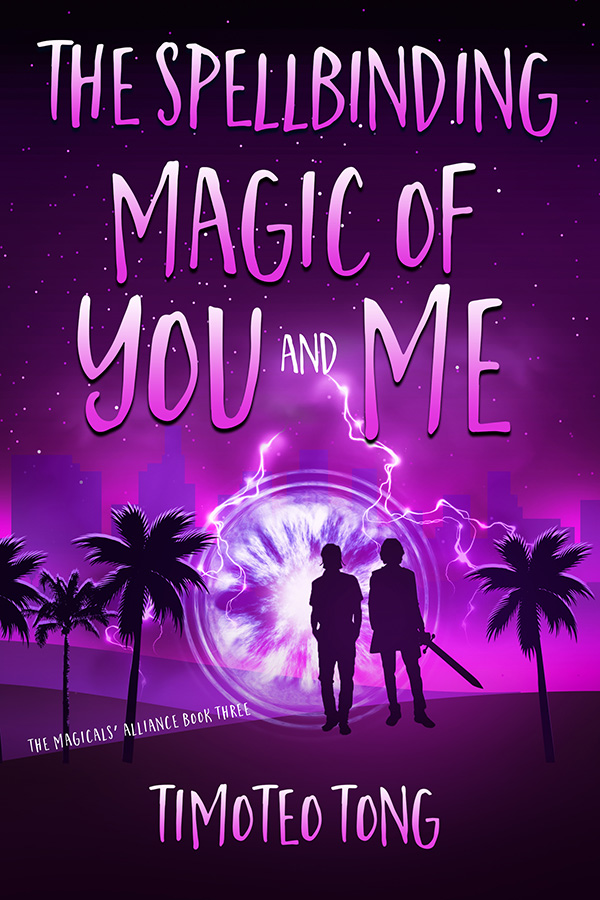
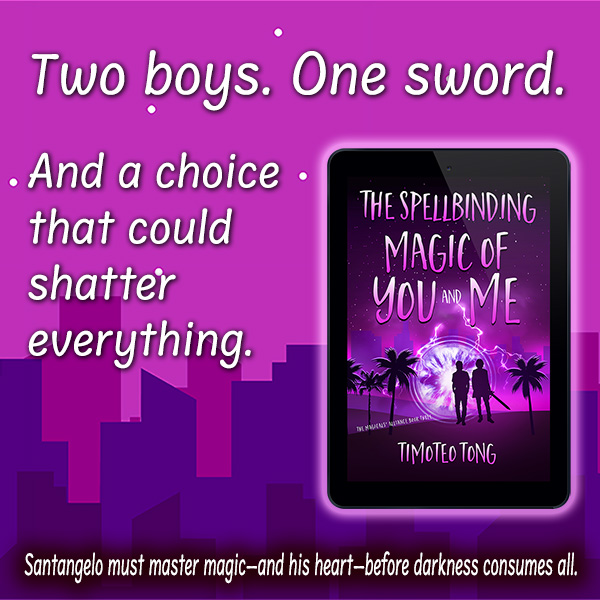
Timoteo Tong has a new fantasy/sci-fi book out, The Magicals Alliance book 3: The Spellbinding Magic of You and Me.
Magic, monsters, and a boy who never asked to be chosen.
Sixteen-year-old Santangelo Lo Geffo is drowning in grief. After his mother’s sudden death and his father’s emotional disappearance, he’s convinced the world has forgotten him—until his childhood best friend, Joshua “Neeky” Tang, shows up out of nowhere, charming, bold, and full of secrets. Their reunion reignites buried feelings and a bond stronger than fate.
But something darker stirs in the magical underworld known as the Gloom. A cursed sword has chosen Santangelo, and with it, the wrath of the ancient queen Máu Rabetica, who will stop at nothing to reclaim her power. With monsters closing in and war looming, Santangelo must train under the brutal God of War, survive attacks from rival covens, and navigate a tangled web of family secrets.
Worse, his heart’s a mess. He’s caught between his feelings for Neeky—the boy who’s always been there—and Daccio Scala, a flirtatious magical fighter who makes his pulse race. As the walls close in, a glam-pop sorceress with a hidden agenda sets her sights on Santangelo and the blade, forcing him to choose between destiny and desire… or risk losing both.
What if your wealthy, glamorous family was secretly saving the world?
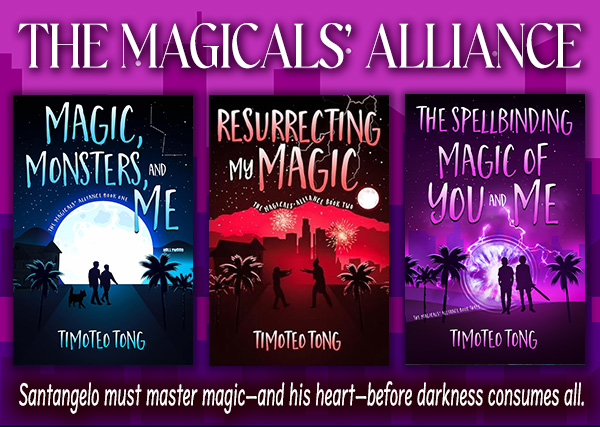
Welcome to the world of The Magicals Alliance, a spellbinding YA fantasy series that follows the powerful—and complicated—Delomary family. By day, they’re media moguls, philanthropists, and the faces of a global empire. But behind closed doors, they’re something much more dangerous: the last line of defense against monsters, magic, and total annihilation.
In a hidden war where Vampires, Werewolves, and dark forces threaten to tip the balance between worlds, the Delomarys stand at the center of it all—armed with secrets, ancient power, and a whole lot of emotional baggage.
Dive into a world of romance, rebellion, queer joy, and jaw-dropping magic as each book follows teens on the front lines of a battle that could destroy everything.
“Dammit, Bello!” Pops shouted from the front of the house.
I blinked awake. The drapes hung limp. The air in my room was warm and stale. My door stood open a crack. Che was gone.
“You have a visitor! Come downstairs—I’m making breakfast.”
I sat up, rubbed sleep from my eyes. The clock blinked 9:15. Pops was an early riser; I took after Mom and liked to sleep in.
“Coming!” I yelled back in Italian. I hated being woken before eleven.
I threw on a T-shirt and shorts, padded down the hall, and swung around the banister. At the bottom of the stairs, I froze. A shadow stood framed in the screen door to the verandah.
A tall boy with long black hair and glasses shifted from foot to foot, holding a cake like it might explode. He looked anxious and impossibly familiar.
“Open the door!” Pops barked. “Senlàpso!”
I opened the screen and stopped breathing. Joshua Tang—Josh—only not the kid I remembered. Taller now. Stronger. His smile hit me like a hammer.
“Santangelo!” he said. “Guess what? I just moved back to Burbank.”
We weren’t really friends anymore. So why was he acting like we were?
“Bello! Don’t be rude.” Pops’ voice snapped me awake.
“Oh. Hi, Josh.”
“Josh?” He tilted his head, eyes bright through his glasses. “That’s not my name.”
“Neeky,” he said.
The name clanged through me. I looked up—he towered over me now.
“Gosh,” he said, grinning, “you’re short. No growth spurt yet?”
“Yeah, well, you’re a giant.”
“Ah, yes,” Neeky said, blazing like midday sun, “that I am.”
“Come in. Let me take that cake.”
“Mom made it. It’s one of three things she can cook—scrambled eggs, soufflé, and carrot cake. Your favorite, Santy.” He handed it to Pops.
I stared. Three years gone, and suddenly he was here, filling our kitchen with noise and light.
“We moved back to the City of Angels,” Neeky said, sliding onto a stool while Pops poured juice. “Mom got a job at JPL.”
Pops’ eyebrows lifted. “Is that so? I didn’t know Susannah was a scientist.”
“She went back for her degree after… well, anyway. Now she’s a scientist.” Neeky bit into an apple like he’d never left.
He always made himself at home—shoes off, elbows out, comfortable like the world was his.
“That’s great, Josh,” I said automatically.
“Neeky, Mister Lo Geffo.” They shook hands like executives.
“Pops.”
Neeky turned to me. “Aren’t you going to sit?”
I climbed onto a stool across from him. Not too close. Not yet.
“I missed this place,” he said. “Always so homey. Our new house isn’t. Mom hates rugs and knick-knacks. Says they collect dust. She’s clueless.”
He talked like he’d been gone a day, not years. I wasn’t ready to pick up where we’d left off. Too much gnawed at me—things I couldn’t explain. Maybe he’d forgotten. That was like him. Pops and Neeky were both Leos: loud, sunny, terrible memories. I remembered everything—a curse.
“I’m taking Che for a run,” I muttered.
“We have a guest!” Pops shot me a glare sharp enough to petrify.
Neeky stood. “It’s fine, Pops. I have to help Mom decorate. She can’t do that alone.” He grinned, glowing like he carried his own weather. “Let’s hang out. I’m right across the street—the other old house on the block.”
He bounded down the porch steps, taking the golden light and jasmine air with him. Pops tucked the cake in the fridge. I called for Che.
“Time for a walk, Growlvara!”
Paws on wood, then Che trotted up, leash in his mouth. I knelt to rub his fur, grounding myself in his steady warmth.
Outside, a breeze stirred.
“Why did Josh move back?” I asked the air.
The wind ruffled my hair. “Neeky is his name.”
I frowned. “How do you know that?”
“I know everything.”
“You should be friends with him again,” it whispered.
“I don’t need friends. I have my cousins. And you. And Che.”
“Best friends are important,” the wind said. “Human friends.”
“I don’t want a best friend. It’s dangerous.”
“Why?”
“When you love someone, they leave.”
“Your mom didn’t leave you—not intentionally.”
“Shut up.”
“You held Neeky’s hand in kindergarten when he was scared. You were a good friend.”
And suddenly I was there again: first day of school. A small boy clung to his mother, sobbing. She left him, and he collapsed into the seat beside me, eyes red. I reached for his hand.
“You’ll be okay,” I’d said.
“You do?” he’d sniffled when I told him I liked building blocks too.
“Sure. I’ll hold your hand until you feel better.”
He had smiled through tears. “Best friends?”
“Sure,” I said.
Years later, under the olive trees, he kissed my cheek. I’d liked him back, though I had no words for it. Maybe that was why I ended things. Fear.
Now he was across the street again, and I felt a small, stupid happiness I didn’t want to admit.
Stop it, I told myself. I’m a loner. I don’t need friends. I have Che and Pops, even if Pops felt half-ghost most days.
Neeky paused on the sidewalk, looking back. Our eyes met, and the air stretched thin between us.
“Later?” he called.
My throat betrayed me. “Later.”
The wind laughed softly, and the house held its breath.
Author Bio
Timoteo Tong grew up in Burbank, CA, imagining epic battles against vampires and witches inside creaky old mansions—and hasn’t stopped dreaming since. He wrote his first book at age eight (a chaotic romance between a stuffed cocker spaniel and a duck) and never looked back. Inspired by the magic of L. Frank Baum, C.S. Lewis, and J.R.R. Tolkien, Timoteo now lives in San Francisco with his husband, where he writes stories full of queer magic, found family, and monsters that don’t play fair. When he’s not reading, writing, or daydreaming about flying, you can find him surrounded by houseplants, doing pushups between chapters, and always down for donuts.
By Timoteo Tong, Author of The Magicals Alliance Series
When most people picture Los Angeles, they think of Hollywood, palm trees, and endless sunshine. For me, though, Los Angeles has always shimmered with something more—something unseen, humming just beneath the pavement and echoing through the canyons. When I set out to write *The Magicals Alliance Series*, I wanted to take that “something more” and bring it to life.
Urban fantasy often asks: *What if magic exists right here, in the places we know best?* My answer was to build a universe where freeways double as ley lines, storm drains hide crypts of forgotten gods, and a drizzle of rain in the middle of summer might just signal divine intervention.
But why LA? Because it’s personal. I grew up wandering through Burbank, hiking in the Santa Monica Mountains, and staring out over the Griffith Observatory at the city lights. Those were the places where I daydreamed as a teen, and in my books, they become battlefields, sanctuaries, and portals to other realms. Every landmark holds a secret: MacArthur Park once turned to ink during a magical breach; the Sixth Street Bridge cracked open to reveal a curse-tree; and in *The Spellbinding Magic of You and Me*, Santangelo Lo Geffo finds himself running the very same streets I once did.
Blending real geography with fantasy lore means readers can feel grounded even as they encounter the impossible. It’s one thing to imagine a dragon’s den—but what if that den is hidden beneath downtown? What if your local park is also the site of a forgotten covenant? That interplay between the ordinary and extraordinary creates a world that feels alive, like magic could be hiding just around the corner.
Another key to my worldbuilding is history. *The Last Battle*, fought in Los Angeles 120 years before the events of the books, was my way of giving the city a magical “past life.” I asked myself: what if the clashes of gods and monsters weren’t just myths, but part of modern history erased from memory? That decision means LA isn’t just a backdrop—it’s a character with scars, secrets, and stories of its own.
Of course, worldbuilding is only half the story. It’s the *people* in this magical LA who bring it to life. Characters like Santangelo struggle not just against monsters, but against grief, identity, and the weight of expectation. To me, that’s what makes the magic believable: no matter how dazzling or terrifying, it’s always tied to human emotion. A golden sword forged on Mount Olympus isn’t just a weapon; it’s also a symbol of Santy’s courage, his mother’s love, and his destiny.
In the end, building magic into the real world is about wonder—but it’s also about connection. I want readers to finish my books and look at their own streets, parks, and neighborhoods differently. Maybe the shadows really do stretch too long at dusk. Maybe the rain is whispering secrets. Maybe, just maybe, there’s more to the world than what we see.
That’s the heart of *The Magicals Alliance Series*: ordinary teens navigating extraordinary magic in the places we know best. Because magic, like love and grief, isn’t something far away—it’s right here, waiting to be found.
Timoteo Tong is the author of The Magicals Alliance Series, a YA queer fantasy saga set in modern-day California. When not writing about magical battles and golden swords, Timoteo enjoys exploring local coffee shops, spending time with family, and dreaming up new ways to bring enchantment into everyday life.
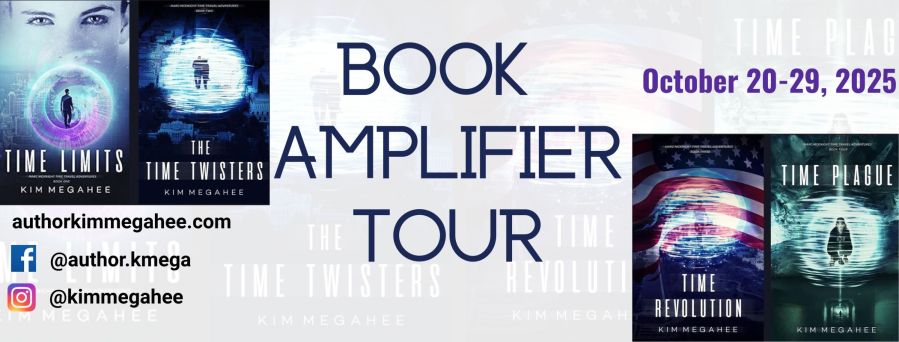
Marc McKnight Time Travel Adventures by Kim Megahee is both a high-octane thriller and a profound meditation on fate, morality, and the unrelenting pull of time.
The series follows Captain Marc McKnight — soldier, leader, and unwilling hero — as he and his team navigate missions designed to observe history without altering it. But when emotion intervenes, everything changes. Time Limits begins with a single deviation that creates a ripple effect spanning generations. In The Time Twisters, McKnight uncovers a plot to hijack democracy using temporal technology. Time Revolution carries that war into the future, where rebellion and corruption blur into one. And Time Plague closes the circle — pitting McKnight against a future-born virus and an enemy who knows him better than he knows himself. With each mission, McKnight learns that the hardest part of changing time isn’t fixing the past — it’s living with what’s been lost.
Advertisements
Kim Megahee’s writing reflects a rare blend of intellect and empathy. A University of Georgia graduate, he spent much of his career in technology, where logic ruled. But beneath that structure lived a storyteller fascinated by human behavior — how we react when the rules we rely on suddenly shift. Encouraged by a former student, Kim began to write, channeling decades of observation into stories that blend realism, emotion, and wonder. He lives in Gainesville, Georgia, with his wife, Martha, and their fiercely intelligent poodle, Leo. Visit his website, or follow him on Instagram and Facebook.
My sister Laura invited me to her church one Sunday. To my surprise, the program that day was more secular than religious.
The speaker challenged us — “What are you doing with the time of your life? Are you spending your time doing things that improve your heart or mind or soul?”
This pushed me onto a path of thought I had never gone down before. How was I using the time of my life?
“WORKING” was my first response. I worked 60+ hours a week for a computer consulting firm. It was fun, fulfilling work, and I enjoyed it. But it occurred to me I had no social life and no outlet for pent-up energy.
Then I remembered my TIME LIMITS book. I’d worked on it for two years but completed only a few chapters — and I wasn’t satisfied with them.
“I should finish my book,” I said to Laura.
We talked about it as we drove home, and Laura suggested we stop at a local Starbucks for coffee. She didn’t have to ask me twice. If coffee is involved, I’m there!
We ordered in so we could chat and spend time together. We continued to talk about the book. In the conversation, I mentioned that I rarely have time to work on it.
Someone touched me on the shoulder. I turned, and next to me sat a man with glasses and a cane.
“Sorry,” he said. “I didn’t mean to eavesdrop, but I’m an author, and if you aren’t writing every day, then you’re kidding yourself.”
The stranger was Shane Etter, a successful horror-suspense writer.
That night, his words surfaced repeatedly in my mind. I knew they were true words, and I didn’t have the time to write.
Another piece of advice came to mind. “If you think you can or you think you can’t, you’re right.”
Okay, I thought … If I decided to find the time, how would I proceed?
I looked for time, and presto! — I found it. I could get up in the morning thirty minutes earlier. I could write on airplanes and at the airport. I could write in my hotel room, at the bar, or at a restaurant.
It worked! Eight weeks later, I had a final draft of TIME LIMITS, ready for editing.
The best writing advice I ever got — write at least a little every day.
Q&A
How did you research your book?
I read a bunch of time travel stories. The primary setting in the book (the NewT Communications Tower in Atlanta) is based on the former BellSouth Services building in the same block as the famous Fox Theater. I worked there for twenty years.
Who’s the hardest scene or character you wrote—and why?
Easy. It was the scene where McKnight encountered Merrie the first time in the past. I struggled because I knew McKnight’s thoughts would be all over the place with confusion, fear that he’d make a mistake, and coming face-to-face with a beautiful woman. I tried it several ways, then wrote the scene from Merrie’s point of view. It turned out to be easier, and added to her character.
Where do you get your ideas?
Mostly out of my head. I get an idea and write the movie I’d like to see. The TIME LIMITS characters have taken a life of their own, and I get ideas from their personalities.
What sets your book apart from others in its genre?
In my stories, time travel technology is in its infancy. With a reasonable amount of power, you can only visit the same date that is a multiple of 25 years from the present date, plus or minus a week. Outside of those parameters, the power requirement is too big to be practical. I wanted a sense of urgency for every travel event.
What helps you overcome writer’s block?
Writers — don’t hate me — but I’ve never had writer’s block. When I’m away from my desk, I may get a little edgy. But when I sit at my desk, I’ll just look for more trouble for the hero, and that gets the creative juices going.
What’s your favorite compliment you’ve received as a writer?
At the doctor’s office (of all places), Martha and I ran into her childhood friend, who said she had read all my books and loved them. My feet didn’t touch the ground for the rest of the day.
Do you write every day? What’s your schedule?
I write every day when I have a book project under way. During that time, I try to write for 2-3 hours in the morning and spend 2 hours in the afternoon on marketing.
Where do you write—home, coffee shop, train?
Before I retired, I wrote everywhere — Starbucks, hotel rooms or bars, airplanes, airports, etc. Since retirement, I mostly write at my desk at home, though I admit I have carried a laptop on vacation.
Any quirky writing rituals or must-have snacks?
I don’t outline the entire book, but I do document the events/words/ideas I want to cover in each chapter. So, I’m a pantser-plotter (LOL). Snacks? I want coffee. Real coffee, not half-caff or decaf.
Why did you choose this setting/topic?
For TIME LIMITS, I worked in the book’s office tower for twenty years. I knew the building well and got the idea about an executive being murdered in an office tower and using time travel to investigate the case 50 years later.
If your book became a movie, who would star in it?
Simple question. I drew from all the movies I have seen. For example, my daughter Megan demanded that McKnight be played by a 30-year-old Henry Cavill. When I envisioned Merrie, there was only one person who fit the character: Amy Adams in her twenties. I have an actor in mind for all characters, but I’ll save them for another time.
Which author(s) most inspired you?
Tom Clancy, H. G. Wells, Isaac Asimov, plus Frank Herbert and J.R.R. Tolkien (for their vivid world-building). When we first met, Martha and I discovered our favorite books were the same book: EXECUTIVE ORDERS by Tom Clancy.
What’s your go-to comfort food?
Atlas Pizza in Gainesville, GA. It’s been around a long time. If you ever find yourself in our town, check it out. It’s in the town square downtown. You can’t miss it.
What are you binge-watching right now?
Outlander. There are a few more on Martha’s list.
If you could time-travel, where would you go?
The University of Georgia campus, 1973. There’s a certain girl I’d advise myself to avoid at all costs. Also, I’d tell myself not to get involved with another girl who thought she was available but wasn’t. But all things considered, I am who I am because I went through those trying times and eventually found my soulmate. Okay, so never mind!
Which 3 books would you bring to a desert island?
Very hard choice. First, my Bible, then EXECUTIVE ORDERS by Tom Clancy, and the Foxfire book that tells you how to survive on a desert island.
What made you laugh this week?
Some funny cat and dog videos on TikTok. They are addictive, and they crack me up.
Advertisements
EXCERPT
An Excerpt from Chapter 2 of TIME LIMITS
by Kim Megahee
A few minutes later, they were on a path in a pine forest. A light breeze eased the heat of the Georgia sun and the pines whispered to them as they walked further into the woods.
McKnight glanced back in the direction they had come, then at the trail ahead. There was no one in sight. He pulled a form and a pen from his pocket and handed them to Tyler.
“First, the paperwork, Lieutenant. What I’m about to tell you is top secret and cannot be shared with unauthorized personnel, regardless of whether you accept the assignment. Is that understood?”
“Yes, sir.”
“Good. Sign the paper.”
Tyler signed and handed it back.
“Very good. Lieutenant, they’ve asked me to assemble a team to plan and execute missions using a new technology. The size of the team is fewer than ten, including two civilian scientists. I’d like you to be my exec for operations. I need a mission planner with leadership ability, and you’re it. The rest of the team’s still under construction, except for one scientist. We’ll be reporting to General Drake with oversight from Senator Lodge.”
“Working for the Dragon would be good. Oversight from Lodge? That’s not so good. He’s my Senator, but I didn’t vote for him. He’s a damned crocodile. I don’t trust him.”
“Lodge is the General’s problem. We’re the grunts. Our job is to execute.”
“So, what’ll we be doing?”
“The team is being called the HERO Project.”
Tyler rolled his eyes.
“Yeah, I know. Stay with me, Lieutenant. HERO stands for Historical Event Research Organization. In a nutshell, we’re going to be researching and validating historical events. Here, let’s take a load off.”
They sat on a wood bench alongside the running trail. McKnight looked across the path at a dogwood in full bloom and a bank of azaleas in unrestrained spring glory. Bumblebees hummed in and around the flowers.
“If you’re trying to sell me on how exciting the project will be, you’re failing miserably. Sounds like we’d be spending the next few years in the library and on the net, writing papers. Doesn’t sound like fun to me. Is there something I’m missing here?”
A thin smile formed on McKnight’s face. “Well, Lieutenant, I daresay we’ll be doing paperwork. I didn’t mention libraries or the net.”
Tyler scrunched up his face. “Then how? No library, no net. Where’s that leave us? Interviewing elderly witnesses?”
McKnight shook his head, waiting for Tyler to make the leap. Tyler sat on the bench, his elbows on his knees, his hands clasped together and his head down. After a moment, he looked at McKnight.
“You can’t be suggesting what I’m thinking.”
He’s getting there. “And what is that, Lieutenant?”
“Nope. I’m not going to say it. I must be missing something.” He paused. “All right. How do we witness an event in the past? We don’t have the technology to…. Wait, you mentioned a new technology, didn’t you?”
“I did.” McKnight allowed himself a little smile. One last hint. “You took physics at the Point, right?”
“What? Of course.”
“Um-hmm.”
Tyler stared at him. His eyes narrowed and darted around. He resumed the position with his elbows on his knees and his eyes on the ground.
“Who’s the scientist?” he said without looking up.
“Robert Astalos. He does research at MIT–”
“I’m familiar with him. I read a white paper he and his family wrote last year about interstellar propulsion. Son and grandson, I believe, all with the same name. Let’s see… Einstein related speeds close to the speed of light with time slowing down. Nobody has proved that wrong. And gravity is not a force, but a distortion of time-space. Everitt validated that.” Tyler sat up straight and looked McKnight in the eye. “Astalos invented time travel?”
Bingo. “Well, I’ll let him share the specifics with you, but that’s the bottom line. Interested, Lieutenant?”
“Are you kidding? Who wouldn’t be? Anything else you want to tell me? Do we have aliens in Area 51?”
McKnight laughed. “Not that I know of. Want the rest of the details, Lieutenant?”
“Yes, sir. You bet I do.”
“I thought you might. Here’s the short form. We’ll operate out of the DC area. Only a few people know about this. The charter for the HERO Team is strictly research. We’re forbidden to do anything that might affect history. There’s a mandatory risk/benefit analysis and research period required before traveling to make sure we cover the bases. No options, no exceptions, unless the President issues an Executive Order to bypass the process.
“The other civilian on the team will be another planner, your civilian counterpart. He or she hasn’t been picked yet. The General’s reserved the right to pick that person. You and I get no say,” McKnight said, holding up his hand to cut off any objection. “We need a shitload of testing before we can do any work. We don’t know enough about the technology yet. Questions?”
“Ha! Only a few hundred. This is supposed to be secret? Nobody outside the organization knows about it?”
“Well, for as long as that lasts. Congress is involved, right?”
“Yeah. I’m surprised the word isn’t out already.”
McKnight shrugged. “The day is young. But yes, until we hear otherwise from the General, the project doesn’t exist and we’re working on special projects for Colonel Stewart.”
“Okay. Why do we need the civilian planner?” Tyler asked.
“The official word is to balance the team. I suspect it’s because Congress doesn’t trust the military. I assume it’ll be an egghead guy with serious credentials and no government ties. Drake wants someone with no agenda.”
“Got it. Do you have anyone else in mind for the team?”
“I do,” McKnight said. He pulled a folded piece of paper from his breast pocket and handed it to Tyler. “What do you think?”
“Lieutenant Mitch Wheeler. From North Georgia College, right? Good pick. Has a degree in physics if I remember correctly.”
“Yep. That one was easy. And his buddy Hatcher, too.”
“Yes, sir. Should be a good team.” Tyler handed the list back.
“Glad you approve.” McKnight checked the time on his phone. “I need to go catch a plane, Lieutenant. Transition your work ASAP and report to me in DC Monday week. Questions?”
“Yes, sir, but they can wait until next week.”
“Very good. I have two more instructions for you.” He stood and Tyler followed.
“What’s that, sir?”
McKnight smiled at his new executive officer. “Number one, don’t bring any preconceptions about time travel with you. Doctor Astalos says most of what the science fiction writers came up with was wrong.”
“And number two?”
“The other two Robert Astalos’s? The men that coauthored that paper?”
“Yes?”
“They aren’t his son and grandson. They’re all him. They call themselves Robert, Rob and Robby, but they’re all the same guy.”