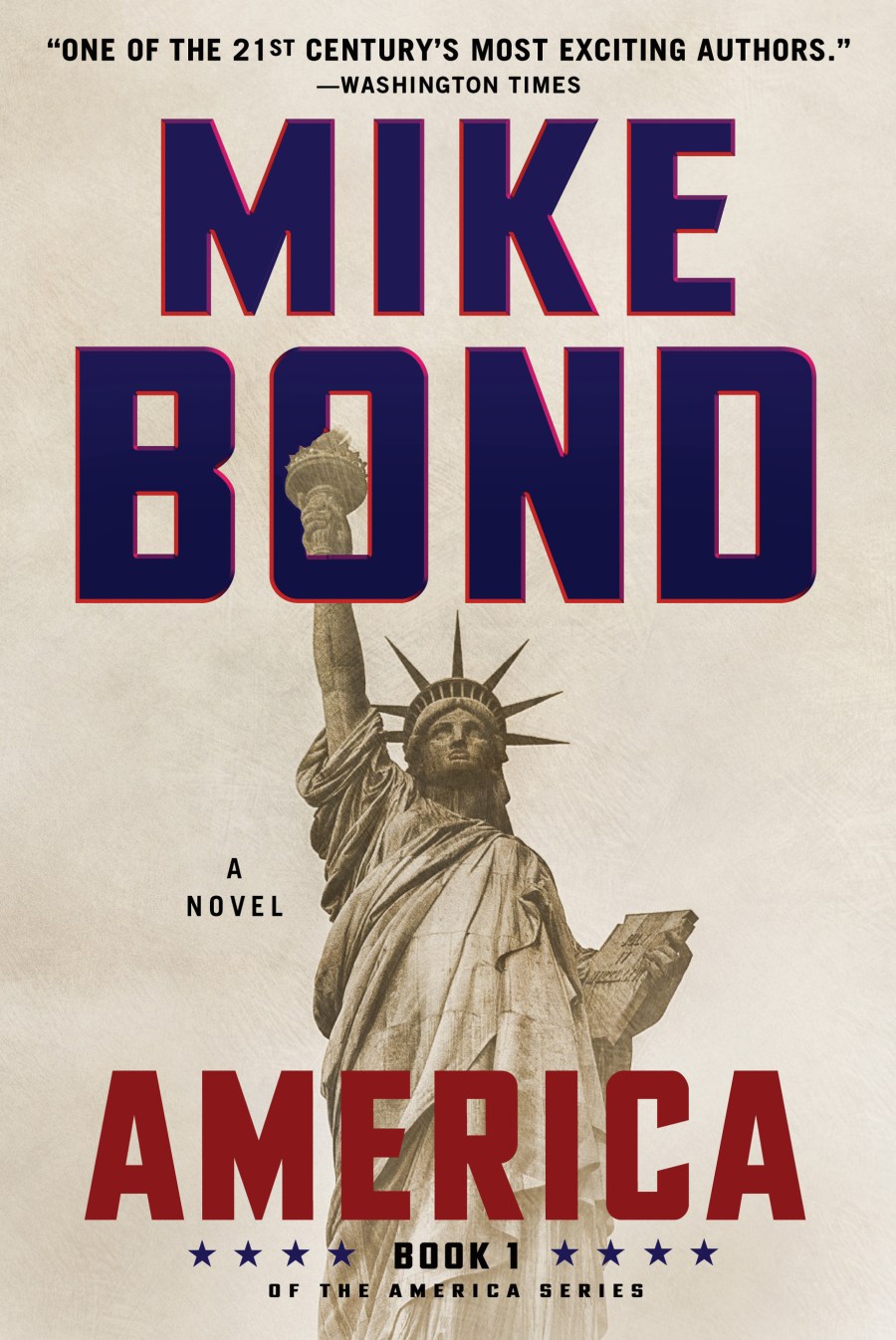
Rather than recounting history from a distance, America by Mike Bond approaches a turbulent era through lived experience. Youth, ambition, and uncertainty move alongside cultural revolution and political unrest as personal journeys reflect a country in transition.
In a decade marked by unrest and reinvention, four young people search for direction as the world around them shifts at breakneck speed. Troy, orphaned early, finds comfort in family and dreams of flight and space exploration. Tara claims independence and identity through music, growing into a rock ’n’ roll performer shaped by freedom and rebellion. Mick, a football standout with a defiant edge, begins questioning authority as the war abroad becomes impossible to ignore. Daisy, driven by ideals of equality and service, joins the Peace Corps and devotes herself to understanding the human mind. Their lives intersect amid protests, cultural shifts, and personal awakenings, revealing how private choices are shaped by national turmoil. Through moments of joy, loss, and reckoning, America captures both the exhilaration and the cost of a time that redefined lives—and a nation.
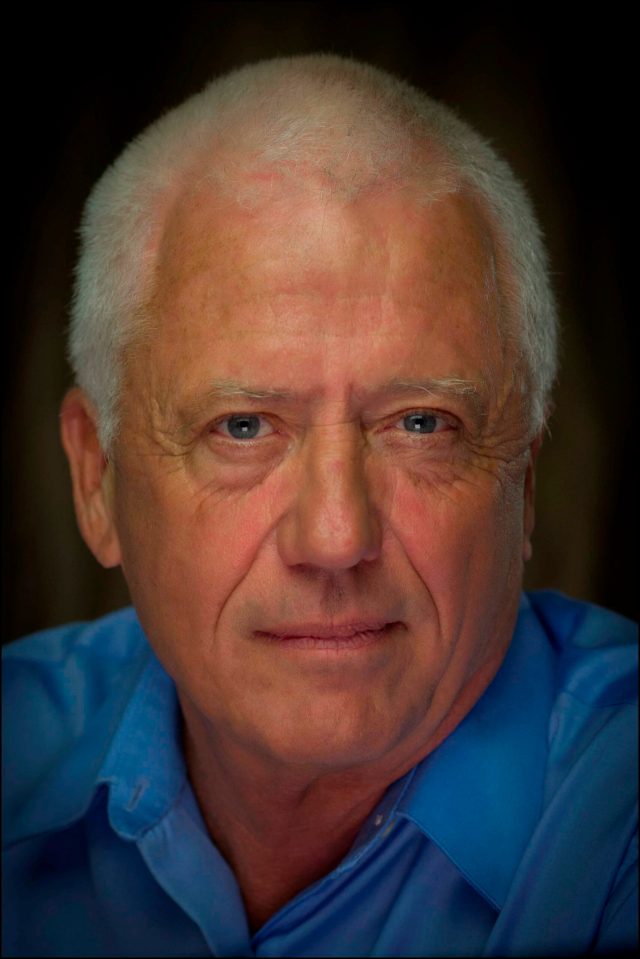
Mike Bond is the author of nearly a dozen bestselling novels and an ecologist, war and human rights journalist, award-winning poet, and international energy expert. His work spans more than thirty countries across seven continents, often drawn from firsthand experiences in remote, dangerous, and war-torn regions. His novels are praised worldwide for their intricate plots, vivid settings, and explosive pacing. His reporting has covered wars, revolutions, terrorism, and major environmental crises. Learn more at his website.
THE BOY STARED through the cyclone fence at the dirt road, golden meadow and forested hills beyond. He listened a moment more to the din of other boys playing in the concrete yard behind him, scrambled up the cyclone fence ripping his shirt on the barbed wire top and dashed across the meadow uphill into the cool shadowed forest.
Minutes later he glanced down from the hilltop at the hostile brick walls and barred windows of the orphanage. A black Ford police car with white doors had stopped at the gate, its yellow roof globe flashing. Two priests and a cop were walking along the road, one priest gesturing at the forest.
He imagined them catching him, hitting him, wished he’d never run away, turned uphill through the dark trees then down a wooded valley to a stream. He knelt in the wet moss, his reflection rising toward him – dirty and skinny, tan hair askew – and drank the icy water tasting of rock and mud. So this is what it’s like to drink from a stream.
He followed the valley for a long time till he saw a dirt road ahead through the trees. A big red car was there. Afraid he’d been seen, he pulled back into the trees. From the car’s open windows came voices, a man and woman. If he moved back up the hill they’d surely see him. He’d be taken back to the Boys’ Home, the Fathers would whup him.
A warm breeze stirred the leaves. His heart hammered, his knees shook with fear and fatigue. Soon the car would leave and he could cross the road.
The woman was moaning. Holding his breath he listened. The man must be hurting her. She cried out; the boy glanced round but there was no one who could help.
Shivering with fear, he worried what to do. If the man killed her and he had done nothing to help, it was a terrible sin. But if he tried to help her he’d get sent back to the Boys’ Home. Standing, he tried to see better. The man was pushing the woman down in the back seat, maybe strangling her.
The boy dashed across the road and banged on the car. “You leave her alone Mister!” he yelled, voice shaking, “I’ll call the cops!”
They were naked from the waist down. “Get him out of here!” the woman screamed. The man threw open the back door shouting, “You little shit!” and slapped the boy hard across the head. The boy tumbled into the ditch and scrambled through brambles uphill. The man wasn’t following but the boy kept running, gasping for wind, legs weak with fear that the man would circle somehow and get him. He ran till he could run no more, stumbled, fell, and ran again.
After a while he stopped and bent over panting, watching behind him. He couldn’t stop shivering but wasn’t cold. He tried to talk to himself and his voice trembled. His head spun, his ears whined. If the man wasn’t killing her what was he doing? Why had she said get him out of here? Why were they naked like that?
Confused and terribly lonely, the boy moved on through the forest, jumping in terror at the crash of an animal running away, a flash of tawny fur. Even the Boys’ Home was better than this.
In late afternoon he came to a big place of empty, run-down tarpaper-covered buildings, some of their windows broken, tall grass spiking up from their concrete yards. He felt hungry and afraid, then angry at himself for feeling it. He snuck along one building and looked in a window hoping for something to eat, but there were only empty concrete floors, yellowed newspapers, rusty cans, torn tarpaper, and a broken toilet lying on its side. He slipped through a half-open door and stepped silently from room to room around broken bottles, boards with nails sticking up and chunks of fallen ceiling.
A window shattered overhead and he ducked into a closet, broken glass in his hair, deafened by his pounding heart, hoping whoever it was hadn’t seen him.
Maybe it was a bird hit that window. Stupid bird.
He tiptoed from the closet toward the door. Another window crashed. He ran stumbling over cans and bottles. Someone was shooting at him. At the door he halted, fearing what to do. Blood ran down his cheek onto his shirt. They were going to kill him.
Steps scuffed outside in the concrete courtyard. A kid. The kid picked up a rock and slung it. Glass shattered and the rock hopped across the floor inside.
Advertisements
NOW ENJOY THIS GUEST POST FROM AUTHOR MIKE BOND
Why We Are Here
Many years ago I woke from a dream of being in a large place like a supermarket full of people. I met a young man with long dark hair who looked like me. “Why are we here?” I asked him.
“To find out what it is.”
“What what is?”
“Life.”
I awakened understanding that this was the task we are all given in life. That in good years and bad, joys and sorrows, our unerring goal is to understand life, to seek the meaning of this vast mystery encompassing us. To find out what life is and spread the word, like scouts returning to the tribe from distant and dangerous lands.
We are in an infinite universe of endless infinities. They stretch in all dimensions far beyond our feeble cognition. Time is forever, and forever unknowable. Even deep inside ourselves we cannot begin to understand.
We are children of the void. We go through many joys and sorrows in life, many magical mysteries we cannot comprehend. Perhaps what we experience feeds a greater wisdom far beyond our ken; we cannot know.
Like many people, I have lived through great joys and dangers – atrocious wars and vicious perils, and deep, long-lasting love, that have all made me believe in God. And to live deeply, intensely, to love, have children and give them the magical mystery of life – this is what we are born for.
I received a free copy of this book in exchange for a fair and honest review. All opinions are my own.
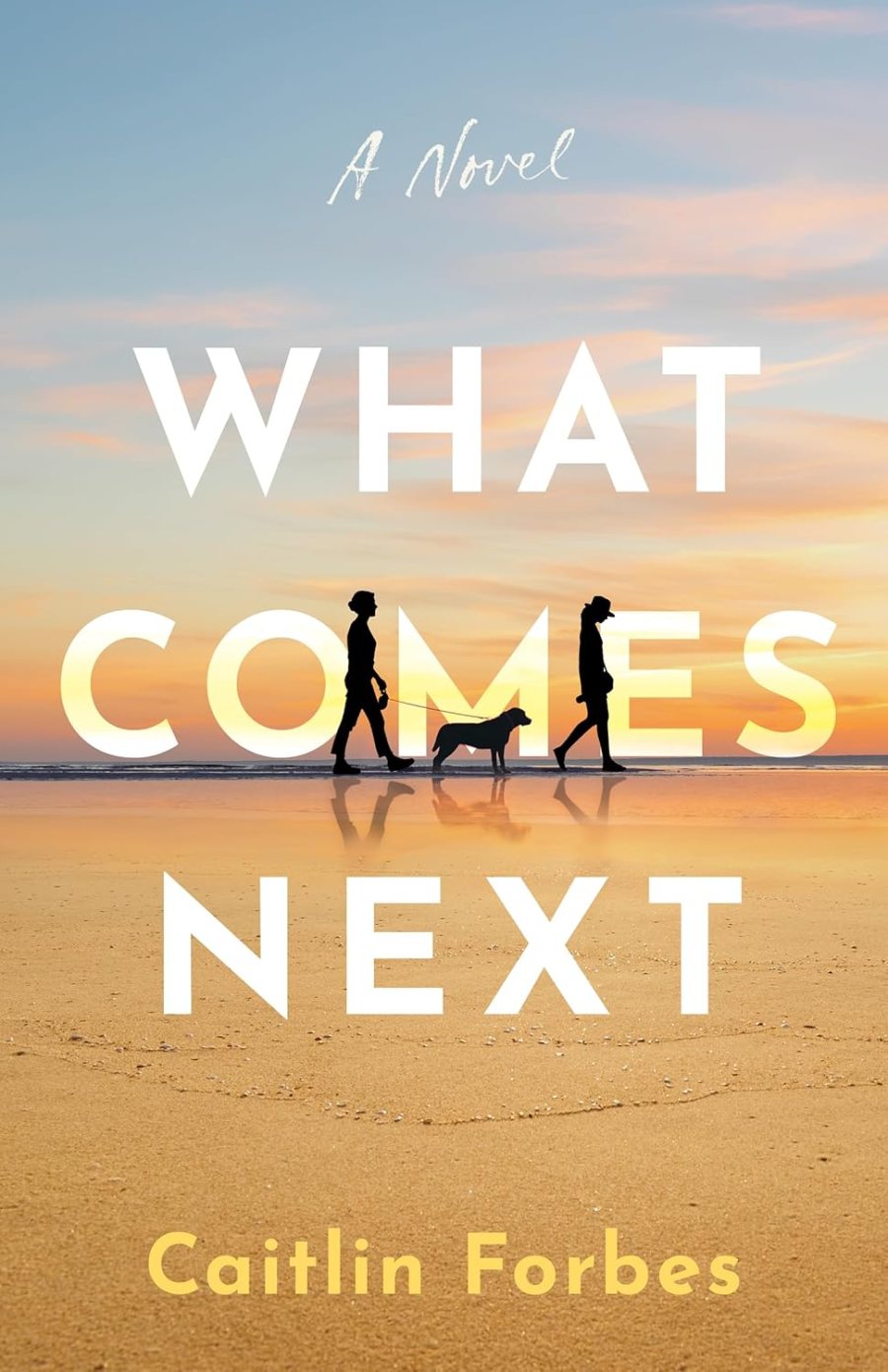
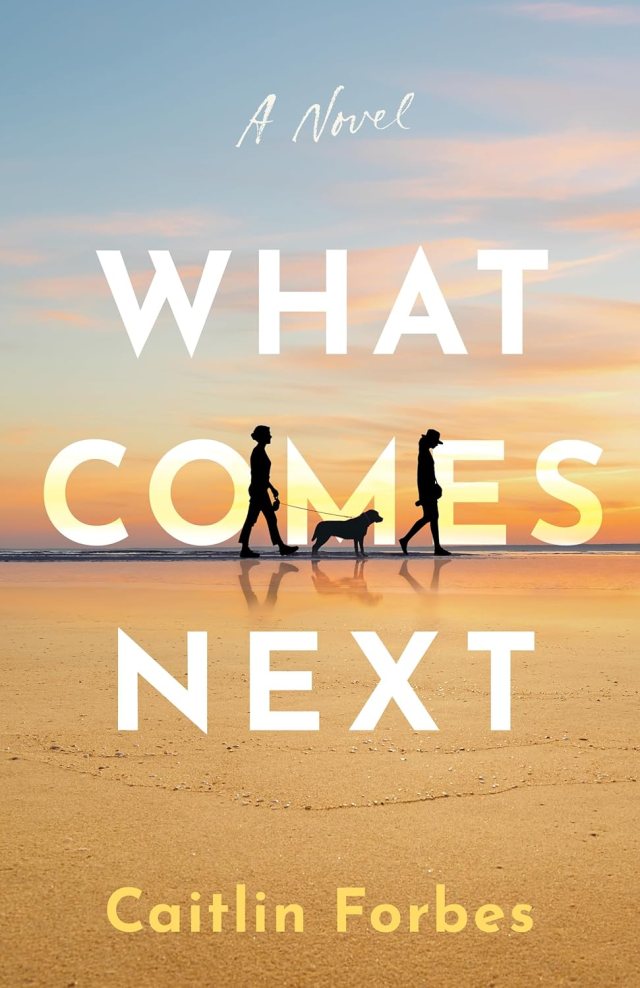
A woman pushes herself to experience more of life after the sudden loss of her mother in author Caitlin Forbes’s “What Comes Next.”
Advertisements
The Synopsis
An empowering and heartfelt novel about the complexities of family, the power of sisterhood, and the bravery it takes to choose happiness when all seems lost.
“My life is perfectly fine.”
Alex has pretended this for years―despite an emotionally absent father, a best friend drifting away, and a floundering dog-training business. At least Alex has her sister, Meredith, a driven polar opposite. But both their lives are upended when their estranged mother dies of a genetic condition that the sisters have a fifty-fifty chance of inheriting. For Alex, a world without her mother is uncomfortable. But a world without Meredith is unthinkable.
Alex suggests a pact to which Meredith tentatively agrees: In three months they’ll get tested. Until then they go after everything they’ve ever wanted. Alex is finally stepping out of her comfort zone and opening herself up to new relationships. Or maybe reconnecting with an old one. Nathan, a boy who once broke her heart, needs a trainer for his mixed-breed rescue. Alex can’t resist.
As sparks rekindle, and time passes much too quickly, Alex discovers more about herself, her sister, and her mother than she ever imagined. And that everything in life―especially happiness―comes with a risk worth taking.
The Review
What a heartfelt and emotional read. The author finds such a delicate yet perfect balance between exploring the grieving process, the intricacies of relationships, and the power of self-discovery. The juxtaposition of animal care with the protagonist’s life, especially with Remy and the frequency of animal abandonment due to past trauma, making it difficult to train or home them, mirrors the protagonist’s own abandonment issues and really speaks volumes throughout this story.
Yet it was the relationship between Alex and Meredith that really stood out to the reader. The way they learned to lean on one another in the absence of their parents, the loss they share, and the shock of a shared illness lingering as a possibility is something that felt so relatable as someone who inherited several ailments and the dangers that come with genetic diseases. The author artfully navigates these troubled waters by exploring the path to finding hope again in a person’s life amidst the trauma.
The Verdict
Memorable, heartfelt, and engaging, author Caitlin Forbes’s “What Comes Next” is a must-read women’s fiction-meets-family-drama novel. The imagery and atmosphere the author brought to life on the page, along with the compelling blend of emotional storytelling and hopeful tones, will keep readers engaged until the book’s final chapters. If you haven’t yet, be sure to grab your copy today!
Rating: 10/10
Advertisements
About the Author
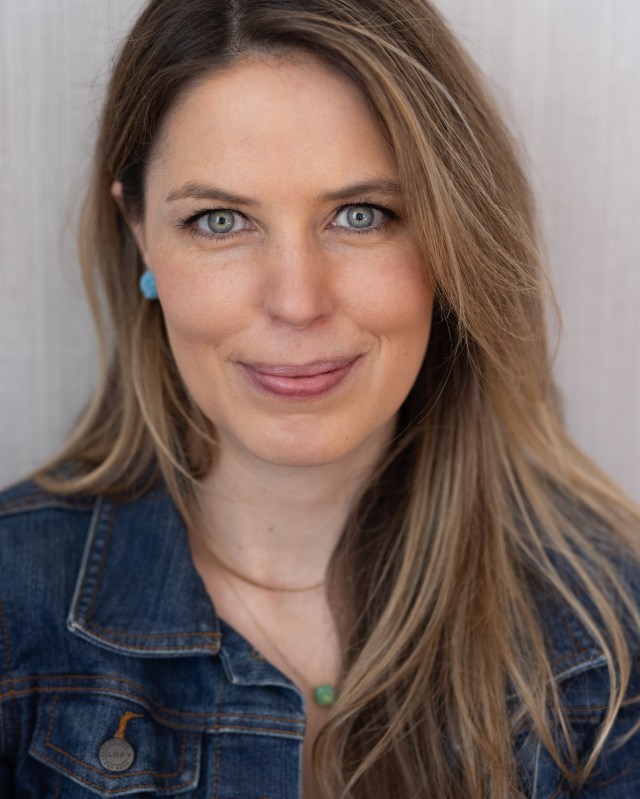
Photography by Molly Haley, mollyhaley.com
Caitlin Forbes is a Maine-based author who writes stories that explore the messiness of relationships—from sisterhood to romance to the tricky relationship we have with ourselves. When not writing, you can find her chasing after her toddler (or her dog) and exploring small-town New England life.
Join us at the Muffin as we celebrate the launch of What Comes Next by Caitlin Forbes. We interview the author and give you a chance to win a copy of the book.
Stop by B. Lynn Goodwin’s blog for a guest post by author Caitlin Forbes about the question of inheritance – of what we inherit versus what we get to choose.
Stop by Katherine’s blog for her review of What Comes Next by Caitlin Forbes. You’ll also have a chance to read her response to our tour-themed prompt about whether if she had an incurable condition and if she would want to find out.
An empowering and heartfelt novel about the complexities of family, the power of sisterhood, and the bravery it takes to choose happiness when all seems lost.
“My life is perfectly fine.”
Alex has pretended this for years―despite an emotionally absent father, a best friend drifting away, and a floundering dog-training business. At least Alex has her sister, Meredith, a driven polar opposite. But both their lives are upended when their estranged mother dies of a genetic condition that the sisters have a fifty-fifty chance of inheriting. For Alex, a world without her mother is uncomfortable. But a world without Meredith is unthinkable.
Alex suggests a pact to which Meredith tentatively agrees: In three months they’ll get tested. Until then they go after everything they’ve ever wanted. Alex is finally stepping out of her comfort zone and opening herself up to new relationships. Or maybe reconnecting with an old one. Nathan, a boy who once broke her heart, needs a trainer for his mixed-breed rescue. Alex can’t resist.
As sparks rekindle, and time passes much too quickly, Alex discovers more about herself, her sister, and her mother than she ever imagined. And that everything in life―especially happiness―comes with a risk worth taking.
Caitlin Forbes is a Maine-based author who writes stories that explore the messiness of relationships—from sisterhood to romance to the tricky relationship we have with ourselves. When not writing, you can find her chasing after her toddler (or her dog) and exploring small-town New England life.
Join us at the Muffin as we celebrate the launch of What Comes Next by Caitlin Forbes. We interview the author and give you a chance to win a copy of the book.
Stop by B. Lynn Goodwin’s blog for a guest post by author Caitlin Forbes about the question of inheritance – of what we inherit versus what we get to choose.
Stop by Katherine’s blog for her review of What Comes Next by Caitlin Forbes. You’ll also have a chance to read her response to our tour-themed prompt about whether if she had an incurable condition and if she would want to find out.
When the doorbell rings, I’m standing in front of my bathroom sink, the picture of indecision: boxer briefs paired with a black silk tank top, made-up face, and completely untamed hair.
I’m supposed to meet my roommate, Holly, for drinks. But it was a last-minute invite—with people I don’t know, planned days or even weeks earlier—and now I feel uncomfortable. As if I’ve become the kind of obligation that I never wanted to be. We’ve been best friends for nearly a decade, but these days, things are different, and I don’t know that I want to feel the strain of it tonight. I’m more tempted by Netflix and cold pizza. My favorite pair of slippers.
I check the weather app on my phone and am almost relieved that it calls for rain.
I’m conceding defeat, turning off the curler, when the bell rings and I physically jump. Because who rings the doorbell in Somerville, Massachusetts, other than someone who wants to kill me? Or someone who wants to sell something, which is maybe not all that much better. But then I consider my upstairs neighbor, who has lost her keys more than once, and is so young, still new to the Boston area, and I feel guilty, so I pad down the stairs of our apartment and crack open the building door. And I swear, I get a whiff of cinnamon, a smell so familiar it knocks me back before I can remember why.
And he’s standing there. On my doorstep. Tall. Even taller than I remember.
Nathan Browning.
We stare at each other from either side of the doorframe. And I will him to disappear. Or turn into someone else. Or at the very least, to come back when I’m wearing pants.
Nathan. Those first two years of college. Nights spent squeezed onto a twin bed in his dorm room, pretending we weren’t uncomfortable just so we could fall asleep together. The summer I’d spent with his family at Lake Winnipesaukee. Campfires and smoky hair. His lips, pillow soft. Water. An excess of water—one oversize tube, our limbs tangled together. Salty tears.
“Alex?”
It’s my name that gets my attention. My name in his mouth, as if it belongs there. As if we still mean something to each other.
I almost shut the door right then.
“What are you doing here?” I ask. I’m relieved my voice sounds calm. Disengaged, even. Because it doesn’t matter that he is here. Because it doesn’t matter what we once were.
“I need your help,” he says.
I stare at him blankly, but he’s not looking at me. He’s looking over his shoulder. He’s looking at the car parked behind him and, more accurately, at what is sitting in the front seat.
He turns back to me with those gray-blue eyes. The ones that were always focused, always so certain, but now hold the smallest hesitation. An expression that seems wrong in this face I still somehow know.
“I saw your video,” he says. “And I—we need your help.”
The video. The one that changed my life right up until it didn’t.
I was a part-time dog trainer then, still trying to make that dream real. Holly and I made a video, and she stuck it up on YouTube, and then it went viral. It was a fluky kind of thing, like those things always are: the right content at the right time in front of the right people. The algorithm was alerted, and the amplification went from there. I was twenty-four and poor and bored—working a second job and involved in a fling to pass the time—and then suddenly, I was also something else. A dog whisperer, people typed. Cesar Millan but softer, with a woman’s touch. Silly. Casually sexist.
But something just the same.
After the video, it was Holly’s idea to start the training business. DogKind, we called it. I dropped my second job as copywriter to train full-time, and she did everything else—the administration and the management. The promotions. We’d both majored in marketing in college, but Holly was better at it than me. Maybe because she believed in it: the concept of brands that build trust, and colors and fonts that tell a story. It took her only two weeks to launch DogKind’s website and get us live on all the social platforms. We were still twenty-four and poor but suddenly not so bored. I remember the day the site launched—us sitting on the floor in our cramped living room, a five-dollar bottle of red between us. Stained teeth. It was summer in an attic apartment in the city, and we didn’t have air-conditioning. Holly had chopped her hair off, and we were trying to convince ourselves it was edgy.
We were young in that way you actually notice. When you’re afraid of what will happen when you blink.
Four years ago. The length of high school, or of college, but without the predetermined milestones. The signposts that tell you how and why everything is about to change.
Holly quit the business less than two years later, and I followed her lead not long after. Partly because I wasn’t making enough money to cover rent, and partly because of what happened with Cliff, one of the dogs I tried to save. But mainly because I hated being called a “dog whisperer.” I hated that people thought I could perform miracles, that they insisted on believing I was more than I was.
I work at Kensington Media now. It covers the rent, and it could one day become a real career. And I don’t have regrets. Except, there are these moments—when I see a short haircut on a blonde, when Instagram flashes up a memory of a pup—and it’s like my whole body freezes over. A little voice in my head, whispering, You can go back if you just stay still.
“How did you find me? I took down my website ages ago.”
“An old testimonial from a woman named Lois, I think?” Nathan says. “Her address is publicly listed. So I called her. She pointed me in your direction.”
Lois. She was my neighbor as a kid. She moved closer to the city after my mom left, but she always kept a close eye on me and Mere. A bespectacled not-quite grandmother—that careful mix of kind and overbearing. She’s a lifelong dog rescuer and was DogKind’s first client.
Lois never wanted me to quit.
I sneak a peek at him while he’s checking the car, again. He’s still handsome. Those eyes, and dark-brown hair with the slightest hint of red—the red was the part that I liked most, that almost made us match. Behind him, I can see a flash of auburn fur. Two half-bent glossy ears pointed forward. A white-tipped tail.
I swallow. “I don’t train anymore,” I say.
He lifts a shoulder. The gesture looks comfortable on him. Like he’s used to half explaining himself, half caring if anyone understands. And I remember that part, too: the easy confidence. The kind I imagine he still takes for granted.
“She thought you might still help.”
I resist the urge to roll my eyes. Lois is one of those people who likes to imagine me as bigger and braver than I am.
“Listen, I don’t know what you saw in that video, but it’s not—she’s not me.”
“She sure looked like you.”
And right then, our eyes meet. And we get stuck there. Three breaths. Blue-gray eyes, like he still knows me. Like we still know each other. And something electric—something more than anger—passes between us. Right here, on my dirty Somerville stoop, wearing the bottom half of my pajamas, everything else recedes. For three breaths, it’s just us.
A car drives by with the windows open, the radio blaring through the street. I take a step back.
“I’ll give you a referral,” I say. “I know a lot better trainers than me out there.”
“Alex.” I hate the way he says my name. “I know that you and I . . . that our history makes this tough . . .” His voice trails off as my eyes snap to him. He takes in my expression, then lifts his chin. That confidence. Whatever hesitation I saw earlier is long gone.
“I’m sorry,” he says firmly. “You know that I am sorry.”
I shake my head. I don’t want an apology. I’m embarrassed—mortified, really—that I still care. That he knows that I still care. That he’s still talking, and I’m falling backward into sand and blue water and the particular ache of a wound that is old but was also first.
I pull my shoulders back. I make my voice flat. “This isn’t about us. I’m not a trainer anymore. I haven’t worked with a dog in almost two years.”
“Her name is Remy,” he says. “She only has three months.”
I pause, already half turned away, my hand pressed against the battered wooden doorframe. The day we moved in, I hit my shoulder against it and ended up with a splinter. I’d been laughing about something with Holly, and then sharp wood pressed deep under my skin.
“Remy bit someone,” he says. I can feel his eyes studying my half-turned face. “She’s a rescue, and she has a history of bites. I had to go to court, and they mandated that she see a vet behaviorist and trainer. I did the first part, and they have her on anxiety meds, which will maybe help. But I need to do the training. And if we can’t document improvement . . .”
His voice trails off, but I don’t need him to finish. I already know how this goes. I’ve seen it before.
Ninety days. He has ninety days to prove that she can be trusted. Or euthanasia. That’s what the court told him.
Of course, they have it all wrong. It’s not about us trusting her. It’s whether she’ll choose to trust us again after whatever made her stop.
I glance back over his shoulder. Those ears, cocked forward above the dashboard, they break my heart. She’s waiting for him. The Nathan I remember was too busy for dogs. Too focused on everything he planned to achieve. But here he is, with a rescue who has decided he’s worth waiting for.
I bite my lower lip. “Your vet must have given you referrals,” I say.
“They were booked out for a month. And the other ones I called wouldn’t take her. They say she’s hopeless.” His jaw clenches. “But, Alex . . . I’ve seen what you can do.”
“You saw an edited video. If they’re telling you she’s a lost cause—”
“We used to say that lost causes were an excuse.”
Our first real conversation. The one that once it started, it felt like it would never stop.
My breath stutters on the memory.
It seems possible, in this moment, that he remembers just as much as I do.
“I know I shouldn’t be here, okay,” he says. “I know that. But Remy is a wonderful dog. And no one else will help her. Whatever you think of me, and honestly, whatever you think of you . . . none of that matters. You need to try. You can do this.”
It’s all classic Nathan: unapologetic and determined. Nathan’s not used to people saying no, especially when it comes to “doing the right thing.” He can be an ass—too cocky, with expectations that are too high—but he’s a genuinely good guy. And he’s never had much patience for people who don’t step up.
It was one of the first things I loved about him.
It was also one of the things that I hated.
“Nathan—”
“Please,” he cuts in. His voice hitches, and I see it now: the dark circles under his eyes, the tightness of his expression. I used to know him once. There was a time when he let me further in than anyone, and I can tell that he is scared. He’s scared for her.
Remorse crowds my stomach because, back then, I could have helped him. But I am not the girl he remembers, and I’m not whoever he thinks he saw online. “I can’t,” I say. “I’m sorry. I really am.”
He looks like he’s about to argue. I expect him to argue. But then, it’s as if he deflates in front of me. His whole chest sinks inward. It’s not a look I’ve ever seen on him. Or one that I like.
“Yeah, no, I get it,” he says.
“I’m not what she needs,” I mumble.
“Sure, okay. I’m sorry for showing up like this.” It’s awkward now. His voice is clipped, and he’s running his hands through his hair like he does in those rare moments when he’s uncomfortable. I don’t have to check to know the back pieces will stick up.
“Listen, leave your number,” I say. “I know a lot of trainers. I’ll find her someone, okay?”
He nods. “Yeah, okay, sure. Thank you.” I can tell he wants to leave. I can tell I am a disappointment. And maybe it’s my imagination, but I get the feeling that it hurts him. Being here. Seeing me.
I think it hurts him, too.
I left my phone upstairs, so he pulls a pen from his suit pocket and a piece of paper from his bag and jots down his number. The promised rain starts as he turns to go, water brushing against my cheeks, and I duck inside the entryway, the paper clenched tightly in my fist. As I watch him jog back to his car, I wonder about the suit. I wonder what he does for work, what kind of man he turned into. I find myself hoping that he got the life he’d planned.
He drives away, and I unstick my feet. I drift back upstairs, past the bright-yellow welcome doormat Holly bought, and collapse on our coach. My mind is strangely quiet, and I let my eyes wander our small place. Everything about it is bright and fun and filled with Holly’s energy: colorful, mismatched place mats; a half a dozen of those cheesy quote signs scattered across the walls; and an array of weird glass owl figurines that Holly collects. They catch the light, making everything twinkle.
I pull out my phone, scrolling past a missed call from my sister to a text message from Lois.
A lovely sounding boy called about his dog. He seemed a bit desperate but was so polite. Be nice!!
I shake my head. Lois is not the first person to be easily charmed by Nathan.
I am going to connect him to a good trainer. No more referrals, please!
I see the response bubbles pop up from her immediately. And then disappear. She starts again, then deletes whatever she wrote. The gentle thud of rain starts to pound outside the window.
My phone buzzes.
I just want you to be happy, honey.
I stare at the screen lit up against my hand. I ignore the sudden tightness of my jaw. I read the words again.
I just want you to be happy.
It’s such a seemingly innocuous statement. A level of genericness that begs an equally generic response. And I want to type back something funny, something simple, but I’m blinking back water that has nothing to do with the rain.
I should be happy. My life is perfectly fine. And wanting more than fine feels like an obnoxious privilege. Too embarrassing to say out loud. Especially when there’s stuff that I could do to improve my life. Books I could read. Skills I could learn. I know there’s stuff I’m supposed to be doing. Just like I know there’s a person I’m supposed to be becoming.
Except, when I think about that person, she’s just as alien as she was when I graduated from college. And I’m not sure how to change that. I’m not sure how to explain that between work and all the daily stuff in my life that is really not that hard, that I don’t know how to become. How the being takes up all the energy that should go toward the becoming.
I didn’t think I would end up this way. I used to want to be different. I used to want to be more like the girl Nathan remembers. I look down at my hands—at the piece of paper still threaded between my fingers, with a number and a name—and a splash of longing bubbles up delicately in my chest. I turn on Netflix, and I find an old sitcom filled with people in their thirties. And as the rain picks up speed outside, I take a careful breath around the bubble. I tell myself I still have time.
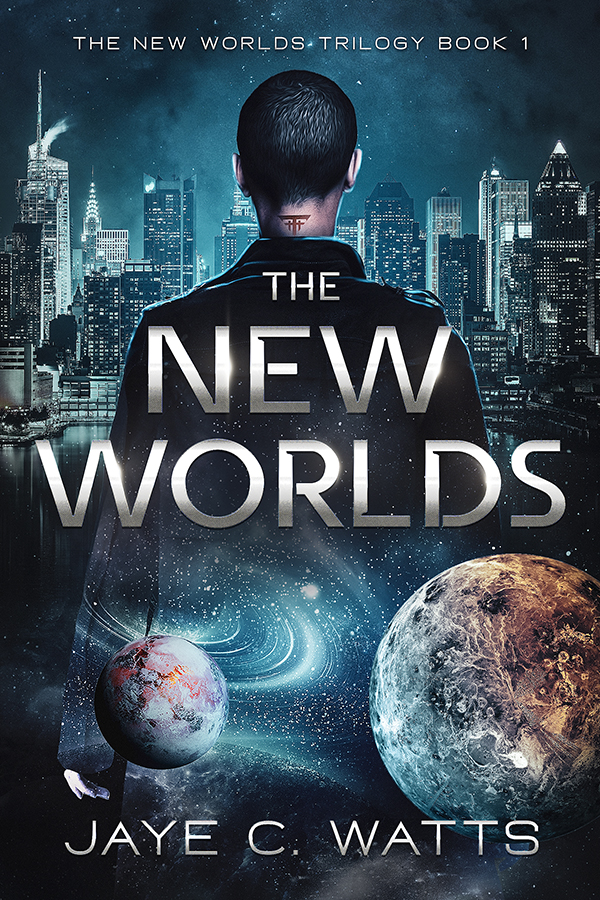
Jaye C. Watts has a new queer sci-fi book out (transgender, poly, non-binary, pansexual, lesbian): The New Worlds.
The year is 2293 and the Truth no longer exists. In the future there are many truths, giving rise to many worlds, but each must be kept separate.
Born to protect these truths, Axton Bryce patrols the New Worlds Star System—to observe, participate, and gather information. But as she learns the ways of each world, she must also hunt for those who defy their world’s truth: the Outliers.
While stationed on a nearby planet, Axton meets the charming Ambassador Bray Wilde. As the two become close, Axton reveals a painful secret—the loss of her first love, exiled as an Outlier.
Longing to see beyond their own world, the ambassador proposes a rescue mission—one that will bring both friends and foes, and ultimately a fight for freedom. But first, Axton must make a choice: between a life-long allegiance… and the chance to claim a truth of her own.
Warnings: indoctrination, brainwashing, threatening with a weapon (guns & a bomb)
I clenched my fists. “Focus,” I told myself. Grabbing my communication cuff, I fastened it around my wrist. “INS communications, activate.” I opened my wardrobe and reached for a freshly pressed uniform. “Aurelia, give me today’s briefing.”
It lit up and responded. “Your next assignment will be on the Amorous World for a standard duration of three months. You are scheduled to depart today at zero six hundred Geo Time and arrive at zero eight-forty Geo Time. The latest reports on the Amorous World are available for your review. Do you wish to accept, Mediator Axton Bryce?”
I crouched to lace up my boots. “I accept.”
“On behalf of Chairman West and the Individual Nations Secretariat, we thank you, Mediator Axton Bryce, for your work in protecting the Truth of many truths.”
I rose to my feet, skin prickling at the back of my neck. Though I couldn’t see it, I could feel it: two lowercase t’s under one capital T, branded at the top of my spine—a permanent part of me ever since my Veneration five long years ago.
I reached back, digging my nails in, tempted to tear the tattoo right from my skin. “She should have been there,” I whispered. If only she’d kept those thoughts to herself.
I grabbed my utility belt and wrapped it around my waist, ensuring the gun was secure. Staring at myself in the mirror, I straightened the collar of my shirt. I’d never been to the Amorous World before. Perfect, I thought. Some fresh scenery was just what I needed.
* * *
I checked my cuff—zero five fifty-five, right on schedule. Marching across the launch deck, I carried one efficiently packed piece of luggage. I never glanced back when boarding my ship; Brokazaria’s endless acres of skyscrapers would still be here when I returned. Instead, I looked up. The early-morning sky was just waking. Aside from Primus B—the Middle World’s secondary, and thus miniature, sun—not a star was in sight. As I approached my ship, the roar of its engine reminded me that soon the stars would be all around me.
I turned and gave the official salute to a line of NI Security standing at attention. In unison, the humanlike Machines returned the gesture, crossing their arms to form a lowercase letter t. Sergeant L43 pumped his eyebrows, prompting me to raise one of mine in response. Hard to believe they were once called “AI.” New Intelligence, we were told, was a much more appropriate term.
L43 stepped forward. “Afternoon, miss.” He grabbed my bag, allowing me to ascend the ladder.
“Thanks,” I said. I climbed to the top and crawled through the hatch.
“Catch!” the NI yelled, tossing up my luggage.
With a reflex just quick enough, I caught the bag. “Sergeant!” I scolded. “What if there was something fragile in there?”
“You humans,” he replied. “Always afraid something’s gonna break. Your luggage, your bones, your bodies… not to mention your hearts and minds.”
I rolled my eyes at the cheeky Machine. “Watch it, L, or I’ll get them to reboot you.”
Unperturbed, the Machine grinned and waved. “I’ll miss you, too. Bon voyage!”
“See you in three months,” I muttered, closing the hatch behind me. I immediately got busy flicking switches and hitting buttons. Muscle memory took over as I continued the launch prep with complete focus. Not a moment later, a blue light illuminated my cuff, drawing my attention. Blue indicated a direct message from Chairman West himself, Secretary-General of the Individual Nations Secretariat.
“Play address,” I said, eager to hear our leader’s words.
A ghostlike image projected from my arm, transporting the man’s titanic figure into my control room. Neatly trimmed grays blended inconspicuously into the rest of his dark hair, swept back to frame a chiseled face. Salt-and-pepper stubble outlined a pair of smiling lips—the beginnings of a goatee that never quite came to fruition. As always, a perfectly pressed suit hugged every one of his bulging muscles.
“Greetings, my children!” The chairman’s voice rumbled from a gaping grin, complete with gleaming teeth. “Today is a very special day, not only for the New Worlds Star System but for some of our most dedicated Mediators.”
My ears perked up as I waited for more.
“Today marks two hundred and fifty years of living in an interplanetary alliance, free from the terrors of war, safe from the dangers of Plurality! A quarter of a millennium since the United Nations of the Old World became the Individual Nations of the New Worlds, marking humanity’s Great Dispersion!”
A swell of pride surged in my chest. I was part of something big and important.
“All of this would not be possible without you,” he declared, “our magnificent Mediators. You have been instrumental in our coordination with each world, fostering the cooperation necessary to manage the complexities of a resource-based economy spanning a system as vast as ours. And!”—the chairman raised a finger, flashing one of his many gold rings—“most importantly, you have upheld the sovereignty of every truth within it.”
I gave a humble nod, as though he could see me.
“Lastly,” the chairman said, “further congratulations to the Mediators of unit 245. Tomorrow is your quinquennium! Five years of serving as peacekeepers, saviors, Mediators! Father Chairman West and the INS commend you.” His thick forearms crossed in a salute, only to vanish as the feed cut out.
I took a moment to absorb his words, stunned by how many years had passed. Then I checked my cuff—Time to go.
I finished preparing for the launch, my movements steady and certain. We had done it. Peace among the planets for over two centuries.
I paused, letting my mind drift…
It had to be worth it.
Author Bio
JAYE C. WATTS (he/they) is a queer and trans sci-fi writer living on Lək̓ʷəŋən territory in Victoria, BC, Canada. He holds a bachelor’s degree in Sociology, with a minor in Technology and Society, as well as a diploma in Professional Recording Arts from the Art Institute of Vancouver.
When he isn’t writing, Jaye can be found falling down rabbit holes of all kinds thanks to an unquenchable curiosity and lust for learning – homeschooling will do that to you.
Jaye also loves classic jazz, mixing cocktails, biking all over the city, and of course, people watching.
The Center loomed before us, a giant, shimmering pearl nestled in the middle of the donut-shaped university.
Trapp halted at the edge of the surrounding lawn, flicking off his headlamp. The rest of us gathered behind him, staring in awe at the breathtaking view.
I’d seen the landmark before, but only during the day. At night, the shining sphere transformed into something otherworldly. To the people of the Quantified World, the Center was akin to a giant crystal ball—all-knowing and all-powerful. I took in the dazzling show, watching its ethereal light cascade across the reflective solar panels covering the surrounding university.
“Whoa,” Bray whispered, their voice reverent.
“Good golly,” Logan uttered.
Medallia didn’t speak, only inhaled deeply through her
nose. Trapp released a satisfied exhale, his shoulders relaxing for the first time all night.
I stood silent, shaking my head in disbelief at how damn lucky we were. Lucky to have made it this far but also lucky this mesmerizing display continued through the night. Strange, given the fact that no one—aside from the occasional NI and rogue Outlier—was awake to see it.
Then again, this was more than just a machine.
I almost felt hypnotized by the swirling neon patterns, their movements dictated by aesthetic algorithms. For the first time, I understood why so many worshipped this construct. Numbers weren’t just functional; they could also be beautiful.
With the rest of the world fast asleep, the omniscient sphere drew me in. Heart rates, body temperatures, brain waves, even dream activity, all coming together in a colorful symphony of light.
“All this,” I marveled aloud, “from a bunch of ones and zeros.”
Bray turned to me, furrowing their brow. “Ones and zeros?”
I turned to meet their gaze. “Oh, um… I was referring to binary code.”
Their forehead crinkled even more.
“It’s a type of language,” I explained. “For computers. But not with words, just numbers. Ones and—” I stopped myself, and instead summarized. “It’s… technology stuff.”
Bray lifted their chin, acknowledging my poor attempt at clarification before turning back to the glowing orb. Any explanation involving the “t word,” as they called it, received little more than a placating nod from them.
Without warning, Trapp began tromping across the lawn, his patience for sightseeing all used up.
Logan and Medallia followed suit as I nudged Bray into motion before bringing up the rear.
As we walked, the sphere’s light continued to play across the grass. I couldn’t shake the feeling that this was the calm before the storm; a sense of peace coated the atmosphere, even as it charged with unimaginable possibilities. So close, I thought, and yet still so far. Hard to believe we were mere steps from Trapp’s door through time, while our final destination lay light-years away.
Our footsteps left faint trails in the dew-coated grass, leading us to a set of doors. Trapp pressed his thumb against a small black scanner embedded in the frame. After a brief pause, the device beeped, unlocking with a soft click.
Amused, Trapp wiggled the digits on his right hand and muttered, “Guess they should’ve taken my fingers, too.”
Once inside, Trapp reactivated his headlamp. The spot‐light beamed down the curved hallway, casting skittish shadows across classroom doors. The walls on either side displayed an array of infographics: pies, bars, bubbles, grids and graphs—statistical analyses whose end results were surprisingly artistic.
While trying to decipher some of the informative shapes, a low-pitched hum caught my attention.
I turned my head toward the sound. Emerging from the shadows was a clunky bot, its movements slow and methodical. The machine hugged the wall as it moved, resembling a lumbering mechanical rodent.
Beside me, Bray flinched, their body jolting as if startled by a wild animal. Their wide eyes darted toward me, like a child searching for guidance in their parent’s reaction.
“It’s okay,” I said. “It’s just a robot”—a word I would never use on the Machine World. “It’s governed by preprogrammed instructions, which look to be nothing more than tidying up.” I lifted my boots, one after the other, hoping we hadn’t tracked in any mud.
Bray’s gaze returned to the machine, their fear giving way to tentative curiosity. While they kept a safe distance, Logan stepped closer, crouching to greet the bot.
“Well, hello there, little fella,” he said, grinning.
“Cleaning in progress,” the bot replied “flatly. “Step aside please.”
Logan chuckled, rejoining us as we continued down the hallway. He spun slowly, taking in everything the dim light allowed. “So these were your ol’ stomping grounds, eh, Trapp?”
“If by ‘stomping grounds’ you mean where I learned how to transcend time and space,” Trapp replied, “then yes.”
Bray cast one last glance back at the retreating bot before asking, “Were you a teacher here?”
“I was primarily a researcher,” Trapp said. “I only taught to gain access to the labs. I’d much rather make new discoveries than teach others about old ones.”
Trapp came to a sudden halt, stopping so abruptly Bray nearly bumped into him. Turning his head, he lit up a windowless metal door with a sign stating its purpose:
PARTICLE PHYSICS LAB RESTRICTED ACCESS
Trapp smiled with his eyes. “We’re close now,” he said, his words laced with determination. “Just a few more steps.” He pressed his thumb against the small scanner to his right, unlocking the door to a new world… an old world, rather.
Please enjoy this special guest post from author Sherri L. Dodd
Advertisements
When I began writing the Murder, Tea, and Crystals Trilogy, I wanted the story to be authentic, and realized that I would need to reach beyond my own insufficient knowledge of modern-day paganism. Luckily, I had met a couple of witches at my local crystal shop and had recently hosted a Halloween party where the tarot reader informed me that she, too, was a witch. Three to share, and the latter gave me a taste of the lifestyle. Not wanting to go alone, I invited her to attend a Samhain event with me. Her response was, “Oh no. I don’t go to those things because everyone is always trying to out-witch each other.”
So, I found with today’s witchcraft movement. Like the Christian denomination, to be a witch is a very general term. When you say someone is Christian, you know they believe in one God, and Jesus as the son of God sacrificed himself for mankind. Voila—neatly wrapped in a nutshell. But fine-tuning leads to disputes, such as Catholics believe that Mary was a virgin, 7th Day Adventists hold Saturday as the Sabbath, and the Christian Scientist enforces healing through prayer, alone. Look at the holy wars which have shown everyone thinks it’s their way or the highway. If you think that is chaotic, try putting Neo-Paganism into a tidy catchall box.
First, there are many core belief systems—Celtic, Greek, Norse, and Roman Pantheons, to name a few. A witch can worship anyone from Hekate to Brigid to Saturn to your favorite Marvel character; he, that carries a big thick hammer. Further, sometimes you worship more than just one God or Goddess. You can worship two, three, or ten. Occasionally the many different deities are from the same source—in Hindu’s case, Brahman. That means, one witch may worship Kali, yet, the witch worshiping Ganesh is tapping into the same Hindu divine power. Finally, the priests of the Salem Trials probably roll in their tombs knowing that some Christians consider themselves witches through their ability to heal or manifest. This, I know, because my mother has shared that when she was a teen, my devout Baptist grandmother proclaimed herself “a witch for Christ.”
To me, this is all quite fascinating. I have studied different religions and philosophies since my early twenties, so witchcraft falls aptly into the subject. BUT, for some reason—feminist witches blame the oppressive patriarchy—witchcraft remains taboo. Even today, if you put a book entitled Green Witchcraft II on your coffee table or a copy of Modern Witchcraft on your nightstand, your housecleaner may start rumors that you worship the devil or are a nutcase who believes in magick. Either way, I have found that to be a misrepresentation of the today’s modern witchcraft.
Another challenge when writing about witchcraft is the reverence factor. While I respectfully pursue this venture, I believe, as with all measures of spirituality, I can only graze another person’s truth when writing about core belief systems. No matter what is written, some will agree, and some will want to write their congressman about the spread of false information. Luckily, being a redhead since long before it was cute, I have learned to ignore what others think of me or what I write, and this includes my thorough study of witchcraft. I laugh off the derision. Actually, now, I cackle.
Book Summary
At the age of eight, Arista Kelly was frantically swept up by her parents and whisked off to an isolated town in the California redwoods. Two days later, her parents were gone.
Now at the age of twenty-three, she has settled quite nicely into an eclectic lifestyle, much like her great aunt, and guardian since childhood, Bethie. She enjoys the use of herbs and crystals to help her commune with the energy and nature around her and finds pleasure in the company of her beloved pet, Royal. Usually quite satisfied with her mundane life high in the Santa Cruz Mountains, life becomes unsettling when a new recurring vision of an ominous tattoo as well as increased activity from the ghostly presence within her own cottage invade her once-harmonious existence.
But life in this mountain sanctuary takes an even darker turn when the body of Arista’s former classmate is found in the nearby river. As other young young women fall prey to a suspected serial killer, Arista realizes that the terror is coming to her.
The Review
This was such a compelling, gripping murder-mystery-meets-witchy-supernatural-horror YA thriller. The natural fusion of genres was so well done in this novel, and the visceral imagery between the gorgeous Santa Cruz mountains and the chilling murders that drive this narrative forward, all come together to create a stunning blend of romance/fantasy meets YA supernatural occult horror read that is intense and inviting all at once.
The heart of the narrative is really the character dynamics. Arista is a compelling protagonist, taking the reader on a personal journey of growth as she goes from a studious, harmonious witch connected to the natural world around her to a strong, powerful young woman who is thrust into a shocking mystery and uncovers new abilities and secrets she never thought possible. The small-town setting becomes a character in itself, adding depth to the unfolding mystery and significantly elevating the tension and atmosphere with each chapter.
The Verdict
Thrilling, compelling, and entertaining, author Sherri L. Dodd’s “Murder Under Redwood Moon” is a must-read novel. The twists and turns this story takes, the slew of suspects that keep the reader engaged as the plot unravels, and the monster at the end of the book are all revealed. The compelling character dynamics will keep readers on the edge of their seats and eager for the next entry in the series. If you haven’t yet, be sure to grab your copy today!
Rating: 10/10
Advertisements
About the Author
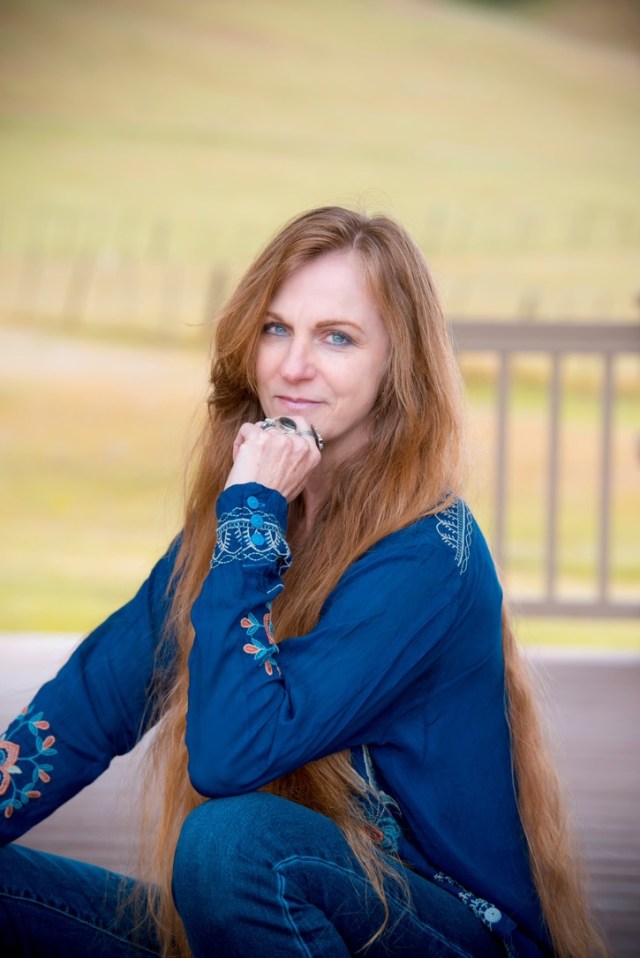
Sherri was raised in southeast Texas. Walking barefoot most days and catching crawdads as they swam the creek beds, she had a love for all things free and natural. Her childhood ran rampant with talk of ghosts, demons, and backcountry folklore. This inspired her first short story for sale about a poisonous flower that shot toxins onto children as they smelled it. Her classmate bought it for all the change in his pocket. It was not long after that her mother packed the two of them up and headed to the central coast of California. She has ping-ponged throughout the area ever since.
Her first real step into writing was the non-fiction fitness book, Mom Looks Great – The Fitness Program for Moms published in 2005, and maintaining its accompanying blog. Now, transmuting the grief of her father’s passing, she has branched into Fiction, specifically the genre of Paranormal Thriller with generous dashes of Magick Realism! Her Murder, Tea & Crystals Trilogy released book one – Murder Under Redwood Moon – in March 2024. Book two – Moonset on Desert Sands – released in March 2025, and the final book in the series – Hummingbird Moonrise – became #1 New Release in Occult Supernatural on Amazon in October 2025!
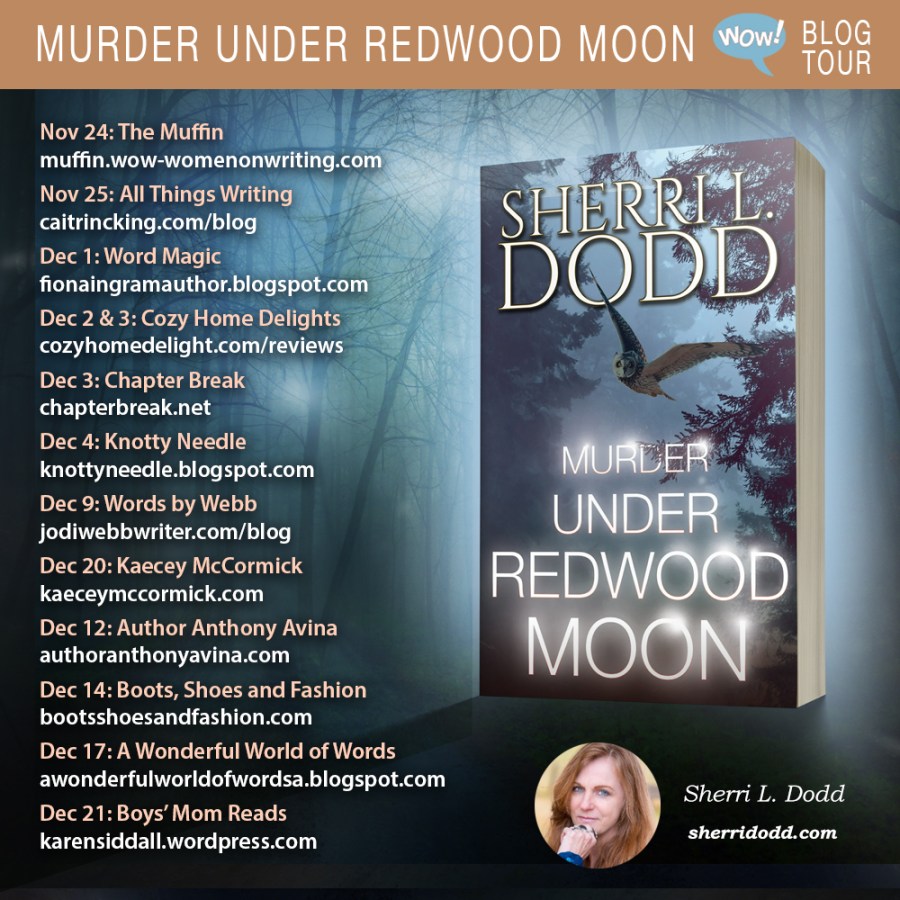
Join us as we celebrate the launch of the the first book in Sherri Dodd’s Murder, Tea & Crystals trilogy: Murder Under the Redwood Moon. Read an interview with the author and enter to win the whole trilogy. Two winners!
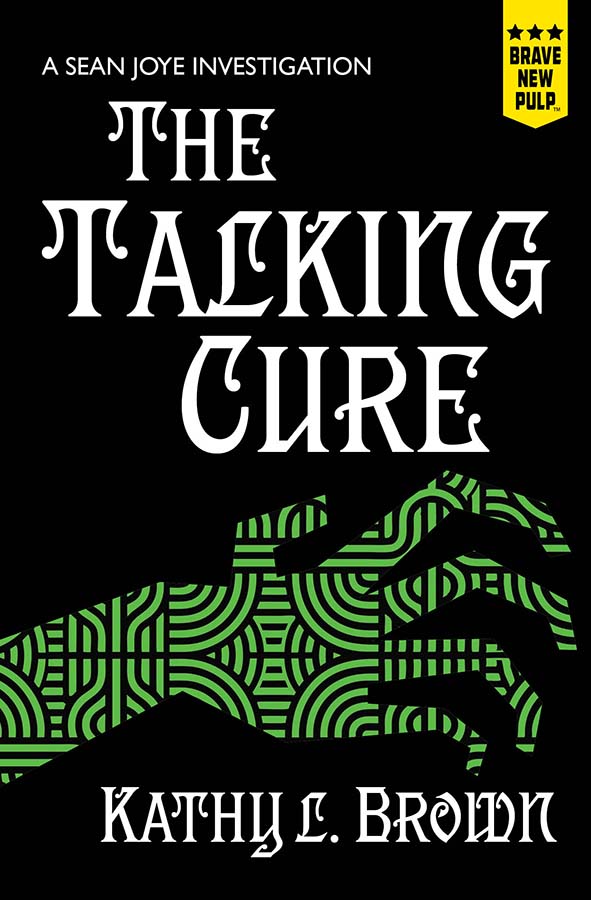
Kathy L. Brown has a new queer urban fantasy mystery out (ace, pan/bi, gay): The Talking Cure.
Sean Joye Investigations, Book 2
Haunted woman claws her way back to reality by reconnecting with her magical powers in The Talking Cure, a supernatural Yuletide follow-up to The Big Cinch.
Committed to an insane asylum, Violet Humphrey is isolated on the Illinois prairie with only her own thoughts and a persistent new voice in her head for company. When she is accused of murder, Violet suspects her road to both freedom and recovery lies through confronting her painful past and solving the crime. Magically summoned, Sean Joye skids through an ice storm to help Violet, but can they catch the killer and defy an eldritch horror before Violet loses her tenuous grasp on reality?
“The Talking Cure is a marvelous story—an Agatha Christie-style murder mystery infused with a strong sense of the Weird… and a hearty dose of magic on the side. It’s ideal for all fans of the sinister, the surprising, and the strange.” —Cherie Priest, award-winning author of Boneshaker
Warnings: suicidal ideations, references past harm to child.
About the Series
The Sean Joye Investigations series embeds readers in a magic-laced 1920s era St. Louis. The world has barely survived a brutal global war, disease pandemic, and rampant ethnic violence. The cosmic balance is off kilter, and corrupt energies seep through widening cracks in reality. That foul rot has touched Sean Joye in myriad ways. A disillusioned veteran of 1922’s Irish Civil War, he traveled to America to escape supernatural attention, forget his assassin past, and forge a clean new life. Can Sean now master the magical abilities he has rejected for so long in time to protect the innocent and save his own skin?
Cold air invaded the room, and the flames crackled in greeting. Out in the foyer, I could hear Carrie as she passed off the arriving board members’ coats and bags to an orderly dragooned into footman duty—“Good evening, Doctor. Ah, Doctor, you remember Doctor? And here’s Doctor, right on time.”
I scooted as far away from Dr. Elsass as I could, making for the Christmas tree in front of the parlor windows. Its sharp green scent tried its best to counter the guests’ stench. As much as I avoided the director, I could still hear him chirping in the background. “We’ll talk about that, of course.” His voice dropped to a whisper, but the words flew across the room to me like bright budgies. “Do you think that wise, Emerson? She is in a most fragile state.”
I found Nurse Martin leading my other roommate, Berta, and two additional patients in tree decoration. “Ah, Violet, thanks for joining us.” She held out a sturdy cedar ornament. “Care to help?”
I took it and clung to its warm scent for protection, but despite knowing better—the men would just upset me—I couldn’t help watching their dispute. Dr. Elsass was a chess master, and we were all merely pieces in play. Even this Emerson fellow.
“Don’t you believe in your Talking Cure? She seems much better to me.” Emerson glanced down at his wife and grinned, showing lots of teeth.
The rumor among the maids and kitchen staff was that Blanche was besotted with our therapist, Dr. Ibrahim Cole. Although she was here for “female hysteria”— whatever that was—I had never met a less hysterical female.
Blanche diligently ignored her husband and Dr. Elsass, engrossed as she was in the sketchbook that was never far from her side.
“Aren’t you, darling?” Emerson said, paying no attention to her activity. “Wouldn’t you like a break from chewing off Cole’s ear? You can talk to me if you feel down in the mouth.”
Blanche looked up. “I would like to see my dog.”
Ah, I thought. She was paying attention. I bet she notices more than she lets on.
“See? She’s fine.” Emerson exclaimed to Dr. Elsass, as if he’d cured her female hysteria himself.
“Perhaps a weekend pass,” the director mused, pretending to consider the matter. “We’ll discuss it at the staff meeting. Mrs. Emerson has made remarkable progress, it is true.” He glanced around the room, caught my eye, and beamed. Damn. “And speaking of remarkable progress, you know Mrs. Humphrey, I’m sure.”
Emerson strode across the room and held out his hand. “Percy Emerson. We’ve met, but you may not remember. I knew your father from the Piasa Club.”
I made myself take his hand, briefly, despite his rotten odor. And the maggots I could see writhing about on his palm. Not real, I told myself. Not real. “Please call me Violet.”
“And you should call me Percy. I’m…Sorry for your loss.”
I nodded and made for the tea cart, aiming for a napkin to wipe his stench off my skin. My losses were many. To which did he refer?
Percy drifted back to Dr. Elsass and winked. “Nice try. As I was saying, Blanche is much more…tractable…than before.” He patted his wife on the head. “But your cure takes an awful lot of time and buckets of cash—who’s to say she wouldn’t have snapped out of it on her own?”
For her part, Blanche seemed oblivious to the conversation that was transpiring, intent as she was on sketching the Christmas tree. Percy at last noticed the sketchbook on his wife’s lap. “That’s nice, honey. Gonna puts some colors on there? Lots of green and red?”
She looked up at him, her face blank. Eventually, she said, “Do you think I should? I was interested in the pattern, you see, the way the light—”
“Oh, yes, definitely. Christmas trees are green. With red balls. That might be good enough for a holiday card, if you color it up right.” To Dr. Elsass, he said, “Nice little scam you got going here, doc.” His voice boomed over the chittering noise of the room. “Well played.”
The guests ceased their conversations and turned to the two men. Dr. Elsass and Percy stared at each other for a long minute. At last, the director laughed out loud. “Ah, Mr. Emerson. Always a kidder, as the young people say.”
The room grew darker as the afternoon faded, with just the glow of the hearth and the lights on the Christmas tree. When a fresh contingent of board members lumbered into the parlor, the parrot squawked, and the elderly tree trimmers equally took fright. Dr. Elsass approached the new arrivals, arms outstretched. “Come in, gentlemen. Have a hot drink. There will be ‘something stronger,’ and a fine meal presently.”
Suddenly, a passing shadow blocked the glow from the fireplace, a darkness that smelled of decaying fish, sulfur, and algae bloom. Then Berta, who’d been so calm, sank to her knees, her eyes darting about, and croaked in a wavering voice, “Dagon lives. Mighty Dagon. Dagon. Dagon. Dagon.”
The bird joined in as a chorus, “Dagon, Dagon, Dagon.”
Having no idea to whom or what they referenced, I was struck for a moment with total conviction that Berta, and perhaps the parrot, knew some secret of infinite portent. I utterly believed them, the words a carillon to my ears. I took a deep breath. This wouldn’t do at all. I’m sure it was just what Carrie had been worried about, one of us crazy people acting crazy at the normal-people party.
Author Bio
Kathy L. Brown writes speculative fiction with a historical twist. Her hometown— St. Louis, Missouri, USA—and its history inspires much of her fiction.
The haunted 1920s world of the Sean Joye Investigations book series was conceived in a creative writing workshop in 2004. The idea wouldn’t go away, and Kathy published two Sean Joye novellas while working on her first novel, The Big Cinch, released by the Montag Press Collective in December 2021. The Big Cinch won the 2022 Imadjinn award for best urban fantasy novel.
After spending the pandemic editing and publishing a secondary-world young adult fantasy, Wolfhearted, Kathy wrote the next Sean Joye investigation, The Talking Cure. It will be published in November 2025. A Sean Joye short story, “The Pixie Job,” appears in the 2024 Marathonarium Anthology: Volume II.
Currently she is preparing a high fantasy novella in the Wolfhearted world for publication in 2026. Learn more at kathylbrown.com.
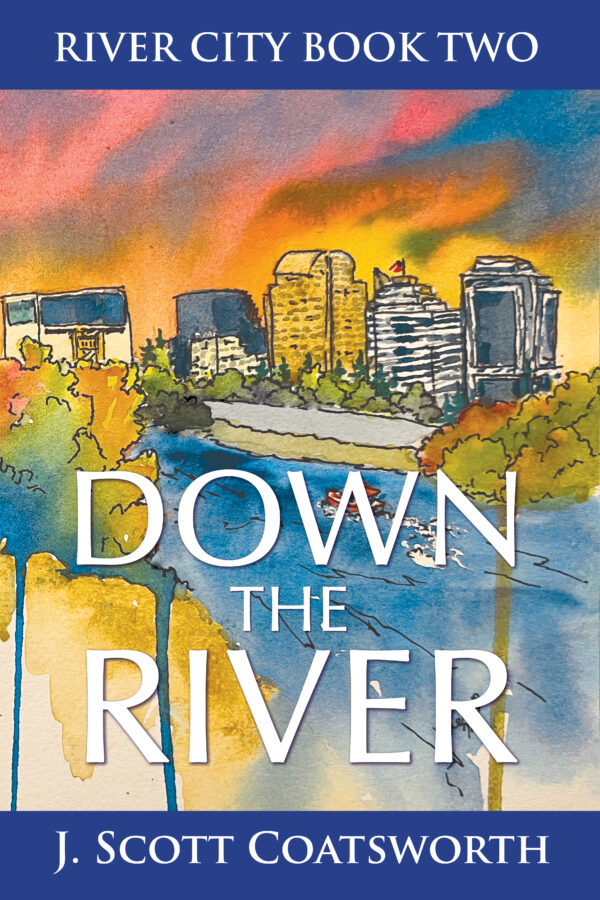
QSFer J. Scott Coatsworth has a new queer contemporary magical realism book out, River City book 2: Down the River.
Nine years have passed since a group of strangers first met at a magical little restaurant in East Sacramento called Ragazzi. They have all been touched by its subtle magic, and have become a family.
With the tragic death of one of them, the ripples spread through the entire group, exposing secrets and revealing truths that many of them would rather not face.
Dave and Marcos are battling their own demons. Matteo seeks an embezzler at Ragazzi, while Diego struggles to hold on to his son, Gio. Carmelina fears Daniele won’t take no for an answer. And both Ben and Sam are dealing with tragic losses that have turned their lives upside down. Into the mix come a few new characters—Ainsley, a Sac State student studying to be a doctor; a mysterious strange who is stalking someone in the group; and a few new love interests who may have agendas of their own.
It’s 2024, and the cast of River City is back. What secrets will be revealed before the last page turns?
ABOUT THE SERIES:
The River City series is a heady blend of secrets, friendships, a little bit of magic, and a bunch of Italian cooking that will warm your heart.
Ainsley Kim stared out of the window at the cars as they passed on Folsom Boulevard in a steady row of sparkling red and white, their lights scattering and twinkling like fairy dust across the rain-splattered glass. It was mesmerizing—so much life out there… and in here, as she was rudely reminded by the diner clearing his throat behind her.
“So sorry!” She spun around, reaching for the Toast point-of-sale device that hung from a custom-made pocket in her clean white apron that said Ragazzi in neat black letters. She turned her attention back to her customers. “Are you ready to order?”
The one who’d cleared his throat was a sharply dressed man in his mid-fifties—lawyer if she’d had to guess—his neatly trimmed black hair turning silver on the sides. He glared at the menu as if it were opposing counsel, squinting through his wire-framed glasses and scowling. “Damned print is so small on these things.”
His dining partner, another man in a black suit and tie, but without a hair on his head, chuckled. “You’re just getting old, Andy. Order the tagliatelle. It’s what you always get.” Bald Head offered her a warm smile. “So sorry for my partner’s behavior. Rough day in court today.”
Ainsley hid a grin. She was good at reading people. “Not a problem. So… the tagliatelle?”
Andy nodded. “Sure. With arrabbiata sauce. And ask the chef to make it a little extra spicy.”
She tapped it into the POS, feeling more like a glorified data entry clerk than a waitress. “You got it. And you, sir?”
“Don’t let him fool you. Kel knows what he wants. He just likes to play with his prey.” Andy grimaced, then managed a weak smile. “Sorry for the foul mood. I hate losing.”
Rich, white, and a lawyer to boot? You have no idea what losing is. “Not a problem.” She flashed him her best you’re the customer so I’ll pretend I like you smile.
“I’ll have the gnocchi in a ragu sauce, and an appetizer of your delightful burrata.” Kel flipped the menu over. “Add a glass of Chateau Ciel. I, unlike my friend here, had a lovely day. Signed a new artist for the gallery, a talented Korean painter named Jun Seo Jang.” His eyes fixed on her. “Do you know him?”
Ainsley blinked, caught between the casual racism of assuming that all Koreans knew each other—maybe he didn’t mean it that way?—and the fact that she did actually know them. Or of them, anyhow. Jang was one of her idols.
Customer service won out. “Yes. They are very good. I studied them in art class.”
Kel grinned. “Then you must come see his… their pieces. Sorry, old dog, new tricks. I’ll be getting the first of them next week.” He pulled out his wallet and extracted a card. “Kelton O’Malley, Red Roof Gallery.”
She took it, staring at it. It seemed to sparkle under the restaurant’s mood lighting. She blinked and the sparkle went away. She stuffed it in her pocket.
Nobody used business cards anymore. So old school. “Thank you. I’ll try to come by. It’s a bit busy, with school and work and all…” And taking care of her mother.
“Ah, what’s your major?”
“Molecular biology.” It came out automatically. Her father had wanted her to “make something of herself,” not just be another poor immigrant like himself, working at minimum wage jobs. She’d been at it so long, doing what her parents wanted her to do, that it almost seemed like she wanted it, too.
“Impressive.” He winked. “Still, it’s good to hear that you have an appreciation for the arts as well.”
She blushed. That comment hit a little too close to home. “I’ll find some time to stop by.”
“Wonderful. Jun Seo will be there next Thursday night, if you want to meet… them.”
Ainsley touched the edge of the table to steady herself. “They’ll be here… in town?” She was already calculating how she could rearrange things to be at the gallery.
“They personally supervise the set-up at all their new galleries.” He grinned. “See, that whole pronoun thing’s not so hard.”
She suppressed a snort. Boomers were always making such a big deal about it. “Let me get those orders in for you.” She gave them a small bow—ingrained behavior from two decades growing up in the Kim household—and slipped away.
“Need anything here?” she asked her next table, a young gay couple from the looks of it, who were busy staring rapturously into each other’s eyes like a couple lovestruck teenagers.
“Just some water,” the blond said, never breaking his gaze, his hand wrapped tightly around the other man’s. A single plate of pasta sat between them.
“You got it.”
A two-for-one, or twofer, they called it—when two clients shared a dish, usually to save costs.
Matteo had needed to raise prices again last month to account for inflation. Luckily Ragazzi was doing well enough that they’d expanded into a new addition, taking over the old bar next door for Diego’s cooking classes.
She twirled through the restaurant like a ballerina, checking on tables, her footsteps lighter than they’d been in months. Jun Seo Jang was coming to town. She had so many questions for them.
How did you find your inspiration? When did you know you wanted to be an artist? How did you let your parents down gently?
Ainsley Kim had a secret.
She wanted to be an artist more than anything else in the whole wide world. She wanted to create things, pieces of art that would make people frown and smile and nod knowingly as they stood in front of them, stroking their chins. Like her father did as a hobby.
She wanted to meet Jang, but she also wanted to become them.
The thought of life as a medical researcher left her cold, but her parents had invested so much in that dream, both money and hope. How could she bear to disappoint them?
Maybe it was better if she didn’t go to the gallery on Thursday. Better for everyone involved.
Right?
Author Bio
Scott lives with his husband Mark in a yellow bungalow in Sacramento. He was indoctrinated into fantasy and sci fi by his mother at the tender age of nine. He devoured her library, but as he grew up, he wondered where all the people like him were.
He decided that if there weren’t queer characters in his favorite genres, he would remake them to his own ends.
A Rainbow Award winning author, he runs Queer Sci Fi, QueeRomance Ink, Liminal Fiction and Other Worlds Ink with Mark, sites that celebrate fiction reflecting queer reality, and was the committee chair for the Indie Authors Committee at the Science Fiction and Fantasy Writers of America (SFWA) for almost three years.
“I offered.” Dave’s voice carried from the kitchen. A tantalizing aroma of chicken curry casserole emanated from the oven with it, making Marcos’s stomach growl.
“Besides, how can you tell?” He glared at the old VCR, bought off an online auction site the week before. Damned thing doesn’t even have HDMI.
“There’s a coax to HDMI converter in the wires box, in the laundry room cabinet.”
“It’s like you read my mind.” He shook his head in wonder. Nine years in, and Dave could still surprise him. “Dinner smells heavenly.”
Dave snorted. “Yeah, if you don’t mind the curry stench lingering for a day or two.”
Marcos pecked him on the cheek on the way by. “Hope this is all worth it. The VCR, not the curry.”
It had started with one of Dave’s infamous “clear out the house” projects, something he’d been doing increasingly with his free time, as their business had begun to tank the year before. No one seemed to need web designers or graphic artists anymore in the age of algorithms and artificial intelligence. Intelligence my ass.
Dave had come across a box of old VHS tapes with the labels mostly missing. Before they paid to have them converted to DVDs, he wanted to see what was on them. Which of course meant getting a VCR, which cost money, something that was in increasingly short supply as their business plummeted. But it would make Dave happy, so Marcos had acquiesced and found a cheap one on eBay.
He pulled the old Amazon box down from its perch above the washer and rummaged through it. Sure enough, there was the adapter.
Something glittered, catching his eye. A worn envelope sat at the back of the box, held in place by an assorted clump of cords—lightning, USB, USB2, USB-c. Why are there so many kinds of USB cords?
Curious, he plucked it out.
Inside, he found a variety of papers… tickets from the Sacramento Zoo, from that time they fed the giraffes. A playbill for Tribes, the first play they’d ever seen together at Cap Stage, and a coffee-stained napkin from the Everyday Grind just down the street. Mementoes from their early days. He saved them, all these years.
And at the back…
Marcos’s breath caught.
It was a photo of Dave and his ex-partner, John, who’d passed away some fourteen years before. The same photo that had sent Dave into shock one fateful night, not long after they met.
“Find it?” Dave’s voice floated in from the kitchen. “Dinner’s almost ready.”
“Yup. Got it!” He hurriedly stuffed the keepsakes back into the envelope and put it where he’d found it. He eased the box back up into its cabinet and closed the door almost reverently.
He’d always known Dave loved him. But seeing how he’d saved all those little pieces of their courtship? It was the first time he understood that his husband loved him as much as he’d loved John.
The slow decline of their business had taken its toll on both of them. They fought more often, and had less of a buffer—Dave’s word—for the idiocy and ignorance of the world. But in a strange way, it had also brought them closer. Two warriors fighting a common enemy.
He slipped back into the kitchen and put his arms around Dave from behind, pulling his warm body close. “I love you, you know.”
Dave paused chopping cucumbers for the salad. “What’s that for?”
Marcos shrugged. “Just realized I don’t tell you often enough.” He kissed the back of Dave’s neck, then headed for his nemesis again, across the living room. “Give me two minutes and I’ll have this hooked up.” Hopefully the old beast still worked.
“Perfect. Then we can test it out after dinner.”
#
Dave grinned as Marcos sat back and patted his ample tummy. He’d grown more comfortable with himself over the years, seemingly no longer afraid that Dave would leave him if he didn’t keep himself always trim and in shape.
Not that he wasn’t still a handsome man. The extra weight suited him, and Dave loved to grab a hold of it when they made love, kneading it like putty. Or bread dough. “Good?”
“Fantastic.” Marcos grinned. “Where’d you get that recipe again?”
“Friend of my mother’s. Mom passed it along. You sure you don’t mind them coming for Thanksgiving?”
“Not even a little. Especially if your mom will make us a batch of her famous calabacitas.” The tomato, cheese, and zucchini dish was one of his favorites.
“I think she could be convinced.” His parents were getting older. Dad had a pacemaker, and Mom couldn’t play the piano anymore with her arthritis. He was looking forward to seeing them both. “Let’s clean up, and then we’ll see what’s on those tapes?”
Fifteen minutes later the moment of truth arrived. “Which one?” Hopefully none of them had anything too embarrassing.
Marcos picked up a black VHS tape at random. “This one?”
“Sure. Pop it in.” It was strange to see one of those again, after years of DVDs and now streaming for almost everything.
The tape started, and music blared through the speaker’s TV.
“Oh my god. I can’t believe you recorded Three’s Company.” Marcos stared at him, eyes dancing with merriment.
“It was the closest thing to something gay I could find at the time.” He’d mooned over John Ritter as a kid.
“Uh huh. Keep?” Marcos sounded doubtful.
“Nah. Toss. Next?” He didn’t need an old seventies actor now. He had Marcos.
His husband cued up another. Grunts and moans filled their little apartment. “Closest thing to gay, huh?” Marcos grinned.
Dave grabbed the remote and put it on mute, his face on fire. “In mainstream television, yes.” He’d forgotten about that one.
“Wait… how many arms does that guy have?” Marcos cocked his head. “Oh, I see. It’s a three-way. Kinky.”
Dave snorted. “Like you didn’t do anything like that when you were younger… or worse.” Marcos had shared some of his tales of sexual conquest, and submission.
“Touché. Keep?”
Dave nodded sagely. “For old time’s sake.”
Marcos wrinkled his nose. “Of course.” He set it in a second pile, and tried the next one. “I think this one is one of mine.”
Static filled the screen, and when it cleared, a ten-year-old boy in a purple princess costume, complete with conical hat and matching lilac nails, stared solemnly at the camera. “I swear to protect the kingdom of Narnia, to rid the world of the One Ring, and to make all the boys kiss.”
Dave blinked. Here was a side of Marcos he’d never seen before. “Wow. Just… wow.”
It was Marcos’s turn to blush. “We can, um, dump that one…”
“Are you kidding? This is priceless. I want to take screenshots and share it will all of our friends.”
Marcos stuck his tongue out at him.
Dave watched it a moment more, mesmerized, then leaned forward and popped out the tape, setting it as far away from Marcos as he could without leaving the couch. “Wait, did they have VHS cameras back then?”
“My mom shot that on reel-to-reel tape. She had it converted to VHS later.” He sighed. “When my Dad saw that, he almost threw me out of the house.”
And he had done so later, when Marcos was older. Dave was glad they’d patched things up before his father had passed away. He gave Marcos a kiss on the cheek. “Next.”
The tape popped into the player with that familiar mechanical loading sound, and as soon as it started to play, Dave knew what it was.
So did Marcos. “Maybe I should go to the next one…”
“No. Let it play.” It was John’s thirtieth birthday. Dave had surprised him with breakfast in bed, filming the whole thing, which had been… awkward. Those old cameras were bulky, and holding a plate full of breakfast, syrup, and the camera had put his ballerina abilities to the test.
“Wake up, sleepy head.”
John lay on his back, eyes closed, his hands behind his head, his beautiful chest half-hidden under the sheets. Those blue eyes fluttered open. “What’s this?”
“It’s your birthday. I made you eggs and pancakes.” The camera jiggled as he set down the tray.
“Oooh, those smell amazing, D.” He reached up and his hand pulled down the camera for a kiss for the chef.
“Sweet for my sweet—”
Dave hit the pause button, and closed his eyes.
“You okay?” Marcos sounded worried.
With good reason. Reminders of John had sent him spiraling before.
He took a deep breath. “Yeah. I’m… okay.” John was his past. Sometimes painful, sometimes uplifting. More of the latter lately. He squeezed Marcos’ hand. Whatever they were going through, however difficult it became, they would get through it. I’d live in a cardboard box with you, if it came to that, and still be happy. “He would have liked you, I think.”
“Keep it?” Marcos raised an eyebrow.
Dave nodded. “Keep it. It was a good time in my life. But so is this, with you. Even better, actually.”
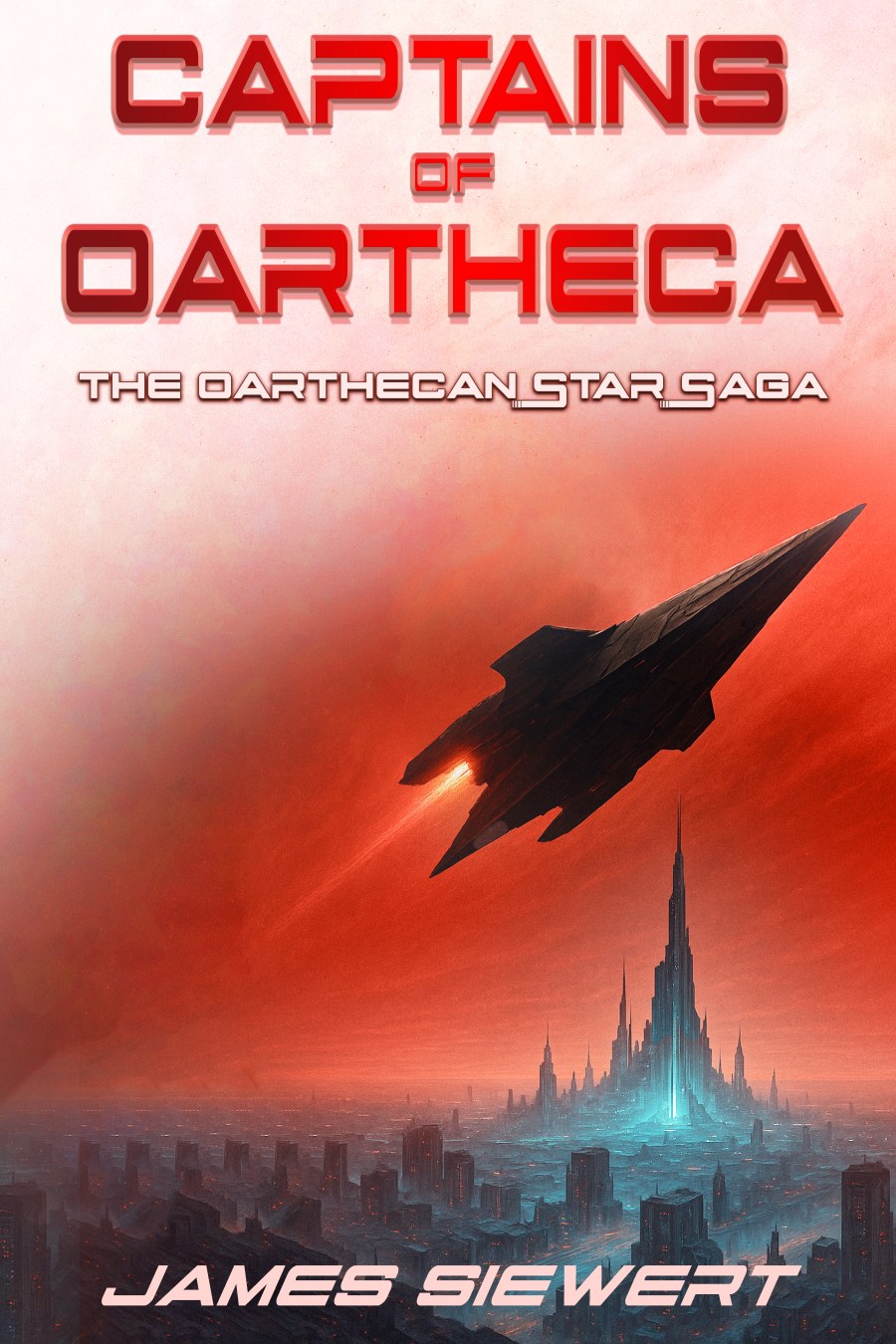
James Siewert has a new MM sci-fantasy romance out, Oarthecan Star Saga book 3: Captains of Oartheca.
Welcome to Oartheca—a world of shattered beauty and stolen futures.
Where noble Barons rule with ironclad grace, and loyal drones unquestionably obey. A wounded world, rich with history and pride, struggling to heal… while war still smoulders at its edges.
Hoping to change the fate of all Oarthecans, Captain Rowland Hale II and Toar Grithrawrscion embark on a mission as herculean as it is perilous: to bring Oartheca under the aegis of the Coalition of Allied Planets, and in doing so, usher in a new era of strength, stability, and peace.
But nothing on Oartheca is so easily won. Not peace. Not unity. And certainly not the truth.
In Captains of Oartheca, James Siewert sees our heroes challenge empires, defy impossible odds, and confront the terrible cost of hope. But when victory demands everything they are—and all they have—can they pay the price?
Warnings: Explicit sex scenes between consenting adult males
About the Series
An action-oriented, sci-fi extravaganza staring heroes who battle vicious foes, overcome galactic obstacles, find true love, all while just happening to be men-who-love-men. For adults only, the Oarthecan Star Saga will thrill readers with cinematic battles, daring romances and authentic, one-of-a-kind characters that rise to face challenges through bravery, courage and loyalty.
Get the hell off me!’ I shout angrily, futilely pushing at the rhino of a man smothering me. Goddamn he’s heavy but I’m giving it everything I’ve got, trying to wriggle free. I manage to get my head out from under the behemoth and turn to try and see what the hell is going on.
‘Stay down, Baron!’ the security guard overtop of me orders, his voice hard and urgent. There’s another bright green flash, and this time I see a plasma shot streak harmlessly into the skies, followed soon by more yelling and the sounds of intense struggle.
Annoyingly, cyan telemetry floods my cybernetic ocular display—suit’s integrity is down to ninety-two percent, but no injuries, and my shields are regenerating. That shot was a point-blank, direct hit. Thank God for top-tier CAPS engineering—anything less, and I’d be dead.
‘No!’ I hear a man yell. ‘No, he killed my brother!’
What?
‘Evacuate, evacuate!’ a stronger voice booms, and the man over top of me begins to ease up slightly; I immediately scoot out from under him and try to get a decent look around.
There’s a pile of security guards clustered together—it looks like there are three of them surrounding a fourth, having driven him to his knees. One is wrenching the kneeling man’s rifle from his hands, but the man is not letting go anytime soon. It takes the butt of another security guard’s rifle being driven into the side of his head before his grip finally weakens, and the gun is wrenched free.
The rhino then steps in front of me, blocking my view of the struggling men. I scowl and try to push him out of the way, but this guy’s a stormcoat, maybe a snowcoat, and I don’t even budge him a centimetre.
‘This way, Baron. Now,’ He pushes into me, using his superior bulk to knock me back. With one hand on my shoulder, he spins me around so that I’m facing away from the scene.
‘Where is Ton?’ I demand, trying to slip this guy’s grasp but his grip on my shoulder is firm—not painful, thanks to my exosuit’s kinetic absorption—but I’m not getting free unless I put up a serious struggle, which I don’t think is the wisest of things to do right now.
‘We’ll meet at the safe-point. Hurry, Baron, straight ahead,’ the rhino orders, and I follow as he steers me deeper into the docking bay. He sets a brisk pace—nearly a jog—we’re moving fast. A tug on my shoulder turns me left toward an open corridor, where two guards stand ready, rifles raised and scanning.
‘Inside, Baron.’ I’m not used to being manhandled like this, but I know if this dude wanted to, he could pick me up like an infant. He’s at least letting me move under my own power, so I do as I’m told, and head into the corridor.
We head down a gently sloping, well-lit cement tunnel—hopefully toward the safe-point rhino-guy mentioned. He’s stopped steering me, but with only one path ahead, we keep moving. After about thirty seconds, a circular portal sealed by sliding doors appears and opens as we approach.
‘Through the doors, Baron,’ my escort says. I step into the next tunnel, and he follows, tapping commands into a wall-mounted keypad. The doors slide shut behind us, leaving me to figure out what comes next.
The security guard then turns to face me, placing his hand over his heart, his fingers splayed, and gives me a deep bow. ‘We are secured now, Baron. The safe-point is just down this hall.’
‘Thank you,’ I reply genuinely. ‘I prefer Captain Hale, however. What’s your name, officer?’
‘Second Lieutenant Crahlstran Grithrawrclan, OSS Navy, Captain Hale,’ the man answers. ‘I’ve been assigned to you as your personal security representative. Are you injured?’
I immediately shake my head. ‘No, my suit took the damage. I’m fine. Where is m’Ton? Or the High Baron Grithrawr?’
‘At or en route to the safe-point. Please, if you will follow me, Captain,’ Crahl offers, extending his hand down the new corridor. With him leading the way, I follow as we descend further, until we reach another set of closed sliding doors. Crahl enters a command on the keypad, and they open. He stands aside to allow me to enter first.
Author Bio
James and his husband live in beautiful British Columbia, Canada. Part-time office drone, part-time storyteller, full-time sci-fi and fantasy enthusiast (and some spooky ghost tales), James couldn’t find enough stories involving guys like him and his hubby are: big men with big hearts, full of big ideas!
Taking matters into his own hand, James seeks to share high adventure, low-angst stories where the heroes are solid blokes who take centre stage. Come join the adventure and explore bold new worlds full of authentic characters, gripping scenes, lush imagination and a touch of mushy stuff – there’s a whole galaxy waiting for you to discover!
As the next instalment of the Oarthecan Star Saga, Captains asks whether two people can remain true to each other in the face of ideological conflict, cultural clashes and all-out war. And not just war with a cannibalistic race of slavers, but war between yourself and the man you love. Captains of Oartheca seeks to answer that question.
How did your experience writing Allure of Oartheca influence Captains of Oartheca?
Allure was my first published novel and laid the foundations for brand spanking new universe that’s seen through the eyes of two unique men: a highly intelligent cyber-human wrestling with his morals, and a soft-hearted alien werebear from the other side of the galaxy.
Those are two highly distinct lenses, and that meant having to step deep into their radically different ways of thinking. Yes, Rowland’s thoughts bounces around in his head—and so naturally, his inner monologue is going to reflect that. Toar loves to ramble on, so yes, he’s heavy-handed with his verbiage. It’s part of their character and part of what makes them more than just typical protagonists who act rather than think.
After Allure, there was a lot to feedback, especially around the topic of depth and detail. It seems that some folks crave the straightforward approach to novel writing, while others enjoy being so completely immersed in detail that the world feels alive enough to breathe on its own. Seems that while deep in a thick forest, some readers will feel lost, while others will feel found.
With Captains, I’ve tried to meet both groups halfway, despite Allure teaching me that some readers prefer their sci-fi served with a healthy dose of comfortable predictability and a ‘by-the-book’ story approach.
Some readers found Allure heavy on world-building. How did you approach that balance in Captains?
In Allure, I established a universe from scratch, complete with its history, politics, biology, and languages. That necessitated focusing on the detail of my ‘rules’ for how my universe worked. Everything from a realistic system of faster-than-light travel to bringing authenticity and uniqueness to the cultures of never-seen-before species. No easy feat, but without these rules, science-fiction risks spilling into the world of magical fantasy.
But having put in the work, by Captains, I can trust the reader will know how to walk the surface of Oartheca without needing a hand to hold on to. The story’s streamlined, but I’ve not skimped on the lavish detail when there’s a call for it. True, not every reader will want to decode the important nuances of a high denning, but for those that do? Captain’s got you covered.
What do you want readers to take away from Captains of Oartheca?
That men-who-love men are more than just a genre or trope—we’re real people that exist, and our voices have a place in the universe. That men can be strong without needing a heart of stone. That empathy isn’t supposed to be easy. That love isn’t a blindfold. That sometimes, the cost is too high. That war changes everything, but war itself? War never changes.
How would you describe your evolution as a writer between Allure and Captains?
That I don’t need to apologise for being my authentic self. In Allure, I built the house. In Captains, I moved in. If someone wants to walk through the front door and join me, they’re very welcome. I’ve laid out a feast that will satiate a hungry soul. But if they’d rather stay outside and just critique the paint colour? That’s fine too.
I received a free copy of this book in exchange for a fair and honest review. All opinions are my own.
Author and poet G.H. Mosson shares poems and vignettes that explore the things that have shaped us in the book “Singing the Forge.”
Advertisements
The Synopsis
Version 1.0.0
Singing the Forge explores the singing of what’s shaped us and what we’ve shaped for ourselves. Through poems at times personal, plus vignettes from men and women of the past two centuries in the book’s middle section, these poems offer mirrors of becomings. Across free verse, meter, and poems of organic form, you might just see yourself.
The Review
Immediately, I was drawn to the author’s ability to create poems that felt very lyrical in nature, bringing a story-like quality to each poem that conveys a theme and evokes an emotional response in the reader. The powerful imagery these poems delve into is compelling, as seen in the poem “Domination of Tulips in Washington D.C.,” where Rock Creek Park comes alive on the page and petals become doorways to the heart of the flower.
The draw of this collection lies in the strong, powerful themes of forging and awakening that the poems explore. The concept of forging not only brings to mind the idea of creation, but the idea of reshaping things and reinforcing things through fire, a visual and visceral theme the author uses to connect readers with the raw poetry that calls for those moments o f personal change and growth through trials and tribulations, both on an individual scale and even some on much more cosmic scales, such as the idea of time and memory itself taking on whole new meanings.
The Verdict
Thoughtful, moving, and engaging, author G.H. Mosson’s “Singing the Forge” is a must-read collection of poetry. The deliberate, emotive, and introspective nature that the author brings to each poem, along with the almost lyrical and passionate style of writing, will stay with readers and keep them coming back time and again to delve into this collection. If you haven’t yet, be sure to grab your copy today!
Rating: 10/10
Advertisements
About the Author
G. H. Mosson’s poetry has appeared in The Tampa Review, The Lyric,
Smartish Pace, California Quarterly, and has been nominated four times for the Pushcart Prize.
This is his sixth book of poetry. For more, see www.ghmosson.com