I received a free copy of this book in exchange for a fair and honest review. All opinions are my own.
A group of mothers within a popular cul-de-sac find their little community threatened by a mysterious figure who threatens to reveal the dark secrets of their past in author Tara Laskowski’s “The Mother Next Door”.
The Synopsis
For fans of Lisa Jewell, Aimee Molloy, and Joshilyn Jackson, an upmarket suspense novel from a multi-award-winning author about a tightknit group of suburban mothers who invite a new neighborhood mom into their fold, and the fallout the night of the annual block party, when secrets from the past come back to haunt them…
The annual block party is the pinnacle of the year on idyllic suburban cul de sac Ivy Woods Drive. An influential group of neighborhood moms—known as the Ivy Five—plan the event for months.
Except the Ivy Five have been four for a long time.
When a new mother moves to town, eager to fit in, the moms see it as an opportunity to make the group whole again. This year’s block party should be the best yet… until the women start receiving anonymous messages threatening to expose the quiet neighborhood’s dark past—and the lengths they’ve gone to hide it.
As secrets seep out and the threats intensify, the Ivy Five must sort the loyal from the disloyal, the good from the bad. They’ll do anything to protect their families. But when a twisted plot is revealed, with dangerous consequences, their steady foundation begins to crumble, leaving only one certainty: after this year’s block party, Ivy Woods Drive will never be the same.
From award-winning author Tara Laskowski, The Mother Next Door is an atmospheric novel of domestic suspense in which the strive for perfection ends in murder…
The Review
This was a chilling and adrenaline-fueled thriller that will give readers whiplash with the twists and turns that the narrative takes them on. The atmosphere and tone really do a great job of highlighting the contrast between the picturesque suburban dream the Ivy Five portrayed to the public and the hellish nightmare their secrets and lies have created in the background of the community. The author perfectly captures the privilege that wealth and status buy people who have done terrible things in this life, and captured the societal emotions that have taken hold in recent years at the injustice of such secretive actions.
Yet it was the narrative and character growth that really stole the show here. The razor-sharp wit of the moms, especially Kendra, as they move people around like pawns in a game of their own making is highlighted perfectly in Theresa’s chapters especially, as the protagonist shows the struggles to adapt and make herself belong in this group, as mistakes of her own past begin to haunt her as well. The weight of those secrets and lies highlights the elevated anger and fear that builds up with keeping such a secret for so long, and the author’s use of this to add tension into the narrative was a stroke of genius.
Advertisements
The Verdict
Pretty Little Liars meets Revenge with a Halloween twist, author Tara Laskowski’s “The Mother Next Door” is the perfect suburban thriller this fall. The memorable characterization of the “perfect” suburban dream team and the haunting emotions that build as the secrets begin to pile up on one another more and more make this a truly memorable read. Be sure to grab your copy today!
Rating: 10/10
About the Author
Tara Laskowski
TARA LASKOWSKI is the author of One Night Gone, which won an Agatha Award, Macavity Award, and Anthony Award, and was a finalist for the Mary Higgins Clark Award, Left Coast Crime Award, Strand Critics’ Award, and Library of Virginia Literary Award. She is also the author of two short story collections, Modern Manners for Your Inner Demons and Bystanders, has published stories in Alfred Hitchcock’s Mystery Magazine and Mid-American Review, among others, and is the former editor of SmokeLong Quarterly. Tara earned a BA in English from Susquehanna University and an MFA from George Mason University and currently lives in Virginia. Find her on Twitter and Instagram, @TaraLWrites.
Q: Please give us a one sentence pitch for your novel, The Mother Next Door.
A: An atmospheric suspense novel about a tight-knit group of suburban mothers who invite a new neighborhood mom into their fold, and the fallout the night of the annual Halloween block party, when secrets from the past come back to haunt them.
Q: Why do you believe thrillers are so popular?
A: They naturally invoke our curiosity–our sense of “I have to know what happens.” Plus, I think people like to read about bad things happening to other people. It’s the same with horror movies or books–it’s a fun way to put yourself in a terrifying situation without actually having to be in a terrifying situation. As long as our brains know we are safe, we can enjoy that rush of adrenaline without the sheer panic.
Q: Where do you get your ideas? Of course, from your imagination, but do you read, see or hear something that clicks? How did you come up with the idea for The Mother Next Door? Is this book based on any true events?
A: I usually start with setting, weirdly. I need a place that I can envision, and that I can see bad things happening in. If I’ve got the place, then I can insert characters and make things happen.
For The Mother Next Door, I took all of the things I love most–Halloween, cool houses, urban legends–and put them in a domestic suspense set in a creepy suburban neighborhood. The book isn’t really based on any true events, but it definitely riffs off stuff in my real life. We live in a neighborhood with a cul-de-sac that throws a Halloween potluck every year, for example, though as far as I know nothing nefarious has happened over there!
Q: Are you a plotter or pantser?
A: I don’t do well with outlines. I need to feel my way through a book with a blindfold on (though occasionally I guess I pull it down and try to get a glimpse of what’s ahead.) By this, I mean, I like to write a little, then figure out the next few “beats” or things that might happen, then write those, then figure out a little more, etc. And delete and rewrite and cry a little and doubt myself and think I’m the greatest thing since barbeque chips and start the whole process over again. And each time, so far, it’s ended up in a book, so fingers crossed!
Q: Any great tips for aspiring writers?
A: 1) Find your tribe 2) Learn to take criticism and rejection gracefully 3) Read. A lot. 4) Sign up for a monthly massage program.
Q: What is your favorite place to write?
A: It’s super boring, but my home office. I like to have control over my environment. I know writers who can write in coffee shops or libraries or outside, but I need to be at a desk in relative quiet most of the time. If it’s too noisy or too cold or there’s a chance that a spider will crawl on me, I can’t concentrate. That said, we have an excellent screened-in porch and I do like writing out there sometimes.
Q: Are you working on another book now or taking a break?
A: I’m working on my third novel, which is set in upstate New York at a winery and estate and features a group of old friends who return there for a reunion only to realize they are caught up in a decade-old revenge plot.
Q: What is your favorite season and why?
A: Hands-down: Fall. Sweaters! Crunchy leaves! Pumpkin everything! Football! Also, Halloween is my birthday, and I adore anything and everything spooky. So, there you go.
Advertisements
Here is an Exclusive Excerpt From “The Mother Next Door”
HALLOWEEN
Ladies and gentlemen, skulls and boys: by the time our Halloween block party is over tonight, one of us will be dead.
And I don’t mean dead as in dull, or dead as in zombified. I mean dead as in gone. Dead as in expired. Killed.
Murdered.
You may be feeling distressed about this, knowing what you know about Ivy Woods—the great neighborhood it is, the sweet, loving families that live there. How could such a tragedy happen in such a wonderful place? You may have traveled here yourself, as a child or as a parent, lured in by the local fame of the street and its ghoulish decorations each year. The lights, the smoke, the gravestones, and the moaning. The witches, cackling and handing out candy. The swarms of little Frankensteins and cowboys and robots and ballet dancers lugging their pillowcases and plastic pumpkin buckets filled with sugar and junk.
But Ivy Woods isn’t perfect.
Far from it.
Look closer. Look under the makeup and the masks, look into the windows of the perfect houses. Dig under the surface of those freshly mowed lawns and you’ll find the worms. I’ve looked—believe me, I’ve looked. There’s something about this street. There are secrets. I know from watching through the windows, from hearing the hushed conversations, from lingering on their faces when they think everyone else has looked away.
Oh they think they are perfect. They pat themselves on the back for throwing such good parties, for raising such fine children, for living in such big houses.
But they are pretending.
They don masks on this one single night to dress up as someone or something else, but in reality they live their lives this way.
We all do.
We hate ourselves. We are too fat, or too thin. We should work hard, be smarter. We are lonely and depressed. We are worried about money. We are ashamed of the way that our friends and family treat us. But we lie about it all. We hide behind a protective façade, fragile glass figurines inside elaborate dollhouses designed to look like perfect, safe, happy places.
Tonight it will all shatter.
Watch closely and you’ll begin to see what I see. There’s trouble in the air, a cold wind blowing in from far away, and it’s settled on Ivy Woods Drive. The secrets and the lies we tell ourselves and others will emerge tonight like spirits of the dead. Lines will be drawn. Sides will be taken. Someone won’t make it out alive.
I can’t save that person, but I’ll tell the story. Turn over the rocks, expose the worms. Pull back the masks.
Because I know their secrets, secrets that will destroy them all.
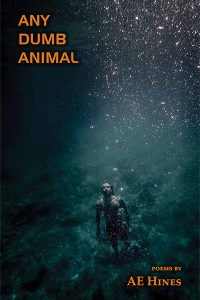
Hi everyone! I am honored and proud to share this special spotlight for author A.E. Hines and his book, “Any Dumb Animal”, a unique collection of poetry that shares his memoir of a gay man who came of age during the AIDS crisis.
With every pre-sale purchase of Any Dumb Animalby A.E. Hines between June and November 2021, a group of anonymous donors will match dollar for dollar each sale and donate it to The Trevor Project.
The Trevor Project was founded in 1998 and is the leading national organization providing crisis intervention and suicide prevention services to lesbian, gay, bisexual, transgender, queer & questioning (LGBTQ) young people under 25.
Any Dumb Animal (Main Street Rag, 2021), the debut poetry collection by AE Hines, presents a memoir-in-verse as told by a gay man raised in the rural South who comes of age during the AIDS crisis. Flashing back and forth in time, a cast of recurring characters and circumstances are woven into a rich tale of survival and redemption, exploring one man’s life as a queer son, father, and husband, over a span of more than thirty years.
Advertisements
Advance Praise:
“This compellingly candid work speaks the language of courage, of breath-taking transcendence. Finely crafted, it is a remarkable debut collection. Take note, world: a powerful lyric poet has emerged. Take note and rejoice!” ~ Paulann Petersen, Oregon Poet Laureate Emerita
“I was amazed over and over at the bravery of these poems, never shying from the difficult moments in life, and all the while staying true to the clear-eyed, fearless vision of their author.” ~ James Crews, Editor of How to Love the World: Poems of Gratitude and Hope
“With a strong gift for storytelling and an eye attuned to detail, Hines ultimately shows us the beauty and knowledge made of experience.” ~Richie Hofmann, Author of Second Empire
About the Author:
AE Hines (he/him) grew up in rural North Carolina and currently resides in Portland, Oregon. His poetry has been widely published in anthologies and literary journals including I-70 Review, Sycamore Review, Tar River Poetry, Potomac Review, Atlanta Review, Crosswinds Poetry Journal and Crab Creek Review. He is winner of the Red Wheelbarrow Prize and has been a finalist for the Montreal International Poetry Prize. He is currently pursuing his MFA in Writing at Pacific University. Follow him on Twitter, Facebook, Instagram.
I received a free copy of this book in exchange for a fair and honest review. All opinions are my own.
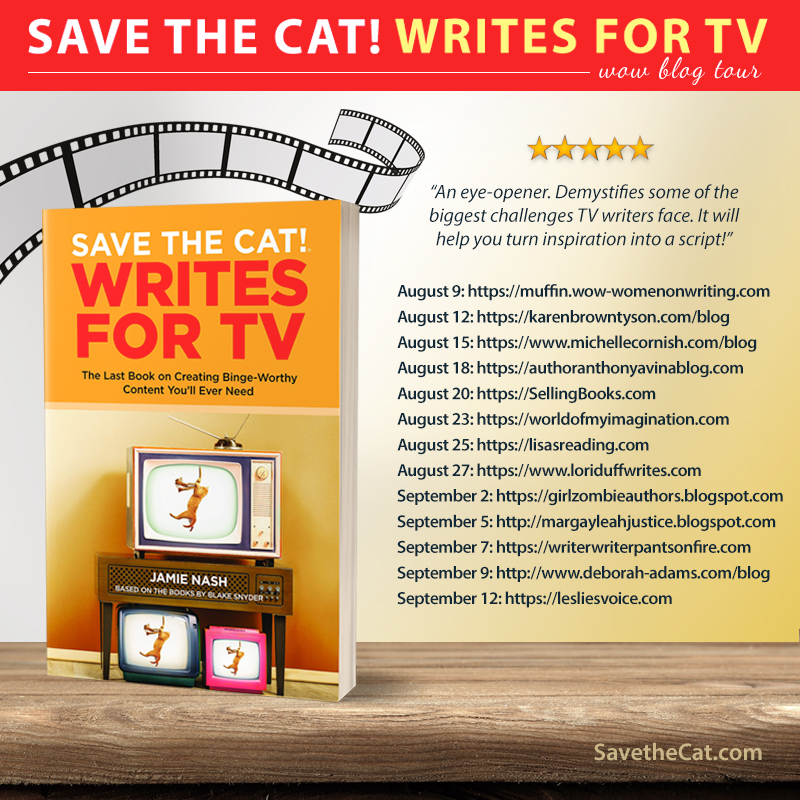
Author Jamie Nash takes the mantle from Blake Snyder to show writers and authors how to create binge-worth content for television in the latest entry in the Save the Cat series, “Save the Cat! Writes For TV”.
The Synopsis
First, what is Save the Cat!®?
Save the Cat! provides writers the resources they need to develop their screenplays and novels based on a series of best-selling books, primarily written by Blake Snyder (1957- 2009). Blake’s method is based on 10 distinctive genres and his 15 story beats (the Blake Snyder Beat Sheet). Our books, workshops, story structure software, apps, and story coaching teach you everything you need to unlock the fundamentals and mechanics of plot and character transformation.
Blake Snyder’s Save the Cat!, the world’s top-selling story method for filmmakers and novelists, introduces The Last Book on Creating Binge-Worthy Content You’ll Ever Need.
Screenwriter Jamie Nash takes up Snyder’s torch to lay out a step-by-step approach using Blake’s principles for both new and experienced writers, including:
How to write and structure a compelling TV pilot that can launch both your series and your TV writing career
All the nuances, tricks, and techniques of pilot-writing: the Opening Pitch, the Guided Tour, the Whiff of Change, and more
The 8 Save the Cat! TV Franchise Types that will improve your story and your pitch
The not-so-secret TV Pitch Template that turns your TV series into the necessary read-over-lunch industry document
a how-to in creating layered characters who are driven by complex internal struggles
Beat sheets of the pilots of Barry, Ozark, Grey’s Anatomy, The Marvelous Mrs. Maisel, What We Do in the Shadows, Black-ish, The Mandalorian, This Is Us, Law and Order: SVU and more to help you crack your story.
Create your binge-worthy TV series with Save the Cat! Writes for TV.
The Review
Such a truly valuable and informative read. The author does a great job of showcasing the skills and work that goes into television writing but incorporating his own unique voice and wit into the writing to make the reader feel connected to the information they are absorbing.
However, what really stands out is the information that the author bestows upon the readers, building upon the legacy of Blake Snyder’s work with an insight into modern-day television in the age of streaming services. The breakdown of the book into four sections of television writing, and focusing on building oneself up from a member of the writer’s room to a showrunner was a great foundation to lay for this book, and the educational yet relatable way the author writes to his audience really allowed this information to be absorbed greatly. I, as a writer, definitely felt the expertise that went into this book.
The Verdict
A memorable, thoughtful, and insightful book on television writing, author Jamie Nash’s “Save the Cat! Writes for TV” is a must-have book for any aspiring and established writers out there. While the book’s primary focus on television writing is truly amazing, I feel, as an author myself, that this book can easily translate and apply to all formats of writing, especially for those hoping to craft memorable, long-last series or arcs for multiple books, something I know I could use. If you haven’t yet, be sure to grab your copy today!
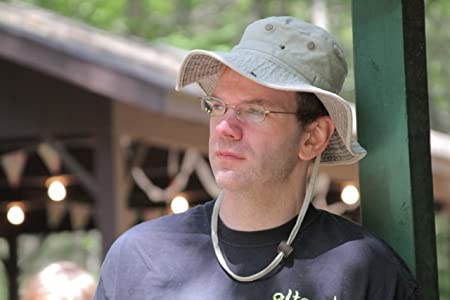
Jamie Nash has written and sold almost every type of story under the sun, including the horror films Exists, V/H/S/2, The Night Watchmen, Altered, and Lovely Molly, and the family films Santa Hunters and Tiny Christmas. He has written the Middle-Grade novels Bunk! and The 44 Rules of Amateur Sleuthing and the sci-fi novel Nomad. Jamie knows what it’s like to make a living as a writer. When he s not writing and selling work, he teaches screenwriting at Johns Hopkins University and MICA and co-hosts the podcast Writers/Blockbusters. Jamie lives in Maryland with his wife, son, and a talking dog.
Join us as we celebrate the launch of another Save the Cat tour! We are featuring the newest book Save the Cat! Writes for TV. Read an interview with the author and stop by and win a copy for yourself.
I received a free copy of this book in exchange for a fair and honest review. All opinions are my own.
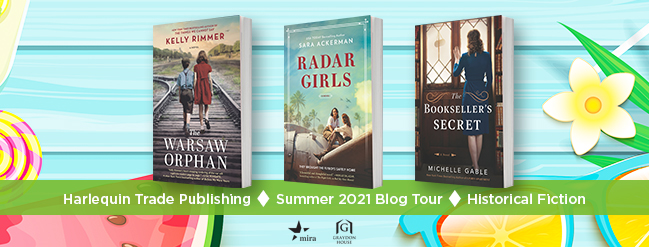
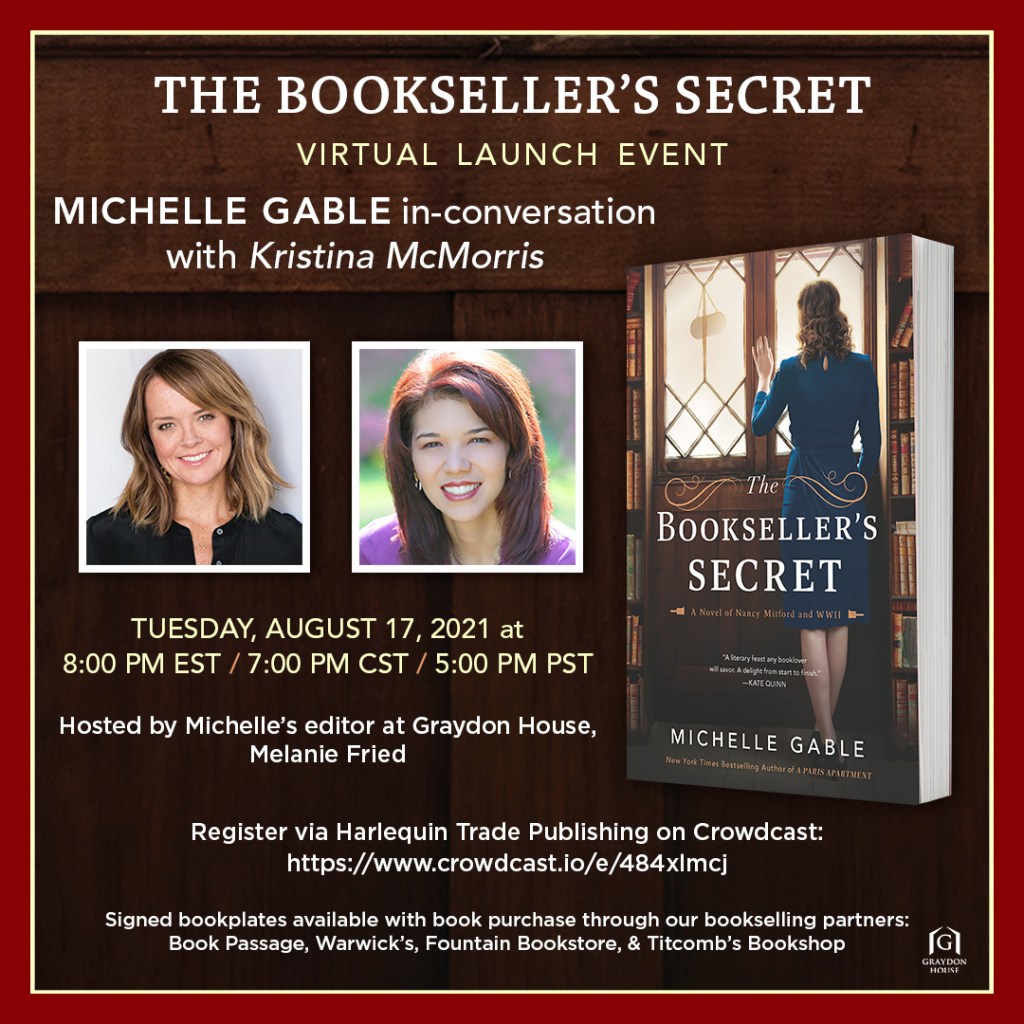
A one-time author suffering from a personal loss and the horrors of WWII must decide if a story she’s been asked to tell is worth the price her life may pay as the hunt for her manuscript 80 years later takes on a whole new meaning in author Michelle Gable’s “The Bookseller’s Secret: A Novel of Nancy Mitford and WWII”.
Advertisements
The Synopsis
From New York Times bestselling author Michelle Gable comes a dual-narrative set at the famed Heywood Hill Bookshop in London about a struggling American writer on the hunt for a rumored lost manuscript written by the iconic Nancy Mitford—bookseller, spy, author, and aristocrat—during World War II.
In 1942, London, Nancy Mitford is worried about more than air raids and German spies. Still recovering from a devastating loss, the once sparkling Bright Young Thing is estranged from her husband, her allowance has been cut, and she’s given up her writing career. On top of this, her five beautiful but infamous sisters continue making headlines with their controversial politics.
Eager for distraction and desperate for income, Nancy jumps at the chance to manage the Heywood Hill bookshop while the owner is away at war. Between the shop’s brisk business and the literary salons she hosts for her eccentric friends, Nancy’s life seems on the upswing. But when a mysterious French officer insists that she has a story to tell, Nancy must decide if picking up the pen again and revealing all is worth the price she might be forced to pay.
Eighty years later, Heywood Hill is abuzz with the hunt for a lost wartime manuscript written by Nancy Mitford. For one woman desperately in need of a change, the search will reveal not only a new side to Nancy, but an even more surprising link between the past and present…
The Review
This was a remarkable story. The way the author balances the history and knowledge of the infamous author’s life and the war itself with the more modern-day characters who begin discovering things about Nancy as they search for her long-lost manuscript was so fascinating to see unfold. The setting of both time periods and the descriptive way the author writes really does a great job of painting a picture of the events of this narrative so perfectly.
It was the character growth in this book that really sold me on this narrative. The modern-day protagonist, Katie, really drew the reader in and kept the mystery and wonder of discovering more about Nancy’s life alive, while Nancy herself was engaging and mesmerizing as she balanced her work in the bookstore, her standing in social circles in the midst of her loss and the war, and of course her passionate affair with the French General who became the love of her life.
The Verdict
A beautiful, heartfelt, and creative approach to historical fiction narratives, author Michelle Gable’s “The Bookseller’s Secret” is a must-read novel of 2021. The perfect balance of dual-narratives with mystery and history blended in made this story shine brightly, and the setting really will engage history buffs while hitting the heartstrings in the process. If you haven’t yet, be sure to grab your copy today!
Rating: 10/10
Advertisements
About the Author
MICHELLE GABLE is the New York Times bestselling author of A Paris Apartment, I’ll See You in Paris, The Book of Summer, and The Summer I Met Jack. She attended The College of William & Mary, where she majored in accounting, and spent twenty years working in finance before becoming a full-time writer. She grew up in San Diego and lives in Cardiff-by-the-Sea, California, with her husband and two daughters. Find her at michellegable.com or on Instagram, Twitter, or Pinterest, @MGableWriter.
Q: What’s the “story behind the story” for The Bookseller’s Secret? Why did you decide to write this book?
A: I’ve been a longtime fan of Nancy Mitford’s work and became obsessed with the entire Mitford clan after reading The Sisters by Mary S. Lovell, about twenty years ago. In short, Nancy was one of six beautiful sisters with very distinct (and controversial!) personas: Nancy the novelist, Pamela the countrywoman, Diana the Fascist (and “most hated woman in England”), Unity the Hitler confidante, Jessica the Communist, and Deborah the Duchess. Writing something about this crew has been in the back of my mind since long before I was published and when tossing around ideas, my agent brought up Nancy’s time at the Heywood Hill bookshop during the Blitz. I love London, and any novel set in a bookstore, as well as new takes on the World War II genre, so I was game.
As for the modern storyline, though Katie’s life is vastly different from mine, let’s just say we share some of the same writerly angst!
Q: What message do you hope readers take from the story?
A: I never write with a message in mind, I just hope something about the story sticks with readers, whether it’s a character, some piece of history learned, or a new way of looking at a situation. I’m shocked how few Americans know about Nancy Mitford (even fellow writers) so I do hope readers walk away with an appreciation for her brilliance (and humor!)
Q: Do you have any specific writing rituals (favorite shirt, pen, drink, etc)?
A: I don’t! Sometimes I handwrite, sometimes I write on a computer. Sometimes I have coffee, or water, or Diet Coke. Usually I work in my home office but have been known to write during my daughters’ softball games. I started this book in February 2020 so most of it was written when EVERYONE was home on lockdown. One of my daughters took over my office so I spent a lot of time writing in my bedroom, with the dog curled up next to me. This is when I learned my husband uses binders for work (click-click-click).
One “habit” that is consistent is that I always stop in the middle of something that is going well so it’s easier to pick up the next day. Few things are more daunting than staring at a blank page!
Q: Which character do you relate to the most?
A: I relate to Katie’s writerly angst, but I really connected to Nancy Mitford’s writing style. I’d like to think we have similar senses of humor but that is giving myself a lot of credit!
Q: What can you tell us about your next project?
A: Though I vowed no more WWII novels, I couldn’t help myself! This one takes place in Rome, near the end of the war, and centers on women who created propaganda to feed to the Germans, the goal to lower morale. It’s an exploration of how misinformation not only affects those receiving it, but those creating it.
Q: What do you think drives authors to continue to find stories to tell set around WWII?
A: I think because there are endless stories to tell! It involves most every country, even so called “neutral” countries, and people from literally every walk of life. Brave and scared. Rich and poor. Powerful and powerless. Obedient and rebellious. Every combination of the human experience!
Q: How are you hoping readers will relate to this story?
A: I don’t have any specific hopes, just that they do! And, of course, I want everyone to gain a new appreciation for Nancy Mtiford.
Q: What’s something that you connected with personally as you researched and wrote this story?
A: While she was working at Heywood Hill, Nancy was struggling with ideas for her fifth book just as I had been with my fifth book when my agent suggested writing about her! Also, her husband and mine look exactly alike which is a little creepy. You don’t see a lot of tall, blonde, adult men. And Nancy Mitford died exactly one year to the day before I was born, which also felt like it meant something.
Advertisements
An Exclusive Excerpt From “The Bookseller’s Secret”
April 1946
Hotel de Bourgogne, Paris VII
There they are, held like flies in the amber of that moment—click goes the camera and on goes life; the minutes, the days, the years, the decades, taking them further and further from that happiness and promise of youth, from the hopes…and from the dreams they dreamed for themselves.
—Nancy Mitford,The Pursuit of Love
“Alors, racontez!” the Colonel said, and spun her beneath his arm.
Nancy had to duck, of course. The man was frightfully short.
“Racontez! Racontez!”
She laughed, thinking of all the times the Colonel made this demand. Racontez! Tell me!
“Allô—allô,” he’d say across some crackling line. “Were you asleep?”
He might be in Paris, or Algiers, or another place he could not name. Weeks or months would pass and then a phone rang in London and set Nancy Mitford’s world straight again.
“Alors, racontez! Tell me everything!”
And she did.
The Colonel found Nancy’s stories comical, outrageous, unlike anything he’d ever known, his delight beginning first and foremost with the six Mitford girls, and their secret society. Nancy also had a brother, but he hardly counted at all.
“C’est pas vrai!” the Colonel would cry, with each new tale. “That cannot be true!”
“It all happened,” Nancy told him. “Every word. What do you expect with a Nazi, a Communist, and several Fascists, in one family tree?”
“C’est incroyable!”
But the Hon Society was the past, and this gilded Parisian hotel room was now, likewise Nancy’s beloved Colonel, presently reaching into the bucket of champagne. How had she gotten to this place? It was the impossible dream.
“Promise we can stay here forever,” Nancy said.
“Here or somewhere like it,” he answered with a grin.
Nancy’s heart bounced. Heavens, he was ever-so-ugly with his pock-marked face and receding hairline, the precise opposite of her strapping husband, a man so wholesome he might’ve leapt from the pages of a seedsman catalogue. But Nancy loved her Colonel with every part of herself, in particular the female, which represented another chief difference between the two men.
“You know, my friends are desperate to take a French lover,” Nancy said, and she tossed her gloves onto the bed. “All thanks to a fictional character from a book. Everyone is positively in love with Fabrice!”
“Bien sûr, as in real life,” the Colonel said as he popped the cork.
The champagne bubbled up the bottle’s neck, and dribbled onto his stubby hands.
“You’re such a wolf!” Nancy said. She heaved open the shutters and scanned the square below. “At last! A hotel with a view.”
Their room overlooked Le Palais Bourbon, home to l’Assemblée nationale, the two-hundred-year seat of the French government, minus the interlude during which it was occupied by the Luftwaffe. Mere months ago German propaganda hung from the building: DEUTSCHLAND SIEGT AN ALLEN FRONTEN. Germany is victorious on all fronts. But the banners were gone now, and France had been freed. Nancy was in Paris, just as she’d planned.
“This is heaven!” Nancy said. She peered over her shoulder and coquettishly kicked up a heel. “A luncheon party tomorrow? What do you think?”
“Okay, chéri, quoi que tu en dises,” the Colonel said, as she sauntered toward him.
“Whatever I want?” Nancy said. “I’ve been dying to hear those words! What about snails, chicken, and port salut? No more eating from tins for you. On that note, darling, you mustn’t worry about your job prospects. I know you’ll miss governing France but, goodness, we’ll have so much more free time!”
Nancy was proud of the work the Colonel had done as General de Gaulle’s chef du cabinet, but his resignation made life far more convenient. No longer would she have to wait around, or brook his maddeningly specific requests. I’ve got a heavy political day LET ME SEE—can you come at 2 minutes to 6?
“It’s really one of the best things that could’ve happened to us,” Nancy said. “Oh, darling, life will be pure bliss!”
Nancy leaned forward and planted a kiss on the Colonel’s nose.
“On trinque?” he said, and lifted a glass.
Nancy raised hers to meet it.
“Santé!” he cheered.
Nancy rolled her eyes. “The French are so dull with their toasts. Who cares about my health? It’s wretched, most of the time. Cheers to novels, I’d say! Cheers to readers the world over!”
“À la femme auteur, Nancy Mitford!” The Colonel clinked her glass. “Vive la littérature!”
In stories as varied as legends about local animals to tales of fairy creatures, there is tremendous cross-over in the symbolism used by cultures around the world. By studying these stories, we are reminded of the universal truths about life. The salmon, a transformational fish known for being of both salt and freshwater, has stories which teach new generations to show respect for the food that nourishes them. Tales of mermaids tell of the hardship of living between two worlds, no matter the original culture. Fairy tales about a girl growing up in painful conditions teaches how a person can earn a chance at a new life through being kind and honest. What we eat, the trials we go through, and how we act are all taught through the symbolism in these ancient stories from around the world.
Advertisements
People who live close to the land, who have lived in the same places for centuries of generations, have a connection with nature to be envied. It’s through such a connection that the salmon came to be touted as the bestowers of knowledge upon anyone who eats them. Such wisdom was passed down generation to generation until finally verified by modern science. Salmon, after all, contains Omega 3, a brain food. Certainly, such a creature deserves to be revered. The legends of salmon coming from countries in the Atlantic or the Pacific always hold the salmon in the highest esteem. The Ainu of Japan say salmon is a gift from Paradise. The Haida of the Pacific Northwest, like so many Native American tribes in that region, teach that salmon must be respected in their story of Salmon Boy. The Celtic people of Ireland tell the story of Finn MacCool, a man who gains unlimited intelligence by tasting the Salmon of Knowledge. Revisiting the legends of the creatures living where we live can teach us a lot for how to respect nature.
Mermaids, being both human and fish, live between worlds and symbolize transformation and longing. They are ocean creatures, but they long for the land of their human half. This is not unique to Ariel, the Disney version of Hans Christian Anderson’s The Little Mermaid. When the cast for the live action The Little Mermaid was announced, and Halle Bailey was cast as the key role, there was backlash about how mermaids are supposed to be white. This was repeated over and over in heated debates, and the comeback was that there are black mermaids, too. There are the stories of Mami Wata, a mermaid tale that originates in Africa and was passed along through the people captured into slavery, and still circulates today throughout the USA, Haiti and other former slave destinations. Unlike most African deities, Mami Wata is not an Orisha. Her name originates in Egypt. Like Ariel, there is longing for the seemingly unattainable land. Yet Mami Wata is no simpering child. She is powerful, almost more like the character of Ursula in The Little Mermaid. Someone to be feared. In Celtic stories of mermaids who drag their suitors to the bottom of the ocean floor, so do the African mermaids who serve Mami Wata. A creature to be feared, in symbolizing living between worlds the mermaid serves to teach us to learn to do the same.
Not only has the world of Disney shown just one version of the mermaids from around the world, so too has there been but one view of most popular fairy tales been told. Cinderella has many versions of the same story in a multitude of countries worldwide. Original versions of Cinderella (under different names) are found in the east as far back as 618 AD during the T’ang dynasty of China and even in some Native American tribal stories out west. The stories are always similar; a young girl is mistreated by her family and through telling the truth she is united with a powerful man. Truth may be symbolized by a clothing item such as a golden sandal or an anklet as in the versions of the Eastern countries, or it may be represented by the Cinderella character being able to see the truth where no one else can as in Native American stories. Either way, truth overcomes poverty and pain, giving the girl a “happy ever after” story she has earned through her kindness and honesty. Recognizing that this story is not only a European construct but belongs to all the people of our planet helps teach us that we are all capable of being good citizens worthy of a happy life.
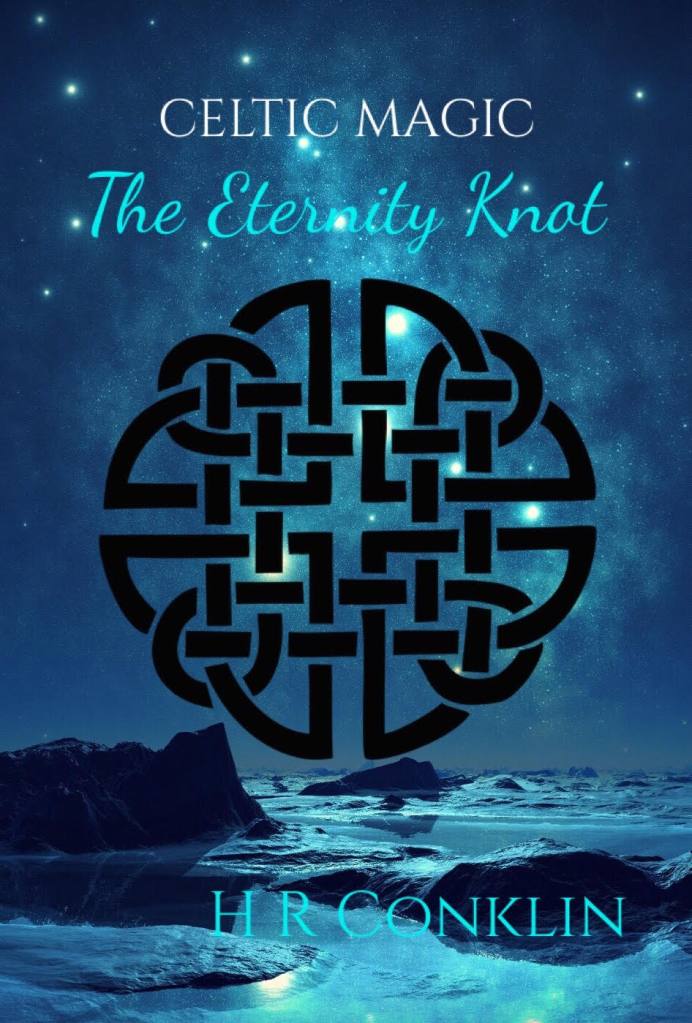
It is because of these varied stories offering connecting symbolism throughout a multitude of cultures and countries that I was inspired to write my final book, The Eternity Knot, the way I did. We are more alike than we realize. Our stories, centuries old, have shown us this over and over again. If we study these ancient stories, we can also learn the simplicity of taking care of our world. Knowledge and respect of nature, learning to live between worlds (e.g. technology and nature), being kind and honest; these are some of the traits we would do better to exhibit and they are taught to us through the symbology within the stories of our world.
Advertisements
About the Author
H. R. Conklin grew up in the rural mountains of Northern California where her mother gardened and her father played the bagpipes, as well as spending long hours in the theater where her parents were a dancer and an actor. This undoubtedly led to her overactive imagination and love for nature. She currently lives in San Diego with her husband, two adult children, and three dogs. She used to teach kindergarten at a public Waldorf charter school in which she told many fairy tales to the children, and made up stories in her spare time. Now she is a Story Circle Leader and guides parents in homeschooling at a private Waldorf school.
Join Lily at the Faerie Review as she shares her review of H.R. Conklin’s latest book The Eternity Knot; part of the Celtic Magic Series. This is a great book for anyone who enjoys a modern take on myths and fairytales!
Judy at the Knotty Needle shares her review with readers after reading H.R. Conklin’s The Eternity Knot – part of the Celtic Magic Series. Don’t miss Judy’s insightful review! https://knottyneedle.blogspot.com/
July 31st @ Author C.K. Sorens
Fellow Author C.K. Sorens shares her review of The Eternity Knot – the latest release by H.R. Conklin and part of the Celtic Magic series. Don’t miss today’s peer review!
Wisconsin entrepreneur and educator, Cathy Hansen reviews the latest novel in the Celtic Magic Series – find out what Cathy has to say about The Eternity Knot as she shares her thoughts with readers at Bring on Lemons.
Fellow author Anthony Avina shares his review of H.R. Conklin’s The Eternity Knot. This book is part of the Celtic Magic Series – readers of all ages will delight in this special story! https://authoranthonyavinablog.wordpress.com/
August 3rd @ A Storybook World
Readers at A Storybook World will hear from guest blogger H.R. Conklin on the topic of Symbolism in Fairytales. Conklin just release The Eternity Knot – another 5 star book in the Celtic Magic series, but she’s taking time to share her author expertise with readers today! Don’t miss this fabulous opportunity to learn from Conklin!
Earlier this week, readers at Author Anthony Avina’s blog read Anthony’s review of H.R. Conklin’s The Eternity Knot. Today readers will hear from Conklin herself as she shares a guest blog post titled: “Symbolism Reflected in Stories from Around the World” . Don’t miss this fantastic opportunity to learn more about The Celtic Magic series! https://authoranthonyavinablog.wordpress.com/
August 5th @ The Knotty Needle
Judy at the Knotty Needle shares her review of The Eternity Knot by H.R. Conklin. This is book 3 in the Celtic Magic series and it is guaranteed to delight readers of all ages! Don’t miss Judy’s review! https://knottyneedle.blogspot.com/
August 6th @ Beverley A. Baird
Today’s guest post for readers at Beverley A. Baird is written by H.R. Conklin. Conklin is the award winning author of the Celtic Magic Series and she recently released her latest title: The Eternity Knot. Don’t miss a chance to read today’s guest post titled: “Parenting Wisdom Shared Through Storytelling”.
August 7th @ World of My Imagination with Nicole Pyles
Nicole just finished reading The Eternity Knot by H.R. Conklin and can’t wait to tell readers at World of My Imagination all about it. Don’t miss today’s review by Nicole to find out more about this title as well as the others in the Celtic Magic Series!
August 8th @ Word Magic; All About Books with Author Fiona Ingram
H.R Conklin pens today’s guest post about fairies and mythology as she visits fellow author Fiona Ingram at Word Magic. Don’t miss this opportunity to hear from Conklin and find out more about her latest release: The Eternity Knot; part of the Celtic Magic series! http://fionaingramauthor.blogspot.com/
August 9th @ Bring on Lemons with Crystal Otto
WOW! Blog Tour Manager, Crystal Otto reviews the latest novel in the Celtic Magic Series – find out what Crystal has to say about The Eternity Knot as she shares her 5 star review with readers at Bring on Lemons.
Libby is a young artist who enjoys many genres of books – she shares her thoughts with readers at Bring on Lemons today – her deep thoughts about The Eternity Knot by H.R. Conklin. This book is part of the Celtic Magic series and Libby is excited to read all the books. Readers will delight in her youthful perspective and her energy!
Lisa Haselton interviews H.R. Conklin about the Celtic Magic series and her latest release The Eternity Knot. Don’t miss a chance to become better acquainted with this talented author!
Today, readers at Jill Sheet’s Blog will hear from H.R. Conklin on the topic of “How Symbolism in Fairy Tales of Old Help Us Today”. Stop by to learn more about The Eternity Knot (part of the Celtic Magic Series) and learn from this talented author.
Readers at Wildwood Reads will hear from Megan as she reviews The Eternity Knot by H.R. Conklin. Don’t miss an opportunity to learn more about The Celtic Magic Series and this latest release! https://wildwoodreads.com/
I received a free copy of this book in exchange for a fair and honest review. All opinions are my own.
A young woman searching for her brother in a city of monsters must navigate her growing power and the inner workings of the city of Avergard’s politics in order to save her family and friends in author Kristin Jacques’s “Skin Curse”, the second book in The Gate Cycle series.
Advertisements
The Synopsis
The Children of the Gate wait for the call to Rise.
Azzy Brimvine knows her brother is in the vast city of Avergard. She must find him, but time is not on their side.
In the House of Seven Smiles, Azzy struggles to understand the constraints and limits of her power. She finds the whispering voices that guided her for so long, suddenly silent. The enigmatic Lord Wallach is both a frustrating ally and a dangerous mystery, and a strange entity lurks among the household servants. The haven Azzy sought may not be as safe as she thought…but is anywhere truly safe in the Above?
The city of Avergard is full of monsters and secrets, and a dark history festers at its root. A yawning pit nestles in the house of a scheming lord, who will use Armin’s dangerous gifts to raise history, and raze the city to the ground. As Azzy finds herself and her brother pulled into these machinations, she must navigate the politics and society of Avergard’s brutal ruling class to save her family and friends before the Gate consumes them all.
This was a gripping and engaging story, blending everything from fantasy and horror to sci-fi and dystopian themes. While I am new to this series, I found the author did a great job of implementing enough of the first book’s story into this novel to make it feel both fresh and well-understood.
The pacing and haunting atmosphere played a big role in establishing this fantasy world. The blend of chilling imagery that really brought Avergard to life in the reader’s mind and the narrator (Amie Lyn Hornick) really did a great job of voicing this story, establishing the mix of wonder and terror the protagonist endures throughout the novel while capturing the raw emotions and action that Azzy must overcome to save those closest to her.
The Verdict
A brilliant, entertaining, and mesmerizing fusion of gothic horror and sci-fi dystopian elements, author Kristen Jacques’s “Skin Curse” is the perfect fantasy read for both new and established fans alike of this series. As a fan of history, I loved the backstory the author established of using one of history’s greatest villains, the Third Reich, and showed their involvement in opening the fabled Gate that let the magic and monsters into this dystopian world, as I know it is well established that one of Hitler’s mad machinations was to harness the power of the occult into his hatred and war machines. Add to this a great story with both haunting and engaging characters and a heart-pounding narrative that readers won’t be able to get enough of, this is a brilliant audiobook that can’t be missed. Be sure to grab your copy today!
I received a free copy of this book in exchange for a fair and honest review. All opinions are my own.
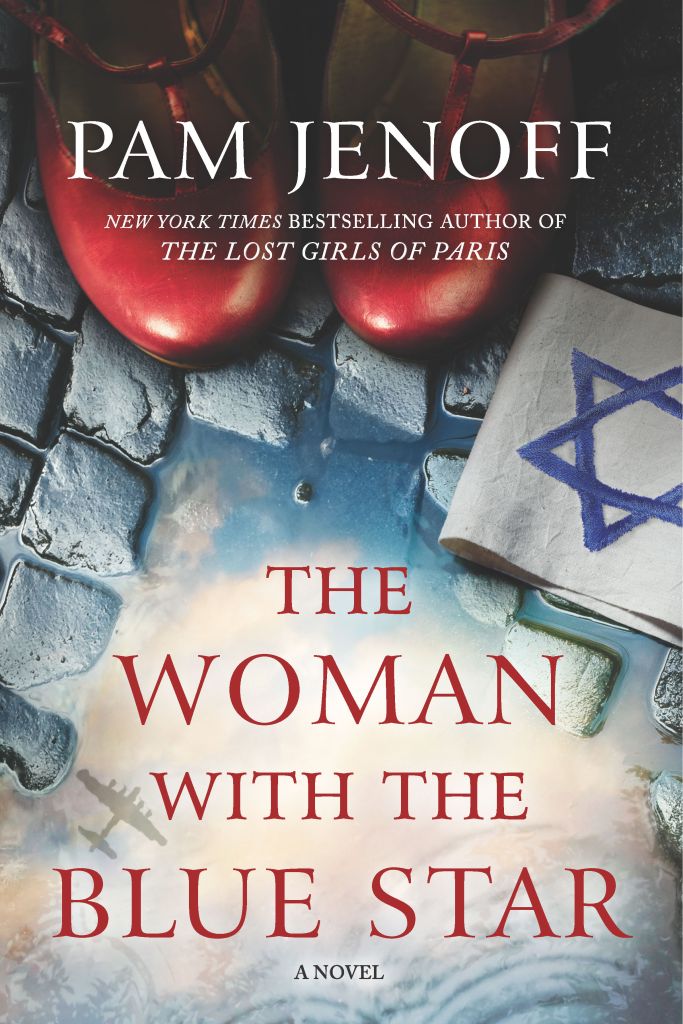
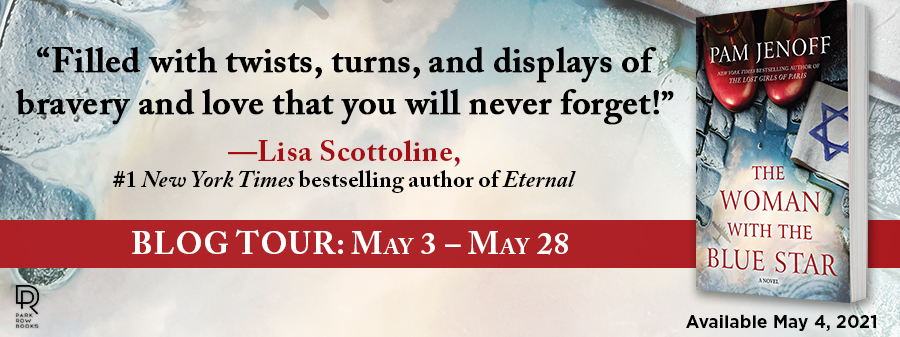
Two young women in very different circumstances during the German occupation of WWII find themselves becoming quick friends, but soon that friendship is tested as the war grows far deadlier in author Pam Jenoff’s “The Woman with the Blue Star”.
Advertisements
The Synopsis
From the New York Times bestselling author of The Lost Girls of Paris comes a riveting tale of courage and unlikely friendship during World War II.
1942. Sadie Gault is eighteen and living with her parents in the Kraków Ghetto during World War II. When the Nazis liquidate the ghetto, Sadie and her pregnant mother are forced to seek refuge in the perilous tunnels beneath the city. One day Sadie looks up through a grate and sees a girl about her own age buying flowers.
Ella Stepanek is an affluent Polish girl living a life of relative ease with her stepmother, who has developed close alliances with the occupying Germans. While on an errand in the market, she catches a glimpse of something moving beneath a grate in the street. Upon closer inspection, she realizes it’s a girl hiding.
Ella begins to aid Sadie and the two become close, but as the dangers of the war worsen, their lives are set on a collision course that will test them in the face of overwhelming odds. Inspired by incredible true stories, The Woman with the Blue Star is an unforgettable testament to the power of friendship and the extraordinary strength of the human will to survive.
The Review
The author does a truly fantastic and haunting job of capturing the horrors of WWII and the conditions that so many were forced to live in. Right off the bat readers are shown the pain of loss that one of the protagonists goes through in the heart-pounding moments a family attempts to find an escape from the overwhelming German forces. The imagery and sense of setting really are powerful in this story, as readers are immediately brought to the very different and distinct lives that separated those being hunted by the German occupation and those living “normally” during the occupation.
What really stands at the heart of this story however is the relationship between the two young women that become the protagonists of the story. Sadie and Ella’s stories are heartbreaking and heartwarming all at once, highlighting their individual struggles in this time of war while also showcasing how friendship, love, and relationships, in general, can give those in a time of need or struggle the hope they need to either endure or overcome those struggles. Readers will instantly be drawn into their friendship and the path their lives take during this tumultuous time.
The Verdict
A mesmerizing, haunting, and emotional historical-fiction read, author Pam Jenoff’s “The Girl with the Blue Star” is a must-read novel and the perfect historical-fiction read for the upcoming summer season. For those who love history and stories that delve into personal relationships that help overcome struggles, this is a truly engaging and intriguing read that cannot be missed. Be sure to grab your copy today!
Rating: 10/10
Advertisements
About the Author
Pam Jenoff is the author of several books of historical fiction, including the NYT bestseller The Orphan’s Tale. She holds a degree in international affairs from George Washington University and a degree in history from Cambridge, and she received her JD from UPenn. Her novels are inspired by her experiences working at the Pentagon and as a diplomat for the State Department handling Holocaust issues in Poland. She lives with her husband and 3 children near Philadelphia, where she teaches law.
Everything changed the day they came for the children.
I was supposed to have been in the attic crawl space of the three-story building we shared with a dozen other families in the ghetto. Mama helped me hide there each morning before she set out to join the factory work detail, leaving me with a fresh bucket as a toilet and a stern admonishment not to leave. But I grew cold and restless alone in the tiny, frigid space where I couldn’t run or move or even stand straight. The minutes stretched silently, broken only by a scratching—unseen children, years younger than me, stowed on the other side of the wall. They were kept separate from one another without space to run and play. They sent each other messages by tapping and scratching, though, like a kind of improvised Morse code. Sometimes, in my boredom, I joined in, too.
“Freedom is where you find it,” my father often said when I complained. Papa had a way of seeing the world exactly as he wanted. “The greatest prison is in our mind.” It was easy for him to say. Though he manual ghetto labor was a far cry from his professional work as an accountant before the war, at least he was out and about each day, seeing other people. Not cooped up like me. I had scarcely left our apartment building since we were forced to move six months earlier from our apartment in the Jewish Quarter near the city center to the Podgórze neighborhood where the ghetto had been established on the southern bank of the river. I wanted a normal life, my life, free to run beyond the walls of the ghetto to all of the places I had once known and taken for granted. I imagined taking the tram to the shops on the Rynek or to the kino to see a film, exploring the ancient grassy mounds on the outskirts of the city. I wished that at least my best friend, Stefania, was one of the others hidden nearby. Instead, she lived in a separate apartment on the other side of the ghetto designated for the families of the Jewish police.
It wasn’t boredom or loneliness that had driven me from my hiding place this time, though, but hunger. I had always had a big appetite and this morning’s breakfast ration had been a half slice of bread, even less than usual. Mama had offered me her portion, but I knew she needed her strength for the long day ahead on the labor detail.
As the morning wore on in my hiding place, my empty belly had begun to ache. Visions pushed into my mind uninvited of the foods we ate before the war: rich mushroom soup and savory borscht, and pierogi, the plump, rich dumplings my grandmother used to make. By midmorning, I felt so weak from hunger that I had ventured out of my hiding place and down to the shared kitchen on the ground floor, which was really nothing more than a lone working stove burner and a sink that dripped tepid brown water. I didn’t go to take food—even if there had been any, I would never steal. Rather, I wanted to see if there were any crumbs left in the cupboard and to fill my stomach with a glass of water.
I stayed in the kitchen longer than I should, reading the dog-eared copy of the book I’d brought with me. The thing I detested most about my hiding place in the attic was the fact that it was too dark for reading. I had always loved to read and Papa had carried as many books as he could from our apartment to the ghetto, over the protests of my mother, who said we needed the space in our bags for clothes and food. It was my father who had nurtured my love of learning and encouraged my dream of studying medicine at Jagiellonian University before the German laws made that impossible, first by banning Jews and later by closing the university altogether. Even in the ghetto at the end of his long, hard days of labor, Papa loved to teach and discuss ideas with me. He had somehow found me a new book a few days earlier, too, The Count of Monte Cristo. But the hiding place in the attic was too dark for me to read and there was scarcely any time in the evening before curfew and lights-out. Just a bit longer, I told myself, turning the page in the kitchen. A few minutes wouldn’t matter at all.
I had just finished licking the dirty bread knife when I heard heavy tires screeching, followed by barking voices. I froze, nearly dropping my book. The SS and Gestapo were outside, flanked by the vile Jüdischer Ordnungsdienst, Jewish Ghetto Police, who did their bidding. It was an aktion, the sudden unannounced arrest of large groups of Jews to be taken from the ghetto to camps. The very reason I was meant to be hiding in the first place. I raced from the kitchen, across the hall and up the stairs. From below came a great crash as the front door to the apartment building splintered and the police burst through. There was no way I could make it back to the attic in time.
Instead, I raced to our third-floor apartment. My heart pounded as I looked around desperately, wishing for an armoire or other cabinet suitable for hiding in the tiny room, which was nearly bare except for a dresser and bed. There were other places, I knew, like the fake plaster wall one of the other families had constructed in the adjacent building not a week earlier. That was too far away now, impossible to reach. My eyes focused on the large steamer trunk stowed at the foot of my parents’ bed. Mama had shown me how to hide there once shortly after we first moved to the ghetto. We practiced it like a game, Mama opening the trunk so that I could climb in before she closed the lid.
The trunk was a terrible hiding place, exposed and in the middle of the room. But there was simply nowhere else. I had to try. I raced over to the bed and climbed into the trunk, then closed the lid with effort. I thanked heavens that I was tiny like Mama. I had always hated being so petite, which made me look a solid two years younger than I actually was. Now it seemed a blessing, as did the sad fact that the months of meager ghetto rations had made me thinner. I still fit in the trunk.
When we had rehearsed, we had envisioned Mama putting a blanket or some clothes over the top of the trunk. Of course, I couldn’t do that myself. So the trunk sat unmasked for anyone who walked into the room to see and open. I curled into a tiny ball and wrapped my arms around myself, feeling the white armband with the blue star on my sleeve that all Jews were required to wear.
There came a great crashing from the next building, the sound of plaster being hewn by a hammer or ax. The police had found the hiding place behind the wall, given away by the too-fresh paint. An unfamiliar cry rang out as a child was found and dragged from his hiding place. If I had gone there, I would have been caught as well.
Someone neared the door to the apartment and flung it open. My heart seized. I could hear breathing, feel eyes searching the room. I’m sorry, Mama, I thought, feeling her reproach for having left the attic. I braced myself for discovery. Would they go easier on me if I came out and gave myself up? The footsteps grew fainter as the German continued down the hall, stopping before each door, searching.
The war had come to Kraków one warm fall day two and a half years earlier when the air-raid sirens rang out for the first time and sent the playing children scurrying from the street. Life got hard before it got bad. Food disappeared and we waited in long lines for the most basic supplies. Once there was no bread for a whole week.
Then about a year ago, upon orders from the General Government, Jews teemed into Kraków by the thousands from the small towns and villages, dazed and carrying their belongings on their backs. At first I wondered how they would all find places to stay in Kazimierz, the already cramped Jewish Quarter of the city. But the new arrivals were forced to live by decree in a crowded section of the industrial Podgórze district on the far side of the river that had been cordoned off with a high wall. Mama worked with the Gmina, the local Jewish community organization, to help them resettle, and we often had friends of friends over for a meal when they first arrived, before they went to the ghetto for good. They told stories from their hometowns too awful to believe and Mama shooed me from the room so I would not hear.
Several months after the ghetto was created, we were ordered to move there as well. When Papa told me, I couldn’t believe it. We were not refugees, but residents of Kraków; we had lived in our apartment on Meiselsa Street my entire life. It was the perfect location: on the edge of the Jewish Quarter but easy walking distance to the sights and sounds of the city center and close enough to Papa’s office on Stradomska Street that he could come home for lunch. Our apartment was above an adjacent café where a pianist played every evening. Sometimes the music spilled over and Papa would whirl Mama around the kitchen to the faint strains. But according to the orders, Jews were Jews. One day. One suitcase each. And the world I had known my entire life disappeared forever.
I peered out of the thin slit opening of the trunk, trying to see across the tiny room I shared with my parents. We were lucky, I knew, to have a whole room to ourselves, a privilege we had been given because my father was a labor foreman. Others were forced to share an apartment, often two or three families together. Still, the space felt cramped compared to our real home. We were ever on top of one another, the sights and sounds and smells of daily living magnified.
“Kinder, raus!” the police called over and over again now as they patrolled the halls. Children, out. It was not the first time the Germans had come for children during the day, knowing that their parents would be at work.
But I was no longer a child. I was eighteen and might have joined the work details like others my age and some several years younger. I could see them lining up for roll call each morning before trudging to one of the factories. And I wanted to work, even though I could tell from the slow, painful way my father now walked, stooped like an old man, and how Mama’s hands were split and bleeding that it was hard and awful. Work meant a chance to get out and see and talk to people. My hiding was a subject of much debate between my parents. Papa thought I should work. Labor cards were highly prized in the ghetto. Workers were valued and less likely to be deported to one of the camps. But Mama, who seldom fought my father on anything, had forbidden it. “She doesn’t look her age. The work is too hard. She is safest out of sight.” I wondered as I hid now, about to be discovered at any second, if she would still think she was right.
The building finally went silent, the last of the awful footsteps receding. Still I didn’t move. That was one of the ways they trapped people who were hiding, by pretending to go away and lying in wait when they came out. I remained motionless, not daring to leave my hiding place. My limbs ached, then went numb. I had no idea how much time had passed. Through the slit, I could see that the room had grown dimmer, as if the sun had lowered a bit.
Sometime later, there were footsteps again, this time a shuffling sound as the laborers trudged back silent and exhausted from their day. I tried to uncurl myself from the trunk. But my muscles were stiff and sore and my movements slow. Before I could get out, the door to our apartment flung open and someone ran into the room with steps light and fluttering. “Sadie!” It was Mama, sounding hysterical.
“Jestem tutaj,” I called. I am here. Now that she was home, she could help me untangle myself and get out. But my voice was muffled by the trunk. When I tried to undo the latch, it stuck.
Mama raced from the room back into the corridor. I could hear her open the door to the attic, then run up the stairs, still searching for me. “Sadie!” she called. Then, “My child, my child,” over and over again as she searched but did not find me, her voice rising to a shriek. She thought I was gone.
“Mama!” I yelled. She was too far away to hear me, though, and her own cries were too loud. Desperately, I struggled once more to free myself from the trunk without success. Mama raced back into the room, still wailing. I heard the scraping sound of a window opening and felt a whoosh of cold air. At last I threw myself against the lid of the trunk, slamming my shoulder so hard it throbbed. The latch sprang open.
I broke free and stood up quickly. “Mama?” She was standing in the oddest position, with one foot on the window ledge, her willowy frame silhouetted against the frigid twilight sky. “What are you doing?” For a second, I thought she was looking for me outside. But her face was twisted with grief and pain. I knew then why Mama was on the window ledge. She assumed I had been taken along with the other children. And she didn’t want to live. If I hadn’t freed myself from the trunk in time, Mama would have jumped. I was her only child, her whole world. She was prepared to kill herself before she would go on without me.
A chill ran through me as I sprinted toward her. “I’m here, I’m here.” She wobbled unsteadily on the window ledge and I grabbed her arm to stop her from falling. Remorse ripped through me. I always wanted to please her, to bring that hard-won smile to her beautiful face. Now I had caused her so much pain she’d almost done the unthinkable.
“I was so worried,” she said after I’d helped her down and closed the window. As if that explained everything. “You weren’t in the attic.”
“But, Mama, I hid where you told me to.” I gestured to the trunk. “The other place, remember? Why didn’t you look for me there?”
Mama looked puzzled. “I didn’t think you would fit anymore.” There was a pause and then we both began laughing, the sound scratchy and out of place in the pitiful room. For a few seconds, it was like we were back in our old apartment on Meiselsa Street and none of this had happened at all. If we could still laugh, surely things would be all right. I clung to this last improbable thought like a life preserver at sea.
But a cry echoed through the building, then another, silencing our laughter. It was the mothers of the other children who had been taken by the police. There came a thud outside. I started for the window, but my mother blocked me. “Look away,” she ordered. It was too late. I glimpsed Helga Kolberg, who lived down the hall, lying motionless in the coal-tinged snow on the pavement below, her limbs cast at odd angles and skirt splayed around her like a fan. She had realized her children were gone and, like Mama, she didn’t want to live without them. I wondered whether jumping was a shared instinct, or if they had discussed it, a kind of suicide pact in case their worst nightmares came true.
My father raced into the room then. Neither Mama nor I said a word, but I could tell from his unusually grim expression that he already knew about the aktion and what had happened to the other families. He simply walked over and wrapped his enormous arms around both of us, hugging us tighter than usual.
As we sat, silent and still, I looked up at my parents. Mama was a striking beauty—thin and graceful, with white-blond hair the color of a Nordic princess’. She looked nothing like the other Jewish women and I had heard whispers more than once that she didn’t come from here. She might have walked away from the ghetto and lived as a non-Jew if it wasn’t for us. But I was built like Papa, with the dark, curly hair and olive skin that made the fact that we were Jews undeniable. My father looked like the laborer the Germans had made him in the ghetto, broad-shouldered and ready to lift great pipes or slabs of concrete. In fact, he was an accountant—or had been until it became illegal for his firm to employ him anymore. I always wanted to please Mama, but it was Papa who was my ally, keeper of secrets and weaver of dreams, who stayed up too late whispering secrets in the dark and had roamed the city with me, hunting for treasure. I moved closer now, trying to lose myself in the safety of his embrace.
Still, Papa’s arms could offer little shelter from the fact that everything was changing. The ghetto, despite its awful conditions, had once seemed relatively safe. We were living among Jews and the Germans had even appointed a Jewish council, the Judenrat, to run our daily affairs. Perhaps if we laid low and did as we were told, Papa said more than once, the Germans would leave us alone inside these walls until the war was over. That had been the hope. But after today, I wasn’t so sure. I looked around the apartment, seized with equal parts disgust and fear. In the beginning, I had not wanted to be here; now I was terrified we would be forced to leave.
“We have to do something,” Mama burst out, her voice a pitch higher than usual as it echoed my unspoken thoughts.
“I’ll take her tomorrow and register her for a work permit,” Papa said. This time Mama did not argue. Before the war, being a child had been a good thing. But now being useful and able to work was the only thing that might save us.
Mama was talking about more than a work visa, though. “They are going to come again and next time we won’t be so lucky.” She did not bother to hold back her words for my benefit now. I nodded in silent agreement. Things were changing, a voice inside me said. We could not stay here forever.
“It will be okay, kochana,” Papa soothed. How could he possibly say that? But Mama laid her head on his shoulder, seeming to trust him as she always had. I wanted to believe it, too. “I will think of something. At least,” Papa added as we huddled close, “we are all still together.” The words echoed through the room, equal parts promise and prayer.
Excerpted from The Woman With the Blue Star @ 2021 by Pam Jenoff, used with permission by Park Row Books.
Advertisements
Q&A With Author Pam Jenoff
Why did you decide to write this story?
While looking for an idea for my next book, I discovered the incredible story of a group of Jewish people who had hidden from the Nazis by living for many months in the sewers of Lviv, Poland. I was struck by the horrific circumstances which they endured, as well as their ingenuity and resilience in surviving there. I was also moved by the selflessness of those who helped them, most notably a sewer worker, and by their search for human connection in such a dark and isolated place.
After twenty-five years of working with World War II and the Holocaust, I find a story that makes me gasp, I know I am onto something that will make my readers feel the same way. This was certainly the case with the true inspiration for The Woman With The Blue Star.
How much research went into your story?
Immersing myself in the world where my story is set, whether the circus in The Orphan’s Tale or the sewer in The Woman With The Blue Star, is always one of the most rewarding and challenging aspects of beginning a book. I had so many questions: What did the sewer look and feel like? How was it possible to eat and sleep and even see in the dark underground space? Fortunately, there was an excellent non-fiction book, In The Sewers of Lvov by Robert Marshall, that explained so much of it. I learned that there were so many dangers beyond getting caught by the Germans, from drowning to floods. Every day was a battle for survival.
When I decided to move the story to Krakow, Poland (where I had lived for several years), I planned a research trip there. Those plans were scuttled by the pandemic, but I am lucky enough to still have good friends there who put me in touch with experts on the sewer and the city to help me (hopefully) get it right.
What takeaway message do you hope readers get from your book?
Sadie and Ella, two women from completely different worlds, form a deep bond that has profound and lasting consequences. I hope readers will see in them the ways in which we can transcend our differences and connect. I also hope readers recognize the ways in which reaching out to someone, even in the smallest or most fleeting way, can have a tremendous impact on that person’s life as well as his or her own.
What can you tell me about your next project?
My new book is set in Belgium and inspired by the incredible true story of the only Nazi death train ever to be ambushed on its way to Auschwitz.
Do you have any specific writing rituals, such as a certain pen, drink, outfit, etc?
I find that my writing routine has evolved over the years. For example, at one point I went in to my office to write, at another I went to a coffeeshop, now sometimes I am on the couch. I have written in castles and mountain getaways, but I have also written in my doctor’s waiting room and in my car. There are certain constants, though. I love the early morning and I would write from five to seven every day if I had the chance. I just love getting that first burst in before the day gets hectic. I am a short burst writer, which means I have no stamina. If you give me eight hours in a day, I don’t know what to do with that. I would much rather have an hour seven days per week. And as much caffeine as possible!
Which character is most like you and why?
In this book, I suppose I relate to Sadie because her sense of isolation in some ways reflects what we have all felt during this pandemic.
Readers can’t get enough of WWII stories. Why the interest?
Personally, m love for the World War II era comes from the years I spent working in Krakow, Poland as a diplomat for the State Department. During that time. I worked on Holocaust issues and became very close to the surviving Jewish community in a way that deeply moved and changed me. More globally, I think World War II has great resonance for authors and readers. There is a drive to capture and tell stories from survivors now while we still have a chance. There is also a great deal of archival material that became available to authors as researchers after the Cold War ended that provides new ideas for books. And as an author, my goal is to take my reader and put her or him in the shoes of my protagonist so she or he asks, “What would I have done?” World War II, with its dire circumstances and stark choices, is incredibly fertile ground for storytelling.
Your stories are always Jewish related. What is the universal idea that captures readers of all backgrounds?
I would not describe my stories as “always Jewish related” but rather predominantly set around World War II and the Holocaust. This era is not only important in its own right but has many uniersal themes regarding human rights, prejudice and hate that are very relevant for our times.
Where do your stories come from? Do you do research?
I do research for new ideas and I am generally looking for two things. First, I would like to take a true bit of history and illuminate it so that readers can learn. Second, I am looking for an incredible, untold story. I have worked with World War II and the Holocaust for twenty-five years and if I find an idea that makes me gasp with surprise, I’m hopeful readers will feel the same way.
Do you work from an outline or do you write from the seat of your pants?
Well, I’m a “pantser” and that means I write by the seat of my pants and not from an outline, at least most of the time. So I don’t have a neat idea of where the book will wind up. I have an opening image and some general idea of where I will wind up and if I am lucky there are one or two high moments that I can see along the way, like lighthouses to guide me. But I am sometimes surprised by the end and that was certainly the case with The Woman With The Blue Star. That moment when you realize it is all going to come together is just one of the best feelings ever.
You are a bestselling author. How many books are expected from you per year? How many edit passes does your novel go through?
I used to write a book a year, but I’ve slowed down and now it is more like 18-24 months. I really prefer that creatively. My manuscripts go through many rounds of edits. The first round of changes are usually big picture and then it goes back and forth with the feedback getting increasingly more granular with each round of revision until my editor, agent and I are all satisfied.
Is there anything about you or your work that you’d like to share with readers?
I consider my books that are set around World War II and the Holocaust to be love songs to the people who lived through that most horrific period. I try to approach it with a great deal of respect and do them justice. On a very different note, I’d like to share that I always love connecting with readers. I invite each reader to find me online – through my website, Facebook author page, Twitter, Instagram or wherever they are hanging out.
I received a free copy of this book in exchange for a fair and honest review. All opinions are my own.
Author and Poet Kathy Davis shares a collection of poetry that highlights life’s everyday struggles and some of life’s toughest battles in her poetry collection, “Passiflora”.
Advertisements
The Synopsis
Passiflora is a collection of poems about our day-to-day struggles with loss, raising children, relationships, aging and creating art, and how the nature that surrounds us informs how we view these challenges and sometimes serves as a source of solace.
The Review
A beautifully written and emotional narrative unfolds across this amazing collection. The author has a wonderful way of marrying the imagery of nature with the emotional core of life and the events that often define us. From the book’s very first poems, readers are treated to a unique perspective on life in general, comparing the care for a garden to the care one must show for ourselves physically and mentally, not leaving grief or sorrow to fester or grow on its own in the poem HOW TO GROW WILD.
The author manages to pack a lot of heart and soul into a short read. Readers can truly feel the passion radiating off of the page, exploring the simplest to the most complex and emotionally-driven events life has to offer us all. The author’s words are layered and do a great job of getting the reader to read and re-read the book over and over again to gain new insight into what each poem is bringing forth to the reader’s mind.
The Verdict
A masterful, artful, and mesmerizing book of poetry, author and Poet Kathy Davis’s “Passiflora” is a must-read. A truly heartfelt and emotional journey that readers won’t want to put down, be sure to grab your copies today!
Rating: 10/10
Advertisements
About the Author
Kathy Davis is a poet and nonfiction writer who received her MFA from Virginia Commonwealth University. Her poetry manuscript, Passiflora, won the 2019 Cider Press Review Book Award and was released in February 2021. She is also the author of the chapbook Holding for the Farrier(Finishing Line Press). Her work has appeared in Alaska Quarterly Review, Barrow Street, Blackbird, Diode, The Hudson Review, Nashville Review, Oxford American, The Southern Review, story South and other journals. She has been nominated for a Pushcart Prize and been a finalist for Best of the Net and the Conger Beasley Jr. Award for Nonfiction. After raising their two boys, she and her husband moved to an old farmhouse outside of Richmond, Va., where she tends a wildflower meadow when not writing.
I received a free copy of this book in exchange for a fair and honest review. All opinions are my own.
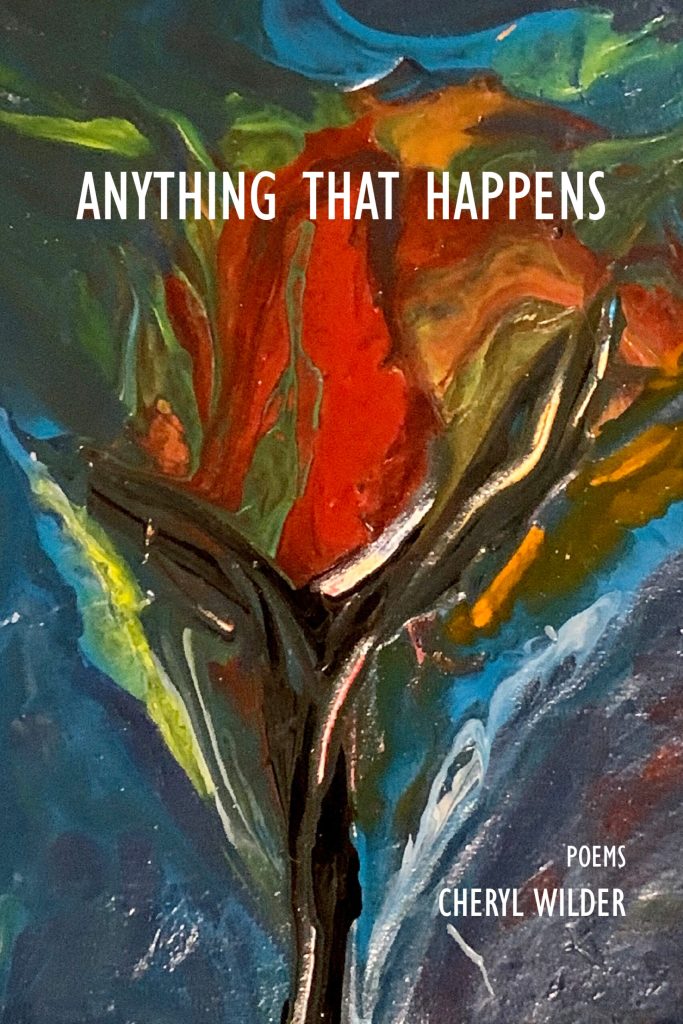
Author and Poet Cheryl Wilder shares an intimate and personal look into a time of tragedy and pain and showcases the path towards a second chance at life in the book, “Anything That Happens”.
Advertisements
The Synopsis
At the age of twenty, Cheryl Wilder got behind the wheel when she was too drunk to drive. She emerged from the car physically whole. Her passenger, a close friend, woke up from a coma four months later with a life-changing brain injury. Anything That Happens follows her journey from a young adult consumed by shame and self-hatred to a woman she can live with… and even respect. Along the way, Wilder marries, has a son, divorces, and cares for her dying mother. Anything That Happens examines what it takes to reconcile a past marked by a grave mistake, a present as caregiver to many, and a future that stretches into one long second chance.
The Review
A truly emotional and deep read, author and poet Cheryl Wilder does a fantastic job of conveying the raw emotions that swirled around her in those painful moments during and after the fateful car crash that changed her and her friend’s lives forever. The author’s words cut deep, exploring the light and darkness of her life and in essence the light and dark that we all face at one point or another in our own lives.
Slipped I, II, and III were definitely the most gut-punching and visceral poems of the collection, highlighting the traumatic experience the car accident took on the two friends that night. The author also explores the present and the future in this collection, from her years taking care of her dying mother to the rise and fall of her own family and looking ahead, and finding peace and redemption in life.
The jumble of pain, memories, and yearning in the face of great loss is not only felt in the author’s powerful writing but resonates with so many, including this author, who watched his own mother have to say goodbye to his grandmother in much the same way just two short years ago. Great writing such as this does a great job of connecting readers with the author’s emotions, and this book does just that.
The Verdict
A heartbreaking walk into the past and written in a beautiful symphony of emotions and memories, author Cheryl Wilder’s “Anything That Happens” is a must-read poetry book. A truly honest and memorable collection of poetry that touches the soul and tugs at the heartstrings as readers feel the author’s raw feelings pour out onto the page, readers will not want to miss this incredible journey for themselves. Be sure to grab your copy today!
Rating: 10/10
Advertisements
About the Author
Cheryl Wilder is the author of Anything That Happens, a Tom Lombardo Poetry Selection (Press 53, 2021), a collection that examines how to reconcile a past grave mistake and a future that stretches into one long second chance. Her chapbook, What Binds Us (Finishing Line Press, 2017), explores the frailty and necessity of human connection.
A founder and editor of Waterwheel Review, Cheryl earned her BFA from the University of North Carolina at Wilmington and her MFA from Vermont College of Fine Arts.