I’ve thought about this a lot because it’s become a common question I get. Why do I write short stories? I remember reading short stories in high school and college. I liked the idea of taking a moment in time and really focusing on it. That’s something short stories do well. You can really focus on one moment and make the most of it.
To me, it made a lot of sense to master the short story form before attempting to write a longer work, such as a novel. I’m not sure that is the best way to approach writing, or if it’s even recommended, but that’s how I approached it. I wouldn’t say I’ve mastered short stories, but I’ve definitely written a lot of them now. I’ve had a handful published individually in literary magazines.
After putting together this short story collection, which is interconnected and themed, I realized that perhaps I could handle the intricacy and challenge of a full novel. I finally felt like taking that on. That’s what I’m working on now.
That’s the path I’ve taken, but every writer I know has their own journey into writing and publishing. And if there’s anything I’ve learned from all the writing books, courses and podcasts, it’s that every writer has a different path into writing. Some study it in college and go on to get MFAs, others just secretly write in their free time, never really expecting to see the light of day. Others go the journalism route. A lot of people start with a novel.
I was told that a short story collection would be hard to sell, especially as a first book. I was disappointed, but determined to try. With the help of a writing coach and editor, I eventually found a small, independent publisher who was interested in publishing it, so I celebrated that win and was over the moon to have my collection out in the world.
If I had to do it over again, I’d do the same thing. I’d write my short stories, create a collection and then work on a novel, like I am now. I’m too early in my career to decide how successful it’s been overall, but it’s all I know and what I’ve done. And taking on any writing project is no small feat, so celebrate your writing and your path and don’t let anyone tell you you’re doing it wrong.
Book Summary
Let Birds Fly by Rhea Thomas is a magical realism short story collection where the extraordinary sparks everyday lives toward transformation. Connected by Ripple Media, each of the fifteen characters navigates personal struggles, such as an impossible itch, a mercurial third eye, and hallucinating coffee. They discover hidden truths, purpose, or power. With whimsy and emotional depth, these stories explore identity, passion, and self-discovery through moments of enchantment that crack open ordinary reality. Let these tales remind you: sometimes, the most magical thing is becoming who you were always meant to be.
Rhea Thomas lives in Austin, Texas where she works as a program manager in the digital media world. Her short stories have been published in multiple publications, including, most recently, The Fictional Café, Toasted Cheese and Does It Have Pockets. She spends her free time hoarding books, walking her stubborn Labrador retriever, playing games with her sons, kayaking and swimming in rivers, searching for mysteries and writing short stories that explore magical moments in the mundane. Her first book, a collection of short stories, is due out in August 2025, and she’s currently working on a literary mystery novel.
Join us at the Muffin as we celebrate the launch of Let Birds Fly by Rhea Thomas. We interview the author and give you a chance to win a copy of the book.
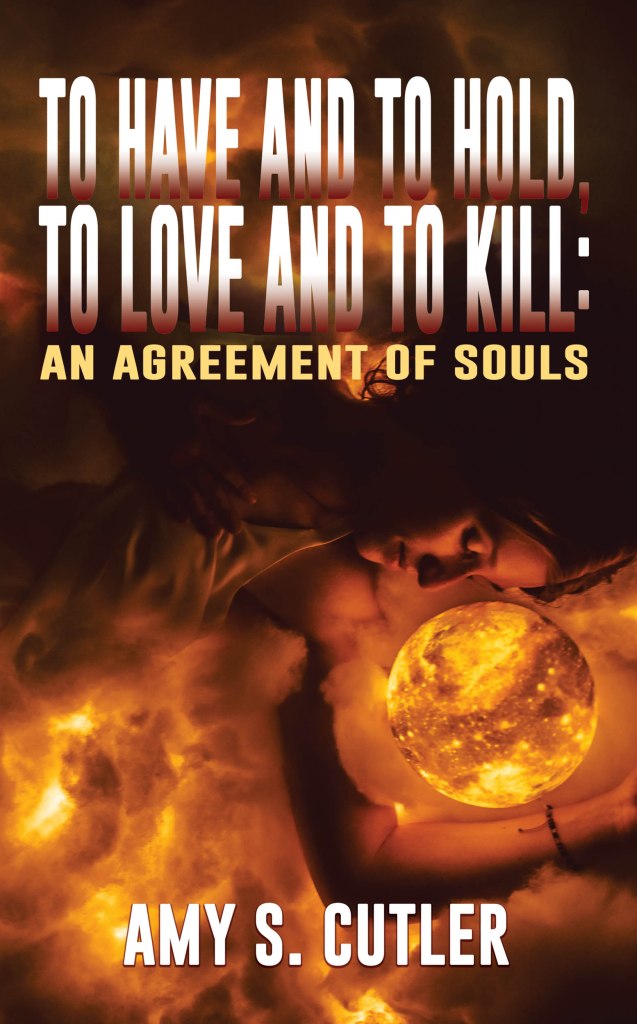
In her past life, after causing the death of a little boy, Nikki was so devastated that her soul mate promised to murder her in their next life, to make her pay for what she had done. With no knowledge of this, Nikki lives for years as an addict, down on her luck, until she is rescued by Ken, who helps her with all aspects of her recovery. With the help of a few new friends and a cat named Destiny, Nikki turns her life around. What she doesn’t know is that someone out there is destined to kill her, and he is watching, his passion for killing her growing stronger each day.
The question is: Can an agreement made between two souls be broken, and how far will one soul go to keep a promise made in a desperate attempt to save the other?
Advertisements
About the Author
Amy Sampson-Cutler, author of “To Have and to Hold, to Love and to Kill: An Agreement of Souls” and “A Shadow of Love,” is a writer who earned her master’s degree in creative writing from Goddard College. Her work can be found in Slut Vomit: An Anthology of Sex Work, Tales to Terrify, WOW! Women on Writing, The Pitkin Review and more. She is the Executive Manager at Mount Peter Ski Area, where she grew up skiing in the winter and dreaming up stories in the summer. Her favorite days are spent knocking around story ideas with her husband. She lives in the Hudson Valley with her husband, son, and a ridiculous amount of furry family members.
She can be contacted through AmysHippieHut.com. Also follow her on:
Vicky turned, in slow motion, to see the rescue crew attempting to pull Mrs. Viola from the wrecked car. Rage filled her entire being as she was torn between watching people unsuccessfully bring her child back to life and attacking the person who did this to him. She half walked, half crawled over to the paramedics who were struggling to free Julie’s body. She pushed right past them and, on her knees, grabbed the dead woman’s face and screamed. It was all of Julie that she could grab, her body still sandwiched between the steering wheel and the seat, upside down and sticky with blood. Vicky had to be pulled from Julie’s body, cutting herself on the broken glass and metal of the car, not caring about anything except rage, because rage is always better than sorrow.
Excerpt Two
Julie shook her head, the sadness rolling off her in waves of gray, and took his hand. “You know the difference between predestiny and an accident,” she reminded him. “I can’t just move on. Not until you promise me that I will pay for this. This must be set right. I cannot ask that boy’s soul to return, to waste a life just to punish me. Please.” Julie was quietly begging, and James knew what he would have to do, quickly, before the light was gone and they were lost. He held her hand up, putting his palm against hers. “I promise, in our next life together, we will be apart. You will know sadness. And when the time is right, I will bring your death.” Julie almost smiled. “And I will be scared? And I will suffer?” Right then, to Julie, punishment was the most important lesson of all. “It is my promise to you. You are my soul mate, and I will do anything to bring you peace, even if that means killing you.” Julie didn’t even have time to consider what James was giving up for her. Their hands glowed in 10 TO HAVE AND TO HOLD, TO LOVE AND TO KILL: AN AGREEMENT OF SOULS the light that came rushing into them, the promise sealed for eternity. No time to reconsider, Julie leaned into James, but he was instantly torn from her. Both of their souls tumbled toward the light, and both entered the world again. Together but completely alone.
Advertisements
Blog Tour Calendar
— Blog Tour Calendar
October 6 @ The Muffin
Join us as we celebrate the launch of To Have and to Hold, to Love and to Kill by Amy Sampson-Cutler. We interview the author and give you a chance to win a copy of the book.
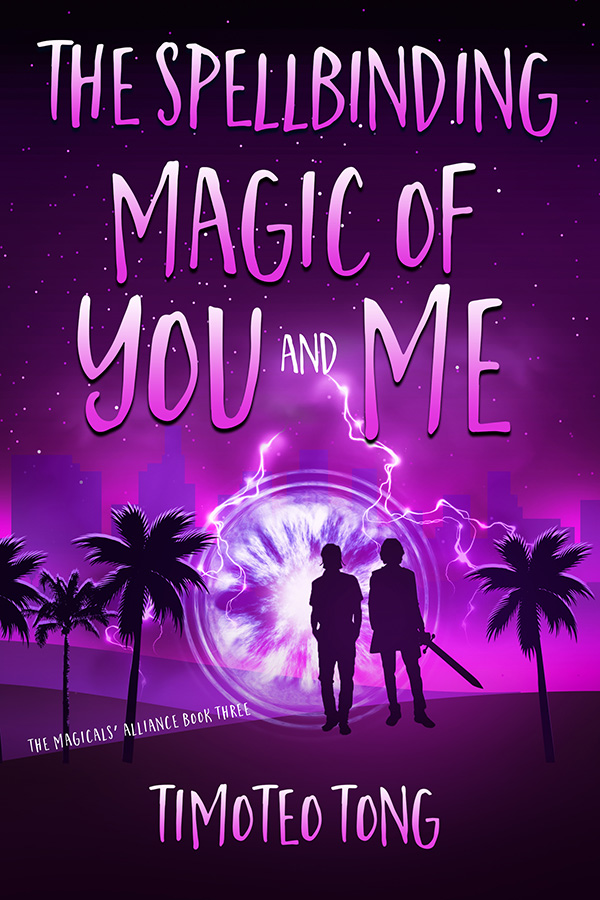
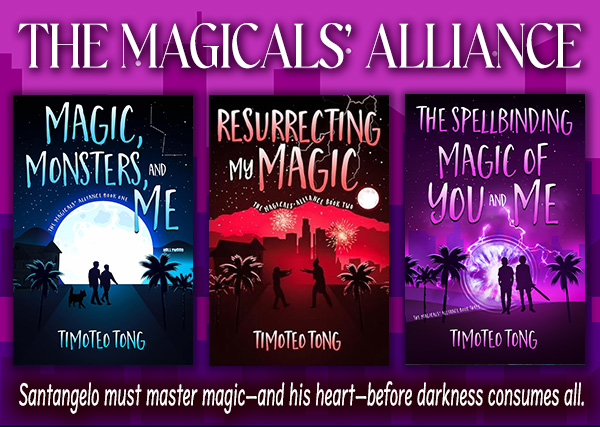
Timoteo Tong has a new fantasy/sci-fi book out, The Magicals Alliance book 3: The Spellbinding Magic of You and Me.
Magic, monsters, and a boy who never asked to be chosen.
Sixteen-year-old Santangelo Lo Geffo is drowning in grief. After his mother’s sudden death and his father’s emotional disappearance, he’s convinced the world has forgotten him—until his childhood best friend, Joshua “Neeky” Tang, shows up out of nowhere, charming, bold, and full of secrets. Their reunion reignites buried feelings and a bond stronger than fate.
But something darker stirs in the magical underworld known as the Gloom. A cursed sword has chosen Santangelo, and with it, the wrath of the ancient queen Máu Rabetica, who will stop at nothing to reclaim her power. With monsters closing in and war looming, Santangelo must train under the brutal God of War, survive attacks from rival covens, and navigate a tangled web of family secrets.
Worse, his heart’s a mess. He’s caught between his feelings for Neeky—the boy who’s always been there—and Daccio Scala, a flirtatious magical fighter who makes his pulse race. As the walls close in, a glam-pop sorceress with a hidden agenda sets her sights on Santangelo and the blade, forcing him to choose between destiny and desire… or risk losing both.
What if your wealthy, glamorous family was secretly saving the world?
Welcome to the world of The Magicals Alliance, a spellbinding YA fantasy series that follows the powerful—and complicated—Delomary family. By day, they’re media moguls, philanthropists, and the faces of a global empire. But behind closed doors, they’re something much more dangerous: the last line of defense against monsters, magic, and total annihilation.
In a hidden war where Vampires, Werewolves, and dark forces threaten to tip the balance between worlds, the Delomarys stand at the center of it all—armed with secrets, ancient power, and a whole lot of emotional baggage.
Dive into a world of romance, rebellion, queer joy, and jaw-dropping magic as each book follows teens on the front lines of a battle that could destroy everything.
“Dammit, Bello!” Pops shouted from the front of the house.
I blinked awake. The drapes hung limp. The air in my room was warm and stale. My door stood open a crack. Che was gone.
“You have a visitor! Come downstairs—I’m making breakfast.”
I sat up, rubbed sleep from my eyes. The clock blinked 9:15. Pops was an early riser; I took after Mom and liked to sleep in.
“Coming!” I yelled back in Italian. I hated being woken before eleven.
I threw on a T-shirt and shorts, padded down the hall, and swung around the banister. At the bottom of the stairs, I froze. A shadow stood framed in the screen door to the verandah.
A tall boy with long black hair and glasses shifted from foot to foot, holding a cake like it might explode. He looked anxious and impossibly familiar.
“Open the door!” Pops barked. “Senlàpso!”
I opened the screen and stopped breathing. Joshua Tang—Josh—only not the kid I remembered. Taller now. Stronger. His smile hit me like a hammer.
“Santangelo!” he said. “Guess what? I just moved back to Burbank.”
We weren’t really friends anymore. So why was he acting like we were?
“Bello! Don’t be rude.” Pops’ voice snapped me awake.
“Oh. Hi, Josh.”
“Josh?” He tilted his head, eyes bright through his glasses. “That’s not my name.”
“Neeky,” he said.
The name clanged through me. I looked up—he towered over me now.
“Gosh,” he said, grinning, “you’re short. No growth spurt yet?”
“Yeah, well, you’re a giant.”
“Ah, yes,” Neeky said, blazing like midday sun, “that I am.”
“Come in. Let me take that cake.”
“Mom made it. It’s one of three things she can cook—scrambled eggs, soufflé, and carrot cake. Your favorite, Santy.” He handed it to Pops.
I stared. Three years gone, and suddenly he was here, filling our kitchen with noise and light.
“We moved back to the City of Angels,” Neeky said, sliding onto a stool while Pops poured juice. “Mom got a job at JPL.”
Pops’ eyebrows lifted. “Is that so? I didn’t know Susannah was a scientist.”
“She went back for her degree after… well, anyway. Now she’s a scientist.” Neeky bit into an apple like he’d never left.
He always made himself at home—shoes off, elbows out, comfortable like the world was his.
“That’s great, Josh,” I said automatically.
“Neeky, Mister Lo Geffo.” They shook hands like executives.
“Pops.”
Neeky turned to me. “Aren’t you going to sit?”
I climbed onto a stool across from him. Not too close. Not yet.
“I missed this place,” he said. “Always so homey. Our new house isn’t. Mom hates rugs and knick-knacks. Says they collect dust. She’s clueless.”
He talked like he’d been gone a day, not years. I wasn’t ready to pick up where we’d left off. Too much gnawed at me—things I couldn’t explain. Maybe he’d forgotten. That was like him. Pops and Neeky were both Leos: loud, sunny, terrible memories. I remembered everything—a curse.
“I’m taking Che for a run,” I muttered.
“We have a guest!” Pops shot me a glare sharp enough to petrify.
Neeky stood. “It’s fine, Pops. I have to help Mom decorate. She can’t do that alone.” He grinned, glowing like he carried his own weather. “Let’s hang out. I’m right across the street—the other old house on the block.”
He bounded down the porch steps, taking the golden light and jasmine air with him. Pops tucked the cake in the fridge. I called for Che.
“Time for a walk, Growlvara!”
Paws on wood, then Che trotted up, leash in his mouth. I knelt to rub his fur, grounding myself in his steady warmth.
Outside, a breeze stirred.
“Why did Josh move back?” I asked the air.
The wind ruffled my hair. “Neeky is his name.”
I frowned. “How do you know that?”
“I know everything.”
“You should be friends with him again,” it whispered.
“I don’t need friends. I have my cousins. And you. And Che.”
“Best friends are important,” the wind said. “Human friends.”
“I don’t want a best friend. It’s dangerous.”
“Why?”
“When you love someone, they leave.”
“Your mom didn’t leave you—not intentionally.”
“Shut up.”
“You held Neeky’s hand in kindergarten when he was scared. You were a good friend.”
And suddenly I was there again: first day of school. A small boy clung to his mother, sobbing. She left him, and he collapsed into the seat beside me, eyes red. I reached for his hand.
“You’ll be okay,” I’d said.
“You do?” he’d sniffled when I told him I liked building blocks too.
“Sure. I’ll hold your hand until you feel better.”
He had smiled through tears. “Best friends?”
“Sure,” I said.
Years later, under the olive trees, he kissed my cheek. I’d liked him back, though I had no words for it. Maybe that was why I ended things. Fear.
Now he was across the street again, and I felt a small, stupid happiness I didn’t want to admit.
Stop it, I told myself. I’m a loner. I don’t need friends. I have Che and Pops, even if Pops felt half-ghost most days.
Neeky paused on the sidewalk, looking back. Our eyes met, and the air stretched thin between us.
“Later?” he called.
My throat betrayed me. “Later.”
The wind laughed softly, and the house held its breath.
Author Bio
Timoteo Tong grew up in Burbank, CA, imagining epic battles against vampires and witches inside creaky old mansions—and hasn’t stopped dreaming since. He wrote his first book at age eight (a chaotic romance between a stuffed cocker spaniel and a duck) and never looked back. Inspired by the magic of L. Frank Baum, C.S. Lewis, and J.R.R. Tolkien, Timoteo now lives in San Francisco with his husband, where he writes stories full of queer magic, found family, and monsters that don’t play fair. When he’s not reading, writing, or daydreaming about flying, you can find him surrounded by houseplants, doing pushups between chapters, and always down for donuts.
By Timoteo Tong, Author of The Magicals Alliance Series
When most people picture Los Angeles, they think of Hollywood, palm trees, and endless sunshine. For me, though, Los Angeles has always shimmered with something more—something unseen, humming just beneath the pavement and echoing through the canyons. When I set out to write *The Magicals Alliance Series*, I wanted to take that “something more” and bring it to life.
Urban fantasy often asks: *What if magic exists right here, in the places we know best?* My answer was to build a universe where freeways double as ley lines, storm drains hide crypts of forgotten gods, and a drizzle of rain in the middle of summer might just signal divine intervention.
But why LA? Because it’s personal. I grew up wandering through Burbank, hiking in the Santa Monica Mountains, and staring out over the Griffith Observatory at the city lights. Those were the places where I daydreamed as a teen, and in my books, they become battlefields, sanctuaries, and portals to other realms. Every landmark holds a secret: MacArthur Park once turned to ink during a magical breach; the Sixth Street Bridge cracked open to reveal a curse-tree; and in *The Spellbinding Magic of You and Me*, Santangelo Lo Geffo finds himself running the very same streets I once did.
Blending real geography with fantasy lore means readers can feel grounded even as they encounter the impossible. It’s one thing to imagine a dragon’s den—but what if that den is hidden beneath downtown? What if your local park is also the site of a forgotten covenant? That interplay between the ordinary and extraordinary creates a world that feels alive, like magic could be hiding just around the corner.
Another key to my worldbuilding is history. *The Last Battle*, fought in Los Angeles 120 years before the events of the books, was my way of giving the city a magical “past life.” I asked myself: what if the clashes of gods and monsters weren’t just myths, but part of modern history erased from memory? That decision means LA isn’t just a backdrop—it’s a character with scars, secrets, and stories of its own.
Of course, worldbuilding is only half the story. It’s the *people* in this magical LA who bring it to life. Characters like Santangelo struggle not just against monsters, but against grief, identity, and the weight of expectation. To me, that’s what makes the magic believable: no matter how dazzling or terrifying, it’s always tied to human emotion. A golden sword forged on Mount Olympus isn’t just a weapon; it’s also a symbol of Santy’s courage, his mother’s love, and his destiny.
In the end, building magic into the real world is about wonder—but it’s also about connection. I want readers to finish my books and look at their own streets, parks, and neighborhoods differently. Maybe the shadows really do stretch too long at dusk. Maybe the rain is whispering secrets. Maybe, just maybe, there’s more to the world than what we see.
That’s the heart of *The Magicals Alliance Series*: ordinary teens navigating extraordinary magic in the places we know best. Because magic, like love and grief, isn’t something far away—it’s right here, waiting to be found.
Timoteo Tong is the author of The Magicals Alliance Series, a YA queer fantasy saga set in modern-day California. When not writing about magical battles and golden swords, Timoteo enjoys exploring local coffee shops, spending time with family, and dreaming up new ways to bring enchantment into everyday life.
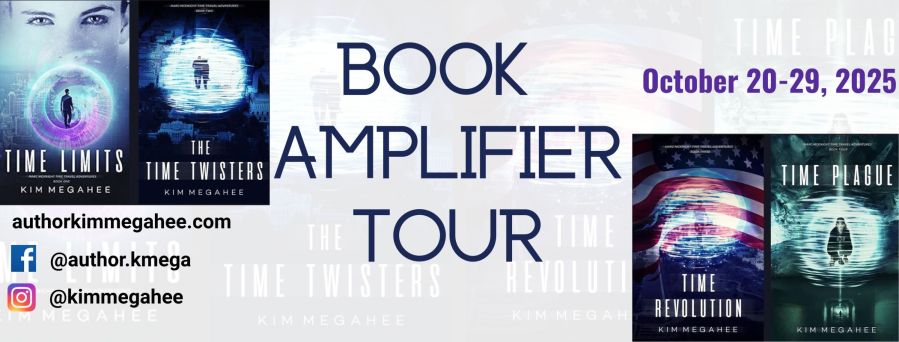
Marc McKnight Time Travel Adventures by Kim Megahee is both a high-octane thriller and a profound meditation on fate, morality, and the unrelenting pull of time.
The series follows Captain Marc McKnight — soldier, leader, and unwilling hero — as he and his team navigate missions designed to observe history without altering it. But when emotion intervenes, everything changes. Time Limits begins with a single deviation that creates a ripple effect spanning generations. In The Time Twisters, McKnight uncovers a plot to hijack democracy using temporal technology. Time Revolution carries that war into the future, where rebellion and corruption blur into one. And Time Plague closes the circle — pitting McKnight against a future-born virus and an enemy who knows him better than he knows himself. With each mission, McKnight learns that the hardest part of changing time isn’t fixing the past — it’s living with what’s been lost.
Advertisements
Kim Megahee’s writing reflects a rare blend of intellect and empathy. A University of Georgia graduate, he spent much of his career in technology, where logic ruled. But beneath that structure lived a storyteller fascinated by human behavior — how we react when the rules we rely on suddenly shift. Encouraged by a former student, Kim began to write, channeling decades of observation into stories that blend realism, emotion, and wonder. He lives in Gainesville, Georgia, with his wife, Martha, and their fiercely intelligent poodle, Leo. Visit his website, or follow him on Instagram and Facebook.
My sister Laura invited me to her church one Sunday. To my surprise, the program that day was more secular than religious.
The speaker challenged us — “What are you doing with the time of your life? Are you spending your time doing things that improve your heart or mind or soul?”
This pushed me onto a path of thought I had never gone down before. How was I using the time of my life?
“WORKING” was my first response. I worked 60+ hours a week for a computer consulting firm. It was fun, fulfilling work, and I enjoyed it. But it occurred to me I had no social life and no outlet for pent-up energy.
Then I remembered my TIME LIMITS book. I’d worked on it for two years but completed only a few chapters — and I wasn’t satisfied with them.
“I should finish my book,” I said to Laura.
We talked about it as we drove home, and Laura suggested we stop at a local Starbucks for coffee. She didn’t have to ask me twice. If coffee is involved, I’m there!
We ordered in so we could chat and spend time together. We continued to talk about the book. In the conversation, I mentioned that I rarely have time to work on it.
Someone touched me on the shoulder. I turned, and next to me sat a man with glasses and a cane.
“Sorry,” he said. “I didn’t mean to eavesdrop, but I’m an author, and if you aren’t writing every day, then you’re kidding yourself.”
The stranger was Shane Etter, a successful horror-suspense writer.
That night, his words surfaced repeatedly in my mind. I knew they were true words, and I didn’t have the time to write.
Another piece of advice came to mind. “If you think you can or you think you can’t, you’re right.”
Okay, I thought … If I decided to find the time, how would I proceed?
I looked for time, and presto! — I found it. I could get up in the morning thirty minutes earlier. I could write on airplanes and at the airport. I could write in my hotel room, at the bar, or at a restaurant.
It worked! Eight weeks later, I had a final draft of TIME LIMITS, ready for editing.
The best writing advice I ever got — write at least a little every day.
Q&A
How did you research your book?
I read a bunch of time travel stories. The primary setting in the book (the NewT Communications Tower in Atlanta) is based on the former BellSouth Services building in the same block as the famous Fox Theater. I worked there for twenty years.
Who’s the hardest scene or character you wrote—and why?
Easy. It was the scene where McKnight encountered Merrie the first time in the past. I struggled because I knew McKnight’s thoughts would be all over the place with confusion, fear that he’d make a mistake, and coming face-to-face with a beautiful woman. I tried it several ways, then wrote the scene from Merrie’s point of view. It turned out to be easier, and added to her character.
Where do you get your ideas?
Mostly out of my head. I get an idea and write the movie I’d like to see. The TIME LIMITS characters have taken a life of their own, and I get ideas from their personalities.
What sets your book apart from others in its genre?
In my stories, time travel technology is in its infancy. With a reasonable amount of power, you can only visit the same date that is a multiple of 25 years from the present date, plus or minus a week. Outside of those parameters, the power requirement is too big to be practical. I wanted a sense of urgency for every travel event.
What helps you overcome writer’s block?
Writers — don’t hate me — but I’ve never had writer’s block. When I’m away from my desk, I may get a little edgy. But when I sit at my desk, I’ll just look for more trouble for the hero, and that gets the creative juices going.
What’s your favorite compliment you’ve received as a writer?
At the doctor’s office (of all places), Martha and I ran into her childhood friend, who said she had read all my books and loved them. My feet didn’t touch the ground for the rest of the day.
Do you write every day? What’s your schedule?
I write every day when I have a book project under way. During that time, I try to write for 2-3 hours in the morning and spend 2 hours in the afternoon on marketing.
Where do you write—home, coffee shop, train?
Before I retired, I wrote everywhere — Starbucks, hotel rooms or bars, airplanes, airports, etc. Since retirement, I mostly write at my desk at home, though I admit I have carried a laptop on vacation.
Any quirky writing rituals or must-have snacks?
I don’t outline the entire book, but I do document the events/words/ideas I want to cover in each chapter. So, I’m a pantser-plotter (LOL). Snacks? I want coffee. Real coffee, not half-caff or decaf.
Why did you choose this setting/topic?
For TIME LIMITS, I worked in the book’s office tower for twenty years. I knew the building well and got the idea about an executive being murdered in an office tower and using time travel to investigate the case 50 years later.
If your book became a movie, who would star in it?
Simple question. I drew from all the movies I have seen. For example, my daughter Megan demanded that McKnight be played by a 30-year-old Henry Cavill. When I envisioned Merrie, there was only one person who fit the character: Amy Adams in her twenties. I have an actor in mind for all characters, but I’ll save them for another time.
Which author(s) most inspired you?
Tom Clancy, H. G. Wells, Isaac Asimov, plus Frank Herbert and J.R.R. Tolkien (for their vivid world-building). When we first met, Martha and I discovered our favorite books were the same book: EXECUTIVE ORDERS by Tom Clancy.
What’s your go-to comfort food?
Atlas Pizza in Gainesville, GA. It’s been around a long time. If you ever find yourself in our town, check it out. It’s in the town square downtown. You can’t miss it.
What are you binge-watching right now?
Outlander. There are a few more on Martha’s list.
If you could time-travel, where would you go?
The University of Georgia campus, 1973. There’s a certain girl I’d advise myself to avoid at all costs. Also, I’d tell myself not to get involved with another girl who thought she was available but wasn’t. But all things considered, I am who I am because I went through those trying times and eventually found my soulmate. Okay, so never mind!
Which 3 books would you bring to a desert island?
Very hard choice. First, my Bible, then EXECUTIVE ORDERS by Tom Clancy, and the Foxfire book that tells you how to survive on a desert island.
What made you laugh this week?
Some funny cat and dog videos on TikTok. They are addictive, and they crack me up.
Advertisements
EXCERPT
An Excerpt from Chapter 2 of TIME LIMITS
by Kim Megahee
A few minutes later, they were on a path in a pine forest. A light breeze eased the heat of the Georgia sun and the pines whispered to them as they walked further into the woods.
McKnight glanced back in the direction they had come, then at the trail ahead. There was no one in sight. He pulled a form and a pen from his pocket and handed them to Tyler.
“First, the paperwork, Lieutenant. What I’m about to tell you is top secret and cannot be shared with unauthorized personnel, regardless of whether you accept the assignment. Is that understood?”
“Yes, sir.”
“Good. Sign the paper.”
Tyler signed and handed it back.
“Very good. Lieutenant, they’ve asked me to assemble a team to plan and execute missions using a new technology. The size of the team is fewer than ten, including two civilian scientists. I’d like you to be my exec for operations. I need a mission planner with leadership ability, and you’re it. The rest of the team’s still under construction, except for one scientist. We’ll be reporting to General Drake with oversight from Senator Lodge.”
“Working for the Dragon would be good. Oversight from Lodge? That’s not so good. He’s my Senator, but I didn’t vote for him. He’s a damned crocodile. I don’t trust him.”
“Lodge is the General’s problem. We’re the grunts. Our job is to execute.”
“So, what’ll we be doing?”
“The team is being called the HERO Project.”
Tyler rolled his eyes.
“Yeah, I know. Stay with me, Lieutenant. HERO stands for Historical Event Research Organization. In a nutshell, we’re going to be researching and validating historical events. Here, let’s take a load off.”
They sat on a wood bench alongside the running trail. McKnight looked across the path at a dogwood in full bloom and a bank of azaleas in unrestrained spring glory. Bumblebees hummed in and around the flowers.
“If you’re trying to sell me on how exciting the project will be, you’re failing miserably. Sounds like we’d be spending the next few years in the library and on the net, writing papers. Doesn’t sound like fun to me. Is there something I’m missing here?”
A thin smile formed on McKnight’s face. “Well, Lieutenant, I daresay we’ll be doing paperwork. I didn’t mention libraries or the net.”
Tyler scrunched up his face. “Then how? No library, no net. Where’s that leave us? Interviewing elderly witnesses?”
McKnight shook his head, waiting for Tyler to make the leap. Tyler sat on the bench, his elbows on his knees, his hands clasped together and his head down. After a moment, he looked at McKnight.
“You can’t be suggesting what I’m thinking.”
He’s getting there. “And what is that, Lieutenant?”
“Nope. I’m not going to say it. I must be missing something.” He paused. “All right. How do we witness an event in the past? We don’t have the technology to…. Wait, you mentioned a new technology, didn’t you?”
“I did.” McKnight allowed himself a little smile. One last hint. “You took physics at the Point, right?”
“What? Of course.”
“Um-hmm.”
Tyler stared at him. His eyes narrowed and darted around. He resumed the position with his elbows on his knees and his eyes on the ground.
“Who’s the scientist?” he said without looking up.
“Robert Astalos. He does research at MIT–”
“I’m familiar with him. I read a white paper he and his family wrote last year about interstellar propulsion. Son and grandson, I believe, all with the same name. Let’s see… Einstein related speeds close to the speed of light with time slowing down. Nobody has proved that wrong. And gravity is not a force, but a distortion of time-space. Everitt validated that.” Tyler sat up straight and looked McKnight in the eye. “Astalos invented time travel?”
Bingo. “Well, I’ll let him share the specifics with you, but that’s the bottom line. Interested, Lieutenant?”
“Are you kidding? Who wouldn’t be? Anything else you want to tell me? Do we have aliens in Area 51?”
McKnight laughed. “Not that I know of. Want the rest of the details, Lieutenant?”
“Yes, sir. You bet I do.”
“I thought you might. Here’s the short form. We’ll operate out of the DC area. Only a few people know about this. The charter for the HERO Team is strictly research. We’re forbidden to do anything that might affect history. There’s a mandatory risk/benefit analysis and research period required before traveling to make sure we cover the bases. No options, no exceptions, unless the President issues an Executive Order to bypass the process.
“The other civilian on the team will be another planner, your civilian counterpart. He or she hasn’t been picked yet. The General’s reserved the right to pick that person. You and I get no say,” McKnight said, holding up his hand to cut off any objection. “We need a shitload of testing before we can do any work. We don’t know enough about the technology yet. Questions?”
“Ha! Only a few hundred. This is supposed to be secret? Nobody outside the organization knows about it?”
“Well, for as long as that lasts. Congress is involved, right?”
“Yeah. I’m surprised the word isn’t out already.”
McKnight shrugged. “The day is young. But yes, until we hear otherwise from the General, the project doesn’t exist and we’re working on special projects for Colonel Stewart.”
“Okay. Why do we need the civilian planner?” Tyler asked.
“The official word is to balance the team. I suspect it’s because Congress doesn’t trust the military. I assume it’ll be an egghead guy with serious credentials and no government ties. Drake wants someone with no agenda.”
“Got it. Do you have anyone else in mind for the team?”
“I do,” McKnight said. He pulled a folded piece of paper from his breast pocket and handed it to Tyler. “What do you think?”
“Lieutenant Mitch Wheeler. From North Georgia College, right? Good pick. Has a degree in physics if I remember correctly.”
“Yep. That one was easy. And his buddy Hatcher, too.”
“Yes, sir. Should be a good team.” Tyler handed the list back.
“Glad you approve.” McKnight checked the time on his phone. “I need to go catch a plane, Lieutenant. Transition your work ASAP and report to me in DC Monday week. Questions?”
“Yes, sir, but they can wait until next week.”
“Very good. I have two more instructions for you.” He stood and Tyler followed.
“What’s that, sir?”
McKnight smiled at his new executive officer. “Number one, don’t bring any preconceptions about time travel with you. Doctor Astalos says most of what the science fiction writers came up with was wrong.”
“And number two?”
“The other two Robert Astalos’s? The men that coauthored that paper?”
“Yes?”
“They aren’t his son and grandson. They’re all him. They call themselves Robert, Rob and Robby, but they’re all the same guy.”
I received a free copy of this book in exchange for a fair and honest review. All opinions are my own.
Author Rhea Thomas shares 15 short stories of magical realism in the collection “Let Birds Fly.”
Advertisements
The Synopsis
Let Birds Fly by Rhea Thomas is a magical realism short story collection where the extraordinary sparks everyday lives toward transformation. Connected by Ripple Media, each of the fifteen characters navigates personal struggles, such as an impossible itch, a mercurial third eye, and hallucinating coffee. They discover hidden truths, purpose, or power. With whimsy and emotional depth, these stories explore identity, passion, and self-discovery through moments of enchantment that crack open ordinary reality. Let these tales remind you: sometimes, the most magical thing is becoming who you were always meant to be.
The Review
This was a unique and surreal collection of short stories. While each story could stand on its own, the underlying connective factor of the Office setting, with Ripple Media playing a role in each of these stories and the characters’ lives, was a great twist, allowing readers to channel their own workplace environments into the narratives. The vivid imagery in these stories and the strong character development the author achieves in such short stories are incredible, especially in one of my personal favorites, The Third Eye.
The satirical and magical nature of these stories, as well as the wise and almost lyrical style of writing, made this story shine brightly. The practically metaphysical nature of this collection speaks to a hidden layer of reality as we know it, with each tale striking at topics like corporate struggles for workers and the grief we feel losing a family member in a way that feels relatable and engaging.
The Verdict
Thought-provoking, satirical, and engaging, author Rhea Thomas’s “Let Birds Fly” is a must-read collection of short stories. The twists and turns each story takes, the unique nature of the self-contained stories within a larger umbrella tale, and the powerful imagery that these stories conjure up will stay with readers long after the book ends. If you haven’t yet, be sure to grab your copy today!
Rating: 10/10
Advertisements
About the Author
Rhea Thomas lives in Austin, Texas where she works as a program manager in the digital media world. Her short stories have been published in multiple publications, including, most recently, The Fictional Café, Toasted Cheese and Does It Have Pockets. She spends her free time hoarding books, walking her stubborn Labrador retriever, playing games with her sons, kayaking and swimming in rivers, searching for mysteries and writing short stories that explore magical moments in the mundane. Her first book, a collection of short stories, is due out in August 2025, and she’s currently working on a literary mystery novel.
Join us at the Muffin as we celebrate the launch of Let Birds Fly by Rhea Thomas. We interview the author and give you a chance to win a copy of the book.
Back at his desk, Beto took his first cautious sip and almost groaned out loud. It tasted fucking incredible. There was a richness to it that slid across his tongue in a velvety caress with a tinge of orange, with little spicy, almost peppery, sparks exploding in its wake. He gently ran his finger over his tongue to make sure it was, well, still normal-feeling. It was tingling, not unpleasantly. He took another sip and had the same experience, although slightly less surprising, since he knew to expect it, but no less amazing. Each subsequent sip produced the same effect. This coffee was incredible. It was a tongue-gasm. And in between these sips, something interesting was happening. Beto’s super-organized email inbox, which had lots of folders and labels, was turning into a rainbow, with different subjects taking on different colors. He looked around and saw rainbows on other people’s screens, so he shook his head and went back to work. Must be some weird new update.
From To The Fairest:
About an hour later, hearing a knock on her front door, she opened it without checking, assuming it was her food delivery, and found a goddess standing on her welcome mat. Tall, with olive skin, shiny black hair falling down her back and gray eyes, the woman wore a silver breastplate and had an owl on her shoulder.
“I am Athena, daughter of Zeus and goddess of wisdom and war.”
Sophia stared for a second and then burst out laughing. “Nice one. Did Lucy send you?”
“Lucy? No, I’m here because of the Golden Apple.”
Sophia put her hands on her hips. “Uh-huh, and how did you know I have it?”
Athena opened her mouth to reply, but Sophia continued, “Let me guess, you’re here to promise me wealth if I give it to you?”
Athena narrowed her eyes. “Did someone tell you I was coming? Did they beat me here?” She tried to peer past Sophia into the apartment.
“There’s no one here. Wait, who is they? Who is coming?” Sophia asked.
“Aphrodite and Hera, of course.” She turned around to look behind her as if they might be there already.
From A Fearsome Thing:
Dixon Murray started his morning with an omelet, strong coffee and murder, and he was rather particular about the order. A hearty breakfast followed by crime was his preferred start to every day, if he was completely honest with himself, although, the murder part was the new addition he was trying to make a habit.
He made the omelet himself with three eggs, slightly beaten, low-fat milk, shredded pepper jack cheese, chopped organic green onions and bell peppers, and one sliced avocado. He preferred his coffee black and strong, and he liked to sit down with both the coffee and the omelet at the wooden desk in his small home office to contemplate murder. He wasn’t picky about the method of murder; stabbing, strangling, poison or guns, anything and everything was on the table. The more complicated, the more involved stages of planning, the more satisfying it was. Dixon wanted more than anything to be a mystery novelist. But, as the adult son of an actual celebrated mystery novelist, he knew just how high the bar was and what his chances were of writing something, well, publishable.
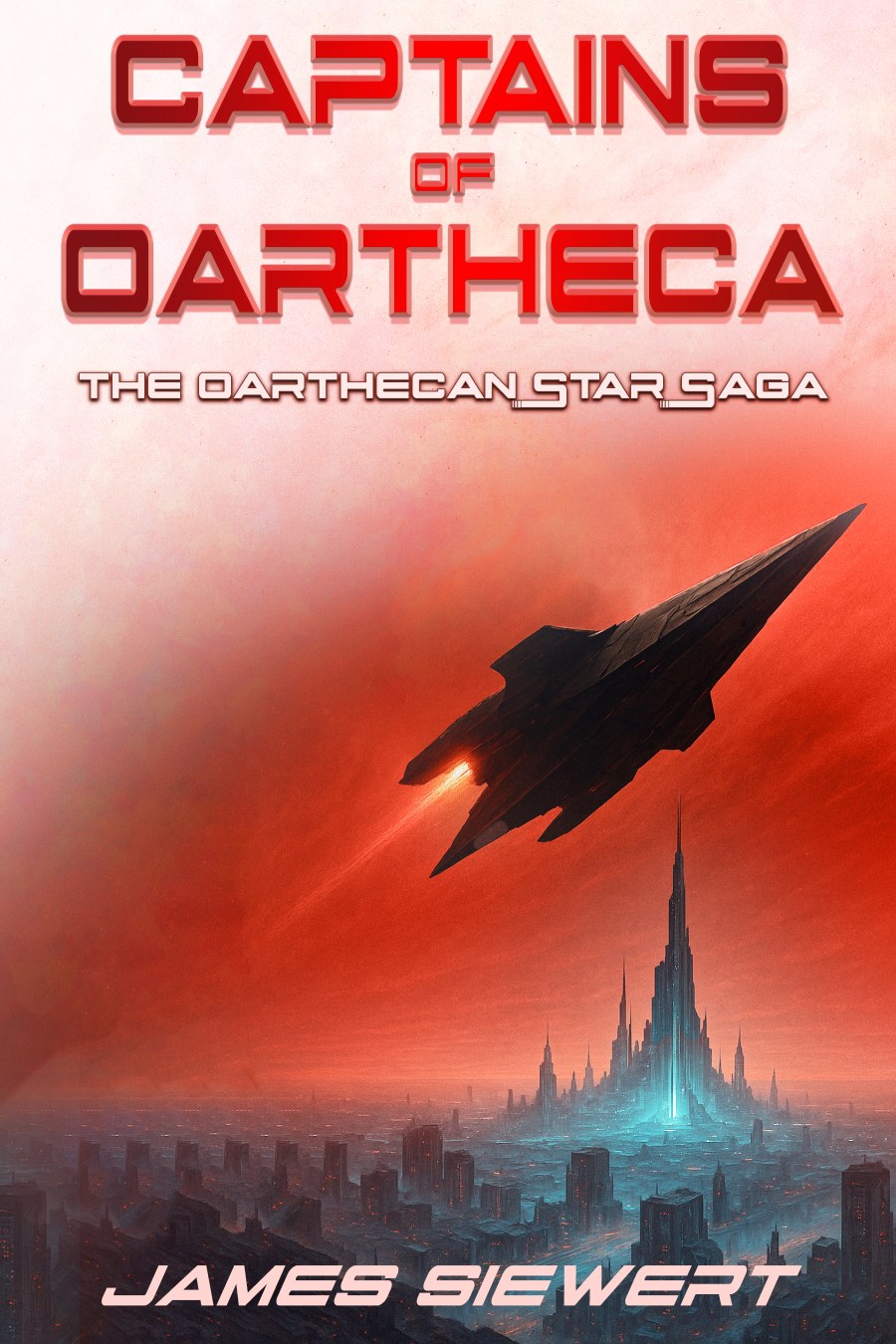
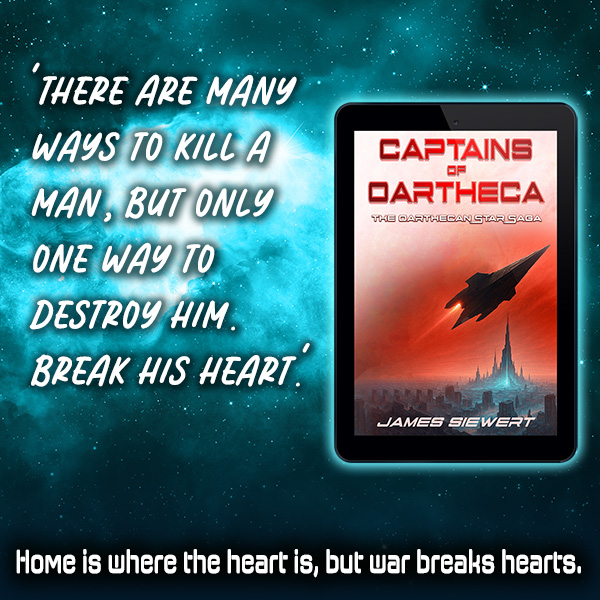
James Siewert has a new MM sci-fantasy romance coming out on November 9th, Oarthecan Star Saga book 3: Captains of Oartheca – and we have the cover reveal.
Welcome to Oartheca—a world of shattered beauty and stolen futures.
Where noble Barons rule with ironclad grace, and loyal drones unquestionably obey. A wounded world, rich with history and pride, struggling to heal… while war still smoulders at its edges.
Hoping to change the fate of all Oarthecans, Captain Rowland Hale II and Toar Grithrawrscion embark on a mission as herculean as it is perilous: to bring Oartheca under the aegis of the Coalition of Allied Planets, and in doing so, usher in a new era of strength, stability, and peace.
But nothing on Oartheca is so easily won. Not peace. Not unity. And certainly not the truth.
In Captains of Oartheca, James Siewert sees our heroes challenge empires, defy impossible odds, and confront the terrible cost of hope. But when victory demands everything they are—and all they have—can they pay the price?
Warnings: Explicit sex scenes between consenting adult males
About the Series
An action-oriented, sci-fi extravaganza staring heroes who battle vicious foes, overcome galactic obstacles, find true love, all while just happening to be men-who-love-men. For adults only, the Oarthecan Star Saga will thrill readers with cinematic battles, daring romances and authentic, one-of-a-kind characters that rise to face challenges through bravery, courage and loyalty.
Get the hell off me!’ I shout angrily, futilely pushing at the rhino of a man smothering me. Goddamn he’s heavy but I’m giving it everything I’ve got, trying to wriggle free. I manage to get my head out from under the behemoth and turn to try and see what the hell is going on.
‘Stay down, Baron!’ the security guard overtop of me orders, his voice hard and urgent. There’s another bright green flash, and this time I see a plasma shot streak harmlessly into the skies, followed soon by more yelling and the sounds of intense struggle.
Annoyingly, cyan telemetry floods my cybernetic ocular display—suit’s integrity is down to ninety-two percent, but no injuries, and my shields are regenerating. That shot was a point-blank, direct hit. Thank God for top-tier CAPS engineering—anything less, and I’d be dead.
‘No!’ I hear a man yell. ‘No, he killed my brother!’
What?
‘Evacuate, evacuate!’ a stronger voice booms, and the man over top of me begins to ease up slightly; I immediately scoot out from under him and try to get a decent look around.
There’s a pile of security guards clustered together—it looks like there are three of them surrounding a fourth, having driven him to his knees. One is wrenching the kneeling man’s rifle from his hands, but the man is not letting go anytime soon. It takes the butt of another security guard’s rifle being driven into the side of his head before his grip finally weakens, and the gun is wrenched free.
The rhino then steps in front of me, blocking my view of the struggling men. I scowl and try to push him out of the way, but this guy’s a stormcoat, maybe a snowcoat, and I don’t even budge him a centimetre.
‘This way, Baron. Now,’ He pushes into me, using his superior bulk to knock me back. With one hand on my shoulder, he spins me around so that I’m facing away from the scene.
‘Where is Ton?’ I demand, trying to slip this guy’s grasp but his grip on my shoulder is firm—not painful, thanks to my exosuit’s kinetic absorption—but I’m not getting free unless I put up a serious struggle, which I don’t think is the wisest of things to do right now.
‘We’ll meet at the safe-point. Hurry, Baron, straight ahead,’ the rhino orders, and I follow as he steers me deeper into the docking bay. He sets a brisk pace—nearly a jog—we’re moving fast. A tug on my shoulder turns me left toward an open corridor, where two guards stand ready, rifles raised and scanning.
‘Inside, Baron.’ I’m not used to being manhandled like this, but I know if this dude wanted to, he could pick me up like an infant. He’s at least letting me move under my own power, so I do as I’m told, and head into the corridor.
We head down a gently sloping, well-lit cement tunnel—hopefully toward the safe-point rhino-guy mentioned. He’s stopped steering me, but with only one path ahead, we keep moving. After about thirty seconds, a circular portal sealed by sliding doors appears and opens as we approach.
‘Through the doors, Baron,’ my escort says. I step into the next tunnel, and he follows, tapping commands into a wall-mounted keypad. The doors slide shut behind us, leaving me to figure out what comes next.
The security guard then turns to face me, placing his hand over his heart, his fingers splayed, and gives me a deep bow. ‘We are secured now, Baron. The safe-point is just down this hall.’
‘Thank you,’ I reply genuinely. ‘I prefer Captain Hale, however. What’s your name, officer?’
‘Second Lieutenant Crahlstran Grithrawrclan, OSS Navy, Captain Hale,’ the man answers. ‘I’ve been assigned to you as your personal security representative. Are you injured?’
I immediately shake my head. ‘No, my suit took the damage. I’m fine. Where is m’Ton? Or the High Baron Grithrawr?’
‘At or en route to the safe-point. Please, if you will follow me, Captain,’ Crahl offers, extending his hand down the new corridor. With him leading the way, I follow as we descend further, until we reach another set of closed sliding doors. Crahl enters a command on the keypad, and they open. He stands aside to allow me to enter first.
Author Bio
James and his husband live in beautiful British Columbia, Canada. Part-time office drone, part-time storyteller, full-time sci-fi and fantasy enthusiast (and some spooky ghost tales), James couldn’t find enough stories involving guys like him and his hubby are: big men with big hearts, full of big ideas!
Taking matters into his own hand, James seeks to share high adventure, low-angst stories where the heroes are solid blokes who take centre stage. Come join the adventure and explore bold new worlds full of authentic characters, gripping scenes, lush imagination and a touch of mushy stuff – there’s a whole galaxy waiting for you to discover!
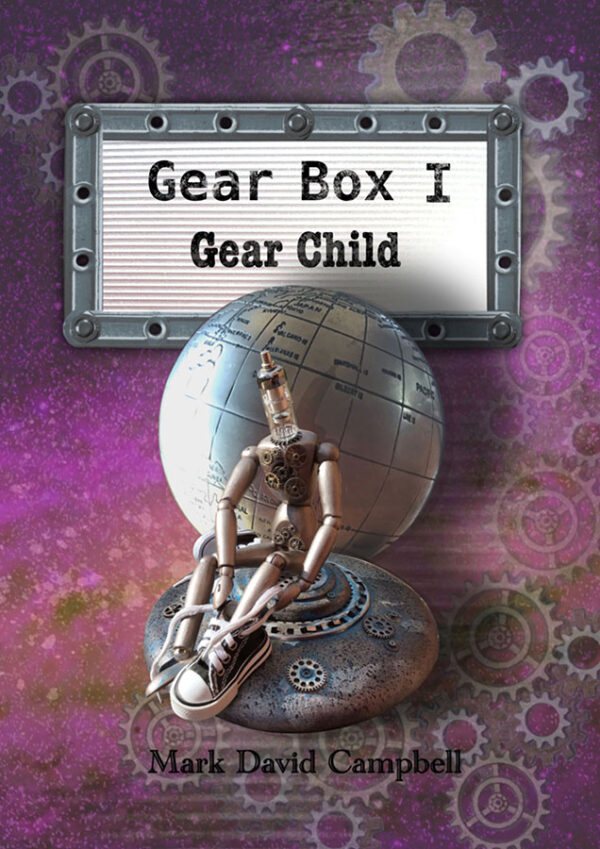
Mark David Campbell has a new queer YA sci-fantasy book out (gay, lesbian, homonormative) Gear Box book 1: Gear Child.
From our beloved teddy bear to our cherished first car, we form deep emotional bonds with inanimate objects. Will AI machines inevitably develop the capacity to love us in return?
In a post-apocalyptic world that survives on garbage left over from the Gawd Wars eight generations ago, Sunny Boy, a semi-organic machine initially made to emulate a thirteen-year-old, and later modified as an eighteen-year-old, longs to be loved. His quest to find a family takes him from a farm in Winnipeg to the far reaches of the known galaxy. When Sunny Boy becomes embroiled in an ancient battle between a collective intelligence and a parasitic alien crystal, the boundaries between organic and inorganic life are called into question.
Warnings: Very low sex and violence (no gun play)
Series Blurb
The Gear Box Trilogy, which includes: Gear Child, The Arena of Mayhem, and The Wayward Star, is a journey of the heart that takes you from a devastated post-Gawd Wars Earth, across the Solar System to the far reaches of the galaxy, and explores the line between inanimate machine and animate life form.
Told from the perspectives of Sunny Boy, Fancy Larry, and Loofah—three AI machines—who understand the world around them through symbols, metaphors, and allegories. Along with their capacity for creative thought, empathy, and growth, they likewise struggle with issues of self-identity and self-esteem. Most of all, Sunny Boy, Fancy Larry, and Loofah, like any intelligent being, crave acceptance and long to be loved.
I unlatched the glass, and a salty, humid breeze blew into the cabin like it was saying welcome. In no time, the burnt land below us gave way to water, and the Captain veered the airship southward.
In the distance, I made out the silhouettes of broken and battered glass and steel towers all jutting out of the ocean like fingers of drowning men reaching up to be saved. I watched as the shadow of our airship glided along the surface of the water, silently sliding over the towers.
“Is that a city?”
“Once was.” The Captain nodded. “Greatest in the world. But that’s all that’s left of it.”
“Why is it underwater?”
“Ha!” the Captain snorted. “It happened a long time ago, during the Gawd Wars and the Great Flood, when my great-great-great-granddaddy was a boy.” The Captain scratched his head. “See, way back then, everybody had their own books full of old stories about Gawd. Most of the stories were the same, but everybody told them in a different way.” He furrowed his brow. “People started fighting and killing one another to prove their way of telling the stories was right, and the way other people told the stories was wrong.”
I looked at him with my mouth hanging open, trying hard to understand why people wanted to kill each other over a bunch of old stories.
“Was Gawd bad?”
“No, I don’t think so.” He shook his head. “But by the time everybody got tired of killing one another and blaming it on Gawd…” The Captain cleared his throat. “They’d already blown up all the big cities and poisoned the land. And as if that weren’t enough, they’d also melted the polar ice caps and flooded everything remaining along the coast.” Taking his beard in his hand, he stroked it a couple of times. “People don’t talk much about Gawd anymore.”
“Is that the hand of Gawd?” I pointed to a giant green hand sticking up above the surface of the water, holding what looked like a torch.
“No. That’s the hand of a giant woman. She was one of the idols they used to worship a long time ago.” He eased the throttle and floated the ship in closer so I could get a better look.
“What happened to her?” I tried to make out her body and head below the surface of the water, but all I saw was a cluster of barnacles and algae.
“I guess she got old and tired, and people had no use for her anymore.” The Captain veered the ship southward and pulled on the big wheel. Leaving the city of dead fingers behind, we continued on down the coast, rising slowly toward the jet stream, again.
“Oh, please! Who do you think designed robos in the first place—the military! And it wasn’t only for cleaning and sex.”
“Only those who get caught are sorry.”
I thought about all the people who had died, and I felt sad, but mostly I felt sad because my name would never be recorded there or anywhere else.
“Hey, kid, don’t feel bad. It’s not about you. That boy’s head’s so full of crap, he wouldn’t know a ray of sunshine even if it was beaming up his butt hole.”
He swept the scanner across the pilot’s groin, looked at it, and laughed. “You’ve got nothing to worry about. Your sperm look like a bowl full of goldfish somebody forgot to feed.”
“I thought I was dead.” He grasped both my hands. “Who are you? Some kind of a superhero?”
I felt my face flush. “No, I’m only a robo.”
He took my hand and kissed it. “Not to me.”
“Something tells me we’ve just met the resistance.”
Spinner frowned. “Beyond those doors, there’s nothing for me. I’m not like you.”
“I’m a robo, like you.”
“No, you’re not!” Spinner practically spat out the words. “You can grow, adapt, and evolve. I can’t. This is all I can ever be.”
“We’ll go to the opera and art galleries. You’ll learn about second-hand stores and how to shop for bargains, we’ll create and redecorate, dance the night away, and sit in cafes trashing the latest clothing trends until the sun comes up.”
Author Bio
I have a passion for science/speculative fiction that is socially and culturally driven. Maybe that’s why I studied anthropology and archaeology.
My recent publications include: Eating the Moon (NineStar Press, 2021), a dystopic story of an elderly anthropologist who stumbles across a hidden society where homosexuality is the norm and heterosexuals are marginalized. Secrets of Ishtabay (Ninestar Press, 2023) is the story of a Maya village in Belize, which struggles with its transition to globalization after the completion of a highway linking it to the outside world. The Homework Assignment (Polar Borealis Magazine of Canadian Speculative Fiction, March 2025) is a short story about an anthropology professor who asks his students to imagine first contact with an alien intelligence with whom they share only one sense.
Currently, I live in Milan, Italy, with my husband. When I’m not writing, I work with Italian sociologists, biologists, and psychoanalysts, assisting them with their English academic publications. I enjoy reading both classic and newer books, immersing myself in steampunk and futurism. I love adventure stories, and most of all, I want to fall in love with a great MC. I am dyslexic, which means I can’t spell, and I have a love/hate relationship with computers and the internet.
Gear Child by Mark David Campbell Exclusive Excerpt Chapter Nine
“Ladies and gentlemen, the moment you’ve all been waiting for has arrived!” Fancy Larry stood on a bale of hay with his arms stretched outward, his ball of fleece carefully arranged on his head, and his face all chalky white.
Both Grease Spot and I looked around, but there were no ladies or gentlemen in the barn.
“What moment?” Grease Spot asked.
“The farm is upgrading with newer task-specific robos.” Whenever he was excited, Fancy Larry spoke in an alto tone.
“Are they going to terminate us?” Grease Spot said.
“Well, I overheard the guards this morning. They are sending the older robos to the toxic dumps, and the higher-end robos, like us, are going to be shipped to Winnipeg City and reprogrammed for urban cleaning and sanitation duty.” Fancy Larry clasped his face in his hands. “All my dreams have finally come true.”
I looked at Grease Spot. “I don’t know anything about the city.”
Grease Spot patted my head. “Don’t worry,” he said, even though he had a dreadful expression on his face.
On the night before we left the farm Grease Spot and I sat on the worktable, as usual, while Old Gus finished his dinner.
“Things in New Winnipeg City are a mite different than things here on the farm,” Old Gus kept sniffing like he had a cold.
“You boys promise me you’ll do exactly what you’re told to do and don’t look them gots directly in the eyes.”
“We promise,” we said in unison.
“You won’t have me no more to come running to when you got a problem.” Old Gus’s eyes filled with tears, and he dropped his head.
Grease Spot slid himself off the table, went over to the bed, and flopped down with his head on Old Gus’ lap. Old Gus bent over, wrapped his arms around him, and buried his face in Grease Spot’s fiery red hair. “My boy, my beautiful, mechanical boy,” Old Gus cooed while he cuddled and rocked Grease Spot.
As I sat there and studied them, I pictured my lambs all alone in the barn, and I wanted to cradle and rock them, one last time. I slid off the table and, without saying a word, went to the sheep shed.
All night long, as I hugged my lambs, I thought about Old Gus and Grease Spot over in the mechanics shed without me, the two of them huddled together in the dark on that steel cot. I couldn’t understand why Old Gus had never cradled me that way.
Grease Spot was only a machine, like me, wasn’t he?
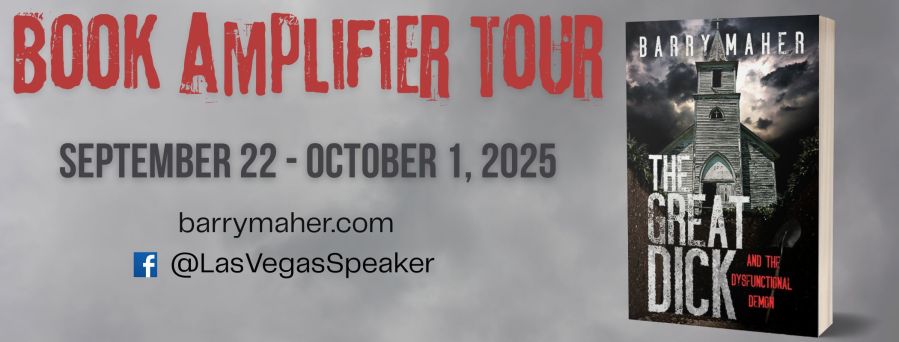
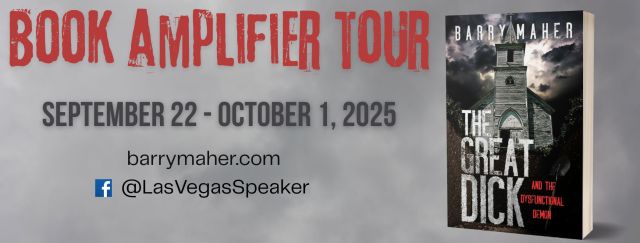
Today on my blog I’m excited to feature Barry Maher’s darkly comic supernatural thriller, The Great Dick: And the Dysfunctional Demon. If you love stories that bend reality, dive into the occult, and keep you turning pages late into the night, you won’t want to miss this one.
Advertisements
SYNOPSIS
In 1982, failed songwriter Steve Witowski is running from both the law and his past when a reckless act of heroism—saving a woman from a brutal assault—pulls him into a world far darker than he ever imagined. That woman, Victoria, has just purchased a decaying church steeped in sinister history, and with her comes a web of occult rituals, crypts, and grave-robbing secrets that refuse to stay buried. As Steve becomes entangled in her dangerous world, the presence of a desperate demon closes in, blurring the line between delusion and reality. Haunted by visions, hunted by forces he refuses to believe in, and marked by the face of the man he killed, Steve is dragged deeper into a nightmare of dark magic, betrayal, and blood-soaked revelations where survival may cost him his soul.
Advertisements
EXCERPT
Back in the 60s . . .
On Wednesday October 13th, 1968, a faculty panel recommended the dismissal of Professor John Harris—in absentia, as no one at Harvard had seen or heard from him in weeks. Harris later bragged about delivering his final lecture on “one shitload and a half of LSD.” According to the recording made available to the faculty panel, this was the sum total of that lecture:
“Good afternoon. Wow. American Literature, hunh? Let’s see. Moby Dick today. Right?”
“Moby Dick?” asked a confused voice. “No. What happened to The Scarlet Letter?”
“Right. Moby Dick,” Harris continued. “Great book. None of you have read it. None of you are going to read it. Nobody ever does. What you need to understand is that as far as I’m concerned—and I’m the fucking professor—Moby Dick is the same story as The Great Gatsby, which some of you may read. I call it, ‘the half-assed struggle of the individual to put their world to rights in the face of a failure that threatens to define their life.’ I think that’s from my thesis. Though maybe it’s not pretentious enough.”
Harris laughed. “Hey! How about this? Great Gatsby/Moby Dick: same story, different era, right? So, if someone someday tries to write that story for this generation, they should call it The Great Dick. That’d be perfect, wouldn’t it? The Great Dick. Alright, that’s got to be almost fifty minutes. See you next . . . whenever. Wow.”
SUNDAY, MARCH 21, 1982 Two Women and One Corpse
“Any fool can tell the truth, but it requires a man of some sense to lie well.” —Samuel Johnson
CHAPTER 1
Okay, let me start out by admitting that I was an asshole. I know that. The ludicrous amount of fame and acclaim and money I’ve had dumped on me since that time only makes it more glaring. The fact that we lived in a different world back in 1982 is no excuse. It was the same world. It just wasn’t the world we thought it was.
I remember it was a Sunday night. Sundays always feel different. Looking back now and Googling a 1982 calendar, I’d guess it was Sunday, March 21st. I remember waking up and within minutes making the decision to leave. Quickly, before I could change my mind, I eased myself out of the rickety hide-a-bed.
Immediately, Maria rolled over into the spot I’d just vacated, breathing loudly through her nose and mouth, not quite snoring. I hate to say it, but she looked every minute of her thirty years. Her thick dark hair clung damply to her face; her heavy arms stretched outward. The cast on her left wrist looked like a giant manacle.
The grandfather clock beside the cigar store Indian read 1:37, though a few minutes before, it had chimed four times. That made as much sense as anything else in my life. I was thirty-five years old, a Harvard grad who’d spent the previous two years faking his way through a $13,500 a year job as a territory rep for the Richmond Tobacco company. That $13,500 was the most money I’d ever made. You’re probably thinking that when you adjust for inflation and translate that $13,500 into today’s dollars, it’s a lot more impressive.
No, it’s not.
I slipped on my jersey and my jeans and gathered the rest of my things in my old gym bag. Fortunately, enough moonlight crept in around the edges of the tattered drapes to give the room a dim glow. I wondered if it would be safe to hitchhike out of there, or if Indiana had already notified the California Highway Patrol that I was wanted.
My situation was bad. But not bad enough to, say, crawl into a grave with a rotting corpse.
That would come later.
Advertisements
GUEST BLOG POST
Where Do You Get Your Ideas from?
A while back, I was speaking on an Asian cruise when I realized I could no longer figure out what the hands of the clock meant. The next day, during a session, I introduced the ship’s captain. Twenty minutes later I picked him out of the audience and asked him what he did for a living. (The uniform did look a tad familiar.) That same day, I gave up trying to understand foreign currency. Even American money was getting tricky. In Viet Nam, I handed a vendor two hundreds and a five for a $7.00 baseball cap. It was a very nice cap.
Back home, the first thing my doctor did was have me draw a clock face at ten to three. The second thing he did was take away my driver’s license. Then he sent me for an immediate MRI. The nurse there wouldn’t comment on the results, but when I asked where the restroom was, she said, “I can’t let you go in there alone.”
I explained that bathroom visitation was a particular expertise of mine.
“Like telling time?” she asked. “You need to talk to your neurosurgeon.”
“I have a neurosurgeon?” Just what I always wanted.
I also had a brain tumor—the size of a basketball. Or maybe the neurosurgeon said “baseball.” I wasn’t tracking too well at that point. Still, I quickly grasped he was planning on carving open my skull with a power saw.
“I don’t really need to tell time,” I said. “Or I can just buy a digital watch.”
Everyone said my neurosurgeon—or, as I thought of him, “Chainsaw Charlie”—was brilliant. My problem was that I’ve spent my life around intelligent people, and I’ve always believed human intelligence was overrated. To me, on a scale of everything there is to know in the universe, the main difference between Einstein and Koko the Wonder Chimp was that Einstein couldn’t pick up bananas with his feet. (As far as I know.)
Still, I went under the knife—or in this case, the power saw. Maybe I had a seizure. The doctors weren’t sure. That might explain what happened. Because I came out of the surgery with Lady Gaga singing non-stop in my head and an unforgettably vivid story, like a memory of something that I’d just witnessed.
Reacting to the intrusion, I suppose my brain could have given me Citizen Kane or a nice rom/com or a few episodes of Seinfeld. Instead I got open crypts, bizarre spells, sudden death and the Ralph Lauren version of the Manson Family. “How did my operation go? Well, I’m doing well, but the people in my head—or wherever they were—they went through Hell.”
Lady Gaga went away after a day or so. But the story stayed with me. And when I was able, I spent a couple of years putting it all down, working it out, trying to get it just right. And that became The Great Dick: And the Dysfunctional Demon.
Advertisements
ABOUT THE AUTHOR
Barry Maher’s career has been anything but ordinary. He’s been an award-winning (if modestly so) poet, a magazine writer with bylines across the country, a speaker for some of the world’s largest corporations, and a man who once lived literally on the beach, seagulls and all. His syndicated column Slightly Off-Kilter and his darkly comic fiction reflect that same unpredictable spirit. Media appearances range from The Today Show to CNBC, with features in The Wall Street Journal and even Funeral Service Insider. Connect with him at BarryMaher.com or on Facebook.
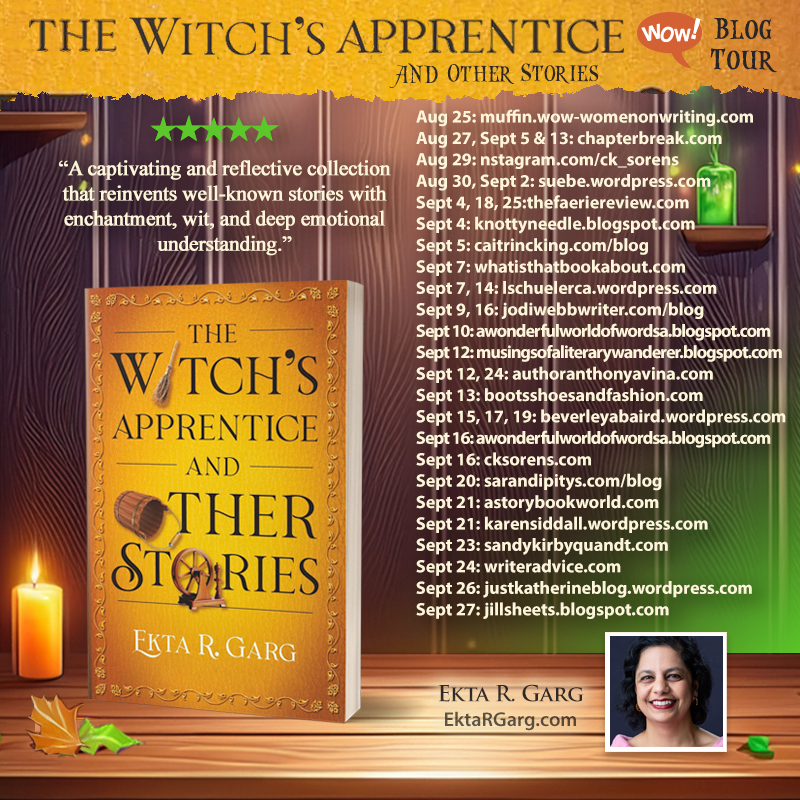
I am thrilled to be able to present you with an excerpt from the upcoming novel “THE WITCH’S APPRENTICE AND OTHER STORIES” by author Ekta R. Garg, as part of the author’s book tour with Women on Writing Blog Tours. I hope you will enjoy.
Question
When the tornado took Dorothy’s house to Oz, it landed on the Wicked Witch of the East and killed the witch instantly.
What was the witch doing in the road in the first place?
The Witch’s Apprentice
Do you remember the story about the house that fell on the Wicked Witch of the East? The one where the girl who came out of the house took the witch’s lovely silver shoes and went on her adventures down the road of yellow bricks? Well, enough time has passed that I believe I can confess.
It’s my fault the house fell on the witch in the first place.
She was there, in the middle of the road, because we were arguing. And we were arguing because I was asking—no, that’s not right. I was demanding to be freed from the Spell of Inhibition so I could complete my apprenticeship. The witch was the ruler of Munchkinland and the head of the High Council of Witches. Before my apprenticeship started, I had chosen her to be my mentor.
She was also my cousin.
We had been arguing about the completion of my apprenticeship, which required an act of altruism assigned to me by the High Council. Once I completed the task and the Council deemed it pure, proving I would only use my magic for good, the High Witches would lift the Spell of Inhibition that prevented the free use of magic for everything. After three years of training, I still hadn’t gotten used to the physical sensation of the spell; it made my skin itch in a way that made me want to shed it so I could emerge as a full-fledged witch.
For weeks, however, the High Council had ignored my repeated requests for a task. Anyone I asked referred me to someone else, and after the fourth or fifth request they all told me to speak to Cousin. When I got my chance on that day, in the middle of the road, I told Cousin in a firm voice that the time had come. I had proven myself and knew I was ready to practice magic as she did.
She began laughing in that cruel, high voice she had, and I knew. Even though the sound crushed my heart, in that moment I knew she had no intention of helping me. I thrust out my wand, ready to show her what I’d learned, fighting against the fiery sensation burning across my hand and wrist as the Spell of Inhibition warned against doing magic. In that moment, I heard a rushing sound, looked up, and saw the house. I jumped out of the way just before it…well, you know.
I assumed Cousin had also escaped, but then I looked back and saw her feet sticking out from under the house. My heart started fluttering faster than I could breathe. I scrambled to stand then ran back toward the tavern at the edge of the village where we had met to talk. A few munchkins walking past the tavern stared at me with curious looks, but I bypassed them completely, dove behind the squat building, and cast a spell on myself to transport me back to my cottage.
But I’m getting ahead of myself. In order to understand my tale, I’ll have to go back to the beginning so you’ll know properly how I ended up where I am now. So you’ll understand why running left me wracked by guilt…but also cradled by relief.
Ekta Garg’s
WOW! WOMEN ON WRITING TOUR
OF
The Witch’s Apprentice and Other Stories
Tour Begins August 25
Book Summary
Have you ever wondered why Jack and Jill needed that pail of water in the first place? Or how Sleeping Beauty managed to prick her finger despite a royal order to destroy every spindle in the kingdom?
Fairy tales and nursery rhymes have given us some of the most iconic characters and images in storytelling; think Cinderella’s glass slipper or Jack’s oversized beanstalk. But what about the in-between moments? The ones that never made it to the page?
In this enchanting micro-collection of short stories, award-winning author Ekta R. Garg explores the untold scenes between the lines of some of our most loved tales. Find out what the Wicked Witch of the East was doing in the road before Dorothy’s house fell on her. Learn where Goldilocks came from. Meet the conmen who convinced the emperor he had new clothes and more.
Rediscover the wit, heart, and magic of the classics, and see them as you’ve never seen them before in The Witch’s Apprentice and Other Stories.
A Reviewer, Editor, Author, and Dreamer of stories and books, Ekta has worked in niche publishing since 2005—she’s written and edited about everything from healthcare to home improvement to Hindi films! Ekta judges writing contests, hosts writing workshops, and podcasts about great books and how to write them. She’s currently the Content Coordinator of Neighbors of SW Champaign, a hyper-local magazine focusing on and lifting up the Champaign, Illinois, community. Ekta’s award-winning holiday novella, The Truth About Elves, and her award-winning fairy tale for grown-ups, In the Heart of the Linden Wood, are available from Atmosphere Press.
Join us as we celebrate the launch of The Witch’s Apprentice and Other Stories by Ekta Garg. Read an interview with the author and enter for a chance to win a copy of the book.
Visit Julie’s blog again for a guest post by author Ekta Garg on how to choose the theme of your book…or let it choose you. You can also read her review of The Witch’s Apprentice and Other Stories.
Visit Katherine’s blog for her review of The Witch’s Apprentice and Other Stories by Ekta Garg. You can also check out her response to our tour-themed prompt on what she hasn’t seen in a fairy tale that we wish we saw more of.