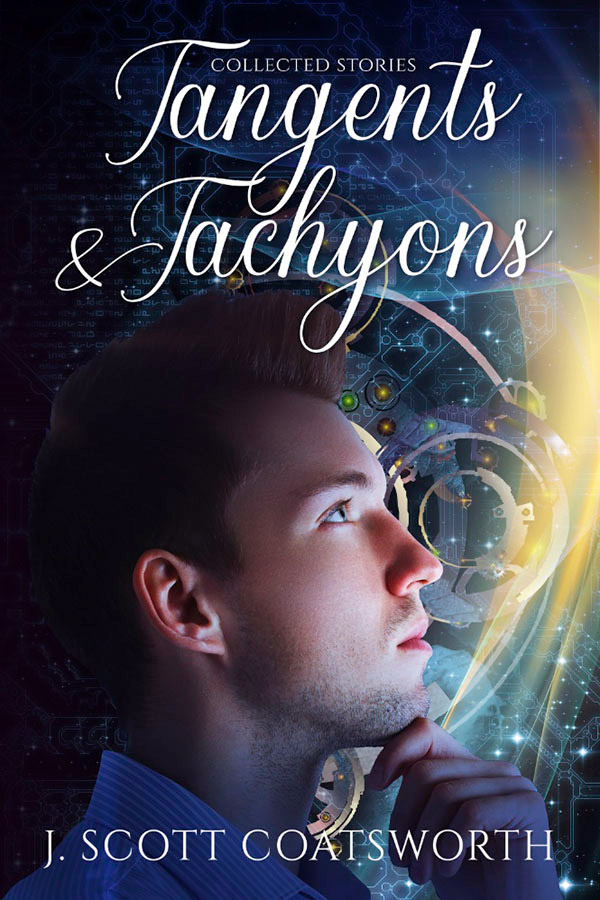
J. Scott Coatsworth has a new queer sci fi collection out: Tangents & Tachyons. And there’s a giveaway!
Tangents & Tachyons is Scott’s second anthology – six sci fi and sci-fantasy shorts that run the gamut from time travel to hopepunk and retro spec fic:
Eventide: Tanner Black awakes to find himself in his own study, staring out the window at the end of the Universe. But who brought him there, and why?
Chinatown: Deryn lives in an old San Francisco department store with his girlfriend Gracie, and scrapes by with his talent as a dreamcaster for the Chinese overlords. But what if a dream could change the world?
Across the Transom: What if someone or something took over your body on an urgent mission to save your world?
Pareidolia: Simon’s not like other college kids. His mind can rearrange random patterns to reveal the images lurking inside. But where did his strange gift come from? And what if there are others like him out there too?
Lamplighter: Fen has a crush on his friend Lewin, who’s in a competing guild. But when the world goes dark, only a little illumination can save it. And only Fen, Lewin and their friend Alissa can light the spark. A Liminal Sky short.
Prolepsis: Sean is the closeted twenty-five-year-old editor of an 80’s sci-fi ‘zine called Prolepsis. When an unabashedly queer story arrives from a mysterious writer, it blows open Sean’s closet door, and offers him the chance to change the world – and the future.
Plus two flash fiction stories – The System and The Frog Prince, never before published.
This is the first time all of these stories have all been collected in one place.
Simon slammed the lid on his sugar-free, two-pump, pulse-heated vanilla latte, before he might accidentally get a good look at the pattern on the coffee’s surface.
Ethan, the barista, usually covered it for him, but he’d forgotten this time. Simon, distracted by the coffee shop’s textured wall, had almost missed it.
He’d jerked his gaze away when the whorls and lines in the plaster had shifted into a mountain landscape. He looked around as casually as he could manage, hoping no one had noticed the wall moving.
Simon put his prescription glasses back on. They blurred his vision just enough to block his curse from shifting any other patterns. If anyone ever found out what he could do, they’d stick him in a cage like a lab rat.
Fooling the optometrist had been easy enough—he’d just pretended that the clear letters were fuzzy and vice versa. Unfortunately, they made the handsome barista fuzzy too.
Simon sighed under his breath. An imperfect solution to an unwanted gift. He waved. “Have a good one.”
“You too.” Ethan winked at him.
Simon hurried out of the Student Union, keeping his eyes pointed forward, avoiding the patterns that flocked to him like birds to seed—clouds in the sky, the grains of wood on a table… even the swirls on Tracey Martin’s designer bag in class. He emerged into the fresh morning air, ducking as a drone zipped past overhead carrying a pizza to someone’s dorm.
He’d learned to control his curse in elementary school. Mostly. The glasses helped, and if he blurred his vision when the patterns started to become actual things, they stopped. Usually. Still, he’d gone to detention more than once for, “whatever you just did to your desk.”
There was a name for seeing things in random patterns—pareidolia. But most people didn’t seem to do it so literally.
“Ally, what’s the time?”
His PA responded in his ear in her usual chipper Italian accent. -It’s eleven-fifty-seven, Simon. You have a class in three minutes.-
“Crap.” He ran down the steps, knocking the wallet out of a woman’s hands. He grabbed it and tossed it to her. “Sorry!”
Then he bolted down the sidewalk, dodging a group of students flicking data over their wrists, and leapt like a track star over a short hedge to shave off fifteen seconds.
One of the Sac State professors shouted after him, “Slow down!”
“Sorry! Late for a lecture!” He hated being late—it drew attention to himself, and he liked to blend in. Plus, it’s a damned good course.
Professor Dandrich’s course—Finding Meaning in Interstellar Noise—was one of his favorites. If he could just find a job like that where he could use his strange ability…
Simon slipped into the hall and slammed into his seat in the front row of the lecture hall at a minute past noon, splashing his latte all over his arm. “Dammit.”
Everyone turned to look at him, and heat rushed to his face. So much for blending in.
Author Bio
Scott lives with his husband Mark in a yellow bungalow in Sacramento. He was indoctrinated into fantasy and sci fi by his mother at the tender age of nine. He devoured her library, but as he grew up, he wondered where all the people like him were.
He decided that if there weren’t queer characters in his favorite genres, he would remake them to his own ends.
A Rainbow Award winning author, he runs Queer Sci Fi, QueeRomance Ink, and Other Worlds Ink with Mark, sites that celebrate fiction reflecting queer reality, and is a full member of the Science Fiction and Fantasy Writers of America (SFWA).
I received a free copy of this book in exchange for a fair and honest review. All opinions are my own.
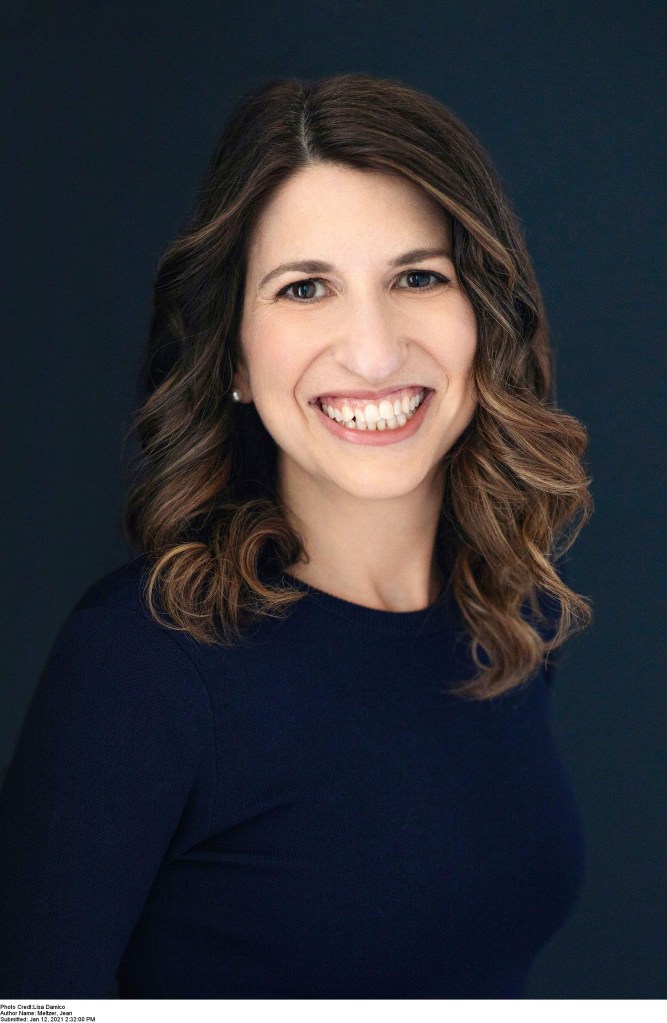
A young Jewish woman working in secret as a Christmas romance writer must delve back into her Jewish roots to sell a book about Hanukkah while contending with a childhood rival, while discovering things may not be as contentious as she once thought in author Jean Meltzer’s “The Matzah Ball”.
Advertisements
The Synopsis
Oy! to the world
Rachel Rubenstein-Goldblatt is a nice Jewish girl with a shameful secret: she loves Christmas. For a decade she’s hidden her career as a Christmas romance novelist from her family. Her talent has made her a bestseller even as her chronic illness has always kept the kind of love she writes about out of reach.
But when her diversity-conscious publisher insists she write a Hanukkah romance, her well of inspiration suddenly runs dry. Hanukkah’s not magical. It’s not merry. It’s not Christmas. Desperate not to lose her contract, Rachel’s determined to find her muse at the Matzah Ball, a Jewish music celebration on the last night of Hanukkah, even if it means working with her summer camp archenemy—Jacob Greenberg.
Though Rachel and Jacob haven’t seen each other since they were kids, their grudge still glows brighter than a menorah. But as they spend more time together, Rachel finds herself drawn to Hanukkah—and Jacob—in a way she never expected. Maybe this holiday of lights will be the spark she needed to set her heart ablaze.
The Review
I absolutely loved this book! It was so engaging right from the beginning. The author did a brilliant job of crafting a narrative that was exciting and allowed readers to find themselves within the throng of characters the author crafted. Of course, the big hook and amazing twist on this holiday read was the focus on Hanukkah and the Jewish community, which often gets overlooked during this time of year. The tight-knit community within the Jewish people and the emphasis on culture within the narrative were so refreshing and heartwarming to read.
The characters were the show stealers of this read to be sure. What was so interesting, and something I always enjoy is when a writer crafts a narrative that features such a diverse cast of characters that we could find someone in the narrative to identify with for one reason or another. As someone with several chronic diseases, seeing protagonist Rachel’s struggle with chronic fatigue syndrome and the struggle with how she is perceived by others is a struggle I am all too familiar with, and it was great to see that representation in the book. The chemistry and heated moments, both good and bad, between Rachel and Jacob, were truly memorable and allowed the story to feel very cinematic in its approach.
Advertisements
The Verdict
A heartfelt, emotional, and entertaining twist on the holiday romance genre, author Jean Meltzer’s “The Matzah Ball” is a must-read novel this winter. The perfect holiday read the author created a book filled with vivid imagery, captivating characters, and memorable representation that will make all readers feel welcome. If you haven’t yet, be sure to grab your copy today!
Rating: 10/10
About the Author
Author Jean Meltzer studied dramatic writing at NYU Tisch, and served as creative director at Tapestry International, garnering numerous awards for her work in television, including a daytime Emmy. Like her protagonist, Jean is also a chronically-ill and disabled Jewish woman. She is an outspoken advocate for ME/CFS (Chronic Fatigue Syndrome), has attended visibility actions in Washington DC, meeting with members of Senate and Congress to raise funds for ME/CFS. She inspires 9,000 followers on WW Connect to live their best life, come out of the chronic illness closet, and embrace the hashtag #chronicallyfabulous. Also, while she was raised in what would be considered a secular home, she grew up kosher and attended Hebrew School. She spent five years in Rabbinical School.
Rachel Rubenstein-Goldblatt stared at the collection of miniature Christmas figurines spread across her desk. She owned 236 of the smiling porcelain Santas from the world-famous Holiday Dreams Collection. When her best friend, Mickey, arrived, she would complete that collection with the addition of the coveted Margaritaville Santa.
Oh, the Margaritaville Santa. How she had dreamed of the day when that tiny porcelain Santa, in a Hawaiian shirt and wear-ing Ray-Ban sunglasses, would sit atop her prized collection.
Rachel had scoured eBay for the tiny limited-edition figurine, set up price alerts and left frantic (somewhat drunken) posts at three in the morning on collector blogs. Now, after six years, five months and seven days of hunting, the Margaritaville Santa would finally be hers.
The anxiety was killing her.
Rachel glanced out the window of her apartment. It was snowing outside. Gentle flakes fell down onto Broadway and made New York City feel magical. She was wondering when Mickey would actually get here when there was a knock at the door.
“Finally!” Rachel said. Excitement bubbled up inside her as she raced to the front door, throwing it open. And then, disappointment. Her mother stood in the threshold.
“I was in the neighborhood,” she said, a perfectly innocent smile spread across her two round cheeks.
Her mother was always in the neighborhood.
It was one of the downsides of living on the Upper West Side while her mother, a top New York fertility specialist, worked out of Columbia Hospital just ten blocks away.
Rachel had to think quickly. She loved her mother, and was even willing to entertain her completely intrusive and unannounced visits, but the door to her home office was still open.
“Mickey’s about to stop by,” Rachel warned.
“I won’t be but a minute,” her mother said, lifting up a plastic bag from Ruby’s Smoked Fish Shop as a peace offering. “I brought you some dinner.”
Dr. Rubenstein pushed her way inside, letting her fingers graze the mezuzah on Rachel’s doorpost before entering. Making her way straight to the refrigerator, she began unloading “dinner.”
There was a large vat of chopped liver, two loaves of pum-pernickel bread, three different types of rugalach. Dr. Ruben-stein believed in feeding the people you love, and the love she had for her daughter was likely to end in heart disease.
“How are you feeling?” her mother inquired.
“Fine,” Rachel said, using the opportunity to close her office door.
Dr. Rubenstein looked up from the refrigerator. Her eyes rolled from Rachel’s hair, matted and clumped, down to her wrinkled pink pajamas.
She frowned. “You look pale.”
“I am pale,” Rachel reminded her.
“Rachel,” her mother said pointedly, “you need to take your myalgic encephalomyelitis seriously.”
Rachel rolled her eyes. Outside, the gentle snow was gathering into a full-blown storm.
Dr. Rubenstein was probably one of the few people who called Rachel’s disease by its medical term, the name research scientists and experts preferred, describing the complex mul-tisystem disease that affected her neurological, immune, autonomic and metabolic systems. Most everyone else in the world knew it by the simple and distasteful moniker chronic fatigue syndrome.
Which was, quite possibly, the most trivializing name for a disease in the entire world. The equivalent of calling Alzheimer’s “Senior Moment Syndrome.”
It did not begin to remotely describe the crushing fatigue, migraines, brain fog or weirdo pains that Rachel lived with daily. It certainly did not describe the 25 percent of patients who found themselves bed-bound or homebound—existing on feeding tubes, unable to leave dark rooms for years—or the 75 percent of patients who could no longer work full-time.
For now, however, Rachel was one of the lucky ones. She had managed to graduate college with a degree in creative writing and, over the last decade, build a career working from home.
“Ema,” Rachel said, growing frustrated. “My body, my choice.”
“But—”
“Change the topic.”
Dr. Rubenstein pressed her lips together and swallowed the words on her tongue. It was not an easy feat for the woman. “And how’s work?”
“Good.” Rachel shrugged, returning to the couch. “Noth-ing that interesting to report.”
“And the freelance work you’re doing—” her mother craned her neck to peep around her apartment “—it’s keeping you busy?”
“Busy enough.”
Dr. Rubenstein raised one eyebrow in her daughter’s di-rection.
Rachel knew what her mother was really asking. How can you afford a two-bedroom apartment on the Upper West Side simply by doing freelance editorial work? But Dr. Rubenstein had learned an important halachic lesson from her husband, Rabbi Aaron Goldblatt, early on in their marriage; you don’t ask questions you don’t really want the answers to.
For all Rachel knew, her mother believed her to be a web-cam girl. Or a high-class prostitute. Or the mistress of some dashingly handsome Arabian prince. All of which, Rachel was certain, would be preferable to what she actually did for a living.
“Ema,” Rachel said, steering the conversation away from her career. “What is it you’re really here for?”
“Why do you always think I have an ulterior motive, Rachel?”
“Because I know you.”
“All right!” Dr. Rubenstein threw her hands up into the air. “You caught me. I do have an ulterior motive.”
“Baruch Hashem.”
“Now, it’s nothing bad, I promise,” her mother said, taking a seat on her couch. “I simply wanted to see if you were available for Shabbat dinner this Friday?”
There it was. The real reason for her mother’s visit. Shab-bat at Rabbi Goldblatt’s house was not just a weekly religious occurrence, it was a chance for Dr. Rubenstein to kidnap her daughter for twenty-five hours straight and force her to meet single Jewish men.
Over the years, there had been all sorts of horrible setups. There was the luxury auto dealer who used his sleeve as a napkin during dinner. The rabbinical student who spent an entire Saturday afternoon debating aloud with only her father over what to do when an unkosher meatball falls into a pot of kosher meatballs.
And then, there was her favorite blind date setup of them all. Dovi, the Israeli mountain climber, who had traveled the world in his perfectly healthy and functioning body, before telling Rachel that he didn’t think chronic fatigue syndrome was a real disease.
Chas v’chalilah.
Rachel had no intention of spending another Friday night, and Saturday afternoon, entertaining her mother’s idea of a dreamboat. Especially not when that dreamboat had the word Titanic embroidered across the bottom of their knitted kippah.
“No,” Rachel said.
“Rachel!” her mother pleaded. “Just hear me out.”
“I’m too busy, Ema.”
“But you haven’t been home in ages!”
“You live in Long Island,” Rachel shot back. “I see you and Daddy all the time.”
Her mother could not argue with this factoid.
“Jacob Greenberg will be coming,” her mother finally said. Rachel nearly choked on her tongue. “What?”
“You remember Jacob Greenberg?”
The question sounded so innocent on the surface. Jacob Greenberg. How could Rachel forget the name? The duo had spent one summer together at Camp Ahava in the Berkshires before the seventh grade.
“Jacob Greenberg?” Rachel spit back. “The psychopath who spent an entire summer pulling my hair and pushing me into the lake?”
“I recall you two getting along quite well at one point.”
“He set me up in front of everyone, Mom. He turned my first kiss into a giant Camp Ahava prank!”
“He was twelve!” Dr. Rubenstein was on her feet now. “Twelve, Rachel. You can’t hold a grown man accountable for something he did as a child. For heaven’s sake… The boy hadn’t even had his bar mitzvah.”
Rachel could feel the red rising in her cheeks. A wellspring of complicated emotions rose up inside her. Hate and love. Confusion and excitement. Just hearing his name again after all these years brought Rachel smack-dab back to her ado-lescence. And sitting there beside all those terrible memories of him humiliating her were the good ones. Rachel couldn’t help herself. She drifted back to that summer.
The way it felt to hold his hand in secret. The realiza-tion that there was more to their relationship than just dumb pranks and dead bugs left in siddurs. Jacob had gotten Rachel to open up. She had trusted him. Showed him a side of herself reserved for a select few. Aside from Mickey, she had never been so honest with anybody in her entire life.
Dr. Rubenstein dismissed her daughter’s concerns with a small wave of the hand. “It was eighteen years ago. Don’t you think you’re being a tad ridiculous?”
“Me?” Rachel scoffed. “You’re the one who’s hosting my summer camp archenemy for Shabbat.”
“He’s in town from Paris for some big event he’s throwing. What would you have me do—not invite him?”
“While you’re at it, don’t forget to invite Dana Shoshan-ski. She made me cry every day in third grade. In fact, let me get you a list of all the people who made fun of me for being Rachel Rubenstein-Goldblatt growing up. I want to make sure you don’t miss anybody.”
Her mother did not blink. “I’m sorry it was hard for you…being our daughter.”
Just like that, her mother had twisted all those feelings back around on her.
Rachel bit back her words, looking up to the ceiling. She loved her parents more than anything in the world. They had been there for her at every stage of her life, doting and won-derful. Still, the Rubenstein-Goldblatt name came with pres-sures. They were pressures that, even as an adult, still managed to follow her.
A knock at the door drew their attention away.
“Let me get that for you,” Dr. Rubenstein said sweetly, ris-ing from the couch.
“Ho, ho, ho-oooooooh… .” Mickey said, standing at the door, his smile fading into panic. He was holding a medium-sized red gift bag in the air. He glanced at Rachel, who sig-naled the immediate danger by running one finger across her throat. Quickly Mickey hid the bag behind his back.
“Dr. Rubenstein!” he said, his eyes wide. “I didn’t expect to see you here.”
“Not to worry, Mickey,” Dr. Rubenstein said, adjusting her scarf. “I was just getting ready to leave.” She turned back to her daughter one last time. “Just think about coming to din-ner, okay? Daddy and I won’t be around forever, and there may come a time in your life when you miss spending Shab-bat at your parents’ house.”
Mickey waited for the door to shut firmly behind him and the elevator at the end of the hall to ding before turning to his best friend. “Whoa,” he said. “That woman is a pro when it comes to Jewish guilt.”
“Tell me about it,” Rachel said, collapsing on the couch.“So what did our fine rebbetzin want this evening?” Mickey asked, taking his boots and jacket off at the front door.
“You’ll never believe it if I tell you.”
To everyone that knew them, it seemed that Mickey and Rachel had been bashert, soul mates, since time immemorial, having met at Camp Ahava when they were eight years old.
Since Rachel couldn’t be sure what drew the pair together, she assumed it had something to do with how other people at their camp had treated them. Mikael, the adopted son of a powerhouse lesbian couple from Manhattan, was Black. And Rachel, as everyone who met her cared to remind her, was the daughter of Rabbi Aaron Goldblatt. The Rabbi Aaron Goldblatt.
Whether they liked it or not, when Mickey and Rachel walked into a room, people noticed them. People watched them. This shared experience formed the basis of their com-radery and, later, extended far beyond Jewish summer camp.
“She wanted to set me up with Jacob Greenberg,” Rachel said.
Mickey finished pulling off his boots. “Jacob Greenberg? From Camp Ahava?”
“The one and only.”
“Wow,” Mickey said, coming over to sit beside Rachel. “That’s a name I haven’t heard in forever. Didn’t he give you mono?”
Rachel squeezed her eyes shut. She did not want to think about that first kiss with Jacob Greenberg. “Can we seriously not talk about this right now? I’ve waited seven long years for this moment, Mickey…and just like some of the other most important moments of my life, Jacob Greenberg is ruining it.”
“You’re right,” Mickey said, laying the red bag on the coffee table between them. “And I have just the thing to take your mind off He Who Shall Not Be Named.”
This was it. The moment she had waited for. With eager fingers, Rachel reached into the bag, pulled out the tiny fig-urine and gently removed the plastic bubble wrapping that protected it.
Hello everyone! I’m so honored to be working on this next blog tour, for author Hurri Cosmo’s “The Ex’s Boyfriend”. I had the pleasure of working on the author’s last book, The Superior Jewel, and I have always been so honored and proud to work with and connect with authors and writers in the (or who celebrates the) LGBTQ+ community. I hope everyone will check out this amazing excerpt, and the chance to enter this giveaway as well.
Advertisements
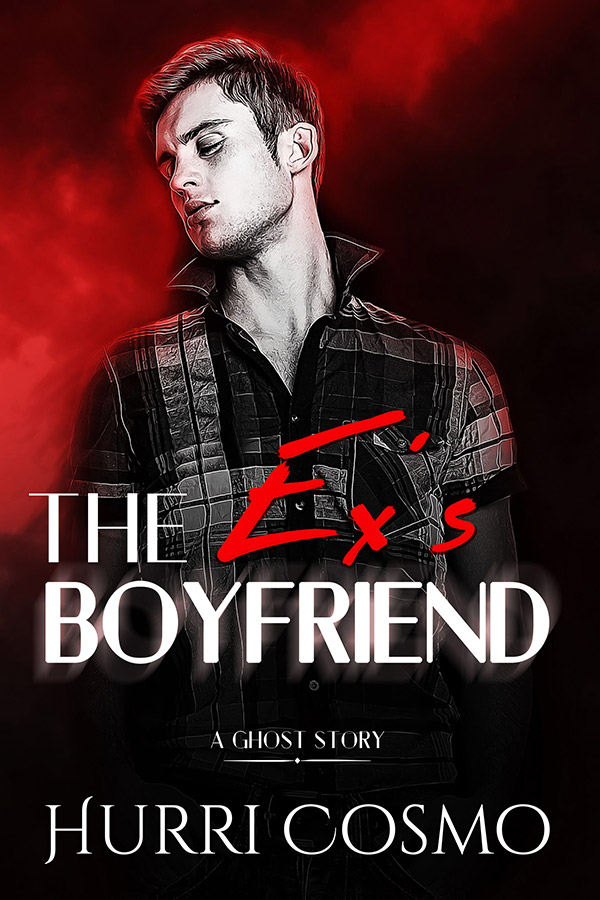
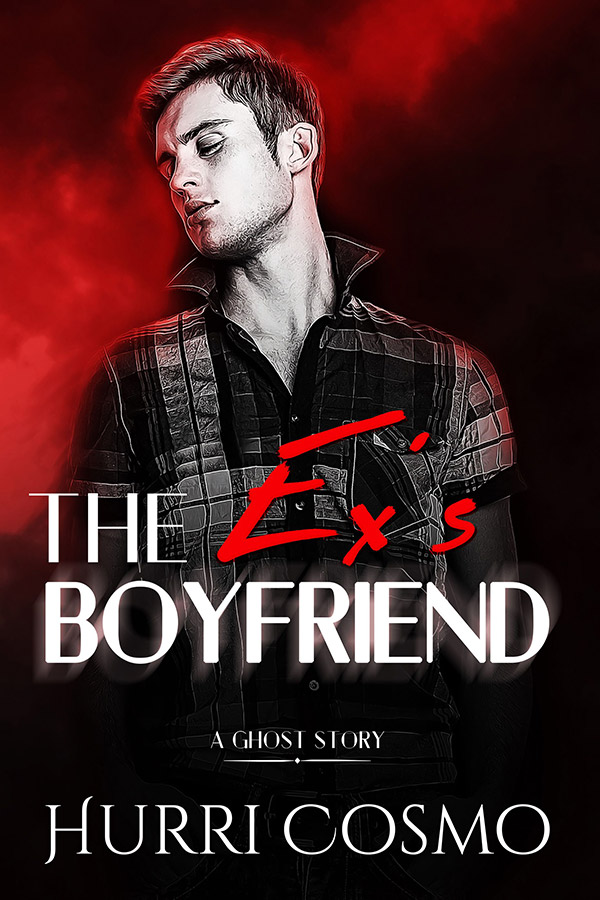
Hurri Cosmo has a new MM paranormal ghost romance out: The Ex’s Boyfriend. And there’s a giveaway!
Mark has always been a Dominant. The Top in every relationship. Just ask Leon, his very ex-boyfriend, because that’s what he told Mark he was.
Okay, Mark’s only had the one relationship so the ‘always’ was a reach, but it didn’t matter. It was more than over with now, and Leon was long gone. That is until Leon felt it necessary to show off his new boyfriend, a gorgeous mountain called Rogan, by evidently telling him that Mark was stalking, bullying, badgering, harassing and get this, abusing him.
“He’ll kill you, Mark, because he loves me and wants to protect me.”
From whom? Skinny little Mark? What a joke. Because all Mark has ever done was exactly what Leon told him to do and that now included staying as far away from Leon as he could get. But how can he do that when Leon is hell-bent on proving all the lies he’s told Rogan about Mark were true, and by any means possible except the actual truth? Thankfully, it seems Rogan’s not quite as clueless about Leon’s wild imagination as Mark has always been. In fact, the big, beautiful man has come to Mark’s rescue a couple of times and has made it clear, Leon and he are not a thing. At least, not anymore.
Which is good since Mark is going to need Rogan’s help. Mainly because something else is out to get Mark. Something not Leon.
They took the elevator to the sixth floor and headed cautiously down a deserted hall. Okay, maybe it was only Mark who walked warily. Rogan marched slightly ahead of him and seemed to barge down the hall with his chest puffed out like some storybook bodyguard protecting the prince. However, no apparitions flew out at them this time, no lights exploded trying to kill them. When they got to Mark’s apartment, Rogan snatched the set of keys Mark dug out of his pocket and opened the door of 612 and attempted to turn on the light.
“It doesn’t work,” Mark remarked. “It never has.”
As if that might have been important in the whole scheme of things, Rogan turned to him. “Really? Why?”
“I have no idea. They have never been able to fix it, either.”
Rogan grumbled a string of profanities against landlords as he pulled out his phone. “Hey Raptor. Flashlight.” The phone shot out a bright beam and Rogan shined it into the apartment. “Where is a switch that does work?”
“Right here.” Mark glanced around the apartment before he tiptoed over to the switch in the kitchen and turned it on. The apartment lit up enough to see that everything was normal―so to speak. The destroyed TV was right where it had been when they left, debris still everywhere. Not the chaos Mark had walked into with Leon, but shivers of that time chased through him as well. “What I don’t get is why you don’t even have a scratch on you.”
“That is a mystery,” Rogan murmured. “What’s even more an unknown is why you were basically sliced in the first place. Cut, I would understand. But sliced?” He walked over to the large, jagged piece laying against the wall, the piece that had been laced with blood but no longer appeared to be and picked it up. “This should never have been sharp enough to do that.” He brought it over for Mark to see.
“Fuck,” Mark whispered as he gazed at the piece of plastic. “It’s… like a knife.” And it was. The six-inch, razor-edged side appeared paper thin, to the point of it being see-through. As if someone had purposely honed it down to that sharpness. “But… didn’t it have blood on it?”
Rogan narrowed his eyes and glared back at the plastic as if it had just lied to him. “You’re right. It did. Exactly my point.”
“Which is?”
Rogan glanced briefly at Mark. “This isn’t right. I mean, how does something like this even happen?” Rogan’s lips pursed together.
“So, what are you saying?”
“I’m not sure.” Rogan gazed down at Mark. “And I don’t like not knowing. I will find some answers. That I promise.” He sighed. “Now what do we need to take with us so we can get out of here?”
Mark packed a backpack while Rogan kept watch. Mark would have thought it laughable if he wasn’t so panicked. It was one thing to be bullied by Leon. Quite another by a ghost.
“The extra apartment key is in the kitchen drawer,” Mark told Rogan as he threw the backpack over his shoulder.
Rogan immediately reached over and grabbed the backpack. “Go get it. I got this.”
Heat climbing Mark’s face he walked quickly to the drawer. “I can carry it. I’m not a princess.”
Rogan smirked but remained silent as he adjusted the backpack and held out a hand to accept the key. “Thanks,” he said, winking at Mark when he dropped the key in his hand.
“I don’t know what you plan on doing but have at it.”
Rogan grimaced as if he were guilty of something and shook his head.
When they arrived at Mark’s dad’s house, Rogan insisted on walking Mark in. “I didn’t keep you safe like I promised. He deserves an explanation.”
“Are you kidding me? I’m not some fragile teenager on a date. Besides, I can take care of myself.”
“I know that. But security is my job, and I should have…”
“Should have what?”
“Known.” He knocked on the door.
“Known? How? Why?”
But Rogan remained silent. Except it was clear he was battling something in his head.
“Whatever,” Mark mumbled. “Just… I can take care of myself.” Mark went to knock as well but the door flew open in front of him, Mark’s dad standing on the other side.
“What the fuck is going on out here?” Rob snarled, startling both Mark and Rogan.
“Sir!” Rogan nearly shouted back, gaining the older man’s attention. Then he lowered his voice probably realizing how loud he was being. “Mr. Corda. Sorry to wake you…”
“What the hell happened to you?” Rob grabbed Mark and pulled him into the house. “Why the bandages?” He turned his attention back to Rogan. “Why is my son covered in bandages?”
Mark took immediate offence. “Dad, I’m standing right here! Ask me!”
“Um… sir…” Rogan interrupted. “it’s a long story.”
Author Bio
I am Hurri Cosmo and I live in Minnesota where I hold tight to the idea that here, where it’s cold a good part of the year, I won’t age as fast. Yep, I avoid the truth as much as I avoid mirrors. But one of the reasons I love writing is reality doesn’t always offer up a “happily ever after” and being able to take control of that is a powerful lure.
Being a happy ending junkie, writing just makes them easier to find. Oh, I don’t mind “real life” and I do try to at least keep it in mind when I write my stories, but I truly love creating a wonderful couple, knowing they will fall in love and have their HEA. Every – single – time. And, of course, that is exactly the reason I love reading this genre, too.
Give me a glass of red wine, some dark chocolate, and my computer, whether I am reading or writing, and I will entertain myself for hours. The fact I actually get paid to do it is Snickers bars on the frosting on the cake.
Two nights later Anna, Rogan and Mark were standing at the back warehouse of Streeter Manufacturing. Rogan had a couple of his people help haul the boxes to the entrance but told them they were not needed for anything else. Mark understood the reason but didn’t necessarily agree with it. He was thinking the more humans in this place, the better. Rogan had made it clear he had no idea how this night would go.
“Why night, Rogan? Why darkness?”
Rogan only rolled his eyes at him.
Shit.
Anna had brought all kinds of things with her. She was the first to enter the space burning some foul-smelling thing. ‘Smudging’ is what Rogan whispered to him.
“What’s it supposed to do?”
“Clean the space.”
“Of what?”
“Bad energy.”
“I thought you wanted the bad energy to come, not run and hide.”
“Yes…” Rogan shook his head. “It’s complicated.”
“Hmmm.”
They set up the equipment, seven each of the Molecular Polarization Arrays and Variance Sequencers, after Anna finished her chants, of which, the words and tone of voice oddly sent shivers through Mark. He never saw the stone that she banged on the cement either, Rogan explaining that that was what it was, but the vibrations of each tap seemed to shake his very bones. Finally done, the two of them picked a spot to wait for the action to start, Anna decided to venture to the other side of the warehouse.
“Are you okay with her being all the way over there?”
Rogan huffed. “She does what she does. I don’t question her. I’m grateful she once again listened to me that this damn shadow was back.”
“Oh.”
“It’s not like that,” Rogan whispered. “She knows things and sees things that I just don’t. I have to trust her judgment of what she feels she has to do in a space and where she thinks she needs to be. Just as she implicitly trusts me and my equipment to do what we do.”
“How long will we have to wait?”
“Honestly, I expected to be interfered with as we set up the equipment. The last few times I have entered this space the shadow has attempted to stop me.”
“So, you don’t know?”
“I do not.”
“Okay. So, we wait.”
And wait they did.
And waited.
“There’s no sign of the shadow,” Rogan whispered after they had sat silently for what seemed to Mark hours.
“Is that a problem?” Mark whispered back. He had been crouched down ready to spring to action, but his legs and feet were completely asleep now. He needed to move. He squirmed to scratch an itch he could not find.
“Might be.” Rogan glanced at him, his eyes narrowing. “My equipment needs to have close proximity with the energy, or it can’t even read it much less capture it.”
“That’s unfortunate.” Mark squirmed some more trying to allow blood to flow back into his lower extremities but then the pins and needles began in earnest. Oh hell. He wouldn’t be able to stand now anyway.
“Are you alright?”
“No. I have to go to the bathroom.”
“Are you serious?”
“Yeah. Bad.” It was true. The moment he thought it, he couldn’t think anything else.
“I really don’t want you out of my sight.”
Mark’s heart stuttered. “I don’t want to be out of your sight.” Mark wiggled some more. “But I got a go.”
Rogan sighed. “I could go with I suppose. Not much going on here anyway. I’ll radio Anna.” Rogan had insisted on the walkie talkies if Anna wanted to be separated. She had complied as long as the volumes were low, and it didn’t interfere with her aura. “I’m walking with Mark to the bathroom,” he announced softly into the radio.
“You’re what?” came the instant reply.
“Mark has to go to the bathroom. I don’t want him going alone. We’ll be right back.”
“Fine but be careful.”
“Don’t worry. We will.”
They left the warehouse and Mark led the way to the bathroom nearest the back warehouse area which happened to be the same one that he had accused Leon being in. Maybe he should have gone to the one in the other warehouse. Too late now. Didn’t matter. He would be fast. Mark slipped into a stall while Rogan remained at the main door. He kept it open as he gazed out. “Do you think it will show?” Mark called from the stall.
“I have no idea.”
After he finished, Mark went to the sink to wash his hands. “Have you had this happen before where the ghost never shows?”
“Yes.” Rogan said as he continued to gaze beyond the bathroom. “Sometimes in big areas like this or like your apartment building ―”
“Or yours.”
“― or mine, an energy can move around. The repeats can also be random. I have had several incidents where I was called to what I understood to be a very active sighting and before I could do anything, the activity stopped. Completely.”
“Wow. Unpredictable.”
“Very. That was going to be my next focus. Some sort of way to detect the paranormal that isn’t active. Find even dormant paranormal energy. I would be able to rid a place of the ghosts prior to there being any problems with them.”
“Sort of a housewarming service?”
“Hey. Yeah.” Rogan chuckled as he turned to Mark. He lowered his voice to mimic a radio announcer. “Hire Ghost Securities to clear your new home of any and all paranormal energy.”
“Um…we’ll have to work on that catchy phrase though,” giggled Mark as he wiped his hands.
Rogan laughed but then jerked back around with an in-take of breath to look out the door again. “What was that?” he breathed.
“What’s wrong?” Mark squeaked as he jumped back from the sink farther away from the door.
“I don’t know. Stay here for a moment,” Rogan said and left the bathroom, the door swinging shut.
“Oh God, don’t leave me,” Mark whispered, his heart beating in his throat. He backed up until he was up against the far wall of the small bathroom. Why why why had he agreed to come? Fuck. He slid down the wall as he waited for Rogan to return and put his head in his hands. The stupid endorphins he had been floating on for days now were totally gone and who in their right mind ever wanted to face a fucking ghost. Or a shadow. Demon. Fuck. Clearly Rogan did!
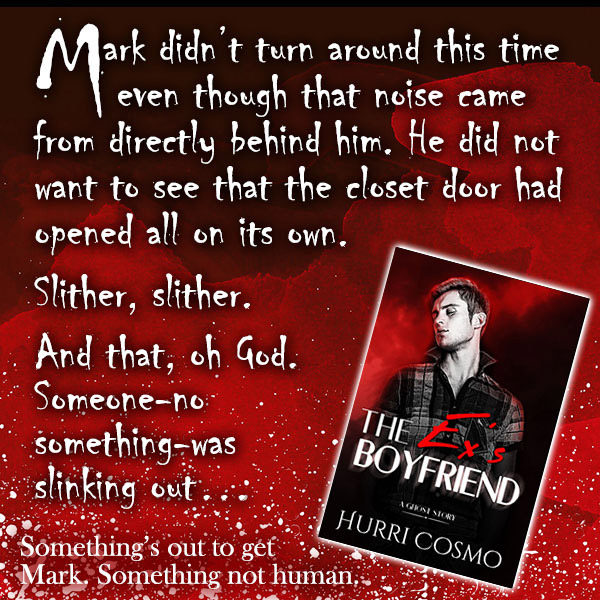
“Marky,” came a voice from in front of him. It was more a hoarse whisper, maybe a grumble. One thing for certain, it wasn’t Rogan’s voice. Fuck. He didn’t look up right away. He honestly did not want to see what the thing that wasn’t Rogan actually was.
I received a free copy of this book in exchange for a fair and honest review. All opinions are my own.
A young man desperate to save the last piece of his late father’s memory finds himself trapped inside of the arcade he’s been fighting for with the daughter of the man who wants to turn the arcade into a gaming cafe, and while trapped together during a winter storm, the two find their rivalry and insults melting away as something more develops between them in author Eric Smith’s “You Can Go Your Own Way”.
The Synopsis
No one ever said love would be easy…but did they mention it would be freezing?
Adam Stillwater is in over his head. At least, that’s what his best friend would say. And his mom. And the guy who runs the hardware store down the street. But this pinball arcade is the only piece of his dad that Adam has left, and he’s determined to protect it from Philadelphia’s newest tech mogul, who wants to turn it into another one of his cold, lifeless gaming cafés.
Whitney Mitchell doesn’t know how she got here. Her parents split up. Her boyfriend dumped her. Her friends seem to have changed overnight. And now she’s spending her senior year running social media for her dad’s chain of super successful gaming cafés—which mostly consists of trading insults with that decrepit old pinball arcade across town.
But when a huge snowstorm hits, Adam and Whitney suddenly find themselves trapped inside the arcade. Cut off from their families, their worlds, and their responsibilities, the tension between them seems to melt away, leaving something else in its place. But what happens when the storm stops?
Advertisements
The Review
This was a brilliant and well-written YA contemporary romance and family drama. The author does a fantastic job of making the story and characters come to life on the page, feeling very real and engaging as a whole. The settings played such a vital part of the narrative in this book, and the arcade especially felt like a character all its own, as if we could just walk in off the street today to pay homage to this brilliant blast from the past.
The character development was so moving and brilliantly crafted in this narrative. The emotional toll each character is going through is felt so much in their stories, from Adam’s heartbreaking loss to the desperation to be seen that Whitney is going through. The way these two get lost in their own personal turmoil and clash with one another, and the way they find their way back to one another, is so entertaining and gripping to read that I felt lost in their growing narrative.
The Verdict
A memorable, heartfelt, and thoughtful approach to the YA Contemporary Romance, author Eric Smith’s “You Can Go Your Own Way” is the perfect read for this fall! The balance found in the old-school arcade and classic rock style Adam embodies with the more modern video game and social media world that Whitney embodied was amazing to read and watch unfold, and the way they found a bridge to connect with one another was an emotional payoff that readers won’t want to miss. Be sure to grab your copy today!
ERIC SMITH is an author and literary agent from Elizabeth, New Jersey. When he isn’t working on other people’s books, sometimes he tries to write his own. He enjoys pop punk, video games, and crying during every movie. He lives in Philadelphia with his wife and best friend, Nena, and their son, Langston. WWW.ERICSMITHROCKS.COM
“The playfield is truly the heart of every pinball machine. All of the player’s goals are right there, splayed out in front of them. And like life, it’s up to you to find a way to reach them, with the tools you’re presented. In this case, it’s a ball.”—THE ART AND ZEN OF PINBALL REPAIR BY JAMES WATTS
The sound of collective screaming and a massive crash shake my entire workshop, and I almost stab myself with a piping-hot soldering iron.
“Adam!” my mom yells from inside the arcade. If another pack of junior high kids from the nearby Hillman Academy “accidentally” flip over a machine trying to get it to tilt, I am going to lose it. I grip the iron, the cracked brown leather wrapped around the metal handle squeaking a little against my skin, and shake my head, trying to refocus. Maybe I can finish this before it’s time to pick up that custom piece—
And another crash rattles the walls. A few parts tumble off my shelves, tiny intricate pieces of metal and glass, bits of copper wire, all clinking against my table.
I attempt to catch a few of the electronic pieces, trying not to burn myself with the iron in my other hand, and then a hammer falls off the perforated wall of tools in front of me. It collides with a small cardboard box full of pinball playfield lightbulbs, and I wince at the small crack and pop sounds.
“Goddammit,” I grumble out. I toss the soldering iron aside and try to clean up the mess. At least those lightbulbs are like, ten bucks a dozen on arcade wholesale websites. But pinball machines have a lot of lights.
“Adam!” This time it’s Chris. “Dude, where are you?”
I’m about to bolt from the workshop when I remember Mom is out there. I reach for the latest read I promised her I’d finish—We Built This Gritty by Kevin Michaels, a book on launching small businesses by an entrepreneur here in Philly that one of her colleagues is teaching at the county college—and immediately yank my hand back. The soldering iron had gone right in between the pages when I tossed it, and the book is already smoking. I pull the iron out and set it aside and flap the book around wildly, little wisps pooling up from inside the bright orange book. I flip it open.
It’s burnt right down the middle. Great. Something tells me she won’t be able to trade this back in at the campus store.
I glance over at The Beast and give the forever-in-progress Philadelphia-themed home-brewed pinball machine a pat, the glass still off the surface, wires and various parts splayed out over the playfield. My well-worn copy of The Art and Zen of Pinball Repair by James Watts sits smack in the middle of everything. I’ve still got a way to go before I can try playing Dad’s unfinished machine again, but if anyone is gonna get me there, it’s Watts. If I could just get a free chunk of time in between the studying and the arcade and the—
An array of swears echoes from inside the arcade, snapping me back.
Right. Chris. Mom. Chaos. Potentially broken and nearly irreplaceable machines worth thousands of dollars.
I unplug the soldering iron and place it in its little stand, like a quill pen in an inkwell. I wedge the now-toasty book under my arm and take a few steps to pick up some speed, to get a little force, and I push my shoulder against the dark red wooden workshop door. I push, gritting my teeth. The splintering surface presses into my arm, stinging with the pressure, until finally, the wood squeals against the frame, shrunken in and wedged together due to the sharp Philadelphia winter.
The whole workshop is like that, really, casting a major contrast to the polished, well-kept-despite-its-years pinball arcade. The cracked workshop table that is way more rickety than it has any right to be, tools showing their age with hinges that refuse to move and metal pieces falling off shrinking wood and weak plastic handles, vintage pinball parts that maybe still work, a concrete floor with a surface that’s chipping away, revealing dirt and dust, lightbulbs I don’t even remotely trust. My sad excuse for a drafting table sits off to the end of the workshop, and I’ve never really used it, preferring to fuss with plans right on the messy workshop table, next to all of Dad’s scribbles.
We could clean it up, have this room match the rest of the arcade. But I love it. It reminds me of him.
The door swings open suddenly and hits the wall inside the arcade with a loud bang.
And it is absolute chaos here.
A bunch of little kids are rushing outside, and I see a couple of adults gathering coats and their small children, who are likely about to join the exodus. The afternoon light that’s pouring in from the wide-open front door and the large plate-glass windows lining the wall make me wince. The glare hurts only slightly less than the idea of customers hustling out of here on a Saturday, easily our best, and only, solid day during the wintertime off-season. Especially now, at the end of the year, with so few days left before we close for the New Year holiday.
People don’t come to pinball arcades in the winter. Well. Maybe they do, but not when your arcade is located near all the tourist stuff in Old City, all the college students are away on break, and you don’t serve any alcohol. No tourists, no college kids, no booze, no pinball. It’s a neighborhood for expensive restaurants and niche boutiques, old-timey candy shops and artisan pour-over coffee. Not an arcade with a poor excuse for a snack bar inside that mostly serves soda, chips, and reheated chicken tenders and fries.
If it wasn’t for the upcoming Old City Winter Festival, I’m not sure we’d be able to keep the lights on come January. And there’s a businessman out in West Philadelphia who would very much like to see that happen, and there’s no way I’m going to let him do that. I’ve eaten way too many burnt chicken tenders that were “well, these are still kinda good, Adam” according to my mom, but not good enough for the customers. I’ve paid my dues.
“Mom!” I shout, looking to the back of the arcade. “Chris, what is—”
But then I see it.
On the other side of the arcade, my mom has her hands on her hips and is glaring intently at a handful of college guys who are sheepishly milling about near one of the windows. And Chris is trying to lift up a machine that’s currently knocked over, the glass that would normally be covering the playfield shattered across the floor. Another machine is tilted, leaning against a support beam, and looks okay from here. But judging by the angle and the amount of force it would have taken to get it off the legs in the first place, I’m betting we’re going to have some dents on the light box (the back of the machine that juts up over the area where you actually play, and displays the score and art).
“What the hell?” I snap, kicking the workshop door closed and storming across the arcade. My thick black boots squeak loud against the worn, polished hardwood floor, all the imperfections of the ancient Philadelphia wooden boards permanently glossed in place. A few more guys, these ones my age, weave around me, fiddling on their phones and oblivious. Bits of glass crunch under my feet, and I glance down at a bumper, red and black and looking like one of those crushed lantern fly bugs that litter the city sidewalks.
“What happened?” I ask, tossing my burnt book onto the floor. I nudge the tilted machine upright and then bend down to help Chris, who is straining to move the machine on the floor. I manage to wedge my fingers under the side, carefully tapping the metal, trying to avoid any extra glass, and lift. Chris lets out a groan and I grit my teeth as we push the machine upright, and it nearly topples back over the other way, but Mom reaches out and stops it.
“They happened.” Mom nods back at the guys who are standing about awkwardly. “Any updates there?” She points at one of them, and that’s when I realize they’re all sort of keeping an eye on one vaguely familiar-looking dude in the middle, who is fussing with his phone.
“Just a second,” he grumbles out, and he flicks his head to the side, his emo black bangs moving out of his eyes. I can’t help but squint at him, trying to place his face. Half his head is shaved, and he has this sort of Fall Out Boy look that would be cool, if he and his pals hadn’t clearly destroyed a pinball machine in my family’s arcade. A splash of anxiety hits me in the chest as I realize I don’t know what game has been totaled, and I turn to look at the machine.
Flash Gordon.
I exhale, relieved that it’s not one of the more popular or rare games in the arcade. But still, it’s a machine from the ’80s. One of the first games in the industry to use the popular Squawk & Talk soundboard, a piece of technology that is wildly expensive to replace, since it isn’t made anymore. That’s the sort of pinball trivia both Chris and my mom tend to shush when I start rambling too much, telling me “that should be a tweet,” which translates to “shut up” in the nicest way possible. I’m almost positive that’s the reason they pushed me to get the arcade on social media—to have a place to share those musings.
The machine didn’t deserve this, even if that awful movie maybe did.
I run my hand along the side of the other machine that was just bumped into, leaning on one of the wooden beams that are scattered throughout the arcade, you know, holding the building up. It’s the Terminator 2: Judgment Day machine, and thankfully, it looks undamaged. A little dented along the light box, as I suspected, but the glass and everything else seems fine. It’s a popular one with the Millennial crowd, and I’m relieved.
“How much is it going to cost to fix?” the familiar guy with the hair asks. He must catch me staring at him, ’cause his eyes flit over to mine, irritated, and I look away, focusing back on the machine.
I pluck at some of the glass on the surface, nudging around some of the broken obstacles on the playfield, and feel a sharp sting in my hand. I quickly pull away and spot a thin line of red trailing along my palm.
“Adam?”
I glance up, and my mom, Chris, and Emo Hair are all staring at me expectantly.
“What?” I ask, focusing back down at the machine and then back at all of them.
“The cost,” my mom presses. “That machine. How much do you think it’ll cost to fix all of this?” She gestures at the floor and shakes her head, her mouth a thin line. All that brewing frustration that she’s trying to bury down. Kids mess with the machines often, and we’ve certainly had a few hiccups like this before, but I’ve never seen her looking this wildly angry. I didn’t even think she liked that machine.
“Oh.” I swallow and clear my throat. “I don’t know. It depends on how bad the damage is?” I scan the playfield and then the side of the machine, which has a sizable dent in the steel that I can probably hammer out. But the shattered glass, the pieces, and who knows what’s going on inside it. I think back to Watts’s The Art and Zen of Pinball Repair, my holy tome, written by my hero.
“If you think it’s broken, it is. And if you think it’s going to be cheap to replace, it’s not.”
I stare at the broken glass.
“You know what, how’s a thousand dollars?” the familiar guy holding the phone asks. He looks around at his dude friends, their faces awash in expressions that are essentially shrugs, each nodding at him. “Everyone Venmo me two hundred after this or I’ll kick your asses.”
Some of the guys laugh while the rest break out their phones.
“Why?” scoffs one of them. “You’re the one with the money.”
Emo Hair snorts out a laugh and shakes his head, and glances back up from his screen. The fact that all of them are so relaxed about that much money irks me. The arcade is barely scraping by these days, and it’s no wonder other businesses have been sniffing around the building this year, leaving painfully awkward notes and emails for Mom. I’ve seen a few of them, here and there. The worst ones come under the guise of pretending to be supportive. Do you need anything? We’re here for you. Just checking in. And then in the same breath, bringing up property values and plummeting interest in arcades.
And despite frequent requests to stop mailing us, a local real estate developer loves sending us physical mail about the benefits of selling real estate in Old City now, and they’re always addressed to Dad. Assholes.
“What’s your Venmo?” he asks, looking at my mom and then at me. My mom and I exchange a look. He huffs. “How about PayPal? Apple Pay?”
“I mean…we could take a check?” My mom shrugs, wincing. One of the bros groans like this has somehow physically wounded him, and before I can say anything, my mom snaps a finger at the guy. “Hey, you five are the ones who broke this machine. If I want you to go get that thousand dollars in a burlap sack full of coins at the bank down the road, you’ll get it.”
“Sorry, ma’am,” one of them mutters.
“Just Venmo it to me,” Chris says, pulling out his phone. “I’ll hit the bank when I run out to pick up sidewalk salt for the snow, and get it taken care of, Mrs. Stillwater.” He glances at my mom and shakes his head at me. I know that look. He’s about to force another freaking app on me, and I don’t think I’ll be able to talk about pinball on Venmo. It was bad enough when he tricked me into joining Pinterest, convincing me it was a pinball thing.
He steps over to the pack of guys, and they’re all looking at one another and their phones and his, and I really shouldn’t be surprised that he knows how to handle this. Him and his apps. I wish he’d just run the social media for the arcade, but he says it wouldn’t sound “genuine” or something. If typos make someone sound genuine, I am very genuine.
A year behind me at Central, a junior, Chris has this whole Adam Driver look about him. Same sharp cheekbones and bits of facial hair, only a little shorter and with thin square glasses, and as geeky as you can get without actually being in a Star Wars movie. My best friend since I was eight, and our only employee in the off-season, as everyone is either a college student heading home for the break or a fellow local high schooler who has no interest in working over the winter.
He nods at the guys, looking at his phone.
“All right, I got it,” he says and then turns to us. The bros stand there for a beat.
“You can leave,” my mom snaps and points toward the door.
“Right, right,” the familiar guy says and gestures for the rest of his pack to follow. They amble out of the shop, their feet crunching the glass on the floor in a way that makes me feel like it’s on purpose. I take a step forward, but Chris reaches his arm out, his hand pressing against my chest.
I glance up at him, and he just shakes his head.
I huff and bend down to sift through the glass and pieces of machine, while my mom disappears into the back office. There are some bumpers on the ground, and a few small white flags, little targets meant to be knocked down for bonus plays, are scattered about like baby teeth. The glass, though, that really bothers me. A good sheet of playfield glass can go for a little over a hundred dollars, and while I know that’s not technically a lot of money in the grand scheme of things…we don’t have that much to spare these days.
Jorge over at NextFab, the makerspace that Chris practically lives in when he isn’t here, has been great at helping me replace some parts, as well as teaching me how to build some of my own, which is way more helpful than YouTube tutorials. But a whole sheet of glass? Bumpers with intricate circuitry and copper coils? That’s not something easily 3D printed, especially when he keeps doing it for free. And I don’t know how much of that I can manage in my workshop. Or afford, for that matter.
I look around the dirty playfield for the remaining flags but…dammit, they are nowhere to be found. At least the back glass, the lit-up artwork on the back of the machine, isn’t damaged. Flash is still there, looking dead ahead at me, alongside Dale and the…ugh, wildly racist Ming the Merciless.
Hmm.
Maybe the machine did deserve this.
Chris squats down next to me.
“Want me to grab the broom?” he asks, picking at a broken bumper.
I look back to my hand. The line in my palm is ugly but clean. I flex my hand a little, and the cut widens, and I see just how far up and down my hand it goes. I wonder if I’ll need stitches or if it’ll scar.
“Sure.” I clear my throat and both of us stand up. I glance toward the arcade’s exit, the place now empty, as Chris walks over to the snack bar. “Must be nice,” I say, “being able to drop that much money without thinking about it.”
“Yeah, well, not like his dad isn’t good for it.”
“His dad?” I ask, peering over. Chris is behind the bar, some paper towels already scattered out in front of him, a broom in one hand. Heat lamps keeping fries and onion rings warm tint his face a reddish orange for a moment before he ducks back out.
“Well, yeah?” He shrugs, walking over. He places the paper towels in my hands and nods at the cut. “Apply pressure.” He starts sweeping, moving bits of glass and broken parts into a small pile. “I swear, one more incident like this, and that is what’s gonna make me finally try to get a job at the makerspace. Or a coffee shop…” He looks up at me as I stare at him. “What? You know I can’t work in here forever, bro.”
“What do you mean what? I know that part.” I laugh. “Who is his dad? You’re just gonna leave the story hanging there?”
He nearly drops the broom but reaches out to grab the handle.
“Are you serious?” he scoffs. I shrug and he shakes his head. “Adam, that was Nick. That’s why I thought you were so mad, looking like you were about to charge after him and his goons.” I shrug again. “Jesus, Adam. Nick Mitchell.”
The stress on that last name.
Mitchell.
It sends a shock through my entire system, and I turn to look at the exit, as though he and his friends might still be there. I tighten my hand into a fist, and the pain from the cut sears through my palm, lighting me up through my forearm. And I swear, for a moment I can feel it in my head, bouncing around like a pinball against bumpers.
Nick Mitchell.
Whitney Mitchell’s brother.
And also the oldest son of the man trying to buy my father’s arcade from my mother, with plans to make it into another one of his eSports cafés. He’s been poking around all year, like a vulture circling over something that might just die any minute. But this place still has a little life in it. A little fight in it.
And dammit, so do I.
Did he even recognize me? Did he know this was our arcade? Back when me and Whitney were supposedly friends, before high school changed everything, I don’t think I ever saw him come around. But I saw him all the time at school and before her dad’s career took off, when we’d play at Whitney’s old house in South Philly. And when we were kids, everyone had their birthday parties here at the pinball arcade. With so many mutual friends and the like, he had to have been in here at some point. Until they forgot about us, like the entire building was just one giant toy that fell behind a dresser.
“All right, well, I can tell you know who he is now,” Chris says, walking back toward the snack bar. He grabs some more paper towels and thrusts them at me, nodding at my hand. I look down, and the paper wad is an awful dark red, soaked through from my rage. “Go take a seat. I’m gonna get the first-aid kit out of your workshop.”
“What about Flash Gordon?” I ask, glancing back at the messed-up machine.
“It’s a problematic racist relic. Who cares? Come on.” He laughs, reaching out and grabbing my shoulder. “Besides, if you want some replacement bits, I’m heading to the makerspace tomorrow—we can rummage for parts. Go grab a seat.” He nods at the snack bar and walks off. I turn around and pull my phone out, snapping photos of the broken pinball machine. The scratched-up metal exterior, the dented places around the playfield. I bend down and snap pictures of some of the crunched glass still on the floor, the broken parts scattered in a neat pile thanks to Chris. I even take a few photos of the dented Terminator 2: Judgment Day machine.
I stroll over to the arcade’s snack spot, Dad’s last great idea for the place, and sit down. The chairs aren’t exactly the pinnacle of comfort, and the hard wood digs into my back, but it’s what my family could afford when we first put this spot in here. It’s still passably cozy enough that local writers will drop in to play a few games, drink our bad coffee or nurse a soda, and spend the day staring at a blank screen while scrolling through Twitter instead of writing.
I sigh and glance up at the wooden shelving that looms over the café corner, a shabby-chic display that Chris’s parents helped build. Tons of Mason jars, full of coffee beans and loose-leaf tea, illuminated by strings of white Christmas twinkle lights, sit on nearly every shelf. Decor meant for hip college students and artsy creatives in West Philly, pulled from a Pinterest board someplace and made real. I think it looks pretty, but if Gordon Ramsay made an episode about our arcade’s little food corner, it would just be a twenty-eight-minute scream.
Chris walks around the side, a little first-aid kit in hand, and gestures for me to give him my hand. I hold it out and he glances back at the Flash Gordon machine.
“Real shame,” he says, wistfully looking at the shattered game.
“Yeah.” I nod. “I took a bunch of photos to post—”
Pssssssst!
There’s the sound of spraying, and I scream, yanking my hand away. I glare at him, and he’s sporting the widest grin I’ve ever seen, a bottle of spray-on rubbing alcohol in his hand.
“Argh!” I groan. “Why!”
“Kidding, fuck that game.” He laughs.
“You could have told me you were going to do that!” I shout. He tilts his head a little at me. “Fine, you’re right—I would have made a scene over it.”
“Everything okay?” Mom’s in the doorway to the office, peeking out.
“Yeah, Mrs. Stillwater,” Chris says.
My mom scowls at the two of us before breaking into a little smile, but that expression disappears as her line of sight moves toward the broken pinball machine. She closes the door, and I look back at the exit to the arcade again. I feel like with every setback this place has had this year, it gets us one step closer to my mom putting the pinball machines in storage for good and selling the place to Mr. Mitchell. And two damaged machines, one of which is basically destroyed, isn’t going to help.
“And I’m gonna need you to stop it,” Chris says, reaching out and grabbing my hand, slapping a large Band-Aid on my palm. I wince and suck air through my teeth, and he just gives me a look. He pulls out some of that gauze-wrap stuff and starts to bandage up the big Band-Aid, keeping it pressed to my palm. “That guy isn’t worth it, that machine isn’t worth it, and that family definitely isn’t worth getting all riled up over.”
“He had to have known this was my place,” I grumble. “Whitney probably sent him here. If not her, then definitely her father.”
“Oh, come on,” Chris scoffs. “I’m not her biggest fan either, and I know you two don’t get along, but she isn’t some nefarious supervillain. And her dad isn’t going to send henchmen here. When was the last time you and her even talked, outside of snarky social media posts? You like pinball, she likes playing Fortnite and Overwatch. Not exactly a blood feud.”
“I’m not even sure she’s into the video games at her dad’s places or whatever,” I grumble. At least, she wasn’t into video games when we were kids, always so irritated when we’d retreat inside to get in games of Halo. “Besides, you don’t understand.” I shake my head, trying to chase away the memories of that summer before high school and those first days wandering the halls at Central. Her and her new friends, leaning against their lockers, matching jean jackets and bright lip gloss. She was like an entirely new person, and the way she laughed with them when I walked over to say hi…
“Anyway.” I clear my throat. “I wouldn’t put it past her.”
“You need to spend more time worrying about the people who are there for you and less about those who aren’t,” he says, fastening the gauze together with two little metal clips. “Maybe go on a date with someone or something.”
“How do you even know how to do this?” I lift my hand up, flexing my fingers, ignoring the dating question. “There’s no time for that, between the arcade and school. If I kiss a girl by the end of my senior year, it’ll be a miracle.”
“Please, my dads are carpenters and you know how I spend my free time,” he says. “It’s best to be prepared in case someone loses a finger at home or in the shop or at the makerspace.”
I laugh and again find myself looking toward the door. I let out a long exhale through my nose.
“You think we’re going to get anyone else in here today?” Chris asks. “It’s just, you know, maybe I could duck out early to go work on stuff?” There’s this beat of silence that doesn’t need to be filled, and I sigh.
“I think we both know the answer there, right?” With the snowstorm we all know is coming, the brutally cold gusts of wind, and the fact that business slows to a crawl right before the Old City Winter Festival, there’s not much to even say.
I lean back in my chair a little, the sharp pain of the wood digging into my back weirdly comforting, distracting me from my hand and thoughts of Nick and Whitney and that whole terrible family.
“Do you need to talk?” Chris asks, and I glance back at him. “I mean, I can hang a bit longer if you need me.” He digs around in his pocket and pulls out a little candy bag and waves it at me, the plastic crinkling. Swedish Fish. Not the regular kind either; the tropical sort, with orange, pink, purple, and off-white fish in the mix. He shakes it until one drops out onto his hand, and he holds it up between his fingers. “I grabbed a bag at the CVS before I came over here, for my dads. Didn’t realize we’d have to use it, though.”
“Oh, God, no,” I whine. “If you’re gonna do that to me, just leave.”
Whenever Chris’s parents want to talk about “big feelings,” they break out these Swedish Fish candies. Have something important to say? Out comes the candy. It’s usually something critical that might make someone feel upset, but it’s the way you’re feeling, so it’s good to get it all out. Then pair it with something that makes you feel good while you’re hearing something that might make you feel bad.
It was a tradition Chris first told me about when we were really little, and one that’s been ongoing. I’m not quite sure why Swedish Fish are the candy of choice, but I’m guessing it’s because you can buy them in bulk at the South Philadelphia IKEA. He’s since introduced it to me and all our friends. Tell someone how you feel, let them eat the candy, and take in all those thoughts and emotions. Or, give someone the opportunity to say how they’re feeling, and take it all in. Simple enough. And while we don’t practice it at home, my mom often likes to say, “Do you need a fish?” when she thinks I have something I need to talk about.
I hate it so much.
“I hate this so much,” I grumble and pluck the fish from between his fingers.
“Listen,” he says, reaching out and closing my good hand around the candy. “You’re upset. You’re thinking about Whitney and the Mitchells. Nick and the boys. Both of those sound like terrible West Philadelphia indie rock bands. And you’re thinking about maybe going on Twitter and saying something snippy on social media. That what those pictures are for? Yeah?”
“N-no.” I barely stammer the word out. “It’s for…insurance.”
He gives me a look.
“You’re the worst.” I glower at him.
“Nothing good ever comes out of these little fights you have with Whitney online.” He presses, pointing at me. “All you do is get all the stores in the neighborhood riled up, dunking on one another. As if you get points for dunking on people online.”
“You’re the one who taught me how to use social media.”
“Don’t give me the whole ‘I learned it from watching you’ thing. Resist the urge to go online. It’s a waste of your energy,” he says, nodding at me. “Save your online presence for posting your pinball puns and facts. Now, eat your candy.”
“No.” I glare at him.
“Fine, fine.” He smiles, shaking his head, and pulls out his phone. “I’m gonna head off to NextFab. You behave.”
“Ugh, can’t you just work on your weird woodworking coffee things in the workshop?” I groan and gesture toward the red door on the other side of the arcade. “Then you could just be here all the time.”
He laughs and then sighs. “What are you going to do here without me?” he asks.
“Hmph,” I huff. “Probably have a meltdown on the regular.”
He reaches over and taps the screen of my phone, and my eyes flit up to him. “Don’t do it, and you’ll be fine,” he says and then bends over to grab his backpack. It’s this beaten-up leather thing that looks straight out of an old movie. I half expect to see it filled with vintage books tied together in beige string, but I know it’s just full of woodworking tools, and depending on the day, some glassblowing stuff. It’s not lost on me that my best friend spends all his time creating beautiful new things out of nothing, while I stress over repairing machines older than I am every single day.
He walks out of the snack bar and toward the door but stops and turns around.
“And hey, if you need to talk—” he throws something, and I reach out to catch whatever it is that is flapping its way toward me; the plastic bag of Swedish Fish makes a loud crinkling sound as I grab it out of the air “—text me. But I’m gonna want pictures of you eating your candy. It’s important that you trust the process.”
He’s out the front door, and I’m alone in the arcade with his candy and my phone.
I received a free copy of this book in exchange for a fair and honest review. All opinions are my own.
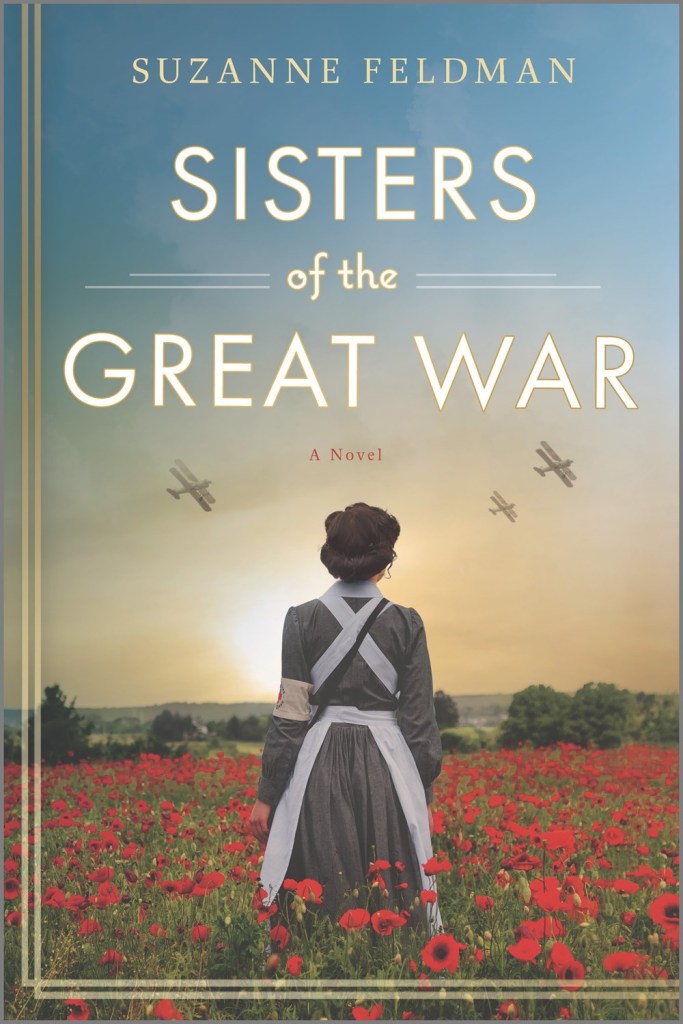
Two sisters seeking to shed the restrictions their father and society has placed upon them look to not only discover their identities, but their role in the midst of the Great War in author Suzanne Feldman’s “Sisters of the Great War”.
The Synopsis
Two sisters. The Great War looming. A chance to shape their future.
Sisters Ruth and Elise Duncan could never have anticipated volunteering for the war effort. But in 1914, the two women decide to make the harrowing journey from Baltimore to Ypres, Belgium in order to escape the suffocating restrictions placed on them by their father and carve a path for their own future.
Smart and practical Ruth is training as a nurse but dreams of becoming a doctor. In a time when women are restricted to assisting men in the field, she knows it will take great determination to prove herself, and sets out to find the one person who always believed in her: a handsome army doctor from England. For quiet Elise, joining the all female Ambulance Corps means a chance to explore her identity, and come to terms with the growing attraction she feels towards women. Especially the charming young ambulance driver who has captured her heart.
In the twilight of the Old World and the dawn of the new, both young women come of age in the face bombs, bullets and the deadly futility of trench warfare. Together they must challenge the rules society has placed on them in order to save lives: both the soldiers and the people they love.
Advertisements
The Review
This was so beautifully crafted and vividly descriptive that readers will feel instantly transported into the narrative. The stark contrast between the restrictive household the protagonists started out into the visceral hellscape of the front lines of WWI and the interlaced story of deeply personal growth with strong themes throughout really made this story shine brightly. The horrors of war the sisters endured showed a much different aspect of the Great War than most projects tackle, highlighting the physical and mental effects the battles had on nurses and physicians in the field.
The psychology and personal development of both Ruth and Elise were so engaging and brilliantly written. The themes of feminist struggles and the deep hardship of the LGBTQ community who had to remain hidden in the face of overwhelming battles like those faced in WWI really highlighted the intimate relationships they both formed with friends and loves alike, and their bond with one another as well.
The Verdict
A gripping, thought-provoking, and entertaining women’s fiction and historical fiction read, author Suzanne Feldman’s “Sisters of the Great War” is a must-read this fall. The growth and perseverance the sisters held onto in the face of great adversity, and the way their historical storyline and struggles can resonate with so many readers today made this a thoroughly enjoyable read and is not to be missed. Be sure to grab your copy today!
Rating: 10/10
Advertisements
About the Author
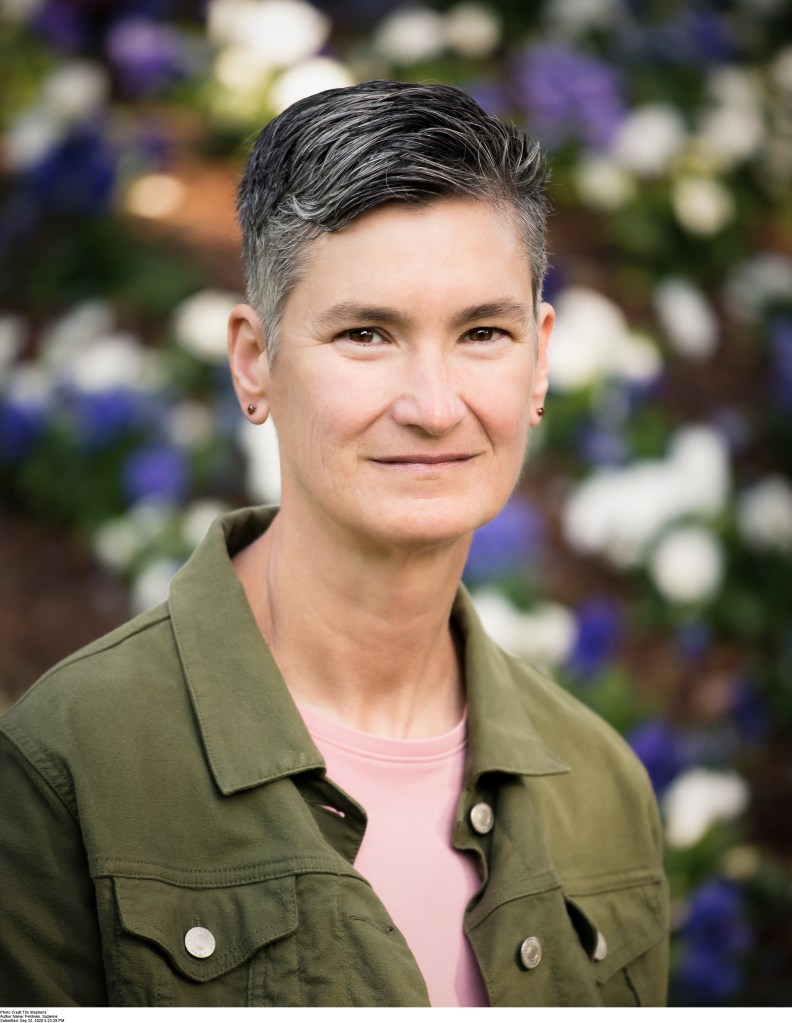
Suzanne Feldman, a recipient of the Missouri Review Editors’ Prize and a finalist for the Bakeless Prize in fiction, holds an MA in fiction from Johns Hopkins University and a BFA in art from the Maryland Institute College of Art. Her short fiction has appeared in Narrative, The Missouri Review, Gargoyle, and other literary journals. She lives in Frederick, Maryland.
Q: Your books have won quite a few awards. Do you ever feel pressure when you write a new book to make it an award winning book?
A: I do love awards and who doesn’t? (I’m striving for a Pulitzer!) But awards are sort of a wonderful perk for what I already love doing, which is making something big from a little spark of an idea. I think it’s a stretch to think to yourself, ‘I’m going to write something for THIS award.’ because what if the book doesn’t win anything? I’m much happier just writing and editing until I think it’s ready to go out into the world–then we’ll see how it does.
Q: What inspired this book?
A: Sisters of the Great War was a four-year project that started one morning as I walked into my classroom at some pre-dawn hour. I’d been thinking about my next project after ‘Absalom’s Daughters’ and I knew I wanted to write a war story–but there were already so many books about WW2. So I thought, what about WW1? Could I write something epic yet intimate about that period? I wrote on a post-it: ‘WW1; epic yet intimate,’ and put it in my pocket. After school that day, I found the post-it and by some miracle, I still knew what I’d meant.
I started doing research and realized pretty quickly that the reason WW1 literature peaked with All Quiet on the Western Front was because it was a trench war, and over the space of four years, the trenches barely moved so there were very few ‘victories.’ The war itself was awful beyond description. Troops went out and were mowed down by new weapons, like the machine gun, tanks, and poisonous gas. It’s hard to write a glorious book about a barbaric war that had no real point, so I decided to explore the lives of the forgotten women–the nurses and ambulance drivers who were in the thick of the action, but not really mentioned in the movies and books about the period.
Q: Where is your favorite place to write?
A: I have a room where I write, my ‘office.’ I have all my favorite art, my most-loved books, and a bed for my dog. I love being able to close the door and just get into the groove of writing, but I have been known to write in coffee shops and libraries. When I was teaching, when I would get an idea, I would write on a post-it and put it in my pocket, so, yes, technically I have written at work as well.
Q: Do you have a writing routine?
A: My writing routine involves getting really wired on coffee in the morning and then taking a long walk with my dog, sometimes by the river and sometimes in the mountains. I get my ideas for the day in order, and the dog gets tired. Then I spend about four hours working on writing projects–sometimes novels, sometimes short stories, and drinking a lot more coffee. By then the dog has woken up, and we go out for another walk. I like to treat writing as a job. It’s not too exciting, but it works for me.
Q: Are you a plotter or pantser when it comes to writing?
A: I’m a pantser and proud of it! I love not really knowing what’s going to happen, and I love the discovery of plot points and personalities that might not show up in an outline. My favorite part is when a character does something on the page that I never thought of, and I get to go with that. What’s funny is that as a teacher (before I retired) I needed a plan for everything!
Q: What is a fun fact about you?
A: I was a high school art teacher for almost 30 years, and I am also a visual artist. I do a lot of abstract painting, which you can see on my Instagram account, Suzanne Feldman Author. I’ve taught every art class you can imagine, from darkroom photography to ceramics. I had a wonderful time teaching, and I loved nearly all of my students.
Here is an Exclusive Excerpt from “Sisters of the Great War”
1
Baltimore, Maryland
August 1914
Ruth Duncan fanned herself with the newspaper in the summer heat as Grandpa Gerald put up a British flag outside the house. If he’d had a uniform—of any kind—he would have worn it. People on the sidewalk paused and pointed, but Grandpa, still a proper English gent even after almost twenty years in the U.S., smoothed his white beard and straightened his waistcoat, ignoring the onlookers.
“That’s done,” he said.
Ruth’s own interest in the war was limited to what she read in the paper from across the dining table. Grandpa would snap the paper open before he ate breakfast. She could see the headlines and the back side of the last page, but not much more. Grandpa would grunt his appreciation of whatever was in-side, snort at what displeased him, and sometimes laugh. On the 12th of August, the headline in the Baltimore Sun read; France And Great Britain Declare War On Austria-Hungary, and Grandpa wasn’t laughing.
Cook brought in the morning mail and put it on the table next to Grandpa. She was a round, grey-haired woman who left a puff of flour behind her wherever she went.
“Letter from England, sir,” Cook said, leaving the envelope and a dusting of flour on the dark mahogany. She smiled at Ruth and left for the kitchen.
Grandpa tore the letter open.
Ruth waited while he read. It was from Richard and Diane Doweling, his friends in London who still wrote to him after all these years. They’d sent their son, John, to Harvard in Massachusetts for his medical degree. Ruth had never met John Doweling, but she was jealous of him, his opportunities, his apparent successes. The Dowelings sent letters whenever John won some award or other. No doubt this was more of the same. Ruth drummed her fingers on the table and eyed the dining room clock. In ten minutes, she would need to catch the trolley that would take her up to the Loyola College of Nursing, where she would be taught more of the things she had already learned from her father. The nuns at Loyola were dedicated nurses, and they knew what they were doing. Some were out-standing teachers, but others were simply mired in the medicine of the last century. Ruth was frustrated and bored, but Father paid her tuition, and what Father wanted, Father got.
Ruth tugged at her school uniform—a white apron over a long white dress, which would never see a spot of blood. “What do they say, Grandpa?”
He was frowning. “John is enlisting. They’ve rushed his graduation at Harvard so he can go home and join the Royal Army Medical Corps.”
“How can they rush graduation?” Ruth asked. “That seems silly. What if he misses a class in, say, diseases of the liver?”
Grandpa folded the letter and looked up. “I don’t think he’ll be treating diseases of the liver on the battlefield. Anyway, he’s coming to Baltimore before he ships out.”
“Here?” said Ruth in surprise. “But why?”
“For one thing,” said Grandpa, “I haven’t seen him since he was three years old. For another, you two have a common interest.”
“You mean medicine?” Ruth asked. “Oh, Grandpa. What could I possibly talk about with him? I’m not even a nurse yet, and he’s—he’s a doctor.” She spread her hands. “Should we discuss how to wrap a bandage?”
“As long as you discuss something.” He pushed the letter across the table to her and got up. “You’ll be showing him around town.”
“Me?” said Ruth. “Why me?”
“Because your sister—” Grandpa nodded at Elise, just clumping down the stairs in her nightgown and bathrobe “—has dirty fingernails.” He started up the stairs. “Good morning, my dear,” he said. “Do you know what time it is?” “Uh huh,” Elise mumbled as she slumped into her seat at the table.
As Grandpa continued up the stairs Ruth called after him. “But when is he coming?”
“His train arrives Saturday at noon,” Grandpa shouted back. “Find something nice to wear. You too, Elise.”
Elise rubbed her eyes. “What’s going on?”
Ruth pushed the letter at her and got up to go. “Read it,” she said. “You’ll see.”
Ruth made her way down Thirty-Third Street with her heavy bookbag slung over one shoulder, heading for the trolley stop, four blocks away, on Charles. Summer classes were almost over, and as usual, the August air in Baltimore was impenetrably hot and almost unbreathable. It irritated Ruth to think that she would arrive at Loyola sweaty under her arms, her hair frizzed around her nurse’s cap from the humidity. The nuns liked neatness, modest decorum. Not perspiring young women who wished they were somewhere else.
Elise, Ruth thought, as she waited for a break in the noisy traffic on Charles Street, could’ve driven her in the motor-car, but no, she’d slept late. Her younger sister could do pretty much anything, it seemed, except behave like a girl. Elise, who had been able to take apart Grandpa’s pocket watch and put it back together when she was six years old, was a use-ful mystery to both Father and Grandpa. She could fix the car—cheaper than the expensive mechanics. , For some rea-son, Elise wasn’t obliged to submit to the same expectations as Ruth—she could keep her nails short and dirty. Ruth wondered, as she had since she was a girl, if it was her younger sister’s looks. She was a mirror image of their mother, who had died in childbirth with Elise. Did that make her special in Father’s eyes?
An iceman drove a sweating horse past her. The horse raised its tail, grunted, and dropped a pile of manure, rank in the heat, right in front of her, as though to auger the rest of her day. The iceman twisted in the cart to tip his hat. “Sorry Sister!”
Ruth let her breath out through her teeth. Maybe the truth of the matter was that she was the ‘sorry sister.’ It was at this exact corner that her dreams of becoming a doctor, to follow in her father’s footsteps, had been shot down. When she was ten, and the governess said she’d done well on her writing and math, she was allowed to start going along on Father’s house calls and help in his office downstairs. Father had let her do simple things at first; mix plaster while he positioned a broken ankle, give medicine to children with the grippe, but she watched everything he did and listened carefully. By the time she was twelve, she could give him a diagnosis, and she remembered her first one vividly, identifying a man’s abdominal pain as appendicitis.
“You did a good job,” Father had said to her, as he’d reined old Bess around this very corner. “You’ll make an excellent nurse one day.”
Ruth remembered laughing because she’d thought he was joking. Her father’s praise was like gold. “A nurse?” she’d said. “One day I’ll be a doctor, just like you!”
“Yes, a nurse,” he’d said firmly, without a hint of a smile. It was the tone he used for patients who wouldn’t take their medicine.
“But I want to be a doctor.”
“I’m sorry,” he said. He hadn’t sounded sorry at all. “Girls don’t become doctors. They become nurses and wives. Tomorrow, if there’s time, we’ll visit a nursing college. When you’re eighteen, that’s where you’ll go.”
“But—”
He’d shaken his head sharply, cutting her off. “It isn’t done, and I don’t want to hear another word about it.”
A decade later, Ruth could still feel the shock in her heart. It had never occurred to her that she couldn’t be a doctor because she was a girl. And now, John Doweling was coming to town to cement her future as a doctor’s wife. That was what everyone had in mind. She knew it. Maybe John didn’t know yet, but he was the only one.
Ruth frowned and lifted her skirts with one hand, balancing the bookbag with the other, and stepped around the manure as the trolley came clanging up Charles.
I received a free copy of this book in exchange for a fair and honest review. All opinions are my own.
A mother struggling to save enough money to rescue her child finds an opportunity to change her and her child’s life through her art in the sci-fi dystopian thriller, “Trashlands” by author Alison Stine.
The Synopsis
A resonant, visionary novel about the power of art and the sacrifices we are willing to make for the ones we love
A few generations from now, the coastlines of the continent have been redrawn by floods and tides. Global powers have agreed to not produce any new plastics, and what is left has become valuable: garbage is currency.
In the region-wide junkyard that Appalachia has become, Coral is a “plucker,” pulling plastic from the rivers and woods. She’s stuck in Trashlands, a dump named for the strip club at its edge, where the local women dance for an endless loop of strangers and the club’s violent owner rules as unofficial mayor.
Amid the polluted landscape, Coral works desperately to save up enough to rescue her child from the recycling factories, where he is forced to work. In her stolen free hours, she does something that seems impossible in this place: Coral makes art.
When a reporter from a struggling city on the coast arrives in Trashlands, Coral is presented with an opportunity to change her life. But is it possible to choose a future for herself?
Told in shifting perspectives, Trashlands is a beautifully drawn and wildly imaginative tale of a parent’s journey, a story of community and humanity in a changing world.
Advertisements
The Review
Captivating and thought-provoking, author Alison Stine shines brightly in this emotional and relevant eco-thriller/sci-fi dystopian read. The novel’s brilliance comes through early on in the use of shifting perspectives, allowing readers not only to see how this dystopian world evolved and grew but allowing them to see how the bonds between these characters formed and how they came to be who they are. The chilling atmosphere comes not from some horrendous mutant beast or alien invasion, but the horrors humanity inflicts on our own planet, forcing the Earth to reshape its landscapes and forcing good people to do whatever it takes to survive.
The character arcs in this narrative are the true heart of this book. The various perspectives we have to allow the reader to see the balance Coral must find in not only surviving for herself but in finding the means to save her son, taken years ago from her to work in a factory. Her ability to find beauty and the means to create art for others while still putting herself through perilous work to earn the means of leaving everything behind and saving her son showcases mankind’s ability to persevere in the face of adversity and find hope in the darkness that surrounds us, a message that rings true for so many people.
The Verdict
An engaging, emotionally-driven, and thematically important read, author Alison Stine’s “Trashlands” is a must-read novel of 2021! The perfect story of survival, hope, and finding beauty in the most troublesome of times, this story will take readers on a roller-coaster of emotions and showcase a depth of world-building that readers will come to love from this eco-thriller. If you haven’t yet, be sure to grab your copy today!
Rating: 10/10
About the Author
Alison Stine is an award-winning poet and author. Recipient of an Individual Artist Fellowship from the National Endowment for the Arts (NEA), and an Ohio Arts Council grant, she was a Wallace Stegner Fellow and received the Studs Terkel Award for Media and Journalism. She works as a freelance reporter with The New York Times, writes for The Washington Post, The Atlantic, The Guardian, 100 Days in Appalachia, ELLE, The Kenyon Review, and others, and has been astoryteller on The Moth. After living in Appalachian Ohio for many years, she now lives and writes in Colorado with her partner, her son, and a small orange cat.
1. Give us an out of context quote from your book to warm our hearts.
“People had thought there would be no more time, but there was. Just different time. Time moving slower. Time after disaster, when they still had to live.”
2. What’s the last book you read that inspired you?
Lily Cole’s Who Cares Wins: Reasons for Optimism in a Changed World. I’m quoted in the book, which is how we met. She had me on her podcast. It’s a book of ideas and hope for sustainability and environmental action. And it inspires me that she is able to leverage her platform as an actor and model to try to do good in the world. This world really wants you to be just one thing, and she resists that, and converts the attention into calls for action.
3. Name one song or artist that gets you fired up.
Lana Del Rey’s “Swan Song.” It has a slow build, dark and intense, like I hope my work is. I don’t listen to music with lyrics when I draft, but I listen to the same song over and over again when I revise. That song becomes the heartbeat of the book. And “Swan Song” was one of the heartbeats of Trashlands.
4. How do you find readers in today’s market?
There’s only so much a writer can control. I do everything in my control–post on social media, do events, publish essays–but at the end of the day, my job as a writer too is to tell the best story I can, to the best of my ability, in the time I’m given. What happens after that is a function of money and attention and decisions that don’t include me. As a disabled writer, it’s especially hard– nobody does year-end best lists about us. I try to remember that the writers I most admire–Octavia Butler, Angela Carter–wrote a ton. They just kept writing. I have to just keep writing, keeping going, too.
5. Do you come up with the hook first, or do you create characters first and then dig through until you find a hook?
Every book is different and every book teaches you how to write it. For me, trying to be analytical about things like plot or meaning doesn’t work. If I have a story I can’t let go of, something I dreamed, or something that keeps coming back to me, I listen to it. Often a character speaks first.
6. Coffee or tea?
Definitely coffee. I’m a lightweight, so I try to limit myself to one cup a day.
7. How do you create your characters?
One thing that I think is missing from some contemporary literary fiction is work. As someone from a working-class background, what characters do for money, how they feed themselves and live, is important to me, and can define character. Often what you want to do is different than what you have to do. I try to make it very clear how my characters support themselves, which can be a big part of characterization and plot–like in Trashlands, where several major characters work at a strip club at the end of the world– but also, what are their larger wishes? What are their unfulfilled dreams? What do they regret?
8. Who would be your dream cast if TRASHLANDS became a movie?
Lana Del Rey as Foxglove, Erin Kellyman as Coral, Eric Roberts as Trillium, MJ Rodriguez as Summer, and the late John Dunsworth as Mr. Fall.
9. If you could grab lunch with a literary character who would it be?
Jet from Alice Hoffman’s Practical Magic series. I just read The Book of Magic, which reminded me how much I love Hoffman’s characters and that world. We all need an aunt in our lives who’s a witch, someone who’s both no nonsense and a lot of nonsense–and who serves cake for breakfast. (It just occurred to me that I may be turning into that kind of witch myself.) We need someone to remind us of our own personal magic.
10. What are you currently reading?
Township, a collection of stories by fellow Ohioan Jamie Lyn Smith, which is slated to be published this December.
Advertisements
Here is an Exclusive Excerpt From “Trashlands”
1
Early coralroot
Corallorhiza trifida
Coral was pregnant then. She hid it well in a dress she had found in the road, sun-bleached and mud-dotted, only a little ripped. The dress billowed to her knees, over the tops of her boots. She was named for the wildflower which hadn’t been seen since before her birth, and for ocean life, poisoned and gone. It was too dangerous to go to the beach anymore. You never knew when storms might come.
Though they were going—to get a whale.
A boy had come from up north with a rumor: a whale had beached. Far off its course, but everything was off by then: the waterways, the paths to the ocean, its salt. You went where you had to go, where weather and work and family—but mostly weather—took you.
The villagers around Lake Erie were carving the creature up, taking all the good meat and fat. The strainer in its mouth could be used for bows, the bones in its chest for tent poles or greenhouse beams.
It was a lot of fuel for maybe nothing, a rumor spun by an out-of-breath boy. But there would be pickings along the road. And there was still gas, expensive but available. So the group went, led by Mr. Fall. They brought kayaks, lashed to the top of the bus, but in the end, the water was shallow enough they could wade.
They knew where to go because they could smell it. You got used to a lot of smells in the world: rotten food, chemicals, even shit. But death… Death was hard to get used to.
“Masks up,” Mr. Fall said.
Some of the men in the group—all men except Coral—had respirators, painter’s masks, or medical masks. Coral had a handkerchief of faded blue paisley, knotted around her neck. She pulled it up over her nose. She had dotted it with lavender oil from a vial, carefully tipping out the little she had left. She breathed shallowly through fabric and flowers. Mr. Fall just had a T-shirt, wound around his face. He could have gotten a better mask, Coral knew, but he was leading the crew. He saved the good things for the others.
She was the only girl on the trip, and probably the youngest person. Maybe fifteen, she thought. Months ago, she had lain in the icehouse with her teacher, a man who would not stay. He was old enough to have an old-fashioned name, Robert, to be called after people who had lived and died as they should. Old enough to know better, Mr. Fall had said, but what was better, anymore?
Everything was temporary. Robert touched her in the straw, the ice blocks sweltering around them. He let himself want her, or pretend to, for a few hours. She tried not to miss him. His hands that shook at her buttons would shake in a fire or in a swell of floodwater. Or maybe violence had killed him.
She remembered it felt cool in the icehouse, a relief from the outside where heat beat down. The last of the chillers sputtered out chemicals. The heat stayed trapped in people’s shelters, like ghosts circling the ceiling. Heat haunted. It would never leave.
News would stop for long stretches. The information that reached Scrappalachia would be written hastily on damp paper, across every scrawled inch. It was always old news.
The whale would be picked over by the time they reached it.
Mr. Fall led a practiced team. They would not bother Coral, were trained not to mess with anything except the mission. They parked the bus in an old lot, then descended through weeds to the beach. The stairs had washed away. And the beach, when they reached it, was not covered with dirt or rock as Coral had expected, but with a fine yellow grit so bright it hurt to look at, a blankness stretching on.
“Take off your boots,” Mr. Fall said.
Coral looked at him, but the others were listening, knot-ting plastic laces around their necks, stuffing socks into pockets.
“Go on, Coral. It’s all right.” Mr. Fall’s voice was gentle, muffled by the shirt.
Coral had her job to do. Only Mr. Fall and the midwife knew for sure she was pregnant, though others were talking. She knew how to move so that no one could see.
But maybe, she thought as she leaned on a fence post and popped off her boot, she wanted people to see. To tell her what to do, how to handle it. Help her. He had to have died, Robert—and that was the reason he didn’t come back for her. Or maybe he didn’t know about the baby?
People had thought there would be no more time, but there was. Just different time. Time moving slower. Time after disaster, when they still had to live.
She set her foot down on the yellow surface. It was warm. She shot a look at Mr. Fall.
The surface felt smooth, shifting beneath her toes. Coral slid her foot across, light and slightly painful. It was the first time she had felt sand.
The sand on the beach made only a thin layer. People had started to take it. Already, people knew sand, like everything, could be valuable, could be sold.
Coral took off her other boot. She didn’t have laces, to tie around her neck. She carried the boots under her arm. Sand clung to her, pebbles jabbing at her feet. Much of the trash on the beach had been picked through. What was left was diapers and food wrappers and cigarettes smoked down to filters.
“Watch yourselves,” Mr. Fall said.
Down the beach they followed the smell. It led them on, the sweet rot scent. They came around a rock outcropping, and there was the whale, massive as a ship run aground: red, purple, and white. The colors seemed not real. Birds were on it, the black birds of death. The enemies of scavengers, their competition. Two of the men ran forward, waving their arms and whooping to scare off the birds.
“All right everybody,” Mr. Fall said to the others. “You know what to look for.”
Except they didn’t. Not really. Animals weren’t their specialty.
Plastic was.
People had taken axes to the carcass, to carve off meat. More desperate people had taken spoons, whatever they could use to get at something to take home for candle wax or heating fuel, or to barter or beg for something else, something better.
“You ever seen a whale?” one of the men, New Orleans, asked Coral.
She shook her head. “No.”
“This isn’t a whale,” Mr. Fall said. “Not anymore. Keep your masks on.”
They approached it. The carcass sunk into the sand. Coral tried not to breathe deeply. Flesh draped from the bones of the whale. The bones were arched, soaring like buttresses, things that made up cathedrals—things she had read about in the book.
Bracing his arm over his mouth, Mr. Fall began to pry at the ribs. They were big and strong. They made a cracking sound, like a splitting tree.
New Orleans gagged and fell back.
Other men were dropping. Coral heard someone vomiting into the sand. The smell was so strong it filled her head and chest like a sound, a high ringing. She moved closer to give her feet something to do. She stood in front of the whale and looked into its gaping mouth.
There was something in the whale.
Something deep in its throat.
In one pocket she carried a knife always, and in the other she had a light: a precious flashlight that cast a weak beam. She switched it on and swept it over the whale’s tongue, picked black by the birds.
She saw a mass, opaque and shimmering, wide enough it blocked the whale’s throat. The whale had probably died of it, this blockage. The mass looked lumpy, twined with seaweed and muck, but in the mess, she could make out a water bottle.
It was plastic. Plastic in the animal’s mouth. It sparked in the beam of her flashlight.
Hello everyone! Author Anthony Avina here. I am happy to be sharing with you all this amazing guest post from author and poet Anne Leigh Parrish, where she discusses poetry and the utilization of visual representation in poetry. I hope you all will enjoy this stop in association with the Poetic Book Tours. Look for my review of the author’s upcoming book on November 4th.
Poetry is a visual expression, even when it’s about politics, or feminism, or how nasty people can be. In poems, words evoke both what we feel and see. This is important to me, I’d say even crucial. Since leaving the urban mess of Seattle four years ago and coming to the quiet of a Northwest forest outside of Olympia, I find nature supplies a great deal of visual stimulation to write about.
Many poems begin with an image—something I notice and want to capture. Moss hanging from a branch; the darting of a jay; how a gust of wind gives a suddenness to how trees move.
Once the image is expressed in words, I delve into what those words mean. If moss drapes a branch, what else drapes, when, and why? A ring drapes a finger, for instance, but that draping is intentional, not the result of a natural process – or is it? This is where poetry gets really fun, because the ring on the finger could, in fact, result from an expression of love, man to woman, or man to man, and love is a recognized natural process.
I also like to underscore differences among things and explore commonly held ideas and expectations, quite often about women. Returning to moss as a poetic subject, looking at it you might think it feels soft and silky, but it doesn’t. It’s rough and scratchy. Its appearance is deceptive, and in one poem I say moss evolved, went one way / then another which improved its chances / like a woman / nice to be reminded things / aren’t always as they seem, even if / truth at first disappoints
How many women feel the weight of the world’s expectations on them, particularly about how they look?
Using an image to shift the poetic drive or narrative into an unexpected direction is another way I craft my work. Violence against women is a theme I return to again and again, usually to raise awareness of the issue in general, but sometimes as a vehicle to open another door and prompt another discussion. This is where poetry and philosophy tend to blend and lose their boundaries. What if a woman finds herself needing the help of a man who then destroys her, and the poem reveals that it wasn’t because she was weak, or vulnerable, too trusting, or naïve, but because she had been distracted by something beautiful and thus let her guard down? She then reflects wryly from the afterlife that beauty gets her every time.
Sometimes I like to start with a metaphor and build a world around it that stands on its own logic, even if what it’s depicting has no logic. I see this as another way poetry can bend reality. In my poem “even the trees went under” a couple’s home is gradually falling apart from heavy rain. Obviously, the story represents how bad things have gotten between them, and as the water rises and they climb higher in the home, the woman turns into a mermaid and is faced with a life or death decision: will she save the man, or leave him alone to drown?
Advertisements
The title piece from my new collection explores the idea of objectivity in the face of turmoil. Two souls are held together by their not entirely healthy need for one another. They realize they’re really one monster, twirling before the sky / laughing at stars/ daring the moon to cut us apart. But the moon won’t be dared . . . how we love her joyous remove / up there alone. Again, nature as a force and backdrop comes into play, now as something uninvolved, coolly reflecting the occasional absurdity of the human condition.
On my last trip to Arizona, an elderly couple walked across the parking lot toward the restaurant where I was having dinner. They were backlit by a gorgeous Southwestern sunset. Their manner suggested years of life together, and for some reason, these images came down to the idea of a needle and the work that needles can do, in particular holding things together. This couple walked like looped stitches/ in the slanted evening light and through their many years they have/sewn, pulled apart / frayed / and dropped the needle’s thread / but now they rest and / gather up their loosened strands/ bound together / always.
I’ve been married for decades, and this fact too no doubt informed that piece.
And what of life overall? The gradual passing of time? How to express the understanding of one’s mortality? You have to have reached a certain age for these questions to be relevant, even poignant and yes, I’m there. I remember my mother saying to grow old was to become increasingly detached, and this idea became the basis for the poem I quote here, in its entirety (it’s brief) and logically entitled “time.”
let’s call it a study in detachment / gradual drift from passion to prayer / then even that loses strength / we grow quiet, soft, and slow/joyous in the face of this timely withdrawal / we’ve given so much, we’re ready now to hold a little back from / this riot of shifting light we know / as life
Advertisements
About the Author/Poet
Anne’s first fiction publication appeared in the Autumn 1995 issue of The Virginia Quarterly Review. That story, “A Painful Shade of Blue,” served as the basis for more fiction describing the divorce of her parents when she was still quite young. Her later stories focused on women struggling to find identity and voice in a world that was often hostile to the female experience.
In 2002, Anne won first place in a small contest sponsored by Clark County Community College in Vancouver, Washington. In 2003 she won the Willamette Award from Clackamas Community College in Oregon; in 2007 she took first place in highly esteemed American Short Fiction annual prize; and in 2008 she again won first place in the annual contest held by the literary review, The Pinch.
The story appearing in American Short Fiction, “All The Roads that Lead From Home” became the title story in her debut collection, published in 2011 by Press 53. The book won a coveted Silver Medal in the 2012 Independent Publisher Book Awards. Two years later, a collection of linked stories about the Dugan family in Upstate New York, Our Love Could Light The World, was published by She Writes Press.
Her debut novel, What Is Found, What Is Lost appeared in 2014. This multi-generational tale speculates on the nature of religious faith and family ties, and was inspired by her own grandparents who emigrated to the United States in 1920.
A third collection of short stories appeared in 2017 from Unsolicited Press. By The Wayside uses magical realism and ordinary home life to portray women in absurd, difficult situations.
Women Within, her second novel, was published in September 2017 by Black Rose Writing. Another multi-generational story, it weaves together three lives at the Lindell Retirement home, using themes of care-giving, women’s rights, and female identity.
Her third novel, The Amendment, was released in June 2018 by Unsolicited Press. Lavinia Dugan Starkhurst, who first appeared in Our Love Could Light The World, is suddenly widowed and takes herself on a cross-country road trip in search of something to give her new life meaning.
Maggie’s Ruse, novel number four, appears October 2019 from Unsolicited Press, and continues with the Dugan family, this time focusing on identical twins, Maggie and Marta.
What Nell Dreams, came out in November 2020 from Unsolicited. This collection of sixteen short stories also features a novella, Mavis Muldoon.
The next installment in the Dugan families series, A Winter Night, was released in March 2021 from Unsolicited Press. Anne’s fifth novel focuses on eldest Dugan Angie and her frustrations as a thirty-four-year-old social worker in a retirement home.
Anne has been married for many years to her fine, wise, and witty husband John Christiansen. They have two adult children in their twenties, John Jr., and Lauren.
Lydia Selk is an artist who resides in the pacic northwest with her sweet husband. She has been creating analog collages for several years. Lydia can often be found in her studio with scalpel in hand, cat sleeping on her lap, and a layer of paper confetti at her feet. You can see more of her work on instagram.com/lydiafairymakesart
I received a free copy of this book in exchange for a fair and honest review. All opinions are my own.
A group of mothers within a popular cul-de-sac find their little community threatened by a mysterious figure who threatens to reveal the dark secrets of their past in author Tara Laskowski’s “The Mother Next Door”.
The Synopsis
For fans of Lisa Jewell, Aimee Molloy, and Joshilyn Jackson, an upmarket suspense novel from a multi-award-winning author about a tightknit group of suburban mothers who invite a new neighborhood mom into their fold, and the fallout the night of the annual block party, when secrets from the past come back to haunt them…
The annual block party is the pinnacle of the year on idyllic suburban cul de sac Ivy Woods Drive. An influential group of neighborhood moms—known as the Ivy Five—plan the event for months.
Except the Ivy Five have been four for a long time.
When a new mother moves to town, eager to fit in, the moms see it as an opportunity to make the group whole again. This year’s block party should be the best yet… until the women start receiving anonymous messages threatening to expose the quiet neighborhood’s dark past—and the lengths they’ve gone to hide it.
As secrets seep out and the threats intensify, the Ivy Five must sort the loyal from the disloyal, the good from the bad. They’ll do anything to protect their families. But when a twisted plot is revealed, with dangerous consequences, their steady foundation begins to crumble, leaving only one certainty: after this year’s block party, Ivy Woods Drive will never be the same.
From award-winning author Tara Laskowski, The Mother Next Door is an atmospheric novel of domestic suspense in which the strive for perfection ends in murder…
The Review
This was a chilling and adrenaline-fueled thriller that will give readers whiplash with the twists and turns that the narrative takes them on. The atmosphere and tone really do a great job of highlighting the contrast between the picturesque suburban dream the Ivy Five portrayed to the public and the hellish nightmare their secrets and lies have created in the background of the community. The author perfectly captures the privilege that wealth and status buy people who have done terrible things in this life, and captured the societal emotions that have taken hold in recent years at the injustice of such secretive actions.
Yet it was the narrative and character growth that really stole the show here. The razor-sharp wit of the moms, especially Kendra, as they move people around like pawns in a game of their own making is highlighted perfectly in Theresa’s chapters especially, as the protagonist shows the struggles to adapt and make herself belong in this group, as mistakes of her own past begin to haunt her as well. The weight of those secrets and lies highlights the elevated anger and fear that builds up with keeping such a secret for so long, and the author’s use of this to add tension into the narrative was a stroke of genius.
Advertisements
The Verdict
Pretty Little Liars meets Revenge with a Halloween twist, author Tara Laskowski’s “The Mother Next Door” is the perfect suburban thriller this fall. The memorable characterization of the “perfect” suburban dream team and the haunting emotions that build as the secrets begin to pile up on one another more and more make this a truly memorable read. Be sure to grab your copy today!
Rating: 10/10
About the Author
Tara Laskowski
TARA LASKOWSKI is the author of One Night Gone, which won an Agatha Award, Macavity Award, and Anthony Award, and was a finalist for the Mary Higgins Clark Award, Left Coast Crime Award, Strand Critics’ Award, and Library of Virginia Literary Award. She is also the author of two short story collections, Modern Manners for Your Inner Demons and Bystanders, has published stories in Alfred Hitchcock’s Mystery Magazine and Mid-American Review, among others, and is the former editor of SmokeLong Quarterly. Tara earned a BA in English from Susquehanna University and an MFA from George Mason University and currently lives in Virginia. Find her on Twitter and Instagram, @TaraLWrites.
Q: Please give us a one sentence pitch for your novel, The Mother Next Door.
A: An atmospheric suspense novel about a tight-knit group of suburban mothers who invite a new neighborhood mom into their fold, and the fallout the night of the annual Halloween block party, when secrets from the past come back to haunt them.
Q: Why do you believe thrillers are so popular?
A: They naturally invoke our curiosity–our sense of “I have to know what happens.” Plus, I think people like to read about bad things happening to other people. It’s the same with horror movies or books–it’s a fun way to put yourself in a terrifying situation without actually having to be in a terrifying situation. As long as our brains know we are safe, we can enjoy that rush of adrenaline without the sheer panic.
Q: Where do you get your ideas? Of course, from your imagination, but do you read, see or hear something that clicks? How did you come up with the idea for The Mother Next Door? Is this book based on any true events?
A: I usually start with setting, weirdly. I need a place that I can envision, and that I can see bad things happening in. If I’ve got the place, then I can insert characters and make things happen.
For The Mother Next Door, I took all of the things I love most–Halloween, cool houses, urban legends–and put them in a domestic suspense set in a creepy suburban neighborhood. The book isn’t really based on any true events, but it definitely riffs off stuff in my real life. We live in a neighborhood with a cul-de-sac that throws a Halloween potluck every year, for example, though as far as I know nothing nefarious has happened over there!
Q: Are you a plotter or pantser?
A: I don’t do well with outlines. I need to feel my way through a book with a blindfold on (though occasionally I guess I pull it down and try to get a glimpse of what’s ahead.) By this, I mean, I like to write a little, then figure out the next few “beats” or things that might happen, then write those, then figure out a little more, etc. And delete and rewrite and cry a little and doubt myself and think I’m the greatest thing since barbeque chips and start the whole process over again. And each time, so far, it’s ended up in a book, so fingers crossed!
Q: Any great tips for aspiring writers?
A: 1) Find your tribe 2) Learn to take criticism and rejection gracefully 3) Read. A lot. 4) Sign up for a monthly massage program.
Q: What is your favorite place to write?
A: It’s super boring, but my home office. I like to have control over my environment. I know writers who can write in coffee shops or libraries or outside, but I need to be at a desk in relative quiet most of the time. If it’s too noisy or too cold or there’s a chance that a spider will crawl on me, I can’t concentrate. That said, we have an excellent screened-in porch and I do like writing out there sometimes.
Q: Are you working on another book now or taking a break?
A: I’m working on my third novel, which is set in upstate New York at a winery and estate and features a group of old friends who return there for a reunion only to realize they are caught up in a decade-old revenge plot.
Q: What is your favorite season and why?
A: Hands-down: Fall. Sweaters! Crunchy leaves! Pumpkin everything! Football! Also, Halloween is my birthday, and I adore anything and everything spooky. So, there you go.
Advertisements
Here is an Exclusive Excerpt From “The Mother Next Door”
HALLOWEEN
Ladies and gentlemen, skulls and boys: by the time our Halloween block party is over tonight, one of us will be dead.
And I don’t mean dead as in dull, or dead as in zombified. I mean dead as in gone. Dead as in expired. Killed.
Murdered.
You may be feeling distressed about this, knowing what you know about Ivy Woods—the great neighborhood it is, the sweet, loving families that live there. How could such a tragedy happen in such a wonderful place? You may have traveled here yourself, as a child or as a parent, lured in by the local fame of the street and its ghoulish decorations each year. The lights, the smoke, the gravestones, and the moaning. The witches, cackling and handing out candy. The swarms of little Frankensteins and cowboys and robots and ballet dancers lugging their pillowcases and plastic pumpkin buckets filled with sugar and junk.
But Ivy Woods isn’t perfect.
Far from it.
Look closer. Look under the makeup and the masks, look into the windows of the perfect houses. Dig under the surface of those freshly mowed lawns and you’ll find the worms. I’ve looked—believe me, I’ve looked. There’s something about this street. There are secrets. I know from watching through the windows, from hearing the hushed conversations, from lingering on their faces when they think everyone else has looked away.
Oh they think they are perfect. They pat themselves on the back for throwing such good parties, for raising such fine children, for living in such big houses.
But they are pretending.
They don masks on this one single night to dress up as someone or something else, but in reality they live their lives this way.
We all do.
We hate ourselves. We are too fat, or too thin. We should work hard, be smarter. We are lonely and depressed. We are worried about money. We are ashamed of the way that our friends and family treat us. But we lie about it all. We hide behind a protective façade, fragile glass figurines inside elaborate dollhouses designed to look like perfect, safe, happy places.
Tonight it will all shatter.
Watch closely and you’ll begin to see what I see. There’s trouble in the air, a cold wind blowing in from far away, and it’s settled on Ivy Woods Drive. The secrets and the lies we tell ourselves and others will emerge tonight like spirits of the dead. Lines will be drawn. Sides will be taken. Someone won’t make it out alive.
I can’t save that person, but I’ll tell the story. Turn over the rocks, expose the worms. Pull back the masks.
Because I know their secrets, secrets that will destroy them all.
Hi everyone! I am honored and proud to share this special spotlight for author A.E. Hines and his book, “Any Dumb Animal”, a unique collection of poetry that shares his memoir of a gay man who came of age during the AIDS crisis.
With every pre-sale purchase of Any Dumb Animalby A.E. Hines between June and November 2021, a group of anonymous donors will match dollar for dollar each sale and donate it to The Trevor Project.
The Trevor Project was founded in 1998 and is the leading national organization providing crisis intervention and suicide prevention services to lesbian, gay, bisexual, transgender, queer & questioning (LGBTQ) young people under 25.
Any Dumb Animal (Main Street Rag, 2021), the debut poetry collection by AE Hines, presents a memoir-in-verse as told by a gay man raised in the rural South who comes of age during the AIDS crisis. Flashing back and forth in time, a cast of recurring characters and circumstances are woven into a rich tale of survival and redemption, exploring one man’s life as a queer son, father, and husband, over a span of more than thirty years.
Advertisements
Advance Praise:
“This compellingly candid work speaks the language of courage, of breath-taking transcendence. Finely crafted, it is a remarkable debut collection. Take note, world: a powerful lyric poet has emerged. Take note and rejoice!” ~ Paulann Petersen, Oregon Poet Laureate Emerita
“I was amazed over and over at the bravery of these poems, never shying from the difficult moments in life, and all the while staying true to the clear-eyed, fearless vision of their author.” ~ James Crews, Editor of How to Love the World: Poems of Gratitude and Hope
“With a strong gift for storytelling and an eye attuned to detail, Hines ultimately shows us the beauty and knowledge made of experience.” ~Richie Hofmann, Author of Second Empire
About the Author:
AE Hines (he/him) grew up in rural North Carolina and currently resides in Portland, Oregon. His poetry has been widely published in anthologies and literary journals including I-70 Review, Sycamore Review, Tar River Poetry, Potomac Review, Atlanta Review, Crosswinds Poetry Journal and Crab Creek Review. He is winner of the Red Wheelbarrow Prize and has been a finalist for the Montreal International Poetry Prize. He is currently pursuing his MFA in Writing at Pacific University. Follow him on Twitter, Facebook, Instagram.