
Making The Leap from Novella to Novel
In 2013, I ventured into the publishing world with my first novella in my romantic suspense series titled Kept. For my tastes, novellas arguably clock in between 20,000 and just shy of 40,000 words in length. But I soon discovered readers preferred novels to novellas. And pricing between these books were as different as night and day.
To sell books at the price I wanted, I needed to write novels and not novellas. But I lacked patience and qualifications to write a novel. Besides, I preferred writing short stories and novellas. I still have some shorts and novellas that I need to dust off, slap a book cover on and upload for the world to see. Since I always dreamed of becoming a best-selling author, and I always considered myself a writer, I decided to obtain the qualifications and patience to write that elusive novel, and perhaps, join the ranks of becoming an indie best-selling novelist.
Almost three years ago I enrolled in the Master of Arts Program in Creative Writing at Southern New Hampshire University, and I never looked back. In the first two classes of the online program, I learned about fiction fundamentals, structure and outlining a novel. In fact, it was in one of those classes that I outlined my debut mystery All Money Ain’t Good Money as my final project. I transformed that outline into a 68,000-word novel. My educational investment paid off in more ways than one.
Don’t get me wrong. Writing novellas are great practice for expansion into writing the novel. With novellas, the writer concentrates on developing the main character and one or two plot lines. But in a novel, a writer can develop multiple characters and can run multiple plot lines simultaneously to keep the pages turning. Engaging the reader and securing future book sales is the goal. So, there is no shame in writing novellas. It’s just cuing you up to write for a bigger audience, readers seeking the page-turning novel.
Book Summary
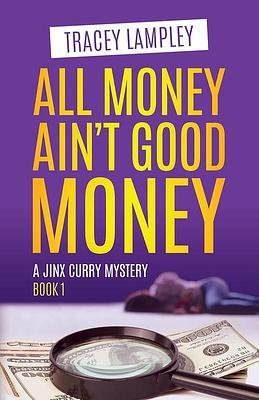
Jinx Curry is a single mom who spends her days spying on cheating wives and husbands, but she aches for more importance. When her boss, Capricorn Hayes, finally assigns Jinx a missing persons case involving a congressman’s missing granddaughter, Jinx jumps at the chance. Not only to solve it, but to earn the fifty-thousand-dollar bonus that would pay her bills, and get a menacing creditor off her back.
But the investigation proves more dangerous and costly than Jinx believes. After an unknown individual in a black Corvette nearly runs Jinx down and begins stalking her, Jinx has to sacrifice her relationship with her daughter by sending Arielle to live with her father. Can Jinx find the congressman’s granddaughter while surviving her stalker? Or will this job be her last?
Publisher: Tralam Publishing Company (July 26, 2024)
Print length: 276 pages
Purchase a copy of All Money Ain’t Good Money on
Amazon: https://www.amazon.com/All-Money-Aint-Good-Mystery-ebook/dp/B0CW1DW3SX
Barnes & Noble: https://www.barnesandnoble.com/w/all-money-aint-good-money-tracey-lampley/1145537634?ean=2940179752004
You can also add this to your GoodReads reading list
https://www.goodreads.com/book/show/212406184-all-money-ain-t-good-money
About the Author

When she is not writing, Tracey Lampley loves attending and watching sporting events such as WNBA, NBA, college football and NFL football. Currently Tracey is completing her MA in Creative Writing at Southern New Hampshire University. She already holds an MS in Publishing from Pace University and a BA in English/Technical & Scientific Communication from Miami University of Ohio. She resides in the metro Atlanta, Georgia area with her pooch Neo and near her daughter Asia.
You can follow the author at:
Website: https://traceylampley.com
Facebook: https://www.facebook.com/tracey.lampley.12
X/Twitter: @bookmistress1
Instagram: tralam4156
Blog Tour Calendar
August 12th @ The Muffin
Join us as we celebrate the launch of Tracey Lampley’s novel All Money Ain’t Good Money. Read an interview with the author and enter to win a copy of her book.
https://muffin.wow-womenonwriting.com
August 14th @ Words by Webb
Stop by for today’s review of All Money Ain’t Good Money – a Jinx Curry Mystery.
https://www.jodiwebbwriter.com/blog
August 16th @ My Beauty My Books
Want a fun read for the weekend? Check out the spotlight on All Money Ain’t Good Money by Tracey Lampley.
August 17th @ Writer Advice
Novelist Tracey Lampley shares her thoughts on the value of planting a red herring.
August 19 @ Lisa Haselton’s Reviews and Interviews
Let’s take a peek at the life of an author with today’s interview of Tracey Lampley.
August 21st @ Chapter Break
Tracey Lampley, who writes about private investigator Jinx Curry, posts about why we all love a flawed protaganist.
Chapterbreak.net
August 22nd @ Knotty Needle
The Knotty Needle will be reviewing All Money Ain’t Good Money by Tracey Lampley.
http://knottyneedle.blogspot.com/
August 22nd @ Book Room Reviews
Stop by for a surprise guest post by Tracey Lampley, author of All Money Ain’t Good Money.
http://www.bookroomreviews.com/
August 24th @ Author Anthony Avina
Learn how Tracey Lampley made the Leap from Novella to Novel in today’s guest post plus a review of All Money Ain’t Good Money by Anthony Avina.
https://authoranthonyavinablog.wordpress.com
August 28th @ Create Write Now
In today’s spotlight, learn more about the first Jinx Curry mystery: All Money Ain’t Good Money.
https://www.createwritenow.com/journal-writing-blog
August 30th @ Choices
Tracey Lampley, author of All Money Ain’t Good Money, is telling us the six authors she’d like to invite for a dinner party in today’s guest post.
August 31st @ A Wonderful World of Words
Novelist Tracey Lampley writes about what her life was like before she began writing today at Wonderful World of Words.
https://awonderfulworldofwordsa.blogspot.com
September 3rd @ StoreyBook Reviews
Drop by for a review of All Money Ain’t Good Money by Tracey Lampley.
https://www.storeybookreviews.com
September 4th @ Author Anthony Avina
Enjoy Anthony Avina’s review of All Money Ain’t Good Money by Tracey Lampley.
https://authoranthonyavinablog.wordpress.com
September 5 @ Word Magic
Tracey Lampley, author of All Money Ain’t Good Money, is writing about life with her canine buddy Neo.
https://fionaingramauthor.blogspot.com
September 6th @ A Story Book World
Looking for a new novel? Today’s spotlight is on All Money Ain’t Good Money by Tracey Lampley.
https://www.astorybookworld.com
September 7 @ Boys’ Mom Reads!
Tracey Lampley’s All Money Ain’t Good Money is reviewed today by Karen of Boys’ Mom Reads.
https://karensiddall.wordpress.com
September 9th @ Nikki’s Book Reviews
Along with a review of All Money Ain’t Good Money, author Tracey Lampley will be posting about what she likes best about Live Sports Events.
http://nikkitsbookreviews.wordpress.com
September 12th @ Reading Is My Remedy
Struggle with what your characters should say? Author Tracey Lampley’s guest post is about writing realistic dialogue. They’ll also be a review of her novel All Money Ain’t Good Money.
https://readingismyremedy.wordpress.com
September 14th @ That’s So Nitra
Learn the difference between Macro editing and Micro editing with the help of Tracey Lampley.
https://nenitraanna.wordpress.com
September 15th @ Boots, Shoes and Fashion
In today’s interview, learn more about Tracey Lampley, author of the first book in the Jinx Curry mystery series: All Money Ain’t Good Money.