Guest Blog Post: Lessons learned querying agents and publishers by Carolyn DiPasquale

I am honored to share today’s special guest blog post from Carolyn DiPasquale, author of the book Reckless Grace. Today she shares the lessons she learned sending queries to agents and publishers alike. I hope you enjoy today’s post and be sure to follow the author and pick up your copy of their book today!


Finding a publisher is a long, lonely process. I’d heard the rejection stories, so I knew this going in, but I never imagined how hard it would be in that actual space.

Hoping to sign with a major company, aka the “Big 5 Publishers,” I began by querying agents. I spent hours trying to craft cogent query letters that, in retrospect, I think always missed the mark for two reasons. One, I had trouble boiling down a broad, complex work like Reckless Grace into a few catchy lines. My cognizance of the power of that letter—it could make or break me—also froze me up, resulting in stilted text. I received pass after pass. But infinitely more painful than the Dear-John emails was the total lack of response from most Big-5 agents who couldn’t be bothered to even acknowledge receipt of, much less respond to, not just my query letter, but also my book proposal and sample chapters, a package that took from several weeks to several months to put together. Which made me repeatedly feel like the book I’d labored over for the last seven years was worth nothing. 

But I didn’t give up because even if I couldn’t articulate it effectively in my queries, I believed in the importance of my project. It helped that my writer-friend, Elisabeth, was also shopping her manuscript among Big-5 agents without success. We commiserated with each other while reviewing one another’s letters and synopses, and this camaraderie lifted some of the gloom. I got so excited the few times she received “hits,” that is requests from agents to read her full manuscript; however, they ultimately passed. (Elisabeth still hasn’t found an agent after eight years.)  As time went on, I understood that Big-5 agents favor celebrities and well-known writers. They accept very few new clients, sometimes only one percent! 

Therefore, after a year without one bite, I moved on to smaller companies, called Indie (independent) publishers. Within weeks, I started getting hits. Both editors who read my full manuscript offered me contracts. Though thrilled at their interest, I felt I had to proceed cautiously; I’d invested too much time in writing Reckless Grace to release it without vetting these companies. After contacting authors who had used these publishers and hearing about their experiences, I had serious reservations and ultimately rejected both offers. I knew it was the right call, but I felt dejected and stuck. In the stifling July heat of 2020, I started writing query letters again. In August, I got another hit. Jay Gowen from WiDo Publishing requested my full manuscript and read Reckless Grace in three days, stunning me with a phone call. “I don’t usually telephone authors,” he said in a kind, professional voice, “but your manuscript absolutely slayed me.” I signed a contract the next day. 

Advertisements

Book Summary

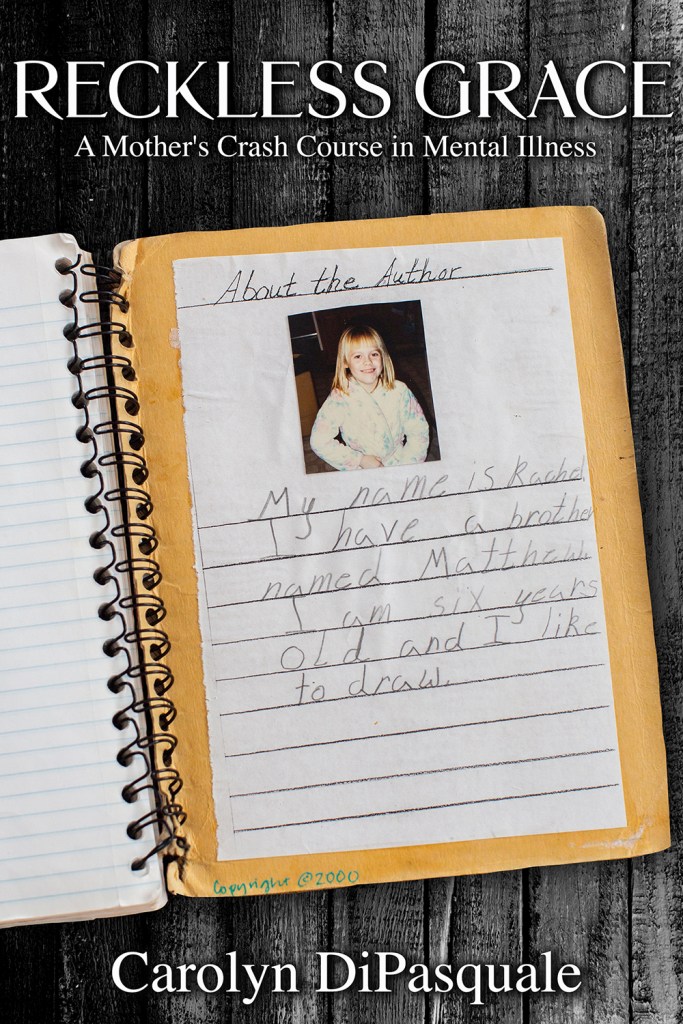
Fourteen-year-old Rachel guards a collection of secrets for ten years, journaling to vent her terror and loneliness.

Following Rachel’s fatal overdose years later, her mother, Carolyn DiPasquale, stumbles upon her daughter’s diaries. Shattered, she searches for answers, retracing her steps to figure out how parents and doctors missed three major mental illnesses.

What the single, working mother recalls is a far cry from what happens, as dramatically revealed in tandem chapters gleaned from Rachel’s journals. While the mother sprints from task to task, the daughter details the baffling emergence and frightening progression of bulimia, diabulimia, and borderline personality disorder; her eventual substance abuse; and heart-wrenching reasons for not seeking help.

Despite her loss, DiPasquale hopes her story lights a path for victims of mental illness while awakening all readers.

Publisher: E.L. Marker

ISBN-10: 1947966550

ISBN-13: 978-1947966550

ASIN: ‎B09W69TT11

Print length: 546 pages

Purchase a copy of Reckless Grace on Amazon, Barnes and Noble, and Bookshop.org. You can also add this to your GoodReads reading list. 

Advertisements

About the Author:

Carolyn DiPasquale grew up in Franksville, Wisconsin, graduating from UW-Milwaukee with a double major in English and French. In 1983, she moved to Rhode Island where she raised three children while pursuing her Master’s in English at the University of Rhode Island. Over her career, she taught literature and composition at various New England colleges; worked as a technical writer at the Naval Underseas Warfare Center in Newport; and wrote winning grants as a volunteer for Turning Around Ministries, a Newport aftercare program for ex-offenders. She has been an active member of the Newport Round Table, a professional writing group (founded in 1995), since 2013. 

DiPasquale currently lives in Richmond, Rhode Island where she has started working on a sequel to Reckless Grace. She has also ventured into writing children’s books. In her free time, she enjoys cooking and baking with healthy ingredients, hiking and trapshooting with her husband Phil, and volunteering at the New Hope Chapel food pantry in Carolina, Rhode Island.  

Visit her website to follow her updates. You can also follow her on Instagram or Facebook.

Blog Tour Calendar

– Blog Tour Calendar

August 1st @ The Muffin

Join us at WOW! Women on Writing as we celebrate the launch of Carolyn DiPasquale’s memoir Reckless Grace. Read an interview with the author and enter to win a copy of the book.

http://muffin.wow-womenonwriting.com

August 1st @ Mindy McGinnis

Join Mindy as she features a guest post by author Carolyn DiPasquale on the topic of how mental disorders travel in packs. Don’t miss this! 

https://www.mindymcginnis.com/blog

August 3rd @ Pages and Paws

Join Kristine as she reviews Carolyn DiPasquale’s memoir Reckless Grace. You don’t want to miss this powerful memoir!

https://pagesandpaws.com/

August 8th @ Author Anthony Avina’s Blog

Join Anthony as he features Carolyn DiPasquale’s guest post about lessons learned from querying agents and publishers.

August 9th @ The Faerie Review

Join Lily as she features Carolyn DiPasquale and her memoir Reckless Grace.

https://www.thefaeriereview.com/

August 10th @ Word Magic

Come by Fiona’s blog where she shares the author’s guest post about memoir writing. Don’t miss this important post if you are interested in this writing genre!

https://fionaingramauthor.blogspot.com/

August 13th @ Boots, Shoes, and Fashion

Join Linda as she interviews Carolyn DiPasquale about her memoir Reckless Grace. 

https://bootsshoesandfashion.com/

August 15th @ A Storybook World

Join Deirdra as she features Reckless Grace by Carolyn DiPasquale.

https://www.astorybookworld.com/

August 18th @ Pen and Prosper

Join Jennifer as she interviews Carolyn DiPasquale about her memoir Reckless Grace.

http://penandprosper.blogspot.com/

August 19th @ Knotty Needle

Visit Judy’s blog and read her review of Carolyn DiPasquale’s memoir Reckless Grace. You don’t want to miss this touching memoir.

https://knottyneedle.blogspot.com/

August 20th @ Choices

Join Madeline as she shares Carolyn DiPasquale’s guest post about whether women can age with grace.

http://www.madelinesharples.com/

August 22nd @ World of My Imagination

Visit Nicole’s blog as she reviews Carolyn DiPasquale’s powerful memoir Reckless Grace.

https://worldofmyimagination.com

August 24th @ Author Anthony Avina’s Blog

Join Anthony again as he reviews Carolyn DiPasquale’s powerful memoir Reckless Grace.

August 28th @ Liberate and Lather

Join Angela as she reviews Carolyn DiPasquale’s memoir Reckless Grace. 

https://liberateandlather.com/

September 1st @ Peaches and Cream Pages

Join Kelly as she reviews Carolyn DiPasquale’s memoir Reckless Grace. You’ll definitely want to add this book to your reading list.

https://www.instagram.com/peachesandcreampages/

September 2nd @ Heidi Lynn’s Book Reviews.

Join Heidi Lynn as she features Carolyn DiPasquale’s memoir Reckless Grace.

https://heidilynnsbookreviews.blogspot.com/

September 3rd @ Kelly Sgroi’s Blog

Visit Kelly’s blog today and read the guest post written by Carolyn DiPasquale about how to make your writing sing. Feel inspired today!

https://www.kellysgroi.com/blog

September 4th @ Free to be Me

Join Leslie as she reviews Reckless Grace by Carolyn DiPasquale.

https://lesliesvoice.com/

Guest Blog Post and Blog Tour Blast For Author M.D. Grimm’s “Sapphire: Home and Abroad” with OWI Blog Tours

Hi everyone! Thank you for joining me today. I hope you’ll give author M.D. Grimm a warm welcome as we hear some fantastic insight into the development of “Sapphire: Home and Abroad”.


Good day lovely readers! Thank you for joining me. I am M.D. Grimm and I am here to promote my newest release, “Sapphire: Home and Abroad.” This is the latest entry in The Stones of Power. I am overjoyed and relieved to finally release a new book in this series. After re-publishing back titles, I can now work on new projects. So, if you like magic, surly, anti-hero mages (wizards), and a fun setting with quirky supporting characters, this series might be for you!

So… Morgorth. He’s a difficult character, isn’t he? I don’t think I quite knew what I was getting into when I wrote the first book over ten years ago. I have an affinity for dark and/or damaged characters. Their journey and trials as they become better people is something I never grow tired of either writing or reading. One of the worst things in the world is for a writer to be bored with a character and/or a story. And when it comes to series, I strive to have a character(s) that needs to overcome something as they evolve over the course of several books. If I’m not interested in their journey, then why would anyone else be?

“Ruby: Lost and Found” was the third book I ever published. It presented Morgorth in a time of his life where he was bored with being a villain. He’d embraced the label after his peers, fellow mages, decided he simply had to be one because of his birthright: being the seventh son of a seventh son, which they determined meant he was to be the Destroyer of their world. It is said that we often create our own monsters, and in this case, it was true. Morgorth became what his peers already thought he was. However, when Aishe crashes into his life, the desire to be something different awakens within him. In my opinion, he becomes an anti-hero. Or, as he would say, a dark mage. He’s not out to wreak havoc on the world but he’s certainly not going to play by the rules, either.

My initial goal for this series was to challenge myself to write an anti-hero. I’m not quite sure if I succeeded or not, but I can’t argue with the result. Morgorth is wonderfully flawed, his struggles are real, and his desire to be worthy of his mate, Aishe, pushes him into uncomfortable situations and makes his choices harder. What I love most about Morgorth is his refusal to surrender. Despite the abuse he survived as a child, the hatred from most of his peers, and the struggle with his own internal demons, he continues to fight. The closest he came to defeat was in the previous book, “Lapis Lazuli: Forgotten and Remembered,” but even then, even without Aishe kicking his butt into gear, I don’t doubt that after a bit of time in self-pity, he’d roll up his sleeves and start fighting again. It’s one of the things I love most about him: he continues to get up every time he’s knocked down.

Due to the abuse from his father, Morgorth has always carried a deep-seated rage inside him. Unfortunately, it led him to unleashing his pain on innocents until he made a promise to his mentor that he would stop perpetuating the cycle of abuse. Morgorth has grown a lot from book one to book eight, but the core of him hasn’t changed. He still carries the rage, only now he channels it into protecting those he loves. He still has a darkness inside him, a thirst to hurt others, and yet again, he targets it at other villains and in defense. I find that the hardest balance to strike with such a complex character is letting them evolve without changing who they are at their deepest core. I didn’t want Morgorth to lose his edge. I didn’t want it to seem as if he simply flicked off his past trauma and that it no longer affected him. That is unrealistic and an insult to folks who live with trauma. However, he did find the tools and the support to work through his trauma and to use his rage for good instead of evil.

And how did he do that? By finding a mate who accepted all of him. With Aishe, he found the motivation and the reason to work on himself. That’s what I love most about their partnership—they make each other better and stronger. 

The Stones of Power 1-8 are available for purchase at Amazon (also in print!) and Smashwords. I have a newsletter that I send out monthly with all the goodies you can expect in the future. That’s the best way to find out about my current and future projects.

For fans of the Saga of the Bold People series, I just finished the first draft of “Resistance,” book 3. I hope to release it October 2022, so keep your eyes peeled for that! I am also booked (pun intended) solid this year, working on the next shifter book, the next Stones of Power book, a couple single titles, and the next On Wings Saga book. Wish me luck!

More information on my catalog can be found at my website.

I hope you stay safe and healthy, and may dragons guard your dreams,

M.D. Grimm

Sapphire: Home and Abroad

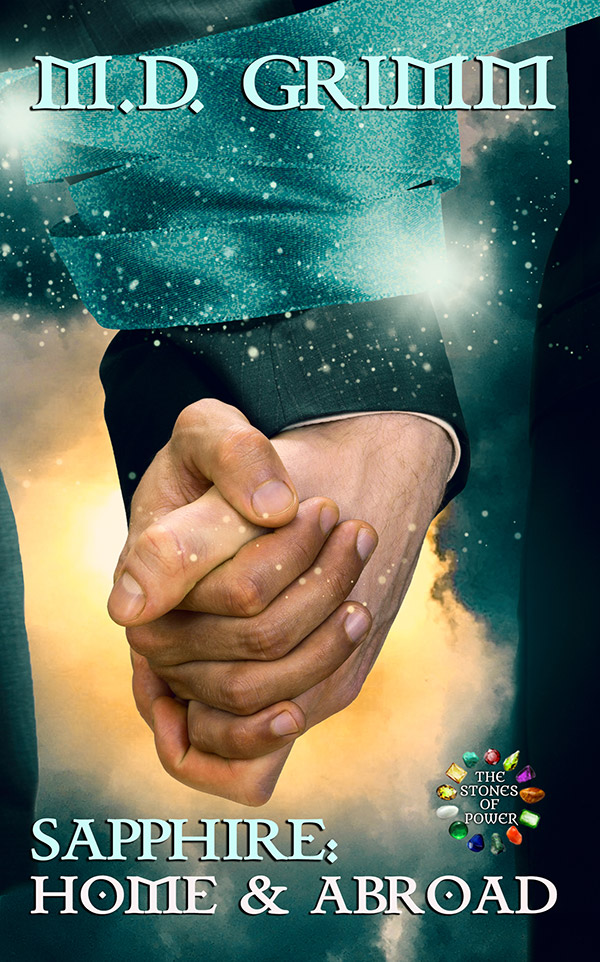
M.D. Grimm has a new MM fantasy book out, Stones of Power book 8: Sapphire: Home and Abroad.

The Dark Mage, Lord Morgorth, and Aishe of the Ravena Tribe, are to become bondmates.

Morgorth is equal parts nervous and excited. He wants to unite with Aishe in the sacred dialen ceremony, to proclaim their devotion to the world, to show everyone that Aishe is his equal and deserving of respect. After all they’ve survived together, why shouldn’t they make the cosmic promise before friends and family? But duty must often come before pleasure. When Morgorth’s estranged mentor, Master Ulezander, comes to him with a time-sensitive mission involving a major stone of power, Morgorth has little choice but to acquiesce.

Aishe knows his mate struggles with the revelation of his true destiny, after a lifetime of defining himself as the future Destroyer of Karishian. All he can do is reassure Morgorth that being the Savior is a far better fate for both of them. But as Morgorth and Aishe leap through worlds and dimensions in pursuit of a stone of power, more pieces to the puzzle of Morgorth’s destiny are revealed. And they form an image of sacrifice and tragedy.

The dark cloud of an ancient enemy looms ever closer, and the path to becoming the Savior might prove more monstrous than that of the Destroyer.

About the Series:

Lord Morgorth is a dark mage on the planet Karishian. His peers consider him a villain, but there is more to him than they choose to understand. Cursed by a dark destiny and tormented by painful memories of the past, Morgorth struggles to find his place in the world. Far from innocent, Morgorth has teetered between embracing his destiny and fighting against it his entire life. A decision that is made easier when Aishe comes into his life. Aishe is a creature of the forest, a warrior and healer. He has the moral compass that Morgorth needs, and Morgorth gives Aishe the companionship he craves. Together, they forge ahead, weathering the storms and fighting the enemies fate puts into their paths.

However, their greatest enemy is not a living being, but gemstones infused with deadly power. They are addictive, seductive, and completely treacherous. Morgorth hates them and is determined to find and imprison all of them. But he soon realizes they are keys to a greater power. He learns his destiny is not all he thought it was. And an even greater enemy stirs in the darkness. Enter the world of “The Stones of Power.”

Universal Buy Link


Excerpt

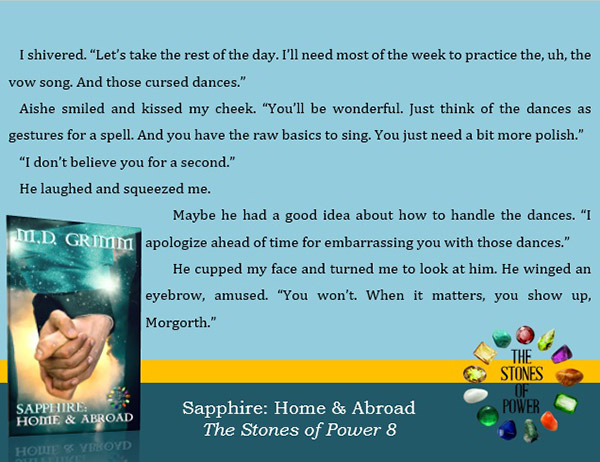
Sapphire Home and Abroad meme

Morgorth stepped forward and stretched out his arms. He murmured a series of words under his breath and an opaque pinprick of light appeared. I stepped a bit closer, fascinated. The pinprick grew into a swirling, pulsing liquid silver gateway. It was beautiful and ominous. It made no sound, and yet gave off pressure that I felt against my body, and the hair on my arms stood on end.

The few trees bordering the clearing creaked and groaned as they bent away from the portal. I didn’t hear anything—not birds or squirrels, not deer. Nothing was near us, and the poor, stationary trees were doing their best to also get away.

Morgorth fisted his hands and widened his stance, still muttering. His skin glowed, and I silently shifted to his side. His eyes were a burning amber, his expression set in stubborn determination and intense concentration. Sweat slid down his face. The portal pulsed a bit faster, the beat knocking against my ribs. What was he doing?

Then the silver gained a bluish color before darkening to mossy green. Morgorth grunted and lowered his hands, though his magick still glowed.

“Take my hand,” he said in a stiff, strained voice. “And hold on tight, to both me and your bow.”

I swallowed hard and took a deep breath. I clung to my bow as I took his outstretched hand and pressed to his side. His skin was hot to the touch but not burning.

“What can I expect?” I asked.

“Discomfort and weirdness,” he said with a hint of a smile. “Just don’t let go.”

“Never.”

Then Morgorth ran and yanked me with him. We dove into the portal without hesitation, and he was right about the discomfort and weirdness. It wasn’t the emptiness of teleportation nor the whiplash of magickal speed. Morgorth charged through the swirling green, dragging me along. The green slipped over my skin and hair like cold putty and tried to capture my feet in its murk. It seemed to last forever but I was certain it was only a moment or two. Then we were somewhere else.

I caught my breath and stumbled forward, still clinging to Morgorth. He didn’t let go either, his magick still at the surface. He took a cloudy crystal from one of the many pouches at his waist and bent to place it at the base of the portal.

This time, I heard his word of magick.

“Lelleknau.”

Words of magick were supposed to be nonsensical, something each mage created for themselves. It was personal, each new word linked to a spell and used for nothing else. It took both words and hand flourishes for a mage to cast a spell or secure an enchantment. It was different for magick healers like myself. It wasn’t so much magickhealers used, it was our life essence, gifting a part of ourselves to our patients. Give too much and it could kill us. The missing part of our essence would replenish over time, faster if we were happy and balanced.

To open a portal and redirect it was remarkably heavy magick, and my mate never ceased to leave me in awe of his abilities and his continual growth in both strength and intelligence.

“Will the crystal leave the portal open?” I asked.

He nodded. “Only on this side, though. We don’t want anyone or anything following us.”

“I doubt any of Vorgoroth’s creatures want to follow.”

Morgorth shrugged and straightened. “I don’t want to take the chance. And I wasn’t just thinking of my minions.”

He was thinking of our guests. Probably about Lyli.

I sighed. Yes, that girl was fearless and far too curious for her own good. And wherever Lyli went, Olyvre wouldn’t be far behind. Then Elissya would also come.

“This will also prevent any of the creatures here of getting inside. The crystal is also a shield.”

“Clever.”

“Draining,” he said with a sheepish grin. His magick settled into his core, causing his eyes and skin to lose their glow. “It won’t hold for long. In and out, no sightseeing.”

I snorted and glanced at our surroundings. “I don’t think that will be a problem.”

A thick, dense jungle surrounded us, and I was only now noticing the oppressive heat. My skin broke out in sweat and my clothes soon stuck to me in the most uncomfortable way. I exhaled sharply and let go of Morgorth to wipe at my brow.

“Aye, in and out, please.”

Morgorth grimaced as well and readjusted the bag.

“I hope you can track the bloody thing.”

“I don’t sense magick like on Karishian so it shouldn’t be a problem to open my third eye and spot the box. And if for some reason that doesn’t work, I can always try to meditate and find its aura and track it back to its location.”

“Wouldn’t the box shield the stone’s power?”

“Its power but not its signature. According to Melondia, the box doesn’t have enough layers to truly block it. Think about the layers of Geheimnis. A mage could use their third eye but not spot the stones I have in the tower because the barriers are too thick.”

I nodded, and he closed his eyes. This place did feel… empty. Magick was everywhere in Karishian, in the land, the water, in the creatures. In the sky and in the clouds, and in the sun. In the air itself. I didn’t like it here. I shuddered and fingered my bow. The familiar texture of the wood soothed me just enough to unclench my muscles.

I kept an eye on our surroundings as Morgorth once again called to his magick.


Author Bio

M.D. Grimm Logo

M.D. Grimm has wanted to write stories since second grade (kind of young to make life decisions, but whatever) and nothing has changed since then (well, plenty of things actually, but not that!). Thankfully, she has indulgent parents who let her dream, but also made sure she understood she’d need a steady job to pay the bills (they never let her forget it!).

After graduating from the University of Oregon and majoring in English, (let’s be honest: useless degree, what else was she going to do with it?) she started on her writing career and couldn’t be happier.

Working by day and writing by night (or any spare time she can carve out), she enjoys embarking on romantic quests and daring adventures (living vicariously, you could say) and creating characters that always triumph against the villain, (or else what’s the point?) finding their soul mate in the process.

Author Website: http://www.mdgrimmwrites.com/

Author Facebook (Personal): https://www.facebook.com/profile.php?id=100001710645622

Author Goodreads: https://www.goodreads.com/author/show/4574220.M_D_Grimm

Author Liminal Fiction (LimFic.com): https://www.limfic.com/mbm-book-author/m-d-grimm/

Author QueeRomance Ink: https://www.queeromanceink.com/mbm-book-author/m-d-grimm/

Author Amazon: http://www.amazon.com/M.D.-Grimm/e/B00I0KZMY6/

Other Worlds Ink logo

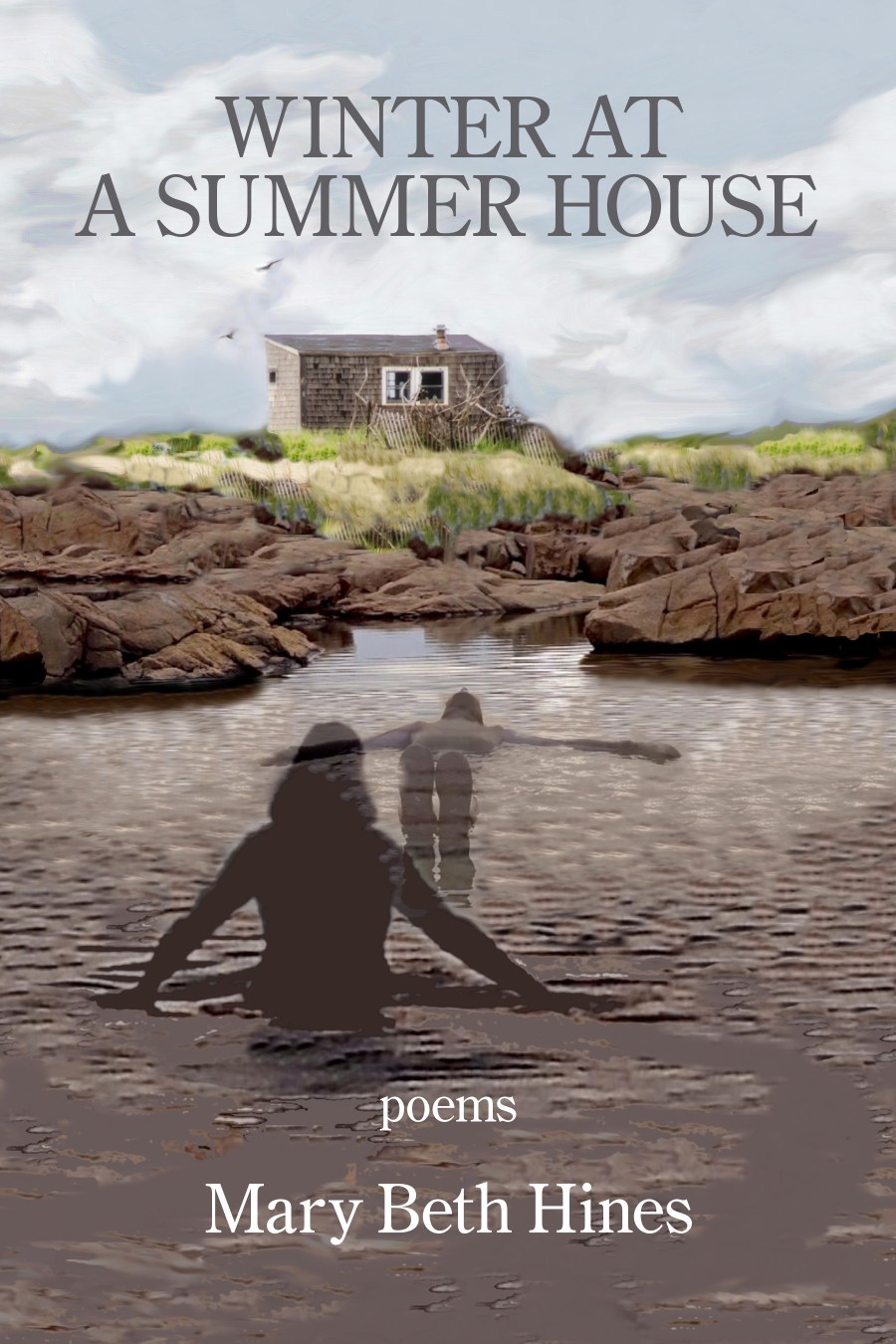
Guest Blog Post: When a House is More Than a House by Mary Beth Hines

It’s December as I write this, a season when gift and gratitude are top of mind, yet also when loss and grief feel particularly acute. That continual interplay—darkness encroaching on the light; light suffusing shadows—provides the backdrop for the poems in my debut collection “Winter at a Summer House”. 

A reader recently asked me if the summer house in the title poem was real. I said yes—and no. Both are true. There was a real house, but it grew, through time and memory, into something different—turreted, and towered—more haunted castle than summer cottage.

The real house belonged to my parents who retired to South Yarmouth, Massachusetts in the early 1990s after the last of their children left home. As kids, we’d often vacationed on Cape Cod, and for a few years, my parents had owned a small cottage there. But it was their rambling, retirement home—a house with enough room for all of us—that became the hub of my, and my adult siblings’, and our families’ summer lives. 

It was a sunny, lively house presided over by my parents during a mostly healthy and contented period of their lives. Of course, we all went through a myriad of ups and downs during those years, as people do, but in retrospect, the sun shone and shone then, year after year, until the day our seemingly spry and vigorous mother died of a sudden heart attack. We were devasted. Mother’s death precipitated our father’s decline. Once hale, hearty, and brilliantly competent, he faded overnight. 

When the world collapsed, my youngest child had just left for college, and I had recently started a new job. My sister was busy with family, art, and work. Despite these obstacles, she, and I, both of whom lived two hours away, each began to stay with our father a few days each week. Our brother who lived further away used his vacation time to relieve us. We continued this for several years. While challenging, it was bearable, and often pleasant in the spring, fall, and summer. The winter was different. 

The wind blows hard on Cape Cod in the winter. The shutters on Dad’s house banged. Windows and chimneys rattled. December and January days were gloomy, with darkness falling by mid-afternoon. Sometimes, I caught a glimpse of Mother coming around a corner then she’d vanish. I listened for her voice amidst the house’s rumblings. Having been an English major in college, I found the house, in winter, eerily reminiscent of Ramsay’s house in Virginia Woolf’s “To the Lighthouse,” particularly in the “Time Passes” section. Wind invaded. Moss, mold, and spiders set up camp. One could scrub, dust, and polish all day just to make way for a new crop of marauders. And though our summer house wasn’t on the ocean as the Ramsay’s was, I had walked and jumped off enough jetties to imagine one there, and thus its prime billing in “Winter at a Summer House.”

Early on, when people asked me what the book was about, I described it as a narrative, not focusing on the house, the water imagery, or associated metaphors. However, a recent Kirkus review highlighted the prominent place of the ocean, water, and the passage of time, and this caused me to consider it from a new angle. That review began: “Hines grew up in Massachusetts, adjacent to the Atlantic Ocean, and the poems in this debut collection are filled with richly detailed imagery evoking the sea—of characters swimming, bathing, diving as if time were an unpredictable element, and living, a process of navigating unexpected currents…” 

I had not set out to write a narrative, nor a collection of water-themed poems. I wrote one poem at a time, and only later ordered them so that they could “talk” to each other and tell a story. And since I’m a lifelong, year-round swimmer, I evoked the water imagery naturally. Writing this post has prompted me to explore these thoughts more deeply, and to consider, alongside them, the role of the house in the book. 

An author friend recently told me he believes that every book someone writes is a miracle. I understand more clearly, each day that goes by, what he meant, and I welcome opportunities to contemplate my small miracle from new vantage points, and to share my thoughts. So today, I thank author Anthony Avina for generously hosting me on this blog. It’s the first time I deliberately explored the role the summer house plays in this collection, and I hope readers enjoyed taking the journey with me. Happily, by the time others read this, we’ll be past the winter solstice and our short days will already be lengthening.

In closing, I want to thank Kelsay Books for publishing “Winter at a Summer House;” Poetic Book Tours for coordinating this tour; and all of you, Anthony Avina’s readers, who have taken a few minutes to commune with me here. I truly appreciate your time and attention, and if you read the book, I’d love to hear your thoughts on it! You can find me at www.marybethhines.com.

Advertisements

About the Author

Mary Beth Hines grew up in Massachusetts where she spent Saturday afternoons ditching ballet to pursue stories and poems deep in the stacks of the Waltham Public Library. She earned a bachelor of arts in English from The College of the Holy Cross, and studied for a year at Durham University in England. She began a regular creative writing practice following a career in public service (Volpe Center, Cambridge, Massachusetts), leading award-winning national outreach, communications, and workforce programs. Her poetry, short fiction, and non-fiction appear in dozens of literary journals and anthologies both nationally and abroad. Winter at a Summer House is her first poetry collection. When not reading or writing, she swims, walks in the woods, plays with friends, travels with her husband, and enjoys life with their family, including their two beloved grandchildren. Visit her online at www.marybethhines.com.

https://www.facebook.com/marybethhineswriter

Woulda Shoulda Coulda Guest Blog Post From Author Robert Hoffman

I am happy to share this amazing guest blog post from author Robert Hoffman, as part of his blog tour for his book, Blind Spot. Enjoy!


My father wasn’t a man prone to using cliches.  My mother, that’s a horse of a different color.  For example, if my mother heard one of her friends who was financially well off complain about money, she would say after she had left their presence, “You shouldn’t cry poverty with a loaf of bread under each arm.”  Or if you told her how crazy life was because you were so busy and stretched for time, she would say, “You know Robbie, you can’t dance at two weddings at once.”  Yes, for every occasion she was ready with a cliche’.  My father, not so much.  Oh, that’s not to say he didn’t have a few he liked to utilize if it suited the situation.  It’s just that most of his cliches were in Yiddish so it’s more about the attitude he conveyed  than the actual phrase..

Advertisements

Once in a while however he would drop a well-worn expression in English if he thought it was pertinent.  One of his favorites was one of my least growing up.  You see, whenever I didn’t complete a chore I had been asked to perform, or if I brought home a report card from school that was, oh I don’t know, underwhelming let’s say, he would ask for an explanation for whatever responsibility I had failed to come through on, and in turn, had disappointed him over.  I would say, “Dad, I would have done better, except the teacher didn’t give us a fair chance to study.” Perhaps I might say that I could have done better, but I didn’t think it would be so hard.”  There was also the ever-popular, “I know I should have cleaned up the family room, but I was doing the homework that I barely had time to do.”  

At this point, he would look at me and say, with just the right amount of sarcasm and venom, “Yeah, woulda, coulda, shoulda, but you didn’t.”  It cut me to the quick I tell you.  It led me immediately towards that most depressing and fruitless of human feelings, regret.  The problem with regret is that you can’t change what you did, you can only hope to learn from what you did and do better next time.

Doug Kaplan, the protagonist in my novel, Blind Spot, has, as a result of his selfishness, done something that he is indeed regretful over, but the problem is, while he feels regretful, his regret is really for himself, and as such, he doesn’t see a way out of his predicament.  However, as Anthony Avina explains in his writing, “Hope is never out of reach.”  Hope is not out of reach for Doug Kaplan, if he’s willing to do what is necessary to reach the salvation he craves.

About Blind Spot:

In this comedy/drama, based very, very loosely on my own experiences, a middle aged father of three named Doug Kaplan appears to have it all.  An attractive and supportive wife, three healthy boys, and a successful career.  He doesn’t shy away from his responsibilities as a father or as a son to his aging parents, and he is valued and respected at work.  However, all his life he has been plagued by the accusation that he does suffer from one significant character flaw, a subtle but substantial penchant for being selfish, a flaw that he is largely oblivious to.  

Doug Kaplan’s life was progressing about as well as he could have hoped for.  In addition to his loving wife and family, he and his wife Kelly had finally purchased a house in lovely Seaford, Long Island, and while it may have been a fixer-upper, it was still going to be their dream home.  Despite his selfish streak, which by his wife’s own admission could be off-putting, he might never have found his blessed existence sidetracked, until he encountered the elderly woman next door who proved to be a seemingly unavoidable obstacle.  Who knew that their home on the cul-de-sac known as McGregor Court would be nestled next to the biggest know-it-all and budinsky in the entire Metropolitan area.  Yes, Trudy Fleischmann was a force to be reckoned with.  Emigrated from Germany as a little girl at the end of World War Two, Trudy has known suffering and sacrifice, but she is also wise and caring, and why shouldn’t she share her knowledge and opinions with the young couple who has just moved in next door.

Already having to look after Kelly’s widowed mother as well as their growing family, Doug and Kelly end up seeing their responsibilities increase exponentially as not only does Trudy’s husband Burt die, and remove the one pleasant buffer that lay between Doug and Trudy, but Doug’s father passes as well, and now he and Kelly must provide care for three elderly widows as well as their three young boys.  However Doug’s entire existence will become, much to his chagrin, inextricably tied to Trudy after he accidentally runs her over with his car one beautiful summer’s day in a supermarket parking lot.  Can Doug overcome his selfishness and provide the care and patience that the badly injured Trudy requires?  Doug’s family, career, and sense of who he is as a person are all on the line as he tries to summon his better angels and do the right thing.  

Purchase your copy now available on Amazon. Make sure to add it to your GoodReads reading list too.

Advertisements

About the Author

It’s about time somebody asked that question.  Rob Hoffman is originally from a town on Long Island called North Massapequa.  He attended SUNY Oswego where he majored in Communications, a degree that it turned out he had little use for.  He did however meet  the woman who would eventually become my wife, the former Michelle Lindell.  Rob and Michelle lived in the aptly named Flushing, Queens for six years before moving to a town called Clifton Park, New York just south of Saratoga Springs.  Finding little value in his degree in communications, Rob became a social studies teacher, teaching in Long Island City, Queens for four years before spending the remainder of his career in Rensselaer, New York, a small city on the banks of the Hudson River just across the water from Albany.  Rob taught for 31 years before retiring in June of 2021, only to come back as a part-time teacher in September of 2021 at Rensselaer High School.  Rob had always been interested in becoming a writer and he began his blogging career as a contributor at the “Times Union” of Albany for six years.  In this time Rob also blogged for a variety of sites including Fark.com, Crooks and Liars.com, Albany.com, and Knees and Fists.com.  Rob has remained happily married to Michelle for 34 years and counting, and has two grown sons, Andrew and Alex, ages 29 and 23.  Most recently, Rob and Michelle became grandparents to the newest addition to the family, Sam Hoffman, son of Andrew and his wife Katie.

“Blind Spot” represents Rob’s first true attempt at writing fiction, an experience Rob both fun and exhausting.  Rob had thrown around several ideas as he began to think about what it was he wanted to write about, and then one day his wife had sent him to the supermarket on an errand where he saw somebody he really didn’t want to spend anytime talking to, so he raced out of the store, got in his car, turned it on, slammed it into reverse and was about to speed out of the spot when he stopped himself and said, “Dumb-ass, be careful, you could hit somebody.”  Then, as Rob began to slowly and carefully pull out of his parking spot, he thought for another second and it occurred to him how ironic it would be if he accidentally hit the person he was trying to get away from and “Blind Spot” was born.  The character of Doug Kaplan, while not autobiographical, is sort of based on the best and worst of Rob’s traits.  Doug is at times the guy Rob always wanted to be, and yet at the same time, Doug also represented the guy Rob was relieved to know he never became. The other characters according to Rob are combinations of people that he knew from his childhood, as well as college and work experiences. 

Follow the author online at:

Facebook: https://www.facebook.com/robert.s.hoffman.7/

Twitter: https://twitter.com/burtpurdy

Linked-in – https://www.linkedin.com/in/robert-hoffman-43999348/

Instagram – hoffman_files

Website – https://thehoffmanfiles.wixsite.com/website

— Blog Tour Calendar

November 22nd @ The Muffin  

Join us at The Muffin for an author interview, giveaway, and blog tour launch post for Robert Hoffman’s “The Blind Spot”

https://muffin.wow-womenonwriting.com/

November 23rd @ Lisa Haselton Book Reviews and Interviews

Today, Lisa Haselton interviews Robert Hoffman about his humorous work of fiction titled “Blind Spot”. Find out more about this debut novel and it’s author!

https://lisahaselton.com/blog/

November 24th @ Choices with Madeline Sharples

Readers at Choices will hear from guest author Robert Hoffman with his post titled ” Man Plans and God Laughs “. Don’t miss this guest post and an opportunity to hear about Hoffman’s debut novel “Blind Spot”. 

http://madelinesharples.com/

November 26th @ The Faerie Review

“The Blind Spot” by Robert Hoffman is the highlighted book today at the Faerie Review – don’t miss a chance to learn more this work of humorous fiction by an accomplished blogger!

https://www.thefaeriereview.com/

November 29th @ Word Magic with Fiona Ingram

Robert Hoffman pens today’s guest post at Word Magic (fellow author Fiona Ingram’s blog). Don’t miss this great article titled: “Sorry isn’t Enough” and an opportunity to learn more about Robert and his latest work of humorous fiction – “Blind Spot”. 

http://fionaingramauthor.blogspot.com/

December 2nd @ The Knotty Needle

Judy reviews “Blind Spot” by Robert Hoffman for readers at the Knotty Needle. Don’t miss this opportunity find out more about Hoffman’s humorous work of fiction! 

https://beverleyabaird.wordpress.com/

December 3rd @ Beverley A. Baird

“Do I Have a Story to Tell” is today’s post at Beverley A. Baird. This post is penned by none other than Robert Hoffman who recently released “Blind Spot”, a humorous novel readers are raving about! Don’t miss your chance to learn more from Hoffman himself! 

https://beverleyabaird.wordpress.com/

December 4th @ Author Anthony Avina

Readers at Anthony’s blog will delight in today’s guest post “Woulda Coulda Shoulda” by author Robert Hoffman. Don’t miss this guest post and opportunity to learn more about Hoffman’s new book “Blind Spot”. Stop back in a few days (on the 11th) to read Author Anthony Avina’s review of “The Blind” spot as well! 

http://www.authoranthonyavinablog.com

December 7th @ World of My Imagination with Nicole Pyles

Readers at World of My Imagination are in for a special treat! Not only is Nicole going to review “Blind Spot” by Robert Hoffman, but she also will be offering a giveaway! This is your chance to learn more about this humorous book and maybe even snag a copy of your own!

https://beverleyabaird.wordpress.com/

December 9th @ Bring on Lemons with Crystal Otto

Crystal Otto reviews “Blind Spot” by Robert Hoffman for readers at Bring on Lemons – Otto has hinted that she would give this book 5 stars and said “it made me laugh out loud so often” – so don’t miss your chance to hear more about this debut novel!

http://bringonlemons.blogspot.com/

December 11th @ Author Anthony Avina

Fellow Author Anthony Avina reviews “Blind Spot” by Robert Hoffman. 

http://www.authoranthonyavinablog.com

December 14th @ Linda Appleman Shapiro

Fellow Author Linda Appleman Shapiro shares her thoughts about Robert Hoffman’s “Blind Spot”. Find out what an accomplished Memoirist and Psychotherapist thinks of this humorous work of fiction.

http://applemanshapiro.com/category/book-reviews/

December 15th @ Bring on Lemons with Michelle DelPonte

Michelle DelPonte, a Wisconsin mother, healthcare worker, autism advocate, and history buff shares her review of “Blind Spot” by Robert Hoffman. You won’t want to miss Michelle’s insight into this humorous book! 

http://bringonlemons.blogspot.com/

December 16th @ Bring on Lemons with 14 Year Old Carmen Otto

14 year old Carmen Otto heard her mom laughing out loud while reading “Blind Spot” and couldn’t help from grabbing a copy to read for herself. Find out what a young reader things of this debut novel by Robert Hoffman!

http://bringonlemons.blogspot.com/

December 18th @ Bring on Lemons with Cathy Hansen

Wisconsin business owner and educator Cathy Hansen offers insight into what she thought after reading Robert Hoffman’s debut novel “Blind Spot”. Will this be a lemon or sweet lemonade? Stop by Bring on Lemons to find out!

http://bringonlemons.blogspot.com/

December 24th @ Jill Sheet’s Blog

Stop by Jill Sheet’s Blog today and hear from Robert Hoffman as he pens his guest post titled “Aren’t We All Just a Little Bit Selfish?” just in time for the holidays! Learn more about this topic as well as Hoffman’s novel “Blind Spot”! 

http://jillsheets.blogspot.com/

Guest Blog Post: Poetry and Image by Anne Leigh Parrish

Hello everyone! Author Anthony Avina here. I am happy to be sharing with you all this amazing guest post from author and poet Anne Leigh Parrish, where she discusses poetry and the utilization of visual representation in poetry. I hope you all will enjoy this stop in association with the Poetic Book Tours. Look for my review of the author’s upcoming book on November 4th. 


Poetry is a visual expression, even when it’s about politics, or feminism, or how nasty people can be. In poems, words evoke both what we feel and see. This is important to me, I’d say even crucial. Since leaving the urban mess of Seattle four years ago and coming to the quiet of a Northwest forest outside of Olympia, I find nature supplies a great deal of visual stimulation to write about.

Many poems begin with an image—something I notice and want to capture. Moss hanging from a branch; the darting of a jay; how a gust of wind gives a suddenness to how trees move.

Once the image is expressed in words, I delve into what those words mean. If moss drapes a branch, what else drapes, when, and why? A ring drapes a finger, for instance, but that draping is intentional, not the result of a natural process – or is it? This is where poetry gets really fun, because the ring on the finger could, in fact, result from an expression of love, man to woman, or man to man, and love is a recognized natural process. 

I also like to underscore differences among things and explore commonly held ideas and expectations, quite often about women. Returning to moss as a poetic subject, looking at it you might think it feels soft and silky, but it doesn’t. It’s rough and scratchy. Its appearance is deceptive, and in one poem I say moss evolved, went one way / then another which improved its chances / like a woman / nice to be reminded things / aren’t always as they seem, even if / truth at first disappoints

How many women feel the weight of the world’s expectations on them, particularly about how they look?

Using an image to shift the poetic drive or narrative into an unexpected direction is another way I craft my work. Violence against women is a theme I return to again and again, usually to raise awareness of the issue in general, but sometimes as a vehicle to open another door and prompt another discussion. This is where poetry and philosophy tend to blend and lose their boundaries. What if a woman finds herself needing the help of a man who then destroys her, and the poem reveals that it wasn’t because she was weak, or vulnerable, too trusting, or naïve, but because she had been distracted by something beautiful and thus let her guard down? She then reflects wryly from the afterlife that beauty gets her every time. 

Sometimes I like to start with a metaphor and build a world around it that stands on its own logic, even if what it’s depicting has no logic. I see this as another way poetry can bend reality. In my poem “even the trees went under” a couple’s home is gradually falling apart from heavy rain. Obviously, the story represents how bad things have gotten between them, and as the water rises and they climb higher in the home, the woman turns into a mermaid and is faced with a life or death decision: will she save the man, or leave him alone to drown?

Advertisements

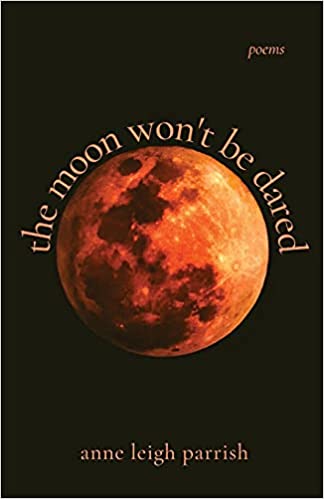
The title piece from my new collection explores the idea of objectivity in the face of turmoil. Two souls are held together by their not entirely healthy need for one another. They realize they’re really one monster, twirling before the sky / laughing at stars/ daring the moon to cut us apart. But the moon won’t be dared . . . how we love her joyous remove / up there alone. Again, nature as a force and backdrop comes into play, now as something uninvolved, coolly reflecting the occasional absurdity of the human condition.

On my last trip to Arizona, an elderly couple walked across the parking lot toward the restaurant where I was having dinner. They were backlit by a gorgeous Southwestern sunset. Their manner suggested years of life together, and for some reason, these images came down to the idea of a needle and the work that needles can do, in particular holding things together. This couple walked like looped stitches/ in the slanted evening light and through their many years they have/sewn, pulled apart / frayed / and dropped the needle’s thread / but now they rest and / gather up their loosened strands/ bound together / always.

I’ve been married for decades, and this fact too no doubt informed that piece.

And what of life overall? The gradual passing of time? How to express the understanding of one’s mortality? You have to have reached a certain age for these questions to be relevant, even poignant and yes, I’m there. I remember my mother saying to grow old was to become increasingly detached, and this idea became the basis for the poem I quote here, in its entirety (it’s brief) and logically entitled “time.”

let’s call it a study in detachment / gradual drift from passion to prayer / then even that loses strength / we grow quiet, soft, and slow/joyous in the face of this timely withdrawal / we’ve given  so much, we’re ready now to hold a little back from / this riot of shifting light we know / as life

Advertisements

About the Author/Poet

Anne’s first fiction publication appeared in the Autumn 1995 issue of The Virginia Quarterly Review. That story, “A Painful Shade of Blue,” served as the basis for more fiction describing the divorce of her parents when she was still quite young. Her later stories focused on women struggling to find identity and voice in a world that was often hostile to the female experience.

In 2002, Anne won first place in a small contest sponsored by Clark County Community College in Vancouver, Washington. In 2003 she won the Willamette Award from Clackamas Community College in Oregon; in 2007 she took first place in highly esteemed American Short Fiction annual prize; and in 2008 she again won first place in the annual contest held by the literary review, The Pinch.

The story appearing in American Short Fiction“All The Roads that Lead From Home” became the title story in her debut collection, published in 2011 by Press 53. The book won a coveted Silver Medal in the 2012 Independent Publisher Book Awards. Two years later, a collection of linked stories about the Dugan family in Upstate New York, Our Love Could Light The World, was published by She Writes Press.

Her debut novel, What Is Found, What Is Lost appeared in 2014. This multi-generational tale speculates on the nature of religious faith and family ties, and was inspired by her own grandparents who emigrated to the United States in 1920.

A third collection of short stories appeared in 2017 from Unsolicited Press. By The Wayside uses magical realism and ordinary home life to portray women in absurd, difficult situations.

Women Within, her second novel, was published in September 2017 by Black Rose Writing. Another multi-generational story, it weaves together three lives at the Lindell Retirement home, using themes of care-giving, women’s rights, and female identity.

Her third novel, The Amendment, was released in June 2018 by Unsolicited Press. Lavinia Dugan Starkhurst, who first appeared in Our Love Could Light The World, is suddenly widowed and takes herself on a cross-country road trip in search of something to give her new life meaning.

Maggie’s Ruse, novel number four, appears October 2019 from Unsolicited Press, and continues with the Dugan family, this time focusing on identical twins, Maggie and Marta.

What Nell Dreams, came out in November 2020 from Unsolicited. This collection of sixteen short stories also features a novella, Mavis Muldoon.

The next installment in the Dugan families series, A Winter Night, was released in March 2021 from Unsolicited Press. Anne’s fifth novel focuses on eldest Dugan Angie and her frustrations as a thirty-four-year-old social worker in a retirement home.

Anne has been married for many years to her fine, wise, and witty husband John Christiansen. They have two adult children in their twenties, John Jr., and Lauren.

About Lydia Selk 

Lydia Selk is an artist who resides in the pacic northwest with her sweet husband. She has been creating  analog collages for several years. Lydia can often be found in her studio with scalpel in hand, cat sleeping on her  lap, and a layer of paper confetti at her feet. You can see more of her work on instagram.com/lydiafairymakesart

Guest Post: The 7 Ways to Improve Your Day-to-Day Routine by Writer Samantha Rupp

Has your day-to-day routine become daunting? Maybe you’re always in a hurry, or maybe you dread waking up for work every day. While many of us make small changes to try to make our daily routine better, we typically get no results and can’t seem to make those changes last. Unfortunately, we only get 24 hours a day, but some people are more productive than others. How do they do it?

Advertisements

The answer isn’t that they do not have other things going on. We all have tons of things we have to get done during a single day. These people just use their time better and have a daily routine that invigorates them instead of putting them down. A routine can simplify your home life and help you stay stress-free. 

With your willpower, you can use our tips to make the most out of your routine and improve it so that you can wake up feeling refreshed and ready to start your day. 

  1. Optimize Work

Most of us spend ⅓ of the day at work, which means we have at least 8 hours that we must dedicate to work. The best way that you can optimize your work is by changing things up a bit. Try breaking up your workday by switching tasks periodically. If you have a task that you know will take you a few hours and smaller tasks that have to be completed, break up the large task every hour or so by moving to the smaller tasks. This will help keep your brain awake since you will be doing different things throughout your day. 

You can also begin your day with the task you want to do the least. If you have a project that you’re not excited about at all, start your day by working on it so that you can work on the tasks you enjoy the rest of the day and stay motivated even after lunch. 

  1. Set a Schedule

Most of us have at least morning routines that center around our jobs, which can help set up schedules around other tasks. To minimize time lost on transitioning from one thing to another, make sure that you know what you should be doing and for how long. 

Humans thrive when they have habits, so if you start doing something at the same time every day, you’ll get used to it and be able to improve your routine. For example, if you clean the house or do the dishes at the same time every night, you’ll get used to it, and it will easily become a part of your routine whether you enjoy the activity or not. 

  1. Start Your Day Off Right

Your daily routine should start on the right foot every morning. You can start by setting your alarm 15 minutes earlier to give yourself enough time to sip a cup of coffee on your porch, walk the dog around the block, or try out your new skin care routine. This will allow you time to wake up on a good note so that you can start your day feeling refreshed. 

If you’re someone who sleeps in and wakes up only to get dressed for work and leave the house, you may find that waking up early so that you can begin a stress-free, rush-free routine can help you improve how you function throughout your entire day. 

  1. Start Exercising Daily

Yes, there are only 24 hours in a day, and all of yours are jam-packed with activities. However, once you begin optimizing your tasks by making schedules, you’ll be able to fit in 20-30 minutes of exercise a day. You don’t need to go to the gym for an hour every night after work. Instead, use the time you’d be doing other things and replace them with exercise. 

For example, if you have a lunch break at work, instead of sitting in your car or going out for fast food, you can nibble your lunch throughout the day and use your break to go on a walk around the building or outside. 

Exercise is good for you and will help you stay energized after lunch when most of us tend to slow down. 

  1. Maintain Productivity

In a busy world, everyone needs to be productive to get anything done. This is especially important if you work in a distracting environment like your home. To maintain your productivity, set aside a workspace that’s just for work. That means that if you work in a cubicle, try not to eat lunch or play games on your phone while you’re there. Instead, save those activities for outside the cubicle so that you can get yourself in the right mindset. 

Additionally, make sure that your workspace is a healthy place for you to sit for 8 hours a day. You should have tons of light to help you feel awake throughout the day and a chair that’s comfortable and ergonomic. 

A healthy work environment is necessary for productivity, but it’s also important to maintain that productivity. You can do this with the help of a schedule so that you know what you’re working on and when, with an online tool that can help you keep track of tasks. 

  1. Break the Day Up

Everyone has to do something that they don’t necessarily want to do, especially when it comes to working. If you have a project or a chore at home that you simply don’t want to do, break it up into smaller chunks to make the task seem easier. Let’s say, for example, that you have to clean your entire home for a small gathering you’re having. Instead of seeing the chore as one big activity, break it up into smaller chunks. You can begin in one room and work your way through the entire house, and take breaks to do other tasks in between so that you feel motivated. 

  1. Break Up Your Week

Just like your day, you can break up your week into different themes or duties. For example, you can start Monday off with a theme of “Catch-Up” that allows you to catch up on all the emails and chores you didn’t get to over the weekend or the previous week. Tuesday, could be all about a certain project that you have to finish, Wednesday can be Management that includes all of the tasks you do, where you manage a project or team, and so on. These themes will vary from person to person, so find what works best for you and stick to it. 

Find What Works for You

Improving your routine is a personal experience, which means no two routines will be the same. Some people enjoy waking up early to sip a fresh cup of coffee and watch the news before work, while others prefer to sleep in and grab a coffee on the way to work. There’s no right way to improve your daily routine. The best thing you can do is find what works for you and will yourself into continuing the best parts of your routine until you no longer have to think about doing them. 

Advertisements

Samantha Rupp

Samantha Rupp holds a Bachelor of Science in Business Administration. She runs a personal blog, Mixed Bits Media. She lives in San Diego, California and enjoys spending time on the beach, reading up on current industry trends, and traveling.

Guest Post: How To Teach Your Kids To Become Great Writers by Linda Mills

Writing permeates every aspect of modern life and is an essential skill regardless of profession and interest. Even businesses cannot survive without good writing at their core and it is a vital part of effective online and print marketing and promotions. Teaching writing to children whether it is a report or technical writing or creative writing has a number of key benefits for their healthy development and prosperous future. Among other things, excellent writing skills mean they will learn to express themselves, consume more reading material and perform better in most academic parameters.

Advertisements

Atmosphere Dictates All

Writing is considered a challenging prospect by children especially if they are younger than middle grade because it seems complex and they might have trouble retaining good vocabulary or expressing themselves. As a parent, you need to identify issues (also ruling out the chance of dyslexia or other learning disorders) and solve them in imaginative and interesting ways. Create a safe space for the child to practice their writing like a desk or a spare room and incorporate inspiring décor ideas like scrabble tiles or framed quotes.

Next, buy them books on subjects they like such as sports or stories. As you build up their reading skills, ask them to jot down new words they have learned in a separate notebook. You can also test them on the meaning and uses of these words using colorful flashcards. Never underestimate the value of consistent practice as it often counts more than simply talent in a particular area.

Switch The Tables

One of the key aspects of being a great writer is the shifting of perspectives. Skilled writers can write for a variety of audiences to suit each and every purpose. Teaching tone and style is therefore very important. Encourage your child to imagine various scenarios and how writing would differ in all of them and help them to find examples online or in print as well. For example; writing a news report is different from someone writing a story and that is different from someone trying to sell you an item.

To Each His Own

Each child has their own favorite type of writing to read and therefore write. Is your child interested in keeping a journal or scrapbooking? Do they prefer to write travel logs? Do they like tales of fantastical lands and beasts? Encourage them to practice the kind of writing that makes their heart sing. When they are able to get a starting point this way, they’ll be more conducive to doing school work for types of writing they perhaps don’t enjoy as much such as reports or work assignments.

Equip Your Child

Make sure you have purchased all the equipment your child needs to become a formidable writer in their own right. Pencils, books, practice books, a desk, etc all matter and impart a sense of purpose. Furthermore, if you’ve consistently observed your child struggles with words and sentence formation and will benefit from English tuition, then that is a worthwhile investment. Not to mention good tutors can also be hired online with ease! You can also take them to libraries and bookshops and build up the reading habit which is in fact the greatest teacher when it comes to becoming a better writer.

Advertisements

Listening Helps

Listening to audiobooks or documentaries and even podcasts is a great way to better your writing. Listening translates into better sentence structure and formation when you sit down to write. Encourage your child to listen to educational and interesting material when they are playing outside, going for a walk, simply want to lie down, or are doing anything generally unproductive. This will add to their passive learning and impact their writing in the long run.

Templates And Tests

Writing is a skill like any other and part of developing it in children is periodic testing. Look up tests online you can either use as they are, or tailor to your requirements and have your children take those tests on weekends and so on. Make sure they are short and creative so they don’t add to the school workload each child has to undertake. You can come up with story prompts or even templates and give them to your children to work from. Seeing available examples and starting points always helps with writer’s block.

To make your child keen to practice their writing more, you can even consider starting a blog or something similar from where you and he/she can track how well you are progressing. Not to mention it is brilliant motivation to keep writing and improving.

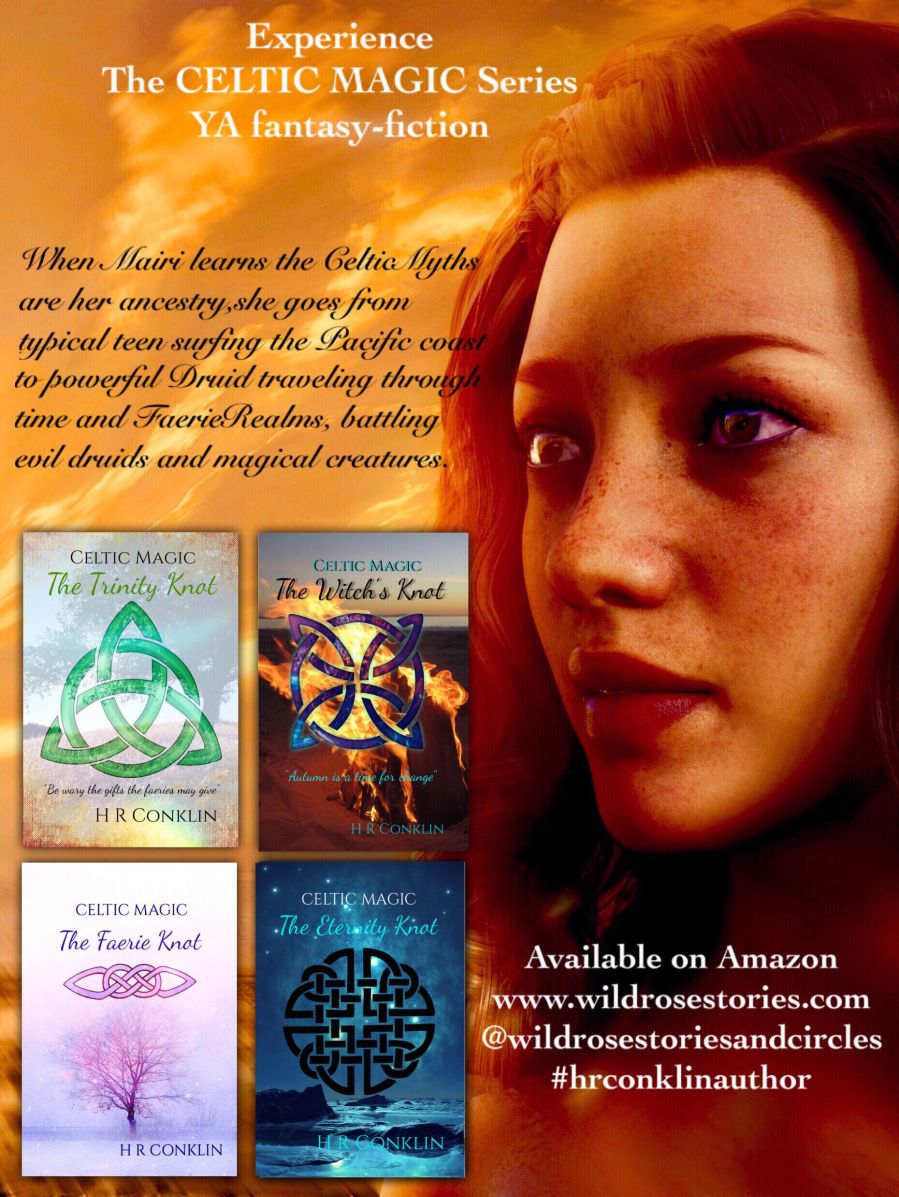
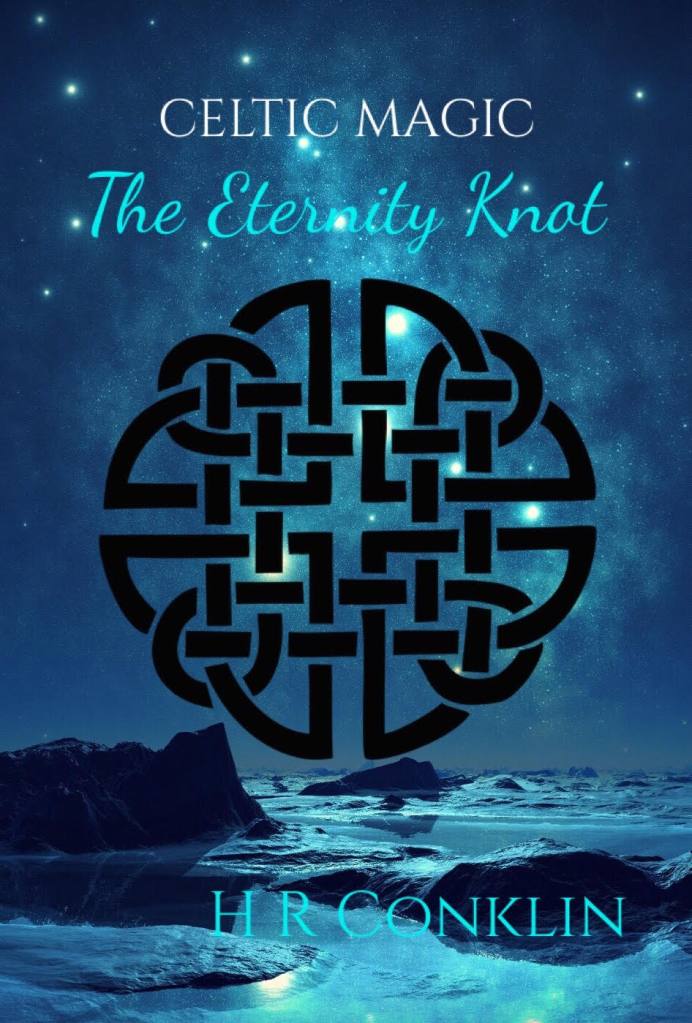
Guest Blog Post: Symbolism Reflected in Stories from Around the World By H. R. Conklin (author of The Eternity Knot in the Celtic Magic series)

In stories as varied as legends about local animals to tales of fairy creatures, there is tremendous cross-over in the symbolism used by cultures around the world. By studying these stories, we are reminded of the universal truths about life. The salmon, a transformational fish known for being of both salt and freshwater, has stories which teach new generations to show respect for the food that nourishes them. Tales of mermaids tell of the hardship of living between two worlds, no matter the original culture. Fairy tales about a girl growing up in painful conditions teaches how a person can earn a chance at a new life through being kind and honest. What we eat, the trials we go through, and how we act are all taught through the symbolism in these ancient stories from around the world.

Advertisements

People who live close to the land, who have lived in the same places for centuries of generations, have a connection with nature to be envied. It’s through such a connection that the salmon came to be touted as the bestowers of knowledge upon anyone who eats them. Such wisdom was passed down generation to generation until finally verified by modern science. Salmon, after all, contains Omega 3, a brain food. Certainly, such a creature deserves to be revered. The legends of salmon coming from countries in the Atlantic or the Pacific always hold the salmon in the highest esteem. The Ainu of Japan say salmon is a gift from Paradise. The Haida of the Pacific Northwest, like so many Native American tribes in that region, teach that salmon must be respected in their story of Salmon Boy. The Celtic people of Ireland tell the story of Finn MacCool, a man who gains unlimited intelligence by tasting the Salmon of Knowledge. Revisiting the legends of the creatures living where we live can teach us a lot for how to respect nature.

Mermaids, being both human and fish, live between worlds and symbolize transformation and longing. They are ocean creatures, but they long for the land of their human half. This is not unique to Ariel, the Disney version of Hans Christian Anderson’s The Little Mermaid. When the cast for the live action The Little Mermaid was announced, and Halle Bailey was cast as the key role, there was backlash about how mermaids are supposed to be white. This was repeated over and over in heated debates, and the comeback was that there are black mermaids, too. There are the stories of Mami Wata, a mermaid tale that originates in Africa and was passed along through the people captured into slavery, and still circulates today throughout the USA, Haiti and other former slave destinations. Unlike most African deities, Mami Wata is not an Orisha. Her name originates in Egypt. Like Ariel, there is longing for the seemingly unattainable land. Yet Mami Wata is no simpering child. She is powerful, almost more like the character of Ursula in The Little Mermaid. Someone to be feared. In Celtic stories of mermaids who drag their suitors to the bottom of the ocean floor, so do the African mermaids who serve Mami Wata. A creature to be feared, in symbolizing living between worlds the mermaid serves to teach us to learn to do the same.

Not only has the world of Disney shown just one version of the mermaids from around the world, so too has there been but one view of most popular fairy tales been told. Cinderella has many versions of the same story in a multitude of countries worldwide. Original versions of Cinderella (under different names) are found in the east as far back as 618 AD during the T’ang dynasty of China and even in some Native American tribal stories out west. The stories are always similar; a young girl is mistreated by her family and through telling the truth she is united with a powerful man. Truth may be symbolized by a clothing item such as a golden sandal or an anklet as in the versions of the Eastern countries, or it may be represented by the Cinderella character being able to see the truth where no one else can as in Native American stories. Either way, truth overcomes poverty and pain, giving the girl a “happy ever after” story she has earned through her kindness and honesty. Recognizing that this story is not only a European construct but belongs to all the people of our planet helps teach us that we are all capable of being good citizens worthy of a happy life.

It is because of these varied stories offering connecting symbolism throughout a multitude of cultures and countries that I was inspired to write my final book, The Eternity Knot, the way I did. We are more alike than we realize. Our stories, centuries old, have shown us this over and over again. If we study these ancient stories, we can also learn the simplicity of taking care of our world. Knowledge and respect of nature, learning to live between worlds (e.g. technology and nature), being kind and honest; these are some of the traits we would do better to exhibit and they are taught to us through the symbology within the stories of our world. 

Advertisements

About the Author

H. R. Conklin grew up in the rural mountains of Northern California where her mother gardened and her father played the bagpipes, as well as spending long hours in the theater where her parents were a dancer and an actor. This undoubtedly led to her overactive imagination and love for nature. She currently lives in San Diego with her husband, two adult children, and three dogs. She used to teach kindergarten at a public Waldorf charter school in which she told many fairy tales to the children, and made up stories in her spare time. Now she is a Story Circle Leader and guides parents in homeschooling at a private Waldorf school.

 Keep in Touch – Sign up for Conklin’s Newsletter

Find out more at: 

Website:  https://wildrosestories.com/welcome

Facebook Page:  https://www.facebook.com/wildrosestories/

Twitter:  https://twitter.com/wildrosestories

Instagram: https://www.instagram.com/wildrosestoriesandcircles/

Purchase The Eternity Knot on AmazonWaldorf Books, and/or H.R. Conklin’s website: Wild Rose Stories. Be sure to also add this to your GoodReads reading list.

Buy Links: 

Amazon: https://www.amazon.com/Eternity-Knot-Celtic-Magic/dp/B096TTR9PK/ref=sr_1_2?dchild=1&keywords=celtic+magic+h.+r.+conklin&qid=1625601403&s=books&sr=1-2

Waldorf Books Online: https://earthschooling.info/thebearthinstitute/product/celtic-magic-book-4-the-eternity-knot/

Wild Rose Stories: https://wildrosestories.com/shop

Blog Tour Calendar 

July 19th @ The Muffin

July 21st @ The Faerie Review 

Join Lily at the Faerie Review as she shares her review of H.R. Conklin’s latest book The Eternity Knot; part of the Celtic Magic Series. This is a great book for anyone who enjoys a modern take on myths and fairytales! 

https://www.thefaeriereview.com/

July 29th @ The Knotty Needle 

Judy at the Knotty Needle shares her review with readers after reading H.R. Conklin’s The Eternity Knot – part of the Celtic Magic Series. Don’t miss Judy’s insightful review! https://knottyneedle.blogspot.com

July 31st @ Author C.K. Sorens 

Fellow Author C.K. Sorens shares her review of The Eternity Knot – the latest release by H.R. Conklin and part of the Celtic Magic series. Don’t miss today’s peer review! 

https://www.cksorens.com/blog

August 1st @ Bring on Lemons with Cathy Hansen 

Wisconsin entrepreneur and educator, Cathy Hansen reviews the latest novel in the Celtic Magic Series – find out what Cathy has to say about The Eternity Knot as she shares her thoughts with readers at Bring on Lemons. 

http://bringonlemons.blogspot.com

August 2nd @ Author Anthony Avina 

Fellow author Anthony Avina shares his review of H.R. Conklin’s The Eternity Knot. This book is part of the Celtic Magic Series – readers of all ages will delight in this special story! https://authoranthonyavinablog.wordpress.com

August 3rd @ A Storybook World 

Readers at A Storybook World will hear from guest blogger H.R. Conklin on the topic of Symbolism in Fairytales. Conklin just release The Eternity Knot – another 5 star book in the Celtic Magic series, but she’s taking time to share her author expertise with readers today! Don’t miss this fabulous opportunity to learn from Conklin! 

http://www.astorybookworld.com

August 4th @ Author Anthony Avina 

 Earlier this week, readers at Author Anthony Avina’s blog read Anthony’s review of H.R. Conklin’s The Eternity Knot. Today readers will hear from Conklin herself as she shares a guest blog post titled:  “Symbolism Reflected in Stories from Around the World” . Don’t miss this fantastic opportunity to learn more about The Celtic Magic series! https://authoranthonyavinablog.wordpress.com/

August 5th @ The Knotty Needle 

 Judy at the Knotty Needle shares her review of The Eternity Knot by H.R. Conklin. This is book 3 in the Celtic Magic series and it is guaranteed to delight readers of all ages! Don’t miss Judy’s review! https://knottyneedle.blogspot.com/

August 6th @ Beverley A. Baird 

 Today’s guest post for readers at Beverley A. Baird is written by H.R. Conklin. Conklin is the award winning author of the Celtic Magic Series and she recently released her latest title: The Eternity Knot. Don’t miss a chance to read today’s guest post titled: “Parenting Wisdom Shared Through Storytelling”.

https://beverleyabaird.wordpress.com/

August 7th @ World of My Imagination with Nicole Pyles 

Nicole just finished reading The Eternity Knot by H.R. Conklin and can’t wait to tell readers at World of My Imagination all about it. Don’t miss today’s review by Nicole to find out more about this title as well as the others in the Celtic Magic Series! 

https://worldofmyimagination.com/

August 8th @ Word Magic; All About Books with Author Fiona Ingram 

 H.R Conklin pens today’s guest post about fairies and mythology as she visits fellow author Fiona Ingram at Word Magic. Don’t miss this opportunity to hear from Conklin and find out more about her latest release: The Eternity Knot; part of the Celtic Magic series! http://fionaingramauthor.blogspot.com/

August 9th @ Bring on Lemons with Crystal Otto 

 WOW! Blog Tour Manager, Crystal Otto reviews the latest novel in the Celtic Magic Series – find out what Crystal has to say about The Eternity Knot as she shares her 5 star review with readers at Bring on Lemons. 

 http://bringonlemons.blogspot.com/

August 10th @ Bring on Lemons with Libby 

 Libby is a young artist who enjoys many genres of books – she shares her thoughts with readers at Bring on Lemons today – her deep thoughts about The Eternity Knot by H.R. Conklin. This book is part of the Celtic Magic series and Libby is excited to read all the books. Readers will delight in her youthful perspective and her energy! 

 http://bringonlemons.blogspot.com/

August 11th @ Lisa Haselton 

 Lisa Haselton interviews H.R. Conklin about the Celtic Magic series and her latest release The Eternity Knot. Don’t miss a chance to become better acquainted with this talented author! 

https://lisahaselton.com/blog

August 18th @ Jill Sheet’s Blog 

 Today, readers at Jill Sheet’s Blog will hear from H.R. Conklin on the topic of “How Symbolism in Fairy Tales of Old Help Us Today”. Stop by to learn more about The Eternity Knot (part of the Celtic Magic Series) and learn from this talented author. 

http://jillsheets.blogspot.com/

August 19th @ Wildwood Reads with Megan 

 Readers at Wildwood Reads will hear from Megan as she reviews The Eternity Knot by H.R. Conklin. Don’t miss an opportunity to learn more about The Celtic Magic Series and this latest release! https://wildwoodreads.com/

Guest Blog Post: The Story I Needed To Tell by Cheryl Wilder

The Story I Needed to Tell

I’m not sure who said it, but there’s an adage that goes something like: A first book is the one the author needed to write. This statement is true for me, though not for all the themes found in my first book, Anything That Happens. Hm. That may not be accurate. Let me begin again.

I came to writing through a side door. At the end of my senior year in high school, my English teacher pulled me aside, a stack of my creative assignments in his hand, and urged me to keep writing. “If you enjoy doing this, keep doing it,” Mr. Langford said, making me look up and into his eyes so I could see his serious face. He knew I was an adrift teenager about to be released into the world. I imagine him crossing his fingers as he gave me the “life raft” that is poetry.

My poetry has always been personal, tied to the exploration of emotion. I believe it’s a response to the practical, non-communicative environment where I grew up. The stack of papers Mr. Langford held were poems about friendship and trust, my mom making a new home with her husband-to-be, my father’s absence, and me coming to terms with … my future? 

Since I had little direction, and I enjoyed writing, I took Mr. Langford’s advice. But, I didn’t know how to live like a writer. And I believed “experience” would make me a writer. (Obviously, I wasn’t paying attention in class when we talked about Emily Dickenson’s life.)   

So, when I moved from California to North Carolina at nineteen years old, I was embarking on “life.” I uprooted, hoping for new, enlightening experiences. Nine months later, the event—a car crash—I would eventually need to write happened. 

The irony is that after the crash, I couldn’t write. Then, I wouldn’t write, not seriously. Not for years. I believed it was wrong to make a good thing from my bad act. And since I wanted to become a poet, I kept myself from it, accepting my due punishment. 

The thing about needs is they don’t disappear. Whether I wanted to believe it or not, I was a poet, and a poet needs to write poetry. There’s no escaping it. (Oh, thank goodness.) 

I first gave myself permission to write about the crash in a fiction class. I had returned to college at twenty-seven years old and majored in creative writing. Fiction provided me the distance I needed to write the details of the night, from my friend’s phone call to being handcuffed and put into a police car. In the “story,” the crash was happening to someone else. 

That first step was monumental: I was in the writer’s chair. 

Two years later, during my last poetry workshop before graduation, I wrote my first poem about the crash, the original version of the “Slipped” series that’s in the book. It was the story I wrote in fiction, but this time, I was once again in the driver’s seat. Placing myself there gave me a better vantage point to tell the story, and not only the drinking too much and car wrapped around a pole story. The pieces of the story only I knew: the emotional and psychological impact.

The crash was the story I needed to tell. “Emotional and psychological impact” is the inherent slice of all the stories I tell, like when I tried to understand my father’s choices compared to my mother’s back in high school. 

The main narrative of Anything That Happens is the car crash and its aftermath. But there is also the death of my mother, the birth of my first son, struggles of parenthood, and underneath it all, ever-present shame. There’s no doubt the car crash heightened my interest in how one action can affect someone else. When I wrote about the relationship with my parents and how I felt about becoming a mother, I did so through the lens of cause and effect—the impact of choosing what not to do weighing as heavily as choosing what to do. 

The impact of writing the story I needed to write is just coming to fruition. The book is only two months old. My desire to write hasn’t lessened. Now, I get to work on what I want to write. I don’t know what that looks like yet. Sure, I have ideas and dreams. Okay, I even have projects I kept putting to the side while I finished the needed-to-be-told story. But that’s the “work” of being a writer, and I’ll get to it. For now, I’m still living the piece I’m most interested in, the emotional and psychological impact of having told the story I needed to tell.

Advertisements

About the Author

Cheryl Wilder is the author of Anything That Happens, a Tom Lombardo Poetry Selection (Press 53, 2021), a collection that examines how to reconcile a past grave mistake and a future that stretches into one long second chance. Her chapbook, What Binds Us (Finishing Line Press, 2017), explores the frailty and necessity of human connection. 

A founder and editor of Waterwheel Review, Cheryl earned her BFA from the University of North Carolina at Wilmington and her MFA from Vermont College of Fine Arts.