1) Tell us a little bit about yourself. How did you get into writing?
I’ve been writing since I was a young kid. I had a cousin in England and had a regular correspondence with him. Then as a Sociology professor I was writing academic articles for 40 years.
Advertisements
2) What inspired you to write your book?
I have been collecting notes about my own sessions as a patient and sessions I had with patients, for many years. The book has been in the works for more than 10 years.
3) What theme or message do you hope readers will take away from your book?
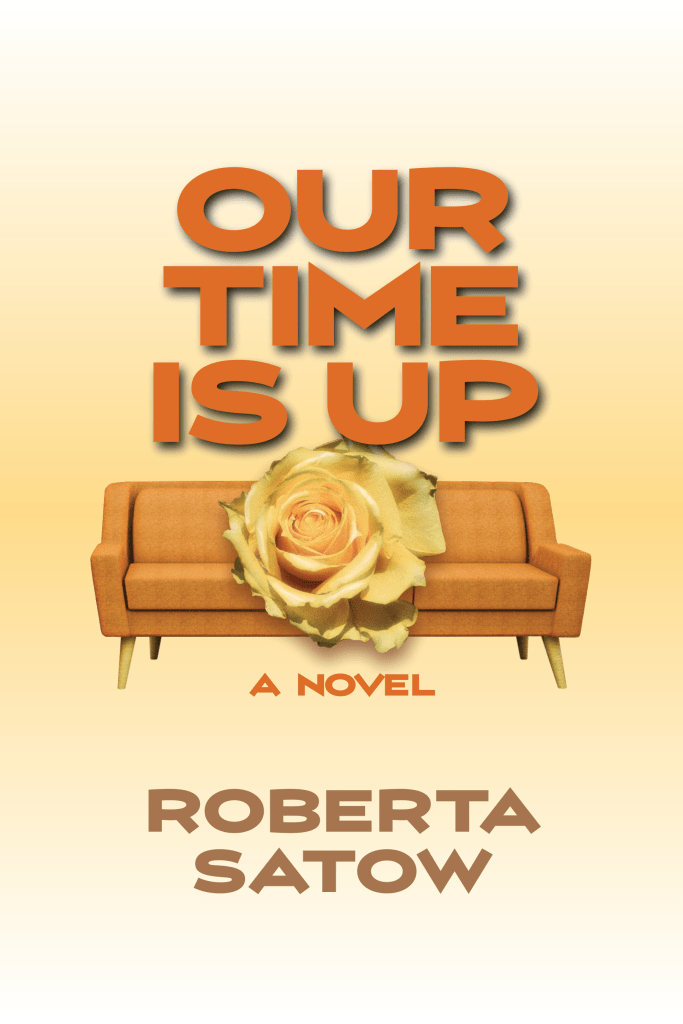
I hope readers will empathize with Rose’s growth and also learn about what psychoanalysis is about. Many people think it means the analyst is predominantly silent and just makes interpretations.
4) What drew you into this particular genre?
I wrote academic articles until I published Doing the Right Thing: Taking Care of Your Elderly Parents Even if They Didn’t Take Care of You in 2005. That book was a combination of personal experience with my mother and interviews with 50 caretakers across the country. My next book was a novel Two Sisters of Coyoacan which was about the assassination Leon Trotsky. Our Time is Up is my second novel.
Advertisements
5) If you could sit down with any character in your book, what would you ask them and why?
The main character is based on myself so I don’t have any questions to ask her.
6) What social media site has been the most helpful in developing your readership?
I have not had great success in promoting the book. I am trying Facebook ads now.
7) What advice would you give to aspiring or just starting authors out there?
Plan the publicity before the book is published. It takes a lot of time and some things require doing before pub date.
8) What does the future hold in store for you? Any new books/projects on the horizon?
I am focussed on trying to promote Our Time is Up, but I am also thinking about a second book with the same protagonist later in her life.
Advertisements
About the Author
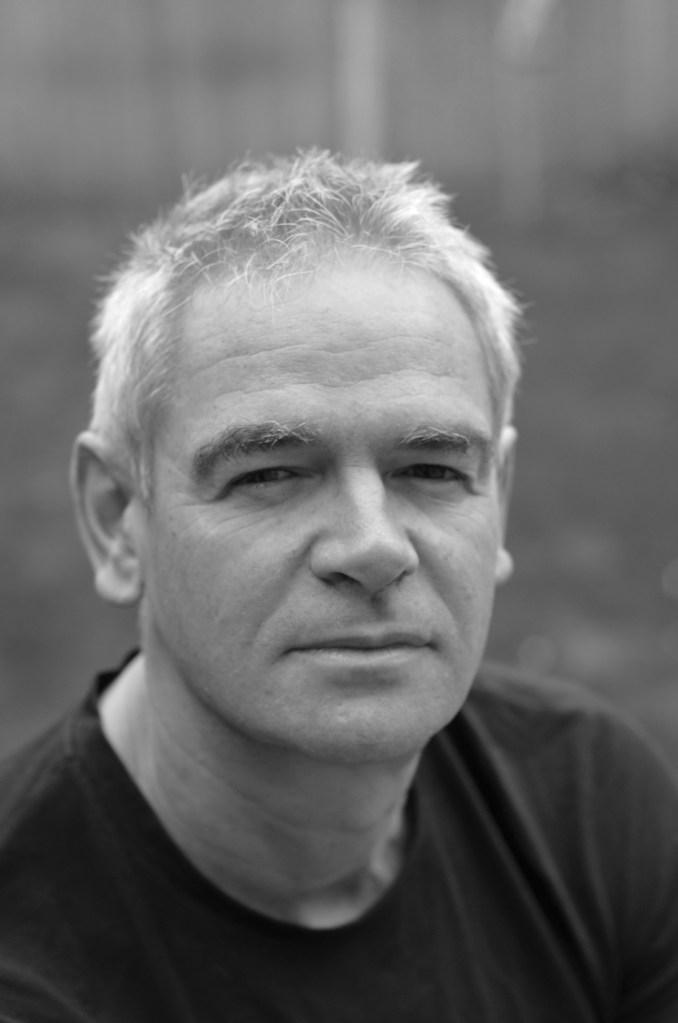
Roberta Satow, Ph.D. is a practicing psychoanalyst in Washington, CT. She is a senior member of the faculty and control analyst at the National Psychological Association for Psychoanalysis. Dr. Satow is Professor Emerita of Sociology at Brooklyn College and the Graduate Center of the City University of New York. In addition to her non-fiction book Doing the Right Thing: Taking Care of Your Elderly Parents Even if They Didn’t Take Care of You (Tarcher/Penguin 2006), she is the editor of Gender and Social Life (Allyn
and Bacon, 2000) and she has written a novel Two Sisters of Coyoacan (2017). Dr. Satow writes a blog for Psychology Today:
1) Tell us a little bit about yourself. How did you get into writing?
I was used to making up short and funny stories for my daughter, Rachel. When she was about ten she wanted a story about a really, really nasty witch. For the first time I put pen to paper and what started off as a tiny scrap of an idea got bigger. It became my middle-grade fantasy about magic and witches, The Doomspell, which was eventually published in 26 languages. I just wanted to stay in more contact with my daughter. I was separated from her at the time, and though she spent every other weekend with me it was not as much as I wanted. Discussing the story ideas gave me an opportunity to spend more time with her.
It was only during pandemic that I turned to adult horror writing.
Advertisements
2) What inspired you to write your book?
I’d done a bit of online dating. The idea of a woman who just wants to creatively carve men up but they keep misinterpreting her meaning seemed like an amusing premise.
3) What theme or message do you hope readers will take away from your book?
Read the online profile carefully.
4) What drew you into this particular genre?
I’ve always loved SF, fantasy and horror. Comedy horror is hard to pull off, and I was drawn to give it a go.
5) If you could sit down with any character in your book, what would you ask them and why?
I’d ask them why they like particular knives over a variety of other killing tools.
Advertisements
6) What social media site has been the most helpful in developing your readership?
Facebook. Most of my readers know me form my children’s novels, and they are still mostly on Facebook.
7) What advice would you give to aspiring or just starting authors out there?
Write what you enjoy and don’t expect to make any money. If you adhere to that you won’t go too insane.
8) What does the future hold in store for you? Any new books/projects on the horizon?
I have several projects ongoing – a film treatment for my ghost novel BREATHE, a new middle-grade ghost novel which should come out next year, and also several new horror and fantasy stories for adults.
Advertisements
About the Author
I was born in Sunderland, a city in the north-east of England.
I don’t recall too much about my first 8 years of life other than I loved being outdoors especially in the woods near our house. I came home every night covered in scratches.
My first real book memory is being given C.S. Lewis’s The Magician’s Nephew by my English teacher, Mrs Baldwin. I loved that, and all the other Narnia books.
So how did I become an author?
As a parent I was used to making up short and funny stories for my daughter, Rachel. When she was about ten, however, she wanted a story about a really, really nasty witch. This time I put pen to paper and what started off as a tiny scrap of an idea got bigger and bigger and BIGGER. It became The Doomspell.
After I finished it, I continued my love affair with fantasy by creating The Silver Sequence which I still think is probably my best and definitely my most original work. Following that, I tried to scare everyone half to death with a couple of ghost novels – Breathe and The Hunting Ground.
I could tell you more about myself, but the truth is that perhaps the biggest gift we can give anyone is our imagination and everything important I have to offer you about that is in the novels.
1) Tell us a little bit about yourself. How did you get into writing?
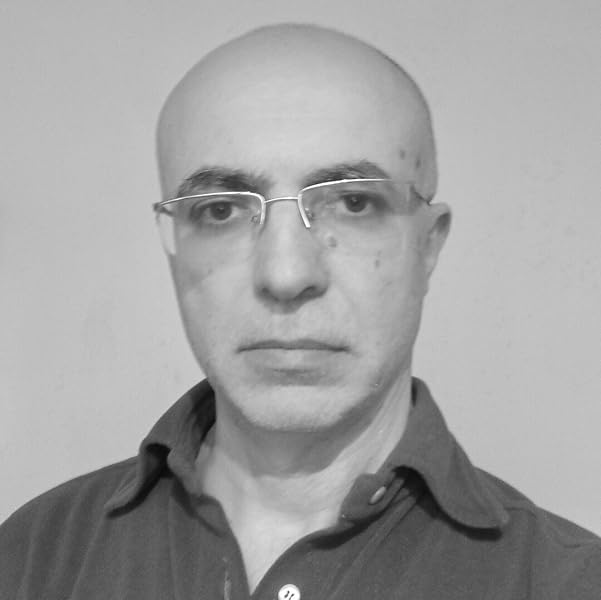
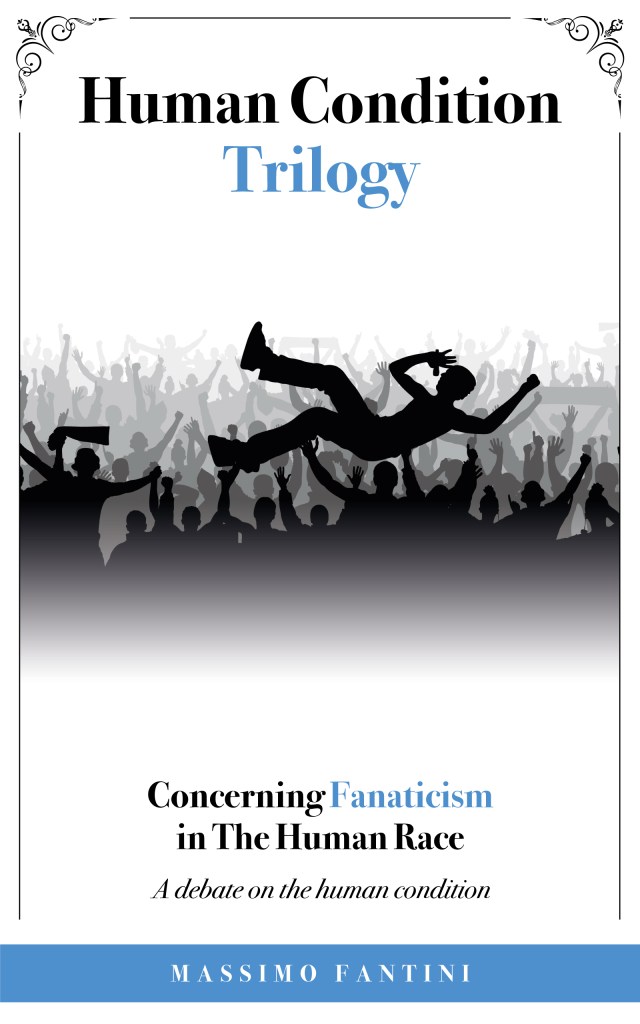
My name is Massimo Fantini, and I am an Italian author and free thinker, writing from my home in the hills just outside Bologna. In quiet moments, when I am neither writing nor working, I enjoy classical music, particularly orchestral works and Italian opera.
I graduated from a university in Bologna with a degree in civil engineering. However, the studies of my youth do not represent my life’s passion—that is, delving into the realities which unite all of humanity:
suffering, frustrations, conflicts, and the human reactions to these. These are the events that take every human as an innocent in the crib and twist and turn them into 8.1 billion unique (but intimately connected) forms.
In short, I am obsessed with exploring the intimate recesses of the human condition.
In 2018, entirely dissatisfied with my job, I sought a new form of expression. Thus, I began to write.
Advertisements
2) What inspired you to write your book?
I consider myself to be a keen observer, and my stories are inspired by the observation of reality.
After observation, comes analysis. Why did that person react that way? Why did they say those things?
Why don't they react to conditioning by developing their own critical sense?
Art is wonderful because it is a representation of what we otherwise cannot express. I seek not to provide myself and my readers with a mere distraction (what so often passes for “entertainment”). Not a hole in which to stick our heads for a few hours, only to emerge weakened and even less able to face our reality.
Rather, I offer up a representation of our shared condition.
The human condition.
3) What theme or message do you hope readers will take away from your book?
Echoing the sentiment of Heraclitus, no two people may look at the same problem the same way, because it is different to each. From the old and cynical Leonard in Concerning Fanaticism to young Tommaso (a character inspired by my own youth) in Concerning Intellectual Suicide, I tried to shed light on a path that is a constant part of our lives, but also constantly shifting.
Through my writing, I encourage readers to find their own perspective on life. Rather than embracing the comfortable mold that society provides, like a goldfish “free” to swim around in its little bowl, I hope my readers can use my books as a stepping stone toward their own unique way of thinking. And then, I wish them the freedom to pursue it.
Advertisements
4) What drew you into this particular genre?
The philosophical nature of my works lends itself to both the essay and fiction genres. However, I believe that the fiction genre is more easily accessible to the general public. The emotional strength of characters who live a story, who suffer, and who try to escape the grip of the human condition makes philosophical reasoning deeper and more effective.
Over time, I experimented with many kinds of writing, wondering how best to give my ideas form.
Finally, I found my voice through stories, giving life to characters who explore, triumph, and fail for us to watch.
5) What does the future hold in store for you? Any new books/projects on the horizon?
I must admit that writing is exhausting. I thought that once I completed my trilogy, I would have no more ideas to express. Instead, I have a Word document with dozens of ideas to develop, ideas suggested by the simple observation of the people around me. I’m currently working on my fourth manuscript. The story draws inspiration from the previous "Intellectual
Suicide" and brings to light aspects of human nature that I have not focused on in previous works.
I can’t wait to complete it!
Advertisements
About the Author
Greetings, readers.
I am Massimo Fantini, an Italian author and free thinker, writing from my home in the hills just outside Bologna. In quiet moments, when I am not writing, I enjoy classical music, particularly orchestral works for violin and the Italian opera.
I graduated from a university in Bologna with a degree in civil engineering. However, the studies of my youth do not represent my life’s obsession—that is, delving into those realities which unite all members of the human race: suffering, frustrations, conflicts, and the human reactions to these. They are the events and forces that take every human as an innocent in the crib and twist and turn them into 8.1 billion unique (but intimately connected) forms.
In short, I am obsessed with exploring the intimate recesses of the human condition.
In 2018, entirely dissatisfied with my job, I sought a new form of expression. Thus, I began to write. Incessantly.
I experimented with many kinds of writing. How best to give my ideas form? Then, I found my voice through stories, giving life to characters who explore, triumph, and fail for us to watch.
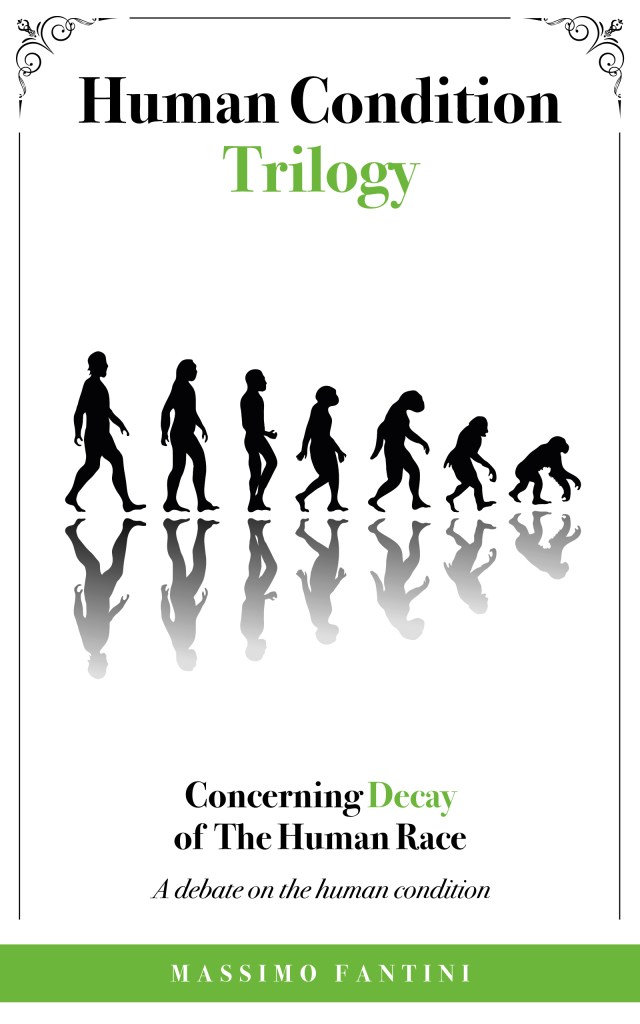
In each installment of my Human Condition Trilogy, these same all-encompassing issues are approached from different directions, under different circumstances, and by different characters.
Echoing the sentiment of Heraclitus, no two people may look at the same problem, because it is different to each. From the old cynical Leonard in Concerning Fanaticism to young Tommaso (a character inspired by my own youth) in Concerning Intellectual Suicide, I tried to cast a light on a path that is a constant part of our lives, but also constantly shifting.
Through my writing, I encourage readers to find their own perspective on life. Rather than embracing the comfortable mold which society provides, like a goldfish “free” to swim around in its little bowl, I hope my readers can use my books as a steppingstone toward their own unique way of thinking. And then, I wish them the freedom to pursue it.
Art is wonderful because it is a representation of what we otherwise cannot express. I seek not to provide myself and my readers with a mere distraction (what so often passes for “entertainment”). Not a hole in which to stick our heads for a few hours, only to emerge weakened and even less able to face our reality. Rather, I offer up a representation of our shared condition.
1) Tell us a little bit about yourself. How did you get into writing?
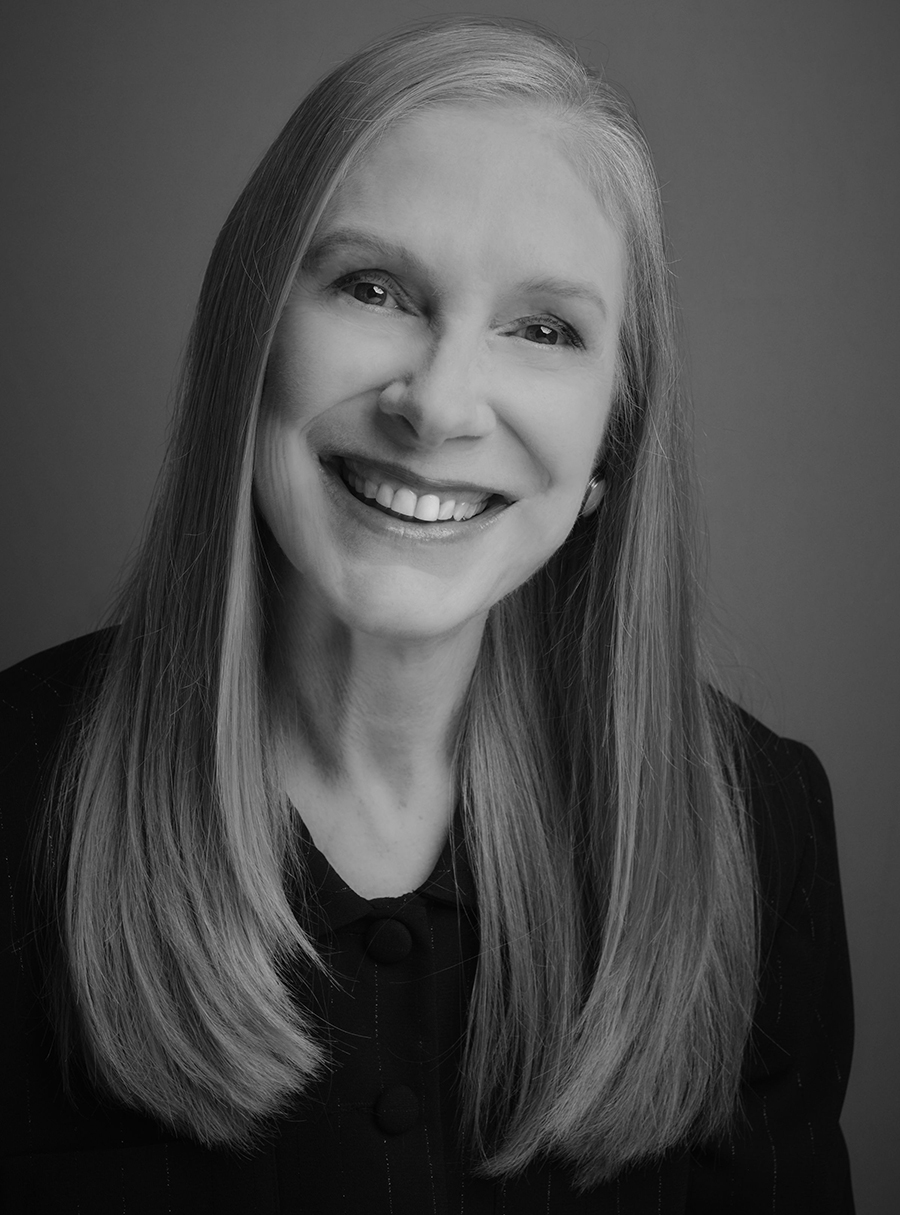
Growing up with several disabilities from Rubella (including a hearing impairment) was hard. Reading and studying music helped me understand speech patterns, idioms, and vernacular I might’ve otherwise missed. I started taking writing seriously after I won a themed essay competition in high school, which prompted me to consider an education in writing at Southern Methodist University—where I somehow managed to survive David and Betty Lynn McHam’s school of journalism. Upon graduation, however, my day job was an athletic trainer, and writing remained a side-hustle until my first book was hybrid published when I was forty. I’d decided to indie publish because most of my books color outside the lines—cross-genre and one-off projects that don’t fall within standard marketing comps.
In 2014, I began freelancing as a ghostwriter and editor with Upwork and James Innes Group. I later signed on with Edioak in New York City, an in-house editing partner for fourteen houses across the globe, publishers like Gamahouse Publishing and Simon & Schuster. Currently, I freelance as a developmental editor for authorsassistant.com and my own company, julierogersbooks.com. This type of work opens up literary avenues way beyond my own titles—projects from novellas to novel series, self-help, how-to, inspirational, spiritual, blog, technical, academic, resumes, and LinkedIn profile enhancements. Genres I write include YA, children’s, adult fantasy, stories based upon or inspired by true events, as well as contemporary, paranormal, and sci-fi romance, thriller, horror, and action adventure. I’ve also done some screenplays and screenplay doctoring along the way.
I enjoy helping indie authors from idea to launch, those who want to get quality books on board while avoiding some of the costly missteps I made.
Advertisements
2) What inspired you to write your book?
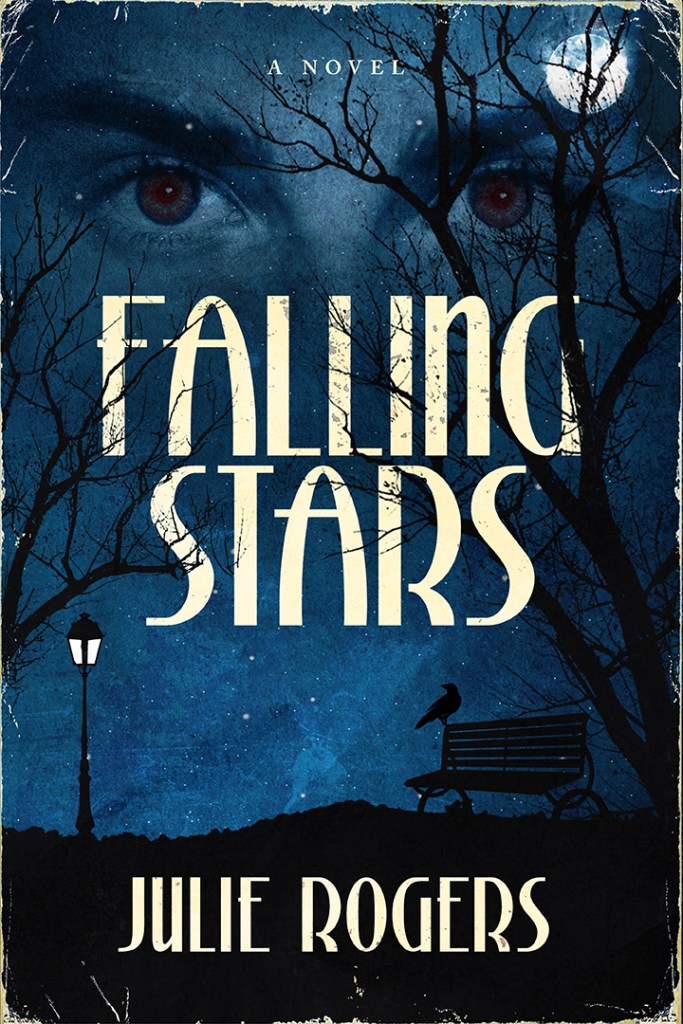
Twenty years ago I had a story rolling around in my head, one with the depth and breadth of a classic. That was the goal I had in mind, you know—the situations, characters, and worlds converging into—well, this big book. Not commercial fiction (once again!) Also, I wanted a dilemma that avoided anything gratuitous, just the bare bones of two unbeatable issues: terminal illness and individual mortality. What do we do when we outlive someone, for example? That sort of stuff. These nemeses were challenging for me because they’re not your two-dimensional bad guys. Illness can be a nemesis, and cancer, a monster—but how do we show those in a compelling way?
Another idea came along and paired with the first one, remembering the boy in my third-grade class who was an avid fan of the TV cult classic Dark Shadows. This was in the daytime soap’s heyday after Canadian actor Jonathan Frid joined the show and its ratings went through the roof. I still wonder why my classmate chose live action role-playing, really before LARPing was a thing. I think he did it because he loved the TV show, and his theatrics were fun and games when school got boring.
He could’ve passed for a vampire himself, the complete package with the dark hair and eyes, the long cuspids—and his ability to act the part. He had a flashy cape too, not just any old cheap one, with which he regularly entertained our classroom performing Barnabas Collins impersonations. But it posed a question to me: what if a young boy roleplayed a vampire for a much more serious reason, and where would that take us?
I originally wrote Falling Stars as a screenplay and pitched it at the Maui Writers’ Convention in 2001 to Alison Rosenzweig, one of the producers of Windtalkers. I put it away with all the other pitches that weren’t greenlighted at the time and pulled it out again in 2021. In a novel, I had more room to weave in some of the incredible Eureka Springs’ history and develop the whole Claudius Fallon persona, this vampire-human hybrid who struggles with his own disease process, and how he integrates a successful art gallery into a tourist destination without being discovered.
3) What theme or message do you hope readers will take away from your book?
A deeper exploration of our own biological mortality and the dilemma of outliving someone you love. I decided to take the risk of stepping outside boilerplate language, even if this created a circuitous narrative of sorts.
4) What drew you into this particular genre?
An education in journalism instills a love of learning and an openness to receive stories of all shapes and forms. Truth be told, Falling Stars is cross-genre—a mixture of urban fantasy, magical realism, historical fiction, and family drama.
5) If you could sit down with any character in your book, what would you ask them and why?
I think I’d choose Tommy Lucas because I found myself intrigued with his snarky little personality. As I wrote Tommy, I kept asking what he’d hope to gain from such aberrant behavior. Did it give him an edge? Courage to live another day? And how would he manage to carry on with such an attitude—so annoying, yet so loveable? I think I could easily get caught up in youthful bitterness because that kind of pluckiness seems to carry more innocence and hope.
Advertisements
6) What social media site has been the most helpful in developing your readership?
There are two: Tina Hogan’s Cuppa & A Natter Facebook group, and Story Origin.
7) What advice would you give to aspiring or just starting authors out there?
Trust the stories that inspire and intrigue you, what shows up at your heart’s door. Use all the writing resources available to you both locally and online. Friends and family who will take a first look should never be discounted. If anything, it’s easy for a new writer today to become overwhelmed and confused by the excess of resources available. Every writer will make a different journey, and no one journey is better than the other. All of us are a mix of mastery and mistakes. Study the language. Get used to getting back up and dusting yourself off.
8) What does the future hold in store for you? Any new books/projects on the horizon?
I’m currently shopping two screenplays, one I co-wrote with Nashville musician Bart Bryars, as well as my own screen adaptation of Falling Stars. An audiobook version of Falling Stars will be available soon, narrated by actor Keith Michael Pinault.
I also feel like it’s time to dust off my backlist with new covers, content, and whatnot. I’m noodling on a trilogy in the magical realism vein and plan to continue working as a freelance editor and ghostwriter. I’ve recently begun hosting the Write Now podcast for the Writers’ Colony at Dairy Hollow. And of course, there’s a new time-management breakout I enjoy sharing with other creatives at workshops, The New Time Paradigm.
Julie is a multi-genre author. Her articles and stories are featured in self-help, inspirational, trade, and fiction publications including Writer’s Digest, Coping With Cancer, Complete Woman, and Daily Meditation.
She is the 1999 Writer’s Digest Writing Competition Grand Prize Winner for her horror short story, “House Call.”
Her seventh novel, Falling Stars, is an eleven-time award winner, including the 2023 International Firebird Awards First Place in Urban Fantasy, the 2023 Pinnacle Book Awards Best Book in Fantasy, and the 2023 Outstanding Creator Awards First Place in Medical Fiction.
Other awards include Fade In magazine’s 2005 Screenplay Semi-Finalist for the thriller, Grave Jumper, and the 1998 Writer’s Digest Writing Competition First for her stage play comedy, Garage Sale.
Julie works as a remote freelance ghostwriter and editor for julierogersbooks.com and authorsassistant.com in Eureka Springs, Arkansas, the setting of her seventh book, Falling Stars. She lives there with her husband, Jim, a primary care physician, their furry children Madison, Kate, Sukie, and mollusks Dewey, Decimal, and System. She has one son, Seth, who works as a video game level designer in Austin.
1) Tell us a little bit about yourself. How did you get into writing?
I’ve been ‘writing’ since before I could write! I had a period of illness when I was five and spent some time in hospital. Having exhausted the hospital library and endless games of noughts and crosses, my mum whipped out a pen and a notebook and told me to tell her a story. She wrote it down. That became our go-to method of keeping me entertained during hospital visits, until I was able to write by myself (and until, thankfully, I got well). I love stories. I love their ability to take us out of the real world, to teach and enlighten us, to amuse and offer hope and camaraderie. I always knew I wanted to be on the other side of it, delivering the experience to other readers someday, I just wasn’t sure which medium was the one for me. I worked on a couple of screenplays and a stage play, and even tried my hand at writing a graphic novel before eventually circling back round to short stories and novels.
Advertisements
2) What inspired you to write your book?
I’m a big fan of fairy tales (I’ve lost count of the number of Beauty & The Beast retellings I’ve read). The stories are timeless, but there’s also a lot of humour to be found in retelling a much-loved story through a modern-day lens. Like, what if Cinderella wasn’t the only woman in the kingdom with dainty feet? What if the Seven Dwarfs (rightfully) called the cops on Prince Florian for kissing Snow White without her consent? I also knew I’d have a lot of fun writing a modern-day version of Little Red Riding Hood if I made the ‘grandmother’ figure paramount to the story. In these
stories, grandmothers are usually portrayed as a bit meek, vulnerable, or scatterbrained, but I’ve met my fair share of sassy, confident and refreshingly blunt older women. In most versions of Little Red Riding Hood, Granny ends up either eaten by the wolf or, at best, locked away in a cupboard. I wanted to put Granny back in the driver’s seat (literally!), where she belongs.
3) What theme or message do you hope readers will take away from your book?
I prefer not to beat my reader over the head with my views, and rather that my story simply gets them thinking. In The Bhad Wolf, there are definite themes of gender and gender stereotypes, physical strength versus weakness, and ego versus insecurity.
What message readers glean from my story will be based on their own life experiences and views — I just hope the takeaway is a positive one.
4) What drew you into this particular genre?
I’ve written (and continue to write) across genres, but I tend to fall into comedy when given free rein over my work. I think this is because I generally write often quite difficult or emotional subject matter, and humour just… softens the edges a little.
Makes it more digestible. It might also have something to do with that old British attitude of finding the joke in almost everything, because feelings are uncomfortable.
5) If you could sit down with any character in your book, what would you ask them and why?
Mrs Granger would “tell it like it is”, so I’d probably ask her some really big, imposing question, like, “What’s the key to happiness?” or “How do I stop caring what people think about me?” I imagine she’d sit me down with a nice cup of a tea and a few biscuits, and we’d talk out all out. Who needs a therapist when you’ve got Mrs Granger?
Advertisements
6) What social media site has been the most helpful in developing your readership?
I’ve definitely had the most joy through X (formerly Twitter — how long do we need to keep saying that?). It’s where I connected with Julian and Remy, who run Endless Ink Book Publishing, and other writers in their catalogue, as well as an established readership. My youngest sister (and trusty consultant on all things Gen Z) has been trying to convince me to sign up to TikTok. She says it’s where all the readers are.
Like so many other writers, I’m a little (a lot) shy, and so putting myself out there on social media platforms can be a bit of a daunting task. But I’m working on it!
7) What advice would you give to aspiring or just starting authors out there?
The main advice I would give is to keep learning and keep challenging yourself. Even established writers can continue to improve and hone their craft, so be open to critique and suggestions. This doesn’t mean accepting every criticism as gospel and altering your manuscript beyond recognition at every beta reader, editor, or publisher’s say-so, but be open to thoughtful and considered feedback. Attend workshops, read wide and diverse stories, and recognise and work on your weaknesses. I wish I’d been humbler in my early writing days. All of us can improve.
8) What does the future hold in store for you? Any new books/projects on the horizon?
I’ve been privileged to contribute another couple of stories towards Endless Ink’s Earth’s Final Chapter, including a short story and a novella. The short story has fantasy elements and some incredible characters we’ve only seen glimpses of so far in EFC, while the novella builds on a fantastic story by Nathan Banks (and illustrated by John Hawkins). I also have a couple of other projects in the pipeline, including a novel and a children’s book. I’m trying to keep myself contained to just one or two projects at any given time, but there are plenty of other ideas floating around in my brain, waiting to come out.
Advertisements
About the Author
Martha Everitt is the author of The Wilding and Dove: A Mother’s Instinct, both of which are featured in the Earth’s Final Chapter series. Her short story The Bhad Wolf was published within the collection Blood Pudding and Other Horrific Delicacies. She lives in the UK and divides her time equally between reading copious amounts of literature and hollering football chants.
1) Tell us a little bit about yourself. How did you get into writing?
I got into writing at an early age. There was a class assignment to write a short story and I enjoyed it so much that I never really stopped after that. The short story I wrote was a complete rip-off of War of the Worlds (I’d seen the 1953 movie that past weekend), but (hopefully) my work is more original now.
Advertisements
2) What inspired you to write your book?
Well in the case of Blood Pudding, I’ve always enjoyed horror and comedy. There’s only so long a single joke can be sustained for, however, so I realised I’d have to either tell lots of jokes on the same theme, or write the entire setting to be the joke, while the story was the horror. It was a fun project and I really enjoyed writing it.
3) What theme or message do you hope readers will take away from your book?
I’m not sure there’s any singular lesson to be found in Blood Pudding but I think the horror comedy genre in general is a great lesson in not taking things too seriously. I love horror but I’m also very prepared to mock it, and I think that’s important in life.
4) What drew you into this particular genre?
I was drawn to horror because I’ve always been very afraid. As a kid I was scared of the dark and clowns and aliens and monsters and just about everything. The more I looked into trying to understand my own fears the more I came to appreciate horror as a genre. I’m endlessly interested in fear and what causes it.
5) If you could sit down with any character in your book, what would you ask them and why?
I guess this doesn’t make sense to answer for Blood Pudding as it’s just a short story. My upcoming book, Change & Other Terrors has several interesting characters who I’ve enjoyed spending time with as I’ve written them. Unfortunately most of them end up far too insane or dead to be in a position to answer questions.
6) What social media site has been the most helpful in developing your readership?
Oh wow that’s a really tough question to answer but I guess Twitter has given me the most interactions, and I’ve gained the most traction there. How that translates into readers, I’m not entirely sure.
7) What advice would you give to aspiring or just starting authors out there?
There’s so much advice out there and I think it’s important to recognise that not all of it works for everyone. Your writing journey is going to be unique to you, so you need to be flexible in applying advice and working out what fits and what doesn’t. I would say that getting a first draft out without expecting it to be perfect right away is solid advice. Every writer will be subject to edits, so it’s good to expect that there will need to be changes and adjustments to your work, no matter how polished you think it may be.
8) What does the future hold in store for you? Any new books/projects on the horizon?
Well my immediate future is dominated by the imminent release of my debut short horror collection Change and Other Terrors, which is due out this August. Pre-orders are now live at: https://thecrowshoppe.com/products/change-and-other-terrors. Beyond that, I’ve got a novella, my love letter to slasher horror, coming out with Grendel Press, which is TBD currently, but look out for more info on that very soon. I’m looking forward to sharing it with everyone.
Advertisements
About the Author
I’m a UK-based author currently lurking around the streets of Cardiff. I enjoy scaring people just as much as I enjoy making them laugh, so I try to get both into my work. I’m a horror movie nerd, a dungeon master, a comic book obsessive and a cryptid enthusiast. I like strong beer and smooth whiskey – please bear this in mind when making your offerings. HWA member.
Here are some words of wisdom that my mother shared with me when I was growing up:
1. The currents in rivers are just the same as the currents in buns. You can purchase some if you have a current account.
2. If you unscrew your belly-button, your bum will fall off.
3. You can do a passable impersonation of an elephant by waving your arm about in front of your face and shouting “Give us a bun! Give us a bun!”
1) Tell us a little bit about yourself. How did you get into writing?
I have been writing for as long as I can remember. I loved writing and journaling as a child, and I wrote my first short story when I was in the fourth grade. I began to take it seriously as something I would like to do with my life when I was in college. I then pursued an MFA in writing a few years later. From there I became a professional writer in high tech, which was a wonderful career but not very conducive to pursuing my passion for creative writing, especially since in addition to my very demanding career I also got married and raised a family. But the kids are pretty much out of the nest, and I’ve been writing fiction with purpose for about five years.
Advertisements
2) What inspired you to write your book?
I love the art of the short story, and it has always been my primary focus for creative writing. For the past five years, I’ve been involved in a writing community called Write Club, and we write a story each month based on a prompt. Several of my stories have been published in literary magazines and anthologies, which has been thrilling. I decided the next step was to put my own collection together. Since I’m based in Minnesota, the lakes and harsh winter climate of this state are often the backdrop for my stories, and it seemed natural to shape them into a nice collection.
3) What theme or message do you hope readers will take away from your book?
Life is challenging. We all know that. But what is so interesting and entertaining is how we all deal with the curve balls that come at us. That is first and foremost at the basis of my storytelling – an exploration of our quirky human ways of interacting with the people in our lives (with all of their own quirks), and how we face bizarre or difficult circumstances. In addition to that, I really try to leave readers with a feeling of hope. I just think we need more of that today than perhaps ever before. If we never lose hope, we can get through just about anything.
4) What drew you into this particular genre?
I love how satisfying a good short story can be, and how the best short story writers can take your breath away with the impact of their words. A few of the incredibly talented short story writers from the 20th and 21st centuries that have inspired me include John Cheever, Flannery O’Connor, Raymond Carver, J.D. Salinger, and Alice Munro. If you read Salinger’s Nine Stories collection, or Alice Munro’s collection, Hateship, Friendship, Courtship, Loveship, Marriage, you’ll see what I mean when I talk about the power of a short story. It’s my mission to master that, and to have that kind of impact on readers. I think of it as a fine art.
5) If you could sit down with any character in your book, what would you ask them and why?
I think it would be Frederick in The Usher. I would ask him how he’s going to go forward. In the story, we see him at a turning point, but we don’t know where his path will take him. I would love to know.
6) What social media site has been the most helpful in developing your readership?
It’s funny, because I have always kept my personal social media separate from professional. But a few weeks ago on the day I launched the book, I went ahead and put it out on LinkedIn in addition to Facebook, X and Instagram. It was the platform where I got the most people saying they were going to buy the book. I was so surprised. By contrast, X (formerly Twitter), where I have been working to build relationships with like-minded people, was on the other end of the spectrum.
7) What advice would you give to aspiring or just starting authors out there?
I believe it is really important to find a writing community where you can get feedback on your work. My involvement in writing communities has made all the difference for me in honing my writing craft. It also makes it a much less lonely endeavor!
8) What does the future hold in store for you? Any new books/projects on the horizon?
Yes, I’m working on another collection of short stories that take place in a fictional town in Minnesota. Whereas the stories in my first collection really would not be considered genre stories, the next collection will include ghost stories, thrillers and magical realism. I’ve got a contact form where people can let me know if they would like to hear about its release at https://bit.ly/ContactJayna.
Advertisements
About the Author
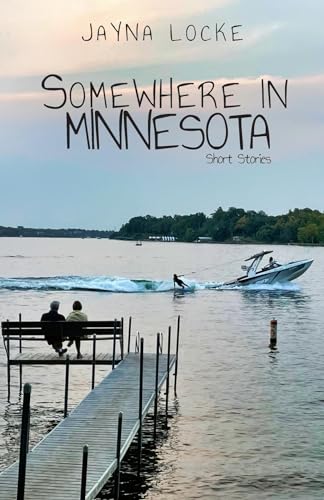
Jayna Locke is the author of Somewhere in Minnesota, a collection of short stories about characters experiencing life’s unexpected twists and turns, and about grit, hope and resilience.
She is a Minnesota writer who has had a lifelong love of fiction. She earned her MFA from the University of New Hampshire. Her work has appeared in various literary journals, as well as several anthologies — all available on Amazon. She is reachable through her website, jaynalocke dotcom, or on X at jaynatweets.
1) Tell us a little bit about yourself. How did you get into writing?
As a child, I grew up reading books by Tolkien, Hobbs etc. and developed a strong interest in fantasy. In school, I found history to be a difficult subject and a trick I grew fond of was to substitute real events with more fantastical versions of them incorporating elements of magic and sorcery to make them more interesting and thus easier to remember. Even long after school, I’d look back at important historical moments and altered variations I had cooked up in my mind. Even to this date, I find these altered histories more interesting than novels that have clear demarcation of good and bad characters and ones featuring happily-ever-after endings.
For the last decade my focus has been on software and cloud infrastructure consulting. While architecting software systems, I have often wondered what if the real world was programmable like a computer. What if there was a system in place to enable us to define precise contracts and this system was freely and fairly accessible to all of mankind. I wondered if this would lead to betterment of humanity or bad actors would just find more creative ways to exploit it. The concept of runecraft in my books embodies this concept.
For many years, I built up adhoc storylines along these ideas and for a long time they were just disconnected fragments in my mind. But a year ago during a career break due to illness I decided to put my thoughts into words. To my surprise, I did manage to mash them together into a coherent storyline and the emerging result looked like something that at least one reader would enjoy – me.
So now I am taking the chance and putting in a bit more effort into transforming this into something that others may also find enjoyable. Whether or not that actually happens, remains to be seen.
Advertisements
2) What inspired you to write your book?
The primary inspiration is the observation that evil lurks in every corner and every heart. I am not a nihilist but one historical theme that has been very close to my heart is that cost of small mistakes and wrongdoings by many individuals add up over time, often catastrophically.
The atrocities committed by East India company in India, the brutalities by Mughal invaders before that, the injustices against lower castes by Brahmins, were all possible not because of a grand master plan by an evil genius but due to many many individuals making separate wrong decisions in self interest. Same holds for global events like rise of Nazis & fascists in the west or the bombing of Japan in the east.
We only realize the true impact of these decisions after catastrophic events like the genocide of ’71 (একাত্তরের গণহত্যা) in Bangladesh (where part of my family originally hails from), the Bengal famine of ’43, Massacre of Jallianwala Bagh etc. but by then the chain of misdemeanors is so long that there is no realistic way to serve justice meaningfully.
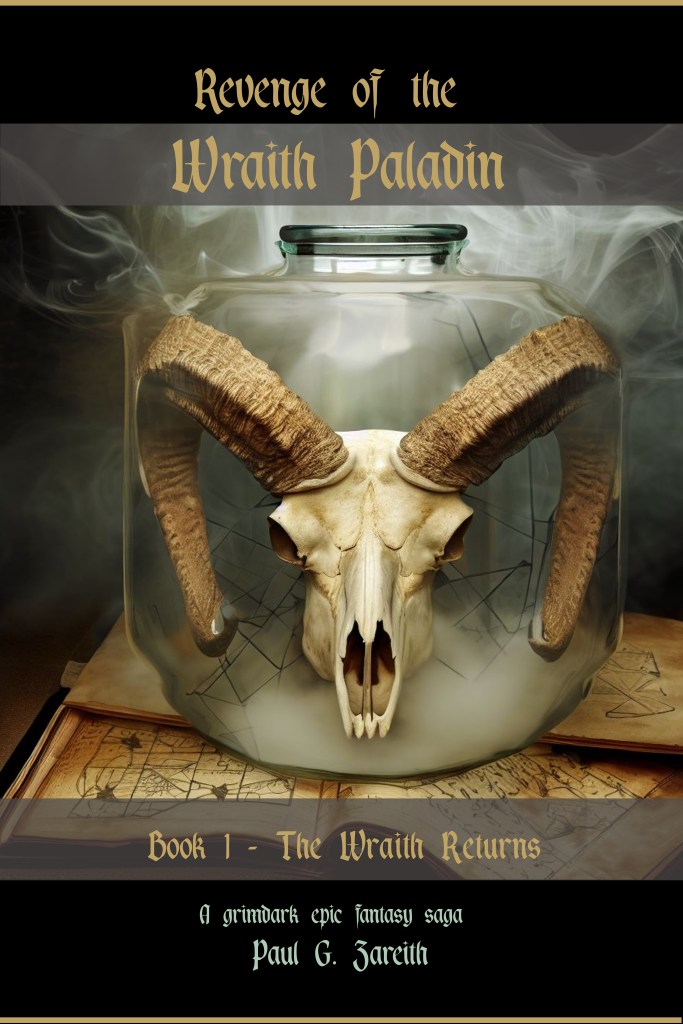
The storyline for The Revenge of the Wraith Paladin stems from a question I asked myself as a child – what if the Mughal invaders of India were an alien race from beyond this world.
3) What theme or message do you hope readers will take away from your book?
I hope to inspire to inspire people to look beyond broad categorizations of good and evil and focus more on nuances and to question all they see and hear.
4) What drew you into this particular genre?
I was inspired by many many authors whose great works I have had the pleasure of reading over the years. In particular, I’d like to thank:
1. Michael Moorcock: For demonstrating that flawless elegance and mind-numbing horror can be blended together seamlessly
2. John Bierce, Stephen King and Sanderson: For demonstrating that complex plots and intricate systems of magic can and do work well for fast paced fantasy
3. Tower curator: For demonstrating that blood sorcery can be elegant.
4. Will Wight: For demonstrating that the concepts of authority and ascension can be such amazing plot drivers.
5) If you could sit down with any character in your book, what would you ask them and why?
I’d sit down with Nazaar, the grandmaster. I’d try to understand how, despite of all the obstacles that he continues to face at every turn, he finds the courage to keep plodding forward with ever more ambitious plans.
He was the only character in my book who seemed to evolve on their own during my writing. Most of what we read about the grandmaster in The Revenge of the Wraith Paladin series, was just not present in my original plot plan.
6) What social media site has been the most helpful in developing your readership?
Primarily twitter, discord and to some extent Reddit, where I have had some really nice interactions with people who love books & fantasy. I’d like to thank them all for the valuable advice and criticism that they took out the time to share with me.
I also remain very optimistic about the future of federated social networks like Bluesky and mastodon – they have small but rapidly growing community of book lovers. I’d encourage more people to be a part of these networks.
7) What advice would you give to aspiring or just starting authors out there?
Bit too early for me to answer this, but I’d like to advise folks to write things that at least they themselves would enjoy as a reader. But if you do have something interesting to say, modern technology has made it easier than ever to put your thoughts forward and connect to a global community. Don’t wait too long – YOLO.
8) What does the future hold in store for you? Any new books/projects on the horizon?
I am currently working on a parallel series titled “The Grandmaster’s Gamble” that explores Nazaar’s past. It has some overlap in characters with Revenge of the Wraith Paladin, but can be read independently. The second book of this series is also planned to be released later this year.
Advertisements
About the Author
Avid fiction aficionado and fantasy author dabbling in the grimdark, arcane and all things forbidden and forgotten.
I received a free copy of this book in exchange for a fair and honest review. All opinions are my own.
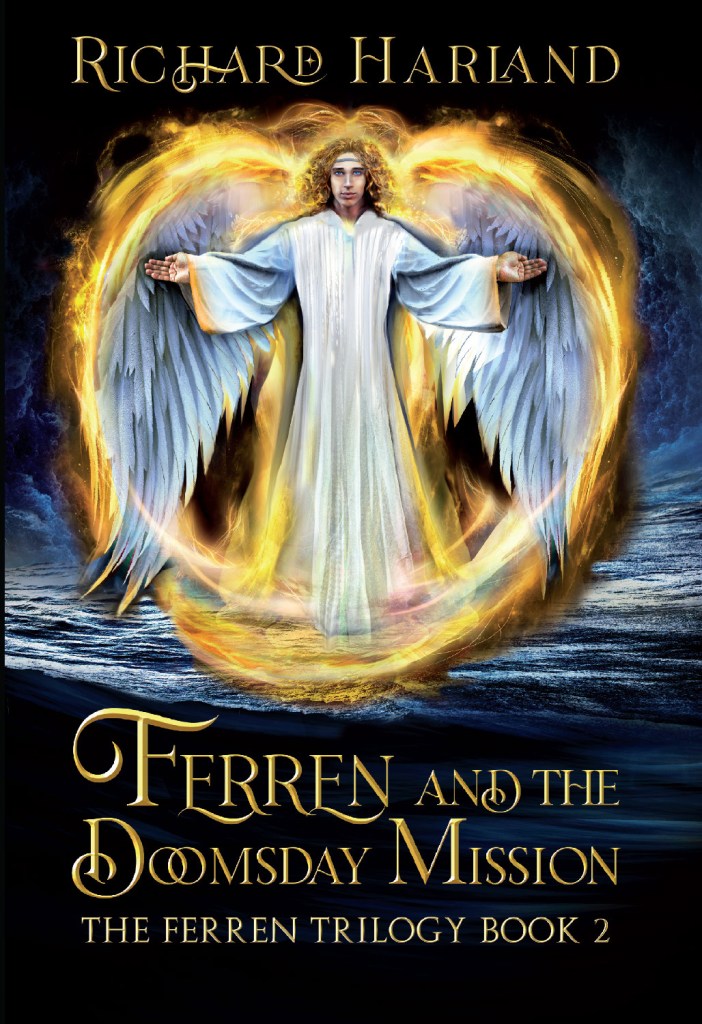
A fallen angel must contend with her growing friendship with a human tribesman and the promise of her dream of returning to heaven by a secret, beautiful angel who visits her at night as the war continues between humanity and heaven in author Richard Harland’s “Ferren and the Doomsday Mission”, the second book in the Ferren Trilogy.
Advertisements
The Synopsis
The unique friendship between an angel and a human is the only hope for the future – but can they remain friends?It’ s one thousand years since medical scientists brought a dead brain back to consciousness. When they discovered the reality of life after death, they laid claim to Heaven and set off a war against the angels.Now the Earth is a ruined wasteland. Descendants of the original scientists continue the war with their armies of artificially created Humen. When the greatest of Doctors, the all-knowing Doctor Saniette, takes control of the Bankstown Camp, the fighting moves to a terrible new phase.Miriael is the angel who fell to Earth, ate mortal food and can no longer return to Heaven. Ferren is the young tribesman who has been her only friend since her own kind abandoned her. Together, they work to unite the tribes in an alliance independent of the Humen.But suddenly Miriael has another friend. A beautiful, caring angel visits her in secret and offers her what she most desires: the chance to return to Heaven. The consequences will be extreme … for her, for Ferren, for the world.
The Review
This was another fantastic entry into the author’s rich, fantasy-driven dystopian world. The immense scope of the world-building the author took on in bringing this story to life was incredible to see expanded upon in this book. The threat of Dr. Saniette and the Humen in this story and the action-packed drama that unfolds as the battle rages on make this narrative genuinely memorable.
Yet the action and drama are so well balanced, thanks to the rich character dynamics. The friendship and the evolution of the relationship between the protagonists, Miriael and Ferren, is the core heart of the narrative. However, the exciting directions their journey takes them on as individuals, from the interesting romance/love triangle between Ferren, Kiet, and Zonda to the twist connection Miriael has to Asmodai, and the impact Miriael has on the growing alliance amongst the last of the tribes of humanity made this a remarkable narrative to get lost in.
The Verdict
Exhilarating, thrilling, and heartfelt, author Richard Harland’s “Ferren and the Doomsday Mission” is a brilliant sequel and a memorable fantasy-driven story that readers won’t put down. The twists and turns in the story will keep readers on the edge of their seats, and the cliffhanger final moments will bring readers back for the third book of the Ferren trilogy. If you haven’t yet, be sure to grab your copy today!
Rating: 10/10
Interview with Richard Harland
Advertisements
What is the biggest difference between writing a solo novel and a series?
I don’t have much experience of starting out to write a series! The only time I’ve done it was with my Wolf Kingdom quartet, and they were kids’ books. My first novel The Vicar of Morbing Vyle was a standalone until fans pushed for a sequel. My SF/detective movel The Dark Edge was a standalone until my publisher demanded sequels. And ditto with my steampunk fantasy, Worldshaker – I was ready to be asked for a sequel, but I’d spent 20 years planning the novel as a standalone.
With Ferren and the Angel, I wasn’t even ready to be asked for a sequel. I loosened it up at the end when my publisher first talked of a sequel, but that was only in the last stage of editing before publication. There’s a whole complicated story there, which I haven’t much explained to anyone anywhere.
ANTHONY: Let’s hear it.
OK, confession time! There’s an earlier version of The Ferren Trilogy called The Heaven and Earth Trilogy. It came out only in Australia, published by Penguin Australia, had some success, but wasn’t marketed very well (internal publisher politics!) and Penguin let it go out of print. That first publication was twenty years ago.
My new publisher, IFWG, sells mainly into the US, and it seemed a smart move not to make a lot of noise about the first version, which never even existed in America. Why create confusion? But it ended up being confusing anyway, because the audio format of Ferren and the Angel is under a separate contract and still on sale on Amazon. Not so smart after all!
But here’s the best bit of the story. After the Penguin version dropped out of print, and after I’d moved on to some international success with Worldshaker and its sequels, there were still fans of the original trilogy who’d fallen in love with it and refused to forget about it. They wanted those novels out there and wouldn’t let them die! They hounded publishers year after year, until they finally succeeded. One day, out of the blue, I received an email from IFWG Publishing, saying they’d like to do a reprint of the Ferren books. Yay!
ANTHONY: So is this a reprint or a new version or what?
It’s a total rewrite! Although I’d moved on to writing other books, I always had the feeling that the trilogy deserved better than it got. The fans of the book believed that it deserved better from publishers, but I believed it deserved better from its author too! The raw material was there, the incredible future world where the armies of Heaven do battle with the armies of the Earth – so much potential! But not fully realized. When IFWG offered to do a reprint, I said I wanted time to rewrite the books first. After twenty years of mulling over the stories in the back of my mind, I just knew they could be better told. And now they are!
It’s a wonderful thing, to be given a second chance. I haven’t wanted that chance for any other novel I’ve written, only the Ferren books. They’re finally turning into the books they were always meant to be!
Um, maybe I’ve left the question behind … What was your first question again?
ANTHONY: What is the biggest difference between writing a solo novel and a series?
Right! I knew there was some connection! The thing is that when Penguin Australia were about to bring out the early version of Ferren and the Angel, they hit me with the request for a sequel to be written within twelve months. Which was great, but … I’m not a fast writer, and, even more, I needed time to recharge my batteries for imagining a whole further expansion of the world and story. I think I did well – better than I could ever have expected – with the ideas I came up with. Trouble was, I was forever playing catch up and never had time to shape them into a truly effective story dynamic.
I always felt that Book 2, originally called Ferren and the White Doctor but now called FERREN AND THE DOOMSDAY MISSION, needed more of a rewrite than any other volume, I read through the Penguin version before starting, but then hardly looked at it again while I went through the rewrite. And the rewriting just flowed! I guess the difference was that I knew where the story was going, so I knew how to set it up right! I’d planted the seeds properly in Book 1 and got them growing at the start of Book 2. When I wrote the original Ferren and the White Doctor, I remember always struggling to pull the story back into line. With the rewrite, it just unfolded all by itself!
I guess I experienced the hard way what makes a series a series. The three novels in the new Ferren Trilogy all have their own individual story dynamic, but now they’re not merely tacked on one after the other – they grow out of each other, bigger and bigger with every volume.
So what’s the biggest takeaway you want readers to have when finishing your series?
I suppose as the trilogy develops, it puts you more and more on the side of Heaven. For all their blinkered sense of superiority, the angels and archangels do hold strong ethical principles – and they learn to shed their sense of superiority in the end. Their basic goodness comes through, whereas the Humen who make up the armies of Earth are just plain bad and nasty. But there’s no religious message. The beauty of angelology – the traditional lore about angels and Heaven – moves me emotionally, but I’m still an agnostic.
I think the takeaway would be more of a humanist one – for human beings to believe in themselves, respect themselves and stand up for themselves. That’s what the Residuals, descendants of the original human beings, learn to do in the course of the trilogy, even as they eventually choose to fight alongside Heaven.
As for the moral balance between Heaven and the Humen, I’d say that the Humen lack reverence for anything and everything – they’re only interested in what they can exploit for their own purposes. I suppose that’s my religion – a humanism that isn’t self-centered but has respect for what’s other than ourselves. It’s not a message, and I’m not preaching it, but it probably colours the story and events.
Do you plot out your novels and the characters within them, or do you write and let the story develop at its own pace?
I don’t like the word ‘plot’ because it’s sounds mechanical and controlling, but it’s true I do a huge amount of thinking and imagining before turning a story into actual words. I’ve always had a very vivid visual imagination, so I tend to watch my story unfold like a movie before verbalizing it.
One thing I love is a narrative that builds and converges to a huge rolling climax. In Ferren and the Angel and Ferren and the Doomsday Mission, the climactic scenes take up nearly a quarter of the book – and the climax of Book 3, Ferren and the Invaders of Heaven, will be the biggest of the lot! But you can’t produce those sorts of climaxes just by ambling along page after page. I don’t believe in weak endings or fade-out endings (I mean, I don’t believe in fade-out endings for fantasy fiction), but I also don’t believe in artificially imposed big endings. The climax has to grow naturally out of everything that’s gone before.
Am I starting to sound like a broken record? I believe you have to grow those big climaxes by planting the seeds early on. I’m the sort of author who’s always looking ahead – I don’t know exactly how the final development will work out, but I can sense when I’ve got all the material for it. Like the volume of a wave that’ll just sweep me along at the end!
I think of being an author as like being on the back of some humungous, lumbering beast! The beast is the story, with its own vast mass and momentum. You can’t drag it round suddenly to where you want it to go, e.g. a big, rolling climax. You have to begin guiding and nudging it right from the start, looking far ahead and applying tiny prods that are all the influence you ever get to have.
Advertisements
About the Author
Richard was born in Yorkshire, England, then migrated to Australia at the age of twenty-one. He was always trying to write, but could never finish the stories he began. Instead he drifted around as a singer, songwriter and poet, then became a university tutor and finally a university lecturer. But after twenty-five years of writer’ s block, he finally finished the cult novel, The Vicar of Morbing Vyle. When he contracted his next book to a major publisher, he immediately resigned his lectureship to follow his original dream.