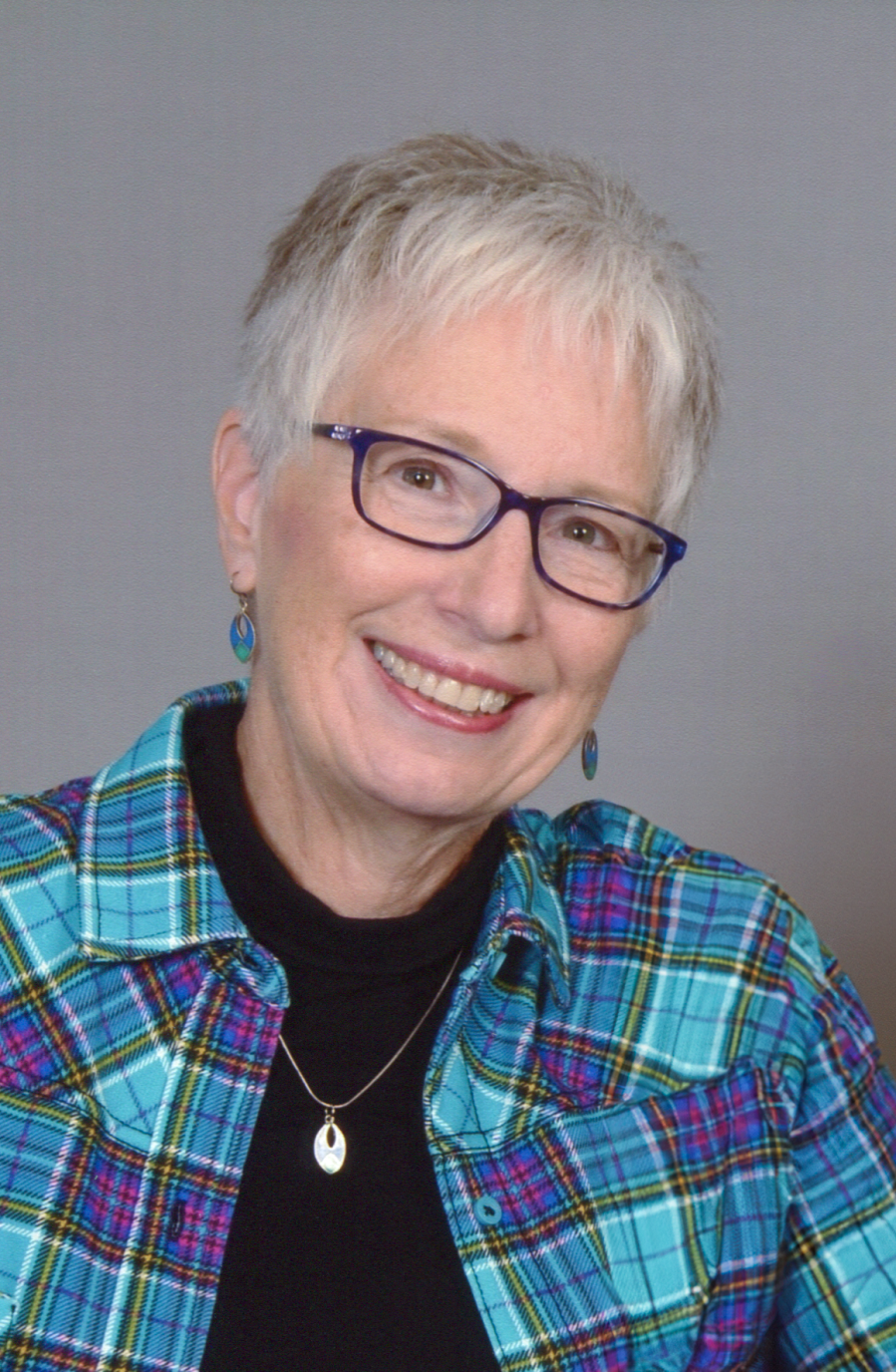
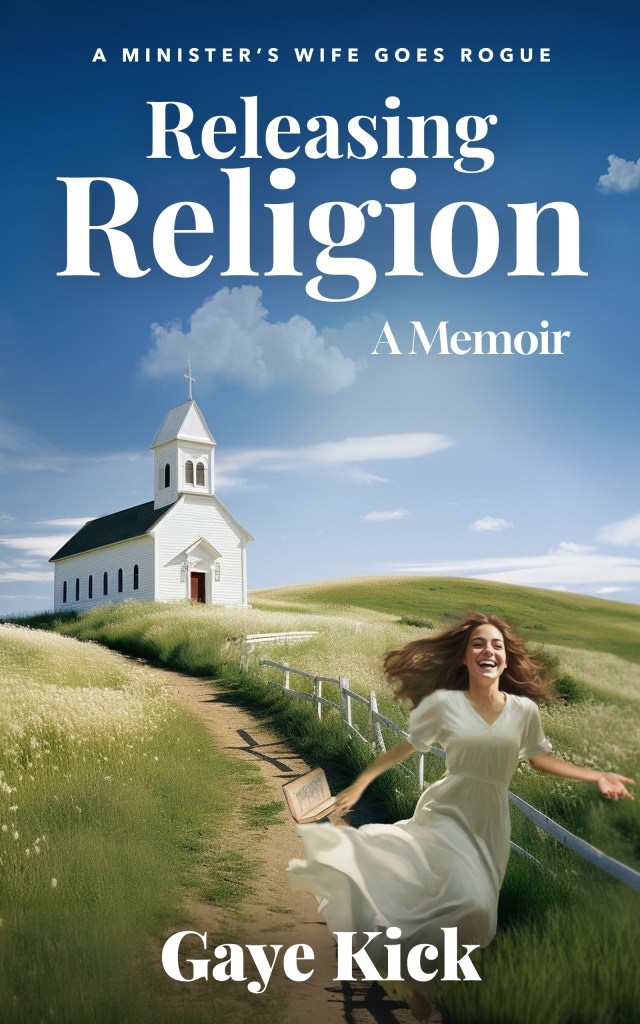
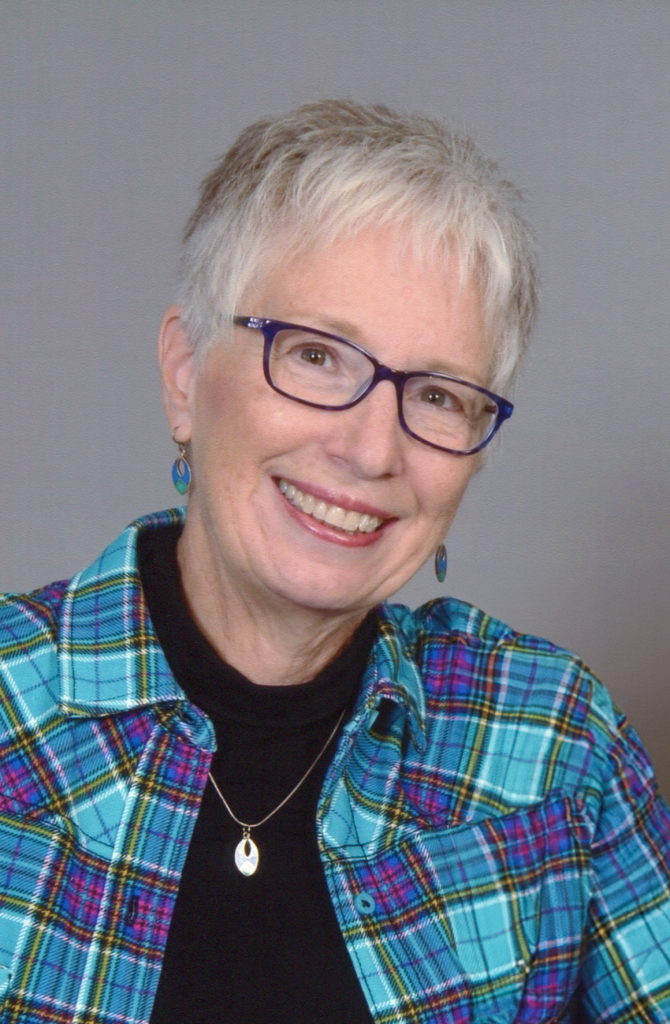
Tell us a little bit about yourself. How did you get into writing?
Growing up, I wasn’t interested in writing like many friends who kept diaries. My passion was singing and playing the piano. In fact, I had never written down my thoughts until I was a freshman in high school when our English teacher introduced us to the rhythm and rhyme of poetry. Writing poems was like creating music but with my own lyrics. It became my diary, where I expressed myself on the written page.
I stopped writing poetry after I headed to college to get a music degree. Unfortunately, after my first year, I foolishly married a senior music major, who unexpectedly changed his career right before the wedding and tossed me unprepared into the role of minister’s wife at age eighteen. Yikes! That caused enough stress to send poetry into hiding.
After several years of playing a supporting role in someone else’s life plan while raising children and slowly trying to finish my music degree, poetry came back into my life to help me express my feelings. I also began journaling, which provided a larger canvas to paint longer sentences onto the page. The more I wrote about my life in the trenches of church ministry, the more I exaggerated until I was rolling on the floor laughing at what I’d written. That’s when I realized I could write humor. Surprise!
I joined a writer’s group without knowing I would have to submit a story or poem to our group leader every month so she could deliver our writings for publishing in the local newspaper. I was writing about my minister’s wife gig, so I used a pen name to keep my identity a secret. Being in the writer’s group inspired me to change my college degree from Music to English. I finished my degree two years later. In total, it took me five colleges and twenty years to graduate.
What inspired you to write your book?
Initially, when writing about my minister’s spouse life, I thought I would someday compile those stories into a book, but after my graduation, I got divorced and just wanted to put my marriage and traditional religion behind me. However, I still wanted a spiritual life. So, for the next twenty years, I dove into metaphysics, mind-body-spirit, higher consciousness, astrology, quantum physics, you name it.
As I approached retirement, the urge to write new humorous short stories and poems about my current life took hold. I posted them on Facebook and eventually created a website for blogging. Then came the strong pull to write the book. However, when I read those old stories, I realized I wasn’t that minister’s wife anymore. I had been on a journey of self-discovery. I had overcome obstacles and reclaimed my identity. I had a much bigger story to tell. One that could help those discouraged by traditional religion but still want a spiritual life and those hiding their authentic voice out of fear of what people might think of them.
What theme or message do you hope readers will take away from your book?
Life happens for you; you can’t get it wrong. You are more than enough to see your dreams come true. You don’t have to meet the expectations of others. You are the only authority over what is best for you.
What drew you into this particular genre?
I write primarily in the first person. Since I had a personal story to tell, it made sense to write a memoir with my own kind of humor and honesty that resonates with readers.
What social media site has been the most helpful in developing your readership?
Facebook is the only one I have. I promoted my book once a week for 8 weeks without buying ads. The book became a #1 Amazon bestseller on the first day of the ebook pre-orders. Then again, seven days later when the paperback came out.
Advertisements
What advice would you give to aspiring or just starting authors out there?
You don’t have to have an ending before you start writing. It will show up as you write.
When you have an idea, write it down immediately, especially if you are in bed in the middle of the night, because you will NOT remember it in the morning.
Get seven to eight hours of sleep, and when you awake, stay in bed with an open mind for thirty more minutes because that’s when you will get the ideas and words you were looking for the day before.
To really enjoy writing, you must write regularly, even if it’s just a few words because the more you procrastinate, the more your writing project will haunt you. You don’t want that.
What does the future hold in store for you? Any new books/projects on the horizon?
I’m currently focused on promoting my book. Other than that, I don’t know what is in my future, but I’m excited and open to whatever is coming.
Advertisements
About the Author
Gaye Kick graduated from the University of Illinois Springfield, where she studied writing under novelist and children’s book author Jaqueline Dougan Jackson. She writes humorous short stories about finding balance and inspiration as she navigates the highway of life. In addition, Gaye is a talented pianist, singer, and songwriter specializing in new thought music. Explore her work at www.gayellenkick.com
Tell us a little bit about yourself. How did you get into writing?
I’ve loved writing for as long as I can remember. One of my first memories of writing was when I was ten. I wrote a story about racism that involved a child driving a bulldozer over the home of his racist tormenters. My teacher was horrified by the homicidal implications of my story and thought I might be a budding serial killer. So, she called my parents in for a meeting to discuss my mental state. My parents, bless their hearts, laughed and told her they were proud of me, and that they thought my theme and content were both appropriate and commendable.
Advertisements
What inspired you to write your book?
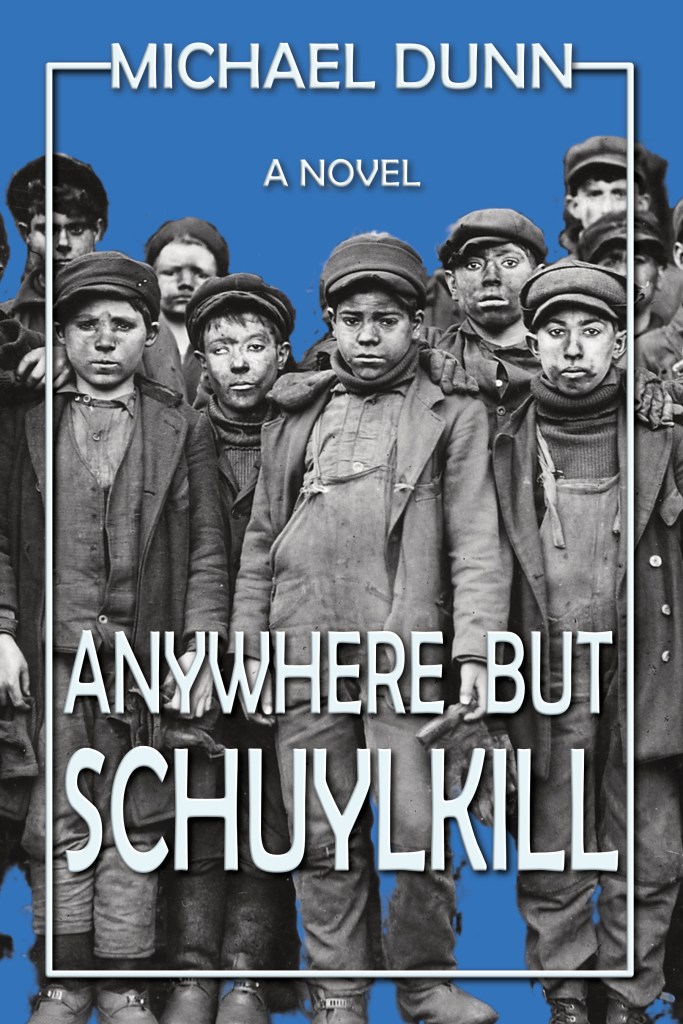
I had originally intended to write about a little-known piece of American history called the Great Upheaval, a massive strike wave that erupted in the summer of 1877, in which at least 100 workers were killed by police and national guards nationwide. It spread from New York to Louisiana, and west, to California, with uprisings in several towns. Armories were looted. Black and white workers united in New Orleans, Louisville, Galveston, and in Saint Louis, where they took over management of city services, and called it the Saint Louis Commune, after the Paris Commune of 1871. But I soon realized this was way too big for a single book. And as I did the research, I discovered that just a few weeks before the Great Upheaval began, twenty innocent Irish miners were hanged in Schuylkill County, Pennsylvania—ten in a single day. It was the second largest mass execution in U.S. history. They were convicted of murder, accused of being terrorists from a secret organization called the Molly Maguires. Dozens more were imprisoned. All were union activists. And there is no evidence that an organization called the Molly Maguires ever existed in the U.S. So, I decided to do a trilogy, with the first book, Anywhere But Schuylkill, telling the story of Mike Doyle, one of the accused Molly Maguires who got away.
What theme or message do you hope readers will take away from your book?
I didn’t write this book to be didactic. For me, reading and writing are fun, and that was why I wrote the book. But in the process, I did hope to right an historical wrong. Arthur Conan Doyle’s final Sherlock Holmes novel, Valley of Fear (1915), the 1970 Sean Connery film, Molly Maguires, and a majority of the academic texts about the Molly Maguires and the miners’ union of that era, were based on Allan Pinkerton’s own work of fiction, The Molly Maguires and the Detectives (1877), which he falsely marketed as nonfiction. These works universally treat the Molly Maguires as an actual Irish terrorist organization, which conspired to murder mine owners and scabs, despite the fact that there is no evidence that such an organization ever existed in the U.S., other than the claims of Pinkerton, who had been hired by the coal companies to disrupt and destroy the union. So, there’s that. But I also hope readers will find beauty and inspiration in the characters’ struggles.
What drew you into this particular genre?
I love history, especially labor history and the history of social movements. I’ve been blogging and writing nonfiction on these themes for years now. And I also enjoy reading historical fiction. But I really wanted to write the story of the Molly Maguires, from their own perspective, the story of impoverished immigrants and first-generation Americans, persecuted for their ethnic and religious identity, struggling to support their families during the worst depression the country had known, trying to collectively organize against one of the most powerful corporations of the era: the Reading Railroad. Plus, fiction can reveal the truths that reality obscures, to paraphrase Emerson.So, historical fiction seemed the perfect genre.
If you could sit down with any character in your book, what would you ask them and why?
I would like to talk to Da, about the antidraft protests he was involved in during the Civil War. I’d like to know if there were many others, like him, who saw the war as a fight between two opposing factions of the ruling class, rather than as a fight against slavery, and tyranny, as many of the German immigrants saw it.
What social media site has been the most helpful in developing your readership?
I’m not sure yet. I do have an Author Takeover on Facebook on January 15, with the Historical Fiction Club. You should check it out. I’ll be posting eight short pieces throughout the day. I’ll be giving away free copies of my book. And it’ll be a fun way to get to know about me and my writing, ask me questions, and maybe even learn a little working-class history. To participate, go to the Historical Fiction Book Club Facebook page on Jan 15:https://www.facebook.com/groups/historicalfictionbookclub
What advice would you give to aspiring or just starting authors out there?
First, I’d tell them to do their homework. Learn something about the craft before embarking. I didn’t. I was super naïve going into it. I thought, Hey, I’m good at telling stories and I read a lot. Of course, I can write a novel. Plus, the actual facts were so fascinating, I thought the story would write itself. But I had no training in fiction writing. I made a lot of mistakes. My first draft was terrible. The side characters were one-dimensional. There were no emotional arcs. The subplots weren’t fleshed out enough. I didn’t provide enough sensory details. I had to go back and take courses, find mentors, read a lot about the craft. Consequently, it took me nine years from when I first started working on this project to the time when it was actually published. Of course, I was also working full time, and being a father. So, that also made it take longer.
Second, I’d tell them to learn to embrace the editing process. No one, except maybe Kafka, churns out a finished product on the first draft. The editing and rewriting are the most time-consuming parts of the process. You could end up rewriting the entire thing 5-10 times before it’s really done. If you don’t have resilience and perseverance, and an enjoyment of this process, you might have a hard time producing a good quality book. That said, I really do enjoy the editing and rewriting. It’s a lot of fun trying to get all the pieces to fit together artfully.
What does the future hold in store for you? Any new books/projects on the horizon?
The Molly Maguire mass hanging that occurred in 1877, the second largest mass execution in U.S. history, is the opening scene of the next book in my Great Upheaval Trilogy: Red Hot Summer in the Big Smoke. The main character is Mike Doyle’s kid sister, Tara. It takes place in Pittsburgh, during the Great Upheaval strike wave, where much of downtown was burned to the ground, and where 20 strikers were gunned down by soldiers. I’m about halfway through the first draft. And then it will be on to the third and final book in the series. Not sure yet about the title. But it will take place in Saint Louis.
Advertisements
About the Author
Michael Dunn writes Working-Class Fiction from the Not So Gilded Age. “Anywhere But Schuylkill,” is the first in his Great Upheaval trilogy. A lifelong union activist, he has always been drawn to stories of the past, particularly those of regular working people, struggling to make a better life for themselves and their families. Stories most people do not know, or have forgotten, because history is written by the victors, the robber barons and plutocrats, not the workers and immigrants. Yet their stories are among the most compelling in America.
They resonate today because they are the stories of our own ancestors, because their passions and desires, struggles and tragedies, were so similar to our own. When Michael Dunn is not writing historical fiction, he teaches high school, and writes about labor history and culture. His labor history has been published in several online and print magazines:
Reform: The Trojan Horse Wheeling into Schools (Labor Notes 7/28/11); The dangers of a
California megaflood (World Socialist Website, 10/25/21); and The Modern School Movement
1) Tell us a little bit about yourself. How did you get into writing?
My name is Cheryl Gillespie, and I live in the beautiful, hospitable region of Atlantic Canada. I am fortunate to have one of the most rewarding occupations as I am a private piano teacher and educator in music theory.
As far back as I can remember, I’ve always enjoyed the craft of writing, from the journaling I did at age 12 or 13, to the assignments I was given in high school. Of course, the love of reading is a strong asset which for some, can be a pathway to writing.
When my niece was a little girl, I recall reading stories to her which sparked the idea of writing about the antics of my two cats. Therefore, my first published work was a children’s book entitled, Tigger and Jasper’s New Home, a tale of 2 mischievous kittens who were adopted by a young blind woman. Yes, it is a true story, except in this case the cats are able to speak to each other.
Advertisements
2) What inspired you to write your recent book?
The word that comes to mind is – serendipity. Following my children’s book, I had no designs on a second publication. However, my music mentor who was in the process of writing his memoir, suggested my own story is one which should be told and that it may be of great interest to many. After jotting down my thoughts and a fair bit of reflection, I made the decision to write, I Feel Your Stare: An Autobiography.
3) What theme or message do you hope readers will take away from your book?
Everyone has their life challenges, whether economic, social, physical or other, so I hope readers can identify with this to some extent. I think one message is that breaking down societal barriers is best achieved with a positive determination, rather than to approach it with a negative, griping attitude.
4) What drew you into this particular genre?
Quite simply, I tend to relate better when writing my own experiences. For instance, the comic-like episodes that took place with my cats in the children’s book, actually happened. Then there are the lifetime hoops I’ve had to jump through in order to attain an education, receive proper healthcare, or to gain my independence as revealed in my autobiography.
5) If you could sit down with any character in your book, what would you ask them and why?
Of course, as this is an autobiography, I have had interactions with each of the players. There are some, however, to whom I’d like to give an earful as an adult since I was unable to defend myself as a child.
But, perhaps the person I’d choose is the superintendent of the residential school for the blind in Halifax, the one who told me in no uncertain terms, “You’ll never make it in a sighted world.”
My questions: After uttering those words to a child, did you feel like a big man when you went home to your cozy house that night? And second, how did you feel when I completely defied you, exposed your lies and proved you wrong?
My reasons for asking: I would want to make it absolutely clear that not a single drop of credit is owed to him for my successes. They belong to me, along with the help of caring people throughout my lifetime.
6) What social media site has been the most helpful in developing your readership?
This is an issue for me, given how time consuming it is for blind individuals to navigate through these visual platforms. I guess I would have to say Facebook where I can be located, and where information has spread to readers the most.
7) What advice would you give to aspiring or just starting authors out there?
First, do your own research. There are a lot of good author blogs and writing tools out there, so take advantage of them. Personally, I perform best when making relevant notes from what I’ve learned, then mapping out the direction I’d like my writing to flow.
Second, editing is a must. Seek recommendations on collaborating with an editor you can trust.
Third, take your time. Write because you love it.
— —
Advertisements
~ABOUT THE AUTHOR~
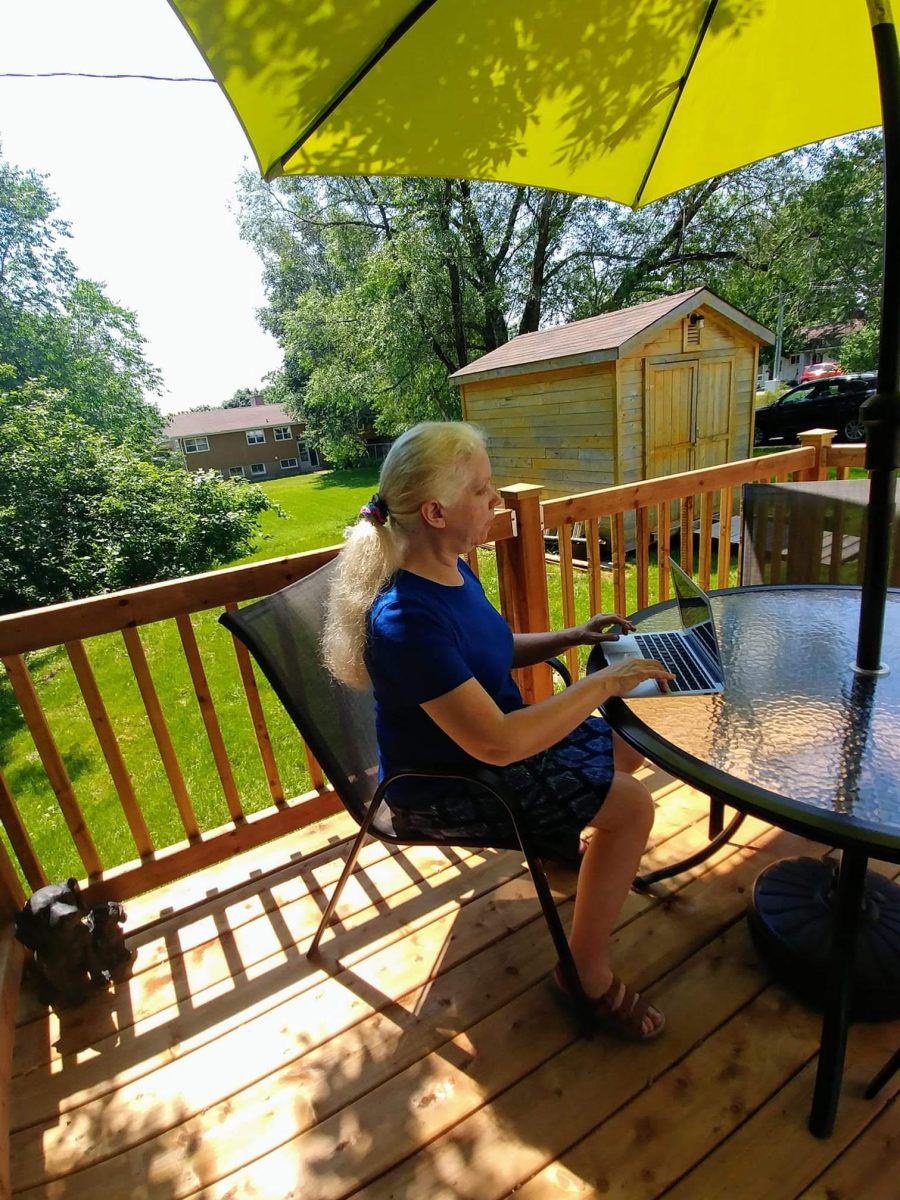
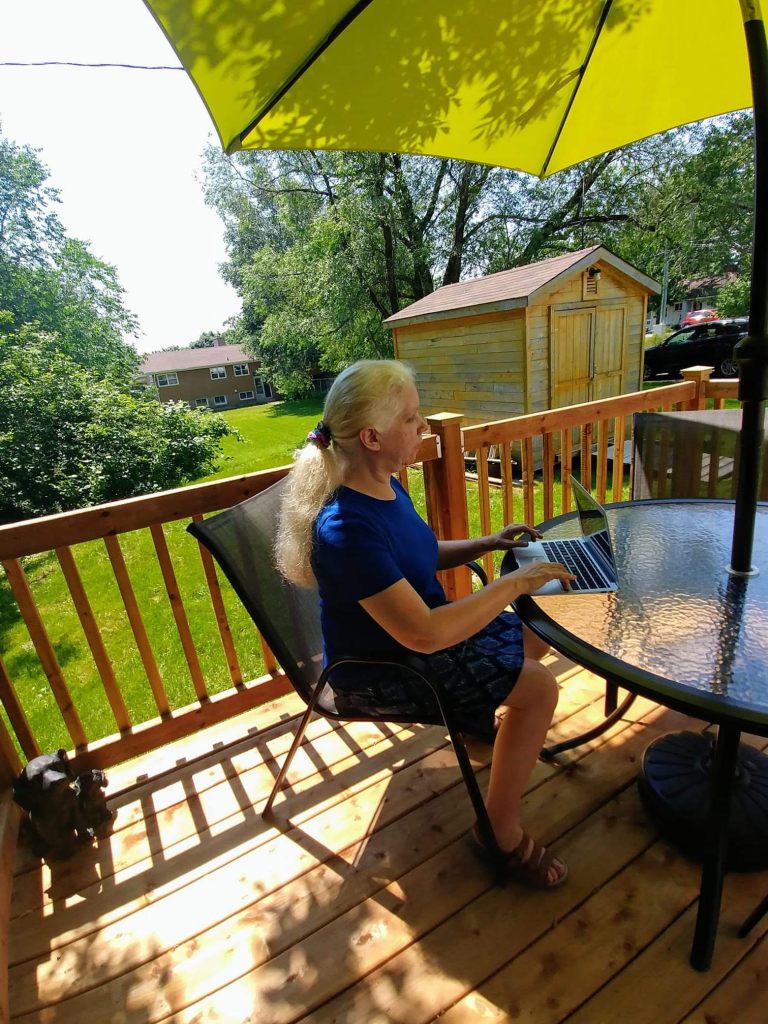
In her home province of New Brunswick, Canada, Cheryl Gillespie, along with her cat Mattie, will often be found basking on the backyard deck beneath the warm sunshine. Here, in this very spot is where many of the chapters for her award winning autobiography, I Feel Your Stare were written.
A childhood diagnosis of Juvenile Rheumatoid Arthritis and associated blindness, coupled with physical and societal barriers, has proven only to strengthen her resolve. Following graduation from Fredericton High School, Cheryl advanced in her private studies through the Royal Conservatory of Music, attaining First Class Honours in piano, theory and history.
Today, well established in her teaching career, she takes pride in the education of her students, highlighted by a two-time provincial medal winner through Mount Allison’s Local Centre Examinations Department of Music. Through her active role within the Fredericton Music Teachers’ Association, Cheryl has built invaluable, longstanding friendships with her colleagues. In 1993, Cheryl was the recipient of the Stanley B. Cassidy Memorial Award, presented by the Fredericton Music Society, recognizing her dedication to excellence and personal achievements.
Cheryl’s first work for adults, I Feel Your Stare, gained literary status in 2023: a winner in two categories through The Firebird Book Awards, earned a RED RIBBON from The Wishing Shelf Book Awards, and was a finalist in the Independent Author Network Book of The Year Awards! This title was preceded by her children’s book, Tigger and Jasper’s New Home, and likewise is a Firebird Book Award winner, and a cover art finalist with The Wishing Shelf Book Awards.
1) Tell us a little bit about yourself. How did you get into writing?
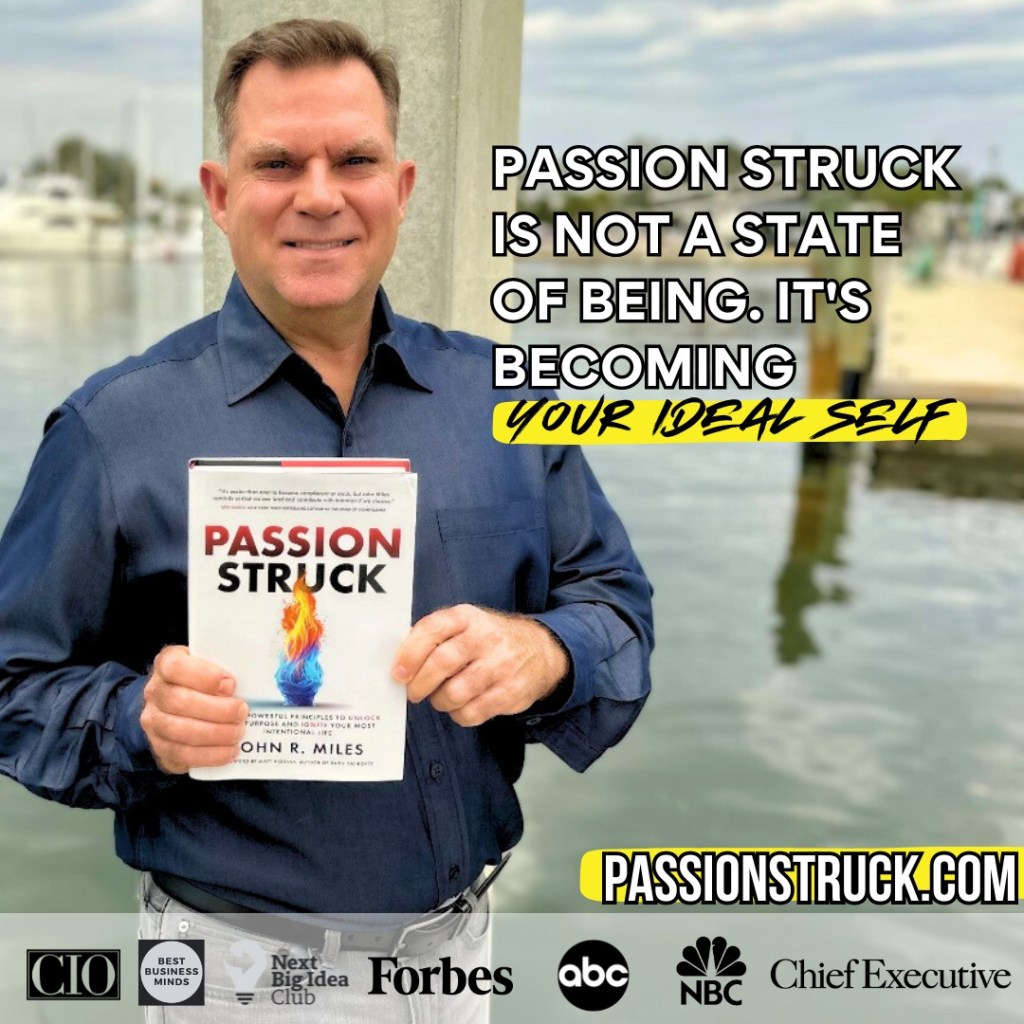
I’ve always been fascinated by the power of storytelling and its ability to connect people, evoke emotions, and inspire change. My journey into writing was a natural progression from my passion for communication and my desire to make a meaningful impact on others’ lives. Initially, my writing was a personal outlet—a way to process experiences, explore ideas, and articulate the insights I gained from my roles in leadership, coaching, and speaking.
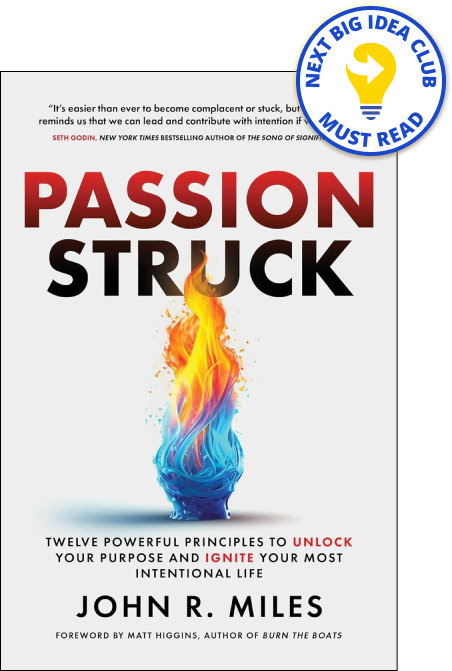
The transition from personal reflection to published author was driven by a realization that the lessons I learned, particularly through overcoming adversity and embracing intentional living, had the potential to resonate with and benefit others. This led me to write “Passion Struck,” a culmination of my experiences, research, and conversations with thought leaders across various fields. Writing became not just a means of expression but a mission to empower individuals to unlock their potential and lead lives filled with purpose, passion, and authenticity.
Advertisements
2) What inspired you to write your book?
The inspiration behind writing “Passion Struck” stemmed from a deep-seated desire to address the pervasive sense of “unmattering” that affects so many individuals today. Observing friends, colleagues, and even strangers grappling with feelings of insignificance, despite their achievements, propelled me to explore how living intentionally and with passion can transform lives. My own journey—navigating personal and professional hurdles, including overcoming severe injuries as a combat veteran—underscored the power of intentionality in forging a meaningful existence. “Passion Struck” is my endeavor to share these insights, offering a blueprint for others to ignite their passion and live with purpose.
3) What theme or message do you hope readers will take away from your book?
The central theme of “Passion Struck” is that every individual has the inherent capacity to live a life that TRULY MATTERS—to themselves and to the world. The message I hope readers will embrace is one of empowerment and transformation: that by making intentional choices aligned with their deepest values and aspirations, they can overcome obstacles, realize their potential, and lead lives of profound impact and fulfillment. It’s about shifting from a passive existence to an intentional and passion-driven life, where every decision propels one closer to their ideal self.
4) What drew you into this particular genre?
My draw to the self-help and personal development genre was a natural extension of my life’s work and experiences. Having witnessed firsthand the transformative impact of intentional living in my own life and those around me, I felt compelled to contribute to a genre that offers practical wisdom and guidance for personal growth. This genre allows for a blend of storytelling, science, and actionable advice, making it the perfect medium to convey the principles of living a “Passion Struck” life. It’s a field that not only offers the opportunity to inspire and educate but also to connect with readers on a deeply personal level, supporting them in their journey towards becoming their best selves.
5) What social media site has been the most helpful in developing your readership?
Instagram has been instrumental in developing my readership for “Passion Struck.” The platform’s visual and interactive nature allows me to connect with my audience in a deeply personal way. Through Instagram, I share insights, quotes, and stories from the book, engaging with followers through posts, stories, and live sessions. It’s a dynamic space for fostering a community of like-minded individuals passionate about personal growth and intentional living. The ability to visually represent the concepts of the book, coupled with direct communication with my audience, has made Instagram an invaluable tool in spreading the message of “Passion Struck.”
6) What advice would you give to aspiring or just starting authors out there?
To aspiring authors, my advice is threefold: First, write with authenticity. Let your unique voice and perspective shine through your work. Readers are drawn to authenticity; it’s what will make your book resonate on a personal level.
Second, be patient and persistent. Writing a book is a marathon, not a sprint. It requires dedication, resilience, and a willingness to embrace the process, including the inevitable challenges and rejections.
Lastly, never underestimate the importance of building a community. Engage with your audience early on, whether through social media, blogging, or public speaking. This community will not only provide support and motivation but also become the foundation of your readership once your book is published.
7) What does the future hold in store for you?
Looking ahead, I am excited to bring the transformative message of “Passion Struck” directly to audiences worldwide through a series of keynotes and interactive workshops. My immediate goal is to deepen the engagement with the book’s principles, making them more accessible and actionable for individuals eager to embark on their journey towards intentional living.
In parallel, I’m developing an online training platform, envisioned as a comprehensive university of life, where the book’s concepts can be explored in greater depth. This digital academy will offer courses, resources, and community support designed to empower participants to unlock their potential and embrace their authentic selves.
Additionally, the “Passion Struck” podcast will continue to play a pivotal role in expanding the book’s reach and impact. By delving into topics related to personal mastery, resilience, and purposeful living, the podcast will serve as a dynamic extension of the book, offering fresh insights, practical advice, and inspiration to listeners worldwide.
Behind the scenes, I’m exploring the possibilities for my next writing project. While “Passion Struck” remains my current focus, the journey of personal transformation is ever-evolving, and I’m passionate about continuing to contribute to this vital conversation through future books and projects.
Advertisements
About the Author
John R. Miles is the dynamic force behind Passion Struck®, captivating millions with his globally-renowned podcast and national radio show, making a significant impact as a thought leader in the fields of behavior change, health and wellness, the science of personal mastery, and self-leadership. His journey, from the U.S. Navy to senior executive roles in the Fortune 50, grounds his insights in real-world experience. He’s not just a voice on leadership and personal growth; he’s lived it, making his guidance and storytelling resonate authentically with his audience.
As an author, keynote speaker, and entrepreneur, John blends practical wisdom with relatable anecdotes, making complex ideas about health, wellness, and personal mastery both accessible and inspiring. His Podcast, Passion Struck, is one of the world’s leading shows and the #1 alternative health podcast, featuring engaging conversations with notable figures like Angela Duckworth, Seth Godin, Susan Cain, Robin Sharma, and Dr. Mark Hyman.
His latest work, “Passion Struck: Twelve Powerful Principles to Unlock Your Purpose and Ignite Your Most Intentional Life,” delves into the heart of what it means to live a life fueled by passion and purpose. Drawing on insights from luminaries such as Oprah Winfrey and Astronaut Chris Cassidy, the book offers twelve science-based principles designed to awaken the dormant potential within us all. It’s a journey through overcoming self-doubt, catalyzing personal growth, and embracing a life lived with unwavering intention. It’s been honored as a 2024 must-read by the Next Big Idea Club and The Best Business Minds Book Awards for 2024.
1) Tell us a little bit about yourself. How did you get into writing?
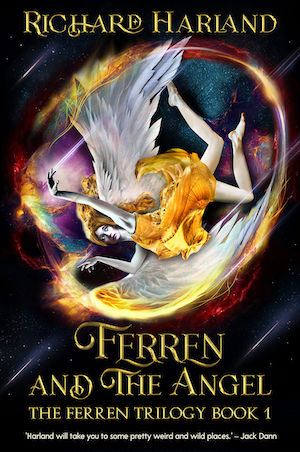
I grew up in England – Yorkshire, Devon, London, but most of all in Suffolk, which is farming country about 80 miles from London. Also the arlocationea of rural scenes painted by John Constable – and I used to live in a very pretty small town called Hadleigh. Not that I cared so much about the prettiness then – I wanted to escape to big city excitement! But a lot of the background feel to the Home Ground of Ferren’s tribe in FERREN AND THE ANGEL comes from memories of Hadleigh and the countryside around.
Afterwards, I was 3 years in Cambridge, then migrated to Australia – an accidental migration, because I never intended to stay. But then I fell in love with the place and the lifestyle. I’ve lived always around the Sydney area – inner city, Newcastle, and now the Illawarra. Wollongong manages to combine having the biggest steelworks in the Southern Hemisphere with having a beautiful green escarpment and a whole string of picture-perfect beaches.
I can’t remember a time when I didn’t want to create stories. I was always imagining scenarios and events for my own enjoyment and for friends playing games when I was a kid. But I never particularly thought of being a writer, until I started getting top marks for creative English composition – only because I discovered how to use a Thesaurus and throw around impressive-sounding words. Bad start! And worse, when I won a big prize for a short story, which was only impressive because I’d read some literary stuff more advanced than other kids my age, so I could pretend to use symbols and stream of consciousness and … you get the idea! I was a fake and a poseur, and all the natural story-telling instinct I started off with got lost in the process!
Anyway, I paid the price with 25 years of writer’s block. Now I truly did want to become a writer – and I couldn’t write. Or, more accurately, I couldn’t finish anything I started to write. And I started plenty, short stories, poems, novels – no use, I bogged down on every single one.
It took me a long, long time to rediscover that old storytelling instinct, but I did in the end. I got back to what I did well in the first place, which wasn’t fancy words and techniques, but making up live-in worlds and intriguing characters and stories that read like a movie.
Advertisements
2) What inspired you to write your book?
This will sound corny, but it really began with a dream. If you look at the opening half-dozen pages of FERREN AND THE ANGEL, that’s like a transcript of the dream. I was Ferren peeking out at terrible sounds and lights in the night sky, understanding that it was a war going on between the armies of Heaven and the armies of Earth. And I was Ferren seeing the bright light of an angel come hurtling down towards me, shot out of the sky and crashing close by. I’ve always been lucky with my dreams!
3) What theme or message do you hope readers will take away from your book?
Probably the idea that the downtrodden can rise up, exploitation can be defeated. I don’t really think in terms of themes or messages – if they’re there, they come out of the characters.
4) What drew you into this particular genre?
If you call my genre Fantasy, then I guess I’ve always enjoyed imagining otherworlds. I love the challenge of creating a world far removed from the reader’s – and my own – experience, and then turning it into solid experience that makes you feel as if you’re actually living through the events right there. I think you’ll agree that the Ferren world is very way out – I hope you’ll agree that it still seems real when you read it!
But although I’ve always been drawn to Fantasy, I’ve also wanted to create fantasy worlds that aren’t like other fantasy worlds. I truly believe fantasy OUGHT to keep opening up new doorways, new imaginative possibilities, and I get disappointed when it falls into formula and stereotype. FERREN AND THE ANGEL is fantasy, OK, but when you get on to describing its sub-genre, then it becomes difficult. Easy to say it’s not traditional epic fantasy or swords and sorcery or medieval fantasy … but I wouldn’t know how to say exactly what it is!
5) If you could sit down with any character in your book, what would you ask them and why?
I guess I’d love to sit down with my second most important character, Miriael, and ask her about her life as an angel! What was she taught by the Cherubim in the schoolrooms on the Third Altitude, how does it feel to share a perfect communion of touching spirit to spirit with every other angel? And a million suchlike questions – there’d be so much to ask!
But for just sitting down with – and not particularly asking any questions – I’d go for my third character, Zonda. She may not be everyone’s cup of tea, but I’d really enjoy meeting her.
6) What social media site has been the most helpful in developing your readership?
Maybe too early to give a proper answer … I’ll have a better answer in 6 months time! But I have enjoyed working through NetGalley, which is a site for making Advance Reading Copies available to reader-reviewers. I think it’s a great system! (And I don’t say that because all of my NetGalley reviews to date have been five-star … though it helps!)
7) What advice would you give to aspiring or just starting authors out there?
I’d say, enjoy the writing and the writing process, because that’s a pleasure no one can ever take away from you. Success goes up and goes down, your next book can’t always be more popular than your last. But to have a story unfold and start telling itself and zoom towards its climax – whoo-ee! Best feeling in the world!
I guess my 25 years of writer’s block gives me more reason to enjoy it than most. I’m on a winner just being able to finish a book at all!
8) What does the future hold in store for you? Any new books/projects on the horizon?
First business is completing the Ferren trilogy. After FERREN AND THE ANGEL comes FERREN AND THE DOOMSDAY MISSION, then FERREN AND THE INVADERS OF HEAVEN. The story began big and keeps getting bigger! I’m already pre-filming those next 2 books in my mind, and I absolutely believe the whole trilogy will be the most satisfying – and mind-boggling – thing of all. INVADERS OF HEAVEN involves what the title says, an actual invasion of Heaven. Can’t reveal who the ‘Invaders’ are, but it’s no spoiler to reveal that the foot-soldiers of the invasion will be the very ugly, soulless Hypers who’ve been the backbone of the Humen (sic) army ever since Book One.
Advertisements
About the Author
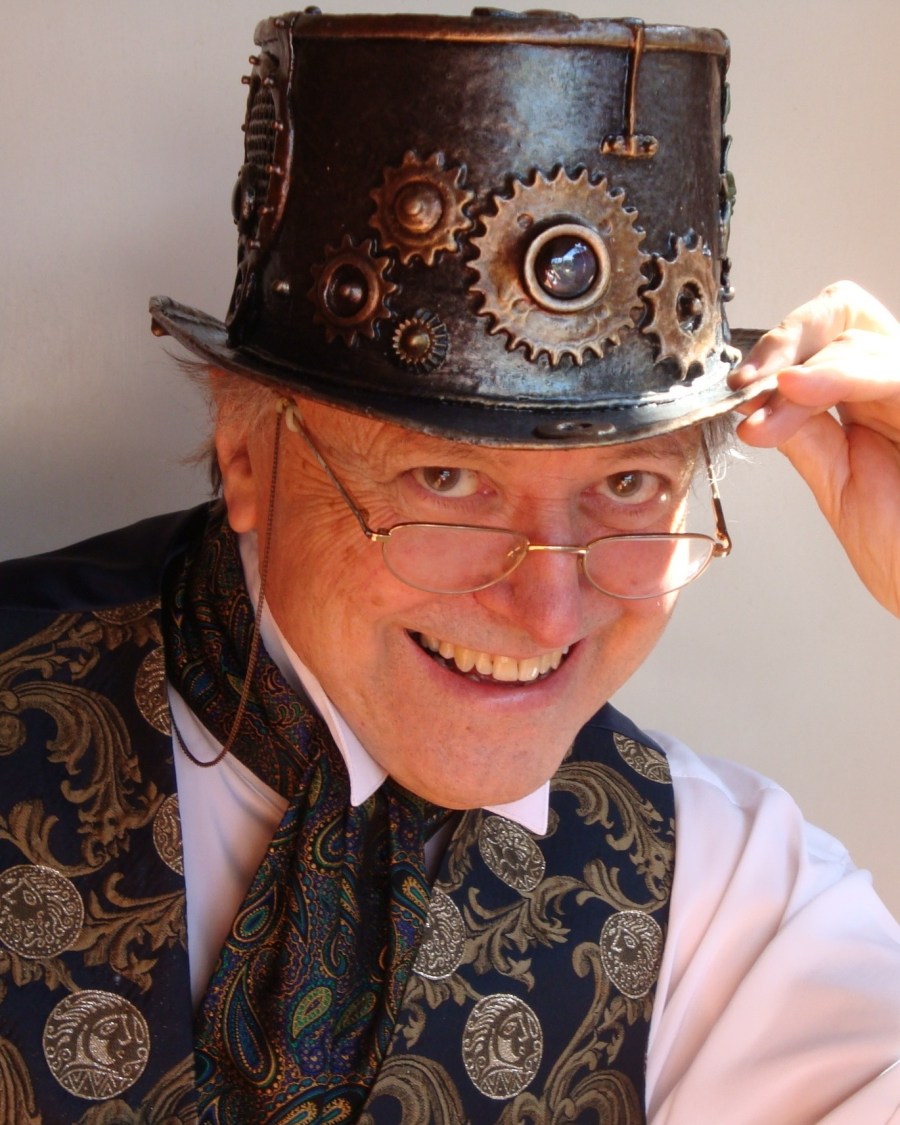
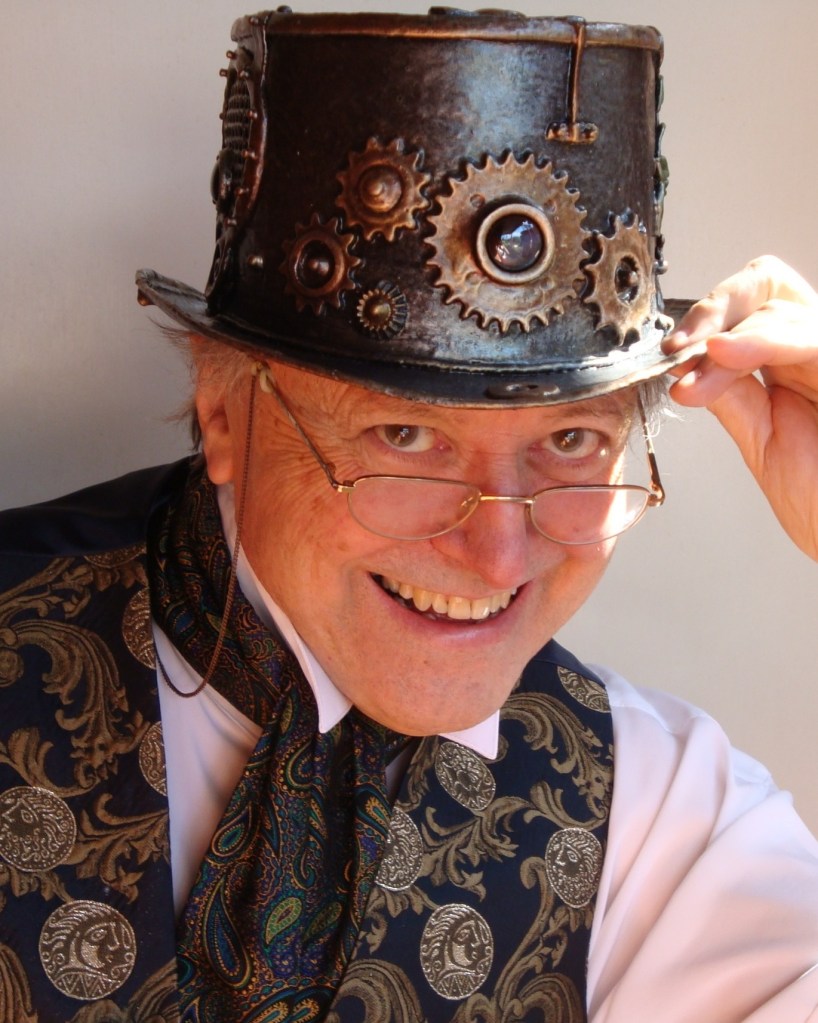
I’m the author who nearly wasn’t – it took me 25 years to beat writer’s block. In those 25 years, I migrated from England to Australia, became a singer/songwriter, a poet and then a university lecturer. But all I truly wanted to do was write speculative fiction.
Finally I finished my first novel, the comic macabre, The Vicar of Morning Vyle. With its prequel, The Black Crusade, it grew into a cult. When mainstream Australian publisher Pan Macmillan contracted my next novel, I resigned my lectureship, and I’ve been a full-time author ever since.
I live south of Sydney between green escarpment and golden beaches, with partner Aileen and Yogi the labrador. Writing, writing, writing … I have those 25 missing years to make up for!
My big international success has been with my YA steampunk novels, Worldshaker, Liberator and Song of the Slums. The French Le Worldshaker picked up the Prix Tam-tam du Livre Jeunesse. In the US, Worldshaker and Liberator were published by Simon & Schuster.
1) Tell us a little bit about yourself. How did you get into writing?
I’m a child of the enlightenment. I believe in science, rational thought, and the value of knowledge. At the same time, I’m fascinated by philosophical questions that stubbornly reside outside the sphere of scientific truth: the phenomenon of consciousness; the origin of the universe; the nature of time; and the formation of the first living cell. In my later years, the limitations of logic and reasoning have left me more receptive to the numinous in our world — a novice in the realm of spirituality. Above all, I strive to perceive beauty wherever it may exist.
I began writing independently of schoolwork when I was nine. As was true for many children of my generation, I was introduced to the world of poetry through the work of Theodor Geisel, a.k.a. Dr. Seuss. His book “Yertle the Turtle” was a particularly strong influence (though I had no idea at the time that the story was allegorical, a satire of Adolf Hitler). Not surprisingly, all of the poems I scribbled on shirt cardboard rhymed.
In my sophomore year of high school, I maintained a poetry notebook as part of the curriculum. But my interest in poetry really blossomed at Amherst College where, as a biology major on the pre-medical track, I took four rigorous poetry courses. During the last of these, in what I like to describe as an act of love masquerading as mania, I stopped attending classes, isolated myself from friends, ate and slept reluctantly, and spent five straight weeks writing a metaphysical poem on the theme of subjective versus objective reality. This represented my first serious attempt to write poetry.
2) What inspired you to write your book?
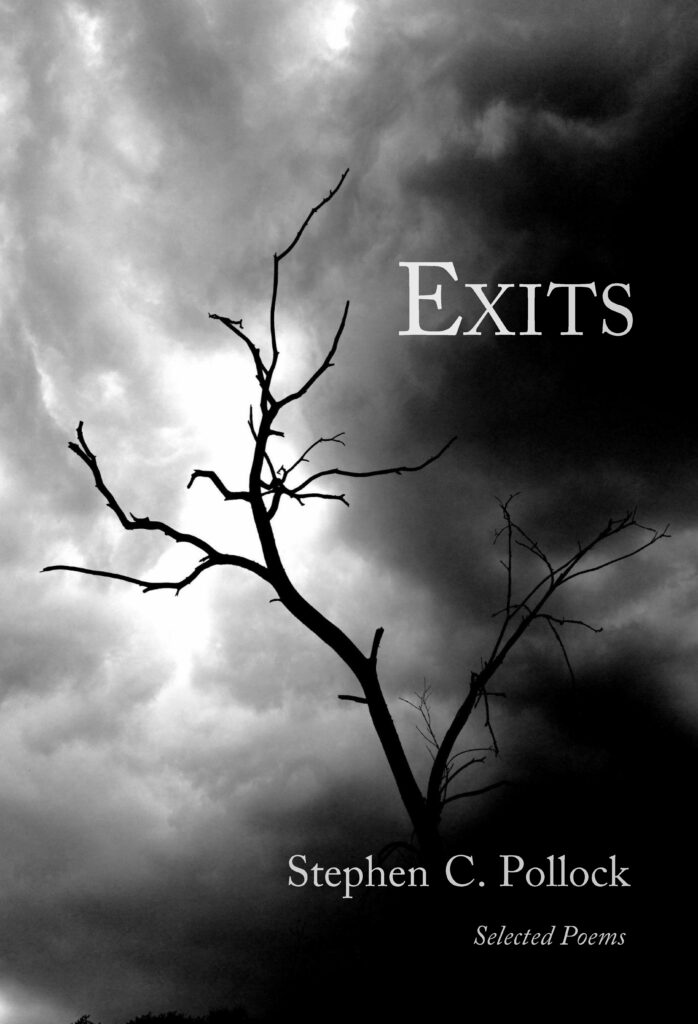
Most of the poems that appear in Exits were written between 2003 and 2021 without a book in mind. It wasn’t until two years ago that I decided to incorporate what I considered to be my best work into a book entitled Line Drawings. However,
during the process of reviewing my modest oeuvre, I noticed that a significant number of the poems were related to one or more aspects of mortality. This led me to curate a more concise, themed collection of poems, and Exits was born.
One might wonder where the focus on life’s transience derives from. In retrospect, I can identify three sources. First, I was raised without any religious training, so from a very young age, I was left on my own to ponder the enormity of the universe, time and eternity, and the meaning of existence. My fear of death was such that I often fought against falling asleep, which to me resembled nothing so much as a rehearsal. Second, as a physician and neuro-ophthalmologist, I’ve cared for numerous patients with serious and/or life-threatening diseases. And third, since 1999, I’ve had to deal with the spinal cord variant of multiple sclerosis and the ramifications of that disease for life expectancy.
3) What theme or message do you hope readers will take away from your book?
Death is an integral part of life. It exerts a profound influence on how we think about the limited time granted to us and the meaning we attach to it.
Exits will resonate with different people in different ways. Some readers will gravitate to the visual imagery and nature metaphors. Others will enjoy the wordplay. Still others will find satisfaction in the resurrection of formal elements.
It’s important to keep in mind that we live in a time of great uncertainty. War, climate disasters, and a recent pandemic have led many to contemplate the prospect of their own demise. Exits speaks to this anxiety and angst. It also may provide fresh perspective on mortality, the cycles of life, and the possibility of renewal.
4) What drew you into this particular genre?
My mom, now deceased, deserves a great deal of credit in this regard. A lifelong visual artist, she made it a point to instill in her young son a deep appreciation for
art. I recall sitting on her lap at age four or five as she paged through artbook after artbook. As a result, I could distinguish a Monet from a Cezanne before I could read!
Over the course of my life, I’ve written in multiple genres, including: engineering and technology (U.S. Patent 4,477,158); clinical research articles published in medical journals; chapters in neuro-ophthalmology textbooks; business papers; short fiction; and poetry.
My attraction to poetry is multifaceted:
The thrill of creating art with words
Permission to access the subconscious
The marriage of sound and sense
The fact that anything can appear in a poem
The fact that anything can happen in a poem
The surreal, dreamlike, associative way that poems move the mind
The surprising connections and juxtapositions
Fun with form
The paradoxical precision of poetic ambiguity
Metaphor and the multilayering of meaning
The sonic extravaganza of rhyme, alliteration, assonance, onomatopoeia, meter, and non-metrical rhythms
Non-linear narratives
Emotional intensity
The potential to enlighten
The potential to console
Oblique routes to ineffable truths
5) What social media site has been the most helpful in developing your readership?
None! I’ve never had an account on any social media platform. The lone survivor of the Jurassic Period, I tend to use long-forgotten methods of communication, mainly face-to-face chats, telephone calls, and handwritten letters.
6) What advice would you give to aspiring or just starting authors out there?
Write poems that represent your unique aesthetic sensibilities. Try not to be overly influenced by prevailing trends or by contemporary poetic styles.
Edit mercilessly over an extended period. Satisfying first drafts often begin to show their flaws only after sufficient time has elapsed to afford an objective assessment.
Begin your foray into publication by submitting poems to literary journals. This will help you determine which of your poems resonate with experienced reviewers. Before each submission, make sure that your poem is a good fit for the journal.
7) What does the future hold in store for you? Any new books/projects on the horizon?
Given my age, history of MS, and undisciplined writing process, I’m doubtful that any additional books are forthcoming. But you never know…
About the Author
Stephen C. Pollock is a recipient of the Rolfe Humphries Poetry Prize and a former associate professor at Duke University. His poems have appeared in a wide variety of literary journals, including “Blue Unicorn,” “The Road Not Taken,” “Live Canon Anthology,” “Pinesong,” “Coffin Bell,” and “Buddhist Poetry Review.” “Exits” is his first book.
1) Tell us a little bit about yourself. How did you get into writing?
• I honestly don’t know why, but I’ve always wanted to be a writer. I have distinct memories of myself as a child, maybe five or six, writing stories and poems. I’d carry a notebook around with me everywhere.
• But what’s funny is that I was never much of a reader as a child! I had my favorites. I devoured Harry Potter and other books. But I don’t think that my drive to be a writer came from a love of reading.
• In college, I majored in English with a concentration in creative writing. As a part of my studies, I took workshops each semester, and that’s where I finally began to come into my own as a writer — developing my own voice and style instead of just mimicking other writers. I credit my professors at the time — Sharon Bryan, Darcie Dennigan, Penelope Pelizzon, Gina Barreca — with helping me find my voice.
2) What inspired you to write your book?
• To be quite honest, when I sit down to write poetry, it isn’t with a book or some greater collection in mind. All I’m doing is writing a poem. So I can’t really say that anything inspired me to write the book, because in my mind there never was a book — until there was.
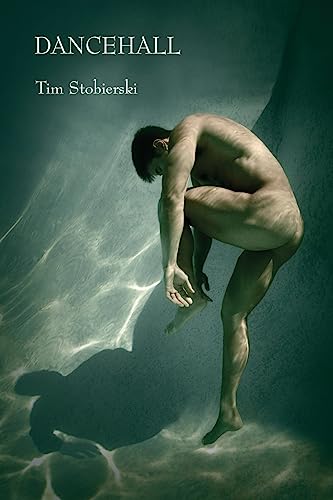
• That being said, with a few exceptions, I wrote these poems during the pandemic. The early days of the pandemic were very lonely for me. I was single during the lockdown, and found myself longing for human connection at a time when it was impossible to have. Those feelings of love and longing and loss really permeate the poems that eventually made it into the collection. In that way, writing Dancehall was a way for me to make sense of the world.
3) What theme or message do you hope readers will take away from your book?
• More than anything, I want readers to connect with the poems and come away with a sense that love is universal.
• The poems in Dancehall follow the narrative arc of a single relationship from start to finish. I call the book a queer love story, because I myself am queer and I see the book as coming from that perspective. But I also made very conscious stylistic decisions so that the poems would appeal to everyone — gay or straight, single or partnered, male or female or non-binary.
• You may notice, for example, that except for in two instances the poems don’t make use of pronouns. Instead, the speaker (“I”) is talking directly to the subject (“You”). I did this so that it would be easier for the reader to put themselves in the poem — either as the speaker or the subject — and feel the immediacy of the work.
• If I, a queer man writing about queer relationships, can write a poem that allows a straight person to feel something about their own relationships, then I think I’ve succeeded in my mission. It’s kind of cliche at this point to say it, but love is love.
4) What drew you into this particular genre?
• I think I was drawn to poetry because I myself read poems that triggered an intense emotional response in me, which made me realize that poetry could be powerful. Some of the most powerful poems I’ve ever read were short poems — under 10 words — and yet they had the power to conjure memories and emotions in what is really an awe-inspiring way. Once I experienced that, I knew that I wanted to learn how to do that myself. I wanted to make people feel something, and I personally haven’t found a better way of doing that than through poetry.
5) What social media site has been the most helpful in developing your readership?
• I have to admit, I’m terrible with social media. I use it mostly for personal reasons — staying in touch with friends, etc. But I’m starting to get a handle on it as a means of building my reader network! I’ve just begun sharing videos and pictures of my work on Instagram (timstobierski) and TikTok (tendre_croppes) and they’re definitely both powerful tools. I think TikTok has the most potential to get your work in front of millions of people quickly, but it’s also tricky to know what’s going to go viral or do well and what’s going to be a flop. I guess I’m still learning.
6) What advice would you give to aspiring or just starting authors out there?
• I think the most important bit of advice I have is to not let rejections get to you. If you submit a poem or a story or an entire book to a press and get a rejection, do your best not to take it personally. Brush yourself off, think critically about whether or not there’s a way you can make your submission stronger, and find a new press to submit to. Just because your work isn’t for someone doesn’t mean that it’s for no one.
• When I first pulled together the manuscript for Dancehall, it was very different from what the book now looks like. I was submitting it to contests and presses that wanted books of poetry consisting of 30 poems max, so that’s how I arranged the book. It wasn’t until I got my fourth or fifth rejection that I looked at the collection and thought, “Well, they keep turning me down when I send them what they say they want. I’m going to submit what I want.” I doubled the poems, reorganized the book, and gave the collection a narrative arc that didn’t exist before. And when I sent it out the next time? The book was accepted by not one, but two presses.
• The moral of it all: Rejections are a part of being a writer. So do your best to build up a thick skin.
7) What does the future hold in store for you? Any new books/projects on the horizon?
• The way I write poetry is slow. It takes time. I don’t set out to write a collection — they amass over time as I write a poem here or there and realize that a theme has emerged.
• Recently, I’ve been writing a lot about grief, tied specifically to my father’s death. I think that those poems will eventually form the body of a collection. Likewise, I’ve been writing more explicitly about my experiences coming to terms with my sexuality, and I think that will eventually form a collection
About the Author
Tim Stobierski writes about relationships. His work explores universal themes of love, lust, longing, and loss — presented through the lens of his own experiences as a queer man. His poetry has been published in a number of journals, including the Connecticut River Review, Midwest Quarterly, and Grey Sparrow. His first book of poetry, Chronicles of a Bee Whisperer, was published by River Otter Press in 2012.
To pay the bills, he is a freelance writer and content strategist focused on the world of finance, investing, fintech, insurance, and software. In his professional writing, he prides himself on his ability to help the reader understand complicated subjects easily, a quality that informs his poetry.
He is also the founder and editor of Student Debt Warriors, a free resource for college students, graduates, and parents who are struggling to make sense of the complex world of student loans.
1.When you got your very first manuscript acceptance letter, what was your initial reaction and who was the first person you told?
I was so nervous about being rejected that when I got the email, I made my husband read it watching his face carefully. Well, he has poker face so he kept me on edge until he said, “Wow, they love it and want to offer a contract! I immediately told my brother because he was the one who pushed me to write down the stories I’d dream up with my legos as a kid.
2.Post on how you came up with the plot and/or character(s) and/or worldbuilding:
I grew up on welfare as a kid. And I remember worrying where our next meal would come from and if we’d have enough money to meet rent. I dreamed up the fantastically wealthy Delomary family as a coping mechanism, shrinking myself into their world so I could escape the reality I was living in. For the worldbuilding, I was inspired by the works of L. Frank Baum and Tolkien. I created this fantasy world growing up during the Reagan years and imagined a world that was similar to ours only better, there was no crime or hunger or violence, and especially, free of racism and bigotry.
3. Have the character share a favorite recipe.
Elijah loves his Mom’s Roast Beef, slow roasted with onions, mushrooms and simmering in red wine (My mom put wine in almost every dish, I think it’s a Sicilian thing) served with mashed potatoes and peas.
4. If you could be a superhero, what would you want your superpowers to be?
I would definitely want to fly. In my books, I feature a lot of characters flying, floating and walking on air. I was inspired by Wu Xia movies from Hong Kong, where the characters can fly while they fight. I think this is so cool!
5: What is your favorite food.
Cheese, hands down,I love it sliced, in cubes or chunks, melted down and dipped with bread, stuffed into lasagna and shells and especially cheese pizza. I can’t get enough of cheese, to the chagrin of my doctor.
Advertisements
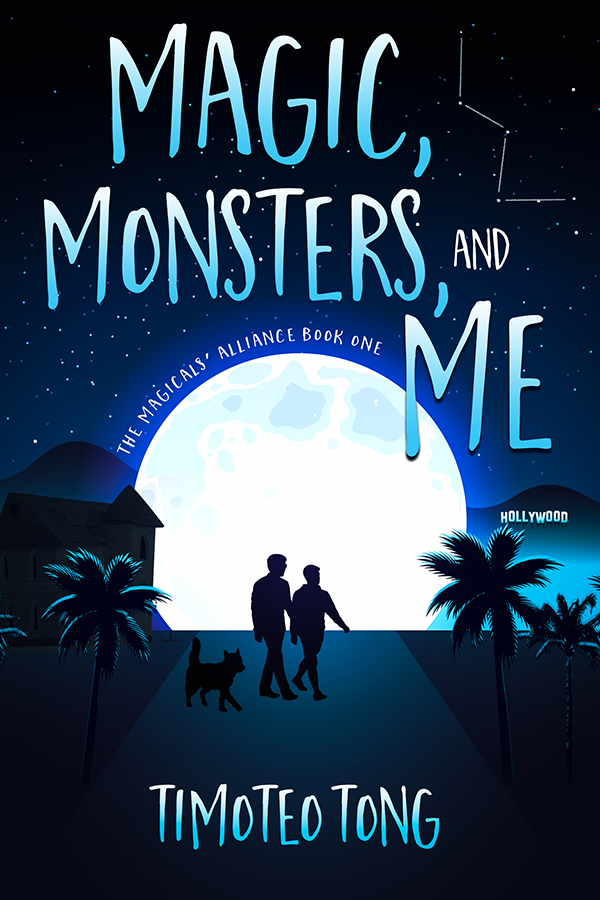
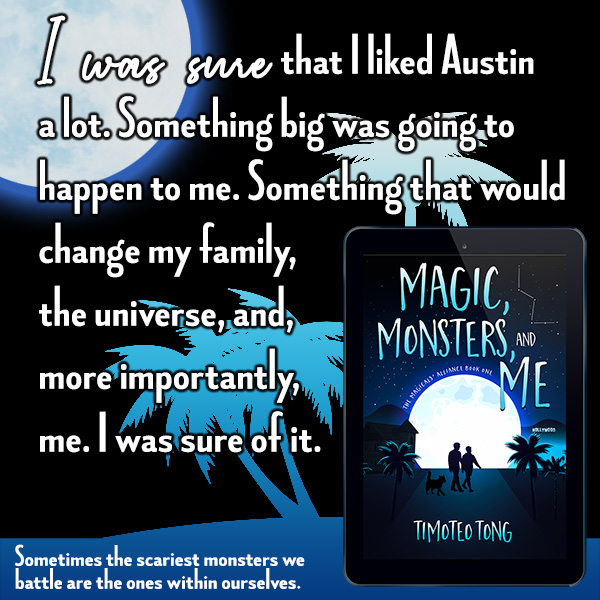
Timoteo Tong has a new MM YA sci-fi/fantasy/paranormal romance out: Magic, Monsters, and Me. And there’s a giveaway.
Sixteen-year-old Elijah Delomary loves the City of Angels. The sunshine, the palm trees, the ocean. He especially enjoys battling the monsters infesting the dark corners of the vast metropolis.
As he starts his junior year at Burbank High School he meets a new friend, Austin who also fights monsters to keep Angelenos safe. As their friendship develops and love blooms, Elijah’s arch nemesis Devlina reappears, threatening to use magic to destroy the world.
Elijah must now juggle pursuing his feelings for Austin, meeting the lofty expectations of his affluent and influential family, and fulfilling his destiny to combat the forces of evil and save his hometown.
Warnings: Bullying, racism, homophobia no HEA cliffhanger
Fifteen-year-old Austin Kang Jr., well over six feet tall, lean and lanky with a mop of black hair falling over his eyes, adjusted the thick black glasses on his face. He studied the white stone and glass mansion jutting out over a hillside on North Sunset Canyon Drive. The house appeared to have good feng shui, with a Southern exposure to allow absorption of positive chi, a panoramic view of the Valley below, and a clear path to the front door.
Feng shui was important to Austin and his parents. They believed it helped center their family and keep them grounded and safe. Austin and his parents were descended from a long line of Magicals called Glimmerers who could tap into a glimmer of magic and twist, turn, and manipulate it as if it were hot ore being turned into a sword.
Coaugelus, as they were known in the Old Language, the mother tongue of the Magicals, were a class of warriors. They defended Magicals and Ordinaries, or humans without magic, from dark forces, creatures, and monsters that lived in the dark shadows of Earth—a place called the Gloom.
Coaugelus, Magicals, and Ordinaries lived in the light in our world, also known as the Shimmering. Everywhere that the sun touched was part of the Shimmering. Austin, his parents, even the people driving by in cars, walking their dogs, and watering their lawns shimmered and lived in the light.
Long ago, the Gloom and the Shimmering met face-to-face in a great war that killed and destroyed countless Ordinaries, Magicals, and monsters. The war raged on and reached a crescendo. A Pàcifimenta, a treaty among Ordinaries, Magicals, and the Gloom was signed. The war ended. Peace settled over the Shimmering and the Gloom.
Still, many in the Coven, the collective of monsters in the Gloom, did not agree with the Pàcifimenta. They didn’t like that they had to sacrifice feeding on Ordinaries or haunting, possessing, or simply terrorizing them. Others wanted power to control the Coven, and to defeat the peace created by the Pàcifimenta. Some creatures didn’t like peace as part of their nature. These monsters were fought by Coaugelus like Austin and his family.
Austin loved three things in life: playing soccer (known as football back home in Hong Kong), listening to grunge music like his dad, and fighting the Coven. For Austin, being a Coaugelo gave him a purpose in life and a place where he felt like he belonged. He particularly enjoyed kicking, punching, and using Xem Sen Ou, the ancient martial art from Minerva in Old Earth in the Seventh Dimension where all Magicals came from.
He also fancied his PlasmX, a purple plasma staff that folded into nondescript metal object akin to a lighter that he always carried with him. He had used it only last night while hunting down a group of rather angry werewolves, or Malloupus, that were attacking tourists at the night market in Kowloon. Austin enjoyed watching the pure purple plasma slice through the heads and arms of werewolves that were in the middle of reaping the souls of innocent Ordinaries.
Austin loved saving Ordinaries from monsters.
“What’s our assignment?” Austin asked his parents.
“Trouble is breaking out within the Coven here in Los Angeles,” said Austin Sr.
Austin and his family spoke with posh accents, a holdover from when Hong Kong was a colony of the UK. “We’re here to investigate and report back to XAQ2,” continued Austin Sr.
“Bleedin’ hell,” Austin complained. “XAQ2 are wankers. Full of rules. Can’t we simply report to the Anti-Coven League and be done with it?”
“Xutactiendo Allégansa Qu’elicallen Duzo have moved more operations of the League from the clandestine to the legal,” said Austin Sr.
“What does that mean?” Austin asked.
“The Alliance is strained and weakened. As leaders of the Alliance, the Còngréhassa are trying to placate their counterparts in the Coven and maintain the Pàcifimenta. Part of that entails relying more on formal procedures. The League works in secret, whereas XAQ2 works through formal channels as the official body of the Alliance.”
“Tossers,” Austin said. “XAQ2 can all go to hell as far as I’m concerned.”
Austin glanced at his parents, who were standing beside him holding hands. His parents were madly in love, even all these years later. He wanted to be in love. He was going to find it—here in Burbank where he’d have four passions: soccer, grunge, being a Coaugelo, and being in love with a cute, wonderful, and smart boy. That was Austin’s secret.
Coaugelos shouldn’t kiss other boys, or so some said—at least, the old-timers in the Alliance. He didn’t care what they thought, but he worried what his parents would think. They were his best friends.
Austin fought and traveled all over the world with his parents. He was worried that if he told them his secret, they wouldn’t understand or accept him anymore. Losing the closeness with, and love of, his parents would hurt more than the bite of a Qu’muqa, a monster with green scales and ten mouths on two heads.
His parents worked as agents for the Anti-Coven League. When they got a new assignment from the League, they took on new day jobs for cover.
“What jobs are you supposed to be doing?” asked Austin.
“This time around, I manage a highly profitable import-export business specializing in Chinese antiquities,” responded his mother.
“Jolly right you are,” Austin quipped. “How many bloomin’ vases do we have?”
Austin Sr. frowned. “Too many,” he observed.
“What about you, Dad?”
“I run a gas station somewhere called Van Nuys,” Austin Sr. said.
Austin glanced at his mom and dad. “Looks like you got the shit job this time, eh Dad?” he said.
They all laughed.
“I ran a nail salon in Bangkok last time for six months,” Austin’s mother said. “I hate salons.”
“Yeah,” his father said. “I had to collect garbage in Berlin for a year. Remember?”
“How could I forget the smell? I had to be a maid in Buenos Aires.”
Austin tuned them out. This was one of his parents’ games: try to top each other in who had the worst fake job while they were out in the field fighting monsters for the League.
Austin caught sight of his cousin Barnhard “Barn” Wong strutting up the street toward him and his family.
Barn was Austin’s best mate. His father was Austin’s uncle. Austin was an only child, as was Barn. When they were together, they acted like brothers.
Barn waved, jumping up and down. Barn was always full of life and energy. Austin loved being around him. Life was better around his cousin.
“Oi, Kangs!” Barn shouted in Cantonese.
Austin noticed a red-haired boy with brown eyes and a band of freckles on his nose walking next to Barn.
Austin’s heart melted. He was the most beautiful boy Austin had ever seen—from Mumbai to London to New York and Tokyo and Sydney. He felt the universe shift inside him. He could feel the boy pulling him in as if Austin were a satellite circling the Earth.
Austin liked that feeling. His parents orbited each other, and like them, he wanted to circle this boy—forever.
Barn and the red-haired boy parted ways. Austin watched the boy walk across the street under the canopy of jacaranda trees, disappearing into a four-story white stucco Spanish colonial mansion.
“What’s my assignment?” Austin asked as Barn arrived, pausing to hug his uncle, aunt, and Austin.
Barn was affectionate and loved hugs and kisses, or smooches, as he called them. “Reconnaissance with my mate here? Hunting down Àzmadus? Orgmas?” Austin continued.
Barn high-fived Austin. “Let’s destroy monsters!” Barn exclaimed.
Barn was a Coaugelo like Austin. Barn’s extended family owned the Wong Aero-Magicals Corporation that made the PlasmX in factories in Chicago, Tokyo, and Bangkok as well as other equipment used by the Alliance to fight the Coven.
“You’re just a high school junior,” Austin’s mother said. “You need a break from hunting and fighting. You need to have fun!”
“You need to be a boy,” his father echoed.
“Killing monsters is fun,” Austin responded.
“Really fun, Auntie!” Barn added. “Austin can train at the Dáu Xhà, the dojo with Dáumo Máurso, the sensei.”
“Who?” asked Austin.
“He’s an Immortal—Mars, the God of War. He runs the best Dáu Xhà in the world. You’ll learn the most powerful Xem Sen Ou with him,” explained Barn.
“Oi,” Austin said, “training with an Immortal. That’s amazing.”
“He’s amazing,” Barn said. “He’s nearly ten feet tall, a knot of muscle, and his voice makes the earth tremble.”
“Sounds a tad frightening,” Austin admitted.
“He’s the God of War, mate,” Barn explained, nudging Austin in the side with his elbow.
“Fair enough,” Austin replied.
“He likes cats—he has a dozen at his home. He also likes hot dogs—a lot—and slushies,” Barn said.
“Yuck,” Austin said, rolling his eyes. “I hate slushies.”
“Let’s go to the Dáu Xhà after you drop your stuff off,” Barn said, “So I can introduce you to Máurso.”
Austin glanced expectantly at the moving truck, the boxes on the sidewalk, and his parents.
“Go,” his mother said in Cantonese. “Have fun, boys! And no killing monsters!”
“Oi,” Barn said, already ignoring his aunt. “There’s a poltergeist at Dirk Delomary’s department store in the mall—third floor, women’s hosiery. We can destroy it after we get hot dogs and hang with Máurso,” he said. “And I know a cute girl at Chicken on a Stick who’s an Encantreina. She can turn satay into powerful silver daggers that will kill any monster.”
Austin grinned. He loved Burbank already.
Author Bio
Timoteo Tong grew up on a quiet street in Burbank, a suburb of Los Angeles located in the San Fernando Valley. He dreamed of one day living in a Victorian mansion with many rooms filled with antiques and artwork. He imagined himself fighting monsters.Timoteo grew up and began writing stories of a family of fighters battling monsters to save humanity.
Timoteo currently lives with his husband and a plethora of houseplants in San Francisco. He enjoys reading, writing, drawing, naps and binge watching TV. He loves cheese pizza, Pepsi and Vans.
1) Tell us a little bit about yourself. How did you get into writing?
I first became interested in language as an art form in school, after being prompted to read the book Gormenghast by a temporary English teacher who was covering for our main teacher. (Sadly I cannot even remember his name to thank him!) Gormenghast, by Mervyn Peake, uses words like daubs of paint, to create imagery that is more than just the rendering of a scene or story. After reading it I had a new appreciation for words and the way they could be used to add character to something as simple as walking along a corridor. Conversely, at the opposing end of the artistic spectrum I have also always been in awe of particle physicist Richard Feynman. His ability to explain extremely difficult principles of physics to a casual reader through perfectly selected, but simple words, phrases, and analogies, is another use of language that I love to emulate.
My personal journey into writing did not start until years after leaving school, and has really only just begun. Through my exposure to the entertainment industry I have gradually found myself as the writer of several short screenplays and scripts, increasing in length, until taking on a novel was the next logical step. The rules and restrictions of writing in screenplay format have always felt extremely limiting in expressing complex ideas that do not take place through dialogue. And, since most of the concepts I am interested in exist within a kind of internal, cerebral space, writing a novel was the only way I could explore them freely.
I have spent most of my adult life freelancing between different disciplines, some in the world of entertainment – film making, working at media agencies, occasionally on-screen – and some working in tech – coding, consulting, R&D at software companies. There are so many weird and wonderful things that I have encountered that I would love to spend the time writing about, either as elements of a story, or in isolation in their own right. Hopefully I will get the time. There is so much I would like to share.
Advertisements
2) What inspired you to write your book?
Initially, SYMUTAL was an idea for a film – or rather the seeds of an idea. With the onset of Covid lockdowns in 2020 there seemed a perfect opportunity to flesh this idea out in much greater detail than I had ever intended. I dived headlong into writing it as a novel, then fully rewriting it… then fully rewriting the full rewrite… and again, over several iterations during the next few years. In addition to the story elements of the book, there are many ideas of computing and science that I felt have never been articulated particularly well outside of reference manuals or non-fiction. I wanted the reader to be exposed to some of the beauty that I feel is inherent in a scientific view of the world. Algorithms are beautiful, and they are everywhere.
3) What theme or message do you hope readers will take away from your book?
Firstly and foremost, I want the reader to have fun through the characters and their journeys. But beyond that I guess I would like people to understand the world around them as something that is in constant flux, composed of a continual conflict of ideas – every object being the expression of an underlying principle of science.
4) What drew you into this particular genre?
I don’t really see myself as having chosen a genre to write in, per-se – I don’t think I could write in any other genre. It just feels like I am expressing my inner self through characters and story.
5) If you could sit down with any character in your book, what would you ask them and why?
I would sit down with the meta-character The Hoshoku-Sha Corporation, and ask them to what end their progress was intended.
6) What social media site has been the most helpful in developing your readership?
I have no idea to be honest. I think that contacting real readers, such as yourself, and reaching out to them is likely to be more fruitful than any number of broader social media approaches. I am still gathering data.
7) What advice would you give to aspiring or just starting authors out there?
Since writing SYMUTAL, a few other people have asked me what my process was – people similar to myself who feel they have an idea to express but are not trained in writing, or are not experienced in writing long form content. I would say this:
Once you decide to write something, do it. Pin a sheet of paper to your wall and every night at midnight write down the number of words you have written that day. Never lie. Never cheat. Write the number. Your word count. Pin it somewhere so that you can always see it. If you don’t feel like writing that day, do it anyway. If the words feel like they are not coming out creatively that day, or you don’t have your “muse” with you, write anyway. Write something. Move the story forwards. Do it until you reach the end. No matter what. Every day. Until it’s done. Even if it is only one paragraph that day. Do it.
The reason I think people should adopt such a cold-mannered, relentless, Terminator-like approach, is that once they have finished the story they will want to rewrite it *anyway*. Guaranteed. No matter how good the first draft is, they will want to improve it. Nobody will be happy with their first draft…. Therefore, do not spend 12 months procrastinating on writing a single sentence because you want it to be perfect. It won’t be perfect the first time. So just write it, regardless of mood. Refine it on the next pass.
It is much easier to refine something that already exists (your first draft) into something you are happy with (your second, third, draft), than to create it perfectly all in one go. So you will save more time writing two drafts, fast, than you will by waiting for your first draft to come out perfectly.
8) What does the future hold in store for you? Any new books/projects on the horizon?
I am gradually making the book SYMUTAL into an independent movie. I am trying to honour the integrity of the book’s key principles, and shoot as much as possible in the style of the writing, rather than condense it down to a traditional script.
Once I have completed that I will start writing my next book. I find it difficult to overlap creative ideas and give each one my full attention.
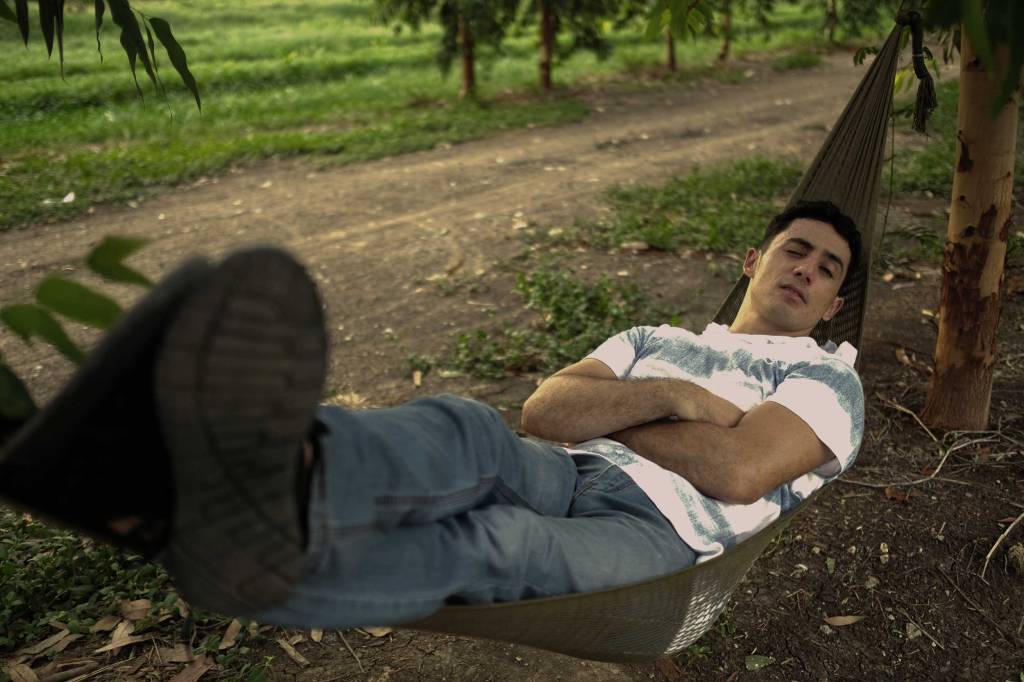
I have attached some photos. Not sure which ones match the interview questions. Use any you think fit.
Chilling in the hammock may well be the right vibe! 🙂
Advertisements
About the Author
I was born in Dubai UAE, moved to England when I was 5, and grew up in London. Currently I live in Bangkok Thailand with my girlfriend. My background has been a mix of different careers and locations, with a lot of technology roles (I have spent a lot of time as a programmer, and digital nomad), and have also had a few forays into the entertainment industry. Suffice to say I find it difficult to completely categorise myself in any normal, sensible way!
Much of this contrasting medley of places manifests itself through my writing, and will be apparent in the book Symutal, whose story is interwoven between Earth, the Moon, and virtual reality, but with a strong interlinking storyline. It is speculative, dystopian fiction, but with occasional scenes borrowed from my own experiences.