Interview with Author Gary Simonds

1) Tell us a little bit about yourself. How did you get into writing?

Well, I spent most of my adult life as a neurosurgeon, practicing first in the Army and then at big academic medical centers. In my job, I had to write a lot for all sorts of reasons—patient care, research, education, administration, and the like. And several years ago, I became interested in burnout in healthcare workers and co-wrote three books on the subject with a clinical psychologist friend of mine. But, I always found writing non-fiction to be laborious and restrictive. Then, I retired from clinical neurosurgery and immediately felt liberated and driven to write fictional works. And I have to say, I’m enjoying the heck out of it. Perhaps it’s the freedom to go anywhere I like, create any scenario I like, color well outside of the lines.

Advertisements

2) What inspired you to write your book?

Through the several decades I practiced neurosurgery, I always tried to bring as many interested parties as possible into my world and show them the ropes. I would routinely bring learners of all levels into the operating rooms and ICU’s and trauma bays—graduate students, undergrads, high school students, and other “civilians.” There was an endless stream of people who wanted to get a peek behind the curtains. So, when I finally had a bit of time on my hands, I decided to write about it—hoping to continue to shine light on that world.  But straight-up descriptions felt too didactic, too sterile. Weaving it into a fictional story, however, seemed more promising. It allowed me to explore related feelings and reactions to it—get into the emotional underbelly of it. And to really plumb the humanity of it all. And, I thought it might prove more immersive, more palpable, more real for the reader—put the scalpel into their hands, allow them to wield the screaming high speed cranial drill, have them try to stop the bleeding deep in the patients brain. 

Also, a major fictional thread in the story is a paranormal one. I was raised by a Scottish mother and grandmother and they were ardent believers in ghosts, both routinely relating their own interactions with the undead. So, I have always had a fondness for ghost stories and I figured that one might merge well with an exploration of the neurosurgical world.

Finally, I am very interested in the impact healthcare has on the psyche of its providers. It is a tense and frenetic world, and I wanted to portray how the wheels might come off on an over-dedicated provider who cannot find a way to step away from the fray, even for a moment. 

3) What theme or message do you hope readers will take away from your book?

Oh, I’d love to open up many channels of consideration for them. The fragility of life. Science vs spirituality. The cost of doing good. What comes after life. The possibility of entities that science can’t define (ghosts, angels, etc). The dedication of so many caregivers. The medically miraculous time we live in. The power of love. The need for work and communication in a marriage. The need to support one another through periods of crisis. The importance of friends. 

Ultimately, a message that came through to me as I wrote the book was that life is so darned fragile, that arbitrary personal disaster can happen to any of us any minute of any day, and that we should thus remember to enjoy, cherish, and celebrate every minute of the miracle of life and those we share it with. Make the most of every second, for it truly could be our last. 

4) What drew you into this particular genre?

As I noted earlier, I was bathed in the paranormal throughout my childhood. And when I wasn’t hearing ghost stories from the Scottish side of my family, I was reading them. But I think a career of spending so much around the dead and the dying drew me in deeper. I started thinking about how if there was a world of ghosts and spirits, and they were somehow inclined to reach out to the living, perhaps their first candidates would be the people who spend so much time near the transition zone, the bridge—if you will—between life and death. Doctors, nurses. Those who populate the ICU’s, operating rooms, and emergency rooms of our major medical centers.

Introducing BookBaby Editing Services. The first truly affordable book editing solution designed for self-publishing authors.

5) If you could sit down with any character in your book, what would you ask them and why?

Well, the main protagonist, neurosurgeon Ryan Brenan can’t see the damage his workaholism is doing to his marriage, his family, and his own psyche. He is unable to step away from his work for even a minute, even during his brief periods at home. I would want to discuss with him whether this was making him happy. Whether he believed it made him a better doctor or might actually be compromising his ability to care for his patients. Whether he felt it was sustainable. Whether he believed he could look back at the end of his life and be happy with his choices. Whether it was realistic for him to see himself as the soul driver of quality on his team. What kind of lessons he was giving to all the learners around him (and his children) about how they should conduct their professional lives. 

I would also like to explore with him whether, in the end, he believed the ghosts were real. And the implications of his answer. 

6) What social media site has been the most helpful in developing your readership?

I was hoping you would clue me in on this one! A lot of Facebook friends tell me they can’t wait to read the book. I spent a fair amount of time and effort on Twitter but it somehow closed down my original account so I had to start up new one and don’t have thousands of followers. But, I felt waves of interest in my literary posts there anyway. I am currently planning out some related videos for Tik Tok, You Tube, and the like. We’ll see.

7) What advice would you give to aspiring or just starting authors out there?

I think writing is likely very personal. So, I suppose, I would advise finding one’s own routines, rhythms, inspirations etc. I resonated with some of Stephen King’s advice. That is to read a lot. And write a lot. And let the story take me where it wants to go. Personally, I tend to spill out onto the page – verbal dysentery, if you will. With only a roughly sketched overall structure. Then, I edit and rewrite like crazy. Over and over again. Cut a lot. Save some for other stories. Keep editing and rewriting. This book started at 260,000 words (it’s now 100,000). I’m lucky, I enjoy editing/rewriting. But I get that others are super careful writers. Each sentence is well crafted. Each word is carefully chosen. Not many rewrites needed. More power to them. Do it! But that isn’t me.

Then, I suppose, I would recommend writing for oneself, not a market. I know this is not very original. And that I am not depending on writing for a livelihood. But if one can write for oneself with no real eye on pleasing people, I have to believe that it will make, and keep, writing genuine, and fun. Super fun. A blast. It allows for maximum creativity. And opens up all sorts of channels in one’s own mind. New discoveries about oneself and about the world around us await around every corner. And we are free to explore them. 

ABN Banner

8) What does the future hold in store for you? Any new books/projects on the horizon?

A YA soccer novel is written and is in about the twentieth rewrite. No ghosts. But fun. And I have the opening chapters of a dystopian novel—hopefully with a new angle—written.

What I would really like to get into, now that the pandemic is kind of over, is meeting with, and discussing a wealth of topics with interested readers and learners. I’m willing to sit down with any book club, reading group, class, organization, club, professional group, etc. and take on any subject raised by the book or that is in my wheelhouse of expertise or quasi-expertise (or no expertise at all!). We can certainly meet on zoom (yuch) or preferably, in person. Subjects I might be able to shine some light on include:

Burnout, wellness/resilience, work-life balance, psychological distress, peak performance, death and dying, the bravery and grace of the sick and injured, ghosts, the paranormal, the interface of science and religion/spirituality, leading a full life, music, exercise, health, why kindness matters, living simply and sustainably, critical communications, breaking bad news, critical thinking, gratitude and humor in life, why burnout is often self-inflicted, team sports, sports injuries, soccer, reading, writing fiction, ideas for books and stories, research, reading scientific literature, Neuroscience (wide range of topics – e.g. concussions, spine injuries, Parkinsons Disease, brain tumors, strokes, brain surgery, spina bifida, brain infections, head injury, hydrocephalus, seizures, etc.), history of medicine, the healthcare universe, healthcare careers, healthcare socioeconomics, medical ethics, medical education and education in general, applying to professional schools, advocacy, the medical legal world, compassionate care, life in medicine, facing serious illness, and more. 

 In addition, I swore that I would teach myself the bagpipes. So, here we go!

Advertisements

About the Author

Gary Simonds practiced the full breadth of neurosurgery for decades in the US Army, Geisinger Clinic, and as the Chief of Neurosurgery at the Virginia Tech Carilion School of Medicine. He has performed thousands of highly complex procedures on adults and children and cared for tens of thousands of patients. In addition to his expertise in neurosurgery and the neurosciences, he is interest in an array of related subjects including: medical ethics, medical socioeconomics, humanism, doctor patient interactions, patient advocacy, and burnout and psychological distress in healthcare workers. He has co-authored with Clinical Psychologist Wayne Sotile three non-fiction books on burnout and resilience in healthcare workers and has recently written a related award-winning novel, Death’s Pale Flag. Gary stepped away from clinical neurosurgery in 2020 but still teaches undergraduates and medical students at Virginia Tech. He lives in Black Mountain NC in a log cabin with wife, Cindy, and border collie, Hamish, and is excited to connect with his readers and interested parties over a range of subjects.
https://a.co/iqShk7v

Interview with Author Tucker Lieberman 

Tell us a little bit about yourself. How did you get into writing?

Now and then, JFK comes to someone in a dream and says: “We choose to go to the moon. We choose to go to the moon in this decade and do the other things, not because they are easy, but because they are hard, because that goal will serve to organize and measure the best of our energies and skills, because that challenge is one that we are willing to accept, one we are unwilling to postpone, and one which we intend to win, and the others, too.” It’s a command, you see, not just commentary.

Advertisements

What inspired you to write your book?

We live with the possibility of sudden violence from other humans. Violence can be “random” in the sense that the victim doesn’t deserve it and has done nothing to attract it, but at the same time it may not be random in the sense that the perpetrator has motivations and drops observable clues by which others may predict their behavior. Anyway, I was thinking about how workplaces are generally unequipped to handle this. I was also thinking about how someone’s identity — not only their personality, but the social categories they belong to — can affect that type of experience and interaction.

What theme or message do you hope readers will take away from your book?

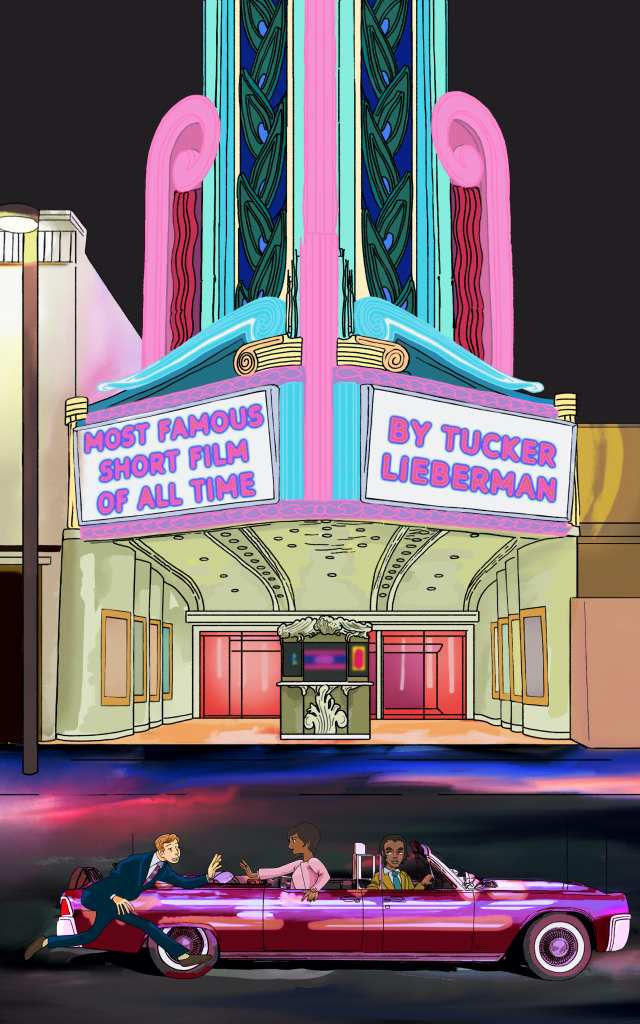
The novel is long, and it has a unique structure. Reading the whole thing, or at least large parts of it, is key to the learning experience I hope people will have. As Lev reflects: “Reading becomes a ‘novel’ when we notice we must grant our time.” This novel is about a couple thousand things, so each reader will have a different takeaway. Potentials are there. We don’t exhaust our possible personal takeaways from any book until we spend a lot of time with it. The question then may become: Why read this book and not another? My answer there: Most people have never read a novel narrated by a transgender character written by a transgender author. I, as author, chose to give the opportunity for an extended experience, and the reader (if they grant their time), can accept that opportunity. It may take a couple more hours to read Most Famous Short Film of All Time than it would take to read a novel with fewer pages or faster story pacing. Some of what can be learned or felt here is different than what’s offered by a book that’s shorter or a book that isn’t trans. A meta-question, then, is why we grant our time to some books and not others. There isn’t a universal answer. My novel keeps hitting its own brakes, prompting the reader to answer that question privately for themselves. It asks: Why are you here? Why don’t you read something else instead? What do you want to gain? Will spending more time here help you find it? Would you be more likely to gain an understanding from this novel if it were shorter and spoke more directly? Why does any learning require time?

What drew you into this particular genre?

Lev reflects, “Reading becomes a ‘novel’ when we notice we must grant our time,” and on the very next page he says: “’Invento el género,’ Unamuno says of his own work; I invent the genre. Or gender, if you are so disposed.”

If you could sit down with any character in your book, what would you ask them and why?

Lev exchanges words with his boss, and the boss may have power to change the situation, but the boss never really listens or cares. Lev spends a lot of time wishing he could talk to his friend Stanley, and Stanley does care and engage, but he speaks in riddles without yielding up a lot of actionable information. His friend Aparna, by contrast, tends to speak more directly. If I wanted to ask one character for general information or advice—information about me, more so than about them—I’d take all that in mind. But if I wanted to know more about the other character? I suppose one conversation that might kindle a motor is with 1962 JFK, when he shows up in Lev’s dream in 2015. “We’re having a conversation, JFK and I,” Lev says. The first thing Lev asks JFK is: “How terrible am I?” JFK helps himself to Lev’s whiskey and is impressed by Lev’s apartment, and he says Lev can be his vice president. It’s more of a command than an offer. We never find out why he says that. (Although there are hints, having to do with the life cycle of cicadas, and perhaps with something Stanley says to Lev a year later about what’s “tel-evidente.” Readers can make what they like of it.) If I could pick a conversation to have, I’d be in the room with JFK and Lev, and I’d extend the dream a minute longer. I’d assume the dream-version of JFK has a fictional reality that is equal to Lev’s fictional reality, and I’d ask JFK why he appears to Lev in this dream.

ABN Banner

What social media site has been the most helpful in developing your readership?

In the past, I’ve connected with many people on Twitter. Unfortunately, one month after my novel’s publication, Twitter’s ownership changed, and Twitter itself changed. The man who bought Twitter for $44 billion — a massive overpayment — did so, by a common interpretation, because he has a personal vendetta against all trans people. When I talk about the importance of reading books by trans authors that are about the ways trans people experience and respond to structural power and to individual threats, this is part of what I mean. Anyway, Twitter was a good exercise for me in short-form communication, but I’m better at long-form writing, so these days I’m focusing on blogging on Medium. I’d recommend that writers try a paid membership there for a solid opportunity to read and engage in substantive ways, on a website where the human and algorithmic curation gives us a real chance.

What advice would you give to aspiring or just starting authors out there?

Find other writers whose opinion you’d value, and ask them to read your work. Make a fair trade. Reciprocate by reading their work, or else pay them, so you can get real feedback. Listen to the feedback. Make 90% of those changes. When an editor tells me I ought to change something, my default assumption is that they are correct. My experience working through a long list of marked-up passages is that my original wording is right only 10% of the time. Also, I prefer to reach out to one reader at a time so I can make changes and send the improved draft to the next reader. That assumes I’m prepared to iterate and wait for each person’s response separately. The calendar has to cooperate. For a novel, since each professional reader usually needs at least a month of turnaround time, this process takes a year or more. The advantage of taking so much time to edit the novel is that meanwhile I’ll grow as a person and my personal growth will guide the novel. Novels take time. “All novels are about time,” Lev says.

What does the future hold in store for you? Any new books/projects on the horizon?

I’ll be at the AWP conference in Seattle in March 2023. I’m enjoying writing online articles on Medium, and I’m doing a five-year anniversary update to one of my nonfiction books.

Advertisements

About the Author

Tucker Lieberman is the author of the nonfiction Painting Dragons, Bad Fire, andTen Past Noon, as well as a bilingual poetry collection, Enkidu Is Dead and Not Dead / Enkidu está muerto y no lo está, recognized as a finalist in the 2020 Grayson Books Poetry Contest and nominated for the 2022 Elgin Award by the Science Fiction and Fantasy Poetry Association.

His essay on a horror film appears in It Came From the Closet (Feminist Press, 2022). He’s contributed to three anthologies recognized by Lambda Literary: Balancing on the Mechitza (North Atlantic Books, 2011 Lambda winner), Letters For My Brothers (Wilgefortis, 2012 Lambda finalist), and Trans-Galactic Bike Ride (Microcosm, 2021 Lambda finalist). His flash fiction was recognized in the 2019 STORGY Magazine Flash Fiction Competition.

His husband is the science fiction writer Arturo Serrano, author of To Climates Unknown (2021) and contributor to the Hugo-winning blog nerds of a feather, flock together. They live in Bogotá, Colombia.

https://booklife.com/project/most-famous-short-film-of-all-time-80120

Interview with Author LindaAnn LoSchiavo 

1) Tell us a little bit about yourself. How did you get into writing?

Three fortunate circumstances helped me develop into a writer. 

The first influential factor in my life was the privilege of being born in New York City and being exposed to rich cultural experiences as a child.   For example, my relatives took me to the American Museum of Natural History, the Hayden Planetarium, Museum of Modern Art, Carnegie Hall, and Broadway shows.  By age six, after the theatre, I started buying a copy of the  drama or musical we’d just enjoyed at a wonderful place in Times Square, The Drama Bookshop.  I wanted to be better equipped during dinner table discussions of the play.  These formative experiences, rooted in The Big Apple’s vibrant cultural milieu, played a pivotal role in shaping my intellectual curiosity and nurturing my appetite for the arts.

The second factor was growing up without a television but with easy access to a library.

The third factor was being surrounded by adults – with limited access to children my own age unless I was in a classroom. Since my parents could not afford to finance a mortgage right away, we lived in a large house with my maternal grandparents and unmarried aunts until I was 4 ½. This household served as a hub for buying and receiving numerous birthday and holiday cards, providing me with ample exposure to bad poetry.  Even as a child, I was critical about awkward rhymes in Hallmark cards, so at age three and a half I launched my own greeting card line. I wrote the verses and one of my aunts illustrated each card. Lots of praise (by our relatives) launched a young formalist.

By age four I was being taken to numerous Broadway matinees.  This made an impact.  By age nine, I had my first one-act play onstage with a cast of five actresses (recruited from my Girl Scouts chapter); it ran for several months in NYC.   Also at age nine, my first poem (“The Tiger”) was published in a school magazine.   At age 15, a short story (“No Way Out”) that I had written for my high school magazine won a gold medal for literary achievement. There has never been a time when I did not think of myself as “a serious writer.”

Advertisements

2) What inspired you to write your book?

Pure serendipity.  At the time, I had been circulating a 29-poem manuscript, “Women Who Were Warned.” But Beacon Books’ poetry imprint UniVerse Press does not let a poet upload a full manuscript. Instead they want a proposal with a writing sample. As I awaited a response, “Women Who Were Warned” found acceptance from Cerasus Poetry in London, rendering it unavailable for publication anywhere else.  Moreover, UniVerse Press wanted a full-length collection –   and by October 1, 2022.  Opportunity and a deadline blew the whistle.

3) What theme or message do you hope readers will take away from your book?


Apprenticed to the Night” weaves together the tapestry of everyday encounters with the extraordinary.   Until the pandemic, I had deliberately omitted revealing my supernatural experiences in my writing.  I’m hoping that readers will be open-minded.

4) What drew you into this particular genre?

Since childhood, I’ve been aware of metrical verse and memorized a lot of poems. Writing formal verse comes naturally to me.

Advertisements

5) What social media site has been the most helpful in developing your readership?

Twitter has a thriving literary community with hashtags such as #amwriting, #poetrycommunity, and #bookbloggers.  I’d love to connect with more reviewers on TikTok a.k.a. #BookTok.

6) What advice would you give to aspiring or just starting authors out there?

Read widely and immoderately.   Be on the alert for online writing workshops, especially the no-fee options.  For example, Sundress Academy’s Poetry Xfit meets from 2-4PM EST on the third Sunday of every month.   All events are free and hosted via Zoom, which can be accessed at tiny.utk.edu/sundress.

7) What does the future hold in store for you? Any new books/projects on the horizon?

My eerie fully illustrated Samhain-themed collection “Always Haunted: Hallowe’en Poems” is with a publisher who requested it. (Fingers crossed.) While I am polishing a full-length poetry collection on ghosts, “Dark and Airy Spirits,” I’m finishing up two other chapbooks. One is devoted to suicide poems and the other is inspired by the poignant journey I took with my terminally ill mother when I was her sole caretaker.

Advertisements

About the Author

Native New Yorker LindaAnn LoSchiavo, a four time nominee for The Pushcart Prize, has also been nominated for Best of the Net, the Rhysling Award, and Dwarf Stars. She is a member of SFPA, The British Fantasy Society, and The Dramatists Guild.

Elgin Award winner “A Route Obscure and Lonely” (US: Wapshott Press, 2019), “Women Who Were Warned” (UK: Cerasus Poetry, 2022), Firecracker Award, Balcones Poetry Prize, Quill and Ink, Paterson Poetry Prize, and IPPY Award nominee “Messengers of the Macabre” [co-written with David Davies] (US: Audience Askew, 2022), “Apprenticed to the Night” (UK: UniVerse Press, 2023), and “Felones de Se: Poems about Suicide” (Canada: Ukiyoto Publishing, 2023) are her latest poetry titles.

In 2023, her poetry placed as a finalist in Thirty West Publishing’s “Fresh Start Contest” and in the 8th annual Stephen DiBiase contest.

LoSchiavo is a Prohibition Era historian and her Texas Guinan film won “Best Feature Documentary” at N.Y. Women’s Film Fest (Dec. 2021).

― ― links ― ―

https://linktr.ee/LindaAnn.LoSchiavo

Tweets by Mae_Westside

https://universepress.net/product/apprenticed-to-the-night/

https://www.youtube.com/channel/UCHm1NZIlTZybLTFA44wwdfg

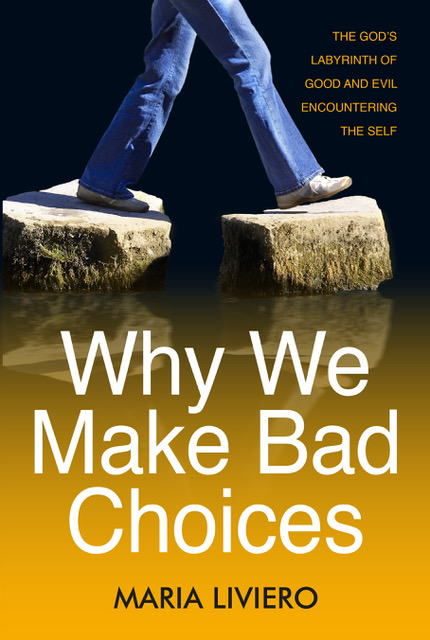
Interview with Author Maria Liviero

Tell us a little bit about yourself. How did you get into writing?

I live in the UK near London with the many ups and downs of writing I am passionate to share how personal struggles can create an empty canvas to recreate your life because there is no end but a beginning. 

I feel passionate to show how suffering is an important part of life that must not be repressed or pushed aside by using a person, a thing, or a situation to relieve us from inner despair but take the experience to evolve emotionally, mentally, and spiritually. The message is that a mistake is never a mistake, it’s the human brain relearning.

How did I get here? 

That is a question. I left school with minimal qualifications, and my writing skills were less than average therefore I struggled with writing.  While in London, I worked as a lifeguard, a colleague planted a seed of return to education and during that time I was reading a renowned book “Road Less Travelled” by Scott Peck. The seed and one sentence from the book changed my life. I returned to studying, which I found challenging, and was diagnosed with dyslexia in the final year of my degree. During my studies, I realized my creative expression was in the form of writing, and in time my writing skills improved immensely. For me, creativity is a place of solace where I can connect with myself and feel alive. 

Advertisements

What inspired you to write your book?

To cut a long story short, I had my own life challenges that forced me to look at myself and my dark side. During my time in therapy, I became conscious of my dark side meaning that I was aware of how negativity can take hold without you realising. Being self-aware so crucial because it’s the first step to knowing ourselves. Labeling our dark side as bad is likely to cause us to suppress those traits which causes more harm. Fundamentally, we must bring those parts of ourselves to awareness not only for ourselves but for the collective well-being as well. 

Once I reconnected to my authentic self, of course, I continue to work on myself, I began to sense something inside of me that I can only describe as a creative force that seem to have a life of its own.  As I write the story unfolds in front of my eyes – I even don’t know what’s going to happen next. I do believe in a higher force or energy that I call God, but not align with the religious God that has pushed me to write this book in spite of the obstacles and challenges – and there were tough ones that tested every part of me. 

What theme or message do you hope readers will take away from your book?

Embrace and do not fear your dark side it’s there for you to transcend and be the person you meant to be without other people’s projections, transferences, negativity, and importantly your own destructive self-talk of blame, guilt, judgment, and shame, for example. 

What drew you into this particular genre?

I think it was a natural progression after completing a psychology degree, a Masters, and a psychotherapy diploma where the training emphasis was on transpersonal themes that seem to tap into my unconscious self. Plus therapy helped in tearing down my defenses and layers of the false self to connect with my authentic self which is also my soul qualities. I think when you surrender things just happen. 

Advertisements

What social media site has been the most helpful in developing your readership?

I actually don’t have any social media sites, for me I don’t have the knack for creating posts or the mind space to regularly or keep on top of social media. 

What advice would you give to aspiring or just starting authors out there?

For me, it was self-doubt whether I was good enough or if was it a fantasy that I could become an author. It was important to face the possibility that I may not have the aptitude for writing but I received positive editorial reviews and yours Anthony helped me to gain courage and self-belief that I have the skills to push this forward.  If the passion and desire are there any project requires consistency, discipline, and hard work. In spite of obstacles you must carry on even when it gets tough, and it will. 

On a practical level, I suggest finding yourself a good editor with credentials and a person who knows actually what they are doing when it comes to designing your cover and printing your book.  Because of my lack of experience, I managed to learn the hard way, nevertheless, the next book will be a lot easier to deal with.   I find marketing a challenge, no one told me how hard it can be to market your book requires a lot of time and resources so be aware. 

What does the future hold in store for you? Are any new books/projects on the horizon?

Continue where my passion lies which is writing, reflecting back I would have never imagined that I would be writing books as well as blogs.  Blogs were never for me but now I enjoy sharing my thoughts and experiences to hopefully support/help others.  I stepped out of my comfort zone and realized yes I CAN do this. 

My second book is currently with an editor, which may well be a series to Why We Make Bad Choices but the subtitle will be changed.  The thought came about a few days ago that the second book can be a continuum because it’s all about why we make bad choices. The first book was concerned with the collective unconscious and the second is related to how childhood experiences shape how we make choices later in adulthood.  This is told through relationships between criminals and their alibis. 

Advertisements

About the Author

Maria Liviero, based in the UK, has received an award for her first book that had been in the planning for five years. With the many ups and downs of writing, and to share how personal struggles can create an empty canvas to recreate the reader’s life, because there is no end but a beginning.

She obtained a psychology degree, along with MSc and diploma in psychotherapy. In her experience, the dark side of human nature is of equal or even greater importance—without being conscious of our shadow we continue to live in fear, discord with ourselves and others. Maria believes to understand ourselves we must travel the path of self-discovery. This can mean transcending our false ego to live a fulfilling life without the shackles that we have created like the internet, social media, mobiles phones, addictions, relationships, negative thinking (and behaviours), and statements.

Liviero’s passion is to show how suffering is an important part of life that must not be repressed or pushed aside by using a person, a thing or a situation to relieve us from the inner despair but take the experience to evolve emotionally, mentally, and spiritually.

https://www.maria-liviero.com/

Writing Journey Over Six Books (and 25 Years) by Jeannine Hall Gailey

Preamble

I started writing poetry when I was a kid. My mother let me borrow her college poetry textbook (circa 1969), and so I learned about T.S. Eliot, e.e. cummings, poetic forms, metaphors, and such things way before we would get around to them in school. I won a couple of poetry recitation contests in 5th and 6th grade, and the prizes were the collected works of Emily Dickinson and Carl Sandburg (I still have both). I think the first book of poetry I bought myself was the collected Edna St. Vincent Millay, when I was about 11.  

My first degree was in Pre-Med Biology. I meant to become a doctor—but I took creative writing classes on the side. When I graduated, my immunologist told me there was no way my health would allow me to complete medical school, as grueling as it was in the early nineties. So I decided to set my sights elsewhere. Soon I started my MA in English, where I was introduced to formalism, deconstruction, and other -isms (and made some good friends). When I graduated, looking to be able to support myself, I took a job as a technical writer. I was still writing poetry, but not seriously trying to publish, until a health crisis struck and I had to quit my tech job. My husband suggested pursuing my earlier dream of being a writer. 

Advertisements

Starting my Journey as a Poet

I tried out some local writer’s conferences (on scholarship) and seriously researching the literary magazine scene, volunteering for a few local literary magazines, and sending out work. I put together enough published poems for a chapbook, and got it published—my first little collection of poems, called Female Comic Book Superheroes.  I applied to a few low-residency MFA programs, and started one, taking a semester off in the middle for (once again) health issues. During that off semester, I sent out my first book manuscript and had it accepted, which was Becoming the Villainess, published by a (then-brand-new) press called Steel Toe Books in Kentucky.  The chapbook and book were considered “speculative” poetry at that time, not very common—poems about video game characters and superheroines were not common in the mainstream literary magazines, certainly not represented in the prizes. So I was a little out there. But it had a very positive response from young people, which I was very happy to see. If you can’t read and enjoy a few poems about comic book story arcs or mythological women turned to dragons when you’re young, then when can you?

Journey from First Book to Sixth

I felt very lucky with that first book—I had some modest success for a very new small publisher and a very small new poet. I was still able to travel more easily back then—making 20-hour car trips between Western Kentucky, Akron, and upstate New York. 

Now that I’m on my sixth book, Flare, Corona, with a great publisher, BOA Editions, I’m a little older, with a little more in terms of health challenges (MS among them), and I’m not physically able to do what I used to. However, with the pandemic, I learned some new skillsets—photography and gardening among them—and I read a lot. During the first months of the pandemic, I tried writing a few personal essays – and got them published in Salon. This book is the most vulnerable and more autobiographical than all my previous books. My previous books: Becoming the Villainess, She Returns to the Floating World, and Unexplained Fevers, I frequently wrote in persona—characters from mythology, fairy tales, anime, and traditional folk tales. In Field Guide to the End of the World, I created a fictional character navigating a fictional apocalyptic landscape (though it didn’t feel fictional in 2020!), so at least there was a little differentiation between the main speaker and myself. In Flare, Corona the speaker is essentially me, describing some incredibly difficult experiences. I had to figure out a way to write these poems in a way that was direct but felt comfortable. I found myself writing a kind of “mutant sonnet” as well as prose poems—forms that helped me hold difficult subject matter in place, so to speak. Some themes from previous books return—a supervillain perspective on coronavirus, apocalypse poems, writing about growing up in Oak Ridge and its radioactive contamination—and those poems allowed me to, for instance, address what I refer to in the book as “the plague years” in a way that felt real and not cliché. 

I’ve learned over the 20 or so years of publishing poetry books that one of the best things about the poetry world is making friends with the people in it—my publishers were, to the person, excellent human beings, and I consider many of them real friends and I truly grieved when I lost one of the them to cancer. I am very lucky to now have a bigger press—BOA Editions, who published some of my poetry heroes, like Dorianne Laux and Lucille Clifton—take my latest book, and I really am enjoying working with them as the book comes out into the world. Kindness to people becomes really important, and supporting other poets and writers as we go through our literary life is something I cannot recommend enough. I’ve been doing poetry book reviews for 20 years, and even if there is little monetary reward in it, I’m happy to have done it. Meeting friends I’ve made at a conference or a reading twenty years ago remains a great pleasure, even if I can’t travel as much as I used to. Community is important as a structure to support you and a structure to support other writers. 

My work itself continues to evolve—as I play around with form, and language, and persona. My next book must be impacted by the last few years, but I don’t want it to be purely about that, and may also involve some of the ideas that appeared in Flare, Corona—the desire or will to survive despite difficult conditions. There will probably be dragons in it.

Advertisements

About the Author

Jeannine Hall Gailey is a poet with multiple sclerosis who served as the 2nd Poet Laureate of Redmond, Washington. She’s the author of six books of poetry: Becoming the Villainess, She Returns to the Floating World, Unexplained Fevers, The Robot Scientist’s Daughter, Field Guide to the End of the World, winner of the Moon City Press Book Prize and the Elgin Award, and the newest, Flare, Corona from BOA Editions.  She has a B.S. in Biology and M.A. in English from the University of Cincinnati and an MFA from Pacific University. Her work appeared in The American Poetry Review, Ploughshares, and Poetry. Her web site is www.webbish6.com.

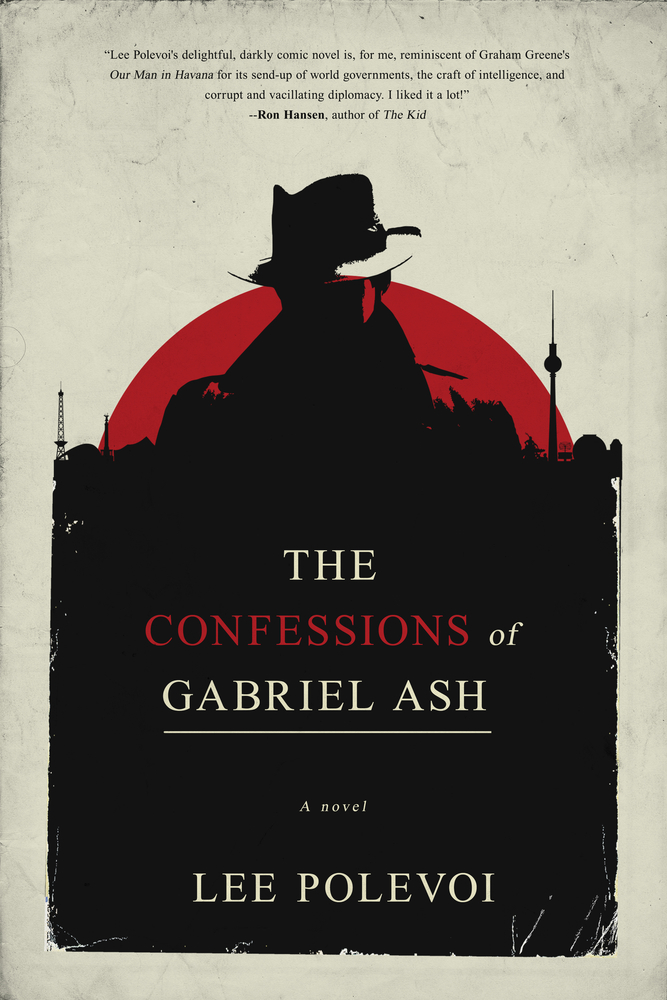
Interview with Lee Polevoi, author of The Confessions of Gabriel Ash

I recently reviewed The Confessions of Gabriel Ash by Lee Polevoi, calling it “Powerful, heart-pounding, and engaging … a must-read Cold War spy novel and political thriller you won’t be able to put down.” In this interview, Lee talks about his new novel and his writing career, and offers advice to aspiring writers.

Q  Tell us a little about yourself. How did you get into writing?

I’m a native of Cleveland, Ohio, and have lived in New England, San Francisco, New Orleans, and San Diego. My wife and I also lived for nearly two years in Cuenca, Ecuador, prior to the pandemic. I’ve worked as a zookeeper, screenwriter, temp office worker, and freelance business writer. 

I can’t recall a time when I wasnt writing. This grows out of a fascination with language, its properties and potential, and the work of a handful of deeply influential authors, including Robert Stone, Thomas McGuane, and John Banville, among many others. My first novel, The Moon in Deep Winter, was published in 2008, and I regularly review books for the online publication, Highbrow Magazine.

Advertisements

Q  What inspired you to write your book? 

In The Confessions of Gabriel Ash, I wanted to explore what happens when a high-profile character becomes embroiled in scandal and intrigue, largely as a result of his own hubris. It was my intention to portray this character (Gabriel Ash, a UN diplomat for a East European communist nation) at the height of his career and the rather sensational events that lead to his downfall.  

Q  What theme or message do you hope readers will take away from your book?

Aside from hopefully enjoying the experience of reading The Confessions of Gabriel Ash, I’d like readers to reflect on the theme, pride goeth before a fall. 

Q  What drew you into this particular genre? 

I’m a big fan of well-written political literary thrillers, including, most prominently The Untouchable by John Banville. I’ve also been intrigued by the murky undercurrents generated by decades of Cold War animosity. Part of the fun was creating a unique voice (from his confinement in a medieval castle, Gabriel Ash recounts the story of his downfall) that draws readers in and keeps them turning the page. 

Bookbaby.com helping independents – whether authors, publishers, musicians, filmmakers, or small businesses – bring their creative efforts to the marketplace.

Q  If you could sit down with any character in your book, what would you ask them and why?

I guess I’d sit the title character down and ask him point-blank, “How long can you play a role you don’t believe in?” and “Did you think you could keep living the high life and chasing women, without suffering any consequences?” The answers Gabriel Ash would give at the outset of the novel and at its conclusion might best describe his journey throughout the story.

Q  What social media sites have been most helpful in developing your readership?

Both Facebook and Instagram have been very useful in boosting awareness of my novel’s imminent publication. Social media is a great way of spreading the word to people who might truly enjoy The Confessions of Gabriel Ash. Reviews are already appearing on Goodreads

ABN Banner

Q  What advice would you give to aspiring or just starting authors out there?

First of all, understand that writing a novel requires a great deal of time and discipline. It means foregoing some social events, eliminating procrastination, and making a commitment to see the thing through. (The same principle holds for writing short stories.) Also, it’s important to read as widely and deeply as possible. You can learn a great deal about the craft of writing through a close reading of a favorite author’s work.

Q  What does the future hold in store for you? Any new books/projects on the horizon?

Hard to say. Several ideas are germinating just beneath the surface, waiting for the right moment to bloom into a full-fledged work of fiction.

Advertisements

Visit leepolevoi.com to learn more about The Confessions of Gabriel Ash by visiting leepolevoi.com. Follow Lee at www.facebook.com/leepolevoiauthor and www.instagram.com/leepolevoiauthor/

Interview with Author Ryan Bernsten 

1) Tell us a little bit about yourself. How did you get into writing?

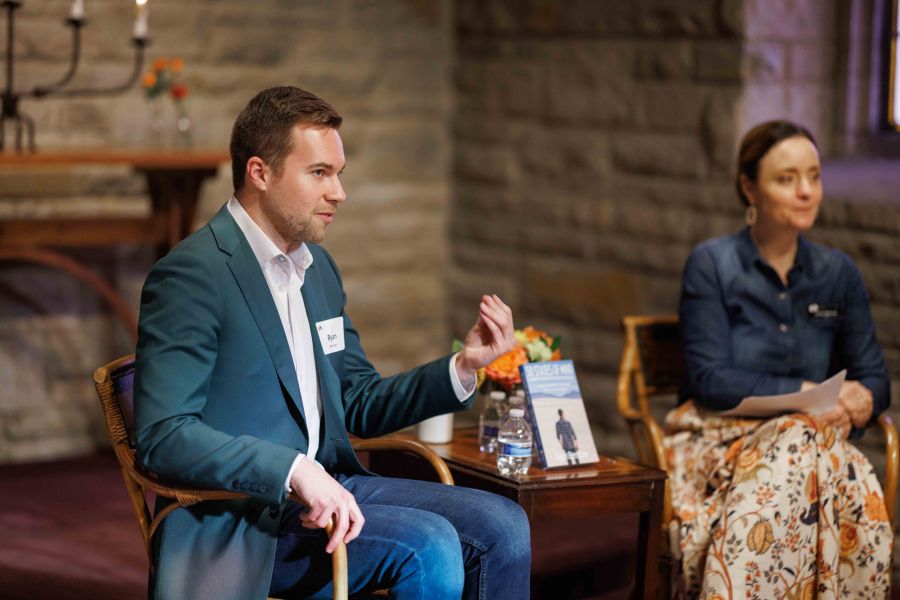
I’ve been writing stories from a young age – it started by writing little plays to perform with my friends and family. For me, writing is a conduit to commune with other people, and that’s why my interest has been primarily in playwriting – it keeps the lonely writer trope at bay and keeps art from becoming a solo sport. Writing to me is so much about collaborating, and that’s why this book – which has given me the opportunity to travel across the country to talk to voters and speak at colleges and bookstores – is such an exciting endeavor. 50 States of Mind the book is only the start of the conversation.

Advertisements

2) What inspired you to write your book?

My impetus to write the book was a combination of a lot of different seemingly serendipitous factors: like many in the United States, the 2016 election was a wakeup call. I had been working for the Florida Democratic party, and was totally stunned by the result and hungry to dive into the nuances and contradictions of the hugely consequential election. I needed to discover what I missed – I was a Northwestern-educated 26-year-old who had chosen New York City as his home, but also a Rust Belt native who grew up in a sometimes overlooked part of the Midwest. Because of this, I could empathize with not feeling heard by the rest of the country. These preoccupations led me to write an admissions essay to University of Oxford. When I left the U.S. for the U.K. in September of 2017, I had room to reflect on the events of the past year and, fortuitously, the opportunity to pitch a thesis project to my department. The 50 States of Mind idea – the opportunity to travel to all 50 states to speak to people on the ground, seemed to be the best way to dive into the heart of a divided America and see if there were answers to be found from the people.

3) What theme or message do you hope readers will take away from your book?

I think the message of the book, hopefully, makes the reader want to turn off the news, put down their phones, and get out there to fully engage in the ever-changing story of American democracy. We are made to feel that we have to think in black and white terms (or red and blue) about the problems in our country, but there is an awful lot of nuance and gray area surrounding these topics. I think those in power intentionally divide about so many inconsequential things – forcing us to take sides in cultural discussions that have little to do with our democracy – that we lose focus on the issues that matter most and get distracted from finding meaningful ways to make change. Our communities are the perfect canvas for us to get involved and make an impact, and it’s worth considering if we’re actually doing our part to make positive change.

ABN Banner

4) What drew you into this particular genre?

The works of travel nonfiction by folks like Bill Bryson who allows humor to illustrate broader points about society, Samantha Allen who fuses candid memoir with travel writing, and William Least-Heat Moon with the search for meaning among the regular folks in America all helped me reconsider what travel writing should or could be. Seeing what is possible in narrative nonfiction and borrowing what I admired helped me create a work of travel nonfiction that I see myself in.

5) What social media site has been the most helpful in developing your readership?

I really have come to loathe social media because I think it’s tearing apart our democracy (for more details, see the full book or audiobook!), however, I do like to keep people in the loop on Instagram.

BookBaby's Complete Self-Publishing Package includes eBooks, Printed Books and more - everything you need for your book launch!

6) What advice would you give to aspiring or just starting authors out there?

I’ve learned through the development of this book that you are only as strong as those who edit your work, and luckily I had brilliant editors along the way. The most important relationships a writer can cultivate is with someone who will give you honest feedback on relatively polished work. This could be a non-writer, but never, ever make that person feel taken for granted – buy them dinner, buy them a million drinks! These people are worth their weight in gold. And if you are a part of a writers’ group, be the person who reliably gives notes in a week or two. You’ll learn about your own writing by giving feedback to others, and you’re more likely to get careful feedback in return.

7) What does the future hold in store for you? Any new books/projects on the horizon?

I’m embarking on a speaking tour of U.S. libraries and bookstores next month, which couldn’t be more exciting since it’s quite parallel to the journey of the book. I’m also starting to develop 50 States of Mind into a stage play in the style of The Laramie Project as I hope to use my playwriting background to bring the diverse voices of those I met along my journey to life. 

Advertisements

About the Author

Ryan Bernsten is a graduate of Northwestern University and Oxford’s Creative Writing Master’s program.  Ryan is a contributor for The Infatuation and has been published in USA TodayThe FulcrumThe Oxford Political Review, and The Trevor Project, where he is the Senior Managing Editor. Ryan is an award-winning playwright whose plays have been performed across the US and UK. You may have seen him as a Slytherin contestant on Harry Potter: Hogwarts Tournament of Houses. ryanbernsten.com

Interview with Author David E. Feldman 

1) Tell us a little bit about yourself. How did you get into writing?

I got into writing by reading. I was a bit of a troublemaker as a child and I often skipped school. The way I got my education, for the most part, was by reading. I first fell in love with science fiction in my early teens. I read Asimov, Heinlein, Silverberg and, particularly, Ray Bradbury, whose lyrical, descriptive style influenced my own. Later on I fell in love with John Steinbeck whose East of Eden is quite possibly my favorite non-mystery. When it comes to mysteries and thrillers I have many favorites: Harlan Coben, Lee Child, C.J. Box, John Sandford among them.

Advertisements

2) What inspired you to write your book?

Because I write full time, I do my best to write in such a way as to both write what I love—which is mystery-thrillers—and maximize my readership. To that end I write series. Dora Ellison is at present a six-book (five novels and a short prequel) series. My hope is that folks will read one, like what they’ve read, and continue on to read the whole series. In this book I wrote about people with special needs, which is one of several issues I choose to focus on. Who will care for these people when their families are gone? The state? If so, will they do a good job? I have a niece, Zoe, who is 24 and has never spoken nor walked. She is an inspiration!

3) What theme or message do you hope readers will take away from your book?

Well, I hope they enjoy the ride the books take them on. Beyond that, Dora cannot tolerate bullies—those who prey on people who are weaker or less fortunate. That’s an important issue for me.

4) What drew you into this particular genre?

I love reading this genre. Lee and Andrew Child’s Jack Reacher books have been a heavy influence. Dora has qualities in common with Jack Reacher, though my books are very different from Mr. Child’s.

Bookbaby.com helping independents – whether authors, publishers, musicians, filmmakers, or small businesses – bring their creative efforts to the marketplace.

5) If you could sit down with any character in your book, what would you ask them and why?

I would ask Dora whether she is ever content. She is a driven woman who reflects the fact that, even at 66, I am a driven man!

6) What social media site has been the most helpful in developing your readership?

Facebook. I am in many Facebook readers/writers groups and have benefited both by gaining readers and by learning from more experienced authors.

ABN Banner

7) What advice would you give to aspiring or just starting authors out there?

Write, write, write. Every day. It’s a muscle. If you work it, it will strengthen. Then read your own work, then reread. Seek feedback and pay attention to it.

8) What does the future hold in store for you? Any new books/projects on the horizon?

I am nearing completion of Dora Ellison Book 6—A Divisive Storm. I am also working on a standalone novel called Percival, that is a fictionalized account of my father’s life. My dad had polio at age 2 and lost nearly all the use of his left leg and some of the use of his right leg. And yet he was an accomplished musician; he taught a variety of forms of cooking. And, of course, he married and raised a family. He was an amazing man!

Advertisements

About the Author

David E. Feldman has written seven books of his own and has ghostwritten many others. He has made three films, won 2 film awards and won a playwriting contest. He has an MLS degree in Library & Information Science.

You can find his books on Amazon.com and elsewhere, under his name, David E. Feldman.

They include:

The Neighborhood. (A standalone novel, about 4 fictitious families living in Valley Stream in 1973, one of whom is the first Black family in the neighborhood which was the author’s at that time.)

The Dora Ellison Mystery Series:

Storm Warnings, A Dora Ellison Short Story Prequel

Not Today, Dora Ellison Mystery Book 1 (a finalist for the Killer Nashville Claymore Best Mystery Award, 2022)

A Gathering Storm, Dora Ellison Mystery Book 2

A Sickening Storm, Dora Ellison Mystery Book 3

A Biological Storm, Dora Ellison Mystery Book 4

A Special Storm, Dora Ellison Mystery Book 5 (due out Feb. 21, 2023)

Percival (A standalone novel about a musician who contracts polio at the age of two and transcends his handicap and various mistreatments by an often cruel society, and finds joy and love. Based on the life of the author’s father.)

Pilgrimage from Darkness Nuremberg to Jerusalem

Bad Blood, a Long Island Mystery

Born of War: Based on a Story of American Chinese Friendship

How to Be Happy in Your Marriage – A Roadmap

His author website:

https://www.davidefeldman.com/books.shtml

His ghostwriting website:

https://longislandnyghostwriter.com/

His film, Everyone Deserves a Decent Life (directed, produced) won the Alfred Fortunoff Humanitarian Film Award at the Long Island Film Expo, 2014. His film, Let Me Out! (Written, directed, produced) won Best Psychological Thriller at the 2009 New York International Film Festival. His play, Love Lives On, was a winner of the inaugural Artists In Partnership Inaugural Playwriting Contest, and was produced in Long Beach, NY in Sept.-Oct. of 2022.

He has also been the owner of eFace Media (eface.com) since 1989, where he writes marketing and branding copy.

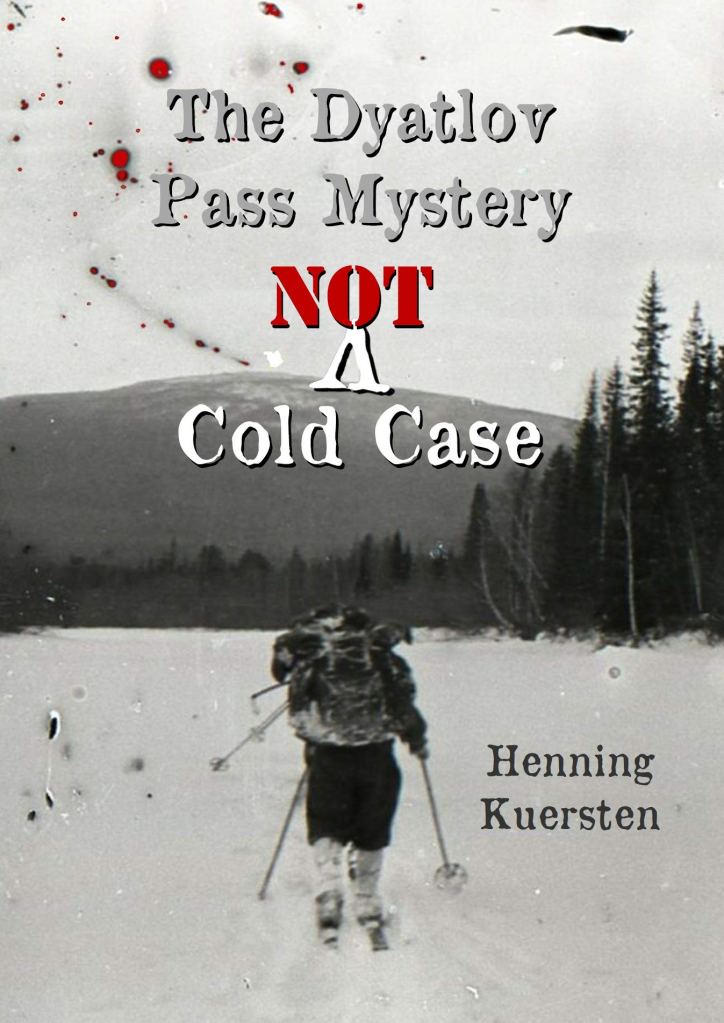
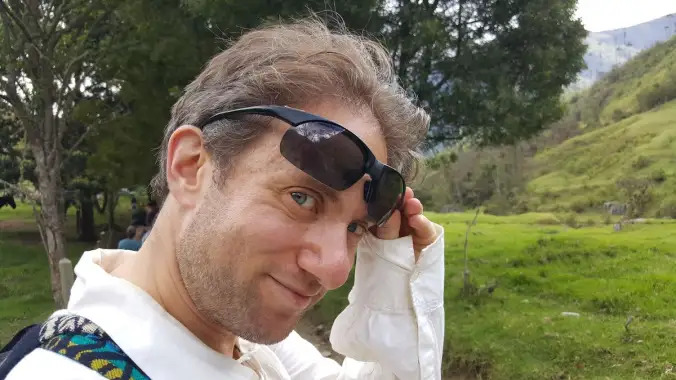
Interview with Author Henning Kuersten 

1) Tell us a little bit about yourself. How did you get into writing?

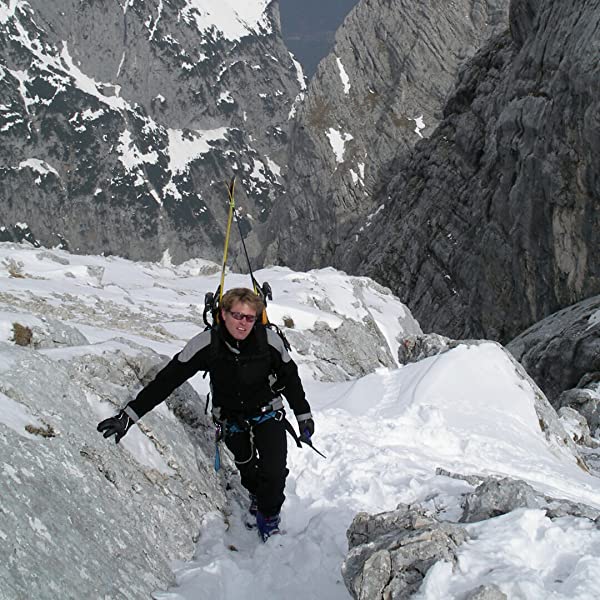
My father was a physicist, so I was raised in a scientific environment. I studied Computer & Information Science and Psychology at Queen’s University in Canada and the Technical University in Munich. I have been a mountaineer, sailor, and adventurer all my life, and as an entrepreneur, I created a software company specializing in image analysis & editing software. When I heard about the Dyatlov Pass Incident, which is probably the most famous mountaineering mystery of all time, I was of course clueless like everyone, but the case lingered in my mind. I then found present-day video material describing exactly what the hikers saw on the slope of Mt. Kholat Syakhl. I analyzed the last photos from the cameras and discovered that they were not showing a lab window in the morgue, as suggested by case experts. The incident then suddenly made complete sense to me, but still, I did not anticipate writing a book about it.

Advertisements

2) What inspired you to write your book?

In the years following my initial discovery, I saw a number of TV documentaries about the tragedy. I have always been intrigued by real-life mysteries, like the Franklin expedition, the fate of MH370 or the Skinwalker Ranch. Since I’m a mountaineer myself, the Dyatlov mystery didn’t leave me alone. I then did two years of intense research and the big picture slowly emerged, like a long-hidden puzzle. I never wanted to write a book about my suspicion, but the revival of the avalanche theory by the mainstream media stirred me up. I knew from my ski hiking experience and professional analysis of photos from the Dyatlov camp site, that the reason for the escape and the injuries of the hikers could not have been an avalanche.

3) What theme or message do you hope readers will take away from your book?

When I decided to write a book, I tried not to succumb to prejudice and bias, but to analyze the case from the ground up. So I concentrated on original evidence like the case files, eyewitness testimonies and the “famous last frames”. Whatever evidence I came up with, it always fit the picture that started to appear. I had to discard nothing, and every question was answered, without layered assumptions or by ignoring Occam. He was philosopher from the 14the century who proposed, that the most likely answer to a problem is always the simplest one. This message is an important one for life. Try to always be open minded, keep it simple and avoid confirmation bias.

4) What drew you into this particular genre?

The surviving relatives have the right to know, that the young mountaineers didn’t die in vain. The conclusions to the case open up one of the last mysteries in modern science, which has an high relevance for UFOlogy, aviation and new energy sources. The solution to the Dyatlov Pass Incident is actually quite spectacular. All of this together made it impossible for me to ignore this mystery.

Advertisements

5) What social media site has been the most helpful in developing your readership?

I did a lot of research and discussion on Facebook, as there are several groups about the Dyatlov Pass Incident. Quora is also a good site to ask for opinions and get answers to questions.

6) What advice would you give to aspiring or just starting authors out there?

If you want to be successful with a nonfiction book, try to stay away from confirmation bias and motivated reasoning. Meaning, that you should never ignore evidence or arguments that do not fit your line of thought. Take your time, show respect to other theories, ideas and people involved in the topic, and expect to get rich only in experience. Don’t be arrogant but open-minded, test your thoughts on social media, accept criticism and the fact that there will always be people who disagree. I would have never been able to develop my theory without discussion and disagreement.

7) What does the future hold in store for you? Any new books/projects on the horizon?

I have thought about writing a sequel, but I believe any theory should be simple enough to be presentable in a single book. If it takes two or more books, then it becomes confusing and tedious to understand. However, the scientific research concerning my theory is far from complete, and since the launch of my book in 2021 the number of pages has doubled in newer editions. In addition to ongoing research and expeditions to locations on the planet with similar anomalies, I am working on a TV documentary with a renowned UK film company, who believes my book has finally solved the mystery.

Advertisements

About the Author

Henning Kuersten studied Computer & Information science at the Technical University of Munich, Germany, and Psychology at Queen’s University in Kingston, Canada. He is owner of a company specialized in software for image analysis. He is also a dedicated mountaineer who has survived a horrific incident on the 4049 meter high Piz Bernina, which, together with his professional experience in Photography and Psychology, has helped him to understand the mystery of the Dyatlov Pass Incident.