
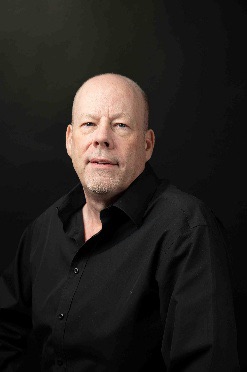
Tell us a little bit about yourself. How did you get into writing?
- After being interviewed on the radio alongside several crime reporters, a few magazines took notice — and that unexpected exposure marked the beginning of my writing journey. About a year later, Toronto publisher RJ Parker approached me with an opportunity to contribute four titles to a 22-book short-read series. One of those books became a hit, and I haven’t stopped writing since.
2) What inspired you to write your book?
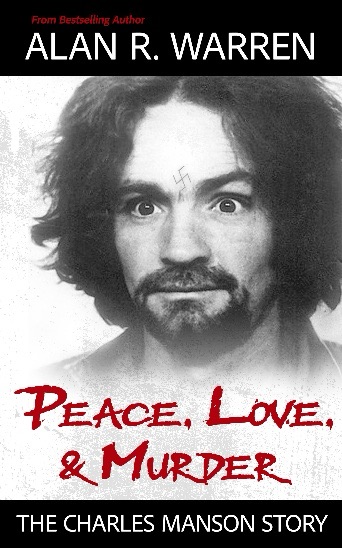
- I’ve always been a history enthusiast, and my writing tends to focus on specific places and time periods. With Peace, Love, & Murder, that meant immersing myself in the mid-to-late 1960s — a cultural moment unlike any other. Charles Manson’s crimes didn’t happen in a vacuum; they were deeply tied to the atmosphere, attitudes, and social upheaval of that era. To tell the story honestly, the book had to explore the culture and daily life of that time and place, because the setting was as much a part of the story as the people themselves.
3) What theme or message do you hope readers will take away from your book?
- There wasn’t an intentional message when I started the book, but one emerged naturally as I wrote. History, especially within our culture, has a way of repeating itself. During my research, I was struck by how many of the social issues people were protesting and debating in the 1960s are still at the center of conversations today. The parallels were impossible to ignore, and that realization quietly shaped the tone of the story.
4) What drew you into this particular genre?
- I tend to immerse myself deeply in the history of a particular place and time, and often a murder or major event rises to the surface — something that left a lasting mark on society and is still felt today. The true crime element isn’t something I force; it’s simply part of the human story, a reflection of what people do and how those actions echo through history.
5) What social media site has been the most helpful in developing your readership?
- I am not sure if there is one in particular, as they all seem to capture a different audience. So, books that I have written on cults or conspiracies, such as the JFK Assassination, do really well on YouTube or X, while True Crime or History have a better following on Instagram or Facebook.
6) What advice would you give to aspiring or just starting authors out there?
- Avoid as much of the noise out there as you can. Today is especially worse than years ago because of social media. There’s always somebody watching you, or so it seems. There will end up being so many comments made about you or what you’re trying to do, and if you get caught up in the noise, it’ll take you off the track and your goals.
About the Author
Alan R. Warren is a Canadian bestselling true crime author, producer, and lead host of the internationally syndicated radio show and podcast House of Mystery. The show airs across North America on multiple stations, including Los Angeles, Riverside, Palm Springs, Salt Lake City, Seattle/Tacoma, and Phoenix, reaching a wide audience of mystery and true crime listeners.
A respected authority in true crime nonfiction, Warren has authored 38 books covering serial killers, cults, human trafficking, history, and memoir. His work is published by major true crime publishers including RJ Parker/Vronksy Publishing (Canada) and WildBlue Press (USA). He has been a contributor to True Case Files Magazine since 2013 and continues to write for Serial Killer Magazine.
Warren’s bestselling titles have been featured on major television networks, including CNN, Oxygen, Reelz, Vice TV, and Sundance Channel documentaries. Notable works include Beyond Suspicion: The True Story of Colonel Russell Williams, The Killing Game: Serial Killer Rodney Alcala, and Doomsday Cults: The Devil’s Hostages. In 2024, he received the Lifetime Achievement Award in Writing from Reader’s House in London, UK.
Alan R. Warren is frequently sought out by media outlets for expert commentary on true crime cases, serial killers, cult behavior, and criminal psychology.
