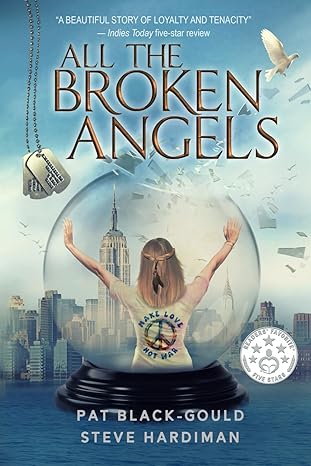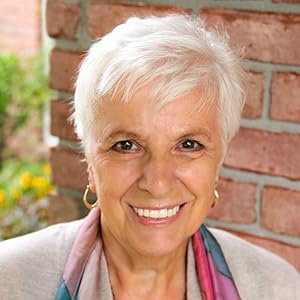

Tell us a little bit about yourself. How did you get into writing?
We came from very different backgrounds and crossed paths in a writers group near Pensacola, Florida.
Pat: I started out in the New York theater world both as an actress and director. Later, in New England, I ran summer stock and a murder-mystery dinner theater, writing and producing original scripts. But at some point, I found myself more curious about the people behind the characters, the emotions they carried, and what made them tick.
That curiosity steered me toward a career in clinical psychology. Whether in a therapy room or a theater, I’ve always been drawn to the emotional core of people’s stories, their struggles, their turning points, and the strength it takes to grow and heal. That same thread runs through my writing. I’m fascinated by resilience and transformation—those moments when something shifts, when someone finds light in the dark. That’s what guided All the Broken Angels, the novel I co-authored with Steve Hardiman. It’s about characters shaped by the weight of the past and the choices they make to move forward, with resilience, hope, and a fierce sense of survival.
Steve: I discovered my love for writing while drafting research papers in grad school. Those were non-fiction, and I imagined my first book being the same. But the passion required to do a topic justice wasn’t there. Later in life, I moved back near Pensacola, Florida, to take care of my aging parents. In need of a distraction and some social interaction, I joined the Panhandle Writers Group and discovered my love for the creative opportunities in fiction—but still had not found an idea that excited me.
On a whim, I decided to write an extended review for a fellow group-member’s memoir. The theme of addiction drove the narrative for a large chunk of that book. As a clinical psychologist, Pat appreciated how I captured the insidious nature this disease played in the author’s self-deception and unraveling of his life. She figured that if I, a non-addict “normie,” could tease out the essence of how addiction tricks the mind into doing the brain’s bidding, maybe I could help her write a synopsis of the novel she was working on. We found our writing styles highly compatible. Our orbits grew tighter and before you know it, we joined forces —and didn’t finish that synopsis until we’d written the whole damned book!
2) What inspired you to write your novel?

Pat: All the Broken Angels is a deeply personal story. It’s semi-autobiographical in many ways. Cate’s journey echoes aspects of my own, and the characters were inspired by people in my life, including my family and the neighborhood where I grew up. The story is steeped in the emotional landscape of my community, all of which made me who I am today. In addition, as a psychologist, my work with Vietnam veterans profoundly influenced this story. I appreciate their willingness to open up to me and share their experiences.
Co-authoring the book with Steve Hardiman added depth and dimension to the process. He inspired the creation of a supporting character in the story. His poetic style and thoughtful research further enriched the world we built together, helping us bring authenticity and nuance to the characters and setting. We wanted to craft a story that feels lived-in—one that honors the past, speaks to the present, puts the reader in the moment, and sticks with them long after the final page.
Steve: Shucks, Pat. Thanks. I certainly aimed for all of those things, and you and your unfinished novel came along at just the right time. Not only had my mother passed between when Pat and I met and later decided to collaborate, but my wife Angela and I had closed a business that was losing money, which had spillover effects of it’s own. This perfect storm left me on the verge of a breakdown. I desperately needed something to soothe my weary spirit. Very early in our partnership, I vividly remember venting to Pat about my personal situation. Somewhere in the middle of commiserating, I muttered, “I just want to create something beautiful.” I’m quite proud of the result and that we were honored with several awards for our efforts. The catharsis of writing it also helped my wife and I get through a difficult time.
Circumstances aside, that “create something beautiful” sentiment drives me like no other passion. Exquisite beauty goes all the way down: you find it in our novel as a whole, the three parts, sixty-one chapters, all the scenes, many a poignant paragraph, and even in the tiniest of details of word choice and turns of phrase. My love for crafting prose through character development, dialog, action sequences, and teasing out pathos and humor wherever they are hiding became my healing. Because our styles were sympatico, Pat and I had fewer creative differences than I’d expected. And the struggles we did have made the story stronger and helped us find our voice that fused the best of our individual strengths.
3) What theme or message do you hope readers will take away from your book?
Pat: At its core, All the Broken Angels is about quiet resilience, the kind that builds slowly through struggle, forgiveness, connection, and self-discovery. It’s a story of transformation, not in sweeping gestures, but in the small choices we make to move forward. We wanted to offer a sense of hope, even when characters are navigating uncertainty and loss.
Because the story unfolds through Cate’s voice, a young woman caught between past wounds and present challenges, it resonates deeply with younger readers. Her emotional journey reflects the universal themes of seeking belonging, finding identity, and learning to trust both oneself and others.
As a psychologist who has worked with Vietnam veterans, I also felt it was important to honor those stories and recognize the sacrifices made by their families. While the book acknowledges trauma, it doesn’t dwell there. Instead, it explores how people carry their history with grace, grit, and sometimes humor.
Ultimately, I hope readers of all ages walk away feeling that healing is possible, connection matters, and that understanding the past can empower us to shape a stronger, more compassionate future.
Steve: Wow, Pat, you’re a tough act to follow on this question. Because the novel is semiautobiographical, and about half of the first draft was penned when I arrived on the scene, it became my job to honor the emerging themes, then work with Pat to rewrite and shape the story into something even better than either of us had originally conceived for. I believe I speak for both of us that the final version exceeded our expectations. We’re humbled every time another glowing review is posted by a reader. Often, their words mention the very themes we baked into the story. The lesson for me is if a story is strong, its themes shine through more brightly.
4) What drew you into this particular genre?
All the Broken Angels fits comfortably within both women’s fiction and historical fiction, and we’ve been fortunate to receive awards in both categories.
In women’s fiction, there’s a powerful form often referred to as psychological or emotional arc-driven storytelling. Here, the focus isn’t on external plot twists but rather on a woman’s internal journey. It explores how a character grows emotionally, mentally, and relationally over time. That transformation might be sparked by grief, a major life shift, or a moment of reckoning. But at its core, the story is about personal evolution and forging ahead.
Pat: This framework perfectly fits our protagonist Cate. She’s partly me and partly her own person. The book is rooted in the 1960s and ’70s, a turbulent time marked by the Vietnam War, the rise of the women’s movement, civil rights, peace marches, and gay liberation. Since I grew up during that era, and I saw how deeply divided our country was. Many of the rights we fought for then are still being contested today, so there’s a sense of déjà vu that makes the history come alive on the page in surprisingly familiar ways.
Steve: I grew up in that era as well, which turned out to be a big bonus. I brought my own experiences to further flesh out the tableau we were creating for the novel. I knew the music, the culture, what life was like for a kid, and many everyday details that bring the past within the reader’s grasp.
We set a very high bar for ourselves: A time traveler from sixty years ago could read All the Broken Angels and have no idea it hadn’t been written back then; nothing would seem off. A lot of meticulous research went into the history and how people spoke. One of my pet peeves is period prose that uses modern lingo. So we took the “historical” genre quite literally. This meant occasionally trading a slightly more clever way of saying something for era-appropriate language, and even determining the actual weather for a specific date. Crafting a novel that is truly authentic in those respects was a self-imposed challenge that became a deep source of satisfaction for me.
Both of us: As historical fiction authors, our mission is to keep history alive. There’s a real risk that the stories and the hard-earned wisdom of a generation will fade. We want readers of all generations to feel the heartbeat of this history. When we forget where we’ve been, we lose part of ourselves. None of us simply appeared, we arrived through our complicated connection to the past. Through Cate’s journey, shaped by both her family and the time she lived in, we’re offering not just a glimpse of a tumultuous era, but a trip back in time toward an emotional truth that still resonates today.
5) If you could sit down with any character in your book, what would you ask them and why?
Pat: I’d sit down with Cate, not the girl from the beginning, but the woman she became by the end of the book, after everything she’d been through. I’d ask: “You carried anger and mistrust for years, especially toward someone you saw as an enemy. Yet when it mattered most, you chose forgiveness and opened yourself to a painful truth. What shifted inside you? What made you let go and trust someone you never thought you could?”
Steve: While I found our protagonist endlessly intriguing, I’ll pick another who grows into one of the most complex characters: Walter, “the freckle-faced, tow-haired bully from school.” I was bullied as a kid and always avoided those memories. But Walter could offer me some insights from the other side of that power dynamic. So I’d take seat with the older Walter and ask him about his experience of that time in life and his long struggle away from those behaviors. Did he feel that he paid a price for his actions? How did leaving behind that part of himself inform who he became?
I would also thank him. In writing Walter’s character, I discovered how fascinating a bully can be. There’s another world hiding behind all that belligerence, and bullying was his suit of armor. His arc and how it intertwines with Cate’s is one of the most fascinating in the story. And Walter could easily take the lead role in another novel.
6) What social media site has been the most helpful in developing your readership?
The best sites that have worked for me are Instagram, Facebook, and LinkedIn. And, of course, my website.
https://www.patblackgould.com/
https://www.instagram.com/patblackgould/?hl=en
https://www.facebook.com/PatBlackGould
Pat Black-Gould, Ph.D. | LinkedIn
7) What advice would you give to aspiring or just starting authors out there?
Pat: Surround yourself with a creative community. Writing can feel like a solitary endeavor, just you and the blank page—but it doesn’t have to be. Seek out local writing groups or join a critique circle to get a feel for sharing your work and connecting with other writers.
Beyond that, take classes or attend workshops, in person or online. You’ll meet fellow creatives who understand the ups and downs of the process and will cheer you on even when the words arent’ flowing. I truly can’t imagine my writing life without my trusted circle. They’ve been my sounding board, support system, and inspiration every step of the way.
Steve: Pat’s spot-on about educating yourself and joining a creative community, especially other writers. Naturally, reading stimulates my creativity, as well. But I also find inspiration in other artforms, especially films and television. Body language, lighting, subtleties in dialog; many of these can be adapted for use in fiction writing if you can find a simple way to describe them. For example, I rewatched Toy Story while working on the novel and found inspiration to “punch-up” a few details in chapter one, which helped bring the scene to life even more.
The most specific advice I can offer is about what I learned about writing humor. All the Broken Angels isn’t a humor novel, per se, but there are many funny moments that make the prose more engaging and the characters more endearing.
As I fumbled my way along the humor learning curve, I discovered that a brute-force approach to “just be funnier,” is the hard way, and it blocked my thinking. When I learned to see humor less as a skill and more of a lens through which to view the world, the funny began to flow. I remember helping another novelist “punch-up” his crime thriller that already had some humor as part of the mix. In a pivotal scene, the protagonist, a detective, thinks she has cornered a serial killer in the basement of a house. Gun drawn and heart pounding at the top of the stairs, she flips on the light switch, only to see a brief flash below followed by a soft pop as the sole downstairs bulb burns out. Staring into the inky blackness while contemplating her next move, she mutters a curse and muses that “of all the homicidal maniacs, lucky me gets the loser who never switched to LEDs.” Momentarily normalizing the killer’s horrific hobby in order to shame their wasteful energy choices is a perspective shift as simple as it is absurd. And the brief pause when the protagonist stops to reassess provided the perfect opening to inject a single line of dark humor. Once the protagonist makes her move, the action resumes and comedy is set aside. Humor must meet the moment and the character; no gratuitous laughs allowed.
Finally, I have to thank Pat. Because she was a playwright, the scenes and chapters she had already drafted when I came aboard were well constructed with a strong beginning, middle, and end. We adopted this approach for the rest of the book, and it even spilled into the construction of key paragraphs. She was a source of inspiration I took for granted. As we leaned into these techniques together, they added power to our writing.
8) What does the future hold in store for you? Any new books/projects on the horizon?
Pat: As a playwright, imagine everything I write eventually being in a theater in front of an audience. Readers often say how the writing style of the novel puts them “in the room” with the characters. So, Steve and I are exploring ways to take All the Broken Angels from page to stage, possibly as a full-length play or a series of one-acts. As Steve mentioned in his answer to the previous question, the scenes and chapters, as written, lend themselves to theatrical interpretation, and we’d love the challenge of translating narrative into performance.
I’m working on a new novel set in New York City between the mid-1970s and early 1980s. It follows a woman trying to make it as an actress while teaching theater to inner-city youth. As the women’s movement gains momentum, she’s searching for her voice, just like those around her: Vietnam veterans seeking respect and recognition, young people navigating identity, and the LGBTQ+ community finding visibility while the AIDS crisis begins.
Though All the Broken Angels was semiautobiographical, this new story draws even more closely from my life in New York’s theater world. It blends women’s and historical fiction, exploring belonging, resilience, and how the arts can inspire transformation in uncertain times.
Steve: I still love writing and will explore a stage adaptation of All the Broken Angels with Pat. I’m also focusing on photography and plan to create some instructional or explanatory videos about writing, photography, and music. A couple of projects are just beginning to take shape. After recently moving to Arizona, I’ve been helping my wife Angela get her home-school curricula company off the ground. I’m also spending more time with my fifteen-year-old grandson Landon and recently took him to his first concert: Alice Cooper—he’s still rockin’! Landon has no idea how often “first concerts” will come up in conversation over a lifetime. As his grandpa, I’m over the moon that he’ll always have a great story to tell. 🤘
About the Authors
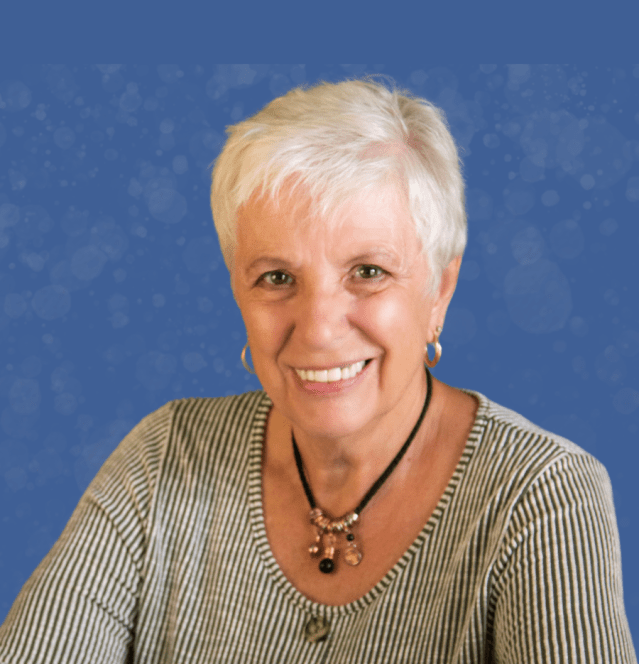
Pat Black-Gould
Pat Black-Gould is an award-winning author, speaker, and clinical psychologist. Her novel All the Broken Angels, co-written with Steve Hardiman, is a family saga set during the Vietnam War era. As a psychologist, Pat specialized in working with Vietnam Veterans, and the novel pays tribute to those who served and their families. Her children’s book The Crystal Beads, Lalka’s Journey, tells the story of a hidden child of the Holocaust.
Pat’s short stories have appeared in literary anthologies and online journals. Pat’s writing explores themes of compassion, inclusion, and diversity, and she conducts presentations nationally on these topics. WSRE PBS TV featured her on the program Conversations with Jeff Weeks. As a speaker, Pat also conducts workshops on marketing and the craft of writing. In the theater world, Pat was a theater director and producer of a New England summer stock company and a murder mystery dinner theater.