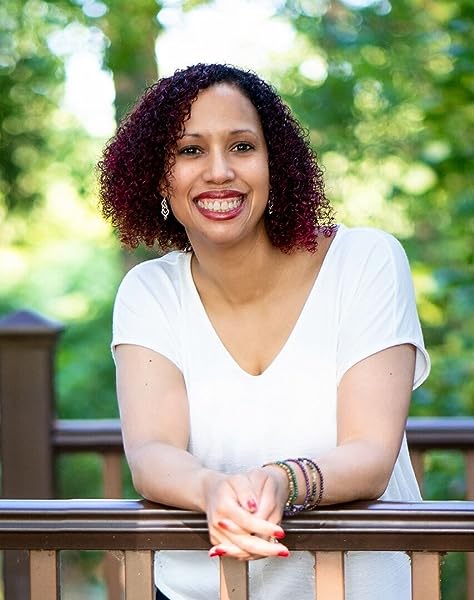
Interview with Author Alison McBain

1) Tell us a little bit about yourself. How did you get into writing?

Writing is probably the only thing I’ve done my whole life. The first story I ever wrote (according to my parents) was when I was four and it was a horror story about the monster in the closet. And while I don’t think that original story will ever see the light of day, I haven’t stopped writing since then.

Advertisements

2) What inspired you to write your book?

My novel The New Empire is an alternate history, and it asks the question: What if the Chinese Empire sent ships to the Americas much earlier than the Europeans – how would it have reshaped the world? My inspiration actually came from an article I read many years ago that said there was some archeological evidence that this might have happened, and that Chinese ships, which were the most technologically advanced at the time, could have landed on the West Coast of South America. It sparked my imagination, and the story took off from there.

3) What theme or message do you hope readers will take away from your book?

I feel that most books, no matter the genre, do have some commentary that is relevant to modern readers. So, while my book is set in the past, there are a lot of themes that are important to what’s happening in the world today. There’s the struggle between the haves and the have-nots, the many injustices of the power system, and the duality most of us feel in today’s global world. My main character happens to be trapped in between a number of worlds, and I think that’s something a lot of people today can identify with.

4) What drew you into this particular genre?

I’m a history buff – I studied African history and classical literature in university, but long before that, you could have found me in the depths of a library as a child with my nose in a book. What’s come before now is fascinating to me—how our present has been built, layer by layer, upon the events of the past. There’s the old adage, “Those who cannot remember the past are doomed to repeat it.” Well, I feel that we will always be doomed in such a way when there are people in power who don’t take their lessons from human history. Since I’m not a politician, all I can do is open up the door to the past (and the imagined past) with my words.

Advertisements

5) If you could sit down with any character in your book, what would you ask them and why?

I think I would sit down with Onas, the slaveowner who’s at the center of so much that happens in my novel. But I don’t know if I would ask him any questions. I would wait and let him to reveal his wisdom to me, and he would probably do so through the stories and legends of the past from the Amah Mutsun and Onödowáʼga peoples.

6) What social media site has been the most helpful in developing your readership?

I’m on several social media platforms, but I have to say two of the most helpful have been Medium.com and Vocal.media. Both are blogging platforms where you can share your writing and interact directly with readers, and I enjoy getting that personalized feedback and talking to others who love to read.

7) What advice would you give to aspiring or just starting authors out there?

There’s so much advice out there, and some of it’s very specific and some of it’s very general. But the problem as a new writer is getting bogged down in advice and not actually doing any writing! So, what I like to say is: ignore all the advice. Just sit down and write the story you want to tell. After you write “The End” is when you should open up all the advice books and start editing and looking for a publisher or agent. The most important thing is getting the words on the page.

8) What does the future hold in store for you? Any new books/projects on the horizon?

Last year, I just finished a project called “Author Versus AI.” Essentially, I was setting out to write a book a week for a year, using NO AI at all – just to show a human author can write almost as fast as a computer, but hopefully much better. I didn’t quite reach my goal of 52 books, but ended up with 34. However, as you probably know, a first draft is not a final draft. Right now, I’m going through all the books and editing them, which will probably keep me occupied for the next year or more!

Advertisements

About the Author

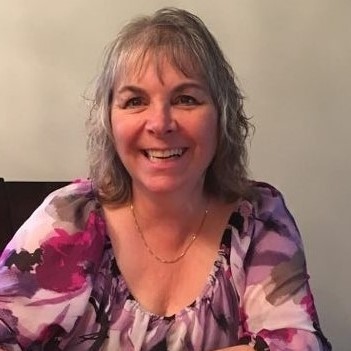
Alison McBain’s novels are the recipients of over 13 awards, including the Foreword INDIES. Her latest novella Dual was longlisted for the 3-Day Novel Contest. When not writing for herself, she’s a ghostwriter who has penned over two dozen books for clients, as well as an award-winning editor who has worked with both celebrity and NY Times-bestselling authors. She’s currently pursuing a project called “Author Versus AI,” where she’s writing a book a week over the course of a year, using NO AI at all (52 books total). When not writing, Ms. McBain is associate editor for the magazine ScribesMICRO and draws all over the walls of her house with the enthusiastic help of her kids. She lives in Alberta, Canada.

https://www.alisonmcbain.com/

The Origins of Constantine: An Intern Diaries Novella by D.C. Gomez Review

I received a free copy of this book in exchange for a fair and honest review. All opinions are my own. 

The hidden history of the powerful feline ally to Death’s new North American intern is finally revealed in author D.C. Gomez’s “The Origins of Constantine: An Intern Diaries Novella”.

Advertisements

The Synopsis

A feisty cat. A moody God. And a friendship to last through all time.

Every hero has an origin story. The infamous five-thousand-year-old talking cat, Constantine, from the Intern Diaries, is no exception. Even in his early beginnings as a lowly tom-cat, Constantine had spunk. His sense of justice had a way of overtaking his common sense.

Constantine wasn’t one to back away from a fight, even if he killed him. To defend his friends, Constantine would do anything.

The Origins of Constantine is a humorous Urban Fantasy/Alternative History Novella, part of the Intern Diaries Series. If you enjoy Constantine’s snarky remarks and over-the-top attitude, you are going to love this trip down memory lane to the rise of the first Egyptian empire where Gods still roam the earth.

Holiday Bundles

The Review

This was a fast-paced and fun read. The author has expertly woven fantasy and historical fiction/alternative fiction elements. The rich character dynamics and humor that the main series this novella stems from were profoundly present in the narrative, and the balance the author found in the world-building and character development was perfectly executed here.

The fast-paced novella and the entertaining story found in both the mythos and history of the story were great to see unfold on the page. The dynamics between Constantine the Cat and Anubis were electric, and the narrative’s setting added to the historical significance of this series overall. 

Toy & Treat of the Month

The Verdict

Memorable, fast-paced, and engaging author D.C. Gomez’s “The Origins of Constantine” is a must-read novella. The funny exchanges Constantine shares with Bob, Anubis, and more and the depth of mythos that the author delves into make this a gripping story. If you haven’t yet, be sure to grab your copy today!

Rating: 10/10

Advertisements

About the Author

D. C. Gomez is a fast-talking, extra-quirky Dominican with a dark sense of humor.

A long time ago, she used to enjoy long walks at the park and long days under the sun. Unfortunately, due to a mysterious condition, she is now allergic to those pesky UV rays. Rumor has it that her true nature is coming out and her vampirism is now showing. But don’t fear my friend, she doesn’t bite (much…). 

Now she has a legit medical condition to hide indoors and indulged her passions of reading, sometimes cooking, and of course writing. DC writes in multiple genres from Urban Fantasy, Contemporary Lit, YA, Children’s Books, and even Devotionals. Her dark sense of humor and infatuation for action/adventure can be found in many of her books.

As a self-proclaim serial-hobbyist, her passions expand to podcasting as well as live hosting. You can find DC every Monday night interviewing a new author on her podcast Inside the Minds of Authors. If you enjoy a more active experience, catch her online live on her Amazon Channel – The Book Corner. Where she features authors releasing books within the next 90 days.

Between the Helpless and the Darkness by Brent Olson Review

I received a free copy of this book in exchange for a fair and honest review. All opinions are my own. 

Advertisements

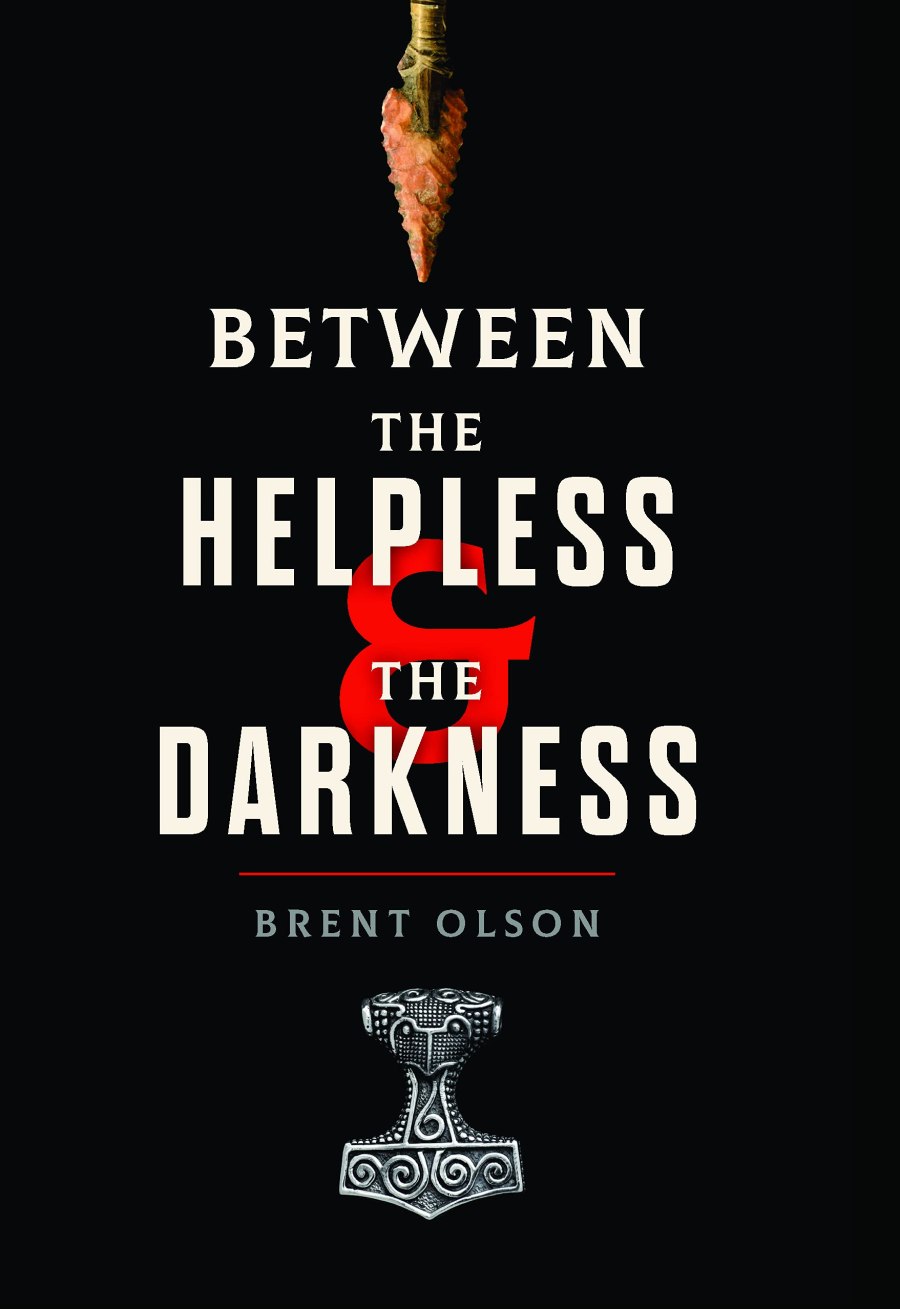
In this alternative history story, a Viking King and his band of broken warriors head to new lands in search of something more than a kingdom in author Brent Olson’s “Between the Helpless and the Darkness”.

The Synopsis

HARALD SIGURDSSON, King Harald Hardrada of Norway, King of the Vikings, was born to rule. He embraced that birthright, dominating his world with the strength in his arm and the power of his will. In an instant, one brutal mistake and a shattering wound took all he valued from him.But what if . . .Harald Sigurdsson fled his disgrace with a band of equally broken warriors still holding tight to his leadership. They ventured West, to Iceland, Greenland, into the darkness, to a land known only through legends and lies. A land with no need of a king, no room fora ruler. A land where a king could hope to become something more.This enthralling, thought-provoking story begins a thousand years ago on a battlefield outside York, England, and then moves across the North Atlantic to Iceland and beyond. Brent Olson’s biggest, boldest, and best book yet is a stunning work of alternative history. By moving the path of one arrow one inch, Olson has achieved an entire new script for the world.

Take a Food Journey Around the World!

The Review

This was a vibrant and captivating historical fiction novel. The exploration of Norse culture and the history of King Harald was fascinating to read, as the novel explored a time and alternate history that shows what the man behind the legend would have done had he survived his final battle. The atmosphere and pacing of the novel were captivating, as the story showcased this unique culture both in victory and defeat.

The character development of this book was incredible. The complexity of Harald as a character, both the legendary warrior others viewed him as and the flawed man beneath the legend, made this an in-depth and memorable story. The concept of Norse warriors and people arriving in what would later be North America and encountering the continent’s indigenous people was thought-provoking and kept the reader engaged in this book’s more creative and personal storytelling.

Metallica The Master Collection Banners

The Verdict

Adrenaline fueled, thoughtful, and entertaining, author Brent Olsons “Between the Helpless and the Darkness” is a must-read historical fiction and alternate history read. The wealth of world-building and imagery in the writing and the twists and turns in the epic story made this a great novel. If you haven’t yet, be sure to grab your copy today!

Rating: 10/10

Advertisements

About the Author

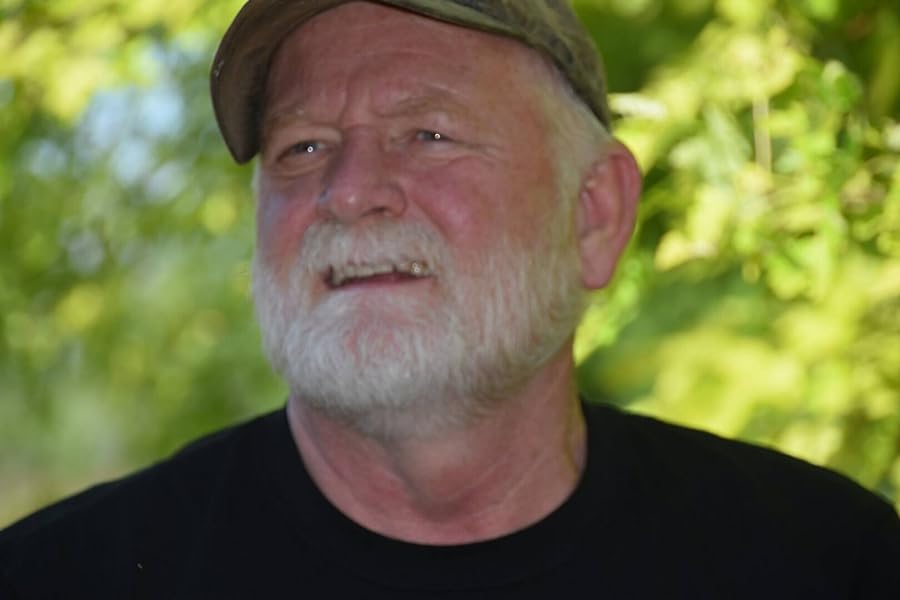
Brent Olson has lived 64 of his 66 years on a small farm

in Big Stone County, on the edge of the prairie in western

Minnesota.

But in his life as a working journalist he’s filed articles

from 20 countries on six continents. This has led him

to want to change the world he lives in, through his

work as a county commissioner, and create new worlds

in his two recent novels, “Angr”

and “Between the Helpless and the Darkness.”

In this time of news and information tailored so everyone

can hear only what they want to hear, he presents

information that will leave everyone just a little unsettled.

Working with a warm heart and a cold eye, he dissects

what works from what doesn’t in our individual lives, our

institutions, and our country.

He has served on dozens of boards and committees—as

varied as the Big Stone County Pork Producers, and the

Minnesota United Methodist Board of Ordained Ministry.

In his time as a short order cook at his very own Inadvertent

Café he has learned to make fluffy scrambled eggs,

and the best omelets on Main Street in Clinton, Minnesota

(Population 453).

Olson is a Big Stone County Commissioner and a 2012

Bush Foundation Fellow.

https://www.brentolson.online

Life in Slake Patch by Mandy Eve-Barnett Review

I received a free copy of this book in exchange for a fair and honest review. All opinions are my own.

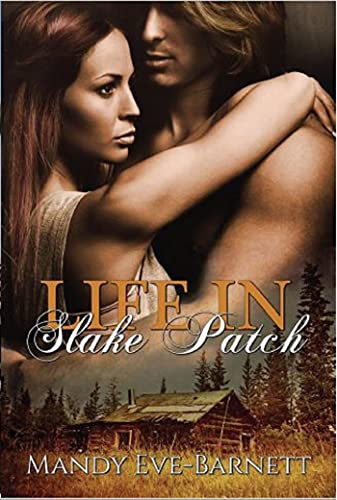
A young man in a society where the sexes are separated heavily finds a look into their world’s past and into a new way of life in author Mandy Eve-Barnett’s “Life in Slake Patch”.

Advertisements

The Synopsis

Page after page revealed a life unthinkable. Evan could not imagine the possibilities. Images of men and women with children sitting, eating, and playing together in strange dwellings, so different from their log structures. Some made of a smooth, consistently shaped stone of sorts, while others towered above ground with shiny, gleaming surfaces. There were no words to express the amazement. Surely, these pictures were the wild imaginings of a person possessed; they could not be true – especially compared to life in Slake Patch.

Evan’s first exposure to this inconceivable life was through a trusted friend and mentor, Jacob. Shared through the secretive exploration of banned books and creative storytelling, Evan internalized the great tales of fantasy. Life prior to the Grand War was lived differently. Change came to the world due to that drastic event thus calling for extreme measures. Wise old Jacob could see the Grand War as reason enough for society to evolve in a fundamental way.

Intrigued by the stories and burdened by the concepts he found to be desirable, Evan’s existence comes into question when he sees that maybe these unbelievable truths—things of the past—weren’t all that bad…

The Review

This was such a wonderful and inventive narrative. The exploration of a society in a world in which the sexes are not only divided, but women are much more protected and revered in their society. Families are divided as well by the gender gap, and a discovery of what was once a family unit in an old book by the main character and his mentor, a lifelong journey of discovery and change is found. The character growth and interactions were both original and unique to this world and kept the reader engaged in this story.

Yet it was the world-building that truly draws the reader into the narrative immediately. The mythos and originality that the author pours into this world are phenomenal, as are the ways in which this world impacts the character’s growth. I even love the detail the author puts into this world-building, as the unique hierarchy that this society builds impacts everything from politics and the ruling body of their world to how they build relationships with one another and the ways in which the fabric of their society are stitched together are closely examined in this reading.

The Verdict

Thought-provoking, imaginative, and entertaining, author Mandy Eve-Barnett’s “Life in Slake Patch” is a must-read novel. The alt-history fiction tale is one of the more original tales I’ve read in recent years in this genre, and the way the author uses strong imagery and a mysterious atmosphere to build this world were truly inspiring. If you haven’t yet, be sure to grab your copy today!

Rating: 10/10

Advertisements

About the Author

Mandy currently lives in Alberta, Canada but is originally from England. Her background is diverse and gives her rich experience to utilize in her writing. Mandy has been a nursing professional, a business owner, and a sort after administration expert. She has traveled throughout Europe, parts of America and Canada and was born in Africa.

Mandy is passionate about writing to the point of obsession and she succeeded in becoming a published author in record time. Mandy’s venture into freelance writing has been successful and she regularly contributes to Strathcona Connect, an e-zine and the Never Been Better page in the Sherwood Park newspaper as well as well as holding the position of Secretary for her local writing group, Writers Foundation of Strathcona County. She is also Secretary of Alberta Authors Cooperative.

Writing in various genres, Mandy has been published in anthologies, on numerous web sites as well as regularly blogging about her writing journey.

https://mandyevebarnett.com/

Interview with Author Robert J. Sawyer

1) Tell us a little bit about yourself. How did you get into writing?

My father was an author of books on macroeconometrics, his field of specialty, and my great uncle had written a definitive volume on antique salt shakers, so the concept of writing a book was never daunting to me.

I had some great school teachers—particularly in the fifth and sixth grade, where it happened to be the same woman, although she was Miss Matthews the first year and Mrs. Jones the second!—and also in high school who were very encouraging.

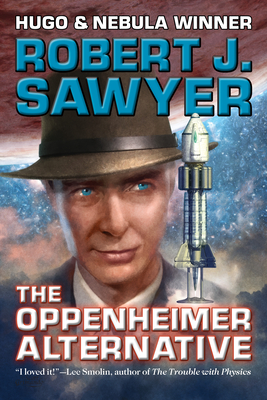
In fact, I’ve got a phone message on my answering machine right now from one of those high-school teachers, Bill Martyn, that I need to return. It’s been forty-one years since I graduated from high school, but he just called to say he’d loved my latest novel, The Oppenheimer Alternative.

Advertisements

2) What inspired you to write your book?

This is the 75th-anniversary year of the birth of the atomic age, with the bombings of Hiroshima and Nagasaki. It seemed like a good time to try to delve, as only a novelist can, into the inner lives of the people who were responsible for unleashing hell on Earth: Edward Teller, Leo Szilard, General Leslie R. Groves, and, most notably, the scientific leader of the Manhattan Project, the mercurial, tortured J. Robert Oppenheimer.

3) What theme or message do you hope readers will take away from your book?

The theme of not just The Oppenheimer Alternative but some of my 23 other novels, too, is that the world would be a far better place if the brightest people simply stopped making the things the stupidest people wanted them to make. No general, president, or dictator can make an atomic bomb—only geniuses could do that—and instead of saying nope, they dove right in.

The great irony is this: it’s arguable that, although Oppenheimer and others were salivating at the notion of an essentially unlimited budget—the spent two billion 1945 dollars, which is the equivalent of $28 billion today—to create the atomic bomb, the head of the German bomb project, Werner Heisenberg, knew the folly of letting a madman like Hitler have such a thing and so he may very well have deliberately failed to build one.

4) What drew you into this particular genre?

Well, “this particular genre” is one that actually I may well have created: hard-science fiction secret/alternate history.

My novel is a real, honest-to-goodness accurate and carefully extrapolated science-fiction tale built on sound science woven into the gaps about what we know really did occur between 1936, when The Oppenheimer Alternative begins, and 1967, when the novel ends. Nothing in it contradicts anything we know to be true, but the reader will be treated to what I hope they’ll consider a mind-blowing science-fiction tale as well as a heart-wrenching historical-fiction story.

Advertisements

5) If you could sit down with any character in your book, what would you ask them and why?

Perhaps surprisingly, it would not be my main character, the J. Robert Oppenheimer of the book’s title, but rather his erstwhile friend and then betrayer, Edward Teller.

Although ironically Teller wrote his memoirs and Oppie never did, it’s Teller—the man often cited as the principal inspiration for the title character in the movie Dr. Strangelove—who leaves me scratching my head.

Teller really said, “No amount of fiddling will save our souls” and he really did go to see his dying colleague, Nobel laureate Enrico Fermi, to, in Teller’s own words “confess his sins.”

But even with such apparent misgivings he just went right on pushing for bigger and bigger bombs—ranging in size from merely genocidal to ones that would trigger the extinction of most life on our planet—as well as shilling for Ronald Reagan’s fatally flawed Strategic Defense Initiative (“Star Wars”) until the day he died.

What the hell was Teller thinking? He was great with kids, often carrying candy for them in his pockets, and he loved his own children and grandchildren—and yet he was monstrous.

6) What social media site has been the most helpful in developing your readership?

Facebook, for a few reasons.

One: I’m a long-form writer—a novelist!—and so the character-count constraints of Twitter make it ill-suited for me.

And two, as all good writers know, the heart of good writing is revision: you can’t edit a tweet, and but you can go back even years later and correct typos or ambiguous phrasing on Facebook.

I long ago hit the hard-coded 5,000-friend limit Facebook has built into its architecture, but you can still follow me there—as 6,500 additional people do—and join in the daily lively discussions and debates we have there.

7) What advice would you give to aspiring or just starting authors out there?

In 1997, I came out of a deli in Los Angeles and saw Gordon Jump, one of the stars of WKRP in Cincinnati standing on the sidewalk, so I went up to him and said, “I’d just like to shake the hand of the man who uttered the funniest line in sitcom history.”

We chatted for a bit, and I asked what he was doing just hanging out in front of a deli. He replied a young wannabe actor had said he’d take him to lunch here in exchange for some advice about getting into the industry. I asked, “What advice are you going to give him?” And Gordon replied, “Don’t get into the industry.”

Seriously, this is an awful time to be a traditionally published author. In the thirty years I’ve been a novelist now, there have been enormous cost reductions for publishers—no more re-keyboarding typed manuscripts, no more sending page proofs by courier, instead of servicing thousands of small bookstore accounts mostly just servicing a few big ones, having authors do their own promotion via social media instead of publishers advertising their books, etc.

But every penny of those costs savings—every single one—has been kept by publishers, with none passed onto authors. Meanwhile, in addition to the production of print books for distribution to bookstores—the one thing publishers are good at—they also demand ebook rights, audiobooks rights, and they’re trying to get a piece of the film and TV action, too.

So, my advice is simply this: license your intellectual property as narrowly as possible and only let a licensee have rights to specific aspects of it that they have a great track record with, and make sure they’re making real money not just for themselves but for you, too.

8) What does the future hold in store for you? Any new books/projects on the horizon?

I’ve been asked to write a lengthy original audio drama, and I may, or may not, sign the contract for that; we’ll see. But really, the new books on my horizon right now are books that are new to me: I’m just catching up on my reading!

Advertisements

About the Author

Robert J. Sawyer is one of Canada’s best known and most successful science fiction writers. He is the only Canadian (and one of only 7 writers in the world) to have won all three of the top international awards for science fiction: the 1995 Nebula Award for The Terminal Experiment, the 2003 Hugo Award for Hominids, and the 2006 John W. Campbell Memorial Award for Mindscan.

Robert Sawyer grew up in Toronto, the son of two university professors. He credits two of his favourite shows from the late 1960s and early 1970s, Search and Star Trek, with teaching him some of the fundamentals of the science-fiction craft. Sawyer was obsessed with outer space from a young age, and he vividly remembers watching the televised Apollo missions. He claims to have watched the 1968 classic film 2001: A Space Odyssey 25 times. He began writing science fiction in a high school club, which he co-founded, NASFA (Northview Academy Association of Science Fiction Addicts). Sawyer graduated in 1982 from the Radio and Television Arts Program at Ryerson University, where he later worked as an instructor.

Sawyer’s first published book, Golden Fleece (1989), is an adaptation of short stories that had previously appeared in the science-fiction magazine Amazing Stories. This book won the Aurora Award for the best Canadian science-fiction novel in English. In the early 1990s Sawyer went on to publish his inventive Quintaglio Ascension trilogy, about a world of intelligent dinosaurs. His 1995 award winning The Terminal Experiment confirmed his place as a major international science-fiction writer.

A prolific writer, Sawyer has published more than 10 novels, plus two trilogies. Reviewers praise Sawyer for his concise prose, which has been compared to that of the science-fiction master Isaac Asimov. Like many science fiction-writers, Sawyer welcomes the opportunities his chosen genre provides for exploring ideas. The first book of his Neanderthal Parallax trilogy, Hominids (2002), is set in a near-future society, in which a quantum computing experiment brings a Neanderthal scientist from a parallel Earth to ours. His 2006 Mindscan explores the possibility of transferring human consciousness into a mechanical body, and the ensuing ethical, legal, and societal ramifications.

A passionate advocate for science fiction, Sawyer teaches creative writing and appears frequently in the media to discuss his genre. He prefers the label “philosophical fiction,” and in no way sees himself as a predictor of the future. His mission statement for his writing is “To combine the intimately human with the grandly cosmic.”

The Oppenheimer Alternative by Robert J. Sawyer Review

I received a free copy of this book in exchange for a fair and honest review. All opinions are my own. 

A chapter in history get’s a secret new chapter that showcases a thrilling possible sequel to one of history’s greatest, most powerful yet most terrifying projects in the name of science in author Robert J. Sawyer’s “The Oppenheimer Alternative”. 

Advertisements

The Synopsis

On the 75th anniversary of the dropping of the atomic bomb, Hugo and Nebula-winning author Robert J. Sawyer takes us back in time to revisit history…with a twist.

While J. Robert Oppenheimer and his Manhattan Project team struggle to develop the A-bomb, Edward Teller wants something even more devastating: a bomb based on nuclear fusion—the mechanism that powers the sun.

Teller’s research leads to a terrifying discovery: by the year 2030, the sun will eject its outermost layer, destroying the entire inner solar system—including Earth.

As the war ends with the use of fission bombs against Japan, Oppenheimer’s team, plus Albert Einstein and Wernher von Braun, stay together—the greatest scientific geniuses from the last century racing against time to save our future.

Meticulously researched and replete with real-life characters and events, The Oppenheimer Alternative is a breathtaking adventure through both real and alternate history.

The Review

A brilliant combination of true historical events mixed with alternative history, author Robert J. Sawyer has created a masterpiece of a story. Delving into the deeper character growth of historical figures like Robert J. Oppenheimer, the author brings more of a personal viewpoint of these larger than life figures. With figures like Oppenheimer and Einstein being so notable and their work making them as infamous as they are, it was fascinating to see how facing the end of the world would have brought them together in a whole new way. 

The author does an excellent job of highlighting the brilliant minds at work historically during this period of time, and the science that they both discovered and worked in. The irony of choosing Oppenheimer as the protagonist is felt in the pages of this book. While he is notorious for his quote, “I am become Death, the destroyer of worlds”, the author not only does an excellent job of exploring the man behind the legend, but giving him the chance to fight for humanity’s survival as our own solar system threatens to turn against itself. 

The Verdict

Highly scientific and creative, “The Oppenheimer Alternative” by Robert J. Sawyer is a masterful work of fiction that both entertains and educates readers on the work done by scientists, the manipulation of scientific discoveries by politics and militarization, and the work that can occur when scientists use their brilliance to saving lives rather than destruction. Oppenheimer is a truly unique and memorable protagonist and readers will love the sci-fi turn of events as the story progresses, creating a one of a kind read that readers will not be able to get enough of. Be sure to grab your copy today!

Rating: 10/10

Advertisements

About the Author

Robert J. Sawyer is one of Canada’s best known and most successful science fiction writers. He is the only Canadian (and one of only 7 writers in the world) to have won all three of the top international awards for science fiction: the 1995 Nebula Award for The Terminal Experiment, the 2003 Hugo Award for Hominids, and the 2006 John W. Campbell Memorial Award for Mindscan.

Robert Sawyer grew up in Toronto, the son of two university professors. He credits two of his favourite shows from the late 1960s and early 1970s, Search and Star Trek, with teaching him some of the fundamentals of the science-fiction craft. Sawyer was obsessed with outer space from a young age, and he vividly remembers watching the televised Apollo missions. He claims to have watched the 1968 classic film 2001: A Space Odyssey 25 times. He began writing science fiction in a high school club, which he co-founded, NASFA (Northview Academy Association of Science Fiction Addicts). Sawyer graduated in 1982 from the Radio and Television Arts Program at Ryerson University, where he later worked as an instructor.

Sawyer’s first published book, Golden Fleece (1989), is an adaptation of short stories that had previously appeared in the science-fiction magazine Amazing Stories. This book won the Aurora Award for the best Canadian science-fiction novel in English. In the early 1990s Sawyer went on to publish his inventive Quintaglio Ascension trilogy, about a world of intelligent dinosaurs. His 1995 award winning The Terminal Experiment confirmed his place as a major international science-fiction writer.

A prolific writer, Sawyer has published more than 10 novels, plus two trilogies. Reviewers praise Sawyer for his concise prose, which has been compared to that of the science-fiction master Isaac Asimov. Like many science fiction-writers, Sawyer welcomes the opportunities his chosen genre provides for exploring ideas. The first book of his Neanderthal Parallax trilogy, Hominids (2002), is set in a near-future society, in which a quantum computing experiment brings a Neanderthal scientist from a parallel Earth to ours. His 2006 Mindscan explores the possibility of transferring human consciousness into a mechanical body, and the ensuing ethical, legal, and societal ramifications.

A passionate advocate for science fiction, Sawyer teaches creative writing and appears frequently in the media to discuss his genre. He prefers the label “philosophical fiction,” and in no way sees himself as a predictor of the future. His mission statement for his writing is “To combine the intimately human with the grandly cosmic.”

Tales From Alternate Earths Book Review

Some of you may not know this, but one of the most fascinating scientific theories I’ve ever found in life has been the theory of alternate
realities. The theory that our world is one of an infinite amount of realities, with each reality similar in all but one way, is one of the most
incredible and interesting scientific theories in the world, and I love anything that revolves around this subject. So I jumped at the opportunity
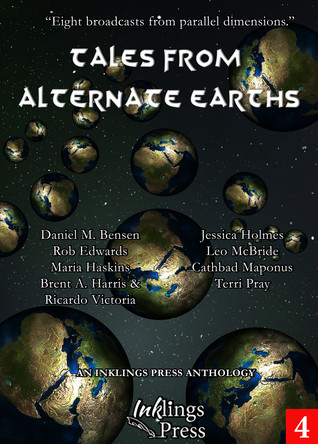
to review a brand new anthology from Inklings Press, called “Tales From Alternate Earths”. Released a couple of days ago, the anthology covers
tales of various alternate histories and worlds, some that emerged from a small change to our history, and some from a massive change. Tales of
horror, science fiction and thrillers make up the heart of this anthology, showcasing our world from various different viewpoints.

The incredible authors in this anthology include Jessica Holmes, Daniel M. Bensen, Terri Pray, Rob Edwards, Maria Haskins, Cathbad Maponus, Leo
McBride, and collaborators Brent A. Harris and Ricardo Victoria. The stories range from political upheaval in the form of a President Kennedy who
was never assassinated and a Cuban Missile Crisis that hadn’t been diffused, but rather the nukes had flown. Tales of ancient rulers living past
their time or the dinosaurs having never gone extinct and becoming the dominant species on Earth. The most fascinating thing about these altered
histories however is just the sheer amount of knowledge one gains from reading these stories. While I’m a huge fan of history, I don’t claim to
know everything, and by the end of this anthology, once you read what the true histories were of each story, you will come away with a real sense
of a better understanding of our world.

Overall, this is a phenomenal read that is not to be missed. Each of these stories are super well written and pack both an action-packed and
emotional punch. In a short span of time, the reader will instantly become invested in the lives of these various characters and their world, and
getting glimpses into what our world could have been like if one tiny detail had changed is a fascinating thing to consider, so be sure you read
the fourth anthology from Inklings Press, “Tales From Alternate Earths”, today!