
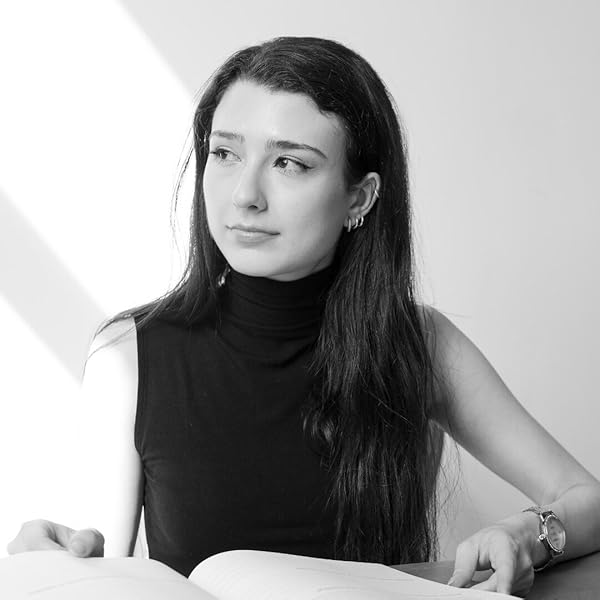
Tell us a little bit about yourself. How did you get into writing?
I learned to speak English at four years old, and within a few years, writing in English became my favorite pastime. My summers were spent back home in Romania, where I sometimes went weeks at a time without friends, internet, or even TV. I learned to escape into unknown worlds between the pages of blank notebooks. Even back then, I knew I wanted to be an author.
What inspired you to write your book?
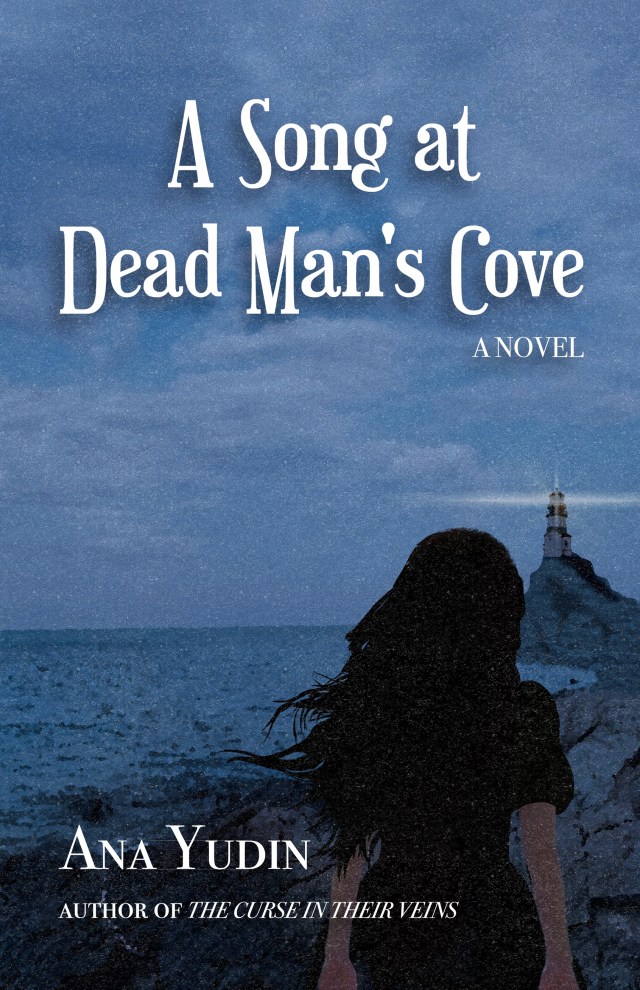
My most recent novel, A Song at Dead Man’s Cove, was inspired by my travels along the Pacific Northwest when I was living in Seattle. I heard the haunting echoes of the region’s history—a wealthy businessman in the Victorian Era, his daughter who was sometimes described as manic, a lighthouse keeper’s wife who threw herself from the crag, a love triangle that ended in tragedy, a place called Dead Man’s Cove where sailors used to wash ashore after shipwrecks… From Oregon up to British Columbia, the Western coast whispered its secrets. I decided to fictionalize them into one tapestry, using attachment psychology as the common thread.
What theme or message do you hope readers will take away from your book?
I suppose that depends on what the reader most needs to hear. Some might walk away from the book having learned that even those they deem monsters are human beings deserving of compassion. Others might learn that you can grieve people even while they are alive. Others might take away that loneliness can be deadly.
What drew you into this particular genre?
Horror in general is wonderful because it allows us to shine a light on our deepest fears, which chips away at their power. I love Gothic horror specifically for the same reason why I loved depth-oriented psychology when I was a therapist—because it draws parallels between the past and present. Plus, crumbling castles teeming with paranormal creatures have always felt like home to me.
If you could sit down with any character in your book, what would you ask them and why?
I’d probably want to know why Hurley Irving uses his power to take advantage of people. His character is capable of treating people as his equals, yet he often chooses not to. I’ve known men like him in real life, and I wish I could ask them, “Why do you exploit those with less power? Why do you always need more and more wealth, where nothing is ever enough for you? Would you ever change?”
What social media site has been the most helpful in developing your readership?
YouTube! I’ve been building an audience on there for over five years, though my main channel is psychology-focused. However, after I decided to quit my career as therapist, I created a second channel, Book & Hearth, where I hope to continue growing a community of fellow book lovers. YouTube is great because its longform content allows for increased nuance and creativity.
What advice would you give to aspiring or just starting authors out there?
Read as much as you possibly can! It will help you discover your favorite genre. It will give you a sense of the current literary landscape. It will show you what you most love in a book, and how to masterfully execute it in your own writing. In my opinion, the most successful writers are often the most voracious readers. On the other hand, you can tell when a writer doesn’t actually love books; they’re just writing from a place of ego.
What does the future hold in store for you? Any new books/projects on the horizon?
Yes, I hope to release my third novel sometime in the next year. The Splintered Parts is a work of psychological horror about a neuroscience student who begins to think that someone—or something—is trying to steal her identity. But is this a neurological disease, a skinwalker, a nervous breakdown, or something else altogether?
I’m also currently editing two other manuscripts. One is a work of Gothic horror that takes place in 18th Century Europe, during the time of vampire hysteria and overflowing cemeteries. The other is a modern-day psychological horror novel about an obsessive-compulsive woman who goes on a witchy retreat in Tuscany. Among the wooded hills, she catches the attention of a very ancient spirit.
About the Author

Ana Yudin is an author, content creator, and Doctor of Clinical Psychology. She writes Gothic horror, psychological thrillers, and journaling workbooks.
Links:

