I received a free copy of this book in exchange for a fair and honest review. All opinions are my own.
A man who discovers he is dying must make a life-altering decision to admit his feelings for his best friend since high school, which could change the dynamic between them forever, in author Dee Rose’s “Forbidden Love”.
Advertisements
The Synopsis
Mark and Jesse have been friends since they were kids and became best friends – like brothers in high school. However, Mark slowly begins to develop romantic feelings for Jesse, which puts a strain on, not only their relationship, but all other relationships they’d ever have. Fast forward twelve years later, and Mark’s feelings have only deepened because of their proximity in Salt Lake City. Both are successful in their chosen careers, Mark in advertising and Jesse in construction. Jesse married his childhood sweetheart, Annika Johnson, and they have a child with another one on the way. Sadly, Mark finds out he has an inoperable brain tumor and finally decides to tell Jesse how he truly feels. But Mark must tread carefully because even though he and Annika are also close, she begins to suspect Mark has a secret crush on Jesse. Several obstacles and side stories arise on the way to passionate night between Mark and Jesse in a remote cabin.
The Review
This was a passionate, complex, and captivating read. The author did an incredible job of layering this narrative with rich dynamics between the characters and a suspenseful atmosphere that kept the reader on the edge of their seats. The tension and drama the author was able to fuel this narrative with were ripe with charged emotions as the lives of these friends all come crashing down all around them as this cataclysmic change erupts between them.
The heart of this narrative rests in the author’s enthralling character development and the real-life themes that the story captures. The complex nature of sexuality and relationships is brought to the forefront here, as the story hones in on subjects like how unjustly men’s perceptions of women can change during pregnancy, the frightening reality of having to hide one’s identity, and how secrets can impact and change the nature of any type of relationship. The chemistry between Mark and Jesse is both shocking and complicated and yet draws the reader in more and more as their story plays out.
The Verdict
Haunting, entertaining, and insightful, author Dee Rose’s “Forbidden Love” is a must-read LGBTQ-driven contemporary romance and drama. The twists and turns in the complex relationships the author develops with these characters and the shocking revelations that reveal themselves all blend into the rich story that the author has expertly developed to draw the reader in. If you haven’t yet, be sure to grab your copy today!
Rating: 10/10
Advertisements
About the Author
Dee Rose was born on July 5th and resides in Denver, CO, where he studied Political Science at Metropolitan State University. He has two children, Nadia and Nicole. He started writing when he entered a writing contest at William A. Wirt high school in Gary, IN. “My goal is to blow people’s minds.” He says. “But sound cool doing it.”
I received a free copy of this book in exchange for a fair and honest review. All opinions are my own.
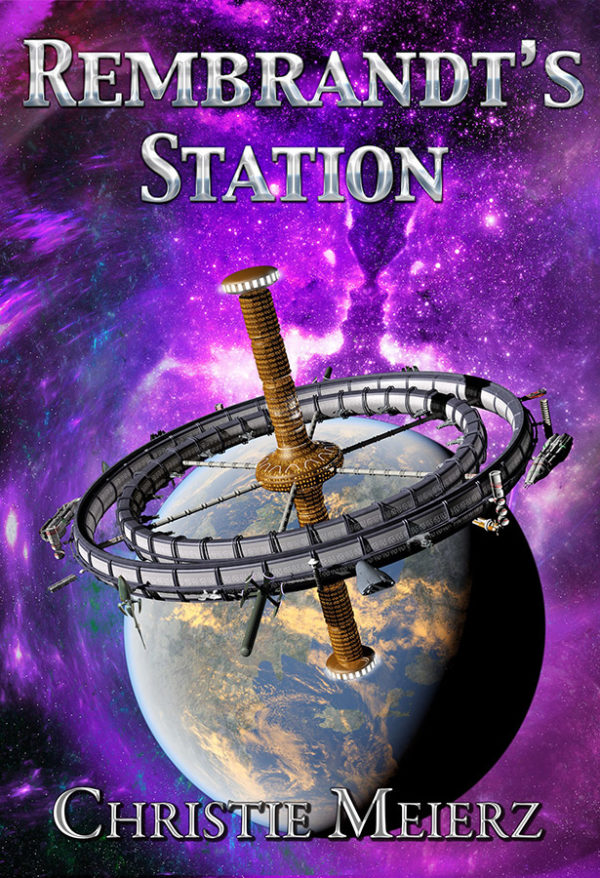
An exiled aristocrat and head of a space station must decide whether to genetically alter himself in order to be with the man he loves in author Christie Meierz’s “Rembrandt’s Station”.
The Synopsis
Stationmaster and exiled aristocrat Albert St. John Rembrandt—Bertie to his friends—is in love with someone he’s always believed he can’t have, and finding out the hard way that some Tolari are as poisonous as their planet is only the beginning of his troubles. A ship has gone missing. His station is in crisis. Bertie must somehow recover his health and manage the disaster while trying to decide whether to accept genetic modification in order to be with the man he loves.
And no Rembrandt has ever taken a gen mod.
The Review
This was an incredible read. The amount of world-building and mythos the author is able to establish and expand upon from the rest of the Tolari Space Opera saga was given life on the page through exquisite imagery and tone. The narrative was both out f this world and yet somehow familiar and relatable, giving readers a chance to really explore this vast universe through a unique blend of setting and atmosphere.
The heart of this narrative rests in the author’s character development. The story already comes into play in a spinoff of a much grander-scale sci-fi series, but the one-on-one interactions that these characters have as a result of their connection to the Earth and one another. The relationship between Bertie and the Monral and how it evolves both characters over time was fascinating and emotionally investing for me as a reader to get behind, and the LGBTQ-driven romance that helps evolve this sci-fi narrative and the future it resides in made this a captivating read.
The Verdict
Engaging, thoughtful, and rich in mythology, author Christie Meierz’s “Rembrandt’s Station” is a must-read sci-fi epic. The perfect sequel and next installment in this space opera franchise, the evolution of Bertie in particular was a great storytelling device, allowing the reader to experience the man he was and everything in his upbringing melt away into the man he was meant to be. The love, adventure, and mythology that the character experiences in this future made this one compelling story that readers will not be able to put down. If you haven’t yet, be sure to grab your copy today!
Rating: 10/10
Advertisements
Christie Meierz has a new MM sci-fi romance out: Rembrandt’s Station. And there’s a giveaway!
Stationmaster and exiled aristocrat Albert St. John Rembrandt—Bertie to his friends—is in love with a man he’s always believed he can’t have, and finding out the hard way that some Tolari are as poisonous as their planet is only the beginning of his troubles.
A ship has gone missing. His station is in crisis. Bertie must somehow recover his health and manage the disaster while trying to decide whether to accept genetic modification in order to be with the man he loves.
And no Rembrandt has ever taken a gen mod.
Warnings: mention of past off-screen rape of a character who doesn’t appear in the book
The Monral slammed his other hand onto the treatment bed and looked up at the apothecary, knowing his face betrayed the pain of his next words. “You cannot give it to him unwilling.”
She nodded, her own face betraying nothing. Grimly, he poured more of his own strength through his fingers into Bertie, who rallied a little, bringing the pain roaring back. Pain itself could kill a human. The path to keeping Bertie alive lay along a cliff’s edge. Any mistake would plunge him into the dark.
The apothecary pointed her chin at his hand. “We will do all we can for him, but high one, you must pace yourself.”
He shook his head and turned back to Bertie, willing him to remain in the light. Stay alive. Stay alive! Stubborn human! Why? Why did he risk losing his own life to remain unmodified, to hold himself apart from a belonging he clearly desired?
Poisoned, sickened, in extreme pain—Bertie could not be thinking clearly. Did that give the apothecaries an excuse to disregard his oft-stated opinion about the blessing?
Or—he could make Bertie want the blessing.
The Monral lowered his head. No. That, Bertie would never forgive. When he realized he had been manipulated—and he would—he would hate them all.
At least he would be alive to hate them.
The Monral wiped at stinging eyes. He could not betray Bertie now, though the consequences were unthinkable. He touched his forehead to Bertie’s cheek, let his senses wrap around his lover’s presence. Pain. Everywhere, pain. It crescendoed. Bertie cried out, and the Monral drew a harsh, gasping breath. It was too much, and he broke the contact to straighten. A chair touched the back of his legs; he dropped heavily onto it. Bertie had to live. He had to. If he would not take the blessing, then the Monral would do what he could do, even give every last bit of his own strength to save him. He could live with prolonged exhaustion. He was unsure if he could live without Bertie. Not anymore.
Bertie writhed. “I don’t want to die alone,” he rasped. “I don’t—” The last word broke off into another scream.
The Monral’s vision glazed. “You are not alone, my love,” he said, when the scream subsided into choking sobs. “And you will not die. Not while I am here.”
Bertie sighed, and his emotional landscape fell into a disorganized chaos of shallow unconsciousness. His body spasmed and twitched. Around him, the apothecaries, nurses, and aides moved rapidly about their varied tasks, but even unconscious, the pain hardly dulled, radiating from Bertie like heat from a fire. The Monral sagged in the chair, exhaustion fogging his thoughts. He had poured almost everything he had into Bertie. It was still not enough.
“You will not die while I am here,” he repeated, and ignored caution to pull what he still could through his ruling bond, pushing that through his fingers.
He tried to find more. There was nothing left. He would have to wait for the energy available to him through his ruling bond to replenish itself, but he was out of time. Bertie was out of time. Already his glow began to dim again. Tears welled up and spilled down the Monral’s cheeks. He was going to lose him. He was going to lose Bertie.
No. He gathered his remaining strength. If giving it left him unfit to rule, so be it, so long as it kept Bertie alive. If it was not enough—
He took a breath, facing the reality before him. If it was not enough, then Albert St. John Rembrandt, the Duke of New Norfolk’s unwanted youngest son, would walk into the dark surrounded by the love of Monralar.
“I am yours, my love,” the Monral whispered. “I will always be yours.”
He took a deep breath, gathering himself.
A feeling of beingwatched stole over him, and with it, a sense of Parania’s beloved. He paused. Laura was awake and listening, then. Or she was traveling about while her body slept. Why was she here?
Was it simply to offer comfort when Bertie—if Bertie—when—his thoughts stuttered to a halt. More tears spilled.
Then something touched the very core of his heart and soul, refreshing and replenishing, and suddenly he was alert. Energy poured in from his ruling bond as if he had yet given nothing at all. Startled hope flooded him. He drew another deep breath and directed the energy into Bertie. The dimming stopped.
From across the stronghold, he felt the smile on Laura’s face.
* * *
As dawn approached, the mood in the apothecaries’ quarters lightened with the sky. Even to the Monral’s untrained eye, as bad as Bertie looked, his color was better, pale as a summer cloud but no longer grey. Much of the pain had subsided, to the relief of everyone in the room, and though his breathing was shallow, it had settled into an even pattern. The Monral caught the head apothecary’s eye and lifted an eyebrow. She nodded.
“He is out of immediate danger,” she said. “We will do all we can to repair the damage to his body, high one, but it is extensive, and he will require many tens of days to fully recover. He could not have survived without the strength you lent him.”
Its work done, his connection to the beloved of Parania guttered like a candle flame and went out, leaving his chest aching but his body thrumming with energy. Mother of All, he thought. What power Laura had. And how much longer could her Paran hide the fact of it from those who would use or destroy her?
The Monral turned back to Bertie, whose eyes had slitted open. The whites were entirely stained red with blood. “Good morning,” he told him gently, in English.
Bertie managed a faint smile and said, in a hoarse whisper, “You sure know how to show a man a good time.”
Author Bio
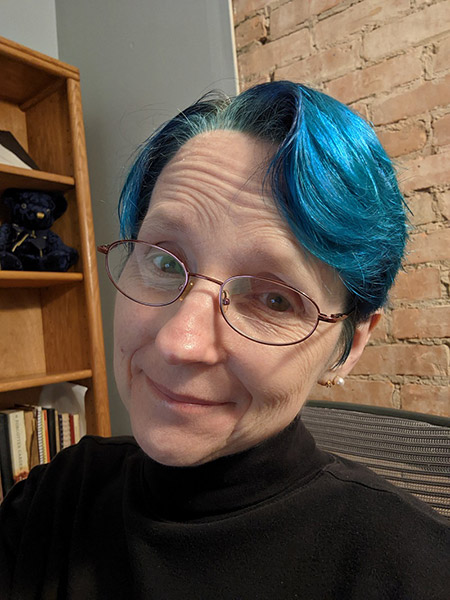
Award-winning author Christie Meierz writes space opera and science fiction romance set on a world of empaths at the edge of a dystopic human empire. Her published works include her PRISM award-winning debut novel, The Marann, three more novels set in Tolari space, and several short stories.
She is a member of the Science Fiction & Fantasy Writers Association (SFWA), spent 10 years raising sheep in Broome County, New York, and has been declared capable of learning Yup’ik.
Christie now lives in Rochester, NY, where she and her mathematician husband serve as full-time staff to two parlor panthers known to humans as Banichi the Assassin and Miss Myrtle the Hurricane Cat. (Their true names remain a mystery). When she’s not writing, she writes about writing on her blog, her personal Facebook page, where she welcomes comments and friend requests, and her Facebook Author Page.
I received a free copy of this book in exchange for a fair and honest review. All opinions are my own.
Author Hal Free takes readers on a journey to showcase the toxic behavior of men and how they mistreat women through a series of humorous yet thoughtful illustrations and commentary in the book “GOOD DICK BAD DICK: How to spot a loser before you date or marry him”.
Advertisements
The Synopsis
GOOD DICK BAD DICK is a totally unique book that uses illustration and outrageous humor to drive home the serious problem of how men mistreat and objectify women. The cartoon presenter is probably the last you’d expect to demonstrate men’s bad behavior, but he’s the ultimate symbol of all men. Each page presents different examples of the selfish, self-absorbed male mindset. a “pee-in-your-pants” collection of watchouts for women — and a way for men to see themselves as they too often are.
The Review
One of the things that has become so much more apparent in recent years with the accountability that social media brings in this day and age is the horrid way that men grow up believing how to treat the women in their lives and those they encounter throughout their days. The toxicity and mistreatment that is constantly brushed aside or excused as “boys will be boys” has been an issue that has faced mankind for centuries, and in the author’s book, this issue is finally blasted for all to read.
The mixture of lighthearted tone and humor with the seriousness of men’s behavior and attitude is illustrated in such a way that instantly connected the reader to the subject matter. I think this was a book that spoke to everyone, men and women included. For men, this was a wake-up call to showcase how they are constantly twisting the truth and abusing women around them for their own immediate gratification or genuine pleasure, and the only way to build a better world is to teach future generations how not to act. For women, this book feels validating, as if the hardships and struggles that they are forced to endure on a daily basis are finally given life in these hilarious yet powerful cartoons that speak to the heart of this matter.
The Verdict
Thought-provoking, inspiring, and engaging, author Hal Free’s “GOOD DICK BAD DICK: How to spot a loser before you date or marry him” is a must-read nonfiction book that meets illustrated work. The commentary on relationships and behaviors related to gender, specifically how men treat women in life from their adolescence to their adult years, will not only help women readers to feel heard and seen in their own struggles but allow male readers to see a part of themselves they may ignore or not realize is there. If you haven’t yet, be sure to grab your copy today!
I received a free copy of this book in exchange for a fair and honest review. All opinions are my own.
Author Shai Tubali adds to the ever-growing collection of books under the Llewellyn’s Complete Book series with a look at how meditation can be used to live a happier and healthier life while reducing stress, decreasing pain and so much more in the book “Llewellyn’s Complete Book of Meditation: A Comprehensive Guide to Effective Techniques for Calming Your Mind and Spirit”.
Advertisements
The Synopsis
Free Your Awareness and Awaken Your Energies with 35 Worldwide Meditation Techniques
Enjoy a healthier and happier life with reduced stress, decreased pain, improved sleep, lengthened attention span, and fewer age-related memory problems. The key to these and other benefits? Meditation.
Appropriate for practitioners of all skill levels, this new addition to Llewellyn’s Complete Book Series features thirty-five fundamental meditation techniques from traditions around the globe, including one unique method of author Shai Tubali’s own creation. These include:
– Zazen (Classical Zen Meditation)
– Qigong Standing Meditation
– Jon Kabat-Zinn’s Body Scan
– Taoist Inner Smile
– Osho’s Mystic Rose
– Japanese Forest Bathing
– Sufi Whirling
– Gurdjieff ‘s “I Am” Meditation
– Christian Prayer of the Heart
– Islamic Dhikr
– Hindu Aum Meditation
– Sikh Kirtan Kriya
– Jewish Hitbodedut
– Ramana Maharshi’s Self-Inquiry
– Tantric Hindu Kriya Yoga
– Tibetan Buddhist Dzogchen
Shai presents each technique with its historical background, cultural context, potential benefits, and clear instructions for practicing it at home in a non-appropriative way. You will explore the fifteen purposes of meditation and the role of chakras. You will also learn how to align your mind and body, open your heart to love and compassion, use the hidden powers of sound, and more. This comprehensive, easy-to-understand guide introduces the magic of meditation in a way that is experiential, practical, and deeply researched. Every page encourages you to take your journey into the world of meditation further than ever before.
The Review
This was quite a comprehensive and engaging read. The author did an incredible job of capturing a cohesive and easy-to-understand book that spoke to both beginners and advanced meditation students alike. The way the author was able to find the right balance between writing in a more authoritative and knowledgeable voice and the voice of someone who is able to relate to the reader’s history and interest in meditation as a whole kept me engaged with this book.
The heart of this book for me had to be the emphasis the author put on showcasing a wide range of meditation techniques from different cultures and backgrounds, as well as the focus on identifying trauma and the troubles in life that give us a purpose towards meditation as a whole. While not only used in trauma, the spiritual and mental effect that meditation can have on a person has always fascinated me, and the detailed way the author brings this to life on the page was great to read. This, combined with the different backgrounds and cultures surrounding the different meditation techniques the author explores made this a well-rounded and insightful read.
The Verdict
Captivating, engaging, and thoughtful, author Shai Tubali’s “Llewellyn’s Complete Book of Meditation: A Comprehensive Guide to Effective Techniques for Calming Your Mind and Spirit” is a must-read nonfiction book and guide on meditation. The thought-provoking and spiritual nature of the book will keep readers invested in the subject matter, and the approachability of the author’s writing style will have readers eager to absorb and utilize the knowledge the author is imparting. If you haven’t yet, be sure to grab your copy today!
Rating: 10/10
Advertisements
About the Author
Shai Tubali is an international speaker, author, and spiritual teacher. He is one of Europe’s leading authorities in the field of chakras and the subtle body and has published twelve books. Shai also serves as an academic researcher at the University of Leeds and has developed several meditation-based therapeutic methods. Visit him online at ShaiTubali.com.
1) Tell us a little bit about yourself. How did you get into writing?
I have severe dyslexia and did not do well in school. Then mother died when I was ten, and my father was mostly absent. I first started running away when I was 14. This was on the east coast, near D.C. I walked up the Potomac river to where I got on the Appalachian trail at Harpers Ferry and turned south. I was hungry and lonely most of the time. For the company in words, I started writing. My dyslexia became a superpower because I listened and looked at words as sounds and shapes, not as structured rules. Dyslexia has let me notice the world in ways most people don’t. In my early 20s, I lived off the short stories I was selling to magazines. Editors fixed my grammar and spelling. Not long after I started selling fiction, I found that I also had a knack for a different type of writing: code. So I started writing software too, which is another way to deal with loneliness. And dyslexia was also an advantage for understanding code, as it helped see connections that most people missed.
Advertisements
2) What inspired you to write your book?
I started writing “Paper Targets” more than 20 years ago. The software company I founded, FreeMail, had been acquired a few years earlier, and my life should have been good. But instead, it was a Herculean mess. I had just been fired by a billionaire whom I had accused in a board meeting of crimes, and now I was out of work and broke. It would still be four more years before Bernie Ebbers was arrested and sentenced to 25 years in federal prison — where he became blind and demented — for what was then the world’s largest fraud. But when I was writing the first words of “Paper Targets,” he and the other executives who had pulled me into their world of the “Lie” were freely strutting on the World Stage of Greed. But it was all corrupt, even as they were still scooping up investor money that would evaporate into headlines. I had also recently made yet another terrible relationship decision — wanting to believe that red flags were trail markers — and had bailed an artist out of jail. And that story found a place in Paper Targets.
Writing has been my way to understanding mistakes and troubles. But whenever I try to write “Just The Facts,” my words scrunch into arrogant-sounding scribbles and add depression to my burdens. So I turn to fiction, as I have been doing since I left home at 14, to figure out what happened. And inevitably, the truth does come out; there is a lot of non-fiction in “Paper Targets,” but I have never killed anyone nor hacked for money, though I have known several that have.
Then, in 2020 I became friends with Stacy Lear, a writer who was then a homicide detective and who also has a knack for solving financial crimes. I thought Stacy might appreciate what I had spent the last 20 years trying to figure out, and I read to her the first pages of what then was called “The Aether and the Lie,” some of which I had also read on my podcast Montana Voice. Stacy’s response encouraged me to finish what I had started and find a publisher for what became “Paper Targets.”
3) What theme or message do you hope readers will take away from your book?
People who have created our technological world — the screens, wires, networks — are failable human beings, and some have done bad things because of greed. And others have been nudged into doing bad things because the border between right and wrong can be jagged and grey. But good still matters, and ethics is more than an academic concept, and living ethically is a challenge but should be a goal.
4) What drew you into this particular genre?
Paper Targets fits into the shelf space of “Literary Thriller,” but I like to think of my genre as “Truth Stirred With Fiction.” A bad thriller is pure plot, and a bad literary work is pure internal insight. But when plot is mixed lovingly with insight, there’s often a good story. I’m drawn to a good story; that is what I also like to tell.
5) If you could sit down with any character in your book, what would you ask them and why?
I like Pascal, the Bondsman. I would buy him a drink and ask him to tell me more about his time in Missoula before the place became a Zoom Town. I would ask him about great dirt roads that aren’t on the map and go far back into places with endless stars in a dark night sky.
Advertisements
6) What social media site has been the most helpful in developing your readership?
I have a love/hate relationship with social media sites. Of course, they are all corrupt. But ignoring them is like saying you won’t have any part in book publishing because there are evil books that have been printed. I have a large following of fans because of my podcast, “Montana Voice,” and most of those fans seem to come from my Facebook followers. Goodreads is cool too.
7) What advice would you give to aspiring or just starting authors out there?
Writing needs to be, first and foremost, for yourself. There is great company in words, and good stories make the world a better place. Learn to tell a good story, then get the words down. Then do it again. Never stop.
8) What does the future hold in store for you? Any new books/projects on the horizon?
I have several unpublished manuscripts that I am thinking about launching. I am also working on a new book with Pascal as the main character since I liked hanging out with him the most while writing Paper Targets.
Advertisements
About the Author
Steve Saroff is the host of the podcast Montana Voice, and the author of over 30 traditionally published short stories printed in Redbook and other national magazines. His available books include Paper Targets; The Long Line of Elk; and the forthcoming Mixed Drinks.
I received a free copy of this book in exchange for a fair and honest review. All opinions are my own.
Author Jade Barrett takes readers on a personal journey into the process and life of IVF in an effort to start her family in the book “The Good News Is, You Don’t Have Endometriosis: How I Survived IVF With My Sanity (Mostly) Intact”.
Advertisements
The Synopsis
Jade Barrett thought she was living her best life in her 30s, a stable career, an amazing husband, a great group of friends, a supportive family, and a beautiful home…that is until she tried to start a family.
After yet another negative pregnancy test, her husband said, “It’s time to talk to a doctor.” Surely she didn’t have infertility…right? Finding out that the only way she could conceive a child biologically was through IVF sent shockwaves through her marriage and her life.
Thisis the story of triumph over adversity and how you can advocate from the best possible care from your fertility clinic.
“There are lots of things one can prepare for in life – an important exam, maybe a big job interview – but no one is prepared to be diagnosed with infertility.”
– Jade Barrett
“No one discusses the idea that maybe some people have a fancy built-in biological protection against pregnancy that will become a major crisis in the lives of 1 in 8 couples when they wish to start a family.” – Jade Barrett
“The Good News Is, You Don’t Have Endometriosis”is a hilariously intense story of Jade Barrett’s IVF quest to parenthood and how you can advocate for the best possible care from infertility clinics.
The Review
This was such a heartfelt and passionate read. The author did an incredible job of really relating her personal experiences going through fertility tests and going to a plethora of doctors’ appointments to discover where the issues lay in the process. The fast pace of the read and the intense atmosphere of the author’s story told kept readers engaged on a personal level as the book progressed.
The heart of this narrative lay in the wonderful balance of humor and wit that the author wrote with, as well as the perspective the author brought to the subject. The narrative honed in on the author’s point of view, not as a medical professional at all but as an everyday person and patient who had to endure and learn about this tough subject on the go. The strength and resiliency she shows in the pages of this book and the captivating way she showcases how to be her own advocate in the journey to find medical care that is both done right and done with professionalism kept me thoroughly engaged.
The Verdict
Mesmerizing, educational, and charming yet inspiring all at once, author Jade Barrett”s “The Good News Is, You Don’t Have Endometriosis: How I Survived IVF With My Sanity (Mostly) Intact” is a must-read nonfiction medical memoir on the struggle and journey to understand IVF. The way the author hones in on the physical, mental, and emotional aspects of this journey and the honesty with which she writes has crafted a book that feels both authentic and emotionally driven. If you haven’t yet, be sure to grab your copy today!
Rating: 10/10
Advertisements
About the Author
Jade Barrett is an American high school teacher who experienced infertility from 2017-2021.
She hopes to help other women and couples who are struggling with infertility through her story, The Good News Is, You Don’t Have Endometriosis: How I Survived IVF with My Sanity (Mostly) Intact.
It is the story of triumph over adversity and how you can advocate from the best possible care from your fertility clinic.
I received a free copy of this book in exchange for a fair and honest review. All opinions are my own.
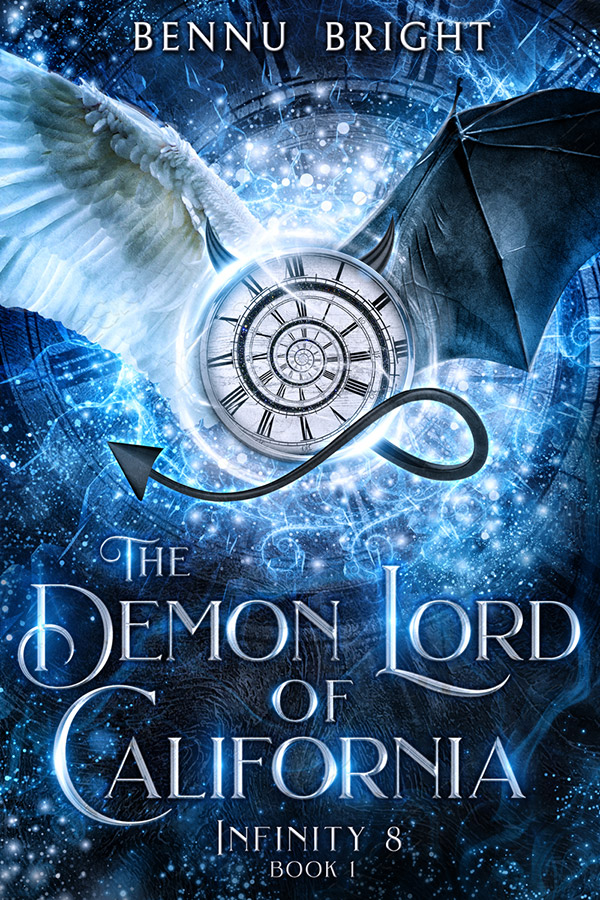
A powerful being from another dimension and an angelic heir known as the Demon Lord of California must work together to stop dark forces from taking control of the open portal the being used to enter the human world in author Bennu Bright’s “The Demon Lord of California”, the first book in the Infinity 8 series.
Advertisements
The Synopsis
Baker. Wizard. God of Space and Time. Cupcake enthusiast. How long will it take to fan the flames and enrage this gentle phoenix? Start counting.
What’s a wounded and lonely little cinnamon roll to do? Stripped of his psychic powers, Calico Winghorse flees to 19th century earth via his inter-dimensional portal. As a mixed-blood phoenix trapped in human form, he opens a bakery in the San Francisco Bay Area and quietly nurses his wounds. But the unique method of his arrival has drawn the unwanted attention of Infinity Corporation.
Representing this angelic-run company is Agustin Chavez de la Cruz, the Demon Lord of California. Even though Agustin is IC’s heir, he finds himself demoted from his duties to concentrate on his new assignment: take absolute control of the portal. But Calico refuses to sell for any price.
Before Agustin can formulate a more gracious avenue of acquiring Calico’s gateway, the demanding head of IC interferes, further complicating matters. So as negotiations stumble along, Calico and Agustin realize they both wish to establish more than a mere business arrangement. In the mean time, Calico ensures that the good people of the city are getting their fill of baked goods.
However, due to Calico’s injuries, the portal remains vulnerable to the darker forces that want it at any cost. Agustin will have to push both his angelic heritage, as well as his own psychic power to the very limits to mend someone who not only bears celestial blood, but who is also the God of Space and Time.
The Review
What a fantastic way to begin the new year. The epic proportions of this novel’s world-building were incredible to read. The vastness of the novel’s paranormal world burst open on a grand scale that kept me enthralled by the author’s storytelling. The balance the author found between humor and romance as the story delved into the more everyday, mundane, and human aspects of the story with the more epic, chilling, and heavy aspects of the cosmic scale fantasy horror elements of the story were incredible to see come to life on the page.
The depth of emotional connection the author was able to achieve with the characters in this book was superb. Not only did the author manage to craft a villain that everyone will love hating, but the protagonists of this story found a way to add a level of connection and relatability to their bond together that is not always easy to accomplish when dealing with otherworldly beings. The way Calico opens up Agustin’s world and viewpoints to the point of making sacrifice after sacrifice to help the wayward god of space and time and the connection they shared not only brought that beloved LGBTQ romance and relationship to life, but added the heart to the narrative.
The Verdict
Thoughtful, mesmerizing, and entertaining, author Bennu Bright’s “The Demon Lord of California” is a must-read fantasy and LGBTQ Paranormal novel to kick off 2023, and a great start to the author’s Infinity 8 series. The heart and compassion of the character’s arcs blend well with the action and fantasy world the author has brought to life through incredible imagery in their writing, and the twists and turns will have readers eager for more as the book comes to its climactic conclusion. If you haven’t yet, be sure to grab your copy today!
Rating: 10/10
Advertisements
Bennu Bright has a new MM alt-history fantasy out (bi/pan, intersex, poly), Infinity 8 book one: The Demon Lord of California. And there’s a giveaway.
A Slow Burn Meet Cute!
Baker. Wizard. God of Space and Time. Cupcake enthusiast. How long will it take to fan the flames and enrage this gentle phoenix? Start counting.
What’s a wounded and lonely little cinnamon roll to do? Stripped of his psychic powers, Calico Winghorse flees his homeworld and travels to 19th century Earth via his inter-dimensional portal. As a mixed-blood phoenix trapped in human form, he opens a bakery in the San Francisco Bay Area and quietly nurses his wounds. But the unique method of his arrival draws the unwanted attention of Infinity Corporation.
Representing this angelic-run company is Agustin Chavez de la Cruz, the Demon Lord of California. Even though Agustin is IC’s heir, he finds himself demoted from his duties to concentrate on his new assignment: take absolute control of Calico’s portal.
But Calico refuses to sell at any price. He is also very busy ensuring that the good people of the city are getting their fill of baked goods.
Before Agustin can formulate a more gracious avenue of acquiring the gateway, the demanding head of IC interferes, further complicating matters. So as negotiations stumble along, Calico and Agustin come to realize they both want more than a stuffy business arrangement.
However, due to Calico’s injuries, the portal remains vulnerable to the darker forces that want it at any cost. Agustin will have to push both his angelic heritage, as well as his own psychic powers to the very limits to heal this sweet baker, who is also the portal world’s God of Space and Time.
The Demon Lord of California is the first book of an LGBTQ+ paranormal-fantasy series. You won’t want to miss a first love found, hidden worlds, and a recovering workaholic grasping at his second chance. All centered around the control of an otherworldly portal. So curl up with your favorite beverage, and hang out with Cal and Gus for a while. You’ll be happy you did!
Warnings: Mature readers. Robbery and assault. Mentioned sexual harassment/assault. Mental abuse from a parent. Fire, burning, burning alive. Possibly implied prostitution, and suicide (by fire).
“Please,” Calico called out, hands waving at chest-level. “Please, wait.”
The raucous noise of the motorcar’s engine ceased. The gentleman stepped down from the vehicle. “You wished to speak to me? Is it about the order? I can reduce the amount of—”
“Oh, no, no,” Calico hurried to reassure. “My brothers and I are most capable, and we will have no difficulty filling and delivering your baked goods. On time. I…” He could do this. He had to do this. His loneliness would drive him mad before the curse could ever eat him into a permanent demise.
Perhaps it would be easier if they did not have the driver as an audience. Calico extended a hand to show his customer the way to the small strip of greenery next to the bakery. He could not be sure exactly what his intentions would entail, by waylaying a most important customer in this manner. It was indecent. Immoral. But Calico felt if he did not, he would lose something, or a moment, that was so dire, he would die.
He would die anyway… Calico bit his lip.
It was well and good his gentleman customer seemed to be interested in his most unusual inquiry. So that provided additional courage. Which came as a surprise.
In the heart of this little park next door to the bakery, his customer artfully arranged himself on the bench beneath the gaslight pole. Sitting straight and tall. Sophistication and elegance radiating just as strongly as the furnace of his elemental aura.
The haziness cast from the street lamp created a most wonderful island against the coming twilight. It strangely made this rendezvous cozier. That alone bolstered Calico’s courage another notch.
When the gentleman looked up at him expectedly with those mismatched eyes, Calico felt mesmerized. Say something, he demanded of himself. Something witty and clever, so he will think me just as gentlemanly and important.
His customer appeared to be fighting the smile on his lips before clearing his throat. He turned his head—just for a second, before facing him again, expression polite.
Say something, Calico pushed himself. He is waiting. He will think me daft and even more unsound than I already am. Alright then. Here I go.
“We are both fire elementals.” The clumsy inquiry had Calico’s cheeks heating in embarrassment. He bent his head at his failure.
“One moment,” the gentleman said. He collected a small item anchored into his top hat and held it up. A blue gem embedded into a silver clip glowed, and the light circled around them like a curtain. Returning the jewel to its place on that magnificent hat, this man languidly leaned against the backrest and angled himself more in his direction.
Calico felt encouraged to pursue a friendly connection, but this intriguing magic had to be investigated. “What was that?”
“A spell my company uses. We call it the Curtain. It keeps our dealings private and unseen from the mundanes—ah, the general non-magical populations, I mean. Usually the humans.”
“That is most ingenious magic,” he exclaimed, leaning in. “I wonder how it compares to my Mirror Bubble?”
There was that smile again, most gentle, and prompting. “You wished to speak of magic? Or something more?”
“Ah, my apologies. Not magic. Will you show it to me?” Calico asked, knowing himself too eager. He tried not to wring his hands and appear desperate.
His customer’s brows rose high, and Calico knew it was in utter surprise, and perhaps curiosity. “Show you… what?” The question was somewhat wary with a touch of amusement.
“Your elemental flame. You see, I too, am—er was once gifted with the flame. I am a phoenix, you see.”
The man blinked. “A phoenix without a flame?”
Calico felt himself turn pink, and put a sheepish hand against the back of his head. “It is a most embarrassing admission,” he rushed. “I did not plan on being so forward. I apol—”
There was a quiet whoosh. Another small circle of light rose, and Calico sensed the heat instantly. There, dancing calmly inches above the gentleman’s gloved palm, was a tear-shaped flame. Flickering in shades of orange, reds, and yellows and blues. And… and yes. White.
He sucked in a breath and suddenly couldn’t breathe. It had been so long since he’d seen such a flame. Curling, writhing in all its glory. Since he was cut off from his ability, Maars did not use his out of sympathy. At least in a sensory view.
Calico swallowed the hitch in his breath. How could this gentleman carry so many colors within? Was he that powerful?
“You’re shaking, Mr. Scrivens.” The flame disappeared, and there was a steadying hand at his shoulder. “Are you well? Perhaps you should sit down.”
Calico touched that hand, as if to anchor it in place. “Yes, yes, I should.” The wooden bench was chilly against his rump. “It-it is quite cold this evening. May I see it again?”
The request was granted. Calico just stared at the dancing shapes. Wishing. Forever longing.
A few seconds passed before the gentleman spoke. “How long has it been since you were unable to create?”
Create. It was an elemental term Calico had heard bandied about as he eavesdropped upon conversations among the local wizard shops. The question sent warm tingles and shivers of fire down his spine.<
Staring at the flame so snug and content curling about the gentleman’s gloved fingertips, Calico suddenly found himself saying, “Sixteen months, two days, seventeen hours and 26 and a half seconds.”
The gentleman cocked his head to the side. He lowered his hand, and the summoned fire faded. “That’s quite precise.”
Indeed! He should not be able to access any of his psychic powers. “I am the God of Space and Time,” Calico said offhandedly.
There was a pause that almost became awkward. “Well, yes. About that. Mr. Scrivens, while we are here, alone, I’d like to take the opportunity to discuss your delivery further.”
“Oh, yes,” Calico replied with renewed energy. “What is it? Would you like to add my famous cupcakes to the order? It is no trouble.”
“N-no. That’s not it. Well, the baked goods are for a recruitment campaign.”
“Recruitment?”
“Yes. My company has need of your skills.”
Calico paused before he made a silly fish out of himself. As much as his mind was centered upon his magic, what if this man merely wanted an extra baker on his payroll, and not a wizard? He had to allow the man to formally extend the offer.
Author Bio
Hi! I’m Bennu Bright. Fantasy and paranormal tales have always felt like home. And I’ve always adored getting into the gritty details of a character’s goals and relationships. With my newfound zest for the craft of writing, my work has joined the ranks of romance and the romantic.
Born and raised in the San Francisco Bay Area, I spend my days nose to the keyboard, or attempting to revive an ancient passion for drawing.
I received a free copy of this book in exchange for a fair and honest review. All opinions are my own.
A young Asian American family must learn to survive and endure in the wake of the prejudices found in the United States after the attack on Pearl Harbor in 1940s America in author Shirley Miller Kamada’s “No Quiet Water”.
Advertisements
The Synopsis
After the U.S. declares war on Japan in 1941, all persons of Japanese descent in the Western U.S. come under suspicion. Curfews are imposed, bank accounts frozen, and FBI agents search homes randomly.
Despite the fact that two generations of the Miyota family are American citizens, Fumio and his parents and sister Kimiko must pack meager belongings and are transported under military escort to the California desert to be held at Camp Manzanar, leaving their good friends and neighbors the Whitlocks to care for their farm and their dog, Flyer.
The family suffer unimaginable insults, witness prejudice and violent protests, are forced to live in squalor, and are provided only poor-quality, unfamiliar food which makes them ill. Later, they are transferred to Idaho’s Camp Minidoka, where Fumio learns what it means to endure and where he discovers a strange new world of possibility and belonging.
Lyrical, visual, and rendered with strict attention to historical accuracy, No Quiet Water, shines a poignant light on current issues of racism and radical perspectives.
The Review
This was such a unique and special read. The author does an incredible job of crafting a narrative for readers that feels accessible on a large scale to a multitude of readers while also diving deeply into the heart of the narrative and the themes that they explore, which feel personal and painfully intimate to the characters involved. The themes took on a serious tone as the author delved into some serious subject matter, including themes of racism and mistrust in the wake of tragedies, and the way fear and doubt warp people’s perception of others, something that is happening even now in our own modern times, which made this story feel tragically more relatable than ever before.
The heart of this narrative was the rich character development and the multi-POVs that the story takes on. The heartbreaking and enduring story of Fumio and his family create that emotional relatability between the reader and the narrative that a historical fiction of this magnitude has while also creating a unique perspective through the eyes of the family dog who is forced to be left behind on the family farm in the care of neighbors gave this story the YA and middle-grade genre twist that will make the narrative accessible to a broader audience.
The Verdict
Captivating, emotionally driven, and memorable, author Shirley Miller Kamada’s “No Quiet Water” is a must-read historical fiction Japanese and United States historical fiction read. The heart and passion for which the author wrote, as well as the important themes that touched upon some of our society’s most vital issues that need to be addressed, showcased how we need to learn from our past and the power that resides within us all as we discover who we are in moments of great tragedy and crisis. If you haven’t yet, be sure to grab your copy today!
Rating: 10/10
Advertisements
About the Author
Shirley Miller Kamada grew up on a farm in northeastern Colorado. She has been an educator in Oregon, Idaho, and Washington, a bookstore-espresso café owner in Centralia, Washington, and director of a learning center in Olympia, Washington. When not writing, she enjoys casting a fly rod, particularly from the dock at her home on Moses Lake in Central Washington, which she shares with her husband and two spoiled pups.
1) Tell us a little bit about yourself. How did you get into writing?
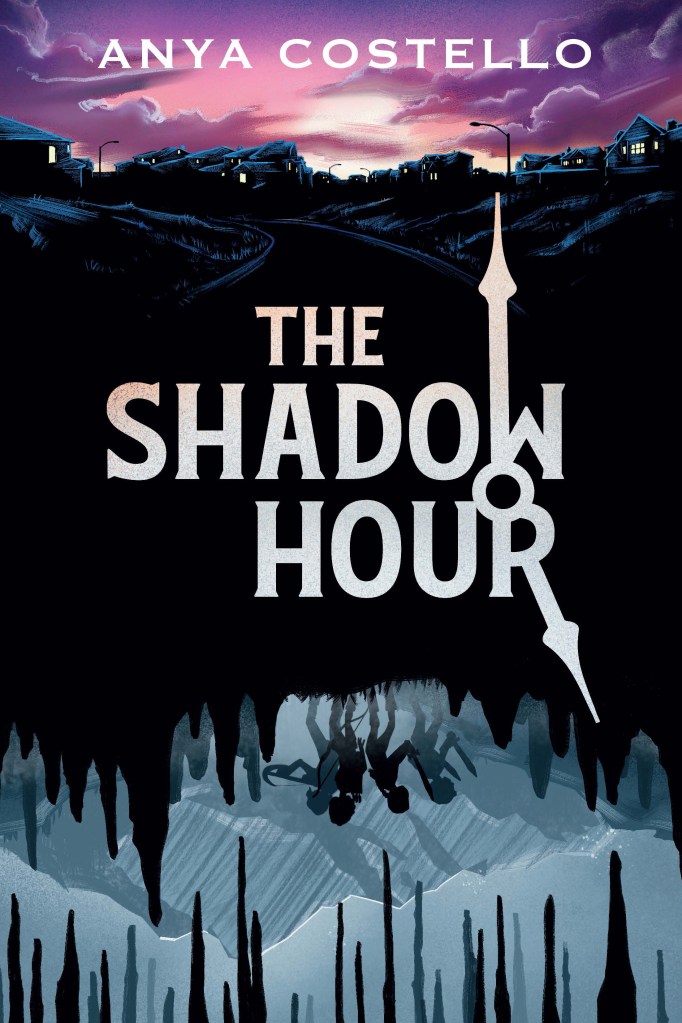
I grew up in a household where everyone was always reading and stopping by the library. I was quickly inspired by the books I read, and knew that I wanted to create stories of my own. I kept stacks of notebooks throughout elementary school and filled them with more short stories than I can count, but began writing The Shadow Hour as my first novel when I was ten. Since winning the Secret Kids Contest and having The Shadow Hour published, I’ve continued working on several longer projects, and can’t envision a future where I’m not writing!
Advertisements
2) What inspired you to write your book?
I had wanted to write a longer work for several years and had attempted it many times, typically foregoing the projects halfway through. Ultimately a conversation with friends sparked the basic idea for The Shadow Hour, and with that creative inspiration, I was able to turn the concept into a fully-fleshed story. I was also inspired greatly by the dystopian adventure novels I read throughout middle school, like The Hunger Games and Divergent. I wanted to create a dystopian novel of my own, combined with more fantastical elements.
3) What theme or message do you hope readers will take away from your book?
I hope that readers might learn from Amber, the protagonist, whose journey results in the realization that her fierce independence will not be the key to her success. Even if we may not have to face autonomous shadows or different dimensions in our lives, I hope readers can learn from Amber that the world and its challenges often aren’t meant to be faced alone.
4) What drew you into this particular genre?
I have always been drawn to the fantasy and dystopian genres because I like the creative elements of world building, and the ability to consider how characters might react to the new environments I create. I love the creative liberties I can take with fantasy especially, stepping away from the limitations of the real world through my writing. Fantasy and dystopian have always been my favorite genres to read as well, and the many books that I have read have constantly influenced me and my style of writing.
5) If you could sit down with any character in your book, what would you ask them and why?
I think I would sit down with Ender, one of the more mysterious characters in my book. Ender has been trapped in the Shadow Realm – an alternate dimension in the book – for years. If he were somehow brought to life, I would want to hear all about his years in the Shadow Realm and how they’d impacted him, as well as what kind of mysterious phenomena he’d witnessed in the strange dimension. For the sake of avoiding spoilers, I’ll have to keep some of the questions I’d ask him to myself!
Advertisements
6) What social media site has been the most helpful in developing your readership?
During the editing process, I was able to participate in blog posts where I could share my experiences with writing and editing The Shadow Hour. With the book now published, it has been more difficult than expected to get used to the self-promotion aspect of sharing my story. After much recent encouragement, though, I have decided to start an Instagram page to promote The Shadow Hour, as I take many book recommendations from the Instagram reading community myself!
7) What advice would you give to aspiring or just starting authors out there?
I would tell any aspiring author that writing requires practice – if you have an idea, try to get a first draft onto paper. Don’t be disheartened if it’s imperfect. You can rewrite the story as many times as you want, and each time holds endless room for improvement. I rewrote The Shadow Hour in its entirety three times before submitting it to the Secret Kids Contest. I then edited the manuscript over several rounds, rewriting as many as a hundred pages in some edits. Each editing round and rewrite was a chance to practice and to improve, so if you’re looking to write a book, get the first draft down and don’t worry about the details.
My second biggest piece of advice is to be open to criticism. The more opinions you receive about your writing, the better. Bringing in new perspectives is always helpful, even if it is scary. I had to move past that fear when working with an editor and sharing my book with family and friends, and found that I improved much faster when I began taking feedback. There is always room for improvement with writing, and outside opinions make those improvements much more obtainable.
8) What does the future hold in store for you? Are any new books/projects on the horizon?
I have quite a few Google Docs filled with story ideas and some longer projects that are more complete. I’m not sure which I’ll end up pursuing further, but I certainly want to share more stories with the world in the future!
I’ll be starting college next year as well, and I’m looking forward to more formally studying creative writing and honing my skills. I hope to be able to take what I learn and apply it to the projects I’ve already started. Writing is certainly not leaving my life anytime soon, and I’m eager to see where my current projects take me in the coming years.
Advertisements
About the Author
Anya Costello is a teen author whose manuscript won first prize of the International Writing Contest of Stone Soup magazine and Mackenzie Press.
Anya says: I have been writing stories since the age of four and at age ten, I attempted my first full length work of fiction, The Shadow Hour. I have always been drawn to writing fantasy and fiction. Building worlds that follow different rules from our own, like the Shadow Realm, and creating the characters that live within them allows me to put aspects of my own life, experiences, and thoughts in an entirely new context.
Anya has been presented at the Frankfurt Book Fair and has received a citation from United Sates Representative Joseph P. Kennedy III.
Anya was born and raised in Massachusetts where she currently resides with her family.