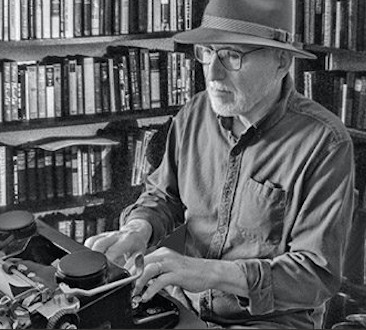
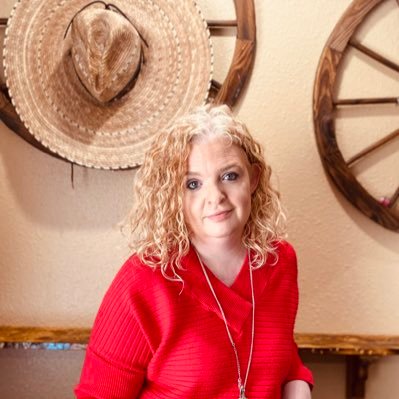
1) Tell us a little bit about yourself. How did you get into writing?
One day, in Toastmasters, we were dared to follow our dreams. I’d always wanted to become a writer. So… I gave it a try. It was difficult, but I wrote up a story and submitted it to an online horror magazine. My story didn’t get accepted, but the editor provided me with some very direct and useful feedback. Encouraged, I kept working on my writing skills. After about a half-dozen story attempts and submittals, I was finally rewarded with an acceptance letter. I did it. I was an author! It took a while for this accomplishment to sink in, but when it did, I realized I could do this. I could keep this going. Ever since then, I’ve been trying new methods to improve my wordsmithing. Sometimes it works, sometimes not, but the overall trend has been onward and upward, which makes me deliriously happy.
Advertisements
2) What inspired you to write your book?
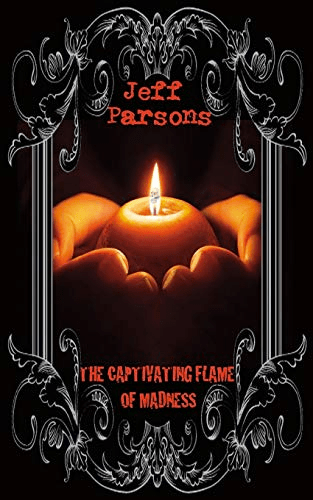
I like a challenge! That’s why I took a liking to fiction writing. My book, The Captivating Flames of Madness, is a collection of short horror stories set in the past, present, and future. Some of the stories also qualify as alt-history or sci-fi.
The inspiration for my stories? I write about the things that interest me. Staying interested is important in life, but also critical for writing. When I follow my interests, the words flow easily. And it’s fun. Essentially, I’m inspired to write about things that interest me.
I’m lucky, I don’t have a problem finding ideas anymore. [Disclaimer: not all my ideas are good ideas.] I observe what’s going on around me and then think about what would happen if something changed. The ‘what if’ factor has been a game changer for me ever since the beginning. The challenge now is to find credible plots for my ideas. 😊
3) What theme or message do you hope readers will take away from your book?
From my book jacket: “we’re all just one event, mishap, or decision away from things that could change our lives forever.” The big takeaway: don’t take life for granted. Anything can and will happen as my stories show. Regardless of what happens, don’t let yourself be afraid. Follow your dreams. Dare to win.
4) What drew you into this particular genre?
As a young child, I didn’t like feeling afraid, so I decided to do something about it. Face my fears. I’m certainly not fearless right now, but my fears don’t control me like they used to. Horror is the perfect venue for experiencing your fears and living through it, overcoming them while becoming braver in the process.
I started out reading horror comics. I loved the stories and artwork. They showed me the mystery of the vast unknown world out there. It was eye opening. They also showed me how to interact with the world (at least when it got scary). That doesn’t mean I personally gravitate towards a horrific lifestyle. On the contrary, I’m a fairly cheerful and optimistic spiritual person, but I do love a good scary story.
Advertisements
5) If you could sit down with any character in your book, what would you ask them and why?
My WWII short story Lost Souls involves the fate of a German submarine sailor named Hans. At the story’s end, he’s killed by ghosts seeking vengeance. I’d like to talk to him about what happens after death. I’d ask him, from a spiritual perspective, if we’re forgiven for protecting those we love, our neighbors, our country. At what cost is that acceptable? And under what circumstances?
Why would I ask? As an engineer, I’ve done my part to protect my country; so, I wonder…
6) What social media site has been the most helpful in developing your readership?
Facebook has been there for me since the beginning of my writing adventure. I created an author’s webpage where I post my new story achievements as well as writer’s tips and humor. This webpage also acts as a go-to site when editors ask if I have a social presence for my work. Also, interacting with other Facebook people provides opportunities, useful networking for wordsmithing, ideas, and marketing.
Also useful is reaching out to independent writer’s blogs, such as this most excellent blog.
In the end, I hope we can help each other, become better people as a result, and learn something more about writing.
7) What advice would you give to aspiring or just starting authors out there?
Do yourself a favor… don’t believe you’re not succeeding if you’re not chugging out reams of perfect prose every day! Research, brainstorming, thinking deeply about ideas, crafting a plot, wordsmithing the prose, and editing editing editing… all of this contributes to writing. Just work at it. That’s how you can become a better writer, day by day. Have fun!
Don’t give up. One of my stories was rejected 11 times. And in one response, with extreme rudeness. When it finally got accepted at professional rates, I realized that the story was actually quite good, and that there was probably something else going on: the editor may not have been infatuated with the story the way I was, it’s similar to other stories they already had, or it’s a wrong fit for the theme they’re looking for. Really, in the absence of feedback, who knows? Or, to be brutally honest with myself (ouch), other reasons might be I didn’t do the bang-up job I thought I had on the story or I didn’t read the submittal specs close enough. My point, be persistent.
8) What does the future hold in store for you? Any new books/projects on the horizon?
I’ll continue writing short stories for small press magazines. My pattern so far has been to collect these stories into books.
I’m working on getting my first novel published. The story is about mankind’s first contact with aliens. I think that topic is fascinating; as always, write where the passion takes you. 😊
Advertisements
About the Author
I have over thirty years of scientific, technical, and fictional writing experience. In addition to my two short story books, The Captivating Flames of Madness and Algorithm of Nightmares, I’m published in The Horror Zine, The Horror Zine’s Book of Ghost Stories, The Horror Zine’s Book of Werewolf Stories, Aphelion Webzine, Year’s Best Hardcore Horror Volume 4, Dark Gothic Resurrected Magazine, Chilling Ghost Short Stories, Dystopia Utopia Short Stories, Wax & Wane: A Coven of Witch Tales, Thinking Through Our Fingers, The Moving Finger Writes, Golden Prose & Poetry, Our Dance With Words, The Voices Within, Fireburst: The Inner Circle Writers’ Group, Second Flash Fiction Anthology 2018, SNM Horror Magazine, and Bonded by Blood IV/ V.
I received a free copy of this book in exchange for a fair and honest review. All opinions are my own.
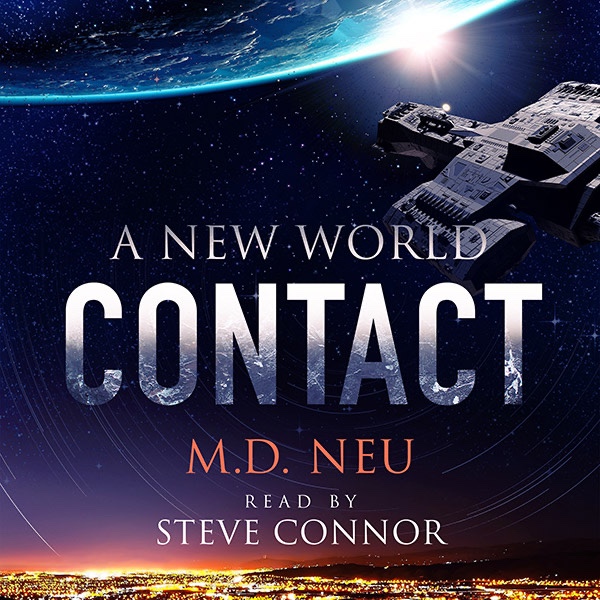
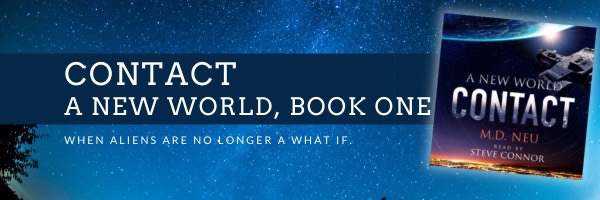
One man is all who stands between the human race and a band of humanoid aliens seeking asylum as violence and unrest emerge in author M.D. Neu’s “Contact”, the first book in the A New World Series!
The Synopsis
A little blue world, the third planet from the sun. It’s home to seven billion people—with all manner of faiths, beliefs, and customs, divided by bigotry and misunderstanding—who will soon be told they are not alone in the universe. Anyone watching from the outside would pass by this fractured and tumultuous world, unless they had no other choice. Todd Landon is one of these people, living and working in a section of the world called the United States of America. His life is similar to those around him: home, family, work, friends, and a husband.
On the cusp of the greatest announcement humankind has ever witnessed, Todd’s personal world is thrown into turmoil when his estranged brother shows up on his front porch with news of ships heading for Earth’s orbit. The ships are holding the Nentraee, a humanoid race who have come to Earth in need of help after fleeing the destruction of their homeworld. How will one man bridge the gap for both the Humans and Nentraee, amongst mistrust, terrorist attacks, and personal loss? Will this be the start of a new age of man or will bigotry and miscommunication bring this small world to its knees and final end?
The Review
This was such an emotional and brilliant sci-if read. The author so eloquently and beautifully brought the shock and surprise of two races meeting for the first time. The imagery and atmosphere that the author is able to build within the narrative, and this was especially felt in the richness of the narration. The balance of action and the tension the author’s writing struck was a testament to his creativity.
Yet for a science fiction tale, the amount of world building the author did was equally matched by the author’s incredible character development. The way the author was able to take readers not only through the shock and fear of humanity discovering life beyond our world, but of this alien race discovering humanity and everything we are capable of, good and bad, was truly brilliant, and added a depth to the narrative that kept readers invested.
The Verdict
Heartfelt, exhilarating, and entertaining, author M.D. Neu’s “Contact” is a brilliant and thought-provoking read and a great start to this series. The heart and passion the author wrote with and the way readers were able to instantly connect with the cast of characters, as well as the amazing LGBTQ driven narrative with the protagonist, made this such a solid read and an even better audiobook. If you haven’t yet, be sure to grab your copy today.
Rating: 10/10
Book Blurb:
A little blue world, the third planet from the sun. It’s home to seven billion people—with all manner of faiths, beliefs, and customs, divided by bigotry and misunderstanding—who will soon be told they are not alone in the universe. Anyone watching from the outside would pass by this fractured and tumultuous world, unless they had no other choice. Todd Landon is one of these people, living and working in a section of the world called the United States of America. His life is similar to those around him: home, family, work, friends, and a husband.
On the cusp of the greatest announcement humankind has ever witnessed, Todd’s personal world is thrown into turmoil when his estranged brother shows up on his front porch with news of ships heading for Earth’s orbit. The ships are holding the Nentraee, a humanoid race who have come to Earth in need of help after fleeing the destruction of their homeworld. How will one man bridge the gap for both the Humans and Nentraee, amongst mistrust, terrorist attacks, and personal loss? Will this be the start of a new age of man or will bigotry and miscommunication bring this small world to its knees and final end?
Series Blurb:
A little blue world, the third planet from the sun. It’s home to 7 billion people with all manner of faiths, beliefs and customs, divided by bigotry and misunderstanding, who will soon be told they are not alone in the universe. Anyone watching from the outside would pass by this fractured and tumultuous world, unless they had no other choice.
Todd Landon is one of these people, living and working in a section of the world called the United States of America. His life is similar to those around him: home, family, work, friends, and a husband.
Mirtoff Esmi is the first of her clan to be the Leader of the Nentraee. Her sole focus is to find them a home before their fleet of ships can no longer carry the last survivors of their dead world. With her brother, niece, and Faa (her companion animal) supporting her, she carries the weight of her world on her shoulders.
Mi’ko Soemu remembers the Nentraee home world for both its failures and its triumphs, which is why he holds the position of Vice-Speaker, and supports the efforts of the Nentraee Leader. He is a father and husband first, and will do what he needs to ensure his family and his fellow nentraee are safe and make it to a new world.
These three beings hold the weight of two civilizations in their hands. Will they be able to bridge the gap for both the Humans and Nentraee, amongst mistrust, terrorist attacks and personal loss? Will this be the start of a new age for both species or will bigotry and miscommunication bring these two people to their knees and final end?
The scene is a confrontation scene between one of the alien generals, Gahumed, and the leader of the alien race, Mirtoff. For me this scene is a lot of fun and it shows off these two powerful women who aren’t afraid to stand their ground.
Pronunciations:
Rádo (RA Doo) – The á is a hard ‘A’ sound.
Gahumed (Gah Mead)
Mirtoff (Mir Toff)
Tuma (Tu ma)
Candra (Can dra)
Dála (DA la) – The á is a hard ‘A’ sound.
J’Veesa (J Vee Sa)
Za’entra (Za En Tra)
Martween (Mar Tween)
U’Zraee (OO Zray)
Nentraee (Nen Tray)
***
“Madam Speaker, welcome to the Rádo.” The female officer stood and bowed.
“Thank you.”
“You honor us with your presence. I’ll let the general know you’re here.” The officer returned to her seat and started tapping on her terminal.
Mirtoff examined the reception area; unlike the civilian ships, this place had a claustrophobic feel. It was built for function, nothing more. She remembered when the ship was under construction at the Candra Shipyards. They barely had the drives working prior to the evacuation. It took five additional years to complete, but the end result was worth it.
“Madam Speaker. You can go in.” The officer bowed again.
Mirtoff bowed in return and proceeded into the general’s office.
The office wasn’t nearly as formal and polished as hers or the vice speaker’s, but it was bigger.
Probably needed to be this large for Gahumed’s girth. Or perhaps her ego.
Various monitors mounted on the walls ran status reports for ship-to-fleet control. This one office could manage the majority of the task force. The monitors displayed only the Nentraee Government Seal. The design comprised of seven gold patterns, each a symbol for one of the clans.
A bank of windows on the back wall showed a view of the internal command center. A large workstation loomed nearby, as did chairs and the conference table that could hold all the generals comfortably for any type of meeting. In this large space, the colors were drab.
I’m not a soldier. I could never work in a place like this. There needs to be plants or color. Something.
“Madam Speaker.” Gahumed offered a curt bow as she stood from her desk. She was a big woman, born for the military, with broad shoulders and a tall frame. Mirtoff was always impressed with how the general managed to keep her brown hair in such snug braids and an even tighter bun.
“General Gahumed. You run a remarkable ship. You should be proud.”
“I’m honored to have such a post within our government.” She tapped her workstation. “Dála, please, bring in two chilled cups of tuma.” She turned to Mirtoff. “You enjoy tuma, correct?”
“Of course.”
Gahumed pointed to the conference table. “Please, come. Let us sit.”
Taking a seat at the table, Mirtoff waited for Gahumed to join her. “I assume you’re here to talk about my suggested plan for dealing with these humans?” Gahumed almost hissed out the word ‘humans.’
“I am.” Mirtoff pulled out her datapad and loaded the information, then swiped it over to the largest of the monitors on the wall. The image started with the Earth rotating. Once it hit the area of the planet she wanted, she zoomed in on a small island continent. The image moved in closer to a smaller island mass off the island continent’s coast. “Your proposal to occupy the area known to the humans as New Zealand is dangerous.”
“I don’t agree.” Gahumed rested her hands on the table. “I picked that area with defense in mind. It’s remote. The land mass is small enough, and we can easily control the surrounding space. They have a limited population of four point six million that can be relocated to Uztralia—”
“I believe they call it Australia,” Mirtoff interrupted.
“Regardless, they share a similar language and background. I don’t see an issue.” Gahumed brought up demographic information of her own. “New Zealand can be made to become sustainable for our needs and allow us business options with the humans.”
“A forced relocation won’t work.” Mirtoff’s ears started to swell and warm up.
Relax. Don’t let this plan anger you.
Mirtoff took a breath. “How will that help us build a positive enough relationship with them so we can conduct trade?”
“We could offer them helium-3 for the territory,” Gahumed countered.
“And what if the Australians don’t want four point six million new humans?”
“Why not?” Gahumed smirked. “They have the land mass, and from the reports, the two territories have good relations.”
“The issue, as I understand it, is none of Earth’s governments are willing to give up their territory to us—”
“Madam Speaker,” Gahumed interrupted, “they are a barbaric species that fight among themselves for land all the time.”
“And how would we be any different?”
“It’s not the same thing,” Gahumed said.
It’s exactly the same thing. You don’t want to see it. You’re a hypocrite.
“We can’t trust them.” Gahumed swiped her hands over her datapad. “They won’t work with us in peace and certainly we can’t trust them to be truthful with their motives. Despite what you and the vice speaker may think. We can easily go there and use our military to take over the area. Then we move the humans and make reparations.” She picked up her datapad. “Denes and my staff have run the scenario based on the information we’ve gathered. The losses were negligible.” She swiped the data up to the monitor.
“Yes, General Gahumed, I’m sure the work of your son is admirable and perfect.” She rubbed the tips of her ears. “Just like him—”
“Are you mocking the abilities of my son? He is a fine male with a brilliant military mind. He is the type of male that every Nentraee of his gender should strive to be.” Her full lips pulled into a stiff line, and her ears started turning an angry shade of blue.
“Of course, General Gahumed, he’s the perfect male. Unlike all others. We are all aware of this fact.” Mirtoff forced her gaze not to move from the general’s. How poor Denes lived with the pressure for perfection was impressive.
It’s possible, on that fact alone, he may actually be perfect.
“I don’t appreciate your tone, and as a full member of the Speaker’s House, I would expect better.” Gahumed didn’t bother to hide the tips of her ears.
This isn’t going well.
“My apologies.” Mirtoff offered a stiff bow. “You want to go to war with the humans for territory? That is not the way of J’Veesa.”
“Don’t assume to understand J’Veesa’s will. Your people don’t have the relationship with J’Veesa that mine do.” Gahumed’s ears flared.
Mirtoff kept quiet.
Your people. My people. What is the difference? J’Veesa sees us equally.
Gahumed swiped information to the largest monitor. Battle statistics filled the screen. “I don’t consider it a war, more of a forced relocation. We’ll be fine.”
“And if they decide to involve other countries?” Mirtoff rested her datapad on the table. “Then what? It’ll be the Clan Wars all over again. Haven’t—” She stopped and her chin dropped to her chest.
We’ve been through that once on our world. How can we force that on another?
“It’ll be nothing like the Clan Wars.” Gahumed sat taller in the seat. “Once, these humans see our military might, they won’t challenge us. They would lose even if they used their strongest military deterrents. It would be nothing like the slaughter that your clan caused back then.”
Mirtoff’s eyes shot up. “The Za’entra? They were fighting back your clan because they had no choice. Your clan and the Martween and U’Zraee clans were slaughtering them. It was only because of their numbers that they were able to endure. How can you say—”
“I speak the truth.” Gahumed slammed her hands on the table, causing it to shake. “You and your clan have always blamed us for that war. We never started it—”
The soft chirp of the door interrupted them. They both turned as Dála entered, holding a tray with two cups on it. She quietly placed a cup in front of each of them and left the room.
“I’m sorry, General Gahumed.” Mirtoff stood, the tips of her ears on fire. “I appreciate your proposal. However, I came to inform you that your suggested plan for New Zealand has been rejected. We will not risk war with the humans to gain territory.” She glanced at the tuma and then back to Gahumed. “I appreciate the offer of the cup of tuma. However, I’m afraid I can’t stay.”
“This is a mistake, Mirtoff.” Gahumed stood. “You’ll see when they resist the arm of peace that you and others in the Speaker’s House extend to them. My idea is the only one that can guarantee the safety of our people.”
“No, General. I would sooner leave this planet than go in and slaughter them.” Mirtoff headed out of the office, her hands in tight fists.
There is a peaceful solution. I need to find it and keep the military generals from forcing us into an armed confrontation. I won’t be the first speaker general to go to war with an alien race.
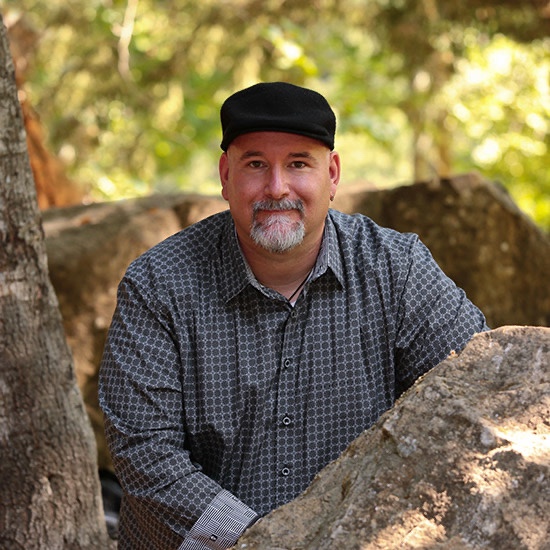
M.D. Neu is an international award-winning inclusive queer Fiction Writer with a love for writing and travel. Living in the heart of Silicon Valley (San Jose, California) and growing up around technology, he’s always been fascinated with what could be. Specifically drawn to Science Fiction and Paranormal television and novels, M.D. Neu was inspired by the great Gene Roddenberry, George Lucas, Stephen King, Alice Walker, Alfred Hitchcock, Harvey Fierstein, Anne Rice, and Kim Stanley Robinson. An odd combination, but one that has influenced his writing.
Growing up in an accepting family as a gay man he always wondered why there were never stories reflecting who he was. Constantly surrounded by characters that only reflected heterosexual society, M.D. Neu decided he wanted to change that. So, he took to writing, wanting to tell good stories that reflected our diverse world.
When M.D. Neu isn’t writing, he works for a non-profit and travels with his biggest supporter and his harshest critic, Eric his husband of twenty plus years.
Tell us a little bit about yourself. How did you get into writing?
I’m not sure when it began – perhaps in another lifetime – but one significant event sticks in mind: when in year six or seven, the teacher asked the class to write an essay on a topic of their choice, much to the student’s mortal objections, except for goody-two-shoes. I wrote about a tree in a field and described it to the inch degree. And – ta-da! – received top marks. Whether it be a tree or shadows lurking within other dimensions, the urge to present folks with a doorway in which to escape remains my driving force. KALEIDOSCOPIC SHADES, however, remained mothballed for a decade until a lovely ex-hippy, ex-school principal, and all-around good guy – Hi there, Brian Harris! – suggested that I get off my butt and do something about it.
What inspired you to write your book?
Part of my childhood was spent in a house where unseen guests strutted about, opening and closing all amount of the doors and windows and even went as far as rescuing me, if not the entire family, from potential disaster. Awakening one morning, freezing cold – as my folks had made the mind-numbing decision of us moving us into the Adelaide hills where night temperatures kept one in cryogenic status year-round – I was greeted by several oddities 1.) My electric blanket had caught alight during the night and had burned a patch in the bedsheets and mattress and 2.) The electrical cords feeding the blanket had been unplugged and pulled from the socket. The rest of the family were still sleeping blissfully unaware when this discovery was made. Oh – and by the way, it’s not true, you know? The dead… they can hurt you just as easily. And badly.
What theme or message do you hope readers will take away from your book?
Ah – you know, that is both an interesting question as well as one which draws out a simple answer: we are all in this together, and when we all start learning that – if mankind as a whole ever will – we’ll discover regardless of sexual orientation, of gender and desires, of likes and dislikes, of the color of our skin or the gods we genuflect to, each and every one of us experiences pain, love, happiness, and sadness and by turning one’s back on someone in need only cheapens humanity.
Advertisements
What drew you into this particular genre?
The undying intrigue in what lies beyond. I believe I just about absorb every ghost-hunting doco, paranormal doco, and everything in between which can’t be explained. Yep – it’s pretty much part of my DNA and scares the pants off my lovely GP whenever I ask for a blood test and he gets the results! There is so much anecdotal evidence out there that screams at us to take notice – or suffer the consequences of ignorance.
If you could sit down with any character in your book, what would you ask them and why?
Huh – I’ve never given that a thought. The characters were such an integral part of my life for as long as I was with them through their journey. I guess I would ask both Joshua and Leon why the hell they just don’t open up about their feelings for each other. I could also ask Bob and Sue if there were any substantial differences between Adelaide and California. And, by the end of the ordeal, I’d ask each and every one of them how they were going to approach the rest of their lives having survived the ravenous horrors of another reality.
What social media site has been the most helpful in developing your readership?
Ha-ha-ha! I’m on LinkedIn which automatically hooks up to Twitter, but I don’t seem to be very good at socials. I feel very clumsy as if I’m soliciting people in some weird way. There’s a giveaway I’m involved in at the moment on Crave Books in both sci-fi and horror genres and it took me an age to post the link on LinkedIn. Therefore, I’m pretty much talking to myself… seriously, I have a number of followers, and if we all got together we could have a quaint dinner party. But – boy howdy – I’d love these special people to purchase Kaleidoscopic Shades and then post a review. Who knows, that might even kick-start things.
Advertisements
What advice would you give to aspiring or just starting authors out there?
Find your style, and avoid following a fad. Be yourself and express yourself in your own unique way. And don’t be fooled by marketers once you’ve finished. Check. Double-check and then triple-check. Never pay a cent until you know what that marketer can truly do for you besides a bunch of meaningless promises.
What does the future hold in store for you? Are any new books/projects on the horizon?
A second novel is now complete in manuscript form after some 14 months and 70 hours a week. It’s loosely a sequel to KALEIDOSCOPIC SHADES and, hopefully, breaks the stereotypical rules of sequels in that it explores far greater avenues without becoming lost in its own importance or merely running over trodden grounds. THE PENNY ARCADE is, once again, a thriller/horror that carries a hint of a psychological thriller. It’s primarily set in rural surroundings and focuses on the unworldly happenings taking place on Solemn Street. Situated on the very outskirts of a little township, it has a playground – with one helluva nasty reputation. The only visitors that roam it now are bloodless and don’t particularly care for the slippery dips and swings, leaving them as sad, abandoned relics, in preference for exacting revenge. Whilst a hitch-hiker from Earth’s beginning once again rises to the surface to satisfy its dark needs.
Advertisements
About the Author
Born in Adelaide, Australia, David A. Neuman was gifted a vivid imagination that continues to this day to distort memories of childhood. In the late-seventies, he left Norwood High School as an underachiever after his parents had moved from the burbs into the hills. Too easily distracted. Too ready to dream beyond the windows of the classroom, and journeyed from one college to another, graduating from Flinders University with a graduate certificate in behavioral science. Though his visible passion lay in lending a hand to others overcoming their physical and mental obstacles, he remained a dreamer.
Turning to write early in life to express himself and give his imagination a playground upon which to run, odd scraps became serious tomes about 30 years ago and would have remained mothballed when the suggestion was raised that he should do something about it, debuting Kaleidoscopic Shades – within Black Eternity two years afterward.
David continues to live in Adelaide, South Australia, where he remains a child at heart, accepting everyone regardless of their sexual orientations and their take on this big, fantastical universe – understanding that each and every one of us is in this together.
I received a free copy of this book in exchange for a fair and honest review. All opinions are my own.
An honest and open discussion of the esoteric teachings of the Torah as it relates to the depths of the human condition in author Pnei Hashem’s “You”.
The Synopsis
There is a wisdom awaiting you that is not supposed to be a secret. It is ancient, and it is available, but it is widely unknown. It has been hidden for too long, and it is time for it to be revealed.
Existence is not meaningless. Humanity is not irredeemable. The future is not bleak. The alienation and despair that lurk just beneath the surface of the modern psyche are not the inevitable human condition. They are the result of misguided ideologies that pervade our global culture and invade our every thought. Each of us – each and every one of us – is so much more than we imagine. We are here for a reason, and we are equipped with all of the capabilities that we require.
“You” is an introduction to the deepest depths of the human experience based on the esoteric teachings of the Torah. These concepts have been shrouded in the cloistered world of Chasidic mysticism for millennia, and the goal here is to present them in terms that will be accessible and resonant to the layperson. The ideas that “You” expounds will be useful and inspiring for people of all creeds, races, and backgrounds, for those who practice and believe as well as those who question and doubt.
As our society is descending, once again, into conflict, tribalism, and illiberalism, it will be a better world for all of us when each of us recognizes her/his infinite value.
The Review
This was a truly profound and engaging read. The heart of this book lies in the exploration of Jewish mysticism and the Torah as a whole. The author’s expertise and research were so well-defined in this book, exploring passages and discoveries about this religious text that few modern spiritual and mystic readers have taken the time to explore on their own. The imagery of these passages was powerful in their own right, as it helps to see the connections between the stories being told and the messages that they have within them.
What stuck out to me immediately was the way in which the author was able to write about this subject without taking a “preaching” or “conversion” approach to the topics. The way the author allows people of all backgrounds to explore this topic and draw their own conclusions from it was so inspiring to read, for although I am spiritual I am not really a believer in any one particular religion or faith. However, the concept of ego death and the realities of consciousness as a whole was so captivating to read about.
The Verdict
Thrilling, mesmerizing, and thought-provoking, author Pnei Hashem’s “You” is a must-read nonfiction spiritual read. The eye-opening discussions and combination of philosophical and spiritual themes in regard to the Torah and Jewish Mysticism were brilliant to behold, and diving into the history and culture of this particular faith was heartwarming to read about. If you haven’t yet, be sure to grab your copy today!
Rating: 10/10
About the Author
The author, who wishes to remain anonymous, is an award-winning writer in the secular world who was introduced to the wellsprings of Torah and Chassidus as a young adult. After decades of study and frequent interaction with some of the most renowned Rabbis of the generation, the author has been encouraged to focus his clear and incisive writing style on the explication of the depths of Torah.Regarding the author’s anonymity, the hope is that this will enable the reader to focus exclusively on the message and not the messenger. The concept of bittul is central to the Chassidic tradition, yet it defies precise interpretation. Commonly translated as self-nullification, the idea is that one can express her/his greatest potential when s/he allows the infinite to flow through her/him without the interference of the ego. That said, each of us has been created with particular qualities and talents with which we are to fulfill our given task. Therefore, one must strive to make a positive impact on the world while simultaneously nullifying her/his desire for recognition or acclaim.The Lubavitcher Rebbe taught that everyone has a responsibility to use the qualities with which s/he was divinely endowed to share the universal wisdom and inspiration of Torah with those who are within one’s sphere of influence: if you know aleph, teach aleph. It is the author’s hope that this book will help many others – of all backgrounds and affiliations – to see the beauty and elegance of every aspect of their existence, and to live a life of profound optimism, love, meaning, and purpose.
I received a free copy of this book in exchange for a fair and honest review. All opinions are my own.
Tenants of a historic building fight to keep their home and stop the corporate landlords who hold the rights to their building in the palm of their hands from tearing it down in author Dennis Hathaway’s “The Battle of Lincoln Place”.
Advertisements
The Synopsis
The Battle of Lincoln Place is a stirring account of the courage and perseverance shown by the tenants of a large, historic apartment complex who stand up to the greed and heartlessness of their corporate landlords, whose quest for profit threatens to destroy their long-time homes. It follows four women who lead the hundreds of working class and elderly tenants in a desperate struggle on the streets, in the halls of government, and in the courts of law and public opinion, along with a fifth woman who fights for recognition of the forgotten Black architect whose innovative ideas about community and social interaction were featured in the apartment complex’s design. It is a story of heartache and joy, of despair and hope, and finally, of the triumph of the human spirit over the forces of indifference and disdain faced by some of the most vulnerable members of our society.
The Review
This was such a strong and powerful read. The author did an incredible job of bringing this story to life. The stark reality of the tenant’s situation was felt immediately, as the author vividly painted an image of the day the forced evictions began. The imagery and tone the author struck in this first chapter were equally mirrored by the research that went into the history of this building and the legal battles that went on in the wake of this event.
The way the author was able to succinctly share the facts of the case and the history behind the building while also marrying the raw emotions and heartbreaking experiences that the tenants had during these events was so inspired. The themes of greed on both a personal and corporate level, as well as the social justice and action that everyday people can take in the face of injustice, were so powerful in this book and kept the reader invested in the narrative throughout the read.
The Verdict
Heartfelt, captivating, and engaging, author Dennis Hathaway’s “The Battle of Lincoln Place” is a must-read memoir meets political and social justice nonfiction book! The passion and determination the subjects of this read had and the detailed way the author wrote brought this story to life in a wonderful way and made the readers take attention to the struggles of the housing crisis facing so many others around the world. If you haven’t yet, be sure to grab your copy today!
Rating: 10/10
Advertisements
About the Author
Born and raised on an Iowa farm, Dennis Hathaway has worked as a newspaper reporter, construction worker and building contractor. He was director of low-income housing rehabilitation for a non-profit housing corporation and staff member of a job training and education program for at-risk youth. He was an active member of community groups dealing with issues of affordable housing and homelessness, and served eight years as president of a Los Angeles nonprofit organization fighting outdoor advertising and visual blight.
His nonfiction has been published in the Los Angeles Times and CityWatch, an online public affairs magazine. His fiction has been published in print and online journals, including TriQuarterly, Georgia Review, and Southwest Review, and his story collection, The Consequences of Desire, won the Flannery O’Connor Award for Short Fiction. He was the publisher and editor of Crania, one of the earliest online literary magazines, and his volume of poetry, The Taste of Flesh, was published by Crania Press.
He lives with his wife, artist Laura Silagi, in Venice, California.
I received a free copy of this book in exchange for a fair and honest review. All opinions are my own.
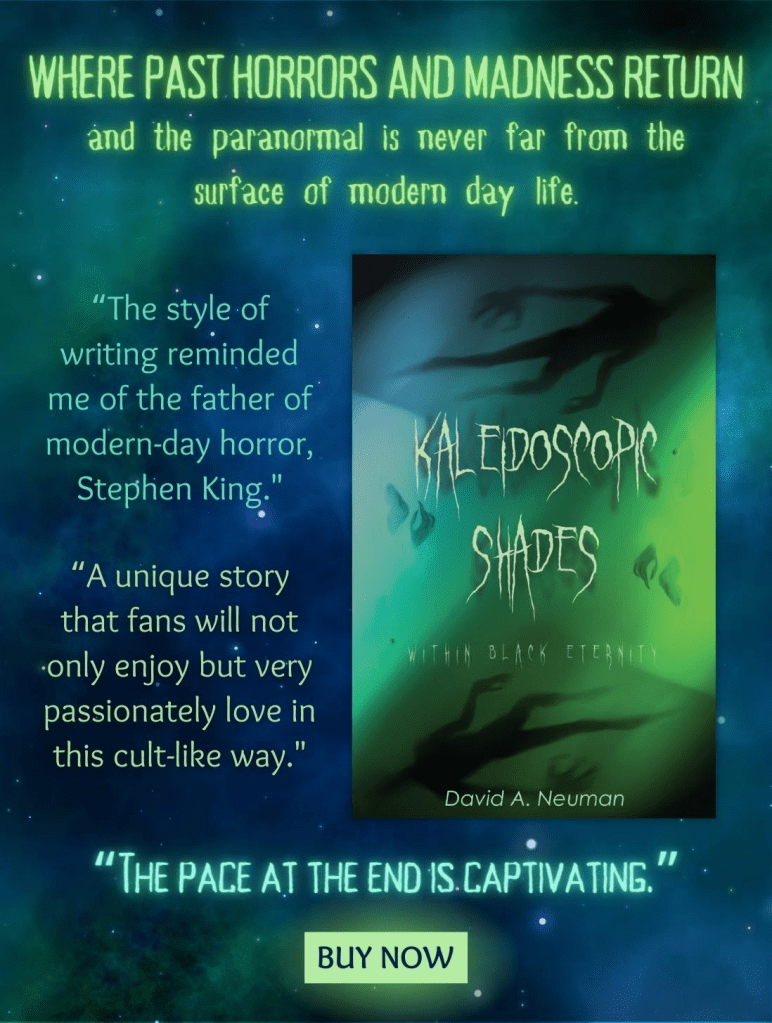
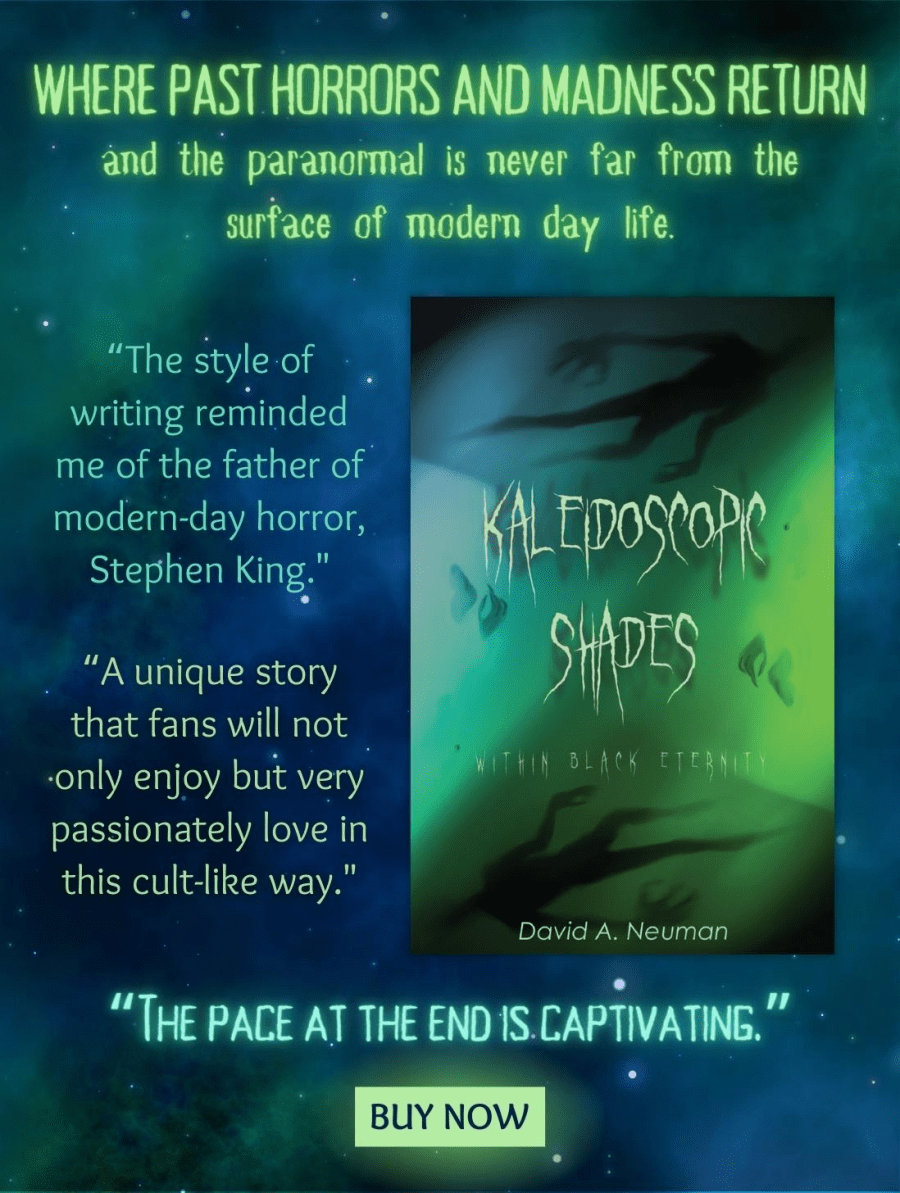
A father must take his son back into his haunted past years after a near-cataclysmic event nearly destroyed South Australia and the world once more hangs in the balance in author David A. Neuman’s “Kaleidoscopic Shades: Within Black Eternity”.
Advertisements
The Synopsis
Twelve years following a cataclysmic event that took civilization to the brink of no return, the Triplow family has finally found peace. Settling in Corona, California, has ensured that the past horrors and madness remain relegated to another time, another place.
On the morning of September 7th, 2022, that false perception is shattered when Bob Triplow is forced to take his son back to his past, and the horrors of childhood – a place truly out of this world – where he will struggle for sanity, while his son, a mere child of ten, will be compelled to make decisions upon which six billion lives depend.
The Review
I absolutely loved this story. It is a horror meets paranormal thriller mystery read that readers won’t get enough of. The world-building and mythology the author develops are so rich and captivating. The exploration of other worlds, shady organizations that meet underground, and the concept of time itself coming undone all blended together beautifully and naturally in this read.
What stood out to me was the character-building that the author did in this story. The frightful emergence of Patrick Nesmith, aka the Man in Black, was certainly memorable, but what really was amazing to read was the author’s ability to create a group of friends who held a camaraderie and strength, with each member of the group finding their own unique trait that made them stand out. It reminded me of Stephen King’s writing, as it had a healthy balance of horror and world-twisting shocks with relatable and memorable characters.
The Verdict
Haunting, captivating, and entertaining, author David A. Neuman’s “Kaleidoscope Shades: Within Black Eternity” is a must-read paranormal thriller and horror read! The blend of mystery and high strangeness was very reminiscent of projects like the Twilight Zone and Twin Peaks, but as a major fan of Stephen King, I also enjoyed the author’s writing style, as well as some Easter eggs from King’s own works, whether purposeful or not, such as the “Man in Black” villain in both King’s Dark Tower series and this book, as well as the group of kids facing a great evil found in books like King’s It. If you haven’t yet, be sure to grab your own copy of this book today!
Rating: 10/10
Advertisements
About the Author
Born in Adelaide, Australia, David A. Neuman was gifted a vivid imagination that continues to this day to distort memories of childhood. In the late-seventies he left Norwood High School as an underachiever after his parents had moved from the burbs into the hills. Too easily distracted. Too ready to dream beyond the windows of the classroom, and journeyed from one college to another, graduating from Flinders University with a graduate certificate in behavioral science. Though his visible passion laid in lending a hand in others overcoming their physical and mental obstacles, he remained a dreamer.
Turning to writing early in life to express himself and give his imagination a playground upon which to run, odd scraps became serious tomes about 30 years ago and would have remained mothballed when the suggestion was raised that he should do something about it, debuting Kaleidoscopic Shades – within Black Eternity two years afterwards.
David continues to live in Adelaide, South Australia, where he remains a child at heart, accepting everyone regardless of their sexual orientations and their take on this big, fantastical universe – understanding that each and everyone of us are in this together.
I received a free copy of this book in exchange for a fair and honest review. All opinions are my own.
A family who was forced to join the growing military power of Nazi Germany at the height of the war relocates to the United States in the war’s aftermath, and hostility in the anti-German wave that hits the US leads to a shocking series of events between two women in author Kelly Rimmer’s “The German Wife: A Novel”.
Advertisements
The Synopsis
The enmity between two women from opposing sides of the war culminates in a shocking event as anti-German sentiment sweeps America, when the aristocratic wife of a German scientist must face the social isolation, hostility and violence leveled against her and her family when they’re forced to relocate to Alabama in the aftermath of WWII. For fans of Beatriz Wiliams, Pam Jenoff, and Kristin Harmel.
Berlin, Germany, 1930—When the Nazis rise to power, Sofie von Meyer Rhodes and her academic husband benefit from the military ambitions of Germany’s newly elected chancellor when Jürgen is offered a high-level position in their burgeoning rocket program. Although they fiercely oppose Hitler’s radical views, and joining his ranks is unthinkable, it soon becomes clear that if Jürgen does not accept the job, their income will be taken away. Then their children. And then their lives.
Huntsville, Alabama, 1950—Twenty years later, Jürgen is one of many German scientists pardoned and granted a position in America’s space program. For Sofie, this is a chance to leave the horrors of her past behind. But when rumors about the Rhodes family’s affiliation with the Nazi party spread among her new American neighbors, idle gossip turns to bitter rage, and the act of violence that results tears apart a family and leaves the community wondering—is it an act of vengeance or justice?
The Review
This was such an emotional and captivating read. The amount of research and creativity that went into this narrative was so evident from the story’s first chapter. The vivid imagery and atmosphere the author crafted really brought these settings to life, both in terms of physical location and the social atmosphere during and after the war.
What stood out to me was the heartbreaking character development that went into this narrative. The haunting reality of war and in particular WWII as the life or death stakes of Hitler’s regime made people forced into jobs and careers within the Nazi party that they hadn’t really wanted. The way the author explored natural prejudices and the building tensions of a community in the wake of that war too was so important to understanding our own modern divides and how social tensions can contribute to conflict.
The Verdict
Heartfelt, poignant, and engaging, author Kelly Rimmer’s “The German Wife” is a must-read historical fiction read. The emotional storyline and shocking series of twists and turns the narrative takes were so captivating, and the brilliant way the author wrote really brought this history and the characters to life in a powerful and grounded way. If you haven’t yet, be sure to grab your copy today!
Rating: 10/10
Advertisements
About the Author
Kelly Rimmer is the worldwide, New York Times and USA Today bestselling author of Before I Let You Go, The Things We Cannot Say, and Truths I Never Told You. She lives in rural Australia with her husband, two children and fantastically naughty dogs, Sully and Basil. Her novels have been translated into more than twenty languages. Please visit her at https://www.kellyrimmer.com/
Here is an Excerpt from author Kelly Rimmer’s “The German Wife”
1
Sofie
Huntsville, Alabama 1950
“WAKE UP, GISELA,” I MURMURED, GENTLY SHAKing my daughter awake. “It’s time to see Papa.”
After the better part of a day on a stuffy, hot bus, I was so tired my eyes were burning, my skin gritty with dried sweat from head to toe. I had one sleeping child on my lap and the other leaning into me as she sprawled across the seat. After three long weeks of boats and trains and buses, my long journey from Berlin to Alabama was finally at an end.
My youngest daughter had always been smaller than her peers, her body round and soft, with a head of auburn hair like mine, and my husband’s bright blue eyes. Over the last few months, a sudden growth spurt transformed her. She was now taller than me. The childhood softness had stretched right out of her, leaving her rail thin and lanky.
Gisela stirred, then slowly pushed herself to a sitting position. Her eyes scanned along the aisle of the bus as if she were reorienting herself. Finally, cautiously, she turned to look out the window.
“Mama. It really doesn’t look like much…”
We were driving down a wide main street lined with small stores and restaurants. So far, Huntsville looked about as I’d expected it would—neat, tidy…segregated.
Minnie’s Salon. Whites Only.
Seamstress for Colored.
Ada’s Café. The Best Pancakes in Town. Whites ONLY!
When I decided to make the journey to join my husband in America, segregation was one of a million worries I consciously put off for later. Now, faced with the stark reality of it, I dreaded the discussions I’d be having with my children once we had enough rest for productive conversation. They needed to understand exactly why those signs sent ice through my veins.
“Papa did tell us that this is a small town, remember?” I said gently. “There are only fifteen thousand people in Huntsville and it will be very different from Berlin, but we can build a good life here. And most importantly, we’ll be together again.”
“Not all of us,” Gisela muttered.
“No, not all of us,” I conceded quietly. Loss was like a shadow to me. Every now and again, I’d get distracted and I’d forget it was there. Then I’d turn around and feel the shock of it all over again. It was the same for my children, especially for Gisela. Every year of her life had been impacted by the horrors of war, or by grief and change.
I couldn’t dwell on that—not now. I was about to see my husband for the first time in almost five years and I was every bit as anxious as I was excited. I had second-guessed my decision to join him in the United States a million or more times since I shepherded the children onto that first bus in Berlin, bound for the port in Hamburg where we boarded the cross-Atlantic steamship.
I looked down at my son. Felix woke when I shook his sister, but was still sitting on my lap, pale and silent. He had a head of sandy curls and his father’s curious mind. Until now, they’d never been on the same continent.
The first thing I noticed was that Jürgen looked different. It was almost summer and warm out, but he was wearing a light blue suit with a white shirt and a dark blue bow tie. Back home, he never wore a suit that color and he never would have opted for a bow tie. And instead of his customary silver-framed glasses, he was wearing a pair with thick black plastic frames. They were modern and suited him. Of course he had new glasses—five years had passed. Why was I so bothered by those frames?
I couldn’t blame him if he reinvented himself, but what if this new version of Jürgen didn’t love me, or was someone I couldn’t continue to love?
He took a step forward as we shuffled off the bus but didn’t even manage a second before Gisela ran to him and threw her arms around his neck.
“Treasure,” he said, voice thick with emotion. “You’ve grown up so much.”
There was a faint but noticeable American twang in his German words, which was as jarring as the new glasses.
Jürgen’s gaze settled on Felix, who was holding my hand with a grip so tight my fingers throbbed. I felt anxious for both children but I was scared for Felix. We’d moved halfway across the world to a country I feared would be wary of us at best, maybe even hostile toward us. For Gisela and me, a reunion with Jürgen was enough reason to take that risk. But Felix was nervous around strangers at the best of times, and he knew his father only through anecdotes and photographs.
“Felix,” Jürgen said, keeping one arm around Gisela as he started to walk toward us. I could see that he was trying to remain composed, but his eyes shone. “Son…”
Felix gave a whimper of alarm and hid behind my legs.
“Give him time,” I said quietly, reaching behind myself to touch Felix’s hair. “He’s tired and this is a lot to take in.”
“He looks just like—” Jürgen’s voice broke. I knew the struggle well. It hurt to name our grief, but it was important to do so anyway. Our son Georg should have been twenty years old, living out the best days of his life. Instead, he was another casualty of a war that the world would never make sense of. But I came to realize that Georg would always be a part of our family, and every time I found the strength to speak his name, he was brought to life, at least in my memories.
“I know,” I said. “Felix looks just like Georg.” It was fitting that I’d chosen Georg for Felix’s middle name, a nod to the brother he’d never know.
Jürgen raised his gaze to mine and I saw the depth of my grief reflected in his. No one would ever understand my loss like he did.
I realized that our years apart meant unfathomable changes in the world and in each of us, but my connection with Jürgen would never change. It already survived the impossible. At this thought, I rushed to close the distance between us.
Gisela was gently shuffled to the side and Jürgen’s arms were finally around me again. I thought I’d be dignified and cautious when we reunited, but the minute we touched, my eyes filled with tears as relief and joy washed over me in cascading waves.
I was on the wrong side of the world in a country I did not trust, but I was also back in Jürgen’s arms, and I was instantly at home.
“My God,” Jürgen whispered roughly, his body trembling against mine. “You are a sight for sore eyes, Sofie von Meyer Rhodes.”
“Promise me you’ll never let me go again.”
Jürgen was a scientist—endlessly literal, at least under normal circumstances. Once upon a time, he’d have pointed out all the reasons why such a promise could not be made in good faith—but now his arms contracted around me and he whispered into my hair, “It would kill me to do so, Sofie. If there’s one thing I want for the rest of my life, it’s to spend every day of it with you.”
“Many of our neighbors are Germans—most have just arrived in Huntsville in the last few weeks or months, so you will all be settling in together. There’s a party for us tomorrow at the base where I work, so you’ll meet most of them then,” Jürgen told me as he drove us through the town in his sleek black 1949 Ford. He glanced at the children in the rearview mirror, his expression one of wonder, as if he couldn’t believe his eyes. “You’ll like it here, I promise.”
We’d be living in a leafy, quiet suburb called Maple Hill, on a small block the Americans nicknamed “Sauerkraut Hill” because it was now home to a cluster of German families. I translated the street signs for the children and they chuckled at the unfamiliar style. Our new street, Beetle Avenue, amused Gisela the most.
“Is there an insect plague we should worry about?” she chuckled.
“I really hope so,” Felix whispered, so quietly I had to strain to hear him. “I like beetles.”
As Jürgen pulled the car into the driveway, I couldn’t help but compare the simple house to the palatial homes I’d grown up in. This was a single-story dwelling, with a small porch leading to the front door, one window on either side. The house was clad in horizontal paneling, its white paint peeling. There were garden beds in front of the house, but they were overgrown with weeds. There was no lawn to speak of, only patchy grass in places, and the concrete path from the road to the porch was cracked and uneven.
I felt Jürgen’s eyes on my face as I stared out through the windshield, taking it all in.
“It needs a little work,” he conceded, suddenly uncertain. “It’s been so busy since I moved here, I haven’t had time to make it nice for you the way I hoped.”
“It’s perfect,” I said. I could easily picture the house with a fresh coat of paint, gardens bursting to life, Gisela and Felix running around, happy and safe and free as they made friends with the neighborhood children.
Just then, a woman emerged from the house to the left of ours, wearing a dress not unlike mine, her long hair in a thick braid, just like mine.
“Welcome, neighbors!” she called in German, beaming.
“This is Claudia Schmidt,” Jürgen said quietly as he reached to open his car door. “She’s married to Klaus, a chemical engineer. Klaus has been at Fort Bliss with me for a few years, but Claudia arrived from Frankfurt a few days ago.”
Sudden, sickening anxiety washed over me.
“Did you know him—”
“No,” Jürgen interrupted me, reading my distress. “He worked in a plant at Frankfurt and our paths never crossed. We will talk later, I promise,” he said, dropping his voice as he nodded toward the children. I reluctantly nodded, as my heart continued to race.
There was so much Jürgen and I needed to discuss, including just how he came to be a free man in America. Phone calls from Europe to America were not available to the general public, so Jürgen and I planned the move via letters—a slow-motion, careful conversation that took almost two years to finalize. We assumed everything we wrote down would be read by a government official, so I hadn’t asked and he hadn’t offered an explanation about how this unlikely arrangement in America came to be.
I couldn’t get answers yet, not with the children in earshot, so it would have to be enough reassurance for me to know our neighbors were probably not privy to the worst aspects of our past.
Jürgen left the car and walked over to greet Claudia, and I climbed out my side. As I walked around the car to follow him, I noticed a man walking along the opposite side of the street, watching us. He was tall and broad, and dressed in a nondescript, light brown uniform that was at least a size or two too small. I offered him a wave, assuming him to be a German neighbor, but he scoffed and shook his head in disgust and looked away.
I’d been prepared for some hostility, but the man’s reaction stung more than I’d expected it to. I took a breath, calming myself. One unfriendly pedestrian was not going to ruin my first day in our new home—my first day reunited with Jürgen—so I forced a bright smile and rounded the car to meet Claudia.
“I’m Sofie.”
She nodded enthusiastically. “Since we arrived last week, you are all I’ve heard about from your husband! He has been so excited for you to come.”
“I sure have.” Jürgen grinned.
“Are you and the children coming to the party tomorrow?” Claudia asked.
“We are,” I said, and she beamed again. I liked her immediately. It was a relief to think I might have a friend to help me navigate our new life.
“Us too,” Claudia said, but then her face fell a little and she pressed her palms against her abdomen, as if soothing a tender stomach. “I am so nervous. I know two English words—hello and soda.”
“That’s a start,” I offered, laughing softly.
“I’ve only met a few of the other wives, but they’re all in the same boat. How on earth is this party going to work? Will we have to stay by our husbands’ sides so they can translate for us?”
“I speak English,” I told her. I was fluent as a child, taking lessons with British nannies, then honing my skills on business trips with my parents. Into my adulthood, I grew rusty from lack of speaking it, but the influx of American soldiers in Berlin after the war gave me endless opportunities for practice. Claudia’s expression lifted again and now she clapped her hands in front of her chest.
“You can help us learn.”
“Do you have children? I want Gisela and Felix to learn as quickly as they can. Perhaps we could do some lessons all together.”
“Three,” she told me. “They are inside watching television.”
“You have a television?” I said, eyebrows lifting.
“We have a television too,” Jürgen told us. “I bought it as a housewarming gift for you all.” Gisela gasped, and he laughed and extended his hand to her. I wasn’t surprised when she immediately tugged him toward the front door. She’d long dreamed of owning a television set, but such a luxury was out of reach for us in Berlin.
I waved goodbye to Claudia and followed my family, but I was distracted, thinking about the look of disgust in the eyes of that passing man.
I received a free copy of this book in exchange for a fair and honest review. All opinions are my own.
Author Ta-Nehisi Coates takes readers on a personal story of growing up with a tough-love father, his relationship with his mother, and the trials he would face, including racism, girl troubles, and so much more in the YA adaption of his memoir, “The Beautiful Struggle”.
Advertisements
The Synopsis
Adapted from the adult memoir by the #1 New York Times bestselling author of The Water Dancer and Between the World and Me, this father-son story explores how boys become men, and quite specifically, how Ta-Nehisi Coates became Ta-Nehisi Coates.
As a child, Ta-Nehisi Coates was seen by his father, Paul, as too sensitive and lacking focus. Paul Coates was a Vietnam vet who’d been part of the Black Panthers and was dedicated to reading and publishing the history of African civilization. When it came to his sons, he was committed to raising proud Black men equipped to deal with a racist society, during a turbulent period in the collapsing city of Baltimore where they lived.
Coates details with candor the challenges of dealing with his tough-love father, the influence of his mother, and the dynamics of his extended family, including his brother “Big Bill,” who was on a very different path than Ta-Nehisi. Coates also tells of his family struggles at school and with girls, making this a timely story to which many readers will relate.
The Review
I found the author’s work to be so passionate and moving. The intimate way the author delved into his personal experiences and his life as a whole was in one breath very relatable, and in another breath very eye-opening, as he brought a truly unique perspective of what life was like as both a young black man and as the son of a Vietnam vet and Black Panther during a very turbulent time in our world’s history. The imagery and tone the author struck really brought the experiences the author delved into to life in a vivid way.
The author’s ability to translate this very adult memoir into a teachable lesson for younger readers, primarily YA readers, was amazing to read. The history and culture of that era and the hardships the author endured on both a cultural and personal level are things younger generations can definitely learn from. The personal struggles of his home life and his childhood will resonate with so many readers out there, and the artistry that has defined the author’s life and career is felt in every chapter.
The Verdict
Engaging, atmospheric, and beautifully written, author Ta-Nehisi Coates’s “The Beautiful Struggle: A Memoir” is a must-read nonfiction meets YA book. The contrast of struggle versus hope is a powerful theme that is felt throughout this reading, and readers will be able to find both important lessons on culture and history while also relating to the author’s life in one way or another. If you haven’t yet, be sure to grab your copy today!
Rating: 10/10
Advertisements
About the Author
Ta-Nehisi Coates is the author of the #1 New York Times bestseller Between the World and Me, a finalist for the National Book Award. A MacArthur “Genius Grant” fellow, Coates has received the National Magazine Award, the Hillman Prize for Opinion and Analysis Journalism, and the George Polk Award for his Atlantic cover story “The Case for Reparations.” He lives in New York with his wife and son.
I received a free copy of this book in exchange for a fair and honest review. All opinions are my own.
Find out how the mind of a disturbed and vastly rich stalker works as they pursue the person they believe loves them in author Rachael Tamayo’s “Crazy Love”.
Advertisements
The Synopsis
I love Emily. I know she loves me too, she just needs me to show her. One day, we will be together forever, I’ll make sure of that. She’s only with this guy she’s been hanging around with to test me, see if I’ll stand true. Emily wants me to fight for her, to see if I can win her. Of course, I will. Once she sees how I’ve been caring for her, all the plans I’ve made, the lengths I’ve gone to in order to be with her, she will be so proud of me. If only she would stop pretending so I could stop hiding in her attic.
Reach deep into the mind of mentally ill millionaire, Noah Burell, as he turns Emily’s world upside down.
The Review
This was such a chilling and haunting read. The author perfectly captures the fear and horror that so many people have had to endure over the years. The combination of mental illness left untreated and unhealthy obsessions have led to some truly terrifying cases over the years, and the author’s story really drew the reader in with the theme of obsession. The haunting atmosphere and tone the author’s narrative captures is the perfect way to capture the suspense thriller genre.
The characters really just jumped off the page. The way the author was able to capture the POV of each character’s journey made the story feel that much more alive. The striking contrast between Emily’s whirlwind relationship with the protective and loving Isaiah with the disturbing and haunting obsession that Noah takes with her makes this story the heart of the novel overall.
The Verdict
Chilling, harrowing, and entertaining, author Rachael Tamayo’s “Crazy Love” is a must-read novel. The brilliant way the author captures the fear these cases can bring while also highlighting the need for better mental health awareness and help was a breath of fresh air, and the way the author did this without sacrificing the heart-pounding thriller aspect of this suspense novel was amazing to read. If you haven’t yet be sure to grab your copy today!
Rating: 10/10
About the Author
Rachael Tamayo is the bestselling author of the award-winning Deadly Sins Series, and award-winning thriller, Crazy Love, among several other titles. Before she started her writing career, she was a highly awarded 911 emergency services dispatcher with twelve years of experience and many commendations under her belt. Upon exiting law enforcement, she’s focused her writing career on the dark, suspenseful, and psychological after beginning as a romance author. Now Rachael uses her dark thriller as a sort of self-therapy after all those years answering 911 calls, and works all that she knows and was exposed to into the frighteningly realistic and layered characters her readers know and love her for. Rachael lives on the Texas Gulf Coast in Houston, Texas with her husband of eighteen years this May, their two children.