1) Tell us a little bit about yourself. How did you get into writing?
I have worked as a consultant and senior manager in the IT industry for the last ten years. I also had a software company and a fintech start-up.
I invested my financial surplus in the stock market. After learning about cryptocurrencies, I also entered this space. Without a complete guide, I have to learn from my mistakes.
More than two years ago, I started publishing educational content on Twitter as Crypto Engineer. I wanted to professionalize this industry by sharing how to invest in cryptocurrencies.
Advertisements
2) What inspired you to write your book?
Cryptocurrencies are a field at the intersection of finance and technology. They are also a social movement toward decentralization, privacy, and freedom, which resonate with me.
I wanted to not only read about this movement but also be part of it. I hope my contribution helps people understand cryptocurrency and prevents them from making bad financial decisions.
3) What theme or message do you hope readers will take away from your book?
Everyone is an investor, but most don’t invest actively, and their wealth is concentrated in their homes, cars, and cash. Not everyone should be active in this field, but knowing investment basics is helpful.
Cryptocurrency can help many people achieve their financial goals. It can shorten the path to it, or sometimes, it is the only way.
However, this market is not mature, so there are many risks. Investing in crypto is not easy, and I want to emphasize this.
I am sharing all my knowledge with the readers, but the decision is at their risk. Cryptocurrency offers high profit, but only to those prepared.
4) What social media site has been the most helpful in developing your readership?
X (Twitter). I’ve also tried other social media sites but with worse results. I like X for its directness and concise communication. I would like to be present on all major sites, but with a limited time, I need to prioritize.
5) What advice would you give to aspiring or just starting authors out there?
Start with your end goal. What do you want to achieve by writing this book? What is next?
What are the biggest risks that could prevent you from succeeding? Thinking about this beforehand will allow you to assess your chances and revise your planned approach.
For example, if your bigger concern is that no one would like to read it, think if you can write something shorter (maybe even one chapter) and verify this with your potential readers. Social media or blogs like you are great for it. Friends may not be enough because their opinions may not be objective.
6) What does the future hold in store for you? Any new books/projects on the horizon?
This will mostly depend on the book’s success. Since I am not a full-time author, I must choose which project to work on.
I’ve also started writing an epic fantasy book, which I would like to finish, even if this would be only a hobby project. I hope that this is only the start of my author journey.
Advertisements
About the Author
For the last ten years, Crypto Engineer has worked as a consultant and manager in the IT industry. He also owned a software company and a fintech start-up.
He invested his financial surplus in the stock market. After learning about cryptocurrencies, he also entered this space. In the absence of a complete guide, he learned from his mistakes.
In 2021, he started publishing educational content on X (Twitter) as a Crypto Engineer. He aimed to professionalize the industry by sharing how to invest in this market.
He won many competitions for the best crypto writer and earned thousands of dollars (you can find more details on his website). This demonstrated the demand for high-quality content about investing in cryptocurrencies.
I received a free copy of this book in exchange for a fair and honest review. All opinions are my own.
A creature that is the first of its kind discovers self-awareness and a passion for art in author Mathias B. Freese’s “In the Throes”.
Advertisements
The Synopsis
In the Throes explores the awakening of intelligence and the coming into awareness of an evolutionary mishap on a forbidding apocalyptic planet.
The story follows eponymic Gruff, the first linguistic/metaphysical awakener of his species, as he navigates identity, mentation, and ontology in relation to the Gruff’s natural prey: humankind.
Combining the writings of Freud and the spiritual truths of Krishnamurti, author Mathias B. Freese depicts the Gruff as an evolutionary dark creature—disfigured, maimed, instinct-driven, and grotesque—until he attains self-awareness and transforms into a self of artistic expression and wisdom.
As the title suggests, the reader identifies with self-struggle as it surges toward awakening and is moved by the apotheosis that closes the book. The nuanced theme: each one of us is an artist if only we take our selves in hand and construct a life of artistic expression. The closing chapters sing to us of Isak Dinesen’s observation that an artist is never poor.
A metaphor of the evolutionary self, In the Throes is a time-processed journey into awareness—our destiny as a species.
The Review
This was one of the most thought-provoking and philosophical sci-fi novels I’ve enjoyed reading. The rich blend of world-building, mythology, and philosophy allows the reader to get lost in this distant world. The story’s natural progression evenly matched the development of Gruff both as a character and as a specimen of his kind, exploring the development of sentient creatures overall in an entertaining yet thoughtful way.
Yet, it was Gruff’s evolution that stood out in this novel. Gruff’s way of thinking, the philosophical debate of instinct versus free will, and his awareness of himself and others around him made this story come to life on the page. The natural drive to create and be expressive was a fascinating approach to mankind’s creative voice, and how artists of one kind or another often dwell within us all spoke to the reader as they delved further and further into the story.
The Verdict
Remarkable, thoughtful, and engaging author Mathias B. Freese’s “In the Throes” is a must-read sci-fi and philosophy novel. The vivid imagery of this harsh landscape and alien world, mixed with the detailed look at Gruff and his species as a whole and the inner evolution that speaks to mankind’s evolution on Earth, helps illustrate how even the most lumbering, bestial creature can have the heart of a poet or storytelling waiting to be uncovered over time. If you haven’t yet, be sure to grab your copy today!
Rating: 10/10
Advertisements
About the Author
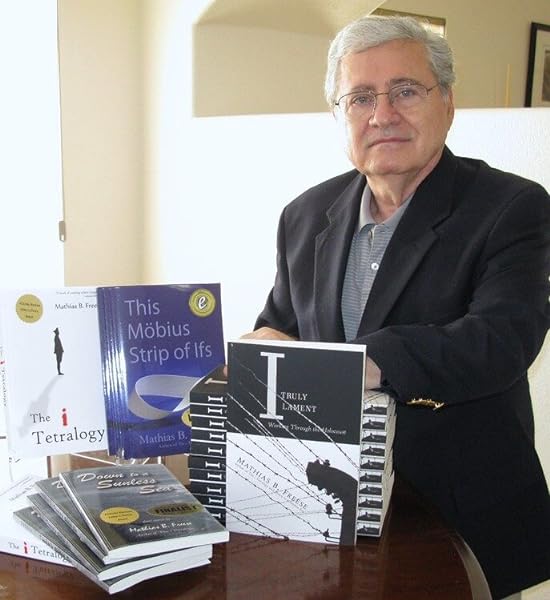
MATHIAS B. FREESE is a writer, teacher, and psychotherapist who has authored eight books. After his first novel, ‘The i Tetralogy’ on the Holocaust, his second work, ‘I Truly Lament: Working Through the Holocaust’, won the Beverly Hills Book Award, Reader’s Favorite Book Award, and was a finalist in the Indie Excellence Book Awards, the Paris Book Festival, and the Amsterdam Book Festival. In 2016 ‘Tesserae: A Memoir of Two Summers’, his first memoir, received seven awards. The following year his second memoir appeared, ‘And Then I Am Gone’.
I received a free copy of this book in exchange for a fair and honest review. All opinions are my own.
A group of warriors must set out to dangerous new lands in author Brendan O’Meara’s “Carved From Wood”, the second book in the Crafting Humanity series.
Advertisements
The Synopsis
Join James and the team as they confront their invaders in the Southern Federation.
After witnessing the devastating power of the BlankZone James and his team head South. Their self-ascribed mission is to explore the most dangerous place on the planet – the new BlankZone border in the Southern Federation.
While conspiracies drive the narrative in the North, James and his team set out to learn about the Federation’s mysterious aggressors. Jump back into the adventure as James and his friends discover new families, build allies, and come face to face with the enemy threatening their existence. Secrets, lies, and manipulation are exposed as James gets closer than he ever imagined to their greatest threat.
Sequel to the Next Generation Indie Young New Adult book award Cut From Stone.
The Review
This was such a gripping and powerful read. The author immediately transports readers into the action, showcasing the protagonist and his allies after going AWOL and heading out alone. The tension and world-building the author does and expands upon in this novel are remarkable to see come to life on the page, as they help elevate the character arcs and the action considerably.
However, it was the balance the author struck between the intense action and the themes explored throughout this novel. The author manages to touch upon the horrors of war uniquely, showcasing how those in power wage the war, and innocent people are often caught in the middle of that war, with rarely anyone to protect them when it shows up at their door. The way the author explores this new territory, the BlankZone, and its similarities and differences with the Federation brought a sense of familiarity and relatability to the narrative.
The Verdict
Action-packed, heartfelt, and entertaining author Brendan O’Meara’s “Carved from Wood” is a must-read sci-fi novel. The shocking twists and turns in the story and the vast amount of world-building leave readers eager to dive further into the author’s world. If you haven’t yet, be sure to grab your copy today!
Rating: 10/10
Advertisements
About the Author
Raised in White Plains, New York, Brendan O’Meara formed a love of stories and books from a young age. He has spent his free time over the last decade crafting his debut novel, Cut From Stone, book one in the Crafting Humanity series.
It began in Philadelphia where he attended college daydreaming about a dystopian reality. With a vivid imagination (as described by his middle school teachers) and a passion for adventure, Brendan’s novels will transport you to a different life and capture you from cover to cover.
Brendan lives in Washington, DC with his daughter, wife, and two dogs. You will find him on the weekends drinking a beer watching the Packers and Notre Dame football games. He is an avid reader with a specific interest in sci-fi, anything dystopian, fantasy, history, and all levels of fiction.
Finally, visit craftinghumanity.com and sign up for our email lists for news, updates, and information on the rest of the Crafting Humanity series. We will not spam you!
I received a free copy of this book in exchange for a fair and honest review. All opinions are my own.
A man coming out of a high-powered job in California must adjust to life on a small island off the coast of North Carolina in author James Hooker’s “Redneck Riviera”.
Advertisements
The Synopsis
After being laid off from his executive job with a California high-tech company, a man and his wife decide to leave the “rat race” and move to a tropical island on the coast of North Carolina. The culture of the island and its people are completely different from this cosmopolitan couple, who struggle to adapt to the island’s Southern, down-home, Redneck residents.
From food to local traditions, the author documents his humorous journey, in a classic tale of a “clash of cultures.”
What could possibly go wrong when Yankee meets Redneck?
The Review
This was such a compelling and thoughtful narrative. The author does a great job of balancing what feels like their own personal experiences with hilarious and engaging scenarios unique to the island they find themselves on. The fast pace of the narrative and the relatability of the character’s arcs in this story felt like a great way of drawing the reader in. The overall atmosphere and character arc themselves felt like something pulled out of the cult classic film My Cousin Vinny, embracing the city slicker fresh out of the water feeling when the protagonist arrives in the slower-paced, humorous landscape of the South.
The dynamic character development and the powerful theme of embracing the unexpected made this a fantastic story to get lost in. The juxtaposition of the protagonist and his mindset with how things operate within the Southern culture was perfectly presented here, and the way this journey takes off so suddenly and the couple here are thrown into this journey through adventure. Engagement kept the reader invested in the story’s development.
The Verdict
Remarkable, hilarious, and engaging author James Hooker’s “Redneck Riviera” is a must-read novel. The threading of multiple storylines and exploring culture shock throughout the story will keep readers invested in this short yet potent novel. If you haven’t yet, be sure to grab your copy today!
Rating: 10/10
Advertisements
About the Author
James Hooker spent over thirty years in research and technology in California’s Silcon Valley. He is a former senior executive in global sales and has travelled extensively throughout North America, Asia Pacific, Japan and Europe. He and his wife have been married for 21 years and make their home in Rhode Island.
I received a free copy of this book in exchange for a fair and honest review. All opinions are my own.
Two survivors of a Great War between Atlantis and Rama must lead their people and stay ahead of the rivals chasing after them in author James Grimm’s “The Power of Water”, the first book in the Doom of the Gods series.
Advertisements
The Synopsis
The war raged for ten years…
Now, Atlantis wants to use WMDs…
But can civilization survive it?
During the last Ice Age, the clash of steel and the roar of aircraft echo through the land as the empires of Atlantis and Rama wage a desperate war.
There are many stories to tell the tale.
Risor sees the trap closing. But Jana, the mission commander, refuses to withdraw. She fears the consequences of failure. Threatening mutiny, he forces her to order the retreat. That Risor is right makes matters only worse, turning the rivalry personal.
Rogat is not sure what he did to offend the gods. Because the demi-god hero constantly chasing him doesn’t seem fair.
With Atlantis suffering, the empire falls apart.
Fleeing from a vengeful Jana, Risor must lead his people to freedom. Meanwhile, leading another band of survivors, Rogat tries to stay one step ahead of his nemesis. Read about Risor and Rogat in a gripping tale of war and survival that will keep you on the edge of your seat. Because revenge is such a satisfying reason to destroy a civilization.
Get your copy now!
The Review
This is such a powerful blend of sci-fi, fantasy, and mythology. The author does an incredible job of world-building, delving into the civilizations of Atlantis and Rama and the cultures that brought these two civilizations to war. The author’s imagery and atmosphere allow the tension to build enormously, allowing the characters to explore their internal and external struggles naturally.
The character development and action drive this narrative home. The complex rivalry and animosity each protagonist endures from their pasts and how these characters tie into the world’s mythos show these ancient mythological cities and powerhouses balanced with the advancement of humanity and technology. The action driven by this decisive war and the wrath of the gods in the face of this war all speak to mankind’s unquenchable thirst for power and control and how often that led to the downfall of so many civilizations in the past.
The Verdict
Memorable, action-driven, and entertaining author James Grimm’s “The Power of Water” is a must-read sci-fi and fantasy narrative. The twists and turns the author gives readers as the plot develops and the open ending will have readers eager to devour more from this emerging series. If you haven’t yet, be sure to grab your copy today!
Rating: 10/10
Advertisements
About the Author
Instead of just daydreaming of my fantasy worlds and people, why not write about them. At least that is what I told myself when I started this journey in 2014.
Living in Japan, the land of Anime, the Samurai, the ultra modern and extremely old seems to fuel my worlds. Both the ancient and new meld together into worlds where superpowered school kids defeat evil, forest spirits help or fight humans or giant, futuristic robots battle to save the world. Where else to live for inspiration!
In the land of the rising sun, I create my worlds, that I hope entertain you.
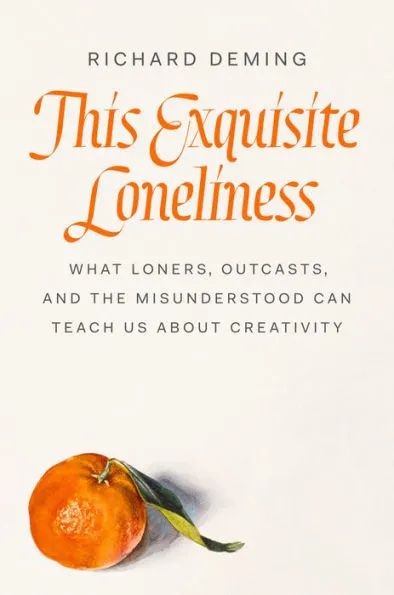
At an unprecedented rate, loneliness is moving around the globe—from self-isolating technology and political division to community decay and social fragmentation—and yet it is not a feeling to which we readily admit. It is stigmatized, freighted with shame and fear, and easy to dismiss as mere emotional neediness. But what if instead of shying away from loneliness, we embraced it as something we can learn from and as something that will draw us closer to one another?
In This Exquisite Loneliness, Richard Deming turns an eye toward that unwelcome feeling, both in his own experiences and the lives of six groundbreaking figures, to find the context of loneliness and to see what some people have done to navigate this profound sense of discomfort. Within the back stories to Melanie Klein’s contributions to psychoanalysis, Zora Neale Hurston’s literary and ethnographic writing, the philosophical essays of Walter Benjamin, Walker Evans’s photography of urban alienation, Egon Schiele’s revolutionary artwork and Rod Serling’s uncanny narratives in The Twilight Zone, Deming explores how loneliness has served as fuel for an intense creative desire that has forged some of the most original and innovative art and writing of the twentieth century.
This singular meditation on loneliness reveals how we might transform the pain of emotional isolation and become more connected to others and more at home with our often unquiet selves.
Advertisements
About the Author
Richard Deming’s first collection of poems, LET’S NOT CALL IT CONSEQUENCE (Shearsman Books, 2008), won the Norma Farber Award from the Poetry Society of America and was a finalist for the Connecticut Book Award. He is also the author of Listening on All Sides: Towards an Emersonian Ethics of Reading. In 2012, he was awarded the Berlin Prize by the American Academy in Berlin. He is currently Director of Creative Writing at Yale University.
During the worst period of my active addiction, I was a black-out drinker because I wanted to make myself disappear. The loneliness that I have wrestled with since I was a little kid stood at the core of my substance abuse. Where Zora Neale Hurston found visions as a means to navigate the pain of loneliness, I found instead drugs and alcohol. Even before the drinking, I had come to feel that I was a ghost haunting my own life. Looking into a mirror was like seeing a shadowy figure pass by an empty window at midnight, and the drinking and the drugs were a way to either propel myself through that emptiness or to slip inside it, as if stepping into that mirror.
Many nights during some of my worst, most vulnerable times, I roamed the streets of Boston with a flask of Jack Daniels tucked in my coat sleeve, asking random strangers what time it was. I never asked more than that, never tried to prompt a conversation—it was a form of existential sonar. I sent out waves that people bounced back to me, proving, at least provisionally, that I did exist. Other nights I might sit in the apartment and call random phone numbers.
“Is Paul there?” I would ask, pleasantly, my tongue slushing the last word around in my mouth like a sloppy peppermint. I didn’t actually know anyone named Paul, but, of course, that wasn’t the point.
“There’s no one by that name here,” or, more pointedly, “fuck off,” the voice that answered would explain. Sometimes a Paul would in fact come on the line and I would have to sputter out that I must have had the wrong name. No call lasted more than thirty seconds. I would repeat this process several times in succession, and then I would drink myself into oblivion.
The pattern was clear: a need for connection, no matter how anemic; a frustration with the transience of that unsatisfying connection; a retreat into a state of radical, profound disconnection between myself and a world that I thought had no interest in me, i.e. blackout drunkenness. That, as became clear to me, as I am reminded all the time, was not sustainable. In the years of my sobriety, I’ve sought out new methods for understanding and reframing that recurring feeling of being outside-it-all. If I had to live with loneliness, I wanted to, needed to discover what it had to teach me.
What I have learned about loneliness from Walter Benjamin is, in part, that it can actually heighten one’s sense of attention. Feeling outside of things can offer a widened perspective on what surrounds us all the time. If we try to burrow into the hidden lives of things, for instance, rather than hide out, or pretend to be asleep, or get drunk or high, there’s a chance of uncovering a sheer volume of meaningfulness. That insight can create some sense of connection between a person and his or her or their surroundings, a tether to hold onto, even when it feels like we’re hurtling ever outward. If loneliness is ultimately an affliction of perception, then the task is to find ways to work with perspective.
+++
During my nightly journeying across Berlin, from time to time came rushing back to me those evenings years before when, drunk and high, I had stumbled through the streets of Boston, milling around the then shabby (and now stringently gentrified) Kenmore Square, lying in the shadow of Fenway. I’d slip (without ID) into the Rat, the rough-hewn punk/new wave club, hustle past the homeless encampment under the Bowker Overpass, maybe pausing to score some pills or hash, then head up to Tower Records. There were clear differences between these experiences of loneliness, however. In Berlin, later in life, after years of sobriety, I could still feel that keen pang of wanting to belong as I drifted along, but instead of dulled and blurred, objects and people became distinct, vivid, even in their distance. I felt as if I was seeing the city—the lights, the cars, the people using small spoons to make tight circles in their espresso cups. It appeared to me with sudden acuity, as if everything was a vehicle for meaningfulness not despite but because of its ordinariness.
Once, just past 1 AM on a brisk night at the end of March, I sat in a fairly empty subway train barreling through the heart of Berlin. There were small pockets of people, but mostly, here and there, solo riders such as myself. I looked to my left and saw a nattily dressed businessman asleep, his left eye half-open and lolling up and down. The light on the roof of the car flickered and I turned toward a young woman wearing combat boots, her face covered in piercings, talking to a small brown dog at her feet.
“Blumen, Blumen,” she was saying to the terrier mix, the word for “flowers,” as she dipped her head and stroked the animal’s chin. For a moment, I imagined calling out women’s names, one after another, until she turned her head in acknowledgment. At a stop in Kreuzberg, the more bohemian part of the city, I got off and passed a ground-floor apartment with its wide window opened onto the street. On a table inside sat lemons sitting in a bowl full of water and wafts of cigarette smoke drifting into the folds of the curtains. A few blocks on, in an American-style diner, sat two gray-haired women eating toast and jam, a neon sign trembling above them.
I had no specific place to go, so I just kept walking, and looking. It was while walking the streets of that same city that Walter Benjamin arrived at the conclusion: “Solitude appeared to me as the only fit state of man.” Berlin, Boston, Columbus, London, Buffalo, Cuernavaca, New York, Singapore: I think of all the cities I have walked deep into the night, all by myself. At night, in the corners, there’s the same thrum of loneliness. Perhaps it isn’t that urban spaces, when empty, create a feeling of palpable absence, but rather, when they are empty, we can catch the hum of the feelings of abandonment and isolation that crisscross like power lines below the paved surfaces and concrete.
In the mid-1970s, Robert Weiss, a sociologist then on the faculty of Harvard’s Medical School, posited that there are six key social needs that, if unmet, in part or altogether, can lead to feelings of loneliness. They are attachment; nurturance; a sense of ongoing, dependable relationships; counsel in intense, emotional situations; and a reassurance of one’s value or worth. If we combine what Benjamin and Weiss have said, perhaps the key to navigating loneliness is to look at spaces, and people, the way an artist does—not as beautiful, but as rewarding attention with significance. The path to that feeling of a sense of worth can come from this: being the one who sees the everyday meaningfulness in that which is perpetually overlooked due to the intensity and buzz of life in a city, no matter its size.
1) Tell us a little bit about yourself. How did you get into writing?
Breakfield and Burkey have careers in technology. At one point, Burkey ended up hiring Breakfield. They worked well together with complementary skills. Several professional moves later, they ended up at a large manufacturing company. There, they began teaching workshops to internal and external audiences and writing technical papers. After one large project, they decided documentation in the field could hardly keep up with the changes.
They decided to take threats the bad guys used to extort companies and individuals to create Techno Thrillers. The initial fiction, Enigma Series, began with each story using a different problem, like Identity Theft, Ransomware, or Artificial intelligence, as examples to send the heroes of the R-Group to find the cyber thugs. They’ve added short stories, historical fiction (a prequel to the Enigma Series), cozy mysteries with the Underground Authors, and the current trilogy Enigma Heirs.
Advertisements
2) What inspired you to write your book?
Great question. We wanted to have fun writing. Good guys versus bad guys are often the foundation of children’s play, so we felt this theme was relatable to any age. We took that premise to a tech level to help people look at technology from multiple perspectives while ensuring their security against the real threats of cyber thugs. Our Enigma Series is more attuned to adults, but the other books are suitable for younger people.
3) What theme or message do you hope readers will take away from your book?
Each story we tell has a theme or message. In our thrillers, we want to emphasize the importance of taking care when using technology, albeit phones, computers, or the millions of apps call to you because there is always some creep who will try to take advantage of any weak, unsuspecting, naive person.
4) What drew you into this particular genre?
For Breakfield and Burkey the initial themes of technology were born of our professional careers. That, coupled with our question of what would happen if it makes for some interesting storytelling, we hope people will enjoy each book.
Advertisements
5) If you could sit down with any character in your book, what would you ask them and why?
We would have to sit down, virtually anyway, with ICABOD our supercomputer. ICABOD grows and evolves throughout the series with data-gathering abilities, enhanced analytics, text responses to full-on large language speech enablement, and evolving artificial intelligence. I would love his response to which was a more difficult human capability to understand humor or the justification to use the term ‘I’ when referring to himself. We think we know but readers would have to read the series to determine their best question for him.
6) What social media site has been the most helpful in developing your readership?
Social media is a fickle mode of communication with readers. LinkedIn, Podcasts, X-Twitter, and Facebook are the high runners. Cultivating and maintaining social media connections takes an enormous amount of time. By far, our favorite ways to connect with readers are at fairs or with book clubs. These allow us to speak to readers. If we resonate with some, then we hope they tell their friends.
7) What advice would you give to aspiring or just starting authors out there?
We appreciate your question. It’s important to continue writing and not lose hope. Practice and set aside time to hone your skills to find your voice. Consider joining communities of fellow authors to receive constructive feedback to enhance your work (as your family may be hesitant to be completely honest to spare your feelings). It’s beneficial to find a writing partner and regularly engage in discussions about your stories to exchange ideas or feedback. Ensuring you have a reliable editor is crucial. Despite this, a few errors may still slip through, but it’s preferable to keep them to a minimum.
8) What does the future hold in store for you? Any new books/projects on the horizon?
We have several story ideas. We are committed to delivering two projects. First is the third book in the Enigma Heirs Trilogy-Enigma Jewels-at the beginning of 2025. Second is our next book in the Magnolia Bluff Crime Chronicles in 2025, though The Ransom Enigma is currently on pre-order for its August 2024 release.
Advertisements
About the Authors
Charles Breakfield – As the CTO of the Enigma Series, Charles uses his experience from working at high-tech manufacturers as a solution architect in hybrid data/telecom environments. He considers himself a long-time technology geek, who also enjoys writing, studying World War II history, travel, and cultural exchanges. Charles’ love of wine tastings, cooking, and Harley riding has found its way into the stories. As a child, he moved often because of his father’s military career, which even helps him with the various character perspectives he brings to life in the series. He continues to try to teach Burkey humor.
Rox Burkey – Works as a business architect who builds solutions for customers on a good technology foundation. She has written many technical and white papers but finds the freedom of writing fiction a lot more fun. As a child, she helped to lead the kids with exciting new adventures built on make-believe characters, was a Girl Scout until high school, and contributed to the community as a young member of a Head Start program. Rox enjoys family, learning, listening to people, travel, outdoor activities, sewing, cooking, and thinking about diversifying the series.
Breakfield and Burkey – started writing non-fiction papers and books, but it wasn’t nearly as fun as writing fictional stories. They found it interesting to use the aspects of technology people are incorporating into their daily lives more and more as a perfect way to create a good guy/bad guy story. Elements of travel to the various places they have personally visited are always baked into the stories. Look for humor, romance, intrigue, suspense, and a spirited way to remember people who have crossed paths with them in their books. They love to talk about their stories with private and public book readings. Burkey also conducts regular interviews with Texas authors, which she finds very interesting. Her first interview was, wait for it, Breakfield. You can often find them at local book fairs or other family-oriented events.
The primary series is based on a family organization called R-Group. Recently they have spawned a subgroup that contains some of the original characters as the Cyber Assassins Technology Services (CATS) team. The authors have ideas for continuing the series in both of these tracks. They track their many characters on a spreadsheet, with a hidden avenue for the future coined The Enigma Chronicles tagged in some portions of the stories. Fan reviews seem to frequently suggest that these stories would make good television or movie stories, so the possibilities appear endless, just like their ideas for new stories.
They have book video trailers on their YouTube Channel and website, www.EnigmaSeries.com. We invite you to visit the website for FREE stuff along with samples of the books and options to purchase signed copies directly. You may also find it fascinating to check out the fun acronyms they create for their stories. Reach out to them at Authors@EnigmaSeries.com, Twitter@EnigmaSeries, or Facebook@TheEnigmaSeries.
I received a free copy of this book in exchange for a fair and honest review. All opinions are my own.
A rebellious cleric must face his past as he is forced to confront the cult he escaped from two years earlier in authors Dorian & Talia Ravenwood’s “Thread of Souls Book V: The Deep Hollows”.
Advertisements
The Synopsis
In the fifth installment of this gripping series, rebellious cleric Taliesin is captured by a ruthless bounty hunter and forced back to the cult he escaped two years ago. Now serving a new goddess, he’s deemed a heretic among his people.
Stripped of his allies and separated from his beloved, Taliesin’s survival hinges on his wits and magic. His destination: the heart of the cult, the underground city of Berenzia. Here, secrets lurk that could unravel the cult’s plans. But to uncover them, Taliesin must confront not only the expectations of the disappointed family he left behind, but also the sinister ruling priestesses. If Taliesin cannot overcome the ghosts of his past, he will never escape the cult’s clutches.
In the Thread of Souls “Spider Octology”, ten adventurers are caught in a web of deadly secrets, warring cults, and untrusting alliances when they meet a cult runaway seeking freedom. They must overcome their differences in order to stop a god’s release from an abyssal prison.
Thread of Souls is an award-winning eight-book epic fantasy series. These stories weave a world of deep history, cultures, and lore with a fascinating pantheon of good and evil gods. Adventure across the vast world of Corventos while diving right into the heart and soul of a diverse and colorful cast of characters whose passions, strengths, and failures drive the story.
Thread of Souls is a must-read fantasy epic that blends swords and sorcery, dragons and mythical creatures, and fully realized locations that take your breath away. From the desert wastelands of the Expanse, down the twisting caverns of the Deep Hollows, through the beautiful streets of the lakeside capital city, and all the way to the icy tundra home of the Citadel.
The books in Thread of Souls’ “Spider Octology” currently include:
Book 1 – Phantom Five
Book 2 – Ash & Thunder
Book 3 – Path of the Spiders
Book 4 – Asunder
Book 5 – The Deep Hollows
Book 6 – Coming Soon!
And more to come!
The Review
The authors return to this epic fantasy series with a vengeance, expanding upon the vast world with a look into the complex cult from which one of the main protagonists hailed. Exploring the aftermath of the great dragon’s battle over the citadel, readers see Taliesin’s singular journey as war threatens the other realms of the land. The detail and depth of world-building the authors poured into this narrative, including expanding on Taliesin’s backstory and history in even greater detail, was a welcome return to this epic fantasy series.
The authors’ balance between expanding on the mythos of this world and action-driven storytelling was incredible to see come to life on the page. The vastness of this world and the imagery in their writing style allowed the author’s writing to bring readers into the narrative much like fantasy-driven role-playing games do, giving the reader a sense of voice and inclusion in the narrative as it develops around them.
The Verdict
Thoughtful, adrenaline-fueled, and entertaining authors Dorian and Talia Ravenwood’s “Thread of Souls Book V: The Deep Hollows” is a must-read epic fantasy novel and a great return to the Thread of Souls universe. The world-building layering, the engaging nature of the world and various cultures the authors developed across the different realms, and the shocking fates of some of these now classic characters will keep readers invested as the series progresses. If you haven’t yet, be sure to grab the next entry of this amazing fantasy series today!
Rating: 10/10
Advertisements
About the Authors
Dorian is an executive producer and professional writer. His work is featured in tv shows, video games, in-print magazines, and websites. He’s also the co-founder and creative director for Game Sandwich. He can typically be found playing video games, but when he isn’t, he’s editing the books and loves playing with their two cats.
Talia is a professional writer for websites and video games, often on a freelance basis. She also is a professor teaching courses for a university focused on writing. When not writing for Thread of Souls, she loves drawing, interior decorating, and hiking.
I received a free copy of this book in exchange for a fair and honest review. All opinions are my own.
Two time-travelers must confront the truth of who they are in order to face a deadly threat in a parallel universe in author Mike Murphey’s “Quantum Consequence”, the fifth book in the A Tale of Physics, Lust and Greed series.
Advertisements
The Synopsis
After foiling the political ambitions of a would-be American dictator, time-traveling lovers Marta Hamilton and Marshall Grissom return to their life in the Caribbean only to confront the murder of a friend and inherit responsibility for a gutsy 10-year old boy. Throughout their unlikely and tumultuous relationship, Marta has harbored suspicions that her time-traveling companion is not being honest with her. Is Marshall really the bumbling, good-hearted klutz she has come to love and trust? Or is he the cunning, cold-blooded assassin Gillis Kerg suspects him to be? In this fifth tale of physics, lust and greed, a bizarre parallel universe and a monstrous product of artificial intelligence will impose a costly consequence requiring both Marta and Marshall to face the truth of her most haunting question: “Who are you, Marshall Grissom?”
The Review
This perfectly complex, driven narrative immediately thrusts readers into the action. The immense world-building that the author brings to life on the page gives readers a brilliant look at the scope of the universe this series inhabits, and the detail that goes into each setting gives the story an almost cinematic quality. The heavy use of sci-fi elements like time travel and parallel worlds adds depth and fantastic imagery to the narrative.
The balance of humor and heart defined the book itself. For a rich sci-fi narrative, the author did an incredible job of constantly infusing humor into the dialogue and situations the protagonists found themselves in, adding fresh air and levity to the dangers they found themselves in. Yet amongst the humor, the characters also exhibited heart, showcasing a depth of emotions and feelings between themselves and for themselves, as both Marshall and Marta grew and evolved to new levels in this story.
The Verdict
Memorable, heartfelt, and entertaining author Mike Murphey’s “Quantum Consequence” is a fantastic humorous sci-fi narrative that readers will happily get lost in. The twists and turns in the story and the shocking and emotional final chapters will keep readers on the edge of their seats, eager for more from this incredible author. If you haven’t yet, be sure to grab your copy today!
Rating: 10/10
Advertisements
About the Author
A native of eastern New Mexico, Mike Murphey spent nearly thirty years as an award-winning newspaper journalist in the Southwest and Pacific Northwest. Following his retirement from news journalism, he and his wife Nancy entered in a seventeen-year partnership with the late Dave Henderson, all-star centerfielder for the Oakland Athletics, Boston Red Sox and Seattle Mariners.
Our company, Dave Henderson Baseball, produced the Oakland A’s and Seattle Mariners Fantasy Camps for twenty years. The Murpheys have also partnered with the Roy Hobbs adult baseball organization in Fort Myers, Florida. Mike’s love of fiction, cats, baseball and sailing affords him to split his time between Spokane, Washington, and Phoenix, Arizona, where he enjoys life as a writer and old-man baseball player.