Concerning Decay of the Human Race (Human Condition Trilogy) by Massimo Fantini Review

I received a free copy of this book in exchange for a fair and honest review. All opinions are my own. 

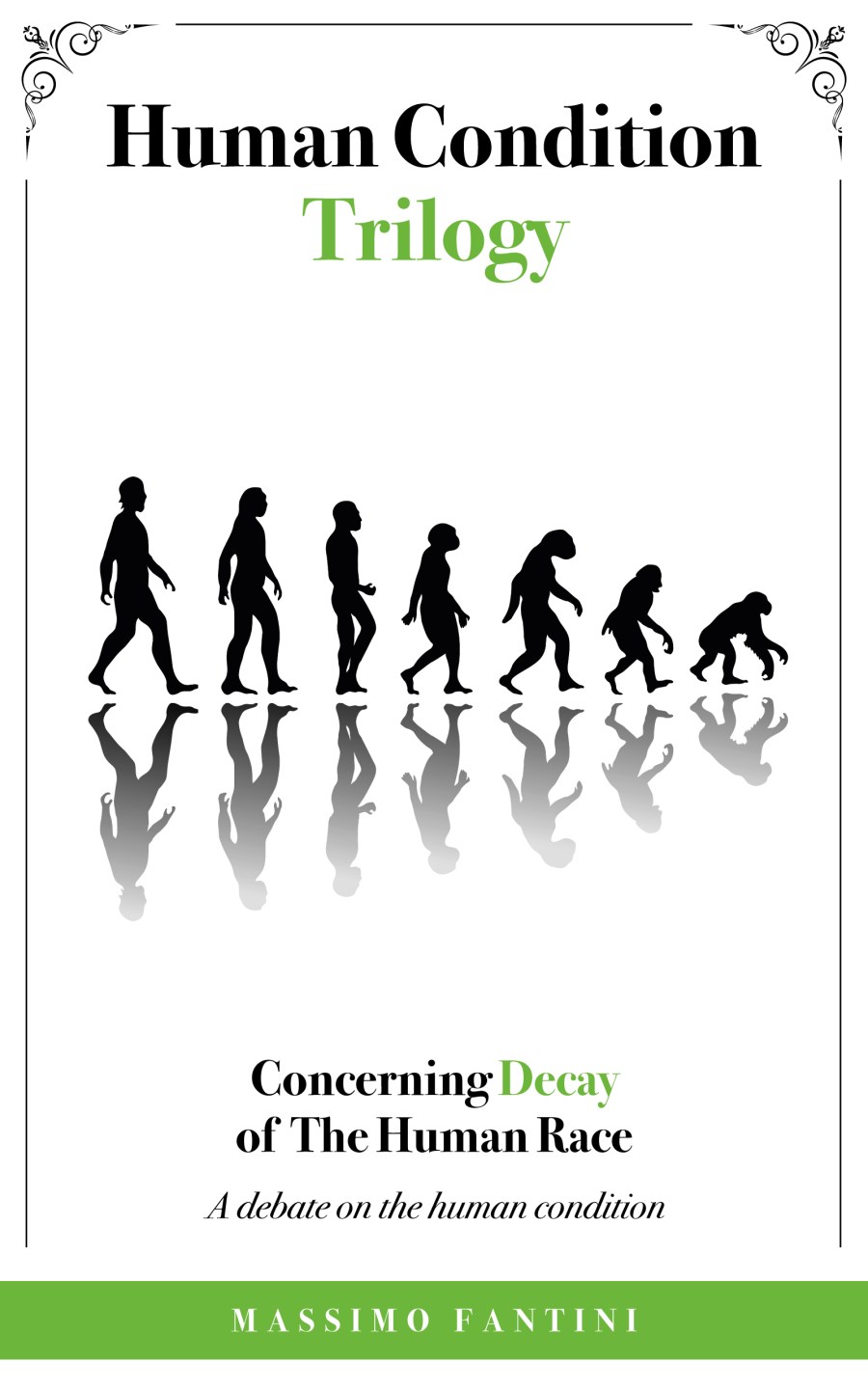
An island isolated from the world shows the perils of social evolution (or the lack thereof) in author Massimo Fantini’s “Concerning Decay of The Human Race), the third book in the Human Condition Trilogy. 

The Synopsis
The small village of the Island of the Iguanas experiences the succession of different communities – sometimes forced to live together, sometimes taking over from a former generation. Each community possesses a culture and an assortment of certainties which it does not intend to give up, judging a priori the customs of those who preceded it as uncivilized or unreasonable.

Over the years, the community consolidates and grows, together with their prejudices, social injustices, and religious superstitions. The structural transformations of the village have repercussions on the ecosystem of the island which – starting as a protected nature reserve – becomes a hunting place, a tourist destination, and a favorable terrain for smugglers to exploit.

Thus, faced with the opportunity to adopt a new lifestyle – concerning principles of equality, safeguarding personal freedoms, and restoring the ancient harmony between man and nature – there are those who choose to follow the tested path of the government of man over man, which makes discrimination its founding principle, and those who choose to defy it. Social contrasts – delineated by origin, by social background, by acquired privileges – begin to arise within these communities, which are made up of heterogeneous families and members of different ages and ambitions.

Given the possibility to make a clean sweep of the past and rebuild the social fabric from scratch, will those who position themselves as leaders avoid the mistakes made by their predecessors or will they end up mechanically following the same steps laid out by human history?

The editing and translation of this book was done by Ian Zwaschka.

BB Cheek Color

The Review

This was such a unique and compelling narrative. The author does a beautiful world-building in this book, allowing the reader to become immersed in this island world and develop such unique cultures and different communities. The imagery the author utilizes within the narrative brings this island setting to life in a vibrant way, allowing the narrative to come alive in the reader’s mind.

Yet, as with every fantastic book in this trilogy, the author soars when delving into the philosophy and themes behind this story. The tension that builds slowly over time as readers read how each generation on this island evolves and takes on the prejudices and judgments of those who came before speaks to the very cyclical nature of humanity in a social setting and how giving into the government’s role in our society plays a significant role in that, as bigotry and injustice, along with particular religious beliefs, tend to impact the laws and social settings the rest of the community must live in, leading to a significant disparity between social classes. The exploration of why some people can rise above the bigotry of the past while others remain seething in that hatred was so remarkable to behold.

Toy & Treat of the Month

The Verdict

Thought-provoking, insightful, and engaging author Massimo Fantini’s “Concerning Decay of The Human Race” is a must-read contemporary fiction narrative. The twists and turns in this island setting and the impeccable discussions of these themes drive the reader to make this a thoughtful and remarkable book. If you haven’t yet, be sure to grab your copy today!

Rating: 10/10

Advertisements

About the Author

Greetings, readers.

I am Massimo Fantini, an Italian author and free thinker, writing from my home in the hills just outside Bologna. In quiet moments, when I am not writing, I enjoy classical music, particularly orchestral works for violin and the Italian opera.

I graduated from a university in Bologna with a degree in civil engineering. However, the studies of my youth do not represent my life’s obsession—that is, delving into those realities which unite all members of the human race: suffering, frustrations, conflicts, and the human reactions to these. They are the events and forces that take every human as an innocent in the crib and twist and turn them into 8.1 billion unique (but intimately connected) forms.

In short, I am obsessed with exploring the intimate recesses of the human condition.

In 2018, entirely dissatisfied with my job, I sought a new form of expression. Thus, I began to write. Incessantly.

I experimented with many kinds of writing. How best to give my ideas form? Then, I found my voice through stories, giving life to characters who explore, triumph, and fail for us to watch.

In each installment of my Human Condition Trilogy, these same all-encompassing issues are approached from different directions, under different circumstances, and by different characters.

Echoing the sentiment of Heraclitus, no two people may look at the same problem, because it is different to each. From the old cynical Leonard in Concerning Fanaticism to young Tommaso (a character inspired by my own youth) in Concerning Intellectual Suicide, I tried to cast a light on a path that is a constant part of our lives, but also constantly shifting.

Through my writing, I encourage readers to find their own perspective on life. Rather than embracing the comfortable mold which society provides, like a goldfish “free” to swim around in its little bowl, I hope my readers can use my books as a steppingstone toward their own unique way of thinking. And then, I wish them the freedom to pursue it.

Art is wonderful because it is a representation of what we otherwise cannot express. I seek not to provide myself and my readers with a mere distraction (what so often passes for “entertainment”). Not a hole in which to stick our heads for a few hours, only to emerge weakened and even less able to face our reality. Rather, I offer up a representation of our shared condition.

The Human Condition.
Concerning Fanaticism in The Human Race (Human Condition Trilogy) by Massimo Fantini Review

I received a free copy of this book in exchange for a fair and honest review. All opinions are my own. 

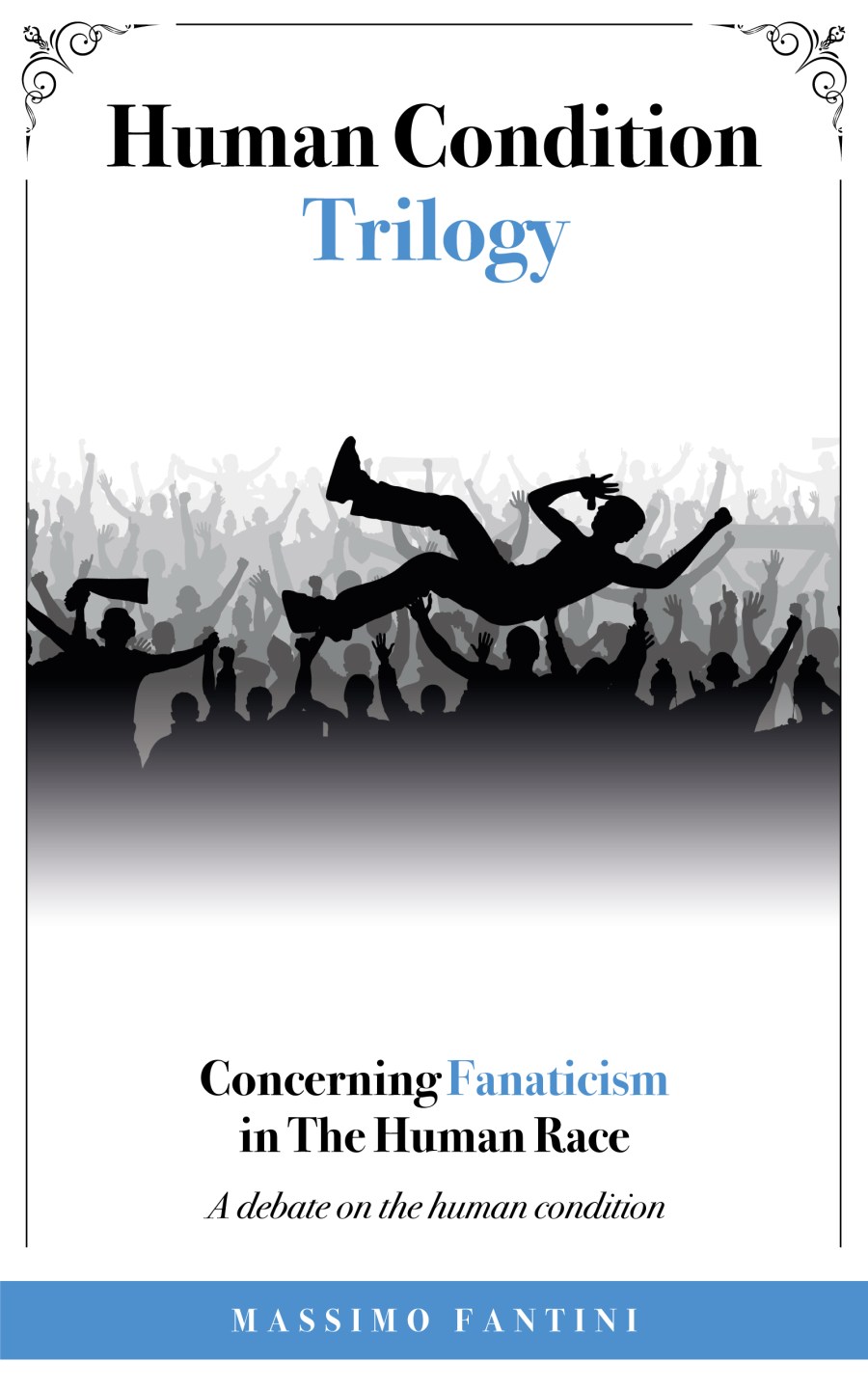
A seemingly simple law dispute turns into a gripping look into the human condition in author Massimo Fantini’s “Concerning Fanaticism in The Human Race”, the latest book in the Human Condition Trilogy.

Advertisements

The Synopsis 

Elijah is a promising young lawyer, in love with his work and confident in the potential of the human race.

His law firm’s senior partner gives him his first important assignment. Elijah will have to follow the case of Leonard, an elderly engineer who lives in Montepastore, a small village in the Bolognese Apennines (Italy).

Leonard’s question concerns the supplementary contribution that engineers enrolled in the professional register are required to pay to Inarcassa, the Engineers’ Pension Fund. At first, the case seems simple. It was the subject of a previous ruling by the Court of Cassation. But Leonard is not satisfied with an institutional response. He wants to know why. He wants to know what hides behind the Supreme Court’s ruling.

Leonard’s demands grow meeting after meeting, and the subject of the dispute widens to include ethical, religious, and historical concerns.

As in the previous manuscripts, questions about the human condition are at the center of this philosophical debate. In the absence of answers, what is the point of writing about anything else?

The editing and translation of this book was done by Ian Zwaschka.

Holiday Bundles

The Review

One of the most compelling questions a person can ask is whether or not to trust what is being told. The dialogue and character growth that the author brings to life on the page is rich and driven, allowing the reader to get lost in the narrative. The setting and atmosphere the author can develop and the mounting tension add to an already thoughtful story.

Yet the discussion and philosophical journey that readers are presented with makes this story so inviting. The ability to question authority and tackle mounting ethical dilemmas as they are presented to us delves into our philosophy and how we interact with religion, politics, and the human mind overall. The way the author presents this discussion to readers gets the reader’s minds working and does so without going over the line of being abstract, allowing the story to shine brightly. 

Toy & Treat of the Month

The Verdict

Memorable, thoughtful, and gripping author Massimo Fantini’s “Concerning Fanaticism in the Human Race” is a must-read contemporary fiction that meets philosophical discussion. The twists in the narrative and the engaging character dynamics between Elijah and Leonard will keep readers on the edge of their seats while also looking inward at how we view blind faith and the ability to question authority for ourselves. If you haven’t yet, be sure to grab your copy today!

Rating: 10/10

Advertisements

About the Author

Greetings, readers.

I am Massimo Fantini, an Italian author and free thinker, writing from my home in the hills just outside Bologna. In quiet moments, when I am not writing, I enjoy classical music, particularly orchestral works for violin and the Italian opera.

I graduated from a university in Bologna with a degree in civil engineering. However, the studies of my youth do not represent my life’s obsession—that is, delving into those realities which unite all members of the human race: suffering, frustrations, conflicts, and the human reactions to these. They are the events and forces that take every human as an innocent in the crib and twist and turn them into 8.1 billion unique (but intimately connected) forms.

In short, I am obsessed with exploring the intimate recesses of the human condition.

In 2018, entirely dissatisfied with my job, I sought a new form of expression. Thus, I began to write. Incessantly.

I experimented with many kinds of writing. How best to give my ideas form? Then, I found my voice through stories, giving life to characters who explore, triumph, and fail for us to watch.

In each installment of my Human Condition Trilogy, these same all-encompassing issues are approached from different directions, under different circumstances, and by different characters.

Echoing the sentiment of Heraclitus, no two people may look at the same problem, because it is different to each. From the old cynical Leonard in Concerning Fanaticism to young Tommaso (a character inspired by my own youth) in Concerning Intellectual Suicide, I tried to cast a light on a path that is a constant part of our lives, but also constantly shifting.

Through my writing, I encourage readers to find their own perspective on life. Rather than embracing the comfortable mold which society provides, like a goldfish “free” to swim around in its little bowl, I hope my readers can use my books as a steppingstone toward their own unique way of thinking. And then, I wish them the freedom to pursue it.

Art is wonderful because it is a representation of what we otherwise cannot express. I seek not to provide myself and my readers with a mere distraction (what so often passes for “entertainment”). Not a hole in which to stick our heads for a few hours, only to emerge weakened and even less able to face our reality. Rather, I offer up a representation of our shared condition.

The Human Condition.
Interview with Author Julie Rogers

1)    Tell us a little bit about yourself. How did you get into writing?


Growing up with several disabilities from Rubella (including a hearing impairment) was hard. Reading and studying music helped me understand speech patterns, idioms, and vernacular I might’ve otherwise missed. I started taking writing seriously after I won a themed essay competition in high school, which prompted me to consider an education in writing at Southern Methodist University—where I somehow managed to survive David and Betty Lynn McHam’s school of journalism. Upon graduation, however, my day job was an athletic trainer, and writing remained a side-hustle until my first book was hybrid published when I was forty. I’d decided to indie publish because most of my books color outside the lines—cross-genre and one-off projects that don’t fall within standard marketing comps.

In 2014, I began freelancing as a ghostwriter and editor with Upwork and James Innes Group. I later signed on with Edioak in New York City, an in-house editing partner for fourteen houses across the globe, publishers like Gamahouse Publishing and Simon & Schuster. Currently, I freelance as a developmental editor for authorsassistant.com and my own company, julierogersbooks.com. This type of work opens up literary avenues way beyond my own titles—projects from novellas to novel series, self-help, how-to, inspirational, spiritual, blog, technical, academic, resumes, and LinkedIn profile enhancements. Genres I write include YA, children’s, adult fantasy, stories based upon or inspired by true events, as well as contemporary, paranormal, and sci-fi romance, thriller, horror, and action adventure. I’ve also done some screenplays and screenplay doctoring along the way.

I enjoy helping indie authors from idea to launch, those who want to get quality books on board while avoiding some of the costly missteps I made.

Advertisements

2)    What inspired you to write your book?


Twenty years ago I had a story rolling around in my head, one with the depth and breadth of a classic. That was the goal I had in mind, you know—the situations, characters, and worlds converging into—well, this big book. Not commercial fiction (once again!) Also, I wanted a dilemma that avoided anything gratuitous, just the bare bones of two unbeatable issues: terminal illness and individual mortality. What do we do when we outlive someone, for example? That sort of stuff. These nemeses were challenging for me because they’re not your two-dimensional bad guys. Illness can be a nemesis, and cancer, a monster—but how do we show those in a compelling way?

Another idea came along and paired with the first one, remembering the boy in my third-grade class who was an avid fan of the TV cult classic Dark Shadows. This was in the daytime soap’s heyday after Canadian actor Jonathan Frid joined the show and its ratings went through the roof. I still wonder why my classmate chose live action role-playing, really before LARPing was a thing. I think he did it because he loved the TV show, and his theatrics were fun and games when school got boring.

He could’ve passed for a vampire himself, the complete package with the dark hair and eyes, the long cuspids—and his ability to act the part. He had a flashy cape too, not just any old cheap one, with which he regularly entertained our classroom performing Barnabas Collins impersonations. But it posed a question to me: what if a young boy roleplayed a vampire for a much more serious reason, and where would that take us?

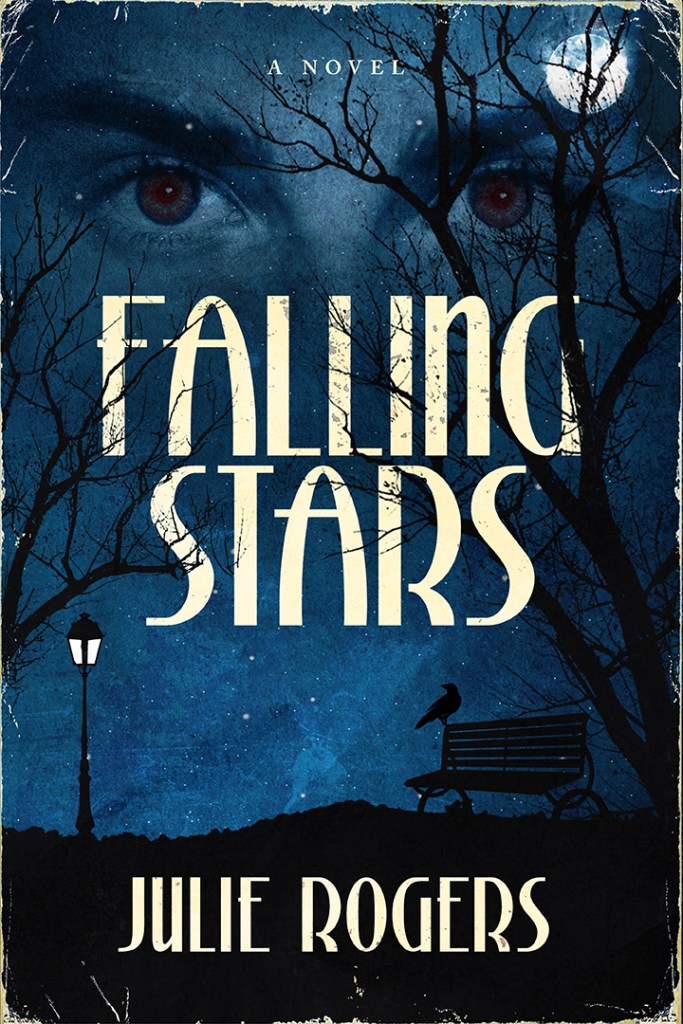
I originally wrote Falling Stars as a screenplay and pitched it at the Maui Writers’ Convention in 2001 to Alison Rosenzweig, one of the producers of Windtalkers. I put it away with all the other pitches that weren’t greenlighted at the time and pulled it out again in 2021. In a novel, I had more room to weave in some of the incredible Eureka Springs’ history and develop the whole Claudius Fallon persona, this vampire-human hybrid who struggles with his own disease process, and how he integrates a successful art gallery into a tourist destination without being discovered.

3)    What theme or message do you hope readers will take away from your book?


A deeper exploration of our own biological mortality and the dilemma of outliving someone you love. I decided to take the risk of stepping outside boilerplate language, even if this created a circuitous narrative of sorts.

4) What drew you into this particular genre?


An education in journalism instills a love of learning and an openness to receive stories of all shapes and forms. Truth be told, Falling Stars is cross-genre—a mixture of urban fantasy, magical realism, historical fiction, and family drama.

5) If you could sit down with any character in your book, what would you ask them and why?

I think I’d choose Tommy Lucas because I found myself intrigued with his snarky little personality. As I wrote Tommy, I kept asking what he’d hope to gain from such aberrant behavior. Did it give him an edge? Courage to live another day? And how would he manage to carry on with such an attitude—so annoying, yet so loveable? I think I could easily get caught up in youthful bitterness because that kind of pluckiness seems to carry more innocence and hope.

Advertisements

6) What social media site has been the most helpful in developing your readership?

There are two: Tina Hogan’s Cuppa & A Natter Facebook group, and Story Origin.

7) What advice would you give to aspiring or just starting authors out there?

Trust the stories that inspire and intrigue you, what shows up at your heart’s door. Use all the writing resources available to you both locally and online. Friends and family who will take a first look should never be discounted. If anything, it’s easy for a new writer today to become overwhelmed and confused by the excess of resources available. Every writer will make a different journey, and no one journey is better than the other. All of us are a mix of mastery and mistakes. Study the language. Get used to getting back up and dusting yourself off.

8) What does the future hold in store for you? Any new books/projects on the horizon?

I’m currently shopping two screenplays, one I co-wrote with Nashville musician Bart Bryars, as well as my own screen adaptation of Falling Stars. An audiobook version of Falling Stars will be available soon, narrated by actor Keith Michael Pinault.

I also feel like it’s time to dust off my backlist with new covers, content, and whatnot. I’m noodling on a trilogy in the magical realism vein and plan to continue working as a freelance editor and ghostwriter. I’ve recently begun hosting the Write Now podcast for the Writers’ Colony at Dairy Hollow. And of course, there’s a new time-management breakout I enjoy sharing with other creatives at workshops, The New Time Paradigm.

FB: https://www.facebook.com/profile.php?id=100089579155275

Instagram: https://www.instagram.com/julierogersbooks/

X: https://twitter.com/BooksRogers

Website: https://julierogersbooks.com

TikTok: www.tiktok.com/@julierogersbooks

LinkedIn: https://www.linkedin.com/in/julierogersbooks/

YouTube: http://www.youtube.com/@authorjulierogers6645

Advertisements

About the Author

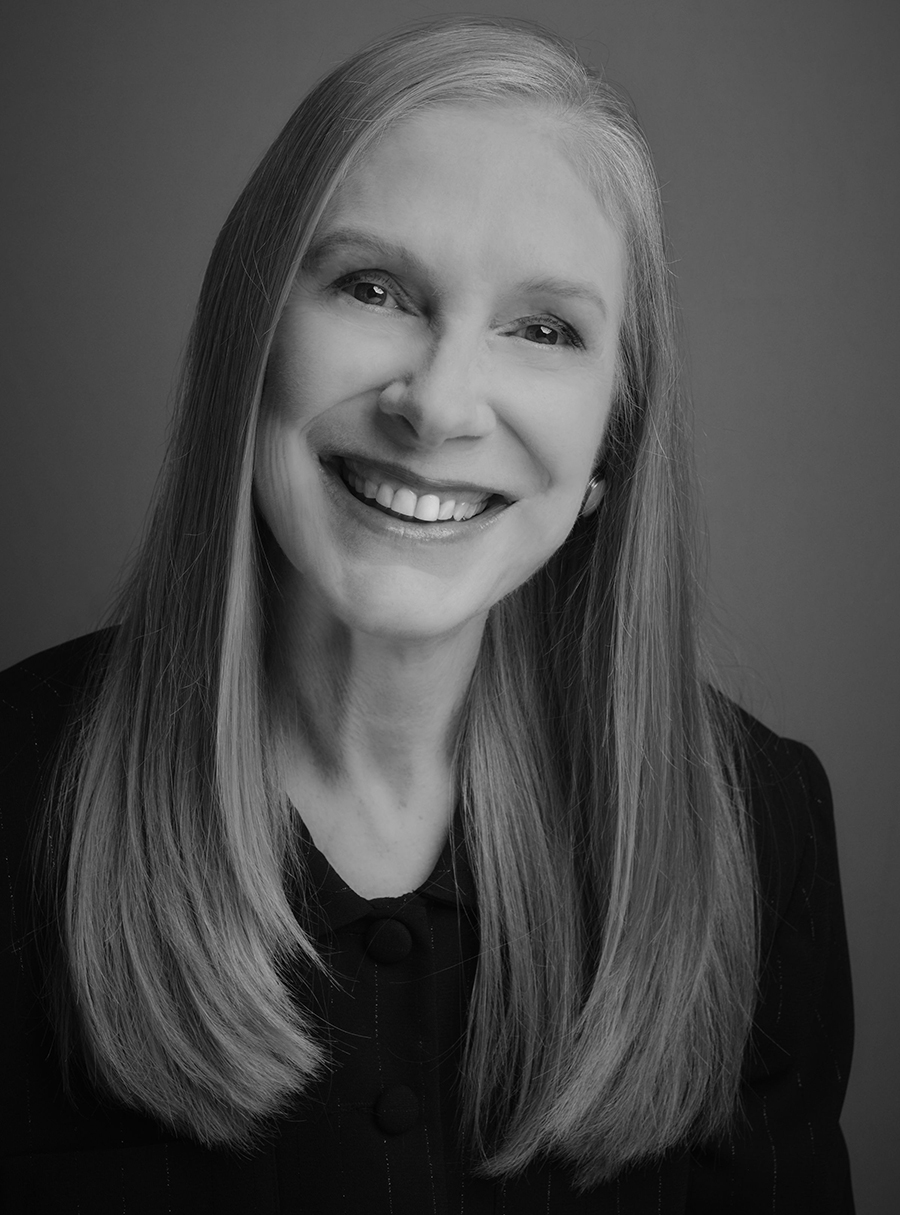
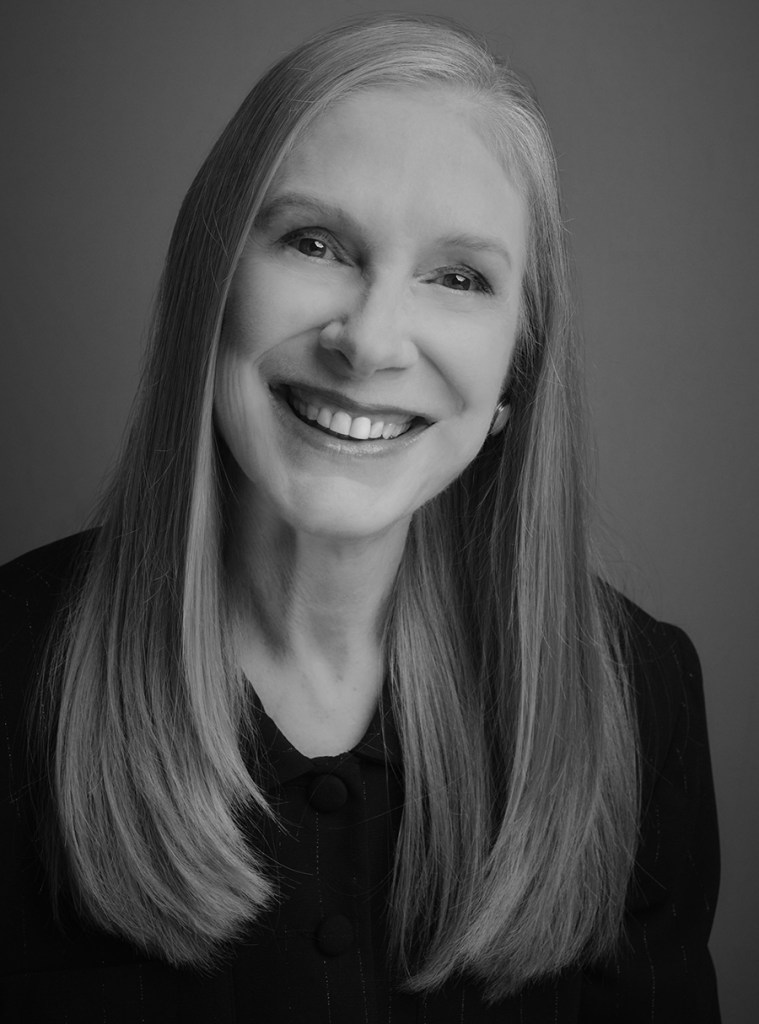
Julie is a multi-genre author. Her articles and stories are featured in self-help, inspirational, trade, and fiction publications including Writer’s DigestCoping With CancerComplete Woman, and Daily Meditation.

She is the 1999 Writer’s Digest Writing Competition Grand Prize Winner for her horror short story, “House Call.”

Her seventh novel,  Falling Stars, is an eleven-time award winner, including the 2023 International Firebird Awards First Place in Urban Fantasy, the 2023 Pinnacle Book Awards Best Book in Fantasy, and the 2023 Outstanding Creator Awards First Place in Medical Fiction.

Other awards include Fade In magazine’s 2005 Screenplay Semi-Finalist for the thriller, Grave Jumper, and the 1998 Writer’s Digest Writing Competition First for her stage play comedy, Garage Sale.

Julie works as a remote freelance ghostwriter and editor for julierogersbooks.com and authorsassistant.com in Eureka Springs, Arkansas, the setting of her seventh book, Falling Stars. She lives there with her husband, Jim, a primary care physician, their furry children Madison, Kate, Sukie, and mollusks Dewey, Decimal, and System. She has one son, Seth, who works as a video game level designer in Austin.

Interview with Author Martha Everitt 

1) Tell us a little bit about yourself. How did you get into writing?

I’ve been ‘writing’ since before I could write! I had a period of illness when I was five and spent some time in hospital. Having exhausted the hospital library and endless games of noughts and crosses, my mum whipped out a pen and a notebook and told me to tell her a story. She wrote it down. That became our go-to method of keeping me entertained during hospital visits, until I was able to write by myself (and until, thankfully, I got well). I love stories. I love their ability to take us out of the real world, to teach and enlighten us, to amuse and offer hope and camaraderie. I always knew I wanted to be on the other side of it, delivering the experience to other readers someday, I just wasn’t sure which medium was the one for me. I worked on a couple of screenplays and a stage play, and even tried my hand at writing a graphic novel before eventually circling back round to short stories and novels.

Advertisements

2) What inspired you to write your book?

I’m a big fan of fairy tales (I’ve lost count of the number of Beauty & The Beast retellings I’ve read). The stories are timeless, but there’s also a lot of humour to be found in retelling a much-loved story through a modern-day lens. Like, what if Cinderella wasn’t the only woman in the kingdom with dainty feet? What if the Seven Dwarfs (rightfully) called the cops on Prince Florian for kissing Snow White without her consent? I also knew I’d have a lot of fun writing a modern-day version of Little Red Riding Hood if I made the ‘grandmother’ figure paramount to the story. In these

stories, grandmothers are usually portrayed as a bit meek, vulnerable, or scatterbrained, but I’ve met my fair share of sassy, confident and refreshingly blunt older women. In most versions of Little Red Riding Hood, Granny ends up either eaten by the wolf or, at best, locked away in a cupboard. I wanted to put Granny back in the driver’s seat (literally!), where she belongs.

3) What theme or message do you hope readers will take away from your book?

I prefer not to beat my reader over the head with my views, and rather that my story simply gets them thinking. In The Bhad Wolf, there are definite themes of gender and gender stereotypes, physical strength versus weakness, and ego versus insecurity.

What message readers glean from my story will be based on their own life experiences and views — I just hope the takeaway is a positive one.

4) What drew you into this particular genre?

I’ve written (and continue to write) across genres, but I tend to fall into comedy when given free rein over my work. I think this is because I generally write often quite difficult or emotional subject matter, and humour just… softens the edges a little.

Makes it more digestible. It might also have something to do with that old British attitude of finding the joke in almost everything, because feelings are uncomfortable.

5) If you could sit down with any character in your book, what would you ask them and why?

Mrs Granger would “tell it like it is”, so I’d probably ask her some really big, imposing question, like, “What’s the key to happiness?” or “How do I stop caring what people think about me?” I imagine she’d sit me down with a nice cup of a tea and a few biscuits, and we’d talk out all out. Who needs a therapist when you’ve got Mrs Granger?

Advertisements

6) What social media site has been the most helpful in developing your readership?

I’ve definitely had the most joy through X (formerly Twitter — how long do we need to keep saying that?). It’s where I connected with Julian and Remy, who run Endless Ink Book Publishing, and other writers in their catalogue, as well as an established readership. My youngest sister (and trusty consultant on all things Gen Z) has been trying to convince me to sign up to TikTok. She says it’s where all the readers are.

Like so many other writers, I’m a little (a lot) shy, and so putting myself out there on social media platforms can be a bit of a daunting task. But I’m working on it!

7) What advice would you give to aspiring or just starting authors out there?

The main advice I would give is to keep learning and keep challenging yourself. Even established writers can continue to improve and hone their craft, so be open to critique and suggestions. This doesn’t mean accepting every criticism as gospel and altering your manuscript beyond recognition at every beta reader, editor, or publisher’s say-so, but be open to thoughtful and considered feedback. Attend workshops, read wide and diverse stories, and recognise and work on your weaknesses. I wish I’d been humbler in my early writing days. All of us can improve.

8) What does the future hold in store for you? Any new books/projects on the horizon?

I’ve been privileged to contribute another couple of stories towards Endless Ink’s Earth’s Final Chapter, including a short story and a novella. The short story has fantasy elements and some incredible characters we’ve only seen glimpses of so far in EFC, while the novella builds on a fantastic story by Nathan Banks (and illustrated by John Hawkins). I also have a couple of other projects in the pipeline, including a novel and a children’s book. I’m trying to keep myself contained to just one or two projects at any given time, but there are plenty of other ideas floating around in my brain, waiting to come out.

Advertisements

About the Author

Martha Everitt is the author of The Wilding and Dove: A Mother’s Instinct, both of which are featured in the Earth’s Final Chapter series. Her short story The Bhad Wolf was published within the collection Blood Pudding and Other Horrific Delicacies. She lives in the UK and divides her time equally between reading copious amounts of literature and hollering football chants.

Interview with Author Jim Horlock

1) Tell us a little bit about yourself. How did you get into writing?

 I got into writing at an early age. There was a class assignment to write a short story and I enjoyed it so much that I never really stopped after that. The short story I wrote was a complete rip-off of War of the Worlds (I’d seen the 1953 movie that past weekend), but (hopefully) my work is more original now.

Advertisements

2) What inspired you to write your book?

Well in the case of Blood Pudding, I’ve always enjoyed horror and comedy. There’s only so long a single joke can be sustained for, however, so I realised I’d have to either tell lots of jokes on the same theme, or write the entire setting to be the joke, while the story was the horror. It was a fun project and I really enjoyed writing it.

3) What theme or message do you hope readers will take away from your book?

I’m not sure there’s any singular lesson to be found in Blood Pudding but I think the horror comedy genre in general is a great lesson in not taking things too seriously. I love horror but I’m also very prepared to mock it, and I think that’s important in life.

4) What drew you into this particular genre?

I was drawn to horror because I’ve always been very afraid. As a kid I was scared of the dark and clowns and aliens and monsters and just about everything. The more I looked into trying to understand my own fears the more I came to appreciate horror as a genre. I’m endlessly interested in fear and what causes it.

5) If you could sit down with any character in your book, what would you ask them and why?

I guess this doesn’t make sense to answer for Blood Pudding as it’s just a short story. My upcoming book, Change & Other Terrors has several interesting characters who I’ve enjoyed spending time with as I’ve written them. Unfortunately most of them end up far too insane or dead to be in a position to answer questions.

6) What social media site has been the most helpful in developing your readership?

Oh wow that’s a really tough question to answer but I guess Twitter has given me the most interactions, and I’ve gained the most traction there. How that translates into readers, I’m not entirely sure.

Pawsome Summer 2023

7) What advice would you give to aspiring or just starting authors out there?

There’s so much advice out there and I think it’s important to recognise that not all of it works for everyone. Your writing journey is going to be unique to you, so you need to be flexible in applying advice and working out what fits and what doesn’t. I would say that getting a first draft out without expecting it to be perfect right away is solid advice. Every writer will be subject to edits, so it’s good to expect that there will need to be changes and adjustments to your work, no matter how polished you think it may be.

8) What does the future hold in store for you? Any new books/projects on the horizon?

Well my immediate future is dominated by the imminent release of my debut short horror collection Change and Other Terrors, which is due out this August. Pre-orders are now live at: https://thecrowshoppe.com/products/change-and-other-terrors. Beyond that, I’ve got a novella, my love letter to slasher horror, coming out with Grendel Press, which is TBD currently, but look out for more info on that very soon. I’m looking forward to sharing it with everyone.

Advertisements

About the Author

I’m a UK-based author currently lurking around the streets of Cardiff. I enjoy scaring people just as much as I enjoy making them laugh, so I try to get both into my work. I’m a horror movie nerd, a dungeon master, a comic book obsessive and a cryptid enthusiast. I like strong beer and smooth whiskey – please bear this in mind when making your offerings. HWA member.

Here are some words of wisdom that my mother shared with me when I was growing up:

1. The currents in rivers are just the same as the currents in buns. You can purchase some if you have a current account.

2. If you unscrew your belly-button, your bum will fall off.

3. You can do a passable impersonation of an elephant by waving your arm about in front of your face and shouting “Give us a bun! Give us a bun!”

I hope you find them as useful as I did.

Find me on Twitter @HorlockWarlock

https://jimhorlock88.wixsite.com/my-site

https://www.quillandcrowpublishinghouse.com/change-and-other-terrors

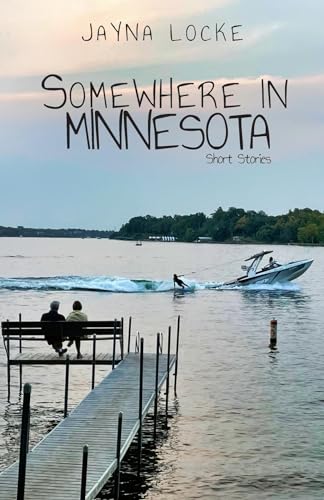
Interview with Author Jayna Locke

1) Tell us a little bit about yourself. How did you get into writing?

I have been writing for as long as I can remember. I loved writing and journaling as a child, and I wrote my first short story when I was in the fourth grade. I began to take it seriously as something I would like to do with my life when I was in college. I then pursued an MFA in writing a few years later. From there I became a professional writer in high tech, which was a wonderful career but not very conducive to pursuing my passion for creative writing, especially since in addition to my very demanding career I also got married and raised a family. But the kids are pretty much out of the nest, and I’ve been writing fiction with purpose for about five years. 

Advertisements

2) What inspired you to write your book?

I love the art of the short story, and it has always been my primary focus for creative writing. For the past five years, I’ve been involved in a writing community called Write Club, and we write a story each month based on a prompt. Several of my stories have been published in literary magazines and anthologies, which has been thrilling. I decided the next step was to put my own collection together. Since I’m based in Minnesota, the lakes and harsh winter climate of this state are often the backdrop for my stories, and it seemed natural to shape them into a nice collection.

3) What theme or message do you hope readers will take away from your book?

Life is challenging. We all know that. But what is so interesting and entertaining is how we all deal with the curve balls that come at us. That is first and foremost at the basis of my storytelling – an exploration of our quirky human ways of interacting with the people in our lives (with all of their own quirks), and how we face bizarre or difficult circumstances. In addition to that, I really try to leave readers with a feeling of hope. I just think we need more of that today than perhaps ever before. If we never lose hope, we can get through just about anything. 

Fall Promos

4) What drew you into this particular genre?

I love how satisfying a good short story can be, and how the best short story writers can take your breath away with the impact of their words. A few of the incredibly talented short story writers from the 20th and 21st centuries that have inspired me include John Cheever, Flannery O’Connor, Raymond Carver, J.D. Salinger, and Alice Munro. If you read Salinger’s Nine Stories collection, or Alice Munro’s collection, Hateship, Friendship, Courtship, Loveship, Marriage, you’ll see what I mean when I talk about the power of a short story. It’s my mission to master that, and to have that kind of impact on readers. I think of it as a fine art. 

5) If you could sit down with any character in your book, what would you ask them and why?

I think it would be Frederick in The Usher. I would ask him how he’s going to go forward. In the story, we see him at a turning point, but we don’t know where his path will take him. I would love to know.

Take a Food Journey Around the World!

6) What social media site has been the most helpful in developing your readership?

It’s funny, because I have always kept my personal social media separate from professional. But a few weeks ago on the day I launched the book, I went ahead and put it out on LinkedIn in addition to Facebook, X and Instagram. It was the platform where I got the most people saying they were going to buy the book. I was so surprised. By contrast, X (formerly Twitter), where I have been working to build relationships with like-minded people, was on the other end of the spectrum.  

7) What advice would you give to aspiring or just starting authors out there?

I believe it is really important to find a writing community where you can get feedback on your work. My involvement in writing communities has made all the difference for me in honing my writing craft. It also makes it a much less lonely endeavor!

8) What does the future hold in store for you? Any new books/projects on the horizon?

Yes, I’m working on another collection of short stories that take place in a fictional town in Minnesota. Whereas the stories in my first collection really would not be considered genre stories, the next collection will include ghost stories, thrillers and magical realism. I’ve got a contact form where people can let me know if they would like to hear about its release at https://bit.ly/ContactJayna.

Advertisements

About the Author

Jayna Locke is the author of Somewhere in Minnesota, a collection of short stories about characters experiencing life’s unexpected twists and turns, and about grit, hope and resilience.

She is a Minnesota writer who has had a lifelong love of fiction. She earned her MFA from the University of New Hampshire. Her work has appeared in various literary journals, as well as several anthologies — all available on Amazon. She is reachable through her website, jaynalocke dotcom, or on X at jaynatweets.

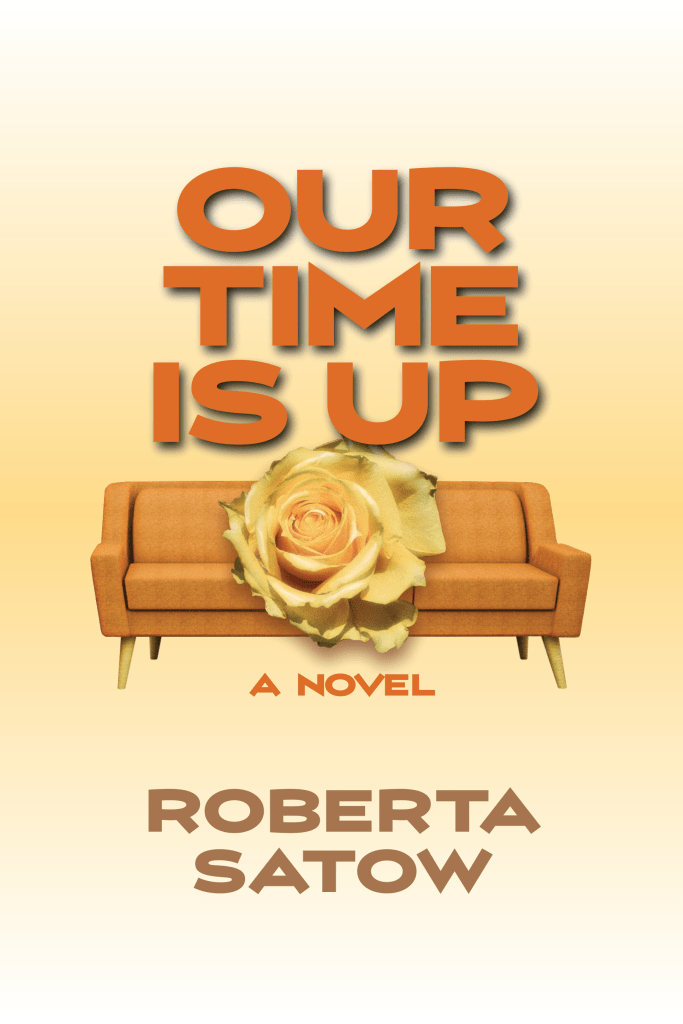
Our Time is Up: A Novel by Roberta Satow Review

I received a free copy of this book in exchange for a fair and honest review. All opinions are my own. 

A young woman struggling with grief and her journey to owning her identity showcases the heart of a psychoanalytical relationship with her therapist in author Roberta Satow’s “Our Time is Up: A Novel”.

Advertisements

The Synopsis

This book is a memoir-like novel that captures an era, an ethos, and a sociopolitical sensibility through the eyes of a young woman struggling with autonomy, guilt, sexuality, and grief in the late 1960s. Both patients and therapists will recognize their own struggles in this depiction of Rose’s gradual blossoming in the sunlight of her analyst’s honesty, integrity, and devotion. I know of no other work that conveys analytic treatment, training, and passion so intimately and in such a pitch-perfect voice.

Our Time is Up is a profoundly moving dive into the nuance and beauty of the psychoanalytic relationship. Written with humor, compassion and an intimate understanding of the analytic process, the book shows love and loss and the true boundaries of time. It is a frank and refreshing fictionalized account of how a person comes comes through psychoanalysis to sit in the psychoanalyst’s chair herself. It is the important and deeply personal story of an interior journey.

Summer 2023

The Review

This was a heartfelt and compelling read. The author worked intensely to highlight the rich character dynamics between the protagonist and their psychoanalyst. The balance between the protagonist’s conflicting childhood and her work to better herself and confront that trauma in her adult life was profound and powerfully moving. The honest atmosphere that the author established during the protagonist’s sessions with the analyst and the tension that mounted as each childhood experience was peeled away like a layer in an onion made this narrative feel alive and heartfelt in its delivery.

The relationship and actions taken between the protagonist and her psychoanalyst were the pinnacle of this narrative. Through honest conversations between the patient and analyst, the reader can get a heartening insight into how therapy and working through past conflict can be an enriching experience, not without struggles but emotionally rewarding. The experience of how her past experiences in childhood color her modern experiences with relationships and her understanding of her womanhood were honest and insightful and led the reader to be moved by the author’s world-building and character development in the process.

Take a Food Journey Around the World!

The Verdict

Ultimately, this was a story about being human and the human experience we all must endure throughout this life. While each person’s experience is unique, the direct nature of the protagonist’s relationship with her mother in childhood and later her psychoanalyst in her adult life made this an engaging, thoughtful, and remarkable story that has quickly become a must-read psychological contemporary American fiction novel. if you haven’t yet, be sure to grab your copy today!

Rating: 10/10

Advertisements

About the Author

Roberta Satow, Ph.D. is a practicing psychoanalyst in Washington, CT. She is a senior member of the faculty and control analyst at the National Psychological Association for Psychoanalysis. Dr. Satow is Professor Emerita of Sociology at Brooklyn College and the Graduate Center of the City University of New York. In addition to her non-fiction book Doing the Right Thing: Taking Care of Your Elderly Parents Even if They Didn’t Take Care of You (Tarcher/Penguin 2006), she is the editor of Gender and Social Life (Allyn

and Bacon, 2000) and she has written a novel Two Sisters of Coyoacan (2017). Dr. Satow writes a blog for Psychology Today: 

https://www.psychologytoday.com/us/blog/life-after-50

https://www.robertasatow.com

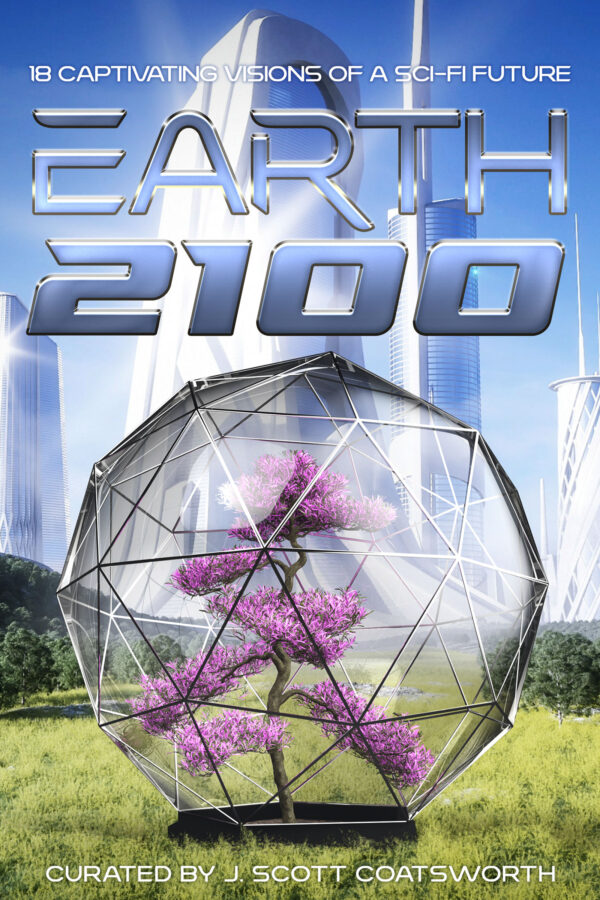
Earth 2100 Anthology (Curated by J. Scott Coatsworth) Blog Tour + Excerpt

Other Worlds Ink has a new near-future sci-fi anthology out: Earth 2100.

Earth on the Cusp of the Twenty-Second Century

How the world has changed in the last seventy-six years. In 1948, scientists ran the first computer program, and “the Ultimate Car of the Future,” the futuristic, three wheeled Davis Divan, debuted. Since then, a succession of inventions—the personal computer, the internet, the World Wide Web, smart phones and social media—have transformed every aspect of our lives.

The next seventy-six years will change things too, in ways we can barely even begin to imagine. Culture, climate change, politics and technology will continue to reshape the world. Earth in 2100 will be as unrecognizable to us as today would be to someone from 1948.

Eighteen writers tackled this challenge, creating an amazing array of sci-fi possibilities. From emotional AI’s to photosynthetic children, from virtual worlds to a post-urban society, our writers serve up compelling slices of life from an Earth that’s just around the corner.

So dive in and take a wild ride into these amazing visions of our collective future.

Universal Buy Link | Amazon | iBooks | Barnes & Noble | Google Play | Kobo | Smashwords | Publisher | Goodreads


Earth 2100 meme

Tin Lizzy

Gail Brown

Chaos filled several of the workshop tables. Material overflowed a table with a sewing machine. Some heavy duty, water proof beige fabrics had drifted to the floor.

A thick vegetable and meat soup simmered on the stove in the tiny central kitchen area. Next to the stove was a table set for two. Without any chairs.

Celina rode her power chair over to the counter top stove to stir the soup. The counter was a few inches higher than was comfortable. Today she needed to cook more than her usual single serving. Maybe her height measurements had been off. The counter could be an inch shorter, and not be in her lap.

It was challenging to figure out how to build it low enough to see into a pan, and stir the food, while tall and sturdy enough to not knock it over when Lizzy slid under it.

There was only about a foot of space to work with, if she didn’t want the pan higher than her face, and not able to stir without her elbow at maximum height. Which risked boiling food splashing on her face.

Figuring out how to make furniture the correct height, so she could slip her non-functioning legs under it had consumed her waking hours, and even sleeping hours, for the last year.

The stainless steel pan reflected her face. Down to the pointed lines above her eyebrows. Even the eyebrow she had singed an hour before.

She turned the power chair back to her wood and metal design workstation. Another stainless steel surface. Covered with scars from the many experiments needed to build lowered objects, with a glimpse of personal beauty in their functionality.

What would Henril and Trinkle think of her newest achievement? Her former hiking partners no longer walked the trails as much without her.

Certainly not on the narrow bluff overlooking the river. Henril had avoided out of concern for Trinkle’s safety. Or so he said.

Hopefully, they would soon all be hiking together.


The Authors

  • Tim Newton Anderson
  • nathan bowen
  • Elizabeth Broadbent
  • Gail Brown
  • J. Scott Coatsworth
  • Monica Joyce Evans
  • Isaiah Hunt
  • Blake Jessop
  • E.E. King & Richard Lau
  • Morgan Melhuish
  • Eve Morton
  • Christopher R. Muscato
  • Jennifer R. Povey
  • D.M. Rasch
  • Joseph Sidari
  • Mike Jack Stoumbos
  • Joseph Welch
  • KB Willson

Other Worlds Ink logo

Earth 2100 Excerpt: The Last Human Heart

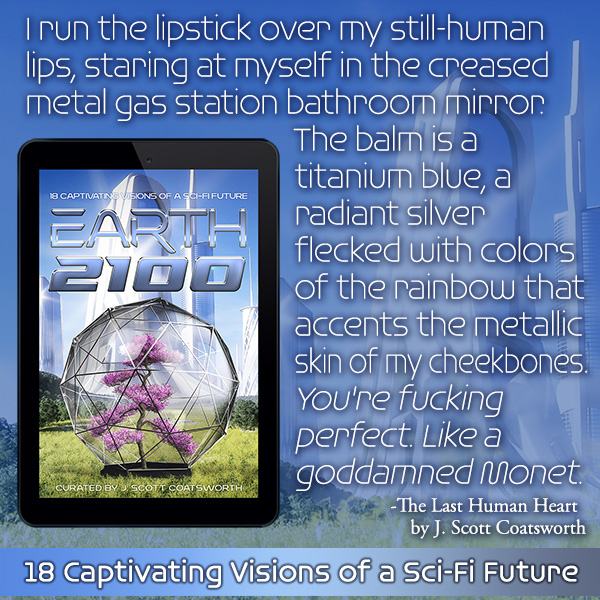
I run the lipstick over my still-human lips, staring at myself in the creased metal gas station bathroom mirror. The protective balm is a titanium blue, a radiant silver flecked with colors of the rainbow that accents the metallic skin of my cheekbones. Wrinkles line the edge of my lips where skin meets metal. You’re fucking perfect. Like a goddamned Monet.

I snort. I used to care about such things once. Matching my clothes for a night at the clubs with Erik. Choosing our elaborate costumes with care—exposing a bit of muscled stomach or a flash of ass with our tight, waist-hugging jeans. Sometimes bringing another guy home with us for a threesome.

The memories are cracked and faded around the edges. The upload to my quantum brain did something to me, changed me into this Frankenstein of man and machine.

I would have made a hell of a scene on the club circuit.

Crash.

What the hell? Wary, I slip the little jar of the moisturizing lipstick, snagged from an old department store, back into my satchel and swing it over my shoulder. Inside my titanium rib cage, my human heart beats faster—too fast.

I grasp the sides of the old porcelain sink and breathe slowly, calming myself until my heart slows again. Then, silent as a cat, I pull the door open and peer outside through eyes I wasn’t born with.

It’s almost dark, the last bits of evening fleeing across the empty countryside.

Another noise, this time a long, drawn out squeal. My eyes whir and focus. There by the gas pumps.

I breathe a sigh of relief. Just a scavenger bot. Their kind rule the world now, traveling through the rubble and recovering materials on a schedule only they know, stockpiling them for humanity’s return. I laugh bitterly at the thought.

I slip out of the bathroom to watch the little thing. It’s a third the size of my own cyborg body, and it’s working away at one of the old gas pumps, using a laser torch to cut it into pieces.

“They’re not coming back.” It’s a whisper, and an admission. Something I don’t like to think about for too long. You’re being morbid. Erik would tell me that with a flash of his bleached white smile, before leaping at me and pinning me to the bed for a kiss.

I bite my lip with metallic teeth and sigh.

The scavenger stops and turns as if to look at me. I can feel it scanning me for parts. Then it whirs, a disappointed sigh, and turns back to its work.

I’m worthless. I laugh ruefully, a sound more like pistons firing than a human laugh. Even this little metallic vulture has no use for the likes of me.

I consult my map, painstakingly put together from bits and clues found on the neural web. Fifty years after the last human upload, it’s a miracle the network survives at all. It’s a broken, feeble thing, limited to small nodes here and there, but still… a testament to the Remainers like me who maintain it, the humans and machines who survived the climate and the last wars.

Like many of them, I wasn’t “suitable for upload.” One hazard of being an early adopter. I laugh harshly, pistons firing in my throat.

This insignificant speck of humanity’s great accomplishments where I stand was once called Turlock, a tiny town in California’s Central Valley. I wince. I know that name—a friend of mine once lived here. Did she upload, before the end?

The Sacramento trading station is less than a hundred miles away, if it still exists. The last time I’d been there was two decades ago. With luck, I’ll be there in another day or so, and if I’m really lucky, they’ll be able to replace my worn-out ticker with a new one.

My heart beats faster. I close my eyes and urge it to be calm, hoping they will have what I need. Otherwise this might be the end of the line. Still, I’m ready to go, if it comes to that. Erik, I miss you.

Book Spotlight: A Chain of Pearls by Raemi A. Ray (Martha’s Vineyard Murders Series)

Synopsis (from Amazon):

The last thing she wants is to dig up the past…

When the body of a celebrated journalist is fished from the Edgartown Harbor, the official report rules his death accidental. But why was he alone on a senator’s yacht during a nor’easter? That’s only the first question London-based lawyer Kyra Gibson has when she arrives on the idyllic island of Martha’s Vineyard to settle her estranged father’s affairs.

She’s not looking for closure. She’s not seen him in decades since he left her with her aunt following her mother’s death. But as Kyra delves deeper into her father’s life, she learns he had many regrets and wasn’t as retired as she believed. The more Kyra discovers, the more questions she has. With the help of world-weary detective, Tarek Collins, they uncover a web of intrigue and corruption involving a powerful senator, a dubious energy company, and brutal murder.

As they chase down clues, Kyra and Tarek flirt with danger and race against time to solve the murders and uncover the dark secrets lurking beneath Martha’s Vineyard’s picturesque façade of old money wealth and privilege.

This is the first book in the Martha’s Vineyard Murders series. The second novel, The Wraith’s Return, will be available later this summer, followed by Widow’s Walk in the fall.

 A Chain of Pearls is a top indie mystery and crime pick from Barnes & Noble!

Advertisements

Author bio:

Raemi A Ray’s travels to Martha’s Vineyard and around the world inspire her stories. She lives outside Boston. When not writing or traveling she earns her keep as the personal assistant to the resident house demons, Otto and DolphLundgren.

Website: https://raemiray.com/

Instagram: @miss_raemi