I received a free copy of this book in exchange for a fair and honest review. All opinions are my own.
A mission from President Jefferson to wage a secret war against France in the Caribbean sends a naval hero into the world of pirates in author David L. Nichols’s “The Brotherhood of Pandora”.
Advertisements
The Synopsis
To combat Napoleon’s increasing interest in the Caribbean and help pressure France to sell New Orleans to America, Vice-President Thomas Jefferson enlists the aid of friend and naval hero Captain Jacob May. He asks Captain May to wage a clandestine war against the French in the Caribbean not as part of the US Navy, but as pirates.
To accomplish this, Captain May uses the cutting-edge technology of 1799: Girardoni air rifles, Fultons self-propelled torpedoes, a submarine, cannons with rifling, and Pandora, a specially modified ship. Captain May molds his crew into the Brotherhood of Pandora and gives Jefferson chaos in the Caribbean.
The Review
This was an absolutely compelling and captivating read. The author does a fantastic job of crafting a narrative that plays to both the excitement of a high-seas adventure and the detail of a historical fiction novel. The rich detail helped bring this time period and setting to life perfectly, from the frigid airs of the North to the warm waters of the Caribbean. The story itself carried an air of authenticity as if readers could feel this secret mission taking place in the shadowy world of hidden history.
To me, the heart of this narrative resided in the dynamic atmosphere and the compelling character dynamics that this novel housed. From the inclusion of historical figures like Napoleon Bonaparte and Thomas Jefferson gracing the background of this narrative through their actions during this tumultuous time, to the heartfelt and engaging personal moments between the protagonist and his crew who undertake this mission to begin with, this novel featured some great moments of tension, shock, and thrilling action all in one great story.
The Verdict
Memorable, action—packed, and entertaining, author David L. Nichols’s “The Brotherhood of Pandora” is a must-read historical fiction novel that readers won’t put down. The gripping atmosphere and daunting task presented to the cast of characters and the detailed historical aspect of the narrative allowed this narrative to shine and keep readers invested until the book’s final pages. If you haven’t yet, be sure to grab your copy today!
Rating: 10/10
Advertisements
About the Author
David L. Nichols has been building boats and making sails for approximately fifteen years. When he isn’t designing sails or building boats you’ll find him in the boats he’s designed and built. He feels that the only way to truly understand boats and sails is to use them. A graduate of the University of Texas at Austin, he has written for boating magazines like WoodenBoat and Boatbuilder, as well as writing and producing boat building videos.
I received a free copy of this book in exchange for a fair and honest review. All opinions are my own.
Author Barry Robbins takes readers through a unique trip into the past as infamous figures through history encounter the objects that remained just out of reach of their fame in the book “Lessons from the Sidewalk: Encounters with the Discarded”.
Advertisements
The Synopsis
Lessons from the Sidewalk: Encounters with the Discarded plunges you into a world where the mundane meets the monumental. Imagine a scenario where Leonardo da Vinci stands transfixed by an old, forgotten yo-yo, or Winston Churchill finds himself deeply contemplative over a dented trash can. What could these everyday objects possibly share with such towering figures?
Unravel the tapestry of unexpected encounters as icons from history, from Napoleon Bonaparte to Hamlet, face off with the most ordinary, discarded items. But there’s a twist—each seemingly trivial find becomes a mirror, reflecting profound truths about existence, ambition, and the echoes of the human soul.
Every chapter is an expedition, navigating through the annals of history, the depths of iconic personalities, and the shared experiences that bind us all. Discover the profound lessons nestled in life’s seemingly insignificant moments and items.
Step into a world where the forgotten gains voice, the ordinary becomes extraordinary, and history’s giants are seen in an entirely unprecedented light. Dive in, and see yourself reflected in the unexpected corners of history and everyday life.
The Review
This was a compelling and captivating genre fiction read. The blend of historical fiction with historical and celebrity psychological deep dives made this such a gripping read. The way the author is able to tackle so many different historical figures and pair them with so many different ordinary objects really shows off the creativity and insights that the author has.
The most striking aspect of this book was how the author’s use of these everyday objects with these historical figures spoke to the historical figures’s mindset about the humanity that resided within these figures outside of their fame. The importance of these everyday stories and objects and the role they place in the world, along with the mindset and way in which these characters view the world made this a remarkable read.
The Verdict
Memorable, heartfelt, and engaging, author Barry Robbins’s “Lessons from the Sidewalk” is a must-read genre fiction novel. The historical fiction aspects of each figure’s story and experience with these objects and the human condition they speak to make this book fly by and become one of the more introspective reads of the year. If you haven’t yet, be sure to grab your copy today!
Rating: 10/10
Advertisements
About the Author
Barry Robbins is a celebrated author, having penned five notable satirical works that earned him three gold medal awards, and the first book in his ‘icons’ series. With a 26-year tenure as an accountant for an international firm under his belt, he took a bold leap, relocating to Finland’s tranquil shores. There, amidst its enchanting landscapes and in the company of his Finnish wife and two beautiful daughters, he found a renewed passion for storytelling and mastered the subtle intricacies of expatriate life (including, notably, the fine art of taking out the trash). Now, from his home in Florida, Barry crafts tales that are both engaging and thought-provoking, adding to his diverse literary canvas.
I received a free copy of this book in exchange for a fair and honest review. All opinions are my own.
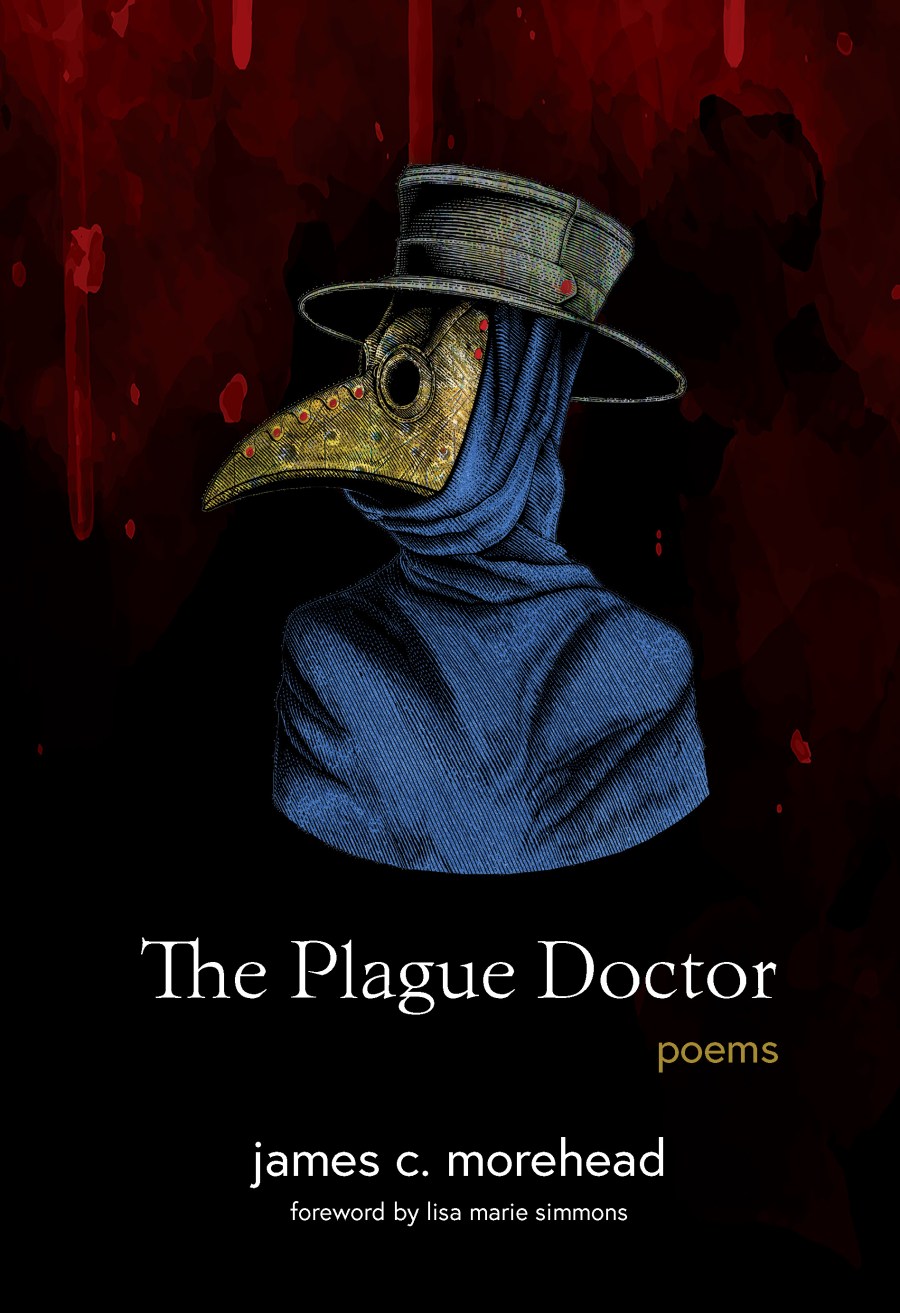
Author and poet James Morehead share a chilling and rich collection of poetry that delves into the nature of existence in the book “The Plague Doctor”.
Advertisements
The Synopsis
A mesmerizing collection of eerie, image-rich poems that explore the fleeting nature of existence and friendship, inspired by the world of art and artists. The Plague Doctor combines poetry with mesmerizing ink drawings by Natalia Ardus, art by Mark Kulas and Tony Rubino, and photography by the author.
Poet and musician Lisa Marie Simmons writes in her forward to the collection, “I’ve read this collection three, four, then five times. In my office, in the tour van and the green room, after yoga, and once bundled up beneath an ancient olive tree. Despite those many deep dives, it never seems enough to complete this forward. So I returned—six, seven, ten times. Each reading has me focusing on something new, and a year from now, I know more discoveries will be made as my perspective shifts with my own experiences. This is one of the many things I love about poetry and, in particular, Poet Laureate of Dublin, California, James Morehead’s poetry.”
The Review
These were some incredibly powerful and chilling poems. The fantastic imagery and atmosphere that the author is able to tap into with these poems will stick with readers long after the book has been read, and the imagery that accompanies the book’s pages helps evoke an emotional response that touches upon the iconography that we latch onto to represent the key emotional moments in our lives.
To me, the heart of this collection rested in the balance between macabre imagery and heartfelt themes. The idea of life and death plays across some of life’s toughest moments, from life in the big city (San Francisco in this case) to the striking fear of performing alone on a stage. I also enjoy the way the book was divided into “Acts” as if life were a play and the poems were but the stage in which they were lived, and the way these poems also reflected on the artistic works that moved the author throughout their journey through San Francisco was greatly expressed through these poems.
The Verdict
Heartfelt, haunting, and engaging, author James Morehead’s “The Plague Doctor” is a must-read poetry collection. The almost narrative feel to the overall collection and the memorable way the author was able to tackle such dark and entertaining imagery through their poems with the emotional journey that the poems represented made this a compelling book to get lost in. If you haven’t yet, be sure to grab your copy today!
I received a free copy of this book in exchange for a fair and honest review. All opinions are my own.
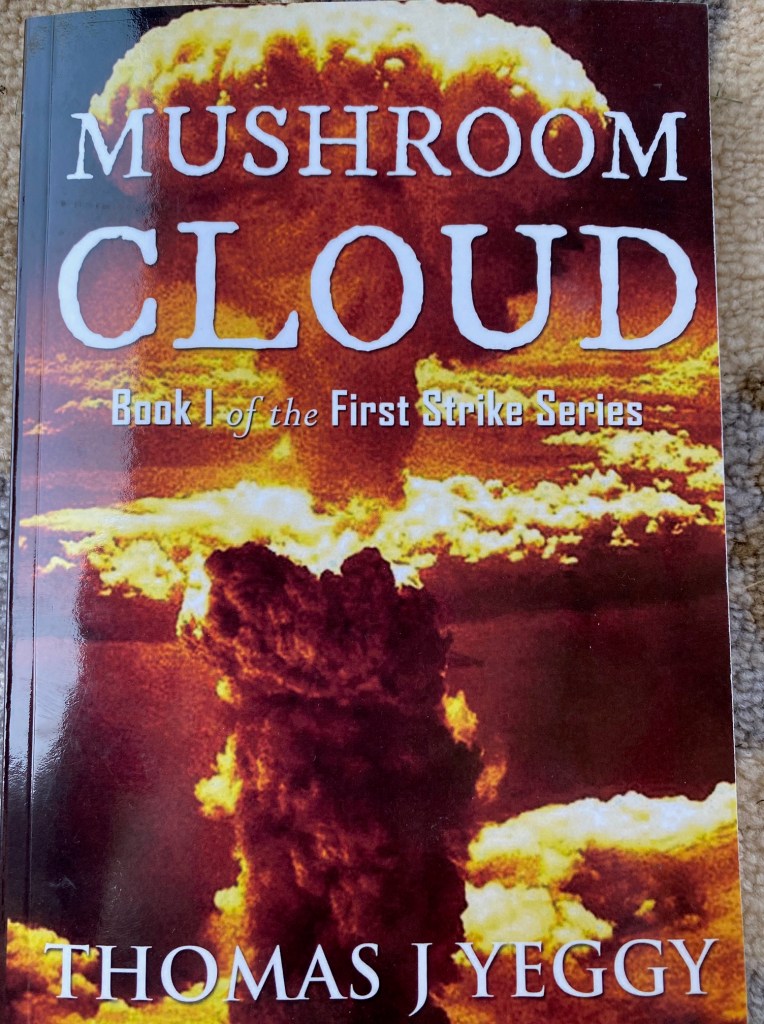
A young scientist working to prevent nuclear war must face a wrathful DOJ and fight against trumped-up espionage charges in author Thomas J. Peggy’s “Mushroom Cloud”, the first in the author’s First Strike Series.
Advertisements
The Synopsis
For a decade, Dr. Caleb Young, a gifted physicist and chief science officer for the CIA, had shaded National Intelligence Estimates and Rand reports on war gaming. He wanted to thwart the US military’s push for a nuclear first strike. Soviet GRU Colonel Oleg Penkovsky had passed information to Young at more than one Pugwash Peace Conference, revealing how inept Soviet capabilities were. A US preemptive strike would destroy the earth’s ozone layer.
Dr. Young, secretly an Einstein schooled pacifist, felt a personal obligation to prevent a globally destructive nuclear war. However, the realities of US nuclear superiority were progressively becoming harder to manage. By mid-1953, the United States had 1,169 deliverable atomic bombs. It could drop them with 160 B-36 heavy bombers and 350 B-47 medium bombers. The Soviet Union had 120 atomic bombs that could only be delivered to the US by a handful of one-way TU-4A experimental bombers through thousands of F-86 Sabres. By 1962, the US had more than 3,000 thermonuclear warheads and 5,000 tactical nuclear weapons. U-2 flights and Corona satellite images were exposing Khrushchev’s lies about “grinding out missiles like sausages.” The US had a 17-1 advantage in deliverable warheads.
The Soviets intercontinental ballistic missiles (only four were verified) took four hours to prepare for launch. US B-52s twos could easily destroy them from fail- safe points with a pair of 20 megaton bombs. Even more ominously, the Thor and Jupiter intermediate range ballistic missiles could deliver warheads in less than 8 minutes after launch from England, Turkey, or Italy. The US could locate and destroy the Soviets’ 150 round- trip bombers before they left Soviet runways. Soviet SSBN subs were noisy and had to surface to fire missiles. They were easy prey for the US Navy. In late October 1962, President John F Kennedy stopped the US military from initiating a first strike. It came to be known as the “Cuban Missile Crisis.” “We lost” Air Force general Curtis Lemay shouted at Kennedy. Military leaders wanted a nuclear war that day while they had a clear first strike advantage.
Now the Department of Justice (DOJ) has many questions, and they believe Dr. Caleb Young has the answers. Nicholas Katzenbach, the DOJ’s chief deputy, is ready to prosecute Dr. Young on trumped up espionage charges. And he wants to know about the CIA’s involvement in the November 22, 1963, assassination of President Kennedy
The Review
This was a compelling and captivating read. The blend of almost spy thriller tactics with historical fiction and government intrigue made the story feel larger than life, and the powerful imagery brought the horrors and terror of the Cold War and nuclear war as a whole made this a truly atmospheric read.
The heart of the narrative was in the history and the character growth of the story. The struggle that Caleb went through will play well with fans of the recently released film Oppenheimer, as the character struggles with his role in the development of nuclear warheads and the journey of redemption he finds himself on made this story so compelling, and the amount of detail the author was able to put into the story from a historical standpoint made the story shine with realism and heart.
The Verdict
Thrilling, enthralling, and chilling, author Thomas J. Yeggy’s “Mushroom Cloud” is a must-read historical fiction thriller and a great entry into the First Strike series. The twists and turns in the character development and the heart-pounding moments that keep the protagonist on his toes constantly will keep readers drawn back into the story more and more. If you haven’t yet, be sure to grab your copy today!
Rating: 10/10
Advertisements
About the Author
Thomas J. Yeggy, a University of Iowa Law graduate, practiced law in Davenport, Iowa, and Rock Island, Illinois. As a mental health judge Thomas served for 25+ years, where he developed a deep understanding of life’s challenges. Authoring more than 1,500 opinions with minimal reversals, he served diligently.
Yeggy, a licensed Series 7 broker, explored nuclear weapons’ control after witnessing Hiroshima and Nagasaki’s devastation. Prompted by McNamara’s remark on the Cuban Missile Crisis, he delves into our fortunate survival in the First Strike series. Currently residing in Pensacola Beach, Florida, with his wife Eileen, he enjoys summers with grandkids Jeff and Ashley Brown. Find them at Emeis Park, Davenport, with granddogs Otis and Emme.
I received a free copy of this book in exchange for a fair and honest review. All opinions are my own.
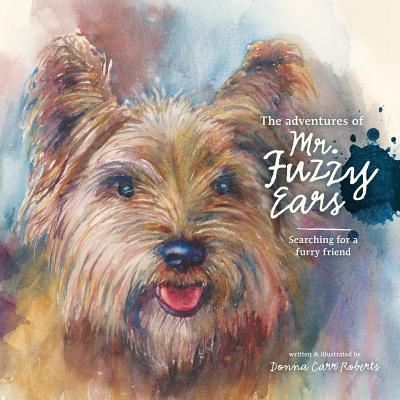
A pup recently promoted to the K9 unit must help solve the mystery of the missing bunnies in author Donna Carr Roberts’s “The Adventures of Mr. Fuzzy Ears: The Mystery of the Missing Bunnies”.
Advertisements
The Synopsis
The Adventures of Mr. Fuzzy Ears: The Mystery of the Missing Bunnies is the second in this children’s book series. Mr. Fuzzy Ears becomes a K9 Police officer to help discover why all the bunnies have disappeared. He is aided by Sweekie, the mouse from the cupboard and other animal friends guiding him to the wandering rabbits. Like so many of us, the bunnies are mesmerized by ‘screen things, ‘ oblivious to what’s happening in the real world and with these distractions, bad things are happening. Can Mr. Fuzzy Ears remind them of the value of family and love in the real world?
The story is complemented with warm watercolor illustrations created by the author.
The Review
This was a heartwarming and engaging children’s book. The warmth of the watercolor illustrations immediately drew me into this narrative. The fun aspect of these animal detectives and the mysteries will capture the children’s minds and hearts immediately, and the suspense of this book is a great introduction to the mystery genre for younger readers.
The theme and message of this book really will speak to both parents and children alike. The dangers of overuse of technology, from smartphones and video game consoles to television itself, is truly a relevant subject in this world we live in. The need to find a great balance between technology and the world around us is so important, and finding our love for our family and nature itself is a great message that plays out wonderfully in this mystery read.
The Verdict
Engaging, thoughtful, and memorable, author Donna Carr Roberts’s “The Adventures of Mr. Fuzzy Ears: The Mystery of the Missing Bunnies” is a must-read children’s book and illustrated picture book. The fun mystery of the book and the engaging themes will draw readers into the story wholeheartedly, and the captivating watercolors of this book will enthrall readers. If you haven’t yet, be sure to grab your copy today!
Rating: 10/10
Advertisements
About the Author
Donna Carr Roberts is the Author AND the Illustrator of “The Adventures of Mr. Fuzzy Ears”. Donna has been the Artist in Residence at Bradley University in Peoria, Illinois and a professional portrait artist.
She has had a lifetime of business careers but none as much fun as working on Mr. Fuzzy Ears. The funny antics of her dogs, Scamp, Izzy, Sofie and Teddy inspired her to write this book. The funny, loving, caring fables help children discover that all of us have the power to make life better for these helpless animals who offer us unconditional love.
As a child, her favorite books were My Book House with remarkable stories and illustrations that have influenced her work today. Donna is a member of SCBWI, Portrait Society of America, Oil Painters of America, and a Member with Distinction with American Women Artists.
I received a free copy of this book in exchange for a fair and honest review. All opinions are my own.
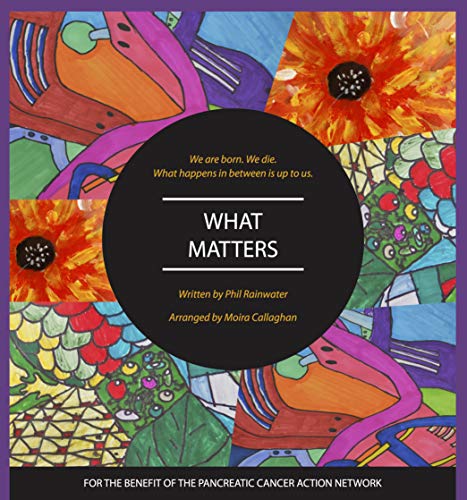
Author Phil Rainwater shares a collection of quotes and lessons that will help younger generations connect with older generations greatly in the book “What Matters: Lessons Learned from Life”.
The Synopsis
What Matters is a book about the lessons learned from life, and experiences we all share. But it’s more than just a book. It represents the connectedness that we seek. It reflects our desire to share parts of our lives with those we love. What Matters allows us to look within ourselves in quiet, self-reflection… inspiring us to be the best we can. To evolve, to share, to learn, to love, and to parent are all ingredients in What Matters.
What Matters starts the conversation between parents and kids, grandparents and grandkids, and everyone in between. The experiences reflected in the book touch on many topics and stages of personal growth. They are a personal journey about situations, behavior, and decisions that really mattered along the way. These experiences are written as a series of quotes with each quote illustrated with a child s work of art. What better way to underscore the lessons we learn from life, than with artwork from one of our greatest teachers; namely children. It s their innocent, unexpected, and wide-eyed visions of all things possible that add to What Matters.
The Review
This was a fast-paced yet insightful read. The author does a remarkable job of conveying heartfelt and thoughtful messages and quotes that readers can learn to live by and write in such as way that readers from all walks of life can relate to. The honesty and inspirational theme of this book really will stick with readers both young and older as the book progresses.
A couple of things that really made this book’s message more impactful were the inclusion of children’s illustrations and artwork to complement each page, and the book’s proceeds benefiting cancer research. The need to combat this horrific illness made this book feel even more important than it already was, and the use of this artwork allowed the reader to feel that bridge or connection that the author was drawing between different generations, whether that is between parents and children, or grandparents and grandchildren.
The Verdict
Insightful, memorable, and engaging, author Phil Rainwater’s “What Matters: Lessons Learned From Life” is a must-read nonfiction book on parenting and self-help guidance. The heart and passion for which the author wrote reflect the importance and power of these passages and will stick with readers long after the book has been put down. If you haven’t yet, be sure to grab your copy today!
Rating: 10/10
Advertisements
About the Author
Phil Rainwater was inspired to create a roadmap for his children to realize and benefit from the experiences and lessons they would learn throughout their lives. Throughout his life, Phil accumulated valuable lessons and wrote them down in the form of simple quotes. As his children came of age, Phil shared these quotes with them inspiring the book What Matters.
But Phil knew that there was more to What Matters than just a book. Knowing that serving others is part of his journey, Phil arranged for students in the Reston, VA school system to create the illustrations to support these quotes. In return, Phil has pledged to donate 10% of book sales to The Reston Arts Center and the PTA of Buzz Aldrin Elementary School. The other 50 % of book sales are being donated to The Pancreatic Cancer Action Network (PanCAN) to help eradicate Pancreatic Cancer.
Phil lives with his wife and sons in Arizona. You can read more about What Matters by visiting his website at WhatMattersBooks.com
I received a free copy of this book in exchange for a fair and honest review. All opinions are my own.
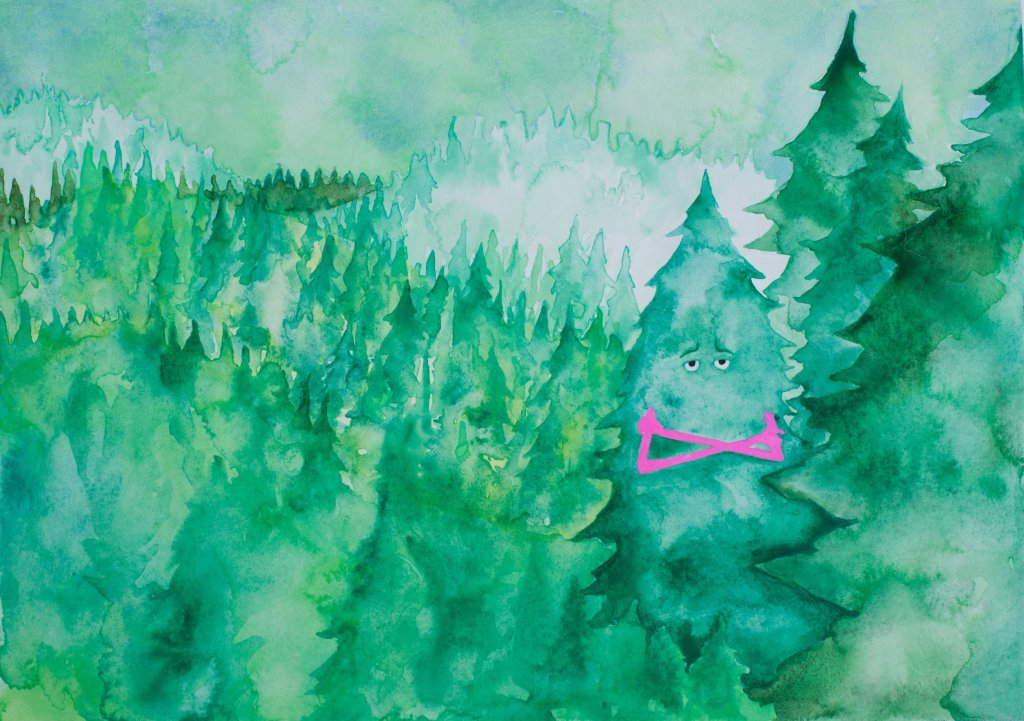
A young Douglas fir tree must learn the path to self-acceptance with the help of an older and wiser flower in authors Ben Sharony and Carly Jo Carson’s “Dougie & V: The Story of a Flower and a Tree”.
Advertisements
The Synopsis
Dougie & V tells the story of a tree who wants to be a flower.
Dougie, a young Douglas Fir, can easily spot the gifts and strengths of others, but has a difficult time seeing anything good in himself. Can you relate?
In the first half of the book, Dougie relentlessly compares himself to V, a vibrant violet. V, older and wiser, gently pushes back. She shows Dougie that he too is special. With V’s help, Dougie comes to understand that though he and V are very different, they are both innately unique m strong and beautiful.
Sprinkled with delightful and surprising factoids about biodiversity, this spiritual journey teaches us about friendship, loss, and the cycles of life. But above all, this is a book about the importance of self-love.
It’s a picture book for children ages 4-8, but we believe that it would appeal to older kids and adults, too. As for comps, Dougie and V shares qualities with many iconic titles. At its core, it is a playful and affirming text in the same vein as Marion Deuchars’ “Bob the Artist.” But it also includes witty asides that are both educational and fun, something akin to Julia Rothman’s “Nature Anatomy.” And finally, our greatest ambition is to edge towards the poignancy found in “The Giving Tree.”
The Review
This was a moving and thoughtful picture book for children. The author expertly crafts a story that balances the importance of nature with the need for self-care and self-acceptance. The book showcases the struggles that children and adults alike constantly must battle, exploring the self-doubt and fears that constantly prevent us from being our most authentic self, and failing to recognize the heart of those doubts.
The warm water colors of the illustrations and the fast-pace of the narrative allowed the reader to feel fully engaged in the story. The bond that Dougie and V develop together and the source of inspiration that V becomes to Dougie were great to see come to life on the page, and the investment in environmentalism was strongly felt through V’s lessons on every part of nature having a purpose and being beautiful within itself.
The Verdict
Heartfelt, thoughtful, and engaging, authors Carly Jo Carson and Ben Sharony’s “Dougie and V: The Story of a Flower and a Tree”, is a must-read children’s book. The heartfelt themes and messages throughout this book will resonate with parents and kids alike, and the full-circle moment that the ending provides makes this a compelling book to get lost in. If you haven’t yet, be sure to grab your copy today!
Rating: 10/10
Advertisements
About the Authors
Carly Jo Carson and Ben Sharony have been best friends since they were twelve. They are passionate about sharing stories of transformation and self-acceptance.
Carly is an artist, journey designer and mother of four. carlyjocarson.com
Ben is a filmmaker and an uncle and godfather. bensharony.com
1) Tell us a little bit about yourself. How did you get into writing?
I’m a child of the enlightenment. I believe in science, rational thought, and the value of knowledge. At the same time, I’m fascinated by philosophical questions that stubbornly reside outside the sphere of scientific truth: the phenomenon of consciousness; the origin of the universe; the nature of time; and the formation of the first living cell. In my later years, the limitations of logic and reasoning have left me more receptive to the numinous in our world — a novice in the realm of spirituality. Above all, I strive to perceive beauty wherever it may exist.
I began writing independently of schoolwork when I was nine. As was true for many children of my generation, I was introduced to the world of poetry through the work of Theodor Geisel, a.k.a. Dr. Seuss. His book “Yertle the Turtle” was a particularly strong influence (though I had no idea at the time that the story was allegorical, a satire of Adolf Hitler). Not surprisingly, all of the poems I scribbled on shirt cardboard rhymed.
In my sophomore year of high school, I maintained a poetry notebook as part of the curriculum. But my interest in poetry really blossomed at Amherst College where, as a biology major on the pre-medical track, I took four rigorous poetry courses. During the last of these, in what I like to describe as an act of love masquerading as mania, I stopped attending classes, isolated myself from friends, ate and slept reluctantly, and spent five straight weeks writing a metaphysical poem on the theme of subjective versus objective reality. This represented my first serious attempt to write poetry.
2) What inspired you to write your book?
Most of the poems that appear in Exits were written between 2003 and 2021 without a book in mind. It wasn’t until two years ago that I decided to incorporate what I considered to be my best work into a book entitled Line Drawings. However,
during the process of reviewing my modest oeuvre, I noticed that a significant number of the poems were related to one or more aspects of mortality. This led me to curate a more concise, themed collection of poems, and Exits was born.
One might wonder where the focus on life’s transience derives from. In retrospect, I can identify three sources. First, I was raised without any religious training, so from a very young age, I was left on my own to ponder the enormity of the universe, time and eternity, and the meaning of existence. My fear of death was such that I often fought against falling asleep, which to me resembled nothing so much as a rehearsal. Second, as a physician and neuro-ophthalmologist, I’ve cared for numerous patients with serious and/or life-threatening diseases. And third, since 1999, I’ve had to deal with the spinal cord variant of multiple sclerosis and the ramifications of that disease for life expectancy.
3) What theme or message do you hope readers will take away from your book?
Death is an integral part of life. It exerts a profound influence on how we think about the limited time granted to us and the meaning we attach to it.
Exits will resonate with different people in different ways. Some readers will gravitate to the visual imagery and nature metaphors. Others will enjoy the wordplay. Still others will find satisfaction in the resurrection of formal elements.
It’s important to keep in mind that we live in a time of great uncertainty. War, climate disasters, and a recent pandemic have led many to contemplate the prospect of their own demise. Exits speaks to this anxiety and angst. It also may provide fresh perspective on mortality, the cycles of life, and the possibility of renewal.
4) What drew you into this particular genre?
My mom, now deceased, deserves a great deal of credit in this regard. A lifelong visual artist, she made it a point to instill in her young son a deep appreciation for
art. I recall sitting on her lap at age four or five as she paged through artbook after artbook. As a result, I could distinguish a Monet from a Cezanne before I could read!
Over the course of my life, I’ve written in multiple genres, including: engineering and technology (U.S. Patent 4,477,158); clinical research articles published in medical journals; chapters in neuro-ophthalmology textbooks; business papers; short fiction; and poetry.
My attraction to poetry is multifaceted:
The thrill of creating art with words
Permission to access the subconscious
The marriage of sound and sense
The fact that anything can appear in a poem
The fact that anything can happen in a poem
The surreal, dreamlike, associative way that poems move the mind
The surprising connections and juxtapositions
Fun with form
The paradoxical precision of poetic ambiguity
Metaphor and the multilayering of meaning
The sonic extravaganza of rhyme, alliteration, assonance, onomatopoeia, meter, and non-metrical rhythms
Non-linear narratives
Emotional intensity
The potential to enlighten
The potential to console
Oblique routes to ineffable truths
5) What social media site has been the most helpful in developing your readership?
None! I’ve never had an account on any social media platform. The lone survivor of the Jurassic Period, I tend to use long-forgotten methods of communication, mainly face-to-face chats, telephone calls, and handwritten letters.
6) What advice would you give to aspiring or just starting authors out there?
Write poems that represent your unique aesthetic sensibilities. Try not to be overly influenced by prevailing trends or by contemporary poetic styles.
Edit mercilessly over an extended period. Satisfying first drafts often begin to show their flaws only after sufficient time has elapsed to afford an objective assessment.
Begin your foray into publication by submitting poems to literary journals. This will help you determine which of your poems resonate with experienced reviewers. Before each submission, make sure that your poem is a good fit for the journal.
7) What does the future hold in store for you? Any new books/projects on the horizon?
Given my age, history of MS, and undisciplined writing process, I’m doubtful that any additional books are forthcoming. But you never know…
About the Author
Stephen C. Pollock is a recipient of the Rolfe Humphries Poetry Prize and a former associate professor at Duke University. His poems have appeared in a wide variety of literary journals, including “Blue Unicorn,” “The Road Not Taken,” “Live Canon Anthology,” “Pinesong,” “Coffin Bell,” and “Buddhist Poetry Review.” “Exits” is his first book.
1) Tell us a little bit about yourself. How did you get into writing?
• I honestly don’t know why, but I’ve always wanted to be a writer. I have distinct memories of myself as a child, maybe five or six, writing stories and poems. I’d carry a notebook around with me everywhere.
• But what’s funny is that I was never much of a reader as a child! I had my favorites. I devoured Harry Potter and other books. But I don’t think that my drive to be a writer came from a love of reading.
• In college, I majored in English with a concentration in creative writing. As a part of my studies, I took workshops each semester, and that’s where I finally began to come into my own as a writer — developing my own voice and style instead of just mimicking other writers. I credit my professors at the time — Sharon Bryan, Darcie Dennigan, Penelope Pelizzon, Gina Barreca — with helping me find my voice.
2) What inspired you to write your book?
• To be quite honest, when I sit down to write poetry, it isn’t with a book or some greater collection in mind. All I’m doing is writing a poem. So I can’t really say that anything inspired me to write the book, because in my mind there never was a book — until there was.
• That being said, with a few exceptions, I wrote these poems during the pandemic. The early days of the pandemic were very lonely for me. I was single during the lockdown, and found myself longing for human connection at a time when it was impossible to have. Those feelings of love and longing and loss really permeate the poems that eventually made it into the collection. In that way, writing Dancehall was a way for me to make sense of the world.
3) What theme or message do you hope readers will take away from your book?
• More than anything, I want readers to connect with the poems and come away with a sense that love is universal.
• The poems in Dancehall follow the narrative arc of a single relationship from start to finish. I call the book a queer love story, because I myself am queer and I see the book as coming from that perspective. But I also made very conscious stylistic decisions so that the poems would appeal to everyone — gay or straight, single or partnered, male or female or non-binary.
• You may notice, for example, that except for in two instances the poems don’t make use of pronouns. Instead, the speaker (“I”) is talking directly to the subject (“You”). I did this so that it would be easier for the reader to put themselves in the poem — either as the speaker or the subject — and feel the immediacy of the work.
• If I, a queer man writing about queer relationships, can write a poem that allows a straight person to feel something about their own relationships, then I think I’ve succeeded in my mission. It’s kind of cliche at this point to say it, but love is love.
4) What drew you into this particular genre?
• I think I was drawn to poetry because I myself read poems that triggered an intense emotional response in me, which made me realize that poetry could be powerful. Some of the most powerful poems I’ve ever read were short poems — under 10 words — and yet they had the power to conjure memories and emotions in what is really an awe-inspiring way. Once I experienced that, I knew that I wanted to learn how to do that myself. I wanted to make people feel something, and I personally haven’t found a better way of doing that than through poetry.
5) What social media site has been the most helpful in developing your readership?
• I have to admit, I’m terrible with social media. I use it mostly for personal reasons — staying in touch with friends, etc. But I’m starting to get a handle on it as a means of building my reader network! I’ve just begun sharing videos and pictures of my work on Instagram (timstobierski) and TikTok (tendre_croppes) and they’re definitely both powerful tools. I think TikTok has the most potential to get your work in front of millions of people quickly, but it’s also tricky to know what’s going to go viral or do well and what’s going to be a flop. I guess I’m still learning.
6) What advice would you give to aspiring or just starting authors out there?
• I think the most important bit of advice I have is to not let rejections get to you. If you submit a poem or a story or an entire book to a press and get a rejection, do your best not to take it personally. Brush yourself off, think critically about whether or not there’s a way you can make your submission stronger, and find a new press to submit to. Just because your work isn’t for someone doesn’t mean that it’s for no one.
• When I first pulled together the manuscript for Dancehall, it was very different from what the book now looks like. I was submitting it to contests and presses that wanted books of poetry consisting of 30 poems max, so that’s how I arranged the book. It wasn’t until I got my fourth or fifth rejection that I looked at the collection and thought, “Well, they keep turning me down when I send them what they say they want. I’m going to submit what I want.” I doubled the poems, reorganized the book, and gave the collection a narrative arc that didn’t exist before. And when I sent it out the next time? The book was accepted by not one, but two presses.
• The moral of it all: Rejections are a part of being a writer. So do your best to build up a thick skin.
7) What does the future hold in store for you? Any new books/projects on the horizon?
• The way I write poetry is slow. It takes time. I don’t set out to write a collection — they amass over time as I write a poem here or there and realize that a theme has emerged.
• Recently, I’ve been writing a lot about grief, tied specifically to my father’s death. I think that those poems will eventually form the body of a collection. Likewise, I’ve been writing more explicitly about my experiences coming to terms with my sexuality, and I think that will eventually form a collection
About the Author
Tim Stobierski writes about relationships. His work explores universal themes of love, lust, longing, and loss — presented through the lens of his own experiences as a queer man. His poetry has been published in a number of journals, including the Connecticut River Review, Midwest Quarterly, and Grey Sparrow. His first book of poetry, Chronicles of a Bee Whisperer, was published by River Otter Press in 2012.
To pay the bills, he is a freelance writer and content strategist focused on the world of finance, investing, fintech, insurance, and software. In his professional writing, he prides himself on his ability to help the reader understand complicated subjects easily, a quality that informs his poetry.
He is also the founder and editor of Student Debt Warriors, a free resource for college students, graduates, and parents who are struggling to make sense of the complex world of student loans.