Interview with Author Linda Thackery

Tell us a little bit about yourself. How did you get into writing?

I’ve wanted to write for as long as I can remember. I think I penned my first story when I was ten, perhaps eleven and never stopped. I was inspired by Star Wars and developed a love of science-fiction, fantasy genres ever since.

Advertisements

What inspired you to write your book?

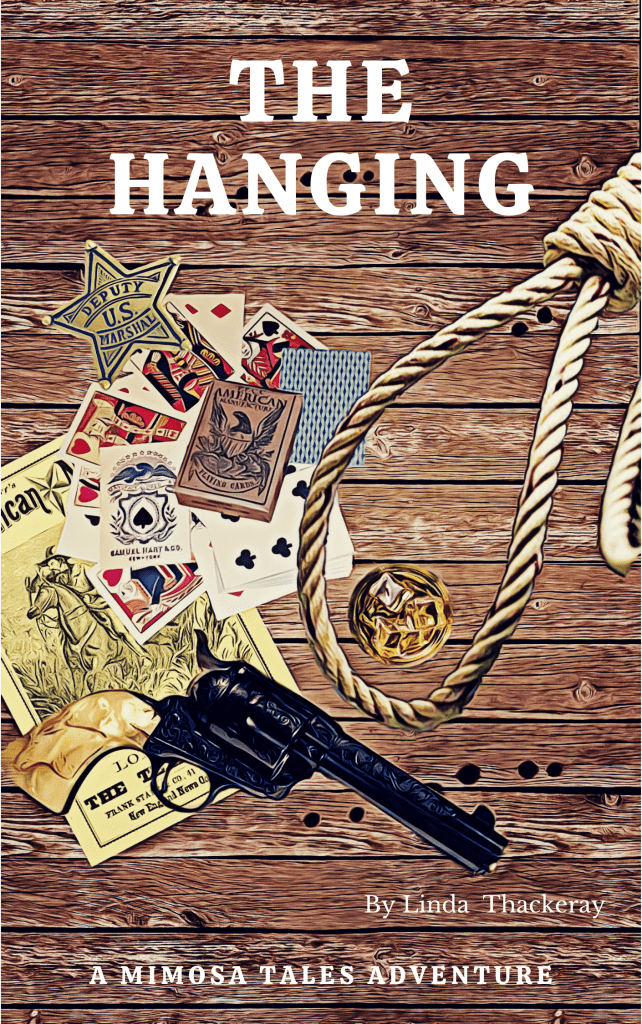
In the case of The Hanging, I wanted to try a completely different genre and historical fiction or westerns seemed to be something challenging. I wanted to test myself.

What theme or message do you hope readers will take away from your book?

Well I hope they are entertained, that the characters grab them and they’re interested in seeing what else in store for these folks down the line.

What drew you into this particular genre?

It is a genre that’s very different from the science fiction and fantasy I write, but then again, also very similar because there is a lot of world building involved and adventure is a main staple of the genre like sci-fic and fantasy. After all, so many of our great science fiction shows started out with elements present in western films.

If you could sit down with any character in your book, what would you ask them and why?

I would probably sit down and ask what it is like for Holly Davis to be independent woman in the 1880s, trying to make her way in a man’s world, while staying through to herself.

What social media site has been the most helpful in developing your readership?

I’m finding Facebook is the best so far, but I’m not used to the marketing aspects so for now it seems to be the platform that gives me access to reach my audience directly.

What advice would you give to aspiring or just starting authors out there?

Write for yourself and no one else. Even if you never became rich and famous, or become a best-selling novelist, doing what you love will still make you soar.

What does the future hold in store for you? Any new books/projects on the horizon?

I have just finished a new fantasy novel called the Patient, it’s currently sitting with an editor. I’m working on the third installment of my Mimosa western series, and then I’ll be completing a science-fiction novel that’s been sitting dormant for too long, and writing a sequel to a book I co-authored with a friend called Savage World.

Advertisements

About the Author

Born in a village in Malaysia and delivered by underpaid midwife, and Ann, an irritable new mother (who wouldn’t be after 48 hours in labour?), X was named by a deranged grandmother with too much creativity for her own good. Once out of her pain-induced stupor, Ann decided to give her new daughter a proper middle name to avoid the risk of being put into a home later in life.

And so, she was called Linda.

Linda was an unremarkable child, save a few notable incidents, the discovery that a pot lid is not a substitute for Wonder Woman’s tiara (five stitches), four-year old don’t need to shave (no stitches but lots of toilet paper) and utility truck drivers are not necessarily qualified operators of their vehicles (seventy stitches).

At eight, Linda received religious enlightenment when she saw Star Wars at the Odeon Theatre and hence began her writing career.

For many years, the cages of various pets in the Thackeray household were littered with pages from Linda’s scribblings. Subjects usually ranged from whatever science fiction show was on television or at the movies. There was lots of Star Wars.

At 17, Linda moved to Sydney, Australia and was disappointed it was not occupied by Paul Hogan types with big knives and croc skin jackets but pot-bellied blokes with zinc cream and terry towel hats. Linda’s father (also known as that bloke who buys me stuff to piss mum off when she’s mad at him) settled in the town of Young, a community of 6000 people with no movie theatre.

Linda survived this period in the wilderness by raising kangaroos and writing original works but eventually got saddled down with the necessities of life and though she continued to write, work came first. Work, HBO, comic books and rent. It’s a kaleidoscope.

Even the kangaroos left out of boredom.

In 2014, Linda decided to start writing seriously again. Mostly because Australia’s strict gun laws make it very difficult to ‘go postal’ in the workplace. Moving to Woy Woy, which is Aboriginal for ‘Big Water’, she’s dipped her toes into the Indie pool and found she needs a pedicure. Her books are labours of love and championed by her friends on Facebook.

Eventually Creativia Publishers, appalled by Linda’s inability to conduct any marketing, offered to publish her books out of sheer exasperation.

Supported by two cats named Newt and Humphrey, she spends her days trying to write novels while having unclean thoughts about Michael Fassbender and Jason Statham, sometimes together.

Author Page: https://www.lthackeray.com/

Amazon Central Author Page: https://www.amazon.com/Linda-Thackeray/e/B00NE63G76/


Facebook: https://www.facebook.com/Scribee31oz/

Twitter: https://twitter.com/Scribe31oz


Goodreads: https://www.goodreads.com/author/show/8331182.Linda_Thackeray

Interview with Author James Rourke

1) Tell us a little bit about yourself. How did you get into writing?

I just finished my 25th (and easily my most unusual) year as a teacher. I teach history, psychology, and philosophy. These disciplines definitely influence my writing, as does the act of being a teacher! I believe the best way for a student to learn and appreciate history is to engage, what I call, their historic imaginations. There is a lot of creative energy generated in my class and I know that rekindled my desire to write…a desire I was first aware of in the third grade.

Advertisements

2) What inspired you to write your book?

As you know, Anthony, that question is always a bit harder to answer than people think. There’s a full pie chart of inspirations for this story. When I teach history I always view it as a grand narrative of big and small stories that revolve around suffering, struggling, and – hopefully – overcoming. In psychology, which I also teach, we see a grand array of suffering, struggling, and overcoming. When writing this story I clearly wanted to continue that classroom motif. I believe that comes through clearly to readers. You stated in your review of Out of the Basement that one of the book’s strengths is the ability to highlight “…the inner demons so many people must face and yet hide behind a carefully orchestrated mask to hide the pain,…” To me, that is a key to the book…you don’t have to personally know the protagonist’s pain to connect to the idea of suffering and struggle. There is an exploration of a core concept of our shared humanity at play in the story, an aspect of the human condition that any reader can connect with.

3) What theme or message do you hope readers will take away from your book?

The back cover of the book has the phrase “Find Hope in the Darkness.” That is definitely one theme at work in the book, the idea that even at the worst of times hope exists. It may be obscured or seem unavailable, but it is there if we can look past our pain and find it. That’s definitely one of the many themes embedded in the pages of Out of the Basement.

4) What drew you into this particular genre?

I teach psychology and a class called P3: Philosophy, Psychology, and Pop-Culture. The P3 class evaluates and utilizes movies, music, and television shows to illuminate psychological and philosophical theories. My interest in those topics in my classroom strengthened my interest in those types of stories. 

5) If you could sit down with any character in your book, what would you ask them and why?

Ha! That’s a great question. I think I would like to walk a few laps around the park with Father Sylvan. That character has a deep well of insight, compassion, and patience. I think I could learn a thing or two from him!

6) What social media site has been the most helpful in developing your readership?

Thus far, Facebook. I’m new to the social media marketing game so that’s where I started.

7) What advice would you give to aspiring or just starting authors out there?

Write and be open to suggestions from thoughtful readers. You don’t have to take every suggestion to heart, but listening to people’s reaction to your manuscript can be very helpful. We all have blind spots when we write so extra eyes can be helpful. A group of creative people sharing ideas and their work can also help you maintain a writing schedule. 

Speaking of writing schedules, don’t try to adopt someone else’s or feel guilty if you don’t write every day as some stress you must. I am a full time teacher, I teach in an evening program, and have four children. Some days I don’t write a word. Sometimes days on end. I do, however, take notes and record thoughts on my cell phone to refer back to when I carve out my writing time. 

8) What does the future hold in store for you? Any new books/projects on the horizon?

Book sales, I hope! I am holding some online book events and trying to be creative in the promotion of Out of the Basement. I have a dystopian manuscript, Stone Souls, that I hope to have released in the near, and hopefully post-COVID-19, future.

Advertisements

About the Author

James Rourke has been a high school of teacher of history, psychology, and philosophy for twenty-five years. His commitment to the idea that these three disciplines can assist his students to connect not only with his material, but to the unifying aspects of humanity, also guides his writing. “The Comic Book Curriculum” is praised for revealing”how major superheroes and their stories raise some of the deepest and most important ethical and psychological questions we all need to ask and answer.” This aspect of storytelling, the quest to tell stories that entertain, challenge, and uplift the reader, inspires James in his fiction as well.

https://www.facebook.com/AuthorJamesRourke/

https://jamesrourkeauthor.com/?fbclid=IwAR3nARK89cAvBsRQdhpwab6BgzHwe_kaJynxLqqEacEePgRsiIueL39ahHo

Interview with Author Judy Fishel

1) What inspired you to write your book?

When I was very young and my mother read stories to me, I decided that someday, I wanted to write stories like those. As I grew older, I thought about the stories I was reading, and tried to imagine stories I might write.

Later, it was mysteries that I enjoyed reading so when I retired, (I’d been a math and science teacher).what I wanted to write was a mystery – not what I called a “shoot-em-up, but a mystery that made you feel good.

Advertisements

2) If you could sit down with any character in your book, what would you ask them and why?

I’d like to talk to many of them, but most of all I’d like to talk to Jeenya Birdsong, the main character. She would greet me with a long, warm hug. Then she would offer me something good to eat. Finally, she would listen quietly to hear what I had to say. I’d want to thank Jeenya for helping me write this book.

How did she do this, you ask. Well, fifteen years ago I started to write the book – the way I thought a mystery should be written. It was really awful, so I put it away and wrote a couple books on study skills (Straight A’s Are NOT Enough).

Finally, last year, I went back to this book. This time, Jeenya appeared in my dreams. It’s hard to remember dreams, but after having these dreams, my writing improved. Sometimes I’d think about a problem I had, and in the morning, I’d know what to do. It was like letting a character decide what was best for them to do.

Sometimes, I say Jeenya Birdsong is my spiritual advisor.

3) What advice would you give to aspiring or just starting authors out there?

There are a lot of great books on how to write. Find one you like and read it at least once every year. As you read, take notes on things you need to do. Each time, you are likely to find new ideas that will help your reading.

4) What does the future hold in store for you? Any new books/projects on the horizon?

My son, Anthony, and I are working together on a book, “How Tony Learned to Read. For each chapter, I write my reflections and he writes his reflections. When Tony was 8 years old, and still not reading or writing, we visited a neurologist. After several hours of tests, the neurologist said, “Tony, you are extremely intelligent. You are also severely dyslexic. You might never learn to read or write.”  But he did say “Might.” Some people who are severely dyslexic do learn to read. Tony and I hope our book will inspire other dyslexic parents and students.

Advertisements

About the Author

SONY DSC

Judy Fishel grew up in Florida, just across the river from Palm City. She and her grandfather often looked for wildflowers along the citrus groves. She also remembers the terrible freezes that killed the citrus trees. It made sense to set her story there. She started work on this book fifteen years ago but it just wasn’t working. She then wrote Straight A’s Are NOT Enough – study skills for college students. Finally, last summer she returned working on Murder of the Obeah Man. When one of her characters, Jeenya Birdsong, began appearing in her dreams, all the pieces began fitting together. Now, Judy likes to say that Jeenya is her spiritual advisor.

Interview with Author Taya DeVere

  1. Tell us a little bit about yourself. How did you get into writing?

Durham, Maine. That’s where it all started, just like it did for Stephen King!

At the time, I was writing a lot of SEO content for several marketing gigs. I was constantly complaining about how I’d love to write something that actually interested me. After getting tired of my whining, Chris (my partner-in-everything), sent me this writing contest he found on Facebook. I picked the first topic from the list, something like “My favorite day of the week.” It turned out to be a cute little story, so I decided to email it to a couple of online magazines that publish readers’ stories. Imagine my surprise when Horse Illustrated magazine contacted me and told me they’d like to publish my article in their printed magazine!

My thoughts when the (very modest) paycheck arrived a couple months later? “Well, that was easy money!”

So, I wrote a pile of stories and articles, pitching them all over. Luckily, I didn’t quit my day job because most of my work got rejected. I did get one short story published in a short story book, and a few articles were published in small indie magazines.

Finally, I got an idea for a book. This book ended up becoming three books. The trilogy gave me an idea for a new 100k novel. The novel was put aside because I got an idea for a twenty book series. And… well, here I sit, mind racing and ideas flowing! 

Advertisements
  1. What inspired you to write your book?
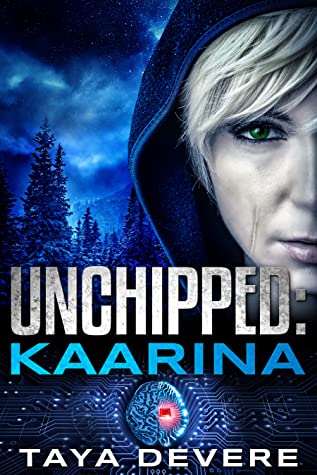
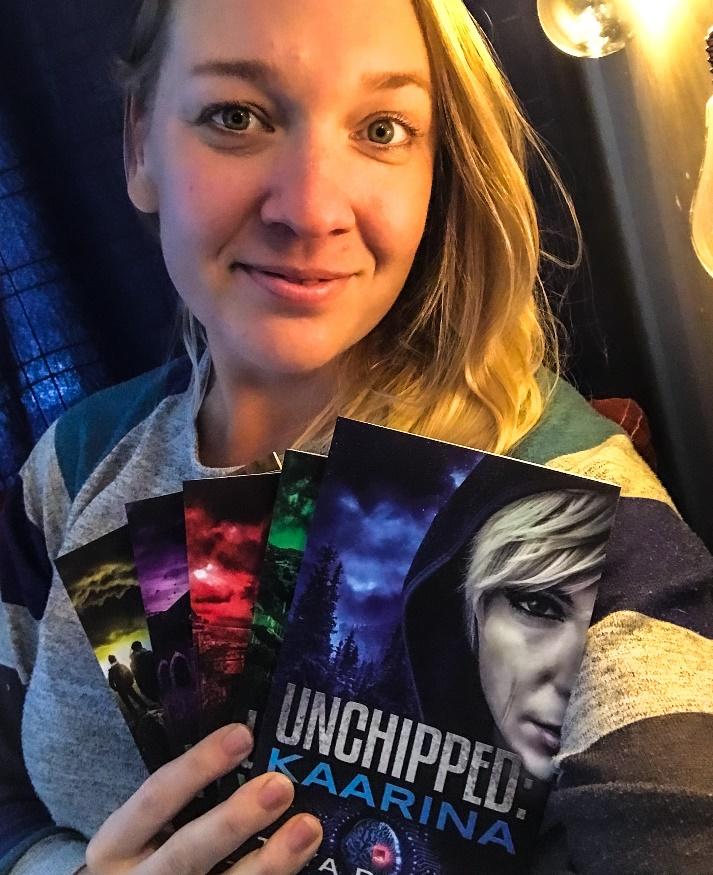
Unchipped: Kaarina was inspired by a single, random thought: “If the world ends today, where will I run and hide?”

The answer was, (as for me it so often is), the barn. I imagined living at the stables without anyone else around, just the horses and Finnish forest creatures. Never in a million years did I imagine this would lead to me creating a complicated universe with hundreds of characters, a 20-book series that the Unchipped story is today.

  1. What theme or message do you hope readers will take away from your book?

No being on Earth is too small or insignificant to make a difference.

  1. What drew you into this particular genre?

After spending seven years in the States, moving back to Finland made me obsess over cultural differences, society issues, and humanity in general. Then I read The Dog Stars by Peter Heller, and Margaret Atwood’s The Heart Goes Last, and it felt very natural for me to jump genres. My previous trilogy was contemporary women’s fiction. 

  1. If you could sit down with any character in your book, what would you ask them and why?

I would sit down with Doctor Solomon and ask her to tell me a joke. Just to see how effed up the joke would be!

  1. What social media site has been the most helpful in developing your readership?

Facebook, by far. I’m obsessed with Facebook ads and the long-term strategies that come with them. I’m also a part of this Facebook/Instagram group called Dystopian Ink, which inspires me to read and write more every day.

  1. What advice would you give to aspiring or just starting authors out there?

Only write stories that genuinely intrigue you. Go a little crazy with your scenes. Have fun with your characters. Don’t shy away from bad/dad jokes. Invest in a professional editor who isn’t afraid to give criticism but appreciates your storytelling and respects your voice. Your cover doesn’t have to cost you an arm and a leg, but it does have to be breath-taking and scream your genre.

  1. What does the future hold in store for you? Any new books/projects on the horizon?

Ooh, where do I begin?!

The Unchipped series is streaming out every 18 days, so this series will keep me entertained for a whole year! I’m writing book ten at the moment, while my editors (I have two, and they’re both out-of-this-world) are working on books 7 and 9.

After this, remember that 100k novel I talked about? I’m going to mold it into a full post-apocalyptic / dystopian series. The story takes place on flooded Martha’s Vineyard, so the working name for this series is “The Flood.” Still, the story arc is changing as I’m outlining the series, and therefore the name will be changing too. This story has heroes with superpowers, and such immense plot twists that I’ve put it aside for now, but my fingers are itching to dig it out from my desk drawer! Soon!

Links:

www.tayadevere.com 

www.facebook.com/tayadevereauthor

www.bookbub.com/authors/taya-devere

Teija and the Unchipped series
Advertisements

About the Author

Taya is a Finnish-American author, writing contemporary fiction and dystopian sci-fi. After living, working, and traveling in America for seven years, she now lives in Finland with her partner-in-everything Chris, their dog Seamus, three bunny-boys (Ronin, Baby, and Loki), and her horse of a lifetime, Arabella.

Taya’s restless feet have taken her all over Finland, the United Kingdom, and North America. Her new dystopian series “Unchipped” is inspired by the real-life characters she’s met on her travels. Cultural differences, social issues, and behavioral psychology have always fascinated Taya. “Unchipped” tells the story of the world in 2085, when technology has replaced people’s need to truly connect with one another. The series describes what it feels like to be an outsider and takes an in-depth look at the unlikely friendships between perfectly imperfect people across the globe. 

Justice. Kindness. The fact that all beings on this planet are equally important. Taya’s world revolves around these values every day, and they play a substantial role in her storytelling as well.

Taya’s writing is inspired by authors such as Margaret Atwood, Peter Heller, Hugh Howey, and C.M. Martens.

Teija’s author site: https://www.tayadevere.com

Her Amazon author page: https://www.amazon.com/Taya-DeVere/e/B07KRJPMTV

The Unchipped series page on Amazon: https://www.amazon.com/gp/product/B08CHKB96S

Facebook: www.facebook.com/tayadevereauthor

Instagram: www.instagram.com/tayadevere_author

Goodreads: www.goodreads.com/tayadevere

Bookbub: www.bookbub.com/authors/taya-devere

Interview with Author Jennifer Landels

1) Tell us a little bit about yourself. How did you get into writing?

I have always written.  My oldest extant work is an illustrated retelling of ‘Little Red Riding Hood’ from when I was four.  There aren’t many words, but from the pictures done entirely in thick red marker I gather it was some sort of feminist take.  I wrote a lot of stories throughout grade school, and even started a novel (which I’m hoping has been lost).  I still had the urge to write fiction in university but lacked the time.  I dribbled out a few abandoned starts during my time fronting rock bands in the UK and Vancouver, but my creative energy was mostly used up with songwriting, and after that creating human life.  It wasn’t until my youngest daughters were about three that I found the Hour Stories workshop by Dale Adams Segal and fiction started to flow again.

Advertisements

2) What inspired you to write your book?

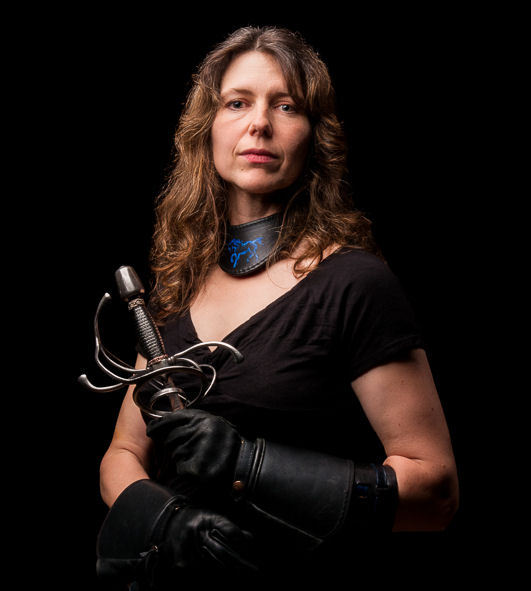
For the full series of sword fighter portraits, please visit http://www.markfeenstra.com/swordplay

My family.  Motherhood, and the complex relationships between mothers and daughters, are the heart of the Allaigna’s Song Trilogy, and particularly of the first book, Overture.  The first line of the book “If you walk down the grand staircase of Castle Osthegn you will see a family portrait,” is pretty much exactly how I orignally wrote it.  I had this image of the portrait and the tension between mother, daughter, father, and brother visible in the strokes of the painting.  The rest came from there.

3) What theme or message do you hope readers will take away from your book?

I don’t really have a message for readers.  My characters take on a life of their own, and I write for them.  I just hope that readers enjoy visiting my characters’ lives as much as I do, and find moments that resonate with them.

4) What drew you into this particular genre?

It’s an easy genre for me to write.  My abandoned PhD thesis was on Arthurian Romance, which is essentially high fantasy, and I read a LOT of fantasy in my youth.  Ironically, I very seldom pick up a fantasy novel now, and my current work-in-progress is historical fiction.  Perhaps when I’ve released the final Allaigna novel I will be able to read fantasy again.

5) If you could sit down with any character in your book, what would you ask them and why?

That’s an easy one — it would be Irdaign, Allaigna’s grandmother.  I’d be tempted to ask her about the future, but I know she wouldn’t answer, so instead I’d pick her brains about herbal lore and animal husbandry.  And maybe ask her to sing a song.

6) What social media site has been the most helpful in developing your readership?

I suppose Facebook, though I find its constant changing of algorithms and interfaces incredibly annoying.  I occasionally get bouts of Twitter use, but its a bit like a firehose.  I’ve resisted Instagram until recently because of their insistence on posting from a phone, but I’ve found a workaround, so we’ll see how that goes.  You can find me on all three platforms as @jmlandels.

7) What advice would you give to aspiring or just starting authors out there?

Divide your workday into three parts: reading, writing, and marketing.  By workday, I mean the amount of time you devote to your writing career, whether that’s eight hours a day or two hours a week.  Try to do at least something in each of these areas every week.  Reading is important because it trains your brain to write well. Read good writing and bad writing, and writing both inside and outside your genre.  You’ll learn something from all of these. Write, even if it’s bad writing; and keep writing because it’s like a muscle you need to train. Be prepared to discard a lot of what you’ve written.  That’s okay — it’s practice.  And marketing — ugh.  Most writers hate it, but it’s a necessary evil.  If you’re just starting out writing it’s still not to early to start building your social network.  Work on relationships and actually being social on social media.  That way, when you have a book ready to release to the world you’ll have friends who’ll help you spread the word.

8) What does the future hold in store for you? Any new books/projects on the horizon?

I’m editing like mad to release Allaigna’s Song: Chorale in late 2021.  I’ve also been releasing bits of my historical novel The Shepherdess, about a shepherdess-turned-spy in 17th century France, in installments in Pulp Literature magazine.  You’ll find the most recent adventure of Toinette in PL issue 28, Autumn 2020, just released now!  And when I’m not writing or editing, I’m riding horses, swinging swords, and teaching mounted combat in person and online with my new school, Academie Cavallo (academiecavallo.ca).  Do I do too much?  Yes, probably.

Advertisements

About the Author

For the full series of sword fighter portraits, please visit http://www.markfeenstra.com/swordplay

For the full series of sword fighter portraits, please visit http://www.markfeenstra.com/swordplay

JM Landels divides her professional time between writing, editing, drawing, and teaching people to swordfight from horseback. She has no hobbies, since they all tend to turn into professions.

Interview with Author Anthony Avina

1) Tell us a little bit about yourself. How did you get into writing?

From a young age, say around 12, I always thought writing is what I would end up doing. And it did start that way, writing scripts, adaptations, mostly, while crewing on film and television productions. While I was doing this, I started making short films on the side, and on the strength of one of these, an adaptation of Alistair MacLeod’s short story, ‘The Lost Salt Gift of Blood’, I began directing commercials. From there, I moved into directing and producing extreme sports. It wasn’t until 2012 that I came back to writing, however, this time, instead of scripts, it was narrative fiction and essays. 

Advertisements

2) What inspired you to write your book?

Life changed. And on a very specific day, at 4 am, how I wrote changed. I had been a good writer – paid to write, but this was different. And I began to explore that. This was in 2010. By 2012, I realized, okay, this is it now, this me. And so I started to work on the book, The Fiddler in the Night, but then, a different story idea would come to me, and I’d explore that. And so, that’s what happened, I’d work on the novel, leave it, and write a short story or two, then go back to the novel. While this was happening, one of these other story ideas turned out to be bigger than a short story, and so there I was – writing short stories and two novels. Probably not the most expedient way to write a book, but then again, here I am now, eight years later, with three books done, which to me, I consider to be a trilogy, The Real and the ImaginedThe Fiddler in the Night being Book Two. Torrents of Our Time, the collection of stories, Book One.  

3) What theme or message do you hope readers will take away from your book?

I guess, keep moving forward. Not always easy, and at times, not always possible. But it is the goal. That, and embrace change, when it comes. Listen to it, which often means, finding a deeper level of faith and trust in yourself. 

4) What drew you into this particular genre?

I’ve never thought in terms of genre as a writer. I just write, and try to be a better writer each day. I suppose though, the books I gravitated to as a reader, have influenced me, to a degree, in terms of how I write. Or perhaps, what I write. Although, I side more with Toni Morrison on that question, in that, I think reading, although it can be an influence on a writer, that influence is greatly overestimated.  

5) If you could sit down with any character in your book, what would you ask them, and why?

Oh man …. idk? Rachael, I guess. And I’d ask her – or rather, say to her, please don’t hold it against me that I placed you in such a strange place. Fictional characters that you write – it’s a mystery, really, how they become what they become. And why. But I would certainly want these conversations to be me asking questions, and not the other way around.

6) What social media site has been the most helpful in developing your readership?

Helpful? I’m a social media … if not failure, call it – just not good at it. I’d like to get to the place where I don’t bring the one to the other. 

7) What advice would you give to aspiring or just starting authors out there?

One, there are no absolutes. Nothing is true. And this, especially when you’re young, is so important to understand. Two, it’s going to take a long time, and I don’t care who you are, it just is. And so my advice would be to work somewhere and make as much bank as you can, as quickly as you can, while you first explore writing, and then – take off. Travel, or find a cheap place to live somewhere you love, and go at it, hard. But whatever you do, and this applies only to fiction writers, and those wanting to make a living from fiction, do not give that money to an institution, of any kind. Just don’t. Stay out on your own, and go at it like that … it’s the truest way of getting there, IMO. 

8) What does the future hold in store for you? Any new books/projects on the horizon?

I’m finishing up now, Book Three, tentatively called Isidore, of the trilogy The Real and the Imagined. It’s scheduled to come out in the Spring of 2021. After that, it depends if the world gets back to where it once was, and travel becomes a thing again. If so, with these three books out, I think a bookstores and beaches tour could be in order. Perhaps, stop in and visit with some other artists and writers along the way.

Advertisements

About the Author

Christian Fennell writes literary fiction and essays. His short story collection, Torrents of Our Time, is scheduled to be released by Firenze Books, October 6, 2020. His novel, The Fiddler in the Night, January 2021.

Christian’s short stories and essays have appeared in a number of international magazines, literary journals, and collected works, including: Chaleur Magazine, Litro Magazine, XRAY Literary Magazine, Dreamers Magazine, Spark: A Creative Anthology, Kind Writers Anthology, Liars’ League London, Wilderness House Literary Review, and .Cent Magazine, among others.

Christian was a columnist and the fiction editor at the Prague Revue. He is currently working on his second novel.

https://www.christianfennell.com/

https://www.instagram.com/christianfennell_/

https://www.facebook.com/Christian-Fennell-103446968171343

Interview with Author Ryan Cowan


1) Tell us a little bit about yourself. How did you get into writing?  

I started writing poems when I was 16 years old.  Throughout my life, I’ve always written poems and songs, but I never really thought about writing a book.  As a graduate student at UCLA, I was heavily immersed in the writing process for my thesis.  After my program finished (2011), I sat down at the computer and began The Halloween Crystal on a whim.  

I worked at it and revised it a lot and the story grew.  Then, I put it away for about 7 years and completed it during the summer of 2018.  I immediately self-published my book on Amazon.  

I’ve been very happy with the reviews and success my story has achieved, and I can’t wait to expand the story by writing more books!  

Advertisements

2) What inspired you to write your book?  

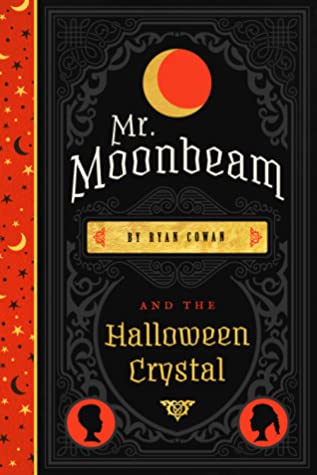
My career as a teacher inspired me to write Mr. Moonbeam and the Halloween Crystal.  I wanted to write a book about the difficulties of teaching and present Sloan Moonbeam as a hero/teacher!  

Halloween inspired my book.  I love Halloween, so I wanted to write a fun, spooky Halloween story that people could enjoy every fall.    

3) What theme or message do you hope readers will take away from your book?  

I hope that young people and adults who choose to read my story reflect afterwards on the complexities of teaching and the sacrifices teachers make for the communities they serve.  Perseverance is a big theme throughout the book.  With guidance and support from Mr. Moonbeam, Elliott learns to believe in himself and improve his magic.  I hope that kids will enjoy Elliott’s success and see him as an inspirational character for their own lives.  

Halloween is presented as a magical time of year – not a gory, macabre event.  I think that is important too.  As a society, we need to bring innocence and magic back to Halloween.     

4) What drew you into this particular genre?  

I was inspired by a cartoon I used to watch as a child called, He-Man and the Masters of the Universe.  The He-Man cartoons were written with action, excitement, and magic, but they were also written to teach kids important lessons.  I wanted to create a magical world with magical beings and adventures that also taught kids valuable lessons similar to the He-Man stories.    

5) If you could sit down with any character in your book, what would you ask them and why?  

I would also ask Elliott to predict where he thinks he’s headed in the series… 

I would ask Sloan Moonbeam for his advice on how to make the stories even better!  

6) What social media site has been the most helpful in developing your readership? 

Facebook!  I love my Facebook fans.  They always support me.  

7) What advice would you give to aspiring or just starting authors out there?  

Give your manuscript to a few people you trust and ask for their honest opinion before publishing.  Then, make changes if you need to.  I’m new to this, but I believe it is good to hear the viewpoints of others.  I also think it is good to step-away from the project from time to time.  For me, writing should be a combination of work and enjoyment.  I get my best ideas when I walk 10,000 steps!    

8) What does the future hold in store for you? Any new books/projects on the horizon? 

 I am busy planning and writing the sequel to Mr. Moonbeam and the Halloween Crystal tentatively titled, The Legends of Moonstone.  I would also like to publish my collection of poems.  

I am hopeful that my books will make a difference in the world of children’s literature.  ☺ 

Advertisements

About the Author

Ryan Cowan grew up in a small town called Middleport, Ohio. He currently lives in Hawthorne, CA. As a teacher with almost 20 years of experience, Ryan has taught all grades from K-6th. He currently works as an assistant principal for the Los Angeles Unified School District.

Mr. Moonbeam and the Halloween Crystal is his first children’s book. A magical story with complex themes, Mr. Moonbeam and the Halloween Crystal highlights the difficulties of teaching while also chronicling the important problem solving relationship between a teacher and his student. A sequel is currently in the works.

Ryan has degrees and/or credentials in education from the following universities: Marshall University (BFA Music Theory), UCLA (M.Ed. Urban Education), California State University Los Angeles (Multiple Subject Teaching Credential), and California State University Dominguez Hills (Administrative Services Credential).

Interview with Author Cat Rambo

 1) Tell us a little bit about yourself. How did you get into writing?

My family always assumed I would be a writer for two reasons. One is that I was an early and extremely avid reader. My babysitter Bernadette started reading The Hobbit to me when I was in second grade and I got so caught up in Bilbo’s adventures that I started sneaking chapters in between babysitting visits — and then got my grandmother to buy me the trilogy. She was always happy to buy me books, because of the second reason my family thought I’d become a writer: she was a writer herself, and wrote a number of young adults sports novels as well as a mystery. She often brought me books that had been signed to me by the author, because she’d met them at book conferences. One of those books, which was a kid’s book about creative writing called Turn Not Pale, Beloved Snail by Jacqueline Jackson, I read over and over. It had a suggested reading list at the back that I devoted myself to reading every item on as well. I’ve still got the book on my shelf.

Advertisements

2) What inspired you to write your book?

With this book, it was because Harry came and asked if I would come play. Good collaborations are always a joy, challenge, and learning experience — hopefully to a somewhat similar degree — and this was certainly one.

It was particularly challenging because I was writing with two amazingly talented co-writers! Not only that, but they gave me wildly dissimilar acts one and two for me to write a third act from. I had to spend a week or so just thinking about how I wanted to handle it.

At the same time, this project came with yet another challenge, which was to write a book that (hopefully) helps people see how much danger America is in if we don’t vote in this election — not just at the national but the local level — and continue to push back when the forces that have weaponized hatred, racism, misogyny, and other fear-based drives to put themselves in power try to extend their hold even farther. I can’t overstate this. While I don’t think the events we’ve portrayed will happen, I fear less entertaining ones will, and that they will kill America as we know it in the process. Actually, they’re trying to kill it right now.

Wow, that started lighthearted and skewed serious fast. But these are serious times.

3) What theme or message do you hope readers will take away from your book?

I’ve been talking about this a lot lately, and I’m going to take the liberty of quoting something I said in my most recent newsletter: As we come into these final days before the election, you will see unprecedented efforts to spread mistruths, to distract and confuse, and to divide us. Stay strong and focused. Maintain your own health and take a breather when you need to. Factcheck before you spread information. Encourage and enable those on the front lines of this fight.

And be kind. Be loving. Be generous and honest and open in your vulnerabilities, because in these days, that is a rebellious act. Be gentle when you can and fierce when you need to be. Know that you are loved. Know that we are all in this together.

4) What drew you into this particular genre?

I have always loved escaping into other worlds! Not just Middle Earth but later Narnia and Pern, Perelandra and Barsoom. In high school I started playing games at a local book and game store and wallowed happily in fantasy and science fiction from there as well as from my local library. That was the 70s, and so I read a lot of New Wave as well as the classics. Lots of Michael Moorcock, Andre Norton, Fritz Leiber… so much great stuff! I also babysat for a family that happened to have The Science Fiction Hall of Fame on their bookshelf and so I read that a number of times.

5) If you could sit down with any character in your book, what would you ask them and why?

I’d ask Natalie why they followed their friend into the heart of darkness, Kansas City, because I think there’s another story lurking there.

6) What social media site has been the most helpful in developing your readership?

I enjoy Twitter and I’ve made a lot of connections through it, but social media is certainly a double-edged sword for writers in that it provides a pretty alluring form of procrastination! I actually wrote a book on writers and online presence a few years back (it’s due for an update) and so I try new platforms when they come out, and have a presence on most of them. I would say writers should find one that they enjoy using and go with that. If you’re having a good time, it shows through. If you’re tweeting out of a sense of duty and not having fun, that also shows through.

7) What advice would you give to aspiring or just starting authors out there?

Don’t get discouraged. Butt in chair and writing is the best thing you can do. I sometimes suggest that people look at writers who are where they would like to be in 3-5 years and see how they got there. But the most important thing is the writing. Unless you’re doing that, you have nothing to sell.

8) What does the future hold in store for you? Any new books/projects on the horizon?

So much stuff! I just turned in Exiles of Tabat,  the third volume of my fantasy series, the Tabat Quartet, and am about to start the last book of that, . I’ve also got a space opera, You Sexy Thing, coming out with Tor Macmillan next year that is the start of a series that I am super stoked about and I’m finishing up book 2 of that, which is tentatively entitled Devil’s Gun.. I’m also editing a science fiction anthology, The Reinvented Heart, which will come out next summer, and continuing to produce serial fiction through my Patreon. So lots of new stuff, all the time. 🙂

Advertisements

About the Author

Cat Rambo is a prolific science fiction and fantasy writer of short stories. Her two hundred plus stories have appeared in many anthologies and magazines including Asimov’sClarkesworld, and Tor.com.

She has been nominated for the Nebula and the World Fantasy Award, and been a finalist for the Million Writers and the Compton Crook Awards, as well as been on the Locus Recommended Reading List.

Cat was the co-editor of Fantasy Magazine from 2007 to 2011 and is a past President (two terms) of the Science Fiction and Fantasy Writers of America (SFWA). She lives and teaches in the Pacific Northwest.

Interview with Author Sea Gudinski

1) Tell us a little bit about yourself. How did you get into writing?

     I’ve been writing for as long as I can remember. As a means of expression, storytelling has always far surpassed any other creative outlet I’ve encountered and has allowed me to explore both myself and the world around me. I first became enamored with the idea of being an writer at ten years old and began seriously pursuing my career as an author at that time. During the intervening years I have considerably refined my craft, dedicating my focus to historical fiction and examination of the human condition—the forces that make us who and what we are, those tenants of experience that are perennial, and the merits and follies that shape our species’ journey toward self-actualization.

2) What inspired you to write your book?

     Both of my parents lived through the 1960s, and I grew up listening to both the music and the stories of the era. My father was a musician as well as a soldier in the Vietnam War and his accounts of the decade and the counterculture always deeply fascinated me as a child. While researching for an earlier novel set in the same period, I read a book called The Electric Kool Aid Acid Test by Tom Wolfe. In addition to defining the genre we now called ‘new journalism’ Wolfe’s work recounted the escapades of Ken Kesey, a major figure in the counterculture of the 1960s. I was completely captivated by the book, both stylistically and comprehensively—and read it twice before I realized that the author had not actually been present for any of the events he recorded. The level of immersion that Wolfe provided to readers in his work inspired me to write a novel in which I could transport readers back into time and present to them an objective examination of the era with both the wisdom of hindsight and the intensity of firsthand experience.

Advertisements

3) What theme or message do you hope readers will take away from your book?

     My intent behind 1969 was to recapture the spirit of that time half a century ago and preserve for history a record of the message, meaning, and legacy of the era, as well as to provide an entertaining, accurate, and objective perspective of the decade that could be enjoyed by those who lived through it as well as those who learned about it in school.     

     To a great degree, the passion and intensity with which I researched and wrote 1969 was due to the fact that I felt that there was something extremely important to be learned from that era of human history—something deep and instinctive that eludes most academic accounts and can quite possibly be swallowed by the gaping maw of time. The spiritual values that were embraced by so many during that time prompted a resurgence of raw humanity that was unprecedented in our recent history and so greatly impacted those who experienced it and the future they thus created that it is criminal to let its influence be lost. I wanted to capture and convey that to readers so that they have the opportunity to be enriched by those values and experiences that have sharped our world today in a more personal and firsthand way.
     Most importantly, I wanted all readers to be able to take something away from the story that stays with them long after they’ve closed the covers. Books have shaped my perspective immensely, and some of the most influential pearls of knowledge in my life have been conveyed to me through literature. Whether it’s simply a fact about the time that they hadn’t known before, or a quote they find inspirational, I’d be greatly humbled if everyone who reads it can say that they learned something from it—either about the time or about themselves.

4) What drew you into this particular genre?

I have always loved history—and as the old cliché says, truth is certainly stranger than fiction, so there is no shortage of inspiration. Many times when I tell people that I write historical fiction, I am greeted with an interesting reaction. “Boy, that’s a lot of work, why don’t you leave the historical bit to the biographers and textbook writers and just write pure fiction,” is a response that I receive quite often. However, I continue to pursue this genre because I believe there is a great deal of value inherent in it. As every history teacher always urges at the beginning of the school year, history is extremely important. Our time and every single one us living in it are the latest products of millions of years of history. Each new day is carved under the shadow of yesterday in the light of our hope for tomorrow. Our environment, society, and culture are forged and shaped by memories, some more recent than others. I feel that by understanding the struggles and triumphs that defined the lifetimes of our predecessors, we can understand more about ourselves and in turn better our own lives and the lives of future generations.

5) If you could sit down with any character in your book, what would you ask them and why?

I really enjoyed thinking about and answering this question. As is the case with most authors, when I develop characters, their backstories are fully fleshed out—even more so than is delved into within the context of the storyline. In this way they become real. It makes their actions, their dialogue, and their expressions far more consistent. Therefore, there really isn’t really anything that I would need to ask one of my characters in terms of their past that I am not already abreast of as the author. However, because 1969 does not have a definite ‘ending’ per sae, I would be quite interested in sitting down with my narrator, Rhiannon, after the novel ends and discovering what happens. I always ask readers their take on how they think the story develops following the final page, but in all honesty, even as the author, I do not know myself. And as several years have passed since I’ve concluded writing 1969, I wonder how Rhiannon’s life decisions would have stacked up against mine and how the profundity and self-discovery that she underwent as a youth transformed her life as she continued on her journey to adulthood and beyond.

6) What social media site has been the most helpful in developing your readership?

Facebook has been by far the most instrumental in gaining traction and exposure. Due to the fact that my novel is set in the recent past and delves into Woodstock and other defining events as well as the music of the late 1960s, I was able to introduce my work to a number of groups of likeminded individuals dedicated to sharing and discussing this era. I feel it is the most accessible social media site, especially for the older generations who are the target audience for my work, and offers the most opportunities for advertising and networking.

7) What advice would you give to aspiring or just starting authors out there?

There are two pieces of advice that I would offer an aspiring author. The first would be never give up. The process of publication is extremely daunting. There are likely more scams and frauds aimed at authors than there are in just about any other field—so be cautious, be attentive. Do not let the excitement of future success detract from your vigilance. Secondly, stick to it. There are many disappointments in publication, and if you are looking to become an indie or self-published author, you must realize that writing the book is the easiest part of the process. During and after publication, not only will you be an author, you’ll be your own publisher, agent, marketing team, receptionist, accountant, etc. Your hobby WILL quickly become work—it will constantly lead you out of your comfort zone and at times it will be frustrating and exhausting. If you do not have the time or the energy to dedicate to marketing your work after it is published, do not self publish; instead, pursue traditional publication—it may take longer and result in more rejection, but you will not be saddled with all the procedural work that goes on behind the scenes in the life of an author. Self-publishing is a fantastic alternative that allows you a great deal of creative freedom, but it is not the best option for everyone, so choose your method wisely!

Advertisements

8) What does the future hold in store for you? Any new books/projects on the horizon?

Due to the fact that I have been writing prolifically for over a decade but only became a published author last year, I have an imposing backlog of work that will keep me busy for several years to come. I recently created my own publishing imprint, Art Of Telling Publications, and in due time will be releasing a second edition of 1969 as well as all five of my previously written novels. More immediately, I have a book of poetry and short prose, A Collection of Words that will be published in the fall of 2020 and a new historical fiction novel that is in the works!

For updates on new releases, deals, and giveaways follow me on social media!

Facebook: https://www.facebook.com/SeaGud/
Twitter: https://twitter.com/seagudinski
Instagram: https://www.instagram.com/sea_gudinski/