Tell us a little bit about yourself. How did you get into writing?
I’ve loved writing ever since I was a little girl, but it wasn’t until my late twenties that the desire to put pen to paper again became strong enough to focus on it.
Advertisements
What inspired you to write your book?
The concept of déjà vu has always fascinated me, especially in relation to old places and buildings. That’s how the original concept formed—a place you feel in your bones know, yet you’ve never been there. It grew darker from there!
What theme or message do you hope readers will take away from your book?
Curisoity killed the cat? Ha ha! Probably that things aren’t always as they seem, and that life—and time—aren’t black and white concepts.
What drew you into this particular genre?
I’ve held a fascination with all things paranormal since I was a little girl, so it comes naturally as an adult to write about other worldly things.
If you could sit down with any character in your book, what would you ask them and why?
I would sit down with Mena. She’s such a complex character that you don’t really get to see a lot of beyond Camille’s perception of her. I would ask her if she had any regrets, or, given what she now knows about the Manor and her family line, would she do everything exactly the same?
What social media site has been the most helpful in developing your readership?
Hmm, I don’t know that one has really garnered more readers than the other. Though twitter is certainly a great platform for connecting with the writing community as a whole.
What advice would you give to aspiring or just starting authors out there?
Don’t waste time perfecting your draft. It’s okay to write rubbish the first time around, just get the story down. That’s why we edit! Obtain as much constructive feedback as you can, but also trust your instincts. Most importantly, do it for the love of it!
Advertisements
What does the future hold in store for you? Any new books/projects on the horizon?
I’m working on switching to writing as a full-time job which is so exciting. I’m in the process of querying my next book, working on a serial and have three other novels in the plotting stages. I’m keeping busy!
Liz Butcher resides in Australia, with her husband, daughter, and their two cats. She’s a self-confessed nerd with a BA in psychology and an insatiable fascination for learning. When she’s not writing or spending time with her family, Liz enjoys road trips, astronomy, music and knitting.
1) Tell us a little bit about yourself. How did you get into writing?
I grew up in the Midwest, an imaginative but rather solitary child and from the time I could write, I did. Much of it was nonsense but I didn’t care. Later I wrote stories and articles. After college, life happened (as it tends to do). It was years, after early retirement, that I picked it up again. I do it because I love it and because it seems a shame to keep all the crazy characters running around my head to myself.
Advertisements
2) What inspired you to write your book?
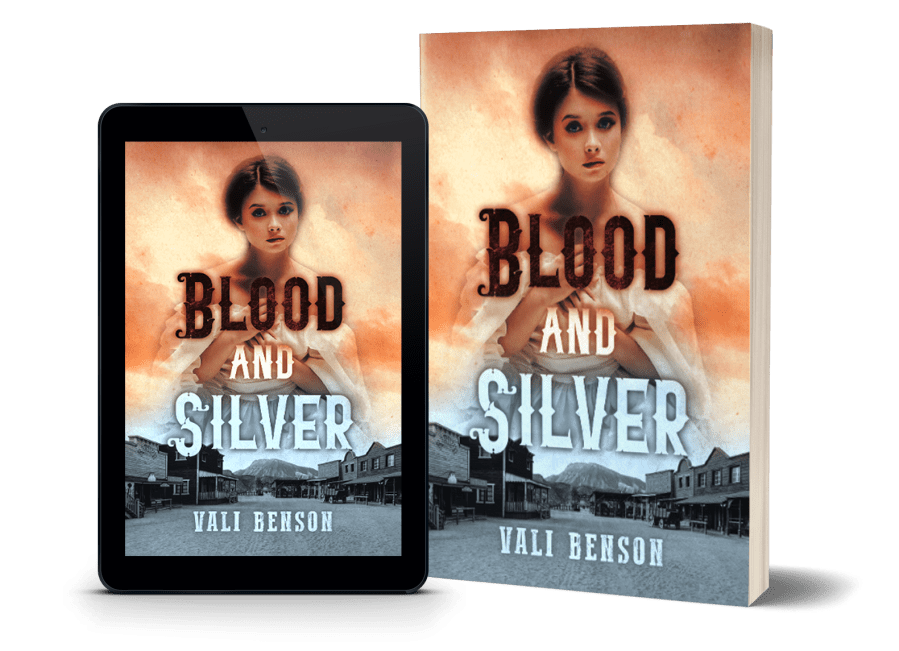
My new book, “Blood and Silver”, was inspired by my many visits to Tombstone, AZ. We live less than an hour away and I became increasingly curious about what was now a town of thirteen hundred people. In 1884, Tombstone was a roaring metropolis and was the largest city between St. Louis and San Francisco.
3) What theme or message do you hope readers will take away from your book?
I hope my readers realize that you often have to ask for help to receive it. Also, that many issues which affect society presently are not new ones. Racism, for example, was a problem in the 1880s as it has been for thousands of years and continues to this day.
4) What drew you into this particular genre?
I am fascinated with history; from fiction, to non-fiction, to textbooks, to mythology. History is the world’s greatest teacher and it creates a perfect launch point for a writer’s imagination.
Advertisements
5) If you could sit down with any character in your book, what would you ask them and why?
If I could sit down with any character in my book, “Blood and Silver”, it would be China Mary. I would love to hear about her life in her own words. But China Mary was an actual person so as far as a fictional character, I would like to talk to Mai and find out what she thinks of her new friends and their crazy western ways.
6) What social media site has been the most helpful in developing your readership?
I would say that Facebook has been the most helpful in developing my readership because it allows me to reach a specific demographic. It also allows me to cast a wide net to people who are strictly interested in the written word.
7) What advice would you give to aspiring or just starting authors out there?
My advice to anyone who wants to write a book is to ask yourself if you have a passion for writing. If you do, sit down and write, write, write! There is no magic formula. You have to just have to do it. You have to determine where you want to take your reader and put words on the page until you arrive at your destination.
8) What does the future hold in store for you? Any new books/projects on the horizon?
I have two more books in pre production right now, but first I am planning a sequel to “Blood and Silver” for my many fans who love the book.
Advertisements
About the Author
Vali grew up in the Midwest. She now lives in Tucson with her husband, two sons and grandchildren.After graduating from the University of Illinois, Vali started and sold two successful businesses before she decided to pursue her real passion of writing. She published several articles in a variety of periodicals, including History Magazine before she decided to try her hand at fiction. In April of 2020, Vali published her first novel, “Blood and Silver”. That same month, she was also made a member of the Western Writers of America.
1) Tell us a little bit about yourself. How did you get into writing?
I think rather, writing got into me. At school I found writing a good way of expressing my imagination, while reading showed me how to do it. My father was always one for good speech. He taught physics, but he told his pupils that all they knew about physics was worthless if they couldn’t express it in English.
2) What inspired you to write your book?
Two huge literary influences on me as I was growing up were JRR Tolkien and CS Lewis. Of course they have a lot in common, not least that they worked together at Oxford. And also they have this: an imagination to create other worlds – many other worlds in Lewis’ case, and worlds where some sort of passage between is, rarely, possible.
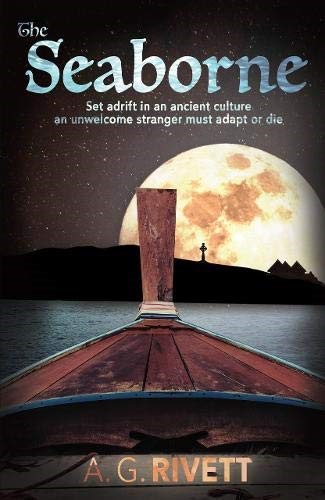
Placing my own new world in a Celtic setting I blame on the last holiday my first wife, Janice, and I had together, on the west coast of Ireland, maybe twenty years ago. The untamed landscape and rugged coast; the self-contained, straightforward nature of the people; the transient weather. I had several chapters written – later to be torn up – long before I moved to the croft on Scoraig.
3) What theme or message do you hope readers will take away from your book?
If nothing else, I hope people will gain a glimpse that the prevailing materialist world-view is very limited: that there is so much more to life. Organised religion has done us no service in this regard, with a quite undue emphasis on rigid dogma and rules: dogmas that are too often taken too literally, causing many intelligent people to reject spirituality en bloc.
I don’t apologise at all for the spirituality in Seaborne. Not only is it appropriate that such a people would have a highly developed spiritual sense, but also this is so much what I want to express.
4) What drew you into this particular genre?
Mostly, laziness. A fantasy genre means that you can invent your own world, and needn’t be too tied down by research. The only catch is that if you want your world to be believable, you find you then have to research what a parallel culture in our own world would look like, and make your world something like that. I take my guidance from Jill Paton-Walsh’s Knowledge of Angels, set on an island ‘somewhat like Mallorca, but not Mallorca.’
Advertisements
So I had to do a fair amount of research into what life was like in the eleventh century on the Western Isles, and I have Cathy Dagg, a former neighbour and archaeologist, to thank for much of that. Among many other points, she picked out that houses on the Western Isles in the eleventh century didn’t have the chimneys that I had alluded to. Of course I could just say, for instance, that in my world they do; but every time you say that before someone who knows otherwise, you lose some credibility and distance yourself further from our world, the one that you want to speak to.
5) If you could sit down with any character in your book, what would you ask them and why?
I thought a lot about this question: which character? There are many candidates. Eventually I settled on my hero, John (or Dhion). I think I’d like to ask him, maybe a few years after the book ends, ‘Do you think you made the right choice? Or have you thrown away a life that you could have returned to and lived it with a deeper wisdom, long, comfortable and secure. Have you thrown that away for (as Conchis in John Fowles’ The Magus puts it) ‘the satisfaction of a passing sexual attraction’?
The John whom we first meet, running away from his failures, could not have answered that question, and felt he didn’t have a choice. But as the story progresses he grows in depth: he becomes Dhion.
I think he would answer that this is no passing sexual attraction. He is not choosing Shinane instead of Helen: in the end he is choosing the self he has come to be with Shinane, and with that a world that seems more real than the one he left behind, in which he had felt driven by the demands of his work to betray everything else, and everyone else, of value in his life. It is a choice between two world views. I think of Archbishop Thomas A’Becket in TS Eliot’s Murder in the Cathedral. His first three tempters offer him material advantage in various ways, but he knew, as Dhion knows now, that there is more, so much more, than mere materialism.
Will Dhion regret his choice when he lies dying? I think he might, for more than a moment. But, as Shinane says of herself, who knows what he will think in the future. The point is to live most authentically, now. I think of Robert Jordan in Hemingway’s For Whom the Bell Tolls as he lies dying, casualty of the Spanish Civil War. And yet, with Maria, for a fleeting few hours, he had known something that Pilar, the wise older woman of the novel, says most people never experience. Who is to say that wasn’t worth it.
6) What social media site has been the most helpful in developing your readership?
For six months or so, while Seaborne was coming up to launch and after, I kept a Facebook page going, and this was helpful in building up an audience for a book-launch tour. But I’m not someone who engages with social media, or enjoys it, and I’ve totally ignored my Facebook page for a few months now. There always seems to be something I’d much rather be doing, out in the field with my hands – or getting on with my next novel.
However, my wife, Gillian Paschkes-Bell, and I do have it in mind to set up a website to include the books we write or edit, with an added blog content about what we’ve been reading or thinking. Probably next year, when we’ve finished the self-build we’re currently working on. Perhaps then I can re-awaken my Facebook page and link it in with that.
7) What advice would you give to aspiring or just starting authors out there?
Study English grammar, syntax and punctuation, and cultivate a deep enjoyment of the sound of language. It’s only when you thoroughly understand the rules of good writing that you can begin to break them, appreciating the cost of doing so.
Study people – their appearance, mannerisms, ways of talking, unconscious leaks of feeling in facial or bodily expression.
Play with ideas – the ‘what if?’ sort of ideas. What if the world was flat? If the Russian Revolution had never happened? If the Civil War had been won by the South? If there really are fairies at the bottom of your garden? Or what would it be like to be an unmarried mother in the Puritan colonies back in the seventeenth century? A fisherman in the westernmost parts of the British Isles of the eleventh century?
And read. See how the experts do it. Read anything but trash.
8) What does the future hold in store for you? Any new books/projects on the horizon?
I think I’m clear about what the future doesn’t hold for me: fame, wealth, best-sellers, Booker Prizes. I write because I love writing and I love the worlds I can create with my writing, and I’m grateful that enough people have appreciated what I’ve written, first to publish it and then to purchase the book and read it – and say they found the readingworthwhile and make complimentary comments about it after.
I want to complete the trilogy of which Seaborne is the first book, and I have a first draft completed of Book II; but I alsohave lots of other things I want to do. I’m an inveterate fixer – I can’t stand anything that doesn’t work without taking it to pieces and putting it together again. Between us, Gillian and I have built our house – with a lot of help from people who actually knew what they were doing – and there are still many things both inside and outside the house that need finishing. And a whole eco-system that needs encouraging out there on the field where we have the privilege to live.
Finally, I am myself a project that needs finishing – and probably won’t be finished in this lifetime. I have a lot of flaws, and side-shoots that need to be pruned away, and branches that must be encouraged and brought to fruition. When all’s said and done, that’s the most important project for each of us – and the most exciting.
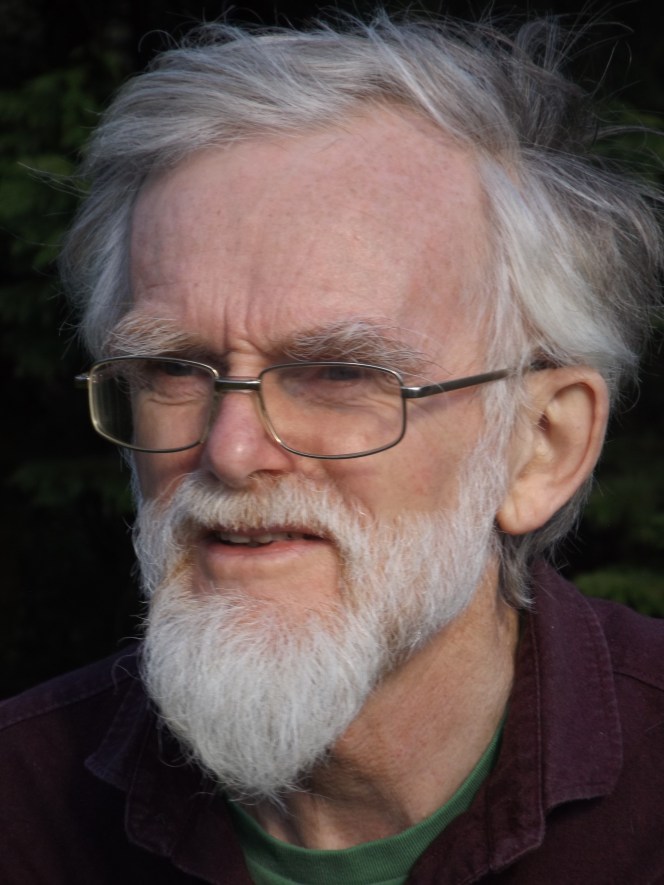
Andrew (A.G.) Rivett was born in London. He has lived in England, Nigeria, Scotland (where The Seaborne was drafted) and now in Wales.
The inspiration for The Seaborne, his debut novel, came twenty years ago on holiday in Ireland, at which time he wrote some opening chapters, relics of which remain in the published book. The Seaborne, the first book of the planned Island trilogy, was published in November 2019.
Tell us a little bit about yourself. How did you get into writing?
My mom got me into reading sci fi and fantasy in elementary, and by the end of third grade I’d read the Lord of the Rings cover to cover. I remember my teacher saying I read at the twelfth grade level LOL…
I always wanted to do what those authors did – painting whole worlds that other people could escape into. Pern, Trantor, Majipoor… so many pretty worlds to visit. Only there were no gay characters – no one like me. Well, there were those green dragon riders…
So I decided to write sci fi and fantasy that included a real diversity of characters.
Advertisements
What inspired you to write your book?
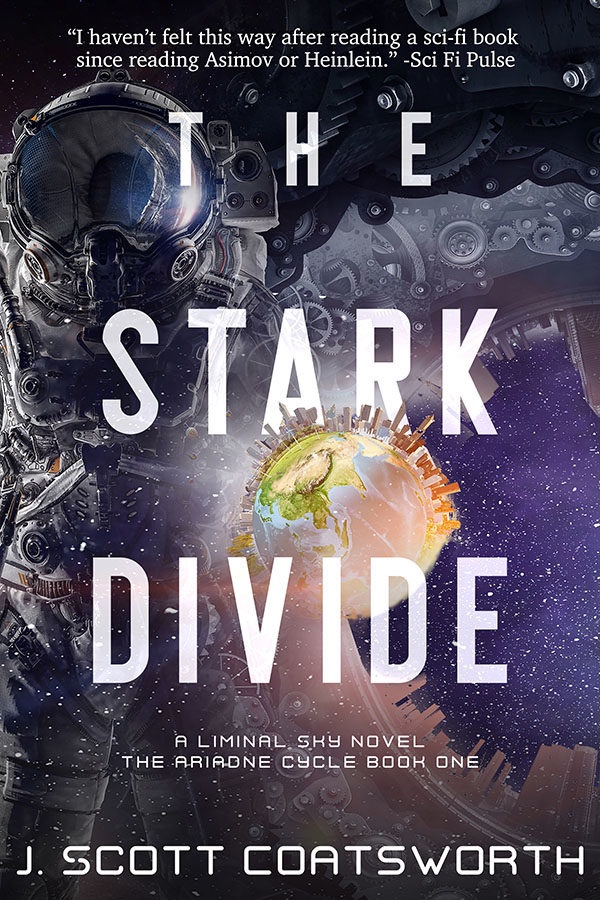
I wrote my first novel just out of high school, and it will NEVER see the light of day. LOL… But my second one did get sent out to ten big NYC publishers. It was a fantasy/sci fi hybrid story about a world called Forever, and it was roundly rejected. I kinda stopped writing for a couple decades. When I finally ventured back into the waters, I picked up the story, and decided to tell the origin tale of Forever. And so “The Stark Divide” was born.
What theme or message do you hope readers will take away from your book?
The main theme that runs through book one is redemption. This is especially true for Ana’s journey from ship’s doctor to villain to almost godlike status. But the book is also about hope – that somehow we will find a way to go on, even if everything seems lost. That’s a recurring theme in a lot of my work.
What drew you into this particular genre?
My mom’s sci fi shelf. She was a member of the Science Fiction book club, and new sci fi and fantasy books arrived at our home with an alarming regularity. She has these big shelves in what we called the spare bedroom, and they were double-stacked with her books. After I finished Lord of the Rings, I devoured Pern and then the Foundation, and just about everything else she had. I was hooked.
If you could sit down with any character in your book, what would you ask them and why?
Oooh. I’d ask Jackson what he found out about the Divine. He was the first religious character I included in one of my books, and he was less so than his wife Glory. But he was also the first to make the leap to seeing the Divine in the bio minds that ran the Dressler and eventually all of Forever. I’m a bit of an agnostic myself, but I remain open to the possibility of something greater than us, and this was my way of exploring that possibility.
What social media site has been the most helpful in developing your readership?
Facebook. I’m on Twitter and Instagram, but I’ve never been able to reach the numbers of folks in the way I can with the site. That said, we have a bit of a love-hate relationship. I don’t like a number of their company policies, and have been in Facebook jail a fair number of times. But at the moment it’s the best way to reach people in the way that I need to grow my readership.
I also like Prolific Works, specifically for growing my email list.
What advice would you give to aspiring or just starting authors out there?
Stick with it. I wish I had never stopped. At World Con in 2018, I attended a panel with an author who started when I did but never stopped, and who now has an amazing career as a sci fi/fantasy author. It was a wake-up moment, but despite my best efforts, I haven’t been able to build a time machine yet. So I have to make the best of where I am now.
What does the future hold in store for you? Any new books/projects on the horizon?
So many things. I am currently shopping my novel Dropnauts to a bunch of agents with an eye to finally snagging one of those NYC publishers. It’s set in the same universe as The Stark Divide, and tells the tale of what happened back on Earth after the Crash.
I’m also writing a new novel tentatively titled “Twin Moons Rising.” It’s set in the same universe as “The Last Run” and is another fantasy/sci fi hybrid. My short story “Tharassan Rain” (out on sub to a number of spec fic mags) is also set on this world.
And I’m subbing a bunch of other shorts as well.
Once I finish this book, I’ll probably return to Liminal Sky (The Stark Divide’s universe) and start telling the “middle” stories – the ones between the Ariadne Cycle (The Stark Divide, The Rising Tide and The Shoreless Sea) and the Oberon Cycle (Skythane, Lander, and Ithani).
Thanks so much for having me on your blog!
Advertisements
About the Author
Scott spends his time between the here and now and the what could be. Ushered into fantasy and sci-fi at the tender age of nine by his mother, he devoured her library of Asimovs, Clarkes, and McCaffreys. But as he grew up, he wondered where the gay people were in speculative fiction.
He decided it was time to create the kinds of stories he couldn’t find at Waldenbooks. If there weren’t queer characters in his favorite genres, he would write them himself.
His friends say Scott’s brain works a little differently–he sees relationships between things that others miss, and often gets more done in a day than most folks manage in a week. He transforms traditional sci-fi, fantasy, and contemporary worlds into something unexpected.
He also runs Queer Sci Fi and QueeRomance Ink with his husband, Mark, sites that bring LGBTIQA communities together to celebrate fiction that reflects queer life and love.
Tell us a little bit about yourself. How did you get into writing?
I think I’ve been writing since the day I learned how letters combined for words. I had quite a collection of poetry before I graduated high school. Later, in order to support myself as a single parent, I took contract work with Funk and Wagnalls Encyclopedia editing down articles for their year book. They sent me galleys enabling me to be home with my children. Years later, while living in Mexico I was hired by Mexico This Month, an English language monthly tourist magazine, to do interviews. From then on, I continued freelancing to supplement my income as an English Second Language teacher.
Advertisements
What inspired you to write your book?
I met my second husband in Mexico. We talked about a sea voyage together. The idea of writing about it was part of my motivation for setting sail with him. Life at sea was harder and more precarious than I could have anticipated, and I didn’t have the mental space to do it. Some thirty years later he asked me if I’d sail with him again—this time from Tunisia to Tahiti. I told him I’d think about it, and wrote a childhood friend in Belgium about his offer. She mailed me all the letters I had written her during those years. Reading the letters triggered insights I didn’t have back then. I wanted to share my unique story and all I had learned from it. Had I written Seeker at the time, it would have not gained from the expansion that hindsight brought.
What theme or message do you hope readers will take away from your book?
On one level Seeker: A Sea Odyssey is an adventure story filled with pirates, monsoons and raging seas. But it’s also a story of love, betrayal and forgiveness. I dealt with challenges and survival on many levels, healed wounds and found my voice. I hope readers can relate to my insights and find their own strengths through reading my journey.
What drew you to this particular genre?
In the sixth grade I had written the class poem for graduation, but it was given to another child to read as though it was her poem. I seethed at the injustice, and thought about other unfair situations I had seen. At that moment I decided I wanted write about them, so the world would know and put things right. I remember thinking I didn’t have enough life experiences to make a difference, and knew I’d have to grow up and experience as much of life as I could. I actually did that, and writing and sharing insights about what I have learned through life experience lends itself to memoir writing.
If you could sit down with any character in your book, what would you ask them and why?
I met many people at sea who had interesting stories—interesting pasts. Some traumatic or life changing experience caused them to drop out of society. One such character was Johnny. We first met Johnny in the Philippines and met up with him again in Cypress. He had been in Hitler youth, but was never deprogrammed after the war though many others were. At one point, he told us his father had denounced and stolen the property of a Jewish friend. His mother had a nervous breakdown over the event and never fully recuperated. He carried the burden of parents’ story, felt at home nowhere and drank too much. I’d like to ask him why he refused to be deprogrammed, preferring to carry guilt and needing to share this part of his family story with others. The writer in me always wants to know the interior conflicts that define character and motivate behavior.
What social media has been most helpful in developing your readership?
I’m a bit of a luddite, and don’t use much social media though I’m on Facebook, Instagram, and Twitter. Seeker: A Sea Odyssey has received good reviews and was shortlisted by the Quebec Writers’ Federation as the best first book for 2019. I’m hoping word of mouth, combined with readings and interviews will bring readers to the memoir.
What advice would you give to aspiring writers or just starting authors outthere?
Don’t give up. Rejection is part of the process. If you aren’t receiving rejections, you aren’t sending out your work. But don’t send indiscriminately. Research and know what each publisher or publication is asking for so that you pinpoint your market.
What does the future hold in store for you? Any new books on the horizon?
I’m working on a childhood memoir tentatively titled Genesis. It covers the period of my life from embryo to eleven years old. Research in the field of epigenetics is lending credence to the idea that trauma passes down through the genes. We come into the world innocent, but we carry family history from earlier generations. It’s a fascinating discovery, and I’d like to show how it relates to my childhood and how I believe it shaped my early development.
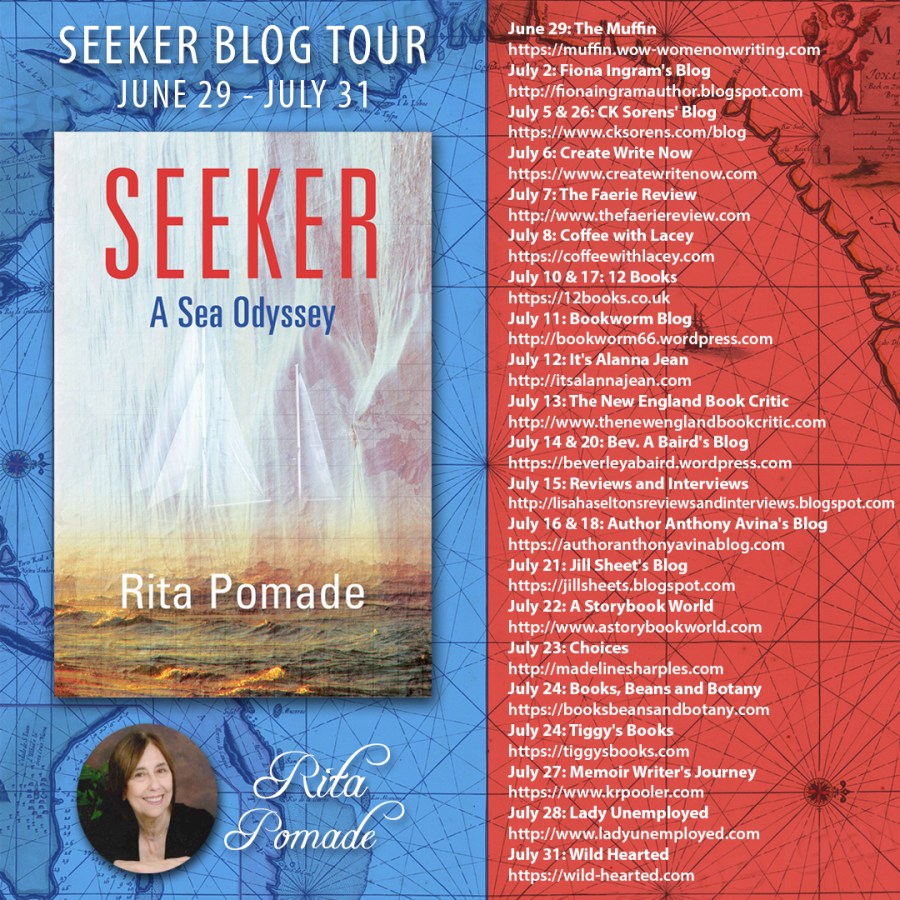
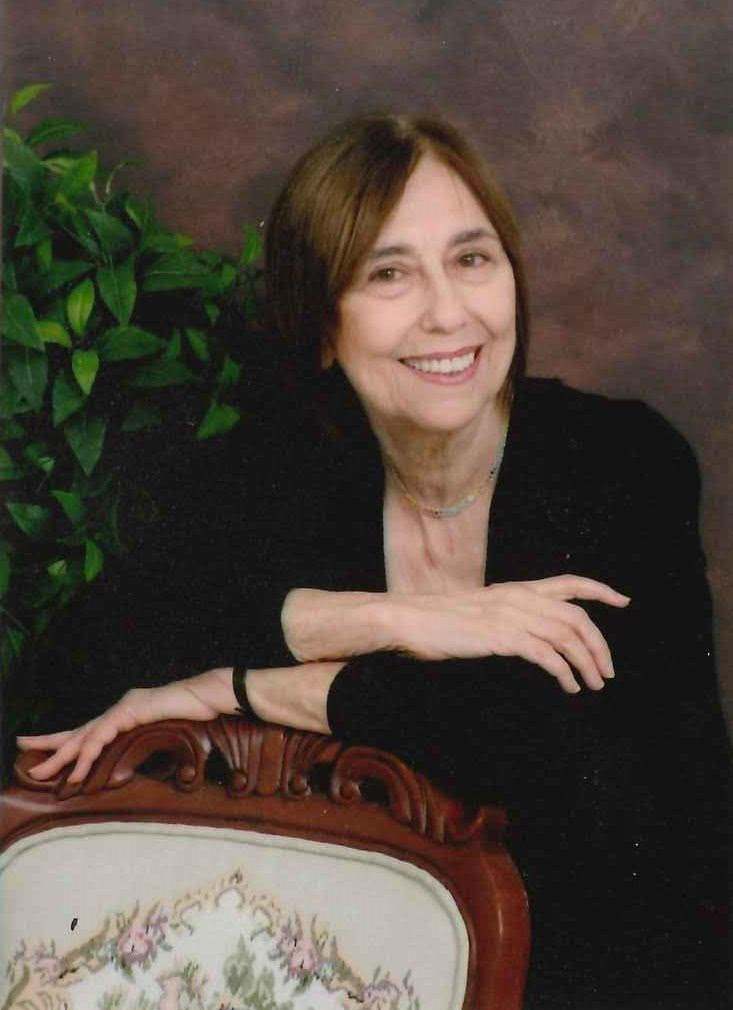
Rita Pomade— teacher, poet, memoirist—lived six years aboard a small yacht that took her from Taiwan to the Suez to Mallorca, dropping anchor in 22 countries. She and her husband navigated through raging monsoons, encountered real-life pirates, and experienced cultures that profoundly changed them. Seeker: A Sea Odyssey, published by Guernica Editions under the Miroland label tells her story.
Rita Pomade, a native New Yorker, first settled in Mexico before immigrating to Quebec. During her time in Mexico, she taught English, wrote articles and book reviews for Mexconnect, an ezine devoted to Mexican culture, and had a Dear Rita monthly column on handwriting analysis in the Chapala Review. In Montreal she taught English as a Second Language at Concordia University and McGill University until her retirement. She is a two-time Moondance International Film Festival award winner, once for a film script and again for a short story deemed film worthy. Her work is represented in the Monologues Bank, a storehouse of monologues for actors in need of material for auditions, in several anthologies, and in literary reviews. Her travel biography, Seeker: A Sea Odyssey, was shortlisted for the 2019 Concordia University First Book Award. .
Advertisements
— Blog Tour Dates
June 29th @ The Muffin
What goes better in the morning than a muffin? Grab your coffee and join us in celebrating the launch of Rita Pomade’s book Seeker: A Sea Odyssey. You can read an interview with the author and enter to win a copy of the book. https://muffin.wow-womenonwriting.com/
July 2nd @ Fiona Ingram’s Blog Visit Fiona’s blog and you can read a guest post by the author about how she could have enriched her journey at sea. http://fionaingramauthor.blogspot.com/
July 5th @ CK Sorens’ Blog Visit Carrie’s blog today and you can read her review of Rita Pomade’s memoir Seeker. https://www.cksorens.com/blog
July 6th @ Create Write Now Visit Mari L. McCarthy’s blog where you can read author Rita Pomade’s guest post about what she learned about herself through writing. https://www.createwritenow.com/
July 7th @ The Faerie Review Make sure you visit Lily’s blog and read a guest post by the author about cooking on a shoestring at sea. http://www.thefaeriereview.com/
July 8th @ Coffee with Lacey Visit Lacey’s blog today and read her review of Rita Pomade’s book Seeker: A Sea Odyssey. https://coffeewithlacey.com/
July 10th @ 12 Books Visit Louise’s blog and read her review of Rita Pomade’s book Seeker: A Sea Odyssey. https://12books.co.uk/
July 11th @ Bookworm Blog Visit Anjanette’s blog today and you can read her review of Rita Pomade’s book Seeker: A Sea Odyssey. http://bookworm66.wordpress.com/
July 12th @ It’s Alanna Jean Visit Alanna’s blog today and you can read a guest post by author Rita Pomade about the ten best traits you need for living aboard a yacht. http://itsalannajean.com/
July 14th @ Bev. A Baird’s Blog Visit Bev’s blog today and read her review of Rita Pomade’s book Seeker: A Sea Odyssey. https://beverleyabaird.wordpress.com/
July 17th @ 12 Books Visit Louise’s blog and read author Rita Pomade’s guest post discussing sailing myths. https://12books.co.uk/
July 18th @ Author Anthon Avina’s Blog Visit Anthony’s blog today and read his interview with author Rita Pomade. https://www.authoranthonyavinablog.com
July 20th @ Bev. A Baird’s Blog Visit Bev’s blog again and you can read author Rita Pomade’s guest post featuring her advice on writing a memoir. https://beverleyabaird.wordpress.com/
July 21st @ Jill Sheet’s Blog Visit Jill’s blog where you can read a guest post by author Rita Pomade about how her handwriting analysis skills made her a better writer. https://jillsheets.blogspot.com/
July 22nd @ A Storybook World Visit Deirdra’s blog today and you can checkout her spotlight of Rita Pomade’s book Seeker: A Sea Odyssey. http://www.astorybookworld.com/
July 23rd @ Choices Visit Madeline’s blog today and you can read a guest post by author Rita Pomade about the benefits of spending time abroad. http://madelinesharples.com/
July 24th @ Books, Beans and Botany Visit Ashley’s blog today where she reviews Rita Pomade’s book Seeker: A Sea Odyssey. https://booksbeansandbotany.com/
July 24th @ Tiggy’s Books Visit Tiggy’s blog today and read her review of Rita Pomade’s book Seeker: A Sea Odyssey. She’ll also be chatting a bit with the author! https://tiggysbooks.com/
July 26th @ CK Sorens Blog Visit Carrie’s blog today and you can read a guest post by author Rita Pomade about how she jumpstart her writing process. https://www.cksorens.com/blog
July 27th @ Memoir Writer’s Journey Visit Kathleen’s blog today and read her review of Rita Pomade’s book Seeker. https://www.krpooler.com/
July 28th @ Lady Unemployed Visit Nicole’s blog today where you can read a guest post by author Rita Pomade talking about stepping outside of one’s comfort zone. http://www.ladyunemployed.com
July 31st @ Wild Hearted Visit Ashley’s blog where you can read a guest post by author Rita Pomade about why she jumped at the chance to go to sea. https://wild-hearted.com/
1. Tell us a little bit about yourself. How did you get into writing?
I grew up in a place called Beebetown, Ohio, at the corner of four counties. When I was a kid, it had a lot of old buildings from the 1800s. I lived in an old converted schoolhouse with a well for water. The old blacksmith shop was across the street and used by the neighbor as a barn. Fields and horses were nearby, and a little creek to sail wood boats along was down a hill with a giant pear tree. My parents had plenty of animals to care for, and I would spend many hours drawing them into my stories. Though I struggled with dyslexia, it did not prevent me from being creative. So doodling in class was familiar, but with the help of a tutor and plenty of reading, I eventually gravitated towards highly imaginative works by Lewis Carroll, L. Frank Baum, Edward Lear, and others.
Advertisements
2. What inspired you to write your book?
The Goodbye Family and The Great Mountain, is the second novel in the Great Mountain series, about eccentric undertakers living in the Old Weird West. It follows Me’ ma and the Great Mountain that focuses on an Indigenous child named Me’ma who uses her traditional knowledge to battle a tyrant of the land. Shockwaves of this conflict are felt in the community of Nicklesworth, where the goodbyes have their business.
Back in 2009, my wife Valerie and I visited parts of the United Kingdom and later Paris. We always have had a morbid curiosity and interest in the Victorian era, spirit, and funerary customs. After all, my wife and I met at a Gothic club in 1996. So we visited as much of these places as we could, and I took to writing down ideas and a diary of our trip. On the streets of Paris, I began doodling the Goodbye family and their traits.
3. What theme or message do you hope readers will take away from your book?
The readers will find it full of laughs, adventure, and quirkiness that all together makes the Goodbye family so oddly unique. I will let the readers find their messages and takeaways from the book. I will say, though, that an underlying theme of my series is that you can fulfill your goals in life by being yourself and taking that first step outside the norm.
4. What drew you into this particular genre?
If the genre is Weird West, Gothic, Western, or Dark Humor, I suppose a lifetime of interest in it did the trick. However, I don’t think anyone of these quite describes what it is by itself. It’s dark, humorous, weird, and western. At one time, I thought Down West was a good moniker until people started calling it a Gothic Western, but then that sounds maybe too serious for the series? I’m not sure what to call it, but I guess a Western Gothic may be plausible. Now, what was the question? Oh yes, as a child, I wanted to be like Robert Conrad from the series The Wild Wild West and sought out every book I could on the subject of Native Americans and the Old West. I sometimes would wear a wool poncho to school and even made a Cowboy movie about the OK Corral in my early teens. I guess it all solidified for me with family trips visiting the Native American reservations, historic parks, Mexican American areas, and ghost towns in New Mexico, Colorado, Utah, and Arizona. I lived in New York City for a time but knew I had to be out west. My wife and I moved across the country, visiting many more of the same on our way, and landed in Los Angeles where I worked at the Southwest Museum of the American Indian/the Autry Museum of the American West while receiving a bachelors in Anthropology. Then after, I started a Native American film series with some friends. I now live across from the CBS Lot where they filmed many TV Westerns including, you guessed it, The Wild Wild West.
Advertisements
5. If you could sit down with any character in your book, what would you ask them and why?
What an interesting question. In my novels, there is one character that has appeared throughout, Frank Thorne, and we slowly understand his complexities. He will be unraveling more in my third novel, for better or worse. However, if I had a chance to ask him anything, I think I’d pass for fear of being shot.
6. What social media site has been the most helpful in developing your readership?
Unfortunately, social media comes and goes. So you have to be on the tip of just about everything to some degree. All platforms should go back to one site. For me, it is lorinrichards.com. Facebook has been around the longest for me, so I have invested more time in it than others. But around the corner will be something new, and like any company/brand, I’ll need to put on my glasses and look into it (all while sighing, of course).
7. What advice would you give to aspiring or just starting authors out there?
Just be yourself, don’t waste time, work routinely on your craft, explore new avenues, and find your niche. Once you find it, don’t take yourself too seriously and be open to accepting everyone as a potential reader.
8. What does the future hold in store for you? Any new books/projects on the horizon?
As mentioned, I am writing my next novel called Hollis Sorrow and the Great Mountain. It continues the story of Hollis Sorrow and Madeline Sage, whom readers that are familiar with the first book know their adventure to find Hollis’ old pals during the war is still ongoing. The story will take them into the sky world for answers. For fans of The Goodbye Family, I work daily on telling their stories through my comic series that appears on my social media and Tapas, a comic syndicate. Also, I am gradually putting together an animated series about their lives. I partnered with The Heathen Apostles for the series theme song.
Please visit lorinrichards.com if you’d like to learn more about my stories.
Advertisements
About the Author
Lorin Morgan-Richards is an author and illustrator, known mostly for his YA fiction. A fan favorite is his daily comic series The Goodbye Family about a family of eccentric undertakers living in the Old Weird West with their daughter Orphie who oversees the town of Nicklesworth as their sheriff. Richards writing career started in 2009, with his latest novel The Goodbye Family and the Great Mountain (2020) being his thirteenth release. In addition to writing and illustrating, Richards colorizes Old West and Victorian-era photography.
The Goodbye Family and the Great Mountain follows the lives of Weird West undertakers Otis, Pyridine, and their daughter Orphie. Pyridine is a witch and matriarch mortician, Otis is a brainless but bold hearse driver, and Orphie is appointed grave digger for her strength of twenty men. Through bumbling, Otis discovers his neighbors are turning into zombies, a mystery that is directly affecting their burial business. In their backyard cemetery, they travel to the underworld for answers and uncover a plot to surface the evil entities that would otherwise burn in the Lake of Fire, have risen again through oil pumps that are bottled up as a tonic medicine for the ground above. The tonic goes fast, and the host takes over the body when the body perishes. Can the Goodbyes hilarious gaffes and revelations plug up the works?
1) Tell us a little bit about yourself. How did you get into writing?
My father was an author of books on macroeconometrics, his field of specialty, and my great uncle had written a definitive volume on antique salt shakers, so the concept of writing a book was never daunting to me.
I had some great school teachers—particularly in the fifth and sixth grade, where it happened to be the same woman, although she was Miss Matthews the first year and Mrs. Jones the second!—and also in high school who were very encouraging.
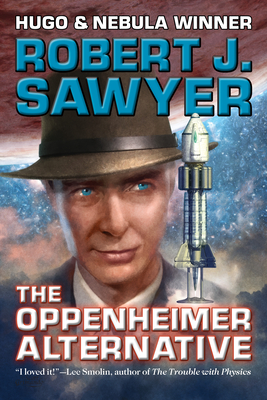
In fact, I’ve got a phone message on my answering machine right now from one of those high-school teachers, Bill Martyn, that I need to return. It’s been forty-one years since I graduated from high school, but he just called to say he’d loved my latest novel, The Oppenheimer Alternative.
Advertisements
2) What inspired you to write your book?
This is the 75th-anniversary year of the birth of the atomic age, with the bombings of Hiroshima and Nagasaki. It seemed like a good time to try to delve, as only a novelist can, into the inner lives of the people who were responsible for unleashing hell on Earth: Edward Teller, Leo Szilard, General Leslie R. Groves, and, most notably, the scientific leader of the Manhattan Project, the mercurial, tortured J. Robert Oppenheimer.
3) What theme or message do you hope readers will take away from your book?
The theme of not just The Oppenheimer Alternative but some of my 23 other novels, too, is that the world would be a far better place if the brightest people simply stopped making the things the stupidest people wanted them to make. No general, president, or dictator can make an atomic bomb—only geniuses could do that—and instead of saying nope, they dove right in.
The great irony is this: it’s arguable that, although Oppenheimer and others were salivating at the notion of an essentially unlimited budget—the spent two billion 1945 dollars, which is the equivalent of $28 billion today—to create the atomic bomb, the head of the German bomb project, Werner Heisenberg, knew the folly of letting a madman like Hitler have such a thing and so he may very well have deliberately failed to build one.
4) What drew you into this particular genre?
Well, “this particular genre” is one that actually I may well have created: hard-science fiction secret/alternate history.
My novel is a real, honest-to-goodness accurate and carefully extrapolated science-fiction tale built on sound science woven into the gaps about what we know really did occur between 1936, when The Oppenheimer Alternative begins, and 1967, when the novel ends. Nothing in it contradicts anything we know to be true, but the reader will be treated to what I hope they’ll consider a mind-blowing science-fiction tale as well as a heart-wrenching historical-fiction story.
Advertisements
5) If you could sit down with any character in your book, what would you ask them and why?
Perhaps surprisingly, it would not be my main character, the J. Robert Oppenheimer of the book’s title, but rather his erstwhile friend and then betrayer, Edward Teller.
Although ironically Teller wrote his memoirs and Oppie never did, it’s Teller—the man often cited as the principal inspiration for the title character in the movie Dr. Strangelove—who leaves me scratching my head.
Teller really said, “No amount of fiddling will save our souls” and he really did go to see his dying colleague, Nobel laureate Enrico Fermi, to, in Teller’s own words “confess his sins.”
But even with such apparent misgivings he just went right on pushing for bigger and bigger bombs—ranging in size from merely genocidal to ones that would trigger the extinction of most life on our planet—as well as shilling for Ronald Reagan’s fatally flawed Strategic Defense Initiative (“Star Wars”) until the day he died.
What the hell was Teller thinking? He was great with kids, often carrying candy for them in his pockets, and he loved his own children and grandchildren—and yet he was monstrous.
6) What social media site has been the most helpful in developing your readership?
Facebook, for a few reasons.
One: I’m a long-form writer—a novelist!—and so the character-count constraints of Twitter make it ill-suited for me.
And two, as all good writers know, the heart of good writing is revision: you can’t edit a tweet, and but you can go back even years later and correct typos or ambiguous phrasing on Facebook.
I long ago hit the hard-coded 5,000-friend limit Facebook has built into its architecture, but you can still follow me there—as 6,500 additional people do—and join in the daily lively discussions and debates we have there.
7) What advice would you give to aspiring or just starting authors out there?
In 1997, I came out of a deli in Los Angeles and saw Gordon Jump, one of the stars of WKRP in Cincinnati standing on the sidewalk, so I went up to him and said, “I’d just like to shake the hand of the man who uttered the funniest line in sitcom history.”
We chatted for a bit, and I asked what he was doing just hanging out in front of a deli. He replied a young wannabe actor had said he’d take him to lunch here in exchange for some advice about getting into the industry. I asked, “What advice are you going to give him?” And Gordon replied, “Don’t get into the industry.”
Seriously, this is an awful time to be a traditionally published author. In the thirty years I’ve been a novelist now, there have been enormous cost reductions for publishers—no more re-keyboarding typed manuscripts, no more sending page proofs by courier, instead of servicing thousands of small bookstore accounts mostly just servicing a few big ones, having authors do their own promotion via social media instead of publishers advertising their books, etc.
But every penny of those costs savings—every single one—has been kept by publishers, with none passed onto authors. Meanwhile, in addition to the production of print books for distribution to bookstores—the one thing publishers are good at—they also demand ebook rights, audiobooks rights, and they’re trying to get a piece of the film and TV action, too.
So, my advice is simply this: license your intellectual property as narrowly as possible and only let a licensee have rights to specific aspects of it that they have a great track record with, and make sure they’re making real money not just for themselves but for you, too.
8) What does the future hold in store for you? Any new books/projects on the horizon?
I’ve been asked to write a lengthy original audio drama, and I may, or may not, sign the contract for that; we’ll see. But really, the new books on my horizon right now are books that are new to me: I’m just catching up on my reading!
Robert J. Sawyer is one of Canada’s best known and most successful science fiction writers. He is the only Canadian (and one of only 7 writers in the world) to have won all three of the top international awards for science fiction: the 1995 Nebula Award for The Terminal Experiment, the 2003 Hugo Award for Hominids, and the 2006 John W. Campbell Memorial Award for Mindscan.
Robert Sawyer grew up in Toronto, the son of two university professors. He credits two of his favourite shows from the late 1960s and early 1970s, Search and Star Trek, with teaching him some of the fundamentals of the science-fiction craft. Sawyer was obsessed with outer space from a young age, and he vividly remembers watching the televised Apollo missions. He claims to have watched the 1968 classic film 2001: A Space Odyssey 25 times. He began writing science fiction in a high school club, which he co-founded, NASFA (Northview Academy Association of Science Fiction Addicts). Sawyer graduated in 1982 from the Radio and Television Arts Program at Ryerson University, where he later worked as an instructor.
Sawyer’s first published book, Golden Fleece (1989), is an adaptation of short stories that had previously appeared in the science-fiction magazine Amazing Stories. This book won the Aurora Award for the best Canadian science-fiction novel in English. In the early 1990s Sawyer went on to publish his inventive Quintaglio Ascension trilogy, about a world of intelligent dinosaurs. His 1995 award winning The Terminal Experiment confirmed his place as a major international science-fiction writer.
A prolific writer, Sawyer has published more than 10 novels, plus two trilogies. Reviewers praise Sawyer for his concise prose, which has been compared to that of the science-fiction master Isaac Asimov. Like many science fiction-writers, Sawyer welcomes the opportunities his chosen genre provides for exploring ideas. The first book of his Neanderthal Parallax trilogy, Hominids (2002), is set in a near-future society, in which a quantum computing experiment brings a Neanderthal scientist from a parallel Earth to ours. His 2006 Mindscan explores the possibility of transferring human consciousness into a mechanical body, and the ensuing ethical, legal, and societal ramifications.
A passionate advocate for science fiction, Sawyer teaches creative writing and appears frequently in the media to discuss his genre. He prefers the label “philosophical fiction,” and in no way sees himself as a predictor of the future. His mission statement for his writing is “To combine the intimately human with the grandly cosmic.”
I received a free copy of this book in exchange for a fair and honest review. All opinions are my own.
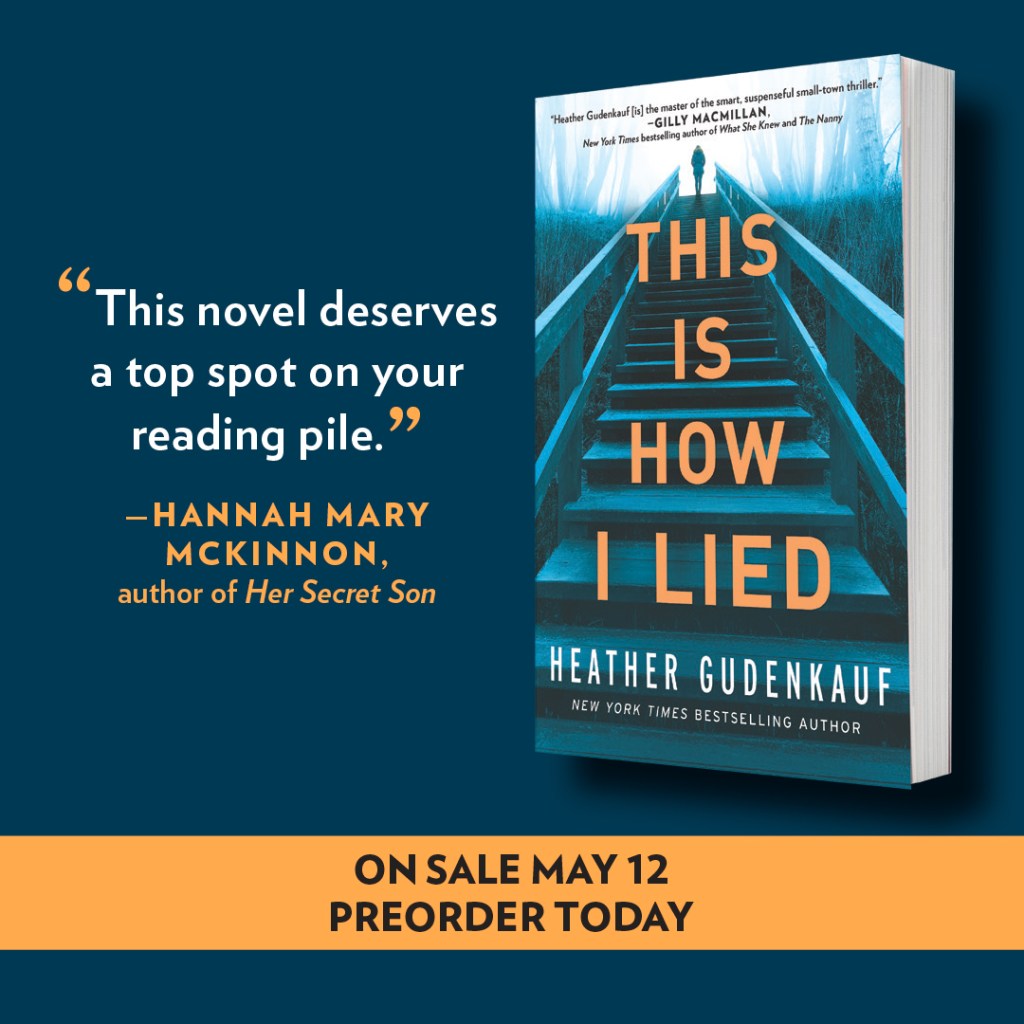
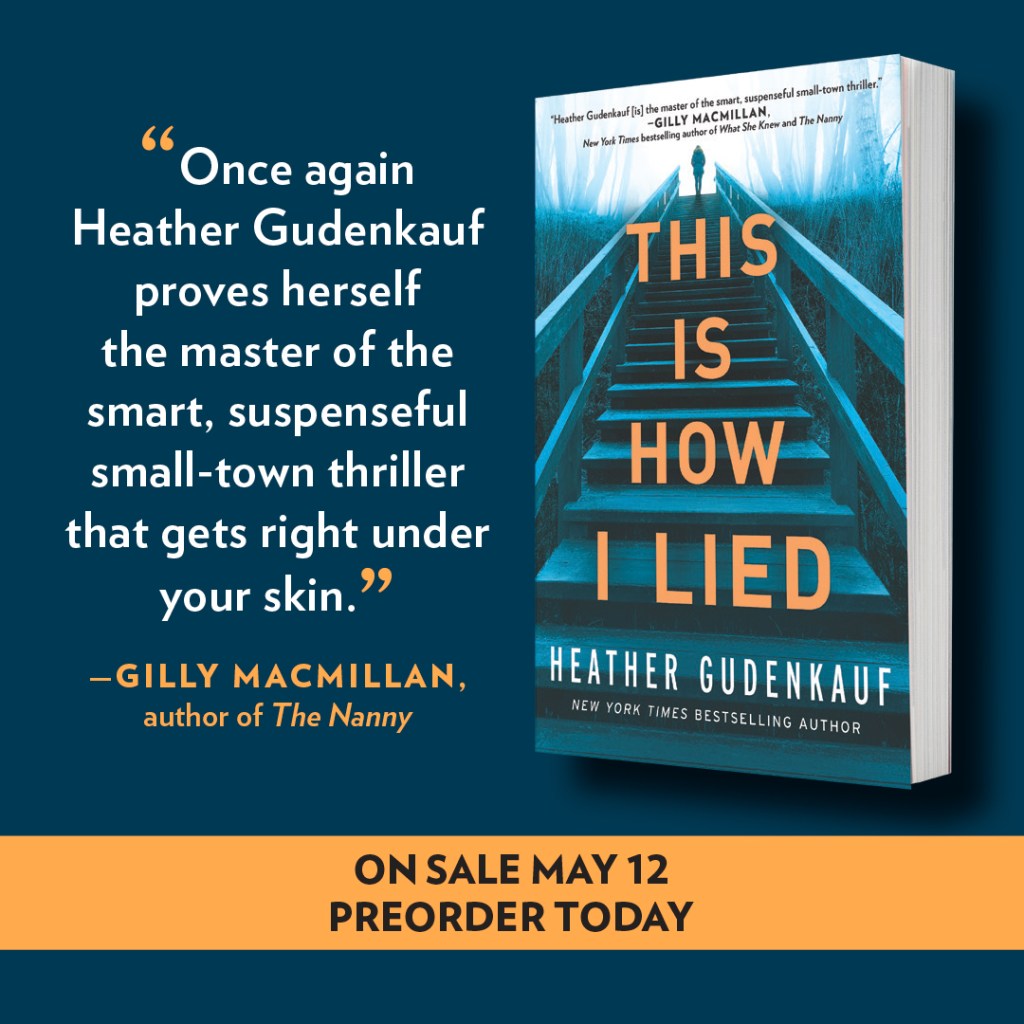
A young woman dealing with a pregnancy and her career as a police officer has her world turned upside-down when the unsolved murder of her best friend finds new evidence, and leads her into a whirlpool of suspects who are far closer to her than she could have imagined, in author Heather Gudenkauf’s “This Is How I Lied.”
Advertisements
The Synopsis
With the eccentricity of Fargo and the intensity of Sadie, THIS IS HOW I LIED by Heather Gudenkauf (Park Row Books; May 12, 2020; $17.99) is a timely and gripping thriller about careless violence we can inflict on those we love, and the lengths we will go to make it right, even 25 years later.
Tough as nails and seven months pregnant, Detective Maggie Kennedy-O’Keefe of Grotto PD, is dreading going on desk duty before having the baby her and her husband so badly want. But when new evidence is found in the 25-year-old cold case of her best friend’s murder that requires the work of a desk jockey, Maggie jumps at the opportunity to be the one who finally puts Eve Knox’s case to rest.
Maggie has her work cut out for her. Everyone close to Eve is a suspect. There’s Nola, Eve’s little sister who’s always been a little… off; Nick, Eve’s ex-boyfriend with a vicious temper; a Schwinn riding drifter who blew in and out of Grotto; even Maggie’s husband Sean, who may have known more about Eve’s last day than he’s letting on. As Maggie continues to investigate, the case comes closer and closer to home, forcing her to confront her own demons before she can find justice for Eve.
The Review
A truly gripping thriller that takes readers on an emotional roller-coaster ride, author Heather Gudenkauf’s “This Is How I Lied” begins as a personal story of a young woman seeking justice for her long lost best friend, and takes a dramatic turn that puts every character in the spotlight.
The brilliant use of flashbacks through the eyes of the victim to the modern-day investigation and the secrets that fuel all of the characters make this such an engaging narrative. Just when readers have a bead on who the killer is, the author drops a new piece of the puzzle that turns the investigation on its head. The author does a marvelous job of portraying the narrative in a very cinematic way, allowing readers to envision the events of the story playing out perfectly.
The Verdict
A must-read thriller and mystery, “This Is How I Lied” by Heather Gudenkauf is a fantastic narrative that deserves to be read. Evenly paced, thought-provoking, and shocking in its delivery, this is a one of a kind read that fans of the mystery and thriller genres will not be able to get enough of, especially in the final shocking moments of the book’s end. Be sure to grab your copy today!
Rating: 10/10
Advertisements
About the Author
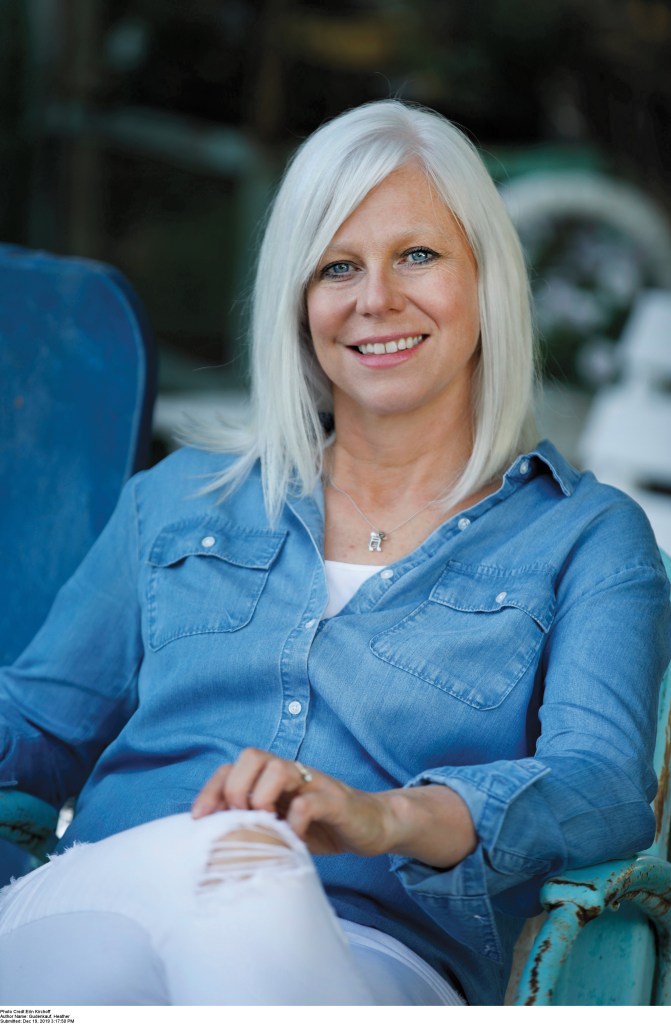
Heather Gudenkauf is the New York Times and USA Today bestselling author of many books, including The Weight of Silence and These Things Hidden. Heather graduated from the University of Iowa with a degree in elementary education, has spent her career working with students of all ages. She lives in Iowa with her husband, three children, and a very spoiled German Shorthaired Pointer named Lolo. In her free time, Heather enjoys spending time with her family, reading, hiking, and running.
I approach each of my novels with the goal of being a plotter – someone who explicitly organizes and outlines her books – but it never quite works out that way for me. I make notes and outline the plot but ultimately the characters take over and do what they want to anyway. My process is messy and meandering. Thankfully, I have a brilliant editor who is able to see through the weeds and pull out the best parts of my plots and keep me on the right path. This is How I Lied completely evolved from my initial intentions. The characters changed, the plot shifted and the final ending poked its head up near the end of revisions and I couldn’t be happier with the results.
2.Which came first: the characters or plot line?
For me, the two go hand in hand. The basic plot line comes first, and close behind comes the characters. It doesn’t matter how suspenseful of a plot I develop, if the right characters aren’t there to mold the story and carry it forward, it won’t work. Before I begin writing, I attempt to give my characters rich backstories. Often many of these details don’t make into the novel, but by fully developing their personalities and biographies, it helps keep me in tune with them as I write. Knowing the characters’ likes and dislikes, their foibles and strengths helps me to honestly and accurately determine their motivations and the decisions they make as they move through the novel.
3.How do you come up with your plots?
I’m a news junkie! I’ll scan newspapers and websites and a story will catch my eye. It can be the smallest detail or a broader theme but if the idea sticks with me and keeps harassing me to write about it, I know I’m on the right track. For my novel Little Mercies, it was an article about a social worker who ended up on the other side of the justice system because of alleged negligence with her caseload. From this I created an entirely new story about a social worker who was fighting for her own child. In This is How I Lied, I was intrigued by news stories that dealt with the use of familial DNA to solve cold cases and it became a key detail in the novel’s resolution.
4.Do you use music to help set a mood/tone for your books?
I do listen to music as I write. It varies based on the story and what I think the characters might listen to. By curating these playsets, it helps me get into their mindset. As I worked on Maggie’s sections in This is How I Lied I listened to a lot of Avett Brothers and Lumineers. For Nola, I listened to classical music and hard rock – she’s an interesting mix. As for Eve, since she was sixteen years old and living in the 90s, I listened to plenty of Nirvana and Beck.
5.Where did the idea for this story come from?
Before I started writing This is How I Lied, I read I’ll be Gone in the Dark by Michelle McNamara, about the author’s investigation of The Golden State Killer who, for decades, terrorized northern California. This book both terrified and fascinated me and I became intrigued by how modern technology was being used to close old cold cases. For my project, I thought it would be interesting to explore how this might play out in a small town where the perpetrator thought the truth behind the crime would never be discovered.
As I was writing the novel, I learned about the developments in a 40-year-old cold case not far from where I live where familial DNA was used to ultimately convict the killer. Amazing!
6.Do you find inspiration for your novels in your personal life?
I often get asked what my childhood must have been like because of the twisty thrillers I write. Thankfully, I can say that I had a blissfully uneventful childhood with parents and siblings that loved and supported me. For me, the inspiration from my own life comes in the settings of my novels – the Mississippi River, farmland, the woods and bluffs – all found in Iowa. In This is How I Lied, the town of Grotto is loosely based on a nearby town until I moved to this part of Iowa, I never realized that we had cave systems. Visitors to the state park, can literally step back thousands of years. The limestone caves and bluffs are beautiful, haunting and have something for everyone. You can take a casual stroll through some of the caves and have to army crawl through some of the others. Old clothes and a flashlight are a must! The caves made the perfect backdrop for a thriller and I was excited to include them in This is How I Lied.
7.What is the one personality trait that you like your main characters to have and why?
In looking back at all my main characters, though they are all different ages and come from different walks of life, I think the trait that they all seem to have in common is perseverance. I’ve had characters battle human evil and demons of their own creation but it doesn’t matter what traumatic events they have been through or the challenges they will face, they manage to make it through. Changed for sure, but intact and hopeful for the future.
8.Why do you love Maggie and why should readers root for her?
I do love Maggie! As a police detective, Maggie has dedicated her adult life to helping others and is a loving daughter, sister and wife and is expecting her first child. This doesn’t mean that Maggie is perfect. Like all of my protagonists, Maggie is complicated and flawed and has made some big mistakes, but ultimately she is doing the best that she can.
9.What is one thing about publishing you wish someone would have told you?
As a former elementary school teacher, I had absolutely no insights into the publishing world beyond what I saw on television and in movies – which portrayed it as a dog-eat-dog world. I have to admit, as a new author, I was very intimidated. But to my delight – and relief – the people I’ve encountered along the way– my agent, editors, publishing teams, fellow authors, booksellers and readers – all have been nothing but supportive, encouraging and kind.
10.What is coming up next for you?
I just finished the first draft of my next novel, a locked-room mystery about a reclusive writer working on a true crime book when a snow storm leaves her trapped inside her remote home, setting off a series of events that lead to a stunning revelation. It was so much fun to write!
11.Has quarantine been better or worse for your writing?
It’s been such a scary, unsettling time but I’ve found writing a nice distraction and a great comfort during this extended time at home. I’ve been able to turn off the news and get lost in my manuscript or other writing projects. It’s a lot like reading – a much needed escape from the real world.
12.What was your last 5 star read?
Julia Heaberlin has a new book coming out this August called We Are All the Same in the Dark and it has surged to the top as one of my favorite reads of the year. It has everything I love in a great thriller: a beautifully written small town mystery, with multilayered, unforgettable characters and a twisty plot. It was absolutely mesmerizing.
Advertisements
This Is How I Lied Book Excerpt
Maggie Kennedy-O’Keefe
Monday, June 15, 2020
As I slide out of my unmarked police car my swollen belly briefly gets wedged against the steering wheel. Sucking in my gut does little good but I manage to move the seat back and squeeze past the wheel. I swing my legs out the open door and glance furtively around the parking lot behind the Grotto Police Department to see if anyone is watching.
Almost eight months pregnant with a girl and not at my most graceful. I’m not crazy about the idea of one of my fellow officers seeing me try to pry myself out of this tin can. The coast appears to be clear so I begin the little ritual of rocking back and forth trying to build up enough momentum to launch myself out of the driver’s seat.
Once upright, I pause to catch my breath. The morning dew is already sending up steam from the weeds growing out of the cracked concrete. Sweating, I slowly make my way to the rear entrance of the Old Gray Lady, the nickname for the building we’re housed in. Built in the early 1900s, the first floor consists of the lobby, the finger printing and intake center, a community room, interview rooms and the jail. The second floor, which once held the old jail is home to the squad room and offices. The dank, dark basement holds a temperamental boiler and the department archives.
The Grotto Police Department has sixteen sworn officers that includes the chief, two lieutenants, a K-9 patrol officer, nine patrol officers, a school resource officer and two detectives. I’m detective number two.
I grew up in Grotto, a small river town of about ten thousand that sits among a circuitous cave system known as Grotto Caves State Park, the most extensive in Iowa. Besides being a favorite destination spot for families, hikers and spelunkers, Grotto is known for its high number of family owned farms – a dying breed. My husband Shaun and I are part of that breed – we own an apple orchard and tree farm.
“Pretty soon we’re going to have to roll you in,” an irritatingly familiar voice calls out from behind me.
I don’t bother turning around. “Francis, that wasn’t funny the first fifty times you said it and it still isn’t,” I say as I scan my key card to let us in.
Behind me, Pete Francis, rookie officer and all-around caveman grabs the door handle and in a rare show of chivalry opens it so I can step through. “You know I’m just joking,” Francis says giving me the grin that all the young ladies in Grotto seem to find irresistible but just gives me another reason to roll my eyes.
“With the wrong person, those kinds of jokes will land you in sensitivity training,” I remind him.
“Yeah, but you’re not the wrong person, right?” he says seriously, “You’re cool with it?”
I wave to Peg behind the reception desk and stop at the elevator and punch the number two button. The police department only has two levels but I’m in no mood to climb up even one flight of stairs today. “Do I look like I’m okay with it?” I ask him.
Francis scans me up and down. He takes in my brown hair pulled back in a low bun, wayward curls springing out from all directions, my eyes red from lack of sleep, my untucked shirt, the fabric stretched tight against my round stomach, my sturdy shoes that I think are tied, but I can’t know for sure because I can’t see over my boulder-sized belly.
“Sorry,” he says appropriately contrite and wisely decides to take the stairs rather than ride the elevator with me.
“You’re forgiven,” I call after him. As I step on the elevator to head up to my desk, I check my watch. My appointment with the chief is at eight and though he didn’t tell me what the exact reason is for this meeting I think I can make a pretty good guess.
It can’t be dictated as to when I have to go on light duty, seven months into my pregnancy, but it’s probably time. I’m guessing that Chief Digby wants to talk with me about when I want to begin desk duty or take my maternity leave. I get it.
It’s time I start to take it easy. I’ve either been the daughter of a cop or a cop my entire life but I’m more than ready to set it aside for a while and give my attention, twenty-four-seven to the little being inhabiting my uterus.
Shaun and I have been trying for a baby for a long, long time. And thousands of dollars and dozens of procedures later, when we finally found out we were pregnant, Shaun started calling her peanut because the only thing I could eat for the first nine weeks without throwing up was peanut butter sandwiches. The name stuck.
This baby is what we want more than anything in the world but I’d be lying if I didn’t admit that I’m a little bit scared. I’m used to toting around a sidearm not an infant.
The elevator door opens to a dark paneled hallway lined with ten by sixteen framed photos of all the men who served as police chief of Grotto over the years. I pass by eleven photos before I reach the portrait of my father. Henry William Kennedy, 1995 – 2019, the plaque reads.
While the other chiefs stare out from behind the glass with serious expressions, my dad smiles showing his straight, white teeth. He was so proud when he was named chief of police. We were all proud, except maybe my older brother, Colin. God knows what Colin thought of it. As a teenager he was pretty self-absorbed, but I guess I was too, especially after my best friend died. I went off the rails for a while but here I am now. A Grotto PD detective, following in my dad’s footsteps. I think he’s proud of me too. At least when he remembers.
Last time I brought my dad back here to visit, we walked down this long corridor and paused at his photo. For a minute I thought he might make a joke, say something like, Hey, who’s that good looking guy? But he didn’t say anything. Finding the right words is hard for him now. Occasionally, his frustration bubbles over and he yells and sometimes even throws things which is hard to watch. My father has always been a very gentle man.
The next portrait in line is our current police chief, Les Digby. No smile on his tough guy mug. He was hired a month ago, taking over for Dexter Stroope who acted as the interim chief after my dad retired. Les is about ten years older than I am, recently widowed with two teenage sons. He previously worked for the Ransom Sheriff’s Office and I’m trying to decide if I like him. Jury’s still out.
Tell us a little bit about yourself. How did you get into writing?
I am an author and foreign correspondent and my work for the BBC over the past thirty years has taken me to crises all over the world. I wrote my first book, when the great military publisher William Armstrong from Macmillan asked me to write about a conflict between China and the United Stated. Dragon Strike: The Millennium War was published in 1997 and became a best seller. I now write thrillers. The latest is the second in the Rake Ozenna series, Man on Edge set on the Norway-Russian border described by Charles Cumming as ‘a page-turning spy thriller with the atmosphere of a Cold War classic’ and San Francisco Review of Books as being ‘gripping, addictive and successful at every level. Man on Edge was also a New York Post Best Books choice.
What inspired you to write your book?
I see huge potential in the character of Rake Ozenna. He comes from the exceptionally remote island of Little Diomede on the US-Russian border and is torn between his own tight-knit community and culture the wider more complex world. The great Nelson de Mille described Rake as ‘smart and tough, and we’re glad to have him on our side. Library Journal’s review spoke of a ‘hard-as-nails hero’ and Shots Crime the Thriller said ‘Rake Ozenna is proving to be one of the more believable characters in a crowded field.’ Rake has a kick-ass on and off girlfriend with trauma surgeon Carrie Walker and two other key characters from the corridors of power becoming loved by readers.
What theme or message do you hope readers will take away from your book?
I would love them to see Man on Edge as an international adventure story from which they get an insight into the modern world of espionage.
What drew you into this particular genre?
As a foreign correspondent, I switched between reporting from the highest levels of government to the poorest and most vulnerable. I try to bring these contrasts into my story-telling and the thriller is the natural home genre.
If you could sit down with any character in your book, what would you ask them and why?
I would sit down with Ruslan Yumatov the antagonist and ask him why he thinks his high profile acts of catastrophic destruction will make the world a better place. Is he right or is he deluded?
What social media site has been the most helpful in developing your readership?
I haven’t yet identified a clear front runner. Face Book may have the most impact. Others swear by Instagram. And Goodreads is meant to work well. On pure sales’ platforms, Amazon is streaks ahead. It’s important to be out there, like Woody Allen says ninety-per cent of success is just turning up.
What advice would you give to aspiring or just starting authors out there?
Read the competition in your genre. Don’t show drafts to friends or family. Get a professional to work on it first. Work out your publicity and marketing.
What does the future hold in store for you? Any new books/projects on the horizon?
I deliver the third Rake Ozenna thriller Man on Fire in May and in June an expanded and revised version of my latest non-fiction Asian Waters: The Struggle over the Indo-Pacific the Challenge to American Power. I am also looking at doing a non-fiction on the future of Europe.
Humphrey Hawksley’s brand-new international thriller series begins in paperback in October 2019 with MAN ON ICE a knuckle-whitening drama set on the remote and wild US-Russian border. In early, 2020 comes the nail-biting MAN ON EDGE set on the Norway-Russian border followed in 2021 by MAN ON FIRE whose location is yet to disclosed. Rake Ozenna, a native of Little Diomede island in Alaska is the series hero. Each thriller includes trauma surgeon, Dr Carrie Walker, American intelligence contractor, Harry Lucas, and his ex-wife, British businesswoman and diplomat, Stephanie Lucas.
Humphrey’s thrillers have been widely praised. Steve Berry describes ‘authentic settings, non-stop action’ from MAN ON ICE. Lee Child speaks of SECURITY BREACH as ‘high stakes, high octane’ and Alan Furst as a ‘hard-driving, a good taut thriller’ — right back to the first future history thriller DRAGON STRIKE: THE MILLENNIUM WAR which Steve Coonts hailed as ‘ominous and insightful.’
His recent non-fiction ASIAN WATERS: THE STRUGGLE OVER THE SOUTH CHINA SEA AND THE STRATEGY OF CHINESE EXPANSION has been acclaimed on every continent by those at the heart of global decision-making, such as Indian cabinet minister, Hardeep Puri; the last governor of Hong Kong Baron Lord Patten of Barnes; and Dr Wu Shicun, President of China’s National Institute for South China Sea Studies. China’s rise is a fast developing story, and Humphrey is currently working on an updated edition which is due out in June 2020.
Humphrey’s work as a BBC foreign correspondent has taken him all over the world with postings in Beijing, Hong Kong, Manila, Delhi and Colombo. He has contributed to ABC, National Public Radio and other networks in the United States and global publication of his work includes the Financial Times, New York Times, Yale Global, Nikkei Asian Review and others.