Tell us a little bit about yourself. How did you get into writing?
I always liked to write, even as a teenager I wrote short plays that we put together on my high school stage. I worked as a journalist for more that 15 years in various media (radio, print, TV) and like Gavri, watched how dramatic events unfold in front of my eyes.
Advertisements
What inspired you to write your book?
I watched how the Settlers movement grew to become a powerful cult that took over my country. I saw what wars do to people. I accumulated hundreds of articles, OP-ED pieces, radio interviews over the years as an “observer” – I felt there is more to it than just the reporting.
What theme or message do you hope readers will take away from your book?
That religious cults are very dangerous, and that wars, often the result of power struggle between “leaders” – destroy the human’s soul often with no repairs.
What drew you into this particular genre?
What happens in the real world is often more powerful than any fiction. But fiction can give you freedom to mold your own message. The combination of both is for me the best way to tell a story.
If you could sit down with any character in your book, what would you ask them and why?
It would be Chaim. Religious fanaticism is for me one of the most destructive forces on the face of the planet in the way that religious cults take over human’s moral campus and make ordinary people do horrible things in the name of some “GOD” or “Godly leader” . From the Crusaders, to the Nazis, to the Taliban to ISIS and the Jewish Settler Movement (all different of course in scope and methods). I would ask him about his personal journey from a boy who grew up in a “normal” surroundings to become a leader in a religious fanatic cult.
What social media site has been the most helpful in developing your readership?
I am not a “fan” of Social Media – probably a generational thing.
What advice would you give to aspiring or just starting authors out there?
If there is a “story” in you that wants to get out; if you have something to say – sit down and write it down.
What does the future hold in store for you? Any new books/projects on the horizon?
Not sure. This book was for me an end of a journey – closing the circle.
Advertisements
About the Author
AVNER TAVORI has actually lived in the world he describes in his novel. In 1982 he was a war correspondent in Lebanon and spent more than three months with the advancing Israeli troops, and with units of the Christian Militia in Beirut.
He was born in 1947, in what was then British Palestine, and grew up in the Israel of the 1950’s in the socialist environment, typical of the time, in his hometown of Haifa. After completing his mandatory military service in the Parachute Brigade of the Israel Defense Forces (IDF), he served a short stint as a Desk-Officer in the Jerusalem headquarters of ShinBet – Israel’s National Security Service – and coordinated field operations in the occupied West Bank.
As a journalist (1970-1986) he was the political correspondent for Israel’s Public Radio (Kol Israel) and covered the inner workings of Israel’s political scene. He also worked for the daily newspaper, DAVAR, and published opinion pieces on a variety of issues.
In the 1990’s he worked for the Israeli Labor Party, and then Rabin’s Government, culminating in being appointed to the position of Press Secretary for the Israeli Ambassador to the UN in New York.
1) Tell us a little bit about yourself. How did you get into writing?
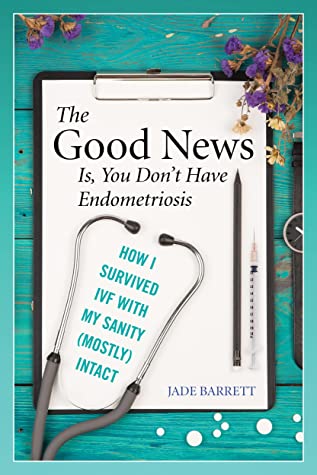
I am 38 years old and have been an athlete my whole life who played volleyball, basketball, and softball growing up. I am currently very into Peloton’s cycling, yoga, and strength classes. I am married to my amazing husband, Brendan, and we have one daughter together. I got into writing in high school, as my AP English teacher stressed the importance of being able to write clearly and in a manner that is interesting for others to read. One of our assignments each quarter was to keep a journal of our daily activities. At first, I found the task to be a nuisance, but over time realized how fun and therapeutic writing can be. He is also the reason why I decided to become a high school history teacher, which I have been for the last 17 years. I decided to tell my story of having difficulty conceiving a child in The Good News Is, You Don’t Have Endometriosis, as a way to heal myself from the trauma it caused and to hopefully help other women and couples who are experiencing the same nightmare.
Advertisements
2) What inspired you to write your book?
The inspiration behind my book is the unbelievable lengths I was forced to go to in order to receive proper medical care for our infertility case and the hijinx that occurred along the way. I never thought I would write a book, but I saw sharing my story with others as a win/win. This was the only way I was going to be able to move on from the trauma I endured as a result of the constant uncertainty and stress that undergoing infertility treatment causes and was sure I could potentially help others in the process.
3) What theme or message do you hope readers will take away from your book?
The biggest takeaway from The Good News Is, You Don’t Have Endometriosis is that you need to take control of your own body and your own medical treatment. Clinics have hundreds of patients and they cannot and do not keep tabs on everyone. Just because a doctor wears a white coat and has a medical degree does not mean that he or she is always right. Don’t be afraid to question a doctor because if something doesn’t feel right, it probably isn’t. Multiple doctors told me that I did not have a fertility issue, but in the end, I was the reason we were unable to get pregnant naturally. If I did not insist on being tested for endometriosis, we would have continued to endure the pain and grief of failed embryo transfers and who knows how many more IVF treatments.
4) What drew you into this particular genre?
I wasn’t drawn to the genre, it came to me! Obviously, no one wants to be diagnosed with infertility and have to undergo treatments in order to become pregnant. I believed that because my husband and I are healthy that it would not happen to us, but there we were doing round after round of tests and treatments. Clearly, we were very wrong as this issue impacts people of all walks of life.
5) What social media site has been the most helpful in developing your readership?
Instagram has been the most helpful, as it has a large following and can reach many audiences. I have written for the site, Pregnantish, and have also been interviewed on several podcasts that have aired on the platform.
6) What advice would you give to aspiring or just starting authors out there?
Write about something you are passionate about and don’t hold anything back.
7) What does the future hold in store for you? Any new books/projects on the horizon?
As for the future, I hope that my book continues to help women and couples experiencing infertility and that my story becomes part of infertility folklore. I do not plan to write any other books!
Advertisements
About the Author
Jade Barrett is an American high school teacher who experienced infertility from 2017-2021.
She hopes to help other women and couples who are struggling with infertility through her story, The Good News Is, You Don’t Have Endometriosis: How I Survived IVF with My Sanity (Mostly) Intact.
It is the story of triumph over adversity and how you can advocate from the best possible care from your fertility clinic.
1) Tell us a little bit about yourself. How did you get into writing?
I have enjoyed writing from a very young age, I won a fictional short story contest when I was very young and had a press release at the time in a local newspaper, I have also had some of my poetry published in anthologies. My first love is art however, I graduated from university with a Degree in Fine Art, and even while still studying I was running lino cutting workshops from my studio for people of all ages. I have produced a large body of artwork to date, in particular lino cutting, which I really enjoy.
Advertisements
2) What inspired you to write your book?
I always aspired to see more of the world and began solo travelling in 2015 with a trip to Athens, Greece. Since then I have travelled in Europe, North Africa, spent two months in India, explored much of south-east Asia and lived in Vietnam for over 4 years, teaching English as a foreign language. This love for travel has really helped me rediscover my passion for writing and inspired my new book.
I also recently started doing a travel blog, packed full of travel itineraries, guides and useful tips. It’s an extension of my book. This is the link:
3) What theme or message do you hope readers will take away from your book?
I really hope that by reading my new book, readers will be encouraged to confront any fears or hang ups they may have, that may be preventing them from travelling and realizing their dreams. Being from a very working class background myself, I always thought maybe I would never get to break out into the big, wide world and go to all of these amazing places. But I was brave enough to throw caution to the wind and take my chances working in a foreign country and it was the best decision of my life so far. I want to inspire readers to follow their heart and live life to the fullest, not accepting less.
4) What drew you into this particular genre?
I was drawn into the genre of travel, simply because its the area where I feel I have a lot of experience and expertise to offer and share. I am a very creative person and writing is a great outlet for this, so I like to think not only is my book an informative non-fiction travel guide, it is also a rich, narrative. It’s pretty poetic at times when I am describing my own memoirs.
5) What social media site has been the most helpful in developing your readership?
Facebook has been particularly useful in growing readership and driving traffic to my website. I have a Facebook Page which shares the same name as my book ‘Travel For As Long As You Wish’, here I share original photos, reels and blog posts I’ve wrote, all inspired by my travels around the world.
6) What advice would you give to aspiring or just starting authors out there?
My advice to new or aspiring authors would be to really be prepared to put in the work on marketing your books, remember your job has just begun once your book is out there. It’s a highly competitive market but don’t forget why you started writing in the first place, because it’s what you love and it’s important to let this passion be your main driving force. Let the passion and shine through and do it with a flourish.
7) What does the future hold in store for you? Any new books/projects on the horizon?
In regard to the future, I am hoping to eventually release a paperback and audiobook version of my current book and hopefully increase the popularity of both my book and my travel blog. I feel my content is very useful to anyone wishing to travel more. I will also be returning to teaching English in Vietnam later this year, as well as continuing my practice as an artist! So lots to keep busy with.
My ebook ‘Travel For As Long As You Wish: The Blueprint For Budget Travel, Backpacking And Escaping The Rat Race’ is available here:
Advertisements
About the Author
Mark James Murphy is an artist, teacher, adventurer, and writer. He was born in Sunderland, North-East England in the early 1980s. He has solo traveled extensively throughout the world and in 2017 decided to leave behind his job and apartment in the UK to teach English in Vietnam, South East Asia, for almost five years, describing it as the best moment of his life so far. There he also continued developing his practice as an artist and printmaker, documenting his travels through the medium of linocut. In 2019 he fulfilled a childhood dream when he backpacked for two months throughout the whole of India, ending up in a remote village in the Himalayan foothills. He has played football with local kids in the Sahara desert, lived with Hmong people high in the mountains of North Vietnam, and worked as a farmhand in Southern Spain. Mark is currently based just outside of London.
1) Tell us a little bit about yourself. How did you get into writing?
Always a reader, I wrote my first short story in third grade. At the age of eleven, I remember begging my parents to let me read Stephen King’s The Shining. They relented (though it would be some time before I was permitted to watch the movie version), and I subsequently spent several years writing short horror stories. After my grandparents donated their upright piano, music took over my life, culminating with a Doctor of Musical Arts in Composition and Theory. Though I never stopped writing–so far, four novels, and counting.
Advertisements
2) What inspired you to write your book?
The ideas for all of my novels began with a “what if” thought experiment. For Welcome To Opine, I asked myself: “What if somebody buries deep in the earth a digital computer holding a vast record of mankind’s history and achievements, and billions of years later, it is dug up by a second Homo Sapiens species?” The other inspiration for this particular novel was sparked from recent disturbing world events. In particular, recent attacks on democracies, including ours. I am not a politician, so the next best thing I could do was write a novel.
3) What theme or message do you hope readers will take away from your book?
There is no such thing as a perfect society, no such thing as a utopia, simply because people will never agree on what constitutes universal values. Yet the trajectory of history teaches us that societies always strive to better themselves, strive for that unattainable utopia. It is an ongoing struggle to better ourselves as individuals and as communities. This book is just one way of thinking about that struggle, and offers, I hope, a thought-provoking perspective on how to approach that struggle.
4) What drew you into this particular genre?
I have always been drawn to works of literature that manage to entertain us and enlighten us at the same time. Works that teach us about the human condition with a satirical bite have always been particularly fascinating to me. Two great novels in this vein are Heller’s Catch-22 and Vonegutt’s Slaughterhouse-Five. Films such as Dr. Strangelove likewise are very effective in teaching us important lessons, while we can’t help but cringe and laugh as we learn.
5) If you could sit down with any character in your book, what would you ask them and why?
I would definitely want to talk to Mr. Figgle, and ask him what he really thought about his supposed utopian society established by a controversial genetic therapy, the Self Suppressor, imposed on every citizen. It’s not obvious what his real intentions are, even at the very end of the book. I am the author and I do not know what he really thinks!
6) What social media site has been the most helpful in developing your readership?
Facebook has been helpful, buy I also run a podcast, Dr. Music, which is also effective in promoting my books (even though it is a music education podcast).
7) What advice would you give to aspiring or just starting authors out there?
Anybody who aspires to write should do an enormous amount of reading, and then, after that, an enormous amount of reading. Read the classics and modern books, read fiction and non-fiction, and it’s always a good idea to write about what you know. But you should also write about what you don’t know—after all, that’s how we learn, right? I didn’t know a thing about political philosophy before I wrote this book. Now I do.
8) What does the future hold in store for you? Are any new books/projects on the horizon?
Yes, I will certainly be writing more novels. I try to make each one very different. My third novel, Till Times Are Done, is a world away from Welcome To Opine. I do have an idea for my next book…stay tuned!
Advertisements
About the Author
Dr. Matthew Marullo holds a Doctor of Musical Arts Degree from Boston University and has been writing all his life. He is the author of four novels: The Octave Displacement (2006), Gludman’s Proof (2013), Till Times Are Done (2019), and Welcome To Opine (2022). A member of ASCAP, PEN America, and the Mystery Writers of America, Dr. Marullo lives with his family in Long Island, New York. Visit his website at matthewmarullo.com.
Tell us a little bit about yourself. How did you get into writing?
When I was a kid I fell in love with writing through comic books. I loved stories by Peter David, Alan Moore, Frank Miller, Neil Gaiman and so many others – the 80’s were golden years for writing in comics. Later I was drawn to George R. R. Martin’s Wildcards books, which ultimately led me to Isaac Asimov and classic Sci-Fi.
As a kid I would daydream about superheroes and science fiction, occasionally trying to put those dreams on paper but never finishing anything. In college I migrated from creative writing to journalism before becoming pragmatic and abandoning the idea of writing for a living altogether to pursue other interests.
I still thought about writing after college though, even starting a book or short story from time to time but never finishing it. Finally, a few years ago, after giving a friend of mine feedback on his third novel, he suggested I give writing another try.
I’m glad I did.
Since then I’ve been writing as much regular life allows, creating characters, stories and worlds. It’s the most fun I’ve had doing something in a long time. Recently I re-watched the movie Stand By Me – which I loved as a kid – and was struck by the scene where Chris tells Gordie he could be a real writer if he tried and that the stories he can make up are a gift he shouldn’t lose.
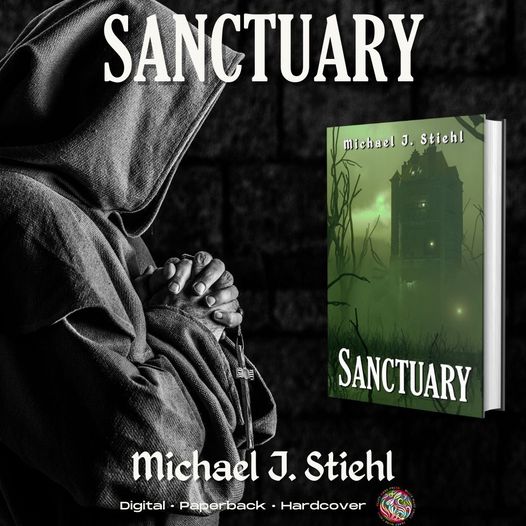
It reminded me that creativity is a gift and that I should make the most of what talent I have. I’m happy to say that my novella Sanctuary is my reward for doing just that.
What inspired you to write your book?
I wrote a novella a few years ago that didn’t work but that had a character in it named Theobard that I liked. I couldn’t shake wanting to know more about him, who he was and where he came from. Sanctuary started as my attempt to answer those questions.
Once I started writing I got interested in the idea of how sometimes people we meet, and fall in love with, change our lives forever. From there Dellia came into view and I could tell right away the interactions between Dellia and Theobard were exciting. The story took off from there, driven by Theobard’s past and present but altered by his feelings for Dellia.
What theme or message do you hope readers will take away from your book?
I’d like readers to consider that sometimes you have to be who you are, no matter what. However, choosing that truth can come with a price but, even if it’s a huge price, being who you are is worth it. It’s like Shakespeare said “This above all: to thine own self be true…”
What drew you into this particular genre?
This particular story started out as a straight romance but quickly changed as I began writing. In the back of my head I kept thinking about old gothic mysteries like Jane Eyre by Charlotte Brontë. I love how that book makes you think it’s going to be one thing, a Victorian drama, and then turns into a sort of ghost / horror story. I wanted a story with a compelling set of characters that lead you through an unfamiliar place to uncover a mystery. I’m not sure what genre I’ve landed on, but it certainly has bits of fantasy, romance, horror and mystery in it.
Advertisements
If you could sit down with any character in your book, what would you ask them and why?
I would sit down with Mansell, owner of Mansell’s Marvels in the Mantori Bazaar. As a merchant of the most unique items available, I would ask him which was his favorite object, how he found it and why it was his favorite. Mansell, being a good salesman, would no doubt have a great story to tell, one that would leave me convinced the object was of immense value and interest. I would probably by it from him at too high a price and then be left wondering if it really was his favorite object or just the one he thought he could sell me.
What social media site has been the most helpful in developing your readership?
I am terrible at social media. I have a Facebook page that I neglect and I’m on Reddit but that’s about it. I do have author’s pages on both Amazon and Goodreads but beyond that I don’t spend a lot of time on social media. I will say that I have found things like Submission Grinder invaluable for finding new open calls and writing opportunities.
What advice would you give to aspiring or just starting authors out there?
The following three things are true:
The old quote by Hemingway, “the only kind of writing is rewriting.”
The advice Stephen King gives in his book “On Writing” that the second draft should always be ten percent shorter than the first
Neil Gaiman’s advice from his Master Class to always finish your story.
What does the future hold in store for you? Any new books/projects on the horizon?
I have a couple of submissions out there I’m waiting to hear back about, both of which are exciting. One is a short story I like a lot for a very cool music themed anthology. The other is another novella I completed earlier this year set in the same world as Sanctuary but with completely different characters. I’ve got my fingers crossed that both will see print. Other than that, I’m still fooling around with a story about Houdini in World War 1 that I hope to finish one of these days.
Advertisements
About the Author
Michael J. Stiehl has had a lifelong passion for fiction, in particular horror, comics, adventure and science fiction, and is thrilled to finally be writing some of his own. Michael lives in the Chicago suburbs with his wife, two kids and his very silly poodle Jack. When not writing fiction, Michael spends his time riding bikes, camping, reading books, obsessively listening to music and playing D&D with his friends. In short, he hasn’t changed a bit since junior high.
Tell us a little bit about yourself. How did you get into writing?
I am a career writer. I’ve made my living as a journalist for almost thirty years. I would say, however, that I didn’t really find my voice until I started writing creative nonfiction.
What inspired you to write your book?
In 2018, I went to the University of King’s College in Halifax to start a two-year program in creative nonfiction. I earned my MFA in 2020. The graduate thesis for this program is in fact a book, which we work through with mentors over the course of two years. Ideally, you have your book finished in alignment with the program. I chose to write about heartbreak because it has been such a powerful experience in my life. My story, coupled with a range of more scholarly explorations into the phenomenon of this universal experience, seemed like juicy fodder for a creative nonfiction project.
What theme or message do you hope readers will take away from your book?
I think the biggest takeaway I envision for this book is that you’re OK. I’m OK. We’re all OK. If you’re reeling from heartbreak, you needn’t imagine you’re failing society or yourself or anyone at all for your failure to surface according to some perceived timetable. It’s OK to be reeling. It’s OK to hurt and yearn and struggle for a long time. I want people to stop judging themselves for not being OK, and to be kind to themselves in the face of their discomfort and despair. To realize, through my story, that it is entirely natural to hurt for a long time. They are not losers. They are only human.
What drew you into this particular genre?
Creative nonfiction is a natural fit for me. As a journalist, I am deeply concerned with the truth and feel strongly about holding my writing accountable to facts alone. But the *creative* aspect of this approach to writing was a wonderful discovery for me. Here, writers apply the tools and literary devices of creative writing (think: character development, scenes, detailed description, dialogue, etc.) to nonfiction. It elevates factual storytelling to a much more compelling and enjoyable place.
What social media site has been the most helpful in developing your readership?
I have launched an Instagram account around this book, and am excited to see where this path takes me. It is my first experience on that platform and I’m hopeful for its reach in terms of attracting readers.
What advice would you give to aspiring or just starting authors out there?
Keep going. It’s hard to write a book. It takes tremendous stick-to-it-iveness and patience. It’s a lot of work and a lot of words. But you need only to take a stroll through a bookstore, electronic or brick-built, to come away encouraged by the number of people who have been able to pull off this enormous undertaking. Have faith in yourself. If all those folks could do it, why not you?
What does the future hold in store for you? Are any new books/projects on the horizon?
I make my living now as a book editor, but feel strongly that there are more memoirs on my near horizon. I am a mother to four kids who are all young adults now, and I am kicking around ideas for another memoir that delves into this stage of maternal life. But I am so consumed right now with giving “Heartbroken” the birth it deserves, that I don’t want to muddy the waters by thinking too much ahead. I have loved every minute of writing this book and am awfully excited at the prospect of getting it out into the world. Thank you for taking the time for this conversation!
Advertisements
About the Author
LAURA PRATT is a long-time journalist, writer and editor. She writes for Canadian magazines and edits books. Her first memoir, The Fleeting Years, was published in 2004. She lives in Toronto with whichever of her kids and dogs she can corral to join her. She’s a 2020 graduate of the University of King’s College’s creative nonfiction MFA. She won an honourable mention in Prairie Fire’s 2020 CNF contest and was shortlisted for The Fiddlehead’s 2019 CNF contest. She has served as a judge at the National Magazine Awards for several years.
I received a free copy of this book in exchange for a fair and honest review. All opinions are my own.
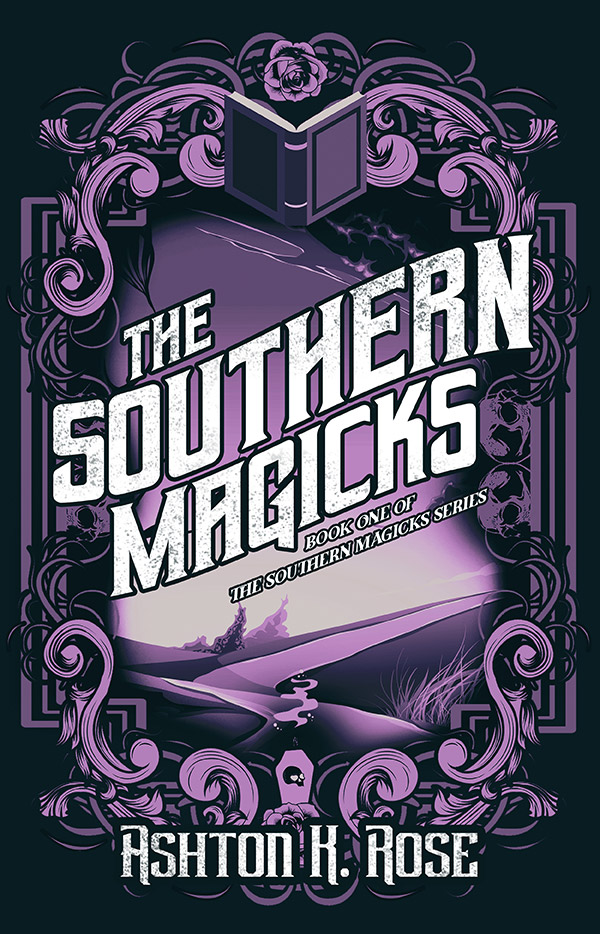
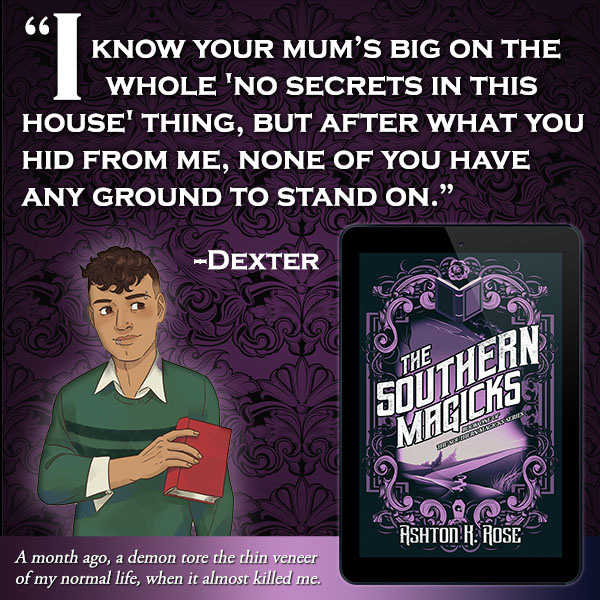
After walking away from the world of magic they grew up in, one person is forced to work as an exorcist after being framed as a vigilante in author Ashton K. Rose’s “The Southern Magicks”, the first book in the series of the same name.
Advertisements
The Synopsis
A month ago, a demon tore the thin veneer of a normal life I’d crafted apart when it almost killed me. Revealing my husband, Eli, as the prodigal son of a powerful magic family.
When I grew up, I walked away from magic. Left my remote hometown and pretended the ghosts Gran taught me to see weren’t there while I went to university to become a librarian.
Our one secret tightly held to my heart.
Never let them know!
Two years later, with no other financial option, I moved back to my small hometown.
It was easy to pretend the fuzzy gaps in my memory weren’t there as I got a job under the strict woman who almost killed my childhood love of books.
I thought everything was perfect when I married my dream guy.
Then the attack happened.
The “good” folks at the local magical law enforcement agency knew about me the whole time. They’ve pressured me to work for them as an exorcist because they’re convinced I was a vigilante who committed multiple murders. My odd, intriguing mentor Cory watches for any misstep as I avoid the seduction attempt he’s been asked to perform.
Now they’ve accused my estranged older brother of taking over my “crimes.” I know I was framed, despite the gaps in my memory.
The worst part?
The only people who seem to believe me are my friend June and my journalist cousin Kat.
Eli, filled with spite for the local magical rulers, seems to know something I DON’T and thinks I should play them at their own game and seduce my mentor, so we can interrogate him together…
–
The Southern Magicks is a small-town paranormal urban fantasy/mystery series with a M/M/NB menage romantic subplot. For fans of “The Dresden Files,” “Rivers of London,” “Southern Vampire Mysteries,” “Alex Verus,” and “The Laundry Files” who enjoy LGBTQ+ characters and stories.
The Review
The first thing that really impressed me and drew me into this narrative was the vastness of everything. The scope of the author’s narrative and world-building was astonishing, as the small-town setting bore witness to a grand mythos that sees clashing family dynasties and powerful supernatural beings all coming together in an explosive way. The balance the author found between the mundane and everyday activities that the protagonist saw and the gritty realities of the supernatural threats that come their way was incredible to see come to life on the page.
The character development and grand themes the author delve into complimented one another really well. The themes of homophobia in the world, greed, bigotry, and prejudices, in general, all found their way into the narrative, and allowed the characters, mostly LGBTQ-driven characters, to either flourish or grow as a result of the adversity they are facing, which adds depth and emotion to the more grand supernatural story elements.
The Verdict
Captivating, entertaining, and thrilling, author Ashton K. Rose’s “The Southern Magicks” is a must-read LGBTQ+ Fantasy and Paranormal & Urban Fantasy novel and a great first entry into the series of the same name. The heart and passion for which the author tells this story and the blend of LGBTQ+ character development with grand magical world-building and emotional themes made this one story I didn’t want to put down. If you haven’t yet, be sure to grab your copy today!
Rating: 10/10
Advertisements
Ashton K. Rose has a new queer fantasy/paranormal romance out: The Southern Magicks. And there’s a giveaway.
How do you prove your innocence when you don’t even remember whether you did it or not?
After a demon attack reveals Dexter’s secret – that his Gran taught him magic – the twenty-three-year-old librarian is forced to work for the local magical law enforcement agency in order to prove his loyalty, and hopefully save his grandmother from execution.
However, when someone tries to frame him for crimes he doesn’t remember committing, Dexter realizes he’ll have to start an investigation of his own. Joined by his beloved husband Eli, their best friend June, and his journalist cousin Kat, he desperately tries to prove his innocence…which is kind of difficult when gaps in his memory make him doubt everything he thinks he knows about himself.
The race against time begins. Can Dexter and his team uncover the criminals weaving the web of guilt around him before it’s too late, or is he going to lose everything and everyone he cares about?
Warnings: Assault, violent imagery, panic attack on page, police brutality
I knew Nora Rowe had died in her home without anyone telling me.
I unlocked the door and my stomach dropped as I took in the sight of the small dim living room of her kit home, filled with books and old newspapers. The acrid smell of cigarettes and wood fire smoke filled my nose as I weaved my way through the stacks. Mismatched flatpack bookshelves that warped under the strain of thousands of books lined the walls. Her living room held no other furniture apart from an old TV and a worn leather armchair—the carpet covered by stained, threadbare rugs.
I flicked the first light switch I saw twice.
Why had I expected the power to work?
I walked over to the windows and pushed the dust-caked lace curtains aside.
My eyes watered as the sun poured into the room.
In the kitchen, the doors of the cupboards hung open. The only things left behind were a few cheap plastic items scattered across the scratched lino.
I stepped on a plastic cup on the floor. I wobbled on my feet for a few sick seconds before I grabbed the counter to steady myself. The sharp aluminium edge bit into the skin of my hand.
This place was a death trap!
She had over twenty library books I had to separate from the donations. My legs shook as I walked to the shelves closest to the door.
I ignored the erratic beating of my heart and the part of my brain telling me to run and pulled out my keys to flick the small key chain light on. I placed it between my teeth and examined the spines for library tags.
When the light hit the grimy glass of a small photo frame on the shelf, I saw something move behind me. I kept my eyes fixed on the glass and used my thumb to clear a spot of dust.
If it hadn’t moved, I could have ignored the human-shaped shadow reflected in the glass.
As a kid, I’d been hassled about seeing things and having an overactive imagination. When I was seven, Gran told me the truth. I shared her secret ability to see ghosts.
I turned to look at the woman who sat in the armchair.
This Nora was a couple of years older than the one who celebrated her birthday in the photo. Her gaze focused on the TV, which would have been new the year Queen Elizabeth was coronated.
I kept my gaze locked on her, blinking one eye at a time.
I slowed my breath and took a careful step backwards to the door. The back of my calf hit something that drove several points of pain into my skin.
The stack of books I knocked over sliced through my composure just as easily as it did the silence in the room, the hard covers and spines slapping against each other as they hit the floor.
“What the fuck are you doing in my house?” Nora stood and turned to face me.
I knew I’d given the game away when I jumped out of my skin and almost dropped my keys.
I made a noise like a dying rat.
She knew I could hear her.
The first thing Gran had taught me was not to let a ghost realise you could sense them. It was dangerous—a trigger for the ire of a vengeful spirit.
“I’m sorry,” I said. “Your son gave us the key.”
“Worthless piece of shit. Letting strangers into my house. He stole my grandma’s dinner set for drug money before my body was cold. I saw him put it in his car before he called someone to deal with the mess.”
“I’ll just be going now.”
“Actually, I’ll be going.”
I felt a sharp pain in my chest.
I tried to breathe, but my lungs refused to move.
I couldn’t breathe!
The edge of my vision went black as I gasped for air. I fell flat on my front. I was so focused on trying to breathe, I almost missed the presence pushing at the back of my mind. It started small, a hint of a suggestion. The temptation to give in grew. This was her body. I was nothing but a figment of her imagination. Dexter wasn’t real. Nothing more than a thought exercise to see what it’d be like to be a man her grandson’s age. With each second, it pressed harder, and the urge to give in grew.
Forget.
It would be easy to give in and never have another worry again. All the pain and pressure of life could vanish if I relaxed and let her take control.
No!
I shivered as I tried to move my arms to push myself onto my hands and knees. I focused on the door. It was only a short crawl. I had to do it. For a second, my vision went entirely black.
No!
I gathered all the strength I had and screamed. The remaining air expelled from my lungs. I took a sharp breath. I moved my stiff arms and pushed myself onto my hands and knees.
I was Dexter; I was real, and this was my body. Nothing would take that away from me.
I closed my eyes and pushed back the ghost. I wrapped a mental net around the invasive presence in my mind and forced it back through the hole where it had entered. A hole it had dug in a part of my mind I didn’t even know existed.
One arm forwards, one leg forwards, and breathe.
Move. Breathe. Move. Breathe.
I made it to the threshold and pulled the door open. I slid headfirst down the concrete stairs to lie on my back.
The pressure in my mind slowly vanished as I fell.
I opened my eyes.
Pale blue sky, almost cloudless.
My eyes watered from the bright light.
The perfect day was oblivious to my plight. The mid-autumn day was hardly different from late summer. I could’ve laid there for hours, but the hot concrete felt like it was melting the skin off my back where my shirt had ridden up. I rolled onto the dead grass beside the cracked front path.
Sweat ran into my eyes as I sat up. I squeezed my eyes shut to clear my vision.
I could still feel the cold air wafting from the open door. I had to shut it. Mrs Gregory was looking for any excuse to fire me. I stood and walked to the threshold.
All I had to do was grab the handle, pull it closed, remove my hand from the handle and step back.
One quick movement.
I could do it.
As I stared, my eyes adjusted to the dim. She stood just inside, her hard eyes focused on me.
She smiled.
I stepped forwards and grabbed the door handle. Her hand shot out towards my arm.
Her pale, icy fingers clamped around my left wrist. I tightened the grip of my right hand around the door handle. I tucked my chin to my chest and threw myself backwards down the stairs, using the weight of my body to swing the door closed. My shirt ripped as I fell backwards; the sleeve stayed in her hand as my arm slipped free.
The air expelled from my lungs as I hit the ground.
I lay on my back and my lungs refused to work. Fixed to the spot in terror, I gasped for air as my body refused to perform. A function that was usually thoughtless had become my only thought, the pinpoint the world had narrowed to.
There was a dizzy relief as I breathed again, and after a few minutes I slowly stood.
Blood ran down my exposed arm, the only part of my body that had hit the thin concrete path.
Ghosts could touch me! Physically hurt me!
I closed my eyes and concentrated on my breathing, forcing back the panic attack that bubbled in the back of my mind. I knew about the possession, but the touch? Why hadn’t Gran told me? I needed to call Gran, but I knew she couldn’t help me. She hadn’t talked to me about magic since her accident when I was seventeen.
I suspected the accident was magic-related, but she’d kept silent about it.
She’d looked at me sceptically any time I’d mentioned magic afterwards, as though I spoke of childish whimsy and needed to grow up.
So I had.
I’d left Dunn and become a librarian, a nice stable job for a responsible young man who liked books.
A normal young man who had resigned himself to a life of pretending he couldn’t see the dead.
I’d somehow ended up with nowhere else to turn and ended up back in this town.
Now Gran was in America with Aunt Myrtle, so it was hard to get help.
I drove back to the library to pretend I’d been out for my lunch break.
Author Bio
Ashton K. Rose (They/Them) is a Queer author who writes Australian paranormal, urban fantasy and mystery fiction filled with LGBTQIA+ characters.
Ashton currently lives in sunny Queensland able to enjoy the best of the Australian bush and beach. Ashton spent their first fourteen years being raised on a remote farm shaped around the remains of an old mining town. Surrounded by the skeletons of past lives and their matching ghost stories, Ashton developed a love for fantasy, horror, and dark fairy tales from a young age.
Carrying a love of ghost stories into adulthood Ashton started writing novels about magic, vampires and ghosts. Ashton decided to set The Southern Magicks in a world heavily inspired by the backdrop of the Australia bush/beach and the speculative fiction Ashton has consumed over a lifetime.
Do your books spring to life from a character first or an idea?
I write character driven stories, so I usually come up with the plot after I have a couple of compelling/interesting characters.
Are you a full-time or part-time writer? How does that affect your writing?
I’m a part time writer, I need to work a fulltime day job to fund my expensive hobby of publishing books. Over the last couple of months dealing with the business side of indie publishing plus working on my second book has made me feel like I’m working two full time jobs.
I’d love to be a fulltime creator one day, but I’ve just reached a place where I can pay my bills and start publishing my stories. The results I’ve seen with one book I have no idea how to market have renewed my confidence. I feel like I’m running on fumes but I want to build a writing career that funds its self, even if I can’t ever write full time I’d at least love to be in the position where publish as often I need to and I can afford to release an audiobook on the same day as the eBook/paperback.
Who did your cover, and what was the design process like?
My cover was created by Coffee and Fantasy Design, I saw their design portfolio in a Tweet mentioning they had schedule space and knew they were my cover artist. I’d already received quotes from a couple of other designers, but I didn’t think I was ready to have a cover yet. I dropped everything to email the owner of Coffee and Fantasy Design with a proposal and secure one of the empty spots in their schedule.
I do think I was a slightly fussy/controlling client in the beginning, but everything was better when I let my designer take the reins. I’ve learnt a lot more about the eddicute of hiring a cover designer in the last year.
I’m very happy with my cover and it’s better than I could have ever imagined. I do wish I wasn’t so against the idea of a cover with a person on it though because they do seem to sell better in the American market even for adult fiction.
The best thing you can do with cover designer is to let them do their job. They know their job.
What’s your drink of choice?
Non-alcoholic: Either French Earl grey or any tea with rose or lavender.
Alcoholic: Floral or citrus floured gin.
What other artistic pursuits (it any) do you indulge in apart from writing?
I’ve been learning watercolor painting for a few months. I never really liked it in school because we used cheep paints and never learnt techniques. I’ve always liked the way watercolor paintings look and I knew I didn’t want to use acrylic paints after painting with as a hobby for a while as a teenager. When I wanted a creative hobby away from my computer, I decided to go all the way with learning and brought artist grade paint, cotton paper and good mid-range brushes. I wanted to learn without the quality of my tools damaging my perception of the medium.
I really enjoy the hobby and constantly find myself improving though I don’t have as much time to paint as I’d like. One day I’d like to be able to draw a graphic novel as there are a few stories I want to tell that need a visual medium to fully shine.
Tell us a little bit about yourself. How did you get into writing?
I work and live in London, working in financial services, having a regular job but also breathing with a creative spirit and pursuing my different hobbies such as writing and painting on the side. I’ve always enjoyed keeping a journal but this was on and off. When I was at school – writing was coming my way quite easily but I had a horrible teacher of Polish literature and that definitely discouraged me to pursue my ideas. That brings me to a point of saying that English is my second language as I was born and educated in Poland. Then, moved to London at the age of 21 and my English language is still very far from perfect. But since I read a lot in English I thought let me write in English and get a pro editor to just correct my grammar. This is a great way of improving vocabulary and grammar in your second language. I have been always of creative spirit, painting, and writing stories came to me quite naturally. So let’s see how my creativity unfolds further and in what directions.
Advertisements
What inspired you to write your book?
The Sacred Mountains was my second book in fact. It follows the theme of a parable – similar to my first book about living and working with purpose – “Dreamford”. I trust stories and parables have special powers to heal us and inspire us in an unusual way. I wanted to bring a few things here together:
a story of a girl from a small village
an outsider story because there is so many beautiful colorful birds who feel out of place and I want them to know that there is a world they belong to
love for mountains
the metaphor of mountain climbing as a life story
What theme or message do you hope readers will take away from your book?
I trust there are different things for different people to relate to in the book, but the one closest to my heart is: You have your powers. Find them. Go where your home is, where your heart and soul belong to.
What drew you into this particular genre?
I trust storytelling has the power to change us and enrich our emotional intelligence.
Advertisements
If you could sit down with any character in your book, what would you ask them and why?
I did not expand much on the mother character- I wonder why did she stay in the village, and who she really was.
What social media site has been the most helpful in developing your readership?
Your own blog is always a good source and I am a big fan of Instagram.
What advice would you give to aspiring or just starting authors out there?
I’d say – just open a word document and start plotting things together, then change them a few times, leave it for some time to forget the story, go back to it, improve and just keep opening your word document and don’t wait for a full story to unfold in your mind, it comes to you more as you start typing!
What does the future hold in store for you? Are any new books/projects on the horizon?
I will definitely write another part of the Sacred Mountains and bring the themes together again, just like I brought Dreamford’s story in The Sacred Mountains together.
Advertisements
About the Author
Kinga was born in Poland and now lives in London. She writes inspirational stories on personal and professional development, work, and travel on her blog: http://www.kinga.blog. Kinga is certified by the Chartered Institute of Personnel and Development and is a Qualified Performance Coach and talent hunter. Besides writing and creative living, Kinga is a keen traveller, speaker, painter, foodie, and social media junkie.
1) Tell us a little bit about yourself. How did you get into writing?
My father’s love for the English language and the power of words. He used to repeat phrases from famous poems or speeches, caressing each word. Maybe that’s why I majored in Journalism at Rutgers and ended up as an advertising copywriter and author for many years. I still get excited when I come up with a way of expressing an idea I’ve been searching for. In my advertising life, I ended up creating the emotional “Kodak Moment” campaign. From Kodak Moment to Good Dick, Bad Dick is quite a leap, I guess, but it’s for a good cause.
Advertisements
2) What inspired you to write your book?
Ten years ago, an art director and I worked on a comic book about the life of a cartoon penis. It was funny but mostly just a bunch of clever puns, and I stopped working on it. A year ago, as I listened to so many reports of famous men assaulting women, I suddenly thought about the book and turning it into a bigger, more important idea. I wanted to use the cartoon character to teach some bad “dicks” what they’re doing wrong to women by using the character’s own life’s story as a reformed bad dick. It could still be very funny, but do some good in the world.
3. What theme or message do you hope readers will take away?
If you see yourself on these pages, get over yourself. If you can’t do right because it’s right, you’ll pay a price for mistreating women.
4.What drew you into this particular genre?
I grew up in a time when it was common to treat women like objects and possessions. I know the mentality. And then I thought about this idea I had which was an unusual way for guys to allow the message to sink in. It’s not as if they would be hearing the message for the first time, but using humor might be a new way to get through to them.
5) What social media site has been the most helpful in developing your readership?
Facebook ads were tremendously successful at getting likes. Amazon refused to let me advertise the book. They admitted it was helping the feminist cause, but they
couldn’t get past the title and visuals which violated their content guidelines. Really a bad decision. I’m just starting to try blogging sites like yours.
6) What advice would you give to aspiring or just starting authors out there?
Love what you’re writing and the writing experience itself. When you’re not writing, read, so you’ll know how high the bar is and how much you need to improve.
7) What does the future hold in store for you? Any new books/projects on the horizon?
I’m working on an unusual self-help book that explains how we cause a lot of our injuries and our pain ourselves by the way we move incorrectly, and how to easily prevent it.