1) Tell us a little bit about yourself. How did you get into writing?
I’ve always been creative. I have an over active imagination. And often times I’ll read a story and think the ending could have been better, or something else would have made more sense. So I eventually decided to write my own stories.
Advertisements
2) What inspired you to write your book?
Specifically with this book, I was sick of most vampire stories featuring vampires falling in love with a whiney neurotic teenager. Vampires see us as food, not lovers. I’ve never lusted after a big mac. So why would a vampire lust after his food. So I decided to write a dark vampire story with an actual monster who has a complete disregard for human life.
3) What theme or message do you hope readers will take away from your book?
That’s a tough on. The theme itself is about revenge. But at its heart…the story explores the vampires broken heart. He loved someone who turned on him. It drove him mad. And most of the book focuses on his madness. I guess that’s the take away…women drive men mad
4) What drew you into this particular genre?
Honestly…a facebook vote lol. I wanted to write several different genres. And I asked my followers which of several ideas they liked most based off 3 line pitches…and this one got most likes lol.
Advertisements
5) If you could sit down with any character in your book, what would you ask them and why?
This is a hard one. I get into the head of all my characters as I write them. Good or bad, I try to write from his or her point of view. So in essence…I’m already a part of all of them.
6) What social media site has been the most helpful in developing your readership?
Id say facebook has been most influential. I have a decent following from my days as a former youtuber. My old YouTube channel still has 25k subs…and I haven’t yet released a video on the channel to get sales for my book. But im debating advertising on my old channel. So if I do…YouTube will likely be most helpful lol but as of now…its facebook.
7) What advice would you give to aspiring or just starting authors out there?
Just do it. Don’t do it for fame or money. Just write what you enjoy. Tell a story you would want to read. And get it done. If people like it great. If not…who cares. You did it. The most satisfying part so far…is being able to say I wrote a book. The fact so many people who’ve read it….like it…is just a bonus.
8) What does the future hold in store for you? Are any new books/projects on the horizon?
This book is a planned trilogy. So I’m really excited for people to find out what happens to Alaric after the cliffhanger ending. After that I want to do a autobiography. I’ve lived a crazy life and want to document it in case I die one day lol
1) Tell about yourself. How did you get into writing?
I am a person who loves people and helping others be their personal best. My husband and I enjoy art, music, traveling, and great food.
As a child in elementary school, I loved Show & Tell, and I often found myself making up stories to tell the class. I was also among a little group of classmates honored when our poems were published in the newspaper. I ended up writing a lot of poetry straight through college. As a marketing major, poetry took a backseat to business writing through most of my jobs. Eventually, I became a broadcast journalist, news anchor, and documentary host/producer at an ABC affiliate in New Hampshire. As I looked toward retirement, I embraced writing as my next career.
2) What inspired you to write your book?
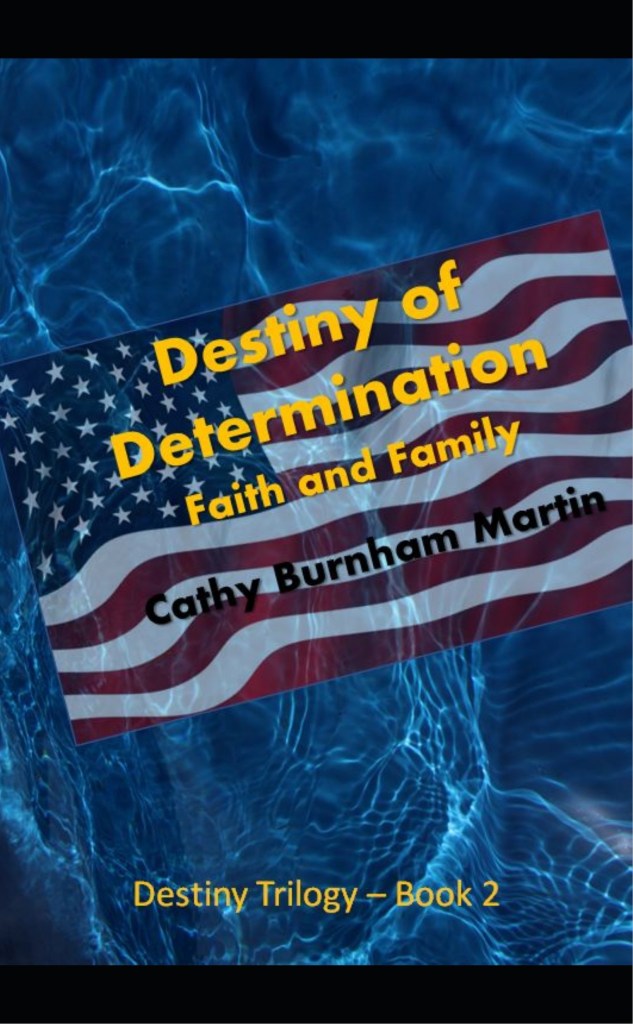
This historical fiction trilogy tells the story of the Armenian side of my family. Initially, I was inspired to write it to capture the heritage for future generations. Once the first book “Destiny of Dreams: Time Is Dear” came out, I quickly learned that the story brought a great deal of information and inspiration to a far wider audience.
3) What theme or message do you hope readers will take away from your book?
Themes in the trilogy focus on family, faith, love, and perseverance. With so much divisiveness and war and seemingly ceaseless examples of man’s inhumanity to man, bigotry, and intolerance continuing all around the world, I hope readers will appreciate the message that we can and must do better. We need to forgive our human weaknesses, but we also live far better lives, when we make calm decisions and learn to respond, rather than react to the bitter challenges that may be thrown in our paths.
4) What drew you into this particular genre?
I’ve written several non-fiction works in a sort of “life lessons” genre, as well as 9 cookbooks, because I am a dedicated foodie. I have also written a couple of light comedy books, told from a dog’s perspective. Well, I guess I should say that the dogs wrote their stories. I merely held the pen because they don’t have thumbs. So, I should not classify them as fiction, as the dogs swore every word was true.
Writing facts… nothing but the facts… is what journalism taught me. On the other hand, living life and performing in musical theatre taught me the importance of celebrating creativity, drama, and comedy. Historical fiction shines as a happy combination for me. I love researching to be sure the facts, settings, and historic reflections are accurate. I learned that I truly enjoy fictionalizing, which lets me use characters to bring slices of history to life.
5) What social media site has been the most helpful in developing your readership?
Facebook is definitely my social media site of preference. While I write articles for my GoodLiving123.com website, I can repost them on sites like LinkedIn, Instagram, and Twitter. However, I found a particular hunger… a need… for positive thoughts and comments on Facebook. Friends and Followers… whether they hail from childhood or various stages in my career or from reading my books… have been most generous in their comments and support of my endeavors. I have also started reaching out on Facebook to encourage readership of my books and audiobooks, particularly when someone has expressed a specific need that I believe a particular publication can help meet.
6) What advice would you give to aspiring or just starting authors out there?
I am very enthusiastic about encouraging aspiring authors to follow their hearts, even when they must be their own cheerleaders. Naysayers often come in the form of those closest to us. It’s the old put-downs, like, “You’ll never make money as an author.” So, what?!!? I like to remind writers to keep on sharing… keep on writing. When people ask why I write, I love honestly saying that I write because the words and stories simply must come out!
7) What does the future hold in store for you? Any new books / projects on the horizon?
While none of us truly knows what our futures hold, I continually add to my “To Do” lists as if I had a million tomorrows to get all the projects done. I have absolutely no idea how to be bored, as I am regularly working on 2-3 books at a time. The next book will be the Destiny trilogy’s conclusion, which will be released in 2023. I also have a few more food-oriented projects in the works as well as a couple of mysteries. I keep hoping for that elusive 48-hour day!
About the Author
Born in Goffstown, New Hampshire, Cathy Burnham Martin’s eclectic career path wove through recruiting, communications, television broadcasting, management, and bank organizing. An active board member and community volunteer, she received Easter Seals’ David P. Goodwin Lifetime Commitment Award. This professional voiceover artist, journalist, corporate communications geek, and dedicated foodie earned numerous broadcasting awards as a television news anchor. She wrote, produced, and hosted dozens of groundbreaking documentaries, TV specials, and news reports, ranging from the Moscow Superpower Summit and the opening of the Berlin Wall to extensive coverage of New Hampshire’s First-in-the-Nation Presidential Primaries.
Some of her most challenging work includes news stories behind the Iron Curtain under the scrutiny of foreign military personnel touting loaded AK-47s. While she met and interviewed Presidents and candidates, other interviews ranged from inventor Dean Kamen, best-selling authors Og Mandino and Richard Lederer, and Star Trek originator Gene Roddenberry to Popcorn icon Orville Redenbacher, Boston Pops conductor Arthur Fiedler, superstar New Orleans chef Paul Prudhomme, and filmmaker Ken Burns.
Among little-known facts about Cathy? She once sang with The Beach Boys and with the marvelous Marvelettes, shared a dressing room with Ella Fitzgerald, and emceed for Tony Bennett. She also performed on stage with comedian Adam Sandler, actor Dan Lauria, and director Alek Keshishian.
Dubbed The Morale Booster, this 20-year professional member of the National Speakers Association remains a business speaker, media coach, and member of the Actors Equity Association. Proud of her Eurasian heritage, Cathy Burnham Martin narrates her own books and those of other authors. Audiobooks appear on such sites as Audible.com as well as Amazon and iTunes. Author of 20+ fiction, nonfiction, and cookbooks, Cathy writes articles for her http://www.GoodLiving123.com website. When not writing or in full production mode, Cathy and her husband enjoy traveling, boating, music and visual arts, and great food.
1) Tell us a little bit about yourself. How did you get into writing?
Before I start, I would like to thank you for the interview and your review of The Lone Leopard.
I was born and brought up in Kabul, Afghanistan, and claimed asylum alongside my parents in the UK in 1999. I finished all my higher education in the UK. I am married and live with my wife and three children in a quiet town in England.
How did I get into writing? I love writing, especially about my country Afghanistan. Therefore, I did my PhD on Afghanistan and subsequently published some two dozen articles and a book (more below) on my native land.
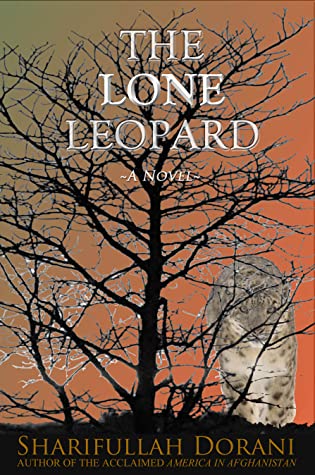
The idea for writing The Lone Leopard, however, was actually conceived in 1992 when the ‘pro-Communist’ Najibullah regime collapsed and the mujahideen took over Kabul. Turning Shia against Sunni and vice versa, setting Afghanistan’s main ethnic groups of Pashtun, Tajik, Hazara and Uzbek against each other, and accusing each other of uniting with the remnants of pro-Communist members and thus not being Islamic enough, the 15 or so mujahideen groups fought each other in the streets of Kabul, killing tens of thousands of innocent Kabulis, displacing hundreds of thousands, and turning half of Kabul into mudbrick rubble with bombs, rockets and cannon fire.
Taking refuge in the basements of our blocks while the gunfire, shelling and fighting continued, I decided (if I made it alive) to write about what we ordinary Afghans went through. Unlike thousands of Kabulis, I was fortunate enough to live, and 18 years later, in 2010, I started writing about the experience: after 12 years of writing/rewriting (and extensive research, including consulting nearly a thousand sources), The Lone Leopard is the result.
Advertisements
2) What inspired you to write your book?
I’ve partly answered this question above. I’d also like to add that my only inspiration is my people and country. I wanted to tell the contemporary Afghan and Afghanistan story from an Afghan perspective. Ahmad, the protagonist of my novel, therefore, gives a first-hand account of what I (and most Afghans) have experienced over the past four decades in Afghanistan (and in exile). My previous book, America in Afghanistan, published in 2019 by IB Tauris/Bloomsbury, was praised by reviewers for its Afghan perspectives, and is found at, among other institutions, Oxford and Harvard.
3) What theme or message do you hope readers will take away from your book?
The reader will get to know a great deal about the principles of Afghan culture, particularly independence, courage, loyalty, justice, revenge, righteousness, pride, honour, chastity, hospitality, love, forgiveness, faith (Islam) and respect of elders (parents in particular), among others, and some of these themes, in addition to jealousy, prejudice, betrayal, guilt and atonement, the book explores.
The Lone Leopard is a historical war drama. Once the reader reads it, I hope they will see how things have been in Afghanistan; they will understand the history and politics of the past four decades in Afghanistan; and they will see the real Afghan and Afghanistan.
The Lone Leopard is a work of contemporary literary fiction, too, as it is solely based on human relations. The focus of the novel is primarily on the lives of Ahmad (15, a conservatively traditional Pashtun, dutiful child, gifted student, thoughtful but faint-hearted) and Frishta (16, progressive, Tajik, women’s rights activist, compassionate, outspoken and brave): will the faint-hearted Ahmad learn from Frishta to fight his cowardly side and stand up for himself and for what is right, even if his stance opposes traditions/his controlling mother; will the fearless Frishta journey from a middle-class girl to ‘the president of Afghanistan’; will Ahmad and Frishta with conflicting personalities/backgrounds fall in love; will the middle-class Wazir (15, Ahmad’s best friend/classmate: Pashtun, fearless, the school gangster, pro-mujahideen) ever fulfil his dreams of killing a Communist and joining jihad; and will the loveable Baktash (15, Ahmad’s best friend/classmate: Tajik/Hazara, timid but lovable, pro-Communism) live a normal life without getting bullied for being different. So, the reader will get drawn into a time (the 1980s-2010s) when historical events – several invasions of Afghanistan over the past four decades in particular – give rise to nationalistic and religious conflicts and impact the lives of the four characters and their families.
Moreover, The Lone Leopard is a mother-son relationship story, as familial aspects constitute a significant part of the narrative, especially (the importance of) parental respect, which you have highlighted (and liked) in your review.
Incidentally, in addition to the Western reader, when writing the novel, I had the future Afghan generations in mind, especially for them to see what mistakes their ancestors committed and how they should avoid repeating them. One of them is how discrimination, alienation and division can destroy a country; and how unity, inclusion and empowerment of people – regardless of their sex, tribe, ethnic origin, religion, etc. – can help build a better country and, by extension, a better world.
4) What drew you into this particular genre?
The Lone Leopard can fit into several genres: literary fiction, women’s fiction, young adult fiction, coming-of-age, family drama, war drama, and romance. For me, however, it will always remain historical fiction drama, the story of contemporary Afghanistan. I chose the historical genre because I have a PhD in IR/history, have taught the history of Afghanistan and have lived through the historical periods The Lone Leopard covers. As a creative writing teacher may say, ‘write what you know’.
Advertisements
5) What social media site has been the most helpful in developing your readership?
I am not very good at social media and only use Twitter. I also have a LinkedIn account, but I have not made much use of it.
6) What advice would you give to aspiring or just starting authors out there?
Read more, research a lot, and get a good command of creative writing techniques before starting your book. And keep it consistent: make sure you write/research/read every day, even if it is for half an hour. Oh, one more thing: start today; don’t wait for tomorrow.
7) What does the future hold in store for you? Any new books/projects on the horizon?
My next book will focus on why the Doha Peace Agreement between the Taliban and America failed and the possible consequences of the failure for Afghanistan, the region and the international community.
Advertisements
About the Author
SHARIFULLAH DORANI was born and raised in Kabul, Afghanistan, and claimed asylum in the UK in 1999. He has undergraduate and master’s degrees in Law from The University of Northampton and UCL, respectively. He completed his PhD on the US War in Afghanistan at Durham University and authored the acclaimed America in Afghanistan. Sharifullah frequently returns to Afghanistan to carry out research. He is currently South Asia and the Middle Eastern Editor at The Centre for Strategic Research and Analysis (CESRAN International) and has written nearly two dozen articles on Afghanistan (and the broader region), international relations and law. He lives with his family in Bedford, England.
1) Tell us a little bit about yourself. How did you get into writing?
I have spent nearly three decades in education, starting my career in a bilingual 1st and 2nd grade classroom in Los Angeles as part of Teach For America, and most recently running a private school in the U.S. Virgin Islands. I have managed to have a parallel career in entertainment – recording voiceovers in both English and Spanish for everything from commercials and corporate videos to network promos and video games.
I have kept a journal since college – I have found that helpful to clarify how I think and feel. My first major writing project was a unique way to celebrate my upcoming 40th birthday. I spent that year writing down my favorite stories I’d shared over the years with friends and family, and most of that writing I did on my daily train commute into and out of New York City. It helped turn the worst part of my day into my favorite part of the day! The result was my first book: My Top 40 at 40: Making the First Half Count (A Modern Man’s Story Collection).
Advertisements
2) What inspired you to write your book?
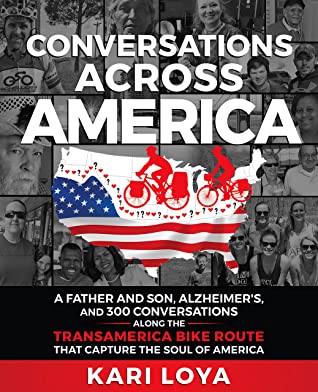
My dad and I biked across the country along the TransAmerica Bike Trail in 2015, something we’d dreamed about for several decades. He was 75-years-old at the time and had early-stage Alzheimer’s. Since I had done other shorter bike adventures in the past, I knew that the most interesting thing for me about bike travel was the people that came up to us along the route. With that in mind, I made a point of transcribing all the conversations we had with people along the way and asked if I could take their photo. I figured it would make a really cool coffee table book. It was only after the trip that I realized there was a much bigger story to tell – the father and son story, the story of facing Alzheimer’s, and the story of adventure – could we even pull this off?
3) What theme or message do you hope readers will take away from your book?
I hope readers reflect on their own relationship with their father and their children – and on what really matters to them.
I hope readers gain a better sense of the Alzheimer’s journey – more than six million Americans have Alzheimer’s – and develop helpful perspectives for navigating through the difficult terrain.
I hope readers appreciate the diversity and generosity of the American people, especially across Rural America. We have a lot more in common than social media and media would make us think.
Most importantly, I hope readers will feel inspired to seize the day with someone they love – whatever that means to them.
4) What drew you into this particular genre?
I wasn’t thinking about genre. I simply wanted to share what happened in the hopes that this might be helpful to others.
5) What social media site has been the most helpful in developing your readership?
This is still to be determined. I haven’t historically been active on social media. To be blunt, I’d rather be outside exploring, creating, and connecting deeply with others than posting, swiping, and counting “Likes.” That said, I am beginning to use in a limited fashion LinkedIn, Twitter, and Instagram. I’m treating them like my car. I love my car, especially for road trips. But in a perfect world, I’d probably walk and bike most places and rarely be in the car!
6) What advice would you give to aspiring or just starting authors out there?
Keep a journal regularly and write about anything that captures your fancy. I find the most interesting things to write about are often the extremes – whatever has you really excited, and whatever has you really pissed. At least that’s a great starting point! The let your curiosity guide you.
Advertisements
7) What does the future hold in store for you? Any new books/projects on the horizon?
As part of a creative sabbatical, I have also undertaken a musical journey, systematically building my skills and releasing 40 songs since 2020. It’s a really fun way to synthesize life experiences, observations, and ideas in a three-minute story. As for genres, I’m all over the map – unabashedly eclectic – but most of my music falls into what you might hear if Keith Haring, Dr. Seuss, and Ricky Martin formed a band 😊
I am also building an executive coaching practice, helping people get from Point A to Point B, whatever that means to them. And if the right opportunity to lead another school or educational organization comes along, I’ll seize it – I love being part of learning communities.
About the Author
Kari Loya is an educational leader, storyteller, and adventurer. He has worked nearly three decades at a range of innovative educational institutions, beginning with Teach For America in 1993 and serving most recently as headmaster at the Good Hope Country Day School in the U.S. Virgin Islands, when he received a Klingenstein Fellowship from Columbia University. He is also an Emmy-winning bilingual voice talent, musical artist, and author. He spoke at TEDx UC Davis in April 2022 on the theme of “Metamorphosis.” He holds a BA from Dartmouth College and an MBA from Columbia University. He currently lives with his wife and daughter in Sugar Land, Texas.
1) Tell us a little bit about yourself. How did you get into writing?
Well, when I say I’m a lifelong writer, I really am. I can’t remember a time I was not writing! My parents are both artists and writers so I grew up around art and literature. We all read aloud to one another long past the point most kids would read with their parents, and I still pick up that tradition again sometimes when I’m with one or the other. I have fond memories of my Mom making up fairy stories on the spot for me while we were running errands, and the excitement of seeing creators at the comic conventions I’d attend with my Dad whenever he was a guest. It was a very creative and inspiring upbringing so it’s really no surprise I wanted to tell my own stories quite early on.
Advertisements
2) What inspired you to write your book?
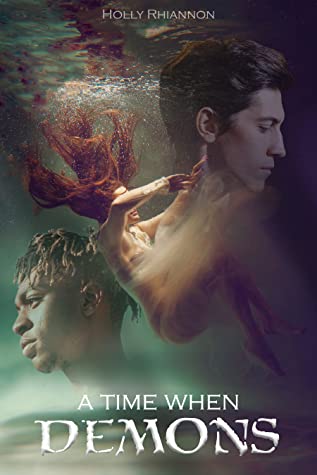
It’s kind of funny. As someone who has been writing for so long, I have quite a few projects that have been in the works for years and years… decades even. But, when it came to getting my first full indie novel out there, A Time When Demons was a very new idea. I came up with it during Preptober of 2020 as my first NaNoWriMo novel, completed the first draft in November 2020 then spent the next year editing it, querying for a bit, then self publishing.
Because of this, the “inspiration” process was a bit formulaic because I was working quickly, and experimentally and didn’t even expect to finish it. First, I picked witches. Then the big idea that pushed the story further was the concept of The Dreaming. I think I just thought that one up lying in bed one night fretting about mortality. Like with many of my stories, they’re inspired by classic teen horror and fantasy. Buffy the Vampire Slayer was a huge influence on me during my formative years so I think I’m always trying to attain some level of storytelling that can be on that level. The Dreaming is one of the things in this novel that I’d like to hold on to for future works and experiment with more.
3) What theme or message do you hope readers will take away from your book?
If you put the work in and stay true to yourself, you can find redemption. When I write, I rarely have a message I want to convey from the start, but rather let it come out as I write. A Time When Demons is very much a coming of age story, and redemption is a major theme of it.
4) What drew you into this particular genre?
It’s all I know, really. Ever since I sat down in my Dad’s studio and he played through the entirety of Alice Cooper’s “Welcome to my Nightmare” when I was about twelve, my life has revolved around horror and theatrics. As I mentioned before, Buffy only added to this. I’ve always been a spooky weirdo. That’s what I know best, so that’s what I write. That being said, I do have goals to explore other genres and challenge myself more in the future!
5) If you could sit down with any character in your book, what would you ask them and why?
Good question! As the author, I know all the inner workings of my characters. So, I’m going to pretend I’m in the novel myself, as a friend of my characters and take the chance to grab coffee with Kami. Dearest Kami, how on earth do you put up with having a best friend who’s a witch when you are a mere mortal? I think I’d lose my mind from jealousy! Or at least push a lot harder to find out more about the Wicca world and what other paranormal stuff might be out there. Vampires? Are they real? Can we find one to bite me?
6) What social media site has been the most helpful in developing your readership?
Twitter has been a really fun and welcoming community. I know, kind of the opposite of what most people say about it but I’ve never had a bad experience. The writing community is really supportive and friendly and the algorithm hasn’t been completely obliterated so it is still possible to get interactions and bring in new followers, readers, and friends. Aside from that, I have had a lot of fun building my Discord community. It’s a bit more of an intimate/concentrated space with deeper conversation as there are about 50 of us at the moment which is quite different from the large buzzing hive of Twitter.
7) What advice would you give to aspiring or just starting authors out there?
First of all – there is no such thing as an aspiring author. Aspiring *published* author? Sure. But if you’re a writer, you’re a writer. Establish that first. If you’re a writer, you aren’t going to have any other choice but to do it, and, if that’s you, that is exactly what you have to do.
Sit down every day and write something, even if it’s one sentence. Don’t wait around for inspiration to hit – creativity is very much driven by that magical feeling, but it is also a lot of work. Find your community. Watch interviews and educational videos on YouTube. There’s a massive amount of support out there for authors these days and we want to help you tell your story!
8) What does the future hold in store for you? Any new books/projects on the horizon?
Right now I am working on launching a small publishing company. I’m not going to say much on that yet, but definitely keep an eye on my social media and YouTube channel as there will be announcements coming out before the new year. In addition to that, I’m always writing! It’s NaNoWriMo season at the moment, and I’m a Municipal Liaison so there’s a lot going on there with prep, helping new writers, and getting my own novel finished. This year I’m doing “Rebel WriMo” so will be finishing an old project called “Eternity” which is very exciting.
As for my next published work… it’s likely going to be the first novel in my fantasy epic “Synterra”. Again – watch my social media for updates on that!
Advertisements
About the Author
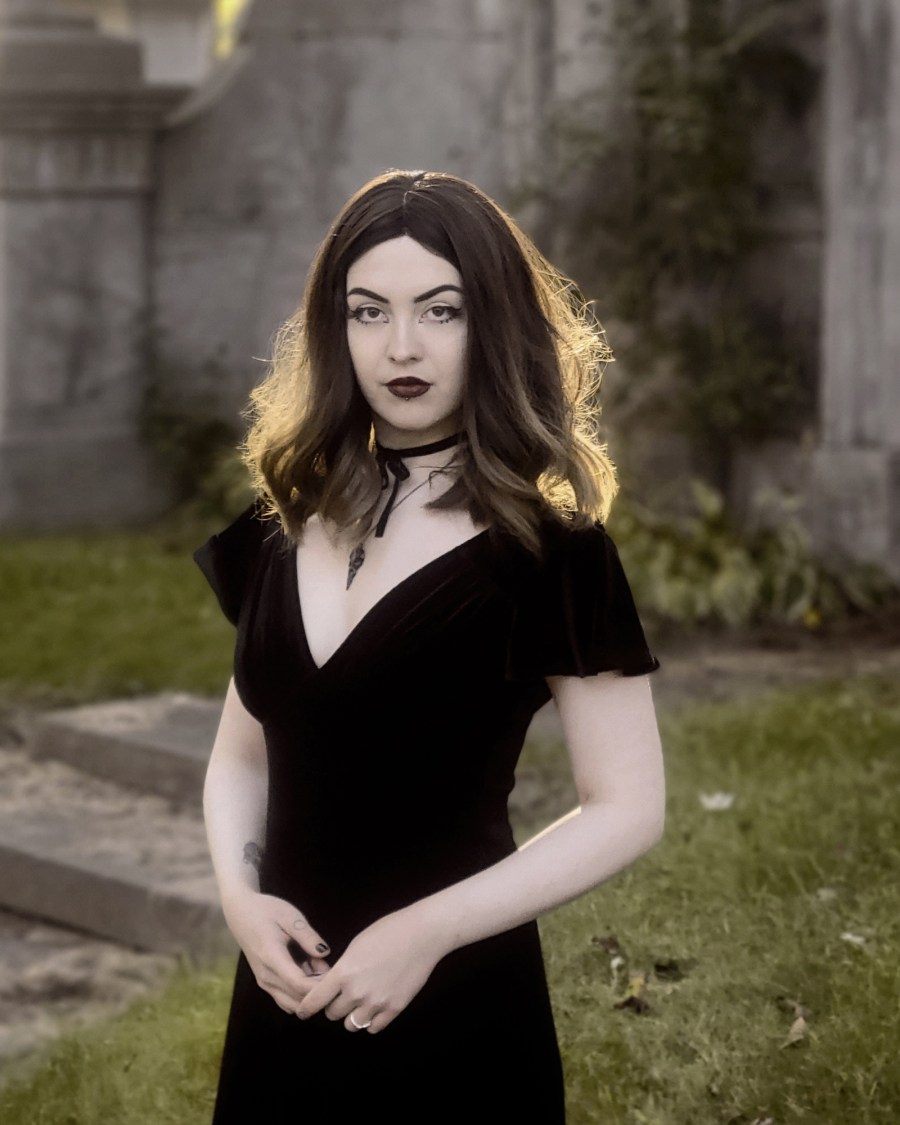
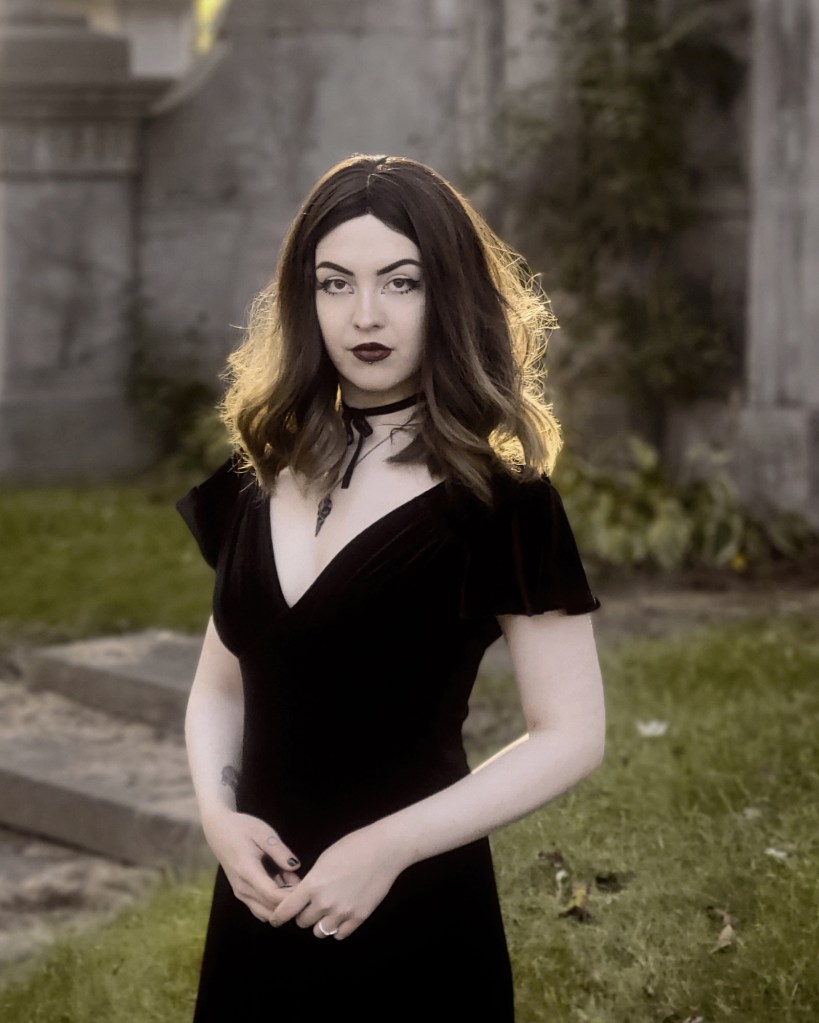
Holly Rhiannon is a life-long writer who has previously self published one novella and two graphic novels. After becoming certified in photography, attending a few years of Fine Arts at the University of Manitoba and running a successful alternative art event in her hometown of Winnipeg, she moved to Montreal to pursue the field which has always been closest to her heart: literature. A Time When Demons is her debut full-length novel for young adults.
I wanted to be a writer from childhood, but didn’t think of myself that way until after college, when I decided to become one. Tired of school and knowing poets don’t earn much, I began supporting myself, my wife and our daughter as a commercial sheet metal worker on grain elevators in Wichita, Kansas, my hometown. In my thirties I did grad school in English, finishing at the University of Southern California, where I met my current wife, a filmmaker from Calcutta, India.
My wife and I taught college writing for twenty years, then retired early to pursue our creative careers. I write novels, memoirs, stories, and poetry collections. I also help Jayasri make her documentary films, two of which have played nationally on PBS. My writing has appeared in several hundred literary journals, commercial magazines, newspapers and anthologies, and fifteen books.
What was your first experience with the paranormal
I had one ESP experience over fifty years ago, which I discuss under question 8. The book I just published, My Friend Richard, is a narrative memoir describing in detail my second experience with the paranormal, which has been transpiring off-and-on for over a decade now, ever since a close high school buddy came in his spirit form to live with my wife and me. When Richard arrived, I had an open mind on the subject of ghosts, partly because my wife tells a vivid story about her grandfather, who in the days after his death came to see both her and her cousin, his favorites among his female grandchildren. My wife is an unusually rational person, truthful to a fault. If she says her grandfather’s presence came to say good-bye accompanied by the heavy rose scent of his funeral ceremony, then it happened.
What is one misconception people have about the paranormal that you want readers to know?
Most of us watch Hollywood movies, and the most powerful of them help shape our thinking. One problem with that is we can end up with many unfounded notions about, for instance, the paranormal. I believe films vastly exaggerate the drama of paranormal, usually to scare us out of our pants. The truth is calmer and more mundane. To me the paranormal is as normal as regular existence. Richard, once my living friend, and now my spirit friend, I’m convinced is as real as me. He’s just in a different state. I’m a living being, composed of both body and spirit. He’s a spirit without a body, having lost it to death. Both of us are natural, and real, and neither of us is more real or more natural than the other. In other words, the “paranormal” is a generally unacknowledged part of the normal.
Richard has shown me that our laws of physics are woefully inadequate, because they omit entirely the spiritual components of our universe, which are as genuine as the material components, though less substantial. There is a whole other world of spirit alongside (or within) our world of the living. It was my luck to be contacted by a being from that other place, who had a favor to ask. He has become my guide in the zone where his world and mine intersect. Our continuing friendship has made me an explorer of the other side.
Are there any haunted locations that have fueled your interest in the paranormal field?
Definitely. In 2013, my wife and I visited the good ship Queen Mary, permanently docked in Long Beach Harbor and functioning as a hotel. We attended a ghost presentation by one of the ship’s officers, a true believer in the ghosts aboard his vessel. His lecture on those ghosts, which he and other ship employees have witnessed, along with film and stills taken of them, convinced my wife and me that the Mary is haunted by a number of spirits—men, women, and some children. I suspect not all ghost houses are real. But I think a ghost house running overnight on the Queen Mary would give you a decent shot at experiencing the real thing. And, if ghosts congregate on the Mary, they likely gather in other similar places.
What is the biggest takeaway you have from your experiences with the paranormal as expressed in your book?
My friend has proved to me I will have an afterlife, as we all will. There can be no doubt in my mind, because I’ve seen and interacted with someone whose afterlife is now over fifty years old. I doubt all ghosts continue in their spirit state as long as Richard has. Most of us I think, after a time in our ghost manifestation, move on, though I don’t know to where or to what. Perhaps our spirit moves into the body of another being, like many Hindus believe. All I know for sure is that we all have afterlives, whether brief or long or forever. Richard leads me to believe we may to some degree get to choose for ourselves what that afterlife will be.
Advertisements
If you could travel to one haunted location and investigate it, where would it be and why?
I don’t have to travel. The ghost I know best has lived with us for twelve or thirteen years at least, and apparently has no intention of changing residence. He seems to have settled into our master bedroom closet. However, he hasn’t been active since the first of this year, when he threw a temper tantrum, breaking a ceiling panel in our kitchen and stealing our new 2022 kitchen calendar. We haven’t found the calendar.
How much influence and power do you think people give to spirits or ghosts?
Hollywood gives ghosts a lot more power than I believe they actually have, simply to up their terror factor. Lacking a body limits an actual ghost in what it can do physically. I also believe ghosts are bound by rules, imposed by whom or what I don’t know. For example, I think spirits aren’t allowed to harm humans to any significant degree. When I asked Richard not to bother me for a while, he obeyed. He obeyed so well I thought he’d left us. Then I offended him with something I wrote (and he read) and he retaliated on New Year’s Day in our kitchen.
Besides ghosts, what other paranormal fields interest you?
I’ve experienced ESP and am curious about it. My daughter was 150 miles away when she was seriously assaulted. I was busy at work when it happened, but I felt the attack powerfully in my gut and knew it was my kid afraid and hurting. I didn’t learn what happened until later. This experience convinced me humans have psychic powers. I’ve seen that Richard has psychic powers too. It’s made me want to find out more about ESP. How many psychic powers are there and how can they be explained? I’d like to know more.
Advertisements
About the Author
William Hart is a novelist and poet living in Los Angeles. After earning a doctorate in English from the University of Southern California, he taught college writing courses in LA and wrote. Now he writes–fiction mostly–while helping produce the documentaries of filmmaker Jayasri Majumdar, his wife. Hart’s work has appeared in several hundred literary journals, commercial magazines, newspapers, and anthologies, and fourteen books. A pair of one-hour documentaries from Hartfilms aired nationally on PBS, the latest receiving Emmy nominations.
Tell us a little bit about yourself. How did you get into writing?
Sometimes it seems as if I was always a writer. When I was a baby, I used to love magazines and would rip out each page and wad it up. Maybe I was being a critic, but I like to think that I loved the paper, ink, and pictures—not to mention the sound of the crumpling paper. I have always loved books, reading, and writing. However, I don’t think I was ready to begin to write in earnest until I was in my late twenties, when I had enough life experiences.
Advertisements
What inspired you to write your book?
Rooted and Winged came about from the experiences I had throughout the writing of the poems and the memories that came to light during that period. The book took about five years to write as I began it after my chapbook Kin Types was published. Then, after COVID surfaced, I finished the final poems. These pandemic poems can be found in Section IV. Death, loss, aging, and terminal illness inhabit the final part of the book along with the lonely surreal feel of living in the first few months of a pandemic. “Hearing Aids” describes how my mother bought her first hearing aids during these scary months when we were both trapped within our homes almost two thousand miles apart, feeling isolated yet united:
“She pours tea there / and I pour mine here. Our spouts speak the same.”
What theme or message do you hope readers will take away from your book?
I hope readers draw what they personally glean from the poems, drawing upon their own perspectives and experiences. Writing poetry is a discovery process for the poet. I don’t know what I am going to learn until I complete a poem. From this collection, I found that the images of flight are meaningful to me as both a spiritual site and as a source of great power. But without roots to tie me to earth and its human and animal inhabitants, I would lose the balance that guides the power.
What drew you into this particular genre?
I have loved poetry since I was a child. I still love to read poetry, but I also enjoy memoirs and mysteries. I tend to write in short bursts of time regularly, which is very conducive to writing poetry. To write a novel, I would need large blocks of time. Also, I love the imagery and succinct quality of poetry.
Advertisements
What social media site has been the most helpful in developing your readership?
Definitely my blog, Writersite.org. I started it ten years ago and have made wonderful friends through blogging. My readers are so supportive of my writing and me personally. Facebook is an excellent way to share my writing with friends from different parts of my life and with other writers. I like Twitter because I can keep up with what is going on with other writers. Instagram is fun, but I use it more for my art journaling since it is a visual social media.
What advice would you give to aspiring or just starting authors out there?
Read, read, read in several genres, especially in the genre you want to write in. And take every in-person or online workshop or writing class that you can. Many free or low-cost ones become available, so watch for them. Don’t publish too soon. Even if you are planning a novel or full-length memoir, start with smaller projects and submit stories and poems to literary journals. Finally, don’t publish a book that hasn’t been adequately edited.
What does the future hold in store for you? Any new books/projects on the horizon?
I just completed my memoir in flash nonfiction “scraps.” Fittingly, it’s called Scrap: Salvaging a Family. I’ve also been assembling a chapbook of poems based on Little Red Riding Hood stories.
Advertisements
About the Poet
Luanne Castle’s Kin Types (Finishing Line Press), a chapbook of poetry and flash nonfiction, was a finalist for the 2018 Eric Hoffer Award. Her first poetry collection, Doll God, winner of the 2015 New Mexico-Arizona Book Award, was published by Aldrich Press. A Pushcart and Best of the Net nominee, she studied at the University of California, Riverside (PhD); Western Michigan University (MFA); and Stanford University. Her writing has appeared in Copper Nickel, TAB, The American Journal of Poetry, Glass: A Journal of Poetry, Verse Daily, Saranac Review, Lunch Ticket, River Teeth, and other journals. An avid blogger, she can be found at luannecastle.com. She divides her time between California and Arizona, where she shares land with a bobcat. Her heart belongs to her rescue cats.
Tell us a little bit about yourself. How did you get into writing?
I was born in the middle of the twentieth century and grew up in a middle-sized city in the middle of Illinois in the middle of the country, a middle child in a middle-class family. But there was nothing middle about my hopes and dreams. I knew I was different from my siblings and other kids in the neighborhood, but I wasn’t sure what that was. I started writing plays for my younger sisters to perform in when I was ten. In high school I won a short story contest sponsored by the local newspaper. In college I wrote poetry. In the following years, I started several novels, wrote short stories and more poetry, and when I embraced my sexuality in my mid-twenties, writing became a way to express my new gay awareness. After college I began working as an English as a Second Language teacher both in the States and abroad. It was through this career I discovered travel and had the chance to live in and/or travel to many countries. My first published works were travel articles, mostly for gay publications about the experience of traveling as a gay man in other lands. After thirty-five years of teaching, I decided to take an early retirement and seriously pursue my writing, digging out a lot of my old writing and polishing it for publication. Since then, I have published seven novels and a book of short stories as well as having several of my short stories included in anthologies.
Advertisements
What inspired you to write your book?
One of my fans, after reading my novel Four Calling Burds, expressed an interest in knowing what happened next in the lives of the four Burd siblings. She asked me if I planned to write a sequel and I gave my standard answer, which was that I didn’t write sequels. It was up to the reader to imagine the rest of the story. At that point, I had published five novels and had almost finished writing the sixth without even thinking of doing a sequel. But she did have a point. I sometimes wondered what had happened to the Burds siblings myself. I struggled with the concept of how much I should write for my readers and how much for myself.
The book in question was a contemporary novel set around the year 2017, and at the end of the book, all the characters were living in the San Francisco Bay Area. To write a novel set in 2019-2020 they would have aged only a few years. I started thinking about characters from two of my other novels, who would also be living in the Bay Area and only aged a few years. Wouldn’t it be fun if some of the characters from the other novels met and interacted with each other and the four Burd siblings? And thus, the novel was born. In one case, a character from one novel meets and falls in love with the character from another. A woman from my novel, Tio Jorge, has become an immigration lawyer and helps the Mexican boyfriend of the Burd sibling, AJ. At one point, there is birthday party, which brings all the major and many of the minor characters from the three novels together. They meet, socialize, flirt, and at the end, all band together to search for a teenager who has gone missing from the party.
What theme or message do you hope readers will take away from your book?
I have a quote on my email page from Edward Albee that says, “All art should be useful. If it’s merely decorative, it’s a waste of time.” To me, that means my writing should have a strong message, educate if you will, as well as entertain. I have been accused of being “too political,” but I want readers to learn about other cultures and ethnicities. My writing has themes of diversity, racial equality, immigrant rights, an all the issues the LGBTQ+ community deals with. I have always enjoyed writing fictional characters who are very different from me in age, ethnicity, sexual orientation, gender, and culture. It is a challenge that thrills me. I have written many Latinx characters and though I speak Spanish, I am very much a product of the North American Midwest. I have written Black characters though my genealogy tells me I am 99.7% of Northern European background. I write lots of heterosexual characters though all indications are that I am homosexual. I have written a transitioning FTM character though I identify as cisgender. I have heard other writers express that they would never presume to write a character of a different race/ethnicity. A former editor gave a novel I wrote with lots of Black characters to a Black sensitivity reader without telling my background. Apparently, I passed, and she wanted to proceed with the book. I don’t plan to stop writing diverse characters, but I always keep asking myself if I am being authentic.
What drew you into this particular genre?
I write what I like to read: literary fiction and contemporary fiction. I grew up reading American and British literary fiction, particularly early twentieth century writers. Then I discovered literary fiction written by gay authors such as James Baldwin, Alan Hollinghurst, Michael Cunningham, and others. I have never been drawn to genre fiction though in recent years I have read a few wonderful books that focus on gay characters in the genres of science fiction, romance, fantasy, horror, etc. Currently, I would say my writing is contemporary LGBTQ+ fiction with a literary bent. I’ve never been comfortable with the tag “gay fiction” though I’m marginally more satisfied with the updated label of LGBTQ+ fiction. Gay fiction tends to conjure up the image of romance or a coming out story, and yes, my books have elements of those scenarios. I certainly do not shy away from fully gay characters and ultimately my mission is to present homosexual men dealing with the world around them in both the ways which are unique to us as well as the ways we are the same. In many cases the men I write are challenged in a foreign setting where they must cope with how another culture sees them not only as a gay man, but also a foreigner. I do, however, like presenting an array of characters of all sexual orientations and identities.
Advertisements
If you could sit down with any character in your book, what would you ask them and why?
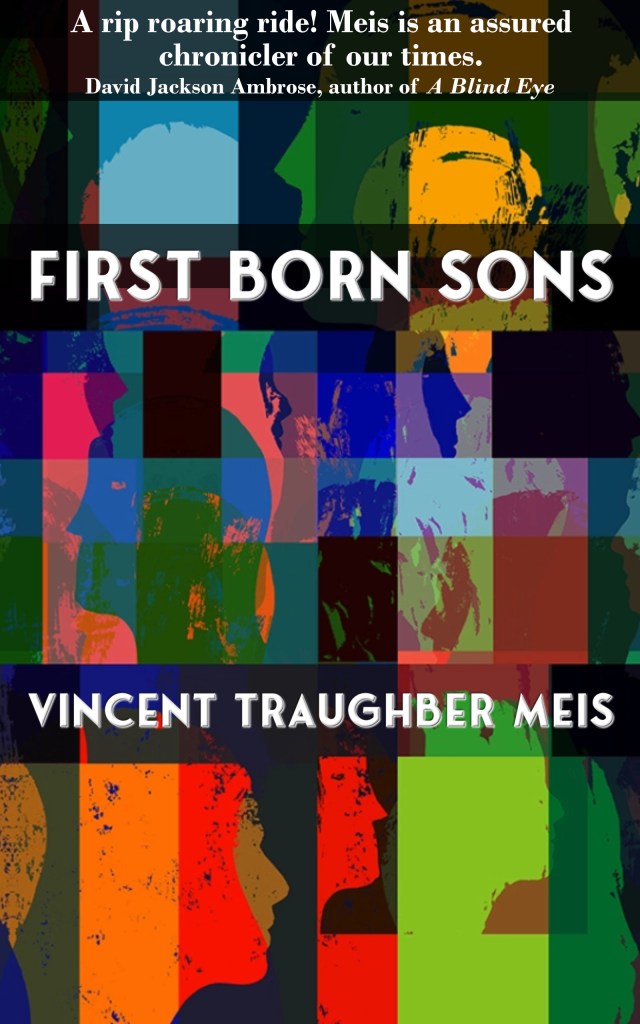
A character named M appears in two of my novels. In Four Calling Burds, she is trying to deal with the strong maleness inside her and first starts thinking about transition. In First Born Sons, M goes through the process of transitioning FTM. A writer always hopes to get a character right, but particularly if they fall into a marginalized group. I would like to ask him if I presented him realistically. Did I do justice to the incredible process of transition? Did I adequately portray the pain and joy of becoming the person he wanted to be?
What advice would you give to aspiring or just starting authors out there?
I try not to have regrets, but I do wish I had focused more on my writing in those early years when I clearly had the calling. I didn’t trust it and kept abandoning projects, easily distracted by other things going on in my life. In the eighties, I had some good feedback on what would eventually become my first novel. Instead of diving all in, I put it aside for twenty years. By the time I got to publishing that novel, I was already past my prime and I wasn’t patient about finding a publisher and decided to self-publish. I rushed it. Never, ever rush your first novel. Work like hell to get it as perfect as you can. Work like hell to get a publisher. Believe in yourself. I’m currently reading the latest work by someone who is an icon in the gay writing community because of his first novel, which was a marvel, particularly for its time. He has ridden the wave of success for forty years. I find his latest work mediocre and almost unreadable, and yet he has reviews from all the major publications and is on the New York Times Reader’s Choice list. The reviews from actual readers, many of them probably unaware of his past glory, reflect the impression I had of the book. The point I’m making is to give that first effort the absolute best you can, and then go back and rewrite ten more times. An early hit can carry you through during more difficult times. I feel like I have gotten better over the course of my writing, but I can’t go back and have a redo of my debut novel.
What does the future hold in store for you? Any new books/projects on the horizon?
I’m very excited about the future of my writing. Early next year my first Young Adult novel will come out from my current publisher, Colton’s Terrible Wonderful Year. One of the characters from First Born Sons, Colton, is a fourteen-year-old mixed-race son of a gay couple. He is entering the “danger zone” for young men of color in the United States. I extracted his story from the novel, added a lot of new details about his life and wrote the story in his first-person voice. It has a lot of funny parts, but also tearful moments as he and his gay dads struggle with what’s happening in the world. I’m also about three-quarters done with the first draft of a sequel to The Mayor of Oak Street, but forty years later. We learn what happens to Nathan after getting together with the man of his dreams at the end of The Mayor. Now a man in his early sixties, he is often lost in his memories of his loves and losses, the traumas and joys that peppered his life. He is given one last chance at love. Will he take it?
“All art should be useful. If it’s merely decorative, it’s a waste of time.” – Edward Albee
Advertisements
About the Author
Vincent Meis grew up in Decatur, Illinois and graduated from Tulane University in New Orleans.
He has worked as an English as a Second Language (ESL) teacher in the San Francisco Bay Area, Spain, Saudi Arabia and Mexico, publishing many academic articles in his field as well as articles about teaching ESL overseas. He has also traveled extensively in Europe, North Africa, the Middle East, the Caribbean, and Central and South American. He is fluent in Spanish. As result of his travels and time abroad he published a number of pieces, mostly travel articles, but also a few poems and book reviews, in publications such as, The Advocate, LA Weekly, In Style, and Our World in the 1980’s and 90’s. His travels have inspired four novels, all set at least partially in foreign countries: Eddie’s Desert Rose (2011), Tio Jorge (2012), and Down in Cuba (2013) and Deluge (2016). Tio Jorge received a Rainbow Award in the category of Bisexual Fiction in 2012. Down in Cuba received two Rainbow Awards in 2013. Deluge won a Rainbow Award in 2016. Recently his stories have been published in several collections, including WITH:New Gay Fiction, Best Gay Erotica Vol 1and Best Gay Erotica Vol 4. In December 2019, his fifth novel Four Calling Burds will be published. In 2021, he has published two books with NineStar Press, The Mayor of Oak Street, a novel, and Far from Home, a collection of short stories.
1) Tell us a little bit about yourself. How did you get into writing?
– I got into writing because of my fascination with the stories woven by the many animes and fantasy stories I’ve seen throughout my life. That with the added bonus that people said I had a bit of a talent for writing kind of collimated into me trying to throw my hat into the ring. The only thing I will say about my life is that it can all be summed up in one word, and that word is persistence.
Advertisements
2) What inspired you to write your book?
– I sight two light novels and one anime that jump started this little story of mine. The two light novels were The Rising of the Shield Hero and Overlord and the anime that was a major help to me was Fullmetal Alchemist Brotherhood. But the funny thing is that I had six chapters already written before I even watched Fullmetal Alchemist.
3) What theme or message do you hope readers will take away from your book?
– I have two themes that I want my readers to really take from my book, the first thing is that family is what you make it. The other one was that fate can never bind it, but I’ll put more emphasis on that theme in later books.
4) What drew you into this particular genre?
– I have a unique love for both horror and isekai (trapped in another world) fantasy stories.
5) If you could sit down with any character in your book, what would you ask them and why?
– I would sit alongside Malcom and ask him how it felt getting his head cut off. I would ask because I always wanted the power to detach and reattach body parts at a whim.
6) What social media site has been the most helpful in developing your readership?
– I’m going to be honest, I’ve tried a good many writer sites and have found little to no success when it comes to readership.
7) What advice would you give to aspiring or just starting authors out there?
– Find the best editor your money can buy, trust me it goes a long way with helping your book.
8) What does the future hold in store for you? Any new books/projects on the horizon?
– I don’t know what the future may hold. I’ll be honest, it doesn’t look too hopeful but I won’t let that deter me. I will make sure that later in life that more books will be released. And hopefully an anime will come out as well.
Advertisements
About the Author
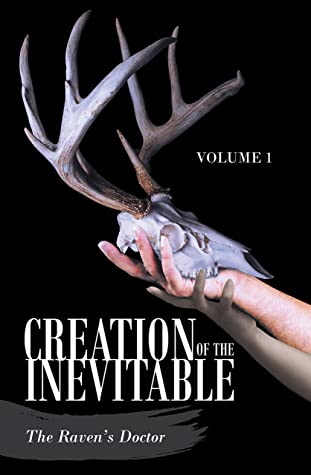
The Raven’s Doctor likens himself to a weaver; his computer is the loom, and the words are the threads. Every day, without exception, the Doctor weaves his tale throughout. Additionally, he will examine his work closely to make sure there are no visible nicks or crevices. He aims to make the reader feel as though they are a fly on the wall witnessing the action take place in real time. What more could The Raven’s Doctor want for? He will also weave his book such that it may continue beyond his death for future generations.