1) Tell us a little bit about yourself. How did you get into writing?
I am a former engineer and forensic expert from Bulgaria. I prefer silence and loneliness.
From what I read over the years, I realized that some books are like portals to other worlds, and that these worlds become real when they meet the deep thought of the author and the imagination of the reader. I started writing because I decided I could create my own worlds that I didn’t find in the books I read.
Advertisements
2) What inspired you to write your book?
My book is an attempt to answer the question of whether it is possible to overcome the limitations of existing and creating a new world of dreams comes true. My characters are not looking for excuses but for a path (sometimes wrong) to their own identity.
3) What theme or message do you hope readers will take away from your book?
Some of the themes in my book are: change as a path to salvation or destruction, the clash between being and mind, dream as a path to one’s own unknown worlds.
4) What drew you into this particular genre?
My great addiction to fairy tales and fields of imagination. I try to reach the limits of my imagination and express the inexpressible.
Advertisements
5) If you could sit down with any character in your book, what would you ask them and why?
Each of my characters is part of my imagination, but at the same time an independent subject. I would not like to ask them questions. They themselves choose the questions they seek answers to.
6) What social media site has been the most helpful in developing your readership?
Any site that broadens their horizons. One of my favorite sites, for example, is the Online Etymology Dictionary.
7) What advice would you give to aspiring or just starting authors out there?
They must first understand what they want. If they want to please the audience — to follow the prevailing fashion in writing. If they think they have a voice of their own that needs to be heard, they should start studying themselves and assess whether they have the strength to endure the inevitable disappointments in their path.
8) What does the future hold in store for you? Any new books/projects on the horizon?
It would be a weird story collection about new challenges such as virtual reality, artificial intelligence, loss of identity and their collision with a human mind.
Advertisements
About the Author
Valeri’s is a moody and particularly well written book. His prose is eloquent and artistic, as he shares his intriguing tales of mystery, melancholy and perhaps macabre. Despite a wide variety of genres, which seem to range from horror to sci-fi to historical fantasy, there is a common style throughout, and at times, as he moves from one narrative to the next, it becomes a little difficult to discern between them. That said, each of these little anecdotes is a distinct work of art and character.
He is a gifted author, with a talent for atmosphere. This collection of short stories is best read of an evening, ideally by candlelight, while fully immersed; in any other setting, the metaphorical and philosophical feel of it may be a touch more difficult to engage. They deserve no less than to be absorbed and indulged, and to do that you really need to get onto the author’s wavelength, which can best be described on occasion as abstract. I realized very quickly into the first tale that there was concentration and commitment required to optimize the full experience of this wonderful piece of work.
1) Tell us a little bit about yourself. How did you get into writing?
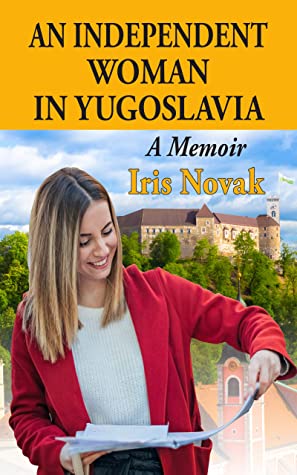
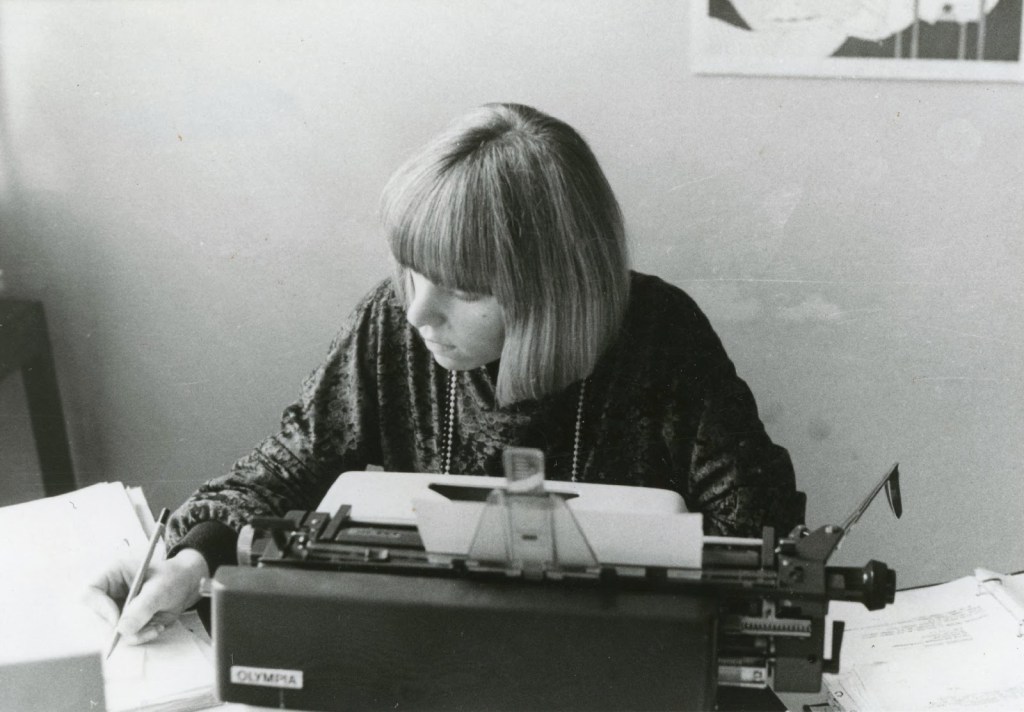
I have always liked writing. It began with essays in the elementary school, continued with writing to at least ten pen pals from the whole world, and I had to do a lot of writing also in the companies for which I worked. In the last twenty years I wrote a lot of textbooks for my students. My memoir is a bit different writing and I must say that I enjoyed it.
Advertisements
2) What inspired you to write your book?
I wished to let my children know how life was when their mother was young. I also wanted to show women that it was possible to join career and family life even in the ex-Yugoslavia where management places were reserved for men who were members of the Communist party.
3) What theme or message do you hope readers will take away from your book?
I hope that readers will understand and support one of the main points, namely campaign against domestic violence. And I also hope that they will struggle to achieve their dreams just as I did although I was a poor and frightened country girl.
4) What drew you into this particular genre?
I adore reading biographies, autobiographies and memoirs so it was easy to decide that I should write also my own memoir. I am thrilled if I read a full description of somebody’s life and it is not necessary that this person is a celebrity. Everyone’s life is something special and worth reading.
Advertisements
5) What social media site has been the most helpful in developing your readership?
Social media are (at present) my weak point. I have recently asked one of my colleagues to help my organize Facebook and I hope that I will soon get used to it. I normally communicate by e-mail and I respond each mail that I receive: info@leila.si.
6) What advice would you give to aspiring or just starting authors out there?
Everybody has an interesting story to tell. Do not keep it for yourself, share it with us! Read a lot to get the necessary writing skills and be honest and objective when writing.
7) What does the future hold in store for you? Any new books/projects on the horizon?
I would like to describe the second half of my life when I had to struggle with my son’s Crohn’s disease and with Slovenian government to establish a private college. I would also like to write about my pilgrimage Camino de Santiago (walking, about 800 kms). Perhaps I will find time to write one or two biographies of Slovenian women.
Advertisements
About the Author
The author writes under the pseudonym Iris Novak. She was born in the second half of the twentieth century in Slovenia, the northern part of the then Yugoslavia. She graduated from English and German, acquired her MA in Management and PhD in Librarianship. She worked in the international business, in librarianship, was director of a school for foreign languages and finally established her own business: employment agency and a college. The author lives in Slovenia, is married and has three children.
Iris Novak: AN INDEPENDENT WOMAN IN YUGOSLAVIA: 2 excerpts
Chapter 18, excerpt: University
The next morning, I came to the lectures again and many other students, too. The first two hours were cancelled. Then an old teacher began to lecture about old English literature. When he started speaking, my neighbors and I exchanged looks. His pronunciation was so poor, and he spoke English with such a horrible Slavic accent that we could not imagine how he’d become a university teacher. Of course, he had a PhD in English literature, but how did this justify such poor pronunciation? His lectures were boring, and he spoke so quickly that we could not write down his words. When we argued that we could not put down his words, he said that we could study old English literature in the library. The loudest student, the one from Texas, asked if we could borrow or buy one of his books, but he said that there weren’t any.
“So, we have to take down notes, don’t you think so?”
“You can, if you can’t remember what I say,” and he looked at her as if it was obvious that her intelligence quotient was under average. “But do not write everything, put down just what is essential. Only perfect fools put down every word that the teacher says.”
Some students tried to show that they were intelligent, so they stopped writing, but the majority of us silently admitted that we were simpletons and that we could not differentiate which of the teacher’s words were important, and which were not. All those who did not write notes and learn them by heart failed their exams. Then they borrowed our notes and some managed to pass.
This approach to teaching was the norm in Yugoslavia and has continued at the university level in Slovenia, with few exceptions until now. Even now, many people are not aware that students deserve fair treatment and respect. If one starts to say that teachers should focus upon students, he often hears that only really strict teaching, as was used in the previous century, forms really good professionals. What brainwashing we endured!
Chapter 50, excerpt: Everything Changed
Our youngest child brought a lot of happiness to our family. Both girls were old enough that they could sometimes take care of him, feed him or change his nappies. Lili was nine, Vali was six and Martin was two. The whole family observed how he started to raise his head, fix his eyes and stare at something for a long time, how he started to crawl and then walk.
During his first months, he enjoyed it when Tone held him in his arms, and it made my heart thrill when I watched them. As soon as Martin could sit at the table, we placed him in a special chair as an equal member of the family.
Each time I served a meal, my little boy showered me with compliments: “You cook so well, how beautiful, how wonderful you are!”
The child gave me more praise in one week than my husband in our whole life. I mentioned that Tone could try to imitate Martin, and Tone started with his old excuses, saying that he was not like other men who flattered women. He always spoke the truth and I should appreciate it, instead of expecting stupid courting behavior that was beneath him.
“I’m not speaking about courting. What I want to say is that you could sometimes praise me if I am well-dressed or if I cook something good. I do not expect you to bring me flowers.”
“Why should I speak such nonsense? You are certainly well-dressed, because your closet is full of clothes. I just don’t know why you always look as if you were going to a business meeting or to a concert. Other women dress in a sportier way. And I also don’t know why I should praise the food that you prepare. I eat everything, isn’t that enough?”
Martin interrupted him: “Mum cooks well, the best in the world.”
Tone stared at him: “Well, I wouldn’t believe that some people can flatter women even when they still wear nappies.”
“That’s not flattering – it’s a sign of love. The little creature loves me and tells me that, while you don’t care about me anymore.”
“Oh, come on, don’t speak like that. OK, if you want to, I will from now on start saying that I love you and that you cook well. Tomorrow, in the evening, I will be the first to praise you.”
On the next day, he came to dinner, sat down, placed his spoon beside his plate and tried to invent an appropriate compliment.
But Martin already stroked my hand and chirped: “What a good cook you are. I love you so much.”
1) Tell us a little bit about yourself. How did you get into writing?
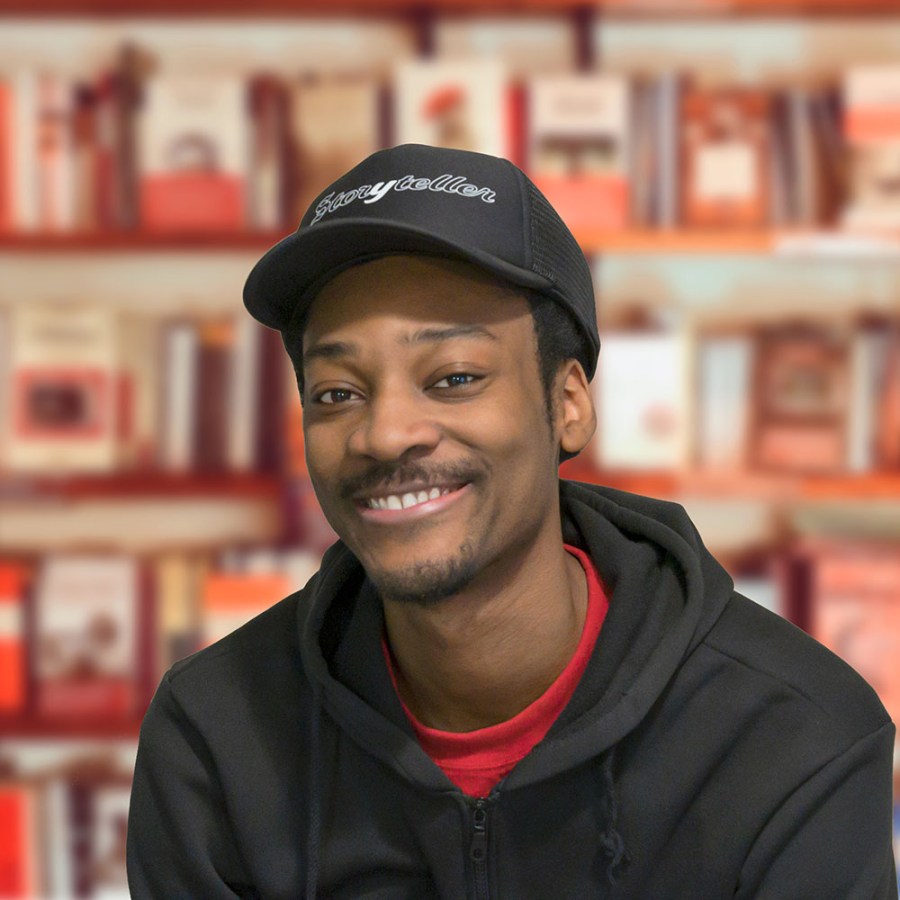
Hi, I’m Ethan Avery, a Young Adult Fantasy writer, amongst other things, and I’ve been writing for so long now I can’t remember how it all began. Reading and watching my favorite stories as a kid and wanting to create something as imaginative and amazing I’m sure was the start. Fast forward to now and I’ve written so much that it’s hard to keep track of it all. I suppose my love for the art of the craft is what keeps me coming back.
Advertisements
2) What inspired you to write your book?
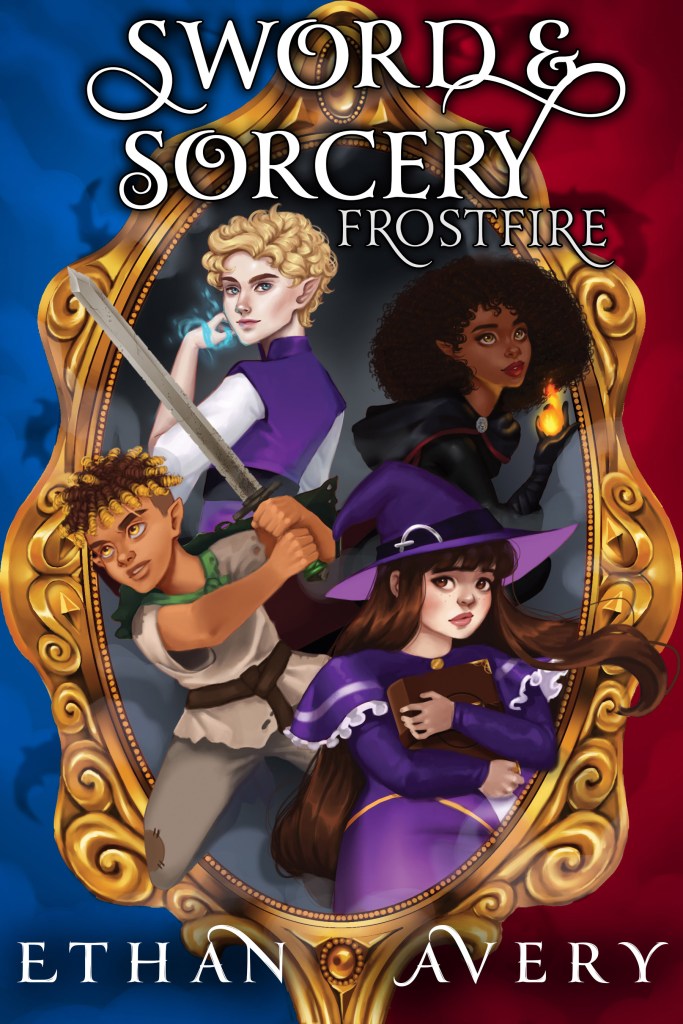
Sword and Sorcery: Frostfire my debut novel started as an idea about 15 years ago as I, unknowingly at the time in my youth, discovered my love for worldbuilding alongside my good friend Lamont Turner. It was just a bunch of random fantasy stuff at first, that over time was refined into an actual story. Worldbuilding is tricky like that for fantasy writers, it can be easy to delve so deep into lore that you need to make sure you’re staying focused on actually telling a story.
3) What theme or message do you hope readers will take away from your book?
I’m big on the idea of artists not telling people how to view their work. I’m sure that for some people it’ll have a bigger impact for them than others and there’s nothing wrong with that. I believe there’s a story out there for everyone that’ll speak to exactly what they’re going through right now. Sword and Sorcery: Frostfire might be that for someone today. Which is the real treat of being an artist. Someone else might connect with what we’ve done in a way we never expected or imagined, and it might only be that one person. But to me, that’s still more than worth it.
4) What drew you into this particular genre?
The books and movies my father passed onto me. He loves stories as much as anyone I’ve ever known and I can’t thank him enough for sharing his passion. Without him, this book would’ve never came to be.
5) If you could sit down with any character in your book, what would you ask them and why?
I’d ask them all what they thought of each other. There’d be some clever responses for sure.
Advertisements
6) What social media site has been the most helpful in developing your readership?
Hmm, I’m not actually sure. YouTube maybe?
7) What advice would you give to aspiring or just starting authors out there?
Stop editing, stop starting over, and just FINISH IT. It will be bad. That’s ok. You can edit it afterwards. But you have to finish it first.
8) What does the future hold in store for you? Any new books/projects on the horizon?
Plenty! I have an upcoming film, then it’s onto writing more books!
Advertisements
About the Author
Ethan Avery believes in the power of stories. As a child growing up in Ohio, they gave him a chance to see a bigger world, and to hear what life was like for people that didn’t look like him or believe what he did. And now, years later, he hopes to do the same for others. When he’s not writing novels, directing movies, or wasting other people’s time with his YouTube channel, Ethan plays video games (poorly), basketball (painfully), and D&D (problematically with praiseworthy peers). For more information on Sword and Sorcery and what Ethan’s writing next, please visit www.storiesbyethan.com
Tell us a little bit about yourself. How did you get into writing?
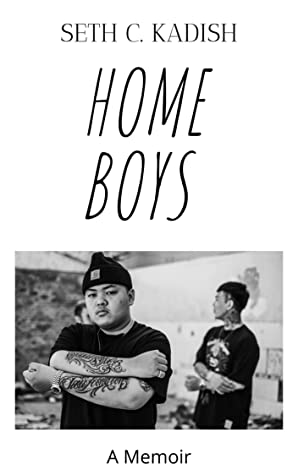
I’m a working psychologist and author. My recently published memoir, “Home Boys,” available on Amazon as an e-book or paperback, is the product of my interest and passion for psychology and writing.
I began writing in elementary school and later took creative writing courses in high school and college. I’ve always loved the written word as both author and avid reader. My writing background includes sketches, novel, nonfiction, play, and screenplay. I’ve had screenplays optioned and plays produced in New York and Los Angeles.
Advertisements
What inspired you to write your book?
I’ve been a clinician since the late 1990s, counseling a wide variety of clients ranging from maximum security inmates to celebrities, working folk, foster care kids, and anyone and everyone in between. But it was my early career work with Probation youth that deeply shaped my thinking and approach as a clinician. I had a tremendous affinity for these kids. They really touched my heart. “Home Boys” is equal parts remembrance, information, and love.
What theme or message do you hope readers will take away from your book?
One of the themes of “Home Boys” is “Look below the surface.” A supposedly bad kid may be a traumatized or misunderstood kid. It’s always worth trying to help him. Which is not to say that we should excuse or allow criminal behavior, but rather hold out for the possibility that a life can be turned around with structure and guidance.
What drew you into this particular genre?
I am by nature a teacher, and I believed that a memoir would be effective in reaching an audience of early career therapists who would benefit from reading about the successes and missteps of a seasoned clinician. I thought that a non-clinical audience would be moved by the story of Probation boys struggling to make their way through a difficult world.
What social media site has been the most helpful in developing your readership?
I post excerpts of “Home Boys” reviews as well as announcements about the book on Instagram and Facebook. I recently had fun shooting and posting a humorous video featuring my sister, playing the role of an extremely annoying fan, begging me for a printed a copy of my book. We’ll likely shoot a few more videos featuring her character. My hope (or fantasy?) was that the video would go viral. You can see it at Home Boys – The Price of Fame – YouTube.
What advice would you give to aspiring or just starting authors out there?
It may seem a bit trite or banal, but I think it’s important to write in your own style. Be yourself. There is no right or wrong way to write, only your way. Place a Kurt Vonnegut novel and a Philip Roth novel side by side and you’ll see what I’m talking about. Two distinguished writers who could not be more stylistically and thematically different.
What does the future hold in store for you? Any new books/projects on the horizon?
I am co-authoring a nonfiction book, “The Truth About Rehab,” with two colleagues and also plan to re-publish my middle grade novel, “Baymo” (the publishing company went under a few years ago and the rights reverted to me). It’s the story of a dog who wants to become a man and gets his wish.
I have several other complete or nearly complete novels and nonfiction works on the shelf. My goal is to publish them all over the next few years.
A final word: thanks for reading this interview and much gratitude to Anthony for hosting and posting. Please look me up on Instagram and Facebook and feel free to write me at drsethck@aol.com.
Advertisements
About the Author
Seth C. Kadish, Psy.D., Director of Group Therapy at PCH in Mar Vista and former Clinical Director of Milestones Ranch Malibu, was a Staff Psychologist at California State Prison, Los Angeles County, counseling maximum-security inmates. Prior to that, Dr. Kadish worked with Probation youth at Penny Lane in North Hills, CA where he was named Clinician of the Year 2001. He is the creator of Pattern Identification and Reduction Therapy™, a clinical approach based on his work in prison, group home, private practice and treatment center and is the author of Pop Your Patterns: The No-Nonsense Way to Change Your Life. In addition, Dr. Kadish has been featured in a variety of radio broadcasts, documentaries and television series including Ryan and Tatum: The O’Neals (Oprah Winfrey Network) and the award-winning documentary, Iceberg Slim.
1) Tell us a little bit about yourself. How did you get into writing?
I write contemporary romance, and I’m passionate about traveling, history, and languages. When I write, I try to incorporate elements of all of them into the stories. I’m currently learning how to speak modern Greek, and also speak Portuguese, Spanish (and have in the past also learned German, French, and Italian, although not fluent any more since I don’t use them much!). My romance trilogy has been translated to Spanish and is being also published in Greece. I’ve been involved for several years with the Houston Writers Guild, and I’m currently a Board member of The Ocotillo Review literary journal, which is published by Kallisto Gaia Press, and have also worked as a flash fiction editor for the journal. I also write other genres, poetry, flash fiction, and short stories under another pen-name. Since I was very young, I always wanted to be a writer.
Advertisements
2) What inspired you to write your book?
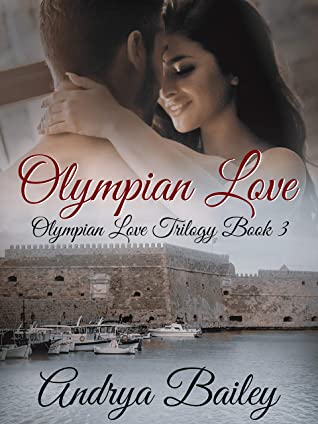
My most recent book was the third and final book in a romance trilogy, but the idea for the trilogy was born many years ago when I was visiting the museum of fine arts. I had the idea of a character visiting the museum and falling in love with a curator or archaeologist, then started to write about it and the trilogy came to life.
3) What theme or message do you hope readers will take away from your book?
Hope – hope to find love, even if it’s long distance and across cultures.
4) What drew you into this particular genre?
It was actually a challenge. Two friends of mine who are also writers challenged me to write a romance, and so the trilogy was born.
5) If you could sit down with any character in your book, what would you ask them and why?
It would be Nikos. I’d ask him what he felt when Sabrina left him in Athens and when he realized he was in love with her, because he didn’t go after her at the time and seemed to just have accepted that she didn’t want to be with him.
6) What social media site has been the most helpful in developing your readership?
My newsletter (it is the best way to get the latest news about my books, and I also hold giveaways frequently. Newsletters usually go out every two months or sometimes monthly if there are news worth sharing. To sign up for the newsletter: Newsletter sign up: http://eepurl.com/dgdaqD), followed by:
Andrya Bailey is an award-winning contemporary romance writer. She enjoys traveling and visiting museums and historical landmarks where she can learn about art and history, which she usually incorporates into her stories. She loves to write love stories with strong alpha males and exotic scenarios – after all, what better romance fantasy is there?
Olympian Passion, the first book in the Olympian Love trilogy, has received the 5-star seal from Readers’ Favorite and is the 2016 New Apple Literary e-book Contemporary Romance – Solo Medalist winner. Olympian Heartbreak, the second book, is a 2018 New Apple Literary “official selection” in the romance category.
Follow her Facebook page to find out more at facebook.com/andryabailey and on Twitter: @andyb0810.
*NOTE: In this interview, JM refers to author John Mondragon, and KA refers to author Kelly Alblinger*
1) Tell us a little bit about yourself. How did you get into writing?
JM: I’m an American-Palestinian husband/father of 2 beautiful boys, currently living in Maui, HI. I’m the youngest of the boys and I wasn’t very social growing up, so I always kept a journal with me to doodle and write whenever I got bored or needed to keep busy. Writing was my friend growing up and stuck with me ever since.
KA: I’ve been a writer and a storyteller all my life but I’ve only been writing professionally for about six years. I am a prolific ghostwriter with dozens of works to my (unnamed) credit, having crafted everything from blog posts to articles to DIY guides, biographies, memoirs – even a book based on an original musical score. My great-uncle was the author of the beloved novel “Where the Red Fern Grows”, so I think writing is in my DNA.
Advertisements
2) What inspired you to write your book?
JM: A couple things inspired this book. My oldest brother who plays one of the characters in the story suffers from a mental disorder, so he was a big inspiration. I also went through personal life traumas that helped create the story. Lastly, hearing of so many suicides/depressions of children and young adults played a big role in wanting to find a way to reach out to the public.
KA: Prior to TCIM, I had not ventured into the YA genre. It was challenging to write from the perspective of a twenty-something male, and even more of a test to factor in the state of the protagonist’s mental health challenges. My hope is that readers will find the voice authentic and representative of some of the challenges they face.
3) What theme or message do you hope readers will take away from your book?
JM: The mantra created for the book is “Speak Up and Speak Out”. My message as an advocate of mental health to readers is to help spread awareness on this subject and create a platform where people who struggle or feel embarrassed can feel safe and heard! There have been so many taboos surrounding mental health and I want to help normalize the illness.
KA: I find the characters in TCIM to be fascinating. They are different facets of the same person characterized as individuals. I wanted to portray the anxiety and isolation that we all occasionally feel, but in a more extreme way. Dissociative Identity Disorder gave me the opportunity to delve deeply into those feelings.
4) What drew you into this particular genre?
JM: The drama genre isn’t something we planned but sort of fell upon when the story unfolded. It turned out to be great and I really enjoyed the intensity of the book.
KA: My son is in the same age range as the characters in the book, and I wanted to write about personalities that he could relate to.
Advertisements
5) If you could sit down with any character in your book, what would you ask them and why?
JM: Charlie is by far the most impactful character in my opinion because when he arrives there’s a drastic turn in the narrator’s life. Charlie likes to take charge and is a bully who always gets his way. I would ask Charlie, why he is the way he is?
KA: Instead of one character, I’d want to talk to the parents. I’d want to pick their brains to find out why they chose not to seek treatment for him when a diagnosis was made. Was it the cost of treatment, or societal pressure to conform, not to stand out? Did they fear judgment from the community? Did they feel ashamed or that DID would be a negative reflection on their parenting?
6) What social media site has been the most helpful in developing your readership?
JM: I have a lot of friends on Facebook so that’s where I get most of my attention from an audience.
KA: Currently Facebook is the primary means of engaging with our readers, but there will soon be a presence on Instagram and possibly Twitter as well.
7) What advice would you give to aspiring or just starting authors out there?
JM: No matter how hard it gets, fulfill your dream of becoming an author. It took me over five years to finally publish my first book. Don’t give up!
KA: My advice to beginning authors is to believe in yourself. That might sound cliché, but it’s SO important. If you don’t believe that you have a good story or concept, no one else will believe it either. My second piece of advice is: EDIT!
8) What does the future hold in store for you? Are any new books/projects on the horizon?
JM: A sequel to The Clash Inside Me is definitely something I want to do. We’ll just have to wait and see.
KA: I have a number of book projects currently in the works – a memoir and two novels, specifically. My intention is to bring a variety of experiences to readers, so I endeavor to change up the characters and situations in each story.
1) Tell us a little bit about yourself. How did you get into writing?
My fiction career began with an in-class book report written in Mrs. Baer’s eighth-grade English class when, due to a conflict of priorities, I failed to read the book, necessitating an exercise of the imagination. Not only was I not found out, but I snagged a B, better than the C that I received on my last report when I actually read the book. Thus began my life-long apprenticeship as a teller of tales and, some would snidely suggest, as a lawyer as well, but they would be cynics, a race Oscar Wilde warned us knew the price of everything and the value of nothing.
I am the author of the legal-suspense novel, In Deepest Consequences (Medallion Press), loosely drawn on two murder cases from earlier in my career, and the coming-of-age novel Revenants, The Odyssey Home (Moonshine Cove Publishing). I am a recipient of the Mighty River Short Story Contest and the Hackney Literary Award. My short fiction has appeared in Big Muddy, Adelaide Magazine, and Lascaux Review. I will admit to being an attorney in Irvine, California, where my practice focuses upon white-collar crime and tax litigation with my clients providing me endless story fodder. I graduated summa cum laude from Ohio University in Athens, Ohio, (where Walter Tevis, author of Queen’s Gambit, was my first fiction professor) and in the upper ten percent of my class from Lewis & Clark Law School in Portland, Oregon, where I was a member of the Environmental Law Review and received the American Jurisprudence Award in Conflict of Laws. I can be found at www.scottkauffman.net.
Advertisements
2) What inspired you to write your book?
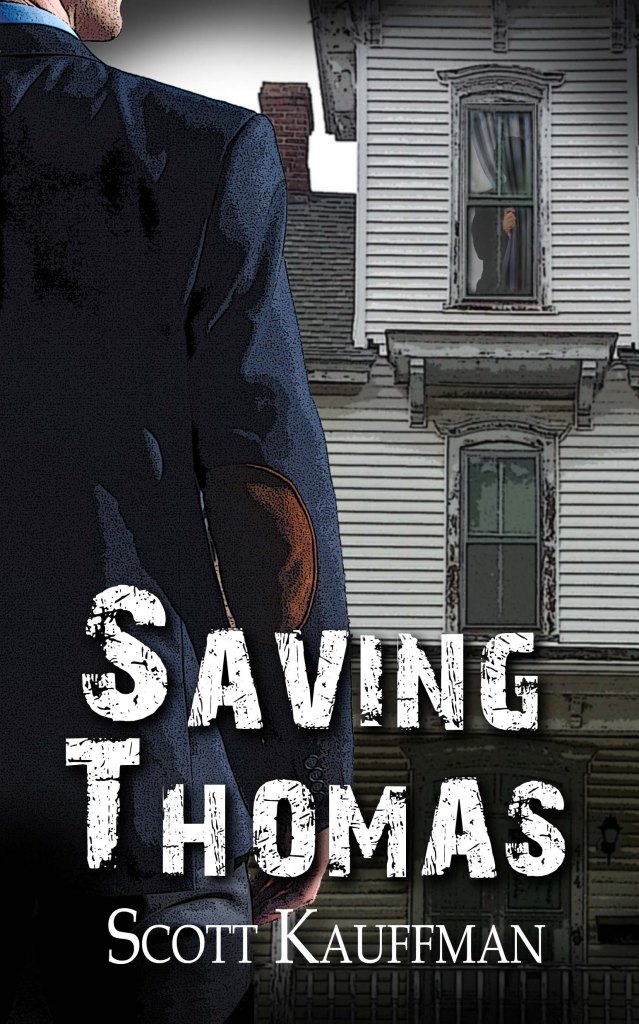
As I said above, my first novel In Deepest Consequences was loosely based upon two murder cases from earlier in my career. Revenants, The Odyssey Home, was drawn from the death of my late-wife’s uncle in Viet Nam, who is the only member of an MIA recovery team known to have died in combat. My inspiration for Saving Thomas was seeded in a general revulsion arising during some or another election campaign at those politicians who may have served but then try to get elected by trafficking in the dead who never came home. So I started to ask myself a series of what if questions. Such as what if someone had served and suffered but was honor bound never to reveal he had served and suffered and because of it suffered all the more? Which lead to more what if questions. The end result of all these what ifs the book you read and reviewed.
3) What theme or message do you hope readers will take away from your book?
Saving Thomas explores the age-old themes harking back to the Old Testament and Homer of betrayal, redemption, and ultimate forgiveness. All of us have been betrayed in our lives by those we love. All of us in turn have betrayed those we love. But if we are to come to terms with our betrayals, both those suffered and inflicted, we must move beyond a shattered trust to commence anew. Hope will reveal itself when we reaffirm those bonds of commitment, and it is in our finding a way forward where forgiveness will be found.
4) What drew you into this particular genre?
I don’t consider myself a genre writer. When a story with legs comes to me, I write it not caring where Barnes & Noble will shelve it. Having said that, I think it was Nietzsche who said melodrama is right versus wrong whereas tragedy is right versus right with no good outcome. I am drawn to tragedies.
Advertisements
5) If you could sit down with any character in your book, what would you ask them and why?
My villain, Erec Renard. This guy has to have at least a dozen stories to keep a writer employed.
6) What social media site has been the most helpful in developing your readership?
Twitter and Instagram.
7) What advice would you give to aspiring or just starting authors out there?
Learn from other writers. Revise, revise, revise, then revise some more. Master the rules of Greek rhetoric passed on down to the Romans, lost in the Dark Ages, resurrected during the Renaissance, and rediscovered in England just about the time Shakespeare was penning his plays and King James’s scribes were translating the Bible into English and give their works so much power, mimicking the power of Bach and Handel through repetition and point/counter point. Power you can hear in Lincoln’s Gettysburg Address and Martin Luther King’s IHave a Dream. Perhaps most importantly, remember that being published is someone else’s call. It’s impossible to know what to write to please those someones and may not be where your writing comes from. But someone’s first book changed you. Know there are others waiting for yours.
8) What does the future hold in store for you? Are any new books/projects on the horizon?
Next up, Finding Forest: A death-row attorney walks the murderous streets of East Oakland by night searching for the family of the executed client he betrayed twenty-four years before.
Scott is an attorney in Irvine, California, where his practice focuses upon white-collar crime with his clients providing him endless story fodder. His short story “Cat Dance” was short-listed for the 2018 Adelaide Literary Award. He is the author of the coming-of-age novel Revenants, The Odyssey Home (Moonshine Cove Publishing) and the legal-suspense novel, In Deepest Consequences (Medallion Press) and is the recipient of the Mighty River Short Story Contest and the Hackney Literary Award. His short fiction has appeared in Big Muddy, Adelaide Magazine, and Lascaux Review.
1) Tell us a little bit about yourself. How did you get into writing?
As a kid I was in and out of hospital a fair bit, reading and writing were my escapes from the long hours of loneliness. My first stories were about dead things that came back to life; maybe one day I will have to revisit those early ideas, because I truly think what the world is missing is tales about reanimated egg shells!
Advertisements
2) What inspired you to write your book?
Because it took me many years to write, lots of different people and events have influenced the final published novel. My initial inspiration though, was a simple scene of a young pickpocket at Shakespeare’s Globe theatre being so enchanted by the actors on stage that a yearning for a different life sparkles in his heart.
3) What theme or message do you hope readers will take away from your book?
Something I’m always drawn to is the power of friendship and the importance of finding the right place in life. In essence it’s such a simple message that is contained in one of the best-known childhood stories we’re told: the ugly duckling needs to find his swan family instead of trying to fit in with the ducks who bully him. But it’s so easy, especially in this brave new world of social media, to be constantly comparing and contrasting yourself to the wrong people and feeling inadequate when you should be concentrating on what makes you as a unique and wonderful person shine.
4) What drew you into this particular genre?
The coming-of-age genre is so powerful and relatable as everything is felt so intensely in both its freshness and its rawness. I don’t know how true it is, but I read somewhere that because of how the brain develops and the random shooting off of hormones, that the love you experience as a teenager is the strongest love you’ll feel in your life.
Advertisements
5) If you could sit down with any character in your book, what would you ask them and why?
My characters are constantly chattering away in my mind, but it’s actually really strange thinking of having an actual conversation with them, they ignore me and just talk to each other all the time!
A sneaky little voice in my head is saying that as William Shakespeare appears in my novel, I could choose him to yank into reality and ask him any number of literary conundrums. But I think it’s more in the spirit of the question to choose one of my purely fictional characters, so I will ask Black Jack if he believes that John can truly see faerie folk? Black Jack is a very practical person surviving in the dirt of Renaissance London, but I wonder if living and loving someone who is literally away with the faeries half the time, how his view of the universe would change.
6) What social media site has been the most helpful in developing your readership?
I am not sure if it counts as social media, but my publisher likes Booksirens, I personally have been exploring readersfavorite.com and have found some wonderful people there. I have to mention the Historical Fiction Company too as they gave me a 5-star medal and a silver award in their book of the year competition, so I obviously love them. A couple of readers have found me on Facebook and that has made me smile a lot, people from different countries liking my book enough to reach out to me is so validating for an insecure, self-doubting, introverted blob like me.
7) What advice would you give to aspiring or just starting authors out there?
Writing can be lonely and fraught with doubt, so find yourself some great beta readers, people who can give you honest feedback that you respect.
There are a lot of places online to share your writing and to meet other authors, so spend the time to find the place where you feel like you fit and make those connections. I’ve heard from friends that a lot of writers in writing groups can be pretty selfish, they only want to share their stuff, but aren’t willing to give the time to other people’s work. Although we’re naturally deeply involved in our own creativity, make sure you are not one of those people, always be kind and attentive to what other writers are doing and you will attract the awesome people who will nourish your books.
8) What does the future hold in store for you? Any new books/projects on the horizon?
Everything being well(ish) in these crazy times, I should have a novella coming out with tRaumbooks later this year. It is a contemporary story about the mental torment of being a teenager. Beyond that, there may be some more stories in the Airy world. Or there might be a story about robots keeping humans as pets. My imagination is a weird place of glittery rainbows and murky half emerged krakens, I am never certain what will grab and take my muse hostage next.
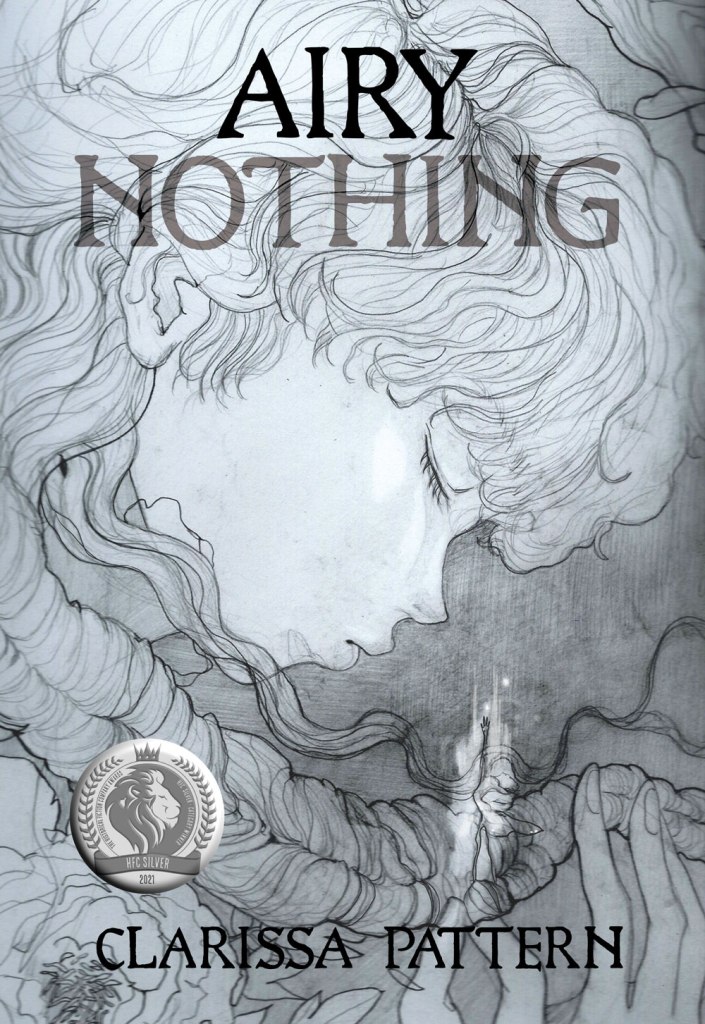
Clarissa Pattern studied English language and literature at the University of Oxford and has lived in the Oxfordshire area ever since. She has been writing ever since she could hold crayons and scribble across the wallpaper. Aside from writing, she spends as much time with her kids as they’ll put up with, ignores almost all the housework, and has an ever-increasing list of books she’s frantic to read. Her stories have been published in various anthologies over the years, and in August 2021, she released her first novel, a magical, historical YA called Airy Nothing.
Vocationally I am a writer, first and foremost. I am also an adjunct professor at two universities (one in the U.S. and one in Canada), teaching both history and religious studies. I enjoys traveling, since history is one of my true passions. I enjoys visiting famous places that hold the spirit of the past. Each place has millions of stories, and I want to imagine them all.
I have written extensively for magazines and newspapers throughout my career, and I have also published some non-fiction work related to my teaching. I live in Michigan with my wife and two children.
When I was ten years old I was not a great student. I was disinterested. All I wanted to do was play sports. Sitting in class was very difficult for me. One day my teacher, Mr. Johnston, asked us to write a poem. Something clicked. I didn’t understand it at the time, but I found it easy and very natural. While other students were complaining and struggling with the assignment (even the good students), I wrote several poems rather than the single poem that was assigned. To my surprise, I received praise – in school. That had never happened. It changed the entire direction of my life. I started writing and I couldn’t stop. I had some poems published in the newspaper, and from there I branched out into short story writing, and eventually novels. I write non-fiction also. I’ve published articles in History Magazine, Encompass and others. I’ve written some articles and one book relating to my “day job” as a professor as well. Fiction, however, is my real passion. I have so many stories inside me. I just really want to share them with people.
3) What inspired you to write your book?
I get inspiration from history and from literature. I also get inspiration from nature and from my faith. I guess I get it from my life. I don’t shut off any part of my experiences from offering up a story that might entertain and inspire someone. I’m human, and my experiences are relevant to other humans. If I can live them, and then communicate them within the context of an entertaining series of events, then I’m living my purpose by living my life.
4) What theme or message do you hope readers will take away from your book?
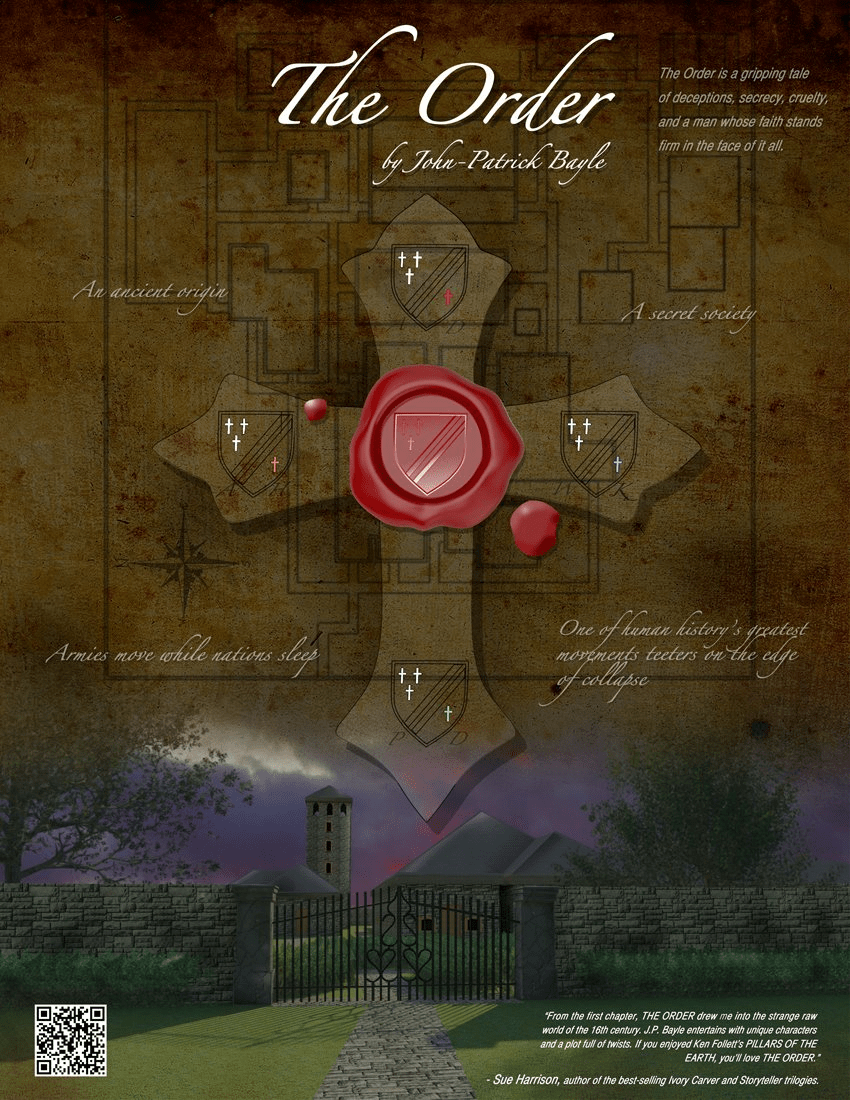
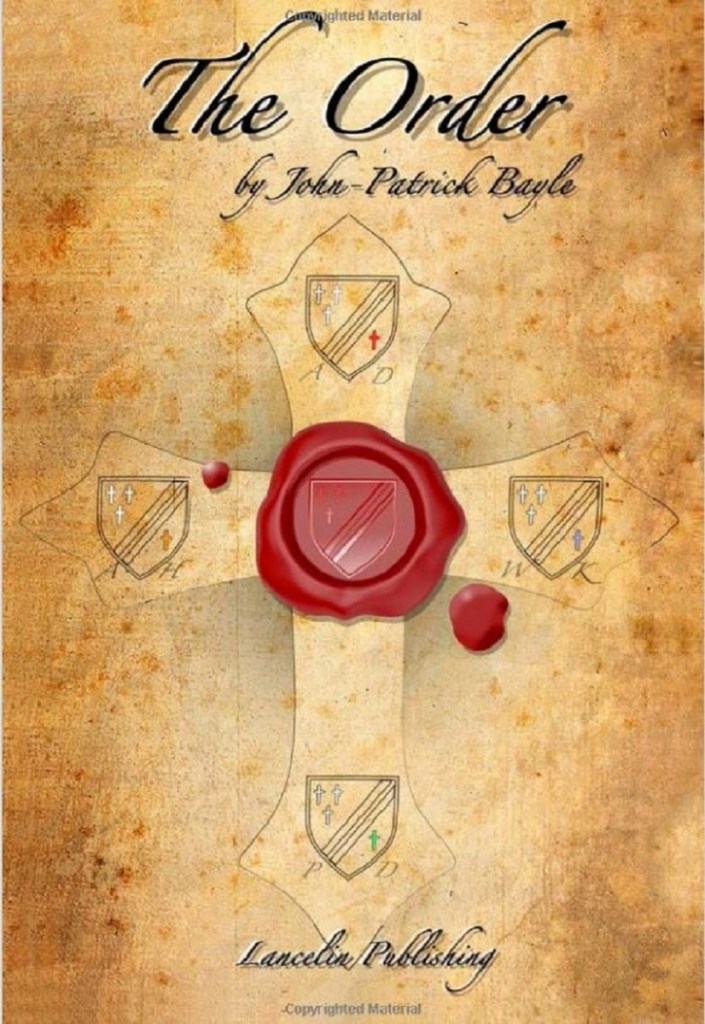
I’ve had this question before, and I found it a little tough to answer because the message of The Order is going to be a bit different for each reader. We’re not all robots acting off of the same software. We all have different needs, and we’ll all latch on to different stories within the story. If I had to narrow it down to one universal theme it would probably be truth. Truth is true, even if its bigger than we able to conceive of, as Brother Jan discovers when he is forced to confront truths he neither sought, nor wanted. Truth is true, even if our own ignorance (not stupidity – an important distinction) does not allow us to see it just yet. Truth is true, even if it does not appear to serve our purposes – and that’s important because truth does not bend to purpose, purpose must respond to truth and then decide if it will bend or not. Truth is not a tyrant. It requires a response, but it does not require agreement. Our response can be to reject it and live a constructed truth that is not real, but only our perception, or it can conform and live within the truth and thrive within the power of something that is bigger than ourselves. Some say that perception is reality, but that’s not exactly accurate. Perception is our narrow view of a very broad reality, but if I perceive gravity to be a myth, this can create some real challenges for me when I try and put my perception to the test. Reality – “truth” cannot be only personal or it loses its power to unite and to connect. The Order highlights the age-old human struggle to know what is true, and then to react to the truth when we find it. No one has to accept the truth. The truth is often extremely uncomfortable. The truth within us – our real fears, prejudices, insecurities; these are true whether we deal with them or not. These are true whether we accept them or not. We can live outside of those truths and never escape the nagging weight upon our souls, or we can confront them and live free in the knowledge of our own imperfection and vulnerability. The choice of our reaction to truth is very personal, and truth is the overarching reality that exposes who we are personally. So, yes, truth is what the characters in this book are in search of, and it is what they must confront and react to. I suppose my hope would be that this story will entertain, because it is, after all, a work of fiction, and not a metaphysical treatise, but I also hope that it will generate some deep thoughts about what it means to get what we want, or to not get what we want, and to recognize that truth is above both scenarios. I hope this because we will all fail to get what we want sometimes, and that can be difficult, but it doesn’t have to be devastating. There is truth within the disappointment that can bear fruit eventually – if we choose to react to the truth and not reject it because of our pain.
5) What drew you into this particular genre?
History. I love history. It is one of my greatest passions. To know what happened, and the repercussions – that transports me to another place and I can imagine the emotions and the struggles. History answers so many questions about why we are here, and where we might end up. Billions of people have lived and died, and they all had real stories. All those lives that have gone before, and many of them are directly responsible for the fact that I even exist. There are also so many gray areas which, as a writer, are amazing. I get to ask, “What if”, and then delve in and create a story where only murky details had once existed. For a fiction writer, what could be better?
Advertisements
6) If you could sit down with any character in your book, what would you ask them and why?
My favorite character is Sigurd. He doesn’t play a huge role, but he’s the man I wish I could be. I can’t say much about him, but I found myself wishing I could just sit with this man and talk to him for hours. I find myself wanting to talk about him now, but I really don’t want to give anything away.
7) What social media site has been the most helpful in developing your readership?
Probably Facebook, but really I haven’t been as active as I should be on any platform. That’s a mistake, I know, but I tend to find my nose stuck in books a lot, both for work and pleasure. I’m a writer, not a marketer, so that’s the part of the work I struggle with the most. I know that in today’s market you have to be a self-promoter. Publishers are doing less and less in this area, and more responsibility is being placed on the authors. This is where people like you, Anthony, become so important. We need reviewers who can help us do what needs to be done, but is (for me at least) pretty unnatural. I’m very thankful that you’ve give me this opportunity to share a bit about my book with your readers.
8) What advice would you give to aspiring or just starting authors out there?
If you love writing, then write. You don’t have to be published to be a writer. Writing is a gift, and if you love it then do it. If, however, you want to be published, then you need to write and practice writing. You can write for the joy of it and not practice the craft of writing, but if you want to be published you need to practice the craft. You can have a unique style. I’m not saying you have to become Hemingway or Steinbeck, or Austen. You can have a unique voice, but your story still needs to have a plot. Your characters still need to be developed. There are certain things that a story must have, and if it doesn’t, getting it published is going to be a challenge. If you want writing to be your profession, then you need to do the work and be professional. You can still write for the joy of it, but you have to accept the grind of it as well. That doesn’t mean that you cannot ever flaunt convention. Many successful writers have. In the beginning, however, you need to prove that you can write a good story with all of the hallmarks of a skilled author. From there, more doors open. Above all – writers must have perseverance and thick skins. Your writing will not resonate with everyone. Some will not like your work, and they will be vocal about it. Learn from the critique. If it’s valid, use it as an education. If it isn’t valid, put it behind you. Don’t lose faith in your dream because someone else doesn’t like your work. I hate Picasso’s work. I prefer the impressionists. Does that mean that Picasso doesn’t have an audience? I think he did pretty well for himself. Find your story, let your passion for writing fuel you, accept valid criticism, reject bad criticism, and keep fighting until you’ve shared your stories with as many people as you can. If you’re really a writer – that’s why you’re here. Stories are how you will impact the world. Don’t quit.
Advertisements
9) What does the future hold in store for you? Any new books/projects on the horizon?
I have begun the prequel for The Order. I’m really excited about it. It details the story that is in the mysterious book found by Brother Jan. I don’t have a release date yet, but I’m hoping early in 2023 – January or February.