Interview with Author Marie Powell

1) Tell us a little bit about yourself. How did you get into writing?

Well, I wrote my first story for a neighbour when I was six years old — self-published with crayon and staples! But seriously, I had a lot of encouragement from my high school English teachers, especially Gary Hyland, a Moose Jaw poet I was fortunate to have as my English teacher twice (Grades 10 and 12). He got me interested in the Sage Hill Writing Experience and the Saskatchewan Writers’ Guild (SWG). I started writing poetry initially. In university I switched to Theatre Studies, as a dramaturge working on new play development, and then I began writing plays and filmscripts. Then I morphed to journalism, then freelance magazine writing, and eventually short stories and children’s writing. About 15 years ago, I went to the Sage Hill Writing Experience for a 10-day fiction workshop, followed up with the incredible opportunity of doing an MFA degree in Creative Writing at UBC. That started me writing novels. So it’s been a long and winding path.

Advertisements

2) What inspired you to write your book?

This series is the result of my trips to Wales. I went to visit the big English castles like Conwy and Caernarfon and Beaumaris, but they were actually built by Edward I to subjugate the Welsh. So I also went to the smaller castles of the Welsh princes, like Dolwyddelan and Castell-y-Bere. These are very different. There’s no gate, no ticket taker, no little shop selling souvenirs, no tour guide, and really, no people around when we visited. Just signs with pictures that showed people falling off rocks: enter at your own risk. But there were placards at Dolwyddelan with the history of the Welsh princes and all that was lost in the 1282-3 invasion. And I felt that history in some strange way, walking through that ruined castle. It’s my ancestry. I didn’t know much about it then, but I just got hooked. I had just done a story about a man who trained hawks, and one day I tried free-writing about what it would be like to have a connection with a hawk. That — after a lot of rewriting — is still the opening scene of Spirit Sight, the first book in the series. This been my heart-project, and I’ve been working away at it ever since.

3) What theme or message do you hope readers will take away from your book?

This is really a book about friendship and working together to overcome extreme odds. Friendship is like magic: only limited by our imagination. Magic evolves and grows, just like we do, and it can connect unlikely people in unusual ways. But we can survive anything if we pull together — young and old, Gifted and not — and stretch our natural abilities to help each other.

4) What drew you into this particular genre?

I’m naturally drawn to speculative fiction and fantasy. We carry so much with us, the people we’ve known and the places we’ve been and the things we’ve seen, sometimes without really being aware of it. Things seen and half-seen and unseen influence us, and our personal past has an effect on our present just as history affects the future. As a kid, I read about a Welsh bard who saw an animal transform from one shape to another and another. I still have that image in my head, the subtle connections between things that might not seem connected. That’s the kind of magic I want to capture in my stories. Go on a walk and there are birds flying overhead or calling from the trees, insects that pass in and out of our field of vision, and even the wind pushing the leaves around. We don’t consciously notice much of it, but it might be enough to make us walk one direction instead of another, or have a dream or a nightmare two weeks later. I once had a colleague who felt that buildings hold the impressions of people who pass through them, and if you listen you can still hear their voices crying in the walls. That could either make you crazy or make you pick up a pen.

5) If you could sit down with any character in your book, what would you ask them and why?

The characters in my books tend to answer questions before I ask them. It’s difficult to slow them down long enough for me to catch up. Right now, I’m working on short stories to provide some of the backstory that I couldn’t put in the novel, like the main characters’ backstories and adventures of the secondary characters between the scenes. I’d love to hear what questions readers would like to ask!

6) What social media site has been the most helpful in developing your readership?

I use Facebook, Twitter, Instagram, and other social media, but I would have to say my website is the most helpful (https://mariepowell.ca/young-adult/last-of-the-gifted/). That’s where people can find my books, series videos, and information. I try to keep it up to date on my workshops, conference panels, and other activities. It’s the best way to contact me because it links to my email. I’m also starting a mailing list and the link is available on my website.

7) What advice would you give to aspiring or just starting authors out there?

Read everything, especially the genres you would like to write, and write a lot. Challenge yourself. Almost anyone can write, but we owe it to our readers to write well. Take classes and courses, join feedback groups, and learn as much about writing as you can. Seriously. And be persistent. Writers evolve, so make it a long-term commitment.

8) What does the future hold in store for you? Any new books/projects on the horizon

I’m working on quite a few projects. As well as short stories, Book 3 in the Last of the Gifted series is high on my list. Also, I have some published short stories that are more contemporary speculative fiction, and I’d like to compile them into a book. And I’m working on a more contemporary SF novel that’s totally unrelated. I could use a few extra hours a day!

Advertisements

About the Author

Marie Powell’s castle-hopping across North Wales to explore her family roots resulted in her YA historical fantasy Spirit Sight (Last of the Gifted Book 1). Book 2, Water sight, will be released in fall 2020. Among other degrees, she holds a Master of Fine Arts (MFA) in Creative Writing from the University of BC. Marie lives on Treaty 4 land in Regina, Saskatchewan, and her writing workshops are popular across the region.
Home

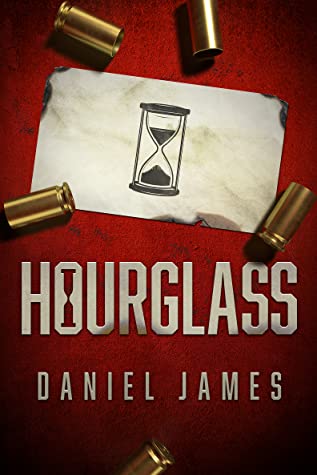
Interview with Author Daniel James

1) Tell us a little bit about yourself. How did you get into writing?

I didn’t get into writing until quite late, mid-twenties. I’ve always had a busy imagination, and I’m far better at getting lost in my own thoughts than living in the moment, but for most of my life I’d been quite content to let reading, watching movies, and playing video games be my outlet, fuelling the creative process I suppose. And then in my teens I started playing in rock bands which was a major distraction for me, but when I knocked that on the head for good, I suppose I needed a new creative outlet to fixate on, I just didn’t expect it to be taking a crack at being a novelist. 

I think I must have spent too many years thinking about What If… scenarios, and fantasising about monsters and survival and grand good versus evil conflicts that it forced me to give it a shot; that and the fact that I was getting supremely disinterested in my final year at university. So what better way to shrug off some dull dissertation than diving head-first into your own creator-owned world?

Advertisements

2) What inspired you to write your book?

Whilst I have written several other books, Hourglass was inevitable. The first story I ever wrote was a total unfocused scattershot of things I love: world-conquering demons, plucky and colourful heroes, super hero-sized punch-ups in urban-city demolishing combat scenes, gangsters, and so forth. 

Being my training wheel days I just went with it, not looking back, and loving every second of it. Now whilst I shudder to imagine the quality of that story’s plot, there are still lots of things from that world which I love, and Clyde and Kev, the protagonists from Hourglass, are just two of them. So Hourglass was my chance to wipe that old slate clean, take these two characters and build a new world around them.

3) What theme or message do you hope readers will take away from your book?

Besides a rollicking good time (ha-ha, I hope!) I’d like the readers to try and stay positive with their attitude towards death. I know how grandiose and bleak that sounds, but I mean it in an uplifting way. Clyde and Kev are two characters on either side of the mortal spectrum, each carrying their own weight and existential woes, but on their journey they begin to understand just how little they know about life and death, and the greater universal mysteries behind it all. So I’d like readers, regardless of their faith (or lack of) to accept that no mortal in this world knows what comes next. As a species, the majority of our oceans remain a mystery to us. 

The vastness of outer space is also a mystery, as is the human brain, and a great many other things, so who can say what truly happens in death? Could be there’s nothing. Could be we get forced into an egg and spoon race against leprechauns. Who can say? And to me, that brings a kind of peace. But personally, if I had a choice I’d like to kick supernatural arse with Hourglass.

4) What drew you into this particular genre?

As I mentioned, returning to the urban fantasy genre was unavoidable for me. Although I love horror, as it was Robert McCammon, Stephen King, Clive Barker etc. who opened the door for me into the joys of reading, my imagination tends to lean just as heavily into the explosive and the fantastical as it does the macabre and the spooky. 

I love big theatrical conflict and throw-down fights, which doesn’t always mix well with pure horror because of the genre’s need for their protagonists to be physically outmatched by the evil threat; although there are exceptions, of course. But basically, the one overarching goal for me as a writer has always been to create my own big, bustling world of characters. One where I can take them on an epic episodic adventure, building them, breaking them down, testing them, and just generally indulging in my god complex… all writers have one.

5) If you could sit down with any character in your book, what would you ask them and why?

This is a tough question! I’d either ask Ace if he thinks listening to ‘80’s metal and hard rock is conducive to pounding monsters heads-in?, or I’d ask Clyde if living a comic-book-esque lifestyle is actually any fun or is just plain stressful?

6) What social media site has been the most helpful in developing your readership?

I’m very lean when it comes to social media. All I use is Twitter (@DJauthor85). But the BookBub Partner site has been very useful to me in the past by attracting readers with my ad campaigns.

7) What advice would you give to aspiring or just starting authors out there?

To any aspiring or newbie authors I’d say that you need to write for yourself first and foremost. If you strike oil and become a huge success, that’s awesome, but if that’s the only reason you’re doing this then I’d say stick to scratching off lottery tickets instead. Success is the dream, the fantasy, but the joy of creating and sharing with readers is what sustains the soul.

8) What does the future hold in store for you? Any new books/projects on the horizon?

As for upcoming works, I have just completed the third draft of a horror novel called Heathens, set in my hometown of Liverpool, which I’ll be shopping around soon. And I’m waiting to hear the fate of a pretty bizarre high-school horror novel called Fable, which I actually wrote just prior to my first published novel in 2018, but it’s been stuck in backlog hell with the small horror print. One way or another, even if I stay on the indie route I’ll get one or both of them out in 2021. And of course I’ll be continuing the adventures of Clyde and Kev in New York City from February 2021. I can’t wait for that!

Advertisements

About the Author

Daniel James is the recipient of a Kirkus Reviews (starred review) for his action-packed urban fantasy novel, Hourglass, and the Literary Titan Gold Book award for his vengeance-fueled crime novel, Pigs.

An author of horror, fantasy, and fast-paced thrillers, he first began writing as a hobby to distract himself from the mundanity of completing his dissertation at Liverpool Hope University. When not writing, he loves reading genre fiction novels and comic books, watching movies, and listening to music (he also used to play bass in a few local rock bands).

https://www.goodreads.com/author/show/19334785.Daniel_James

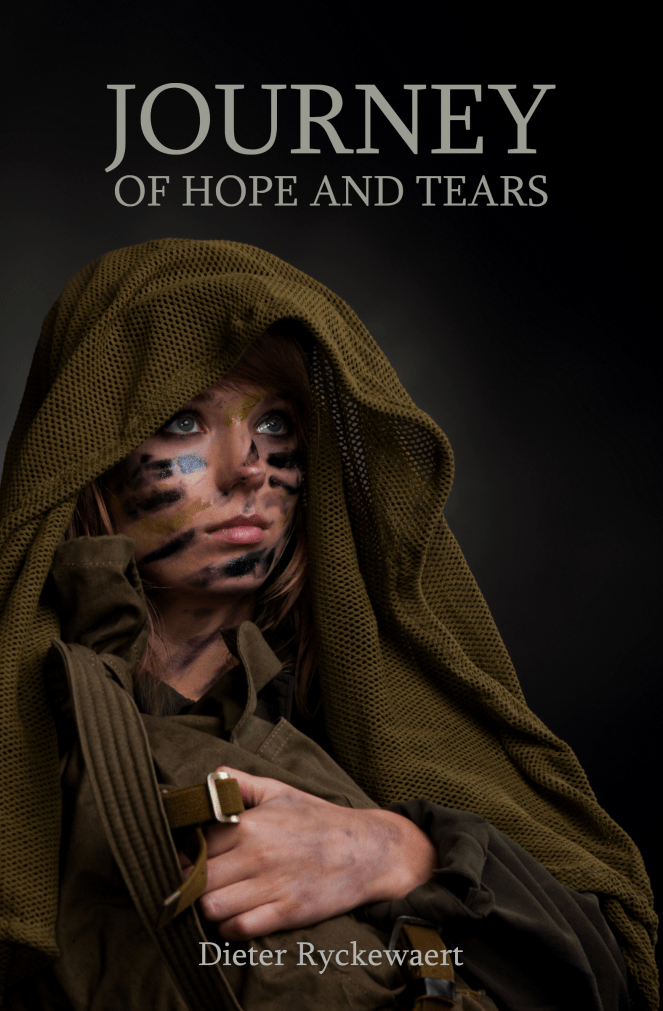
Interview with Author Dieter Ryckewaert

1) Tell us a little bit about yourself. How did you get into writing?

I started writing when I was about fourteen years old. At school we had to write poems about love. I thought it was corny as hell, but strangely enough I liked it. More poems followed, and soon I wrote my first SF short story. It was as bad as anything, but set the tone to get better and to grow. In my early twenties I read ‘Memory, Sorrow, and Thorn’ by Tad Williams. Those books changed my view of books forever, and because of him I started my first real novel.

Advertisements

2) What inspired you to write your book?

I love books with a serious romantic theme in them. That and conflict between people or civilizations. ‘Journey of hope and tears’ was written while a conflict was going on between the Ukraine and Russia, and the war in Syria. Those wars, and especially what ordinary people have to endure, I wanted to get into my story. When you see the news about those wars, it’s a far away story for most people, and a lot of people don’t think about it anymore the next minute. I wanted to make my readers feel what it’s like to be a refugee. What it’s like to lose everything and have to fight for what’s left. That way I also wanted to show how lucky we are in the western world.

3) What theme or message do you hope readers will take away from your book?

Two things.
What real love between two people means, because in recent years, real love only seems like something from times long gone, if we may believe TV. Which is a great pity, because is there anything more beautiful than love?
The second thing I wanted to give is to show that we need each other as humanity, and that we don’t have to be divided. Having a friend is much more pleasant than having an enemy, and yet we fail to live in peace.

4) What drew you into this particular genre?

Simple: my love for fantasy, SF, dystopian and romance stories. That and the inner warrior in me.

5) If you could sit down with any character in your book, what would you ask them and why?

Well, in the book, Sabrielle is the goddess of everything in this universe. I think it would be very interesting to have tea with her. What would I ask her? I have some good questions, but if I write them down now, I’ll tell what happens in my next book, so I don’t think that’s wise. Maybe I would ask her to come with me to our world. There is still a lot of work to be done here. And to Jill I would just say: ‘it’s gonna be all right.’

6) What social media site has been the most helpful in developing your readership?

Goodreads.com and Hebban.nl

Always honest reviews, whether it’s bad or good, you can learn from it.

7) What advice would you give to aspiring or just starting authors out there?

Do it in the first place because you love to do it, and because you love to tell stories, and are fascinated by the writing itself. If you do it to get famous or to make a lot of money, do something else, because you will be disappointed.

That’s the truth, a bit harsh, but it’s true. I write during my free time, and I still have a fulltime dayjob (which I love too offcourse).

8) What does the future hold in store for you? Any new books/projects on the horizon?

I am currently promoting the English version of ‘Journey of hope and tears’. Together with my partner Leen Lefebre (Soraia, child of the sea) I am forming a writers duo. All income of ‘Journey of hope and tears’ and ‘Soraia, child of the sea’ goes to ‘SameYou’, a charity dedicated to brain injury recovery awareness (sameyou.org).
And I’m also working on a story that takes place after Jill & Sam’s story.

Many of my Dutch-speaking readers were extremely curious about what will come after the story, and this year I started working on it.
It took a while due to lack of time and changes in my personal life, but I found what I was looking for to make the new story an emotional tearjerker again. If you like Jill, you’re going to love Lauren. And that’s all I’m saying 😉

Advertisements

About the Author

When an author writes about his characters, or about the magical worlds in which they live, his or her pen never gets empty. Ask an author about the background of his or her latest protagonist, and the next hour you’re guaranteed not to get a letter in between.

What could be difficult about writing your own biography, you might think?

The answer to that question is already written in the question itself: the ‘own’ biography. Most authors write about everything and everyone, but mostly not… about themselves.

But anyway, let me introduce myself.

My name is Dieter Ryckewaert (1984) and I was born in Poperinge, a small town in West Flanders, a stone’s throw from the Belgian coast. When I was about three years old, we moved with our family to Zonnebeke, where me and my sister had a carefree childhood. The house in which we lived bordered a field and a forest, the dream playground for every child of my generation.

Together with the children of the neighbors, we played outside, and risked our lives several times in the branches of the trees. The garden of the neighbors was separated from our garden by a nine-foot high hedge. In the middle of that hedge was a hole big enough to give passage to an adult person. On day one of our time in Zonnebeke, my parents wanted to close the hedge, so we had a little more privacy in our garden. Of course, that didn’t match our idea about the hole (us as in: me, my sister, and the three children of the neighbors). The hole functioned as a passage from and especially to the new playmates. So close it? No way!

Eight years later, when we moved back to Poperinge, the hole was still there.

Back in Poperinge I was first confronted with my ‘writing itch’ when we got the chance at school to work on a collection of poems about love. As a fourteen year old adolescent I found the idea as corny as it could be. Really, shouldn’t we be tough like men? Well, I gave it a chance… and it turned out that ‘writing’ was much more fun than I first thought. When the words flowed out of my pen (we didn’t have a computer yet), ‘poetry and rhyming’ became quite fun.

From poetry, it logically turned into short stories. And I remember my first short story very well. I was so proud of my little Sci-Fi work! In hindsight, the quality was way below par, but one has to begin somewhere, right?

Many short stories followed, and as the writing itch continued to rise, I ventured into my first ‘real’ novel.

Once I graduated, I wanted my writing to blossom further. Bringing new worlds and characters to life and sharing them with readers gives me enormous satisfaction. Not only that, but also the fact that stories with a positive note inspire people and give them a chance to escape from the – hectic or not – life. 

Interview with Author Vincent Hollow

1) Tell us a little bit about yourself. How did you get into writing?


As someone who has struggled with depression, social anxiety, and ADD for most of my life, writing was always something of a therapy for me; to release any negative thoughts in a non-violent way that I could turn into something creative. Most of my creative writing was during my high school years outside of school, but after graduating, I didn’t start writing again until about 12 years later when I began spiraling into one of my worst depression periods. It would end up being the catalyst that would give me reason to expose all of my pain onto paper. I didn’t want my writing to be too autobiographical, because honestly, I don’t really enjoy writing about specific things in my life, but the idea of using poetry as a vessel to carry myself into the hearts and minds of those like me allowed me to be open and honest while still keeping it vague and relatable to anyone who may read it. 

Advertisements

2) What inspired you to write your book?


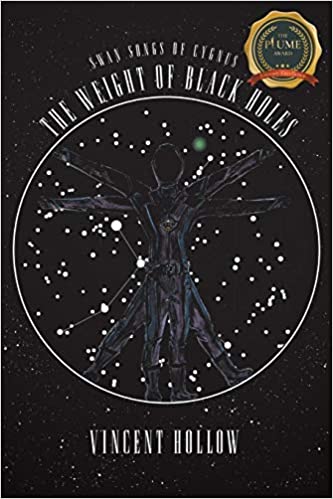
I’ve always had a fascination with astronomy and cosmology. Even at its most basic level, you can still be enthralled by its infinite landscape of mysterious and majestic beauty. I wanted to convey that in a very simplified take of a well-known science fiction premise of an astronaut going on a deep space mission. But I didn’t want him going in order to save the earth or to take part in an intergalactic war, this was going to be extremely personal. He was doing it for love, even at the cost of his own sanity and existence. I wanted this story to be relatable to anyone who has felt that type of connection,  that they would risk it all to be with the one the had lost to either natural causes, an unforeseen tragedy, or even just venturing off from your timeline. The thoughts that run through your head, both logical and illogical, calm and erratic, overwhelming and empty, create the atmosphere for this story, as well as the celestial splendor experienced by the Astronaut, as a sort of reminder that no matter how dark everything may seem for what feels.like eternity, there is always something beautiful passing by that reminds you how wonderful life is and there is always a new journey to go on.

3) What theme or message do you hope readers will take away from your book?


Swan Songs is all about overcoming impossible odds when struggling with mental illness. People are welcome to interpret whatever message they find within this Astronaut’s mission, but the one I hope they see shine the brightest is “You’re not alone.”

4) What drew you into this particular genre?


I always think of poetry as songs that you don’t sing, your heart does. As a teenager, I would spend a bit of my free time writing song lyrics to music that, for the most part, didn’t exist, but it was an important first step to what would eventually be my passion. I enjoy the simplicity of poetry, the ability to convey so much emotion and story in few words, and even though poetry does have its rules, I find I like telling my stories through verse and prose as it makes it feel like I’m composing a kind of silent album.

5) If you could sit down with any character in your book, what would you ask them and why?


Perhaps the Astronaut’s friend, Patrick, to ask them how they would spend their life after their friend was launched into what was, in his mind anyway, a sort of suicide mission. Would he continue to work with INSTAR? Would he follow the mission until his dying day? Would he be so overcome with grief and guilt that he would walk away from it forever? I can’t imagine what it would do to him on an emotional and psychological level.

6) What social media site has been the most helpful in developing your readership?


I would say Instagram has been great to reach multitudes of new fans and building a wonderful poetry community where I can share drafts of pieces I’m working on, promote book releases, and, of course, enjoy the writings of other poets from all different skill levels and give them support as they support me. It’s a very helpful and motivational platform.

7) What advice would you give to aspiring or just starting authors out there?


I say just go for it. Read authors and genres you enjoy. Take notes of words you like. Use everything as inspiration, not just books. Films, songs, history, paintings, casual conversations. Anything can be your muse, so make mental notes on the things that get your attention. Odds are they can be made into something your wouldn’t have thought of on your own sitting at a desk.

8) What does the future hold in store for you? Any new books/projects on the horizon?


I’m hoping the books I write will be enjoyed by those who find comfort in the melancholy of their pages when facing their own personal darkness and possibly seeing a part of themselves in the verses as well. 
Currently, I’m in the midst of a few projects, one is the story of a haunted house I expect to release early in 2021 and the other is the sequel to Swan Songs. I’ve been working on the haunted house story since about April and I’m very pleased with how it’s developed. The Swan Songs sequel has gone though a multitude of changes and rewrites since I first finished the first half of The Weight of Black Holes and has ended up on the backburner while I worked on other projects, but it’s about time to take it back out and bring it to life. 

Advertisements

About the Author

VINCENT HOLLOW is an astro-poet and interstellar storyteller living aboard the space vessel, Aquarius. Shooting from the star system to star system. Vincent spends his time gazing out into the universal abyss and the depths of himself where he hopes to find his place in the cosmos through the words he weaves in the fabric of spacetime.

https://www.facebook.com/Vincent-Hollow-105005078127184/

https://www.instagram.com/vncenthollow/

Author Interview with Craig DiLouie

Tell us a little bit about yourself. How did you get into writing?

I’d dreamed of being a writer ever since I was very young. Growing up in rural New Jersey, I discovered fiction as a fantastic way to be somebody else and have adventures. After a while, I not only wanted to escape into these incredible worlds, I wanted to create my own for others to enjoy. I produced my first novel back in the 1990s, which never saw the light of day. After lucking out with publication with a small press in 2001, I kept at it until I wrote a zombie novel on a lark before zombies got big, and the rest is history. The success of my zombie fiction got me an agent, which got me into Big 5 publishers like Simon & Schuster and Hachette. I also self-publish series of short, pulpy WW2 actioners, which are a lot of fun and are very popular. It’s been a very long and hard but ultimately gratifying and humbling journey.

Advertisements

What inspired you to write your book?

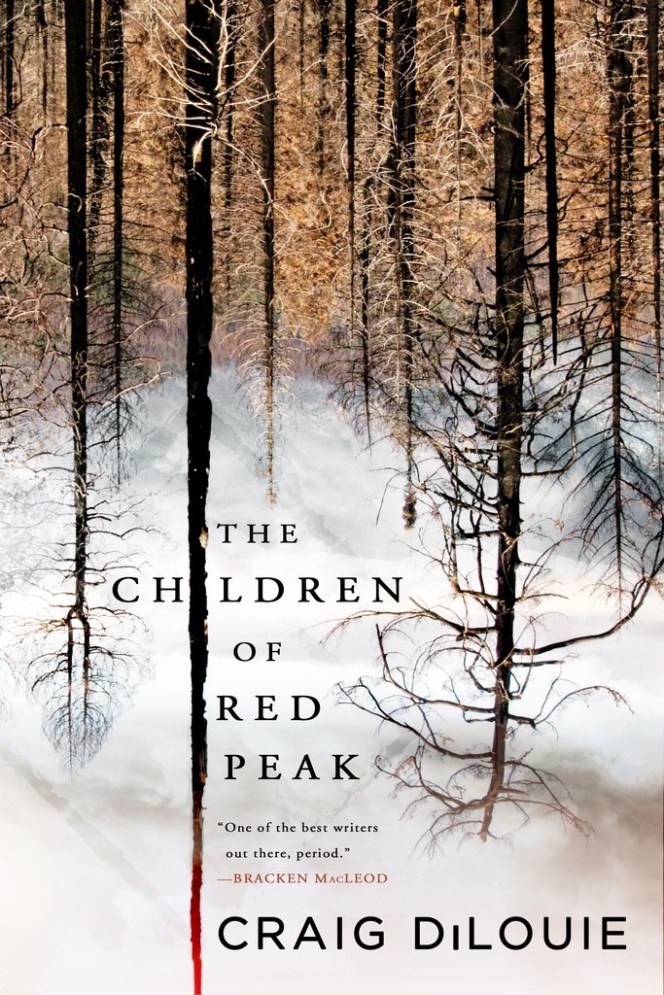
The Children of Red Peak is about a group of people who grew up in and survived the horrific last days of an apocalyptic religious group that transforms into a cult. Years later, they reunite to confront their past and the entity that appeared the final night.

I love stories that turn tropes on their head or examine their consequences, and this novel does both, examining a cult from the inside in the past timeline, where the major characters are children, and then showing the pain of surviving a horrific mass death, where it’s now 15 years later. As a psychological thriller with cosmic horror elements, the novel is really about the trauma of survival and how belief can produce a great amount of moral goodness but also madness and evil, with a slippery slope in between.

The original inspiration came from a reading of Genesis, where God tells Abraham to bind his son Isaac on a remote mountain and sacrifice him as a burnt offering. Abraham does it, only to be stopped at the last moment. And I thought, what if that story were told from Isaac’s point of view?

What theme or message do you hope readers will take away from your book?

Thematically, it’s about a number of things—family, faith, memory, belonging—but the the overriding theme is that madness and belief are two sides of the same coin, and we have a tendency to think of our relationship with the divine as being on terms we can control and that favor us. Interestingly—and disturbingly—some of the cosmic horror element in the book is really about that cosmic horror being found in conventional religion, which is treated with utmost respect in the book but also questioned by taking its claims seriously. A significant message in the book is that wherever there is chaos and emptiness, humanity’s hunger for meaning will eventually ascribe that chaos and emptiness with meaning and a story.

What drew you into this particular genre?

I’ve always loved speculative fiction—horror, sci-fi, fantasy, dystopian, apocalyptic, you name it—because it lets you take ordinary people and challenge them with extraordinary circumstances. You push somebody to the limit, you really find out what they’re made of, and that revelation also says something about human instinct, which is real, and human morality, which is the story we tell ourselves about who we are and want to be. In The Children of Red Peak, there is a cosmic horror element, but the real horror is in good people doing evil because they believe it is a path to paradise.

If you could sit down with any character in your book, what would you ask them and why?

I’d ask one of the characters who possibly ascended where they went and what it was like when they got there. I poured my own yearning for meaning and knowledge of any type of existence after death into the story’s aching soul.

What social media site has been the most helpful in developing your readership?

Probably Facebook. No reason for that other than I’m just more comfortable with it. I don’t like creating a persona, which is what you’re supposed to do as a writer to get people to like you as an author distinct from liking your work, but I’ve never been into that. On Facebook, I decided to just be myself, and I value the relationships I have there because they’re real, or at least as real as you can get on the Internet.

What advice would you give to aspiring or just starting authors out there?

Be as prolific as possible, pursue every path to publication with what you do produce, and hope for that X factor in publishing to go your way and create a hit that will lead to more opportunities. The X factor might be described simply as having the right book at the right place at the right time, and there’s unfortunately no way to predict that. Note that success is not an either/or thing, it’s a ladder with dozens of runs, and that there is no objective definition for success anyway. In my view, if you poured your heart out to write a story, you’re a writer and you’re a success, only now you’re ready to challenge yourself to climb the next rung of the ladder.

What does the future hold in store for you? Any new books/projects on the horizon?

I’ve been very happy producing these “dime novel” WW2 action series, and I love the model so much I’m looking to produce two such series in 2021, one dealing carrier aviation in the near future, the other dealing with carrier aviation during WW2. At the same time, I’m talking to Hachette to see if I can get some fresh and interesting novel concepts percolating.

Thanks for having me as a guest, Anthony!

(It Was My Pleasure Craig! Thank you for sharing your wonderful book with us.)

Advertisements

About the Author

Craig DiLouie is an author of popular thriller, apocalyptic/horror, and sci-fi/fantasy fiction.

In hundreds of reviews, Craig’s novels have been praised for their strong characters, action, and gritty realism. Each book promises an exciting experience with people you’ll care about in a world that feels real.

These works have been nominated for major literary awards such as the Bram Stoker Award and Audie Award, translated into multiple languages, and optioned for film. He is a member of the HWA, International Thriller Writers, and IFWA.

http://craigdilouie.com/

Interview with Author Jennifer Anne Gordon

Tell us a little bit about yourself. How did you get into writing?

The first time I remember consciously thinking about writing, I was in seventh grade, and had just turned twelve. I was a poor girl living in a rich town, and for that reason and probably many that I will never understand, I was bullied and picked on by a group of girls. They were incredibly cruel, and my self-esteem was demolished. I was depressed, I didn’t understand that then, but I do now. My grades suffered a lot, I barely did any homework, I was hardly functioning. I did have an English teacher who knew I was smart, and she was willing to help me get my grades up. She suggested I write stories or poems, so I did. I fell in love with writing then, with creating a world outside of my own. 

Advertisements

What inspired you to write your book?

This will sound crazy, but many years ago I was undergoing hypnosis for past life regression, and a few of the scenes that I included in From Daylight to Madness were the direct result of these sessions. Just little flashes in my mind, but they were very emotional. I thought about them a lot, what they meant for me, what they meant in general. I always knew one day I would write the story of those images in my head, what I didn’t know was that I was going to create a gothic horror series around them, for a a while I thought they would just be straight historical fiction.  

What theme or message do you hope readers will take away from your book?

Though the Hotel Series is Victorian Horror, it really is at its heart a story about grief, and trauma and two very misunderstood people who never really had a chance at a normal life. I would hope people would take away a little knowledge about different kinds of mental illness, including depression, survivor’s guilt, dissociative disorder, and the terrible ways people who had these problems were treated or ignored in the past. 

What drew you into this particular genre?

I have always been drawn to darker things, and horror. It’s my favorite genre to read, write, watch. I guess I could blame the fact that when I was little, I used to play and hang out in a cemetery near my house. That combined with reading Pet Sematary at the age of ten had a huge impact on my life.

If you could sit down with any character in your book, what would you ask them and why?

This is a great question, and I think it would be different every time someone would ask me. Today I will go with Hawthorne Hughes who is the hotel manager and one of my antagonists from my Hotel Series (From Daylight to Madness and When the Sleeping Dead Still Talk).  I would probably ask him what his relationship was like with his parents, and I would want to know what kind of childhood he had. (I have thought about doing a story or a book about him someday as well).

What social media site has been the most helpful in developing your readership?

I think Facebook and Instagram have been the best for me, especially Facebook. I have always believed that if people get to know you and they find you interesting and likable then they will want to support you. I have made some great friends and found some very loyal fans on there as well. I also have started to use Slasher as well which is a horror-based app that is a lot like Facebook.

What advice would you give to aspiring or just starting authors out there?

Don’t ever let yourself get talked out of writing what you want to write. Even if you don’t think there is a market for it, or it may not be popular, focus on writing the book you want to read, and trust your voice. Remember you can always edit or rewrite. You can’t edit a blank page.

What does the future hold in store for you? Any new books/projects on the horizon?

Yes, I am in the early days of a new Work in Progress, I have been writing for about a month now, and I am about 20,000 words into draft one. It is a departure from Gothic Horror, which is what my first three books have been. This one leans more into speculative fiction and horror, with a little bit of a dystopian romantic comedy thrown in. 

Advertisements

About the Author

Jennifer Anne Gordon is a Gothic horror novelist. Her work includes Beautiful, Frightening and Silent (2020) which won the Kindle Award for Best Horror/Suspense for 2020, and From Daylight to Madness (The Hotel book 1), and When the Sleeping Dead Still Talk (The Hotel book 2).

She had a collection of her mixed media artwork published during spring of 2020, entitled Victoriana: mixed media art of Jennifer Gordon

Jennifer is one of the hosts as well as the creator of Vox Vomitus, a video podcast on the Global Authors on the Air Network, as well as the Co-Host of the You Tube Channel “Talk Horror to Me”. She had been a contributor to Ladies of Horror Fiction, as well as Horror Tree.

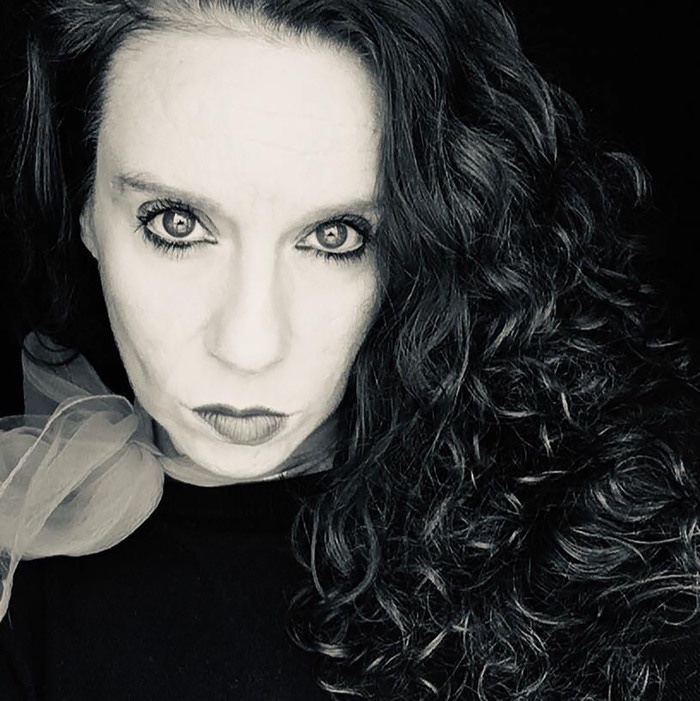
Jennifer is a pale curly haired ginger, obsessed with horror, ghosts, abandoned buildings, and her dog “Lord Tubby”.

She graduated from the New Hampshire Institute of Art, where she studied Acting. She also studied at the University of New Hampshire with a concentration in Art History and English.

She has made her living as an actress, a magician’s assistant, a “gallerina”, a comic book dealer, a painter, and burlesque performer and for the past 10 years as an award-winning professional ballroom dancer, performer, instructor, and choreographer.

When not scribbling away (ok, typing frantically) she enjoys traveling with her fiancé and dance partner, teaching her dog ridiculous tricks (like ‘give me a kiss’ and ‘what hand is the treat in?’ ok these are not great tricks.) as well as taking photos of abandoned buildings and haunted locations.

She is a leo, so at the end of the day she just thinks about her hair.

https://www.jenniferannegordon.com/

https://www.facebook.com/JenniferAnneGordonAuthor/

https://www.instagram.com/jennifergenevievegordon/

https://www.patreon.com/JenniferAnneGordon

Author Interview with Kelly Brakenhoff

1) Tell us a little bit about yourself. How did you get into writing?

I’ve wanted to be an author since I was little. But you know . . . life happened.

In between raising four children, I worked as an American Sign Language Interpreter for more than thirty years, primarily in college classrooms for fifteen different majors. I attend classes with the deaf students and overhear both the most inspiring and the most inane professors you could imagine. At faculty meetings, I’ve seen the jockeying for position that happens on a daily basis. The academic world involves drama and intrigue that even a talented fiction writer could not make up. It’s the perfect setting for a mystery series. 

The Cassandra Sato mysteries began as a NaNoWriMo project in 2014 where I mashed up many of my life experiences together to create a fictional college campus with a funny, strong-willed main character. Writing 50K words in one month proved that I could fulfill my lifelong dream to write a novel. It took me five more years of polishing and learning before publishing the first book, Death by Dissertation in 2019.

Once I checked off that huge item on my Bucket List, I set my sights on a bigger goal. Months of searching for my purpose here on earth led me to start the Duke the Deaf Dog ASL Series. In Never Mind, children and parents alike learn how it feels to be left out because you communicate differently than others. No one of any age likes to be brushed aside with a “never mind.” Farts Make Noise, the second in the series addresses the topic of manners and which things make soft or loud noises.

More than 90% of children who are born deaf or hard of hearing have parents who can hear. My research showed that very few books with deaf or hard of hearing characters focus on young children. I wanted to write a children’s book series that deaf children could feel connected to, because I believe every child can love reading if they find a story they enjoy.

Advertisements

2) What inspired you to write your book?

The Cassandra Sato mysteries are inspired by many real-life experiences. Years ago, I met one of my best friends while my husband and I lived in Hawai’i. I’ve often wished she lived closer to me in Nebraska so we could hang out together in person. Of course, who in their right mind trades the sunny skies and sandy beaches of paradise for miles and miles of cornfields? Right, no one. 

When I began writing my novel during National Novel Writing Month in November of 2014, it was my chance to finally bring my wishes to life. So, I invented Cassandra Sato (who is only a little like my real-life friend) and moved her to Carson, Nebraska, to see how she’d handle the face-freezing winters and ethnically homogenous people. 

3) What theme or message do you hope readers will take away from your book?

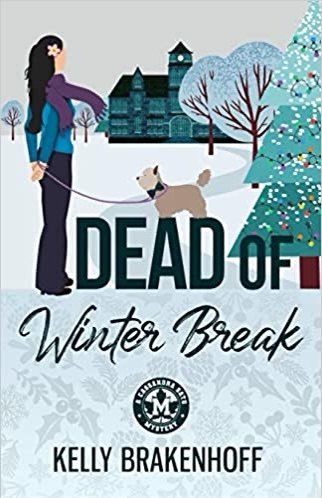
In the first two books of the series, Cassandra’s predicament as a fish out of water helped readers relate to her difficulties getting used to her new home in Nebraska. Now that she’s settled in a bit, for Dead of Winter Break, I threw in a few obstacles to disrupt her plan for a quiet, restful winter break between semesters.

Winter in the Midwest isn’t for wimps and Cassandra quickly learns what it feels like to shovel snow off her driveway. She has a new dog, Murphy—her first pet ever—and she’s learning some ASL so she can chat with her Deaf students and colleague, Dr. Bryant. All of these changes push Cassandra to her limits. 

By the end of the holidays, Cassandra has to decide the depths of her commitment to her long-term career goals and balancing those with a healthier home life. Can an orphaned dog worm his way into her heart? 

4) What drew you into this particular genre?

Mysteries and thrillers are my favorite genres to read so it was a natural choice when I started writing seriously. My books are light-hearted PG-13 because reading is an escape for most people and the real world is too serious and crazy, especially this year.

College communities are microcosms of the larger world and the perfect setting for shenanigans, mayhem, and murder. I think we all struggle to fit in somewhere, whether it’s a new job, with classmates, or who we want to be when we grow up. This series touches on all of those emotions, while also making you laugh. Because when I’m overwhelmed by life, laughter is the best way for me to deal with difficulties and move on.

5) If you could sit down with any character in your book, what would you ask them and why?

Marcus Fischer is one of the guys who’s romantically interested in Cassandra, but so far, they’ve had a mostly business relationship. We know he was stationed in Iraq during his time in the military and that he has an injured knee, but Fischer’s pretty tight-lipped about his past. I’d ask more about his time overseas because I think those experiences have made him the quiet, deliberate guy he is today. Fischer will have to come to terms with his secrets if he wants to move on with his life, whether he and Cassandra get together or not.

6) What social media site has been the most helpful in developing your readership?

Cozy mystery readers in general tend to hang out on Facebook where I’ve joined several very active reader groups. Since I read mysteries and thrillers myself more than any other genres, it’s natural to chat with fans and other authors. The best advice I’ve read about social media says to just be yourself and actually talk to people instead of bombarding them with sales pitches. Since I’ve been stuck working from home for months, I’ve found it easier now to take a while each day to chat with people in the reader groups.

I’m also present on Twitter, but mostly there I support other writers or talk about sports. I haven’t developed relationships with many people from Twitter. Instagram has potential for conversations, but I use it mostly for sharing personal photos and book updates. Other authors use Instagram more than I do, and I’d love to engage there more next year.

7) What advice would you give to aspiring or just starting authors out there?

Against all popular advice, I still struggle to write every day on my works in progress. Usually ideas and dialogue are percolating in my head while I’m doing other tasks, but the only way to finish books is to sit in the chair and write the words. I know that’s what everybody advises. Because they are right!

When you’re just getting started, it comes down to fear of being uncomfortable. Is your discomfort at not finishing that manuscript worse than the fear you feel while you’re writing or revising? You don’t have to be great at something before beginning. The more you write, the better you will get. 

When you feel like vegging on the couch bingeing TV or napping instead of writing, remind yourself how good it will feel when you finish that day’s words. I can’t honestly say I enjoy writing first drafts. It feels like an angsty headache mixed with heartburn and looks ridiculous when I scroll back and re-read it. However, I am addicted to the satisfied feeling I get when I have finished my day’s word goal. 

When a reader leaves a sincere review about why they liked the books, or emails me a question, I love the feeling of having written about characters they enjoyed in a story that touched them. It feels great!

The main thing I’ve learned is to just get started. Don’t wait any longer to pursue your dreams and goals. If I can do it, so can you. Good luck!

8) What does the future hold in store for you? Any new books/projects on the horizon?

 Right now, I’m finishing up the text for the next children’s book so I can get that off my plate and into the illustrator’s magic hands. Next, I’m working on the draft of book four in the Cassandra Sato series coming out in early summer of 2021. I have so many ideas for the series, I’ll probably do a few short stories in 2021 to fill in between the full-length books. Although I became an author fairly late in life, I’m having so much fun I plan to do this for a long time!

Advertisements

About the Author

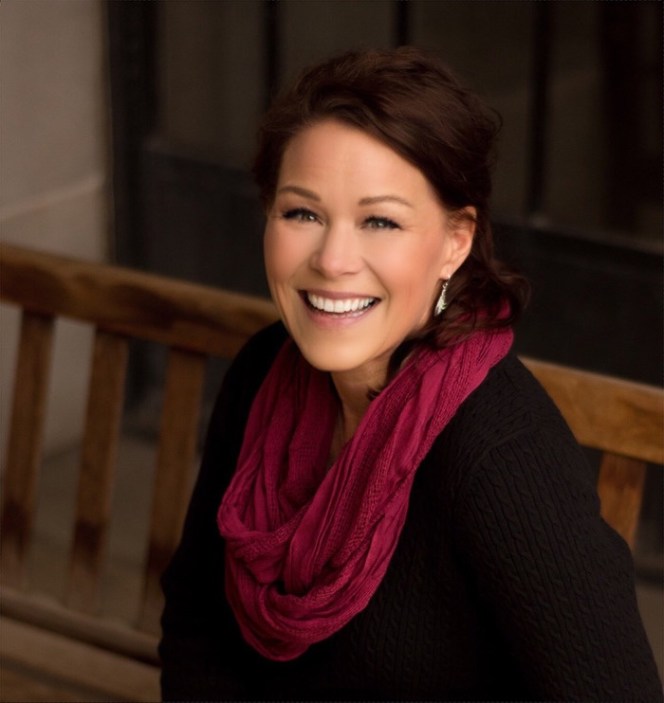
KELLY BRAKENHOFF is an American Sign Language Interpreter whose motivation for learning ASL began in high school when she wanted to converse with her deaf friends.

Kelly writes the Cassandra Sato Mystery series including DEATH BY DISSERTATION, a 2020 RONE Award Mystery Finalist, DEAD WEEK, “a diverting whodunit,” (Publishers Weekly), and DEAD OF WINTER BREAK, a holiday themed cozy new for 2020!

NEVER MIND, and FARTS MAKE NOISE are her children’s picture books featuring Duke the Deaf Dog and illustrated by her sister, Theresa Murray. The Duke books have quickly become popular with children, parents, and educators for promoting inclusive conversations about children with differences.

The mother of four young adults and a hunting dog, Kelly and her husband call Nebraska home.

https://www.instagram.com/kellybrak/

https://www.facebook.com/kellybrakenhoffauthor

Author Interview with Ann Charles

Tell us a little bit about yourself. How did you get into writing?

I started writing fiction back in 1995 after deciding that I wanted to write a story to my liking instead of reading what was available on the bookshelf. However, I didn’t publish my first book until 2011. During those fifteen or so years in between, I spent a lot of time improving my craft—from studying dialogue, narrative, and transitions to learning how to plot using scene and sequel methods and analyzing my favorite movies for setting and character building reasons. 

Advertisements

What inspired you to write your book?

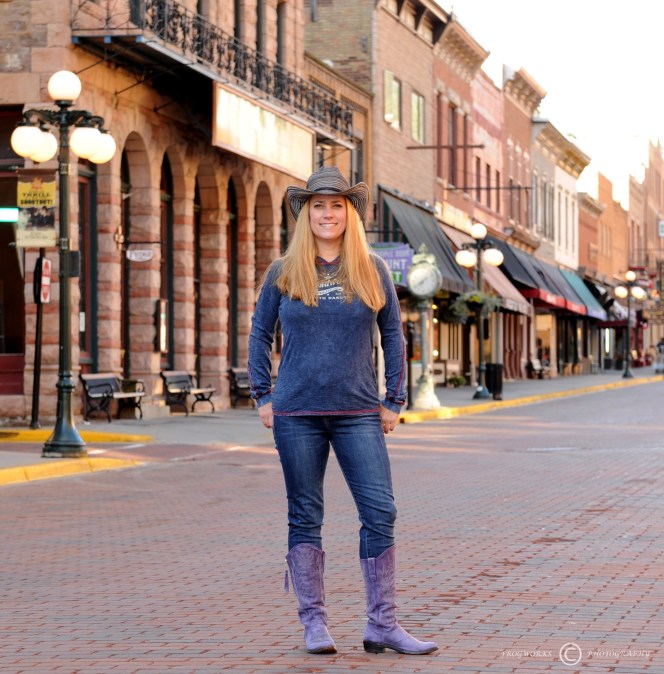
The Deadwood Undertaker series came about when my husband and I were discussing undertakers in the Old West and how neither of us had ever heard of any female undertakers from back then. I already had my contemporary Deadwood Mystery series well underway by that point with eight published books in that series and book nine in progress. It seemed like a natural fit to write a series that would act as a prequel and be set in the same town—Deadwood—only back when the old town was young and gold was luring all sorts of people there in droves.

CAN’T RIDE AROUND IT is the third book in this western/supernatural series and continues the story of four friends as they try to rid the Black Hills in the Dakota Territory of a growing menace before it spreads too far and too wide.

What theme or message do you hope readers will take away from your book?

That even in the darkest times, friendship and determination will see you through.

What drew you into this particular genre?

I grew up watching westerns with my dad and stepdad and loved them. Ever since I began telling stories on the page, I’ve always wanted to write a western, but the amount of research that is required to do it correctly was too daunting. Then my husband and I talked about creating a story together that would be a mix of western and supernatural, and because he was on board as a co-writer, I was excited to finally have a chance to explore the Old West on the page alongside of him. 

If you could sit down with any character in your book, what would you ask them and why?

I would probably choose to sit down with both Hank from the Deadwood Undertaker series and Old Man Harvey from the Deadwood Mystery series. These two are “characters” through and through and they both have long, interesting histories full of colorful anecdotes that would keep me entertained for hours.

What social media site has been the most helpful in developing your readership?

Facebook has been the most helpful so far. I’ve had an account there since 2009 … maybe 2008—I can’t remember. Over the years I’ve had a lot of fun meeting readers on there and getting to know them. Facebook has provided me the opportunity to build a community of supportive readers and friends.

What advice would you give to aspiring or just starting authors out there?

Perseverance is key to a long career in fiction writing. There will be high points to celebrate, and there will be low points that make you wonder why you are working so hard at this career. Don’t give up, just shift gears and keep on writing.

What does the future hold in store for you? Any new books/projects on the horizon?

My husband and I just released a Christmas novella in the Deadwood Undertaker series called CATAWAMPUS CHRISTMAS CAROL. Now that this story has been released, we will be working on book 4 in this series, which is titled, THE BACKSIDE OF HADES. We are hoping to release this book midway through 2021.

In addition to this story, I’ll be writing book 12 in my Deadwood Mystery series, which I hope to release in early spring of 2021. I have a couple more books planned for 2021, so it’s going to be a busy year!

Advertisements

About the Author

Ann Charles is an award-winning author whowrites mysteries that are splashed with humor, romance, and whatever else shefeels like throwing into the mix. When she is not dabbling in fiction, arm-wrestlingwith her children, attempting to seduce her husband, or arguing with her sassycat, she is daydreaming of lounging poolside at a fancy resort with a blendedmargarita in one hand and a great book in the other.

https://www.facebook.com/AnnCharlesAuthorPage/

https://www.instagram.com/Ann_Charles/

Interview with Author Laurie Lisa

1) Tell us a little bit about yourself. 

I was born in Shelbyville, Illinois, and raised in Assumption and Percy, Illinois. So, you can say I grew up in rural towns in Southern Illinois, where coal mining and farming predominate.  

My twin sister, Lisa, and I went to the University of Illinois in Champaign-Urbana.  At the beginning of my sophomore year, my sister introduced me to Steve Lisa at a fraternity after-hours party, and three years later, he and I got married when we graduated in 1981.  So, I had grown up being mistakenly called “Lisa” because of my identical twin, and to this day, people still can’t figure out that “Lisa” is my last name.  People still call me Lisa! 

I obtained my B.S. in English Education from Illinois.  Steve and I headed off to Arizona State University, where he entered law school and I started my master’s program.  I earned both an M.A. and a Ph.D. in English (20th-century American literature) from ASU.  We then moved back to Chicago where Steve started his law career and our children were born.  I taught literature and composition at ASU and the University of Illinois (Circle).  

Steve and I live in Paradise Valley and Flagstaff, Arizona.  We usually spend our summers in Flagstaff and the rest of the year in Phoenix.  We also love traveling, especially to Italy (we have dual citizenship).

Advertisements

2) How did you get into writing?

It’s always been the one thing I really wanted to do. I remember when I was 12-13 years old and cleared some room for a small desk in the laundry room of our house in Percy, Illinois.  My wonderfully supportive Dad, Joe, let me use his old Royal typewriter in my little make-shift office.  I remember this because one key–I think it was the “j”–would stick.  I decided that summer that I would write some short stories.  One of the stories was about going to camp, and I recall part of it included a girl who got poison ivy.  I had this whole story typed up and I was so proud of it.  My Mom (Patricia) and Dad showed all their friends because they thought it was pretty good writing.  At that point, I knew what I wanted to be. By the way, my fondness for the old typewriter is reflected on my website and social sites.

I continued after that to write short stories and poetry. In high school, my twin sister Lisa and I were co-editors of our senior yearbook.  I came up with the idea that Lisa and I would write a poem for each month of the school year.  Lisa wrote a few, but I wrote most of them.  When we graduated from high school, Mom and Dad gave us a brand new Corona typewriter as a present, and I have always been fond of that. During my high school and college days, I focused mostly on short stories and poetry. 

I have always wanted to obtain a Ph.D. in literature. I studied all forms of writing, but focused in grad school on 20th Century Literature. I knew that I wanted to write novels, but with three small children, it was hard to devote the time to a single work.  I published some academic books, short stories, and poems, and also edited others’ works.  Finally, after much time spent in Academia and raising our children, I returned to my passion for writing fiction. I write in the genre of contemporary upmarket women’s fiction and typically complete one novel each year. 

3) What inspired you to write The Wine Club and Across the Street?

I try to do something different with each book. All of my novels are very different in terms of plot, writing technique, and characters. I really do not care for “recipe” or “formula” writing. That said, I strive for each book to be literary in writing technique, but entertaining — with vivid scene and character description.    

For The Wine Club, I got it into my head that I wanted to write a story about some kind of con.  Steve and I had recently rewatched The Sting, the classic movie with Robert Redford and Paul Newman, and that might have planted a seed.  I also decided that the con should be carried out by women protagonists.  It seemed to me that women, unless they were professional grifters, would only pull a con if they were very desperate for money. Then I came across an episode of American Greed about a wine store somewhere in California that sold wine that it didn’t actually have. All these pieces, women + wine + desperation + con, resulted in The Wine Club.

For Across the Street, as I said above, I am an identical twin. My sister Lisa and I were extremely close for as long as I can remember.  We did everything together, and there was nothing one would not for the other.  Across the Street was my earliest novel, and at the time, I lived in Arizona and Lisa lived in Illinois. I decided to create a fictional story that tested the boundaries of love and devotion between twins. The idea came to me that one twin would move across the street from the other and ask her to be a surrogate for her baby.  That was the basis for Across the Street. Thankfully, Lisa and I never had to test those boundaries, but it was fun to write a fictional story that did.

4) What theme or message do you hope readers will take away from your book?

The Wine Club and Across the Street are not remotely similar.  The women in The Wine Club are desperate suburban housewives that break bad with a wine club con, filling expensive bottles with cheap wine. As the con works and the money flows, their greed takes over.  Each of them makes increasingly bad–indeed horrible–choices. They are definitely not likable characters.  

In contrast, Across the Street is an emotionally gripping story. I wanted my readers to like the characters as they battle through the personal and family conflicts that result from one twin agreeing to serve as a surrogate for the other.  For the husbands and teenage children, each with their own problems, the complications are significant. I have been told that even men who read the book have shed a tear or two.  I won’t spoil either novel with anything more.

5) What drew you into this particular genre?

That is not an easy question. First, you can read a lot of articles and not everyone agrees on the definitions of the genres. Second, throughout my time in Academia, I studied all forms of writing and most of the “masters” and established writers. I found myself somewhat aligned with literary fiction and similar commercial fiction. Third, I really don’t believe I fit into any one particular genre, and I am not sure I want to be pigeon-holed into one. 

Each of my books is character-driven, complex, and very different in plot.  I don’t write series, and I don’t write in one category (e.g., romance, beach, crime, friendship, etc.). My goal is to write literary fiction that is entertaining, has characters that the reader will relate to, is realistic with great dialogue, and includes some suspense and humor (often dark). My books tend to be on the long side; so if a reader is looking for a short, quick read that is plot-driven, they won’t necessarily like my books. While my books were written to appeal primarily to women, a lot of men have read them and left me great compliments, which means a lot to me. 

In the end, if I had to pick a genre, it would be somewhere between literary fiction and women’s upmarket fiction. My target audience is the upmarket women’s book club.  

5) If you could sit down with any character in your book, what would you ask them, and why?

Well, to begin with, all three of the main characters in The Wine Club–Reggie, Audrey, and Cynthia–need a good talking to!  By the end of the novel, all three are like desperate housewives on steroids.  However, they all fascinated me, with their conflicting motivations and choices.  I would like to sit down with them all at the same time.  We could gather on the barstools around Cynthia’s kitchen island and have a glass of wine (of dubious quality).  And then I would ask:  Did you really think you could get away with it? 

In Across the Street, Alex comes across as the “nicer” twin, and she’s certainly the more selfless as she reluctantly agrees to carry her sister’s baby.  However, I think I would prefer to sit down and have a chat with Sam.  She is so focused on and driven by the idea of having a baby that she can’t see how her plan affects everyone else once the wheels are set in motion.  However, by the end of the novel, Sam seems to have gotten what she wants.  So, my first question to Sam would be:  Did you finally find the serenity you were desperately looking for?  (And I’m pretty sure Sam’s answer would be no.)

However, with both of these books, I really missed all my characters after I finished writing.  I truly let my characters drive the plot, and I’m often surprised where they end up leading me.  While I like finishing each novel, I always miss their voices and discovering what they’ll do next.

6) What social media site has been the most helpful in developing your readership?

I really can’t say. I have never been a social media person, other than to see the occasional posts from our children.  I was “told,” in no uncertain terms, that I need to use social media to help sell my books, so I do.  I frankly think that Facebook is the most helpful in developing readership.  I find that LinkedIn is primarily people “connecting” with one another, but I’m not sure if many of the authors who “connect” on LinkedIn are eagerly buying each others’ books. I also don’t see a lot of “activity” that helps grow readers on Twitter, in part because I think it’s hard to interest readers in a book in 150 characters or less. My posts on Instagram seem to get more attention than do my Facebook posts, but again, I’m sure how many of those “likes” result in a purchase.  Frankly, I think that Amazon Advertising and Bookbub provide the most direct assistance in developing readership, but they are both expensive.  

7) What advice would you give to aspiring or just starting authors out there?

Keep reading authors you like, keep writing, and don’t give up.  

8) What does the future hold in store for you? Any new books/projects on the horizon?

I now have eight completed novels.  My most recent book, Queen of Hearts, is actually a composite novel made up of 13 connected short stories.  We’re considering releasing the short stories one at a time, almost like the old dime novels.  My other five completed novels are being released a few months apart over the next year or so.  I will shortly be starting my next novel, with the goal to complete one novel a year until I just can’t do it anymore.  I can’t imagine not writing, though, so as long as the ideas keep coming, I’ll be sitting in front of my computer!  

Advertisements

About the Author

Laurie was born and raised in small towns in Southern Illinois. She obtained her B.S. in English Education from the University of Illinois, where she also met and then married her husband Steve. Laurie earned both a M.A. and a Ph.D. in English, 20th-century American Literature, from Arizona State University, where she also taught literature and composition. In addition to her eight novels, Laurie has published two academic books, several short stories and poems, and edited other’s works. After much time spent in Academia and raising her three children (Anthony, Michelle, and Caitlin), Laurie returned to her passion for writing fiction. She is a prolific writer and typically completes one novel each year. Laurie resides with her husband, Steve, in Paradise Valley and Flagstaff, Arizona.

https://laurielisa.com/

https://www.facebook.com/authorlaurielisa/

https://www.instagram.com/laurieolisa/