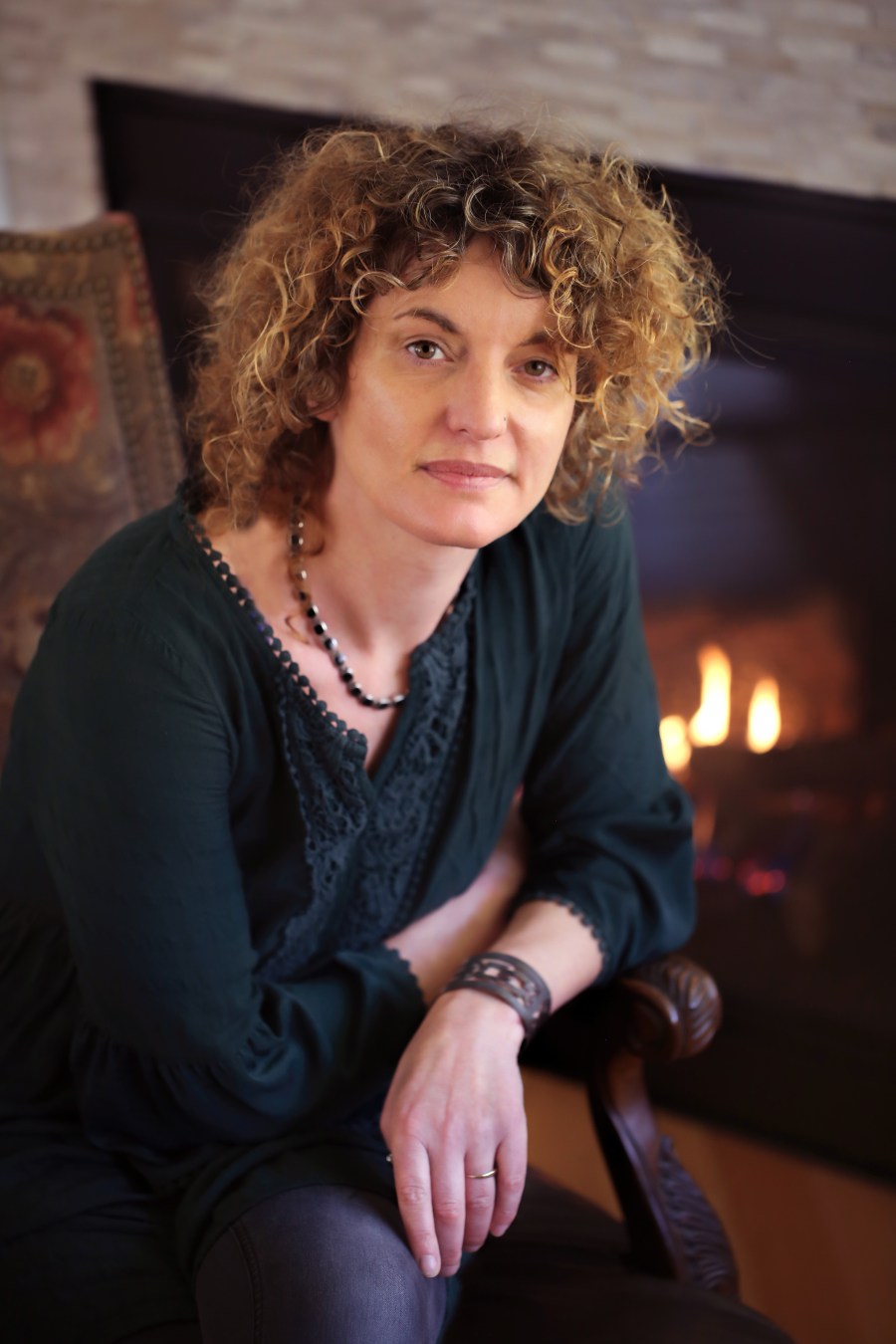
Interview with Author Joseph Amiel

1) Tell us a little bit about yourself. How did you get into writing?

I’ve been a writer since Fourth Grade, when we were required to hand in a story every week.  I loved it. Even while working as a lawyer I continued to write.  An agent read three chapters of my first novel, now titled STALKING THE SKY, and sold it to a top publisher within ten days.  Magic!

2) What inspired you to write your book?

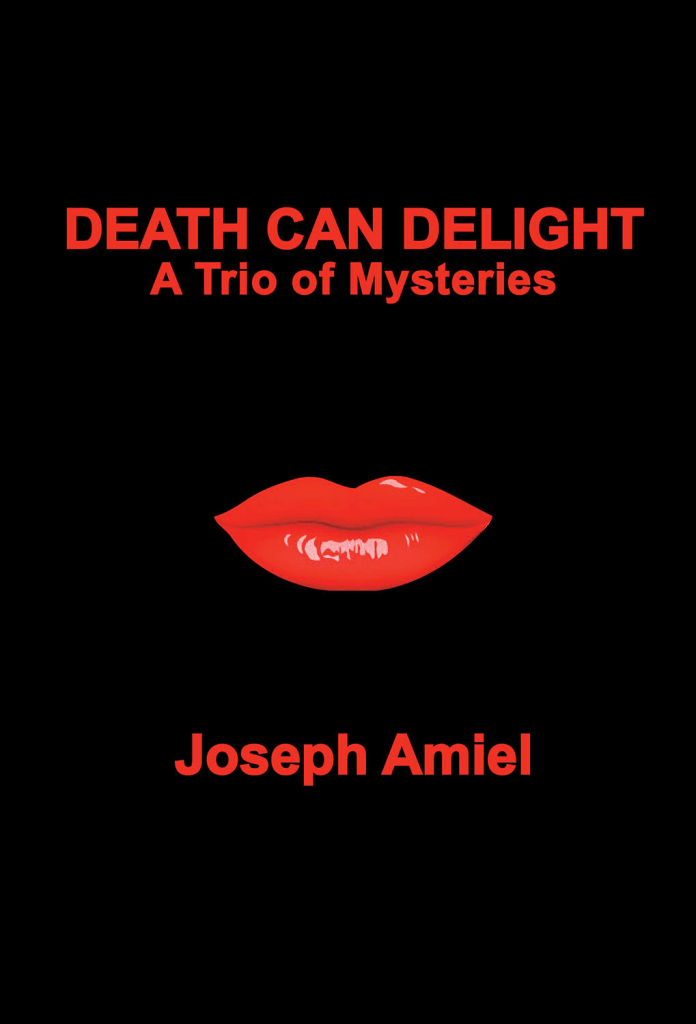
I had an idea for a short story, a murder mystery, and put aside what I was working on to write it.  I found I loved the form: Completing a novel could take a year or two, but I had finished the story in only a few days.  It’s the second in my new collection DEATH CAN DELIGHT: A TRIO OF MYSTERIES.  Almost immediately an intriguing title for a new story popped into my head, THE GIRL WHO SPOKE VENTRILOQUISM, but I had no  story.  While agonizing over possible characters and plot and getting nowhere, inspiration came in the form of a sudden recollection of the trip I and my family had made the year before to Ireland.  I have no idea where that unexpected recollection came from, but instead of dismissing it, I was aware enough to realize my subconscious had just presented me with the structure I had been searching for.  The third story was suggested by an incident involving Donald Trump: He was alerted by his lawyer that the pre-nuptial agreement with his new wife was about to expire and any divorce after that could be far more expensive.  His shocked wife soon received divorce papers. That story, the last of the three, is titled DEADLINE DIVORCE.
3) What theme or message do you hope readers will take away from your book?

I’m a story teller, someone who writes to entertain and perhaps enlighten an audience of readers with an engrossing tale.  I named this collection DEATH CAN DELIGHT: A TRIO OF MYSTERIES because my purpose in writing the stories was to entertain my readers with wit, humor, drama, and surprises; as the title says, to delight them.  Their reaction and the book’s reviews suggest that the stories do that.

50% Off Select Funko POP!

4) What drew you into this particular genre?

The stories in the collection are murder mysteries.  I think almost every fiction writer plants mysteries of some sort in his/her work to keep the reader turning pages.  Murder, the whodunnit or whydunnit of that drastic act, provides the material for the most engaging mysteries with the highest stakes for the characters–and the reader–which is why book-stores shelves are packed with murder mysteries, All of my novels have a mystery at their core, several indeed murder.  My initial idea for JUDGEMENT DAY, about a judge everyone in town would kill if they could, led me to write it and then the other stories in the murder-mystery genre.  I don’t doubt I’ll be writing more stories in the same vein.

5) If you could sit down with any character in your book, what would you ask them and why?

 If I could sit down to converse with any character in the book, it might be Kyra, the sixteen-year-old high school student who narrates JUDGEMENT DAY.  I would want to know if the outcome of her and her family’s action against the judge, whom she had hated for a year, brought her satisfaction.  I have no doubt that what she ultimately did with that narration in the story’s surprise ending had to leave her “delighted.”

6) What social media site has been the most helpful in developing your readership?

Although I’m on Facebook [Joseph Amiel Author] and now Instagram [josephamiel9087], I would have to say that being able to communicate so quickly with my many followers on Twitter has been the most effective of the social media formats [@JoeAmiel].  Also I would guess that being able to get out the word, rather than waiting for people to find what I’ve posted, suits my personality.

7) What advice would you give to aspiring or just starting authors out there?

We live in an age when a neophyte author without an agent or an established publisher can put his/her work on Amazon and hope to develop a readership.  Crucial to continuing to write is believing that your work can be seen and not deposited in a desk drawer.  My advice about the actual writing is to do it, every day if possible.  One friend said he had a novel in him if he could only come up with the right first line.  I told him to start with the second line and just start writing–he would be rewriting everything anyway, probably even his precious first line.

8) What does the future hold in store for you? Any new books/projects on the horizon?

As long as senility doesn’t set in, I’ll continue to write novels and short stories.  Story tellers have to tell stories.

30% Off Kaplan AP Test Prep

About the Author

Joseph Amiel is a novelist and screenwriter, as well as a lawyer. His novels include: HAWKS, BIRTHRIGHT, DEEDS, STAR TIME, and A QUESTION OF PROOF, which have been translated into over a dozen languages. His screenplay GAMES has recently been honored at several film festivals, as has his comedy series for the web AIN’T THAT LIFE.

He was graduated from Amherst College, where he studied English and creative writing, and from Yale Law School. He is married and has two children.

http://www.josephamiel.com/

Interview with Author N. Lombardi Jr.

1) Tell us a little bit about yourself. How did you get into writing?

Born and raised in New York City, I left to see the world at age 24 as a water engineer in the Peace Corps. For most of my life, I had never entertained the idea of becoming an author. My career as a groundwater specialist kept me busy enough, filled with both adventure and satisfaction with my job. However, while in Kenya I fell in love with a woman, and this relationship was doomed from the start. As a kind of catharsis, I began to write a semi-autobiographical story which became Journey Towards a Falling Sun. As I said, it was the need to purge my emotions that drove me, without immediate plans for publishing, as I was in the prime of life as regards to my vocation. But in 1985, I did manage to get an agent who was very enthusiastic over the manuscript. After fifteen rejections by big publishing houses, however, I gave up and shelved it, abandoning any thoughts about being a writer. It wasn’t published until 30 years later.

In 1996, while working in Laos, I learned of the secret war that the US conducted for 9 years, and resulted in the aerial bombardment that has given that country the dubious distinction of being the most heavily bombed country of all time. As an American, I was ashamed of my ignorance of this matter, for I had never known of this secret war. I was so moved, I decided I would write an epic novel that would illustrate the consequences of that war which became The Plain of Jars, released in 2013. And from there my path as a writer began.

2) What inspired you to write your book?

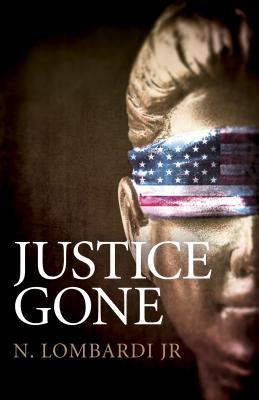
The idea for Justice Gone came from a true incident – the fatal beating of a homeless man in California. It was such an outrageous act, recorded on video and uploaded to YouTube, that I wondered what would happen if someone who saw the gruesome video would mete out their own version of justice to the police officers involved.

The novel then, is a tale of what happens in a small town following the fatal beating of a homeless Iraqi war vet at the hands of police. A cascading series of events, from street protests to a vigilante shooting of three police officers leads to a multi-state manhunt for the vet’s war time buddy. A controversial trial attracting nationwide attention dominates the second half of the novel. The story ends with a twist revealing the identity of the cop-killer

3) What theme or message do you hope readers will take away from your book?

Although deaths at the hands of law enforcement officers disturb me, I tried to avoid taking too strong a stand against the police, and just presented a possible (albeit extreme) scenario if this issue is not addressed. I also wanted readers to have a detailed look at the legal system in the US, i.e. the importance of lawyer tactics on both sides of the bench and of jury sentiment in deciding a case.

Paperbacks 2 for $25!

4) What drew you into this particular genre?

First of all, I don’t consider myself a genre writer, I just write about things that move me. Having said that, as a reader I do enjoy mystery/thriller/suspense/crime, so I may be writing more of this kind of fiction from now on. It is much easier to write this sort of stuff than cross-cultural adventure novels such as my first two books, The Plain of Jars, set in Laos, and Journey Towards a Falling Sun, set in Kenya.

5) If you could sit down with any character in your book, what would you ask them and why?

I would have to say, the policemen that beat Jay Felson to death – Why, when he was unarmed, did it take 6 cops to bring him down and beat him till he died?

6) What social media site has been the most helpful in developing your readership?

I’m really not active in the social media scene, so I would have to say Goodreads, despite the fact I find Goodreads a bit exploitive and disdainful of independent authors. As a reader, it is pretty good. I tried Facebook, but it isn’t focused enough and being an old fart, I’m mistrustful of Twitter. I love book bloggers, thank god for them!

7) What advice would you give to aspiring or just starting authors out there?

Although it sounds cliché, the first thing is to write well. Many independent authors, particularly those who self-publish, write with a quality barely above a high school student. You don’t have to be a wordsmith, but the book should not sound stilted. Read passages from a book by an acclaimed author than read your stuff. How does it compare?

Secondly, unless you’re with a big publishing house, be prepared to market your work. You should have a budget of $2,000 for this, even if you are very active on social media, because it’s always better for someone else to tout your book than you as the author. That means reviews, which can only result from exposure.

Spring Tote Only $12.95 With Any Purchase (Reg $19.95)

8) What does the future hold in store for you? Any new books/projects on the horizon?

I’m in the process of fine-tuning another Tessa Thorpe novel, Woman in the Shadow. It takes place several years prior to the setting of Justice Gone, and is considerably darker, more of a psychological/suspense thriller. I actually wrote this before Justice Gone, but I was disappointed with the publisher’s reaction to it so I shelved it. Directly related to this, I’m looking for another publisher, so I hope it doesn’t take too long for the book to come out.

Interview with Author Carol Es

1) Tell us a little bit about yourself. How did you get into writing?

I started writing around the age of 12. I’d been quite illiterate to begin with because I missed out on a lot of schooling. I wrote indecipherable poetry filled with angst—stream-of-consciousness diary entries about wanting to get away from my abusive situation. It wasn’t until I started reading my favorite writers before I’d make any attempt at any real writing. I never wrote full time because I also played the drums and painted. I was most serious about music at the very start.   

I fell in love with authors like JD Salinger, Tom Robbins, and Charles Bukowski and buried my nose in everything they wrote. Salinger’s Nine Stories made me want to be a short story writer. Then, I read Bukowski’s Ham on Rye and that truly changed my life forever. He gave me a lot of freedom to be myself as an artist. Then came John Fante, He’s now just about my favorite writer.

2) What inspired you to write your book?

I always knew I’d write this book. I just didn’t know if I’d ever publish it. Not as nonfiction anyway. I’ve always written autobiographical fiction and wrote a lot of dark comedy stories about my family. I figured I’d put them together as a collection or something, but I didn’t think I could string them into one long book. I didn’t believe in myself enough. I’d tried to write whole novels in the past and failed. Eventually, I wanted to try again. And again. And again. It took me almost a decade to finish this book, and as the years went on, Shrapnel took several different directions.

3) What theme or message do you hope readers will take away from your book?

I really don’t have a direct intention for what my readers should or shouldn’t take away. This is the same philosophy I have with putting any of my art out on display. The work has two lives; the one it’s lived with me during its process, then the life it lives once it’s completed. It now lives with the audience and becomes their personal, individual experience. I can only hope people can identify with it on some level.

Spring Tote Only $12.95 With Any Purchase (Reg $19.95)

4) What drew you into this particular genre?

Interestingly enough, I’d mostly been inspired by fictional stories that were written in a nonfiction, first-person format, such as Alice Walker’s The Color PurplePush by Sapphire, Bastard Out of Carolina by Dorothy Alison, and Bee Season by Myla Goldberg. Dorothy Allison’s book is based on her real life and I originally wanted to take this approach, but my partner, Michael Phillips (also a writer), got me to change it to nonfiction. He got me to see how much more powerful it could be. I didn’t think anyone would believe it, and frankly I was fearful of putting my story out there. Now I’m grateful for his encouragement because it’s made me a stronger person.

5) There were quite a few different sides to your story that were heartfelt, emotional and powerful enough to convey your struggle to the reader. In regards to your experience within Scientology, if you could sit down and ask any of the leaders of the group a question or confront them in any way, what would you want to say to them?

I do not think anything I could ask or say to the leader, David Miscavage, that would ultimately change anything. As far as I’m concerned, and as the public continues to hear evidence of the stories regarding his abuse and destruction, he is a megalomaniac with blinders on. He has no conscious when making his ends meet, whatever they may be. Challenging his motives would only make things worse for his enemies and Scientologists alike.

Having once been a devout Scientologist, I’d rather address Scientologists in general and ask that they try to consult their gut. I would tell them that people that speak out against religions that abuse their members are not evil. Cutting off a dialogue with them doesn’t fix the situation. Disconnecting from people labeled “suppressive” only further isolates your mind to stick with like-minded Scientology kin. How will you find understanding with the rest of the world that way? And are you really the one who controls your communication?

6) What social media site has been the most helpful in developing your readership?

Keeping a blog is key, as well as slowly adding to my mailing list. I put out a newsletter a few times a year and am careful not to “spam” my list with too many superfluous email blasts. I make sure I announce my blog posts on all my social media outlets. Facebook and ello are my most successful.

7) What advice would you give to aspiring or just starting authors out there?

You can always get better at writing by reading. Read a lot and a wide range of genre. Don’t give up, but don’t try too hard either. Try not to listen to other people’s opinions—that may possibly kill the best thing about your style and voice. Just be mindful of it anyway, because not everyone knows what they’re talking about. Strunk & White’s Elements of Style is almost the only thing you’ll ever need. But if you like spending $100K on college, do what you like.

The most important piece of advice I have is: despite rejection at seemingly every turn, you can do this. We are all stronger than we think.

Canvas Easter Basket Only $9.99 With Purchase!

On a separate note, if you were to be able to speak to anyone who has questioned the practices of Scientology or has been approached to possibly join the group, what would you want to say to them or what advice would you want to give them based on your own experiences? 

I feel I’ve pretty much answered this and choose not to dig a deeper hole. But I would refer current members of Scientologists to Dr. Robert J. Lifton’s Eight Criteria to reevaluate their situation.

8) What does the future hold in store for you? Any new books/projects on the horizon?

Right now I am finishing up new artwork for my big book launch and solo exhibit at the gallery that represents me in Los Angeles, Craig Krull Gallery. The show opens Saturday April 13th, 2019 at 4pm with a reading and a short Q&A. I will then sign books until the artist’s reception that goes from 5-8pm. The show runs until May 25.

I’m also putting the finishing touches on the special lettered edition of Shrapnel in the San Fernando Valley, which is limited to 30 copies only. It is hard-bound in linen and comes with original artwork inside.

I plan to take a short hiatus over the summer and begin working on a book of short stories in the fall. I’d like to publish them with watercolor illustrations by 2020. 

Looking for help to take control of your own mental health and seek the help you need? I’m happy to share this amazing link to BetterHelp for advice on where you can turn if you are feeling sad. Just click the link below!

https://www.betterhelp.com/advice/general/where-to-turn-when-youre-feeling-sad/

Author Bio

Carol Es

Carol Es is a self-taught artist, writer, and musician born in Los Angeles. Using a wide variety of media, she is known for creating personal narratives that transform a broken history into a positive resolution. Her paintings, drawings, installations, videos, and books have been exhibited nationwide in venues such as Riverside Art Museum, Torrance Art Museum, Lancaster Museum of Art and History, and Craft Contemporary in Los Angeles. Some of her works can be found in the collections at the Getty and the National Museum of Women in the Arts in Washington, DC. Her collaborative film was also featured in the 2015 Jerusalem Biennale. 

Awarded many honors, including several grants from the National Arts and Disability Center and California Arts Council, she is a two-time recipient of the ARC Grant from the Durfee Foundation, a Pollock-Krasner Fellowship, and the Wynn Newhouse Award. She has written articles of art critique for the Huffington Post and Coagula Art Journal, as well as having poetry published with small presses. She also received a writing grant from Asylum-Arts—a Global Network for Jewish Culture.

Shrapnel in the San Fernando Valley

esart.com

Desert Dog Books

Interview with Author Boris Sanders

1) Tell us a little bit about yourself. How did you get into writing? 

I started writing when I was about 11. I played with toys a lot (specially legos), and would create stories to play around, and at some point I thought “This story is pretty awesome, I should write them!” and so I did, I pestered my history and literature teacher’s at school to read them too. I’ve gone through these old stories again recently, and let me just tell you this: they seemed much more entertaining when I was 11. I decided to write seriously go back to writing about 3 years ago, when I started writing Code: Revelation, I wrote at a slow pace, I think the only reason I picked pace to write again was knowing my wife was pregnant, it gave me a “it’s now or never” feeling.

2) What inspired you to write your book? 

I wanted to write a story that was different from the rest. I like psychological thrillers since watching Death Note, when it launched, so I decided to venture on this road too. First I created the world, I was trying to imagine a Sci-fi city that was different from all the others portrayed on similar books, after that, the rest came bit by bit. My corporate background certainly played a part on it.

3) What theme or message do you hope readers will take away from your book? 

That choices have consequences, and regardless of how dire those consequences may be, you must be strong enough to make the choices you believe to be the best. I also like to play a bit around the logic of morals, ethics and law, inviting the reader to reflect about them as well.

4) What drew you into this particular genre?

 I don’t see myself writing anything other than Sci-fi and Fantasy. Almost all the books I’ve read are either Sci-fi or Fantasy, so it’s just natural that I write on these genres. Would I write in another genre? Maybe one day, but surely it would be a challenge.

5) If you could sit down with any character in your book, what would you ask them and why? 

Without a doubt I would choose Lucy. I mean, she has been around since the dawn of civilization, I would have so many questions that I have a hard time even thinking of where to begin. Maybe start by asking who killed JFK? 

6) What social media site has been the most helpful in developing your readership? 

Twitter, I still don’t have a big presence there, but it’s growing, and helps me connect with other writers.

7) What advice would you give to aspiring or just starting authors out there? 

Well, I’m just a starting author myself, should I really be giving advice? haha. I’m not sure if it counts as advice, but I would say to 1- Write a little bit every day. 2- Don’t try to save money, even if it means delaying the book, invest in a good editor. I learned the second one on the hard way.

8) What does the future hold in store for you? Any new books/projects on the horizon? 

I’m glad you asked, Anthony. My next book, Code: Stasis, is a collection of short stories that, although can be read as a stand-alone, works as a prequel to Code: Revelation. It will feature 4 short stories and a preview of the first 3 chapters of the Code: Revelation. It will be launched on Spring 2019, and it will be completely free on all platforms. I also plan on launching the sequel, Code: Ascension, still on 2019, so I have lots of work to do this year!

Spring Break Promotion – 15% off Fiction titles @ eBooks.com. Use Code: springbreak$cp. Valid until Apr 1

About the Author

Boris Sanders started to write at a very early age, in fact, so much so that, for his mother’s surprise, the doctor who delivered him insisted to have seen some marks that resembled words inside her womb. His intellect is quite advantaged, having learned 37 languages by the age of 14, of which 35 were created by him, don’t have a writing form, and only he can speak and understand them. In addition, he has a photographic memory, as long as an actual photo was taken during the occasion. 

In his spare time Boris likes to swim in waterless pools and investigate the mysteries of the universe, while sitting on his comfortable couch, effectively doing nothing. He has a particular taste for olives of any kind.

Book

Book trailer: https://1drv.ms/v/s!AjZg8_7n9Ym4kqcdOFbQE79fw9ZSRA

Amazon: https://www.amazon.com/dp/B07L3TPH43

Goodreads: https://www.goodreads.com/book/show/43521844-code

Author

Twitter: https://twitter.com/BorisSanders1

Instagram: https://www.instagram.com/boris.sanders/

Facebook: https://www.facebook.com/BorisSandersAuthor

Website: http://www.borissanders.com/

Goodreads: https://www.goodreads.com/author/show/18672762.Boris_Sanders

Interview with Author Rebecca Henry

1) Tell us a little bit about yourself. How did you get into writing?

I’m currently living abroad in England with my husband and kids. We absolutely love living in England and have been traveling the world for the past twelve years. I have always been a writer and before I could write words I was pretending to write stories with squiggle markings on paper. I took to poetry at the age of ten, and kept a writing journal in my backpack, which I took everywhere with me. By the time I was nineteen, my poems were published in various school magazines, anthologies, poetry journals, ezines, and websites.

2) What inspired you to write your book?

Louisiana Latte was 100% inspired by my diva sister, Deb, and a business trip we took together to Louisiana. I’ve always been fascinated by Deb’s audacious personality and electric passion for life. It was never a question of if I would write a book inspired by her character, but when.

3) What theme or message do you hope readers will take away from your book?

Firstly, I hope readers get a good laugh from the book. I want to make people laugh and feel good while reading Louisiana Latte – that was my soul intention for writing the book. I purposely made it a quick read, so that it could be light and airy. Something you can pick up while waiting at the doctor’s office, read a chapter, and have a laugh. I feel like the main themes and message in this story is grounded in family (sisters in particular) the bonds we create that last a life time, and the lasting impressions they have on us.

4) What drew you into this particular genre?

Having a diva for a sister! I wanted to embrace the chick-lit genre by incorporating humor, and lots of fun with being a girl! Chick-lit is a great genre and I’m truly excited to have written a book within it.

5) If you could sit down with any character in your book, what would you ask them and why?

If I could sit down and have a conversation with one character from my book I would choose Agatha Broccoli. I would ask her why on earth would she choose to have eyelash implants made from her own human hair.

6) What social media site has been the most helpful in developing your readership?

I actually repel technology and being tech savvy is not my thing. I’m the happiest in the garden or outside on a walk. I do not have any social media sites; however, I appreciate how valuable social media is and I could not have progressed as an author without it. Goodreads and blogs have all been instrumental and invaluable to me. Bloggers, such as yourself, really are the fiber in the thread.

7) What advice would you give to aspiring or just starting authors out there?

My advice to aspiring authors is to stick with it. Just keep writing, keep carrying on and don’t stop until you have your book completed on your computer. I’ve seen aspiring authors begin strong in their book and then drop in the middle. That’s a very dangerous place to stop. You have to keep pushing and keep going. Finish the book!

8) What does the future hold in store for you? Any new books/projects on the horizon?

Yes, I have another book completed, Conjure Lake, which is a fantasy-thriller and I’m working on another novel in the making. I might even like to do a Louisiana Latte 2! The many adventures of Deb continue. Ha-ha.

About the Author

I am a newly published author with one novel released and another book coming out for publication, in February 2019. I am also a world traveller, living abroad. I have many interests and hobbies in life, besides my greatest passion of all, my family. I am also a vegan, gardener, crafter, and I practice yoga regularly.

Interview with Author Clive Fleury

Tell us a little bit about yourself. How did you get into writing?

My love for writing began at school. My English teacher often said that I should write a book, but I didn’t know what to write about. So I dismissed her encouragement as a fanciful dream. When I left University, I decided that maybe I should combine my love of music with writing and become a music journalist. Being naïve I didn’t really think about how hard that would be, and after countless attempts to get a job gave up and joined a market research company. Three months in, and hating the work, someone called me from one magazine I had applied for and said they had made a mistake and would like to hire me! I’ve no idea why that happened, but I didn’t hesitate. From there, after a series of lucky coincides I moved from journalism to researching TV documentaries, to directing documentaries, and then onto writing, directing and producing TV drama and feature films.

What inspired you to write your book?

Writing my book Kill Code was down to my pride. I always considered completing a book as being far too hard but had nurtured an idea for a novel for five years ago. I found countless excuses why I couldn’t start it, but finally, someone dared me to stop talking about it and just do it.

What theme or message do you hope readers will take away from your book?

In one sense Kill Code is a pessimistic novel.  The world it describes is one of the extremes of wealth and poverty, and of terrifying climate change.  But it is also about men and women’s resilience, courage and moral certitude. So I hope readers take away the message you should always listen to your heart and your conscience and go with them, whatever the consequences.

What drew you into this particular genre?

One of the interesting facets of the science fiction genre is that it is an ideal platform to explore ‘big themes’ while still allowing the author to tell an entertaining and exciting story.

If you could sit down with any character in your book, what would you ask them and why?

Actually, I would like to talk with not one but two characters in Kill Code—the main protagonists Hogan Duran and Ruby Mason. They opt to reject a life of luxury for beliefs based on equality, liberty, and fraternity. I’m not convinced most people would make this choice, and I’d like to ask them how they had the strength to walk away from what looked like such an easy life.

What social media site has been the most helpful in developing your readership?

Blogs, like this blog, are the lifeblood of authors.  We rely on passionate reviewers and reviews to encourage readers to take a chance on our books. Twitter too is important as it’s a platform used by many who are avid readers.

What advice would you give to aspiring or just starting authors out there?

There are many, many reasons not to write a book. You fear starting. You believe you don’t have the ability. You think you’ll never find a publisher or an agent. I could go on and on. The first thing to ask yourself though is: “Do I really, really want to do this.” A true writer will not be put off by fear and rejection.  That will simply make you stronger. The fact is writers have no choice but to write. It’s something you crave and have to do. So start typing, ignore the naysayers and just do it!

What does the future hold in store for you? Any new books/projects on the horizon?

Benjamin Franklin once said that the only certainties in life are death and taxes. So, the future definitely holds those in store for me! But that aside, I am currently completing the second book in the ‘Code’ trilogy, and I have my fingers crossed that all you readers out there will buy it and enjoy it.

About the Author

Clive Fleury is an award-winning writer of books and screenplays, and a TV and film director and producer.  He has worked for major broadcasters and studios on a wide variety of successful projects in the US, UK, Australia, Europe, and the Middle East. Clive lives in Miami with his wife, his teenage daughter, and a cat called Louis.

Author Interview with Jonas Salzgeber

Tell us a little bit about yourself. How did you get into writing?

I started reading voraciously as a young adult. I really enjoyed reading about things and improving myself as a person. I wanted to get better. My brother Nils was very similar in that aspect and at some point we decided to start a blog. So I began writing articles. People enjoyed it and we continued.

What inspired you to write your book?

I was hooked with Stoic philosophy. It was intriguing how your mindset can help you in daily life. I was struggling with destructive feelings and Stoicism helped me immensely. I devoured countless books on the subject and felt there’s something missing. A book that simply explains this wonderful philosophy. I knew the topic, had an idea for a book, and started doing more research explicitly for the book.

What theme or message do you hope readers will take away from your book?

There are simple strategies that can help you deal more effectively with life’s challenges. Whatever life throws at you, you have the power within to make the best with it. You just need to bring in the necessary awareness to observe your thoughts, the willingness to reflect upon your actions, and the decisiveness to choose to change what’s not helpful.

What drew you into this particular genre?

I read mainly nonfiction. I want to learn and get better every day. So, that’s what I write about. Sure, I like to sprinkle some storytelling for the taste.

You spent some time in your book exploring some of the early philosophers who brought Stoicism to life. Of those philosophers, which would you want to speak with if given the opportunity and what would you ask them if given the chance?

Marcus Aurelius. I’d ask him about being a Stoic in heart and at the same time being Roman Emperor leading wars where thousands of innocent people die.

What social media site has been the most helpful in developing your readership?

Probably Facebook. But we’re not big into social media. What helped us most getting readers was organic search traffic that grew over time. And word of mouth.

What advice would you give to aspiring or just starting authors out there?

The inner resistance that’s holding you back is something all creators experience. Everybody needs to go through this fight between your ears. There’s no way around. “What is to give light, must endure burning.” This quote by Viktor Frankl has helped me in countless moments of darkness. It’s supposed to be hard.

What does the future hold in store for you? Any new books/projects on the horizon?

Haha. I don’t know what the future holds in store for me. Sure, we have projects lined up. The next book? I don’t know yet. Maybe something with my brother about powerful mindsets to adopt for a calmer and more resilient life. But that’s really just a fleeting idea.

Buy any two Google Home Minis for $58!

Short author blurb:

Jonas Salzgeber is the author of The Little Book of Stoicism and blogs for a small army of remarkable people at njlifehacks.com. He’s an expert in Stoic philosophy and passionate about self-made dark chocolate and buttered coffee with collagen.

Facebook: https://www.facebook.com/NJlifehacks/

Twitter: https://twitter.com/NJlifehacks

Website: https://njlifehacks.com/the-little-book-of-stoicism/


Interview with Author Lorna Brown

1) Tell us a little bit about yourself. How did you get into writing?

I always wanted to write, I don’t remember a particular time when the feeling came to me- it was always there. I started my first book at around 11 and it was an orphan Annie story that really disappointed me for the lack of originality. I thought ‘I have nothing to write about’ and I believe that’s when the yearning for travelling came. I talked about that all the time. After studying psychology and working for a year, I left Ireland. I worked in Australia, Japan, Boston and traveled South East Asia and New Zealand for three months alone, and South America for six months with my husband who I met in Japan. Eventually I came back to Ireland and I was nearing 30 when I finally started writing full time, with my husband’s support.

2) What inspired you to write your book?

This collection has been a while in the making. I’d been writing novels, breaking every rule in the book too as I tried to figure it out, and when I moved the States with my husband and three daughters, I started writing the stories. I wanted to write about how society views certain people, which make it difficult for them, like Lou and dyslexia, or Marcus marrying and trying to hide that he was gay, or Ester getting it wrong when her friend moves in with an older man, all these mistakes we make about people because it is impossible to know the whole truth about anyone. After I knew the characters, I put them together in the village I grew up.   

3) What theme or message do you hope readers will take away from your book?

I think through all the stories is the idea that we never truly know what’s going on with other people, while also addressing the fact that society can be tough. ‘In Taste of Salt’, when the group of kids come into the room with Lou, I write, they didn’t really know him but it was easy to forget this, to accept their wariness as reasonable, because there is the idea that we become how society views us. It is so hard to break from the mold. But there is also through the stories an idea of second chances, or being able to rise above it, and I think the ending of ‘White Trout’ is good for that.

4) What drew you into this particular genre?

I started short stories because I wanted to understand them and see how it was done. It took a good while for me to learn what they were about and how to write them.  This year I finished my second collection ‘It Is Good We Are Dreaming’ which is about that moment when people realize something about their live never known before, or that moment when we are forced to grow up, and I loved writing the stories, as well as the stories of Treading The Uneven Road, because they really made me look at the world around me. Writing a novel is a lot more insular I think. At least I tend to focus on the world I am creating, but when I am working on a collection I really look at what’s going on around me. The second collection most of the stories are taken from news articles and my ideas of what was behind them while Treading The Uneven Road was more about society and its biases.  

5) If you could sit down with any character in your book, what would you ask them and why?

Hard one, I like Dick for his dreaminess, but I really like Patrick from ‘Amends’ for his sense of humor. Eilish is a funny one, so stern and upright, but there is some softness to her that I’d like to see, Ann, would be interesting, I’d imagine sitting in her small kitchen with the view of the bay and that I wouldn’t get a word in edgeways. I’d probably ask her if she wished she’d knocked on that hotel door. (You have to read the collection to get see what I mean)

6) What social media site has been the most helpful in developing your readership?

I really don’t like social media, and I don’t use it much. But I love all the reviewers, such as yourself, who have been willing to review my book after my request with a synopsis. It’s fantastic that you spend time helping authors get known. I have to give it to the book bloggers sites.

7) What advice would you give to aspiring or just starting authors out there?

To accept feedback with gratitude because it is impossible to get better or learn without it. To be able to erase your words, none written is a waste of time. They lead to the destination, but not all are meant to stay. Read and write as much as you can and believe in your talent and ability no matter what anyone says, or how long it takes.

8) What does the future hold in store for you? Any new books/projects on the horizon?

I have a lot of projects on the horizon. Fomite has my second collection. It Is Good We Are Dreaming. I secured an agent with my novel, Patient 55. But I finished my re-write of Hinterland soon after and we both agreed it was a stronger one to start with. It took eight years for me to get all the pieces right for Hinterland.  I was glad that he thought it stronger because I’d like to think my books get better with each one. I recently finished my latest novel Our Wandering, and I was planning to write a short story collection with Irish folklore in present day setting. I love doing short stories between novels. They are so different. But with the Government shut down and everything that’s happening here, I realize I need to write something about that. I’m reading now and in the planning stages. I write a lot and am always thinking of stories.

30% Off Select Happy Socks

Author Interview with W.R. Anderson

The Case Files of Doctor Arthur Lyons Medical Examiner

by

W. R. Anderson

1) Tell us a little bit about yourself. How did you get into writing?

As a forensic pathologist I’ve been involved in thousands of cases involving deaths wherein there is some suspicious circumstance, the death is related to trauma and the cause and mechanism of injury may become important, the cause of death is unknown, or is the result of the action of another—particularly instances of homicide, medical negligence or when the victim is under the control of a State agency, such as in police custody.

While there is an increased interest in forensic science on the part of the citizenry, often as in any field, some of the intricacies involved in the actual practice of those sciences may not be particularly apparent to them. And sometimes this obscuring may be other than inadvertent.

One of the objectives of this series of case studies by our fictional medical sleuth is to uncover some of the problems that are often ‘under the radar’ of the people not directly associated with the field, as is the case with all of us when dealing with areas that we don’t encounter every day.

Hopefully, this will be at least a little informative.

2) What inspired you to write your book?

I think the general public, including when those folks serve on juries, have the impression that forensic science is an exact process, and very black-and-white, basically immune from the outside influences that might tend to prejudice a case. The reality is quite different with often considerable political pressures being exerted to come up with a result that will help the prosecution (the State) which most often is the employer of the very scientists who are trying to be ‘independent’.

In the late 1800’s the birth of forensic science was fostered to some extent at least, by a number of writers who featured protagonists who utilized investigative techniques and critical thinking in their approach to solving crimes—and some real ways enlightened people as to how science might vastly improve law enforcement investigations.

The Adventures of Sherlock Holmes would obviously stand out as a prime example of what I am referencing. Holmes not only used deductive reasoning in his approach to investigative problems, but also suggested many avenues wherein science, including chemistry and forensic analysis, could help solve crimes.

It really is these types of methodologies seemingly pure ‘science fiction’ at the time, that led to the development of many of the disciplines we now have in the field of forensic science and pathology.

Now that the science has been established, it is necessary to critically address the potential problems that might arise when actual people perform these ‘scientific’ exams, and the human errors that would possibly compromise the integrity and accuracy of those determinations.

3) What theme or message do you hope readers will take away from your book?

Despite the precision and objectivity that science brings to the field of forensic analysis, we must remember that although the methods and techniques are accurate and free from bias, the humans that perform those techniques and utilize those methods are a different story, and subject to the potential for errors in the performance of the analysis, as well as potential bias in the equally important interpretation of the results that they generate.

We see in all of the cases that Dr. Arthur Lyons investigates that while the facts may be relatively clear and straight forward, the issues can be rapidly clouded and complicated when the politics of human nature becomes involved.

There is consistently the most frequent problem that is encountered by our hero, and in reality reflects situations encountered almost daily by forensic sciences in dealing with a legal system that places a priority on winning, and scientists that are trying to bring objective analyses of medicolegal situations to the court—with the goal of educating the jury to the truths they are trying to explain.

It is important that potential biases be recognized in order that the public doesn’t automatically equate ‘forensic science’ with absolute fact when confronted with information that might be presented to them as irrefutable ‘scientific fact’ most critically when they deal with some aspect of the criminal justice system. In this case, it is good to be skeptical!

4) What drew you into this particular genre?

As a practicing physician and forensic pathologist and having experienced many of the issues in common with our protagonist Dr. Lyons, this seemed to be an area that I knew at least a little about, and since these are fictional accounts, they are constructed in a manner to address some of the real-life issues encountered in the practice of forensic pathology in the real world.

5) Of all the cases in your novel, is there one in particular that you found compelling or captivating more so than the other cases mentioned in the book? For instance the Boy in the Mat case really held my attention as it mirrored a real life case that has captivated and made me eager to see justice done for quite some time, and reading the story here only served to heighten my interest in that case. 

As I indicated earlier, although the case studies are fictional and not necessarily base upon actual case situations, the issues addressed were based upon a composite of experiences and problems encountered in the real-world medical practices of many forensic pathologists.

There are a number of concerns addressed in each of the case studies in Volume One, that include the political intrigue and cover-up in the ‘Rough Ride’ case, the failure to acknowledge the clear evidence of a non-accidental death in the ‘Gym Mat’ case, and the conviction of a young Black teenager, fleeing a law enforcement officer firing indiscriminately into a darkened vehicle—claiming that he ‘ran over’ that officer despite the absence of impact injuries and a dashcam video that clearly refuted the facts upon which he was convicted.

6) What social media site has been the most helpful in developing your readership?

Well we’re still in the early stages of getting this project off the ground, but we’re using FaceBook primarily as well as email to various contacts. The plan is to continue as e-book on Amazon and within a few months expand to at least a paperback format.

7) What advice would you give to aspiring or just starting authors out there?

Everybody has areas of expertise, and it is usually in those areas that the person is most knowledgeable and consequently most comfortable.

Personally, I think there is great potential in utilizing real life experiences as the basis for fictionalization and in doing so can extract certain factual situations and expand them thru ‘poetic license’ to address larger issues—utilizing this as a potential vehicle to both enhance awareness of a problem and provide impetus for action to correct it.

8) What does the future hold in store for you? Any new books/projects on the horizon?

There is, either happily or unfortunately, (depending your perspective) a plethora of cases both from recent events and from my professional experience that continue to address the issues and raise the controversies that fueled the first volume of case studies.

Clearly we title the first book as ‘Volume 1” indicating that there were more to come and consequently plan to have a second installment in the series ready for publication by late summer of this year (2019), which will include several more case studies addressing the problems and the successes of our hero in the pursuit of justice in the practice of forensic medicine.

You can read the review of W.R. Anderson’s book here!

From backpacks and planners, to study guides and textbooks, B&N has everything you need to start off the second semester right