Interview with Author P.A. Kane

  1. Tell us a little bit about yourself. How did you get into writing?

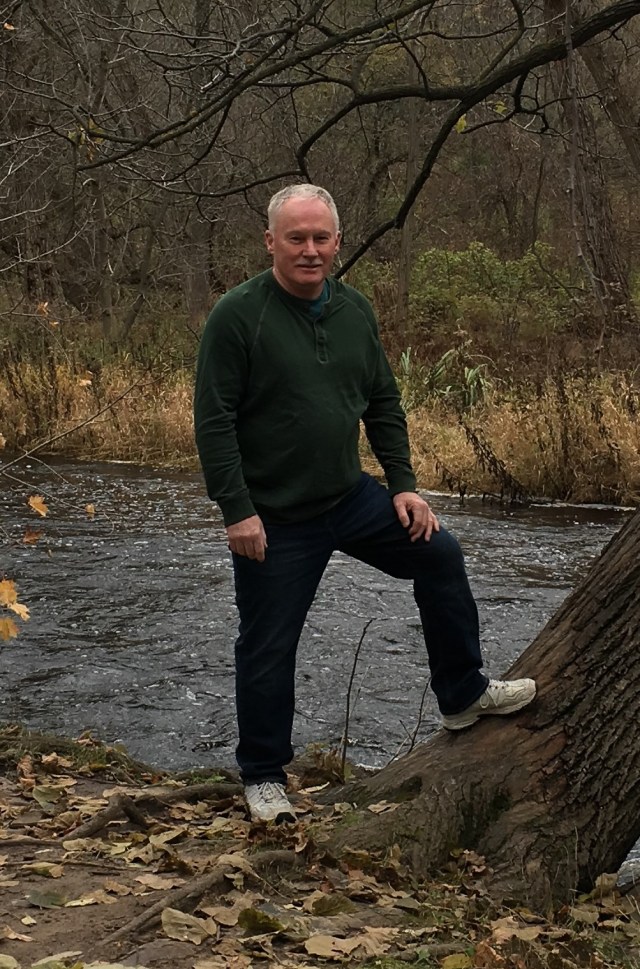
I grew up in a small three bedroom/one bathroom house with my parents and nine siblings in Buffalo, New York. Presently, I live in a suburb of Buffalo with my wife and three college age children, who don’t seem to want to leave.

As far as how I started to write. I went through a pretty aimless period after high school where I couldn’t figure out what I wanted to do and was in and out of college.  Finally, in my early twenties I started read in a pretty serious way—stuff like Kerouac, Philip Roth, the poetry of Anne Sexton—which led me to want to give writing a shot. Problem was by the time I was all read up I was in my late twenties and had the pressure of trying to keep a roof over my head and a pretty serious girlfriend, whom I would eventually marry and have children with, so I had to shelve the writing thing. But when the kids got older and needed me less, I started to get up before work (really the middle of the night) make some coffee and write for a few hours. Few years later I have two published novels and a book of essays on the way, plus a million other ideas for books.


2) What inspired you to write your book?

Leaving Jackson Wolf was intended to be a novella about Jackson’s friend McDougal. But as I got into it I realized the book was more about Jackson and his relationship with his father which was fraught with so much anger and dysfunction. This compelled me to explore how a fifteen-year-old kid would not only survive the violent dysfunction of his home life, but the possible outcomes on the other side of it. I also wanted to talk about male relationships and tried to portray Jackson and McDougal without all the tough guy underpinnings of traditional male relationships. Both boys are pretty tough, but they aren’t afraid to be vulnerable with each other and to care for each other in a way you don’t see much, but I think healthy. I’m pretty sick of the toxic way guys measure themselves with each other.   


3) What theme or message do you hope readers will take away from your book?

I would hope when people read this they find value in owning up and being accountable for your life. Jackson makes his share of mistakes, but rather than wallow in his failures, he is persistent and moves forward trying to do better, always trying to find his power. Additionally, the boys love indie music and in dark times not only is it a friend that helps them feel less alone, but it also provides great perspective on life. So I would hope people might look into some of the fifty plus artists mentioned in the book and give them a good listen or just listen to good music in general. I feel sad for people who don’t have music or think good music is Coldplay.


4) What drew you into this particular genre?

I’m not really drawn to a genre. I just wanted to tell a story about two boys trying to make their way through a complicated world. The writing world seems to be genre and series driven, but all I really want to do is write stories about real people in real life situations regardless of their age or whatever.


5) If you could sit down with any character in your book, what would you ask them and why?

Though she wasn’t in the book much I would like to sit with Jackson’s mom and get a update on where she was and what happened to her. Maybe this is a little voyeuristic and creepy, but I also would like to sit off to the side back at The Spot with Jackson and McDougal and just listen to them and talk music and the wonders of the female persuasion with a couple of beers. I’d like to hear the excitement in their voices as they talk about all the possibilities still ahead for them.


6) What social media site has been the most helpful in developing your readership?

Boy, this social media thing is so overwhelming and so competitive. Too much for the one-man operation I run. I mostly use Facebook and I mostly do a bad job with it. Going forward as I gather more resources I’m going to invest in some outside help.


7) What advice would you give to aspiring or just starting authors out there?

Don’t be afraid to start small. With the recent baseball playoffs I was reminded of being in a school lavatory back in the day and some older boys had a transistor radio and were listening to the World Series. From that single image of the boys with the radio in the lavatory I got this pretty cool story Knox, O’Malley, Sheena and The Miracle Mets. From little seeds a tree can grow.


8) What does the future hold in store for you? Any new books/projects on the horizon?

Presently editing a book of essays that I hope to publish in the spring/summer of 2019.

I have this new charter O’Malley that I’ve been sketching on my blog and a couple chapters of another novel.

What’s Hot Offer Submission for Fall. Enjoy 12% off on minimum purchase of $40. Use code: fallreadingscp. Valid until Nov. 30, 2018.

About the Author

14141828_1582157662086499_7127312092596423076_n

Growing up in a three bed/one bath house with nine siblings in Buffalo, New York was a just the facts, assembly-line type of childhood. However, one day in the late seventies, well into my clamorous teen years, that all changed when my exhausted mom uncharacteristically asked several probing questions about how I was doing, what I wanted of life and how I was going to get there… totally confounding me.  She was supposed to dish out commands and make declarative statements: …take out the trash …don’t come home unless you’re bleeding; …every time you masterbate it’s a hundred-years in purgatory. Not ask me to articulate inward looking, reflective questions about myself. Self-examination and contemplation, was light years beyond my transactional existence.

 Eventually, though, due to a certain amount of aimlessness and failure I did come to consider my mom’s questions and many more of people, time, place and heritage, which have become the basis of the novel “Written In The Stars: The Book Of Molly.” Seen through the eyes of young Molly Shea it is an exploration of the ways and means of 1979 Irish-Catholic, South Buffalo and an evolving girl’s place in that world.

Presently I am one neighborhood removed from South Buffalo in West Seneca, New York where I live with my wife, three college age children and a cat that hates me. I have a State University of New York background in English and I love trade paperbacks, quiet black mornings and The Ramones.

https://www.facebook.com/pakane14220/

https://twitter.com/PAKane14220

http://www.pakane.net/

http://buffalomud.com/

Exclusive Offers

YA New Releases, Bestsellers & More from 20% Off

Find the perfect gift for everyone on your list with the Barnes & Noble Gift Guide.

Interview with Author Colm Dowd

1)Tell us a little bit about yourself. How did you get into writing?

Most of my writing has been in the form of song lyrics. I am the founder of the indie folk/rock group, The Last Hope Road Show. This is why I am dying to get the audio book narration done so I can finish what I hope to be an OC type soundtrack for the finished version. Some of the music I produce is theatrical in nature and I have been working the story and soundtrack for a couple of musicals. So  writing a novel was not really a big stretch.

2) What inspired you to write your book?

While I had always wanted to write, the catalyst for this book came from my son, who was nine at the time. He expressed interest in writing a book so I joined in, and the friendly competition helped us both to continue on. He has gone on to become a very good writer. So in that sense, this book has already become a success for me.

3) What theme or message do you hope readers will take away from your book?

While  I think that story telling can be a powerful medium to get important messages out there that need to be told, sometimes it’s just about entertainment. Fantasy books can get a little bit deep and involved, this is not one of those, not at this point in the series. That said, a couple of serious issues are brushed over in the book and they will have to be addressed later in the series.

4) What drew you into this particular genre?

My books are of the middle grade/young adult fantasy genre. I suppose you can blame Harry Potter and Lord of the Rings for this, but that would probably be simplistic. Way back in the day I used to stay up to watch the old 50’s science fiction movies being played late Saturday nights with my mom. I came up with some bizarre fantasy land short stories in my early teenage years, but nothing I ever pursued. In the end though, do we really need more real life?

5) If you could sit down with any character in your book, what would you ask them and why?

By far the most interesting character in the book is the villain Salazon. While he seems to pretty much hate everybody. H especially seems to hold a grudge against his own people, the Northfighters. What really went down with him to get to where he is right now? While being very intelligent and cavalier in his attitude, he still seems to be holding on to a very deep grudge that will have to be explained somewhere down the line.

6) What social media site has been the most helpful in developing your readership?

Facebook and Goodreads are probably the most useful sites when it comes to starting out with your book. As I have quite a few illustrations within the book I will be pushing a big Instagram campaign, which will include T-shirts.

7) What advice would you give to aspiring or just starting authors out there?

Getting into anything is tough these days. It’s pretty easy to self-publish your book. This is great when you get it done, not so great when it gets drowned in the other thousands of books in your genre. But if you have joined in some author groups and build up your network before your release, I’m sure you’ll get there.

8) What does the future hold in store for you? Any new books/projects on the horizon?

I am currently working on the second book in the series, which is a lot of fun to write. It’s a big advantage with a series, most of the setup is already in place and you can get to all the fun storylines a lot quicker. The fantasy world holds a dozen different ways the story can go. Unfortunately for me, the storyline in the real world was going to be including a lot of political humor. The idea is Salazon, a raving lunatic, takes over as mayor of New York and thinks of himself as a king. Uh…yeah I know. Saying it out loud, it does sound a bit too far-fetched, even for fantasy.

What’s Hot Offer Submission for Fall. Enjoy 12% off on minimum purchase of $40. Use code: fallreadingscp. Valid until Nov. 30, 2018.

Twitter

Facebook

Northfighters.com

ColmDowd

YA New Releases, Bestsellers & More from 20% Off

Find the perfect gift for everyone on your list with the Barnes & Noble Gift Guide.

You can read my official review of the author’s book here!

Interview with Author Bo Wu

1) Tell us a little bit about yourself. How did you get into writing?


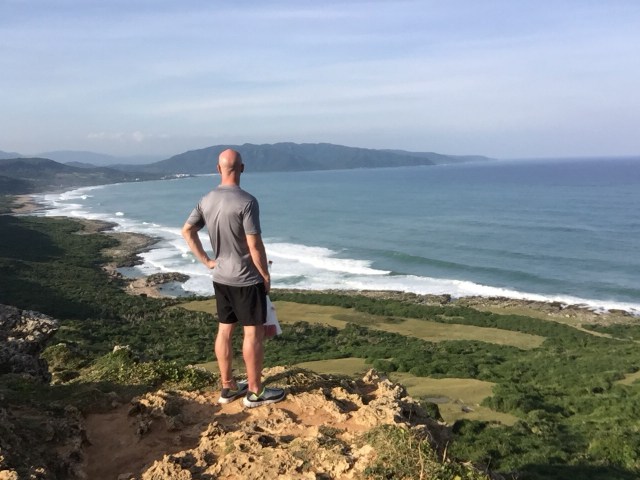
I was born and raised in North Carolina. I’m not really into Astrology, but my sign is Pisces, so that may explain the book about the ocean and all the wonderful creatures who call it home.


I fell into the same routine my friends did after graduating university. I joined in the workforce and tried to convince everyone I had “it” figured out as much as they did, but I never really felt like I fit in. It all felt like such a charade at that time.


As my friends all started getting married and settling down, I decided to do the opposite. I picked up and moved overseas. I took a TEFL ( Teaching English as a Foreign Language) course in Prague, then ended up in Taiwan. When I left the States, I really started searching for myself and experiencing life. I ended up all over Southeast Asia, tried Europe once more, and gave Mexico a go, as well.


I’ve always been praised for my writing, but I never did anything with it. That changed a few years ago when the book popped into my head.


2) What inspired you to write your book?


I came up with the idea in December/January 2015-2016 while meditating. I was going through a difficult time in life. I was trying to figure out what I wanted to do. I was dealing with multiple failed attempts at other ventures, and I was searching, really searching for something.


The final scene just popped into my head. That idea caught fire, spread, and Mermaids Are Real became the next venture to focus my energy on. I moved twice so I could put myself in a better position to finish the book. Every decision I made was for the book. It turned into my obsession.


3) What theme or message do you hope readers will take away from your book?


There are several messages in the book. The largest would be ocean conservation.


I’ve traveled all over the world. I’ve lived in six different countries. Living someplace really opens your eyes to things. When you’re traveling, you’re jaded by the newness. Having said that, there are certain areas on this planet where people really have no clue about trash and what to do with it. Most of it’s an educational problem. That’s where I want Benji and his pals come in to save the day.


My ultimate goal is to be able to use this book as a platform to help raise awareness, to use the characters and scenes as an incentive for people to be more mindful of their actions. I have a feeling there’s going to be a time in the future where the younger generations won’t be able to see or experience these aquatic creatures in real life. That’s a shame.


There are some other underlying messages regarding family, success, and life in general, but I’ll refrain from divulging much about those and let the readers discover them on their own.


4) What drew you into this particular genre?


I’m a kid at heart. I grew up on Disney movies and Bugs Bunny and Roadrunner Saturday morning cartoons. I think I have a lot to pass on to the next generation, too. I might not have a Ferrari in my garage (I don’t even have a garage), but I’ve seen a lot more and done a lot more than a good majority of people on this planet. I don’t have any children, so this is my way of playing dad. Hopefully, on a much grander scale.


5) If you could sit down with any character in your book, what would you ask them and why?


That’d be a tough choice. If I could cheat on that question, which I’m going to do, I’d prefer a town hall-style meeting where I get to talk to all of them. Or maybe a party where they’d all be there, and I’d get to bounce around the room chatting with each one of them at my leisure.


6) What social media site has been the most helpful in developing your readership?

Goodreads has been good so far. I’ve relied on it the heaviest. I’ve used Facebook sparingly, but I don’t have an author page set up. I’ve been pumping out reviews and news through my personal page which is the only thing I use it for. I told myself when I started out, I wouldn’t get drawn into the whole social media scene.


Aside from writing a book people want to read, marketing is the most important. However, I don’t believe I have to be everywhere or everything to everyone. If you’re looking for a place to focus on readers, Goodreads makes the most sense to me.


7) What advice would you give to aspiring or just starting authors out there?


Read. A lot. Figure out what you like, then write a book that you would want to read. After that, get others to help you develop it. Get feedback. A lot. But in the end, remember that you’re the captain of the ship.


You can find beta readers on Goodreads, too. That’s something I wish I had done more of. I used a group of friends, family, and their friends and family. If I could go back and do it again, I would have begun using Goodreads much earlier in the process.


8) What does the future hold in store for you? Any new books/projects on the horizon?


The biggest thing I’ve been praised for about the book is the detail. I built such an immersive world with the first book. I have plenty of room to expand on with another. I’ve laid the foundation. Once I slow down with the marketing, and I feel like I’m ready, I’ll dive into the next one. I see myself getting to that point before the end of the year.


Extra Info:

kenteng2

Goodreads Author Profile –

https://www.goodreads.com/author/show/18267464.Bo_Wu


Goodreads Book page –

https://www.goodreads.com/book/show/40966179-mermaids-are-real?ac=1&from_search=true


Amazon Author Profile – https://www.amazon.com/Bo-Wu/e/B07G3C8P1K/ref=dp_byline_cont_ebooks_1


Amazon Book page –

https://www.amazon.com/Mermaids-Are-Real-Mystiq-Prong-ebook/dp/B07FTMLGQS/ref=sr_1_2?ie=UTF8&qid=1541335981&sr=8-2&keywords=mermaids+are+real


Facebook page – (feel free to add me as a friend)

https://www.facebook.com/mebowu


Interview with I.V. Olokita

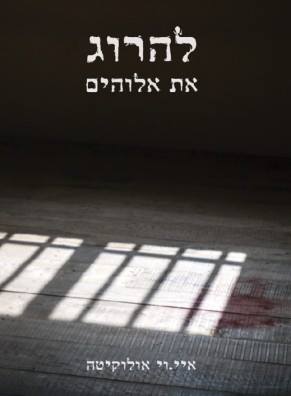
Here is my exclusive interview with Israel based author I.V. Olokita. Please note that while the novel Reasons to kill God  was translated professionally into English, the author themselves does not speak English regularly and the answers within do not reflect the writing of the novel itself. Enjoy the interview.
1) Tell us a little bit about yourself. How did you get into writing?
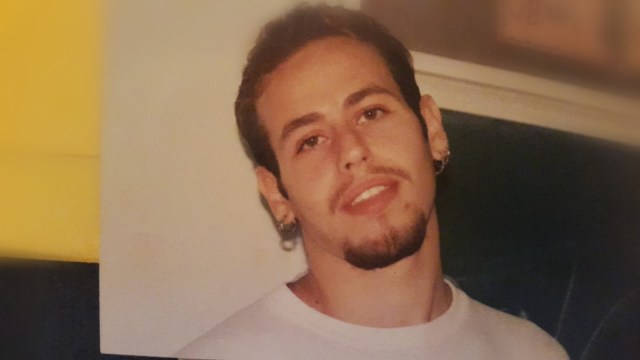
My work mainly deals with managing medical disasters areas, that is, planning a correct response, responding to a harsh event and then Embed social rehabilitation. It is a preoccupation including a lot of contact with people in their most vulnerable situations. This occupation has also led me to witness tough scenes during the past twenty years, some of which will not let go until the day I die. Fortunately, I could function well under pressure and with high mental strength. And one more thing that helped me is the fact I write. Since I remember myself as a child, I write in my notebooks almost everything that happens to me and turns these things into fantastic stories. I always wrote stuff to myself and never attached importance to writing beyond the fact that it was a hobby allowing me to return to a routine very quickly, to explain to myself that I was the only logical thing in an unreasonable situation. About four years ago, a friend asked me if I would like to participate in a novel writing competition. At first, I hesitated but then decided it might be fun. For a month during the nights, I wrote my book in the drafts of the email on my cell phone. Finally, I submitted the manuscript and completely forgot it until I told that it had won the competition. From that moment everything rolled fast, too quickly; The book “Ten Simple Rules” was published and immediately became a best seller. That feeling was great, I thought, “if the audience liked it, he would probably love my other books as well.” And I was right, half a year later my second book came out “Reasons to kill God” and was a fantastic success in Israel. I hurried, couldn’t help myself, and immediately published another book, “Wicked Girl” followed by another one of short stories.
2) What inspired you to write your book?
My inspiration comes from everything I experience. Any look, sound or smell can give me a new idea. Usually, during the day I’m busy at work, so most of the ideas come to me in the few hours of sleep that I manage to sleep at night. When that happens, I wake up immediately and start writing the idea. Once the concept exists, it is a matter of short time before the book is ready. To the very question of inspiration, because my work touches on the most challenging areas of life, which my writing naturally deals with, So, in most of my books, there are at least three layers of content hidden from the reader’s eyes, and he discovers them slowly during reading. My heroes are the most wretched people you can think of, yet the right end written for them is only in the eyes of the beholder. On the other hand, there is nothing in my writing that is self-explanatory; usually, my plots will surprise the reader right up to the last word in the book because, I learned in life and I apply it in my books, understanding is a matter of proportion and depends on our momentary perspective.
3) What theme or message do you hope readers will take away from your book?
People tend to see only black and white our days. Once upon we had a gray, but it has long gone. We have lost the “middle” of things, the understanding that life is slightly more complicated than absolutes. Out days; There’s good and evil, and that’s it. People forget there’s also a considerable gap between this two, that is the same middle we’ve long lost. My books seek to give the reader a different point of view; where you can read a book about a fleeing Nazi or a dangerous pedophile, and though you know they are the greatest monsters in the universe, yet, you develop a little compassion to call them a human being. Again, everything has a reason or an explanation, and we have to be willing to listen to the other side, to give them a fair trial opportunity and finally decide, for better or for worse.
4) What drew you into this particular genre?
I don’t have a favorite genre, and anyone who reads all my books can easily see it. I write everything from everything, and usually, it mixes in the books into one piece that has no definition.
Wicked girl
Reasons to kill God, which is the current book that I am going to publish on Amazon, is indeed a historical fiction but it also contains quite a bit of philosophy of life and insights that I expect the reader to confront. It has romance and stories that intersect each other until they create a thriller that draws the reader to enter them, In fact, I began to roll this book at the age of twenty-six after a visit to Poland. The tour in the Nazi extermination camps left me with a strong feeling that I had to do something with all the questions that had accumulated. From that moment to selecting of a literary genre, the road was very short. But if I look at the variety of my work, then I don’t have a favorite style, so is the next book I am about to publish; “Wicked Girl,” it is an abnormal psychological thriller that has caused quite a stir among my readers in Israel.
Reasons to kill God
5) If you could sit down with any character in your book, what would you ask them and why?
This is a fantastic question because in this book (Reasons to kill God) all the characters are controversial and exciting so my answer will be relatively surprising. I will choose to sit with the most boring character in the book; the respectable judge how has no name. His role appears in the first chapter, and in the last episode and fact he will be the one who will sentence my book hero (at least legally). During the trial, the judge undergoes a problematic journey of agony until for a moment he even decides to show some pity for the Nazi defendant also though it does not make it easy for him for a moment. Ostensibly, there is no particular story behind the judge’s character, except for one exception hinted at the name of the book itself and hence the question I appeal to the judge and anyone who reads the book; Who is this God who should be killed in the book?
6) What social media site has been the most helpful in developing your readership?
So far I have published my books only in Israel so that when it comes to advertising abroad, I’m a novice. It’s funny to say it, but I find myself starting from scratch, building a community of readers, contacting people to read the book. Yet I am enjoing every Minute of doing so while i still got time to write. 
7) What advice would you give to aspiring or just starting authors out there?
I’ll start with a question; For whom do you write your words?
Is it for yourself or to an audience that will buy the book in stores.
Separate your need to write words and the marketing efforts of those words. I found writing as the most effective tool (except for my family) to remain sane in the complex world in which we live. Therefore, if I had not written, I don’t know where I would be today and what my mental state would be. On the other hand, the desire that everyone will read what we’ve written and appreciated our work as writers push us to publish our words in all kinds of ways. At first, these are just words that try to break out as a simple post on Facebook or Twitter, then you publish short stories on websites, and finally, you put a book in stores and sell a lot of it (wouldn’t we wish it was so simple). Note that once you put the writing pen on the table and start marketing your words, you are less writer and more of a sells man.
I made this mistake at my beginning as a writer, and from the moment I did so, the writing gradually diminished until it almost disappeared. And if for a moment we go back to the question I asked and the first paragraph of this answer of mine, then this was the moment I understood for whom I write my words.
8) What does the future hold in store for you? Any new books/projects on the horizon?
If my first book succeeds in Amazon as I predict it will, my readers can expect another six books that are already waiting in the drawer. Three of these books have not yet published (not even in Hebrew) and they excite me primarily because of the variety of their stories and the issues they bring to surface. Together with all of these, I am currently working on writing two more books.
Anyone who wants to be updated is freely invited to visit my Facebook page or to the sites of my first two books to published;
20180928_145504

Interview with Author Scott Semegran

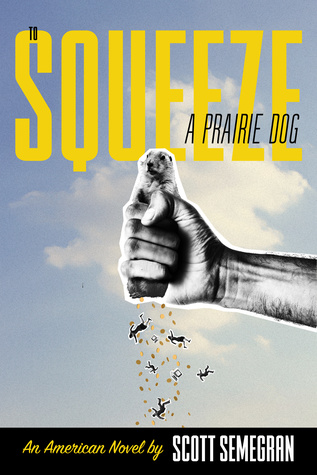
This interview discusses To Squeeze a Prairie Dog: An American Novel by Scott Semegran, which Anthony Avina gave a rating of 10/10 for his book review.

The Interview

1) Tell us a little bit about yourself. How did you get into writing?
I began writing in earnest literally the day after graduating college with a degree in English way back in 1993. Over the years, I have published poetry, short stories, comic strips, and novels. Novels and short stories are what I have kept at the longest and find the most joy in writing and publishing these days.
2) What inspired you to write your book?
Oh, man. That’s a loaded question. I have a few answers: 1) To be honest, I wrote this story for my wife. Having written quite a bit before that didn’t particularly tickle her fancy, I set out—as a challenge to myself—to create a story that would inspire and affect her deeply. She said I accomplished that so I consider it a success. 2) I wanted to write a novel that was endearing but not saccharine and quirky but not snarky. That was a huge challenge! 3) I wanted to explore the power of friendship amongst a group of people with very different backgrounds and personalities. I felt the current state of the U.S. needed that.
3) What theme or message do you hope readers will take away from your book?
That camaraderie amongst kind-hearted friends wins the day over evil intentions. I truly believe that.
4) What drew you into this particular genre?
I have mostly written literary fiction, usually with elements of humor or satire. That’s my jam. I’ve been inspired by Kurt Vonnegut, Tom Robbins, Charles Bukowski, Michael Chabon, and the like. I hope to have a lasting legacy like these authors.
5) If you could sit down with any character in your book, what would you ask them and why?
I would ask Rita to bake me her famous banana bread. Food is the key to my heart. I love food. I love to cook. And I love when my wife cooks for me.
6) What social media site has been the most helpful in developing your readership?
I feel the following have helped me the most: Goodreads, BookBub, Twitter, and Instagram have helped the most with finding new readers. BookBub used to be more of a promotional service but they are now enhancing their site to accommodate reader reviews and book recommendations from authors. Goodreads, Twitter, and Instagram are all great, too.
7) What advice would you give to aspiring or just starting authors out there?
Develop a thick skin. You’ll hear “No” or “This is not for me” a lot for a very long time. But if you stick at it, develop your craft, and continue to put stuff out there, you’ll eventually find your readers if your talent develops. Find someone to help with editing. Seek out reviews and accept constructive criticism. But mostly, listen to your creativity when it beckons.
8) What does the future hold in store for you? Any new books/projects on the horizon?
My latest novel, To Squeeze a Prairie Dog: An American Novel, will be published February 1, 2019, so I am in promotion mode right now. I will be recording the audiobook version in the coming month, narrated by yours truly. And I have a seedling of an idea for a new story germinating in my brain. I’ll probably start writing that in early 2019.

About the Author

51r-i+SRbmL._US230_

Scott Semegran lives in Austin, Texas with his wife, four kids, two cats, and a dog. He graduated from the University of Texas at Austin with a degree in English. He is a bestselling, award-winning writer and cartoonist. He can also bend metal with his mind and run really fast, if chased by a pack of wolves. His comic strips have appeared in the following newspapers: The Austin Student, The Funny Times, The Austin American-Statesman, Rocky Mountain Bullhorn, Seven Days, The University of Texas at Dallas Mercury, and The North Austin Bee. Books by Scott Semegran include Sammie & Budgie, Boys, The Meteoric Rise of Simon Burchwood, The Spectacular Simon Burchwood, Modicum, Mr. Grieves and more.

https://instagram.com/scott_semegran

https://www.goodreads.com/author/show/3409317.Scott_Semegran

https://www.twitter.com/scottsemegran

https://www.facebook.com/scottsemegran.writer/

https://www.bookbub.com/authors/scott-semegran

https://www.rifflebooks.com/profiles/172809

https://www.amazon.com/author/scottsemegran

And my website:

https://www.scottsemegran.com/

Interview with Author Caleb Smith

1) Tell us a little bit about yourself. How did you get into writing?

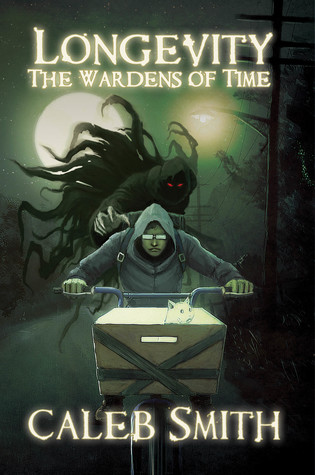
I have always been in love with stories. Whether it be though books, comic books, poetry, plays and movies, anyway I can get them really. It was always a fun pass time for me. I always had a gut feeling like I was supposed to create something, I wasn’t sure what, but this came in my late teens. After starting a contracting business and contemplating a couple product invention ideas, I came to realize that those puzzle pieces didn’t fit natural to me. Around the time of fall 2006, my little brother who is a really good graphic artist, starting working on a graphic novel with a friend of his. That gave me the spark I needed and shortly after Longevity was conceived.


2) What inspired you to write your book?
I don’t know if it was inspiration more so, or just me trying to find myself. In any case I really feel like the story was always there, I was just lucky enough to find it. I do have to say, Stephen King was always a huge inspiration to me. I grew up in Bangor Maine, so his presence was always big around here. I remember painting houses in my early twenties on West Broadway in the summer time, and he would roll by in his convertible. I remember thinking how cool it would be, to be able to write books for a living like that guy!


3) What theme or message do you hope readers will take away from your book?
The topic of bullying especially at the middle school level seems to be more prominent. If anything I hope people can put them selves in the victims shoes through Noah’s vile experiences. I want readers to feel how emotionally traumatic it can be for someone like Noah. Hopefully this will help raise awareness for the people out there inflicting pain on others but also, act as a guiding light for those who are the victims of bullying. Its important to understand that we are all different, we all look, act, dress, speak and think differently. That is the way its supposed to be. No matter who you are, you will always have your own unique set of talents. Its important to embrace those talents and let the light inside of you grow. Most important, never stop believing in yourself. Never give up and use adversity as fuel to execute any obstacles in your path.
4) What drew you into this particular genre?

I wanted a story that could appeal to a wide audience with a main character holding plenty of room to grow. The fantasy part was natural considering a story with a multi-dimensional concept. Noah needed to be in middle school to best tackle the bullied victim role. I wanted to mesh his real life every day struggles, with the ability to grow on a fantastical level. It was important to bring a fresh concept to the drawing board, something new and different on the fantasy end. I am pleased with how well it all came together.


5) If you could sit down with any character in your book, what would you ask them and why?

I would sit down with Earl Sherman and ask him if he thinks going to get ice cream was a good idea? Id want his take on that.
6) What social media site has been the most helpful in developing your readership?
Facebook & Twitter


7) What advice would you give to aspiring or just starting authors out there?
Start now and don’t stop, keep writing even if its bad. Time will heal wounds. Be extra patient and willing to accept rejection. Above all, work hard and believe in yourself.


8) What does the future hold in store for you? Any new books/projects on the horizon


Longevity: The Will Of Alastair is coming soon!

I have a couple historical novel projects, one is finished.

I also write poetry and have an on going collection.

Id like to think I’m just getting started.

Author Interview: R.D. Crist

The Interview

Q1). A little bit about myself and how did I get into writing.
Just a little?  Wow.  There is so much that I don’t know where to start.  I’ve been through a lot.  I’ve experienced so many adverse circumstances that I had to sit down and develop a new perspective, which is why I chose a degree in marriage and family therapy.  Originally, I was amazing in math and many people saw me in a more technical field, but here I am, trying to figure it all out.  What I do learn, I love to pass on, which is why I write…
I began writing mostly by chance – a long story, but…  I decided to write stories because I felt people learn through experiences, even other people’s experiences, and I learned that people fight grown when it is expected.  If you put the two concepts together, it’s better than peanut butter and chocolate – you get entertainment and growth.  A self help book can help people, but so can a good story.  If you get one lesson, or just feel a little better about yourself, in one of my stories, then it was all worth the effort.
Q2). What inspired you to write this book?
Adolescence is a difficult time for many people.  Long story short, I believe this book has the opportunity to facilitate a feeling of acceptance and normalcy.
Q3). What theme or message do you hope to convey?
I put the theme right smack in the dedication: “fitting in.”  The entire book – from the love story, the school, the parental aspect, and even in little pockets – was designed to support the theme of a young woman trying to find where she fits in regarding her immediate situation and in the outer world.  It’s not about witches, love, shoes, or even the individual characters: it’s about how Natalie begins, how she negotiates the circumstances, and where she ends.  An example is: some people wanted more love in the story, and some people wanted less love, but the love interest was perfectly designed to help Natalie feel like a normal teenage woman.  Also, the reader may notice how Natalie’s shoes coincide with her influence over the other girls; the more she is accepted as one of them, the more they wear her style of shoes. 
Q4). What drew you to this particular genre?
I didn’t begin in this genre, and I’m not fixed in this genre, but there seemed to be an opening for more empowerment in Young Adults.  Fantasy seemed the perfect catalyst.  I thought I’d experiment with a first chapter, and I liked it.  From there I set aside my other projects to finish this book; and the second one.
Q5). If you could sit down with any character in your book, what would you ask them and why?
This is such a fun question.  My characters are made from envisioning extreme personalities, and picturing how each would react is exciting to think of.
I love knowledge, and Ms. Haggle knows everything, but she also has no patience for, well, anyone, and can be very temperamental.  I’m drawn to people who need help, and I see myself drawn to Melissa; but I wouldn’t ask her why she’s so angry, that wouldn’t be smart.  I think I’d ask her, “how can I help?”  But she’d probably just reply, “by leaving me alone.”
Q6). What social media sight has been the most helpful in developing your readership?
Goodreads by far.  The bloggers there have been patient, honest, and extremely helpful.  Their sites are fun to read and informative.  I think if this book has a great start, it’s because of them.
Q7). What advice would you give to aspiring or just starting authors out there?
Do not quit, and do not stress about it?  Advice I still need to follow.  I have walked away from writing and come back so many times, but I just keep getting better.  This story was actually written about five years ago, but it is now just coming out.  Also, I wrote another book before this one, but was frustrated when a similar story came out before I published it, even though it was about four years in the making.  Maybe it wasn’t meant to be.  I think my stories get better each time anyway.
Q8). What does the future hold in store for you?  Any new books/projects on the horizon?
Yes, yes, and yes.  I am working on about ten different stories at the moment.  I piece them together in my mind until they are complete enough to start a treatment.  I am always building them and have numerous treatments written down.  I promised myself I would publish the second book to Scarlet Reign next year, which has been written and needs to be revised, but there are several more I can’t wait to complete.  There are four books in this series, so we’ll see where it all goes, but first I must consider writing as a hobby because I have other responsibilities.  I am happy with my financial situation and would be ecstatic to just have a fan base even if I don’t make money, but the truth is, books will come slow in my current routine.  I will do everything in my power to have one Scarlet Reign book come out every year.  It shouldn’t be hard as the last two are all pieced together and ready to be written – but there may also be a spinoff.  I have already put forth great effort to piece them together so that they connect as a complete story.  Book one is filled with set-ups that are very imperative to the other seven (yes, seven) books.
I will try to keep all my fans updated on our monthly notes, which can be found on our website: www.scarletreignbooks.com

Author Bio:

R.D. Crist is a psychotherapist who generates creativity via long walks and majestic views of nature. True inspiration to write, however, derives from personal hardships that have sparked a desire to help others manage life’s various struggles.


Although R.D. Crist has only released one book, three have been written and several more begun, which span a variety of genres.  The focus of these stories are intended to center on Crist’s favorite dynamics of a story – personal conflict, relationship development, inner growth, and social revelation.  Each story is created with a greater purpose to stimulate a person to reflect on common challenges, be they personal, interactive, or in principle.


Childhood influences include Ray Bradbury stories and character conflict movies like Twelve Angry Men.


Socializing, listening to people’s stories, spending time with family, and relentlessly exercising (as if those last ten pounds cared) are some of Crist’s favorite ways to pass the day.

Thank you again and I hope this helps,
R.D. Crist

Interview with Author Karl Steam

1) Tell us a little bit about yourself. How did you get into writing?’’

                Once upon a time, I wanted to be a park ranger and wildlife photographer. Camping, fishing, and canoeing were my favorite pastimes. I liked to learn about nature and often checked out national geographic documentaries from the city library. The things I learned inspired me to write a few nonfiction animal books as a kid. I would staple paper together, write interesting facts about a particular species, and illustrate my books with cut out magazine pictures. To this day, nature influences most of the things I write.

               During middle school a teacher told my class that kids can do anything. He once had a student who wrote a book and a different student of his could take apart a lawnmower, put it back together again, and it would still work. I wasn’t interested in lawnmowers, but I did like the idea of writing a book. I figured if some other kid could do it, I could too.

               I tried writing my first novel a few months later. It wasn’t very good. O.K., it was horrible. I gave up after a couple pages and decided to postpone my writing career until I had a few high school writing classes under my belt.

               I wrote off and on for many years, but never seriously. I told myself in high school that I would have more time to write once I was in college. In college I told myself I would write more once I graduated. After graduating, I married and had children. One day a story came to mind, but I told myself that I would have more time to write it once my kids were grown. That’s when I realized I was on the path to becoming an old man, who shakes his head and wonders why he never wrote a book.

               I write more often now. Don’t take my word for it though. Go check out the stories I’ve published.

2) What inspired you to write your book series?

The concept for the Kids vs. Nature series began after I read an article about someone who had been lost in a forest while cross country skiing. The article’s author considered this person’s experience to be an example of a great survival story. Yes, the person did survive a one-night ordeal in a forest, but I disagreed with the notion that it was a great example of surviving in the wilderness.

                The main concern of the lost person was that they would freeze to death during the night, so they continuously skied throughout the ordeal to generate body heat and stay warm while they spoke to their spouse on a cell phone. As the night wore on, the person still could not figure out what trail they were on and began to get tired of skiing. They were also thirsty and feared that without water they would become dehydrated and die, and this fear continued to be a concern until the person was eventually discovered by rescuers.

                Nowhere in the article did the writer point out that this person was skiing, which means there was snow on the ground which could have been eaten to hydrate the lost person. Nor did they point out to readers that it’s typically recommended to remain in one location if you’re lost in the wilderness, so that you don’t wander further way from your original location. This makes it easier for rescuers to find you, especially if you have a cell phone and are able to alert others of your predicament.

                Now, can I say for sure that I would have remained calm and thought clearly if encountered with a similar situation? No, and this person did survive so I applaud them for everything they did do right. However, I couldn’t help but think that I would have handed the situation differently, and the reason why is because I had read so many wilderness survival stories as a child.

Through stories such as Hatchet, My Side of the Mountain, Island of the Blue Dolphins, and Sign of the Beaver, I learned a considerable amount about surviving in the wilderness. Tactics to for staying warm, creating shelters, and how to obtain fresh water. Though I have never had to put this knowledge to practice, I do believe that if I were to find myself stranded in the wilderness my odds of survival would be much greater due everything I have learned.

This realization gave me a deeper appreciation for the literature I read as a child. I realized these stories had the power to help save people’s lives. This made me wonder what other survival stories were on the market today. What new stories are captivating young readers and providing them with similar information.

I was surprised and disappointed to discover that very few popular books have been published in this genre throughout the past twenty years. Most of the top sellers continue to be the same stories I read as a child. So, I decided to contribute to the genre and create some fresh stories for those that share my interest in action, adventure, and the great outdoors. That day I began to develop the plot of the Kids vs. Nature series, and I think they do a good job of accomplishing the goals I set out to achieve.

3) What theme or message do you hope readers will take away from your books?

Like any good book or series there are multiple themes and messages I hope readers take away from these books. The main one, as mentioned before, is that I hope readers learn things that will help them to survive similar situations, should they every become lost in the wilderness. A lot of factual information and strategies have been added to the back of each book in order to help accomplish this goal. I also tried not to sensationalize the stories too much. Most of the situations the characters encounter remain simple and realistic to things average people might experience in real life.

                Because the characters in the series encounter many different ecosystems, I also designed the books be informative. Readers will be able to learn about different animals, plants, and environments.

                Lastly, there are various social issues involved in the stories. Friendships, social group dynamics, and bullying are matters frequently encountered throughout the series. Characters have to work through prior perceptions of one another in order to grow and develop from one book to another. Hopefully readers can relate to some of these issues and find the lessons that the characters learn to be applicable in their own lives.

4) If you could sit down with any character in your book series, what would you ask them and why?

I would like to sit with Tyler. He’s an odd, quirky guy but has a lot of admirable traits. I wouldn’t have anything particular to ask him. I’d rather sit and listen to him talk.

5) What social media site has been the most helpful in developing your readership?

I’m not active on social media. Perhaps I should be. Writing time is precious. To get writing done you have to chose not to do other things. Limiting social media and television are two main ways that I carve out time during the week to make progress on my stories.

I have a website where readers message me. They also send letters in the mail. As far as developing readership goes, most authors will say that the best way to gain readers is to publish more books. I’m still beginning my writing career, but hopefully when people read stories like the Kids vs. Nature series they will want to go back and read others I have written, like Purple Pup. If they really enjoy these stories, perhaps they’ll tell others about them too. Theoretically, the more stories I complete the more opportunities new readers will have to find my works.

6) What advice would you give to aspiring or just starting authors out there?

If you want to be a writer, you need to write. Do what you can to dedicate some time to this. Don’t expect your first writings to be very good either. It usually takes many years to develop your skills. Expect your first book or two to be unworthy of publishing. This is normal. Keep trying until you finish one that is.

7) What does the future hold in store for you? Any new books/projects on the horizon?

I’m currently writing a young adult historical fiction novel. It takes place during the most recent ice age and will feature Paleo-Indian characters. Beyond that, it’s difficult to say what the future holds. I will continue to write and focus on projects that inspire me the most.

Interview With Author Stefan Vucak

1)     Tell us a little bit about yourself. How did you get into writing?

I was born in Croatia, and when my parents immigrated to Australia, I faced a new world, a new language, and a totally new way of life. My parents found it particularly difficult to integrate, but for me and my sister, as kids, we took it in stride. I had devoured books ever since I learned to read, which helped my transition, but writing in English was a path filled with spelling and grammar potholes. It took me a while to master it, and I am still not sure that I have it all. Anyway, while at the university, still reading avidly, I turned my hand to writing short stories, thinking it didn’t look all that hard. Thankfully, some of my early experiments will never see the light of day, but the process did help me hone my writing skills. I sent some of my stories to U.S. magazines, but without success. One day, I told myself, I will get published.

I always wanted to write. Well, not exactly always, but ever since I came across an illustrated book of Jules Verne’s ‘20,000 Leagues Under the Sea’, the printed word fueled my imagination. In high school and university, I breezed through essay and writing assignments, truly puzzled why some of my classmates struggled. Books, of course, particularly science fiction, got my ideas factory churning. If others could write short stories and novels, so could I. I first turned my hand to writing short stories. I yearned for the day when people would walk past a bookstore and see my books on display. Vanity? Perhaps, but the fire burning deep within me that urged me to write, also compelled me to share the products of my imagination. Regrettably, just making my way in the world, I could not indulge my passion. I had to find a way to live and support myself. Hence my IT career, but that fire never went out, although I did allow it to die down a bit, frustrated at not being able to find a publisher. Publishing is a savage game, as I came to learn, and publishers are not keen to publish my books just because I wanted to see them in bookstores.

2)     What inspired you to write Lifeliners?

Lifeliners - Page 2 - V2

‘Lifeliners’ began as an idea for a short story on a long flight from Europe to Melbourne, Australia, my home. I always have my notebook handy, never knowing when inspiration would strike. Tired of browsing through inflight entertainment, I began jotting down notes to flesh out a story about an emerging new human able to draw energy from someone by touching them. Birthrates in Western countries had been falling for a while, accompanied by growing sterility. A product of our high-pressure technological lifestyle and high density urban living, explained the pundits. Nature decided that lifeliners were the answer who would over time replace the ‘normals’. As expected, this development was not received well by the general population, and governments everywhere began to blame lifeliners for failure of bad economic policies, introducing draconian laws to curtail their rights and freedoms.

Well, I wrote the short story, posted it on my website, and I thought I was done with it. Time to finish what was then my latest book project ‘Legitimate Power’. Once I had it published, I began reviewing ideas for a new book – and kept coming back to the lifeliners story. It was one thing to write a short story, but fleshing it out into a full-length novel was not something I had in mind, wanting to write another contemporary political drama/thriller. But the bug had bitten me and lifeliners began to haunt my days. The only way I would have peace was to write the damned book.

3)     What theme or message do you hope readers will take away from your book?

When I write a novel, I don’t set out to promote a particular message to readers. If something emerges from the story that readers can relate to, it would be a byproduct of the story and the characters in it. Of course, most novels deal with familiar themes: personalities, conflict, betrayal, self-reflection, overcoming adversity; the list goes on. These are all present in any book, whether a crime novel, a political thriller, love story, or just a good adventure yarn. The hard part is for a writer to utilize these themes into what will hopefully end up as an enjoyable and entertaining read. After all, isn’t that the aim of every book?

4)     What drew you into this particular genre?

Although ‘Lifeliners’ is science fiction set in 2032, it is not hard sci-fi of my previous books. I suppose I could have set the novel in present time, but I did not feel comfortable with the idea. It would not feel ‘real’. Moving it slightly into the future and taking advantage of several emerging technologies has, I believe, provided enough time for lifeliners to emerge and generate an impact on societies and governments, and the negative reaction their presence has produced. The story background is also familiar to readers without having to create a new social setting far removed from present time.

5)     If you could sit down with any character in your book, what would you ask them and why?

With a science fiction series and six contemporary political drama/thriller novels behind me, I have created a number of interesting characters. During the writing process, they sometimes say and do unexpected and surprising things, and I allow them a degree of indulgence. I believe it spices up my writing. However, I don’t give them free reign, having to keep in mind the plot and the story. With ‘Lifeliners’, Nash Bannon has turned into a character with whom I could converse at length. Having the society at large after him, and lifeliners in general, his views on life, colored by negative experiences by his fellow humans, would provide a unique perspective on people, ethics, and behavioral norms. Our veneer of civilization is very thin, hiding what is a barely controlled savage. I would enjoy exploring all these things with him.

6)     What social media site has been the most helpful in developing your readership?

I cannot say that any one social media outlet has helped brand my name or acted as a marketing platform for my books, or that any of them have helped boost my book sales. It is a tough game out there where some books do well for no apparent reason, and others simply fade away. I just plug away on several outlets, such as LinkedIn, Facebook, Twitter, and Goodreads, and trust that what I have to say will attract readers and buyers. Doing an occasional interview also helps! I use my website extensively to post general articles of interest, and blogs on writing, and the publishing industry in general.

7)     What advice would you give to aspiring or just starting authors out there?

If there is one thing I learned over the years as a writer, if anyone is contemplating taking this on seriously, he or she should be prepared to spend many lonely hours with a pencil and paper, and sitting behind a computer screen. There will be disappointments, frustration, angst … and moments of sheer exhilaration and satisfaction when the words flow and the creative process produces something wonderful. Writing is a gift, but it can also be a curse. However, once bitten with the urge to create, there is no cure.

These days, it is easy to self-publish, and outlets like Amazon and Smashwords are replete with good books. Unfortunately, they are also full of amateurish efforts, which has contributed to a negative reputation of ebooks. Most authors dream of finding an agent and being published by a traditional publisher. I have those thoughts myself. However, traditional publishers rarely take up new writers, always keeping an eye on the bottom line. They are running a business to make money, not cater to hopeful authors. It is tough, but that is the hard reality. Another tough reality is the ongoing need to market and promote my books. As I mentioned in one of my Tweets, ‘Writing fills my soul, and marketing empties it’.

8)     What does the future hold in store for you? Any new books/projects on the horizon?

Having just finished ‘Lifeliners’, I need a break to recharge. I have a brief outline for a short story, and now that I have the time, I will flesh it out and post it to my website. Like most writers, I have a number of ideas for a new novel, but two stand out that I need to look at closely before deciding which one will end up as a book. For now, I will let both ideas simmer for a while, but not too long. The urge to write, to create, will not allow me to be idle for too long. Before tackling my next project, I will spend some time doing book reviews, hopefully provide editing services on the side, and indulge in reading, golf, and doing odd things around the house that I have been putting off. No hurry.

Author bio and links:

Stefan Vucak

Stefan Vučak has written eight Shadow Gods Saga sci-fi novels and six contemporary political drama books. He started writing science fiction while still in college, but did not get published until 2001. His Cry of Eagles won the Readers’ Favorite silver medal award, and his All the Evils was the prestigious Eric Hoffer contest finalist and Readers’ Favorite silver medal winner. Strike for Honor won the gold medal.

Stefan leveraged a successful career in the Information Technology industry, which took him to the Middle East working on cellphone systems. He applied his IT discipline to create realistic storylines for his books. Writing has been a road of discovery, helping him broaden his horizons. He also spends time as an editor and book reviewer. Stefan lives in Melbourne, Australia.

To learn more about Stefan, visit his:

Website: www.stefanvucak.com

Facebook: www.facebook.com/StefanVucakAuthor

Twitter: @stefanvucak

LinkedIn: https://www.linkedin.com/in/stefan-vucak-65572360

Read more about ‘Lifeliners’ here: https://www.stefanvucak.com/books/lifeliners/

Pre-Order Hottest Top Toys of the Season – order today at BN.com!