Interview with Travis Smith

1) Tell us a little bit about yourself. How did you get into writing?

I got into writing about superheroes and philosophy after reading an article by Adam Barkman published in Comment magazine. I could give that a try, I thought. Why not? Barkman looked at superheroes from a “mythological” point of view; I would prefer to look at them from a somewhat more human perspective. When I discovered an article by Jonathan V. Last in The Weekly Standard that I disagreed with I took it as an opportunity to respond. Last argued for the timeliness of the Christopher Nolan trilogy of Batman films; I argued that Spider-Man was a better hero for our times, in commemoration of what was then the fiftieth anniversary of Spider-Man’s first appearance. Little did I know that this one article would lead to an entire book on the subject.

2) What inspired you to write your book?

University professors are asked to find ways to engage in the public dissemination of knowledge. Most of our research is written for an academic audience. How does someone like myself take what I study and teach in the history of political philosophy and make it relevant for a wider audience? Well, if Plato can discuss the popular heroes of his time, whose adventures are depicted in the epic poems of Homer, then why can’t I look into superheroes, whose stories have become popularized lately in so many feature films? I look at them to find out what they might teach us about ourselves and our ideals—who we imagine ourselves to be at our best, or who we would become if only we could be better than we are?

3) What theme or message do you hope readers will take away from your book?

I’d point to the value of thinking critically about the things we happen to enjoy, and the possibility of thinking critically about ourselves in the process. This is something we can do even with respect to our amusements—the music we like, the TV shows we binge on, the athletes we admire, the vloggers we subscribe to. Focusing on questions of ethics when doing so leads us to wonder: How does thinking about the character of this or that person, whether real or fictional, help me to better understand the worldview and motivations of people similar to them—whether that’s someone I’ve encountered in my private life, or public figures like politicians, leading professionals, or outspoken celebrities? What answers to life’s problems do they represent, and should we heed them? What does whether I like or dislike some particular person or character tell me about myself?

4) What drew you into this particular genre?

In the classroom, I draw on a lot of examples from popular culture in order to make old ideas and arguments seem relevant and familiar to my students. With respect to superhero stories in particular, I’ve read plenty of comic books over the years and re-watched the movies based on them more than enough. I put that hobby to use in Superhero Ethics.

5) If you could sit down with any character in your book, what would you ask them and why?

I would like to know why Tony Stark doesn’t share his most advanced technologies with everyone—whether they want him to or not. Why not save people from ever needing saving again through upgrades and alterations to the human condition? Not that I would want him to—but I don’t really understand why he doesn’t. That said, I’d be concerned that by pushing him on it I might inadvertently convince him to give it a try, or else stop playing the hero entirely. Either way, better to keep my mouth shut, really. The most interesting line of dialogue to me in Avengers: Infinity War occurs when Thanos tells Iron Man, “You are not the only one cursed with knowledge.” In Superhero Ethics I argue that Tony Stark willfully refrains from drawing the furthermost consequences of his views regarding human nature and our place in the cosmos—including, ultimately, that he himself is insignificant. He struggles with a nagging suspicion that his pride—which is substantial—is vanity, and all of his efforts and sacrifices are offered in vain.

I’d also like to hear Wolverine explain his fascination with Japan. I think it’s because culturally, feudal Japan is practically the exact opposite of present-day Canada. We can be glad that imperial Japan at its worst was ended non-fictionally and still romanticize traditional Japanese society in fiction as representing honor-based society at its best. Still, I’d like to hear Logan’s perspective on it over a few bottles of beer, hoping he’ll call me “bub” at least once—and that I’ll be able to sneak out the back door of the dive bar before the inevitable brawl gets underway.

6) What social media site has been the most helpful in developing your readership?

Personally, I avoid using social media. I worry that it’s an engine of incivility.

7) What advice would you give to aspiring or just starting authors out there?

Read. A lot. Read a lot of good books. Even books you imagine you’ll dislike by authors you expect to disagree with. For starters, read about Achilles sulking in his tent in the Iliad if you haven’t already. Also, learn to take criticism well, and be your own harshest critic. Reread everything you write, out loud, and ask yourself if it actually says what you want it to say in the best possible way. Always be revising but recognize that your words will never be perfect. Nothing that you decide today is good enough for now will seem good enough later in retrospect—and that’s okay.

8) What does the future hold in store for you? Any new books/projects on the horizon?

Some people have asked me whether I’ll write about Superheroine Ethics next. Or perhaps Supervillain Ethics. What about something fandom-adjacent, like Pro Wrestling Ethics? Within this genre, I haven’t decided yet. As a professor of political theory, I intend to publish more on the philosophy of Thomas Hobbes, including pieces informed by my analyses of superhero stories, on subjects such as bravery, magic, and the imagination. I’m convinced that Thomas Hobbes himself thinks he’s like a superhero or something.

Bonus/Fun Questions:

Who was your favorite superhero growing up?

On Saturday morning cartoons, I liked Green Lantern best, mainly because of Sinestro. As a teen, I connected most with Rogue. For over a dozen years now though, Ms./Captain Marvel (Carol Danvers) has been my favorite. I await her feature film debut in 2019 with great anticipation.

Do you prefer Marvel or DC? Or do you find them to be on equal footing overall?

When I wrote Superhero Ethics, I didn’t just focus on my favorite characters. I wanted the book to be accessible to casual fans and a general readership. I didn’t want it to be accessible only to those of us who have read a hundred thousand comic books. My book might give the impression that I prefer Marvel, but my analyses weren’t decided by my subjective preferences. I tried to give more generous readings to characters who interest me less and be tougher on characters I like most. Speaking personally, I am a fan of both universe’s characters. I started reading comic books as a pre-teen at the time of Crisis on Infinite Earths, and DC successfully persuaded me to disregard the pre-Crisis multiverse as no longer relevant and too confusing and supposedly unsophisticated. As I have gotten older, however, I have discovered how fantastic Silver Age Superman, Flash, Legion, and Earth-Two stories are. I have also enjoyed exploring DC’s western and war genre comics, too, such as Jonah Hex and Haunted Tank.

Which non-Marvel or -DC hero do you think would fit into the ethical discussion of superheroes? 

Sailor Moon and The Tick were favorites of mine when I was young. Captain Planet probably deserves some critical analysis, too, but I don’t think I could sit through enough episodes to assess the character fully.

If you were to create your own hero based on the ethical discussions raised in your book, what would that hero’s name be, what powers would they have (if any), and what villain/threat would they face to mirror the challenges of our world?

I already have a hero in my wife. [Awwww!] Putting up with me and my hobbies has got to be challenge enough. And who knows what kind of villainy I’d be up to if she wasn’t always asking me, “What are you doing?!?” I try to keep in mind how Aristotle would have told Ajax to listen to Tecmessa.

Thank you, Anthony, for the opportunity to discuss Superhero Ethics with you. I’m glad that you enjoyed the book!

About the Author:
Smith_Travis
Travis Smith is the author of Superhero Ethics (Templeton Press). He received his PhD from Harvard University and is associate professor of political science at Concordia University. He has been collecting comic books since he bought Uncanny X-Men #207 with his allowance in 1986. His writing has appeared in the Weekly Standard and Convivium Magazine. For more information, please visit https://www.templetonpress.org/books/superhero-ethics

Get 50% Off Loads of New Reads at the First-Ever Barnes & Noble Book Haul Blowout!

Interview with Brandon Dragan

1) Tell us a little bit about yourself. How did you get into writing?
I grew up Northeastern New Jersey and have loved writing for as long as I can remember. My mom tells a funny story of a third-grade teacher who said that during writing assignments most of the kids would come to her desk with a few sentences scribbled and ask if they had written enough, but I would walk up asking for more paper. So, there’s always been that desire to write and express myself, although for the better part of my life I had trouble really sticking with it. I ended up focused mainly on writing songs and actually pursued it for a bit in Nashville, Tennessee, but pretty quickly found that I wasn’t a good enough musician to really hack it there. Eventually, I think I was about 25, married and working a regular corporate job when the idea for a story hit me and I just couldn’t shake it. That idea would eventually become my first novel, “The Wages of Grace,” which will hopefully be out later this year.
2) What inspired you to write your book?
As far as the writing of my newest short story “Cast No Shadow,” again it was really just a thought that hit me between the eyes and I couldn’t shake it. I absolutely love complex characters who are capable of enormous good and repulsive evil. I think most human beings are capable of both, so I really wanted to explore the thought of a good, loving, respected family man who also has a propensity toward violence and aggression toward those he finds evil or criminal.
40542213
3) What theme or message do you hope readers will take away from your book?
I don’t particularly want to feed readers what they should they think, so I’ll be careful here. When art is compelling it’s because of what each person brings to it. If anything, I would hope that this story raises questions about the concept of “just” violence. Is there such a thing as “good” violence, or does it all just feed into a nasty cycle? “Cast No Shadow” does touch on several themes-many of which were not intentional when I initially wrote it, such as race, children with guns, the war on drugs, etc. It is a short story, but I feel like there is a lot of meat there and I hope everyone who reads it will come away with something to chew on.
4) What drew you into this particular genre?
I was drawn into this type of story mainly by my admiration for the work of Cormac McCarthy. After reading “No Country For Old Men” I always had the desire to write a kind of “modern western.” 
5) If you could sit down with any character in your book, what would you ask them and why?
If I could sit down with any character, I think it would be Annabelle. Although she maybe comes across as a bit mousy at first, though that’s probably not the best description, I think we find by the end of the story that she’s the strongest character in it. I would love to explore her background and particularly ask why she allowed Beau his vigilante fantasy when it’s clear that was something she never wanted any part of.
6) What social media site has been the most helpful in developing your readership?
I am, unfortunately, not quite a dynamo when it comes to social media, but as far as connecting with actual readers, rather than just followers, I would have to say Facebook has been most helpful.
7) What advice would you give to aspiring or just starting authors out there?
My advise for any upcoming or aspiring writers would be to do it for the love of it. Don’t expect a big pay day, don’t write to try to make a living. Write because something deep in you needs out and don’t give up on it. Write for you and be equal parts honest and kind to yourself.
8) What does the future hold in store for you? Any new books/projects on the horizon?
I have got lots on the radar. My debut novel “The Wages of Grace” is complete, save one last round of nit-picky edits and cover art. I am hoping to release it in the fall or early next year. I’m also about 90% done with a rough draft on a work of Pride and Prejudice fan fiction, which I’ll be sharing some details about soon. I’ve got another novel in the oven and lots of ideas, so I’m sure you’ll be hearing from me again!

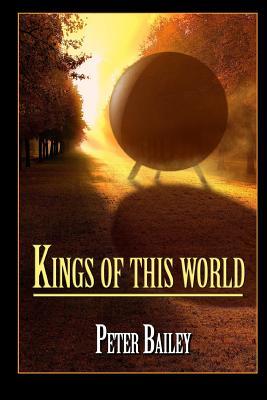
Interview with Author Peter Bailey

1) Tell us a little bit about yourself. How did you get into writing?

Tripadvisor was my gateway drug to authorship. I wrote up a completely factual holiday report, but using a comic style that I borrowed from Douglas Adams with a dash of Terry Pratchett and people loved it! It got over a hundred responses and it was as if a lightbulb had gone on. I can write! And I’ve been trying to prove it ever since

The report is still on-line and can be seen here https://goo.gl/CNUaCZ


2) What inspired you to write your book?


I thought it was a good idea. I’ve always hates the idea of an effect without a cause (lots of books have zombies, but very few explain *why* the dead are suddenly ambling around.) But I had an idea that would not only explain the sort-of-zombies but also why someone would want them.

35589760


3) What theme or message do you hope readers will take away from your book?


Hope. That there is always a way, there is always a sunrise.


4) What drew you into this particular genre?


Stephen King. I picked up Salem’s Lot on a whim mumbly years ago and loved the clear direct way he could tell a story, and I’ve been a fan ever since.


5) What social media site has been the most helpful in developing your readership?


Facebook. Everyone tells me that Twitter is the place to be, but as someone once said. A twit is like shouting in a crowded room.


6) What advice would you give to aspiring or just starting authors out there?


Keep on keeping on, and, it’s easier to correct a page of bad wring than a page of no writing


7) What does the future hold in store for you? Any new books/projects on the horizon?

My third book ‘One step way’ is being published soon. This opens with three suicide bombers who step out from their Bronx apartment to an alien world that will be their prison for the rest of their lives. My forth book (so far untitled) opens with two men driving their car into the Hudson River and deliberately drowning themselves.

Interview with Author Shauna Packer

A couple of months ago, I had the distinct honor to review and help share the word on an important novel called Destroying Their God: How I Fought My Evil Half-Brother To Save My Children by Wallace Jeffs, Shauna Packer and Sherry Taylor. You can read the full review here.  This book is an extremely important look at the FLDS cult and the impact it has on it’s members and their families. I am now fortunate to be able to share an exclusive interview with one of the authors, Shauna Packer. Here is what she had to say about her experience writing this story and how she views the events related in it.


1: Tell us a little bit about yourself. How did you meet and eventually collaborate with Wallace Jeffs and Sherry Taylor?

Sherry and I have known each other for years as we volunteered in leadership positions through the League of Utah Writers. Sherry became acquainted with Wallace from a business networking group in the Salt Lake area. Wallace was in the movie, Prophet’s Prey, and a big-name producer/director (won’t name drop here) approached him and said he wanted to make a movie based on Wallace’s life story, but first, he wanted a book written. Wallace approached Sherry to co-author the book, but at that juncture, the timeframe for completing the project was only six months, so she asked me if I would like to join so it could be fast-tracked. As a professional writer for many years, I have been asked to collaborate on multiple books and, though I find all ideas interesting, have always refused. But when I heard Wallace’s story, of almost dying in order to protect his daughters from spiritual slavery, I knew this was one opportunity I couldn’t pass up! I believe strongly in a commitment to family, and the loyalty and sacrifice Wallace made for his children proved a theme that resonated deeply with my core values. I am continually grateful I had a chance to work on this project with Sherry and Wallace. After four years of co-authoring together, we get along well and enjoy a friendship and strong team commitment to each other individually as well as to our book.


2: What was the process like working on Destroying Their God?

Sherry and I would go to Wallace’s place and interview him as he told his life story. Or, sometimes we met at a restaurant or bookstore (nearby patrons were often quite intrigued by our conversation!). Some evenings there were things he wanted to speak about in particular; sometimes we had questions and we directed the interview. Then, I would come back to my home office and write the chapters and send them to Sherry for her feedback and addition/deletions. Quite often, we would have a lot of additional questions as we started laying out chapters and sections, so there was a great amount of follow up and digging down to do. We also had to make sure we put things into the correct historical context, sometimes that proved a challenge because access to FLDS records can be spotty or completely unavailable. Personally, I was super interested in the everyday life of an FLDS family. As a mother of children myself, I marveled at how you would even go about cooking meals for the sixty-five-plus children. So, alongside the details of Wallace’s life, Sherry and I asked a lot of questions about family dynamics. From a reader’s perspective, the feedback has been interesting: some of our readers felt like we included too many day-to-day details and some were quite frustrated that we did not include a whole lot more! But that’s the great thing about reading, it is a personal experience and preference.


3: What message do you hope this book sends to readers who are unfamiliar with FLDS or who don’t realize the affects both physically and psychologically on those who escape destructive religions? 


The truth of what happens in the FLDS and the reality of Wallace’s life is shocking to a lot of people. It certainly was to me. As a writing team, we genuinely strived with this book to illuminate, without hitting people over the head with the message, that being raised in the FLDS lifestyle demands certain behaviors and compliance or you doom yourself to destruction. It can be easy when reading about another’s life to become somewhat of an armchair psychologist. However, although highly suspicious to an outsider, this lifestyle literally represents life and death to people who are in the midst of the madness. If Wallace, or any other faithful FLDS member, would have chosen to leave, they would be banished from their family, their homes, their livelihood, their friends, and ultimately, in their minds, their salvation. Leaving the priesthood people and land equates a total loss of everything and utter destruction. This is especially a heavy reality when your own father, the prophet, and your mother represented this as absolute truth from birth. It is a culture of control and fear. I have a tremendous amount of respect for Wallace’s healing and ability to operate in a world he was raised to believe was wicked. I hope that the book not only educates, but also allows people to examine their own personal values. Wise individuals with sound moral compasses can indeed be manipulated by a parental and religious culture.


4: What would you say was the most difficult aspect of writing this novel?

There is some really raw information included in the book. In order for the reader (and Sherry and I) to understand why Wallace was willing to die to protect his children, we had to spend a lot of time with dark and gritty subject matter. This included listening to many hours of audio tapes made by Warren of his degradations. As a woman and mother to daughters myself, I can still scarcely believe what these women had to endure in order to attain salvation. However, I believe that writing should be about truth and we need to stand in that truth. Some publishers were interested in the story, but wanted us to remove some of the more challenging subject matter. We agreed as a team that as much as we found what happened repugnant, we had to recount it in truth, without allowing it to become gratuitous.


There is also a building up to extreme cruelty toward Wallace. Warren is a master of creating custom-made punishments, tailored to the individual “sinner”. I don’t want to give away too much of the book, but after Wallace defied his brother, Warren customized a punishment that is every parent’s worst nightmare. The night we discussed this event was a somber one indeed. I waited until I got to my car, because Wallace doesn’t like to see women cry and it seemed disrespectful to get rattled about something so personal to him, but how the tears flowed when I was alone! I even traveled down to St. George, Utah (about five hours from where I live) because I wanted to see the house where these painful events occurred and I also wanted to see where Wallace’s accident took place. Even though I have read this book dozens of times, I still get choked up when I read certain parts. I always have to call Wallace or text him to say, “I’m so sorry you had to go through this!” His reply is generally, “Thank you, but it’s what made me the man I am today.”


5: If you were able to reach out and talk to those still living the FLDS life, what would you want to say to them? 

That there are people and resources available to help them leave this cult. I do not believe it is God’s wish for families to be torn apart and for a prophet to constantly preach a message that says members are not worthy of the blessings of heaven. I would also share with them the many audio files Warren recorded, which are actively withheld from the FLDS people by leadership, and his own jail confession that “I am not the prophet”. They don’t have to lead a life based completely in fear, there are many who will help them discover the truth and find their own path!


6: What was the process like working with Wallace and diving into the ins and outs of FLDS and their practices?

Fascinating! I wanted to know everything and could still spend hours asking questions. When we are interviewed as a team, I never tire of listening to what Wallace has to say. The reality of growing up FLDS is a little hard to wrap your mind around. I really admire Wallace’s bravery; he always has an open and forthcoming attitude. Wallace has had a lot of things happen to him in his life, but he never wants to be seen as a victim. To write a book such as this, you really need to crawl through the cobwebs and challenge, probe, examine and then examine some more. There is a lot of digging into emotions and difficult memories. However, we chose to write the book in a more journalistic tone to match Wallace’s personality and so it wouldn’t seem overly emotional, as if he felt sorry for himself for the life events he experienced.


7: What’s next for you personally as an author? Any other projects on the horizon? Would you want to work on a memoir similar to this in the future?

I am always open to discussing future book ideas. If another project like Wallace’s came along that captivated me with a story of courage, love, and triumph, yes, I would definitely consider working on another memoir. I think Wallace has a few more books in him as well, and we have discussed further collaboration. I have my writing business, consulting with executives, corporations, and fiction authors on their content and editing needs. That keeps me happily occupied as I work on new books. Currently, I am in development on another non-fiction project. I also have a fictional short story that I wrote years ago and would and like to turn into a novel. It’s more of a happy story about redemption and it feels right at this moment in my career to work on something a little more upbeat. I have two completed novels I am in the process of marketing to agents. One is historical fiction called The Shadows of Plain Sight, set in post-Civil War Nevada, and the other, Ways To Go, is a women’s fiction novel.


Thank you for your time. It was an honor to speak with you and thank you for sharing this important story with the world. 


Shauna Packer

Shauna Packer Headshot


Shauna Packer has been a professional corporate and freelance writer, researcher, and content editor for over twelve years. She is a multi-award-winning fiction and non-fiction author. Shauna has been published in several commercial anthologies, including Angels to Bear You Up, Utah Voices: A Literary Annual, and Mother’s Messages in a Bottle. Though she has crafted a great deal of non-fiction over the years, Destroying Their God is her first full-length non-fiction book. She resides in the Salt Lake area with her family, including two cats named after candy bars.


Find Shauna Packer at:


https://www.instagram.com/shaunapacker/  

https://www.linkedin.com/in/shaunadansie/

https://www.goodreads.com/author/show/17815620.Shauna_Packer

https://twitter.com/spackerauthor

https://www.facebook.com/Shauna-Packer-210939476157092/

http://www.destroyingtheirgod.com


Interview With Author Thomas Neviaser

Tell us a little bit about yourself. How did you get into writing?

I’m a retired orthopedic surgeon who opted for the “good life” after 33 years of practice in Virginia. I decided to trade in my scalpel for a word processor.

In theory, I’ve been writing for decades, but all of that work has been in the orthopedic field of medicine. I have authored over 40 peer reviews articles, written chapters in orthopedic textbooks, presented at symposiums and instructional courses, but did not start writing for fun until I retired in 2000. Mm first endeavor was an informative yet humorous book, Man’s Unofficial Guide to the Use of His Garage, followed by a collection of short stories, The Comb in the Urinal and other Perplexities of Life, about everyday objects we all see in very unusual places and how they got there. Some stories are fictional but some of the stories actually happened to me.

At the encouragement of family and friends, I published (2016) my non-fiction orthopedic manuscript, THE WAY I SEE IT: A Head-to-Toe Guide to Common Orthopaedic Condtions, a guide for the layperson and orthopedic patients so they could educate themselves to their conditions and be able to converse with their doctors in intelligible manners. There are 90 conditions discussed as well as 80 diagrams/photos/x-rays included. Medical terminology is phonetically spelled and explained in easy to understand language.

What inspired you to write your book?

My first novel, YOU DEAR SWEET MAN (2017), was inspired by a digital photo in a subway car advertisement poster while I was traveling into Washington, DC. It was so vividly clear and almost three dimensional, I thought the woman in the ad would move if I stared at it long enough. Hence, the idea for the book was born. A blue-collar worker is seduced into the unsavory world of advertising by an attractive but evil woman whose alter-ego poses as a model in a most unique subway car ad, becomes his living fantasy, and ultimately defines his destiny.

What theme or message do you hope readers will take away from your book?

I think this book illustrates how easily people can be swayed from their lives and think that the grass is greener on the other side of the fence.

What drew you into this particular genre?

I always loved books and TV shows that were somewhat out of box, made me think, and yet surprised me with the ending.

If you could sit down with any character in your book, what would you ask them and why?

I would choose Samantha, the antagonist in YOU DEAR SWEET MAN. The question would be, “Sam, why in the world would you use your exceptional extra-sensory abilities for evil rather than good?”

What social media site has been the most helpful in developing your readership?

I have never been interested in social media until I started writing. I’m still not a fan, but found it necessary to have some platform for myself, my orthopedic guide, and all of my books. I would have to say, Facebook, but as I said, I’m not that enthusiastic about it. I’m not on Twitter and a novice at Instagram. I guess I’m old school to the core.

What advice would you give to aspiring or just starting authors out there?

Write what comes to your mind and keep writing. Correct all the mistakes later. I found that if trying to write grammatically correct, one loses concentration and tends to grind to a halt quickly. It one of the reasons for “Writer’s Block!”

What does the future hold in store for you? Any new books/projects on the horizon?

I have just finished my second novel, THE MYSTERY OF FLIGHT 2222, a book I’ve been writing for sixty years, believe it or not. When I was in high school, I wrote this short story about a plane crash and the subsequent trials and tribulations of nine passengers as they endure stresses well beyond one’s imagination leading to physical and mental decline, paranoia, death, sharks, bad weather and open seas pirates. Their subsequent rescue only initiates another trip from which they can never escape.

I finally decided to expand the story that had been in the back of my mind for six decades, and now:

THE MYSTERY OF FLIGHT 2222 will be launched on July 25, 2018 on Amazon. It should soon be on the Amazon’s pre-order list, and I hope all your readers will read and review it.

Thank you so much for asking me to participate in your blog interview,

Thomas Neviaser


Man’s Unofficial Guide to the Use of His garage:


Interview with Author Sarah Baethge

1) Tell us a little bit about yourself. How did you get into writing?

I’m Sarah Baethge and I’ve always loved reading. After a car wreck derailed my college career, I started reviewing stories and that eventually led to me trying to write my own.

2) What inspired you to write your book?

I self published a short novella a few years ago (free on Google Drive now) but it started somewhat abruptly, so I wrote this story to be a prequel for it because the whole story has just kept growing in my mind.

3) What theme or message do you hope readers will take away from your book?

I hope that they can enjoy it. I wrote it as fun entertainment.

4) What drew you into this particular genre?

I like to read it.

5) If you could sit down with any character in your book, what would you ask them and why?

I’d sit down with Ronald Carpenter, I’d like to know more about his view of The Eclipse company; I don’t feel like I describe it very well.

6) What social media site has been the most helpful in developing your readership?

I like using Twitter, but more people seem to be concerned with my Facebook page.

7) What advice would you give to aspiring or just starting authors out there?

Write what you like to read. Don’t give up just because you aren’t sure how other people will react.

8) What does the future hold in store for you? Any new books/projects on the horizon?

I have some plans for about four sequels to this Speed of Darkness book and a couple of Ideas for both a space story and a time-travel story. I’m not really sure which one I will work on first.

Interview with Author Wendys Donuts

1) Tell us a little bit about yourself. How did you get into writing?


Growing up I was always inclined more towards science and engineering. In fact I almost failed my English classes a couple of times in high school. Even in college I studied Mechanical Engineering.


But I’ve always been a fan of telling stories and coming up with outlandish jokes to make my friends laugh. It was my love of telling stories that first drew me into trying to put some of them down on paper and flex my writing muscles.


2) What inspired you to write your book?


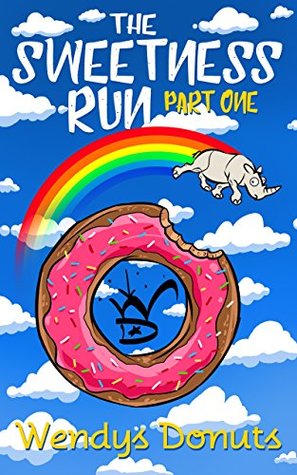
The inspiration for The Sweetness Run came from my fraternity brothers and our fantasy football group chat. We constantly fire jabs at each other and often joked about what would happen if anybody ever saw the things that were said on the group chat.


I really wanted to come up with something to showcase the silliness of our friend group and give an idea of how close we are after all these years. The book started out as a few jokes sent across on the group chat and quickly ballooned into a full story.


3) What theme or message do you hope readers will take away from your book?


When people read The Sweetness Run I would like readers to first have a good laugh. Even if they get nothing else from the book, as long as they have a couple of laughs I’m happy.

I would also really like to give the reader a deep look into the stereotype of a post-college man-child and hope they relate to some of the mundane struggles Jason has to contend with everyday. The idea being that when these seemingly small catastrophes take place in our daily lives it’s not the end of the world. We can always persevere through them, especially if you have a few friends to call in for support.


Lastly I really want readers to get an idea of the way guys bond together and how life is always better when you have your boys around you. Jason’s day always gets better when he’s around his friends.


4) What drew you into this particular genre?


I’ve always been interested in comedy. Stand up specials, comedy fiction, movies, podcasts, etc. You name it I love it. Not only that, I feel that joking around is the glue for a good friendship or relationship in general. If you’re not laughing with each other then what is the point?


My love for comedy and laughter is what kept me going and kept the ideas flowing when I was writing The Sweetness Run.


5) If you could sit down with any character in your book, what would you ask them and why?


I really like this question


I would love to sit down with The Wizard. Even though he has a small part in the book he is a big part of the glue that holds everyone together. I would love to ask him where he got a poster of Courage the Cowardly Dog. I’ve personally always wanted a poster like that. The Wizard seems to have some pretty weird stuff floating around his house so I’d also love to get an idea of who he uses as a decorator.


6) What social media site has been the most helpful in developing your readership?


Facebook and Instagram have been the most useful for me.


7) What advice would you give to aspiring or just starting authors out there?


My advice would be to always keep writing. It’s very important to write a little bit everyday even when you feel nothing of value is being written. What I found is that if you just keep writing a little bit every day that first draft will come up in no time. Then comes the fun of editing and refining your story.


8) What does the future hold in store for you? Any new books/projects on the horizon?


I have a few different projects I’m working on. The first is The Wendys Donuts Report, which is a blog aimed at giving readers funny articles and outlandish solutions to problems that are seemingly unimportant but in reality, they are vital.


After that I have a few short stories I would like to release followed by part two of The Sweetness Run. Let’s not forget that her Majesty The Sweetness has to be rescued at all costs

Author Interview with Lily Black

1)      Tell us a little bit about yourself. How did you get into writing?

A: I’ve always been a writer—even though I was actually a late reader. Ever since I was a kid books and reading were my first go-to in coping with the challenges of life, so writing became a natural outgrowth of all that time spent reading.


2)      What inspired you to write your book?

A: I have a black belt and on occasion teach women’s self defense classes, so as my mind turned over story ideas I was struck by the concept of a warm and cozy small town juxtaposed against a seriously scary situation, and the people caught up in it. I explore this dynamic in both my first book, Storm of Attraction, and the second which is also set in charming Willowdale.


3)      What theme or message do you hope readers will take away from your book?

A: The story always comes first, but one takeaway I really believe in is that even the most difficult circumstances can lead to unexpected good.


4)      What drew you into this particular genre?

A: I guess despite being very aware of the dangers in the world, I’m a romantic at heart and believe that true love can triumph over anything. Totally cheesy, I know! I also believe that sometimes people need something to shake them out of their usual circumstances in order to discover what other resources they might have, and who they really trust. Romantic suspense is the perfect medium to explore this.


5)      If you could sit down with any character in your book, what would you ask them and why?

A: Just now I’d sit down with Detective Rawlings and have a long chat with her about her estranged husband! I know the two of them have split—leaving her to raise her twins mostly alone—and I know he’s a National Geographic photographer, but I don’t have all the other details and want them, because these two will be getting a novella or some newsletter time in the near future!


6)      What social media site has been the most helpful in developing your readership?

A: I use my Facebook page to connect with my readers, and really enjoy that. I also have my news page on my website which doubles as a blog, and more importantly send out a newsletter to subscribers in which I share short fiction bursts that I’ve written, or anything else I can to give my readers insights into my characters and Willowdale. I also love connecting with readers generally through the Book Ninjas website (www.book-ninjas.com), a content-rating catalog of romance and women’s fiction which I co-own and help to run. There I can see which books are popular and of course pick out new books just right for me based on their blush level, and what I see other readers picking up!


7)      What advice would you give to aspiring or just starting authors out there?

A: First, read, of course. Then, write. Remember that even short burst of writing time can train you in the craft, so never underestimate the importance of short snatches of time you can devote to your writing dreams.

8)      What does the future hold in store for you? Any new books/projects on the horizon?

A: I’m so glad you asked! I recently turned in Willowdale book two—tentatively titled Storm of Deception—to my publisher, and it will release sometime in 2019. It’s the story of a senator’s daughter and the veteran who publicly humiliated her when he ended their engagement, plus a deadly black mailer. The hero was introduced in Storm of Attraction so readers will remember him, and there are cameo appearances from the first couple, so I think readers will get a kick out of that. But mostly it’s just a super intense love story set against the back drop of a winter festival and the black mailer’s schemes, with touches of the drama which comes from life in the political limelight. To celebrate Storm of Deception’s acceptance for publication I made ‘suspenseful snowflakes’ by printing a page from the unedited draft. So much fun to make, since they have tiny teaser peeks at a page from the novel! They’ve been lots of fun to give away and I’m happy to share them here, too, if anyone would like one. This is a novel that nearly ripped my soul in half writing, and I can’t wait to share it with my readers!

SofD three sparkly snowflakes white side

Lily Black website: http://www.lilyblackbooks.com/

LB Twitter: https://twitter.com/lilyblackbooks

Book Ninjas website: http://www.book-ninjas.com/
LB Facebook: https://www.facebook.com/Lily-Black-1713161408963150/


Storm of Attraction low res

Interview with Author Philip Bencel

1) Tell us a little bit about yourself. How did you get into writing?

I’ve been a private investigator in Washington, D.C. for almost twenty years. I’ve written stories since I was a kid, but I didn’t publish my first books until I was in my mid-thirties: Introduction to Conducting Private Investigations and Principles of Investigative Documentation. I returned to writing fiction last year, when I took a sabbatical from my investigations company to write a novel.

2) What inspired you to write your book?

The book I aspired to write last year was called Order of Damaged Souls, set around the 14th century Flemish peasant revolt. I finished that book, but I ultimately decided it was too dark for mainstream consumption. While bemoaning all the time that I “wasted” on Damaged Souls, I had an epiphany about just how demoralized I was about the American disaster marked by Donald Trump’s presidency. This soul-searching led me to re-read The Monkey Wrench Gang, a campy novel written by Edward Abbey about a band of misfits who sabotage stuff to protect the environment. I thought, ‘I should write something like that, but set in post-Trump America!’ Thus inspired, I wrote Freedom City in about three months, rushing to get it out before Trump’s impeachment. [Laughter].

3) What theme or message do you hope readers will take away from your book?

I don’t know if I can curse on your blog—but fucking hell, what we’re living through right now is the resurgence of fascism, plain and simple. I know the left is often too loose with the word ‘fascist,’ and that’s regrettable, but there is nothing else to call attacks on the press, on the judiciary, and outright distain for the rule of law by the so-called President of the United States. So, Freedom City is a serious book about a very serious topic, but I really tried to bring it down to a level where I’m not just screaming incoherently out the window. The thing is that, when you take a deep breath, Trump and his enablers are evil in an almost inept-comic-book-villain sort of way, so there is actually a lot to laugh about in the situation. The one thing I hope people get from my book is that we must kill them with laughter. That’s their biggest weakness, which is why the right has been so up in arms the past few days about Michelle Wolf’s scathing comedy routine at the WHCD.

4) What drew you into this particular genre?

Well, my first novel was historical fiction, which is what I often like to read. Freedom City, I suppose, is contemporary literary fiction, but I’ve really struggled with whether to call it satire or dystopian fiction. It’s a little of both, actually, more like a tragicomedy. Like I said, I didn’t really set out to write it, but as a longtime private detective who lives in D.C.—I can literally see the fucking U.S. Capitol out of my window—I was probably the person best situated to write a novel like Freedom City.

5) If you could sit down with any character in your book, what would you ask them and why?

I admit that I struggled a bit with Clare Swan, the main female protagonist. Some female readers have pointed out her promiscuity, and that’s certainly a fair critique. But while my book might not pass the Bechdel test, nobody (so far) has accused me of being anti-feminist. Actually, I’m a diehard feminist. It’s just that I have an active imagination, so when I write female characters I sometimes imagine ways I might sleep with them. [Laugher]. Ultimately, I think Clare turned out to be a delightfully complex human being and a righteous warrior. But if I could talk to her I’d ask if she feels I did her justice.

6) What social media site has been the most helpful in developing your readership?

That’s a great question. I had already developed this public persona as a private investigator, and by far the biggest platforms for that are LinkedIn and Twitter. Because of that professional following I already had from my non-fiction books, I’ve gotten the most traction so far from those sites. However, I’m super excited about Instagram—which I confess I wasn’t even on until a few months ago. As I’m someone who loves readings and events, it really gives me a chance to chronicle the “buzz” around my book and hopefully help it, one day, take off.

7) What advice would you give to aspiring or just starting authors out there?

So much of the advice aspiring writers get is to clichéd. I mean, I could say ‘don’t be afraid to suck’ or ‘join a writing group’—both sage pieces of advice—but instead I’ll say this: Write about the things buried deep in your soul that you think might scare your friends to know about you. Just do it. They won’t scare, and you’ll be writing honest shit.

8) What does the future hold in store for you? Any new books/projects on the horizon?

I’ve got a couple irons in the fire, including a continuation (sort of) of Freedom City. Lately, however, I’m back to doing investigations, so I don’t have all the time to write I had last year. That’s okay though, because now that I recognize impeachment isn’t happening anytime soon I can take the time to make the next book longer and even more snarky.


freedom

_______________________________________________________________________________

Available Now! Bad Blood: Secrets and Lies in a Silicon Valley Startup. Get the full inside story of the rise and collapse of a multibillion-dollar startup

Save $5 on Any 2 Books with code BOOKISH