I received a free copy of this book in exchange for a fair and honest review. All opinions are my own.
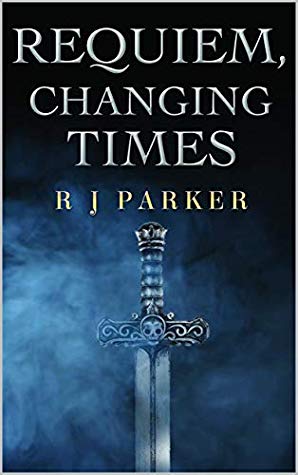
A young middle school aged boy finds himself thrust into a harrowing adventure when fantasy and horror creatures once thought fictional bring danger to his family in author R.J. Parker’s novel “Requiem, Changing Times.
Advertisements
The Synopsis
Clint and Corbin are having a weird day. Best friends for life, things are getting a little strange around their town, and at school. When they’re followed by a strange man looking for Clint and later attacked by an imp, it makes sense to retreat to the safety of home. But when strangers from another world, Banks and O’Neil, arrive with their medley of allies, things get even weirder. Why are they here? What do they want? And what is The Requiem that everyone keeps talking about? As Clint and his friends and family are drawn deeper into a thrilling adventure, only one thing is for sure. They may not be getting out alive. And class with Mrs Christenson will seem like a walk in the park after this.
The Review
The author does a brilliant job of blending several genres together in a cohesive way. A fusion of fantasy and horror with some elements of sci-fi, mystery and suspense in the YA genre umbrella so to speak make this novel really shine brightly.
Fans will get a fantastic cast of characters to root for and stand behind, not least of all protagonist Clint, a young boy suffering from a profound loss and getting into trouble at school and with his new family unit when he is suddenly thrust into life or death stakes and adventures, forcing him to reevaluate his priorities and the choices he had been making.
What really stuck out though was the author’s flipping of the script in the YA fantasy/horror genre. Most often young protagonists must venture directly into another realm in a fantasy setting, but here we see the fantasy realm coming to Clint first, showing what would happen if these fantastic creatures and horrifying threats entered the real world in the midst of global upheaval.
The Verdict
This lengthy read is the perfect new fantasy/sci-fi drama for anyone who loves the YA genre. A great pairing of mystery and suspense and larger than life characters all culminate in a shocking finale that will have readers on the edge of their seats and leaves the door open for future installments in this exciting new series. If you haven’t yet, be sure to grab your copy of “Requiem, Changing Times” by R.J. Parker today!
Rating: 10/10
Advertisements
About the Author
Russell Parker was born in Bountiful, Utah. As his father was safety manager he had to move around until his senior year of high school, when he came to Cache Valley, Utah to stay. He married the most wonderful woman in the world and they are the parents of four fantastic kids, with one crazy dog.
Russell played all kinds of sports and was an outdoorsman until an accident brought him to writing. A writer since high school, encouragement brought his stories to life.
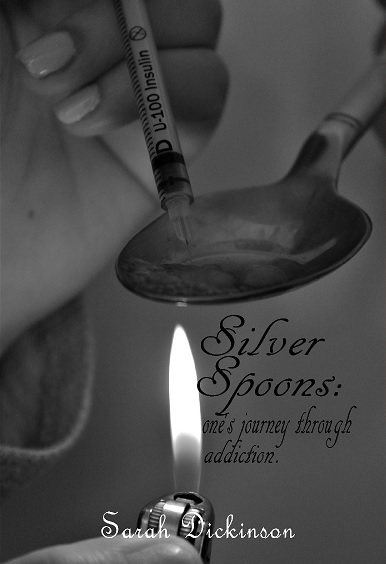
Hello everyone. Today I am happy to be working with Women on Writing Blog Tours to present a special spotlight for author Sarah Dickinson’s book, Silver Spoons: One’s Journey Through Addiction. Let’s take a look at the book, what it’s about, and what you can expect on this book tour.
Book Summary
Silver Spoons: One’s Journey Through Addiction takes an intimate and raw look at the current face of addiction and recovery. Talking about the current opioid epidemic, we follow a young couple while one of them goes through the recovery process. Told through letters, we get an understanding of their relationship as it struggles through his addiction and resulting recovery. From detox, rehab, sober living and the 12 steps of A.A, you get a raw and honest look at the effects of addiction and how they affect relationships.
AUTHOR NOTE: There is explicit and graphic content.
Print Length: 380 Pages
Genre: Women’s Fiction
Publisher: Independently Published
ISBN-13: 978-1717868947
ISBN-10: 1717868940
Silver Spoons: One’s Journey Through Addiction is now available to purchase at Amazon.com.
About the Author, Sarah Dickinson
Sarah Dickinson is a lifelong resident in beautiful upstate New York. Mother of two amazing daughters and three equally awesome rescue dogs, she is the author of Silver Spoons: One’s Journey Through Addiction. She currently attends college and is in the midst of switching careers. When she isn’t doing it all, she reads comic books, blogs, and takes weekend getaways.
What goes better in the morning than a muffin? Visit our blog today and you can read an interview with the author of Silver Spoons: One’s Journey Through Addiction and also enter to win a copy of the book!
Visit Anthony’s blog again where you can read a guest post by author Sarah Dickinson. Make sure you check out her easy self-care tips to add to your daily routine.
Make sure you visit Francesca’s blog today and read her review of Sarah Dickinson’s book Silver Spoons: One’s Journey Through Addiction. You can also read an interview with the author!
Visit Rozelyn’s blog today and you can read her review of the book Silver Spoons: One’s Journey Through Addiction by Sarah Dickinson. Also, win a copy for yourself too!
I received a free copy of this book in exchange for a fair and honest review. All opinions are my own.
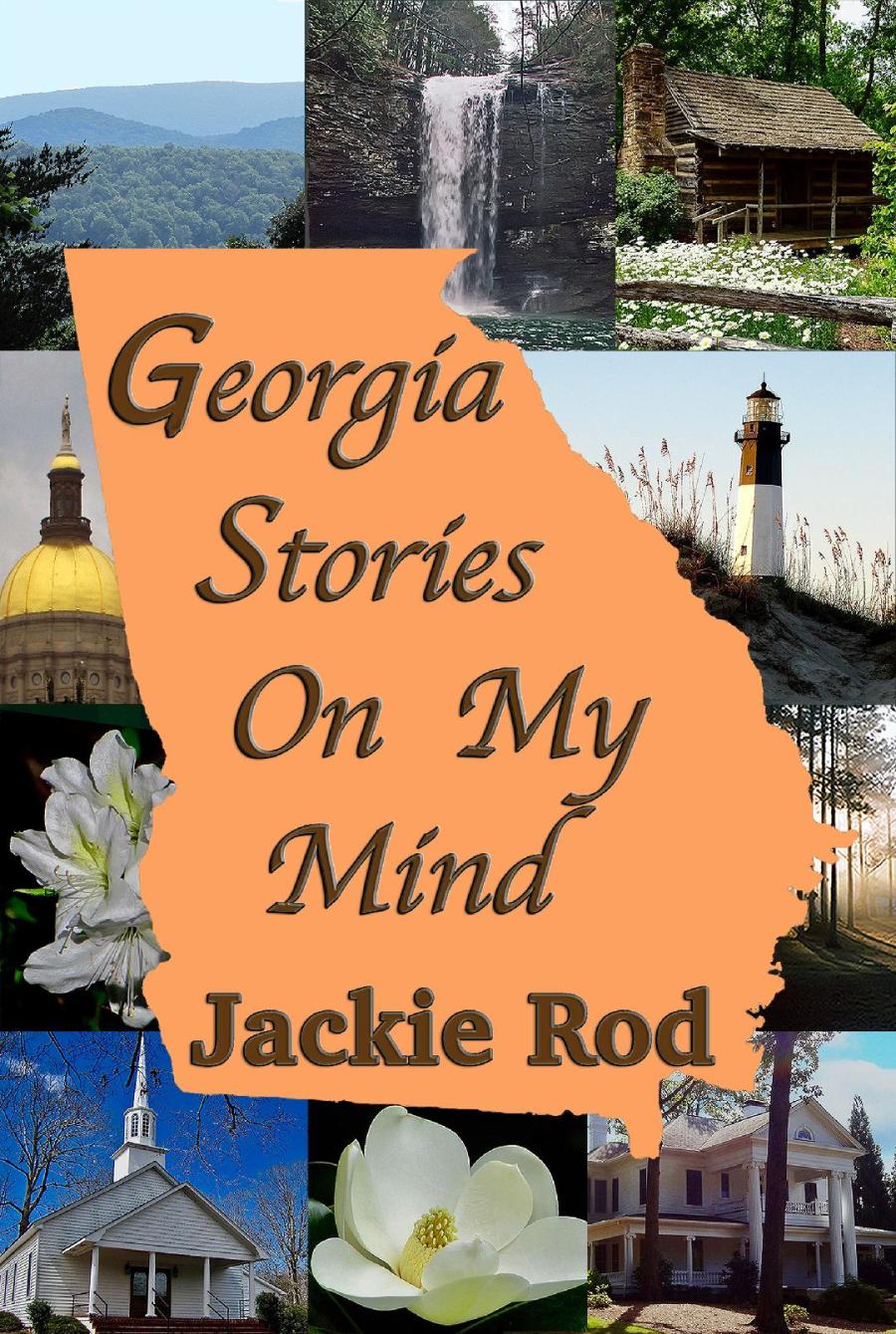
An anthology of life and life’s struggles through tales of the South bring a collection of stories and lessons together beautifully in author Jackie Rod’s novel “Georgia Stories On My Mind”.
Advertisements
The Synopsis
Come visit Georgia within these pages as you read heartwarming stories shaped by local traditions and legends. The characters live life to the fullest through joys and hardships. Inhale the essence of Georgia’s revitalized small town squares while eating hand- scooped ice cream on a park bench. Each town has its own magic. Sometimes the most real things in life are things we cannot see but those that deeply touch us, as the folks in these tales learn. Share smiles and shed tears as you travel the curving road of life with these Georgia characters. Are you ready for an unforgettable experience of hope, faith, trust, reconciliation, and love?
Print Length: 259 Pages
Genre: Short Story Anthologies
Publisher: Touch Not the Cat Books
ASIN: B07FXVRZGG
The Review
Beautifully written, heartwarming and personal brings this anthology to life perfectly. The author has found a way to connect with readers on a personal scale that showcases how connected we are to each other and our life as a whole. Stories of love lost and found again, of being honest with ourselves and speaking to the dead so that we may find a way to live fully and more make this anthology shine brightly.
The characters are relatable and the story itself is evenly paced, with each individual story delving into local legends and myths of the area that locals will be able to identify with while giving new readers unfamiliar with the legends a fresh perspective on life overall.
The Verdict
Finding one’s way in life is never easy, and most often experience something new and unique in their own way. This novel does an excellent job of creating a vast array of stories that readers will be able to recognize and identify with as the characters experience love, loss, heartbreak and connections that everyone is looking for in life. Brilliantly written and a truly powerful read, be sure to grab your copy of “Georgia Stories On My Mind” by Jackie Rod today!
Rating: 10/10
Advertisements
Georgia Stories on My Mind is available to purchase on Amazon.com.
About the Author, Jackie Rod
“A good book transports me to another time and place. It lets me feel the sensation of heroes and heroines— dark loneliness, deep passion, a father’s pride and a mother’s grief.” Jackie Rod is a fiction writer, loving wife of a legal beagle, and mother of three children who has blessed her with seven fantastic grandchildren. After Jackie retired from teaching, her love of words and stories led her to begin writing fiction. Reading and traveling enrich her life and she jumps at the opportunity to teach a workshop or attend a writing conference. She belongs to five writing chapters/groups. Jackie’s work can be found in twelve published books on Amazon, in several Metro Atlanta libraries, and independent bookstores.
What goes better in the morning than a muffin? Grab your coffee and join us as we celebrate the launch of Jackie Rod’s blog tour of her book Georgia Stories on My Mind. You can read an interview with the author and win a copy of the book.
Visit Lori’s blog today and read author Jackie Rod’s guest post about editing. You can also enter to win a copy of her book Georgia Stories on My Mind.
Visit Ashley’s blog today and you can read Jackie Rod’s guest post about how time is limited and precious. Plus, you can enter to win a copy of the book!
Stop by Margo’s blog where you can read Jackie Rod’s guest post about being a cheerleader for others. You can also win a copy of the book Georgia Stories on My Mind. Don’t miss it!
Stop by Rozelyn’s blog today and you can read her review of Jackie Rod’s book Georgia Stories on My Mind. You can also enter to win a copy of the book!
Stop by Anjanette’s blog again and you can read an interview with author Jackie Rod and read the author’s guest post featuring writing tips. Don’t miss!
1) Tell us a little bit about yourself. How did you get into writing?
I have always written, short stories and small standalone scenes just for myself and as storylines for artwork projects that I undertake but after my friend, author Jhedron Luckspar published his novel, Revenge of the Hrym, I was inspired to publish my own book and started with the short story Yankai’s Skull which I was writing at the time.
Advertisements
2) What inspired you to write your book?
I had recently visited the Ashmoleon Museum in Oxford, UK which is like Indiana Jones’s locker. There are all sorts of random exhibits from all over the world and jumbled together in such just such a way as to make it seem as if it were collected by groups of adventurers from a more romantic age. In one exhibit, there was a human skull that had been taken as a trophy after a brutal fight, the writing on the skull describes it as the skull of Yankai of the Nienching tribe somewhere in the Himalayan region. The story is my take on why Yankai’s Skull was removed from the rest of him and how it ended up in a museum.
3) What theme or message do you hope readers will take away from your book?
That’s easy. If you look at the dark side, it looks back. I think that may have been a quote from Yoda but that is essentially the message of the book. Even those with good intentions who study the dark side of the world will end up getting corrupted.
4) What drew you into this particular genre?
The story unfolded itself and it turned out to be a mash up. I had no idea how to pigeon hole it but horror seemed closest and if you look at what Yankai experiences, that really is a horrific experience for him. Forget blood and guts, true horror likes in human behaviour and the demons that drive it.
5) If you could sit down with any character in your book, what would you ask them and why?
I would sit with The Poet and ask him about his experiences with Buddha. I would ask him what kind of man he was and what it was like to be around him.
6) What social media site has been the most helpful in developing your readership?
I have not done any traditional social media advertising as of yet so I can’t answer that but looking at them all, I would say Facebook seems to be the best way to develop a targeted readership. My current approach is to send copies of the work to people who may say something good about it and I hope old fashioned word of mouth, on whatever medium will lead to a growth in readership. It may seem counter intuitive but I’m going to see what happens in this approach, it allows me more time to be creative.
7) What advice would you give to aspiring or just starting authors out there?
Write for yourself as an artist. It may not seem like it but there are people in the world who will love your work and that will connect with what you are doing. How they connect to it in the first place is a dfferent thing entirely but I believe that if you are writing from a place of truth, then the story will resonate as a truth and its core message or experience will shine through.
Advertisements
8) What does the future hold in store for you? Any new books/projects on the horizon?
I have just come back from the Gothenburg Book Festival which was a huge success for many independant authors and publishing houses so judging by that, the future is exciting. Creatively, there are a combination of art projects and more stories that I will continue to advertise in weird and wonderful ways. Astrum, has also been published and is available on Amazon and there are 3 more stories just waiting to be published once the proofing and art have been finalized. It’s all very exciting.
Tell us a little bit about yourself. How did you get into writing?
Writing began as a way to meet people. There was a group of kids in high school who met to share short stories, poems, and songs. I joined them and brought scripts using everyone in the group as a character. After high school I kept writing on my own, but switched to narratives.
Advertisements
What inspired you to write your book?
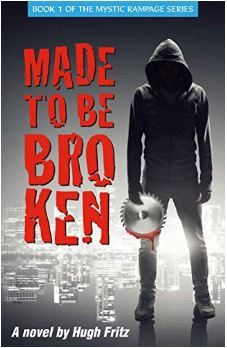
The idea for this story came after reading the Crucible for an English class. It sounds strange to say now, but that was the inspiration. The Mystic Rampage series started as an alternate history about a secret war between witches and genies. It went through a lot of changes because I was worried that if I ever tried to publish it the readers would be troubled by the lack of historical accuracy. It was also had a lot in common with the Crucible so another concern was fans of classic literature feeling I had disgraced a treasured piece. This might have been an overreaction on my part, but I’m satisfied with the final product even if it is completely different than the original concept.
What theme or message do you hope readers will take away from your book?
I would like readers to focus on the message of teamwork. When the Genies work together they’re capable of saving lives but when they turn against one another it leads to unnecessary casualties and nobody gets what they want.
What drew you into this particular genre?
Selecting a genre has been a struggle. It was fun basing a story on the Crucible but I was having trouble writing characters in that time period so I made it more modern. When I decided to have it take place in Chicago and introduced the gang I had every intention of making it a horror novel, but I became uncomfortable with the level of gore I was putting into some of the murder scenes. I cut back on the bloodshed and came up with the book I have now. I feel like I’m stumbling toward urban fantasy, but Made to Be Broken still has traces of the horror story I once wanted it to be, so in the end the publisher felt it was best to classify it as a fantasy thriller.
If you could sit down with any character in your book, what would you ask them and why?
I’d like to ask Atalissa if she regrets not listening to her parents and if she would still marry Darren, knowing how their lives would play out. I made it clear that Darren is willing to do anything for Tyrell, but I don’t feel like I focused on Atalissa enough and didn’t establish whether or not her feelings for her family were as strong.
Advertisements
What social media site has been the most helpful in developing your readership?
I have to say Facebook because it’s the one I’ve used most often. I have accounts on a few social media sites but don’t spend a lot of time on any of them so I don’t have much insight about which one is the best to use.
What advice would you give to aspiring or just starting authors out there?
Don’t write a novel as a first project. Writing short stories in different genres is a great way to discover what kind of author you are and provides insight about your strengths and weaknesses. That personal awareness will help plan a longer piece. I’m better at describing scenery and actions than dialogue, so when I get stuck I’ll write a few chapters without anybody speaking. Once I have all my thoughts on paper, I’ll go back and figure out what the characters should say. Some people might prefer the opposite, and write a few chapters with just dialogue before going back to describe where the scene took place and what the characters were doing. Whatever the style, I feel like it’s better to get a lot done quickly and then go back to tweak it than to try doing everything at once.
What does the future hold in store for you? Any new books/projects on the horizon?
I have a story that I edit whenever I need a break from Mystic Rampage. It takes place in an imaginary kingdom and follows a dragon, a knight, and a farmer. A sorcerer casts a spell on each of them and they need to help one another to live with their curses, and possibly break them. Maybe I’ll see about getting that one published someday.
Advertisements
About the Author
Hugh Fritz is a fan of monsters, mad scientists, sorcerers, and anything that involves being with incredible powers beating each other senseless. After years of writing research papers, he decided it was time to give reality a rest and let his imagination run wild. This is his first book, and it has been an illuminating experience making the transition from reader to author.
He was born in Chicago where he spent most of his life until moving to the Southwest in 2015. He finds inspiration bouncing ideas off other novelists in a critique group, but hours of television and finding the right songs to put him in the writing mood play an important role as well. He has no plans to end the Genies’ adventures here, so be on the lookout for more magical mischief in the next book of the Mystic Rampage series.
As part of the amazing new Women on Writing Blog Tour for author Barbara Barth’s novel “The Unfaithful Widow Ten Years Later”, I am honored to shared this guest blog post from the author today on writing anthologies. I hope you all will enjoy this as much as I did.
Advertisements
I wish I planned better. I’ve always jumped right in doing something without much thought to it. The idea I can do this always crosses my mind first and then I ask myself, what was I thinking? Publishing anthologies (now I have done two with a third on its way early 2020) has been a learning process for me. I’m delighted to say you can teach an old dog new tricks and I’ve made progress in the planning department.
The first two anthologies A Cup of Christmas (2014) and A Cup of Love (Valentine’s 2018) were beasts to conquer in a short timeframe. I contacted writers I knew, sent guidelines for stories and formatting. I didn’t want to hinder anyone’s style, so I was open to memoir, fiction, recipes, and poetry. Some great things came in, some not so great. Some of the best writers sent in first drafts, not finished projects. I’m not an editor for punctuation, I’m more about continuity. The good news, many flushed out their stories, and for those that didn’t, well I did my own haphazard editing. The anthologies were to benefit a charity, First Book that does wonderful things for children in need with reading and learning materials. The writers pulled together and both anthologies, last-minute ideas, were completed in six weeks each. An awesome task but we got it done. I also have a wonderful book designer, my sister, who knows how to knock it out of the park with a fabulous looking product. Those two anthologies were eBooks only.
I joked, if I ever do this again, I’d call it A Cup of Cyanide. I was over all the work I’d brought on myself with the others, and you get my drift with the cyanide! Never crack a joke like that with a group of writers. They loved the title, and so a third anthology is in the works. A bit of murder and mayhem. This time it’s being done differently. It’s our Walton Writers project. We’re taking our time. The group members will design the cover and interior, edit the stories, and learn the book formatting process. It’s the focus of our monthly meetings. This anthology is a grand way for everyone to be involved, make the decisions, and ultimately have a book (both paper and eBook) that is their product. Our non-profit this time is The Monroe-Walton Center for the Arts, where we meet each month. We plan to have a big launch party at the Art Center when we finish.
The bottom line, it’s all been great. The writers (from never published to award-winning) gave freely and quickly to the first two anthologies. Writers giving back. I love that. And the excitement of our writing group for the new anthology is infectious. I learn something new myself at every meeting, because it’s all a learning process, to be better writers.
So, if you think you want to publish an anthology and don’t know how, I didn’t either. Don’t let that stop you.
Advertisements
The Unfaithful Widow Ten Years Later
Tour Begins November 11th
Book Summary
Picking up where The Unfaithful Widow ended, Ten Years Later continues the author’s journey from widow to a slightly askew woman. A memoir written with warmth and candor on being single again, aging, and finding a creative path surrounded by dogs, friends, laughter, and a bit of craziness. Barbara Barth shares stories on the adventures that followed her first year alone as she moved headfirst into a new life, listening to her heart, sometimes not so wisely, but always full speed ahead. Join her on the ride of her life, from owning an antique shop to moving to a Victorian cottage outside of Atlanta, and all the follies in between. Going into the next decade with six dogs by her side, the author proves you are only as old as you feel, and happiness begins with a grateful heart. A funny and engaging memoir for anyone who wants to be their own superhero facing life’s good and bad moments.
Print Length: 374 pages
Genre: Memoir
Publisher: Amazon Digital Services, LLC
ASIN: B07YBNHXZG
The Unfaithful widow Ten Years Later is available in print and as an ebook at Amazon.com
About the Author, Barbara Barth
Author, blogger, sometimes antique dealer, dog hoarder, bedazzled by life. Widowed ten years ago, Barth writes about finding a creative path back to happiness. Her recent move to a 1906 historic cottage brought many surprises, including discovering the Monroe–Walton Center for the Arts where she started the monthly Walton Writers group and is on the MWCA Board as Literary Arts Chair. Barth is a contributor to Walton Living Magazine and a former blogger for The Balancing Act, Lifetime Television’s morning show for women. Currently she lives with six dogs, rescue dogs that rescued her.
What goes better in the morning than a muffin? Grab your coffee and join us in celebrating the launch of Barbara Barth’s new book The Unfaithful Widow Ten Years Later. You can read an interview with the author and enter to win a copy of the book.
Stop by Lori’s blog today where you can read her interview with Barbara Barth and read her review of Barbara’s book The Unfaithful Widow Ten Years Later.
Be sure to stop by Deirdra’s blog today and check out her spotlight of the book The Unfaithful Widow Ten Years Later and enter to win a copy of the book!
Stop by the blog Women’s Writing Circle and you can read a guest post by Barbara Barth about adopting dogs while all her friends are having grandkids. Don’t miss this one!
1) Tell us a little bit about yourself. How did you get into writing?
My early writing accomplishment were multiple hits within a few years: In my first year of writing back in 1987, I wrote three Sf short stories that were accepted by major slick magazines which qualified me for the Science Fiction Writers of America, and at the same time achieved a Finalist award in the L. Ron Hubbard Writers of the Future Contest. This recognition garnered me a top gun SF agent at the time, Richard Curtis Associates. My first novel went to John Badham (Director) and the Producers, the Cohen Brothers. Only an option, but an extreme honor. The writer who beat me out of contention for a feature movie, was Michael Crichton’s Jurassic Park. My book was called Dinothon.
A year after that I published two best-selling non-fiction books and landed on radio, TV, in every library in the U.S. and in hundreds of newspapers.
I have been trying to catch that lightning in a bottle ever since. My YA dystopian novel, The Girl They Sold to the Moon won the grand prize in a publisher’s YA novel writing contest, went to a small auction and got tagged for a film option. So, I’m getting there, I hope!
2) What inspired you to write your book?
It all started with the dream catcher. This iconic item, which is rightfully ingrained in Indian lore, is a dream symbol respected by the culture that created it. It is mystifying, an enigma that that prods the imagination. Legends about the dream catcher are passed down from multiple tribes. There are variations, but the one fact that can be agreed upon is that it is a nightmare entrapment device, designed to sift through evil thoughts and images and only allow pleasant and peaceful dreams to enter into consciousness of the sleeper.
I wondered what would happen to a very ancient dream catcher that was topped off with dreams and nightmares. What if the nightmares became too sick or deathly? What if the web strings could not hold anymore visions? Would the dream catcher melt, burst, vanish, implode? I reasoned that something would have to give if too much evil was allowed to congregate inside of its structure. I found nothing on the Internet that offered a solution to this problem—I might have missed a relevant story, but nothing stood out to me. Stephen King had a story called Dream Catcher, but I found nothing in it that was similar to what I had in mind. So I took it upon myself to answer such a burning question. Like too much death on a battlefield could inundate the immediate location with lost and angry spirits, so could a dream catcher hold no more of its fill of sheer terror without morphing into something else, or opening up a lost and forbidden existence. What would it be like to be caught up in another world inside the webs of a dream catcher, and how would you get out? What would this world look like? How could it be navigated? What was the source of the exit, and what was inside of it that threatened your existence? Screamcatcher: Web World, the first in the series, was my answer. I can only hope that I have done it justice. You can be the judge of that.
3) What theme or message do you hope readers will take away from your book?
The overall message of Screamcatcher is survival. This is accompanied by teamwork, love, persistence, loyalty and dedication. Teenager, although they can be reckless, they are nearly immune to complete failure and so resistant and resourceful that they often solve problems as fast as they encounter them. I always had The Hunger Games in mind because it showed undaunted courage and determination–that working hard and continuing on was the main thrust of the characters. I thought to mash-up Jumanji and The Hunger Games. There is a very slight sub-theme that I thought I would sneak in, whether it was popular or not. I didn’t care. And that was the message that sometimes, the nice does finish first and get the girl. Hardly an Alpha prospect, but one that I wanted to touch on nevertheless.
4) What drew you into this particular genre?
I do like adult thrillers and science fiction, but I’m now leaning toward upper YA in the low fantasy realm–portal fantasies. I’m really addicted to YA dystopian! Divergent and The Hunger Games had quite an impact on me, among others like Harry Potter series. There is a huge cross-over appeal to writing YA, and my sample is in the upper age range of YA, from about 14-15 to 19 years-old.
5) If you could sit down with any character in your book, what would you ask them and why?
I guess I would ask Jory why she didn’t notice how infatuated Choice was with her, or if she purposely denied it. We find out later that his courageous and unselfish behavior gets the team out of quite a few jams. He’s smart and resourceful. She does notice him, but I wonder why she pushed those feelings aside at first. Since I’m a guy (no big surprise there) I was curious about the female mindset and how she would ultimately react to him. It seems I wrote my own nagging mystery, for which I had no real answer.
6) What social media site has been the most helpful in developing your readership?
Gosh, I couldn’t pick just one, without admitting that I belong to over 25 major social media sites; display sites, writing groups, contest sites, promo companies and all others in Sundry. It’s very, very difficult today to get noticed. We have a glut in the industry like we’ve never seen before. Every author I know is clamoring for attention, some of them spending thousands of dollars on ads. I would imagine my FB followers of nearly 4,700 strong have contributed more than the others. I spend 14 years in a giant writing group and always got clicks from them about my posts and articles. My blog, Guerrilla Warfare for Writers helped out too, since my members were very familiar with all of my books, not just one.
7) What advice would you give to aspiring or just starting authors out there?
If a budding writing asked me if they should pursue a career in writing, I would tell them to take a couple aspirin, go into a dark room, lay down and wait for the feeling to pass. Don’t stop until you’ve finished a first draft. Then edit like there’s no tomorrow. After publication,seriously watch your spending on ads–they can be grossly ineffective. Use social media and generously interact with fellow writers and readers. Don’t abuse FB and Twitter solely for the purpose of “Buy My Book.” Join writing groups and learn from the pros. Ask politely for reviews–don’t pressure, harass or intimidate. Be creative. Target your genre readers. Offer incentives and freebies. Craft a newsletter and send it out bi-monthly. Don’t take critiques as personal attacks–learn from honest opinions. Don’t despair. Never give up. Revenge query.Get started on your next book.
8) What does the future hold in store for you? Any new books/projects on the horizon?
The Screamcatcher trilogy is bought, and the next two books are in the dugout awaiting my publisher’s editor, which should be soon. There is a lot to do there, even as far as doing some major revisions and added information in books 2 and 3. Book 2 is called Screamcatcher: Dream Chasers, and book 3 is Screamcatcher: The Shimmering Eye. I’m nearly done with totally revising a weird werewolf book, and I’m stuck halfway through a Middle Grade Fantasy.
AUTHOR SEMI-BIO
I’m a diehard frantic creator of Young Adult fiction, whether it’s paranormal, science fiction, suspense or fantasy. I believe in pure escapism with unceasing action adventure and discovery. If you want a moral message or cultural statement, you’re apt to get a small one. But let me tell you something, reader, I want to make you laugh until you gag, cry until you’re dry and tear out tufts of your hair. Today, young adult literature needs some support and renewed interest.. How soon we’ve forgotten about Harry Potter, Hunger Games, Divergent and Twilight. Oh, the mania! Where has it gone? Are we losing our young readers? We need something really fresh and new. I and several writers are going to pour everything we have into that end. You are the kindly judge–help us get there and we will deliver!
AUTHOR BIO
Christy J. Breedlove (Chris H. Stevenson), originally born in California, moved to Sylvania, Alabama in 2009. Her occupations have included newspaper editor/reporter, astronomer, federal police officer, housecleaner and part time surfer girl. She has been writing off and on for 36 years, having officially published books beginning in 1988. Today she writes in her favorite genre, Young Adult, but has published in multiple genres and categories. She was a finalist in the L. Ron. Hubbard Writers of the Future contest, and took the first place grand prize in a YA novel writing contest for The Girl They Sold to the Moon. She writes the popular blog, Guerrilla Warfare for Writers (special weapons and tactics), hoping to inform and educate writers all over the world about the high points and pitfalls of publishing.
Tell us a little bit about yourself. How did you get into writing?
I started writing because I was bullied very badly throughout my childhood. I didn’t have a lot of friends or anyone I could really talk to, so I channeled my frustrations into comic books. I was the sidekick to the superhero and in my own world I was somebody really cool instead of the kid that got beaten up. When I got a little older, I moved into poetry and eventually novels
What inspired you to write your book?
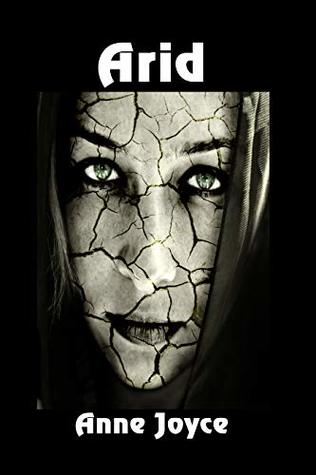
I was watching a conspiracy theory show that documented the stifling amount of lakes and rivers that are mysteriously being drained throughout the country. It appears some powerful force has a very specific motivation for the water disappearance. It just got me thinking about so many different possibilities and outcomes
What theme or message do you hope readers will take away from your book?
Always be cognizant of what’s happening around you. Stand up for what you know is right even if others disagree with you
What drew you into this particular genre?
I’m not sure, to be honest. I guess many years of being a nerd
If you could sit down with any character in your book, what would you ask them and why?
I would ask Blane why he made some of the idiotic decisions that he made because he’s not a stupid man at all. I can’t provide a lot of detail or I’ll give too much away
What social media site has been the most helpful in developing your readership?
Instagram and Facebook
What advice would you give to aspiring or just starting authors out there?
Network with other authors. Promoting and selling your work is a group effort so be part of a community and scratch each other’s backs
What does the future hold in store for you? Any new books/projects on the horizon?
I’m currently writing a Prequel to Arid called “Parched-The Days Before Exile.”
Anne Rasico (AKA Anne Joyce) was born in a small town in Indiana you’ve probably never heard of. She composed short stories and comic books as a child to amuse her family and began writing poetry at the age of thirteen.
In 1998 she received an Honorable Mention for Literary Excellence for her poem “She Didn’t Come Home.” She attended business school and made the Dean’s List for three consecutive years, putting her love for writing on the back burner. It wasn’t until her mid-twenties that a political post on social networking rekindled her literary flame that has since become a bonfire.
In 2013 her novella When the Chips Are Down was named a Finalist in the MARSocial Author of the Year Contest. When she is not writing, thinking about writing, or going insane from writing she enjoys camping, fishing, swimming, and otherwise spending time with loved ones. She is mother to three extremely spoiled cats. Crazy cat lady? Probably.
1) Tell us a little bit about yourself. How did you get into writing?
There came a time almost twenty years ago that I felt I had actually been quite fortunate to have had so many experiences already during my lifetime that I wanted to share. I had invented and patented some laser technology which could, if introduced deep inside the human body, remove even potentially lethal obstructions, as in clots in small blood vessels and otherwise. I had practiced medicine and surgery around the world. And more.
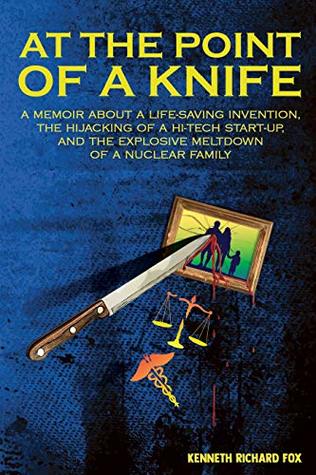
I focused first on a few of those and wrote short articles about some of them. Mirage in the Desert was about my period of living and working in the Persian Gulf. Here Today, Gone Tomorrow had to do with some of the tragic losses in my life when I lost loved ones under the most painful of circumstances. Something From Nothing was about the strange process of inventing with all of its uncertainty– somehow, one day, coming to believe you actually had stumbled upon something new and potentially important or valuable. Monster in the Midst was about the tragedy of living with a loving spouse who is turned into a human monster by the emergence of violent, psychotic bipolar disorder. But then I felt there was more I could say and at the time, to me, the most efficient way to do that was using free verse. That lead to my anthology of some 88 poems I wrote over the course of about one year. In 2018, finally, I decided to write At the Point of a Knife, a narrative that encompassed a lot of the above in just one book.
2) What inspired you to write your book?
At the Point of a Knife is also the story of a lot of things that can go very wrong, with the backdrop of a lot of others which are very right. I was certain that there are so many people who struggle with living with severe untreated mental illness, even if that manifests itself in a partner or someone else very close. It is tragic in its destruction, and with the stigmas about such things which run so strongly in society, there must be better ways. First, though, something cried out for this tragic type of circumstance to be called out and exposed. Somehow society needs to not only recognize the enormous destruction that these severe mental illnesses cause to it, not only to the affected individuals directly, but it needs to open channels for proactively identifying these ill people who desperately need help, and force them to get it! The costs of not doing so are far too great. Mental hospitals hardly exist any longer in the U.S., but if the stigmas are removed, their benefits are great and the costs of not having them are extreme. Having these facilities is half the battle. Forcing their use in extreme situations is the rest- proactively, not after people die and lives and livelihoods are ruined.
After my experience with losing fabulous children who were so horribly abused by their other, alienating parent, ruining our family and my relationship with them and theirs with me, I came to realize that there were many such circumstances, albeit with differing degrees of adverse impact. In the 90s when my children were so severely alienated and abused, Parental Alienation Syndrome (PAS) was still being broadly challenged in society, in essence a cover up of an enormous problem which destroys families. Since, through the hard work of many dedicated mental health, medical, social work, justice and other professionals, that has changed to a signficant extent, although the battle still rages in society about PAS. But it turns out, quite conclusively so unfortunately, that if courts don’t both enforce custody and visitation by and with the non- alienating, normal parent and restrict and severely control the visitations with the alienating one, the problem will not only not be solved, it will become permanent. When the abused, alienated children grew up, they retain that ‘blind spot’ in their brains inculcated by the abuse, and they can not re- form relationships with the non- alienating parent. Again, as with severe mental illness, ignoring the problem is horribly destructive and futile, and proactivity, by society, in all such cases is imperative. This is one situation for judicial pro- activity.
My problems, as described in At the Point of a Knife, also included how horribly one rogue judge was able to piggyback on his own sordid past to wield power from the bench which made a mockery of justice. While he turned a blind eye to the above mentioned severe problems squarely before him, the system let him carry on his own psychopathic brand of jurisprudence unabated, while he slashed and burned everything in his sight. Not satisfied with allowing a potential murderer to run loose, a beautiful family to be destroyed, he persisted in destroying a thriving start- up international business involving life- saving technology, a professional career and sought for as long as he could to put in jail his chosen victim. For the judicial system to hide behind veils of opacity, while according no recourse in reality even in situations of gross abuses of power by a few who clearly have no business having been given the trust placed in them, is simply a wrong crying out for change. Juries of peers sit on crucial cases, both civil and criminal, in American jurisprudence. There is no reason that peers, ordinary citizens, can not sit in courtrooms so that when the obvious, gross abuse of power and justice does occur, they are there to see it and have the authority to make those few perpetrators of these quasi- judicial horrors disappear into the oblivion they deserve. Anyone sitting in that Virginia judge’s courtroom would have likely recognized in short order that he was an outlier who did not belong in that position. There were lawyers sitting in the gallery at times, unrelated to these cases, who said as much openly– but they had no power to act. No one deserves that kind of immunity from exhibiting even a minimum level of responsibility in society which places trust in their hands, or the impugnity to openly scorn that society while abjuring that trust.
Large companies are also given huge sway in our society. Perhaps even like big government itself, they become too big to control. Unrestrained, they continue to get bigger and more powerful yet. But since there are, alas, too many flaws in societies, manifested by the underlying flaws in the individuals of which they are comprised. Somehow the society must rein in not only the sickest individuals before they can harm themselves and others, they must control those who abuse their powerful positions for their own gain and to the detriment of so many others. My small, but very successful start- up hi- tech company was robbed blind by a few in power in some large companies that knew they could just steal our patented technology and probably never have to pay for it. By virtue of bonuses, stock options and the like, sometimes well deserved, othertimes not at all, those individuals could steal from us, not pay royalties and get away with millions. Their companies benefitted financially as well, but inventing is thwarted and society several disadvantaged when the incentive to invent is stifled, particularly when that is done totally illegally. We had fought for the international patents and we even managed to enforce them in courts. But the losers in all of that simply went on to lie and cheat about their royalty- bearing revenues, having little to fear. If, in the end, after almost endless litigation all over the world, we would win, time and again, they might have to pay, but no more really than what they owed in the first place. That is not justice, it favors the greedy and the rich and discourages the honest and the inventive among us in this type of situation. Patent cheating is theft and that is a crime, and societies should extend that type of control to patent infringement and to wanton breaches of patent royalty license agreements. Those crooked executives who are in it only for their own aggrandizement and care not a wit about who might benefit from new and better technology, including in the life sciences, or even if they ever do, should risk being put in jail for patent crimes. That might put some control in place on what, now, is their unfettered rampage over smaller inventors whose technology represents, collectively, the way forward for societies and stimulates the growth that they all need to stay healthy. Furthermore, the companies that steal this technology, if found guilty of same in the courts, should pay treble, not just once for their crimes and defalcations, and that might get the proper attention of their shareholder- owners who are all too happy now to put their crooked managers in place and look the other way from their foibles.
My story, told in At the Point of a Knife, from my experiences, points to a lot of grotesque wrongs that exist quite openly today and which reap huge destruction on our society because they are not realized and even less addressed in meaningful ways. It is death, injury, mental abuse and the collective pain and ravages of corruption, negligence and distrust. That is what inspired my writing this book.
3) What drew you into the field of developing new technologies and inventions as mentioned in your novel?
My entrance into the field of innovation, via the basic medical science investigations and inventions ultimately happened by accident. My late inventive partner asked me a seemingly simple question, having to do with laser energy, something I used in my clinical practice therapeutically, but the answers were anything but obvious. We discovered that no one else seemed to know those answers either. We experimented, with the laser energy, applying it in the laboratory to human and animal tissues, and we observed what happened. Eventually, quite literally, we stumbled upon a way to control that laser energy which produced the desired results we sought, but avoided the damaging ones which had thwarted prior efforts. We defined what we had done and that lead to patents being written, then prosecuted before patent offices around the world. As is often the case with innovation, it was happenstance. In this case, things went well.
4) What is the biggest obstacle facing the legal field in regards to mental health and those afflicted from it (not to mention the families of those individuals)?
How to make societies more attentive to and focussed on real problems is very difficult. The problems are complex and there are always seemingly forces of evil which miltate to take advantage of those problems rather than to ameliorate them. It is in the end about the people. If they want and can take responsibility, then that is hopeful. But when and if they won’t, they are doomed. Abdicating that responsibility is often disastrous, whether to those powerful in business or to those in even any branch of government too. After all, they are all made up of people, sometimes even the same people. Blindly trusting all justice makes that justice blind. When something is fundamentally wrong, someone has to be both motivated to, but also empowered to be able to do something about it. Letting a judge like the rogue described in At the Point of a Knife to act unempeded is disastrous. Letting a violent mentally ill individual, untreated, reak havoc on those nearest to her, and indirectly even those not so close, is calamitous. Similarly letting those in high authority in private industry trade on their enormous advantages unchecked is extremely dangerous. I believe we all need a much stronger fundamental level of responsibility and personal integrity, or else we are doomed. Society can not determine for any of us specifically what those things look like better than we individually can by deep personal searching within. Education is crucial, since the more each of us knows, the better chance we have.
5) What social media site has been the most helpful in developing your readership?
The lessons I perceive from my own extensive experiences which are chronicled to some extent in At the Point of a Knife, and in my other writings, are varied and cut a broad swath through society. I have been very fortunate to have seen so much of that over many years. It is, now, difficult to point to any social media which directly speaks to a lot of that. Probably the answer may be that a lot of social media speaks to a little of what I write about and very little current social media speaks to a lot of it.
6) What advice would you give to aspiring or just starting authors out there?
People sometimes seem to say that writing a memoir or a narrative non- fictional story is cathartic. Actually, I am not sure that is so because it is so painful to do, and the pain persists. It is also a sacrifice, as such, but one I felt compelled to undertake in these ways, manifested by the written words. Also, as before so often in my life, whether in Medicine or in inventing life- saving laser technologies, in trying to be a loving parent and spouse and son, I like to believe I cared enough to make the effort, to face the problem and to react to it, this time in words rather than in deeds. Given how popular writing seems to be, that must be, in general, a good thing.
There are, of course, many genres of books, of stories, as there is variety in life itself. I seem to be inspired by what I have seen and felt. One can only encourage that sort of thing in others.
7) What does the future hold in store for you? Any new books/projects on the horizon?
For me it is important to continue to confront challenges, which is, to live. I continue to try to find what seems best, and to act on that as best I can. I continue to learn since that, too, should never end. I always want to find what motivates me most, and to act on that as much as I can. I continue to be inspired by those around me most, who I love. I continue to seek justice, even all too often in all too mediocre courts. But I continue to seek harmony, compromise and peace. I continue to try to support technology, inventiveness and innovation since, alas, it seems to me we continue to need those things. I continue to tell tales, and to write, as I am doing now.
Kenneth R. Fox is the inventor of a great deal of laser medical technology and the patentee of many international patents. Dr. Fox has practiced Medicine in six countries on four continents and has lectured in many others. He has taught both Medicine and Business at several universities in a number of different countries. He is the author of many peer- reviewed medical and scientific articles, quite a few published poems and several short articles, mostly related to various aspects of health, but all based on his personal experiences over many years, as is At the Point of a Knife.