I am honored to be able to share this next guest blog post with you all. Writer Greg Josselyn from Reedsy has reached out with a brand new post on the Blurb Factor to share with aspiring authors and writers out there. Enjoy and be sure to follow Greg’s work on Reedsy.
From botched to bestselling
When romance writer Alessandra Torre uploaded her first book on Amazon eight years ago, she only sold three on the first day. And for the next few months, she averaged a still-disappointing 15 – until one night, she looked at her book description and said: “I’m going to re-write this.”
That re-write sparked a renaissance. First, it was 100 books sold in one day. Then 300. Then 2,000. That’s when she started ranking as a top seller in the Romance category, and offers from agents and publishers came flooding in. Now, Torre is an Amazon International bestselling novelist, with over a dozen books to her name.
We can’t pin Torre’s success entirely on a book blurb – she is a good writer, after all! But we would be remiss not to poke around the subject, especially since this is a great Amazon self-publishing success story. The fact is, without the social credit and marketing budget of a big publishing house, the seemingly small things we usually save for last – like book descriptions – will make or break you.
If you’re a writer who’s planning to self-publish, this post will help improve your book description (or back cover text) and grow your profitability on Amazon. But even if you aren’t quite at that stage yet, you can apply these techniques to query letters and pitches for your book. After all, it’s never too early to start selling people on your ideas.
Step 1: Get a hook and bait
Hook, hook, hook. That seems to be all writers and editors ever talk about, and yet, most of us still wonder what it really means. When we say “hook”, we mean like a fish hook, with – you you guessed it – bait. This is particularly important in the sea of distractions that is Amazon.com. But what are the raw materials that will make up your hook and bait? You’ll require:
A brief – we cannot stress this enough – summary of the story (no spoilers, please!)
A question that the story poses (which, of course, makes the reader want to find the answer so much that they’re willing to pay $9.99 for it). What’s going to compel Suzie So-And-So to forgo her mocha lattes this week for your book?
A little typography dress-up. You don’t have to go to coding boot camp to try on bolds, italics, and colors when setting up your product page. For example, on Amazon, you can:
Make things bold: <b>Be Bold My Friend, Be Bold</b>
Italicize Things <i>don’t go overboard though here because sometimes readers breeze over italics </i>
Headline: <h1>This is a classier way to do all caps</h1>
Amazon Colors: <h2>Jeff Bezos will approve.</h2>
Indent: <blockquote>for anyone who likes a good old indent, you’re welcome. </blockquote>
Step 2: Blurb it out
Try to think of your book description in the most succinct terms possible. This isn’t a school book report; it’s like more like an elevator pitch. In other words, don’t blurt it out – blurb it out!
And when it comes to blurbs, our friend Torre is the master. If she didn’t revise the blurb for her first book, she may have switched careers instead of rising to the New York Times best seller list, which is why we always refer aspiring writers to her video tips on the subject. But in brief, she stresses these two essential facts:
The first three sentences of the blurb matter most. It’s like a teaser trailer – after those three sentences, users are going to have to click “Read More” to well, read more. To keep them scrolling, or get them to move onto the “full trailer,” as it were, those three sentences should stand out by utilizing the problem/question structure mentioned above.
One strong way to do that is to employ the classic proposition “but.” For example: “Will Byers lived a normal life in a boring suburban town. But when a mysterious alien creature shows up, his life turns upside down. Will it ever turn right side up again?” (Read More…)
Leave out unnecessary details. All too often, authors use their blurbs to share irrelevant details like character surnames, where they live, their professions, or other excess exposition to no end. Cut all of that out – just set up the problem and the stakes of the story. You can always go full-on Charles Dickens in the actual book. But don’t make your blurb into Bleak House, or you’ll send readers running for the hills.
Step 3: Demonstrate (and prove!) a social benefit
You’ve done it all so far: The blurb is short enough for a social media share. Your first three sentences set up a key question and further dilemma. You’ve omitted unnecessary details, like your character’s middle name or their township’s population.
And yet, potential readers are still scrolling to click on other book titles in your category. Yes, it could be other factors like book cover design and reviews, but still – there’s one last ingredient needed to seal the deal on your blurb. This is, of course, why the book matters to the potential buyer. What does your book provide for them? How will it make an impact on their life? Advertisements do it all the time, so why not utilize this technique to sell your book?
For example, if your book is self-help, be sure to mention that they’ll never think the same way about X problem ever again. Or if it’s fiction, show how your main character is relatable to readers, and how they overcome problems that many of us experience in our own lives.
If you have reviews or testimonials to prove this, even better: up the social proof to the max. And if you’re new to self-publishing, drawing comparisons to pre-existing works is one great way to do it (e.g. “This Gender Bending Historial Fantasy is Games of Thrones meets Queer Eye), or just stress how it’ll change the reader’s way of looking at the world (“fantasy fans and fashionistas will never be the same again…”).
Takeways
In order to make a successful book blurb, be sure to include:
An enticing lead to grab readers
A question that a reader can only answer by actually reading your book
Proof that the story will benefit the reader’s life – this might be pure entertainment, or genuine self-improvement
There are endless ways to play around with these elements. Try out different options – at least three – and test them with friends and family, as well as pro beta readers. Ask: which description pulls you in? Which one doesn’t do it for you? And why? Or, do an A/B test in Amazon: swap out the different descriptions and see which one performs the best.
Still no sales? Keep re-writing and testing until you do, like Alessandra Torre. Otherwise, accept that the marketplace just may not be ready for this particular book, and start re-examining your content from the ground up.
Greg Josselyn is a writer for Reedsy, a curated marketplace dedicated to empowering authors. When he’s not covering KDP Select, he writes short fiction and makes podcasts.
1) Tell us a little bit about yourself. How did you get into writing?
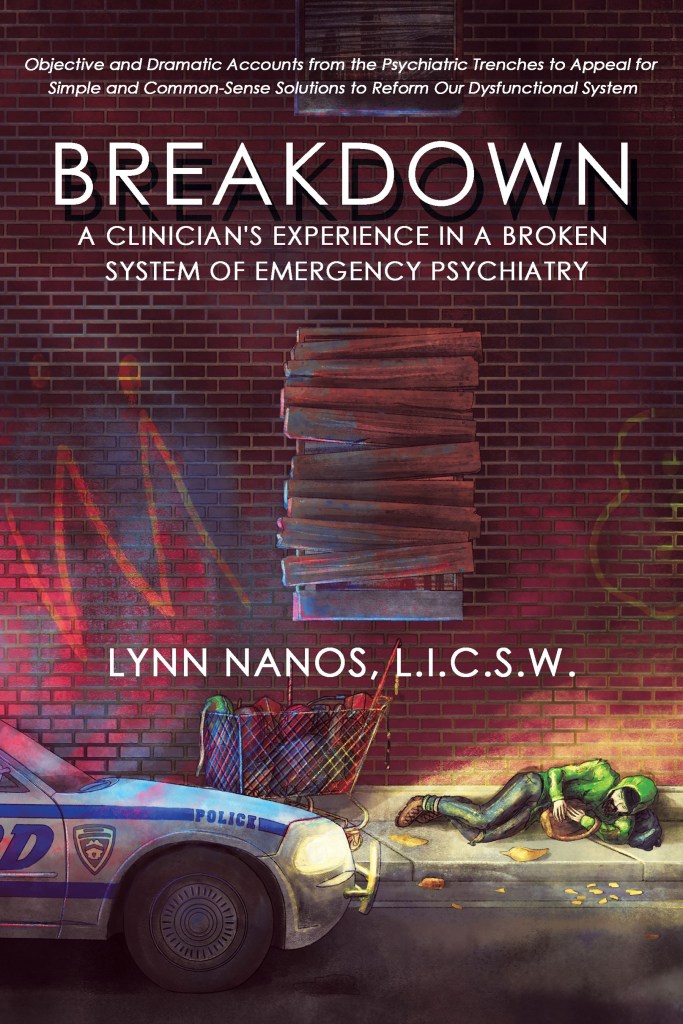
I never considered myself a writer until literally just a couple of days immediately preceding the start of creating Breakdown. Rather I considered myself a full-time mobile emergency psychiatric social worker. As I struggled to shake off the sense that something was missing within me professionally, the idea of writing a book about my profession came to me suddenly. I completed an online writing course, researched the difference between traditional publishing and self-publishing, purchased writing software, learned how to cite research, and began researching marketing techniques for books. I felt intrinsically rewarded upon completion of every major milestone. Sure there were obstacles to overcome, such as when the interior formatting company sent me a 20-page sample ridden with mistakes they refused to fix. And when my requests for testimonials to publish at the beginning of Breakdown were ignored. And when the first illustrator I hired plagiarized her work before I quickly fired and didn’t pay her. Writing a book takes intense commitment to the finished product. The recognition I’ve received from people has been priceless.
2) What inspired you to write your book?
I had done mental health advocacy work on a national scale for years before beginning to work on Breakdown and was very inspired by advocates’ tragic stories. Their stories motivated me to become a better social worker. I increasingly realized that there is no opportunity to influence legislators to change the system in the clinical setting. I didn’t feel that my employment was enough to make a difference in the world. Certain clinical cases were at the forefront of my memory because they were especially dramatic and shocking. All of a sudden it dawned on me that the world has to know these stories. Very few people are aware of the population I help and what they struggle with. Breakdown aims to close the gap between clinical and legislative settings.
Breakdown Nanos
3) What theme or message do you hope readers will take away from your book?
The most common reason that approximately half of people with schizophrenia are unable to initiate treatment independently or adhere to treatment is anosognosia. This means they lack awareness of being ill. Anosognosia is a key factor contributing to the need for involuntary treatment. When schizophrenia goes untreated, the consequences can be deadly. I’ve detailed high profile cases based on media reports and my interviews with family members. These cases have involved people getting killed due to untreated mental illness. This statement is bound to make many people uncomfortable for fear of stigmatizing mental illness by suggesting that people with mental illness are violent. The majority of people with mental illness are not violent. Yet a small subset of the population with untreated serious mental illness, especially involving psychosis, is more violent than the general population. Truth does not enhance stigma. I make a strong case in favor of involuntary outpatient treatment, otherwise known as Assisted Outpatient Treatment. Just three states – Massachusetts, Connecticut, and Maryland – do not allow this while all other states and Washington, D.C. allow this life-saving treatment. Not coincidentally, Massachusetts has a very strong antipsychiatry movement. Groups promoting the belief that mental illness doesn’t exist are funded by the government and supported by the National Alliance on Mental Illness. This is wrong.
4) Your novel was expertly crafted and showcased just how expertly researched and utilized the statistics were for the mental health care profession and mental health stats overall in our nation. Based on your research, what was one statistic that shocked you or would shock the average reader who is unaware of the problems facing the mental health profession or those suffering with mental health struggles?
The extent of malingering on inpatient and emergency settings is astronomical. According to a study, 12% of those admitted for emergency psychiatric care lied about their symptoms to get admitted to inpatient. The reasons for malingering vary. Malingerers drain health care resources and literally take away precious and limited inpatient bed space from those who truly need it.
5) What social media site has been the most helpful in developing your readership?
Facebook.
6) What advice would you give to aspiring or just starting authors or anyone working in your field of study out there?
Please read Breakdown to learn from example or learn about emergency psychiatry.
7) What does the future hold in store for you? Any new books/projects/studies on the horizon?
I am still working as a full-time mobile emergency psychiatric social worker. I will not write another book, though plan on resuming blogging about my profession in the next few months.
When it comes to therapy, there is no better site to find relationship advice from a licensed therapist than Regain. Click the link https://www.regain.us/advice/therapist/ to learn more!
About the Author
Lynn Nanos is a Licensed Independent Clinical Social Worker in her twelfth year as a full-time mobile emergency psychiatric clinician in Massachusetts. After graduating from Columbia University with a Master of Science in Social Work, she worked as an inpatient psychiatric social worker for approximately seven years. She is an active member of the National Shattering Silence Coalition that advocates for the seriously mentally ill population. She serves on its Interdepartmental Serious Mental Illness Coordinating Committee committee and co-chairs its Blog committee.
1) Tell us a little bit about yourself. How did you get into writing?
I’ve always loved books and stories, and like many people who love these things, I always wondered if I had it in me to be a writer. And so I started writing in my late teens, working on short fiction and poetry but never taking it very seriously. One day, I just stopped. Almost a decade later – having moved back to my old hometown in the bush, at the tail end of a ten-year drought – I had the idea for my first book. It seemed to come from nowhere, and I hadn’t even considered returning to writing. But the idea burned within me, so I decided to take writing seriously. After all, no one else was going to bring this idea to life.
I returned to university, took a bunch of writing classes, and eventually undertook a PhD that involved writing both a novel and a piece of literary criticism. In effect, I took the small-talent I already possessed, and the passion I felt, and nurtured them and learned how to make them grow, and practised and practised and practised until I understood what discipline meant. And then one day, while working on my second book just for the fun of it, I realised that I’d become a writer.
2) What inspired you to write your book?
I’ve always been a voracious reader, and sometimes an obsessive one, and giant monster fiction was one such obsession that consumed me around the time I completed my first book – I’ve also always been a fan of giant monsters, which I’ll get to shortly.
Gripped by this obsession, I devoured whatever giant monsters fiction I could find, looking for something that took giant monsters seriously, and something that was more than just capital-A action or zany in a post-modern way. But nothing really scratched the itch I’d developed. And so, looking for a new writing project that I figured should be distinctly different from my first book, I settled on the serious work of giant monster fiction that I had been craving.
In other words, I decided to write the book that I wanted to read. Isn’t that what an author does?
3) What theme or message do you hope readers will take away from your book?
My real hope with We Call It Monster is that people might start to see that life will go on, and that hope perseveres. It’s just that life in the future – life after we’ve faced the earth-shaking forces of climate change – won’t be the same as it is now. We’re a persistent, determined, ingenious and tenacious species, and I firmly believe that we’ll still be around once it’s all over. As far smarter people that me have said: It’s not really the end of the world, just the end of the world as we know it.
This is the lens through which I hope people interpret the various beasts and kaiju of We Call It Monster. I hope people see them as forces almost beyond comprehension, and from which is there no real escape or ability to defeat. The only real solution lies in accommodation; only by changing the way we are now, will what’s to come be that little bit brighter. And to do so, we must remember that the things that will be most important are those that have always been the most important: Community and compassion, love and family, kindness and togetherness, hope and faith.
4) What drew you into this particular genre?
I’ve always been fascinated by giant monsters. At first, as a kid, it was a childish fascination with things being smashed. After all, every little kid has thrown a tantrum, broken something and then experienced relief at the wordless release this brings. Giant monsters flattening cities for no apparent reason readily reflects our own difficulties in articulating and making sense of our emotions at a young age. As well, giant monsters conjured a feeling of awe and mystery, in much the same way dinosaurs did – show me a kid who’s never gone through a ‘dinosaur’ phase’ and I’ll eat my hat.
But beginning in my teenage years and continuing on into the present day, I’ve loved the metaphorical potential inherent to giant monsters, and their ability to ‘stand in’ for so many incomprehensible problems that seem beyond our control. Nuclear war, environment degradation, international terrorism, industrial pollution, climate change, the staggering number of displaced people around the world – giant monsters can represent them all, and more.
And so, as I mentioned earlier, when I was looking for a new writing project that would be distinctly different from my first book, I settled on revisiting this fascination.
5) If you could sit down with any character in your book, what would you ask them and why?
Owing to its structure, there are at least two-dozen featured characters in We Call It Monster, and so choosing to sit down and talk to just one of them is tricky. Instead, if I could, I would sit down with Sue Fleming from the first chapter, and Melaarny from the final chapter, and encourage them to talk to each other, in the hope that what they have in common outweighs that which distinguishes them.
Here things get a little dicey, as I don’t want to be so gauche as to unleash any spoilers. But I will say that despite the years that separate them, Sue and Melaarny are really the same and are inextricably linked, and are just like all us. They live their lives, making do as best they can; they have friends and families, hopes and dreams, fears and anxieties.
And so I would like to sit down with Sue and Melaarny in the hope that they realise this, and that we could all share in the comfort of this realisation. After all, isn’t that the point? No matter who we are – or what or when – in the end we’re just like them: We’re living our lives.
6) What advice would you give to aspiring or just starting authors out there?
There’s so much advice for aspiring authors out there, much of it contradictory, so I’ll share something that works for me.
If you want to write, you need to have some understanding of the science and art behind it, and have some small talent. After that, all you have to do is keep at it – like all creative arts, writing is something you need to practise. By writing and writing and writing – and keeping your chin up as you wade through it – you’ll eventually get there.
But remember, there are no real rules when it comes to writing – what works for some doesn’t work for others. Finding your own way is what’s important.
7) What does the future hold in store for you? Any new books/projects on the horizon?
If I’m not careful, I end up with too many different projects on the go at the same time. And so aside from my semi-regular pieces of science fiction criticism and the occasional piece of short fiction, I’m trying to be disciplined about focussing on my third book – a piece of metafictional science fiction that’s a bit “lighter” than the rest of my work – rather than get lost in daydreams about the book after it, or the book after that.
With a bit of luck and perspiration, it’ll be done by Christmas. Won’t that be a nice gift to myself?
Lachlan Walter is a writer, science-fiction critic and nursery-hand (the garden kind, not the baby kind), and is the author of two books: the deeply Australian post-apocalyptic tale The Rain Never Came, and the giant-monster story-cycle We Call It Monster. He also writes science fiction criticism for Aurealis magazine and reviews for the independent ‘weird music’ website Cyclic Defrost, his short fiction can be found floating around online, and he has completed a PhD that critically and creatively explored the relationship between Australian post-apocalyptic fiction and Australian notions of national identity.
He loves all things music-related, the Australian environment, overlooked genres and playing in the garden. He hopes that you’re having a nice day.
AN EXTRACT
The old man shuffled out to the balcony, dusted off an outdoor chair and
then made himself comfortable. The sky was a shade of blue that painters
only dream about; it was a beautiful sight. The old man drank it in,
leaning back in his chair. He sipped at his coffee and smoked a cigarette.
He was happy to wait as long as was necessary – he had all the time in
the world and he wasn’t going anywhere.
The monster finally appeared, a blurry smudge in the distance.
Slowly, but not as slowly as he would have thought, it grew both
closer and more distinct. The old man laughed out loud; it looked like
nothing more than a child’s drawing of something that might have been a
lobster or might have been a spider or might have been both, propped up
on flagpole-like legs that supported a wetly-shining carapace, a beaked
head, and a tail as long as a bus.
It was enormous and ridiculous in equal measure. The old man was
surprised to find that it failed to frighten him.
It drew closer to the city. It stopped suddenly and bit a great chunk
out of a stately old tree lining a boulevard. Chewing slowly and
methodically, it worked its way through the mass of wood and foliage
before throwing its head back and opening its mouth wide. Despite his
deafness, the old man felt the monster’s keening in his bones and in the
pit of his stomach.
He pulled his hearing aid from his pocket, turned it on then slipped it
in place.
The beast’s cry was low and mournful, more a melancholy bellow
than a ferocious roar. Thankfully, the klaxon-blare of the evacuation
alarms had stopped. The monster cried out again and it shook the old
man, both literally and metaphorically. The beast shifted its legs,
presumably adjusting its weight, and destroyed an office building in the
process.
Almost comically, it looked down at the destruction it had wrought
and seemed to shake its head.
It looked back up and cried out a third time, and then started walking
again. It seemed to meet the old man’s eye. Without breaking its gaze, the
old man took another sip of coffee before lighting another cigarette.
Slowly-slowly-slowly, the monster drew closer. You could almost see
a smile on the old man’s face.
A Q&A WITH THE AUTHOR
What is it about giant monsters that appeals to you?
Initially, it was a childish fascination with things being smashed. Let’s face it: Every little kid has thrown a tantrum for reasons they can’t explain, broken something and then experienced relief at the wordless release this brings. A giant monster barging through a city for no fathomable reason can reflect our own difficulties in articulating and making sense of our emotions at that age.
This fascination soon turned to awe and wonder at their scale and mystery, a reflection of the feelings inspired in me by my discovery of dinosaurs and cryptozoology (the study of creatures such as the Loch Ness Monster, Bigfoot, Yetis and the like). My love of dinosaurs is easy to explain – show me a kid who hasn’t at some point gone through a ‘dinosaur’ phase’ and I’ll eat my hat – while my love of cryptozoology was inspired by a book entitled Creatures From Elsewhere, which my parents gave me and which is actually still sitting on my bookshelf.
Beginning in my teenage years and continuing on into the present day, I’ve loved the metaphorical and symbolic potential that giant monsters possess, and the ways in which they can ‘stand in’ for so many different problems that seem beyond our control and almost impossible to deal with. Nuclear war, our negative impact on the environment, international terrorism, industrial pollution, climate change, the staggering number of displaced people around the world – giant monsters have represented them all.
Why did you decide to write about giant monsters?
As mentioned, I’ve always been fascinated by them. But I’ve also always been a voracious reader, and sometimes an obsessive one. I’ve been known to occasionally get my nerd on for a particular sub or micro-genre, looking up ‘similar title’ and ‘you might also like’ lists online when I should be doing better things with my time. But I still keep searching, because there can’t just be one example of Mystery Sub/Micro-genre X out there.
Giant monster fiction was one such obsession that carried me away, the timing of which coincided with the completion of my first book. I binged on literally anything I could find, looking for something that took giant monsters as seriously as some of the movies do, something that was more than just capital-A action. I found lots of fun, post-modern stuff out there – some of which could even be described as zany – but not much that approached giant monsters with a serious eye.
Looking for a new book to throw myself into writing – a book that I wanted to be distinctly different from my first book – I decided upon a piece of serious giant monster fiction. In other words, I decided to write the book that I wanted to read. Isn’t that what an author does?
Do you need to be a fan of giant monsters to appreciate We Call It Monster?
Nope, but it probably helps… In all seriousness, though – no, you don’t need to be a fan. My aim with We Call It Monster wasn’t only to write a serious piece of giant monster fiction because giant monsters have, historically, rarely been written about in such a way. Instead, I also wanted to write a piece of speculative fiction that does what all good speculative fiction should: Use the speculative element within to make us look at ourselves and our place in the world with fresh eyes.
Despite its title, We Call It Monster is more concerned with people than monsters. It isn’t a ‘wham-bam, shoot-em-up’ but instead a serious look at how we might react to forces beyond our control, and to forces that illuminate the precariousness of our position as world-conquerors sitting atop the food chain. And ultimately, it’s the story of what really matters: community and compassion, love and family and friendship, hope and faith. Anyone that appreciates such people-centric stories should find something within We Call It Monster that they can enjoy.
Why did you decide to write We Call It Monster as a story-cycle/novel-in-stories?
To me, one of reading’s biggest attractions has always been in my sense of engagement with the world being built on the page (a process even more absorbing when reading science fiction and speculative fiction). I think this enjoyment of engagement applies to most people. We all ‘see’ things in written worlds that the author didn’t actually write, even at the most mundane level: we populate a footpath with pedestrians, a street with cars.
A story-cycle/novel-in-stories can increase this sense of engagement to an incredibly strong degree, and their traditional structures allow writers to work magic. They can give us different perspectives on the same events, blocks of ‘missing time’ that exist between stories/chapters, events that are only alluded to rather than seen first-hand, a multiplicity of narrative “voices”, and so much more. But ‘missing time’ begs to be filled; events only alluded to tantalise us; we can’t know the truth when presented with different perspectives, or even if the truth exists. And so our minds do this work for us, conjuring up and giving life to parts of the story the writer has withheld.
The way story-cycles/novels-in-stories allow us to create the world right alongside the writer is a beautiful thing. However, the structures behind them aren’t just beautiful, but also incredibly practical. They can allow a story to cover a span of time longer than a regular person’s life; and help do away with the inevitable and repetitive ‘amazing coincidences’ that prop-up stories where one single character guides us through an incredible sequence of events covering an incredible amount of time; and enable a wider representation of voices from a wider variety of countries and cultures, without also falling back on the aforementioned trope of inevitable and repetitive ‘amazing coincidences’.
Tell us a little bit about yourself. How did you get into writing?
I had an unlikely path towards writing. I spent my career in technology. Working as an engineer for the Bell System (that dates me), striking out on my own to start a software company, then managing projects for IBM. But I had a knack for storytelling and writing is the outlet for those stories.
What inspired you to write your book?
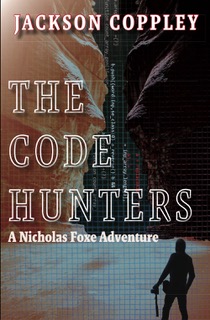
I always toy with ideas that upset our sense of reality. What would happen if we found a sophisticated code deep in the earth? We’ve come to accept a certain evolution of our development from primitive cave drawings, but wouldn’t such a new discovery turn history upside down?
What theme or message do you hope readers will take away from your book?
The Code Hunters, while meant to be a strait adventure thriller, does suggest that there may be other mysteries waiting to be discovered that might shake up what we know to be true. Don’t assume that history is fixed, not to be changed.
What drew you into this particular genre?
The Code Hunters is a technothriller. You only have to see what I said about my background to understand the ‘techno’ part. As far as the thriller, an adventure like that of Indiana Jones is just plain fun.
If you could sit down with any character in your book, what would you ask him or her and why?
Most readers have favorite characters other than the title character, Nicholas Foxe, but Nick’s my guy. I would like to meet Nick in a bar and talk about the history of the world over a round or two of drinks.
What social media site has been the most helpful in developing your readership?
Facebook is number one since I have a page there where I post information about my books and direct people to my blog (www.JacksonCoppley.com/blog). On my blog, I write about, among other things, heroes and why we love them. I also have a large Twitter following and keep them entertained.
What advice would you give to aspiring or just starting authors out there?
Determine if you love to write. Don’t think about it much. Just do it. Don’t worry about creating perfect prose. You can fix it. You can improve it over time. But you cannot fix or improve what’s not been written.
What does the future hold in store for you? Any new books/projects on the horizon?
I have much of the second Nicholas Foxe adventure written. I’m spending a few weeks in Italy and along the Dalmatian Coast getting the locations right. I’m hyped about the book and I have readers of The Code Hunters asking for more. I aim to please.
Jackson Coppley, a consummate storyteller, illuminates in his writing what happens when technology intersects with human behavior and emotion. Coppley weaves his stories from a sophisticated knowledge of technology and an understanding of human behavior. Coppley’s resume includes a dynamic career with leading world communications and technology companies, and the launching of what the press called “a revolutionary software program” during the rise of personal computing. As a world traveler, Coppley developed an interest in and an understanding of cultural differences and nuances which play an important role in his stories. His YouTube video on the Hmong people of Vietnam, as an example of how he investigates other cultures, received thousands of hits. It is this sensitivity about human behavior combined with the understanding of the potential of technology that brings to his writing a glimpse of what is yet to come.
Tell us a little bit about yourself. How did you get into writing?
I’m a painter, an educator, a business owner, and a mom (among other things)! I’ve always loved writing poetry and prose, but as I seriously pursued the visual arts, I put my writing aside…or tried to. As much as I attempted to convince myself that I wasn’t a writer, I couldn’t ignore the drive. I finally gave in while I was pursuing my Master of Fine Arts degree and made writing a priority again. I realized I didn’t have to make such a drastic choice – I could chase all my varied dreams.
What inspired you to write your book?
Actually, this was a story I was carrying with me in one form or another since I was twelve years old. I had a wonderful English teacher in seventh grade who really encouraged journaling and creative writing, and this story had its earliest beginnings in a class writing prompt. It changed a lot along the way, discarding its original Tolkien-inspired backdrop and undead characters, and finding its way into a dystopian world with Angelic magic, but the main characters and overall plot emerged from this time in my adolescence.
What theme or message do you hope readers will take away from your book?
I hope readers enjoy the beautifully desolate imagery and the slightly twisted love story, but on a deeper level, I hope the underlying philosophy comes through – that the answers we are all looking for truly come from within.
What drew you into this particular genre?
I feel like this story doesn’t neatly fit into one genre, but I’ve always been excited by the different forms fantasy can take. In my paintings, I often play with abandoned imagery, so a dystopian setting was natural for me.
If you could sit down with any character in your book, what would you ask them and why?
The pirates would probably be the most fun to hang out with, but I think I could learn a lot from Asher Serafin. He’s one of the characters that is the least like me, but I strive to be as steady and unwavering as he is. He has seen the world before and after an apocalypse, he’s basked in the glow of the divine, he’s seen extreme good and evil (and the uncomfortable gray areas too), and he’s survived things that would have destroyed most. If I was having a difficult time and needed some perspective, he would be the one to go to.
What social media site has been the most helpful in developing your readership?
Goodreads and Facebook have been useful, and I’ve finally made an Instagram! Sometimes social media distracts me from writing, but I’m trying to stay connected.
What advice would you give to aspiring or just starting authors out there?
Write the story you want to read. There are times that I almost stopped myself, worrying about what others might think or concerned that the book wouldn’t be well received. But in the end, only you can write your story, and something written honestly is bound to resonate with someone else.
What does the future hold in store for you? Any new books/projects on the horizon?
I’m currently working on the sequel to Dominion of the Star – the second book of the Descendants of the Fallen series – tentatively titled Resurrection of the Hierophant. It takes place seven years later, and it finds some of the characters much changed. I’m also working on the audiobook for Dominion of the Star, which is already proving to be an adventure!
Angelica Clyman was raised on Catholicism and urban legends, fairy tales and 80s movies. Her love for fantasy books and poetry was put on hold while she pursued other passions, but she found her way back to words and stories after following the seemingly disparate paths of the visual arts, academia, yoga, martial arts, business, dance and magick. Angelica is an artist, educator, wife, and mother. “Dominion of the Star” is her first novel.
1) Tell us a little bit about yourself. How did you get into writing?
I guess you could call me a late bloomer. I didn’t write my first book until I was 69, which was a memoir of my brief teaching career, which began at age 65 . My degree is in chemistry, and after graduating and receiving a ROTC commission, I spent two years in the Army Chemical Corps. My final assignment was as an exec officer in a technical intelligence detachment where we analyzed potential enemy capabilities in chemical, biological and nuclear warfare. For most of my tenure, I was stationed at Fort McClellan Alabama where I met my wife, who is from Anniston. After discharge, I worked in various facets of the chemical industry for the next forty years first in technical service, and eventually Southeast Regional Sales Manager until an unplanned early retirement when I was 63. For the next couple of years I was a consultant; and then I decided to try teaching. When my wife suffered a stroke in 2008, I then entered my dual career of caregiver and writer.
2) What inspired you to write your book?
I have been a political junkie since childhood. I’m active on FaceBook and most of my commentary involves politics. When Trump was elected, I just felt compelled to write some type of critique.
3) What theme or message do you hope readers will take away from your book?
I see similarities to the rise of Hitler and also parallels with George Orwell’s 1984. If not for his cult, we could probably dismiss the man, since after all, he’s in his seventies and won’t be around forever. But, unfortunately, I think the fascist movement that he has inspired will be around long after he departs.
4) What drew you into this particular genre?
In my mind, one couldn’t find a more suitable character for a parody or a satire. The fact that he contradicts himself continually is comical itself; but that his followers do the same thing makes it outrageously so. I’ve pointed out that it would be disingenuous to be against everything he says or does, since he is on both sides of most issues from time to time. .
5) As this book deals primarily with Donald Trump and his presidency, if you had the opportunity to ask him a question or confront him about one of the lies he told that you highlight in your book, what would it be and why?
“Mr. President, you have been quoted as saying ‘ Promises are like predictions ; they might or might not come true.’” If you don’t believe in your promises; why then should anyone else?
6) What social media site has been the most helpful in developing your readership?
Facebook by far.
7) What advice would you give to aspiring or just starting authors out there?
Ask yourself first why you want to write a book. If it’s to be a legacy or strictly educational. I would encourage you to go ahead. If, on the other hand, it’s to make a lot of money; I’m sorry to say that you are probably in for a big disappointment. Unless you are well known or have something really unique to say; the chances of you’re making it big are very slim. There are just too many books out there competing for market share. If I haven’t dissuaded you; then at least think about what might attract a lot of interest. Who are your prospective audience and why should they select your book over all the others in the same genre or about a given subject?
8) What does the future hold in store for you? Any new books/projects on the horizon?
As stated above, I am in a dual career of caregiver to my wife and writer. My first and most important responsibility is the former. As time permits, I will continue to write. I have written two short stories in the genre of Rod Serling’s “Twilight Zone”. So far, I have not come up with any more. If any of your readers would like to contribute to an anthology for a nominal negotiated fee, they can reach me at themoderatelibertarian@gmail.com
. I’m also early into “”A Debate with an Atheist. It’s too early to say if I will finish it. And, then there may be some other idea that strikes my fancy and takes me in a new totally unexpected direction.
About the Author
I have been fascinated by science since age five or six, when I got a telescope for a birthday. At that point I was going to be an astronomer, but that changed when I got my first chemistry set at about ten.
B.A. Chemistry Indiana University 1961.
First lieutenant Army Chemical Corps 1963. Last assignment – Executive officer technical intelligence detachment.
Retired in late 2002 after a successful career with a number of chemical companies including one that I started and a second that I co-founded in 1974 for recycling and disposal of waste chemicals.
After retirement became a consultant and then a teacher.
Now in my fourth career as a writer.
My first book was a memoir of a brief teaching career that I began when I was 66. Title is “Teacher’s Gotta Dance”, available presently only on Kindle. Second book was a rebuttal to Al Gore’s “An Inconvenient Truth”, titled “A Really Inconvenient Truth-The Case Against the Theory of Anthropogenic Global Warming”. My latest is a novel, titled “Secession- A Republic Reborn”.
1) Tell us a little bit about yourself. How did you get into writing?
I’m originally from Slovakia but live in the UK since 2005 with two year pause 2010-2012, when I bounced between the US and Slovakia.
After my parents divorced, my dad stayed in the Slovakia while my Mom went to live with me in the UK for few Years and then with my sister that is living in the US since 2004 to help her with household. She stayed there ever since with occasional trips to visit me or her sister in the Slovakia.
So now I do have 3 homes really. At hearth, I’m still Slovakian and even though I live in the UK for a long time now, I never applied to be UK citizen, still remaining Slovakian. On the other hand, I do go every second-ish year to visit my sister and mom that live in Las Vegas for my holidays and still plan to move in the future into the US if possible. But truthfully, since I have been in the UK for all of my adult life now, UK feels like home the most. I’m very glad and happy that I had the opportunity to be part, live, study and work in it, due to the UK being within the EU zone at the time (Slovakia is EU country). But now, since there is impending brexit, it could go all into a halt (since I’m still only Slovakian citizen). Currently, I’m about to finish my masters (in September) at Coventry University in Exercise and Sport Science, and will be looking at my options after.
To answer how I did get into writing…Well, it’s really down to a chance really. Ever since I have been growing up, I think I was very creative. There was always a story behind everything in my head. Listening to a music? I have seen in my head a story to it. An object of any kind? Instant story in my head. I have always seen it more like a movie.
Could visualize everything in my head and eventually, music became more prominent where there was always not just a story behind everything, but also a song that would reflect the emotion that I personally felt and fitted the narrative of the story in my head. The books are really a tribute to the Linkin Park music band songs to date. When I was a teenager still growing up, I started to imagine a story where I was the hero (what a surprise), or rather a superhero like a Batman. It started all with the “In the End” song from Linking Park that I heard possibly in the radio. Then I got their whole first album: The hybrid theory and that created a whole anthology of stories (of my superhero) in my head based on that. Needless to say, their follow-up albums didn’t disappoint, regardless of them being always different in the style of music, adding more and more stories in my head with each new song. The only band that I can honestly say, that I do enjoy an cherish every single song they had made. All of them are “hits” for me. But naturally, with me growing up, the stories in my head changed into something slightly more realistic (slightly I admit), that didn’t necessarily involve a super-hero. I always wanted to be in a movie production industry, but never really got a chance. Either way, I was getting (way) older, and I felt that the stories in my head are slowly fading, vanishing even. I just thought, I should preserve them for myself, if nobody else, as I thought they were pretty cool.
After Chester (LP singer) had passed away, it prompted me into action before it was too late. Although the whole 4 books stories are largely changed from the original one (about the second, more realistic hero). Mainly due to me either forgetting it, or that now I had to also connect it into logical order (one giant story made of pieces of my previous visions connected to the songs) that would include all of the LP’s songs. Also, because I tried to add controversy into it, things that would challenge the reader himself. As you know, in the books (or the one you did read) the characters express the way they think, to make it seem logical (or perhaps not). However, many times challenging if not controversial in their final decision and action. None of the characters are perfect, and more often contradictory rather than complimentary to each other. No-one is straight up good, or just plain bad with a perhaps exception on the truly evil (bad guys) side. Nothing is white, nor black. All is grey and the reader himself would be the judge to who is his “good” guy, the most reasonable, the most compassionate etc., no doubt different from reader to reader. Just like in real life.
We all have a bright and dark side. We all are liked, and certainly also disliked by someone else. It didn’t matter that we didn’t give them reason for it, or at least we’re not aware of it, it’s just the way life works. People are different, unique, sometimes with contradicting values, simply can’t please everyone. I’m glad that you liked my book, but I’m sure that for some others, the content may be too graphic, too controversial, too violent or simply not good enough quality. I accept that, but to finally hopefully and definitively answer your question how I did start my writing: I wanted to preserve what I still had in my head whilst giving a tribute to the People who perhaps influenced it the most – the Linking Park. My only worry was that since I am not a writer really, and I’m certain that I will not write for a long time after I finish the last 4th book (never say never), the books would not by a tribute by far, rather lacking the quality of content, uniqueness and excellence of the LP’s genius. Thank you for bringing me peace now, that I know at least ONE person did like it and appreciated it for what it is: an amateur work.
2) What inspired you to write your book?
Oh, I accidentally answered that I guess. Well, to preserve what little of the stories I still had in my head, to give back a tribute to the people that largely influenced me, and certainly, it was also fun and satisfying to actually use and to present my creativity, to make it “come to life”. Before, no-one really knew. Nor my family or friends, what I could be capable of in terms of creativity. To them, my previous attempts to get into let’s call it “entertainment” industry, was just that – a talk with no real evidence of skill.
There is but one: one I did when I was still only 18y old back in 2004 as a diploma project.
The character in the video with the yellow eyes is the original “superhero” me, the rest my closest friends at that time. Largely influenced by largely unknown “Guyver: the dark hero” movie. I hope that you did recognize the aliens, as of the actual alien’s franchise. Hope you enjoy that too.
Damn, I wish I had a chance to do what I would love to do, to be part of a movie productions.
3) What theme or message do you hope readers will take away from your book?
I hope it will force the reader to think more. To try to understand other people actions and beliefs, not disregarding them instantly based purely on personal feelings, or opposing view on topic.
Although, I had not explored the possibility to give a reason and a story behind the “primary” bad guys. I do believe that we are not born evil, or good for that matter. Nature and nurture are both influencing how we will develop. I didn’t need the need since the “main” character is controversial and “dark” enough on his own, but his way of thinking is explained. Again, not that the reader could agree or disagree with his actions, but to try to understand why. Especially if you account for the previous two books and the first one where Tomas is only 12 Years old at the very beginning. Reader could read and perhaps understand (or not) why he does what he does, or how he did end up at this point (end of book 3). It is really complex.
Again, I hope it will make the reader be more emphatic (or critical) of everything around, and himself. Therefore, dare I say it?: grew as a person, taking away whatever he finds of value in the book, if any. At the very least, I hope he will enjoy reading it.
4) What drew you into this particular genre?
Oh boy, my sick head? This question really brought smile on my face, thank you.
Well, you know it is quite graphic in the action part, and “heavy” psychologically.
I am a person who hides his emotions (just like the main character), but is rich in experiencing them. The first book is largely reflecting this, as it is almost the real story of me until the main character starts street fights and then kills a person, of course. Many things have been changed for the purpose of a story (I moved into the UK not China for instance), but almost half of the book is the actual biography of me with added controversy in regards of “viewing” women, so that it fits the dark, imperfect character and the lyrics of the songs of course. But to answer the question: I find it richer in emotions (especially if you listen to the dedicated song after), therefore better experience. Personally.
5) If you could sit down with any character in your book, what would you ask them and why?
Violetta, I would ask her to “fix me”, please. But seriously, I would ask Peter to get me into the movie industry, I’m sure he could hack an account or two, or had straight up connections somewhere that would get me the ONE shot at “it”, that I always dreamed about.
6) What social media site has been the most helpful in developing your readership?
I have virtually no exposure. You are the very first person showing any interest in my work so I must declare, that it will be your blog. Thank you! I do have FB, Patreon, Youtube, Twitter, Goodreads, Reddit and something called Wattpad, I even tried all kind of LP’s fan forums, but none really exposed my work to the world. Partly, due to me not spending all the time, attention and effort I possibly could have on it, I think and hope.
I did have to work and study (full time) at the same time for the last couple of years now, and I do try to live quite healthy lifestyle (gym, dieting), as I am Fitness specialist after all with many years of Personal training and healthy lifestyle consultancy experience, but this takes away a lot of time as well. The little “spare” free time that I have, I tend to use on relaxing (games, movies), but I still managed to produce 3 books along all of this going on in the last two Years. Admittingly, each book is almost twice in the length of the previous one. Mostly because I really wanted to start at the second that was just naturally shorter than the 3rd , but I didn’t want to start it like the star wars: with the 4th movie (story) first, then come back to explain why and how the hero got into that kind of situation, so I was very conservative with the first book.
7) What advice would you give to aspiring or just starting authors out there?
It is very hard to get exposure in this business if you are just starting up, or have no social media presence at all. But first you have to have a “worthy product”, before you should worry about that. Now, I’m not saying not to try to build audience (via social media optimally) before your book is actually finished, but If you have none yet, there is no point worrying if you’re not successful at gaining the audience. That is, if this is not your living of course. I mean, I’m not the right person to ask anyway I guess. I’m just amateur who doesn’t even plan to continue to write once the series are finished, and I never really cared that much about the monetary side of it. It would be nice if it could produce me some income, and it would be very much welcomed right now in my life as well, but it was never the purpose of it, nor did I count on it. In fact, I did at least spent money on a professional looking book covers without any returns as of yet. Don’t matter, I’m very happy with them and grateful to the talented artist who drew them. If I could, I buy illustrations from him as well, a professional editor, hire narrator for audio book and more. My patreon is about animating the books to life, perhaps one day I could afford it.
But back to the question: I think It would be wise to make sure that the book that you’re working on has something “to stand out” in it, something that would guarantee that your only real problem is the lack of exposure, not the quality.
8) What does the future hold in store for you? Any new books/projects on the horizon?
As mentioned before, after I finish (hopefully still this year) the last 4th book of the series, I don’t plan to write anymore. I do plan to invest into illustrations and an editor as soon as my finances would allow it. In most likely distant future after that, I am planning to animate the books. I feel that if this would be an animated series on the YouTube, it would be a lot more successful in terms of exposure than currently in the form of a books. It would also make me very happy that I did in fact (technically) made it into the entertainment industry after all. But that’s getting ahead of myself anyway. Just because you liked my book (one of them), it doesn’t necessarily mean other people will, therefore exposure isn’t all. You brought me hope that it may be “worth something” and thank you very much for that Anthony, so that I will continue best to my ability to try to get more exposure. Who knows, it may actually help somebody to “grew” as a person, or just to enjoy reading it, or hopefully bring even more fans for the LP band. They sure deserve it. Although, they’re massive in the US at minimum, and certainly don’t need my help to gain them more fans, any new fan that will find his way to them thanks to the tribute books would be also a massive success for me. Anybody wants to show support, please like my FB page: Security Check Required
Tell us a little about yourself. How did you get into writing?
I’d always entertained the idea of writing, but the sage, old advice about ‘writing what you know’ left me pondering what to write about. I made a few failed attempts many years ago, but always abandoned the projects when I realized the effort was going to be lacking.
What inspired you to write your book?
I’ve been a department store/mall ‘Santa’ since 1976, and the many stories and explanations I employed to answer children’s queries about Santa, Mrs. Claus, the North Pole, the elves, reindeer, Toy Shop, etc., had left me with a wealth of information to work with. Going back to what I wrote for Question #1, I now had something I knew and understood to write about. I created the reindeer character of Fawn to help facilitate combining all of my tales into a cohesive story.
What theme or message do you hope readers will take away from your book?
The ‘Fawn’ stories have a strong focus on friendship and family ties. Love, loyalty, and being able to depend upon those you hold dear is a major theme running throughout the books. In addition to that, I think keeping the joy and wonder of all things Christmas alive, no matter one’s age, is also an underlying theme.
What drew you into this particular genre?
I’m an English and drama teacher. I truly enjoy putting smiles on children’s faces, and seeing their young eyes crinkle at the corners in amusement. Writing the trilogy, The Adventures of Fawn, I hoped to bring that same feeling to anyone and everyone reading the books.
What social media site has been most helpful in developing your readership?
I’m currently residing in Asia, and don’t use social media as much as my contemporaries apparently do. I’ve dabbled with book blog tours, Facebook groups, and various book review sites via the Internet. I can’t actually say which of these has proved most fruitful though.
What advice would you give to aspiring or just starting out authors out there?
First off, I’d suggest if any writer is thinking writing a book is simply a matter of quickly jotting some things down and making a pile of money—they’re dead wrong! People aren’t stupid, and they expect a certain degree of quality in the finished product, and if they don’t get it, bad reviews will understandably follow. Secondly, no writer’s work is flawless. Family and friends will oft-times tell an aspiring author their work is great, and offer little or no critical examination, or negative commentary. The author certainly likes to hear how good their work is…but it’s also very important to ascertain where the work falls short, where the plot holes are, where things could be improved upon.
What does the future hold in store for you? Any new books or projects on the horizon?
At present, The Adventures of Fawn is a trilogy. I wrote a fourth book, but wasn’t entirely pleased with it. It’s sitting in a file, waiting for me to return to it one day and make it a suitable companion to the other three books. Other than that, I recently ventured into more ‘adult fare’ and co-authored a thriller with a writer living in Cancun, Mexico. We’re currently looking for a publisher for it.
About the Author
Through almost 40 years as a Santa Claus, Al E. Boy developed quite a repertoire of tales to explain and answer the many questions children ask about Santa, the North Pole, his reindeer, and his friends, the elves.
It was this collection of tales which prompted him to begin writing The Adventures of Fawn. Through the young daughter of legendary reindeer Comet and Vixen, he’s been able to weave an exciting, colorful, imaginative world which will delight readers of all ages!
Mr. Boy not only hopes you enjoy these tales, but make reading them part of your Christmas traditions, as well.
Additional info: ‘Til the Last Snowflake Falls was awarded the Bronze Medal in Dan Poynter’s 2017 Global E-book Awards, is listed as ‘Recommended Reading’ with The US Review of Books, and was awarded an Honoree Medallion by indieB.R.A.G.. In addition, it has garnered a number of favorable reviews.
Hey everyone, Author Anthony Avina here. I’m honored today to be sharing with you this guest blog post from author Madeline Sharples, author of the recently reviewed book, Papa’s Shoes, in association with Women on Writing Tours. I hope you all will enjoy it and please make sure to comment on this post and share it as well. Enjoy everyone.
I didn’t think I had another book in me after I finished my novel, Papa’s Shoes. Writing that took a long time even though I didn’t work on it straight through all those nine years. But when I had finished the tenth revision, I felt my book writing days were over.
However, I started to get itchy to write something else when I started querying publishers – exactly what I did in 2010. I started my novel while I was querying publishers for my memoir, Leaving the Hall Light On.
I took one look in the mirror and realized from my aging face that I’m at that stage in my life when I have almost all of it to look back on. I just turned seventy-nine, and my mirror told me I looked it.
So I thought I could write a memoir from an old wise woman’s approach to turning eighty. I could write about the secrets of staying married to the same man for forty-nine years and living in the same house for forty years. Really where have all those years gone? And really that brings up another big question – how much time do my husband and I have left anyway, and what are we doing to prepare for our last years? Or better yet, how we’re handling our lives right now as we age – each at a different paces. Yes, I decided another memoir or even two are a real possibility. The options are endless: how we’re still working at surviving the loss of our son in 1999, what we eat, how we sleep, my health and exercise program, about our travels, and what do we do all day at our age.
Another thing that triggered my decision to write this new memoir is the many people my age who are sick or have died. Just yesterday I heard about the death of a wonderful work colleague and friend much younger than me who died of a massive heart attack. With those facts in mind I decided to bring aging healthy into the book. I am very fit for my age. I workout every day and eat healthy. Why couldn’t I write a memoir about aging healthy?
I hope readers will take a good look at themselves and what they are doing to live the rest of their lives successfully. I hope they will take my examples about what to do and what not to do as I age seriously. For example, I recently spent a few days with my cousin who is four years younger than I. She is out of shape and doesn’t eat very healthy. But while I was with her we took long, fast walks every day, and she’s still taking them even though I’m not with her. She says I was an inspiration to her. I hope to be an inspiration to all my readers.
I also have to contend with the hardest parts to write: 1) the lasting effects of our older son’s suicide death in 1999, 2) my married son and daughter-in-law’s decision to live a married life without children, and 3) some regrets about decisions I’ve made over the years. I know all of us have life experiences that are hard to write and talk about. We also have regrets. Hopefully my writing about these things will engage my readers in thinking how they’ve lived their own lives and what they can improve on for their futures.
So far, I’ve written the first draft to this brief outline:
PART ONE
What stage of life I am in right now
A little looking back – maybe incorporate my reunion experiences of seeing old classmates and being in the neighborhoods where I grew up
What I see when I look in the mirror
My daily routine
What I do to take care of myself
How much I like my privacy and alone time
My physical maladies
My emotional life
My depression and suicidal thoughts
I say I’m a writer, but what do I really write
My writing routine
My volunteer life: South Bay Cares and WriteGirl
My married life
How my son’s death affects my life now
What about no grandchildren – how has that affected my relationship with my son and daughter-in-law
How I spend my time
Friends and relatives – how much I back away
What I see for the future
What’s next on my bucket list
End of life directives
My beliefs or lack thereof of an afterlife, and my lack of a spiritual life
PART TWO
What advice I give to those heading my way
PART THREE
How I feel about turning eighty and repairing for my imminent
About the Book:
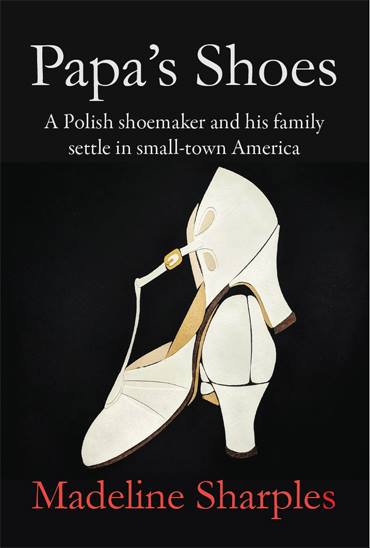
Papa’s Shoes, a work of fiction about immigration with a feminist and historical bent. At 99,968 words, Papa’s Shoesis a stand-alone novel with series potential.
Ira Schuman is determined to move his family out of their Polish shtetl to the hope and opportunities he’s heard about in America. But along the way he faces the death of three of his four sons, a wife who does not have the same aspirations as his, and the birth of a daughter, Ava, conceived to make up for the loss of his boys. Ava grows up to be smart, beautiful, and very independent.
Besides having a feisty relationship with her overly-protective mother, Ava falls for the college man who directs her high school senior class play. With the news that she wants to marry a non-Jewish man, Ira realizes that his plan to assimilate in the new world has backfired. Should the young couple marry, he must decide whether to banish his daughter from his family or welcome them with open arms. Even though he won’t attend their wedding, he makes her a pair a wedding shoes. In his mind, theshoes are simply a gift, not a peace offering.
· Print Length: 286 pages
· Publisher: Aberdeen Bay (April 27, 2019)
· Publication Date: April 27, 2019
· ASIN: B07R7MQ6CM
Praise:
“From an insightful storyteller, Papa’s Shoes, is a heartwarming story of courage and love. Author Madeline Sharples has created an epic journey with intriguing twists and surprises along the way. From days of old in Poland to cultural and economic realities in America, this is an awe-inspiring novel about families, generational history, and the incredible power of change. You truly won’t want to put it down!”
—D.A. Hickman, author of Ancients of the Earth: Poems of Time
“Author Madeline Sharples tells the intimate story of an American family, of immigration, tragedy, renewal, and love with grace and the delicate touch of a poet. There’s a raw kind of sweetness in this rich and epic saga.”
—David W. Berner, author of The Consequence of Stars and A Well-Respected Man
“An immigrant family’s braided history – its conflicts, losses, and secrets – come to life in Papa’s Shoes. With loving attention to detail, Madeline Sharples transports readers from a Polish shtetl to the Illinois town where Ira and Ruth settle, and shows us the intimate workings of their
marriage. This family’s triumphant journey to the American Midwest will inspire you long after
you’ve closed these pages.”
—Eleanor Vincent, author of Swimming with Maya: A Mother’s Story
A longer synopsis
On a cold and pouring night in Sokolow Poland, Ira Schuman carefully steps over the red mud puddles on the streets, sad, weary, and soaked. He dreads what he’ll find when he arrives at his two-room house in the Jewish section of the stetl. He envisions his mourning wife, Ruth, angry he wasn’t home when three of their four boys died during a flu epidemic.
As he enters the silence in what was once a home full of the loud voices and cries of little boys is deafening. However, he can’t wait to embrace Ruth, comfort her despite his own grief, and tell his surviving son about his love for America.
Ira’s goal is to become Americanized and bring what’s left of his family to a small town in Illinois, when he has enough money and an established business. Ruth doesn’t want to leave Poland and the graves of their three dead sons.
After their initial cold and difficult reunion, Ira keeps his promise to impregnate Ruth before he goes back to Illinois. Three years later he sends her the money to follow him to Illinois with their son age 10 and little girl, Ava, age three. Ruth agrees to leave Poland because of fears that the Russian army will recruit her son.
After a short stay in Chicago, the family moves to Danville IL, where Ira joins his brother in their shoe-making business. Though free of his long hair, beard and forelocks, and wearing modern clothes without the four-cornered yarmulke he threw into the Atlantic Ocean, Ira wants to bring a semblance of Orthodox Jewish life to his family and his new town. He creates a synagogue, hires a rabbi, and arranges the delivery of kosher meats. He also begins an affair with a chubby but curvy redheaded widow. Ruth, who smothers Ava and tries to keep her a little girl, has grown fatter and more unkempt, always wearing the same tight-fitting black dress she wore in Sokolow. She wants no part of Ira’s synagogue work.
Ruth keeps her hold on Ava, antagonizing her daughter. They argue continuously throughout Ava’s school years. Ava gets the lead in her senior high school play, and she and the director, a student at the local college, strike up a relationship – she tells her parents they are just friends when he picks her up to take her to school events.
Her brother, in law school in Chicago at nights and working in the textile business during the day, comes home and warns his parents that if they don’t move her away from this gentile, he will take her to Chicago himself. Ira agrees to let Ava go; Ruth does not. In the end her brother’s argument wins. Ava, ever respectful of her parents and out of her love for her brother, tells her director friend that she must leave. They are devastated but stay away from each other until the day before her departure.
In Chicago, Ava’s brother introduces her to a suitable man. He’s a bit of a milk toast, messy, and not very motivated in school or business, but he’s nice and attentive so she goes out with him for quite some time. Her rationale is that dating him will protect her from meeting someone she could actually fall for. She also experiences the modern ways of young women in the 1920s. She goes to dance halls and speakeasies, speaks flap talk, works as a seamstress, designs her own short and swingy dresses, and lives freely away from her mother. Her suitor proposes, but Ava says, “What a pretty little ring,” instead of yes.
After continued pleas from her director friend and her still undying love for him, Ava returns to Danville as a mature and determined young woman. She withstands a blow-up with her parents when she tells them she wants to marry her gentile friend. Ira throws her out. That night he goes to the synagogue to say the mourner’s kadish for his daughter but decides to break up with the red-headed widow and mourn his relationship with her instead. To assuage his guilt, he makes her a pair of shoes that she wears at her wedding.
While Ava is sad not to have her family with her at her wedding, she is hopeful that her mother and father will come around. Her biggest fear is that she will never see her brother again, the man she loved and looked up to all her growing up years. However, she is happy with her decision to marry her love no matter how they feel.
About the Author
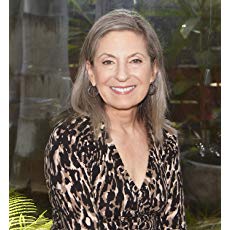
Madeline also co-authored Blue-Collar Women: Trailblazing Women Take on Men-Only Jobs (New Horizon Press, 1994), co-edited the poetry anthology, The Great American Poetry Show, Volumes 1, 2 and 3, and wrote the poems for two photography books, The Emerging Goddess and Intimacy (Paul Blieden, photographer). Her poems have also appeared online and in print magazines, e.g., in the 2016 Porter Gulch Review, Yellow Chair’s In the Words of Womyn 2016 anthology, Story Circle Network’s journals and anthologies, the Best of Poetry Salon 2013-2018, and the Vine Leaves Literary Journal: a Collection of Vignettes from Across the Globe, 2017. And her articles have appeared in the Huffington Post, Naturally Savvy, Aging Bodies, PsychAlive, Story Circle Network’s HerStories and One Woman’s Day blogs, and the Memoir Network blog. One of Madeline’s essays has also appeared in the My Gutsy Story Anthology by Sonia Marsh.
Madeline also co-edited Volumes 1 and 2 of The Great American Poetry Show, a poetry anthology, and wrote the poems for two books of photography, The Emerging Goddess and. Besides having many poems published in print and online magazines, writes regularly for Naturally Savvy, and occasionally for PsychAlive, Open to Hope,and Journeys Through Grief and The Huffington Post.
Madeline Sharples launches her tour of “Papa’s Shoes” with an insightful interview and giveaway at the Muffin!
June 4th @ Coffee with Lacey
The lovely Lacey reviews “Papa’s Shoes” by Madeline Sharples and shares her review with readers at Coffee with Lacey. This is a blog stop and review readers won’t want to miss!
Lisa Haselton interviews well known author and memoirist Madeline Sharples about her latest novel “Papa’s Shoes” – the story of a Polish shoemaker and his family as they settle in America. This insightful interview is one you won’t want to miss!
Beverley A. Baird shares her thoughts after reading the touching story of a Polish shoemaker and his family as they settle in America – “Papa’sShoes” by Madeline Sharples is a book that is sure to please readers!
Today’s guest author at Words from the Heart with Linda Neas is none other than well-known author and memoirist Madeline Sharples. Today, her guest post is titled “How I reinvented myself from a technical writer and editor to a creative writer – and at my
age.” Heart from Madeline and learn more about her latest novel “Papa’s Shoes”!
Last week, readers at Words from the Heart with Linda Neas read a guest post penned by Author Madeline Sharples and today, Linda will share her review of Madeline’s latest novel “Papa’s Shoes”. This is a blog stop you won’t want to bypass!
Fellow author and memoirist Linda Appleman Shapiro shares her review of “Papa’s Shoes” by Madeline Sharples. Don’t miss Linda’s insight into this touching story of one Polish shoemaker and his family as they move to America!
Nicole Pyles reviews the latest best selling novel “Papa’s Shoes” by Madeline Sharples – readers will delight to hear what Nicole thinks of this crowd pleasing story of one Polish shoemaker and his family!
Vicky Brinius reviews “Papa’s Shoes” by Madeline Sharples. Find out how she feels after reading this touching story of one Polish shoemaker and his family as they settle in America.
Fellow author Anthony Avina reviews “Papa’s Shoes” by Madeline Sharples – this is a touching story of one Polish shoemaker and his family as they settled in America.
Amanda of Amanda Diaries reviews Madeline Sharples latest novel “Papa’s Shoes” – read Amanda’s review and add this lovely story to your TBR pile today!
Readers at Anthony Avina’s blog will delight with today’s guest post and author interview with Madeline Sharples – learn more about her and her latest work!
Lisa Buske shares her review of “Papa’s Shoes” – the latest novel by Madeline Sharples and a touching story of one Polish shoemaker and his family as they settle in America.
August 12th @ Kathleen Pooler’s Memoir Writer’s Journey
Readers and writers alike will want to stop by Memoir Writer’s Journey to hear from Kathleen Pooler and friend / fellow author Madeline Sharples as they discuss Madeline’s latest book “Papa’s Shoes”.