I received a free copy of this book in exchange for a fair and honest review. All opinions are my own.
A larger than life adventure through space brings one group of explorers to an uncharted world, and the untold dangers it holds in author William R. Harris’s novel “Sworld: The Chronicles of Malick”. Here is the synopsis.
The Synopsis
Forced to flee his homeworld, Oberus, the genetically re-engineered Malick leads a scientific expedition to the far reaches of the solar system. A distress call from an alien ship with a mysterious cargo leaves the team marooned on the arcane planet Sworld. Plunged into a quest for answers that ultimately leads them to their genesis, Malick and the crew must solve the enigmas of Sworld or perish.
The Review
This was a truly masterful space exploration/sci-fi novel. The truly original storytelling by the author was fantastic, as was the incredible detail that went into the various creatures, technologies and mythologies built upon during the story as the explorers ventured further and further into the world of Sworld.
What really shined through however was the character development in this novel. Not only was the protagonist Malick an ever evolving hero and leader in the story, but each chapter introduced new characters that allowed Malick to further expand the group’s exploration as they survive in this new and unfamiliar world. From the crew of the ship that began the journey with him to the new creatures who he either befriends or is forced to fight, and even the newcomer who begins to capture the hero’s heart, this novel is built upon character growth and helps the narrative flow smoothly during this expansive story.
This is a must read for any sci-fi fan out there. If you enjoy science fiction in all it’s glory, long and detailed stories of space exploration and new mythologies surrounding mysterious creatures, this is the novel for you. The true grabber though is the shocking ending that will leave readers breathless and eager for a sequel, as it leaves the protagonist in a shocking situation that you never saw coming. If you haven’t yet, be sure to grab your copy of William R. Harris’s novel “Sworld: The Chronicles of Malick” by either pre-ordering it or grabbing your own copy on May 3rd, 2019.
I received a free copy of this book in exchange for a fair and honest review. All opinions are my own.
A mysterious attack leads to a world changing event in author Lachlan Walter’s We Call It Monster. Here is the synopsis.
The Synopsis
One ordinary day, an enormous creature dragged itself out of the ocean and laid waste to a city. In the months and years that followed, more and more creatures appeared, until not a single country remained untouched. At first, people tried to fight them. In the end, all they could do was try and stay alive.
We Call It Monster is a story of forces beyond our control, of immense and impossible creatures that make plain how small we really are. It is the story of our fight for survival and our discovery of that which truly matters: community and compassion, love and family, hope and faith.
The Review
This is by far one of the most original and “human” stories set in a world filled with larger than life monsters. Bringing the large scale destruction of any Godzilla or King Kong style film and blending it in with the character development and connectivity of a film like Crash, the novel explores a sudden war with mysterious monsters that threatens to end the world as we know it. The author changed the formula up however by focusing not on the monster’s origins or larger than life battles, but instead the relationships and struggles of those affected by these events.
Each section of the novel focuses on specific years in this “war”, from the creatures emergence across the world to the economic struggles and loss of life felt by the people around the world. Each chapter focuses on a character introduced in the previous chapter, allowing readers to see how connected we all are to one another, and allowing us to see how the monster’s arrival affects everyone differently. The emotional impact of these creature’s destruction and the slow decline the planet faces brings a new focus on the monster genre, and creates a truly impactful story like no other.
The Verdict
A true must read novel of 2019, author Lachlan Walter has exceeded the expectations of the genre and created a narrative that is truly original. Exploring the affects the monsters have on our society, on the planet and the people left behind in their wake, the heart of this novel rests in it’s fantastic character development, and will leave readers on the edge of their seat as they witness the slow ride into the end of the world as we know it. If you haven’t yet, be sure to pick up your copy of We Call It Monster today!
Lachlan Walter is a writer, science-fiction critic and nursery-hand (the garden kind, not the baby kind), and is the author of two books: the deeply Australian post-apocalyptic tale The Rain Never Came, and the giant-monster story-cycle We Call It Monster. He also writes science fiction criticism for Aurealis magazine and reviews for the independent ‘weird music’ website Cyclic Defrost, his short fiction can be found floating around online, and he has completed a PhD that critically and creatively explored the relationship between Australian post-apocalyptic fiction and Australian notions of national identity.
He loves all things music-related, the Australian environment, overlooked genres and playing in the garden. He hopes that you’re having a nice day.
AN EXTRACT
The old man shuffled out to the balcony, dusted off an outdoor chair and
then made himself comfortable. The sky was a shade of blue that painters
only dream about; it was a beautiful sight. The old man drank it in,
leaning back in his chair. He sipped at his coffee and smoked a cigarette.
He was happy to wait as long as was necessary – he had all the time in
the world and he wasn’t going anywhere.
The monster finally appeared, a blurry smudge in the distance.
Slowly, but not as slowly as he would have thought, it grew both
closer and more distinct. The old man laughed out loud; it looked like
nothing more than a child’s drawing of something that might have been a
lobster or might have been a spider or might have been both, propped up
on flagpole-like legs that supported a wetly-shining carapace, a beaked
head, and a tail as long as a bus.
It was enormous and ridiculous in equal measure. The old man was
surprised to find that it failed to frighten him.
It drew closer to the city. It stopped suddenly and bit a great chunk
out of a stately old tree lining a boulevard. Chewing slowly and
methodically, it worked its way through the mass of wood and foliage
before throwing its head back and opening its mouth wide. Despite his
deafness, the old man felt the monster’s keening in his bones and in the
pit of his stomach.
He pulled his hearing aid from his pocket, turned it on then slipped it
in place.
The beast’s cry was low and mournful, more a melancholy bellow
than a ferocious roar. Thankfully, the klaxon-blare of the evacuation
alarms had stopped. The monster cried out again and it shook the old
man, both literally and metaphorically. The beast shifted its legs,
presumably adjusting its weight, and destroyed an office building in the
process.
Almost comically, it looked down at the destruction it had wrought
and seemed to shake its head.
It looked back up and cried out a third time, and then started walking
again. It seemed to meet the old man’s eye. Without breaking its gaze, the
old man took another sip of coffee before lighting another cigarette.
Slowly-slowly-slowly, the monster drew closer. You could almost see
a smile on the old man’s face.
A Q&A WITH THE AUTHOR
What is it about giant monsters that appeals to you?
Initially, it was a childish fascination with things being smashed. Let’s face it: Every little kid has thrown a tantrum for reasons they can’t explain, broken something and then experienced relief at the wordless release this brings. A giant monster barging through a city for no fathomable reason can reflect our own difficulties in articulating and making sense of our emotions at that age.
This fascination soon turned to awe and wonder at their scale and mystery, a reflection of the feelings inspired in me by my discovery of dinosaurs and cryptozoology (the study of creatures such as the Loch Ness Monster, Bigfoot, Yetis and the like). My love of dinosaurs is easy to explain – show me a kid who hasn’t at some point gone through a ‘dinosaur’ phase’ and I’ll eat my hat – while my love of cryptozoology was inspired by a book entitled Creatures From Elsewhere, which my parents gave me and which is actually still sitting on my bookshelf.
Beginning in my teenage years and continuing on into the present day, I’ve loved the metaphorical and symbolic potential that giant monsters possess, and the ways in which they can ‘stand in’ for so many different problems that seem beyond our control and almost impossible to deal with. Nuclear war, our negative impact on the environment, international terrorism, industrial pollution, climate change, the staggering number of displaced people around the world – giant monsters have represented them all.
Why did you decide to write about giant monsters?
As mentioned, I’ve always been fascinated by them. But I’ve also always been a voracious reader, and sometimes an obsessive one. I’ve been known to occasionally get my nerd on for a particular sub or micro-genre, looking up ‘similar title’ and ‘you might also like’ lists online when I should be doing better things with my time. But I still keep searching, because there can’t just be one example of Mystery Sub/Micro-genre X out there.
Giant monster fiction was one such obsession that carried me away, the timing of which coincided with the completion of my first book. I binged on literally anything I could find, looking for something that took giant monsters as seriously as some of the movies do, something that was more than just capital-A action. I found lots of fun, post-modern stuff out there – some of which could even be described as zany – but not much that approached giant monsters with a serious eye.
Looking for a new book to throw myself into writing – a book that I wanted to be distinctly different from my first book – I decided upon a piece of serious giant monster fiction. In other words, I decided to write the book that I wanted to read. Isn’t that what an author does?
Do you need to be a fan of giant monsters to appreciate We Call It Monster?
Nope, but it probably helps… In all seriousness, though – no, you don’t need to be a fan. My aim with We Call It Monster wasn’t only to write a serious piece of giant monster fiction because giant monsters have, historically, rarely been written about in such a way. Instead, I also wanted to write a piece of speculative fiction that does what all good speculative fiction should: Use the speculative element within to make us look at ourselves and our place in the world with fresh eyes.
Despite its title, We Call It Monster is more concerned with people than monsters. It isn’t a ‘wham-bam, shoot-em-up’ but instead a serious look at how we might react to forces beyond our control, and to forces that illuminate the precariousness of our position as world-conquerors sitting atop the food chain. And ultimately, it’s the story of what really matters: community and compassion, love and family and friendship, hope and faith. Anyone that appreciates such people-centric stories should find something within We Call It Monster that they can enjoy.
Why did you decide to write We Call It Monster as a story-cycle/novel-in-stories?
To me, one of reading’s biggest attractions has always been in my sense of engagement with the world being built on the page (a process even more absorbing when reading science fiction and speculative fiction). I think this enjoyment of engagement applies to most people. We all ‘see’ things in written worlds that the author didn’t actually write, even at the most mundane level: we populate a footpath with pedestrians, a street with cars.
A story-cycle/novel-in-stories can increase this sense of engagement to an incredibly strong degree, and their traditional structures allow writers to work magic. They can give us different perspectives on the same events, blocks of ‘missing time’ that exist between stories/chapters, events that are only alluded to rather than seen first-hand, a multiplicity of narrative “voices”, and so much more. But ‘missing time’ begs to be filled; events only alluded to tantalise us; we can’t know the truth when presented with different perspectives, or even if the truth exists. And so our minds do this work for us, conjuring up and giving life to parts of the story the writer has withheld.
The way story-cycles/novels-in-stories allow us to create the world right alongside the writer is a beautiful thing. However, the structures behind them aren’t just beautiful, but also incredibly practical. They can allow a story to cover a span of time longer than a regular person’s life; and help do away with the inevitable and repetitive ‘amazing coincidences’ that prop-up stories where one single character guides us through an incredible sequence of events covering an incredible amount of time; and enable a wider representation of voices from a wider variety of countries and cultures, without also falling back on the aforementioned trope of inevitable and repetitive ‘amazing coincidences’.
Flash Thompson is many things. Soldier. Veteran. Double amputee. Guardian of the Galaxy. Host to a powerful yet newly tamed alien symbiote. Now Flash is tasked with being an intergalactic ambassador of Earth and an Agent of the Cosmos! Join Flash for high adventure in deep space as he swashbuckles his way across the universe! But as Venom travels the galaxy, helping the helpless and punishing the violent, he will go from Guardian to gladiator when he’s made to fight in an alien arena. And when facing an emergency on a planet of volcanoes, how can he serve as a Space Knight when his symbiote suit of armor is afraid of fire? And when an enemy seeks to corrupt the symbiote, will this mark the return of the big bad Venom?
Collecting: Venom: Space Knight 1-6
Verdict:
While casual fans will more than likely know the story of Eddie Brock and his villain/antihero story as Venom. However modern day fans will love this story that brings Flash Thompson’s time with the Venom symbiote into the forefront, showcasing the character’s potential for heroism in a whole new light. Delving more into the mythology surrounding the symbiotes, otherwise known as Klyntar, the first volume of this series brings Agent Venom’s space adventures to a whole new platform. Heeding a natural call to help those in distress across the galaxy, Venom soon learns that not only are there others like him in the universe, but there are those seeking to use Venom as a weapon, and both Flash and Venom must use their symbiotic nature to stop this new galactic threat before it’s too late. Fantastic artwork and a great new story make Venom shine brightly in the Marvel universe once more.
Venom’s new career as an Agent of the Cosmos continues with the hunt for Black October! Flash Thompson has been learning quickly on the job as a space knight in symbiote armor, helping the hopeless and impressing the oppressed across the galaxy. He’s even picked up a few new friends along the way, like sad cyborg 803, serpent-tressed Iqa, and mercenary panda Pik Rollo! But even they might not be enough to stop what’s coming. A fearsome new foe has set sights on the Agents of the Cosmos, and that means Flash’s training is about to get intensive. The reinvention of Venom continues!
Collecting: Venom: Space Knight 7-13
Verdict
After the galactic battle that brought Venom into the Agent of the Cosmos ranks, the saga of Venom takes a whole new turn. The amazing storytelling here delves into Venom’s nature as a whole, exploring the darkness that consumed the symbiote early on in its life and showcasing Flash’s heroism and dedication to his symbiotic friend. Exploring the psychology of the symbiote and Flash brings this story to life in a whole new way. Plus, fans will love to see the brief crossover into the Civil War II Marvel storyline and highlights the deep animosity between the symbiote and everyone’s favorite web-slinger Peter Parker. A truly must read for any fan of Venom and a great ending to the Space Knight story for the character.
She’s one of the mightiest heroes not just on Earth but in the entire galaxy! Now learn exactly how Carol Danvers became the woman she is — the Avenger she is — in the definitive origin of Captain Marvel! When sudden, crippling anxiety attacks sideline Carol in the middle of a fight, she finds herself reliving memories of a life she thought was far behind her. You can’t outrun where you’re from — and sometimes, you have to go home again. But while Carol takes a temporary leave from duty to unravel her past, trouble comes looking for her. A weapon has been unleashed, and Carol’s sleepy coastal town is about to become the center of its world. But there are skeletons in Captain Marvel’s closet — and what she discovers will change her entire life!
Verdict:
A fantastic new chapter in the story of Carol Danvers, one of Marvel Comics greatest heroes. Author Margaret Stohl brilliantly brings the new era of Captain Marvel to life, showcasing the superb writing talent that saw Black Widow regain her spot in the limelight with the Black Widow YA novel series. Delving into Carol’s family history with her alcoholic father, and the strained relationship with her brother and mother, was a great way of showcasing Carol’s humanity and the person behind the costume. The shocking twists and turns in Carol’s family history sheds a whole new light on the hero, and will leave fans on the edge of their seat as the new era of Captain Marvel begins. A great story and perfect read as Marvel’s Captain Marvel continues to dominate the box office.
Part of the most critically acclaimed, best-selling, all-new line of volume one graphic novels, DC Universe Rebirth!
When the Man of Steel died defending his adopted home, it seemed that the spirit of truth and justice he represented was extinguished forever. But watching from the sidelines was another Superman-older, wiser, more experienced-with his wife, Lois Lane, and their son, Jonathan Kent.
Now this refugee from a vanished universe is stepping out of the shadows, ready to assume the mantle of his fallen counterpart and take to the skies once more as Earth’s greatest hero.
But he is not the only survivor of Krypton to make the journey to this reality.
The machine mind known as the Eradicator is on the trail of the House of El, and its hardwired directive to protect the Kryptonian genome permits no consideration for any other forms of life-not even those that share Kal-El’s blood.
Can the son of Superman harness his newly emerging powers in time to resist the annihilation of his humanity? Or will he be reborn into a new Krypton forged from the ashes of his mother’s world?
Exploding out of DC’s blockbuster Rebirth event, SUPERMAN VOL. 1: SON OF SUPERMAN marks the beginning of a new era for the Man of Tomorrow and a great jumping-on point for new fans-brought to you by acclaimed storytellers Peter J. Tomasi, Patrick Gleason, Doug Mahnke, Jorge Jimenez, Mick Gray, Jaime Mendoza, John Kalisz, Will Quintana and Alejandro Sanchez! Collects issues #1-6 and the SUPERMAN: REBIRTH one-shot.
Verdict
A truly fresh and original addition to the Superman saga. Brilliant storytelling showcases a world mourning the loss of its original Superman, and reintroduces comic book fans to the original Superman as he makes his debut in the Rebirth era. Showcasing the Superman we all knew years ago adapting to this new world while still trying to be a good husband and father is a unique way of bringing the story of Kal-El to life once more. From the deceased Superman’s allies trying to understand who the “new” Superman is and what is intentions are, to foes of the past showcasing the harsh nature of the former Krypton, this is a one of a kind story that really does a great job of kicking off the new era of Superman. The artwork brilliantly captures the non-stop action and heart-pounding drama as Superman fights to protect his family from a brutal threat that is both old and new. Truly great storytelling and Superman at his best. A must read narrative for longtime Superman fans.
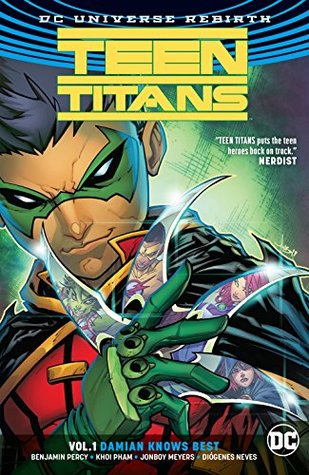
Exploding from the blockbuster DC Rebirth event, it’s an action-packed new spin on one of the most famous superhero teams of all time, from writer Benjamin Percy (GREEN ARROW) and a titanic team of talented artists including Jonboy Meyers (Spawn), Diogenes Neves (GREEN LANTERN: NEW GUARDIANS) and Khoi Pham (The Mighty Avengers) comes TEEN TITANS VOL. 1: DAMIAN KNOWS BEST.
His father is the world’s greatest detective. His grandfather is the world’s deadliest terrorist. He is Damian Wayne, a.k.a. Robin, Son of Batman-and he now commands the Teen Titans.
Whether they like it or not.
When Starfire, Raven, Beast Boy and Kid Flash answer this brash new Boy Wonder’s call for help, they find themselves on the front lines of a war between Damian and his immortal grandfather, Ra’s al Ghul. The entire League of Assassins and the elite Demon’s Fist are prepared to move against these young heroes, all to claim Robin for their own. And if these new Titans are toppled, so be it.
The stakes are crystal clear: if they win, they live. If they lose, Robin will join the forces of evil-and the rest of them are history. But with Damian in charge, sometimes death doesn’t look so bad…
It’s a culture clash for the ages in TEEN TITANS VOL. 1: DAMIAN KNOWS BEST. Collects TEEN TITANS #1-5 and TEEN TITANS: REBIRTH #1.
Verdict:
This is a fantastic new take on the Teen Titans saga. The dual nature of Damian Wayne shines brightly in this story as his years of training and experience clashes with the need to define himself and the desire for something most kids take for granted: friendship. The artwork is brilliant, capturing the bright nature of the team versus the dark reality they find themselves in. While this is the team’s origin story in the Rebirth era, this first volume is definitely Damian Wayne’s spotlight, and begins a new era of the Teen Titans that fans will definitely love. The writing is fast paced and challenges the reader to define friendship, identity and family, a great direction to take this series. This is definitely a must read for any Teen Titans or DC Comics fan.
Part of the most critically acclaimed, best-selling, all-new line of volume one graphic novels, DC Universe Rebirth!
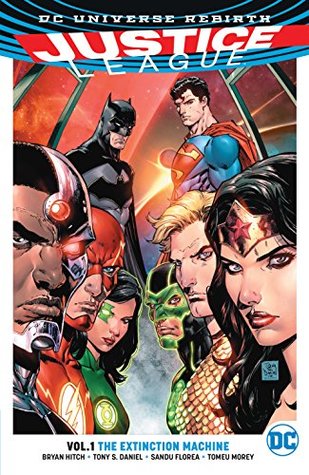
Superman has fallen. The Man of Steel died protecting his adopted home, leaving his allies in the Justice League to fight on without him-and leaving the older, wiser Superman of a vanished universe to pick up the torch.
But to Batman, Wonder Woman and the rest of the League, this new “Superman” is a stranger. And just like Jessica Cruz and Simon Baz, the rookie Green Lanterns left by Hal Jordan to guard the globe in his absence, the replacement Superman has a lot to prove.
He’d better do it quickly. Because a godlike threat unlike any the League has ever fought is coming. Vast engines of destruction are about to be unleashed, remaking the planete s surface and forging its people into living weapons.
They are the extinction machines. And it will take every member of the Justice League to shut them down…
Comics superstars Bryan Hitch (JUSTICE LEAGUE OF AMERICA) and Tony S. Daniel (SUPERMAN/WONDER WOMAN) join forces to launch a bold new era for comics’ greatest superhero team in JUSTICE LEAGUE VOL. 1: THE EXTINCTION MACHINES-exploding from the blockbuster DC Universe Rebirth event! Collects JUSTICE LEAGUE #1-5 as well as the JUSTICE LEAGUE: REBIRTH one-shot.
Verdict:
A story that holds no punches, readers are thrust into a world where one Superman has died, and the Justice League struggles not only with whether or not to trust the new Superman amongst them, but faces a catastrophic crisis as millions of people around the world are consumed by an unstoppable force of a cosmic scale, and the world threatens to tear itself apart. With some of the hero’s powers suddenly failing them and the team scrambling to find a way to stop this destructive force of nature, trust will have to be earned quickly and the team will have to recover from their loss before it’s too late. The artwork is eye catching and beautiful, and the story begins a new era for the Justice League that teases a looming threat and brings new heroes into the fold. A fun, gritty and fantastic read for Justice League fans.
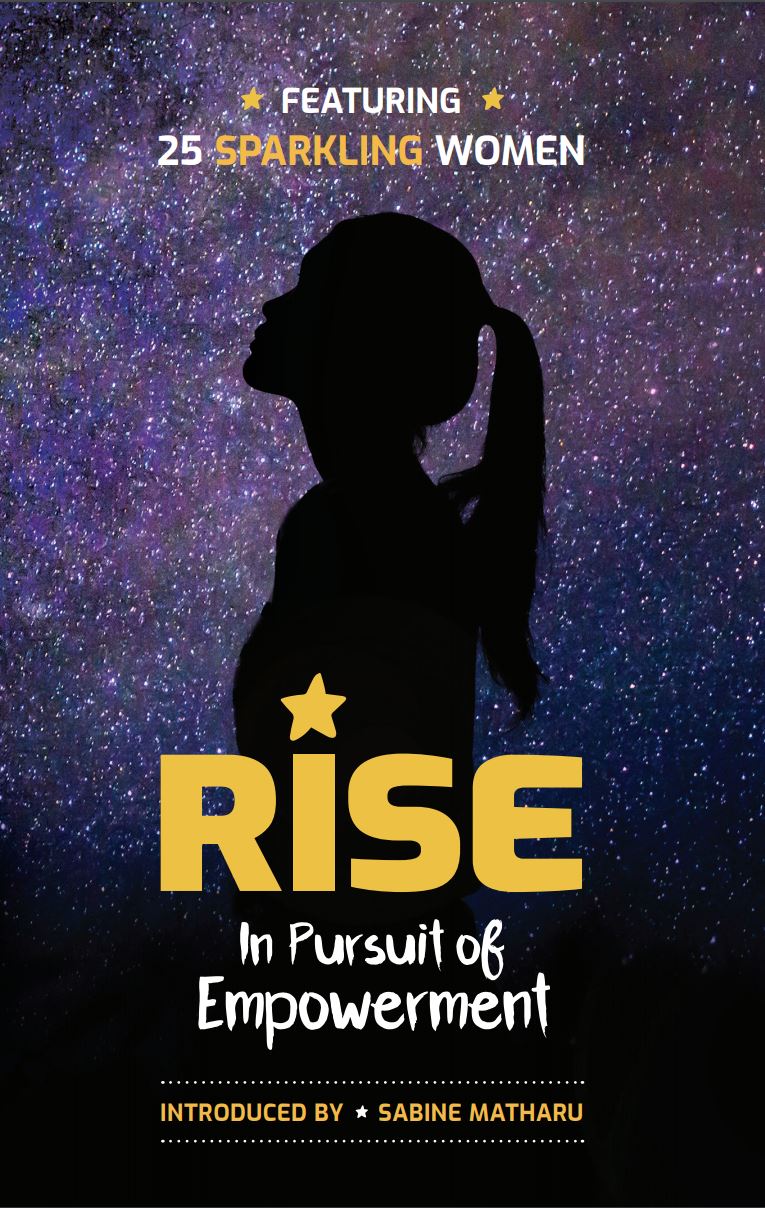
Written for and by inspirational entrepreneurial women whose hidden creativity and business acumen is eager to come out despite facing an array of traumatic experiences, mindset and domestic battles, RISE – In Pursuit of Empowerment, published by Reach for Greatness Ltd., is a beacon of hope for all women. Through the incredible stories of 25 women, you will learn that while obstacles are a given, you also have what it takes to rise above challenges, create a space and niche for yourself and turn impossible experiences into incredible opportunities that are profitable and fulfilling at the same time. RISE – In Pursuit of Empowerment, the first in a series of 4 books, will teach you:- How to tap into your intuition and inner strength to overcome stress, grief and trauma – How to take the challenges you have and turn them into opportunities – How to rise above the noise and come out victorious – Why your inner woman is a force to be reckoned with and – How to overcome substantial obstacles to live a more fulfilling and well-balanced life.
GRAB YOUR COPY FROM
KNOW ABOUT THE AUTHOR
Sabine Matharu is a passionate business start-up and growth strategist, who specializes in helping women find their purpose and monetize their unique skills so that they can build a thriving business.
Her signature program is “The Business Accelerator Mastermind”, that teaches and supports entrepreneurs to implement an easy to follow methodology around how to build a long term profitable business without overwhelm and detours.
She also runs “The Greatness Club”, which complements the work she does in her Mastermind and provides women a platform and springboard for visibility, networking and lead generation. Sabine comes with years of experience as a corporate leadership consultant and has worked with over 1000 people
in senior positions.
She firmly believes that it is possible to reach for the greatness that is within ourselves.
1) Tell us a little bit about yourself. How did you get into writing?
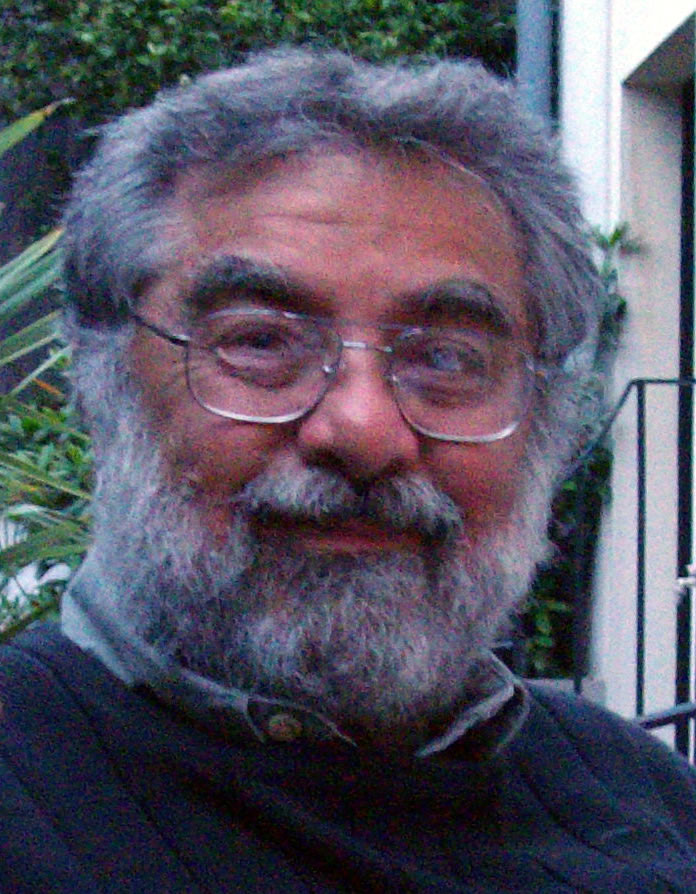
Born and raised in New York City, I left to see the world at age 24 as a water engineer in the Peace Corps. For most of my life, I had never entertained the idea of becoming an author. My career as a groundwater specialist kept me busy enough, filled with both adventure and satisfaction with my job. However, while in Kenya I fell in love with a woman, and this relationship was doomed from the start. As a kind of catharsis, I began to write a semi-autobiographical story which became Journey Towards a Falling Sun. As I said, it was the need to purge my emotions that drove me, without immediate plans for publishing, as I was in the prime of life as regards to my vocation. But in 1985, I did manage to get an agent who was very enthusiastic over the manuscript. After fifteen rejections by big publishing houses, however, I gave up and shelved it, abandoning any thoughts about being a writer. It wasn’t published until 30 years later.
In 1996, while working in Laos, I learned of the secret war that the US conducted for 9 years, and resulted in the aerial bombardment that has given that country the dubious distinction of being the most heavily bombed country of all time. As an American, I was ashamed of my ignorance of this matter, for I had never known of this secret war. I was so moved, I decided I would write an epic novel that would illustrate the consequences of that war which became The Plain of Jars, released in 2013. And from there my path as a writer began.
2) What inspired you to write your book?
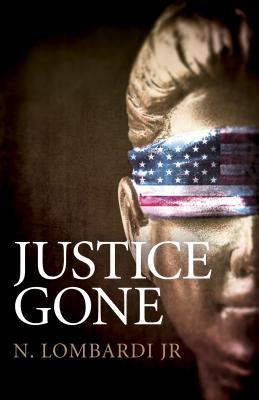
The idea for Justice Gone came from a true incident – the fatal beating of a homeless man in California. It was such an outrageous act, recorded on video and uploaded to YouTube, that I wondered what would happen if someone who saw the gruesome video would mete out their own version of justice to the police officers involved.
The novel then, is a tale of what happens in a small town following the fatal beating of a homeless Iraqi war vet at the hands of police. A cascading series of events, from street protests to a vigilante shooting of three police officers leads to a multi-state manhunt for the vet’s war time buddy. A controversial trial attracting nationwide attention dominates the second half of the novel. The story ends with a twist revealing the identity of the cop-killer
3) What theme or message do you hope readers will take away from your book?
Although deaths at the hands of law enforcement officers disturb me, I tried to avoid taking too strong a stand against the police, and just presented a possible (albeit extreme) scenario if this issue is not addressed. I also wanted readers to have a detailed look at the legal system in the US, i.e. the importance of lawyer tactics on both sides of the bench and of jury sentiment in deciding a case.
First of all, I don’t consider myself a genre writer, I just write about things that move me. Having said that, as a reader I do enjoy mystery/thriller/suspense/crime, so I may be writing more of this kind of fiction from now on. It is much easier to write this sort of stuff than cross-cultural adventure novels such as my first two books, The Plain of Jars, set in Laos, and Journey Towards a Falling Sun, set in Kenya.
5) If you could sit down with any character in your book, what would you ask them and why?
I would have to say, the policemen that beat Jay Felson to death – Why, when he was unarmed, did it take 6 cops to bring him down and beat him till he died?
6) What social media site has been the most helpful in developing your readership?
I’m really not active in the social media scene, so I would have to say Goodreads, despite the fact I find Goodreads a bit exploitive and disdainful of independent authors. As a reader, it is pretty good. I tried Facebook, but it isn’t focused enough and being an old fart, I’m mistrustful of Twitter. I love book bloggers, thank god for them!
7) What advice would you give to aspiring or just starting authors out there?
Although it sounds cliché, the first thing is to write well. Many independent authors, particularly those who self-publish, write with a quality barely above a high school student. You don’t have to be a wordsmith, but the book should not sound stilted. Read passages from a book by an acclaimed author than read your stuff. How does it compare?
Secondly, unless you’re with a big publishing house, be prepared to market your work. You should have a budget of $2,000 for this, even if you are very active on social media, because it’s always better for someone else to tout your book than you as the author. That means reviews, which can only result from exposure.
8) What does the future hold in store for you? Any new books/projects on the horizon?
I’m in the process of fine-tuning another Tessa Thorpe novel, Woman in the Shadow. It takes place several years prior to the setting of Justice Gone, and is considerably darker, more of a psychological/suspense thriller. I actually wrote this before Justice Gone, but I was disappointed with the publisher’s reaction to it so I shelved it. Directly related to this, I’m looking for another publisher, so I hope it doesn’t take too long for the book to come out.
1) Tell us a little bit about yourself. How did you get into writing?
I started writing around the age of 12. I’d been quite illiterate to begin with because I missed out on a lot of schooling. I wrote indecipherable poetry filled with angst—stream-of-consciousness diary entries about wanting to get away from my abusive situation. It wasn’t until I started reading my favorite writers before I’d make any attempt at any real writing. I never wrote full time because I also played the drums and painted. I was most serious about music at the very start.
I fell in love with authors like JD Salinger, Tom Robbins, and Charles Bukowski and buried my nose in everything they wrote. Salinger’s Nine Stories made me want to be a short story writer. Then, I read Bukowski’s Ham on Rye and that truly changed my life forever. He gave me a lot of freedom to be myself as an artist. Then came John Fante, He’s now just about my favorite writer.
2) What inspired you to write your book?
I always knew I’d write this book. I just didn’t know if I’d ever publish it. Not as nonfiction anyway. I’ve always written autobiographical fiction and wrote a lot of dark comedy stories about my family. I figured I’d put them together as a collection or something, but I didn’t think I could string them into one long book. I didn’t believe in myself enough. I’d tried to write whole novels in the past and failed. Eventually, I wanted to try again. And again. And again. It took me almost a decade to finish this book, and as the years went on,Shrapnel took several different directions.
3) What theme or message do you hope readers will take away from your book?
I really don’t have a direct intention for what my readers should or shouldn’t take away. This is the same philosophy I have with putting any of my art out on display. The work has two lives; the one it’s lived with me during its process, then the life it lives once it’s completed. It now lives with the audience and becomes their personal, individual experience. I can only hope people can identify with it on some level.
Interestingly enough, I’d mostly been inspired by fictional stories that were written in a nonfiction, first-person format, such as Alice Walker’s The Color Purple, Pushby Sapphire, Bastard Out of Carolina by Dorothy Alison, and Bee Season by Myla Goldberg. Dorothy Allison’s book is based on her real life and I originally wanted to take this approach, but my partner, Michael Phillips (also a writer), got me to change it to nonfiction. He got me to see how much more powerful it could be. I didn’t think anyone would believe it, and frankly I was fearful of putting my story out there. Now I’m grateful for his encouragement because it’s made me a stronger person.
5) There were quite a few different sides to your story that were heartfelt, emotional and powerful enough to convey your struggle to the reader. In regards to your experience within Scientology, if you could sit down and ask any of the leaders of the group a question or confront them in any way, what would you want to say to them?
I do not think anything I could ask or say to the leader, David Miscavage, that would ultimately change anything. As far as I’m concerned, and as the public continues to hear evidence of the stories regarding his abuse and destruction, he is a megalomaniac with blinders on. He has no conscious when making his ends meet, whatever they may be. Challenging his motives would only make things worse for his enemies and Scientologists alike.
Having once been a devout Scientologist, I’d rather address Scientologists in general and ask that they try to consult their gut. I would tell them that people that speak out against religions that abuse their members are not evil. Cutting off a dialogue with them doesn’t fix the situation. Disconnecting from people labeled “suppressive” only further isolates your mind to stick with like-minded Scientology kin. How will you find understanding with the rest of the world that way? And are you really the one who controls your communication?
6) What social media site has been the most helpful in developing your readership?
Keeping a blog is key, as well as slowly adding to my mailing list. I put out a newsletter a few times a year and am careful not to “spam” my list with too many superfluous email blasts. I make sure I announce my blog posts on all my social media outlets. Facebook and ello are my most successful.
7) What advice would you give to aspiring or just starting authors out there?
You can always get better at writing by reading. Read a lot and a wide range of genre. Don’t give up, but don’t try too hard either. Try not to listen to other people’s opinions—that may possibly kill the best thing about your style and voice. Just be mindful of it anyway, because not everyone knows what they’re talking about. Strunk & White’s Elements of Style is almost the only thing you’ll ever need. But if you like spending $100K on college, do what you like.
The most important piece of advice I have is: despite rejection at seemingly every turn, you can do this. We are all stronger than we think.
On a separate note, if you were to be able to speak to anyone who has questioned the practices of Scientology or has been approached to possibly join the group, what would you want to say to them or what advice would you want to give them based on your own experiences?
I feel I’ve pretty much answered this and choose not to dig a deeper hole. But I would refer current members of Scientologists to Dr. Robert J. Lifton’s Eight Criteria to reevaluate their situation.
8) What does the future hold in store for you? Any new books/projects on the horizon?
Right now I am finishing up new artwork for my big book launch and solo exhibit at the gallery that represents me in Los Angeles, Craig Krull Gallery. The show opens Saturday April 13th, 2019 at 4pm with a reading and a short Q&A. I will then sign books until the artist’s reception that goes from 5-8pm. The show runs until May 25.
I’m also putting the finishing touches on the special lettered edition of Shrapnel in the San Fernando Valley, which is limited to 30 copies only. It is hard-bound in linen and comes with original artwork inside.
I plan to take a short hiatus over the summer and begin working on a book of short stories in the fall. I’d like to publish them with watercolor illustrations by 2020.
Looking for help to take control of your own mental health and seek the help you need? I’m happy to share this amazing link to BetterHelp for advice on where you can turn if you are feeling sad. Just click the link below!
Carol Es is a self-taught artist, writer, and musician born in Los Angeles. Using a wide variety of media, she is known for creating personal narratives that transform a broken history into a positive resolution. Her paintings, drawings, installations, videos, and books have been exhibited nationwide in venues such as Riverside Art Museum, Torrance Art Museum, Lancaster Museum of Art and History, and Craft Contemporary in Los Angeles. Some of her works can be found in the collections at the Getty and the National Museum of Women in the Arts in Washington, DC. Her collaborative film was also featured in the 2015 Jerusalem Biennale.
Awarded many honors, including several grants from the National Arts and Disability Center and California Arts Council, she is a two-time recipient of the ARC Grant from the Durfee Foundation, a Pollock-Krasner Fellowship, and the Wynn Newhouse Award. She has written articles of art critique for the Huffington Post and Coagula Art Journal, as well as having poetry published with small presses. She also received a writing grant from Asylum-Arts—a Global Network for Jewish Culture.
Editor’s Note: This is Anthony Avina, and I wanted to personally welcome author Carol Es to my website. This insightful and honest article was something I wanted to share with you all, and I couldn’t appreciate it more that Carol took the time to write it for us. I hope you guys enjoy it. Now on to Carol’s article…
When people ask what inspires me, I never know what to say. Not because I’m lacking in the inspiration department—it’s just too general a question. “Everything,” I’ll say. If asked what my inspiration might be for something specific, you probably won’t be able to shut me up.
As both a writer and a visual artist, my work is predominantly autobiographical. I love anything with a narrative. Stories move me to create, they draw me in and take me on an escape, like a drug. When combining writing with art together, all the better. I have made many Artist’s books that mish-mash art and words, a genre unto itself, and it’s mostly what I’m used to working in.
However, I’ve been writing short stories and poetry since I was a kid. I wrote a screenplay when I was 17-18 that I never finished. (It was terrible.) Throughout my 20s, I made several attempts at writing novels, but had never been able to get more than 50 pages in. Most of the fiction I wrote was autobiographical. I’ve been inspired by authors Charles Bukowski since I was a young teenager, and later John Fante. It’s not that I wanted to write in either of their styles, but I wanted to be able to evoke a similar feeling from my writing.
Still working on that.
It was nerve-wracking writing in nonfiction, though I think it drove me to finish an entire book. At first, I didn’t write about myself much at all. I found the stories of people much more interesting, and so, I’ve written Shrapnel in the San Fernando Valley several times over. It was hard to come to grips with, but a memoir is supposed to be self-indulgent. It just feels uncomfortable. I had to carve out an honest story and reveal my raw self to the world. It’s risky business.
Along the way, I probably couldn’t have finished it without bits of inspiration. My partner, Michael Phillips, also a writer pushed me and supported me immensely. I was also absolutely dazzled after seeing Jonathan’s Caouette’s documentary art film, Tarnation.
Caouette took 20 years of home movies, snapshots, and answering machine messages, stuck them into a blender and came out with a unique examination of his early life—his tumultuous childhood with his mentally ill mother. How could I not identify with that? My mother was bipolar.
This incredibly brave movie deeply inspired me to stop apologizing for my own dysfunctional family and embrace them as my muse. I also began to see the strength in vulnerability instead of viewing it as a weakness.
But I had been wanting to write this book in one version or another for a long time. At the start of it, I began to think back some 20 years when I lived off of Laurel Canyon—a winding road through the Santa Monica Mountains that connects the southeast San Fernando Valley to West Hollywood in Los Angeles. It was the most inspired time and place for me.
A few people in the apartment building I lived in donated books in the laundry room and we’d all give and take them. Once I found a big hardcover book that got me really into my Jewish genealogy (Finding our Fathers by Dan Rottenberg), which sent me on a wild and freaky ride to nowhere. Or maybe it sent me to a sad wasteland. I never quite got to the bottom of my family search, but I got a lot of stories from all the digging I did. Shrapnel in the San Fernando Valley actually began with my parents’ backstories, but most of it wound up on the cutting room floor as they say.
Once I’d been working on the book for a couple of years, I found even more inspiration in Myla Goldberg’s Bee Season. I’d been living in San Pedro and picked it up at the free clinic, much in the same way I did Finding our Fathers.
Though Bee Season isn’t a work of nonfiction, it changed the way I saw memoir writing. It’s written from a young girl’s point of view looking back as an adult woman. She recalls the span of time in her life when she was able to win over her father’s love by excelling in national spelling competitions. Though I’m no good at spelling, I really identified with the character who was the youngest in a Jewish family of just four. She’s also been severely overshadowed by her older brother. More than her thoughts and desires to be loved, it was the way she was able to bring in each of her family members’ backstory so seamlessly. I loved that and wished I could have done that. Perhaps in the future.
I get wildly excited and inspired by other visual artists too. I’ll fall in love with painters, i.e.: Amy Sillman, or Lisa Sanditz. I’ll want their work to influence mine. Inevitably, it is nearly impossible to duplicate the same feelings or techniques because everyone has there own thing. My work always winds up looking like all my other paintings. It’s frustrating because I often like other artist’s work much more than my own. That happens. That’s life, I guess. We aspire to be better and are inspired by the beauty that surrounds us and keep on going.
Looking to find counseling to help you take control of your mental health journey? Check out BetterHelp to find the online counseling that will best help you.
Author Bio
Carol Es
Carol Es is a self-taught artist, writer, and musician born in Los Angeles. Using a wide variety of media, she is known for creating personal narratives that transform a broken history into a positive resolution. Her paintings, drawings, installations, videos, and books have been exhibited nationwide in venues such as Riverside Art Museum, Torrance Art Museum, Lancaster Museum of Art and History, and Craft Contemporary in Los Angeles. Some of her works can be found in the collections at the Getty and the National Museum of Women in the Arts in Washington, DC. Her collaborative film was also featured in the 2015 Jerusalem Biennale.
Awarded many honors, including several grants from the National Arts and Disability Center and California Arts Council, she is a two-time recipient of the ARC Grant from the Durfee Foundation, a Pollock-Krasner Fellowship, and the Wynn Newhouse Award. She has written articles of art critique for the Huffington Post and Coagula Art Journal, as well as having poetry published with small presses. She also received a writing grant from Asylum-Arts—a Global Network for Jewish Culture.
I received a free copy of this book in exchange for a fair and honest review. All opinions are my own.
A simple cloth becomes the vocal point for an international mystery involving war crimes, art theft and murder in author Vincent Panettiere’s The Scopas Factor. Here is the synopsis.
The Synopsis
A Hmong “story cloth,” a Revolutionary War battle flag, forged Picassos and a Russian drug dealer—finding the link between these disparate elements is the challenge Mike Hegan faces in The Scopas Factor, the latest mystery from Vincent Panettiere.
After his last investigation ends tragically, Detective Mike Hegan returns to Chicago from St. Kitts, hoping to put everything behind him. But his girlfriend, Diana, has other plans, and although he has no interest in the job opportunity she presents him—in a small northern California town, no less—he wants to please her. Upon his arrival in Weedley, he’s caught up in a kidnapping and two murders. A visit to Diana’s family in San Francisco only serves to deepen the mystery, as her father might be the link to a gang of antiquities thieves that might have something to do with the crimes in Weedley. And when Diana’s father disappears, Hegan takes off for Antibes in southern France, where he discovers that the mystery has only just begun.
A whirlwind adventure that explores the horrors of war and the ways in which criminals profit from other’s misery, the story is the third highly acclaimed novel from author Vincent Panettiere. The novel is very character driven, taking readers through the mystery by showcasing everyone involved in great detail, from Detective Heagan and his investigation into the mystery, to the woman who’s mother left a legacy behind that she hopes will reveal the truth, and an art forger who finds himself caught in the midst of a bloody battle.
The author does a fantastic job of commanding the story fully into the mystery genre. The action of the narrative plays out in a very creative and cinematic way, creating instant images in the readers imagination as they follow the adventure piece by piece. The way the author stretches out the mystery is perfect as well, taking readers in one direction and then completely dropping the floor out from under them, taking the adventure into an entirely unexpected direction.
The Verdict
This is a wonderful novel, filled to the brim with action, suspense and romance as one lone detective becomes embroiled in a larger than life international mystery. Who can you trust when everyone seems to be connected? And with a feeling of dread hanging over the detective after the loss of his last two relationships, can he find happiness in a new relationship, or are the dangers of the case too overwhelming for his relationship to survive? Find out in this incredible roller coaster mystery by picking up your copy of The Scopas Factor by Vincent Panettiere today!
Many times imagination develops through loneliness. Left in solitude and quiet the creative process emerges later, dormant until activated by circumstances or maturity.
Vincent was the only boy in a family of six children. Many times he was left to himself and his imagination. As he got older, he started writing short stories.
Vincent tells about the time he submitted a short story to “one of those magazines at the supermarket checkout counters”. He showed this story to his high school English teacher who then became convinced that the teenager was having trouble at home. He wasn’t, but this story earned him his first acknowledgement as a writer – as well as his first rejection slip.
He began his career as a sports reporter for the UPI wire service. While in graduate school at Boston University, he wrote sports for The Boston Herald, a daily newspaper.
Several years later after having reviewed his screenplay submissions a story editor at Columbia Pictures encouraged Vincent to move to the West Coast and keep writing. He wrote and sold several screenplays which – “in the byzantine world of motion pictures” – went unproduced.
It was time for a career change. Panettiere struck out on his own becoming a licensed literary agent representing writers and directors in TV and Film. During this time he became frustrated with the entertainment financing system, and began searching for outside financing for his clients. Some of his experiences are chronicled in his book, The Internet Financing Illusion.
Whether as a literary agent or executive at CBS or Twentieth Century Fox, Panettiere continued to search for ideas and stories to feed his imagination. For him, the seed of a story starts nudging his mind, forming characters and situations. His characters lead the story, and often surprise him with unforeseen twists.
The Scopas Factoris Panettiere’s third novel. His other novels are A Woman to Blameand the award-winning and critically acclaimed These Thy Gifts, which earned 5 stars from Readers’ Favorite, second place in Literary and Contemporary Fiction from CIPA, as well as the Reviewers’ Choice Award in General Fiction Novels. He is also the author of The Internet Financing Illusion, a nonfiction account of the dark side of the internet.
For Vincent, writing brings several joys. He looks forward to reading the pages he has written a day later. Many times he can’t remember writing the pages. “This is my favorite part of the creation process. Something inside takes over. Something that I know I can rely on indefinitely.”
Most importantly, he says, the best part of the writing process is “having written – having defeated the tyranny of the blank page.”
Vincent Panettiere currently resides on the West Coast.
In The Lady Raven, Rebecca Henry tells the tale of Zezolla, a little princess abandoned by her father into the hands of her evil stepmother and wicked stepsisters. A familiar fairy tale you may think but all is not as it appears. The reader is soon drawn into a web of witchcraft, lies and deceit, and gradually realises that this is no typical fairy tale but a dark and macabre take on one. Zezolla is treated with the utmost cruelty, neglected and vilified, and left to live in the damp cellars of the castle. The only friends Zezolla has are her beloved raven and her pet wolf. Her only comfort lies in the loyalty of the creatures of the forest and her mother’s hazel tree. Will Zezolla have the power to escape her torment and ultimately save herself from the unscrupulous clutches of the king? The Lady Raven is a compelling tale and one that is not for the faint-hearted.
The Review
If George R. Martin and The Brothers Grimm were to retell the story of Cinderella, they would have come up with this tale. It’s a truly dark retelling of the original story, filled with the same elements of the classic fairy tale with added elements of horror, dark fantasy and drama that rarely make their way into modern day retellings. The author does a marvelous job of adopting the same writing style of the classic fairy tale while infusing darker elements that not only play to the story, but bring imagery that reflects the attitudes and views of modern day life.
To read this story is to mirror the way in which women are viewed and treated in our world. While the fantasy elements are more prevalent than anything else, it’s hard to ignore the ways in which the protagonist Cinderella is shown the cruelty of men. From her father’s betrayal to future king’s desire to own and conquer her, she is also shown how women are too often pitted against one another by society, one made so desperate to find their perfect life that they are willing to burn down anyone in their way, much like the evil stepmother and her daughters.
The Verdict
This was a unique and interesting take on the Cinderella tale. Bringing the subtle horrors the protagonist had to face in her original story to the forefront in a much darker and in your face way, the author beautifully blends the magical fantasy elements of the genre with a look into the cruelty of mankind and the hope that in that darkness, light can find it’s way out into the open once more. If you haven’t yet, be sure to grab your copy of The Lady Raven: A Dark Cinderella Tale by Rebecca Henry today!
I am a newly published author with one novel released and another book coming out for publication, in February 2019. I am also a world traveller, living abroad. I have many interests and hobbies in life, besides my greatest passion of all, my family. I am also a vegan, gardener, crafter, and I practice yoga regularly.