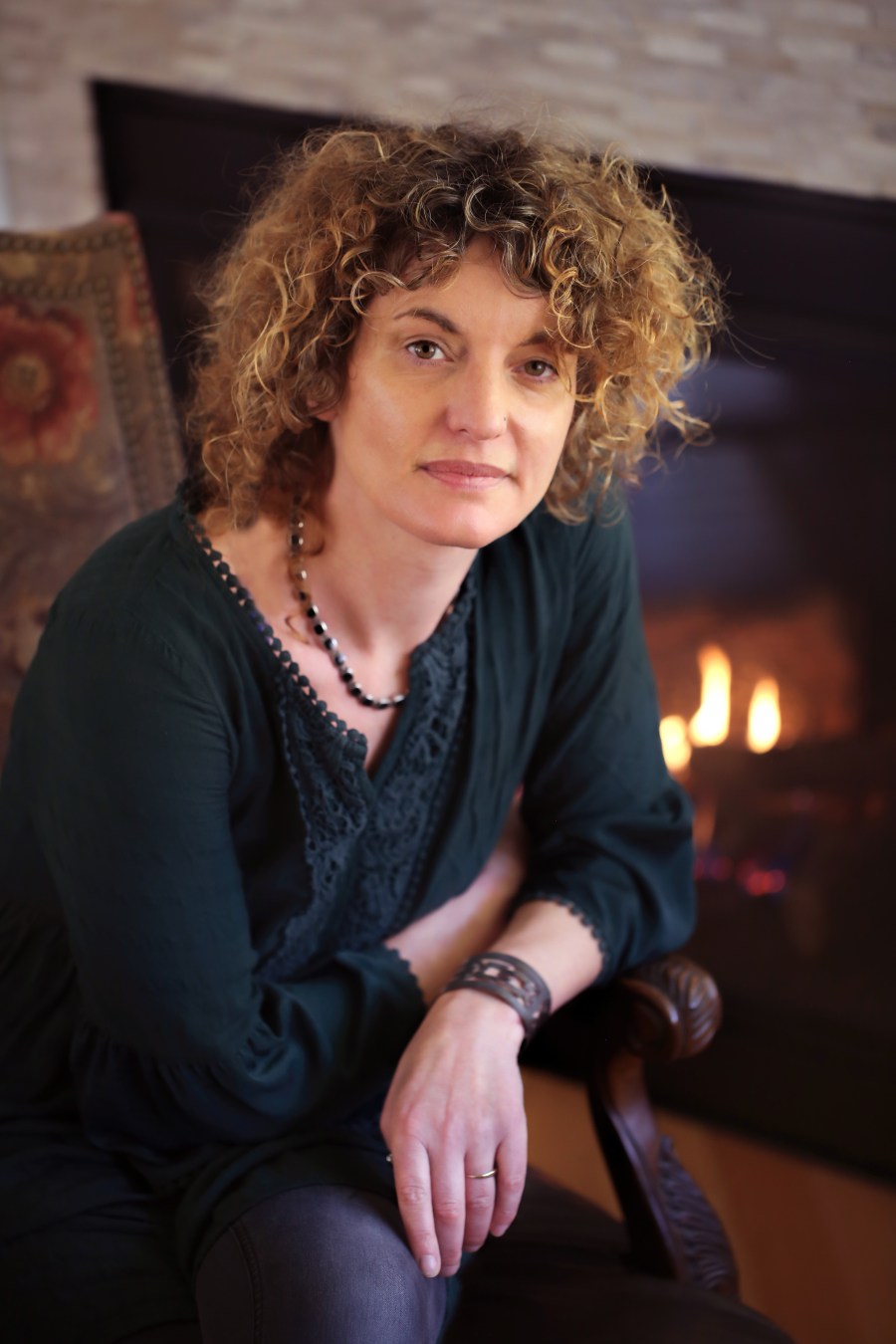
Interview with Author Lorna Brown

1) Tell us a little bit about yourself. How did you get into writing?

I always wanted to write, I don’t remember a particular time when the feeling came to me- it was always there. I started my first book at around 11 and it was an orphan Annie story that really disappointed me for the lack of originality. I thought ‘I have nothing to write about’ and I believe that’s when the yearning for travelling came. I talked about that all the time. After studying psychology and working for a year, I left Ireland. I worked in Australia, Japan, Boston and traveled South East Asia and New Zealand for three months alone, and South America for six months with my husband who I met in Japan. Eventually I came back to Ireland and I was nearing 30 when I finally started writing full time, with my husband’s support.

2) What inspired you to write your book?

This collection has been a while in the making. I’d been writing novels, breaking every rule in the book too as I tried to figure it out, and when I moved the States with my husband and three daughters, I started writing the stories. I wanted to write about how society views certain people, which make it difficult for them, like Lou and dyslexia, or Marcus marrying and trying to hide that he was gay, or Ester getting it wrong when her friend moves in with an older man, all these mistakes we make about people because it is impossible to know the whole truth about anyone. After I knew the characters, I put them together in the village I grew up.   

3) What theme or message do you hope readers will take away from your book?

I think through all the stories is the idea that we never truly know what’s going on with other people, while also addressing the fact that society can be tough. ‘In Taste of Salt’, when the group of kids come into the room with Lou, I write, they didn’t really know him but it was easy to forget this, to accept their wariness as reasonable, because there is the idea that we become how society views us. It is so hard to break from the mold. But there is also through the stories an idea of second chances, or being able to rise above it, and I think the ending of ‘White Trout’ is good for that.

4) What drew you into this particular genre?

I started short stories because I wanted to understand them and see how it was done. It took a good while for me to learn what they were about and how to write them.  This year I finished my second collection ‘It Is Good We Are Dreaming’ which is about that moment when people realize something about their live never known before, or that moment when we are forced to grow up, and I loved writing the stories, as well as the stories of Treading The Uneven Road, because they really made me look at the world around me. Writing a novel is a lot more insular I think. At least I tend to focus on the world I am creating, but when I am working on a collection I really look at what’s going on around me. The second collection most of the stories are taken from news articles and my ideas of what was behind them while Treading The Uneven Road was more about society and its biases.  

5) If you could sit down with any character in your book, what would you ask them and why?

Hard one, I like Dick for his dreaminess, but I really like Patrick from ‘Amends’ for his sense of humor. Eilish is a funny one, so stern and upright, but there is some softness to her that I’d like to see, Ann, would be interesting, I’d imagine sitting in her small kitchen with the view of the bay and that I wouldn’t get a word in edgeways. I’d probably ask her if she wished she’d knocked on that hotel door. (You have to read the collection to get see what I mean)

6) What social media site has been the most helpful in developing your readership?

I really don’t like social media, and I don’t use it much. But I love all the reviewers, such as yourself, who have been willing to review my book after my request with a synopsis. It’s fantastic that you spend time helping authors get known. I have to give it to the book bloggers sites.

7) What advice would you give to aspiring or just starting authors out there?

To accept feedback with gratitude because it is impossible to get better or learn without it. To be able to erase your words, none written is a waste of time. They lead to the destination, but not all are meant to stay. Read and write as much as you can and believe in your talent and ability no matter what anyone says, or how long it takes.

8) What does the future hold in store for you? Any new books/projects on the horizon?

I have a lot of projects on the horizon. Fomite has my second collection. It Is Good We Are Dreaming. I secured an agent with my novel, Patient 55. But I finished my re-write of Hinterland soon after and we both agreed it was a stronger one to start with. It took eight years for me to get all the pieces right for Hinterland.  I was glad that he thought it stronger because I’d like to think my books get better with each one. I recently finished my latest novel Our Wandering, and I was planning to write a short story collection with Irish folklore in present day setting. I love doing short stories between novels. They are so different. But with the Government shut down and everything that’s happening here, I realize I need to write something about that. I’m reading now and in the planning stages. I write a lot and am always thinking of stories.

30% Off Select Happy Socks
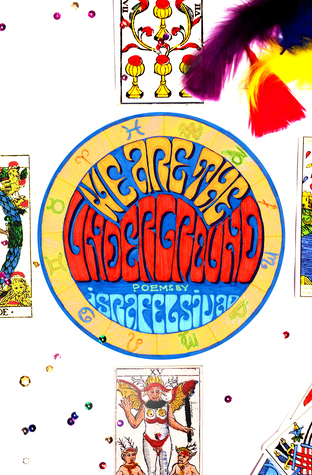
Interview with Author Israfel Sivad (December 2018)

1)      For any newcomers to my blog, tell us a little bit about yourself. How did you get into writing?

Well, the truth is I’ve pretty much always written. After my parents split up when I was in fifth grade, I started writing myself to sleep at night. I did that all through middle school. I wrote lyrics based on all the song structures in the liner notes to the heavy metal tapes I owned. In high school, I turned that talent into an opportunity to write lyrics for the punk rock bands I played in. I wound up collecting many of those lyrics in my book Soundtrack for the New Millennium. Then, when I went away to college, I started keeping journals, and eventually those journals evolved into stories, novels and poems.

2)      What inspired you to write your book?

We Are the Underground initially started as a project for a writing group I joined when I left New York City in 2012 to move back down to Richmond, VA for a little while. I met a group of guys and girls at a café, and they started giving me writing prompts. Eventually, after I had already written a handful of random poems, I decided I wanted a theme running through the work as a whole. The poems so far had been very personal to me. So, I decided to incorporate my childhood spirituality into the work. Having grown up in Southern California, that wasn’t quite the same as many of my peers. It was based on the mysticism and philosophies my grandmother studied. She called herself The White Witch. Those poems eventually turned into the “Zodiac Cycle,” and that determined the structure for the rest of the book.

3)      What theme or message do you hope readers will take away from your book?

I really hope readers will be inspired by We Are the Underground to create for themselves, whether that be artistically, spiritually or simply in their day-to-day lives. In addition to that, I’d love for readers to go deep with these poems and find their own meanings in them. I believe I’ve left a lot of room open for interpretation with this book. I hope people will explore all those meanings.

4)      What drew you into this particular genre?

I started writing these poems as a break from another project I was working on (the novel you reviewed earlier, Anthony, The Adversary’s Good News). The poems were able to be jotted down quickly and then revised and modified slowly over time. That allowed me to feel like I was making progress when my novel was progressing so slowly. After finishing the novel, I kept working on the poems as breaks from a handful of other, larger projects I’d started.

5)      What major differences (other than genre) did you notice when writing this book as opposed to The Adversary’s Good News? Would you say it was more difficult or easier to write this book?

Writing The Adversary’s Good News was harder than this book. The Adversary’s Good News took me nearly ten years to complete. It was a massive undertaking. The plotting and wordsmithing was unbelievable. However, We Are the Underground surprisingly required a great deal more research, particularly for the Zodiac Cycle. The Adversary’s Good News was inspired by books I’d already read. Whereas, with We Are the Underground,I spent a lot of time researching astrology for the poems themselves as well as poetic structures so that I could vary the styles and tones of each poem while simultaneously finding forms fitting each one’s content.

6)      Since we last spoke, what social media site has grown to help you connect with readers the most?

Instagram has been garnering a lot of my social media attention. I find it to be a great medium for reaching readers and interacting with the world in general.

7)      What advice would you give to aspiring or just starting authors or poets out there, or to anyone looking to expand and explore the poetry genre as a whole?

First, to aspiring authors and poets: Believe in yourself, and don’t give up. Nobody else can determine if you’re a writer. Only you know that. Don’t believe in artistic “gatekeepers.” Nobody else can tell you whether you’ve succeeded in accomplishing what you want to accomplish. As far as expanding and exploring the genre of poetry, I urge everybody to read everything from yesterday’s classics to today’s big press and self-published authors. Read everything from Instagram poets to The Epic of Gilgamesh. And while you’re doing all that, keep exploring what this world makes you think and feel. Write it down. Write it all down. The structures will come. You’ll discover them. And while you’re at it, don’t forget to live.

8)      What does the future hold in store for you? Any new books/projects on the horizon?

I’m pretty much always working on new projects. What I’m most excited about right now, though, is the first draft of a new novel I recently completed. I hope to release this project in the next year or two. It’s currently called Pomegranate Sutra, and it’s the story of how to find love when you believe you’re too damaged to ever let that emotion take hold. I look forward to sharing it with you all when it’s finally ready for publication.

About the Author

Israfel Sivad is the founder of Ursprung Collective, which has been referred to as “fantastic brain food” on ReverbNation. His first novel, “Crossroads Blues”, has been compared to the work of Fyodor Dostoevsky (Palmetto Review). His second novel, “The Adversary’s Good News”, was a finalist for the 2016 Chanticleer Paranormal Book Award. His stories and poems have appeared in the Santa Fe Literary Review, The Stray Branch and Badlands Literary Journal. 

Website: www.IsrafelSivad.com

Instagram: www.instagram.com/israfel_sivad/

Twitter: twitter.com/UrsprungCollect

Facebook: www.facebook.com/UrsprungCollective/

Soundcloud: https://soundcloud.com/ursprung-collective

Christmas Eve Dinner Cruise

Interview with Author T.L. Hughes

1) Tell us a little bit about yourself. How did you get into writing?

I have been writing most of my life. When I was in the eighth grade, I had a teacher who encouraged us to use weekly vocabulary words in a paragraph that we had to recite aloud. It became a game for a few of us where we would use as many vocabulary words as we could, even using past weeks words. I began to write my own short stories and poetry shortly after that. 

2) What inspired you to write your book?

This book, like my first novel, Searching For Paradise, was inspired by my love of travel and meeting new and interesting people. When I travel, I always keep a road journal alongside me. The Sojourners is based upon a real life road trip through Europe in the 1980’s and had its basis in one of those journals. The characters and situations are fictional, although many of the characters possess the traits of some of the real life people I met along the way.

3) What theme or message do you hope readers will take away from your book?

That life is an incredible journey and to never give up on your dreams. Every person we meet along this journey has something to teach us. 

4) What drew you into this particular genre?

I’ve loved the genre ever since I started reading the road novels of Jack Kerouac. Growing up in New England, Kerouac’s novels opened my eyes to the American west. In high school, I dreamed of traveling the highways of America (and Mexico) like he did. When I graduated from college, I finally realized that dream, always taking along a notepad and pen along with me.

50% Off On Over 100 Books!

5) If you could sit down with any character in your book, what would you ask them and why?

Good question. It would probably be Decky Brady. I would ask him about his own journey into Ireland. I’d want to know what ever happened to him? Where did he end up? A later novel of mine will take place in current times, where Luke Coppens and Michael Hogan attempt to return to Europe to ty to find Decky. 

6) What social media site has been the most helpful in developing your readership?

I’m new to social media. At this point I would have to say Goodreads, where I am beginning to get followers. I also have a Facebook page. I’m looking forward to expanding my social media presence at some point with Instagram and Twitter, however, right now I am not on those sites.

7) What advice would you give to aspiring or just starting authors out there?

If you love writing and feel your best while doing it, keep doing it. Don’t be discouraged by naysayers and negative people. With platforms out there now like Kindle Direct Publishing and other services that assist Indie authors in publishing their work, this is a great time to be a writer. 

8) What does the future hold in store for you? Any new books/projects on the horizon?

My next book is a novel that will be set in a New England mill town. It will be different than my road books. It centers around Mike Hogan in his early adolescent years. As Mike and his small group of friends move through childhood and adolescence, they encounter challenges and make decisions that will dramatically alter the course of their lives. I’m hoping to have this published within the next two years.

About the Author

T.L. Hughes was born in Salem, Massachusetts, and at a young age moved to Lowell, Massachusetts where he grew up, attending the local public schools through high school. After graduating from the University of Massachusetts in 1980, he headed west to California. Today, he lives in Orange County with his wife and family.

Interview with Illustrator Courtney Huddleston

1) Tell us a little bit about yourself. How did you get into writing/illustration?

My name is Courtney Huddleston, and I illustrate children’s books for a living. Like so many others, I’ve had a fascination for good art and writing, since childhood. I was never the best at either, but countless hours of practice mixed with persistence, eventually lead to me becoming a professional. 

2) What inspired you to work on these books?

Whether it’s a kid in class daydreaming or a professional writer, everyone has ideas. I’m no different than either, and Audrey’s Magic Nine happened to be my latest idea. I started with the idea of bringing hand puppets to life. From there, I listed as many stories as I could in today’s pop culture with a similar vibe. Jim Henson’s creations, Bill Watterson’s Calvin and Hobbes, and Pinocchio are just a few that I listed. I tried to steer my story as far away from those iconic stories as much as I could, in hopes of putting a different spin on an old idea. And, that’s how Audrey’s Magic Nine came to be. 

3) What theme or message do you hope readers will take away from your books?

I didn’t initially try to establish a message or theme when I came up with this story. I was focused mainly on making it as unique and entertaining as possible. That said, the protagonist is a genuinely kind and selfless person from start to finish, despite having many  physical, mental, and emotional obstacles in front of her. 

4) What drew you into this particular genre?

As an elementary school teacher, my wife has no shortage of stories to tell. One of the more recurring stories is how much graphic novels motivate her students to read. Combine that with the fact that I’m a life long comic book lover, and the rest is history. 

Explore the Best Books of 2018 at BN.com

5) If you could sit down with any character in your books, what would you ask them and why?

I would sit down with Asa from Audrey’s Magic Nine, because he’s just one of the coolest characters I’ve had the honor of creating. But I wouldn’t ask him anything, because as his creator, I know the answer to any question I ask him. I’ve never been asked this question, but it made me feel very powerful for a moment. Ha. 

6) What social media site has been the most helpful in developing your readership?

Audrey’s Magic Nine was a webcomic before it went to print. The webcomic had a more followers than any of the social media outlets. 

7) What advice would you give to aspiring or just starting authors/illustrators out there?

As cliche as my cliched answer may sound, the answer is to be persistent. The internet has leveled the playing field, making it easier to showcase your work, connect with publishers and agents,research industry trends, and much much more. All you have to do is always try to improve and never give up. 

8) What does the future hold in store for you? Any new books/projects on the horizon?

I recently wrapped up Book 3 of Audrey’s Magic Nine, and it will soon go through the editing stages. I am also doing freelance work for another kids book series, while developing a new story that I plan to share in 2019. 

50% Off On Over 100 Books!

Author Interview with Anna Levine

Tell us a little bit about yourself. How did you get into writing?

My great-grandmother came to Canada in the late 1880s. She shares a passport with my great-grandfather. Beneath his photo is written Issac Yaphe. Beside him, my great-grandmother, a stern looking woman, is frowning at the photographer. Beneath her photo the passport inspector wrote, “Wife does not write.” Some years later I ended up at a writer’s residence in Eastern Canada, a few miles from where my great-grandmother had settled and farmed a small piece of land. Though I’ve been writing since my teens, keeping journals (that crowd my office space) I have that photo of my great-grandparents on my desk to remind me that I’m the great-granddaughter of the woman who immigrated to Canada as the wife “who does not write.”

What inspired you to write your book?

Curiosity. I often think the topics I write about find me. I have a series of archaeological-themed picture books about a young girl who is fascinated by history. Archaeology is one of my passions and when I can, I join a dig. I have a book for middle-grade readers that takes place in an olive grove, and last year I spent a day raking olives off the trees onto mats and scooping them up into crates. My writing has been labeled ‘realistic fiction.’ Research is my way of discovering new experiences.

What theme or message do you hope readers will take away from your book?

“Birds without borders.” I live in a country where there is a lot of conflict between people. And yet, when I visit the Hula Nature Reserve and I see all the different birds from all over the world swoop in to chat with each other (imagine a family dinner where everyone has to have their say), sharing food and finding a place to rest, I think of how we could learn from nature about living together peacefully even if the ‘peace’ can get quite noisy.

What drew you into this particular genre?

Writing a picture book is like writing poetry. I have published a few poems and when I’m stuck on a project I always reach for my poetry anthologies. I enjoy the challenge of finding just the right words to create an image. One of my favorite books growing up was Madeline. I loved Madeline’s independent spirit and the illustrations that accompany the text. The combination works for me.

If you could sit down with any character in your book, what would you ask them and why?

I’d love to chat with Alexandra and ask her what it feels like to sail above looking down on us. She’s been to places I’ve always dreamed of going to see.

What social media site has been the most helpful in developing your readership?

I’m really enjoying this WOW blog tour (and someone has already written me to ask how to join one). I use Facebook but the contacts I have all know me. This blog tour has allowed me to get in touch with people outside my circle. I’m on Instagram and Twitter but in truth don’t know how to use them all that well. I find that social media takes a lot of time and it’s time taken from my writing. I haven’t figured out the balance yet.

What advice would you give to aspiring or just starting authors out there?

Perseverance! It’s less about ‘write what you know’ (the old adage) but write about what excites you and what you want to learn about. Challenge yourself and discover new experiences.

What does the future hold in store for you? Any new books/projects on the horizon?

I’m working on a cozy mystery for adults that is set in Canada. It’s presently in submission through my agent. Lots of plotting goes into constructing a mystery and it’s a new genre for me, but I’m loving it!

50% Off On Over 100 Books!

Book summary

 In All Eyes on Alexandra, young Alexandra Crane is terrible at following her family in their flying Vee. She can’t help it that the world is so full of interesting distracting sights! When it’s time for the Cranes to migrate to Israel’s Hula Valley for the winter, Alexandra is excited but her family is worried. Will Alexandra stay with the group, and what happens if a dangerous situation should arise? Might Alexandra—and the rest of the flock—discover that a bad follower can sometimes make a great leader?

Based on the true story of Israel’s annual crane migration.

Print Length: 32 Pages

Genre: Children’s Picture Book

Publisher: Kar-Ben Pub

ISBN-10: 1512444391

ISBN-13: 978-1512444391

All Eyes on Alexandra is available to purchase on AmazonBarnes and NobleTarget and Thrift Books.

About the Author, Anna Levine

Anna Levine is an award-winning children’s book author. Like Alexandra Crane, the character in her latest picture book, she loves to explore new worlds. Born in Canada, Anna has lived in the US and Europe.  She now lives in Israel, where she writes and teaches.

You can find Anna Levine online at —

Author website: http://www.annalevine.org/

Twitter: @LevineAnna 

Instagram: @booksfromanna 

About the Illustrator, Chiara Pasqualotto,

Chiara Pasqualotto was born in Padua, in northern Italy, currently teaches illustration and drawing classes to children and adults, in particular in Padua during the summer at the Scuola Internazionale di Comics and in Rome. Since 2008 she’s been living in Rome and working with illustration professionally: her first picture book, Mine, All Mine! was published in 2009 by Boxer Books (UK), since then she published with Oxford University Press, Giunti, Terranuova and some American publishers (Paraclete Press, Tyndale, LearningAZ, Kar-Ben Publisher).

You can find Chiara Pasqualotto online at –

Artist website – https://romeartweek.com/en/artists/?id=1495&ida=1004

Blog: http://chiarapasqualotto.blogspot.com/

Facebook: https://www.facebook.com/clairepaspage/

Explore the Best Books of 2018 at BN.com

– Blog Tour Dates


December 3rd @ The Muffin

What goes better in the morning than a muffin? Make sure you visit WOW’s blog today and read an interview with the author and enter for a chance to win a copy of the book All Eyes on Alexandra.

muffin.wow-womenonwriting.com


December 5th @ Cassandra’s Writing World

Visit Cassandra’s blog where she shares her thoughts about Anna Levine’s picture book All Eyes on Alexandra.

https://cassandra-mywritingworld.blogspot.com/

December 5th @ Break Even Books

Visit Erik’s blog where you can read Anna Levine’s guest post about how to jog your inspiration.

https://breakevenbooks.com/

December 7th @ Coffee with Lacey

Grab some coffee and visit Lacey’s blog where you can read her review of Anna Levine’s picture book All Eyes on Alexandra.

http://coffeewithlacey.wordpress.com


December 8th @ Author Anthony Avina’s Blog

Visit Anthony Avina’s blog today where he joins in the fun of celebrating and shares information about Anna Levine’s book All Eyes on Alexandra.

http://www.authoranthonyavinablog.com

December 8th @ Christy’s Cozy Corners

Visit Christy’s blog and cozy up while you read her review of Anna Levine’s picture book All Eyes on Alexandra.

https://christyscozycorners.com/

December 9th @ Coffee with Lacey

Visit Lacey’s blog again where you can read Anna Levine’s guest post about designing your ideal writing spot.

http://coffeewithlacey.wordpress.com

December 9th @ Christy’s Cozy Corner

Visit Christy’s blog where you can read Anna Levine’s blog post about how she decided to use crane’s in her story.

https://christyscozycorners.com/


December 10th @ Thoughts in Progress

Visit Pamela’s blog where you can read Anna Levine’s guest post about how authors use anthropomorphic animals.

http://masoncanyon.blogspot.com/

December 11th @ Read. Write. Sparkle. Coffee.

Make sure you visit Jeanie’s blog today and read her thoughts about Anna Levine’s book All Eyes on Alexandra.

http://www.readwritesparklecoffee.com/


December 12th @ Author Anthony Avina Blog

Visit Anthony Avina’s blog where he interviews Anna Levine, author of All Eyes on Alexandra.

http://www.authoranthonyavinablog.com

December 13th @ Read. Write. Sparkle. Coffee.

Make sure you visit Jeanie’s blog today and read Anna Levine’s guest post about building a theme day around a picture book.

http://www.readwritesparklecoffee.com/

December 13th @ Oh for the Hook of a Book

Visit Erin’s blog where she shares her thoughts on Anna Levine’s book All Eyes on Alexandra.

www.hookofabook.wordpress.com

December 15th @ A Storybook World

Visit Deirdra’s blog where she features Anna Levine’s book All Eyes on Alexandra in a spotlight post.

http://www.astorybookworld.com/

December 17th @ World of My Imagination

Stop by Nicole’s blog today where you can read her review of Anna Levine’s book All Eyes on Alexandra.

http://theworldofmyimagination.blogspot.com

December 19th @ Cassandra’s Writing World

Visit Cassandra’s blog again where you can read Anna Levine’s blog post about naming your characters.

https://cassandra-mywritingworld.blogspot.com

December 19th @ Linda’s Blog

Make sure you visit Linda’s blog today where you can read her thoughts about Anna Levine’s book All Eyes on Alexandra.

https://www.lindaleekane.com/blog

December 20th @ Word Magic: All About Books 

Visit Fiona’s blog where you can read her review of Anna Levine’s book All Eyes on Alexandra.

http://fionaingramauthor.blogspot.com/

December 21st @ Bring on Lemons

Make sure you grab some lemonade and stop by Crystal’s blog today where she reviews Anna Levine’s book All Eyes on Alexandra.

http://bringonlemons.blogspot.com/

December 27th @ Linda’s Blog

Visit Linda’s blog again where you can read her interview with author Anna Levine.

https://www.lindaleekane.com/blog


December 28th @ Beverley A. Baird’s Blog

Visit Beverley’s blog today you can read her review of Anna Levine’s book All Eyes on Alexandra.

https://beverleyabaird.wordpress.com/


December 31st @ Strength 4 Spouses

Visit Wendi’s blog and read Anna Levine’s guest post on learning about families and different cultures.

https://strength4spouses.blog/


January 2nd @ Author Anthony Avina’s Blog

Visit author Anthony Avina’s blog where he shares his thoughts about Anna Levine’s picture book All Eyes on Alexandra. 

http://www.authoranthonyavinablog.com

January 3rd @ Beverley A. Baird’s Blog

Visit Beverley’s blog again where you can read Anna Levine’s blog post about getting into the head of your middle-grade characters.

https://beverleyabaird.wordpress.com/

January 4th @ Author Anthony Avina’s Blog

Visit author Anthony Avina’s blog again where you can read Anna Levine’s blog post about using fiction to write non-fiction.

http://www.authoranthonyavinablog.com

January 7th @ Strength 4 Spouses Blog

Visit Wendi’s blog again where you can read her thoughts about the book All Eyes on Alexandra by Anna Levine.

https://strength4spouses.blog/


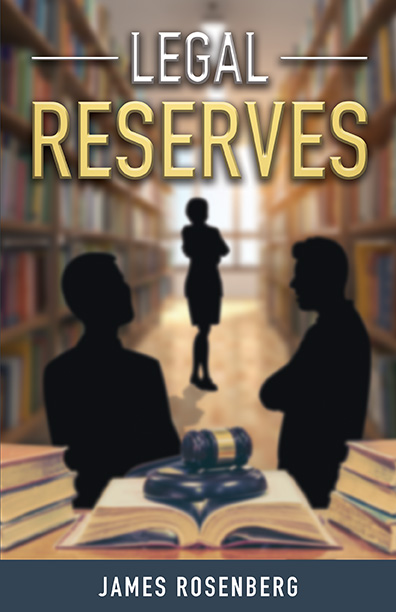
Interview with Author James Rosenberg

1) Tell us a little bit about yourself. How did you get into writing?

I am a lawyer, married and have three kids.  Those are probably the three most important areas of my life.  When my kids were small, I started telling them long, involved stories that were embellishments of my real life.  One of them, a story about a lawyer with a soccer prodigy son, will be my next book coming out.  What I found is I could tell stories that used plot as a way to develop character.  I realized I loved stories that constantly moved and disliked narrative that was bogged down with description.  My stories depict what happens when a character is faced with difficult choices, which ultimately, I believe, is incredibly revealing.

2) What inspired you to write your book?

I always wonder what is stronger, friendship or the drive for personal enrichment (money).  In my novel, one of the key plot drivers is that three long-time friends are forced to take the opposite sides of an important trial.  The three met the first day in law school but later in their careers find themselves as the attorney representing a woman suing a big company, the lawyer for the company and the judge in the trial.  I thought about all of the major conflict that could arise when each wants to do their best professionally, and how that could affect their friendship.  I have dealt in my career with some lawyers who are highly professional and others who will do virtually anything to win.  What happens if there is a mix of those types in an important case?  Every trial has enough stress.  Add in some volatile personalities and the results can be explosive.

Get the Grinch with Max B&N Exclusive Plush for only $12.99 when you buy any other item on BN.com

3) What theme or message do you hope readers will take away from your book?

With every character in the book, you will some good and some not so good.  The three main characters start in the same place ethically.  They are young and impressionable when they are in law school.  Yet just a few years later, they are in completely different places.  Mike still wants to help people and make a positive impact.  Jeri wants to avenge her feelings of rage since almost being raped.  Jack now just wants to become partner at his big law firm and make even more money. 

Sometimes a person doesn’t even realize when he is going down a path that leads towards becoming a lesser person.  Ultimately, lawyers are shaped by their environment.  The people a new lawyer works with teach them how to practice law ethically or how to cut corners.  Good often has to be nurtured and in its absence evil lurks.

4) What drew you into this particular genre?

That one is easy.  I’m a lawyer and have been one for too long.  I have been through many trials and think most people find the drama inherent in a courtroom compelling.  I certainly do.  I know I can describe what happens in a courtroom with realism—and I think in a way that brings out the conflict.

5) If you could sit down with any character in your book, what would you ask them and why?

I love Jack as a character.  He so flawed, but to me so human.  His primary motivation is success/money, and he lets the ultimate rewards dictate his actions.  I would want to ask Jack if he can see himself the way others see him and whether he would like what he saw.  He has so many good traits—He’s smart, witty, and an incredibly hard worker.  People want to be around him and he’s a leader.  But does he realize what path he’s put himself on because he has only one goal—money?

6) What social media site has been the most helpful in developing your readership?

This is my first published book and I am just learning how to market.  I am extremely unsophisticated when it comes to marketing.  I also consider myself to be one of the world’s worst self-promotors.  I am trying however.  So once I learn better how to use social medial to attract readers, I will come back and answer this question again.

7) What advice would you give to aspiring or just starting authors out there?

If you like writing, keep writing.  Write about things that interest you.  Don’t worry what other people like.  If you are moved by your writing, others will be also.

Find the perfect gift for everyone on your list with the Barnes & Noble Gift Guide.

8) What does the future hold in store for you? Any new books/projects on the horizon?

I am still working at being a lawyer, but I am trying to write every day.  I am finishing up my next book, The Jersey, about the lawyer with a son who is a soccer prodigy.  It has a significant tragedy in it, but look at it as ultimately uplifting (as much as it can be after such a tragedy).  I have also started by next novel which has a young, rebellious student who kills the president and the effect this has on his family. 

Author Interview with Benjamin Davis

ABOUT THE AUTHOR

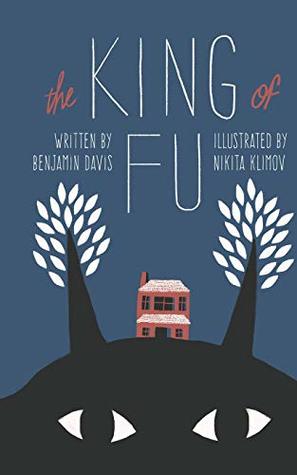
My name is Benjamin Davis. I am an American writer and Journalist living in St. Petersburg. I grew up in a no-name town in Massachusetts where I was more likely to hear horse sex or a pack of wolves eating a rabbit than cars driving by or drunks fighting, as I do now. I work as a freelance editor, tech-journalist, native-speaking-content-monkey, and social media manager for English speaking markets. To cope with the sterility of corporate writing, my fiction sometimes gets a little out of hand. From 2016-2017, I wrote one story every day for a year for the project Flash-365, creating a community of people who appreciate the short-winded and the weird. To me it is where I found my voice and where most of my stories found their home. May of 2018 my first book The King of FU was published.

Personal website

Facebook

Instagram

Goodreads

Patreon

The King of FU Landing Page

Find the perfect gift for everyone on your list with the Barnes & Noble Gift Guide.

Author Interview:

1) Tell us a little bit about yourself. How did you get into writing?

I’ve always loved stories. Eventually, I tried to write one. It was terrible. But my mother, bless her, she read it and said, “have you ever thought about being a writer?” And I laughed, and said, “psh–no. I’m still going to be an astronaut.” I was twenty-one at the time. But I have terrible vision and can’t afford lasik, so the astronaut thing still hasn’t worked out.

2) What inspired you to write your book?

I couldn’t remember my childhood very well, so I just started asking family members and writing down the bits I could remember myself. It was more of a mental exercise to try and track what the hell happened along the way to turn me into such a dysfunctional adult. At first it was only thirty pages, then as the years went by, I would go back to it again and again with whatever new memory I had or new story I heard. In the end the whole process was on and off for about seven years. I didn’t set out to write a book originally, I was just hunting for some traumatic experience, some explanation–but no, just another privileged middle-class white kid with a lot of embarrassing childhood habits and an overactive imagination.

3) What theme or message do you hope readers will take away from your book?

It depends who is reading it. A lot of the book focuses on those weird embarrassing situations and feelings that we all have as children that we desperately shove into dark corners of our mind as adults. I always felt like I had no one to talk to about these sorts of things as a kid because all adults were pretending like they never happened to them. But really, everyone still has an embarrassing dirty child inside their head, and in their past.  I just hope that readers will walk away from my book and think, “well–I guess it’s okay that I still pick my nose after my wife falls asleep.”

4) What drew you into this particular genre?

I enjoy magical realism because it gives you the ability to make a statement about something without spending ten pages on exposition to do it. If the main character has horns and fur, you probably get that he feels different, there is no need for me to go all Holden Caufield on people to get my point across.

5) What authors or poets were a source of inspiration for you when writing these poems and this book overall?

To be honest, I never saw it as poetry. Or–well, I never intended it that way. I wrote it how it felt to think about it, if that makes any sense. I do have poets I’ve idolized over the years; Sylvia Plath, Charles Baudelaire, T.S. Eliot. But I was more inspired by writers who used a lot of honesty and humor to shape their real-life stories like Bill Bryson and David Sedaris.

6) What social media site has been the most helpful in developing your readership?

Much of our audience came from our website Flash-365. I wrote a story every day for a year and Nikita drew a picture to match each story. It was an arduous process for sure, but some of that audience translated over. I live in Russia and here everyone uses Telegram. I have a channel on there where we post stories and updates and it is a direct messenger notification for readers, so it works really well for directing traffic to new stories and engaging people on a more personal level. My girlfriend is an SMM goddess, so she manages my Instagram and Facebook and all of that. Without her I am pretty hopeless.

7) What advice would you give to aspiring or just starting authors out there?

Be prepared and patient. It isn’t like in the movies where the main character is a writer and by the end everyone is like, “OMG I read your story in the New Yorker!” or the long-lost lovers bump into each other as one or the other walks out of a stylish and well-publicized reading. It’s a load of crap, Hollywood is full of lies, beautiful lies–but lies none the less. I would say, if someone is serious, save money. Pay to get your work well edited, once, twice, three times. Take a few weeks off after all of that, burn the book, cry, start over and then pay for another round of edits. Then, if you want to publish traditionally, get ready. It is a damn process. This means finding, and sometimes paying for services and memberships to get access to agents, educating yourself, figuring out what the f*ck a query letter is supposed to say and then waiting, waiting, waiting, then eventually you die and hopefully your grandchildren know how to write a query letter.

8) What does the future hold in store for you? Any new books/projects on the horizon?

We’ve just released a bilingual (Russian-English) novelette titled “The Babushka Society.” (http://a.co/d/h4L5unT

) It is illustrated by the same artist as The King of FU and we worked in collaboration with a podcast She’s In Russia (S.I.R.) to turn it into a radio drama which is available for free on their podcast (https://soundcloud.com/shes-in-russia/73-the-babushka-society). That was the past couple of months, I have recently created a Patreon page to showcase my projects and collaborations where each month I plan to collaborate with someone to create something new; radio dramas, short films, audiobooks, comics, tickle-porn. Who knows. (https://www.patreon.com/benjamindavis)

Get the Grinch with Max B&N Exclusive Plush for only $12.99 when you buy any other item on BN.com

AMAZON GIVEAWAYS

The Babushka Society

The King of FU

Interview with Author Maria Thompson Corley

Interview Questions for Maria Thompson Corley

1) First off, tell us a little bit about yourself. How did you find yourself drawn to the world of writing?

I always liked to write. When I was young, I was much more secure expressing myself in writing than in speech. Not that I never spoke, but I was always more self-revelatory in writing. I would write my parents notes, sometimes, instead of speaking to them about things that bothered me. I wrote my first novel at 14 (no worries—I have no intention of inflicting it on anyone!). My first published novel was Choices, which I wrote on a whim. I had the rather confident attitude that I could come up with something as good as a lot of the books I was reading, so I sent my manuscript to Ballantine and received a letter back from an editor. She said her list was full, but recommended that I get in touch with someone at Kensington, since they were starting a line of books aimed at African American women. I was kind of in the right place at the right time.


That was in 1996! My book was published as a romance, and my follow up didn’t fit the genre, since I had a prominent gay character who was in a relationship. I didn’t want to get rid of him, deciding instead to focus on being a pianist (I have Master of Music and Doctor of Musical Arts degrees from Juilliard, and have played since I was 4). I had married by then, and my daughter was born in 1997, followed in 1999 by my son, who is on the autism spectrum. It took me a while to get back to writing, with all of that on my plate. When my marriage broke up, I found writing very cathartic, and I can truly say that the written word has turned out to be as much a part of me as music.

I’ve even started writing a bit of poetry. One poem was published by New York Literary Magazine, having come in second in a contest, and I presented one about my son, the first one I’d written since middle school, at the National Autism Conference last summer. We’ll see where that goes. I have ambitions of writing a few more and trying to set them to music. Some of my songs and solo/choral arrangements have been performed nationally and, in one case, internationally, and one choral piece was published by Walton. That said, I can’t do everything. Can I? Either way, I feel like an emerging composer. We’ll see.

2) What inspired you to write Letting Go?

The inspiration was a who, not a what. My mother suggested that I write something a bit closer to home, shall we say. As mentioned in my acknowledgments, she isn’t a big fan of the four-letter words and occasional sex, but she is a huge supporter of everything I do. I am so blessed to have been given wonderful parents.

What’s fun about the book is that people who know me can see similarities to my life, but most of the book is fiction. Which is which? You’ll have to guess (hint: I made up the first chapter. That said, I definitely want to be present at the auditions for casting Devonte Jones).

3) What message or theme do you hope to convey to your readers when they read this book?

I hope readers will look at love, in all its manifestations, through fresh eyes. While people call my book a romance, to me, the cliché is true—the greatest love of all is between you and yourself.


4) If you could sit down for a cup of coffee with one of your characters, who would it be and what would you say to them/ask them?

Tough question! I think I’d sit down with Langston, ideally with him supplying the coffee and another treat of his choice, hopefully something he’d made himself (selfish reasons! I love good coffee and treats!). I’d ask him if he had any regrets about the way his path went, as in, if he wished he’d done some things sooner, or felt they happened at the right time.

The thing is, I think we all do the best we can with what we have, even if what we’re doing is destructive. We have to get better, internally, to do better.

5) When writing Letting Go, what was more important to you: plot development or character development?

Hopefully, both! That said, I love to get into people’s heads, and to create imaginary friends or foes) for the reader. Humans are endlessly complex, and thus (at least to me), endlessly fascinating.

6) What social media site would you say has been the most helpful developing your readership?

I’m not sure! I’d say a toss-up between Facebook and Twitter. Then again, I basically use only Facebook and Twitter, so…

7) What’s one piece of advice you would give to new authors out there?

Be an educated, ruthlessly critical author. Learn the grammar, read books and articles by respected writers, analyze the way they use words. Strive to write good sentences, so that your ideas truly come to life. Find beta readers who are honest and skilled in the craft (I know this isn’t always easy), and then listen to them. Opinion is just that, but I at least try to consider every suggestion, so that if I don’t take it, the reason isn’t my own defensiveness or insecurity. That said, I’m so used to critique, these days, I have a very thick skin.

8) What are your future plans? Any new books in the works?

I just finished a revision of the New Adult book I mentioned earlier, with the gay character. When my beta readers have weighed in, I’ll revise some more and see where that goes. After that (or while I wait for my betas), I hope to write a book from the point of view of a very famous animal. I have barely started (last summer). I know that will be shorter, but also harder because I have to stick to the historical facts. Oh yeah, and because I’m choosing to write from the point of view of an animal!