1) Tell us a little bit about yourself. How did you get into writing?
Writing has been my passion since childhood. It has been my dream since then to be a writer as a long-term career.
Aside from writing I love cross stitching, photography and crafting. I’ve been writing for Fansided for years, more specifically Show Snob where I cover television show recaps and news for several shows including The Walking Dead and Bridgerton.
Advertisements
2) What inspired you to write your book?
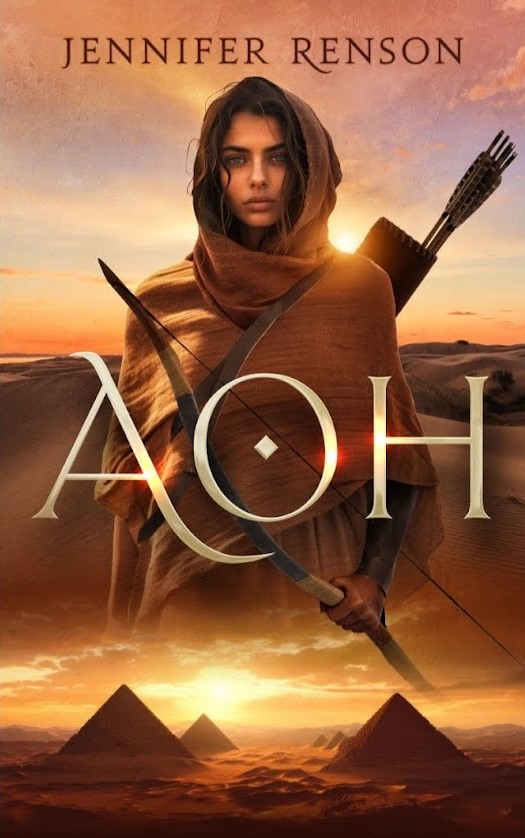
I have had a deep love, passion and interest in Ancient Egypt since I’ve been about 12 years old.
I wanted to write a book that could transport readers to that time, with the focus being the story of a strong but vulnerable young woman. I wanted her story to appeal to readers, get them invested and want to follow her journey through several books.
3) What theme or message do you hope readers will take away from your book?
Firstly I hope readers will learn a lot about Ancient Egypt, with the possibility of loving the time period as much as I do. It is a very rich and plentiful time period that we constantly discover and learn more about.
Secondly, my hope is for readers to connect with Aoh, almost to the point where they believe she once existed. Although she is fictional, she’s inspirational in the sense she’s brave, loyal, and stays true to herself and her beliefs.
4) What drew you into this particular genre?
Honestly, I wasn’t drawn to the genre. When I get inspiration for a story, I let the idea run wild. If the story winds up becoming scary, then it will fit into the horror genre. If it takes a more whimsical, magical and eerie route, like my other book Carousel, then it will fit into the fantasy genre. Admittedly, writing a historical fiction/young adult book has been a lot of fun as I got to apply my love for Ancient Egypt and turn into a tale that I hoped readers would find to be refreshing, new and compelling.
5) If you could sit down with any character in your book, what would you ask them and why?
It’s hard to choose just one but probably the Pharaoh’s mother Aneski. Admittedly she was not a planned character upon my first draft of Aoh but she’s become one of my favorite characters overall. She’s quick witted, honest but sassy as well. I’d probably ask her about all of the palace gossip, since she seems to know and observe a lot. She’d probably deny knowing anything though.
Advertisements
6) What social media site has been the most helpful in developing your readership?
That is a tough question as I believe social media is very tricky in general. It’s always changing and social media platforms seem to shift in relevance constantly. But I will say Facebook has been the most helpful. I created my Facebook page: Books and Poetry by Jennifer Renson some years ago and since then I’ve learned how to use it effectively.
7) What advice would you give to aspiring or just starting authors out there?
If you want to write, do it. Go for it. Don’t be afraid to try. You don’t have to start with a full blown novel. You can start small and grow from there. Remember there is no apology for passion.
8) What does the future hold in store for you? Any new books/projects on the horizon?
I’m currently writing a new book that is separate from Carousel and Aoh. Don’t worry there is a Aoh sequel coming. Aoh’s story isn’t over yet.
I am in the process of planning several book talk and signing events for later this year.
My hope is that as I work hard in promoting my books and passion more opportunities will arise.
I’d love to be able to attend conventions and events where I can meet my readers, dive into Aoh’s story, and see my book on top selling charts.
Advertisements
About the Author
Jennifer Renson-Chiappetta’s passion for writing began in childhood. Her writing career spanned from articles in Lost Treasure Magazine to her self-published poetry books; Delightfully Dark: A Collection of Poems and Tales, Eo: Go, walk, ride, sail, pass, travel and Uncharted. She is the author of the modern-day fairy tale novel Carousel. Presently she is a mother and wife; she enjoys spending her time with her family and friends, writing, crafting, specifically cross stitching and reveling in Victorian Era ambiances while living in New Jersey.
1) Tell us a little bit about yourself. How did you get into writing?
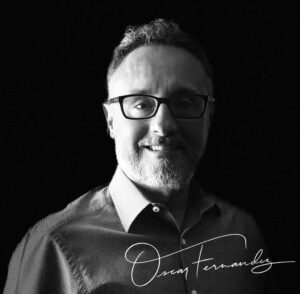
Ever since I was a teenager I took an interest in writing. Since then, I have been keeping a journal where I document my life, travels, experiences, and mostly my thoughts about my current affairs, the way I view myself the world, and how I need to proceed to accomplish the life I want to live. One thing I noticed while writing though, was the ease by which words kept on flowing from my hand into the paper… So I kept on writing! On this note, I love to write on paper with a fountain pen; it feels smooth and somehow intellectual. I do this mostly for my personal writing on my journal, but for business writing I most definitely use my laptop.
Advertisements
2) What inspired you to write your book?
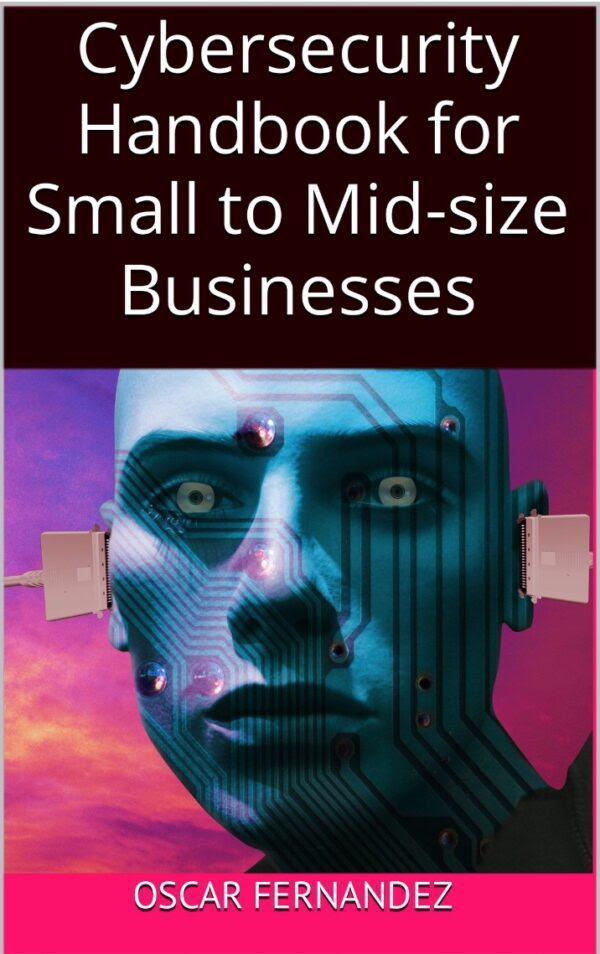
What inspire me to write my book was a genuine desire to demystify cybersecurity for non-technical individuals who may be entrepreneurs of business owners. Another reason to write the book came from the fact that I am an authorized distributor of a cybersecurity software, and based on the intricacies of the software, I realized how important it was to break down -even further- how cybersecurity works; in particular for entrepreneurs, and small to midsize businesses (small business: 1-99 employees; mid-size businesses 100-1000 employees). In a way, it is a venue to saying: here is cybersecurity for the rest of us!
3) What theme or message do you hope readers will take away from your book?
The theme I would love for my readers to take with them is to realize that cybersecurity is not complicated as it may seem, and that it is more affordable than ever. Not only that, but base on a simple analysis of the current technologies use by a business, one can determine what are the technologies needed to protect them. So while the reader is going through the handbook, they can literally pick and choose what is best for them based on what areas of the business they need to protect. For instance, is it the WIFI? Their VPN? Or protecting the business from phishing attacks? Etc. etc.
4) What drew you into this particular genre?
I have been working in technology for the past fifteen years, and throughout this time, cybersecurity kept on taking a bigger and bigger role for companies and individuals alike. For the most part, I have worked as a consultant -a one man operation,- so one day I asked myself, how can I grow my practice to create a bigger impact while helping clients protect themselves? So cybersecurity came to mind as a topic that it is extremely important -besides their day-to-day operations.- Not only that, but I didn’t want to become just another business providing cybersecurity solutions; I wanted to differentiate myself through the demystification of cybersecurity.
Another aspect that drew me to write this book, is the realization of how vulnerable all of us are to cybersecurity attacks. We are note safe, at all! From identity theft to ransomware attacks, and everything in between, we are a moving target. So I wanted to become part of the solution.
5) What social media site has been the most helpful in developing your readership?
I am a brand new author, and this is my very first book. So I haven’t have enough exposure in social media to know which one can work. So far, the book is published in Amazon both in the Kindle and paperback versions. And hopefully soon on an audible version as well.
6) What advice would you give to aspiring or just starting authors out there?
The advice I would give to aspiring authors is to not wo worry too much about the format itself; just start writing. As one moves along with the writing process, one can begin structuring it. Eventually, all will come into place as you read what you wrote while providing flow, and structure. For publishing, there are companies out there that will format the file for you, so no worries there.
7) What does the future hold in store for you? Any new books/projects on the horizon?
My mind is always on the go -for better or for worse,- but I would love to continue writing and make it be my living. To start, I would love to create a series of the book I just wrote, and eventually move to another genre, for instance, social and cultural affairs and even a personal biography. I feel there is so much material in my head waiting to be written!
Advertisements
About the Author
Oscar is an avid technologist with over fifteen years in the IT industry. He has worked and consulted with IBM, Apple, Anthem, Genentech (Roche), small to mid-size businesses, non-profits, city government, and most recently with TC Energy.
His ability to understand business processes, network security and find IT solutions to fulfill business needs is unparalleled.
Oscar holds a master’s degree in Global Management from Georgetown University and ESADE School of Business. He earned a bachelor’s degree in business administration from Notre Dame de Namur University, and he also obtained an Entrepreneurial Management Certification from UCLA Anderson School of Business.
Oscar is Cronus Cybersecurity’s CEO, and through his networking abilities and international experience, he has led the company to new highs.
1) Tell us a little bit about yourself. How did you get into writing?
Let’s see, I was born and raised in Phoenix, Ariz. (where I still live today) to two liberal, Jewish parents who moved from Queens, N.Y in the 1970s. They were both teachers and always encouraged my creativity. I’ve been writing since I was a kid. In fact, I wrote my first short story when I was seven years old. It was about a girl who befriends a group of aliens named after different foods. I was always a creative, hyper, and somewhat neurotic kid, and I think writing just gave me an outlet. It also became a buffer against relentless bullying, and as life went on, writing became my therapy–my way of processing the world and everything happening around me. I started my career as a daily newspaper reporter, but had to leave journalism due to the Great Recession. I then got into strategic communications and public relations, but I never stopped writing creatively on the side. I just love great stories!
Advertisements
2) What inspired you to write your book?
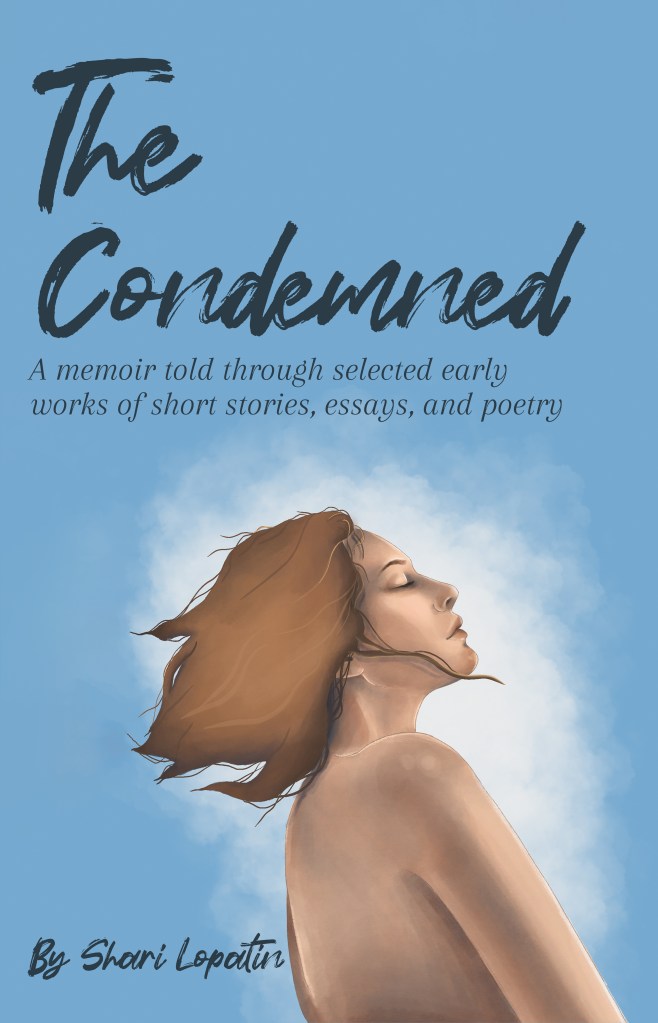
The story of how “The Condemned: A memoir told through selected early works of short stories, essays, and poetry” came together is kind of random and haphazard. I’ve always written my way through every major life adversity, until COVID hit. I just couldn’t write during 2020; I was honestly traumatized. Things got a little better in 2021, but I struggled to regain my creativity and motivation. I guess that’s a typical trauma response. I began writing a little in 2022, then lost my job due to a COVID layoff, so I stopped. By 2023, I felt depleted and seriously missed writing, yet I could not come up with anything creative. In an effort to reignite my writing muscle, I started re-reading a bunch of older works from my past, much of it unpublished.
What I found was a plethora of stuff I’d written throughout the first 20 years of my formative life: poetry from high school and college, MySpace rants and essays from my early twenties, fictional short stories from my early thirties. I realized that when combined, these writings told my story, that of a millennial coming of age through the 1990s and early 2000s while navigating typical young adult issues exasperated by historical events like The Great Recession, September 11, and personal injustices like Antisemitism. I decided to select my best work from those years, lightly edit it, then combine it into a memoir that became “The Condemned.”
3) What theme or message do you hope readers will take away from your book?
“The Condemned” has a variety of deeply emotional pieces that touch on themes still relevant today such as mental health, the search for home, the awkwardness of dating, and love and heartbreak. But ultimately, the most prevalent theme is one of feeling othered. I often struggled to find myself within a confusing and sometimes ostracizing world, especially once faced with Antisemitism that came from a personal and unexpected place. However, I managed to pull through many of those obstacles and found a greater sense of self-acceptance, hope and truth. My hope is that others find empathy, solidarity, and maybe even healing by reading my words and stories.
4) What drew you into this particular genre?
I’m not sure! I don’t think I was particularly drawn to memoir; it just seemed to be the right genre for the collection I was putting together. As for the short stories and poetry, I’ve always been drawn to deeply emotional writing, probably because I’m highly emotional. I really enjoy the genres of contemporary fiction (which my short stories fall into), as well as dystopian fiction (which my debut novel, “The Apollo Illusion,” falls under) because they make you think, and they make you feel.
Advertisements
5) What social media site has been the most helpful in developing your readership?
Substack! I wouldn’t consider Substack a social media site necessarily, more of a cross between an email newsletter and blogging platform. However, they’ve woven elements of social media into their platform and really built a tool for writers to grow their followings. My favorite aspects of Substack are that you can use it for free, you can monetize when it’s right for you, and you can access the email addresses of your followers. That means if you ever decide to leave Substack, you can take your followers with you. I sort of see Substack as the YouTube for writers, but with more control. I currently publish my newsletter on Substack, “Rogue Writer,” where I write original serialized fiction, personal and political essays, poetry, and occasional book or movie reviews. I also share updates and deals on my latest books there. Consider signing up as a free or paid subscriber, and stay in touch with me that way!
6) What advice would you give to aspiring or just starting authors out there?
Write, write, write. If it’s a blog, or privately within your journal, or just on your personal computer, always write. Always work to improve your craft. And READ. Don’t just read what you think others enjoy. Read what excites you. Get to know what works, and what’s boring. Then, incorporate those strategies into your own work. Finally, be patient and persistent. You won’t improve overnight, but if you keep working at it, you’ll see yourself getting better each year. One day, you’ll write a novel that’s good enough to pitch to literary agents. When that time comes, keep pitching, even after years of “no’s,” because it only takes one YES! And if that yes doesn’t come fast enough, self-publish. Get your work out there and start building your readership while you keep pitching to literary agents. Life is too short to wait.
7) What does the future hold in store for you? Any new books/projects on the horizon?
Oh yes! I have one completed novel that I finished several years ago on which I’m currently doing a hard edit/rewrite. I’m hoping to find an agent for that one. I also have another novel that I’m halfway through writing and hope to finish a year from now. Finally, I have a new serialized fiction story that I’m planning to publish in my Substack newsletter, “Rogue Writer,” a few months from now. It’s called “Once Upon a Time on Half Day Road.” Go sign up for “Rogue Writer” as either a free or paid subscriber so you don’t miss it!
Advertisements
Author Bio
Shari Lopatin writes stories that matter. An award-winning journalist in her earlier years, she now writes novels that tie into modern-day social issues, serialized fiction, short stories, personal and political essays, and poetry. Over the course of her seventeen-plus year career, Shari has worked as a newspaper reporter, magazine writer, public relations professional, social media manager, and earned the title of “Cat Mom of the Year.” Her next book, “The Condemned: A memoir told through selected early works of short stories, essays, and poetry” is publishing Sept. 9, 2023. Pre-order the Kindle version now for just $2.99! Prices will go up after publication, so get it for less while you can.
Tell us a little bit about yourself. How did you get into writing?
I loved movies as a kid, and still do. I’d make these storyboard-style short stories on paper when I was pretty young. In high school, I wrote my first screenplay. Though I was of course shocked at the time, it was not made into a major motion picture. However, I really enjoyed writing a feature-length script.
Reading turned into a big hobby of mine once I was in my twenties. I wrote my first novel in my late twenties.
Advertisements
What inspired you to write your book?
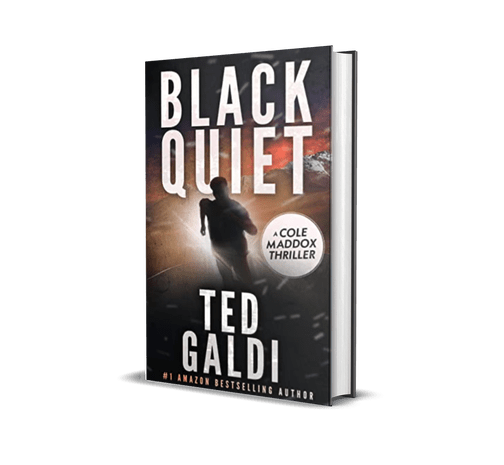
My latest book is an action thriller called Black Quiet. It’s about a former Special Forces commando who hunts for revenge after a gang beats his brother into a coma.
Though the ex-soldier, Cole, has some allies in the story, for the most part, he’s taking on a powerful, mysterious criminal enterprise on his own. He’s forced to rely on his own instincts and take big risks. I felt people out there would connect with a character like that.
What theme or message do you hope readers will take away from your book?
Cole breaks quite a bit of rules to accomplish what he’s after. Though I’m of course not advocating for readers to break the law, I do hope they take the story as a metaphor for solving problems in creative, unconventional ways.
What drew you into this particular genre?
All of my books are thrillers. The genre has the capacity for stories that are both entertaining and thought-provoking.
A good thriller is loaded with suspense. It has that “page turner” feel. But that’s not all. A good thriller will take a social or psychological concept, present various sides of it, and take a unique view on it. Thriller themes often make interesting points about criminal justice, risk, regret, economics, and more.
If you could sit down with any character in your book, what would you ask them and why?
Many characters in this book are trying to kill people. Sitting down in the middle of all that could get dicey.
Advertisements
What social media site has been the most helpful in developing your readership?
I use quite a bit of them. I find they’re helpful in their own ways. For instance, TikTok is a great way to reach readers who don’t yet know who you are, while Facebook is a great way to engage with readers who already know you and want to stay connected about your latest releases, updates, etc.
I’d recommend writers try as many sites as possible. See which ones you like posting on and see which ones wind up leading to good engagement and book sales. Over time, focus on those.
What advice would you give to aspiring or just starting authors out there?
I actually recently started an online-education platform for writers. The intro course, which is free, was made with aspiring authors in mind. Anyone can take it here: https://www.writegrippingstories.com/
The course focuses on character development, plot, theme, and emotional impact. Here are some other tips:
Write in your favorite genre to read. You’ll have an intuitive sense of what’s working and what’s not.
Create an outline before writing the chapters. You’ll save a ton of time with rewrites if you figure out the story’s major pieces, and how they tie together, early on.
When it’s time to write the chapters, just try to finish 500 words a day. It’s a very doable number, even for a first timer. However, if you stick with it, you’ll have a first draft done in a pretty quick time frame. If you write every day, you’d have a 60,000-word manuscript done in just four months.
What does the future hold in store for you? Any new books/projects on the horizon?
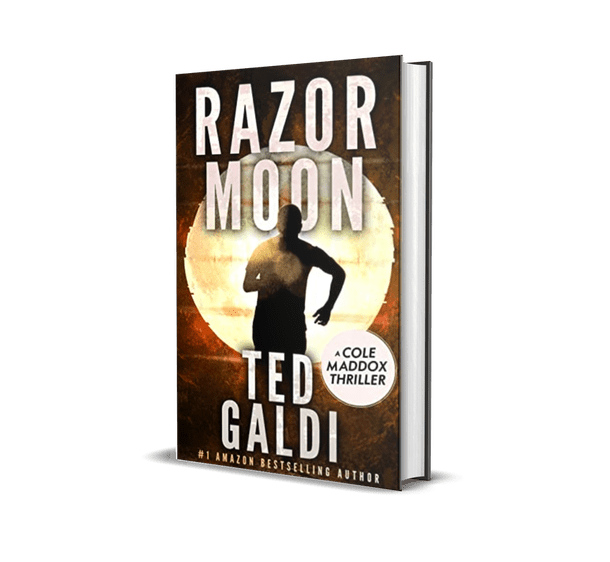
My book Black Quiet is the first in a series. The sequel, Razor Moon, comes out on August 22. The main character, Cole, goes on a dangerous search for a missing fifteen-year-old girl.
Advertisements
Author Bio
Ted Galdi is an Amazon #1 bestselling thriller author. He’s been featured by Kirkus magazine, ABC, FOX, iHeartRadio, and many other media outlets. He’s a winner of a Reader Views Reviewers Choice Award and a Silver Medal in the Readers’ Favorite Book Awards.
1) Tell us a little bit about yourself. How did you get into writing?
Born into the Boomer generation, I grew up in a neighborhood of duplexes abutting the undeveloped woods with packs of kids from working-class families living unsupervised adventures. My high school days were a version of the movie American Graffiti. We lived our stories, and to this day, my buddies and I amuse ourselves for hours retelling, reliving, and laughing about them. It’s a wonder we even lived to tell about some of them.
I always liked to sing. In grammar school I was a choir boy, singing in church every Sunday, and in my teenage years I would sing Doo-wop with the boys on the street corners and was a lead singer in several garage bands. By the time I was 23, I moved on to NYC, and soon became lead singer and songwriter of a band playing the circuit of clubs in Greenwich Village.
By 1965, I got married and hitchhiked to California with my wife. Over the next few years, we moved back to Connecticut and had three children. Weekend adventures were a regular ritual in our family life raising the kids. We would listen to stories, old radio shows, and music on our road trips together, and create our own stories in impromptu choose-your-own-adventure car games.
I always loved telling stories and writing poetry.
Advertisements
2) What inspired you to write your book?
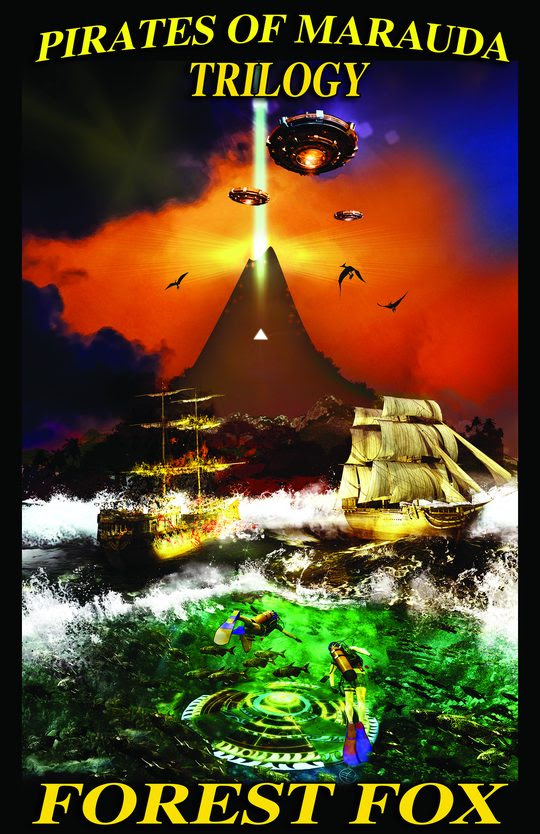
When my first son Eli was 4 years old, I put him into art school as a result of a drawing he did of Batman, Robin, and Superman running abreast. You could feel the motion in the drawing. Since then, he’s done many drawings, one of which was a flying saucer resting on the ocean floor. This picture became the cover of the first book of my Pirates of Marauda trilogy, Circles in Time, and was the spark for my inspiration to write these books.
My kids had grown and moved out by then, and I was devoting more time to writing poetry and doing photography. I was pairing these pursuits in a project I called Thoughts and Images.
When I saw Eli’s picture of the submerged flying saucer, I started imagining it as an adventure starring my boys and me. I suppose I was missing our weekly adventures of old. The story took hold of me and led me in its unfolding, one chapter after another. I really had no idea where it was taking me. After getting it all down on paper, I edited it, rewrote it, and refined it countless times to get to the finished books that I self-published.
3) What theme or message do you hope readers will take away from your book?
My philosophy that rules the worlds played out in my books is that we are all the One called Me. In other words, we are all aspects of one divine spirit, able to create better than we can imagine.
4) What drew you into this particular genre?
Adventure was always the way I viewed my life, and sci-fi was an influential part of our family’s cultural enjoyment with Twilight Zone, Star Trek, and Star Wars.
5) If you could sit down with any character in your book, what would you ask them and why?
I feel like Captain Rosario’s character is my alter ego.
Although he’s a pirate, Rosario upholds his own strict moral code of honor. He doesn’t commit gratuitous violence, he takes care of his crew and shares his wealth equally, and he prefers to use his wiles over force to achieve his goals. When a conflux of events plucks him out of the proper historical time and place of his life, he is forced to live out his days in exile, stripped of his purpose on a strange world in an unknown time, with the only remnant of his identity being the recognition of his loyal crew who still see him as their captain.
I feel like his storyline has some parallels to any person’s time travel through his own life. If I could sit down with Rosario, I would ask him to tell me about the adventures of his youth, as a buccaneer in his prime sailing the seas in search of treasure.
6) What social media site has been the most helpful in developing your readership?
I’m new to the adventure of marketing my books and look forward to developing my readership in all possible ways, better than I can imagine.
7) What advice would you give to aspiring or just starting authors out there?
Write what comes naturally and rely on spontaneity, instinct, and intuition alongside intellect and good research. When you edit, read it aloud. When you’re finished editing, edit it again, and again, and again.
8) What does the future hold in store for you? Any new books/projects on the horizon?
I get my adventure fix weekly as resident pro at Paintball Jungle. I also still enjoy singing and regularly perform for senior communities as well as on the streets as a troubadour.
As for writing, I’ve been doing short vignettes of funny or poignant scenes from my memories growing up. Whether they will turn into a new book or project remains to be seen.
Advertisements
About the Author
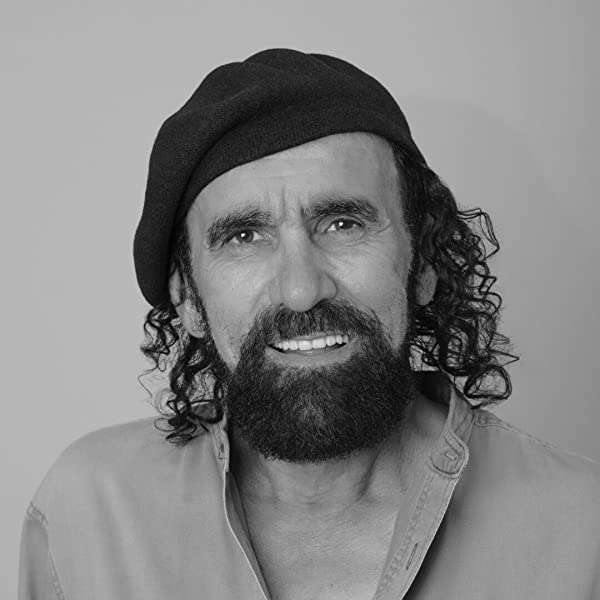
Author FOREST FOX brings his love of adventure to the page in this whirlwind fantasy saga, The Pirates of Marauda trilogy, about what happens when he and his two sons, while on a treasure hunting, diving expedition in the Bermuda Triangle, find a sunken flying saucer that turns out to be the craft that brought Adam and Eve to this planet.
The germinating idea for the story was inspired by a drawing by his son, award-winning artist Eli D’Elia. The author delights in weaving fact with fiction and folklore in this highly original tale, which also serves as a whimsical medium to depict his unconventional philosophy of life.
The author is also a SF Bay Area singer/songwriter and recording and performing artist.
Known in the world of paintball as Magic Carpet Bob, he was 1991 World Paintball Champion with his Team Ironmen, and is resident pro at Paintball Jungle in the Napa Valley.
1) Tell us a little bit about yourself. How did you get into writing?
Well, I spent most of my adult life as a neurosurgeon, practicing first in the Army and then at big academic medical centers. In my job, I had to write a lot for all sorts of reasons—patient care, research, education, administration, and the like. And several years ago, I became interested in burnout in healthcare workers and co-wrote three books on the subject with a clinical psychologist friend of mine. But, I always found writing non-fiction to be laborious and restrictive. Then, I retired from clinical neurosurgery and immediately felt liberated and driven to write fictional works. And I have to say, I’m enjoying the heck out of it. Perhaps it’s the freedom to go anywhere I like, create any scenario I like, color well outside of the lines.
Advertisements
2) What inspired you to write your book?
Through the several decades I practiced neurosurgery, I always tried to bring as many interested parties as possible into my world and show them the ropes. I would routinely bring learners of all levels into the operating rooms and ICU’s and trauma bays—graduate students, undergrads, high school students, and other “civilians.” There was an endless stream of people who wanted to get a peek behind the curtains. So, when I finally had a bit of time on my hands, I decided to write about it—hoping to continue to shine light on that world. But straight-up descriptions felt too didactic, too sterile. Weaving it into a fictional story, however, seemed more promising. It allowed me to explore related feelings and reactions to it—get into the emotional underbelly of it. And to really plumb the humanity of it all. And, I thought it might prove more immersive, more palpable, more real for the reader—put the scalpel into their hands, allow them to wield the screaming high speed cranial drill, have them try to stop the bleeding deep in the patients brain.
Also, a major fictional thread in the story is a paranormal one. I was raised by a Scottish mother and grandmother and they were ardent believers in ghosts, both routinely relating their own interactions with the undead. So, I have always had a fondness for ghost stories and I figured that one might merge well with an exploration of the neurosurgical world.
Finally, I am very interested in the impact healthcare has on the psyche of its providers. It is a tense and frenetic world, and I wanted to portray how the wheels might come off on an over-dedicated provider who cannot find a way to step away from the fray, even for a moment.
3) What theme or message do you hope readers will take away from your book?
Oh, I’d love to open up many channels of consideration for them. The fragility of life. Science vs spirituality. The cost of doing good. What comes after life. The possibility of entities that science can’t define (ghosts, angels, etc). The dedication of so many caregivers. The medically miraculous time we live in. The power of love. The need for work and communication in a marriage. The need to support one another through periods of crisis. The importance of friends.
Ultimately, a message that came through to me as I wrote the book was that life is so darned fragile, that arbitrary personal disaster can happen to any of us any minute of any day, and that we should thus remember to enjoy, cherish, and celebrate every minute of the miracle of life and those we share it with. Make the most of every second, for it truly could be our last.
4) What drew you into this particular genre?
As I noted earlier, I was bathed in the paranormal throughout my childhood. And when I wasn’t hearing ghost stories from the Scottish side of my family, I was reading them. But I think a career of spending so much around the dead and the dying drew me in deeper. I started thinking about how if there was a world of ghosts and spirits, and they were somehow inclined to reach out to the living, perhaps their first candidates would be the people who spend so much time near the transition zone, the bridge—if you will—between life and death. Doctors, nurses. Those who populate the ICU’s, operating rooms, and emergency rooms of our major medical centers.
5) If you could sit down with any character in your book, what would you ask them and why?
Well, the main protagonist, neurosurgeon Ryan Brenan can’t see the damage his workaholism is doing to his marriage, his family, and his own psyche. He is unable to step away from his work for even a minute, even during his brief periods at home. I would want to discuss with him whether this was making him happy. Whether he believed it made him a better doctor or might actually be compromising his ability to care for his patients. Whether he felt it was sustainable. Whether he believed he could look back at the end of his life and be happy with his choices. Whether it was realistic for him to see himself as the soul driver of quality on his team. What kind of lessons he was giving to all the learners around him (and his children) about how they should conduct their professional lives.
I would also like to explore with him whether, in the end, he believed the ghosts were real. And the implications of his answer.
6) What social media site has been the most helpful in developing your readership?
I was hoping you would clue me in on this one! A lot of Facebook friends tell me they can’t wait to read the book. I spent a fair amount of time and effort on Twitter but it somehow closed down my original account so I had to start up new one and don’t have thousands of followers. But, I felt waves of interest in my literary posts there anyway. I am currently planning out some related videos for Tik Tok, You Tube, and the like. We’ll see.
7) What advice would you give to aspiring or just starting authors out there?
I think writing is likely very personal. So, I suppose, I would advise finding one’s own routines, rhythms, inspirations etc. I resonated with some of Stephen King’s advice. That is to read a lot. And write a lot. And let the story take me where it wants to go. Personally, I tend to spill out onto the page – verbal dysentery, if you will. With only a roughly sketched overall structure. Then, I edit and rewrite like crazy. Over and over again. Cut a lot. Save some for other stories. Keep editing and rewriting. This book started at 260,000 words (it’s now 100,000). I’m lucky, I enjoy editing/rewriting. But I get that others are super careful writers. Each sentence is well crafted. Each word is carefully chosen. Not many rewrites needed. More power to them. Do it! But that isn’t me.
Then, I suppose, I would recommend writing for oneself, not a market. I know this is not very original. And that I am not depending on writing for a livelihood. But if one can write for oneself with no real eye on pleasing people, I have to believe that it will make, and keep, writing genuine, and fun. Super fun. A blast. It allows for maximum creativity. And opens up all sorts of channels in one’s own mind. New discoveries about oneself and about the world around us await around every corner. And we are free to explore them.
8) What does the future hold in store for you? Any new books/projects on the horizon?
A YA soccer novel is written and is in about the twentieth rewrite. No ghosts. But fun. And I have the opening chapters of a dystopian novel—hopefully with a new angle—written.
What I would really like to get into, now that the pandemic is kind of over, is meeting with, and discussing a wealth of topics with interested readers and learners. I’m willing to sit down with any book club, reading group, class, organization, club, professional group, etc. and take on any subject raised by the book or that is in my wheelhouse of expertise or quasi-expertise (or no expertise at all!). We can certainly meet on zoom (yuch) or preferably, in person. Subjects I might be able to shine some light on include:
Burnout, wellness/resilience, work-life balance, psychological distress, peak performance, death and dying, the bravery and grace of the sick and injured, ghosts, the paranormal, the interface of science and religion/spirituality, leading a full life, music, exercise, health, why kindness matters, living simply and sustainably, critical communications, breaking bad news, critical thinking, gratitude and humor in life, why burnout is often self-inflicted, team sports, sports injuries, soccer, reading, writing fiction, ideas for books and stories, research, reading scientific literature, Neuroscience (wide range of topics – e.g. concussions, spine injuries, Parkinsons Disease, brain tumors, strokes, brain surgery, spina bifida, brain infections, head injury, hydrocephalus, seizures, etc.), history of medicine, the healthcare universe, healthcare careers, healthcare socioeconomics, medical ethics, medical education and education in general, applying to professional schools, advocacy, the medical legal world, compassionate care, life in medicine, facing serious illness, and more.
In addition, I swore that I would teach myself the bagpipes. So, here we go!
Advertisements
About the Author
Gary Simonds practiced the full breadth of neurosurgery for decades in the US Army, Geisinger Clinic, and as the Chief of Neurosurgery at the Virginia Tech Carilion School of Medicine. He has performed thousands of highly complex procedures on adults and children and cared for tens of thousands of patients. In addition to his expertise in neurosurgery and the neurosciences, he is interest in an array of related subjects including: medical ethics, medical socioeconomics, humanism, doctor patient interactions, patient advocacy, and burnout and psychological distress in healthcare workers. He has co-authored with Clinical Psychologist Wayne Sotile three non-fiction books on burnout and resilience in healthcare workers and has recently written a related award-winning novel, Death’s Pale Flag. Gary stepped away from clinical neurosurgery in 2020 but still teaches undergraduates and medical students at Virginia Tech. He lives in Black Mountain NC in a log cabin with wife, Cindy, and border collie, Hamish, and is excited to connect with his readers and interested parties over a range of subjects.
Tell us a little bit about yourself. How did you get into writing?
Now and then, JFK comes to someone in a dream and says: “We choose to go to the moon. We choose to go to the moon in this decade and do the other things, not because they are easy, but because they are hard, because that goal will serve to organize and measure the best of our energies and skills, because that challenge is one that we are willing to accept, one we are unwilling to postpone, and one which we intend to win, and the others, too.” It’s a command, you see, not just commentary.
Advertisements
What inspired you to write your book?
We live with the possibility of sudden violence from other humans. Violence can be “random” in the sense that the victim doesn’t deserve it and has done nothing to attract it, but at the same time it may not be random in the sense that the perpetrator has motivations and drops observable clues by which others may predict their behavior. Anyway, I was thinking about how workplaces are generally unequipped to handle this. I was also thinking about how someone’s identity — not only their personality, but the social categories they belong to — can affect that type of experience and interaction.
What theme or message do you hope readers will take away from your book?
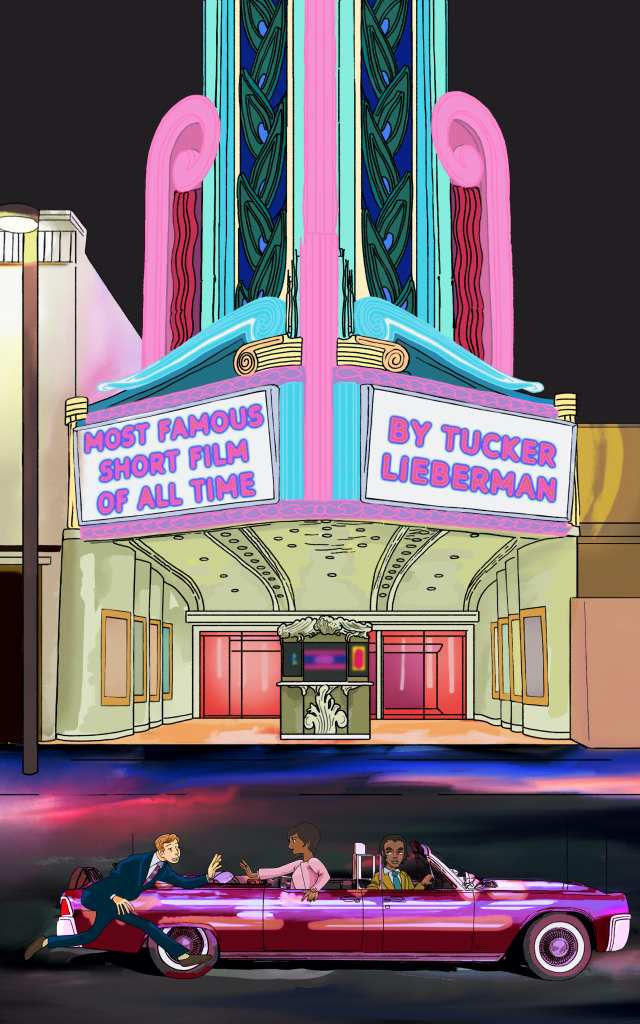
The novel is long, and it has a unique structure. Reading the whole thing, or at least large parts of it, is key to the learning experience I hope people will have. As Lev reflects: “Reading becomes a ‘novel’ when we notice we must grant our time.” This novel is about a couple thousand things, so each reader will have a different takeaway. Potentials are there. We don’t exhaust our possible personal takeaways from any book until we spend a lot of time with it. The question then may become: Why read this book and not another? My answer there: Most people have never read a novel narrated by a transgender character written by a transgender author. I, as author, chose to give the opportunity for an extended experience, and the reader (if they grant their time), can accept that opportunity. It may take a couple more hours to read Most Famous Short Film of All Time than it would take to read a novel with fewer pages or faster story pacing. Some of what can be learned or felt here is different than what’s offered by a book that’s shorter or a book that isn’t trans. A meta-question, then, is why we grant our time to some books and not others. There isn’t a universal answer. My novel keeps hitting its own brakes, prompting the reader to answer that question privately for themselves. It asks: Why are you here? Why don’t you read something else instead? What do you want to gain? Will spending more time here help you find it? Would you be more likely to gain an understanding from this novel if it were shorter and spoke more directly? Why does any learning require time?
What drew you into this particular genre?
Lev reflects, “Reading becomes a ‘novel’ when we notice we must grant our time,” and on the very next page he says: “’Invento el género,’ Unamuno says of his own work; I invent the genre. Or gender, if you are so disposed.”
If you could sit down with any character in your book, what would you ask them and why?
Lev exchanges words with his boss, and the boss may have power to change the situation, but the boss never really listens or cares. Lev spends a lot of time wishing he could talk to his friend Stanley, and Stanley does care and engage, but he speaks in riddles without yielding up a lot of actionable information. His friend Aparna, by contrast, tends to speak more directly. If I wanted to ask one character for general information or advice—information about me, more so than about them—I’d take all that in mind. But if I wanted to know more about the other character? I suppose one conversation that might kindle a motor is with 1962 JFK, when he shows up in Lev’s dream in 2015. “We’re having a conversation, JFK and I,” Lev says. The first thing Lev asks JFK is: “How terrible am I?” JFK helps himself to Lev’s whiskey and is impressed by Lev’s apartment, and he says Lev can be his vice president. It’s more of a command than an offer. We never find out why he says that. (Although there are hints, having to do with the life cycle of cicadas, and perhaps with something Stanley says to Lev a year later about what’s “tel-evidente.” Readers can make what they like of it.) If I could pick a conversation to have, I’d be in the room with JFK and Lev, and I’d extend the dream a minute longer. I’d assume the dream-version of JFK has a fictional reality that is equal to Lev’s fictional reality, and I’d ask JFK why he appears to Lev in this dream.
What social media site has been the most helpful in developing your readership?
In the past, I’ve connected with many people on Twitter. Unfortunately, one month after my novel’s publication, Twitter’s ownership changed, and Twitter itself changed. The man who bought Twitter for $44 billion — a massive overpayment — did so, by a common interpretation, because he has a personal vendetta against all trans people. When I talk about the importance of reading books by trans authors that are about the ways trans people experience and respond to structural power and to individual threats, this is part of what I mean. Anyway, Twitter was a good exercise for me in short-form communication, but I’m better at long-form writing, so these days I’m focusing on blogging on Medium. I’d recommend that writers try a paid membership there for a solid opportunity to read and engage in substantive ways, on a website where the human and algorithmic curation gives us a real chance.
What advice would you give to aspiring or just starting authors out there?
Find other writers whose opinion you’d value, and ask them to read your work. Make a fair trade. Reciprocate by reading their work, or else pay them, so you can get real feedback. Listen to the feedback. Make 90% of those changes. When an editor tells me I ought to change something, my default assumption is that they are correct. My experience working through a long list of marked-up passages is that my original wording is right only 10% of the time. Also, I prefer to reach out to one reader at a time so I can make changes and send the improved draft to the next reader. That assumes I’m prepared to iterate and wait for each person’s response separately. The calendar has to cooperate. For a novel, since each professional reader usually needs at least a month of turnaround time, this process takes a year or more. The advantage of taking so much time to edit the novel is that meanwhile I’ll grow as a person and my personal growth will guide the novel. Novels take time. “All novels are about time,” Lev says.
What does the future hold in store for you? Any new books/projects on the horizon?
I’ll be at the AWP conference in Seattle in March 2023. I’m enjoying writing online articles on Medium, and I’m doing a five-year anniversary update to one of my nonfiction books.
Advertisements
About the Author
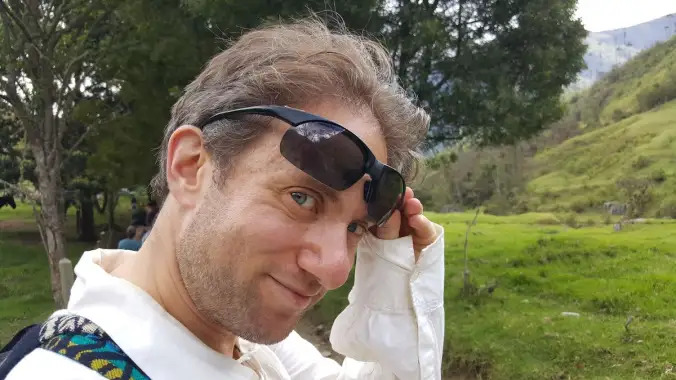
Tucker Lieberman is the author of the nonfiction Painting Dragons, Bad Fire, andTen Past Noon, as well as a bilingual poetry collection, Enkidu Is Dead and Not Dead / Enkidu está muerto y no lo está, recognized as a finalist in the 2020 Grayson Books Poetry Contest and nominated for the 2022 Elgin Award by the Science Fiction and Fantasy Poetry Association.
His essay on a horror film appears in It Came From the Closet (Feminist Press, 2022). He’s contributed to three anthologies recognized by Lambda Literary: Balancing on the Mechitza (North Atlantic Books, 2011 Lambda winner), Letters For My Brothers (Wilgefortis, 2012 Lambda finalist), and Trans-Galactic Bike Ride (Microcosm, 2021 Lambda finalist). His flash fiction was recognized in the 2019 STORGY Magazine Flash Fiction Competition.
His husband is the science fiction writer Arturo Serrano, author of To Climates Unknown (2021) and contributor to the Hugo-winning blog nerds of a feather, flock together. They live in Bogotá, Colombia.
1) Tell us a little bit about yourself. How did you get into writing?
Three fortunate circumstances helped me develop into a writer.
The first influential factor in my life was the privilege of being born in New York City and being exposed to rich cultural experiences as a child. For example, my relatives took me to the American Museum of Natural History, the Hayden Planetarium, Museum of Modern Art, Carnegie Hall, and Broadway shows. By age six, after the theatre, I started buying a copy of the drama or musical we’d just enjoyed at a wonderful place in Times Square, The Drama Bookshop. I wanted to be better equipped during dinner table discussions of the play. These formative experiences, rooted in The Big Apple’s vibrant cultural milieu, played a pivotal role in shaping my intellectual curiosity and nurturing my appetite for the arts.
The second factor was growing up without a television but with easy access to a library.
The third factor was being surrounded by adults – with limited access to children my own age unless I was in a classroom. Since my parents could not afford to finance a mortgage right away, we lived in a large house with my maternal grandparents and unmarried aunts until I was 4 ½. This household served as a hub for buying and receiving numerous birthday and holiday cards, providing me with ample exposure to bad poetry. Even as a child, I was critical about awkward rhymes in Hallmark cards, so at age three and a half I launched my own greeting card line. I wrote the verses and one of my aunts illustrated each card. Lots of praise (by our relatives) launched a young formalist.
By age four I was being taken to numerous Broadway matinees. This made an impact. By age nine, I had my first one-act play onstage with a cast of five actresses (recruited from my Girl Scouts chapter); it ran for several months in NYC. Also at age nine, my first poem (“The Tiger”) was published in a school magazine. At age 15, a short story (“No Way Out”) that I had written for my high school magazine won a gold medal for literary achievement. There has never been a time when I did not think of myself as “a serious writer.”
Advertisements
2) What inspired you to write your book?
Pure serendipity. At the time, I had been circulating a 29-poem manuscript, “Women Who Were Warned.” But Beacon Books’ poetry imprint UniVerse Press does not let a poet upload a full manuscript. Instead they want a proposal with a writing sample. As I awaited a response, “Women Who Were Warned” found acceptance from Cerasus Poetry in London, rendering it unavailable for publication anywhere else. Moreover, UniVerse Press wanted a full-length collection – and by October 1, 2022. Opportunity and a deadline blew the whistle.
3) What theme or message do you hope readers will take away from your book?
“Apprenticed to the Night” weaves together the tapestry of everyday encounters with the extraordinary. Until the pandemic, I had deliberately omitted revealing my supernatural experiences in my writing. I’m hoping that readers will be open-minded.
4) What drew you into this particular genre?
Since childhood, I’ve been aware of metrical verse and memorized a lot of poems. Writing formal verse comes naturally to me.
Advertisements
5) What social media site has been the most helpful in developing your readership?
Twitter has a thriving literary community with hashtags such as #amwriting, #poetrycommunity, and #bookbloggers. I’d love to connect with more reviewers on TikTok a.k.a. #BookTok.
6) What advice would you give to aspiring or just starting authors out there?
Read widely and immoderately. Be on the alert for online writing workshops, especially the no-fee options. For example, Sundress Academy’s Poetry Xfit meets from 2-4PM EST on the third Sunday of every month. All events are free and hosted via Zoom, which can be accessed at tiny.utk.edu/sundress.
7) What does the future hold in store for you? Any new books/projects on the horizon?
My eerie fully illustrated Samhain-themed collection “Always Haunted: Hallowe’en Poems” is with a publisher who requested it. (Fingers crossed.) While I am polishing a full-length poetry collection on ghosts, “Dark and Airy Spirits,” I’m finishing up two other chapbooks. One is devoted to suicide poems and the other is inspired by the poignant journey I took with my terminally ill mother when I was her sole caretaker.
Advertisements
About the Author
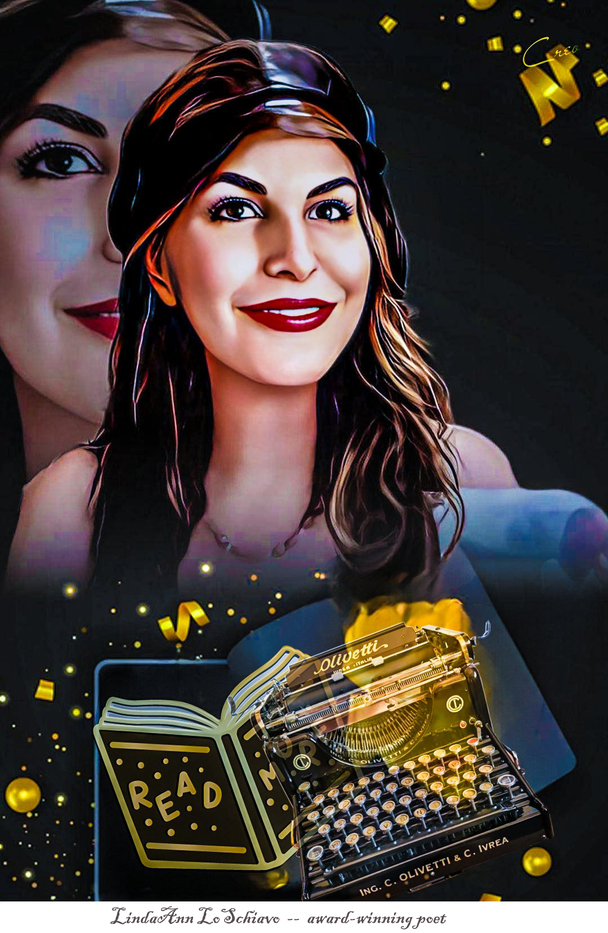
Native New Yorker LindaAnn LoSchiavo, a four time nominee for The Pushcart Prize, has also been nominated for Best of the Net, the Rhysling Award, and Dwarf Stars. She is a member of SFPA, The British Fantasy Society, and The Dramatists Guild.
Elgin Award winner “A Route Obscure and Lonely” (US: Wapshott Press, 2019), “Women Who Were Warned” (UK: Cerasus Poetry, 2022), Firecracker Award, Balcones Poetry Prize, Quill and Ink, Paterson Poetry Prize, and IPPY Award nominee “Messengers of the Macabre” [co-written with David Davies] (US: Audience Askew, 2022), “Apprenticed to the Night” (UK: UniVerse Press, 2023), and “Felones de Se: Poems about Suicide” (Canada: Ukiyoto Publishing, 2023) are her latest poetry titles.
In 2023, her poetry placed as a finalist in Thirty West Publishing’s “Fresh Start Contest” and in the 8th annual Stephen DiBiase contest.
LoSchiavo is a Prohibition Era historian and her Texas Guinan film won “Best Feature Documentary” at N.Y. Women’s Film Fest (Dec. 2021).
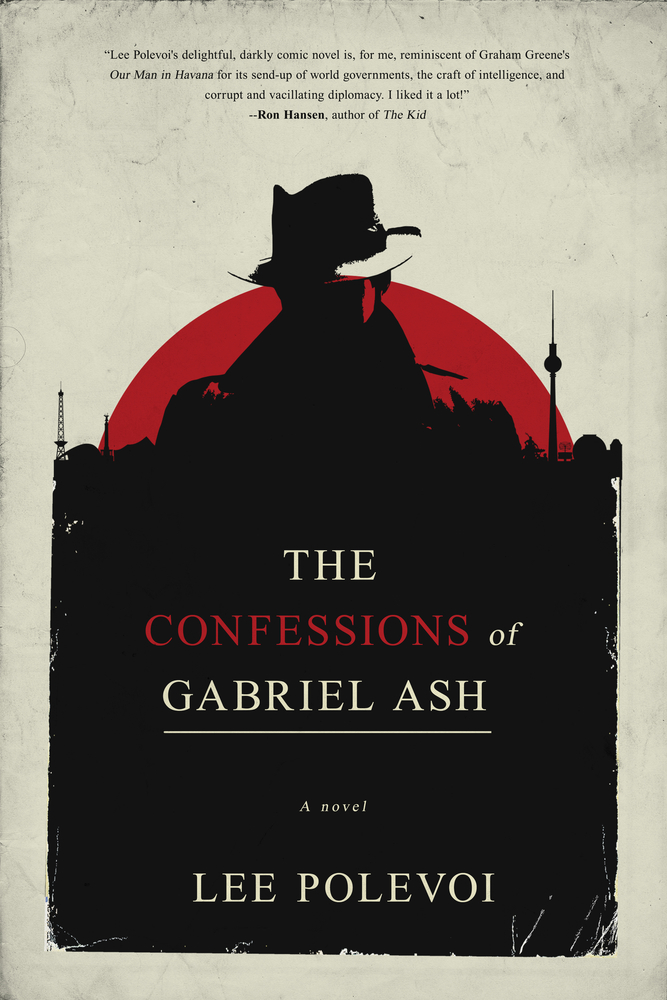
I recently reviewed The Confessions of Gabriel Ash by Lee Polevoi, calling it “Powerful, heart-pounding, and engaging … a must-read Cold War spy novel and political thriller you won’t be able to put down.” In this interview, Lee talks about his new novel and his writing career, and offers advice to aspiring writers.
Q Tell us a little about yourself. How did you get into writing?
A I’m a native of Cleveland, Ohio, and have lived in New England, San Francisco, New Orleans, and San Diego. My wife and I also lived for nearly two years in Cuenca, Ecuador, prior to the pandemic. I’ve worked as a zookeeper, screenwriter, temp office worker, and freelance business writer.
I can’t recall a time when I wasn’t writing. This grows out of a fascination with language, its properties and potential, and the work of a handful of deeply influential authors, including Robert Stone, Thomas McGuane, and John Banville, among many others. My first novel, The Moon in Deep Winter, was published in 2008, and I regularly review books for the online publication, Highbrow Magazine.
Advertisements
Q What inspired you to write your book?
A In The Confessions of Gabriel Ash, I wanted to explore what happens when a high-profile character becomes embroiled in scandal and intrigue, largely as a result of his own hubris. It was my intention to portray this character (Gabriel Ash, a UN diplomat for a East European communist nation) at the height of his career and the rather sensational events that lead to his downfall.
Q What theme or message do you hope readers will take away from your book?
A Aside from hopefully enjoying the experience of reading The Confessions of Gabriel Ash, I’d like readers to reflect on the theme, pride goeth before a fall.
Q What drew you into this particular genre?
A I’m a big fan of well-written political literary thrillers, including, most prominently The Untouchable by John Banville. I’ve also been intrigued by the murky undercurrents generated by decades of Cold War animosity. Part of the fun was creating a unique voice (from his confinement in a medieval castle, Gabriel Ash recounts the story of his downfall) that draws readers in and keeps them turning the page.
Q If you could sit down with any character in your book, what would you ask them and why?
A I guess I’d sit the title character down and ask him point-blank, “How long can you play a role you don’t believe in?” and “Did you think you could keep living the high life and chasing women, without suffering any consequences?” The answers Gabriel Ash would give at the outset of the novel and at its conclusion might best describe his journey throughout the story.
Q What social media sites have been most helpful in developing your readership?
A Both Facebook and Instagram have been very useful in boosting awareness of my novel’s imminent publication. Social media is a great way of spreading the word to people who might truly enjoy The Confessions of Gabriel Ash. Reviews are already appearing on Goodreads.
Q What advice would you give to aspiring or just starting authors out there?
A First of all, understand that writing a novel requires a great deal of time and discipline. It means foregoing some social events, eliminating procrastination, and making a commitment to see the thing through. (The same principle holds for writing short stories.) Also, it’s important to read as widely and deeply as possible. You can learn a great deal about the craft of writing through a close reading of a favorite author’s work.
Q What does the future hold in store for you? Any new books/projects on the horizon?
A Hard to say. Several ideas are germinating just beneath the surface, waiting for the right moment to bloom into a full-fledged work of fiction.