I received a free copy of this book in exchange for a fair and honest review. All opinions are my own.
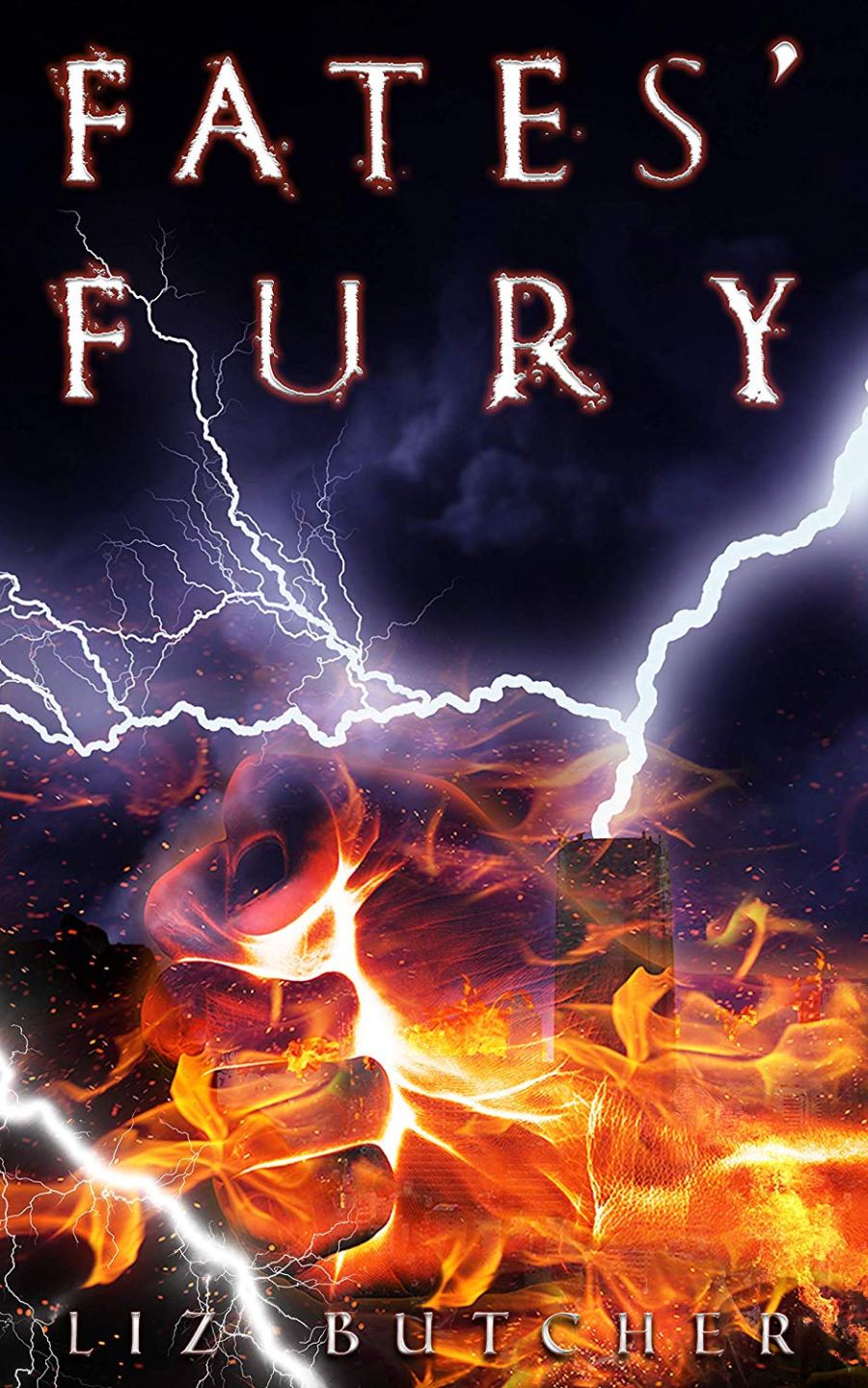
A young man returning home on his thirtieth birthday finds himself thrust into a global phenomenon and his fate tied to a mysterious woman with red hair in author Liz Butcher’s novel “Fates’ Fury”.
The Synopsis
The last thing Jonah Sands expected on his thirtieth birthday was to have his life thrust into the hands of a dangerous, red-haired woman—or to be the only person in the world to survive an encounter with her.
As the death toll skyrockets, Jonah and his two best friends, the siblings Tristan and Ava Carter, find themselves at the epicenter of inexplicable phenomena—a stranded ferry transforms into a barge headed for the Underworld; young girls levitate to whisper ancient riddles; technology across the globe is controlled by some unseen hand. And it all seems to lead back to the woman with red hair. When a stranger finds them in the midst of a thunder storm and offers his otherworldly assistance, Jonah finally unravels the truth about who he really is. And what it means for the rest of humanity.
Advertisements
The Review
What really sticks out from the very first chapter is just how fast the author takes readers into the action and mystery of this story. A brand new take on the lore and mythology of Ancient Greek Mythology, the reader is shown a modern day world where the past and present collide. The blend of ancient mythology with character building that feels natural in the face of such unnatural events.
What really stands apart and makes this story so great however is the core relationships between Jonah, Tristan and Ava. A friendship between Jonah and the siblings that has lasted for decades showcases a bond that is tighter than even some families readers may know. In the face of such otherworldly events and soul-shattering secrets revealed, the author does a great job of bringing this friendship to light.
The Verdict
This is a wonderful modern day fantasy/mythological story that redefines the genre and creates a lore than fans can sink their teeth into. From shocking revelations and emotional bonds tested, and even some surprising romances blooming, this is a story that feels epic and powerful in it’s delivery, creating a narrative that readers will not be able to get enough of. By the novel’s end, readers will be blown away as the entire narrative gets flipped on its head. Be sure to grab your copy of Liz Butcher’s “Fates’ Fury” today!
Rating: 10/10
Advertisements
About the Author
Liz Butcher resides in Australia, with her husband, daughter, and their two cats. She’s a self-confessed nerd with a BA in psychology and an insatiable fascination for learning. When she’s not writing or spending time with her family, Liz enjoys road trips, astronomy, music and knitting.
Want to keep up to date on the latest book reviews on author Anthony Avina’s website, as well as other book related news? Sign up now for the monthly newsletter and receive a free short story when you subscribe!
Processing…
Success! You're on the list.
Whoops! There was an error and we couldn't process your subscription. Please reload the page and try again.
I received a free copy of this book in exchange for a fair and honest review. All opinions are my own.
A young bear searches for answers to some of life’s toughest questions in author Mawson Bear’s novel, “She Ran Away From Love”.
The Synopsis
The Light of Love pours down on Frilly. It shines so brightly that she quails and runs away.
Upset with herself for feeling scared, she wakes her good friend Mawson and pours out her confusions. She wants to learn how to be bold and is convinced that she can do this by going on a quest.
With muddled help from Mawson she sets off into the great Out There. But is a quest to find oneself really the answer?
Advertisements
The Review
This short yet heartwarming tale of a young bear struggling to find herself and write the story of her life will really speak to both children and adults. A beautiful blend of original photography with a creative, one of a kind narrative that brings the iconic classic teddy bear to life makes this read truly engaging.
Whether you read it to your child or are fascinated with the world of antique and collectible teddy bears, this book will really entertain and touch an emotional chord within the reader. The age old question of who we are in the grand scheme of things and what our place in the universe is are eloquently highlighted in this profound book for audiences of all ages.
The Verdict
If you are looking for a blend of humor, original photography and artwork, and even a hint of meditation that can teach readers younger and older the path to finding their place in the world can come from a place of calm meditation, then author Mawson Bear’s “She Ran Away From Love” is the book for you. Emotional and heartwarming in the story’s narrative, this is a book that is not to be missed, so be sure to grab your copy today!
Mawson, the big hearted, soul searching teddy bear, is here to help. He is one of the few writer-bears in this bright world. He ponders about how to be one’s best. Then he puts his ponders into books.
A modest bear of generous proportions, distinctive in his white fur coat and bow tie, he is confident that things are going to be All Right.
In It’s A Bright World To Feel Lost In he ponders the loss of love. Can you rescue yourself from loneliness when you feel you have been left behind? (viewbook.at/ABrightWorld)
In She Ran Away From Love, Mawson helps his friend Frilly in her quest for answers to big questions. (Viewbook.at/SheRanAwayFromLove )
I received a free copy of this book in exchange for a fair and honest review. All opinions are my own.
If you’ve ever wanted a new solution to bug infestations that won’t cost an arm and a leg and will also help you understand the insects infesting your home, then look no further than author Tess Watson’s novel “Little Buggers!: How to Identify, Treat and Prevent Insect Infestation”.
The Synopsis
Got unwelcome houseguests of the teeny tiny variety running around like they own the place? Not every insect infestation requires a call to a pest-control company. Little Buggers! offers facts, figures and pictures along with practical guidance on how to evict them on your own and when to call in the pros. It also includes preventive measures to keep them from ever returning… or ever beginning.
The Review
This was a well written, thoroughly researched and quick read that will fully help home owners and people in general to understand the insects that commonly infest a home and how to properly work to rid them from your home without hiring an exterminator to come out and do it themselves. The author diligently goes through the various insects that may find themselves calling your home their nest, from ants and fleas to spiders and wasps.
What really stood out as a guide book and how-to style book was the depth of detail the author presented on each insect. While most would only think to look for the quickest and easiest way to get rid of the bug, the author details the insects carefully to help the average homeowner gain an understanding of these creatures, the benefits they provide the outside of a person’s home and how to remove the infestation to keep and maintain that balance from the outside of a person’s home to the inside.
The Verdict
Although a quick read, the author hits the reader with precision and a straight to the point voice that commands the readers attention. The author even details the various chemicals that can be used on a person’s home, what goes into these chemicals and how they will affect the home and the insects in general, making for a very thorough read. If you are looking for a way to not only rid yourself of an insect infestation but understand the nature of the bugs who have crawled their way into your home, then grab your copy of “Little Buggers!: How to Identify, Treat and Prevent Insect Infestation” by Tess Watson today!
I received a free copy of this book in exchange for a fair and honest review. All opinions are my own.
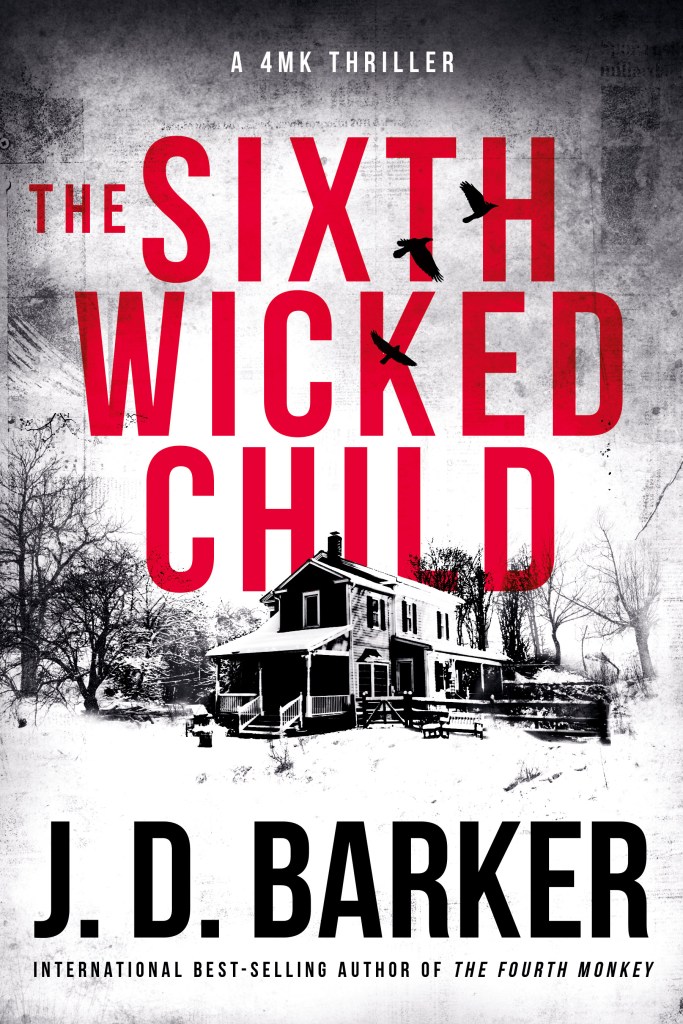
A serial killer’s final act comes to fruition as the authorities are forced to ask themselves if the infamous 4MK is who they always believed he was, or if the hero of this tale is the monster all along in author J.D. Barker’s The Sixth Wicked Child.
The Synopsis
In the riveting conclusion of the 4MK trilogy, Barker takes the thriller to an entirely new level. Don’t miss a single word of the series James Patterson called “ingenious.”
Hear No Evil
For Detective Sam Porter, the words “Father, forgive me” conjure memories long forgotten; a past intentionally buried. For Anson Bishop, these three words connect a childhood to the present as he unleashes a truth concealed for decades.
See No Evil
Found written on cardboard near each body, these words link multiple victims to a single killer—discovered within minutes of each other in both Chicago and South Carolina—clearly connected yet separated by impossible miles.
Speak No Evil
Chicago Metro and the FBI find themselves caught in chaos—a hospital on lockdown, a rogue officer, and corruption at the highest levels. When Anson Bishop, the prime suspect in the notorious 4MK serial murders turns himself in, he reveals a story completely unexpected, one that not only upends the current investigation, but one that will change the lives of all involved.
Do No Evil
With unrelenting tension and pulse-pounding suspense, the past unravels at breakneck speed as the truth behind the Four Monkey Killer’s motive is finally revealed in this masterfully crafted finale.
Advertisements
The Review
The absolute best thriller of 2019 and one of the most heart-pounding, shocking and well crafted endings to a thriller series in years. The haunting and spine-chilling actions of 4MK have struck the nerve of fans around the world as this series has progressed, but author J.D. Barker outdoes himself in this incredible read.
The way the author starts to share the connections between 4MK and protagonist Sam Porter bring about one of the most satisfying slow burn reveals of a thriller, delving into Anson Bishop’s past and revealing that 4MK may not be the most evil person in this tale. Forcing the reader to confront the true meaning of evil and the depths of human villainy that exists in our world, this story blends shocking revelations with high octane action and character development that plays like a film across the pages of this novel.
By the story’s end, readers will realize that no one is who they seem. Heroes can be villains, just as villains can be the hero, even if it’s the hero of their own story. Any reader who has been following this series closely will thoroughly enjoy seeing threads even from book one reveal their connection to the story of Anson Bishop, and the final page of this tale will leave readers reeling as all if finally revealed.
The Verdict
An absolute must read novel of 2019, author J.D. Barker writes a compelling, engaging and satisfying conclusion to an epic thriller like no other. Creating a serial killer and villain that can stand up to the greats like Hannibal Lecter and The One-Armed Man of the hit tale The Fugitive, 4MK will forever be cemented as an iconic and terrifying foe. If you haven’t yet, be sure to grab your copy of author J.D. Barker’s “The Sixth Wicked Child, the third and final chapter of the 4MK Thriller saga.
Barker was born January 7, 1971 in Lombard, Illinois and spent the first fourteen years of his life in Crystal Lake, Illinois. A staunch introvert, he was rarely seen without a book in hand, devouring both the Hardy Boys and Nancy Drew series by the age of six before moving on to classics such as the works of Dickens and Twain. The discovery of Shelley, Stoker and Poe fueled a fire and it wasn’t long before he was writing tales of his own which he shared with friends and family. These early stories centered around witches and ghosts thought to inhabit the woods surrounding their home.
At fourteen, Barker’s family relocated to Englewood, Florida, a climate better suited to his father’s profession as a contractor. He attended Lemon Bay High School and graduated in 1989. Knowing he wanted to pursue a career in the arts but unsure of a direction, he enrolled at the Art Institute of Fort Lauderdale where he later obtained a degree in business. While in college, one of his writing assignment found its way into the hands of Paul Gallotta of Circus Magazine. Gallotta reached out to Barker and asked him to join the staff of 25th Parallel Magazine where he worked alongside the man who would later become Marilyn Manson.
Assignments dropped him into the center of pop culture and by 1991 Barker branched out, interviewing celebrities for the likes of Seventeen, TeenBeat, and other national and local publications. In 1992, Barker syndicated a small newspaper column called Revealed which centered around the investigation of haunted places and supernatural occurrences. While he often cites these early endeavors as a crash course in tightening prose, his heart remained with fiction. He began work as a book doctor and ghostwriter shortly thereafter, helping others fine tune their writing for publication. Barker has said this experience proved invaluable, teaching him what works and what doesn’t in today’s popular fiction. He would continue in this profession until 2012 when he wrote a novel of his own, titled Forsaken.
Stephen King read portions of Forsaken prior to publication and granted Barker permission to utilize the character of Leland Gaunt of King’s Needful Things in the novel. Indie-published in late 2014, the book went on to hit several major milestones – #2 on Audible (Harper Lee with Go Set a Watchman held #1), #44 on Amazon U.S., #2 on Amazon Canada, and #22 on Amazon UK. Forsaken was also nominated for a Bram Stoker Award (Best Debut Novel) and won a handful of others including a New Apple Medalist Award.
After reading Forsaken, Bram Stoker’s family reached out to Barker and asked him to co-author a prequel to Dracula utilizing Bram’s original notes and journals, much of which has never been made public. The novel, titled Dracul, sold at auction to G.P. Putnam & Sons, with film rights going to Paramount. Andy Muschietti (IT, Mama) is attached to direct.
Barker’s initial indie success drew the attention of traditional agents and publishers and in early 2016 his debut thriller, The Fourth Monkey, sold in a series of pre-empts and auctions worldwide with Houghton Mifflin Harcourt set to publish in the U.S. and HarperCollins in the UK. The book has also sold for both film and television.
Barker splits his time between Englewood, FL, and Pittsburgh, PA, with his wife, Dayna.
1) Tell us a little bit about yourself. How did you get into writing?
My first experiences with storytelling were around the campfire in my childhood. My family spent many nights around campfires sharing stories, retelling old tales, or making up new ones to keep the night at bay. When I was very young, I shined shoes in my grandfather’s barbershop for a time. I admit to being terrible with a rag and brush but I listen to every story that was passed back and forth between the old men that haunted the place as they waited for their trim or shave. I found my way into theater as a young man and eventually into independent film in college. The entire time, whether I was sitting by the fire or behind a camera, I was always writing, always composing my own stories or at least witnessing them as they composed themselves.
2) What inspired you to write your book?
Most of my work is inspired by a simple moment that ignites my senses. Ration started in the hallway of a hotel, a single small sound caused a ripple in my mind that blossomed into a scene in the book. Most of my work begins with this kind of small spark and then blooms across the bones of a story that grows from the world around me. I have been an educator for nearly two decades, food insecurity and violence are constant issues many of my students face. I wanted this story to reflect struggles that I witness in the real world.
3) What theme or message do you hope readers will take away from your book?
Ration is about love, which seems to be incongruous with horror and dystopia, but the truth is each of these characters is worthy of some form of love, no matter how ugly their own idea of love is. With Ration I wanted to write a kind of book that could explore the imperfections of how we see love and experience it, especially in the darkest moments of our lives.
4) What drew you into this particular genre?
Writing horror offers a great deal of freedom, and while I am not bound by genre in my writing, I recognize that horror gives me the opportunity to write about dark and beautiful things. I want my writing to stretch across all genres, but I also want to write something that reflects the terrible little personal horrors that we must all face and at the same time, demonstrate how those horrors simply make us human.
5) If you could sit down with any character in your book, what would you ask them and why?
I think I would sit down with Ms. Tuttle and ask her why she didn’t break away from her mother like she so wanted to. I would ask her why she struggles to remember her love until she is quite sure that she can no longer feel love.
6) What social media site has been the most helpful in developing your readership?
Twitter is an interesting mechanism for developing a readership. I have no gift in social media, in fact, I admit to enjoy hiding in my office and quietly writing in the hopes that the world might simply stumble across my work, but unfortunately that’s not the way things are. Twitter has been a remarkable platform to put me in touch with hundreds of other writers. This has been a tremendous boon that does my heart good to find such a supportive community. So, no matter how clumsy I am at it, it remains one of my most useful tools.
7) What advice would you give to aspiring or just starting authors out there?
The thing I can offer is something that I’m sure most writers have heard before, but it remains profoundly true: you must write the thing that you love, no matter how risky or terrifying that might be. If you love what you write, and you feel what your characters are feeling when you write it, the reader will feel these things also. Writing is about passion, one that you can share with your readers, but one that you must cultivate by yourself. And never forget that there will be people who love your work just as much as you, so even though you must write by yourself, you must never read alone.
8) What does the future hold in store for you? Any new books/projects on the horizon?
I am currently working on a new novel. It’s also a scary story about how each of us sees the world in very different ways. This story will also be about love, centering on a family, a town in the Pacific Northwest, and a terrible loss.
Cody’s stories have appeared in Pilgrimage, Cirque, KYSO Flash, Menda City Review, Swamp Biscuits & Tea, and others. He is fiction winner of the 2016 Montana Book Festival Regional Emerging Writers Contest.
Cody teaches at Portland Community College and works as a story editor. He completed an intensive MFA in Creative Writing from Goddard College. Cody grew up listening to stories in his grandfather’s barber shop as he shined shoes, stories told to him at bedsides and on front porches, deep in his father’s favorite woods, and in the cabs of pickup trucks on lonely dirt roads. Cody’s work explores those things both small and wondrous that move the soul, whether they be deeply real or strikingly surreal.
Tell us a little bit about yourself. How did you get into writing?
– I got into writing in high school, but I wasn’t any good at it back then. Recently, I wanted to take more control and agency in my life, as well as write down some cool story ideas I had. In 2017 while at work, I work in a car dealership call center, I decided to just start writing hoping that it would expand into a novel.
What inspired you to write your book?
daveart
– Both Dagger and Scythe, as well as Era of Undying sort of came about the same way. I had this idea in mind and wanted to run with it. I’m not sure where the inspiration came specifically but I wanted to know what would happen to a character if her blood could move outside of her body, hence Era of Undying. And for Dagger and Scythe I had those two in my head also since high school. They were like a combination of Mr. and Mrs. Smith with Gomes and Morticia Addams.
What theme or message do you hope readers will take away from your book?
There’s nothing to profound in my books, but if there was a message I guess that it would be that there is beauty in the grotesque.
What drew you into this particular genre?
– I love the in depth characters in dark fantasy and grimdark stories. They are so dynamic and three dimensional. Also the landscapes can be just as amazing, and dark.
If you could sit down with any character in your book, what would you ask them and why?
– If I could sit down with anyone in “Dagger and Scythe” that would be the character Nyx. She’s the goddess of death in their world, and is actually a bit lonely. I’d love to talk to her about her family and the pantheon she created.
What social media site has been the most helpful in developing your readership?
– Facebook and Twitter are the most helpful, but I’m also on Goodreads and Instagram.
What advice would you give to aspiring or just starting authors out there?
– Take your time, and work at your own pace. So many writers starting off want to be the next best thing right away, and so did I, but it’s best to slow down, and really plan everything. Also in regards to writing itself, create a daily habit for yourself. That will always be more powerful than waiting on inspiration.
What does the future hold in store for you? Any new books/projects on the horizon?
Oh yes, I’m working on a few right now, with more planned in the future. I’m really hoping that I can do this full time one day.
About the Author
I have always loved stories. They explore weird new ideas, and bring people together. After years of reading fantasy and horror I wanted to combine them together into my own dark fantasy. And given the BA in Classical Civilizations and fascination in Ancient Greek mythology I blended it well into my stories too. Other then reading in my spare time I love to play video games quite often.
1) Tell us a little bit about yourself. How did you get into writing?
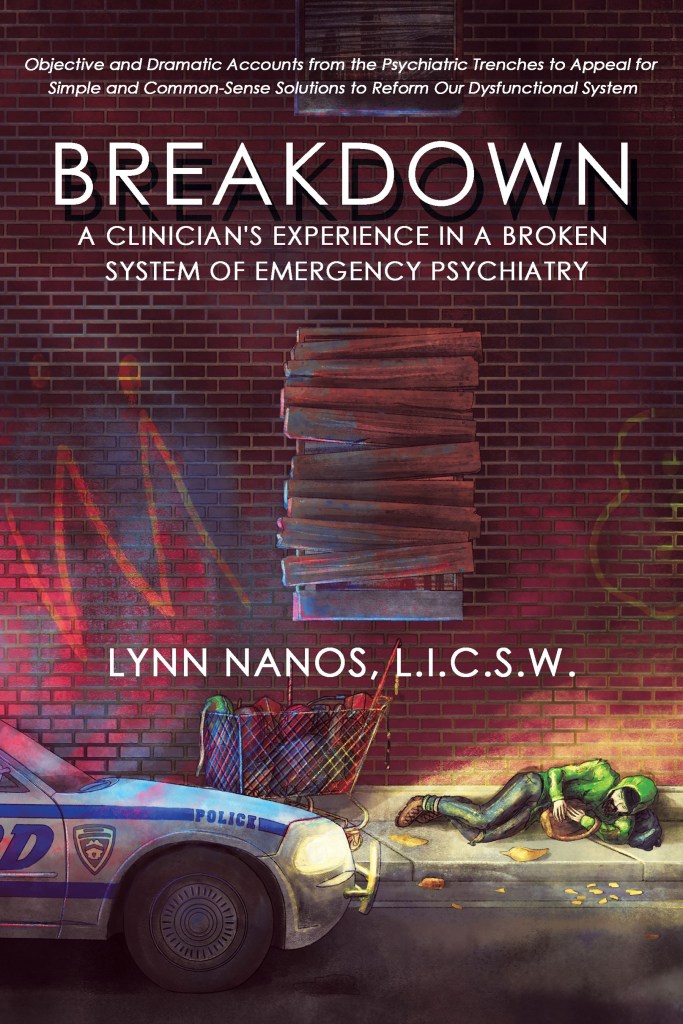
I never considered myself a writer until literally just a couple of days immediately preceding the start of creating Breakdown. Rather I considered myself a full-time mobile emergency psychiatric social worker. As I struggled to shake off the sense that something was missing within me professionally, the idea of writing a book about my profession came to me suddenly. I completed an online writing course, researched the difference between traditional publishing and self-publishing, purchased writing software, learned how to cite research, and began researching marketing techniques for books. I felt intrinsically rewarded upon completion of every major milestone. Sure there were obstacles to overcome, such as when the interior formatting company sent me a 20-page sample ridden with mistakes they refused to fix. And when my requests for testimonials to publish at the beginning of Breakdown were ignored. And when the first illustrator I hired plagiarized her work before I quickly fired and didn’t pay her. Writing a book takes intense commitment to the finished product. The recognition I’ve received from people has been priceless.
2) What inspired you to write your book?
I had done mental health advocacy work on a national scale for years before beginning to work on Breakdown and was very inspired by advocates’ tragic stories. Their stories motivated me to become a better social worker. I increasingly realized that there is no opportunity to influence legislators to change the system in the clinical setting. I didn’t feel that my employment was enough to make a difference in the world. Certain clinical cases were at the forefront of my memory because they were especially dramatic and shocking. All of a sudden it dawned on me that the world has to know these stories. Very few people are aware of the population I help and what they struggle with. Breakdown aims to close the gap between clinical and legislative settings.
Breakdown Nanos
3) What theme or message do you hope readers will take away from your book?
The most common reason that approximately half of people with schizophrenia are unable to initiate treatment independently or adhere to treatment is anosognosia. This means they lack awareness of being ill. Anosognosia is a key factor contributing to the need for involuntary treatment. When schizophrenia goes untreated, the consequences can be deadly. I’ve detailed high profile cases based on media reports and my interviews with family members. These cases have involved people getting killed due to untreated mental illness. This statement is bound to make many people uncomfortable for fear of stigmatizing mental illness by suggesting that people with mental illness are violent. The majority of people with mental illness are not violent. Yet a small subset of the population with untreated serious mental illness, especially involving psychosis, is more violent than the general population. Truth does not enhance stigma. I make a strong case in favor of involuntary outpatient treatment, otherwise known as Assisted Outpatient Treatment. Just three states – Massachusetts, Connecticut, and Maryland – do not allow this while all other states and Washington, D.C. allow this life-saving treatment. Not coincidentally, Massachusetts has a very strong antipsychiatry movement. Groups promoting the belief that mental illness doesn’t exist are funded by the government and supported by the National Alliance on Mental Illness. This is wrong.
4) Your novel was expertly crafted and showcased just how expertly researched and utilized the statistics were for the mental health care profession and mental health stats overall in our nation. Based on your research, what was one statistic that shocked you or would shock the average reader who is unaware of the problems facing the mental health profession or those suffering with mental health struggles?
The extent of malingering on inpatient and emergency settings is astronomical. According to a study, 12% of those admitted for emergency psychiatric care lied about their symptoms to get admitted to inpatient. The reasons for malingering vary. Malingerers drain health care resources and literally take away precious and limited inpatient bed space from those who truly need it.
5) What social media site has been the most helpful in developing your readership?
Facebook.
6) What advice would you give to aspiring or just starting authors or anyone working in your field of study out there?
Please read Breakdown to learn from example or learn about emergency psychiatry.
7) What does the future hold in store for you? Any new books/projects/studies on the horizon?
I am still working as a full-time mobile emergency psychiatric social worker. I will not write another book, though plan on resuming blogging about my profession in the next few months.
When it comes to therapy, there is no better site to find relationship advice from a licensed therapist than Regain. Click the link https://www.regain.us/advice/therapist/ to learn more!
About the Author
Lynn Nanos is a Licensed Independent Clinical Social Worker in her twelfth year as a full-time mobile emergency psychiatric clinician in Massachusetts. After graduating from Columbia University with a Master of Science in Social Work, she worked as an inpatient psychiatric social worker for approximately seven years. She is an active member of the National Shattering Silence Coalition that advocates for the seriously mentally ill population. She serves on its Interdepartmental Serious Mental Illness Coordinating Committee committee and co-chairs its Blog committee.
I received a free copy of this book in exchange for a fair and honest review. All opinions are my own.
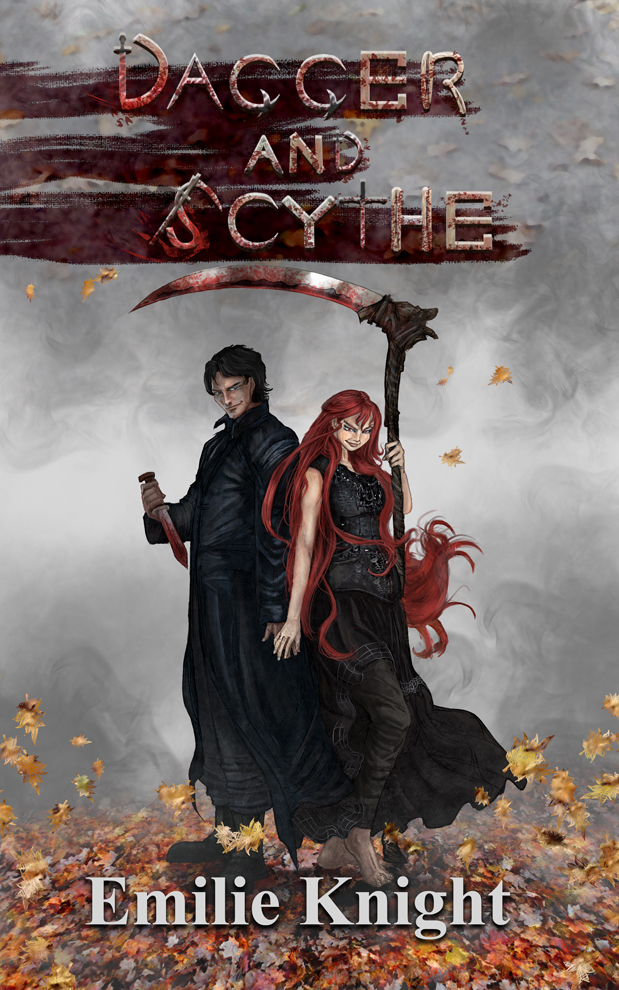
Two supernatural beings skilled at hunting down and stalking human prey for a god find themselves banding together to take the god’s throne for themselves in author Emilie Knight’s novel “Dagger and Scythe”.
The Synopsis
Dagger and Scythe spent good decade’s together, stalking human prey at night, and taking out the targets the god Maniodes deems worthy. With one hundred years under her belt, Scythe is comfortable in her ways, and takes incredible enjoyment of her skills. Dagger may be new to the undead order, but he’s relishing in the work. The two of them together set beautiful bonfires, with the occasional corpse inside that fire.
When they enjoy each other’s time a little too much, and an entire village burns down because of it, Maniodes becomes sick of their rogue behavior. Regular punishments haven’t worked on either of them, so he tries something new: marrying them to each other. To keep each other in line or they’ll both end up properly dead.
Both have grown tired of the god’s odd punishments and lazy control, taking over his throne and the land of the dead should fix things.
Her scythe is perfectly curved for slicing.
His dagger, made of folded steel, is ready to strike.
But are they strong enough to take on gods?
The Review
A truly one of a kind, original and gritty dark fantasy novel. That’s the best way I can describe this novel, which took me as a reader on a roller coaster of emotions and thrills as the story followed two monstrous killers and made them into protagonists. The author did a marvelous job of playing with the reader’s feelings towards the characters. A balancing act between being disgusted by the character’s bloodlust and compassion for the circumstances that brought them there, the book takes a deep dive into exploring the minds and souls of Dagger and Scythe.
What was most interesting was seeing Dagger grasping onto the remains of his humanity, while Scythe fought the memories of her human life that clashed with her growing feelings for Dagger and her growing bloodlust. Combined with the amazing world building that went into the creation of this fantasy driven narrative, and readers are given a rare treat of a story that begins as a mission to take the power of a god and turns into a fight for the souls they once had.
The Verdict
One of the top Dark Fantasy novels of 2019, this is a book fans will not want to miss. Releasing on October 1st, 2019, this book is filled with action, dark fantasy characters with a tie into Ancient Greek mythology and a pair of protagonists that keep the readers in a balancing act of empathy and fear, challenging the reader to determine for themselves who the true monster of this story really is. With a splash of dark fantasy romance tying these protagonists together, this is a must read fantasy novel like no other, so be sure to pick up your copy of Dagger and Scythe, the second in the Ichorian Epics Series by Emilie Knight, today!
About the Author
Emilie Knight is a writer, and author of her debut Era of Undying. After years of reading fantasy and horror she combines them together into her own dark fantasy writing. Using her BA in Classical Civilizations and fascination in Ancient Greek mythology she blends it well into her fiction. Other then reading in her spare time she plays video games quite often.
1) Tell us a little bit about yourself. How did you get into writing?
I’ve always loved books and stories, and like many people who love these things, I always wondered if I had it in me to be a writer. And so I started writing in my late teens, working on short fiction and poetry but never taking it very seriously. One day, I just stopped. Almost a decade later – having moved back to my old hometown in the bush, at the tail end of a ten-year drought – I had the idea for my first book. It seemed to come from nowhere, and I hadn’t even considered returning to writing. But the idea burned within me, so I decided to take writing seriously. After all, no one else was going to bring this idea to life.
I returned to university, took a bunch of writing classes, and eventually undertook a PhD that involved writing both a novel and a piece of literary criticism. In effect, I took the small-talent I already possessed, and the passion I felt, and nurtured them and learned how to make them grow, and practised and practised and practised until I understood what discipline meant. And then one day, while working on my second book just for the fun of it, I realised that I’d become a writer.
2) What inspired you to write your book?
I’ve always been a voracious reader, and sometimes an obsessive one, and giant monster fiction was one such obsession that consumed me around the time I completed my first book – I’ve also always been a fan of giant monsters, which I’ll get to shortly.
Gripped by this obsession, I devoured whatever giant monsters fiction I could find, looking for something that took giant monsters seriously, and something that was more than just capital-A action or zany in a post-modern way. But nothing really scratched the itch I’d developed. And so, looking for a new writing project that I figured should be distinctly different from my first book, I settled on the serious work of giant monster fiction that I had been craving.
In other words, I decided to write the book that I wanted to read. Isn’t that what an author does?
3) What theme or message do you hope readers will take away from your book?
My real hope with We Call It Monster is that people might start to see that life will go on, and that hope perseveres. It’s just that life in the future – life after we’ve faced the earth-shaking forces of climate change – won’t be the same as it is now. We’re a persistent, determined, ingenious and tenacious species, and I firmly believe that we’ll still be around once it’s all over. As far smarter people that me have said: It’s not really the end of the world, just the end of the world as we know it.
This is the lens through which I hope people interpret the various beasts and kaiju of We Call It Monster. I hope people see them as forces almost beyond comprehension, and from which is there no real escape or ability to defeat. The only real solution lies in accommodation; only by changing the way we are now, will what’s to come be that little bit brighter. And to do so, we must remember that the things that will be most important are those that have always been the most important: Community and compassion, love and family, kindness and togetherness, hope and faith.
4) What drew you into this particular genre?
I’ve always been fascinated by giant monsters. At first, as a kid, it was a childish fascination with things being smashed. After all, every little kid has thrown a tantrum, broken something and then experienced relief at the wordless release this brings. Giant monsters flattening cities for no apparent reason readily reflects our own difficulties in articulating and making sense of our emotions at a young age. As well, giant monsters conjured a feeling of awe and mystery, in much the same way dinosaurs did – show me a kid who’s never gone through a ‘dinosaur’ phase’ and I’ll eat my hat.
But beginning in my teenage years and continuing on into the present day, I’ve loved the metaphorical potential inherent to giant monsters, and their ability to ‘stand in’ for so many incomprehensible problems that seem beyond our control. Nuclear war, environment degradation, international terrorism, industrial pollution, climate change, the staggering number of displaced people around the world – giant monsters can represent them all, and more.
And so, as I mentioned earlier, when I was looking for a new writing project that would be distinctly different from my first book, I settled on revisiting this fascination.
5) If you could sit down with any character in your book, what would you ask them and why?
Owing to its structure, there are at least two-dozen featured characters in We Call It Monster, and so choosing to sit down and talk to just one of them is tricky. Instead, if I could, I would sit down with Sue Fleming from the first chapter, and Melaarny from the final chapter, and encourage them to talk to each other, in the hope that what they have in common outweighs that which distinguishes them.
Here things get a little dicey, as I don’t want to be so gauche as to unleash any spoilers. But I will say that despite the years that separate them, Sue and Melaarny are really the same and are inextricably linked, and are just like all us. They live their lives, making do as best they can; they have friends and families, hopes and dreams, fears and anxieties.
And so I would like to sit down with Sue and Melaarny in the hope that they realise this, and that we could all share in the comfort of this realisation. After all, isn’t that the point? No matter who we are – or what or when – in the end we’re just like them: We’re living our lives.
6) What advice would you give to aspiring or just starting authors out there?
There’s so much advice for aspiring authors out there, much of it contradictory, so I’ll share something that works for me.
If you want to write, you need to have some understanding of the science and art behind it, and have some small talent. After that, all you have to do is keep at it – like all creative arts, writing is something you need to practise. By writing and writing and writing – and keeping your chin up as you wade through it – you’ll eventually get there.
But remember, there are no real rules when it comes to writing – what works for some doesn’t work for others. Finding your own way is what’s important.
7) What does the future hold in store for you? Any new books/projects on the horizon?
If I’m not careful, I end up with too many different projects on the go at the same time. And so aside from my semi-regular pieces of science fiction criticism and the occasional piece of short fiction, I’m trying to be disciplined about focussing on my third book – a piece of metafictional science fiction that’s a bit “lighter” than the rest of my work – rather than get lost in daydreams about the book after it, or the book after that.
With a bit of luck and perspiration, it’ll be done by Christmas. Won’t that be a nice gift to myself?
Lachlan Walter is a writer, science-fiction critic and nursery-hand (the garden kind, not the baby kind), and is the author of two books: the deeply Australian post-apocalyptic tale The Rain Never Came, and the giant-monster story-cycle We Call It Monster. He also writes science fiction criticism for Aurealis magazine and reviews for the independent ‘weird music’ website Cyclic Defrost, his short fiction can be found floating around online, and he has completed a PhD that critically and creatively explored the relationship between Australian post-apocalyptic fiction and Australian notions of national identity.
He loves all things music-related, the Australian environment, overlooked genres and playing in the garden. He hopes that you’re having a nice day.
AN EXTRACT
The old man shuffled out to the balcony, dusted off an outdoor chair and
then made himself comfortable. The sky was a shade of blue that painters
only dream about; it was a beautiful sight. The old man drank it in,
leaning back in his chair. He sipped at his coffee and smoked a cigarette.
He was happy to wait as long as was necessary – he had all the time in
the world and he wasn’t going anywhere.
The monster finally appeared, a blurry smudge in the distance.
Slowly, but not as slowly as he would have thought, it grew both
closer and more distinct. The old man laughed out loud; it looked like
nothing more than a child’s drawing of something that might have been a
lobster or might have been a spider or might have been both, propped up
on flagpole-like legs that supported a wetly-shining carapace, a beaked
head, and a tail as long as a bus.
It was enormous and ridiculous in equal measure. The old man was
surprised to find that it failed to frighten him.
It drew closer to the city. It stopped suddenly and bit a great chunk
out of a stately old tree lining a boulevard. Chewing slowly and
methodically, it worked its way through the mass of wood and foliage
before throwing its head back and opening its mouth wide. Despite his
deafness, the old man felt the monster’s keening in his bones and in the
pit of his stomach.
He pulled his hearing aid from his pocket, turned it on then slipped it
in place.
The beast’s cry was low and mournful, more a melancholy bellow
than a ferocious roar. Thankfully, the klaxon-blare of the evacuation
alarms had stopped. The monster cried out again and it shook the old
man, both literally and metaphorically. The beast shifted its legs,
presumably adjusting its weight, and destroyed an office building in the
process.
Almost comically, it looked down at the destruction it had wrought
and seemed to shake its head.
It looked back up and cried out a third time, and then started walking
again. It seemed to meet the old man’s eye. Without breaking its gaze, the
old man took another sip of coffee before lighting another cigarette.
Slowly-slowly-slowly, the monster drew closer. You could almost see
a smile on the old man’s face.
A Q&A WITH THE AUTHOR
What is it about giant monsters that appeals to you?
Initially, it was a childish fascination with things being smashed. Let’s face it: Every little kid has thrown a tantrum for reasons they can’t explain, broken something and then experienced relief at the wordless release this brings. A giant monster barging through a city for no fathomable reason can reflect our own difficulties in articulating and making sense of our emotions at that age.
This fascination soon turned to awe and wonder at their scale and mystery, a reflection of the feelings inspired in me by my discovery of dinosaurs and cryptozoology (the study of creatures such as the Loch Ness Monster, Bigfoot, Yetis and the like). My love of dinosaurs is easy to explain – show me a kid who hasn’t at some point gone through a ‘dinosaur’ phase’ and I’ll eat my hat – while my love of cryptozoology was inspired by a book entitled Creatures From Elsewhere, which my parents gave me and which is actually still sitting on my bookshelf.
Beginning in my teenage years and continuing on into the present day, I’ve loved the metaphorical and symbolic potential that giant monsters possess, and the ways in which they can ‘stand in’ for so many different problems that seem beyond our control and almost impossible to deal with. Nuclear war, our negative impact on the environment, international terrorism, industrial pollution, climate change, the staggering number of displaced people around the world – giant monsters have represented them all.
Why did you decide to write about giant monsters?
As mentioned, I’ve always been fascinated by them. But I’ve also always been a voracious reader, and sometimes an obsessive one. I’ve been known to occasionally get my nerd on for a particular sub or micro-genre, looking up ‘similar title’ and ‘you might also like’ lists online when I should be doing better things with my time. But I still keep searching, because there can’t just be one example of Mystery Sub/Micro-genre X out there.
Giant monster fiction was one such obsession that carried me away, the timing of which coincided with the completion of my first book. I binged on literally anything I could find, looking for something that took giant monsters as seriously as some of the movies do, something that was more than just capital-A action. I found lots of fun, post-modern stuff out there – some of which could even be described as zany – but not much that approached giant monsters with a serious eye.
Looking for a new book to throw myself into writing – a book that I wanted to be distinctly different from my first book – I decided upon a piece of serious giant monster fiction. In other words, I decided to write the book that I wanted to read. Isn’t that what an author does?
Do you need to be a fan of giant monsters to appreciate We Call It Monster?
Nope, but it probably helps… In all seriousness, though – no, you don’t need to be a fan. My aim with We Call It Monster wasn’t only to write a serious piece of giant monster fiction because giant monsters have, historically, rarely been written about in such a way. Instead, I also wanted to write a piece of speculative fiction that does what all good speculative fiction should: Use the speculative element within to make us look at ourselves and our place in the world with fresh eyes.
Despite its title, We Call It Monster is more concerned with people than monsters. It isn’t a ‘wham-bam, shoot-em-up’ but instead a serious look at how we might react to forces beyond our control, and to forces that illuminate the precariousness of our position as world-conquerors sitting atop the food chain. And ultimately, it’s the story of what really matters: community and compassion, love and family and friendship, hope and faith. Anyone that appreciates such people-centric stories should find something within We Call It Monster that they can enjoy.
Why did you decide to write We Call It Monster as a story-cycle/novel-in-stories?
To me, one of reading’s biggest attractions has always been in my sense of engagement with the world being built on the page (a process even more absorbing when reading science fiction and speculative fiction). I think this enjoyment of engagement applies to most people. We all ‘see’ things in written worlds that the author didn’t actually write, even at the most mundane level: we populate a footpath with pedestrians, a street with cars.
A story-cycle/novel-in-stories can increase this sense of engagement to an incredibly strong degree, and their traditional structures allow writers to work magic. They can give us different perspectives on the same events, blocks of ‘missing time’ that exist between stories/chapters, events that are only alluded to rather than seen first-hand, a multiplicity of narrative “voices”, and so much more. But ‘missing time’ begs to be filled; events only alluded to tantalise us; we can’t know the truth when presented with different perspectives, or even if the truth exists. And so our minds do this work for us, conjuring up and giving life to parts of the story the writer has withheld.
The way story-cycles/novels-in-stories allow us to create the world right alongside the writer is a beautiful thing. However, the structures behind them aren’t just beautiful, but also incredibly practical. They can allow a story to cover a span of time longer than a regular person’s life; and help do away with the inevitable and repetitive ‘amazing coincidences’ that prop-up stories where one single character guides us through an incredible sequence of events covering an incredible amount of time; and enable a wider representation of voices from a wider variety of countries and cultures, without also falling back on the aforementioned trope of inevitable and repetitive ‘amazing coincidences’.