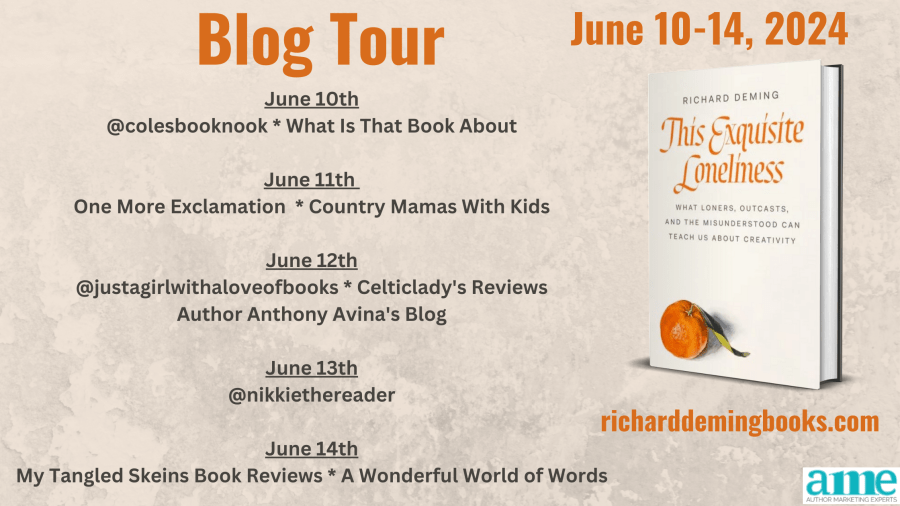
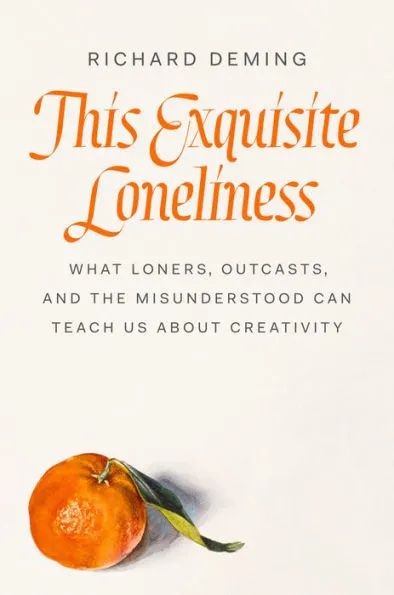
Blog Tour: This Exquisite Loneliness by Richard Deming

The Synopsis

At an unprecedented rate, loneliness is moving around the globe—from self-isolating technology and political division to community decay and social fragmentation—and yet it is not a feeling to which we readily admit. It is stigmatized, freighted with shame and fear, and easy to dismiss as mere emotional neediness. But what if instead of shying away from loneliness, we embraced it as something we can learn from and as something that will draw us closer to one another?

In This Exquisite Loneliness, Richard Deming turns an eye toward that unwelcome feeling, both in his own experiences and the lives of six groundbreaking figures, to find the context of loneliness and to see what some people have done to navigate this profound sense of discomfort. Within the back stories to Melanie Klein’s contributions to psychoanalysis, Zora Neale Hurston’s literary and ethnographic writing, the philosophical essays of Walter Benjamin, Walker Evans’s photography of urban alienation, Egon Schiele’s revolutionary artwork and Rod Serling’s uncanny narratives in The Twilight Zone, Deming explores how loneliness has served as fuel for an intense creative desire that has forged some of the most original and innovative art and writing of the twentieth century.

This singular meditation on loneliness reveals how we might transform the pain of emotional isolation and become more connected to others and more at home with our often unquiet selves.

Advertisements

About the Author

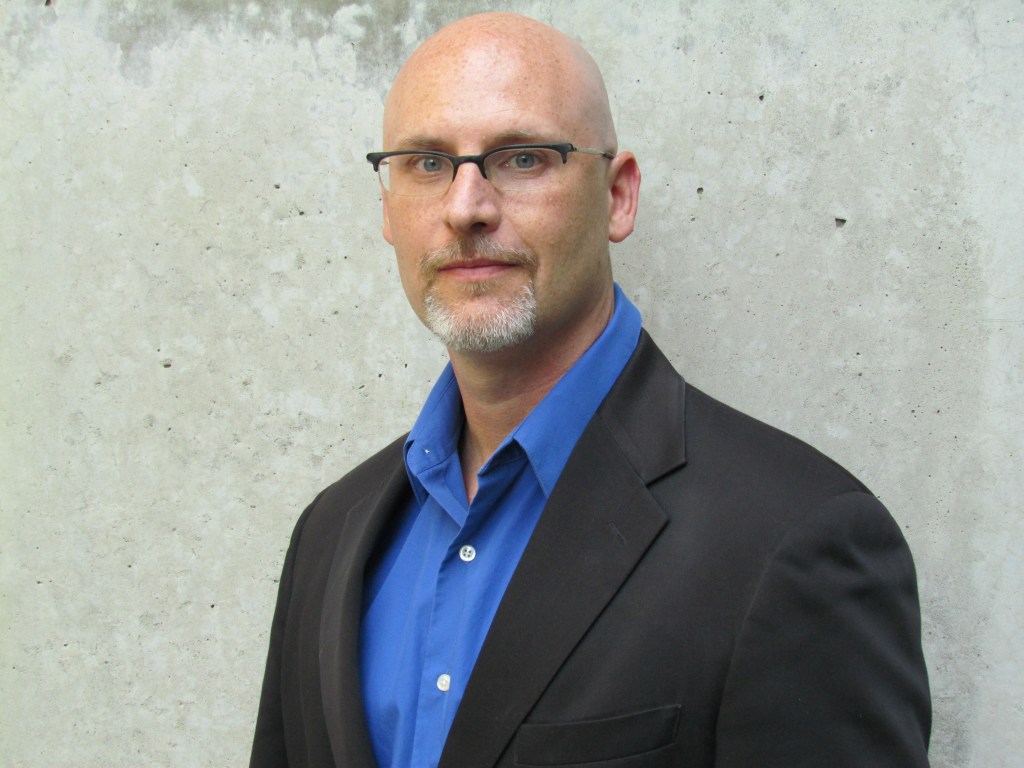
Richard Deming’s first collection of poems, LET’S NOT CALL IT CONSEQUENCE (Shearsman Books, 2008), won the Norma Farber Award from the Poetry Society of America and was a finalist for the Connecticut Book Award. He is also the author of Listening on All Sides: Towards an Emersonian Ethics of Reading. In 2012, he was awarded the Berlin Prize by the American Academy in Berlin. He is currently Director of Creative Writing at Yale University.

Visit Richard at his website: https://www.richarddemingbooks.com/

Amazon: http://amzn.to/3KjjgFd

Goodreads: https://www.goodreads.com/book/show/75665889-this-exquisite-loneliness

Advertisements

EXCERPT

From Chapter Four: The Art of Being Invisible

During the worst period of my active addiction, I was a black-out drinker because I wanted to make myself disappear. The loneliness that I have wrestled with since I was a little kid stood at the core of my substance abuse. Where Zora Neale Hurston found visions as a means to navigate the pain of loneliness, I found instead drugs and alcohol. Even before the drinking, I had come to feel that I was a ghost haunting my own life. Looking into a mirror was like seeing a shadowy figure pass by an empty window at midnight, and the drinking and the drugs were a way to either propel myself through that emptiness or to slip inside it, as if stepping into that mirror. 

Many nights during some of my worst, most vulnerable times, I roamed the streets of Boston with a flask of Jack Daniels tucked in my coat sleeve, asking random strangers what time it was. I never asked more than that, never tried to prompt a conversation—it was a form of existential sonar. I sent out waves that people bounced back to me, proving, at least provisionally, that I did exist. Other nights I might sit in the apartment and call random phone numbers.

 “Is Paul there?” I would ask, pleasantly, my tongue slushing the last word around in my mouth like a sloppy peppermint. I didn’t actually know anyone named Paul, but, of course, that wasn’t the point. 

“There’s no one by that name here,” or, more pointedly, “fuck off,” the voice that answered would explain.  Sometimes a Paul would in fact come on the line and I would have to sputter out that I must have had the wrong name. No call lasted more than thirty seconds. I would repeat this process several times in succession, and then I would drink myself into oblivion. 

The pattern was clear: a need for connection, no matter how anemic; a frustration with the transience of that unsatisfying connection; a retreat into a state of radical, profound disconnection between myself and a world that I thought had no interest in me, i.e. blackout drunkenness. That, as became clear to me, as I am reminded all the time, was not sustainable. In the years of my sobriety, I’ve sought out new methods for understanding and reframing that recurring feeling of being outside-it-all.  If I had to live with loneliness, I wanted to, needed to discover what it had to teach me. 

What I have learned about loneliness from Walter Benjamin is, in part, that it can actually heighten one’s sense of attention. Feeling outside of things can offer a widened perspective on what surrounds us all the time. If we try to burrow into the hidden lives of things, for instance, rather than hide out, or pretend to be asleep, or get drunk or high, there’s a chance of uncovering a sheer volume of meaningfulness. That insight can create some sense of connection between a person and his or her or their surroundings, a tether to hold onto, even when it feels like we’re hurtling ever outward. If loneliness is ultimately an affliction of perception, then the task is to find ways to work with perspective. 

+++

 During my nightly journeying across Berlin, from time to time came rushing back to me those evenings years before when, drunk and high, I had stumbled through the streets of Boston, milling around the then shabby (and now stringently gentrified) Kenmore Square, lying in the shadow of Fenway. I’d slip (without ID) into the Rat, the rough-hewn punk/new wave club, hustle past the homeless encampment under the Bowker Overpass, maybe pausing to score some pills or hash, then head up to Tower Records. There were clear differences between these experiences of loneliness, however. In Berlin, later in life, after years of sobriety, I could still feel that keen pang of wanting to belong as I drifted along, but instead of dulled and blurred, objects and people became distinct, vivid, even in their distance.  I felt as if I was seeing the city—the lights, the cars, the people using small spoons to make tight circles in their espresso cups.  It appeared to me with sudden acuity, as if everything was a vehicle for meaningfulness not despite but because of its ordinariness.

Once, just past 1 AM on a brisk night at the end of March, I sat in a fairly empty subway train barreling through the heart of Berlin.  There were small pockets of people, but mostly, here and there, solo riders such as myself. I looked to my left and saw a nattily dressed businessman asleep, his left eye half-open and lolling up and down. The light on the roof of the car flickered and I turned toward a young woman wearing combat boots, her face covered in piercings, talking to a small brown dog at her feet. 

Blumen, Blumen,” she was saying to the terrier mix, the word for “flowers,” as she dipped her head and stroked the animal’s chin. For a moment, I imagined calling out women’s names, one after another, until she turned her head in acknowledgment. At a stop in Kreuzberg, the more bohemian part of the city, I got off and passed a ground-floor apartment with its wide window opened onto the street. On a table inside sat lemons sitting in a bowl full of water and wafts of cigarette smoke drifting into the folds of the curtains. A few blocks on, in an American-style diner, sat two gray-haired women eating toast and jam, a neon sign trembling above them.

I had no specific place to go, so I just kept walking, and looking. It was while walking the streets of that same city that Walter Benjamin arrived at the conclusion: “Solitude appeared to me as the only fit state of man.” Berlin, Boston, Columbus, London, Buffalo, Cuernavaca, New York, Singapore:  I think of all the cities I have walked deep into the night, all by myself. At night, in the corners, there’s the same thrum of loneliness. Perhaps it isn’t that urban spaces, when empty, create a feeling of palpable absence, but rather, when they are empty, we can catch the hum of the feelings of abandonment and isolation that crisscross like power lines below the paved surfaces and concrete. 

In the mid-1970s, Robert Weiss, a sociologist then on the faculty of Harvard’s Medical School, posited that there are six key social needs that, if unmet, in part or altogether, can lead to feelings of loneliness.  They are attachment; nurturance; a sense of ongoing, dependable relationships; counsel in intense, emotional situations; and a reassurance of one’s value or worth. If we combine what Benjamin and Weiss have said, perhaps the key to navigating loneliness is to look at spaces, and people, the way an artist does—not as beautiful, but as rewarding attention with significance.  The path to that feeling of a sense of worth can come from this: being the one who sees the everyday meaningfulness in that which is perpetually overlooked due to the intensity and buzz of life in a city, no matter its size.  
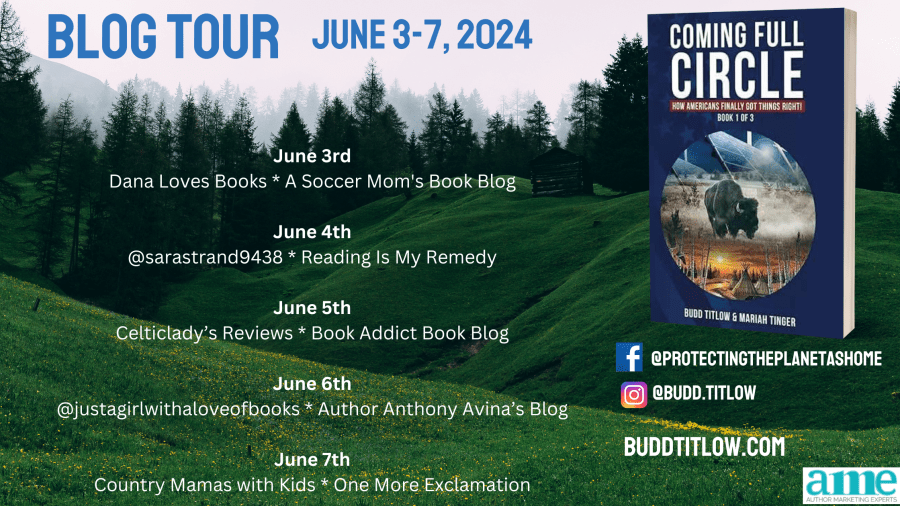
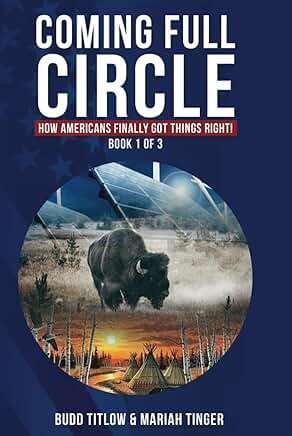
Coming Full Circle: A Sweeping Saga of Conservation Stewardship Across America by Budd Titlow and Mariah Tinger BLOG TOUR

Long synopsis:

As a career wildlife ecologist and conservationist, I am often asked to recommend a book that tells the full story of our Nation’s land conservation ethic and the environmental movement that it eventually spawned. I can never come up with a good suggestion—mainly because such a book doesn’t exist. Until now, that is. 

Following the fortunes and foibles of a multi-generational American family, this book explains how we took our country to the brink of both the Climate Crash and the Sixth Extinction and then back again. Chock full of tall tales—liberally blended with historic facts—the engaging text provides an entertaining and enlightening description of how our Nation’s natural history unfolded from colonial days through the present. 

As the journey progresses, readers experience a vivid array of frontier vignettes—including wagon-crushing landslides, badlands raiding parties, frontier smack-downs, buffalo killing fields, life-threatening blizzards, deadly avalanches, alpha predator battles, Gold Rush boomtowns, and bounteous wildlife habitats. Along the way, they also witness heart-warming friendships among white settlers and Native Americans while also meeting wildlife slaughtering ne’er do wells, fun-loving nomads, racist ferrymen, grizzled mountain men, trickster trappers, and ambushing poachers.

Then—as the story moves through the Industrial Revolution and into modern times—merchants and developers start to dominate with their tawdry acts of wiping out entire bird rookeries for women’s hats, ditching and draining south Florida’s wilderness, blasting away mountaintops for coal, damming pristine rivers, destroying coastal shorelines, and fracking entire landscapes into oblivion. 

Emphasizing optimism, the last part of the book features the human resiliency that has allowed us to overcome the many existential threats—the Civil War, the Great Depression, the Dust Bowl, Nazi Germany, the Cold War, COVID-19—we have faced as a Nation. Strategic resolution begins with making Sustainable Design, Low Impact Development (LID), and Best Management Practices (BMP’s) the catch phrases for achieving world-wide Harmonic Equilibrium Design (HED) and Smart Growth. 

As an aside to the main story, readers will get to know the myriad “natural resource heroes” who spawned and nurtured our Nation’s bold conservation movement. People like John Muir, Harriett Hemenway, Roger Tory Peterson, Marjory Stoneman Douglas, Ding Darling, Aldo Leopold, Rachel Carson, Bob Marshall, David Brower, and Gaylord Nelson—who instilled within us the courage and will power to do the right things. The end of the book will also feature the current leaders of the environmental battles against the climate crisis and biodiversity loss—including such luminaries as Bill McKibben, Al Gore, James Balog, Mark Jacobson, Elizabeth Kolbert, Naomi Klein, Naomi Oreskes, Katherine Hayhoe, Reverend Sally Bingham, and—yes—even Pope Francis.

Short synopsis:

Following the fortunes and foibles of a multi-generational American family, this book explains how we took our country to the brink of both the Climate Crash and the Sixth Extinction and then back again. Chock full of tall tales—liberally blended with historic facts—the engaging text provides an entertaining and enlightening description of how our Nation’s natural history unfolded from colonial days through the present. 

As an aside to the main story, readers will get to know the myriad “natural resource heroes” who spawned and nurtured our Nation’s bold conservation movement. People like John Muir, Harriett Hemenway, Roger Tory Peterson, Marjory Stoneman Douglas, Ding Darling, Aldo Leopold, Rachel Carson, Bob Marshall, David Brower, and Gaylord Nelson—who instilled within us the courage and will power to do the right things. The end of the book will also feature the current leaders of the environmental battles against the climate crisis and biodiversity loss—including such luminaries as Bill McKibben, Al Gore, James Balog, Mark Jacobson, Elizabeth Kolbert, Naomi Klein, Naomi Oreskes, Katherine Hayhoe, Reverend Sally Bingham, and—yes—even Pope Francis.

Advertisements

Author bio:

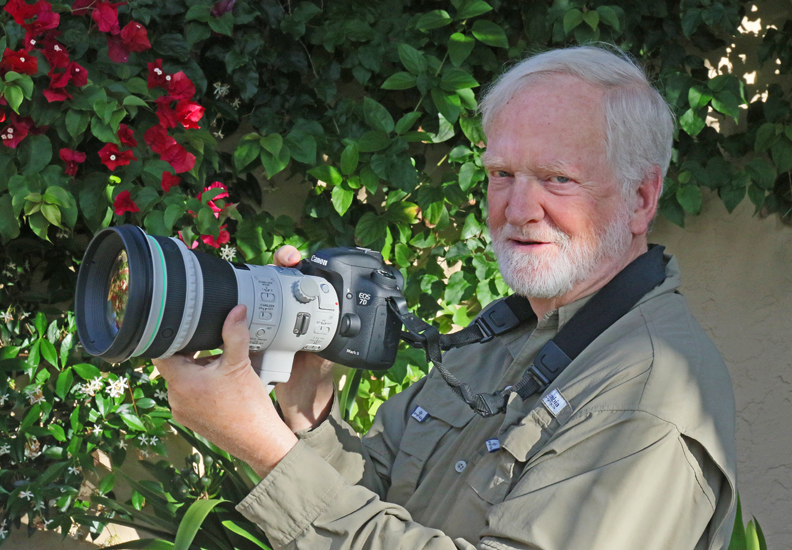
For the past 50 years, professional ecologist and conservationist Budd Titlow has used his pen and camera to capture the awe and wonders of our natural world. His goal has always been to inspire others to both appreciate and enjoy what he sees. Now he has one main question: Can we save humankind’s place within nature’s beauty, before it’s too late?

Budd’s two latest books are dedicated to answering this perplexing dilemma. Protecting the Planet, a non-fiction book, examines whether we still have the environmental champions among us needed to accomplish this goal. Next, using fact-filled and entertaining story-telling, his latest book — Coming Full Circle — provides the answers we all seek and need.

Having published five books, more than 500 photo-essays, and 5,000 photographs, Budd Titlow lives with his music educator wife, Debby, in San Diego, California.

Website: https://buddtitlow.com/

Facebook: https://www.facebook.com/protectingtheplanetashome/

Instagram: https://www.instagram.com/budd.titlow/

Amazon: https://amzn.to/49GPaG1

Goodreads: https://www.goodreads.com/book/show/201613673-coming-full-circle

Praise:

“An adventurous, passionate historical novel about an eco-friendly balance between humans and nature.” – Kirkus Reviews

“Using a blend of historical fiction and poignant truths, the (book’s) narrative delivers a spirited discourse on conservation, our environment, oneness, and chiefly, the concept of coming full circle. Overall, the authors’ expertise in the topic of conservationism and their knack for storytelling is on full display, making for a highly recommended read.” US Review of Books

“I recommend Coming Full Circle to fans of issues-focused fiction who also enjoy family sagas and tales of growth, learning, and self-discovery.”Readers’ Choice

Advertisements

EXCERPT

PROLOGUE

There is a lot that our U.S. biology and history books don’t tell us.

Tracking the triumphs and travails of a multi-generational American family, this book sets the record straight.

From a biological perspective, many American colonists didn’t care about protecting our native wildlife or conserving our natural resources.

Just think about the once abundant species that are no longer with us — the passenger pigeon, the eastern elk, the Carolina parakeet, the heath hen, the American bison (almost), and the black-footed ferret (almost).

Then consider our native tallgrass and midgrass prairies — most of which were swallowed up by settlers’ plows and then blown away during the Dust Bowl of the 1930s. Finally, look at our air and water quality — both poisoned by industrialization and still trying to recover.

On the history side of the ledger, no group of U.S. citizens has ever been more disrespected and abused than our Native American tribes.

They respected all species as equals and managed their lands not just in sustainable ways, but in ways that enhanced the flourishing of the ecosystem. Yet they lost both their ancestral lands and their cultural societies to colonial progress.

But — in the end — this book carries a very positive, hopeful message. We can still extract ourselves from our past faux pas. By shedding our polarized viewpoints and working cooperatively, we can still save our planet before it’s too late.

For both of us, this book is a career self-examination. For me (Budd) the text expresses many things I’ve learned about the natural world during my fifty years as a wildlife ecologist and resource conservationist.

For me (Mariah), the book’s content captures the joy of the natural world that my dad (Budd) taught me, how that joy has shaped my career as an educator and science communicator, and how I hope it influences my children’s paths. We both see reflections of our past and visions of our future modeled in the multi-generations of families connected to nature.

Throughout this book, we also emphasize our lifelong beliefs in the sanctity and equality of all living things — both human and non-human.

Our belief system encompasses all races, religions, cultures, and lifestyles — but especially those of the Indigenous (or Native) Peoples of the world.

As expressed in our main title, Coming Full Circle, our book’s central theme revolves around two primary terms — the circle of life and biodiversity.

Many of us — especially those with kids or grandkids — know the first term, the circle of life, as the mega-hit song from the Broadway musical and blockbuster movie, The Lion King. In reality, the circle of life is a symbolic representation of birth, survival, and death — which leads back to birth. For example, an antelope may live for years — grazing peacefully on African grasslands and producing several healthy calves. But — as she nears the end of her life and thus her speediness — a hungry lioness captures and kills her. The antelope dies, but the lioness brings her body back for the nourishment of her hungry cubs. In this way, the antelope’s death sustains the life of the lioness’s pride — or family of lions.

Life is thus represented as a circle because it is a constant loop. The idea of life as a circle exists across multiple religions and philosophies. This belief was prevalent throughout the early Indigenous Peoples of Earth. Unfortunately — owing to what some may term ‘progress’ — this fervent belief in the circle of life is much less common in today’s world.

The second term — biological diversity, or biodiversity for short — is primarily used by biologists and ecologists. Biodiversity means the variety of life — the total number of species, both plants and animals —living on Earth. This includes everything from the tiniest microbial spores to the gargantuan blue whale. Generally speaking, the greater the biodiversity — the total number of species present — the healthier our planet.

As career environmental scientists, we believe that these two terms are very closely related. In fact, they build off of and intensify one another. Picture the diameter of the circle of life as the number of species that participate in that circle. In our antelope-lioness example above, the diameter would include the lioness and her pride, the antelope and her calves, the grass that the antelope eats, the vultures that feed upon the remainder of the antelope’s carcass, the decomposers that help break down what the vultures leave behind — and so on. In this manner, the circle of life is always intricately populated with species and interdependencies. The larger the circle — in terms of its diameter — the greater Earth’s biodiversity and vice versa. Because of this, we use these terms interchangeably throughout this text.

Unfortunately, the circle of life — or biodiversity — of the United States has decreased dramatically since the first European immigrants landed on our shores. By telling this fictional account — partially based on historical facts — of one multi-generational family of American immigrants, this book explores how and why this change has occurred and how we will — eventually — come back around to again achieve closure of the circle of life.

Our story begins with quite different — but keenly interrelated —anecdotes about two American heroes whose lives were separated by more than half a century.

What Was Never There: Short Stories by Elizabeth Maria Naranjo Review

I received a free copy of this book in exchange for a fair and honest review. All opinions are my own. 

Author Elizabeth Maria Naranjo shares a collection of short stories that taps into the theme of memory in the collection “What Was Never There: Short Stories”.

Advertisements

The Synopsis

A mother and daughter lost in the woods must overcome their worst fears to find their way back. A father going through a divorce witnesses a seemingly impossible motorcycle accident,

which forces him to question the truth of his own perceptions. A little boy with a terrible secret routinely steals away at night to meet a girl beneath a willow tree—only to discover she has a

secret of her own.

What Was Never There is a collection of short stories with the common theme of memory, or rather, the way memory haunts us.

Includes Pushcart Prize nominated stories “We Never Get to Talk Anymore” and “The Dinosaur Graveyard" and the award-winning "Windows," selected for Best Microfiction 2023.

Shop Fine Jewelers Deal Of The Week!

The Review

This was such a haunting yet beautiful collection of short stories. The author does a remarkable job of creating a sense of atmosphere throughout each story as if the setting becomes just as crucial a character in each story as the characters themselves. The imagery drew the reader into the narrative, allowing the stories to evolve and grow naturally so that readers could feel drawn further into them. 

The author’s writing style stood out to this reader, as the author writes in a way that almost feels both poetic and cinematic, as if in an indie arthouse film. Stories such as Windows and Gravity highlight this writing style, as the reader can feel the artistry and emotion that these tales inspire in the readers. The depth of the characters in these stories also showcases the theme of memory quite well, exploring how memory can be a conduit to our perception of the universe.

Shop Now

The Verdict

Thoughtful, imaginative, and engaging author Elizabeth Maria Naranjo’s “What Was Never There” is a must-read short story collection. The fast pace and compelling storytelling instantly draw the reader in, and their emotional connection with each story will make them eager for more of this author’s moving work. If you haven’t yet, be sure to grab your copy today!

Rating: 10/10

Advertisements

About the Author

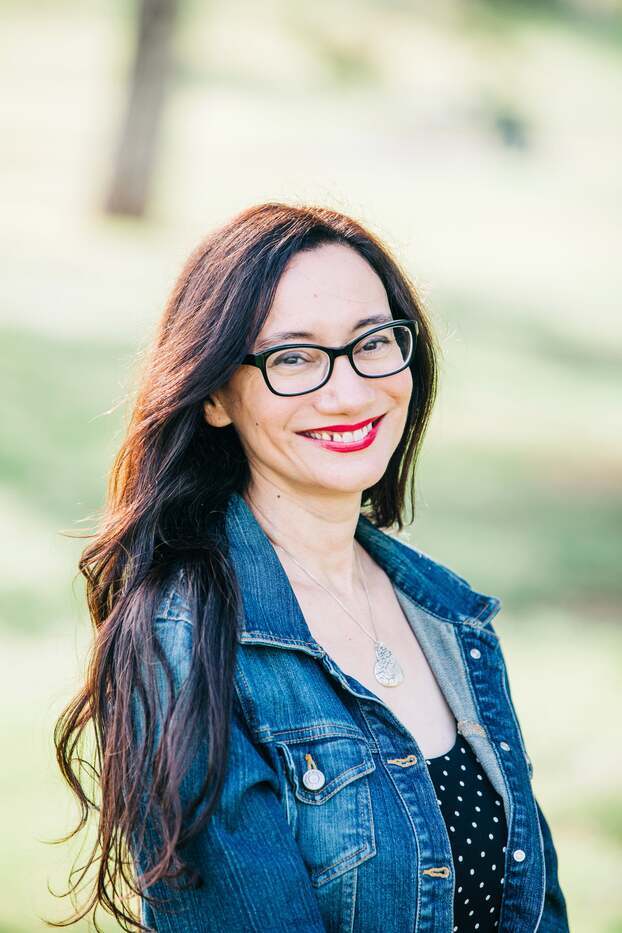
Elizabeth Maria Naranjo is the author of The Fourth Wall, The House on Linden Way, and What Was Never There. Her stories and essays have been widely published and nominated for the Pushcart Prize, Best American Essays, and Best of the Net, and her short story, “Windows,” was selected for Best Microfiction 2023. She lives in Tempe, Arizona, with her husband and two

children.

Buy links:

Amazon Kindle:

Amazon Paperback:

Website: https://www.elizabethmarianaranjo.com

Twitter: https://twitter.com/emarianaranjo

Goodreads: https://www.goodreads.com/book/show/199240146-what-was-never-there

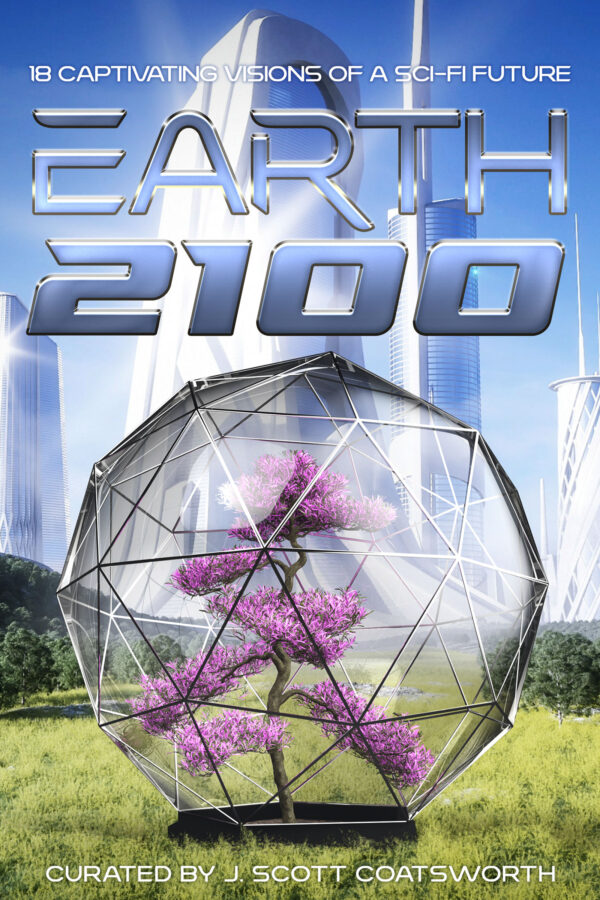
Earth 2100 Anthology (Curated by J. Scott Coatsworth) Blog Tour + Excerpt

Other Worlds Ink has a new near-future sci-fi anthology out: Earth 2100.

Earth on the Cusp of the Twenty-Second Century

How the world has changed in the last seventy-six years. In 1948, scientists ran the first computer program, and “the Ultimate Car of the Future,” the futuristic, three wheeled Davis Divan, debuted. Since then, a succession of inventions—the personal computer, the internet, the World Wide Web, smart phones and social media—have transformed every aspect of our lives.

The next seventy-six years will change things too, in ways we can barely even begin to imagine. Culture, climate change, politics and technology will continue to reshape the world. Earth in 2100 will be as unrecognizable to us as today would be to someone from 1948.

Eighteen writers tackled this challenge, creating an amazing array of sci-fi possibilities. From emotional AI’s to photosynthetic children, from virtual worlds to a post-urban society, our writers serve up compelling slices of life from an Earth that’s just around the corner.

So dive in and take a wild ride into these amazing visions of our collective future.

Universal Buy Link | Amazon | iBooks | Barnes & Noble | Google Play | Kobo | Smashwords | Publisher | Goodreads


Earth 2100 meme

Tin Lizzy

Gail Brown

Chaos filled several of the workshop tables. Material overflowed a table with a sewing machine. Some heavy duty, water proof beige fabrics had drifted to the floor.

A thick vegetable and meat soup simmered on the stove in the tiny central kitchen area. Next to the stove was a table set for two. Without any chairs.

Celina rode her power chair over to the counter top stove to stir the soup. The counter was a few inches higher than was comfortable. Today she needed to cook more than her usual single serving. Maybe her height measurements had been off. The counter could be an inch shorter, and not be in her lap.

It was challenging to figure out how to build it low enough to see into a pan, and stir the food, while tall and sturdy enough to not knock it over when Lizzy slid under it.

There was only about a foot of space to work with, if she didn’t want the pan higher than her face, and not able to stir without her elbow at maximum height. Which risked boiling food splashing on her face.

Figuring out how to make furniture the correct height, so she could slip her non-functioning legs under it had consumed her waking hours, and even sleeping hours, for the last year.

The stainless steel pan reflected her face. Down to the pointed lines above her eyebrows. Even the eyebrow she had singed an hour before.

She turned the power chair back to her wood and metal design workstation. Another stainless steel surface. Covered with scars from the many experiments needed to build lowered objects, with a glimpse of personal beauty in their functionality.

What would Henril and Trinkle think of her newest achievement? Her former hiking partners no longer walked the trails as much without her.

Certainly not on the narrow bluff overlooking the river. Henril had avoided out of concern for Trinkle’s safety. Or so he said.

Hopefully, they would soon all be hiking together.


The Authors

  • Tim Newton Anderson
  • nathan bowen
  • Elizabeth Broadbent
  • Gail Brown
  • J. Scott Coatsworth
  • Monica Joyce Evans
  • Isaiah Hunt
  • Blake Jessop
  • E.E. King & Richard Lau
  • Morgan Melhuish
  • Eve Morton
  • Christopher R. Muscato
  • Jennifer R. Povey
  • D.M. Rasch
  • Joseph Sidari
  • Mike Jack Stoumbos
  • Joseph Welch
  • KB Willson

Other Worlds Ink logo

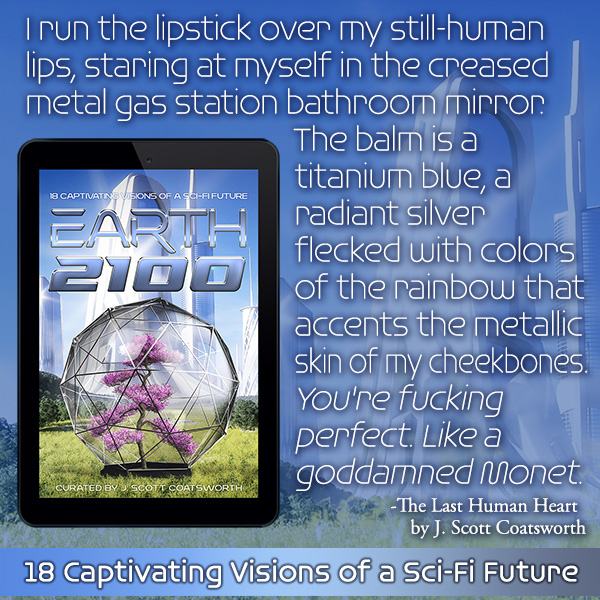
Earth 2100 Excerpt: The Last Human Heart

I run the lipstick over my still-human lips, staring at myself in the creased metal gas station bathroom mirror. The protective balm is a titanium blue, a radiant silver flecked with colors of the rainbow that accents the metallic skin of my cheekbones. Wrinkles line the edge of my lips where skin meets metal. You’re fucking perfect. Like a goddamned Monet.

I snort. I used to care about such things once. Matching my clothes for a night at the clubs with Erik. Choosing our elaborate costumes with care—exposing a bit of muscled stomach or a flash of ass with our tight, waist-hugging jeans. Sometimes bringing another guy home with us for a threesome.

The memories are cracked and faded around the edges. The upload to my quantum brain did something to me, changed me into this Frankenstein of man and machine.

I would have made a hell of a scene on the club circuit.

Crash.

What the hell? Wary, I slip the little jar of the moisturizing lipstick, snagged from an old department store, back into my satchel and swing it over my shoulder. Inside my titanium rib cage, my human heart beats faster—too fast.

I grasp the sides of the old porcelain sink and breathe slowly, calming myself until my heart slows again. Then, silent as a cat, I pull the door open and peer outside through eyes I wasn’t born with.

It’s almost dark, the last bits of evening fleeing across the empty countryside.

Another noise, this time a long, drawn out squeal. My eyes whir and focus. There by the gas pumps.

I breathe a sigh of relief. Just a scavenger bot. Their kind rule the world now, traveling through the rubble and recovering materials on a schedule only they know, stockpiling them for humanity’s return. I laugh bitterly at the thought.

I slip out of the bathroom to watch the little thing. It’s a third the size of my own cyborg body, and it’s working away at one of the old gas pumps, using a laser torch to cut it into pieces.

“They’re not coming back.” It’s a whisper, and an admission. Something I don’t like to think about for too long. You’re being morbid. Erik would tell me that with a flash of his bleached white smile, before leaping at me and pinning me to the bed for a kiss.

I bite my lip with metallic teeth and sigh.

The scavenger stops and turns as if to look at me. I can feel it scanning me for parts. Then it whirs, a disappointed sigh, and turns back to its work.

I’m worthless. I laugh ruefully, a sound more like pistons firing than a human laugh. Even this little metallic vulture has no use for the likes of me.

I consult my map, painstakingly put together from bits and clues found on the neural web. Fifty years after the last human upload, it’s a miracle the network survives at all. It’s a broken, feeble thing, limited to small nodes here and there, but still… a testament to the Remainers like me who maintain it, the humans and machines who survived the climate and the last wars.

Like many of them, I wasn’t “suitable for upload.” One hazard of being an early adopter. I laugh harshly, pistons firing in my throat.

This insignificant speck of humanity’s great accomplishments where I stand was once called Turlock, a tiny town in California’s Central Valley. I wince. I know that name—a friend of mine once lived here. Did she upload, before the end?

The Sacramento trading station is less than a hundred miles away, if it still exists. The last time I’d been there was two decades ago. With luck, I’ll be there in another day or so, and if I’m really lucky, they’ll be able to replace my worn-out ticker with a new one.

My heart beats faster. I close my eyes and urge it to be calm, hoping they will have what I need. Otherwise this might be the end of the line. Still, I’m ready to go, if it comes to that. Erik, I miss you.

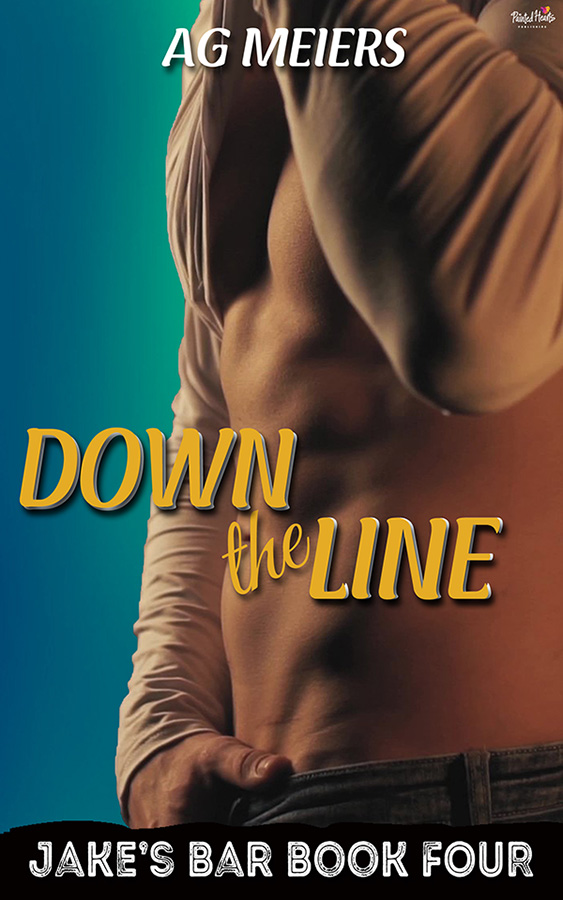
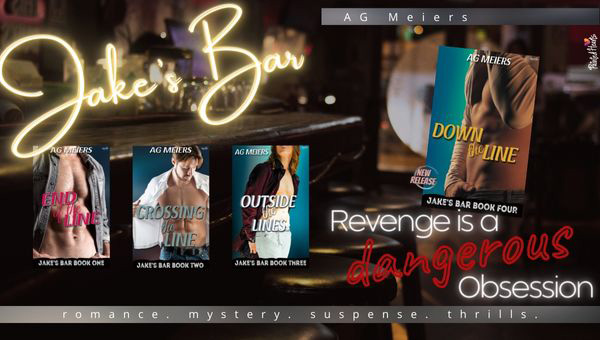
Down the Line (Jake’s Bar #4) by AG Meiers Blog Tour + Guest Post

Title: Down The Line (Jake’s Bar #4) by AG Meiers

Guest Post 

The hardest character to write in a romantic suspense? Or the villain conundrum!!

In an era where ‘morally gray’ is celebrated, writing a believable antagonist is tricky. To be contemptuous they need to be bad—like really, really bad, but of course, they can’t just be evil for the sake of evil. They need motivation and complexity.

And, as the author, I struggled—I struggled with the challenge to find the balance of moral ambiguity and flawed humanity. Luckily, my romantic suspense, DOWN THE LINE, is not a battle of good versus evil. So, all my characters can be a hot mess, no heroes required…

DOWN THE LINE is about how to find love and happily-ever-after.

I looked at my two protagonists and had a good laugh, because my characters go about it the wrong way.

Two men meet. Hook up. Spend a weekend together and, yes, it changes the trajectory of their lives, but not for the better.

Dean Hunt – has trust issues! So, all his interactions become tit-for-tat. Love is a transaction. And you better negotiate from a position of strength, or you have nothing to offer…

Noel Conway – judges himself through his father’s eyes and always finds himself lacking. He doesn’t deserve love just for being Noel. So, let’s just go out there and work undercover for the FBI to bring down a dangerous criminal. Well, that should impress any love interest, right?

Dean and Noel get a second chance. The dangerous criminal (yes, my villain!!) from Noel’s past threatens his younger brother and Dean might just be the only one who can help.

Noel is trying to protect the ones he loves, and Dean is chasing front-page news—the line between enemies and lovers gets blurred…

Hey, wait, you might say, what does all that have to do with writing a “good” villain?

Well, in DOWN THE LINE the villain holds up a mirror and forces my heroes to take a good, long look at themselves. Where do they draw the line between ‘morally gray’ and ‘unacceptably evil’?

So, for me, writing a “good” villain is mostly about the characters the villain is coming after.

Down the Line - AG Meiers - Jake's Bar

AG Meiers has a new MM romantic suspense book out: Down the Line. And there’s a giveaway.

Revenge is a Dangerous Obsession.

Dean Hunt needs the story of a lifetime—Since his uncompromising attitude got him fired, the investigative journalist is hell-bent to expose the powerful and corrupt Conway family. It’s a career move, and absolutely not a vendetta against the oldest son Noel, who ghosted Dean after a mind-blowing weekend together.

Noel Conway needs a new start—After years away, Noel has come home to rebuild the bridges he’s burned. Too bad his past caused a ripple effect he can’t outrun. Now, he’s asked to save his family from the one man he never expected to see again but can’t forget.

Dean is chasing front-page news, and Noel is trying to protect the ones he loves. But the line between enemies and lovers gets blurred when a dangerous criminal from Noel’s past resurfaces. Will the truth shatter their tentative trust? Or do they have a shot at happily ever after?

But none of that matters when suddenly Noel disappears…

Down the Line, the final book in the award-winning Jake’s Bar series, is a spicy, M/M romantic suspense featuring a rainbow-colored bar full of quirky characters, and all the romance you can handle. So, download today, and get ready to fall in love with Jake’s Bar.

Warnings: smoking cigarettes and weed in the hot tub, kidnapping (on page scenes restrained), verbally abusive father

About the Series:

The award-winning Jake’s Bar series is a set of steamy, M/M romantic suspense novels, featuring a rainbow- colored bar full of quirky characters, and all the romance you can handle.

Universal Buy Link | Amazon


Giveaway

AG is giving away a $10 Amazon gift card with this tour:

a Rafflecopter giveawayhttps://widget-prime.rafflecopter.com/launch.js

Direct Link: http://www.rafflecopter.com/rafl/display/b60e8d47310/?


Excerpt

Jake's Bar banner

As Dean reached the top of the staircase, a man stepped out of the shadows in front of his door. Dean straightened his shoulders. “Detective Conway.”

“Hunt.”

In a parallel universe, they might have been friends. They were fighting the same fight. Had the same enemies. In this world, they weren’t brothers in arms. In this world, Dean had been cast as the villain.

“How can I help you this fine morning?”

“Open the door. We gotta talk.”

“Look, it’s been a long night—”

“Just open the damn door.” Conway snarled, pushing into Dean’s personal space.

Dean stood his ground. “Are you here in an official capacity? Because then, the answer is no, I won’t let you in. You have no warrant, no permission to search my property. I don’t consent—”

“Just shut the fuck up. None of us wants this shitshow to be on the record,” Con growled.

Dean, curious, took a step back and raised his empty hand, palm up. “Okay.”

He fished for his key, pushed open the door, and quickly disarmed his alarm system. Conway didn’t wait to be invited in, just crossed the living room, dropped his shearling coat onto the sofa, then walked over to the large window overlooking the river.

The view was the only redeeming feature of Dean’s otherwise-generic apartment. The mess didn’t help. There were dirty dishes piled up in the sink, a pizza box on the breakfast counter separating the cramped kitchen from the living room, and an unmade bed in the other corner of the room.

“For a guy who anxiously waited at my doorstep, you’re awfully quiet.” Dean smirked. “Coffee?”

“No.” Conway turned his back, now studying the row of framed newspaper front pages Dean had hung on the apartment’s interior wall. His personal collection of historic headlines—headlines that changed the world.

The oldest was from July 6, 1776. The Pennsylvania Evening Post, printing the Declaration of Independence on its front page. Next to it, the Daily Telegram, declaring the end of the Second World War. The two most recent, the New York Times’ “OBAMA: Racial barrier falls in heavy turnout” and, of course, the front page the day after 9/11.

Dean had added a few more personal favorites, like Moneta J. Sleet’s photography of Coretta Scott King at MLK’s funeral. The first Black man to win the Pulitzer for journalism.

Conway took his time examining each framed newspaper. Dean already regretted allowing the intrusion into his space. He felt exposed—vulnerable—under silent scrutiny.

Irritated, he started banging around the kitchen. He was in no mood to explain that looking at those headlines every day fueled his ambitions and inspired his dreams. Dean believed with every fiber of his being in the power of a free and independent press.

He turned on the coffee machine and leaned against the counter. As if Conway felt Dean’s angry glare across the room, he finally turned and stared right back. For a moment, they engaged in a silent standoff.

Unease flittered through Dean. Camille had been right. Her brother was seething with anger. And Dean had no fucking idea what he’d done to piss him off. He sighed and shook his head, then took two mugs out of the cabinet and put them onto the island. “Miguel, have a damn coffee. You look like you need it.”

“Says the man who clearly slept in his party clothes and crept home at sunup.”

“Guilty as charged.” Dean shrugged.

Conway curled his lip. “I do not know what my sister sees in you.”

It wasn’t a question, so Dean didn’t bother with an answer. “You wanted to talk? So, talk.”

Instead of talking, though, Conway pulled out a stack of papers. Pushing aside the coffee cups to make room, he spread them out over the counter.

Dean froze. The first blurry photograph featured Dean in another man’s arms. In the next, the same man was pressing Dean against a white porch railing, his own hands tangled in the man’s messy curls. Conway fanned the stack, revealing nearly a dozen more.

Dean and Noel Conway, kissing.

Suddenly, he was there again, the ocean breeze tugging on his clothes. Noel’s warm skin, tasting like sunshine and a hint of salt, his eyes blown with desire. Goddamn, so fucking beautiful, with that shy smile, whispered promises—

Dean’s throat was desert dry. His ragged breath and the hissing of the coffee machine came together like a fucking symphony. “I—”

“Save it. My sister thinks you’re this hotshot journalist. Full of passion. Braving adversity. Motivated by a noble cause. Yeah, fuck that. You’re after my family because Noel pounded your ass, then dropped you like he does everybody else. Your pride—your precious ego—is hurt because you’re just another notch in my brother’s carved-up bedpost.”

Conway grabbed his jacket and walked to the door. He turned and added, “Watch it, Hunt. You got no job. No friends. No prospects. But if you think you’ve reached rock bottom, think again.”

Dean contained himself until he heard his door close with a soft click. Only then did he allow himself to swipe papers, cups, and the fucking photos off his counter. The cups shattered

on the tile floor.


Author Bio

Eighteen years ago, AG Meiers came to the US for adventure and stayed for love. Currently, she lives in New England with her husband and two awesome kids—balancing work, friends and family, and writing.

When she has some free time, her favorite thing to do is travel and visit new places. Her past trips have already brought her to a variety of countries on four continents. She never passes up an opportunity to experience different cultures, diverse people and amazing locations.

Even though she has been dreaming up stories all her life, she has only recently started to write them down and share them with the world. As a writer she loves to put her characters through a lot of challenges, conflict and heartbreak, before she allows them to find their happy-ever-after.

Author Website: https://www.agmeiers.com

Author Facebook (Personal): https://www.facebook.com/ag.meiers.1/

Author Instagram: https://www.instagram.com/agmeiers/

Author Amazon: https://www.amazon.com/stores/AG-Meiers/author/B07MCHQH5B

Other Worlds Ink logo

Earthquake Ethan Blog Tour – Interview with author R.L. Merrill

Greetings and thanks so much for joining me on the Earthquake Ethan blog tour! I thought I’d shake things up a bit and answer some “Between Two Ferns” type questions about the book and my motivations in writing it. Here we go: 

  • How did you choose the topic for this book? Ethan was a character mentioned only by name in book one, Hurricane Reese, and I wanted to know what happened to him after the first show wrapped in London just before the action of Hurricane Reese starts. Manager Arthur Frye has been such a rock for everyone in the series as well as the book Everything’s Better With You and, well, I knew I needed to get to know him better. His backstory, which includes being the child of Hollywood legends gave the story meat and allowed me to indulge myself on all things Hollywood (there will be another blog post about my Rabbit Hole Research for this project!) I’ve always been a huge geek about stories behind the movies and the people who made them, just as I geek out about the stories behind the music. Having the opportunity to put all these things in one book? YES, PLEASE!
  • What were your goals and intentions in this book, and how well do you feel you achieved them? My goal with this book was to get the characters through the musical, which is called Boy. In book one, Reese comes home to take care of his grandfather, Thomas, who was a piano player for Frank Sinatra and one of the top jazz pianists on the West Coast. They’d planned to catalog his music and Reese was inspired to write a musical using his grandfather’s music. He plotted the story with Toby to be about when his grandparents’ met, but the story shifts when Reese finds himself in love. Book Two kicks off the pre-production of the show, and I knew I needed to show the musical performed on stage in book three. I needed their hard work and sacrifice to pay off with a memorable performance.
  • What was the hardest part of writing this book? In addition to the characters from the first two books showing up, Arthur’s tie to characters from my Teacher trilogy meant that I could bring them back so we could see where they were four years after the action in Teacher: The Final Act. That meant a larger cast of characters, and I also wanted this book to stand alone if folks hadn’t read any of the others. Did I accomplish this? My beta readers seemed to think so. I hope you do too!
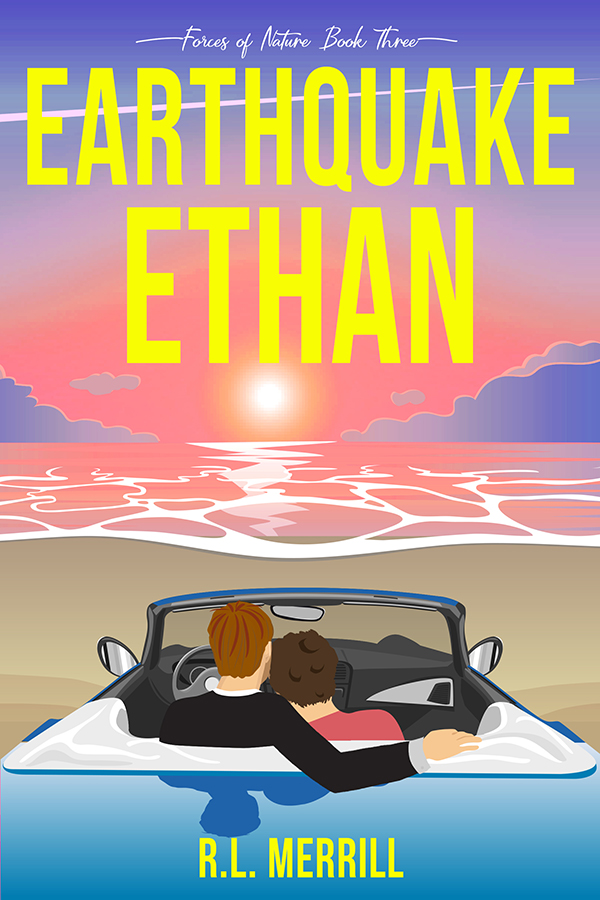
  • Who did your cover, and what was the design process like? I was lucky enough to work with KaNaXa when the first two books were under contract with my former publisher. When I re-released them indie, I contacted her and asked her to help me reimagine the covers with an illustrated look. We had so much fun coming up with the covers for Reese and Toby, finding scenes from the book that would really be awww-inducing to readers. Then when Romancelandia stepped in to raise money for Haiti, I bid on KaNaXa’s offer to do a cover. She was happy to work with me again to finish out the series and I fell hard for her design. We did have some rather funny moments, including when Mr. Ro decided the cover was showing something else about to happen than a nice cuddle. Once he pointed it out we couldn’t unsee it, so KaNaXa was able to adjust Ethan so he didn’t look like he was, uh, going deep sea diving. Or something…ahem. These three books are beautifully covered and I can’t wait to have the paperback of Ethan in my hot little hand!
  • What secondary character would you like to explore more? Tell me about him or her. Earthquake Ethan was supposed to be the finale of this series…but when I met Audra, I had other ideas. So I’m calling it a finale…For Now. Stay Tuned…
  • Who has been your favorite character to write and why? Part of the reason this book has so many characters is that I can’t stop thinking of Jesse and Danny Black. They have been my favorite MF couple to write. I published these books in 2015, my 3rd, 4th, and 5th books and I am still in love with them. When Reese and Toby’s show needed a choreographer, hey, Jesse Martin-Black would be perfect, and since Danny had ties to Hollywood through his friendship with a legendary producer, it just made sense that the two of them would be instrumental in the show’s success. Danny is also bisexual and so the show really hits close to him and Jesse as well. 
  • What’s your core motivation in this book? To see a group of people trying to make a statement with their art, to show that #LoveisLove, and to hopefully give readers some hearty giggles and swoons. Oh, and there’s a project that Ethan gets attached to in the book that I WISH would actually happen. Maybe I’ll write the screenplay!

Sound good? Here are links to all the books in the series plus the Teacher Trilogy as you’ll find many of the characters from those books in Ethan.

Hurricane Reese

Typhoon Toby

Earthquake Ethan

Teacher Trilogy

Join this band of natural disasters as they put on the show of their lives! Thank you for joining me on the Earthquake Ethan blog tour! Stay Tuned for More…

Advertisements
Earthquake Ethan - R.L. Merrill

R.L. Merrill has a new contemporary MM romance out, Forces of Nature book 3: Earthquake Ethan.

The Earth shook the morning actor Ethan Bradley arrived in Los Angeles looking for a second chance. He hoped his former producers Reese Matheson and Toby Griffiths meant it when they said to look them up if he were ever in LA because he had no other options. The pictures the paparazzi took at the wrap party for their London show made sure of that. What he wasn’t counting on was the reception he got from their manager, Arthur Frye. He was absolutely the kind of together guy Ethan wished would notice him, and for more than his pretty face and talent. Too bad Arthur only sees Ethan as a complication.

Arthur Frye has his hands full with his best clients—and best friends. The last thing he needs is another diva to care for, especially one who has a reputation for causing trouble. He has a strict rule against getting involved with the talent, no matter how pretty they are. Only Ethan Bradley shines for real, and when Arthur realizes his nice-guy innocence is genuine, he’s ready to do anything to help Ethan get his career back on track and get him out of LA. He’s too much of a temptation, and Arthur can’t afford to lose focus…not even for a chance at happiness for himself. Especially not when his star clients are about to risk their professional and personal happiness with their newest creation; a musical about two boys falling in love in the 1960s featuring music written by Reese’s grandfather, whose health is in decline.

Ethan Bradley shakes things up wherever he goes, and Arthur Frye is afraid he’ll be left in the wreckage if he gets too close. Can these two opposites find love on solid ground?

Warnings: implied sexual abuse off page

About the Series

Forces of Nature follows a group of talented men who are natural disasters, and the men who love them.

Amazon | QueeRomance Ink | Goodreads


Giveaway

R.L. is giving away a $25 Amazon gift card with this tour:

a Rafflecopter giveawayhttps://widget-prime.rafflecopter.com/launch.js

Direct Link: http://www.rafflecopter.com/rafl/display/b60e8d47309/?


Excerpt

The morning after Ethan Bradley landed at LAX the earth shook. Literally. Being from Iowa, he’d always been afraid of earthquakes. He remembered watching footage when he was a little boy of the one that hit Northridge and it stayed with him. He’d even turned down a part in the film San Andreas because he was terrified of the real thing.

Plus—at the time—he’d wanted to be considered a serious actor, and accepting a role in a Hollywood disaster blockbuster didn’t fit in with his professional goals. Instead, he’d ended up going to London to film a clever romantic comedy. Then came the stage and more accolades at the age of twenty-six than he’d imagined possible.

When his hotel room rattled his first morning in LA and sent him diving under the desk in the early hours, he’d wished he’d stayed.

But London had nothing to offer him after the paparazzi ruined his life, and he couldn’t go home. So there he was, back in the states, and ready to grovel before his former producer—and crush—for a role, any role, that would allow him to get back to doing what he loved…acting, singing, performing.

Love was a strong word. It was what he knew, what he was good at, where his God-given talents lay.

He’d come to LA with a plan. Sort of. Go see Reese Matheson. Pray he opened the door and took pity on him. And that he didn’t hold a grudge.

He plugged the Malibu address he’d gotten from his London manager’s office into the Lyft app and went outside to wait for his ride. And prayed.

If Reese wouldn’t see him, he had a plan B.

He’d go to see Reese’s business partner Toby Griffiths. Which was probably a terrible idea, but the best he had.

Because there was no plan C.

He had exactly fifty dollars cash on him and a credit card dangerously close to being maxed out. Rock bottom was flying up to meet him fast.

The Lyft driver dropped him off at the end of a long driveway leading to a quaint little house that backed up to the Malibu shoreline. He knew nine o’clock on a Sunday morning was early, but the earthquake had shaken him so much, he couldn’t wait to get out of his room at the Holiday Inn. He’d been to LA before to promote his films, but he’d never felt comfortable among the glitz and glamour of Hollywood and Beverly Hills.

Malibu had the scenery people thought of when they imagined Southern California. Palm trees, mountains that broke off into the sea, miles of sand with beautiful people jogging along the water’s edge. It was picturesque, and sometimes cliché. For Ethan, it represented his last hope.

He climbed the steps, cleared his throat, reached for that enthusiastic confidence that used to come so easy for him once upon a time—

The door opened before he even had a chance to knock.

The short Filipino man standing there in a pair of scrubs had one eyebrow raised and a hand on his hip.

“Can I help you?”

His tone didn’t come across as helpful, despite his words.

“Yeah, sorry. I’m looking for Reese Matheson? My name is—“

“I know who you are.” The man’s raised eyebrow turned into a frown. “Just a minute,” he said before closing the door with a little less force than a slam.

Breathe. It’s fine. Reese is a good guy. He won’t be angry that I showed up. He’s a generous, kind person—


Author Bio

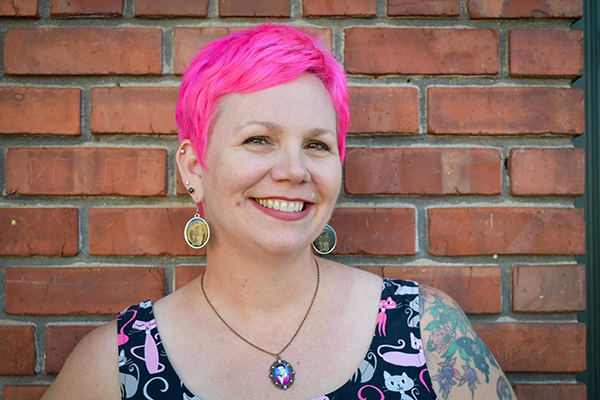
R.L. Merrill

R.L. Merrill brings you stories of Hope, Love, and Rock ‘n’ Roll featuring quirky and relatable characters. Whether she’s writing about contemporary issues that affect us all or diving deep into the paranormal and supernatural to give readers a shiver, she loves creating compelling stories that will stay with readers long after.

Winner of the Kathryn Hayes “When Sparks Fly” Best Contemporary award for Hurricane Reese, Foreword INDIES finalist for Summer of Hush and RONE finalist for Typhoon Toby, Ro spends every spare moment improving her writing craft and striving to find that perfect balance between real-life and happily ever after.

She writes diverse and inclusive romance, contributes paranormal hilarity to Robyn Peterman’s Magic and Mayhem Universe, and works on various other writing and mentoring projects that tickle her fancy or benefit a worthy cause. You can find her connecting with readers on social media, educating America’s youth, raising two brilliant teenagers, trying desperately to get that back piece finished in the tattoo chair, or headbanging at a rock show near her home in the San Francisco Bay Area! Stay Tuned for more Rock ‘n’ Romance.

Author Website: https://www.rlmerrillauthor.com

Author Facebook (Personal): https://www.facebook.com/rochellerlmerrill/

Author Facebook (Author Page): https://www.facebook.com/rlmerrillauthor/

Author Instagram: https://www.instagram.com/rlmerrillauthor

Author Goodreads: https://www.goodreads.com/author/show/9828914.R_L_Merrill

Author QueeRomance Ink: https://www.queeromanceink.com/mbm-book-author/r-l-merrill/

Author Amazon: https://www.amazon.com/stores/R.L.-Merrill/author/B00PI6Q1LI

Other Worlds Ink logo

Analyzing the Prescotts: A Novel by Dawn Reno Langley Review

I received a free copy of this book in exchange for a fair and honest review. All opinions are my own.

Advertisements

A therapist reeling from the loss of a patient must work to help a fractured family facing new changes and growing LGBTQ+ driven hate crimes in their local area, and the therapist must choose to save them or her own marriage in author Dawn Reno Langley’s “Analyzing the Prescotts: A Novel”.

Watermelon

The Synopsis

Cotton Barnes, a Raleigh, NC, therapist, leveled by a client’s recent suicide, is struggling to resume her practice when she begins working with the Prescotts, a family fractured when the father comes out as transgender and begins transitioning. They relate their stories in their chosen voices, each family member’s narrative in a different format. Journals, social media, and other nontraditional narratives challenge Dr. Barnes’ therapeutic skills. While each member of the Prescotts dodge land mines behind the closed doors of her therapy office, the Raleigh, North Carolina area is rocked by a series of LGBTQ+ hate crimes. As Cotton finds herself stalking the family, worried that she might not be able to “save them,” her husband slips away, and Cotton is forced to make a decision that will determine whether she saves her own marriage or the Prescotts.

Take a Food Journey Around the World!

The Review

This was such an engaging and thought-provoking story. The tragedy and heartbreak that becomes the running theme in the protagonist’s life was both insightful yet heart-wrenching to behold. The story speaks to our connections in our families and with others. 

Yet the strong themes this narrative took on made this story shine brightly. The lines that often blur when we become integrated into other people’s lives can turn care and concern into obsession, and the hardship that comes from trying to live our most authentic lives in a world that hates and shuns those people all played a significant role in this story. The careful and moving attention to detail the author paid to these characters made the story feel more connective for readers.

Product Launch September 2022

The Verdict

Memorable, heartfelt, and engaging author Dawn Reno Langley’s “Analyzing the Prescotts” is a must-read LGBTQ+ driven narrative that readers won’t put down. The twists and turns in the story, the emotional weight of the characters and their journey, and the mesmerizing tale that comes to life on the page will stay with readers long after the story ends. If you haven’t yet, be sure to grab your copy today!

Rating: 10/10

Advertisements

About the Author

Dawn Reno Langley writes extensively for newspapers and magazines, has published more than 30 books (nonfiction, children’s books, and novels such as The Mourning Parade (Amberjack, 2017)), dozens of award-winning short stories, essays, and poems in journals such as Missouri Review, Hunger Mountain and Superstition Review, as well as hundreds of articles, theater reviews, and blogs. A Fulbright scholar and TedX speaker with an MFA in Fiction from Vermont College and a PhD in Interdisciplinary Studies (concentrations in gender studies and creativity) from The Union Institute and University, she lives on the North Carolina coast. She offers writing retreats for other women and teaches for Southern New Hampshire University’s MFA program. Her latest book, You Are Divine: A Search for the Goddess in All of Us (Llewellyn) was released nationally and internationally in January 2022.ADD AUTHOR BIO

You can follow the author at:

Website: www.dawnrenolangley.net

Facebook: https://www.facebook.com/dawnrenolangley/

Instagram: https://www.instagram.com/proflangley/

You Tube: https://www.youtube.com/channel/UCfSpOz4n17V06ZGei4SkXww

Purchase a copy of Analyzing the Prescotts on

Amazon:  https://www.amazon.com/Analyzing-Prescotts-Dawn-Reno-Langley/dp/1685133495

You can also add this to your GoodReads reading list 

.https://www.goodreads.com/book/show/201087344-analyzing-the-prescotts

Blog Tour Calendar

February 5th @ The Muffin

Join us at WOW as we celebrate the launch of Dawn Reno Langley’s novel Analyzing the Prescotts. Read an interview with the author and enter for a chance to win a copy of the book.

https://muffin.wow-womenonwriting.com

February 6th @ The Mommies Review

Visit with The Mommies Review for a review of Analyzing the Prescotts.

https://www.themommiesreviews.com

February 8th @ Knotty Needle

Stop by Judy’s blog for a review of Dawn Reno Langley’s Analyzing the Prescotts.

http://knottyneedle.blogspot.com

February 9th @ Boys’ Mom Reads!

Find out Karen’s take on Analyzing the Prescotts in today’s review.

https://karensiddall.wordpress.com

February 10th @ Boots, Shoes, and Fashion

Visit Linda’s blog for her interview with author Dawn Reno Langley about her novel Analyzing the Prescotts.

https://bootsshoesandfashion.com

February 11th @  A Wonderful World of Books

Visit Joy’s blog for a guest post by Dawn Reno Langley on the challenges of writing using multiple points of view. You can also read an excerpt of Langley’s novel Analyzing the Prescotts.

https://awonderfulworldofwordsa.blogspot.com

February 12th @  Lisa Haselton’s Book Reviews & Interviews

Visit Lisa’s blog for an interview with Dawn Reno Langley, author of Analyzing the Prescotts.

https://lisahaselton.com/blog

February 13th @ Nikki’s Book Reviews

Read Nikki’s take on Dawn Reno Langley’s Analyzing the Prescotts.

https://nikkitsbookreviews.wordpress.com

February 15th @ Debra-Zenha Adams

Visit Debra’s blog for a guest post by Dawn Reno Langley exploring transgender authors: PhD Dissertation and the novel.

https://www.deborah-adams.com/blog

February 16th @ The Book Diva Reads

Stop by Vivian’s blog today when the spotlight will be on Analyzing the Prescotts by Dawn Reno Langley.

https://thebookdivasreads.com

February 18th @ Così faccio io

Don’t miss Cecelia’s review of Analyzing the Prescotts today.

https://cosifaccioio.substack.com

February 20th @ Writer Advice

Visit Lynn’s blog for a guest post by author Dawn Reno Langley that gives us a peek at The Writer Life.

https://www.writeradvice.com

February 22nd @ The Faerie Review

Visit Lily’s blog for her review of Analyzing the Prescotts by Dawn Reno Langley. 

https://www.thefaeriereview.com

February 25th @ Choices

Visit Madeline’s blog for a guest post by Dawn Reno Langley about writing about sensitive sociological issues.

http://madelinesharples.com

February 28th @ Author Anthony Avina’s Blog

Stop by Anthony’s blog for a review of Analyzing the Prescotts by Dawn Reno Langley.

http://www.authoranthonyavinablog.com

March 4th @ Author Anthony Avina’s Blog

Read a guest post about violence in the LGBT++ community by Dawn Reno Langley, author of Analyzing the Prescotts.

http://www.authoranthonyavinablog.com

March 5th @ Così faccio io

Author Dawn Reno Langley shares how to deal with broken characters at Cecelia’s blog. 

https://cosifaccioio.substack.com

March 7 @ Michelle Cornish Blog

Read Michelle Cornish’s review of Analyzing the Prescotts by Dawn Reno Langley.

https://michellecornishauthor.com/blog/book-reviews

March 10 @ Coffee and Ink

Stop by Coffee and Ink for a review of Analyzing the Prescotts by Dawn Reno Langley.

https://coffeeandinkbooks.wordpress.com

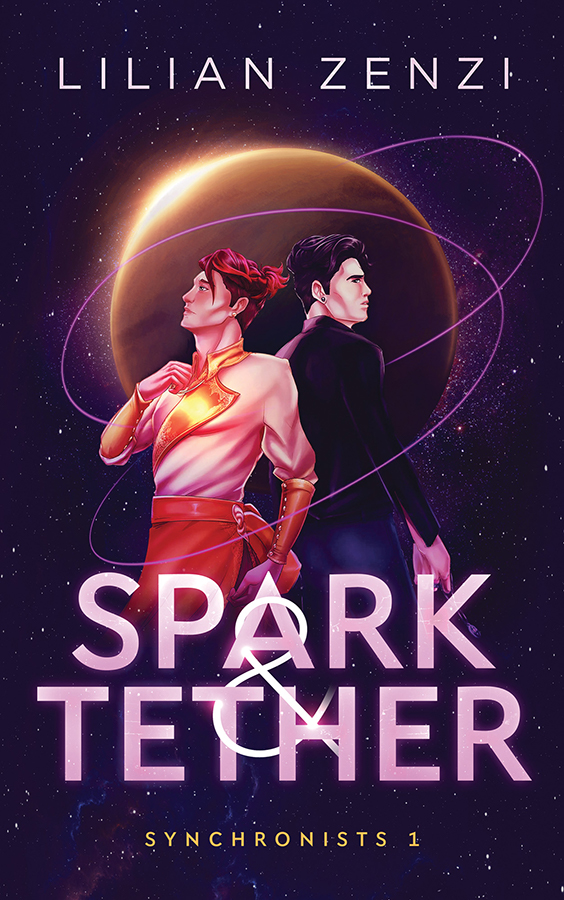
BLOG TOUR: Spark and Tether by Lilian Zenzi

Spark & Tether - Lilian Zenzi

Lilian Zenzi has a new queer sci-fi romance out (nonbinary/pan/queer/gender-fluid): Spark & Tether.

Working odd jobs across the Outer Ring gets a little lonely sometimes—not everyone loves having a synchronist with supraliminal perception around. But all Sacheri wants, he tells himself, is to wander the stars.

Then he takes a salvage run to an abandoned moon where he meets the wry, reserved, strictly-by-the-rules archivist Jin. Mesmerized by their confidence and charm, Sacheri can’t resist showing off his abilities–and instead of the damaged ai he was tracking, he stumbles onto a signal left by a synchronist who went missing decades earlier.

Sacheri knows from previous experience that pursuing the truth—never mind justice—could destroy everything he loves. He would defy his employers, the institution responsible for the myconeural networks that make him a synchronist, and the leadership of several worlds.

And it would complicate his new, passionate, and impossibly sweet relationship with Jin. They might be the best thing that’s ever happened to him, but they work for the very entities that ended Sacheri’s last investigation.

He knows better than to risk it.

But he’s never been able to turn away from someone in need, and there’s a voice in the void calling for aid…

Universal Buy Link


Excerpt

Spark & Tether meme - Lilian Zenzi/

PROLOGUE

Orinus Station, present day

Sacheri woke with a shiver in his nerves tracing his limbs like a lit fuse.

His synplants drew his awareness out into the station, into the whisper of leaves and the low hum of the machines, endlessly seeking. He had no solace to offer them, so he tried to sleep through it. Maybe inebriant would douse the burn; he’d have to find one, which meant leaving bed… but then, a walk might also help. The drink could keep him company on the return.

There was a certain maudlin poetry to wandering with the ghosts of memory, anyway.

#

He regretted his choices before he could finish the first bottle.

The empty corridors echoed, even the ones with lush vine-planted walls, fully surrounded by sound-absorbent tiling. The unsteady sound of his steps reminded him of less lonely times; the chatter of more populated halls made him sad. His synplants cleansed the inebriant from his system faster than he could drink, so he diminished them, set a timer on his standard implant, and ducked into a maintenance corridor, heading for the lifts that would return him to his temp residence.

He’d forgotten how many ghosts were in his head.

He drank more.

He passed through too many familiar places, muttering curses to himself about the council for bringing him to Orinus Station in the first place. He should have departed with Paradis, gone away to her fancy little moon, where he could wallow in heartbreak on a lakeside beach while she teased him about his lack of ambition. She’d have been careful not to remind him of anything—anyone—else.

Three more nights until he left for Elysia, into the far reaches of the Outer Rings, away from the myriad reminders, the constant calling of what should have been, all of his aching regrets.

He avoided the halls that would have taken him past Paradis’s private suites and the memories lying in wait for him there, and then he wandered past the next set of lifts, because it was what he and Jin had always done: long walks and quiet talks, so close their shoulders touched, their bell-clear, mesmerizing voice low and loving. He tried not to think about how much he missed them, and, failing that, tried not to think at all.

He trudged along, hugging the shadows at the edges of the walkways, arms heavy at his sides, until it was late enough that he could reasonably hope to get a lift to himself, and he had some hope of sleeping. The only humans he’d passed in maintenance took no notice of him, which was the whole point of using the back ways. But they might make small talk if they found him alone in a lift car, or, stars forbid, they might ask if he was okay.

And then what was he supposed to do? Cry on them? Tell them to mind their own business? Explain how he helped bring something like justice to a few long-forgotten synchronists and how much it took from him? Or should he ask if they’d seen a certain lithe, black-haired investigator for the Council of the Outer Rings anywhere nearby? His eyes burned from both the inebriant and the exhaustion and the constant threat of tears. He wanted to sleep until the transport to Elysia was ready.

The bottle was empty, but he wasn’t ready to let it go; he thought he might sleep better with it nearby, just for company, even if the synplants wiped all traces of the inebriant from his system. He leaned against the rounded corner of the lift alcove, one heel against the wall to hold him steady, arms crossed over his chest, bottle dangling loosely from the fingers of his right hand.

His luck almost held.


Author Bio

Lilian Zenzi writes science fiction and fantasy, sometimes with romance and usually in queer normative worlds. Genre agnostic as a writer and a reader, she likes to keep space for comfort, hope, and joy along with the kissing, conflict, and big ideas. She resents having to write a bio and would rather be in the garden or making art.

Author Website: https://www.lilianzenzi.com

Author Facebook (Personal): https://www.facebook.com/profile.php?id=100093325026648

Author Facebook (Author Page): https://www.facebook.com/profile.php?id=100093193813533

Author Instagram: https://www.instagram.com/lilianzenzi/

Other Worlds Ink logo

Advertisements

EXCERPT

Sacheri looked back at the dancers and found Jin had been watching him from the bar on the other side of the floor; once Adda was out of sight, they returned to the table with a fresh drink in hand. Sacheri liked their eyes on him, and didn’t want to interrupt it, and thought it had maybe become a game to see which of them would speak first. And so they ended up staring at each other from across the table for a good long moment before Sacheri broke it with a fresh grin. 

He’d never been that good at games. “I don’t think I’m your first synchronist, am I?”

Jin’s answer was a quiet chuckle, clear and rich and magnetic as the rest of them, but they held his gaze without a trace of self-consciousness. Their eyes were flecked with amber and citrine, a starburst in the warm brown.

Uh-oh, Sacheri thought. Everything about them was charming, even if he would never understand their obvious dedication to rule-following. Again, like a kid with his first crush. He wasn’t sure if he should be preening or posturing or pleading for another wink, another whisper, any vague hint of interest.

“I don’t flirt on runs,” Jin said finally, in a tone like a caress— so soft and intimate that it raised the hairs on Sacheri’s arms and neck. They looked away from him. “It stays entirely professional until the job is complete and in the archives.”

There it was. Sacheri nodded, more pained than he wished to admit.

Jin glanced out at the dance floor before turning back to him. “I just wanted to be clear about that. And that you shouldn’t be discouraged.”

The disappointed pang in his chest flipped immediately to fizzing. He could not read them, he realized; he got it wrong, every time, even unguarded as they were, and that was somehow as magnetic as all the rest. He held Jin’s eyes and gave them a sly smile. “I appreciate that,” he said.

Umair reappeared at the end of the table between them. “Your friends from earlier are requesting another dance,” he said to Sacheri.

“Umair will drag you out there if you try to refuse,” Jin said, lifting their liquor to take a slow sip.

“And what are you going to do?” Sacheri asked, with a grin that held just enough dare to be serious.

Jin’s answering smile was slow and deliberate. “I’ll watch.”

Sacheri laughed as Umair beckoned for him to come out to the floor.

“See you in the morning, then,” they said.

A dozen suggestive responses rose in Sacheri’s throat, but he swallowed them all. “See you in the morning.”

He sent one more ping to Paradis: Found a good team. Made some friends. One more run before I take a rest.

Blog Tour: The Northern Route by Walter Robinson + Exclusive Excerpt

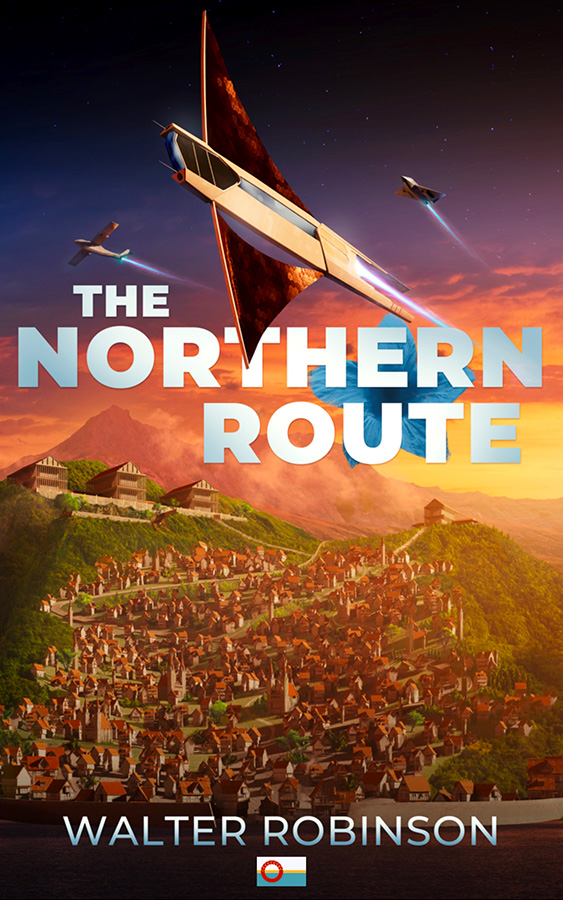
The Northern Route - Walter Robinson

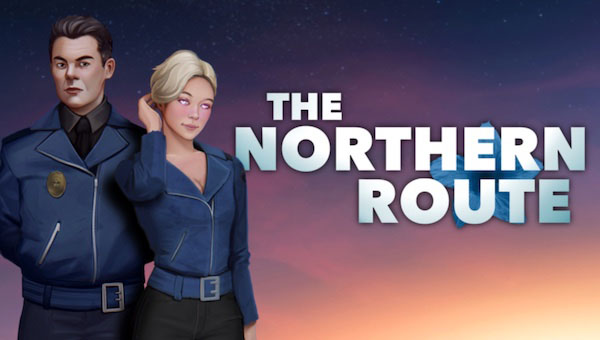
Walter Robinson has a new queer sci-fi book out (gay, lesbian), SVF book one: The Northern Route.

In the distant star cluster Messier 4, the vast and stagnant civilization of the Apeilous sits on the verge of its next great expansion. Several massive corporations have merged to start the Endeavor, the most far-reaching economic and humanitarian effort in history.

Vesta Amore leads a small team of private security specializing in the protection of whistleblowers and corporate defectors. She has no interest in the Endeavor until she is swept off her feet by the suave leader of the Fortuna Corp, an equal partner in the Endeavor. Balancing her altruism with the realities of power, Vesta joins the Fortuna as they work to establish a supply route along the contested northern border.

Cal Sunn is a career detective looking forward to retirement. When the Maressellya Corp backs out of joining the Endeavor, they hear rumors of a defector in their ranks and put Cal on the case. What starts as a simple assignment becomes a fight for survival as he works to untangle a shadowy conspiracy that threatens the Apeilous. With the Fortuna’s backing, he and his crew rush to uncover the plot.

Warnings: Combat violence, “off-screen” sexual assault, large scale loss of life

About the Series:

In the distant star cluster M4, the vast civilization of the Apeilous barrels through a geopolitically tumultuous era. The independent northern state of Tressel is upset by territory grabs orchestrated by the largest corporations of the Apeilous through a humanitarian operation known as the Endeavor.

Vesta Fortuna, once a lowly private security contractor, rose to power to lead the largest and most controversial state of the Apeilous: The State of Vesta Fortuna. The SVF series explores the rise and fall of Vesta as a state-maker, a wife, a mother, and ultimately an authoritarian leader. Shorter companion novels detail the origins of the people who rise to support or oppose Vesta:

Aelia, a refugee turned warrior turned politician who will stop at nothing to bring down SVF.

Kiton, a bright young detective keen to support SVF by rooting out corruption in its ranks.

Valentia, Vesta’s daughter and heir to the Fortuna family.

Augustus, Vesta’s son and the unlikely heart and soul of SVF.

Get It At Amazon


Excerpt

The Northern Route meme

Main character Vesta and her best friend Jak spend Act 3 forging ties between the Fortuna Corporation and the leadership of the independent planet Atayuma. Keen to make connections outside of the autocratic government, Vesta and Jak engage in a bit of old-fashioned diplomacy with group of mid-level army and navy personnel at the most popular bar in town. By this point in the story, Vesta and Jak have already made friends of several revolution-sympathizers in the armed forces.

Fun fact, the song in this excerpt was adapted with permission from the artist, Jason Webley!

Excerpt from Chapter 29, God Save the King:

Rau’s Taphouse

Capital City, Atayuma (ISY-AT)

Three musicians sat in the corner of the room belting out drinking songs on a tuba, a drum set, and an accordion. The accordionist sang loudly, yet his voice barely rose over the short beats of the instruments and the din of the bar.

Vesta and Jak sat at a table for six, joined by three captains from the Royal Navy. The sixth member of their gathering was Captain Ernesto of the army division Aline had selected for the coming monsoon. While Vesta had spent the fore of the evening chatting and getting to know them, her efforts were stymied by a raucous sing-along song about storms and angels. Then the music struck a somber tone.

The singer had his bandmates restart the intro, seemingly to get the crowd’s full attention. He sang the first verse softly.

“To the old, cracked screen,

Of my mother’s voice,

I still cry when I hear her sing.

The clock struck twelve,

The voice I love so well,

Was eaten up by the machine,

It was eaten up by the machine!”

Vesta wondered what exactly he meant by the machine. Maybe he’s talking about the mines. Every voice in the bar joined in the second verse.

“When the glass is full,

Drink up! Drink up!

This maybe the last time

We see this cup.

If angels wanted us sober,

They’d knock the glass over,

So while it is full, we drink up!”

Just as Vesta started to tap her toes to the beat, the drum and tuba quieted, and the individual taps on the accordion’s keyboard became clear. The singer glanced at her with a kind smile and sang softly, twisting the next verse into something unknown to the crowd.

“A toast to our guests,

A girl from the stars,

I hear the king courts her,

But all of this cheer,

And maybe the beer,

Has brought her back here,

So let’s help her drink the place dry,

Yes, let’s drink the damn place dry!”

The crowd cheered, and many raised their glasses toward Vesta before downing them. Jak slapped her on the shoulder with a little too much force, and the singer repeated the verse. A few people joined in. Then the rest shouted along for the last three lines. The standard verses followed, and the discordant singing continued. Vesta could only sit and sway to the beat. Jak had other ideas, rising to his feet to join a line of people dancing forward and backward with their arms on the shoulders of those next to them. Ernesto joined too, shouting with the dance line that now snaked clear across the length of the bar.

The music crescendoed upward, and the singing grew louder for the last verse.

“…knock the glass over.”

“So while it is full drink up!” the crowd screamed. People clapped, some tossed coins and banknotes at the band members, and others spilled their drinks as they tried to toast with their neighbors at the bar. The joyous frenetic atmosphere remained past the end of the music, but there was a clear shift in tone and a color shift for Vesta’s deeper vision. A calm contentment filled the minds of the patrons closing out their tabs and shuffling out the front door. Many said goodbye to their friends for the night, clasping each other’s hands in front of their chests with a tense shake. Eager to return to the palace, Vesta cut off Jak’s animated conversation with one of the navy captains, handed the bartender enough money to cover the table, and started toward the door.

A crowd of eager-eyed Atayumans stood outside Rau’s. They all bubbled with joy as Vesta stepped onto the street. She took Jak’s hand, smiled, and moved through them, trying not to flinch as every person attempted to touch her shoulders. Countless glowing Atayuman eyes met hers before they reached the edge of the gathering.

A raindrop landed on her hand. She reached up and felt that the top of her headscarf was damp. She pulled her hood up and activated her wrist computer, nearly blinding herself with its white light. Navigating to the archaic weather app that the Atayumans operated, she looked at the radar map of the incoming weather formation. It was predicted to be light and move past the city shortly after sunrise.

“God damn, I love diplomacy,” Jak said, words soft despite their volume. “If only the [Vesta’s ethnicity] weren’t so uptight, we could’ve been doing this on [Vesta’s home planet]!”

“Jak, please,” she said sharply. With a bit of tugging and pushing, she guided him up the sweeping main road toward the palace gates. Some distance from the royal guards, Vesta tensed her jaw and held her breath to redden her face.

“Are you doing that thing?” Jak asked, taking a series of tiny steps to steady himself.

“Yes,” she huffed, shooting him a sideways look.

“Why don’t you just think about those photos you had me take—”

“Jak!” she said loudly, playfully pushing him, then grabbing his shirt to keep him from falling over.

“You know, the ones for Piata—”

“Yes, I know!” she said, feeling her cheeks burn. Embarrassed, she channeled her shy charisma and played a nervous flirty drunk. The four guards at the gate seemed none-the-wiser and cleared the way for them.


Author Bio

Walter Robinson

Walter Robinson is a speculative fiction author based in Western PA.

A classically trained engineer with experience in product development and advanced materials manufacturing, he has a passion for telling the human stories that are fundamental to the built world. When he isn’t writing or drawing, Walter spends his time designing and fabricating.

Author Website: https://svf-state.com

Author Facebook (Personal): https://www.facebook.com/walter.robinson.12

Author Instagram: https://www.instagram.com/thestateofvestafortuna

Author Goodreads: https://www.goodreads.com/user/show/163169298-walter-robinson

Author Amazon: https://www.amazon.com/stores/Walter-Robinson/author/B0C9R78T9C

Other Worlds Ink logo

Exclusive Excerpt – The Pool Party Trope

Context:

Our characters currently live at the Fortuna Enclave, a classically styled mansion located on the beach of a lake on the contested planet Corben Six. The Enclave is a sort of temporary corporate embassy, used by the Fortuna Corporation and its leader, Piata, to forge business dealings in the region. After a month of entertaining foreign dignitaries to further Piata’s goals, main character Vesta is burnt out. Her best friend Jak has taken it upon himself to organize a beach party.

Excerpt from Chapter 20 “The Sightless”:

The Corbenite sun burned in the sky above the city, just an hour and a half from the horizon. Long shadows made dark the sandstone wall and the side of the gazebo that Vesta approached. She expected only a small gathering, but the pavilion was full of lounging guards, attendants, and activity, the loudest of which was the head chef and Jak standing over the open grill. 

“…you will want a pinch of the—”

Jak held up his hand to call for silence. “I’ve got this.”

“But sir, this will bring out the zest of the—”

“Is it so hard to let a man grill in peace?” Jak asked.

“With you, sir, excruciating.” 

One by one, the pleasant human sounds died until only the crash of the cycling waves remained. Vesta opened her eyes and saw that the guards in the water were slowly returning to shore. She turned around to find that those on the lawn had stopped moving. Some stood at attention, and others clasped their hands.

Piata stepped from the shade of the house into the sunlight, looking like an explosion of embers as her curly golden hair danced freely in the wind. She strode forward, dark legs breaking through the high slits of a billowing white dress that seemed to float in the air behind her despite the irregular strength of the lake air. Piata’s cloudy eyes snapped straight to Vesta and looked nowhere else as she walked down the lawn like the rest of the world did not exist.

“Speaking of dinner,” Jak said loudly, “first ones are for the ladies of the house.” He walked up to the couch with two plates in hand: a pair of kebabs and a few pieces of flatbread on each. The smell of the dark grilled fish and vegetables was better than that of anything Jak had ever cooked. Vesta took in the aromas before the wind scattered them, then she accepted the plate from Jak. Piata pulled herself upright and turned to sit straight. She received her plate and set it on her thighs, holding each side as if she did not know what to do. 

The Fortuna chef managed to shoulder his way around Jak. “I am so sorry, ma’am, this is a Corbenite variety of freshwater—” 

Piata held up her hand and dismissed the chef with a nod. “I will be fine, thank you.”

Sitting shoulder-to-shoulder at the end of the dock, Vesta and Piata talked first about the lake. Piata kept her eyes closed; the light glinting off the water was too bright for her damaged irises, so Vesta described all the details for her. Then she quickly changed the topic. Just as she had practiced in her mind, Vesta made a case for her contingency planning, as she called it. Piata just sat and listened, gently breathing out every time the warm water enveloped her feet and ankles. 

Piata said, “I am glad you and Cal get along now.” 

“Umm, not quite. But I know enough about him to respect his findings. I think that maybe, just maybe, he is starting to believe in the cause.” 

“That cause?” 

“The Endeavor. And he’s frank about the instability that this whole deal with Paris poses,” Vesta said. 

“He is ever so helpful. I take your point, dear. We will plan for the worst.” Piata shifted and leaned back. She cracked her eyes and looked at Vesta with a sly smile. The front-most strip of her dress blew up to reveal a narrow white swimsuit. In a sultry tone of voice, she asked, “Do you remember back on the Miren Star, when you found me in the pool?” 

“I do.” 

“I enjoyed watching you climb out in those tight little shorts.” 

Vesta felt her cheeks warm. She turned to look back down the dock to ensure none of the guards or attendants were close enough to hear them. Everyone was still either on the porch or in the pavilion. “Well,” Vesta said slowly, leaning close to speak quietly into Piata’s ear, “why don’t we swim back? You can watch me walk up the beach in something much smaller.” 

Piata shook her head. “I did not realize Jak invited all the house staff. This”—she tugged on the white fabric of her swimsuit, nearly flashing Vesta— “is see-through when wet.” 

Vesta bit her lip and her cheeks grew hot even as she turned her head away from the setting sun. She lifted herself to her feet. With a deep breath, she pulled off her dress, handed it to Piata, and dove into the lake, piercing the face of an approaching swell with her hands pointed over her head. The force of the water against the lake bottom brought her up to the surface fast, and she emerged with enough speed that she fell over. Embracing the motion, she swam to the side to clear the dock, then started toward shore with lazy sidestrokes that took advantage of every wave. Piata walked back on the dock, keeping pace and beaming down at Vesta. Just as the waves started to break, Vesta found the sandy ground and stood up, bobbing closer to shore before getting a solid footing.

Water poured out of her tangled hair and ran down her arms and hips as she walked through the shallower and shallower water. A single sweep of her hand cleared the pale hairs from her face, and she scanned the grounds ahead of her. 

“Hot angels! Whew!” Jak whistled. 

Vesta felt a thousand stares and tried to wear a casual smile, but she knew her face was cherry red. She narrowed her eyes in Jak’s direction. 

“Looking good, Vesta,” Phoebe called, raising her glass.

Someone swore quietly, and everyone turned back to their conversations, or at least they were polite enough to try to. Piata had no trouble staring daggers into the gathering under the pavilion. Vesta hooked her arm and walked her up the lawn and into the open ground level of the private wing.

“Did you like the show?” Vesta asked, mounting the stairs and feeling the swimsuit ride up a little. She ignored it as she twisted to look down at Piata, who grinned up at her. 

“Even half-blind, I still enjoy your beauty.”


“And when you go fully blind?”

“Then I will just have to enjoy you by feel,” she whispered, planting her hands on Vesta’s butt and pushing her up the stairs.

[End Chapter]