I received a free copy of this book in exchange for a fair and honest review. All opinions are my own.
TRIGGER WARNING: This novel contains story elements involving physical and mental abuse (including those involving children), as well as themes of domestic abuse. If these things are too upsetting or triggering for readers, reader discretion is advised.
A young man begins the painful journey of recovery by sharing the gristly details of a hellish childhood that changed him forever in author Stephen Ross’ novel “Memoir From Hell”. Here is the synopsis.
The Synopsis
A child’s life should be idyllic: filled with friends, abundant joy, and carefree days of endless possibility. But that was not to be for Jake Malloy and his little sister, Dory. Their lives traversed paths upon which no child should tread.As a young adult trying to overcome the past, Jake chronicles the events that destroyed the possibilities and turned life for the Malloys into a living hell. Will Jake and Dory ever be able to lead normal lives? Only time will tell.A fictional memoir not for the faint of heart.
The Review
This is a painful yet important and well written novel. A top read contender for best literary fiction/drama/thriller, author Stephen Ross has expertly brought the heartbreaking reality of domestic abuse and childhood trauma to life. Studying the effects of abuse on the mind a young person who grew up in a truly harmful environment, the author creates realistic and relatable characters that bring the raw emotions of that situation to the forefront, instantly connecting with readers.
The themes and story elements of the story are both powerful and hard to read at times. Yet in this very quick read, the message that comes through has never been more important than it is today, as violence (especially violence against children and domestic violence), seems to be getting worse and more rampant, and the need for the laws to change have never been more apparent.
The Verdict
This is an emotionally charged novel that needs to be read. Haunting and painfully relevant, this novel is a horror story that challenges the concept of monsters, as it proves that the true monsters are often hiding in plain sight, and could be hiding inside the people we should be able to trust the most. If you haven’t yet, be sure to grab your copy of “Memoir From Hell” by Stephen Ross today!
Rating: 10/10
About the Author
Stephen Ross was born in LeMars, Iowa, in 1948. He lived in Fremont, Nebraska, from the age of five until he left home to attend the University of Nebraska at Lincoln. After college, Stephen taught business courses at Nebraska Technical College for two years prior to moving to Los Angeles, California, to pursue an acting career.
During his eight years in Los Angeles, he not only acted, but gained extensive experience as a waiter. He moved to San Diego, California, in 1981 to attend law school at the University of San Diego, and practiced law there until retiring in 2017.
I received a free copy of this book in exchange for a fair and honest review. All opinions are my own.
A larger than life adventure through space brings one group of explorers to an uncharted world, and the untold dangers it holds in author William R. Harris’s novel “Sworld: The Chronicles of Malick”. Here is the synopsis.
The Synopsis
Forced to flee his homeworld, Oberus, the genetically re-engineered Malick leads a scientific expedition to the far reaches of the solar system. A distress call from an alien ship with a mysterious cargo leaves the team marooned on the arcane planet Sworld. Plunged into a quest for answers that ultimately leads them to their genesis, Malick and the crew must solve the enigmas of Sworld or perish.
The Review
This was a truly masterful space exploration/sci-fi novel. The truly original storytelling by the author was fantastic, as was the incredible detail that went into the various creatures, technologies and mythologies built upon during the story as the explorers ventured further and further into the world of Sworld.
What really shined through however was the character development in this novel. Not only was the protagonist Malick an ever evolving hero and leader in the story, but each chapter introduced new characters that allowed Malick to further expand the group’s exploration as they survive in this new and unfamiliar world. From the crew of the ship that began the journey with him to the new creatures who he either befriends or is forced to fight, and even the newcomer who begins to capture the hero’s heart, this novel is built upon character growth and helps the narrative flow smoothly during this expansive story.
This is a must read for any sci-fi fan out there. If you enjoy science fiction in all it’s glory, long and detailed stories of space exploration and new mythologies surrounding mysterious creatures, this is the novel for you. The true grabber though is the shocking ending that will leave readers breathless and eager for a sequel, as it leaves the protagonist in a shocking situation that you never saw coming. If you haven’t yet, be sure to grab your copy of William R. Harris’s novel “Sworld: The Chronicles of Malick” by either pre-ordering it or grabbing your own copy on May 3rd, 2019.
I received a free copy of this book in exchange for a fair and honest review. All opinions are my own.
A mysterious attack leads to a world changing event in author Lachlan Walter’s We Call It Monster. Here is the synopsis.
The Synopsis
One ordinary day, an enormous creature dragged itself out of the ocean and laid waste to a city. In the months and years that followed, more and more creatures appeared, until not a single country remained untouched. At first, people tried to fight them. In the end, all they could do was try and stay alive.
We Call It Monster is a story of forces beyond our control, of immense and impossible creatures that make plain how small we really are. It is the story of our fight for survival and our discovery of that which truly matters: community and compassion, love and family, hope and faith.
The Review
This is by far one of the most original and “human” stories set in a world filled with larger than life monsters. Bringing the large scale destruction of any Godzilla or King Kong style film and blending it in with the character development and connectivity of a film like Crash, the novel explores a sudden war with mysterious monsters that threatens to end the world as we know it. The author changed the formula up however by focusing not on the monster’s origins or larger than life battles, but instead the relationships and struggles of those affected by these events.
Each section of the novel focuses on specific years in this “war”, from the creatures emergence across the world to the economic struggles and loss of life felt by the people around the world. Each chapter focuses on a character introduced in the previous chapter, allowing readers to see how connected we all are to one another, and allowing us to see how the monster’s arrival affects everyone differently. The emotional impact of these creature’s destruction and the slow decline the planet faces brings a new focus on the monster genre, and creates a truly impactful story like no other.
The Verdict
A true must read novel of 2019, author Lachlan Walter has exceeded the expectations of the genre and created a narrative that is truly original. Exploring the affects the monsters have on our society, on the planet and the people left behind in their wake, the heart of this novel rests in it’s fantastic character development, and will leave readers on the edge of their seat as they witness the slow ride into the end of the world as we know it. If you haven’t yet, be sure to pick up your copy of We Call It Monster today!
Lachlan Walter is a writer, science-fiction critic and nursery-hand (the garden kind, not the baby kind), and is the author of two books: the deeply Australian post-apocalyptic tale The Rain Never Came, and the giant-monster story-cycle We Call It Monster. He also writes science fiction criticism for Aurealis magazine and reviews for the independent ‘weird music’ website Cyclic Defrost, his short fiction can be found floating around online, and he has completed a PhD that critically and creatively explored the relationship between Australian post-apocalyptic fiction and Australian notions of national identity.
He loves all things music-related, the Australian environment, overlooked genres and playing in the garden. He hopes that you’re having a nice day.
AN EXTRACT
The old man shuffled out to the balcony, dusted off an outdoor chair and
then made himself comfortable. The sky was a shade of blue that painters
only dream about; it was a beautiful sight. The old man drank it in,
leaning back in his chair. He sipped at his coffee and smoked a cigarette.
He was happy to wait as long as was necessary – he had all the time in
the world and he wasn’t going anywhere.
The monster finally appeared, a blurry smudge in the distance.
Slowly, but not as slowly as he would have thought, it grew both
closer and more distinct. The old man laughed out loud; it looked like
nothing more than a child’s drawing of something that might have been a
lobster or might have been a spider or might have been both, propped up
on flagpole-like legs that supported a wetly-shining carapace, a beaked
head, and a tail as long as a bus.
It was enormous and ridiculous in equal measure. The old man was
surprised to find that it failed to frighten him.
It drew closer to the city. It stopped suddenly and bit a great chunk
out of a stately old tree lining a boulevard. Chewing slowly and
methodically, it worked its way through the mass of wood and foliage
before throwing its head back and opening its mouth wide. Despite his
deafness, the old man felt the monster’s keening in his bones and in the
pit of his stomach.
He pulled his hearing aid from his pocket, turned it on then slipped it
in place.
The beast’s cry was low and mournful, more a melancholy bellow
than a ferocious roar. Thankfully, the klaxon-blare of the evacuation
alarms had stopped. The monster cried out again and it shook the old
man, both literally and metaphorically. The beast shifted its legs,
presumably adjusting its weight, and destroyed an office building in the
process.
Almost comically, it looked down at the destruction it had wrought
and seemed to shake its head.
It looked back up and cried out a third time, and then started walking
again. It seemed to meet the old man’s eye. Without breaking its gaze, the
old man took another sip of coffee before lighting another cigarette.
Slowly-slowly-slowly, the monster drew closer. You could almost see
a smile on the old man’s face.
A Q&A WITH THE AUTHOR
What is it about giant monsters that appeals to you?
Initially, it was a childish fascination with things being smashed. Let’s face it: Every little kid has thrown a tantrum for reasons they can’t explain, broken something and then experienced relief at the wordless release this brings. A giant monster barging through a city for no fathomable reason can reflect our own difficulties in articulating and making sense of our emotions at that age.
This fascination soon turned to awe and wonder at their scale and mystery, a reflection of the feelings inspired in me by my discovery of dinosaurs and cryptozoology (the study of creatures such as the Loch Ness Monster, Bigfoot, Yetis and the like). My love of dinosaurs is easy to explain – show me a kid who hasn’t at some point gone through a ‘dinosaur’ phase’ and I’ll eat my hat – while my love of cryptozoology was inspired by a book entitled Creatures From Elsewhere, which my parents gave me and which is actually still sitting on my bookshelf.
Beginning in my teenage years and continuing on into the present day, I’ve loved the metaphorical and symbolic potential that giant monsters possess, and the ways in which they can ‘stand in’ for so many different problems that seem beyond our control and almost impossible to deal with. Nuclear war, our negative impact on the environment, international terrorism, industrial pollution, climate change, the staggering number of displaced people around the world – giant monsters have represented them all.
Why did you decide to write about giant monsters?
As mentioned, I’ve always been fascinated by them. But I’ve also always been a voracious reader, and sometimes an obsessive one. I’ve been known to occasionally get my nerd on for a particular sub or micro-genre, looking up ‘similar title’ and ‘you might also like’ lists online when I should be doing better things with my time. But I still keep searching, because there can’t just be one example of Mystery Sub/Micro-genre X out there.
Giant monster fiction was one such obsession that carried me away, the timing of which coincided with the completion of my first book. I binged on literally anything I could find, looking for something that took giant monsters as seriously as some of the movies do, something that was more than just capital-A action. I found lots of fun, post-modern stuff out there – some of which could even be described as zany – but not much that approached giant monsters with a serious eye.
Looking for a new book to throw myself into writing – a book that I wanted to be distinctly different from my first book – I decided upon a piece of serious giant monster fiction. In other words, I decided to write the book that I wanted to read. Isn’t that what an author does?
Do you need to be a fan of giant monsters to appreciate We Call It Monster?
Nope, but it probably helps… In all seriousness, though – no, you don’t need to be a fan. My aim with We Call It Monster wasn’t only to write a serious piece of giant monster fiction because giant monsters have, historically, rarely been written about in such a way. Instead, I also wanted to write a piece of speculative fiction that does what all good speculative fiction should: Use the speculative element within to make us look at ourselves and our place in the world with fresh eyes.
Despite its title, We Call It Monster is more concerned with people than monsters. It isn’t a ‘wham-bam, shoot-em-up’ but instead a serious look at how we might react to forces beyond our control, and to forces that illuminate the precariousness of our position as world-conquerors sitting atop the food chain. And ultimately, it’s the story of what really matters: community and compassion, love and family and friendship, hope and faith. Anyone that appreciates such people-centric stories should find something within We Call It Monster that they can enjoy.
Why did you decide to write We Call It Monster as a story-cycle/novel-in-stories?
To me, one of reading’s biggest attractions has always been in my sense of engagement with the world being built on the page (a process even more absorbing when reading science fiction and speculative fiction). I think this enjoyment of engagement applies to most people. We all ‘see’ things in written worlds that the author didn’t actually write, even at the most mundane level: we populate a footpath with pedestrians, a street with cars.
A story-cycle/novel-in-stories can increase this sense of engagement to an incredibly strong degree, and their traditional structures allow writers to work magic. They can give us different perspectives on the same events, blocks of ‘missing time’ that exist between stories/chapters, events that are only alluded to rather than seen first-hand, a multiplicity of narrative “voices”, and so much more. But ‘missing time’ begs to be filled; events only alluded to tantalise us; we can’t know the truth when presented with different perspectives, or even if the truth exists. And so our minds do this work for us, conjuring up and giving life to parts of the story the writer has withheld.
The way story-cycles/novels-in-stories allow us to create the world right alongside the writer is a beautiful thing. However, the structures behind them aren’t just beautiful, but also incredibly practical. They can allow a story to cover a span of time longer than a regular person’s life; and help do away with the inevitable and repetitive ‘amazing coincidences’ that prop-up stories where one single character guides us through an incredible sequence of events covering an incredible amount of time; and enable a wider representation of voices from a wider variety of countries and cultures, without also falling back on the aforementioned trope of inevitable and repetitive ‘amazing coincidences’.
I received a free copy of this book in exchange for a fair and honest review. All opinions are my own.
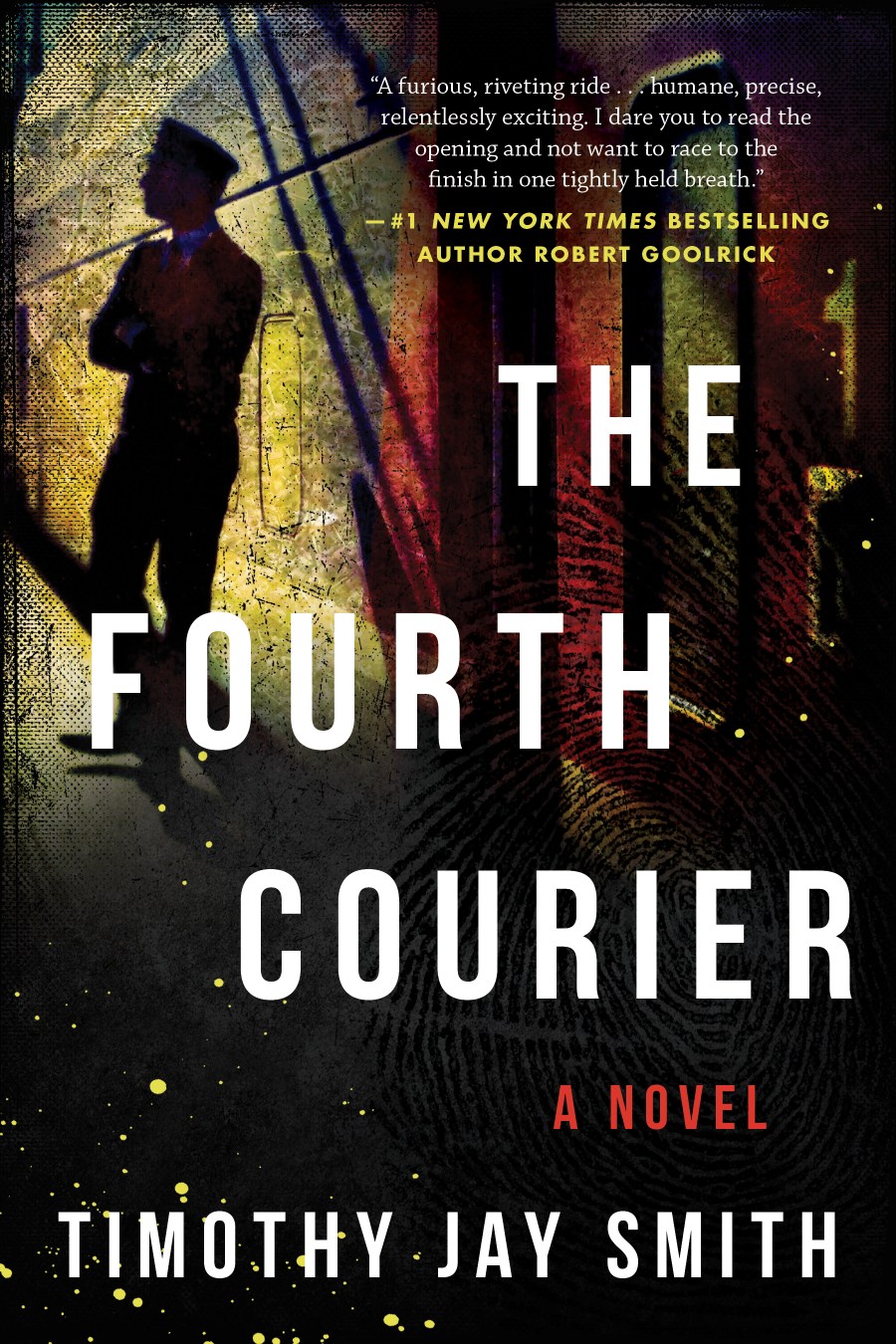
A hunt for a killer leads to a high octane thriller filled with drugs, power hungry military leaders and a missing atomic weapon that threatens the security of the free world in author Timothy Jay Smith’s The Fourth Courier. Here is the synopsis.
The Synopsis
A Fast Paced Espionage Thriller for Alan Furst Fans Set In Post-Cold War Poland.
It is 1992 in Warsaw, Poland, and the communist era has just ended. A series of grisly murders suddenly becomes an international case when it’s feared that the victims may have been couriers smuggling nuclear material out of the defunct Soviet Union. The FBI sends an agent to help with the investigation. When he learns that a Russian physicist who designed a portable atomic bomb has disappeared, the race is on to find him—and the bomb—before it ends up in the wrong hands.
Smith’s depiction of post-cold war Poland is gloomily atmospheric and murky in a world where nothing is quite as it seems. Suspenseful, thrilling, and smart, The Fourth Courier brings together a straight white FBI agent and gay black CIA officer as they team up to uncover a gruesome plot involving murder, radioactive contraband, narcissistic government leaders, and unconscionable greed.
The Review
A powerful espionage thriller, this novel pushes the envelope and brings a balanced mix of action, suspense and fantastic character development that will instantly make readers fall in love with this story. This novel perfectly explored the post-communism era of Poland as families struggle to make a daily living, shops and restaurants fail to gain the daily resources many take for granted, and drugs begin to filter into the city at a much faster rate.
The duality of the characters reflects the dual nature of the narrative perfectly. An FBI agent who works to balance his case with a possible romance; a power hungry military leader who hides a truth about himself; a cop who finds themselves crossing the line one too many times. All of these characters bring with them heavy pasts and showcase that everyone has secrets, and everyone is fighting to find the balance between those secrets and daily life. Blended with the larger than life drama and action of this murder mystery and missing nuclear device, and the novel plays out like a must read spring thriller that cannot be missed.
The Verdict
A must read 2019 novel! Perfectly capturing the espionage thriller genre, author Timothy Jay Smith has brought a rarely seen era in post-communism history to life in a perfect way. The writing is so crystal clear and descriptive that the reader instantly pictures the events like a movie in their own mind, and as the twists and turns in the plot continue to play out in this evenly paced novel, the characters find themselves in the race of their lives as all of their lives begin to converge upon one another. If you haven’t yet, be sure to grab your copy of “The Fourth Courier” today!
Rating: 10/10
ABOUT THE AUTHOR
Raised crisscrossing America pulling a small green trailer behind the family car, Timothy Jay Smith developed a ceaseless wanderlust that has taken him around the world many times. Polish cops and Greek fishermen, mercenaries and arms dealers, child prostitutes and wannabe terrorists, Indian Chiefs and Indian tailors: he hung with them all in an unparalleled international career that saw him smuggle banned plays from behind the Iron Curtain, maneuver through Occupied Territories, represent the U.S. at the highest levels of foreign governments, and stowaway aboard a “devil’s barge” for a three-days crossing from Cape Verde that landed him in an African jail.
These experiences explain the unique breadth and sensibility of Tim’s work, for which he’s won top honors. Fire on the Island won the Gold Medal in the 2017 Faulkner-Wisdom Competition for the Novel. He won the Paris Prize for Fiction (now the Paris Literary Prize) for his novel, A Vision of Angels. Kirkus Reviews called Cooper’s Promise “literary dynamite” and selected it as one of the Best Books of 2012. Tim was nominated for the 2018 Pushcart Prize. His screenplays have won numerous competitions. His first stage play, How High the Moon, won the prestigious Stanley Drama Award. He is the founder of the Smith Prize for Political Theater.
About Arcade Publishing Arcade has been an imprint of Skyhorse Publishing since 2010. We continue doing incredible work discovering, publishing, and promoting new and brilliant voices in literature from around the world. Arcade has published literary giants such as Samuel Beckett, E. M. Cioran, and Leo Tolstoy, alongside new voices such as Ismail Kadar and Andrei Makine. In 2012, Mo Yan won the Nobel Prize for Literature, an exciting achievement for Arcade which had published five of his novels.
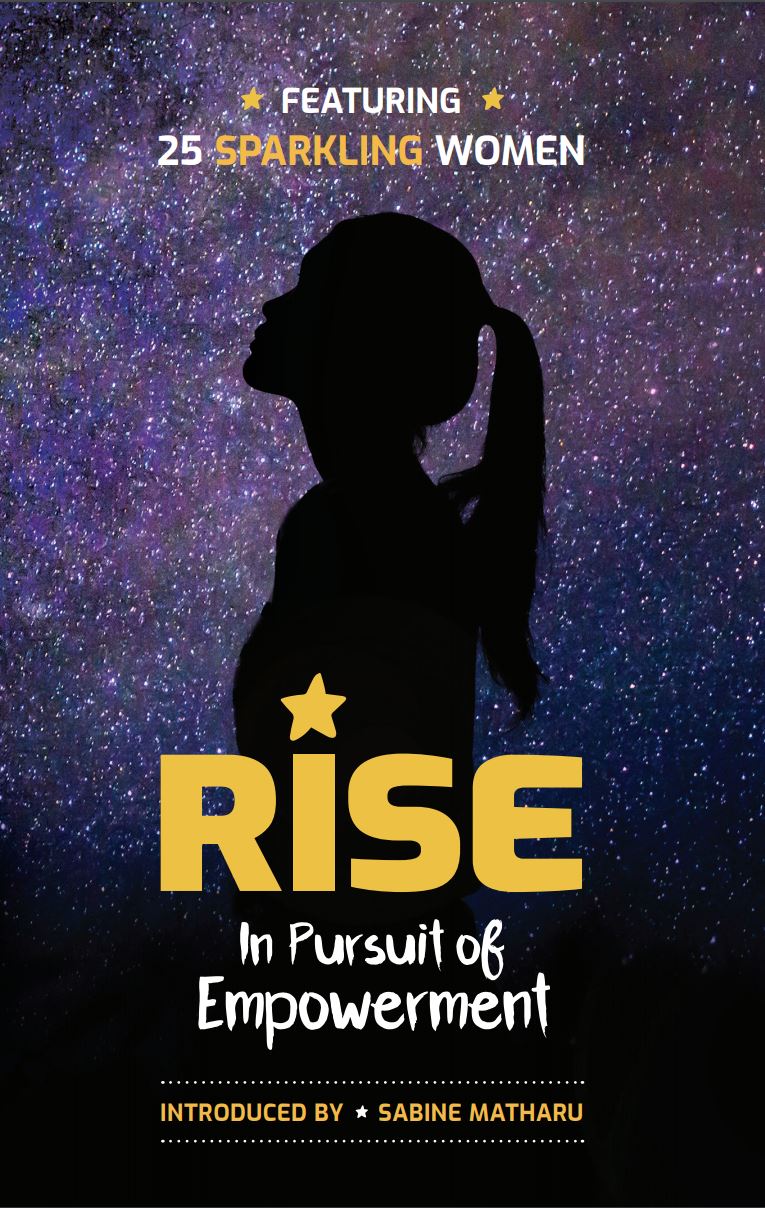
Written for and by inspirational entrepreneurial women whose hidden creativity and business acumen is eager to come out despite facing an array of traumatic experiences, mindset and domestic battles, RISE – In Pursuit of Empowerment, published by Reach for Greatness Ltd., is a beacon of hope for all women. Through the incredible stories of 25 women, you will learn that while obstacles are a given, you also have what it takes to rise above challenges, create a space and niche for yourself and turn impossible experiences into incredible opportunities that are profitable and fulfilling at the same time. RISE – In Pursuit of Empowerment, the first in a series of 4 books, will teach you:- How to tap into your intuition and inner strength to overcome stress, grief and trauma – How to take the challenges you have and turn them into opportunities – How to rise above the noise and come out victorious – Why your inner woman is a force to be reckoned with and – How to overcome substantial obstacles to live a more fulfilling and well-balanced life.
GRAB YOUR COPY FROM
KNOW ABOUT THE AUTHOR
Sabine Matharu is a passionate business start-up and growth strategist, who specializes in helping women find their purpose and monetize their unique skills so that they can build a thriving business.
Her signature program is “The Business Accelerator Mastermind”, that teaches and supports entrepreneurs to implement an easy to follow methodology around how to build a long term profitable business without overwhelm and detours.
She also runs “The Greatness Club”, which complements the work she does in her Mastermind and provides women a platform and springboard for visibility, networking and lead generation. Sabine comes with years of experience as a corporate leadership consultant and has worked with over 1000 people
in senior positions.
She firmly believes that it is possible to reach for the greatness that is within ourselves.
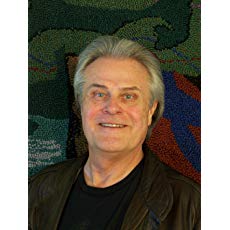
1) Tell us a little bit about yourself. How did you get into writing?
Born and raised in New York City, I left to see the world at age 24 as a water engineer in the Peace Corps. For most of my life, I had never entertained the idea of becoming an author. My career as a groundwater specialist kept me busy enough, filled with both adventure and satisfaction with my job. However, while in Kenya I fell in love with a woman, and this relationship was doomed from the start. As a kind of catharsis, I began to write a semi-autobiographical story which became Journey Towards a Falling Sun. As I said, it was the need to purge my emotions that drove me, without immediate plans for publishing, as I was in the prime of life as regards to my vocation. But in 1985, I did manage to get an agent who was very enthusiastic over the manuscript. After fifteen rejections by big publishing houses, however, I gave up and shelved it, abandoning any thoughts about being a writer. It wasn’t published until 30 years later.
In 1996, while working in Laos, I learned of the secret war that the US conducted for 9 years, and resulted in the aerial bombardment that has given that country the dubious distinction of being the most heavily bombed country of all time. As an American, I was ashamed of my ignorance of this matter, for I had never known of this secret war. I was so moved, I decided I would write an epic novel that would illustrate the consequences of that war which became The Plain of Jars, released in 2013. And from there my path as a writer began.
2) What inspired you to write your book?
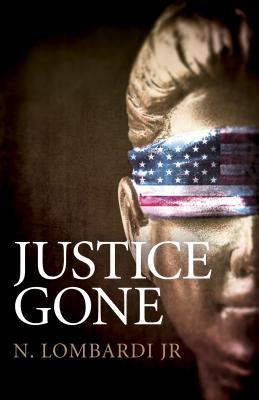
The idea for Justice Gone came from a true incident – the fatal beating of a homeless man in California. It was such an outrageous act, recorded on video and uploaded to YouTube, that I wondered what would happen if someone who saw the gruesome video would mete out their own version of justice to the police officers involved.
The novel then, is a tale of what happens in a small town following the fatal beating of a homeless Iraqi war vet at the hands of police. A cascading series of events, from street protests to a vigilante shooting of three police officers leads to a multi-state manhunt for the vet’s war time buddy. A controversial trial attracting nationwide attention dominates the second half of the novel. The story ends with a twist revealing the identity of the cop-killer
3) What theme or message do you hope readers will take away from your book?
Although deaths at the hands of law enforcement officers disturb me, I tried to avoid taking too strong a stand against the police, and just presented a possible (albeit extreme) scenario if this issue is not addressed. I also wanted readers to have a detailed look at the legal system in the US, i.e. the importance of lawyer tactics on both sides of the bench and of jury sentiment in deciding a case.
First of all, I don’t consider myself a genre writer, I just write about things that move me. Having said that, as a reader I do enjoy mystery/thriller/suspense/crime, so I may be writing more of this kind of fiction from now on. It is much easier to write this sort of stuff than cross-cultural adventure novels such as my first two books, The Plain of Jars, set in Laos, and Journey Towards a Falling Sun, set in Kenya.
5) If you could sit down with any character in your book, what would you ask them and why?
I would have to say, the policemen that beat Jay Felson to death – Why, when he was unarmed, did it take 6 cops to bring him down and beat him till he died?
6) What social media site has been the most helpful in developing your readership?
I’m really not active in the social media scene, so I would have to say Goodreads, despite the fact I find Goodreads a bit exploitive and disdainful of independent authors. As a reader, it is pretty good. I tried Facebook, but it isn’t focused enough and being an old fart, I’m mistrustful of Twitter. I love book bloggers, thank god for them!
7) What advice would you give to aspiring or just starting authors out there?
Although it sounds cliché, the first thing is to write well. Many independent authors, particularly those who self-publish, write with a quality barely above a high school student. You don’t have to be a wordsmith, but the book should not sound stilted. Read passages from a book by an acclaimed author than read your stuff. How does it compare?
Secondly, unless you’re with a big publishing house, be prepared to market your work. You should have a budget of $2,000 for this, even if you are very active on social media, because it’s always better for someone else to tout your book than you as the author. That means reviews, which can only result from exposure.
8) What does the future hold in store for you? Any new books/projects on the horizon?
I’m in the process of fine-tuning another Tessa Thorpe novel, Woman in the Shadow. It takes place several years prior to the setting of Justice Gone, and is considerably darker, more of a psychological/suspense thriller. I actually wrote this before Justice Gone, but I was disappointed with the publisher’s reaction to it so I shelved it. Directly related to this, I’m looking for another publisher, so I hope it doesn’t take too long for the book to come out.
First of all, I want to thank you for hosting me today.
My name is Dan O’Brien and I’m probably best known for my Lauren Westlake books, especially the bestselling Bitten. I stopped by today to talk about the ongoing series, as well as a limited-time sale on the Lauren Westlake eBooks in preparation for the next release, Besieged.
Before I pitch you on the first five books for only 99c, I want to take a moment and answer a few questions so you can get to know me a little better, dear reader.
Does writing energize or exhaust you?
Writing has always been an important psychological outlet for me. I can’t imagine a life where I don’t write in some capacity. It certainly energizes me. And perhaps more importantly, it rescues me when I feel alone or if I’m having a poor mental health day. I think writing means different things to different people. For me, writing is a grounding principle in my life. If I need to work through something, I write about it. Sometimes that catharsis even becomes a part of a book.
How do you select the names of your characters?
It really depends on the genre. Unsurprisingly, many of my characters are based on aspects of people I have met during my life. Sometimes, I name them based on who they remind me of; other times, I keep trying names until I feel like the name reflects the character. For the Lauren Westlake series, the names came quite naturally. When I work on a science fiction or fantasy story, I will research traditional names from ancient societies or combine base terms with interesting prefixes and suffixes to create something unique.
If you didn’t write, what would you do for work?
I imagine I would have been a scientist in some capacity or taught math. I studied psychology in graduate school and even entertained getting my PhD and teaching at a university. However, I decided on a different path that took me away from that possibility. Teaching is such a brave profession. As well, I might have pursued a career in film. Once upon a time, I really wanted to be involved in the filmmaking process, but I didn’t go to film school. I could see myself on that path as well.
Do you hide any secrets in your books that only a few people will find?
Always. Much like TV shows and movies hide things in plain sight for eagle-eyed viewers, I like to leave clues along the way that are much more than simple foreshadowing. Often, someone’s name will reference something that will happen later or is a part of a larger theme. I also like to leave references to some my favorite novels and films.
When did you first realize you wanted to be a writer?
I always liked telling stories. When I was a child, I would create entire plays with people on Popsicle sticks and small stages built from scratch. I also used Legos and other toys to tell elaborate tales. The more I read, the more I wanted to be a storyteller. I published my first story in 2002 and never looked back.
How long does it take you to write a book?
That depends on the book itself. If I am in the middle of telling a larger story, I can sometimes finish a first draft in 6-8 weeks. I wrote a novel in 10 days once because I was so interested in the story that I didn’t want to do anything else. For the Lauren Westlake novellas, I finish a draft in a couple of weeks in order to get it to the editor.
What does being a successful author look like to you?
As many people as possible reading what I write. Being well known might be interesting, but I would prefer that readers enjoy what I write and want to read more.
Now that you know a little more about me, I’d like to talk about the Lauren Westlake series. This weekend, Bitten and its sequels will be only 99c as a promotion for the release of Besieged. Here are the synopses and links for those eBooks that are on sale.
A predator stalks a cold northern Minnesotan town. There is talk of wolves walking on two legs and attacking people in the deep woods. Lauren Westlake, resourceful and determined F.B.I Agent, has found a connection between the strange murders in the north and a case file almost a hundred years old. Traveling to the cold north, she begins an investigation that spirals deep into the darkness of mythology and nightmares. Filled with creatures of the night and an ancient romance, the revelation of who hunts beneath the moon is more grisly than anyone could have imagined.
A frightening new case. A mysterious journal. The beginning of the end. Lauren Westlake has left behind the horrors of northern Minnesota to investigate a strange package with a cryptic return address. Crossing the country to the city by the bay, Lauren discovers that Locke was only the beginning. Crossing paths with a stoic SFPD detective and a surprise from her past, she must figure out what hunts the foggy streets of San Francisco in this new novella. Is it vampires? Is it something more?
Lauren’s time in San Francisco hasn’t gone as planned. After reconnecting with her brother Billy and discovering that vampires are at the heart of the murders in the foggy city, Lauren is faced with a terrible decision that will affect her career. Can she find a way to bring the killers to justice? Will she be able to find the Stranger in time to stop the nightmares in San Francisco?
Lauren’s pursuit of the Stranger has led to Las Vegas. A series of supernatural murders leads the team to believe that warlocks are behind the deaths. The return of an old ally and a new threat complicates Lauren’s investigation. Can she stop what’s coming in time to avert the apocalypse?
Lauren’s world is turned upside down when she is introduced to the Order and Elder Andras. The Stranger’s plan to wake Awanyu begins to take form, threatening not only Las Vegas, but all of reality. Can Lauren put together the puzzle pieces in time to stop the Stranger and save Winona?
I hope that you will take advantage of the opportunity and catch up on the Laruen Westlake series. You can connect with me on Twitter and Facebook, as well as visit my website. Happy reading!
“Another amazing book by author Sian Claven. Unlikely Hero takes us on a interplanetary space adventure with our tough as nails space hiker Jasy as she’s tasked with secretly transporting a pair of secretive strangers through several planets and into deep space. This exciting, and quick read will have you on the edge of your seat for the next installment. I give this a 5/5 star rating .”
In a world where transport is the main control of the universe, one spacehiker is tasked with the unfortunate job of helping two refugees get across the civilised universe without being detected. The only problem is it sounds easier than it’s done. With no trust between them, Jasy must get Mark and Lizzie the hell out of dodge for a reason they won’t tell her. While Mark and Lizzie must place their safety, their lives, in the hands of someone who breaks the law on a daily basis.
From award winning author Sian B. Claven comes her first fantasy novel debut – Unlikely Hero: A spacehiker adventure.
I received a free copy of this book in exchange for a fair and honest review. All opinions are my own.
A simple cloth becomes the vocal point for an international mystery involving war crimes, art theft and murder in author Vincent Panettiere’s The Scopas Factor. Here is the synopsis.
The Synopsis
A Hmong “story cloth,” a Revolutionary War battle flag, forged Picassos and a Russian drug dealer—finding the link between these disparate elements is the challenge Mike Hegan faces in The Scopas Factor, the latest mystery from Vincent Panettiere.
After his last investigation ends tragically, Detective Mike Hegan returns to Chicago from St. Kitts, hoping to put everything behind him. But his girlfriend, Diana, has other plans, and although he has no interest in the job opportunity she presents him—in a small northern California town, no less—he wants to please her. Upon his arrival in Weedley, he’s caught up in a kidnapping and two murders. A visit to Diana’s family in San Francisco only serves to deepen the mystery, as her father might be the link to a gang of antiquities thieves that might have something to do with the crimes in Weedley. And when Diana’s father disappears, Hegan takes off for Antibes in southern France, where he discovers that the mystery has only just begun.
A whirlwind adventure that explores the horrors of war and the ways in which criminals profit from other’s misery, the story is the third highly acclaimed novel from author Vincent Panettiere. The novel is very character driven, taking readers through the mystery by showcasing everyone involved in great detail, from Detective Heagan and his investigation into the mystery, to the woman who’s mother left a legacy behind that she hopes will reveal the truth, and an art forger who finds himself caught in the midst of a bloody battle.
The author does a fantastic job of commanding the story fully into the mystery genre. The action of the narrative plays out in a very creative and cinematic way, creating instant images in the readers imagination as they follow the adventure piece by piece. The way the author stretches out the mystery is perfect as well, taking readers in one direction and then completely dropping the floor out from under them, taking the adventure into an entirely unexpected direction.
The Verdict
This is a wonderful novel, filled to the brim with action, suspense and romance as one lone detective becomes embroiled in a larger than life international mystery. Who can you trust when everyone seems to be connected? And with a feeling of dread hanging over the detective after the loss of his last two relationships, can he find happiness in a new relationship, or are the dangers of the case too overwhelming for his relationship to survive? Find out in this incredible roller coaster mystery by picking up your copy of The Scopas Factor by Vincent Panettiere today!
Many times imagination develops through loneliness. Left in solitude and quiet the creative process emerges later, dormant until activated by circumstances or maturity.
Vincent was the only boy in a family of six children. Many times he was left to himself and his imagination. As he got older, he started writing short stories.
Vincent tells about the time he submitted a short story to “one of those magazines at the supermarket checkout counters”. He showed this story to his high school English teacher who then became convinced that the teenager was having trouble at home. He wasn’t, but this story earned him his first acknowledgement as a writer – as well as his first rejection slip.
He began his career as a sports reporter for the UPI wire service. While in graduate school at Boston University, he wrote sports for The Boston Herald, a daily newspaper.
Several years later after having reviewed his screenplay submissions a story editor at Columbia Pictures encouraged Vincent to move to the West Coast and keep writing. He wrote and sold several screenplays which – “in the byzantine world of motion pictures” – went unproduced.
It was time for a career change. Panettiere struck out on his own becoming a licensed literary agent representing writers and directors in TV and Film. During this time he became frustrated with the entertainment financing system, and began searching for outside financing for his clients. Some of his experiences are chronicled in his book, The Internet Financing Illusion.
Whether as a literary agent or executive at CBS or Twentieth Century Fox, Panettiere continued to search for ideas and stories to feed his imagination. For him, the seed of a story starts nudging his mind, forming characters and situations. His characters lead the story, and often surprise him with unforeseen twists.
The Scopas Factoris Panettiere’s third novel. His other novels are A Woman to Blameand the award-winning and critically acclaimed These Thy Gifts, which earned 5 stars from Readers’ Favorite, second place in Literary and Contemporary Fiction from CIPA, as well as the Reviewers’ Choice Award in General Fiction Novels. He is also the author of The Internet Financing Illusion, a nonfiction account of the dark side of the internet.
For Vincent, writing brings several joys. He looks forward to reading the pages he has written a day later. Many times he can’t remember writing the pages. “This is my favorite part of the creation process. Something inside takes over. Something that I know I can rely on indefinitely.”
Most importantly, he says, the best part of the writing process is “having written – having defeated the tyranny of the blank page.”
Vincent Panettiere currently resides on the West Coast.