I received a free copy of this book in exchange for a fair and honest review. All opinions are my own.
One young man’s adventure seeking to fulfill lifelong dreams turns into a journey of self discovery in author T.L. Hughes novel The Sojourners. Here is the synopsis.
The Synopsis
When Chasing a Dream Leads Deeper Within……
Picking up where Searching for Paradise left off, Mike Hogan, Decky Brady, and Luke Coppens start off in London, still chasing and believing their Hollywood dreams of working in the music video business. But after only a few days into the trip, the friends quickly abandon their efforts and put new plans into place.
On his own developing journey and through encounters with other travelers and new friends, Mike Hogan experiences the love of finding oneself again. With vivid imagery, poetry and references to great songs throughout, The Sojourners stands on its own as a complete work, with colorful characters and simple people who resonate with the beauty of life. This inspiring, reflective novel shows the importance of ultimate belief in ourselves, and the realization that despite our differences, deep down inside, we all share a common good.
What others are saying:
“Throughout it all, Hughes maintains a tension that transforms this meandering tale into one of complex depictions of human compassion. A charming, soulful entry into a popular (and often disappointing) genre.” – Kirkus Reviews
“Hughes gives us beautiful sentences and finely crafted imagery throughout, with a comforting cadence in his prose, rolling along like a train journey. The story offers carefree country-hopping for the armchair traveler, and each new location – bar, disco, train car, or sidewalk – serves up a vicarious thrill. The Sojourners is a beautifully written work of travel writing, which will be especially appealing to those who have yet to travel, or those who may want to rekindle the expanded horizons of traveling abroad.” Self-Publishing Review, ★★★★
The Review
This was an incredibly deep, emotional and thoughtful read. Filled with flowing storytelling and memorable characters throughout, the novel featured incredibly beautiful imagery used by the protagonist, describing his journey through Europe and through the inner workings of his own mind.
The themes of dealing with loss, finding one’s purpose and discovering the meaning of your own life through travel and adventure really stuck out to me. Unlike other stories of self-discovery, this story stood out for delving into the Cold War era 1980’s, and with each new character introduced in the journey the author saw the real life struggle of topics like racism, politics and religion play out in a completely natural way.
The Verdict
Overall this was a phenomenal read. A detailed, thorough yet pleasant read, the story held the readers attention throughout and painted an image of the protagonist’s journey with such ease that it felt as if you’d lived the journey yourself. Full of humor, wit and charm, the story felt relatable and like something current day readers could draw their real life struggles from. If you haven’t yet, grab this emotionally driven novel The Sojourners by T.L. Hughes today.
T.L. Hughes was born in Salem, Massachusetts, and at a young age moved to Lowell, Massachusetts where he grew up, attending the local public schools through high school. After graduating from the University of Massachusetts in 1980, he headed west to California. Today, he lives in Orange County with his wife and family.
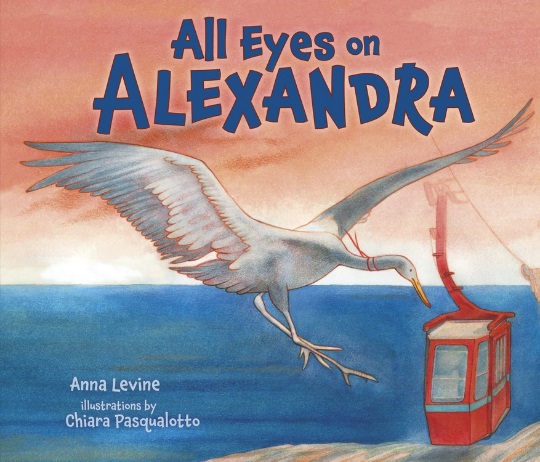
I am proud to share with you guys the official blog tour promotional post for author Anna Levine’s “All Eyes On Alexandra”. Take a look at this amazing book and mark your calendars as this tour visits not only some truly wonderful bloggers and websites, but also returns to my website throughout the tour with an exclusive interview, review and guest blog post in the weeks to come. Enjoy!
Book summary
In All Eyes on Alexandra, young Alexandra Crane is terrible at following her family in their flying Vee. She can’t help it that the world is so full of interesting distracting sights! When it’s time for the Cranes to migrate to Israel’s Hula Valley for the winter, Alexandra is excited but her family is worried. Will Alexandra stay with the group, and what happens if a dangerous situation should arise? Might Alexandra—and the rest of the flock—discover that a bad follower can sometimes make a great leader?
Based on the true story of Israel’s annual crane migration.
Anna Levine is an award-winning children’s book author. Like Alexandra Crane, the character in her latest picture book, she loves to explore new worlds. Born in Canada, Anna has lived in the US and Europe. She now lives in Israel, where she writes and teaches.
Chiara Pasqualotto was born in Padua, in northern Italy, currently teaches illustration and drawing classes to children and adults, in particular in Padua during the summer at the Scuola Internazionale di Comics and in Rome. Since 2008 she’s been living in Rome and working with illustration professionally: her first picture book, Mine, All Mine! was published in 2009 by Boxer Books (UK), since then she published with Oxford University Press, Giunti, Terranuova and some American publishers (Paraclete Press, Tyndale, LearningAZ, Kar-Ben Publisher).
What goes better in the morning than a muffin? Make sure you visit WOW’s blog today and read an interview with the author and enter for a chance to win a copy of the book All Eyes on Alexandra.
1) Tell us a little bit about yourself. How did you get into writing?
I’ve always written. I remember sitting at my parent’s Underwood and typing out stories, probably about dogs, cats or spacemen. In college, I wrote for the school paper and a couple of local papers, the Berkeley Barb and the San Francisco Express-Times. In 1979, a friend asked me what I wanted to do with my life. “I want to be a writer,” I said. She said: “Write for television. That’s where the money is.”
I took her advice and cranked out a few spec scripts for TV shows I liked. One of them got the attention of the producer of Buck Rogers, and I wound up writing two episodes, which got me into The Writers’ Guild. Then the Guild went on strike, and I, with a family to support, needed work. A local company, Filmation, was looking for writers for a new cartoon show, She-Ra, Princess of Power (cartoon writers were not in the Guild). I got on staff at the show, wrote and edited a bunch, and spent the rest of my TV career writing ‘toons, along with a few non-fiction books for kids.
2) What inspired you to write your book?
This sounds like a line from a bad movie, but it came to me in a dream. I was sitting in an office with – of all people! – Mindy Kalin, who was reading a script I’d written. In my waking life, I’d never have thought of pitching to her. She put it down and turned to me: “This is pretty good. Did you write it?” My dream self was offended, and I replied: “No. I got it from the Story Store.” (it’s a writer’s jokey answer to the question, “where do you get your ideas?”). My book, once called “The Story Store” came to me. Of course pretty much everything including the title, got changed.
3) What theme or message do you hope readers will take away from your book?
I don’t think much about messages. I mostly write things I’d like to read. A reviewer pointed out a theme in Losing Normal of “screen addiction.” So let’s go with that.
4) What drew you into this particular genre?
I’ve always written for kids. I am a twelve-year old boy in an old man’s body.
5) If you could sit down with any character in your book, what would you ask them and why?
My first thought was, I’d like to ask Sophie how she could think that adoration from mind-numbed people had anything to do with ‘perfection.’ That seems pretty tongue-in-cheeky, though. I ought to have a more serious answer.
6) What social media site has been the most helpful in developing your readership?
None of them so far. I have some Facebook friends, a few Twitter followers. But I’m lousy at it.
7) What advice would you give to aspiring or just starting authors out there?
Read a lot. Write a lot. Don’t wait for ’inspiration.’ Find other writers, either IRL on online, and share your stories. Do something for your writing life every day.
8) What does the future hold in store for you? Any new books/projects on the horizon?
My current project is promoting the hell out of Losing Normal (hence this prompt reply to your questions). Books: I’ve got more stories to tell than I have time to write. KillGirl is my next one (currently 50K+ words in a 2nd draft): a teenage girl seeks revenge for the murders of her grandparents. After that, a middle-grade adventure (maybe a series), about a young boy in WW II England; and a science-fiction story about the multiverse.
Francis Moss has written and story-edited hundreds of hours of scripts on many of the top animated shows of the 90s and 00s. Beginning his television work in live-action with Buck Rogers in the 25th Century, he soon starting writing cartoons on She-Ra, Princess of Power, Iron Man, Ducktales, and a four-year stint on Teenage Mutant Ninja Turtles, writing and story-editing more episodes than you can swing a nuchaku at.
One of his TMNT scripts, “The Fifth Turtle,” was the top-rated script among all the 193 episodes in a fan poll on IGN.COM. A list of his television credits is at IMDB.COM.
I received a free copy of this book in exchange for a fair and honest review. All opinions are my own.
One young man finds himself thrust out of his comfort zone and sense of normality as the world around him begins to collapse in author Francis Moss’s novel, “Losing Normal”. Here is the synopsis.
The Synopsis
Everyone we love, everything we know, is going away… and only an autistic boy can stop it.
Alex knows exactly how many steps it takes to get from his home to Mason Middle School. This is normal.
Alex knows the answers in AP math before his teacher does, which is also normal.
Alex knows that something bad is coming out of the big screen in his special needs class. It’s pushing images into his head, hurting him, making him forget. Alex pushes back, the screen explodes, and nothing is normal any more.
Giant screen televisions appear all over the city. The programming is addictive. People have to watch, but Alex cannot.
Sophie, the sentient machine behind all this, sees the millions and millions of eyeballs glued to her and calls it love. To Sophie, kids like Alex are defective. Defectives are to be fixed…or eliminated.
This was a truly unique, one of a kind YA dystopian novel. For me the way the author connected this sci-fi dystopian story with the real world themes of being considered an outsider by society, the struggle with mental health of various degrees and the way people view those with mental health struggles. As an advocate for mental health awareness, it was great to see someone like protagonist Alex fight to overcome his Autism to become the hero the world needed.
The way the author created these unique characters suffering or living with various degrees of a mental illness or behavioral ailment and formed a group of fighters and survivors not only overcoming their own problems in life but the possible extinction of civilization as we knew it was the true heart of the story. The story managed to capture the elements of any good YA story, with a ragtag group of young heroes coming to save the day, an overbearing, all powerful foe that seems impossible to beat and an emotional core that brings these characters together.
The Verdict
Losing Normal is the YA Dystopian novel you have to read now. One of my favorite reads of the genre in 2018, this story both entertained and brought light to the need to redefine what society deems “normal”. It had heart, adventure and shocking twists and turns that will keep fans on the edge of their seat until the book’s end. If you enjoy true YA dystopian reads, then grab your copy of Francis Moss’s “Losing Normal” in eBook or paperback format today.
Francis Moss has written and story-edited hundreds of hours of scripts on many of the top animated shows of the 90s and 00s. Beginning his television work in live-action with Buck Rogers in the 25th Century, he soon starting writing cartoons on She-Ra, Princess of Power, Iron Man, Ducktales, and a four-year stint on Teenage Mutant Ninja Turtles, writing and story-editing more episodes than you can swing a nuchaku at.
One of his TMNT scripts, “The Fifth Turtle,” was the top-rated script among all the 193 episodes in a fan poll on IGN.COM. A list of his television credits is at IMDB.COM.
1) Tell us a little bit about yourself. How did you get into writing?
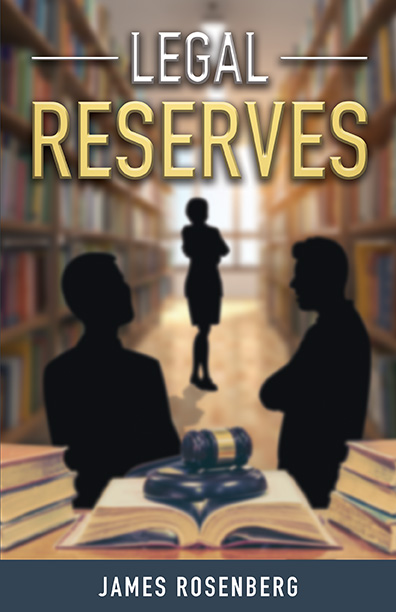
I am a lawyer, married and have three kids. Those are probably the three most important areas of my life. When my kids were small, I started telling them long, involved stories that were embellishments of my real life. One of them, a story about a lawyer with a soccer prodigy son, will be my next book coming out. What I found is I could tell stories that used plot as a way to develop character. I realized I loved stories that constantly moved and disliked narrative that was bogged down with description. My stories depict what happens when a character is faced with difficult choices, which ultimately, I believe, is incredibly revealing.
2) What inspired you to write your book?
I always wonder what is stronger, friendship or the drive for personal enrichment (money). In my novel, one of the key plot drivers is that three long-time friends are forced to take the opposite sides of an important trial. The three met the first day in law school but later in their careers find themselves as the attorney representing a woman suing a big company, the lawyer for the company and the judge in the trial. I thought about all of the major conflict that could arise when each wants to do their best professionally, and how that could affect their friendship. I have dealt in my career with some lawyers who are highly professional and others who will do virtually anything to win. What happens if there is a mix of those types in an important case? Every trial has enough stress. Add in some volatile personalities and the results can be explosive.
3) What theme or message do you hope readers will take away from your book?
With every character in the book, you will some good and some not so good. The three main characters start in the same place ethically. They are young and impressionable when they are in law school. Yet just a few years later, they are in completely different places. Mike still wants to help people and make a positive impact. Jeri wants to avenge her feelings of rage since almost being raped. Jack now just wants to become partner at his big law firm and make even more money.
Sometimes a person doesn’t even realize when he is going down a path that leads towards becoming a lesser person. Ultimately, lawyers are shaped by their environment. The people a new lawyer works with teach them how to practice law ethically or how to cut corners. Good often has to be nurtured and in its absence evil lurks.
4) What drew you into this particular genre?
That one is easy. I’m a lawyer and have been one for too long. I have been through many trials and think most people find the drama inherent in a courtroom compelling. I certainly do. I know I can describe what happens in a courtroom with realism—and I think in a way that brings out the conflict.
5) If you could sit down with any character in your book, what would you ask them and why?
I love Jack as a character. He so flawed, but to me so human. His primary motivation is success/money, and he lets the ultimate rewards dictate his actions. I would want to ask Jack if he can see himself the way others see him and whether he would like what he saw. He has so many good traits—He’s smart, witty, and an incredibly hard worker. People want to be around him and he’s a leader. But does he realize what path he’s put himself on because he has only one goal—money?
6) What social media site has been the most helpful in developing your readership?
This is my first published book and I am just learning how to market. I am extremely unsophisticated when it comes to marketing. I also consider myself to be one of the world’s worst self-promotors. I am trying however. So once I learn better how to use social medial to attract readers, I will come back and answer this question again.
7) What advice would you give to aspiring or just starting authors out there?
If you like writing, keep writing. Write about things that interest you. Don’t worry what other people like. If you are moved by your writing, others will be also.
8) What does the future hold in store for you? Any new books/projects on the horizon?
I am still working at being a lawyer, but I am trying to write every day. I am finishing up my next book, The Jersey, about the lawyer with a son who is a soccer prodigy. It has a significant tragedy in it, but look at it as ultimately uplifting (as much as it can be after such a tragedy). I have also started by next novel which has a young, rebellious student who kills the president and the effect this has on his family.
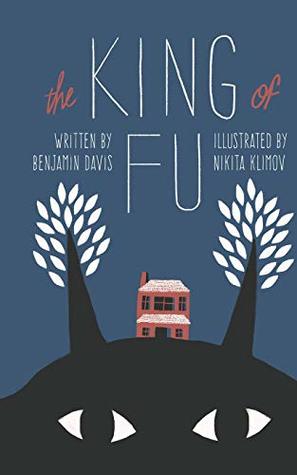
My name is Benjamin Davis. I am an American writer and Journalist living in St. Petersburg. I grew up in a no-name town in Massachusetts where I was more likely to hear horse sex or a pack of wolves eating a rabbit than cars driving by or drunks fighting, as I do now. I work as a freelance editor, tech-journalist, native-speaking-content-monkey, and social media manager for English speaking markets. To cope with the sterility of corporate writing, my fiction sometimes gets a little out of hand. From 2016-2017, I wrote one story every day for a year for the project Flash-365, creating a community of people who appreciate the short-winded and the weird. To me it is where I found my voice and where most of my stories found their home. May of 2018 my first book The King of FU was published.
1) Tell us a little bit about yourself. How did you get into writing?
I’ve always loved stories. Eventually, I tried to write one. It was terrible. But my mother, bless her, she read it and said, “have you ever thought about being a writer?” And I laughed, and said, “psh–no. I’m still going to be an astronaut.” I was twenty-one at the time. But I have terrible vision and can’t afford lasik, so the astronaut thing still hasn’t worked out.
2) What inspired you to write your book?
I couldn’t remember my childhood very well, so I just started asking family members and writing down the bits I could remember myself. It was more of a mental exercise to try and track what the hell happened along the way to turn me into such a dysfunctional adult. At first it was only thirty pages, then as the years went by, I would go back to it again and again with whatever new memory I had or new story I heard. In the end the whole process was on and off for about seven years. I didn’t set out to write a book originally, I was just hunting for some traumatic experience, some explanation–but no, just another privileged middle-class white kid with a lot of embarrassing childhood habits and an overactive imagination.
3) What theme or message do you hope readers will take away from your book?
It depends who is reading it. A lot of the book focuses on those weird embarrassing situations and feelings that we all have as children that we desperately shove into dark corners of our mind as adults. I always felt like I had no one to talk to about these sorts of things as a kid because all adults were pretending like they never happened to them. But really, everyone still has an embarrassing dirty child inside their head, and in their past. I just hope that readers will walk away from my book and think, “well–I guess it’s okay that I still pick my nose after my wife falls asleep.”
4) What drew you into this particular genre?
I enjoy magical realism because it gives you the ability to make a statement about something without spending ten pages on exposition to do it. If the main character has horns and fur, you probably get that he feels different, there is no need for me to go all Holden Caufield on people to get my point across.
5) What authors or poets were a source of inspiration for you when writing these poems and this book overall?
To be honest, I never saw it as poetry. Or–well, I never intended it that way. I wrote it how it felt to think about it, if that makes any sense. I do have poets I’ve idolized over the years; Sylvia Plath, Charles Baudelaire, T.S. Eliot. But I was more inspired by writers who used a lot of honesty and humor to shape their real-life stories like Bill Bryson and David Sedaris.
6) What social media site has been the most helpful in developing your readership?
Much of our audience came from our website Flash-365. I wrote a story every day for a year and Nikita drew a picture to match each story. It was an arduous process for sure, but some of that audience translated over. I live in Russia and here everyone uses Telegram. I have a channel on there where we post stories and updates and it is a direct messenger notification for readers, so it works really well for directing traffic to new stories and engaging people on a more personal level. My girlfriend is an SMM goddess, so she manages my Instagram and Facebook and all of that. Without her I am pretty hopeless.
7) What advice would you give to aspiring or just starting authors out there?
Be prepared and patient. It isn’t like in the movies where the main character is a writer and by the end everyone is like, “OMG I read your story in the New Yorker!” or the long-lost lovers bump into each other as one or the other walks out of a stylish and well-publicized reading. It’s a load of crap, Hollywood is full of lies, beautiful lies–but lies none the less. I would say, if someone is serious, save money. Pay to get your work well edited, once, twice, three times. Take a few weeks off after all of that, burn the book, cry, start over and then pay for another round of edits. Then, if you want to publish traditionally, get ready. It is a damn process. This means finding, and sometimes paying for services and memberships to get access to agents, educating yourself, figuring out what the f*ck a query letter is supposed to say and then waiting, waiting, waiting, then eventually you die and hopefully your grandchildren know how to write a query letter.
8) What does the future hold in store for you? Any new books/projects on the horizon?
We’ve just released a bilingual (Russian-English) novelette titled “The Babushka Society.” (http://a.co/d/h4L5unT
) It is illustrated by the same artist as The King of FU and we worked in collaboration with a podcast She’s In Russia (S.I.R.) to turn it into a radio drama which is available for free on their podcast (https://soundcloud.com/shes-in-russia/73-the-babushka-society). That was the past couple of months, I have recently created a Patreon page to showcase my projects and collaborations where each month I plan to collaborate with someone to create something new; radio dramas, short films, audiobooks, comics, tickle-porn. Who knows. (https://www.patreon.com/benjamindavis)
I received a free copy of this book in exchange for a fair and honest review. All opinions are my own.
Author Cindy Fazzi tackles one of the United States most prominent military figures and the mysterious love affair he had with a young Filipino woman in the highly acclaimed novel, “My MacArthur”. Here is the synopsis.
The Synopsis
The year is 1930. The place: Manila. Douglas MacArthur is the most powerful man in the Philippines, a United States colony. He’s fifty years old, divorced, and he falls in love at first sight with a ravishing young Filipino woman. He writes her a love note on the spot. Her name is Isabel Rosario Cooper, an aspiring movie actress. One glance at his note and she thinks of him as “my MacArthur.”
MacArthur pursues his romantic obsession even though he’s breaking numerous taboos. She reciprocates his affection because he could open doors for her financially struggling family. When MacArthur is appointed the U.S. Army chief of staff, he becomes the youngest four-star general and one of America’s most powerful men. Out of hubris, he takes Isabel with him to America without marrying her. Amid the backdrop of the Great Depression, their relationship lasts until 1934. After four years of relationship, MacArthur leaves Isabel for fear of a political scandal.
The general goes on to become the iconic hero of World War II, liberating the Philippines and rebuilding Japan, while Isabel drifts in Los Angeles unable to muster the courage to return to Manila.
The Review
As a fan of history and looking past the curtain of fame to see the true people these historical figures were, I found this story truly fascinating. A fictional story about a true love affair, the often explosive, raw and destructive affair between the famed General MacArthur and the young aspiring actress Isabel makes for a powerful and engaging read.
It truly was interesting to see the famed military leaders fascination and love for the Philippines, and the author did a wonderful job of bringing the setting to life on every page. The blend of Philippine and American cultures shone through in every chapter, and set the affair in a whole new light as the two broke taboo after taboo in both countries in order to be together.
The Verdict
This is a must read novel, and a fantastic example of historical fiction that is so well written that it could easily be reality. Giving a voice to an era and to people who have remained mysterious in their relationship with one another for decades, it was truly interesting to see the chemistry between the two, both the good and the bad. If you have a fascination with history, Filipino culture or fantastic writing overall, then you need to grab your copy of My MacArthur by Cindy Fazzi today.
Cindy Fazzi is a Filipino-American writer and former Associated Press reporter. She has worked as a journalist in the Philippines, Taiwan, and the United States. My MacArthur, published by Sand Hill Review Press, is her literary debut. She writes romance novels under the pen name Vina Arno. Her first romance book, In His Corner, was published by Lyrical Press in 2015. Her second romance novel, Finder Keeper of My Heart, was published by Painted Hearts Publishing in 2018. Her short stories have been published in Snake Nation Review, Copperfield Review, and SN Review.
What goes better in the morning than a muffin? Stop by Women on Writing’s blog and read an interview with the author Cindy Fazzi and enter to win a copy of the book My MacArthur.
Stop by Beverley’s blog and find out what she thought about Cindy Fazzi’s book My MacArthur. This book is sure to entice historical fiction readers everywhere!
Douglas MacArthur. Her pulse quickened as she read the name. His neat handwriting exuded confidence, but just the same, his note struck her as an anomaly, a mistake. The white man who acted as his messenger stood next to her at the bar.
Men of all ages filled the Olympic Boxing Club, waiting for the fight to begin. Filipinos, Americans, and Europeans caroused and mingled freely here, unlike the Elks or the Army and Navy Club, which banned Filipinos. The foreigners sat at the tables, drank Cerveza San Miguel, and smoked cigars. The Filipinos stood at the cheap section of the club, jostled and bet among themselves.
“I’m Captain Ed Marsh, by the way.” The messenger extended his hand.
An American officer in civilian clothes. It was Saturday night, after all.
“A pleasure to meet you, sir.” She shook his hand, but withheld her name.
Isabel Rosario Cooper came to the club in search of her brother, or rather his car. She needed Ben to drive her to the Manila Carnival.
Women didn’t come here because they didn’t watch boxing, so when she stepped inside the club, she’d grabbed everyone’s attention without trying. The men had erupted in whistles and cheers. The crowd had parted as she crossed the room. Just the way she liked it. She was born to part crowds—to turn heads. For an aspiring actress, every place was a stage.
Who knew MacArthur sat amid the boisterous horde? She read the note again. I can’t help but notice your gracious presence. I would love it if you can favor me with your company. Please join me for dinner at The Grand.
This time, the words made sense. Not a blunder on his part or a misinterpretation on hers. The message hit her like a jackpot—bigger than the Carnival Queen title that her best friend, Nenita, aimed for. He was the most important man in the Philippine Islands. He could open doors for her and her family.
She stopped herself from blurting out a yes! She couldn’t afford to give herself away. Nothing compelled a man to pursue a woman more than her lack of interest.
“Who’s Douglas MacArthur?” She stood with the note in one hand and her silk purse in the other hand. Chin up and chest out, despite the sweat underneath her lace blouse. Her skirt squeezed her waist and constricted her breathing, but she’d worn it because it displayed her figure. The stifling humidity now made her regret her choice. Even the garter belt and stockings itched in such heat.
“You’ve never heard of Douglas MacArthur?” His eyes widened.
She shook her head. A saxophone wailed, distracting them both. They turned toward the elevated boxing ring—empty. Below it, a band warmed up.
Captain Marsh offered her a pack of Lucky Strike. “Care for a cigarette?”
“Why, thank you.” She tucked her purse under her armpit and took one stick, which he lit with a lighter. They stood side by side, watching the band.
“Do you see the gentleman in the middle?” He pointed at a table not far from the band. “White suit. Gray-striped tie. Do you see him?”
“Yes.”
“That is Douglas MacArthur.”
The man stared at her while smoking a long-stemmed pipe, the bowl shaped like a corncob. He didn’t smile. The band played a jazz-style rendition of a Filipino folk song. The audience, packed ten deep, hooted and screamed for the fight to begin, but MacArthur didn’t even blink.
She glanced at his note again before inserting it in her purse. “This is nice. But I don’t know him.”
“It’s unbelievable. You really don’t know him?”
She shook her head and shifted her weight to one hip.
“He’s the Big Cheese!”
She arched her eyebrow.
“Major General MacArthur is the most powerful American not just in the Philippines, but in Asia.”
She took a drag on her cigarette. “I know what big cheese means, thank you.”
MacArthur stood out in his expensive suit, slicked-back hair, and intimidating pipe, but he was as old as her father, if not older. His title was commander of the U.S. Army’s Philippine Division, though everyone treated him like a king.
He stared with a cool expression, pretending to be uninterested. The man was an actor. Perhaps they were not too different.
Tell us a little bit about yourself. How did you get into writing?
I wrote some when I was a kid and teenager. My wife and I started a family early and married when we were twenty. For the next fifteen years I wrote very little. It was about working, putting food on the table, and spending time as a family. Once I established a job as a paramedic I was so sick of reading technical books that I developed a deep hunger for fiction. I wouldn’t call it a problem, but definitely an addiction. I read a lot trying to make up for lost time.
In my thirties I attended one of Chuck Palahniuk’s book launches. Lidia Yuknavitch was his guest reader. I read her book The Chronology of Water. That memoir blew me my face off. The way the tragic coupled with the humorous. The heart left on those pages. A year or two later I realized Lidia was teaching fiction classes at my local community college. With the kids getting to that age where dad (I) was way less than cool to hang with, I found I had a little extra time. The first class turned into a second. The end of the second class rolled into a weekly writing critique group for the next couple of years with some of my peers.
Writing was my outlet for all the things I saw at work, all the things I had neglected in my head throughout my life, all the emotions I’d pushed down because I didn’t want (or know how) to deal with them. Writing became my therapist. The cheapest and most fulfilling therapy I’ve ever had. I told Lidia that one day during my mid-terms conference and she didn’t laugh. She just nodded. I can, without question, point to that first fiction class with Lidia Yuknavitch as the catalyst for everything I’ve published since.
What inspired you to write your book?
It’s really just a product of continually upping the ante. The first goal was just to get a story published. Anywhere. Then to get five published. Then to get one hundred rejections. After creating and reworking a story every week or two for a number of years I had somewhere around thirty stories published in different places and a bunch of unpublished pieces. At that point I felt like I’d stopped moving forward and was moving in circles. That’s the story I tell myself.
The real story is that my writer-ly friends kept asking, “So when are you going to write a book?” And after some self-evaluation, I realized that I kind of already had.
What theme or message do you hope readers will take away from your book?
Definitely the themes written on the back jacket are in there (life and death, identity and race, change and resistance to change). There are also themes that question presuppositions about family and masculinity and decision making. But hopefully readers get more out of it than I even realize I’ve put into it. And I hope they get a hold of me and tell me what they find.
I use writing as a way of sorting out what’s confounding about myself or the world or a specific idea. In a sense these stories are writing themselves while I’m trying to pull pieces of answers out of them to build a more comprehensive picture. I’m hungry for these pieces. Every time someone tells me what they’ve gotten from a story they’re given me another piece. It’s like we’re filling in this puzzle together. A puzzle with no box picture. No edge pieces.
I guess what I’m saying is that I know what these stories mean to me, but I’m more interested in hearing what somebody else sees in them. I’m so much more interested in my blind spots.
Part of what’s always drawn me to short stories is their conciseness. Everybody has time for a short story. There’s an economy to them. Every word is essential. There’s this close, tight world that you can explore these big ideas through. Short stories are sneaky like that.
Also, some of my favorite authors have great works in the genre. People like Junot Diaz, Amy Hempel, Larry Brown, Joy Williams, Scott McClanahan, Elizabeth Ellen, Roxane Gay, Denis Johnson, Mary Gaitskill, Ray Donald Pollock, Lorrie Moore, and so many more. To be able to feel or invoke such emotion from so few pages is like a magic trick. BTW if you haven’t already read Friday Black and Heads of Colored People seek them out. These collections are bringing short story to the cultural foreground.
If you could sit down with any character in your book, what would you ask them and why?
I would ask Lacey from Inner Workings what she ever saw in Uncle Timmy. Because, really, she’s better than that.
What social media site has been the most helpful in developing your readership?
As much as it pains me, I’d probably have to say Facebook has been the most connecting social media to my readership up to this point. I can link people to my blog, places to buy the book, and promote upcoming readings the easiest there. But to be honest I’m not a great social media user. I don’t get it like my kids do. I’m a little afraid of it. And probably for these reasons, even though I’ve gotten the best results from Facebook, vs. Instagram or Twitter, they’re still not good.
I was just talking to a fellow author and friend at Indies First and he was saying how the best way for indie authors to find their audience is still face-to-face, at readings and bookstores. The downside is that it’s on an individual basis and amounts to small handfuls at a time. It’s a grind and, unless you travel a lot, it’s largely regional. But it’s a start. Unless you’re getting major media or large publishing house help the personal gigs might get you the most loyal bang for your buck.
What advice would you give to aspiring or just starting authors out there?
Read. A lot. Write. A lot. Read more than you write, and write a ton. While you’re doing that, have people that know more than you be honest with you about your writing. And understand that they’re not doing it to hurt you. Unless they are. Either way you’ll learn where you need improvement. Be thankful for them.
Find a way to love the editing process. Millionaires on Mtv’s Cribs always used to say, “This is where the magic happens,” and then open the door to their bedroom. For us writers the magic happens on the cutting room floor. Start butchering. Maybe leave a little fat for flavor. Foreplay for a well-honed piece is the Backspace button.
Once you’ve finished the feedback loop of cut up, dressed up and re-critique then send that baby out into the big bad world. While it’s out keep honing other pieces. Know that your words, experiences, and perspective matter but they might take a while to find a home. It’s really just about making the right match. Anybody on dating sites probably already knows that can take some time.
Finally, if you have the chance to take a workshop or class with an author you really respect, do it. It could prove to be an invaluable experience.
What does the future hold in store for you? Any new books/projects on the horizon?
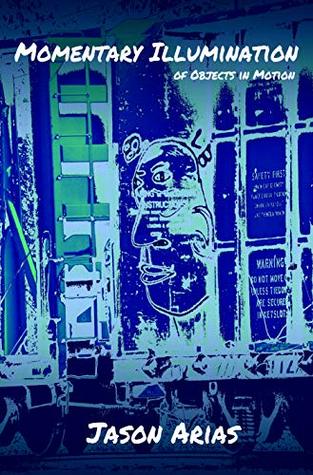
I’ll keep promoting Momentary Illuminations of Objects In Motion to try to give it the best shot possible, but I’m always writing new pieces. I’m always sending shorter stuff out. I’m also currently researching and plotting for my first novel. It takes place in the early to mid-1900s in a West Coast resort town that ended up slowly falling into the ocean.
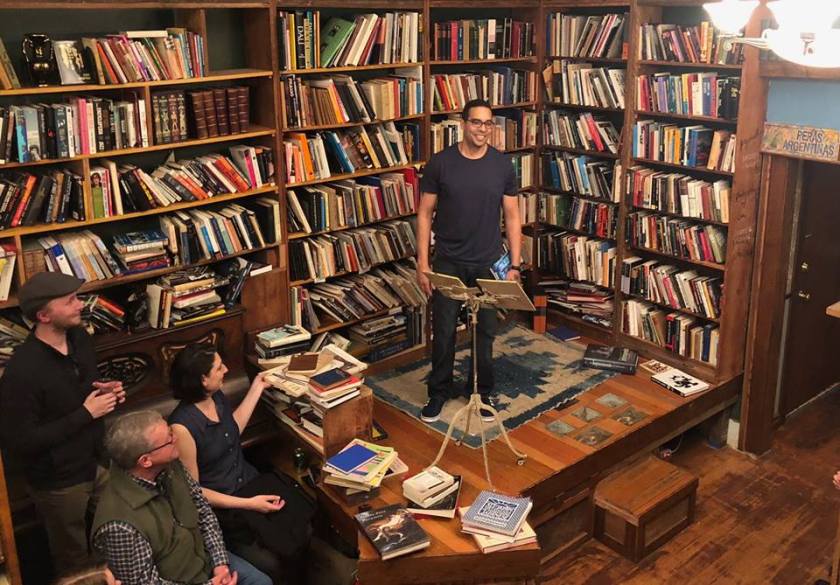
Jason Arias’ stories have appeared in numerous magazines and anthologies. Momentary Illumination of Objects In Motion is his first short story collection.
He has worked as a hospital patient food courier, charter bus after-event cleaner, DMV records consolidator, lithography product deliveryman, one-hour photo developer, cashier, vinyl windows warehouse worker, UPS loader, EMT, paramedic, firefighter, LYFT driver, specimen collector, and sometimes a writer.
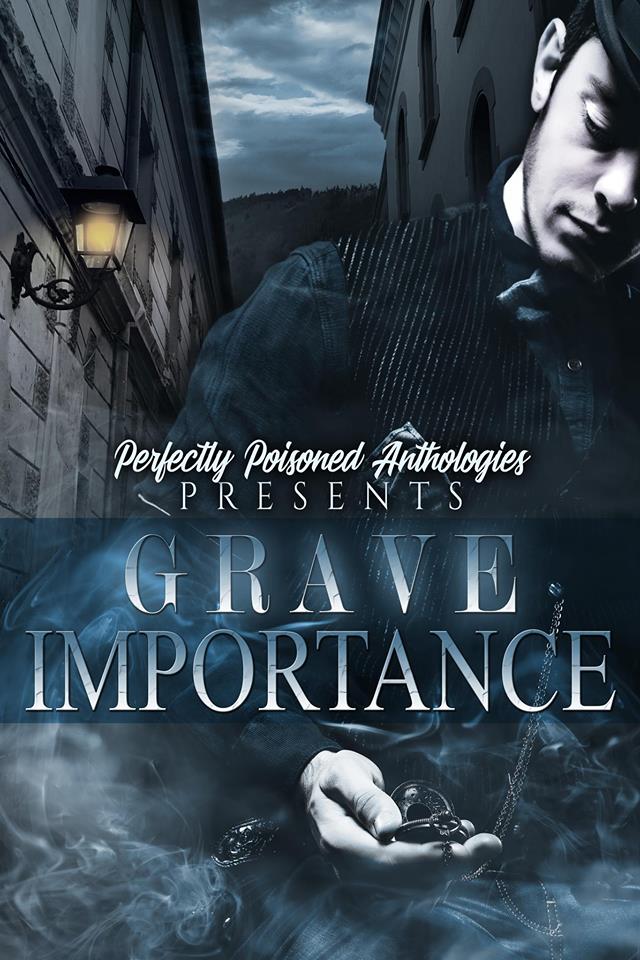
Published December 1, 2017 by Perfectly Poisoned Anthologies
Historical Fiction
Synopsis:
It’s 1870 in a rural setting on the outskirts of London. Famed surgeon Dr.
Benedict Morrow hosts an elite few surgical trainees at the renowned Morrow
Academy of Anatomy and Science.
Though the days of Burke and Hare are long gone, and body snatching and
grave robbing a seemingly thing of the past, the supply of high-quality fresh
cadavers is still lacking.
Each student of Dr. Morrow must procure a fresh corpse for their very own
study, or face expulsion from the prestigious academy.
These hand-chosen students are the best and brightest in the country. They
are also devious, conniving, and determined to do whatever they must to stay in
the academy and under the tutelage of Dr. Morrow. Even turn against each other
is necessary.
In the cards will be manipulation, murder, betrayal, sex, blackmail, and of
course, money always talks.
Dr. Linnea Lyons has it all. She is beautiful, intelligent,
witty, and charming. All the things a young woman needs to get her way in 1870.
Tasked with procuring a cadaver for her surgical studies,
Linnea decides to use her womanly charms to get what she wants. A visit to the
morgue when only the Deputy Coroner, Dr. Cyril Rhodes is on duty, she asks him
to allow her to watch his embalming process.
Cyril is enthralled with the dark-haired beauty. After all,
it is a rarity to meet a female doctor, let alone one studying the art of
surgery.
Linnea senses the good doctor is a bit lonely and perhaps an
easy mark to get what she wants.
The first year Dr. Benedict Morrow at the renowned Morrow
Academy of Anatomy and Science considers female students, Louisa Becker is
honored to be chosen. An ocean away from everything she has ever known and
thrust into a highly competitive, if not, demoralizing group of students is
arduous. It intensifies once Dr. Morrow tasks them with procuring their own
fresh corpse or face expulsion.
Residing in the home of a previous student of Dr. Morrow’s
and his teaching assistant, she suspects Edgar Walker guards sinister secrets
and she should fear him. Instead, she observes his skill and technique in class
and respects him. Intrigued and attracted to the withdrawn, brooding man she
watches him from a distance.
One evening following him into London, she witnesses him
commit a grisly crime. Louisa and Edgar forge an unconventional relationship
involving murder, seduction, lust, ambition, and mayhem.
An immigrant, Fredrick Wolf has to succeed at Morrow Academy
of Anatomy and Science. Not only succeed, he has to prove to his peers that he
belongs, that he isn’t a poor local Dr. Morrow accepted out of pity.
Fredrick is willing to do anything to procure a prime
specimen for their special assignment. Calling upon his uncle, his partner in
crime since their move to England, Fredrick plans to use his uncle’s position
at the local gaol to select the perfect candidate.
But not all prisoners are the usual drunkards or petty
thieves. Some possess dark secrets, especially the man known in Clayton Bridge
as Eugene Wallaby. Biding his time, Eugene sees young Fredrick’s murderous plan
as a means of escape, but only if Eugene can survive the night.
No one wants to be successful as a surgeon more than
Scarlett Kensington and no one has as little conscience. She has met every
challenge with skill and talent and by out-thinking her detractors. And when
the great Dr. Morrow demands his students present a cadaver for class, whose
body will it be?
Enzo Mason is a hustler and a thief by nature. After
stealing the most valuable thing he’s ever stolen, he thinks he’s finally on
the path to making a good life for himself. His confidence is tested when Dr.
Morrow reveals the newest challenge that will decide their fate in the surgical
program – procure your own cadaver for study or be dismissed from the Academy.
Will the help of a fellow classmate, who happens to be the most beautiful woman
he’s ever seen, be the one thing that helps him achieve his goals or will his
luck run out?
Jacqueline Kennison is a stunning newcomer to the Morrow
Academy of Anatomy and Science who has caught the eye of a fellow classmate,
Enzo. Jacqueline is determined to see her master plan through, even if it means
teaming up with Enzo. This choice leads to unforeseen dilemmas that she never
expected. Will Enzo be the one to aid in her own self-destruction or will he
surprise her by saving her from herself?
Doctor Elizabeth Chandler is top of her class at the Royal
College of Surgeons of England and has the world in her hand… until it comes
crashing down around her. With the sudden death of her beloved father and her
mother’s convalescence due to a carriage accident, Elizabeth abandons
everything to return to Clayton Bridge and help her family. Traditional
medicine has failed to bring her mother back to consciousness, so when she
hears of Doctor Benedict Morrow and some of the more unusual requirements of
his Academy of Anatomy and Science, this seems like the answer to her prayers.
Blackmail, deceit, and treachery are just a few of the lessons she will learn
along with her surgical studies.
Miranda O’Reily has been struggling with her grades. In a
profession where men are the superior sex, she has a lot to prove to not just
her peers or Doctor Benedict Morrow, but to herself. Coming from an
impoverished home, she was lucky to have an unknown benefactor paying for her
college. The mystery unravels as she tries to identify who this mysterious
wealthy individual is all while struggling to meet the intensity of the
curriculum.
Edward Thatcher, the last mortician she saw denied her a corpse because of her
gender. Infuriated, she vowed to get a body by any means necessary, even if it
meant murder.