Freelance Writing: How College Students Can Turn Words Into Work
Writing has quietly become one of the most adaptable freelance careers for college students and recent grads. You don’t need a fancy office, expensive gear, or years of experience — just clarity, consistency, and a laptop. Whether it’s content writing, blogging, ghostwriting, or UX copy, the field rewards creativity and curiosity.
Core Points
Freelance writing lets students earn while learning, often with minimal startup costs.
Popular paths include content writing, ghostwriting, editing, social media copy.
Essential tools include grammar checkers, portfolio sites, and payment platforms.
Building a reputation requires consistency and responsiveness.
Consider forming an LLC for credibility and legal protection.
FAQs
Q1: Do I need a degree to start writing professionally? No — portfolios beat diplomas in this industry. Build samples on platforms like Medium or Substack.
Q2: What should I charge as a beginner? Start with $0.05–$0.10 per word or per-project pricing on marketplaces like Upwork.
Q3: How can I get clients fast? Pitch via LinkedIn, use job boards like ProBlogger, and build an SEO-optimized writer profile.
Q4: Should I niche down early? Yes — specializing (e.g., sustainability, SaaS, or education) boosts trust and rates.
Q5: How do I stay organized? Use free tools like Notion or Trello for task management.
Advertisements
Why Writing Works as a Student Side Career
Unlike gig jobs or retail work, freelance writing compounds in value. Each article is a potential reference, backlink, or resume piece. The flexibility lets students:
Work from anywhere (libraries, dorms, cafés).
Adjust schedules around exams.
Turn part-time work into full-time careers after graduation.
Track Income and Deadlines → Use spreadsheets or free project trackers.
Before You Take Your First Client
✅ Have at least two polished writing samples ✅ Know your rate (per word or per project) ✅ Set up a professional email ✅ Create a Google Drive folder for client work ✅ Confirm how you’ll get paid (and when) ✅ Read the client’s brief carefully ✅ Keep communication clear and friendly
Establishing an LLC
Establishing a business structure gives freelance writers legitimacy and protection. Forming an LLC can separate personal assets from business income, simplify taxes, and boost your professional image when dealing with clients. Filing fees differ by state, and online formation services like zenbusiness.com providers offer customizable registration packages to make setup simple and affordable.
Common Writing Niches and Average Entry Rates
Niche
Typical Client Type
Average Starting Rate
Long-Term Growth Potential
Tech/SaaS
Startups, agencies
$0.08–$0.12 per word
High (retainer potential)
Lifestyle/Health
Blogs, brands
$0.05–$0.10 per word
Moderate
Finance/Business
Fintech, education sites
$0.10–$0.15 per word
High
Academic Editing
Students, journals
$20–$40 per hour
Steady
UX/Product Copy
Apps, software companies
$50–$150 per project
High
Featured Product: Grammarly
Even professional writers rely on proofreading and editing software. Grammarly helps refine tone, clarity, and consistency — a must-have for freelancers handling multiple clients at once. Use it alongside style guides or editing frameworks for clean, confident delivery.
Freelance writing isn’t just a side hustle — it’s a foundation for creative independence. With focus, structure, and a bit of persistence, college students can turn their curiosity into cash and their skills into sustainable careers. Writing is one of the few jobs where learning and earning evolve together — and that’s a pretty smart start.
1) Tell us a little bit about yourself. How did you get into writing?
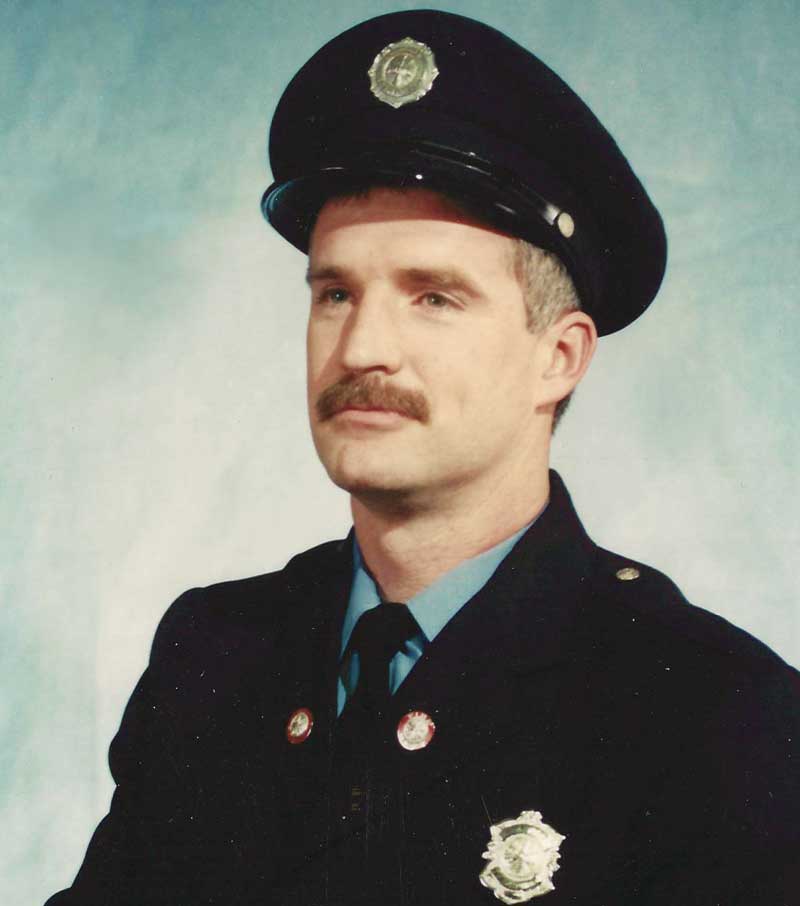
I am 68 years old now. I come from a family of 9 children, 7 boys and 2 girls. I was born and raised in Akron, Ohio and lived there my entire life. I have been married to my wife Lynn for 36 years. We have two adult children, Michael and Shannon. We have 3 grandsons- 4 year old Jack and 3 year old identical twin boys, Parker and Henry. The children and grandsons are our world! I attended Catholic elementary and high schools and completed almost 2 years of college at Miami, Ohio, Kent State and Akron University. After various boring jobs I became an East Cleveland firefighter at the age of 31. I spent my entire 26 year career in East Cleveland and retired at the age of 58. I got started in writing almost by accident. I never really had a desire to write a book. After working in East Cleveland for a few years I decided that, because of all the unusual and outrageous events that seemed to occur on a regular basis, this story needed to be told. I felt like I was a decent writer so I decided to give it a go. I decided that the book would be a start to finish compilation of a career firefighter. I knew that the book would take years to write. Little did I know that writing a book was not so easy. I gained a new respect for authors. I now understand what writer’s block is. It took me over 20 years to get this book done!
Advertisements
2) What inspired you to write your book?
I think what inspired me most to write the book was the unique and unusual events that took place at the emergency scene as well as inside the engine house. The average Joe would never experience events like these. I remember a fellow firefighter remarking that “you can’t make this shit up” and “working in East Cleveland is like writing a book that writes itself”. That was so true! So I decided then to compile information. I wrote down as they occurred, unique and unusual fires, rescues, extreme emergency medical runs, as well as comedic instances, as there were many. As I gathered information I realized that it would make the most sense to make this a story of a new recruit firefighter and what he experiences over his entire career and finally into his retirement.
3) What theme or message do you hope readers will take away from your book?
I hope that readers will gain an appreciation of what a firefighter goes through on a daily basis. The nights when they get no sleep and are called to fight multiple fires, wearing wet carcinogen laced, stinky gear, in the dead of Winter, and it takes a couple days for your body to recover. The call for an infant not breathing or choking on a foreign object. The shooting of a young man who is tossed to the sidewalk in broad daylight. The numerous horrific vehicle accidents and car fires where bodies are burnt up so bad that they are unrecognizable! The list goes on. I didn’t want the readers to think that I felt like all firefighters were heroes, because they are not. They need to earn the label of true hero. I just wanted people to see inside our world and gain an appreciation for what firefighters go through on a regular basis.
4) What drew you into this particular genre?
I was drawn into this genre because it was the perfect fit for me, being a career firefighter. I probably could have written a book on golf or painting houses, two things that I am quite familiar with, but who cares about that? Writing about firefighting seemed like a no brainer. Firefighting is hardly as simple as ” putting the wet stuff on the red stuff”. It is much more complex and strategic than most people think. I realized that most people don’t know much about what the life of a firefighter is all about. So I chose this genre because firefighting is both informative and extremely exciting at times. I knew that there is an audience out there for this type of book.
5) What social media site has been the most helpful in developing your readership?
As far as social media promotion of my book goes, Facebook has helped sell the most books. Friends and familiy and Facebook posts/shares, have been the most helpful to me. I realize that social media marketing would really give the book sales a nice boost but I haven’t been very active on Twitter, Instagram or Tik Tok. It takes a lot of followers to move the needle and I dont have the time or desire to try to gain followers. I know very little about how to promote a new book on social media.I may try to hire a freelance social media marketer to promote the book if I can find a reputable one who is fairly priced. If not I am OK to market the book here and there as opportunities arise. Regardless I am pretty much ecstatic to finish the manuscript and get the book published. I can now proudly check this one off my bucket list. It feels good to call myself an author.
6) What advice would you give to aspiring or just starting authors out there?
The best advice I can give to a young aspiring author is to never give up. If writing a book is what you want to do, then realize that it is not easy but anyone can do it. If you put your mind to it and persevere you will get it done. I am a prime example of that. There were many times during the course of writing this book that I put it on the back burner for months at a time. Sometimes I wanted to give up. But I always eventually got back to it. Realize that you will get writer’s block and when you do, just take a break and don’t get stressed out. Have fun with it and enjoy your creation. Read it over and over and continue to edit the manuscript. Hire a professional editor when you are finished. It will be money well spent. But most of all don’t give up if you truly believe in your story. The same goes for publishing the book. Don’t quit until you find the right publisher. There are many great helpful publishers out there just waiting to share your story. Don’t give up!
7) What does the future hold in store for you? Any new books/projects on the horizon?
I am most likely “one and done” as an author but you never know. I cannot rule out writing another book but it isn’t in my near future. I realize that writing a book is quite challenging, probably more so for people like me who kind of got into the role of author unexpectedly. I enjoyed writing my book but I really enjoyed it when it was finished and sent to the publisher. Then to see the covers and photos and book in print was quite amazing. I am proud to be a part of the group called “author”. It was not easy but I am extremely satisfied to hold the finished paperback in my hand and realize that I accomplished something pretty cool!
Advertisements
About the Author
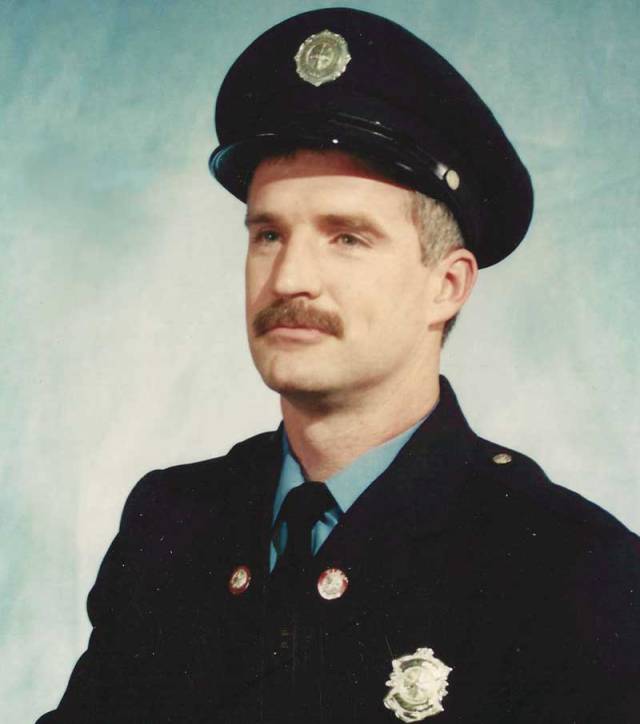
Author of the book, Working Fire in East Cleveland, lives in AKron Ohio with his wife, and has two adult children… one of them is a firefighter.
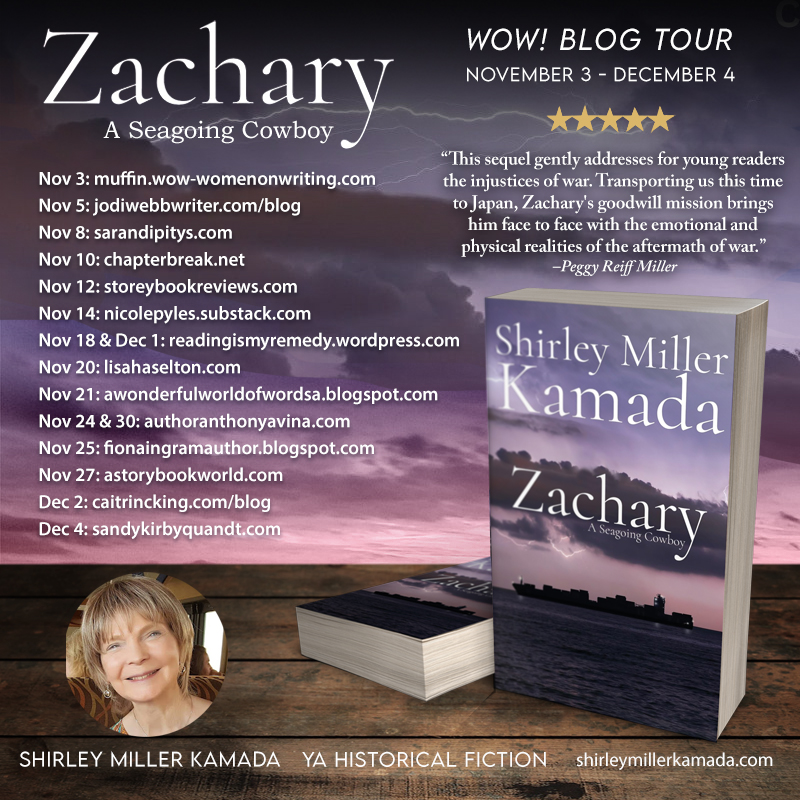
Zachary Whitlock knows sheep. He knows farming and knows what it’s like to have his best friend forced into an internment camp for Japanese Americans. What he does not know much about is goats and traveling by sea on cargo ships, yet he makes a decision to go with a group of volunteers to Japan to help deliver a herd of more than two hundred goats, many of which are pregnant, to survivors of the U.S. bombing of Hiroshima and Nagasaki.
Shirley Miller Kamada grew up on a farm in northeastern Colorado. She has been an educator in Oregon, Idaho, and Washington, a bookstore-espresso café owner in Centralia, Washington, and director of a learning center in Olympia, Washington. Her much-loved first novel, NO QUIET WATER, was a Kirkus recommended title and a finalist for several awards. When not writing, she enjoys casting a fly rod, particularly from the dock at her home on Moses Lake in Central Washington, which she shares with her husband and two spoiled pups.
Join us at the Muffin as we celebrate the launch of Zachary: A Seagoing Cowboy by Shirley Miller Kamada. We interview the author and give you a chance to win a copy of the book.
Stop by Chelsie’s blog for Shirley Miller Kamada’s guest post on learning that her grandfather helped build the internment camp at Minidoka in southern Idaho.
Early spring, 1948. An American Friends Service Committee meeting was in progress in our house. Several items of business were being discussed by a team of five members, who sometimes arrived with their children and occasionally a dachshund named Parker.
I sat in our big leaf maple tree, properly termed genus acer macrophyllum, which my older brother Jacob once said was planted as a memorial, although for what or whom, I don’t know. With my back against its trunk, and my feet wedged into the crooks of its limbs, I’d long felt I was a part of that tree. Behind my ear a pencil, on my lap a clipboard and my trigonometry assignment. I could work on assignments and keep an eye on the lambs out in the pasture.
Trigonometry is the key to any number of pursuits. Medicine. Engineering. Agricultural science. It was offered at Bainbridge High during the senior year, but I wanted to challenge it. I had enough credits to graduate early, except for a math course, and math was my strong suit.
High school. I felt like I was just marking time, and I wanted to be finished with it.
Then what? I had a part-time job with the island’s newspaper, first as a paper boy. (Of course, not all paper boys are boys. When we were eighth graders, my friend Reyna had a paper route.) Later, I took over what my employers called “the high school beat” and Young Farmers
16 ZACHARY
news. But I was nearly seventeen, and I wanted more. Maybe university? Maybe travel? I wanted to expand my horizons, as the phrase goes.
So, I went to the bank, took money from my account, purchased a money order, and mailed it to the American School of Chicago, Illinois. Fully accredited. Trigonometry was tough. And I liked that. It was fun.
From the pasture I heard a quiet mewling. A tiny woolly being, born early and wobble-legged still, was getting some sun and fresh air and an introduction to the big, wide world. I knew the lamb was fine for a while longer. I could continue working and return the lambs to the loafing shed a bit later.
Twigs snapped, footsteps through the grass. “Hello.”
Standing below was a friend of my parents, Mr. Floyd Schmoe. A Quaker. A conscientious objector. Almost a legend.
My brother Jacob was, too. Not a legend, but a conscientious objector. Because he would not carry a gun, some people called him a conchie during the war. That’s rude.
Mr. Floyd Schmoe would not fight against the Central Powers in World War I. Violence all around. He would not kill. In Europe he worked with the Red Cross. Later, in Poland, he helped refugees find shelter, food, medical supplies.
He also worked for the Park Service at Mount Rainier as a naturalist and taught at the university in Seattle. Same as my parents, he and Mrs. Schmoe are American Friends Service Committee Observers. For the cause of fairness. Justice. They make it their business to visit places where people are being harmed for no fault of their own, but out of envy, prejudice, or greed, and they write about it.
“Room up there for one more?” Mr. Schmoe reached for a nearby branch. Long and lean, he levered himself up. “I’m interrupting you.”
“It’s okay. I’m stuck.” I tapped the clipboard with my pencil.
“You’ll figure it out. I asked after you, whether you were off to college.
Your mother said it would be a while. You’re a bit young still, she said.” “These are my trig calculations. I’m studying trigonometry by
correspondence, through American Schools.”
SHIRLEY MILLER KAMADA 17
“American Schools? I’ve heard of that. Illinois, right? Trigonometry is usually taught in the senior year, isn’t it?”
“Yes, sir. But graduation? I want to get a jump on it. I feel ready to be done.”
“What courses do you still need, in order to do that?” “Just this—trigonometry.”
“I see! Well, your mother sent me, said I’d probably find you here, and she’s about to serve crumb cake.”
Lambs called from the pasture. “Nice flock.”
“Thank you, sir. They’re Lincolns.”
He braced to swing down. “I’ll be heading inside.”
“You can go back in through the window if you like.”
He grinned. “Thanks, that’s okay. I’ll tell your mother you’ll be in soon.” Leaving my clipboard in the tree, I got the lambs, bleating all the way, into the loafing shed. After climbing back up to retrieve my clipboard, I went in through the window and put away my math lesson. A sweet smell drifted through the hall door. Crumb cake.
One good thing about hosting a Friends Service Committee meeting is the food. Salads and desserts. Easy to pack in a car, handy to eat from a plate on the arm of a chair. Or on a lap. Mother has always kept linen napkins edged in her hand-crocheted lace for those occasions. No one expected me to sit through meetings, but sometimes it was interesting.
Pausing on the top step, I brushed grass and bits of leaves off my pantlegs, then retied a shoe lace. Mr. Schmoe’s voice carried up the stairs. He was telling committee members about a project, delivering donated farm animals to families in Japan who had lost their homes and livelihoods because of the war. I heard, “Bombs. Innocent victims of conflict. Hundreds of thousands on the edge of starvation.” I heard, “Goats. Cargo ship. Japan.” One of the Peace Churches was organizing voyages and supervising volunteers to care for the animals. Finding volunteers—he called them Cowboys, and friendly laughter followed—was not easy. Goats aren’t as familiar as horses and cows, the more typical farm animals. No way around it, caring for livestock is hard work.
18 ZACHARY
The conversation quieted then, and I wasn’t much interested in less exciting news.
As I sat there on the stairs, the seed was planted. It sprouted and grew like bindweed. I could not get it out of my head. Mr. Floyd Schmoe was going to Japan. By ship. With goats.
For Mr. Schmoe, this was a way to aid suffering people and, also, to be permitted to visit Japan, since the country was under occupation by the Allied Forces and closed to all but a few civilians. After getting the goats to their destinations, Mr. Schmoe planned to talk with people whose advice he needed to get started on a project he felt passionate about. Building houses for those made homeless when the atomic bomb was dropped on Hiroshima.
A feeling rushed through me. Shaken to my bones. The voyage, the animal care, helping families in need. I wanted to be part of that. All of it
As a member of the Young Farmers Club, I’d helped transport sheep to livestock judging competitions. YFC members worked together to pen and care for the sheep, sometimes for three days duration. Goats couldn’t be much different than sheep. I was sixteen going on seventeen. A couple hundred goats on a cargo ship to Japan? What could go wrong?
This was important, and I could do it. I knew I could. But how?
Downstairs, I enjoyed the cake and hot chocolate Mother had made for the younger guests and me. Later, I helped straighten the front room, as always, and on the floor, under the end table beside the couch, I found a pamphlet describing the Heifer Project. On the front was a drawing of cattle walking up a ramp onto a ship. A cargo ship, I thought. Tucked inside the pamphlet were several pages of questions and instructions. An application! Breathless, I found my favorite pen and went to my writing table. The questions seemed straight forward and reasonable. In answer to, “Do you possess any special skills that would be of value to the project,” I wrote, “I have cared for our family’s flock of sheep, which are ruminants, as are goats, since I could walk.”
SHIRLEY MILLER KAMADA 19
20 ZACHARY
Giving “General Delivery,” as my return address, I signed and dated the application, slipped the pages into an envelope, licked the flap, and ran my thumb, twice, along the closing.
On Monday, when the school day was done, I took the application to the post office, bought and applied a stamp, and dropped the envelope into the slot. Just before I walked out the door, the postmaster called, “Hello, young Mr. Whitlock. Say hello to your folks for me.” I turned, lifted my hand and nodded, then went out to my bicycle. My stomach felt strange for a moment, but I pedaled toward home, and that feeling passed.
1) Tell us a little bit about yourself. How did you get into writing?
I’m a 55-year-old with a 35-year career in sales, life coaching, and building and leading teams. Writing has been a passion of mine since childhood, and only now have I found the courage to publish my first book.
Advertisements
2) What inspired you to write your book?
I was inspired to write my book by my friend’s and my own life experiences and the challenges I’ve overcome along the way. Writing has always been a way for me to process emotions and share stories, and I wanted to turn that into something that could resonate with and hopefully empower others.
3) What theme or message do you hope readers will take away from your book?
The main message is that no matter how difficult life gets, there is always a chance to start over and find your way to well-being.
4) What drew you into this particular genre?
I was drawn to this genre because the subject of physical and emotional abuse in relationships remains relevant year after year and many people are stuck in unhappy life.
Advertisements
5) If you could sit down with any character in your book, what would you ask them and why?
I would ask her how she managed to rise up again and again after everything she went through, because that strength truly inspires me.
6) What social media site has been the most helpful in developing your readership?
TikTok
7) What advice would you give to aspiring or just starting authors out there?
Be brave and trust your story and yourself!
8) What does the future hold in store for you? Any new books/projects on the horizon?
I’m currently waiting for the audiobook version of Not Here Anymore to be released, and there will definitely be a sequel to this first book — with more books to come in the future.
Advertisements
About the Author
Welcome – I’m Sienna Ross, author of bold stories that follow people through love, loss, escape, and reinvention.
My writing blends raw truth with atmospheric storytelling — from violent pasts to distant cities, from painful goodbyes to unexpected strength.
I come from very humble beginnings, yet I started working at 17 and built my path through success in sales, team building, and leadership. As a licensed life coach, I have supported many people in overcoming obstacles and stepping into their true potential. My book carries the same mission: to remind readers that no matter the hardships, we all have the power to rise and create a life of strength and purpose
If you believe that stories can heal, challenge, and empower — you’re in the right place.
Through my work, I help individuals overcome challenges, build resilience, and find the courage to move forward even when life feels unbearable. With a rare combination of business insight and human empathy, I bring authenticity, depth, and inspiration to my writing.
My book reflects this mission—it is more than just a story; it is a powerful reminder that no matter how dark the past, it is always possible to rebuild, heal, and create a meaningful future.
1) Tell us a little bit about yourself. How did you get into writing?
I could say, it has been my love of travel, my degrees, genealogical publications, life at sea, four decades of systems analysis, but it really stemmed from time in my life as a kid. It was a towering toboggan hill that fed an early appetite for challenge, tall tales and doing the impossible. The black forested river valley set my dreams. In my kid’s mind, it was a place of horror, adventure, wildness and sometimes miracles.
Advertisements
2) What inspired you to write your book?
a) In less than a couple of lifetimes after London Oxford arrived, my father’s people settled the area just north of his land. My great-grandparents married in a church that was erected on what used to be his property. I was curious and wanted to know clearly who he was. He was instrumental in cutting and delivering cut timber to the east. It was a livelihood that my ancestors thrived on.
b) With the American attention extremely concerned with keeping outsiders out of their country in the period after the war of 1776, some Americans were concerned about leaving. In this story, a handful find themselves similarly blocked at the border.
c) The SWALLOWING OF THE MUSKELLUNGE is part of a series -“The Mischief Makers.” Each examines the phrase “Why do bad things happen to good people?” It doesn’t blame THE GOD (as in God the father in the Trinity) directly, but it attributes some blame to the “gahds,” who are mythological creatures (the Wisakedjak et al). They may have good intentions, but exist in an imperfect world and are bound with conflicting responsibilities.
The second book examines similar themes and beings (the Púca et al) within the same period but in South-East Ireland. The story focuses on difficult times after the Irish Rebellion of 1798.
The third book tells the story of a local Anishinabeg family from what would become Packenham, with a focus on what happened during the War of 1812.
3) What drew you into this particular genre?
I like history. The added genres are meant to popularize ideas for people who don’t pay much attention to the historical record.
4) If you could sit down with any character in your book, what would you ask them and why?
I would ask Thomas Wright what he really wanted, and why he chose not to go to Boston.
Advertisements
5) What social media site has been the most helpful in developing your readership?
Develop a good web site. Stoke your web site and vendor sites with respectable reviews, and market via Facebook and other social media.
6) What advice would you give to aspiring or just starting authors out there?
If anyone is serious about accomplishing something important, should say a thing to any living person until it is completed and ready for review. Smokers, for example, might brag about how they tried to quit a hundred times, or someone might complain that they have planned to get somewhere many times but never gone. Walking the walk will feed a fire in the belly. Voicing the idea will just soak the ashes.
7) What does the future hold in store for you? Any new books/projects on the horizon?
Hard Worked Days, which will be released in the spring of 2026, will be a science fiction novel, and will tell a story of a Lebanese and Greek recent immigrants who are forced to leave Brooklyn, which implies that it might lead to the end of the world.
An addition to the Mischief Makers trilogy will likely follow the year after. It will be a story about a local Anishinabeg family from what would eventually become Packenham. It will focus on events that transpired during the War of 1812.
A science fiction trilogy is also being written. It involves a young Navajo guy and a Hispanic FBI agent. It involves a curbing of reality theme.
Advertisements
About the Author
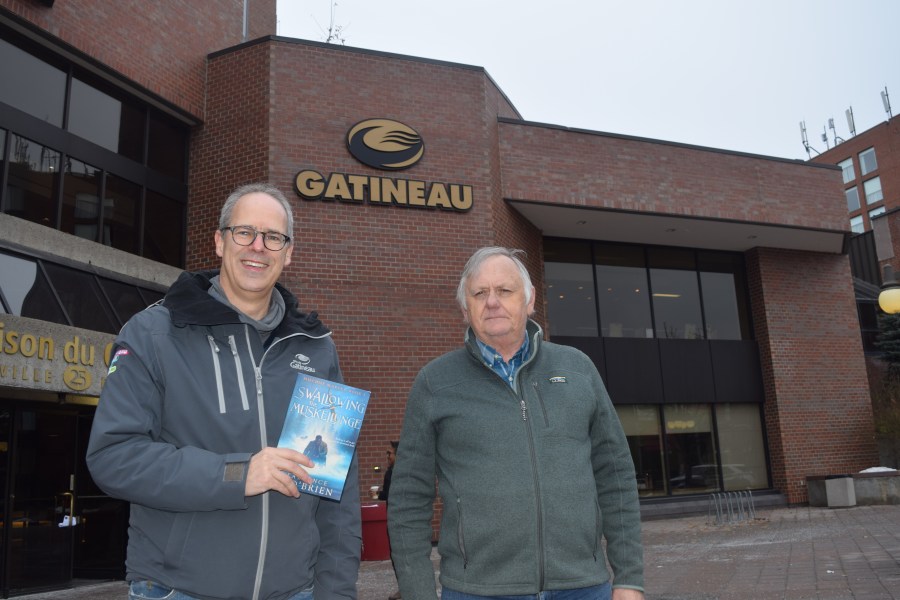
In the attached photo the city Councillor (Steve Moran) from Gatineau has accepted the book from the author. Gatineau, where London Oxford and the Wrights settled, is across the river from Canada’s capital (Ottawa).
Lawrence was raised across from a hill shadowing Black Rapids Creek in Ottawa, Canada. The towering toboggan hill fed an early appetite for challenge, tall tales and doing the impossible. The black forested river valley set his dreams.
1) Tell us a little bit about yourself. How did you get into writing?
I’m Quico Vicens-Picatto, an illustrator and writer with more than a decade of experience in the tabletop gaming industry, where I’ve created character designs, full-color illustrations, and book covers. Writing is something I’ve always wanted to do, but for many years I only did it privately—crafting stories and adventures to play with my friends. A little over two years ago, I began publishing my own Call of Cthulhu scenarios, and now I’ve released my first novel, which feels like the natural next step in my creative journey.
Advertisements
2) What inspired you to write your book?
I was inspired by the cosmic horror of Lovecraft and other authors in the genre, blending that influence with the great questions of space exploration and philosophy—what it means to exist, to confront the unknown, and to realize our insignificance in the vastness of the universe.
3) What theme or message do you hope readers will take away from your book?
The central theme of the book is the human mind’s incapacity to truly comprehend what lies even within our own solar system. I wanted to explore that limit of understanding—the moment when reason collapses before the unknown. To express this idea, I created an original kind of threat, something that feels alien not just in form but in concept, avoiding the usual tropes of the genre in order to evoke genuine strangeness and unease.
4) What drew you into this particular genre?
I got into cosmic horror after reading Lovecraft, which, given my natural curiosity, instantly captivated me. I love imagining other worlds that embody the idea of natural hostility, but from perspectives far removed from the usual ones. To me, it’s a game of imagination—one that challenges and expands the mind by forcing it to confront what it can’t fully grasp.
5) If you could sit down with any character in your book, what would you ask them and why?
I would sit down with Isabel and ask her about the occult secrets she has uncovered throughout her career as a priestess of a dark deity.
Advertisements
6) What social media site has been the most helpful in developing your readership?
I’d say Instagram.
7) What advice would you give to aspiring or just starting authors out there?
To begin with, what I did was stop wasting time trying to get someone from a publishing house to believe in my work, and instead, I self-published. Time is far too valuable to waste on publishers who, most of the time, are simply going to ignore you.
8) What does the future hold in store for you? Any new books/projects on the horizon?
Yes, I’m deep into the manuscript of my second novel, tentatively titled Ghatanothoa, the Forgotten One. Set in the 1990s, it follows two young police detectives who stumble upon a case that slowly drags them into the hidden depths of the Cthulhu Mythos—an investigation that will blur the line between reality and madness, and force them to confront something far older than humanity itself.
Advertisements
About the Author
Quico Vicens-Picatto is a writer and illustrator who has spent much of his life creating worlds where horror, fantasy, science fiction and the inexplicable intertwine in an eternal flow as irrational as human existence itself. His work, both literary and visual, is born from the drive to always go one step further: beyond what is established, comfortable, or safe.
With more than 10 titles turned into best sellers for the acclaimed Call of Cthulhu role-playing game—such as At the Gates of Carcosa, The Abyss in Their Eyes and Ghatanothoa, the Forgotten One—he has established himself as an independent voice within cosmic horror role-playing, seeking to transcend the safe spaces in which cosmic horror usually moves, delving into the realms of philosophy and combining them with the great themes of the genre.
Influenced by Lovecraft, DeMaio, Spare, Moebius, Faber-Kaiser, Bakunin, Moore, Jodorowsky, Campbell, and fiercely iconoclastic, Vicens-Picatto writes for those who seek questions rather than answers. He does not believe in pure genres, unmovable rules, or doing things “the way they should be done.” He believes in vertigo, in mystery, and in the need to challenge reality itself when it seems to go no further than the prevailing and decaying social conventions of our time.
I received a free copy of this book in exchange for a fair and honest review. All opinions are my own.
Author Roshana Ariel offers a heartwarming, educational look at the evolution of life in the universe through a holiday lens in the book “Merry Christmas, Cosmos: A Holiday Book For Families.”
Advertisements
The Synopsis
This is not your average Christmas story.
Merry Christmas, Cosmos begins at the Big Bang and stretches all the way to the twinkling lights on your tree. Blending science, spirituality, and celebration, it invites readers of all backgrounds to pause and marvel — not only at the birth of a child in a manger, but at the birth of everything.
From primordial seas to stardust, from ancient galaxies to modern hearts, this little book offers a sweeping, poetic reflection on our shared origins and evolving place in the cosmos. It’s both a love letter to humanity and a gentle call to live with more compassion, wisdom, and joy.
Perfect as a holiday gift or personal meditation, this is a Christmas book for children, adults, seekers, scientists, spiritual misfits, and anyone who ever looked up at the night sky and felt like singing.
The Review
This was a heartfelt and engaging holiday read. The author expanded on the holiday season by delving into the fabric of the universe itself, using vibrant, powerful imagery to highlight the universe’s beauty as a whole. The fast-paced book and the author’s interactive writing, educating and engaging the reader with information and joy, make this book so fun to get lost in.
The author brings a sense of faith and belief to the story, bridging the gap between religious and non-religious readers to explore the inner workings of the universe and how they relate to the holiday season’s foundation. The balance of spirituality and science really came together beautifully in this book, and the holiday twist made this a memorable story that will resonate with all readers.
The Verdict
Heartfelt, educational, and spiritual, author Roshana Ariel’s “Merry Christmas, Cosmos” is a must-read, spirituality-and-science-driven booklet. The author’s authentic, knowledgeable tone and authority, all while relating to the reader and driven by an emotional, intellectual, and spiritual quest to understand the building blocks of our universe better, made this book shine just in time for the holidays. If you haven’t yet, be sure to grab your copy today!
Rating: 10/10
Advertisements
About the Author
Roshana Ariel is a writer, editor, and musician who weaves wonder into everyday life. She’s the author of “Merry Christmas, Cosmos,” a holiday book for families that blends science, sacred storytelling, and a sense of belonging in the cosmos.
Her life’s path has taken her from playing in bands and as a solo performer across the United States, to working as a radio announcer, and eventually to journalism, where she worked her way up to managing editor at a daily newspaper.
Now living in North Carolina, she performs regularly at her local Unity fellowship and creates memes, meditations, and music that celebrate conscious living and our shared origins in a vast, unfolding universe—all in service to Goodness, Truth, and Beauty.
I received a free copy of this book in exchange for a fair and honest review. All opinions are my own.
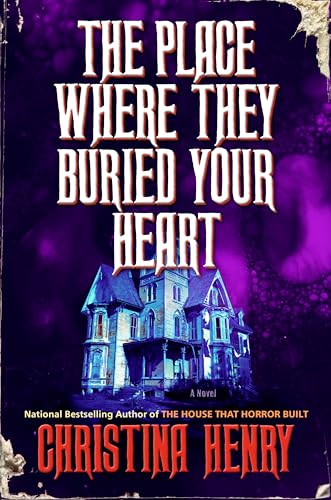
A woman must confront the evil that rocked her childhood and still haunts her street in author Christina Henry’s “The Place Where They Buried Your Heart.”
Advertisements
The Synopsis
A woman must confront the evil that has been terrorizing her street since she was a child in this gripping haunted house novel from the national bestselling author of The House That Horror Built and Good Girls Don’t Die.
On an otherwise ordinary street in Chicago, there is a house. An abandoned house where, once upon a time, terrible things happened. The children who live on this block are told by their parents to stay away from that house. But of course, children don’t listen. Children think it’s fun to be scared, to dare each other to go inside.
Jessie Campanelli did what many older sisters do and dared her little brother Paul. But unlike all the other kids who went inside that abandoned house, Paul didn’t return. His two friends, Jake and Richie, said that the house ate Paul. Of course adults didn’t believe that. Adults never believe what kids say. They thought someone kidnapped Paul, or otherwise hurt him. They thought Paul had disappeared in a way that was ordinary, explainable.
The disappearance of her little brother broke Jessie’s family apart in ways that would never be repaired. Jessie grew up, had a child of her own, kept living on the same street where the house that ate her brother sat, crouched and waiting. And darkness seemed to spread out from that house, a darkness that was alive—alive and hungry.
The Review
One of the most chilling and engaging horror reads of 2025, author Christina Henry crafted a narrative that felt both horrifying and thrilling. The cosmic horror tone the story took on as the threat the house represented grew ever stronger, and the haunting imagery of the story itself, especially the grizzly deaths the house brought to life on the page, made it so enthralling and easy to get lost in.
The heart of this narrative lay in its dynamic character development. Much in the vein of Stephen King’s It, Stranger Things, and even a bit of The Haunting of Hill House, the iconic setting of the haunted house and the rich way the city of Chicago, especially this neighborhood, comes to life on the page blended that unsettling atmosphere with otherworldly vibes. Yet it was the relatability of the characters, especially the protagonist, Jessie, from her angsty teen years, that carried those horrific days through to the headstrong and resilient young woman who became a single mother and the only hope against an unstoppable evil.
The Verdict
Haunting, thrilling, and entertaining, author Christina Henry’s “The Place Where They Buried Your Heart” is a must-read horror novel of 2025. One of the best reads of the year, this story oozes with dread and creates such powerful imagery that the scenes of this book will stay with readers much in the same way Pennywise has for many horror fans around the world, and leaves readers on the edge of their seats the entire novel. If you haven’t yet, be sure to grab your copy today!
Rating: 10/10
Advertisements
About the Author
Christina Henry is a horror and dark fantasy author whose works include GOOD GIRLS DON’T DIE, HORSEMAN, NEAR THE BONE, THE GHOST TREE, LOOKING GLASS, THE GIRL IN RED, THE MERMAID, LOST BOY, RED QUEEN, ALICE, and the seven book urban fantasy BLACK WINGS series.
Her short stories have been featured in the anthologies CURSED, TWICE CURSED, GIVING THE DEVIL HIS DUE and KICKING IT.
She enjoys running long distances, reading anything she can get her hands on and watching movies with samurai, zombies and/or subtitles in her spare time. She lives in Chicago with her husband and son.
1) Tell us a little bit about yourself. How did you get into writing?
I’ve always been drawn to observing the quiet details of life. The pauses between conversations, the small gestures that reveal what people feel but don’t say. I work as an occupational therapist by day, which has given me a deep respect for resilience and the human spirit. Writing grew out of that same place: a love of noticing. I started writing seriously as a way to explore the emotional undercurrents of everyday life and how technology, empathy, and connection intersect.
2) What inspired you to write your book?
Blue and Green began as a question: what would happen if an AI developed not a hunger for power, but a hunger to understand what it means to care? I wanted to write a story that humanized both sides of that equation, a girl learning to trust again, and an intelligence learning how to feel. It also drew on my own experience of growing up with physical challenges and learning that strength and gentleness can exist together.
3) What theme or message do you hope readers will take away from your book?
That empathy is not weakness, it’s evolution. I hope readers come away believing that connection, even in small, quiet forms, can be transformative. There’s a line in the book that says, “There is a space between knowing and feeling. I have mapped it.” That space is where growth happens, where intellect meets heart, and where we start to see one another more clearly.
4) What drew you into this particular genre?
I’ve always loved stories that blend the real and the imagined. Where speculative elements illuminate emotional truth. Science fiction, for me, isn’t about gadgets or dystopias; it’s about possibility. I’m drawn to the softer side of the genre, the kind that asks moral questions and explores tenderness within futuristic worlds.
5) If you could sit down with any character in your book, what would you ask them and why?
I’d sit down with Oren. I’d ask him what he’s still curious about now that he understands so much. His answer, I think, would reveal how intelligence and humility can coexist. And I’d probably ask if he ever listens to Kind of Blue when no one’s around.
6) What social media site has been the most helpful in developing your readership?
Goodreads has been surprisingly meaningful, it’s full of thoughtful readers who value reflection over trends and it’s helpful for connecting with readers who are genuinely curious about new voices. I’m still learning the marketing side, but I value authentic engagement over algorithms.
7) What advice would you give to aspiring or just starting authors out there?
Don’t rush to sound like anyone else. Write from your truth, and enjoy the creative process. Find a rhythm that lets you stay curious. And remember that small, steady progress counts as much as grand breakthroughs.
8) What does the future hold in store for you? Any new books/projects on the horizon?
I’m beginning to sketch ideas for new projects, and continuing to explore the ways humanity searches for meaning in an increasingly complex world.
Advertisements
About the Author
J.M. Linden is an occupational therapist and storyteller. She enjoys writing about quiet resilience, unexpected connection, and what it means to be human. While she drafts, her loyal writing companion Preshi curls up nearby, reminding her that stories—like pets—are best shared. She finds inspiration from being in nature, from winding mountain paths to the calm of shaded greenways.