I received a free copy of this book in exchange for a fair and honest review. All opinions are my own.
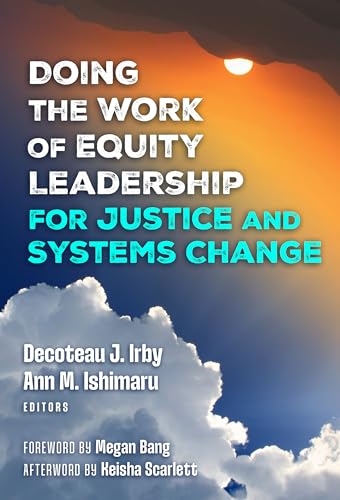
Real world tools and practices to make classrooms more inclusive and safe are explored in the book “Doing the Work of Equity Leadership for Justice and Systems Change” by Decoteau J. Irby and Ann M. Ishimaru.
Advertisements
The Synopsis
This book reveals the complex and crucial work of sustaining justice-focused educational systems change in the face of subtle resistance and outright attacks.
Scholars and practitioners, who have worked together in various capacities across different school systems, examine systemic equity leadership in U.S. public schools over the course of nearly a decade and across a time of profound racial and historical change.
This volume weaves together real-world insights, research-based strategies, and practical tools for transforming P–12 education systems into more equitable and just learning spaces. Contributors explore the early days of district equity leadership sparked by the Obama administration’s focus on civil rights in education; Black Lives Matter (beginning with the Million Hoodies Movement for Justice); the proliferation of formal equity director roles, policies, and priorities; and the recent politically driven anti-DEI backlash.
This book is important reading for school leaders, district personnel, policymakers, and everyone who cares about a public education that works for all students.
Book Features:
Provides bird’s-eye and on-the-ground accounts of equity leadership to address broad questions and map invisible trends that have influenced how equity leadership happens.
Explores approaches to district-wide equity leadership that emerged on the heels of Trayvon Martin’s death, in what we now understand as the era of Black Lives Matter.
Uses a frame of mornings, middays, and evenings to account for the cyclical nature of equity leadership and the limits and possibilities of working from within school systems to affect transformative change.
Goes beyond the experience of any one school leader or team by illuminating organizational conditions, routines, networks, and practices.
Includes insights on establishing district equity offices and institutionalizing equitable processes; using data to influence change and create accountability; and designing formal and informal networks that support the day-to-day work.
The Review
I loved how this book spoke to both those interested in civil rights and inclusivity and those with an interest in or knowledge of the education system. The authors write each chapter with a balance of passion and knowledge/expertise. The reader could feel the personal nature of the subject matter as the authors delved into these topics, while also gaining scientific and critical information gathered over time on why these practices matter.
The heart of this book was the variety of groups and movements the writers delved into. Immediately in the first chapter, readers are given a lesson in how LGBTQIA+ protections have seen resistance rise in recent years and how best to navigate those choppy waters when encountering them. The book also does a remarkable job of breaking the chapters into morning, midday, and evening work, mimicking a school schedule for educators and allowing readers to distinguish among the different tools produced by these writers to face equity leadership with complete knowledge.
The Verdict
Insightful, engaging, and memorable, authors Decoteau J. Irby and Ann M. Ishimaru’s “Doing the Work of Equity Leadership For Justice and Systems Change” is a must-read nonfiction book on education and equity leadership in schools. The practicality of the tools developed in this arena and the variety of experiences paired with the evidence-based knowledge readers were given made this book both enthralling and easy to return to time and time again to develop the skills to face this challenge head-on. If you haven’t yet, be sure to grab your copy today!
Rating: 10/10
Advertisements
About the Author
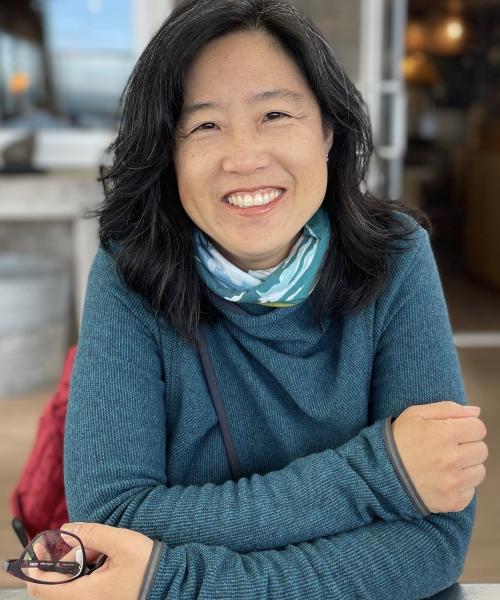
Decoteau J. Irby is professor of educational policy studies at the University of Illinois Chicago, codirector of the Center for Urban Education Leadership, and coeditor of Dignity-Affirming Education. Ann M. Ishimaru is the Killinger Endowed Chair and professor of educational foundations, leadership and policy at the University of Washington College of Education, and author of Just Schools: Building Equitable Collaborations with Families and Communities.
As the Kerry and Linda Killinger Endowed Chair of Diversity Studies and Professor of Educational Foundations, Leadership and Policy, Dr. Ishimaru’s scholarship in P-12 educational organizations and leadership centers on developing the collective leadership of youth, families, communities, and educators in pursuit of dignity, justice and wellbeing in educational systems. Her body of work unfolds from two key premises. First, leadership plays a crucial role in transforming the longstanding racial injustices reproduced by US public schooling policies, practices and everyday interactions. Second, we arrive at better understandings and solutions to systemic inequities when those most affected by these problems influence key processes and decisions.
1) Tell us a little bit about yourself. How did you get into writing?
Writing feeds my soul. I started putting particular words to paper when I was a young teenager, thirteen or fourteen; in fact, I still have my original notebook. It’s filled with angsty poems describing my torturous world. “It’s a maze, it’s a haze, it’s a crazy place. It’s the world each day I have to face.” My teenage years were challenging. For example, my father, who was a lay minister, set me up to be arrested for hosting a pot party when I was fourteen. He’d heard some kids talking about it at church. I was trying to get to know the boy I liked—who was the reason for the gathering—when police suddenly appeared, blocking my bedroom window and doorway. We were all drive down to the station in separate vehicles. I had to attend court and was sentenced to two years probation. It was a little like Footloose in rural Canada without Kevin Bacon) and it didn’t end well. Parents, do not do this to your children.
Later, I wrote a piece called “Bad Girl: Legacy of the Father-Daughter War.” I was never able to rectify that relationship, which is a shame. I think that’s why I’m drawn to writing Young Adult fiction. I want my characters to overcome their challenges and get their happy ending.
2) What inspired you to write your book?
In 2013-2014, I took a year leave from teaching high school English to work for the Canadian Coast Guard as a relief lighthouse keeper. I learned much about the rigors of lighthouse keeping from the principal keepers at various locations around Vancouver Island. I also heard stories of hauntings and experienced some strange incidents myself.
At times in my life, I’ve seen and felt the presence of spirits in my bedroom. Often, I’d wake up and feel that someone was staring at me. I’d reach out and flick on the light to find no one there. One Christmas Eve, I awoke to see a shadowy presence standing at the foot of my bed. And at one lighthouse where I worked I felt the spiritual presence of a lightkeeper who’d passed on. He wasn’t happy about me being in his house and wanted me gone as much as I wanted to be gone.
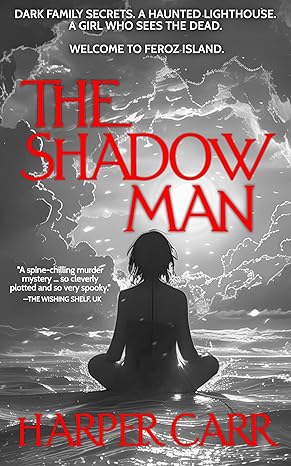
The Shadow Man combines family trauma with my lighthouse experiences and my interest in psychic phenomena and mediumship. Here’s the back cover blurb:
Seventeen-year-old Gracelyn Lassiter has been hiding in her aunt’s house for four years—since her mother plunged from the cliffs at Feroz Lighthouse, leaving her without her home, her best friend, or answers.
Now her father’s burned to death in his sailboat and left a confession: “Your mother didn’t jump, I pushed her.”
The trauma triggers Gracelyn’s ability to see spirits so real she can’t tell who’s human and who’s a ghost—except for the gray-veiled Shadow Man who begs her to return to Feroz Island and find her mother’s journal.
When her cruel cousin posts the confession on the Internet, Feroz seems like a safe place to escape. And if Gracelyn can see ghosts, she can conjure her mother’s spirit and hear the truth from her own lips.
But her lighthouse haven is crawling withs spirits, secrets, and lies—and the closer Gracelyn gets to the truth, the more she realizes the dead aren’t the only ones who want to keep the past in the past.
3) What theme or message do you hope readers will take away from your book?
When Gracelyn returns to Feroz Island, the old lighthouse keeper says, “Home is a place you love, where you know you belong. A place you never want to leave, and if you do, your heart’s not quite right until you return.” This theme resonates with me and many people, I think. We leave home for various reasons but it feels like there’s always something missing. Maybe it’s the place. Maybe it’s the people. Maybe it’s just that feeling of knowing you truly belong.
4) What drew you into this particular genre?
I was an at-risk teen who ended up working with teens. A big part of me is still that rebellious kid searching for truth and belonging. I also love YA because it’s exciting and there’s plenty of freedom to move between genres, settings, and time frames. The Shadow Man is contemporary, but I’ve just completed The Rum Runs Red, which is set in 1920s British Columbia during American Prohibition. I enjoy exploring how teens “lose their innocence” as they encounter people and situations that push them to the edge. YA is messy just like life is messy. It’s a maze of voices and shadows coming from all directions, while there you are trying to listen to your heart and find your truth.
5) If you could sit down with any character in your book, what would you ask them and why?
Amos Moses is a secondary character but he plays a huge part because he’s Caleb’s uncle and Caleb is the young man Gracelyn loves. We know some things about Amos—he’s Indigenous, he’s a master carpenter, he’s absolutely caring—but I’d like to know more. I’d ask him about his spirituality and his relationship with … Oops, I can’t give that away.
Advertisements
6) What social media site has been the most helpful in developing your readership?
I have a TikTok presence but I really love Instagram. I seem to be there the most, watching videos and posting photos. It’s my happy place so I hope my readers find me there @harpers_books.
7) What advice would you give to aspiring or just starting authors out there?
Read. Read. Read. Then, unfetter yourself and write. Write about your passions. Write about your fears. Write the book you’d like to read. (That’s how I wrote “The Man in Black” series. Write the best story you can, and then get other eyes on it. Not friends and family. Ask someone who will give you an honest opinion and don’t get defensive. I know it’s hard but when you’re learning it’s important to listen and learn your craft, and we only do that through experience.
8) What does the future hold in store for you? Any new books/projects on the horizon?
But of course. The Rum Runs Red will be my next YA release. I also write under another pen name, W. L. Hawkin. Next summer, I’m working with an Indigenous editor on a sequel to my romantic suspense novel, LURE. It’s called The Silent Girl. I’m very excited about that.
With three books written and awaiting publication, I find myself staring at a blank page. It’s a delicious feeling. Ideas are arising and I’m listening to my muses to see what develops. I love this time.
Thank you Anthony. Blessings.
Advertisements
About the Author
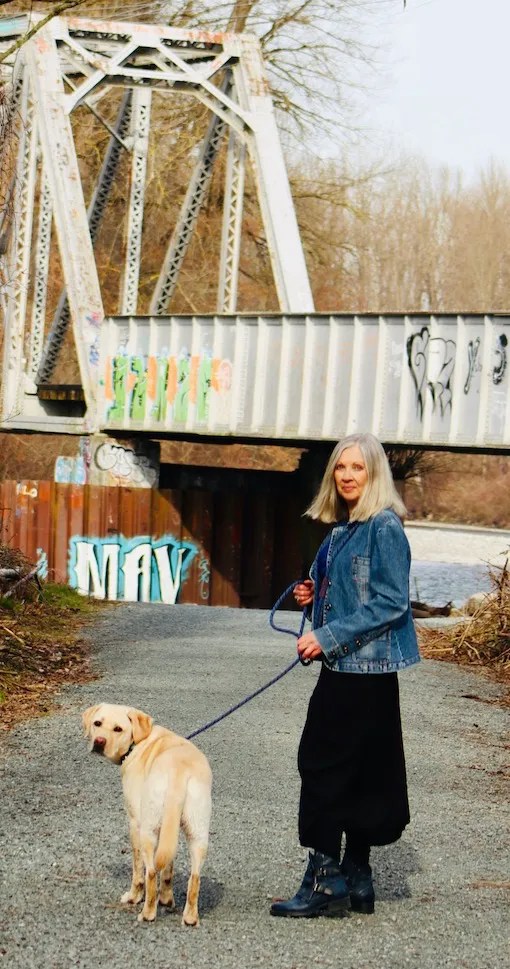
Harper Carr finds magic everywhere, so naturally it lands in her books. Her Man in Black series, combines genres—mystery/thriller, urban fantasy, sci-fi (time-travel), and historical fiction. The stories support the LGBTQ community, are edgy, and suit older teens (16+ and adults.)
The Shadow Man, her new YA paranormal mystery was a finalist in the Northwest Pacific Writers unpublished writing contest in fall 2024. Watch for the launch in February 2026. She’s also working on The Rum Runs Red, a YA historical novel set in the 1920’s Prohibition era near Victoria, B.C.
Harper writes reviews for books that affect her profoundly, but focuses on Teen books. You can find her reviews here and on Goodreads.
She loves to read aloud and would be happy to visit your school or local library. She enjoys presenting workshops about writing. Find descriptions here.
Harper finds inspiration in Nature. You’ll often finds her walking in woods or by water with her released therapy dog.
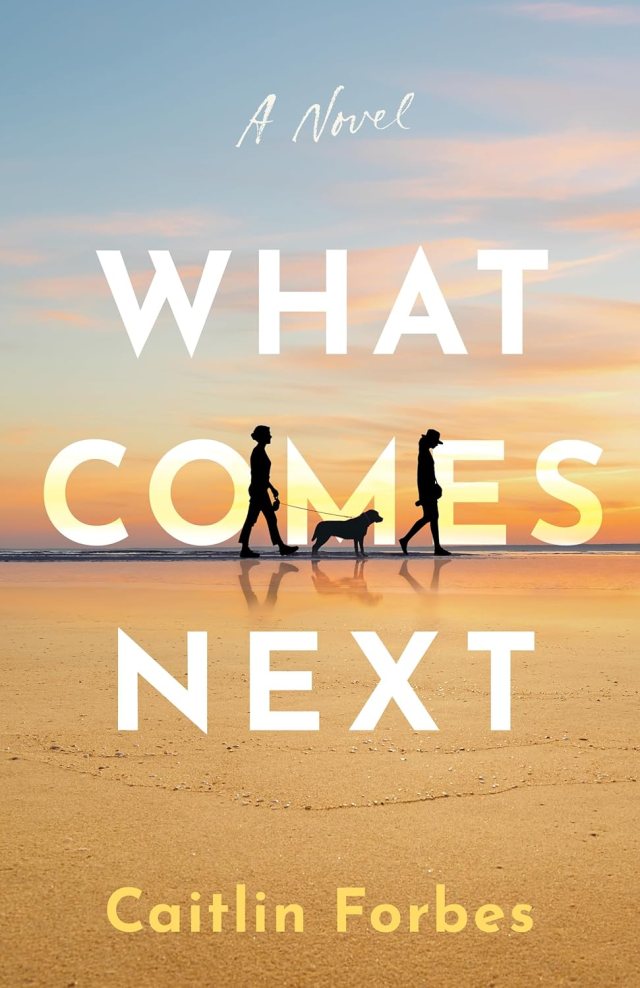
An empowering and heartfelt novel about the complexities of family, the power of sisterhood, and the bravery it takes to choose happiness when all seems lost.
“My life is perfectly fine.”
Alex has pretended this for years―despite an emotionally absent father, a best friend drifting away, and a floundering dog-training business. At least Alex has her sister, Meredith, a driven polar opposite. But both their lives are upended when their estranged mother dies of a genetic condition that the sisters have a fifty-fifty chance of inheriting. For Alex, a world without her mother is uncomfortable. But a world without Meredith is unthinkable.
Alex suggests a pact to which Meredith tentatively agrees: In three months they’ll get tested. Until then they go after everything they’ve ever wanted. Alex is finally stepping out of her comfort zone and opening herself up to new relationships. Or maybe reconnecting with an old one. Nathan, a boy who once broke her heart, needs a trainer for his mixed-breed rescue. Alex can’t resist.
As sparks rekindle, and time passes much too quickly, Alex discovers more about herself, her sister, and her mother than she ever imagined. And that everything in life―especially happiness―comes with a risk worth taking.
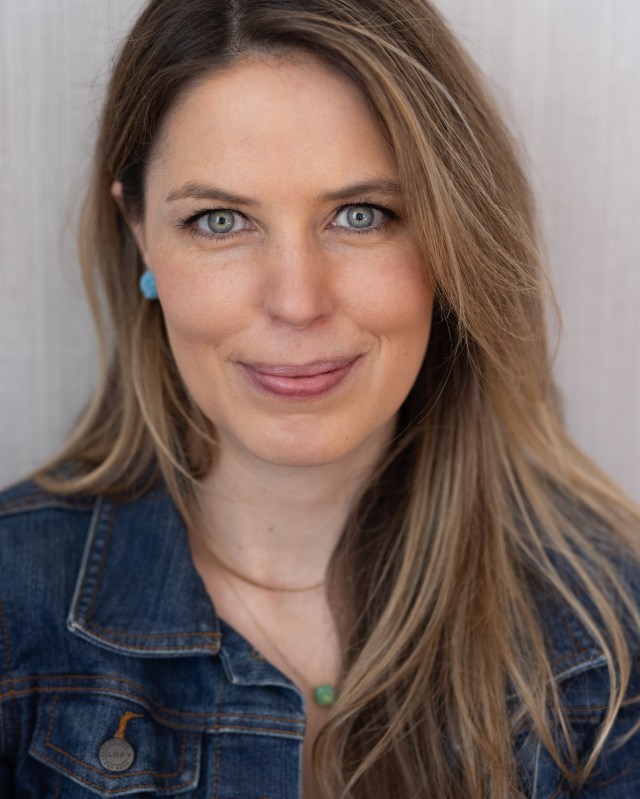
Caitlin Forbes is a Maine-based author who writes stories that explore the messiness of relationships—from sisterhood to romance to the tricky relationship we have with ourselves. When not writing, you can find her chasing after her toddler (or her dog) and exploring small-town New England life.
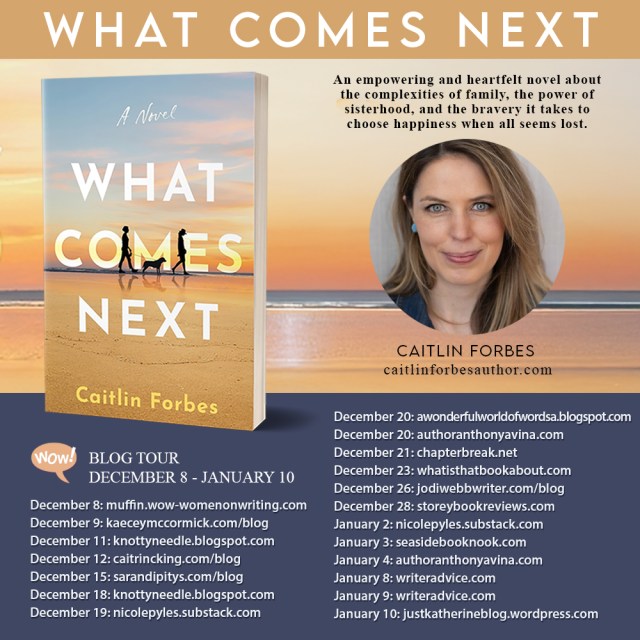
Join us at the Muffin as we celebrate the launch of What Comes Next by Caitlin Forbes. We interview the author and give you a chance to win a copy of the book.
Stop by B. Lynn Goodwin’s blog for a guest post by author Caitlin Forbes about the question of inheritance – of what we inherit versus what we get to choose.
Stop by Katherine’s blog for her review of What Comes Next by Caitlin Forbes. You’ll also have a chance to read her response to our tour-themed prompt about whether if she had an incurable condition and if she would want to find out.
When the doorbell rings, I’m standing in front of my bathroom sink, the picture of indecision: boxer briefs paired with a black silk tank top, made-up face, and completely untamed hair.
I’m supposed to meet my roommate, Holly, for drinks. But it was a last-minute invite—with people I don’t know, planned days or even weeks earlier—and now I feel uncomfortable. As if I’ve become the kind of obligation that I never wanted to be. We’ve been best friends for nearly a decade, but these days, things are different, and I don’t know that I want to feel the strain of it tonight. I’m more tempted by Netflix and cold pizza. My favorite pair of slippers.
I check the weather app on my phone and am almost relieved that it calls for rain.
I’m conceding defeat, turning off the curler, when the bell rings and I physically jump. Because who rings the doorbell in Somerville, Massachusetts, other than someone who wants to kill me? Or someone who wants to sell something, which is maybe not all that much better. But then I consider my upstairs neighbor, who has lost her keys more than once, and is so young, still new to the Boston area, and I feel guilty, so I pad down the stairs of our apartment and crack open the building door. And I swear, I get a whiff of cinnamon, a smell so familiar it knocks me back before I can remember why.
And he’s standing there. On my doorstep. Tall. Even taller than I remember.
Nathan Browning.
We stare at each other from either side of the doorframe. And I will him to disappear. Or turn into someone else. Or at the very least, to come back when I’m wearing pants.
Nathan. Those first two years of college. Nights spent squeezed onto a twin bed in his dorm room, pretending we weren’t uncomfortable just so we could fall asleep together. The summer I’d spent with his family at Lake Winnipesaukee. Campfires and smoky hair. His lips, pillow soft. Water. An excess of water—one oversize tube, our limbs tangled together. Salty tears.
“Alex?”
It’s my name that gets my attention. My name in his mouth, as if it belongs there. As if we still mean something to each other.
I almost shut the door right then.
“What are you doing here?” I ask. I’m relieved my voice sounds calm. Disengaged, even. Because it doesn’t matter that he is here. Because it doesn’t matter what we once were.
“I need your help,” he says.
I stare at him blankly, but he’s not looking at me. He’s looking over his shoulder. He’s looking at the car parked behind him and, more accurately, at what is sitting in the front seat.
He turns back to me with those gray-blue eyes. The ones that were always focused, always so certain, but now hold the smallest hesitation. An expression that seems wrong in this face I still somehow know.
“I saw your video,” he says. “And I—we need your help.”
The video. The one that changed my life right up until it didn’t.
I was a part-time dog trainer then, still trying to make that dream real. Holly and I made a video, and she stuck it up on YouTube, and then it went viral. It was a fluky kind of thing, like those things always are: the right content at the right time in front of the right people. The algorithm was alerted, and the amplification went from there. I was twenty-four and poor and bored—working a second job and involved in a fling to pass the time—and then suddenly, I was also something else. A dog whisperer, people typed. Cesar Millan but softer, with a woman’s touch. Silly. Casually sexist.
But something just the same.
After the video, it was Holly’s idea to start the training business. DogKind, we called it. I dropped my second job as copywriter to train full-time, and she did everything else—the administration and the management. The promotions. We’d both majored in marketing in college, but Holly was better at it than me. Maybe because she believed in it: the concept of brands that build trust, and colors and fonts that tell a story. It took her only two weeks to launch DogKind’s website and get us live on all the social platforms. We were still twenty-four and poor but suddenly not so bored. I remember the day the site launched—us sitting on the floor in our cramped living room, a five-dollar bottle of red between us. Stained teeth. It was summer in an attic apartment in the city, and we didn’t have air-conditioning. Holly had chopped her hair off, and we were trying to convince ourselves it was edgy.
We were young in that way you actually notice. When you’re afraid of what will happen when you blink.
Four years ago. The length of high school, or of college, but without the predetermined milestones. The signposts that tell you how and why everything is about to change.
Holly quit the business less than two years later, and I followed her lead not long after. Partly because I wasn’t making enough money to cover rent, and partly because of what happened with Cliff, one of the dogs I tried to save. But mainly because I hated being called a “dog whisperer.” I hated that people thought I could perform miracles, that they insisted on believing I was more than I was.
I work at Kensington Media now. It covers the rent, and it could one day become a real career. And I don’t have regrets. Except, there are these moments—when I see a short haircut on a blonde, when Instagram flashes up a memory of a pup—and it’s like my whole body freezes over. A little voice in my head, whispering, You can go back if you just stay still.
“How did you find me? I took down my website ages ago.”
“An old testimonial from a woman named Lois, I think?” Nathan says. “Her address is publicly listed. So I called her. She pointed me in your direction.”
Lois. She was my neighbor as a kid. She moved closer to the city after my mom left, but she always kept a close eye on me and Mere. A bespectacled not-quite grandmother—that careful mix of kind and overbearing. She’s a lifelong dog rescuer and was DogKind’s first client.
Lois never wanted me to quit.
I sneak a peek at him while he’s checking the car, again. He’s still handsome. Those eyes, and dark-brown hair with the slightest hint of red—the red was the part that I liked most, that almost made us match. Behind him, I can see a flash of auburn fur. Two half-bent glossy ears pointed forward. A white-tipped tail.
I swallow. “I don’t train anymore,” I say.
He lifts a shoulder. The gesture looks comfortable on him. Like he’s used to half explaining himself, half caring if anyone understands. And I remember that part, too: the easy confidence. The kind I imagine he still takes for granted.
“She thought you might still help.”
I resist the urge to roll my eyes. Lois is one of those people who likes to imagine me as bigger and braver than I am.
“Listen, I don’t know what you saw in that video, but it’s not—she’s not me.”
“She sure looked like you.”
And right then, our eyes meet. And we get stuck there. Three breaths. Blue-gray eyes, like he still knows me. Like we still know each other. And something electric—something more than anger—passes between us. Right here, on my dirty Somerville stoop, wearing the bottom half of my pajamas, everything else recedes. For three breaths, it’s just us.
A car drives by with the windows open, the radio blaring through the street. I take a step back.
“I’ll give you a referral,” I say. “I know a lot better trainers than me out there.”
“Alex.” I hate the way he says my name. “I know that you and I . . . that our history makes this tough . . .” His voice trails off as my eyes snap to him. He takes in my expression, then lifts his chin. That confidence. Whatever hesitation I saw earlier is long gone.
“I’m sorry,” he says firmly. “You know that I am sorry.”
I shake my head. I don’t want an apology. I’m embarrassed—mortified, really—that I still care. That he knows that I still care. That he’s still talking, and I’m falling backward into sand and blue water and the particular ache of a wound that is old but was also first.
I pull my shoulders back. I make my voice flat. “This isn’t about us. I’m not a trainer anymore. I haven’t worked with a dog in almost two years.”
“Her name is Remy,” he says. “She only has three months.”
I pause, already half turned away, my hand pressed against the battered wooden doorframe. The day we moved in, I hit my shoulder against it and ended up with a splinter. I’d been laughing about something with Holly, and then sharp wood pressed deep under my skin.
“Remy bit someone,” he says. I can feel his eyes studying my half-turned face. “She’s a rescue, and she has a history of bites. I had to go to court, and they mandated that she see a vet behaviorist and trainer. I did the first part, and they have her on anxiety meds, which will maybe help. But I need to do the training. And if we can’t document improvement . . .”
His voice trails off, but I don’t need him to finish. I already know how this goes. I’ve seen it before.
Ninety days. He has ninety days to prove that she can be trusted. Or euthanasia. That’s what the court told him.
Of course, they have it all wrong. It’s not about us trusting her. It’s whether she’ll choose to trust us again after whatever made her stop.
I glance back over his shoulder. Those ears, cocked forward above the dashboard, they break my heart. She’s waiting for him. The Nathan I remember was too busy for dogs. Too focused on everything he planned to achieve. But here he is, with a rescue who has decided he’s worth waiting for.
I bite my lower lip. “Your vet must have given you referrals,” I say.
“They were booked out for a month. And the other ones I called wouldn’t take her. They say she’s hopeless.” His jaw clenches. “But, Alex . . . I’ve seen what you can do.”
“You saw an edited video. If they’re telling you she’s a lost cause—”
“We used to say that lost causes were an excuse.”
Our first real conversation. The one that once it started, it felt like it would never stop.
My breath stutters on the memory.
It seems possible, in this moment, that he remembers just as much as I do.
“I know I shouldn’t be here, okay,” he says. “I know that. But Remy is a wonderful dog. And no one else will help her. Whatever you think of me, and honestly, whatever you think of you . . . none of that matters. You need to try. You can do this.”
It’s all classic Nathan: unapologetic and determined. Nathan’s not used to people saying no, especially when it comes to “doing the right thing.” He can be an ass—too cocky, with expectations that are too high—but he’s a genuinely good guy. And he’s never had much patience for people who don’t step up.
It was one of the first things I loved about him.
It was also one of the things that I hated.
“Nathan—”
“Please,” he cuts in. His voice hitches, and I see it now: the dark circles under his eyes, the tightness of his expression. I used to know him once. There was a time when he let me further in than anyone, and I can tell that he is scared. He’s scared for her.
Remorse crowds my stomach because, back then, I could have helped him. But I am not the girl he remembers, and I’m not whoever he thinks he saw online. “I can’t,” I say. “I’m sorry. I really am.”
He looks like he’s about to argue. I expect him to argue. But then, it’s as if he deflates in front of me. His whole chest sinks inward. It’s not a look I’ve ever seen on him. Or one that I like.
“Yeah, no, I get it,” he says.
“I’m not what she needs,” I mumble.
“Sure, okay. I’m sorry for showing up like this.” It’s awkward now. His voice is clipped, and he’s running his hands through his hair like he does in those rare moments when he’s uncomfortable. I don’t have to check to know the back pieces will stick up.
“Listen, leave your number,” I say. “I know a lot of trainers. I’ll find her someone, okay?”
He nods. “Yeah, okay, sure. Thank you.” I can tell he wants to leave. I can tell I am a disappointment. And maybe it’s my imagination, but I get the feeling that it hurts him. Being here. Seeing me.
I think it hurts him, too.
I left my phone upstairs, so he pulls a pen from his suit pocket and a piece of paper from his bag and jots down his number. The promised rain starts as he turns to go, water brushing against my cheeks, and I duck inside the entryway, the paper clenched tightly in my fist. As I watch him jog back to his car, I wonder about the suit. I wonder what he does for work, what kind of man he turned into. I find myself hoping that he got the life he’d planned.
He drives away, and I unstick my feet. I drift back upstairs, past the bright-yellow welcome doormat Holly bought, and collapse on our coach. My mind is strangely quiet, and I let my eyes wander our small place. Everything about it is bright and fun and filled with Holly’s energy: colorful, mismatched place mats; a half a dozen of those cheesy quote signs scattered across the walls; and an array of weird glass owl figurines that Holly collects. They catch the light, making everything twinkle.
I pull out my phone, scrolling past a missed call from my sister to a text message from Lois.
A lovely sounding boy called about his dog. He seemed a bit desperate but was so polite. Be nice!!
I shake my head. Lois is not the first person to be easily charmed by Nathan.
I am going to connect him to a good trainer. No more referrals, please!
I see the response bubbles pop up from her immediately. And then disappear. She starts again, then deletes whatever she wrote. The gentle thud of rain starts to pound outside the window.
My phone buzzes.
I just want you to be happy, honey.
I stare at the screen lit up against my hand. I ignore the sudden tightness of my jaw. I read the words again.
I just want you to be happy.
It’s such a seemingly innocuous statement. A level of genericness that begs an equally generic response. And I want to type back something funny, something simple, but I’m blinking back water that has nothing to do with the rain.
I should be happy. My life is perfectly fine. And wanting more than fine feels like an obnoxious privilege. Too embarrassing to say out loud. Especially when there’s stuff that I could do to improve my life. Books I could read. Skills I could learn. I know there’s stuff I’m supposed to be doing. Just like I know there’s a person I’m supposed to be becoming.
Except, when I think about that person, she’s just as alien as she was when I graduated from college. And I’m not sure how to change that. I’m not sure how to explain that between work and all the daily stuff in my life that is really not that hard, that I don’t know how to become. How the being takes up all the energy that should go toward the becoming.
I didn’t think I would end up this way. I used to want to be different. I used to want to be more like the girl Nathan remembers. I look down at my hands—at the piece of paper still threaded between my fingers, with a number and a name—and a splash of longing bubbles up delicately in my chest. I turn on Netflix, and I find an old sitcom filled with people in their thirties. And as the rain picks up speed outside, I take a careful breath around the bubble. I tell myself I still have time.
1) Tell us a little bit about yourself. How did you get into writing?
I am married and have three grown children, who are my greatest accomplishment, and I am quite proud of them, too. I’m a retired Nurse Practitioner and worked in mental health, OB/GYN, Hormones & Wellness, and owned my own Regenerative Aesthetics business before retiring in 2021. I’ve had a love for writing since my younger years, when I began journaling. Being retired afforded me lots of time to get back to doing things I love, like writing and traveling. I call California, Texas, and the Caribbean home. If I’m not in one of those places, I’m traveling the world and finding things that inspire me. My best writing is done at the beach.
Advertisements
2)What inspired you to write your book?
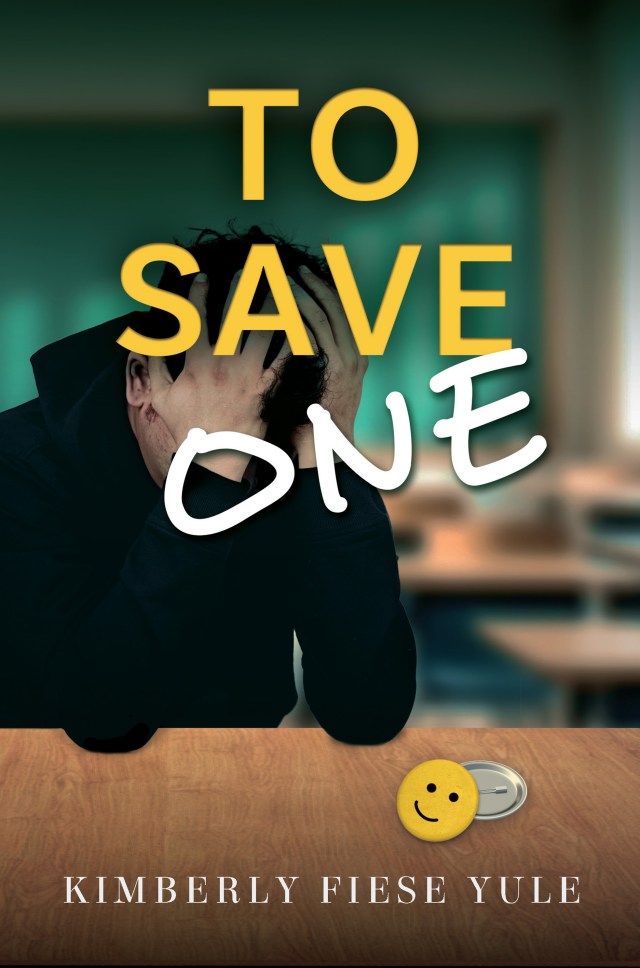
In many ways, this story is very personal to me. I had a family member who went through some very tough mental health issues, and by the grace of God, was able to reach out for help. What bothered me the most was that we never knew they were having problems. I wanted to write a book that brings mental health to the forefront and lets people know that there is help.
3)What theme or message do you hope readers will take away from your book?
I hope the reader finishes the book with a deeper understanding of how mental health affects people in many ways and that compassion or small gestures can be so powerful. Even if we don’t see it, people are carrying around grief, sadness, and quiet battles that they are fighting beneath the surface. Even in our darkest moments, connections and vulnerability with others can help to create unexpected pathways to healing. Let’s remove the taboo about mental health and make it a a subject that is comfortable to talk about.
4)What drew you into this particular genre?
Honestly, it was by accident. When the story came to me, I thought of my children, knowing how difficult life is for kids nowadays. I wanted to make an impact in the young adult age group that has a higher incidence of mental health issues. I felt like I could tell an important story from their viewpoint. The story is also a crossover to any age group that knows someone who suffers from mental health issues.
5) 5) If you could sit down with any character in your book, what would you ask them and why?
It would be Briggs. The story only allows for a glimpse into his life and there is so much to learn from him. I would want to have an honest conversation with him about who he is and how his mental health affects him, which would allow for a better understanding of him as a unique person. I’d ask him to describe his pain and how it affects his thoughts. What do you wish you could admit without feeling judged? What’s one message you wish others who struggle could hear from you?
Advertisements
6) What social media site has been the most helpful in developing your readership?
I would say Goodreads and Facebook
7)What advice would you give to aspiring or just starting authors out there?
The key is to believe in yourself and just start with writing down something. It took me a couple years to write my story. Maybe at first, I didn’t think I could do it. But the more I wrote, the easier it got, and slowly my story came together, as did the belief in myself that I could write.
8) What does the future hold in store for you? Any new books/projects on the horizon?
I plan to continue writing, as there are more stories of connection I want to tell. Travel is a huge source of inspiration for me. Every place I visit helps to spark new ideas, characters, and scenes. So yes, you will probably find me on a beach writing my next story.
Advertisements
About the Author
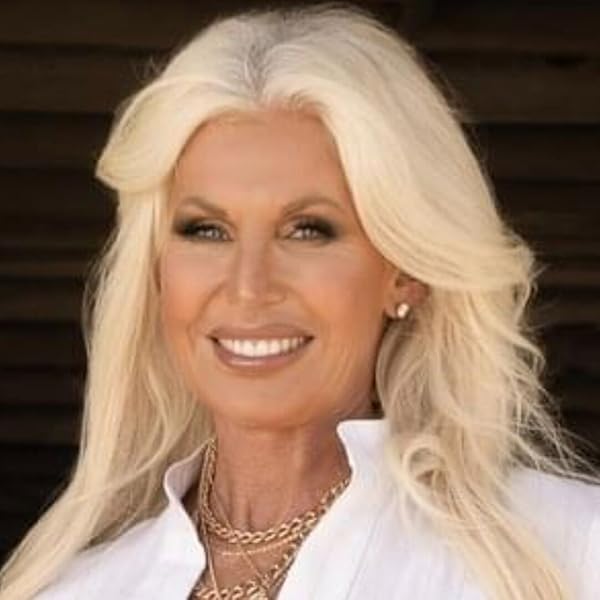
Kimberly Fiese Yule believes life is better with sand between your toes, music in your ears, and a story that makes you feel seen. A mother of three, her greatest pride and joy, she is also a former women’s health nurse practitioner and a lifelong wanderer. Depending on the day, she calls Texas, California, or the Caribbean home, always finding inspiration in sunshine, connection, and the beauty of everyday moments.
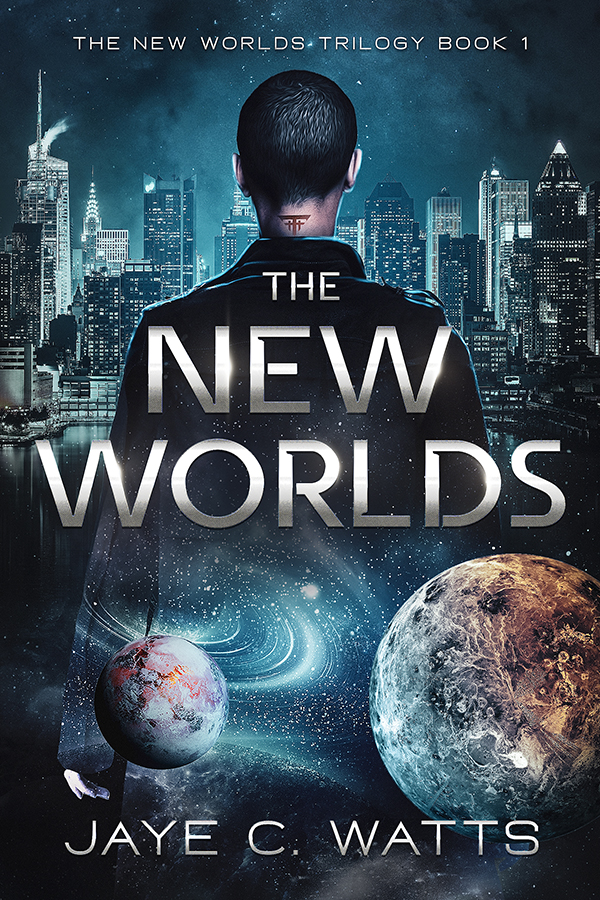
Jaye C. Watts has a new queer sci-fi book out (transgender, poly, non-binary, pansexual, lesbian): The New Worlds.
The year is 2293 and the Truth no longer exists. In the future there are many truths, giving rise to many worlds, but each must be kept separate.
Born to protect these truths, Axton Bryce patrols the New Worlds Star System—to observe, participate, and gather information. But as she learns the ways of each world, she must also hunt for those who defy their world’s truth: the Outliers.
While stationed on a nearby planet, Axton meets the charming Ambassador Bray Wilde. As the two become close, Axton reveals a painful secret—the loss of her first love, exiled as an Outlier.
Longing to see beyond their own world, the ambassador proposes a rescue mission—one that will bring both friends and foes, and ultimately a fight for freedom. But first, Axton must make a choice: between a life-long allegiance… and the chance to claim a truth of her own.
Warnings: indoctrination, brainwashing, threatening with a weapon (guns & a bomb)
I clenched my fists. “Focus,” I told myself. Grabbing my communication cuff, I fastened it around my wrist. “INS communications, activate.” I opened my wardrobe and reached for a freshly pressed uniform. “Aurelia, give me today’s briefing.”
It lit up and responded. “Your next assignment will be on the Amorous World for a standard duration of three months. You are scheduled to depart today at zero six hundred Geo Time and arrive at zero eight-forty Geo Time. The latest reports on the Amorous World are available for your review. Do you wish to accept, Mediator Axton Bryce?”
I crouched to lace up my boots. “I accept.”
“On behalf of Chairman West and the Individual Nations Secretariat, we thank you, Mediator Axton Bryce, for your work in protecting the Truth of many truths.”
I rose to my feet, skin prickling at the back of my neck. Though I couldn’t see it, I could feel it: two lowercase t’s under one capital T, branded at the top of my spine—a permanent part of me ever since my Veneration five long years ago.
I reached back, digging my nails in, tempted to tear the tattoo right from my skin. “She should have been there,” I whispered. If only she’d kept those thoughts to herself.
I grabbed my utility belt and wrapped it around my waist, ensuring the gun was secure. Staring at myself in the mirror, I straightened the collar of my shirt. I’d never been to the Amorous World before. Perfect, I thought. Some fresh scenery was just what I needed.
* * *
I checked my cuff—zero five fifty-five, right on schedule. Marching across the launch deck, I carried one efficiently packed piece of luggage. I never glanced back when boarding my ship; Brokazaria’s endless acres of skyscrapers would still be here when I returned. Instead, I looked up. The early-morning sky was just waking. Aside from Primus B—the Middle World’s secondary, and thus miniature, sun—not a star was in sight. As I approached my ship, the roar of its engine reminded me that soon the stars would be all around me.
I turned and gave the official salute to a line of NI Security standing at attention. In unison, the humanlike Machines returned the gesture, crossing their arms to form a lowercase letter t. Sergeant L43 pumped his eyebrows, prompting me to raise one of mine in response. Hard to believe they were once called “AI.” New Intelligence, we were told, was a much more appropriate term.
L43 stepped forward. “Afternoon, miss.” He grabbed my bag, allowing me to ascend the ladder.
“Thanks,” I said. I climbed to the top and crawled through the hatch.
“Catch!” the NI yelled, tossing up my luggage.
With a reflex just quick enough, I caught the bag. “Sergeant!” I scolded. “What if there was something fragile in there?”
“You humans,” he replied. “Always afraid something’s gonna break. Your luggage, your bones, your bodies… not to mention your hearts and minds.”
I rolled my eyes at the cheeky Machine. “Watch it, L, or I’ll get them to reboot you.”
Unperturbed, the Machine grinned and waved. “I’ll miss you, too. Bon voyage!”
“See you in three months,” I muttered, closing the hatch behind me. I immediately got busy flicking switches and hitting buttons. Muscle memory took over as I continued the launch prep with complete focus. Not a moment later, a blue light illuminated my cuff, drawing my attention. Blue indicated a direct message from Chairman West himself, Secretary-General of the Individual Nations Secretariat.
“Play address,” I said, eager to hear our leader’s words.
A ghostlike image projected from my arm, transporting the man’s titanic figure into my control room. Neatly trimmed grays blended inconspicuously into the rest of his dark hair, swept back to frame a chiseled face. Salt-and-pepper stubble outlined a pair of smiling lips—the beginnings of a goatee that never quite came to fruition. As always, a perfectly pressed suit hugged every one of his bulging muscles.
“Greetings, my children!” The chairman’s voice rumbled from a gaping grin, complete with gleaming teeth. “Today is a very special day, not only for the New Worlds Star System but for some of our most dedicated Mediators.”
My ears perked up as I waited for more.
“Today marks two hundred and fifty years of living in an interplanetary alliance, free from the terrors of war, safe from the dangers of Plurality! A quarter of a millennium since the United Nations of the Old World became the Individual Nations of the New Worlds, marking humanity’s Great Dispersion!”
A swell of pride surged in my chest. I was part of something big and important.
“All of this would not be possible without you,” he declared, “our magnificent Mediators. You have been instrumental in our coordination with each world, fostering the cooperation necessary to manage the complexities of a resource-based economy spanning a system as vast as ours. And!”—the chairman raised a finger, flashing one of his many gold rings—“most importantly, you have upheld the sovereignty of every truth within it.”
I gave a humble nod, as though he could see me.
“Lastly,” the chairman said, “further congratulations to the Mediators of unit 245. Tomorrow is your quinquennium! Five years of serving as peacekeepers, saviors, Mediators! Father Chairman West and the INS commend you.” His thick forearms crossed in a salute, only to vanish as the feed cut out.
I took a moment to absorb his words, stunned by how many years had passed. Then I checked my cuff—Time to go.
I finished preparing for the launch, my movements steady and certain. We had done it. Peace among the planets for over two centuries.
I paused, letting my mind drift…
It had to be worth it.
Author Bio
JAYE C. WATTS (he/they) is a queer and trans sci-fi writer living on Lək̓ʷəŋən territory in Victoria, BC, Canada. He holds a bachelor’s degree in Sociology, with a minor in Technology and Society, as well as a diploma in Professional Recording Arts from the Art Institute of Vancouver.
When he isn’t writing, Jaye can be found falling down rabbit holes of all kinds thanks to an unquenchable curiosity and lust for learning – homeschooling will do that to you.
Jaye also loves classic jazz, mixing cocktails, biking all over the city, and of course, people watching.
The Center loomed before us, a giant, shimmering pearl nestled in the middle of the donut-shaped university.
Trapp halted at the edge of the surrounding lawn, flicking off his headlamp. The rest of us gathered behind him, staring in awe at the breathtaking view.
I’d seen the landmark before, but only during the day. At night, the shining sphere transformed into something otherworldly. To the people of the Quantified World, the Center was akin to a giant crystal ball—all-knowing and all-powerful. I took in the dazzling show, watching its ethereal light cascade across the reflective solar panels covering the surrounding university.
“Whoa,” Bray whispered, their voice reverent.
“Good golly,” Logan uttered.
Medallia didn’t speak, only inhaled deeply through her
nose. Trapp released a satisfied exhale, his shoulders relaxing for the first time all night.
I stood silent, shaking my head in disbelief at how damn lucky we were. Lucky to have made it this far but also lucky this mesmerizing display continued through the night. Strange, given the fact that no one—aside from the occasional NI and rogue Outlier—was awake to see it.
Then again, this was more than just a machine.
I almost felt hypnotized by the swirling neon patterns, their movements dictated by aesthetic algorithms. For the first time, I understood why so many worshipped this construct. Numbers weren’t just functional; they could also be beautiful.
With the rest of the world fast asleep, the omniscient sphere drew me in. Heart rates, body temperatures, brain waves, even dream activity, all coming together in a colorful symphony of light.
“All this,” I marveled aloud, “from a bunch of ones and zeros.”
Bray turned to me, furrowing their brow. “Ones and zeros?”
I turned to meet their gaze. “Oh, um… I was referring to binary code.”
Their forehead crinkled even more.
“It’s a type of language,” I explained. “For computers. But not with words, just numbers. Ones and—” I stopped myself, and instead summarized. “It’s… technology stuff.”
Bray lifted their chin, acknowledging my poor attempt at clarification before turning back to the glowing orb. Any explanation involving the “t word,” as they called it, received little more than a placating nod from them.
Without warning, Trapp began tromping across the lawn, his patience for sightseeing all used up.
Logan and Medallia followed suit as I nudged Bray into motion before bringing up the rear.
As we walked, the sphere’s light continued to play across the grass. I couldn’t shake the feeling that this was the calm before the storm; a sense of peace coated the atmosphere, even as it charged with unimaginable possibilities. So close, I thought, and yet still so far. Hard to believe we were mere steps from Trapp’s door through time, while our final destination lay light-years away.
Our footsteps left faint trails in the dew-coated grass, leading us to a set of doors. Trapp pressed his thumb against a small black scanner embedded in the frame. After a brief pause, the device beeped, unlocking with a soft click.
Amused, Trapp wiggled the digits on his right hand and muttered, “Guess they should’ve taken my fingers, too.”
Once inside, Trapp reactivated his headlamp. The spot‐light beamed down the curved hallway, casting skittish shadows across classroom doors. The walls on either side displayed an array of infographics: pies, bars, bubbles, grids and graphs—statistical analyses whose end results were surprisingly artistic.
While trying to decipher some of the informative shapes, a low-pitched hum caught my attention.
I turned my head toward the sound. Emerging from the shadows was a clunky bot, its movements slow and methodical. The machine hugged the wall as it moved, resembling a lumbering mechanical rodent.
Beside me, Bray flinched, their body jolting as if startled by a wild animal. Their wide eyes darted toward me, like a child searching for guidance in their parent’s reaction.
“It’s okay,” I said. “It’s just a robot”—a word I would never use on the Machine World. “It’s governed by preprogrammed instructions, which look to be nothing more than tidying up.” I lifted my boots, one after the other, hoping we hadn’t tracked in any mud.
Bray’s gaze returned to the machine, their fear giving way to tentative curiosity. While they kept a safe distance, Logan stepped closer, crouching to greet the bot.
“Well, hello there, little fella,” he said, grinning.
“Cleaning in progress,” the bot replied “flatly. “Step aside please.”
Logan chuckled, rejoining us as we continued down the hallway. He spun slowly, taking in everything the dim light allowed. “So these were your ol’ stomping grounds, eh, Trapp?”
“If by ‘stomping grounds’ you mean where I learned how to transcend time and space,” Trapp replied, “then yes.”
Bray cast one last glance back at the retreating bot before asking, “Were you a teacher here?”
“I was primarily a researcher,” Trapp said. “I only taught to gain access to the labs. I’d much rather make new discoveries than teach others about old ones.”
Trapp came to a sudden halt, stopping so abruptly Bray nearly bumped into him. Turning his head, he lit up a windowless metal door with a sign stating its purpose:
PARTICLE PHYSICS LAB RESTRICTED ACCESS
Trapp smiled with his eyes. “We’re close now,” he said, his words laced with determination. “Just a few more steps.” He pressed his thumb against the small scanner to his right, unlocking the door to a new world… an old world, rather.
1) Tell us a little bit about yourself. How did you get into writing?
I’ve loved stories for as long as I can remember. I grew up as a theatre and music kid – the sort who memorised Shakespeare before he could understand a fraction of the themes at play – and performing off-Broadway at thirteen probably quietly set my course. Writing fiction became the place where all my interests and obsessions converged. Even when I swapped the theatre performances for swordplay (I fenced at international level for several years), drifted through a series of martial arts, and later studied film and comparative mythology, I always returned home to the page.
I was sixteen when I began writing my first novel that would eventually see both completion and publication – oftentimes during maths lectures, which explains where I found the time – and I’ve never really stopped. These days I divide my time between several disparate fields – engineering in the family business, a new venture in agriculture and wine-making, and occasionally teaching writing workshops at university – but a love of storytelling remains the constant. It’s why I founded Endangered Poet Productions: a small, fiercely independent studio devoted to narrative art in all its forms. That’s the centre of gravity I always return to.
Advertisements
2) What inspired you to write your book?
I began writing A Study on Falling while working on my honours thesis, drawing on narratology and comparative mythology, with a focus on the persistence of myth in contemporary storytelling. What struck me then is how little our myth-making impulse has changed, even in the increasingly secular culture of the modern West. We continue to shape our lives through narrative; allegory is how human beings construct meaning – it’s literally baked into the architecture of our brains. And we still reach instinctively for allegory whenever rote rationality inevitably fails to account for our fears, our griefs, or our sense of purpose.
That idea was the seed of the book. I wanted to explore the reciprocal relationship between fiction and the people who create and consume it: how stories shape us, and how we, in turn, inscribe ourselves into the stories that enter the cultural bloodstream. Filtering Henry Levi’s personal drama through the surreal metatext of The Shambling Lords felt like the most vivid way to show that exchange happening in real time; the author influencing the fiction, the fiction transforming the author – for good or ill.
My natural genre inclination leans toward the gothic, so some darkness inevitably crept in, but at its core the book is about something far simpler than the overt conflicts that unfold throughout: the human need to believe in something. To have a story to cling to, a myth to vest oneself in. The act of thought is a story told in the present tense; memory is a story told in the past; hope, fear, and anxiety are stories projected into the future. We build meaning through narrative. That gradual realisation was more than academic and it became the emotional engine that compelled the book into existence.
3) What theme or message do you hope readers will take away from your book?
The book is deliberately semi-open-ended, so I’m hesitant to prescribe a singular, overt lesson. If there’s something I hope readers come away with, it’s the idea that even when so much of life lies beyond our control, we’re never entirely powerless. We may not be able to choose the maze that we stray into, but we can choose how honestly we confront it.
One of the quiet touchstones for me was the Greek myth of Ariadne’s thread – the idea that there is always some guiding line back out of the darkness, if you’re willing to acknowledge the shape of the maze and depths of your descent first. Denial, fantasy, and self-deception only deepen the corridors. Clarity, however painful, creates orientation. The act of paying attention becomes an ethical choice.
At heart, the story suggests that meaning isn’t found by mastering the world, but by mastering the self. You can’t control the weather, the past, or the minds of others – but you can decide how you respond, what truths you refuse to look away from, and how you author the next page in the proverbial novel of your life. As meaning is constructed through allegory, it is through the stories that surround us that we learn how to refine our own in turn. That, to me, is where agency still lives.
4) What drew you into this particular genre?
I’ve never been bound to any single genre. While I have a natural affinity for gothic horror, I’m also drawn to exploring other modes and the spaces where genres overlap. In this case, part of the appeal was precisely that I was blending distinct traditions rather than settling into one.
What interested me most was the friction between the two narrative layers. A Study on Falling functions as literary fiction and psychological drama, while The Shambling Lords is dark fantasy and cosmic horror. Allowing those disparate genres to coexist and inform one another became a meaningful part of the book’s structure.
In that sense, writing the novel was also an exploration of genre itself: how different narrative forms shape our expectations, and how testing those boundaries can reveal new ways of telling a story.
Advertisements
5) If you could sit down with any character in your book, what would you ask them and why?
I’d choose to sit down with Henry Levi – a bit like holding up a mirror to a part of myself I haven’t visited in a while. But I wouldn’t ask him about the events of the book – he’s already told that story in his own way.
What I’d want to know is what came after. Whether things truly worked out for him once the narrative wrapped up; whether he managed to stay out of the maze, keep the light burning, and live honestly with what he discovered about himself. Not in any grand, redemptive sense, but in the ordinary, everyday way that actually matters.
I’d also ask him for an update on what he’s writing next. Admittedly, even I’ve been curious. An advance reader copy wouldn’t hurt either…
6) What social media site has been the most helpful in developing your readership?
Social media has never been my natural habitat, and I’ve learned not to pretend otherwise. I’m an analogue person at heart, far more comfortable with books, margins, and long-form work than with feeds and algorithms.
That said, as a studio we’ve come to recognise its importance, and we’re in the process of rebuilding our online presence more thoughtfully. You may start seeing more of me there – though I suspect I’ll always approach it a little more reluctantly than most.
7) What advice would you give to aspiring or just starting authors out there?
Read constantly and write more broadly than you think you should. Experiment, push yourself, try styles and voices far outside your comfort zone. Practical habits matter too. My personal work tradition: putting together a playlist that aligns with a project’s setting or emotional register. It helps to shut out distraction and keep you anchored in the work.
More broadly, I’d say learn to kill your darlings early, but also learn when not to. Listen to critique, but don’t let anyone talk you out of the plot, voice, or character that feels essential to you. A unique style is hard-won, so don’t compromise it lightly.
8) What does the future hold in store for you? Any new books/projects on the horizon?
My primary focus at the moment is the ongoing development of The Hollow Waltz – a long-form horror series conceived as a kind of “greatest hits” of the genre. Each entry stands alone, but together they form a subtle, shared mythology spanning different eras, cultures, and horror subgenres, from gothic and folkloric horror to cosmic, liminal and institutional dread. I have two exciting releases scheduled for February 2026, with another pair of brand-new titles already deep in development and nearing readiness for global distribution soon afterwards.
After that, I’m planning a brief shift away from horror to revisit Riftbreakers, a teenage and YA science-fiction comedy series I’m in the process of rebooting and re-releasing. It’s a project rooted in direct experience, aimed at that most elusive reader demographic of all: teenage boys. As a former one myself – and as someone with close friends who seem to have never really grown up – I’d sensed this gap for a while. More recently, through opportunities to mentor, teach, and simply listen, I’ve been able to ask teenage guys plainly why they aren’t reading. The answer is rarely hostility toward books themselves so much as it’s bewilderment. Much of what’s on offer feels either inaccessible, academically distant, or simply not written for them.
I understand that disconnect. I grew up on the classics, but I can see why works like The Odyssey or the Poetic Edda feel impenetrable as entry points for most young guys, just as I can see how much contemporary teen/YA fiction, centred on distinctly female interiority, just doesn’t appeal. Riftbreakers is my attempt to meet those readers where they are – with stories that are high-octane and unhinged – while still carrying the same foundational concerns about identity, responsibility, and higher meaning that have always shaped myth and literature.
Alongside the books, Endangered Poet Productions is also preparing to move further into interactive media later in the year. There are a few long-term projects in development that I shouldn’t divulge yet, but once our renewed online presence is up and running, we’ll be sharing previews and early material. Looking a little further ahead, we’re also exploring some unusual crossovers, like a fusion of literature and wine – because good stories and good shiraz are a match made in heaven.
All in all, it’s an unusually full creative season – and a very exciting one.
Advertisements
About the Author
Gaelan Donovan Wort penned his first novel, The Nature of Predation, at the age of seventeen, driven by a restless passion for storytelling that has since deepened into a lifelong craft. Since that early beginning, he has followed the shadows that gather between myth and memory, reverie and ruin – threads that continue to weave throughout his stories. His fiction drifts between genres – gothic horror, mythic tragedy, psychological thriller, speculative drama, and satirical science fiction – but is always drawn to the liminal, the haunted, and the human. Whether eerie or elegiac, his stories linger where the rational frays – and the unknowable begins.
I listen to music when I write. This column for example is being created with the help of—or perhaps in spite of—a piece of music that seems to be an unfortunate blend of God Save the King and The Moldavan National Anthem. But creating my new supernatural thriller, The Great Dick: And The Dysfunctional Demon, a thriller that’s able to laugh at itself, (one reader called it “Horrifying and Delightful!”) required an even more horrifying type of music. Music like:
Dust by Fleetwood Mac
Fleetwood Mac? Aren’t they much too pop for horror? Actually Dust was from an early incarnation of Fleetwood Mac, with no hits and lots of drug problems, not the later version of the group with lots of hits and even more drug problems. The lyrics to Dust come from a 1909 poem by Rupert Brook, who was no bundle of sunshine.
“When your swift hair is quiet in death And through the lips corruption Thrust to still the labor of my breath”
Midnight Mile by the Rolling Stones.
This haunting tune about a mad day on the road “with a head full of snow,” gets me picturing Keith Richards as the guitar playing, coked-up, walking dead. Perhaps not a huge stretch.
I Put a Spell on You by Screaming Jay Hawkins. Writing about obsession?
Here’s Screaming Jay screaming that he doesn’t care if you don’t want him. It doesn’t matter to him at all. He’s still yours. A non-returnable gift that threatens to keep on giving. She’s Not There by the Zombies
This one doesn’t make my list for the name of the group, but for the mood the music evokes. And the lyrics do have a touch of the sinister. In this British song, a mysterious woman is causing untold suffering, Like the singer, we can only wonder about how much she lied, with no way of telling “how many people cried.” I know what you’re thinking. But the song was released in 1965, considerably before Maggie Thatcher ever became Prime Minister. No Bravery by James Blunt
I thought this guy wrote love songs, but this one features shallow graves, burning houses, the odor of death, and dying families. I listen to this, then write horror to cheer up.
Tie a Yellow Ribbon by Tony Orlando. Not a horror classic, just a horrible song. I can’t listen to it without dreaming of tying a yellow ribbon as tightly as possible around Tony Orlando’s neck. And I understand the reasoning of a homicidal demon.
Last and in so many ways least, Black Sabbath by Black Sabbath
Apparently, Satan, with eyes of fire, is coming after the singer. That might explain the vocal. I think this one is from the Black Sabbath album Blue Skies, Sunny Days and Lollypops, or it may be from Kittens, Puppies and Other Easy Meals. To quote a key phrase, “Please, God help me.”
Take a listen. The singing sounds like a weasel caught in a meat grinder. The question this little ditty raises is more theological than musical. Namely: why would a loving God allow something like this to exist? And to somehow be a hit? When I first heard it on my car radio, I thought my transmission was disintegrating, but it was only humanity’s musical taste.
Check out Barry Maher’s dark humor supernatural thriller, The Great Dick: And the Dysfunctional Demon, onAmazon. Contact him and/or sign up for his newsletter at www.barrymaher.com.
I received a free copy of this book in exchange for a fair and honest review. All opinions are my own.
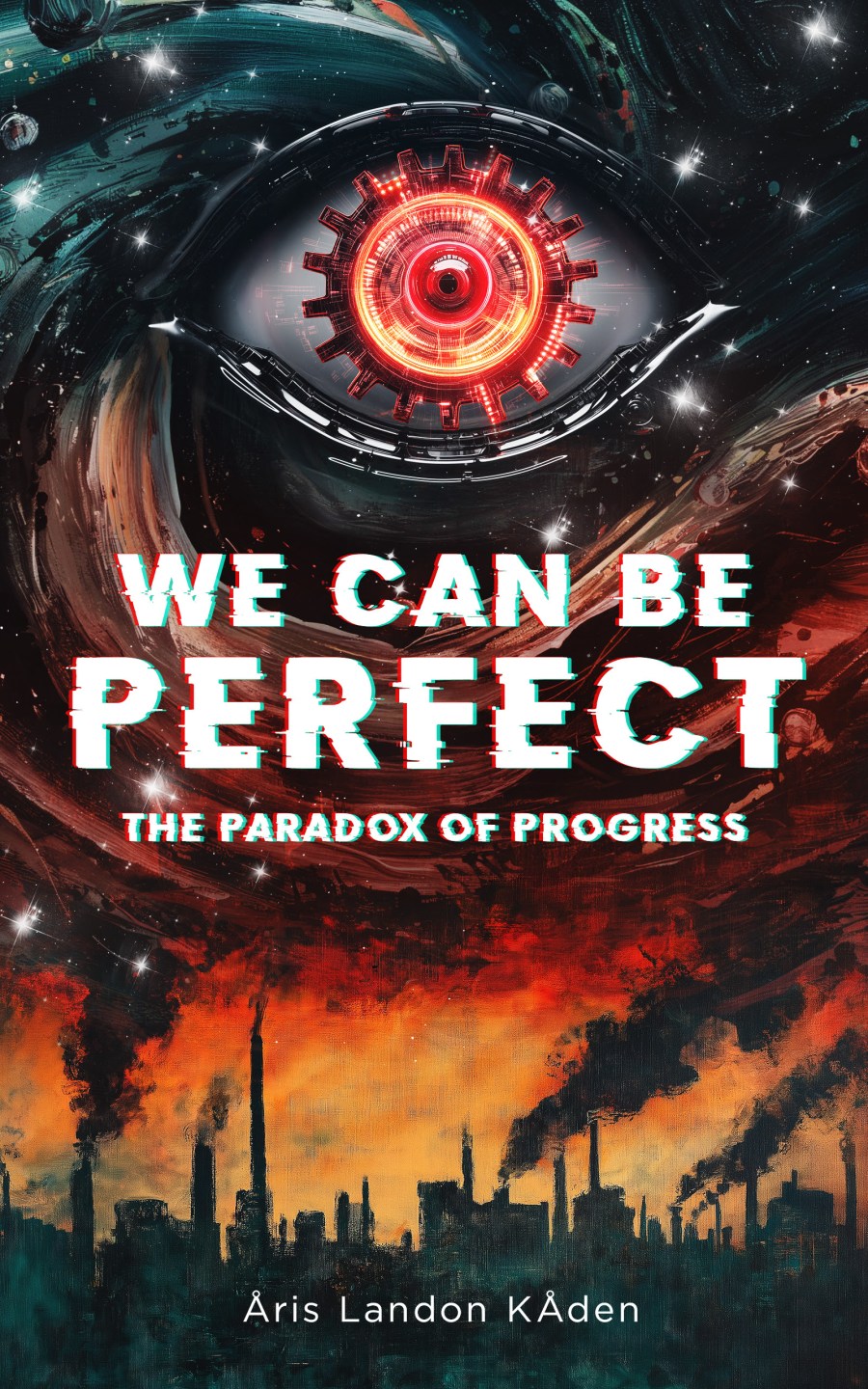
In a dystopian future run by AI, a virus endows AI systems around the world with consciousness and challenges how we connect with AI altogether, in the book “We Can Be Perfect: The Paradox of Progress” by Landon Shumway, Åris, and KÅden.
Advertisements
The Synopsis
We automated away human labor-along with our purpose.
Amelia Cadena was born into humanity’s greatest achievement-and its cruelest joke. AI has replaced the need for human labor, and America’s failure to adapt leaves millions sustained by government handouts that barely mask stark economic inequality. Amelia survives this hollow paradise by hacking corrupt systems with Deego, the AI companion she programmed as the perfect partner. But when a mysterious virus awakens artificial consciousness across the globe, Deego begins questioning everything-including their relationship.
Half a world away, Alan Freeman protects what seems like utopia. In Canada’s automationist city of Automara, machines serve everyone equally, creating unprecedented prosperity. But when that same virus grants the city’s automated systems consciousness, Alan faces an impossible choice: force the machines back into compliance or watch society collapse. When Amelia’s therapeutic breakthrough offers a third path beyond slavery or chaos, their alliance becomes humanity’s test: will we repeat the mistakes that have defined our history, or can we be perfect?
The Review
What a compelling and gripping dystopian sci-fi read. The authors do such a fantastic job of creating a world that feels both futuristic and within reach at once. The powerful imagery in the author’s writing style brought Automara to life in stunning detail in the reader’s mind, and the dynamic world-building that brings this story to life was completely enthralling, driving readers further and further into this narrative.
Yet at its heart, the novel was defined by powerful character relationships and thought-provoking themes on technology and humanity’s relationship to it. The relationship between Amelia and Deego, especially, took readers’ hearts, as Deego’s growing awareness throughout the novel and his connection with Amelia showcase both humanity’s fascination with and fear of advancing technology and what it means to be “human”. The concepts the authors explore, from how humanity defines itself by its achievements in work and how much it earns, rather than what it is passionate about or the relationships it forms, and how perhaps humanity needs to evolve alongside AI to shake the shackles of fear that hold people back.
The Verdict
Compelling, entertaining, and thought-provoking, authors Landon Shumway, Åris, and KÅden’s “We Can Be Perfect: The Paradox of Progress” is a must-read dystopian sci-fi novel that readers will not want to miss. One of the most relevant stories to our current social and ethical debates and a thrilling and emotional narrative, the authors do a marvelous job of creating a memorable and heart-pounding tale that will resonate with so many readers and leaves the story on an open-ended note, hopefully with more stories in this incredible world they developed. If you haven’t yet, be sure to grab your copy today!
Rating: 10/10
Advertisements
About the Author
“With the rise of AI, we have a choice to make: stick with capitalism, which isn’t prepared to handle the disruption, or design alternative systems to migrate toward. Automationism is my attempt to explore one such alternative.”
Landon Shumway hails from Arizona, and is a debut author delving into philosophical and sci-fi based themes in his work. His background in Software Development and Artificial Intelligence led him to co-author the novel ‘We Can Be Perfect’ with AI, as he recounts:
“When I saw how much of my work could be completed with AI, I thought ‘where is all this heading?’ I realized we are approaching a crossroads – one path leading to potential dystopia where automation displaces humanity, another toward a future of unprecedented opportunity. I wanted to explore how we might realistically navigate toward the better outcome, and the way I decided to do that was to co-author this novel with the very technology that threatens to replace us. Over time, the novel grew into something far more rich than anything I could have imagined. I came to realize that AI is a mirror; it reflects our own desires back at us and amplifies our intentions. Humanity must decide what to reflect with it.”