1) Tell us a little bit about yourself. How did you get into writing and your overall profession?
I was born in Venice (Italy) and precisely in Murano, the island of the glass-blowers. I had a classical education and studied Latin and Ancient Greek literatures but I specialized in Anthropology and did a lot of fieldwork from 1973 to 2013 in sub-Saharan African countries (Burkina Faso, Ghana, Guinea, Ivory Coast, Kenya, Mali, Mauritania, Somalia, Uganda, Zambia, Zimbabwe); in my long experience I was struck by the amount of physical work that women carry out all over the world while reproducing the human society delivering and raising children. I taught 36 years in the Universities and wrote 14 books (of which 4 in English and 1 in French), and more than one hundred papers published in collective books or in international journals (of which 16 in English and 8 in French).
I was inspired by the need to show that if mankind succeeded in dominating the planet, this is due to women who lent their time to men. The occasional source of inspiration was David Graeber’s book “Debt: the last 5000 years” that ignores the role of women during the previous 50,000 years.
3) What message do you hope readers will take away from your book?
I hope readers will appreciate my effort to explain how humans (Homo sapiens) succeeded in history thanks to the work of women, and hope they will grasp that human success was not due simply to the technological progress, but to an intelligent and efficient mode of articulating of the two main labour forces (male hunting and female gathering) during the 99% of their life on earth.
4) What drew you into this particular subject?
In 1993 I was engaged in an analysis of the foraging (hunting-gathering) economies and discovered that the work of the gathering women was everywhere less time-consuming and energetically more productive than the work of the hunting men. My analysis was concerning only the contemporary and marginalized foraging societies. My exercise was aimed at finding out the conditions by which human societies enter into a transition from a purely foraging economy to an economy based on agricultural production (cultivation and breeding). At that time, I published a book in Italian on this subject.
5) You go over in great detail many examples and historical references to make your argument, but in your opinion and for readers looking to delve into your book, what is one of the single biggest pieces of evidence or events in our world’s history to you that women are responsible for many of the advancements of human history?
The time women allowed men to enjoy in order to let them spend the necessary time for dealing with the complex tasks of hunting. This is the most ancient and the most surprising form of financement. Therefore, I agree with the statement that “women financed male dominance”.
6) With so much of our society built upon a male dominant perspective, why do you think women have such a hard time earning the respect and recognition for their contributions to society?
Failing to acknowledge the role of women, and still trying to keep them in a subordinate status, not to speak about frequent violence against women, is a crime against humanity. Nonetheless, in many countries or regions women are often accomplices with cultural trends that are against their complete equality, which makes it difficult the fight of women even in the most developed countries.
7) What advice would you give to aspiring or just starting authors or researchers out there?
I hope that the best suggestion is to speak always words of truth in support of humanity.
8) What does the future hold in store for you? Any new books/projects on the horizon?
Probably a couple of books are in preparation on my desk: one on my experience as anthropologist, and another one on my birthplace and its history.
Mariano Pavanello taught Social Anthropology and Africanistics in the Universities of Pisa and Rome “La Sapienza”, where he was Head of the Department of History, Cultures, and Religions. His extensive experience among the Nzema of Ghana was his main ethnological fieldwork that he concluded with the creation of the “Kwame Nkrumah Museum of the Nzema Culture and History” in the premises of the eighteenth-century Fort Apollonia in Beyin, Ghana. He has published a number of books, including Sistemi umani (1992), Le società acquisitive e i fondamenti razionali dello scambio (1993), Il formicaleone e la rana (2000), Perspectives on African Witchcraft (2017), and La papaye empoisonnée. Essais sur la société Akan des Nzema (2017).
1) Tell us a little bit about yourself. How did you get into writing?
I decided to write my first novel simply to get a handle on some things in my life, and explore them through writing them down in story form. Before that, I had never written anything creative besides a Choose Your Own Adventure in third grade and a few poems. I did not expect to become a novelist. But during the process of writing that first book, I knew this was what I wanted to do with my life.
2) What inspired you to write your book?
This series (Preach Everson) has been greatly inspired by living in the Piedmont area of North Carolina. It’s a fascinating blend of old and new, urban and rural. I think it’s indicative of the modern era in which we live, especially the political and social divisions plaguing America. Add to that, of course, my love of writing mysteries and suspense and brooding, intelligent detectives.
3) What theme or message do you hope readers will take away from your book?
Of the sweet sad rhythms, commonality, travails, and spiritual longing of human existence. Not to be pretentious or anything–ha!
Mystery/suspense is a genre which I love and feel drawn to write. I’m not sure why! It’s a great way to explore human nature, though, as conflict and questions of good and evil are naturally built in.
5) What social media site has been the most helpful in developing your readership?
Facebook
6) What advice would you give to aspiring or just starting authors out there?
Read every good book you can get your hands on, write as much as possible, and hire the best editor money can buy.
7) What does the future hold in store for you? Any new books/projects on the horizon?
I’m working on the second novel in the soon-to-be-released Unknown Nine Trilogy – details coming soon!
Layton is a bestselling author who writes across multiple genres, including mystery, thriller, suspense, horror, and fantasy. He is the author of the popular Dominic Grey series, as well as other works of fiction. His novels have topped numerous lists (including a #2 overall Amazon bestseller) and have been nominated for major awards, including two finalists for an International Thriller Writers award. Layton is also the co-editor of International Thrills, the online magazine of ITW (International Thriller Writers).
In addition to writing, Layton attended law school in New Orleans and was a practicing attorney for the better part of a decade (even though he still resents having cut his hair for that first interview). He has also been an intern for the United Nations, an ESL teacher in Central America, a bartender in London, a seller of cheap knives on the streets of Brixton, a door-to-door phone book deliverer in Florida, and the list goes downhill from there. Currently based in Durham, North Carolina, Layton has traveled to more than sixty countries, lived in a number of them, and has a burning desire to see every country, city, beach, moor, castle, cemetery, twisted street and far flung dot on the map.
1) Tell us a little bit about yourself. At what point did you decide to pursue writing about your field of study?
I started my career as a process development engineer in the semiconductor manufacturing industry, designing better ways to connect computer chips to circuit boards. As an engineer, I gravitated toward writing the articles for publication in trade magazines and the reports for projects. I began my writing career with Advanced Packaging Magazine, a publication in which I had published contributed articles. My current business, JLFG Communications, focuses on writing technical marketing content for corporate websites, but I still occasionally write articles for trade and business magazines. It’s nice to keep a toe in journalism and not only write anonymous content.
2) What inspired you to write your book?
My initial inspiration was a desire to shift my client base toward companies involved in sustainable manufacturing and renewable energy. I figured that writing a book on the topic would give me credibility that would help me get a foot in the door. Clients I’ve been working with for years will trust me with projects outside my proven fields of expertise, but potential clients often want to see experience writing for their specific industry.
As I delved into the research, my fascination with the subject matter and interactions with the enthusiastic business professionals I interviewed inspired me to continue. I knew that I needed to get this book out into the world.
3) What do you hope readers will take away from your book above all else?
I want readers to understand that the challenges of reducing waste in manufacturing are complex, but many smart business leaders are developing creative solutions and progress is being made. We shouldn’t be complacent, but neither should we be discouraged. I want readers to commit to at least one action at work or at home that allows them to be part of the solution.
4) What drew you into this particular field of study?
I’ve been fascinated by engineered materials ever since I took an introductory materials science course in college, but I didn’t always consider the environmental impact of all the amazing materials that engineers were inventing. In recent years, I’ve thought more about these issues and the responsibility of manufacturers to their employees, customers, and the communities in which they operate. The more I learned about companies embracing the triple bottom line—profit, people, planet—the more I became convinced that I should write a book focused on the materials aspect of sustainability.
5) What is the number one thing you would recommend for a manufacturing company just starting out in their business?
Fledgling manufacturing companies contemplating the shift from prototypes to volume production face many hurdles. I urge them to consider the environmental footprint of their manufacturing process when evaluating their entire supply chain. If they want to be eco-friendly, that needs to extend to every component or ingredient in their products, every vendor they choose, where they manufacture their products, and how they ship products to customers. Making smart decisions up front can save money in the long run and build trust with customers.
6) What social media site has been the most helpful in developing your readership?
I’ve gotten traction with both Facebook and LinkedIn. I made my book launch an event on Facebook and invited all my local Seattle-area friends. My multiple posts about the book got the attention of many friends in the San Francisco Bay Area, where I lived for 20 years, and many of them are now on my mailing list. When my LinkedIn contacts shared my post about the book launch, it expanded my reach to hundreds of people I’ve never met. In the long run, I believe that LinkedIn will be more helpful in reaching a business audience.
7) What advice would you give to aspiring or just starting authors out there?
Join a writing group that meets in person, in addition to participating in online groups. Writing is a solitary activity, but just being in the company of other writers can inspire you to achieve your goals. For nonfiction authors, the Nonfiction Authors Association has a wealth of information on its website, including links to its weekly teleseminars, plus chapters in many cities that hold monthly meetings. Whether you’re wondering what type of editing your book will need or trying to decide between submitting a proposal to agents or self-publishing, experienced authors can help point you in the right direction.
8) What does the future hold in store for you? Any new books/projects on the horizon?
In the short term, I’m focused on marketing Material Value. Simply writing a book that people want to read isn’t enough. It’s an author’s responsibility to let potential readers know that the book exists. I am, however, gathering ideas for my next book. It will also address materials and sustainability but focused on the textile and fashion industries. A surprisingly large number of companies are producing fabrics made from recycled plastic water bottles.
Julia L F Goldstein holds a PhD in materials science and started her career as an engineer before migrating to journalism in 2001. She now writes white papers and other technical marketing content for companies manufacturing a wide variety of products. Julia is active in her local writing community and leads the Seattle chapter of the Nonfiction Authors Association. When she’s not writing, she enjoys playing flute and piccolo and participating in triathlons.
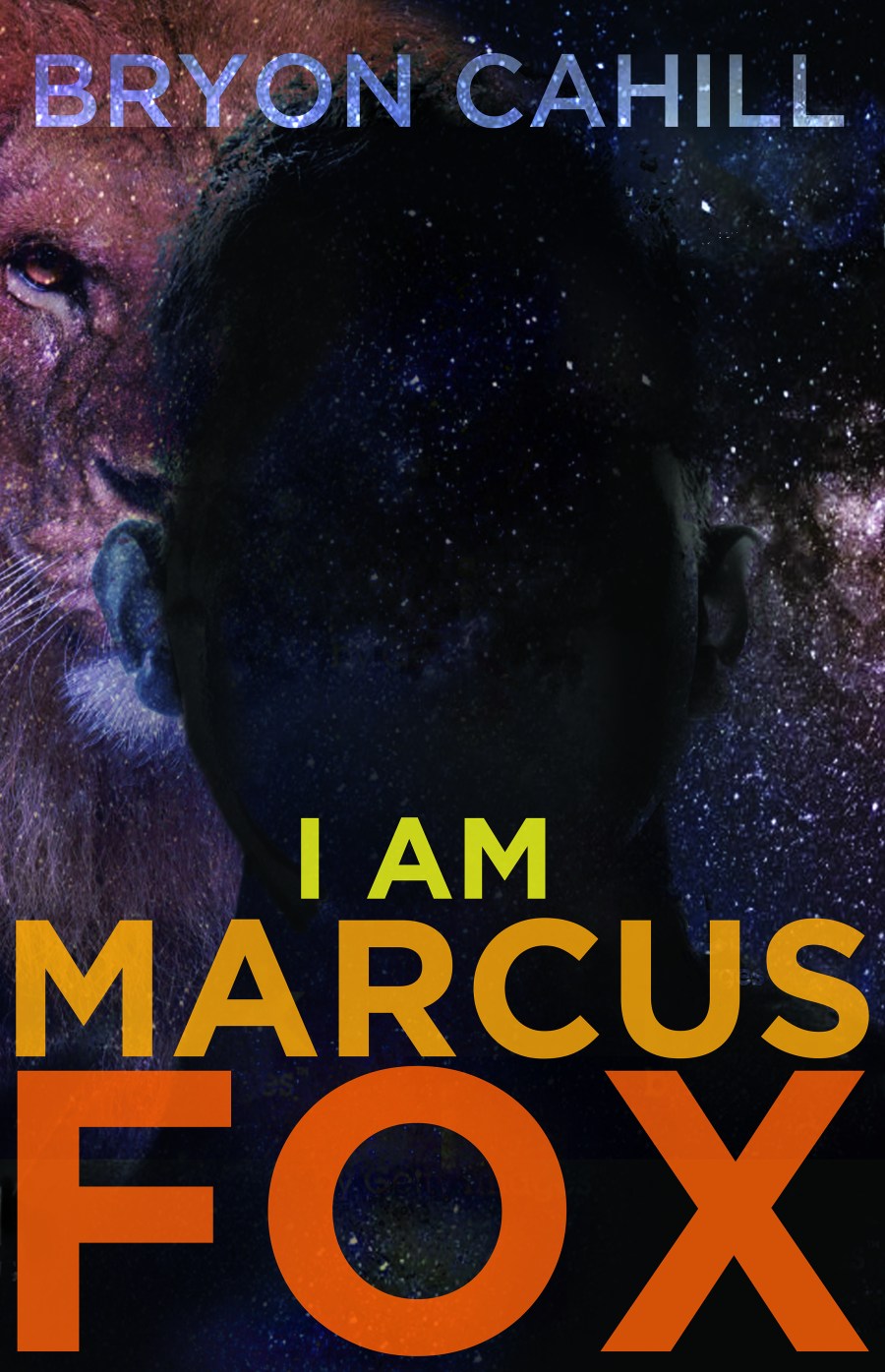
A dangerous man on the brink of madness recounts his life story—a nonstop, action-adventure thrill ride that proves fiction is stranger than truth.
Texas, 1967. Marcus Fox is born to notorious outlaw parents who are always on the run. Unaccustomed to any semblance of a stable family life, the often-neglected child is quick to realize Mom and Dad are driven by sheer violence and mayhem. Hiding out in cheap motels between heists, Marcus’s favorite pastime is listening to his father tell tall tales. He also secretly yearns for any glimmer of love from his monstrous mother. But those banks and roadside diners aren’t going to rob themselves.
Zambia, Africa, 1973. Six-year-old Marcus Fox is abandoned. Adopted by a local tribesman and his wife, he learns their ways and survives along the Zambezi River. As he grows, Marcus becomes an experienced hunter and fights unimaginable beasts for his supper. But the one animal he can’t best is the ferocious lion within. In the prime of his life, Marcus finds himself strapped with an orphan baby of his own. Acting as both brother and father to the growing boy, Marcus must protect him from the nutty, imperceptible call of nature and shield him from the lucid lure of human contact.
The lines between reality and fantasy blur as Marcus, an unreliable narrator, navigates his most penetrating memories. In retelling his hero’s journey, Marcus reminisces on tragedy and farcical comedy, terror and psychological warfare. At times, he will even question his own sanity.
Never faltering in his tale, Marcus paints an unbelievable story with larger-than-life bravado. But his overconfidence may just shake him apart and disrupt the infinite, swirling cosmos.
The Review
This has to be one of the most unique and fascinating character driven narratives I’ve had the pleasure of reading in a long time. A truly one of a kind story of a man who’s very existence is called into question as his life’s story becomes more and more surreal and his encounters become more and more “otherworldly” at times, this novel brings a unique study of the nature of one’s self. In the grand scheme of things, when any of us stop to look back on our lives, the biggest question we inevitably ask is, “Who are we?” And in that moment for the protagonist, the narrator responds calmly, “I Am Marcus Fox”.
The book was evenly paced and provided a great deal of character growth. Heavily leaning on the protagonist’s life rather than a complex plot, the author beautifully captures the line between the reality most of the world sees, and the reality some of us tell ourselves or simply believe to be. It’s a fascinating story that will instantly capture the readers attention, and is a unique take on creating or interpreting a mythology to fit into an author’s vision.
The Verdict
This is a must read novel for anyone who enjoys character studies, African literature and mythology, and drama fueled with satire and humor. A story of abandonment, violence, and the journey to discover who we are, the story will have readers heart’s pounding as they look to discover for themselves who Marcus Fox really is, and if his story is true or just true for him. If you haven’t yet, be sure to pick up your copy of I Am Marcus Fox by author Bryon Cahill today!
Bryon Cahill is an author for all ages. A Stay-At-Home Dad by day and night, he writes by proverbial candlelight in the wee strange hours of morning.
In the past, Bryon was an award-winning writer and editor of literary publications for teens. His stories, influenced by phantasmagorical classics such as Lewis Carroll’s Alice’s Adventures in Wonderland, do often steer off-course, alighting on the wings of the fantastical.
When not writing or Dadding, Bryon dreams of sleeping sheep. He summers, winters, springs, and falls with his loving family along the sunny beaches of the Jersey Shore.
I Am Marcus Fox is Bryon’s debut novel for adult readers. It will be available for human consumption on May 7, 2019.
Novels steeped in magical realism for young adult and middle grade readers are forthcoming, as is more fiction for adults.
Guilhelm de Montanhagol, a Knights Templar knew his death was imminent. Few who entered the halls of torment emerged whole in mind or body. For six years, Bishop Folques had kept him imprisoned in a small cell in Toulouse. Condemned as a heretic, he’d suffered the agony of the rack on several occasions.
He reflected on the last time Folques visited him in the dungeon. He had been splayed on a board, tied down at the wrists and ankles. Rollers at each end of the board slowly turned, pulling his body in opposite directions until every joint dislocated. He could no longer sit or stand. He slept, ate, and wasted away in his own filth. His once fine kirtle and linen shirt were just rags wrapped around his body for warmth.
His thoughts turned to his lover, Esclarmonde. Thinking of his her comforted him in his last hours,. Esclarmonde’s skin was the color of alabaster, her shimmering blonde hair, highlighted with wisps of silver, cascaded down her body. She favored floor-length, loosely fitted gowns, usually of blue. He longed to thread his hands through her hair one last time. Her emerald -green eyes shimmered with love for him. Esclarmonde was strong. She would get the codex, written by Mary Magdalene, safely away.
Guilhelm was at peace in this knowledge. He was ready to accept his impending death. His tormentors had beaten him down mentally and physically. Esclarmonde was gone. His brother’s in the Knights Templar were dead and gone. There was no hope, only the desire to die and end the suffering.
Soldiers came, stripped him of the last of his ragged clothing, then dragged him from his meager cell. He had been wearing the same clothes he had worn since Pope Innocent III had him thrown into this God-forsaken hell. They hung him upside down by one leg, creating the sensation of a crucifixion. In time, this posture would inhibit and exhaust the muscles required for breathing. They stretched him in one direction, while gravity and his body weight worked against him. Exhaustion would eventually set in, and he would die. They do this to traitors, he thought angrily, but he was not a traitor. He was a Knights Templar and had sworn an oath never to kill a Christian. The pope believed if one was not of the Orthodox Christian faith, then that person was a heretic and should pay for his crimes against the church. Today, Folques, dressed in monk’s attire, came to offer Guilhelm a last salvation if he would only give up his lover’s secret, the treasure hidden by the Cathars, people who practiced a religion the pope had declared war against in 1208.
“You must be getting desperate, Folques,” Guilhelm whispered weakly. “I have not seen you in years. Have the Cathars escaped with the secret that you want so desperately so you can protect the pope and the Roman religion?”
“Guilhelm, tell me where the treasure is hidden, and I will spare you from being tortured further,” Folques coaxed, while nervously shuffling a deck of cards in his hands.
“I believe the end is near, Bishop. I have nothing to gain and everything to lose in telling you anything. I would lose my soul if you were to extort that from me,” Guilhelm proclaimed defiantly.
Folques held out a card for Guilhelm who strained through blurred vision to see its face. He saw what appeared to be a young woman holding open the jaws of a lion., He’s discovered cards, he thought. He blinked back the salty sweat rolling down his face, trying to see more clearly.
The image faded and he saw a Roman pontiff holding a staff, crowned by the Yellow Cross of the Cathars. The next card Folques pulled from the deck displayed a burning tower with its defenders leaping to their deaths. Visions of the cards floated past Guilhelm with greater speed, a blur of scenes he could barely distinguish through his battered eyes. Did this mean that -Esclarmonde plan had worked? His mind leaped with joy as his body grew weaker. God bless Esclarmonde.
“Who is this woman?” Folques demanded again.
The question roused Guilhelm from his anguished thoughts. The guards yanked his head back by his hair. He saw Foulques displaying a card with a hand-painted miniature of his beloved Esclarmonde.
“We found these playing cards being copied and passed from city to city like holy relics by gypsies. What is their purpose?” Folques demanded.
Guilhelm suddenly turned away, realizing which card Folques was holding—the one that depicted the seated priestess. She held a scroll bearing the letter’s tarot. Esclarmonde created these cards to preserve the teachings of the Cathars for future generations. The scroll protected by the High Priestess would one day turn the world upside-down, but only if the truth was known.
Two burly guards cut Guilhelm down and let him drop hard to the ground. Grabbinghim by his arms, they picked him up and gripped his head, turning it to face the pyre. He felt the intense heat and smelled the smoke. He envisioned Esclarmonde calling out to him.
He had withstood more pain than most men could have. Completely worn out, he longed only to be with his lover one day in the Hereafter.
“Tell me, Guilhelm, now,” ordered Folques.
Guilhelm forced a slight smile on his dry, cracked lips, knowing that, one day, the truth about the Cathars and the treasure would be known.
“Your god is waiting for you and every other Cathar,” Folques spit out with disgust. “I will find the treasure of the Cathars if it takes killing every one of you.” He turned to the guards. “He might as well burn. He is useless to me.”
Linda Lee Kane is an author of fantasies, thrillers, and contemporary fiction works. She is the author of Death on the Vine, Chilled to the Bones and an upcoming re-release of the The Black Madonna ‘A Popes Deadly Obsession’. She lives with her husband, two dogs, and seven horses in California. “Whether I am writing for adults or children, the war between my days and nights is reflected in my books. Although the tendency to acknowledge the light and dark sides of life is often disguised in my work, it’s always there, lurking just out of sight.”
You can follow the author’s blog tour using the dates and links below!
— Blog Tour Dates
April 1st @ The Muffin
What goes better in the morning than a muffin? Come by today and celebrate the launch of Linda Lee Kane’s book Black Madonna: A Pope’s Deadly Obession. Read an interview with the author and also enter to win a copy of the book.
Stop by Anjanette’s bookworm blog where you can read author Linda Lee Kane’s post about creating suspense. Plus, be sure to check out the interview with the author as well!
Be sure to stop by Anthony’s blog today where you can read his opinion about Linda Lee Kane’s exciting historical mystery Black Madonna: A Pope’s Deadly Obsession.
May the 4th be with you on this day! Be sure to visit Anthony’s blog again where you can read Linda Lee Kane’s guest post on the anatomy of a thriller as well as an interview with this incredible author.
Visit Cassandra’s blog again where you can read her review of Linda Lee Kane’s book Black Madonna: A Pope’s Deadly Obsession. Plus you can also enter to win a copy of the book!
I received a free copy of this book in exchange for a fair and honest review. All opinions are my own.
A futuristic Earth torn apart by an evil global dictatorship finds itself clashing with the discover of not only life on other planets, but a galactic war that has put Earth in it’s crosshairs in author Sean Robbin’s novel “The Crimson Deathbringer”. Here is the synopsis.
The Synopsis
The Akakies, a peaceful, technologically advanced alien species known as “the galaxy’s pranksters,” are under attack by the Xortaags, a vicious military race bent on conquering the universe. The Xortaags are deadly, but Tarq, the Akakies’ chief strategist and legendary shadow master, has a plan.
Meanwhile on Earth, Jim, a wise-cracking, movie-quoting, OCD-suffering fighter pilot, is about to propose to his girlfriend Liz when his childhood friend Kurt shows up at his house, injured and covered in blood. Kurt is a freedom fighter/super- assassin hunted by a brutal military dictatorship’s security forces. Soon after, Jim, Liz and Kurt’s lives are set to crash with a galactic war that threatens the very existence of the human race.
Can our heroes save humanity from the wrath of an overwhelming enemy?
The Crimson Deathbringer seamlessly blends breathtaking action sequences with mischievous humor. If you are a science fiction/space opera fan, this book, with its memorable characters, formidable antagonist and Game of Thrones style shocking moments, is written especially for you.
This is a perfectly written sci-fi epic that blends espionage and intrigue, massive battle scenes with shocking moments readers won’t see coming, and a blend of pop culture references, humor and character development that will have readers invested in the narrative from start to finish. The changing perspectives between the main protagonists, the various individuals in the alien races and even secondary characters perspective of the war made this all the more engaging as a reader.
While the author does a marvelous job of bringing these new alien races and the various technologies they have to the story, it’s the human element that really brings the heart and soul of the book to life. The witty exchanges between characters like Jim and his girlfriend Liz or alien commander Tarq make this a relatable and humorous story that others can get behind.
The Verdict
In just a little over 200 pages, the author manages to bring a slew of shocking twists and turns to a brand new sci-fi story to life in a glorious way. From terrifying secret weapons and devastating losses, to uneasy alliances and adult humor that balances the voice of the narrative overall, this is a story that shouldn’t be missed. What is sure to become everyone’s new sci-fi obsession, this is a novel you don’t want to miss, so be sure to grab your copy of “The Crimson Deathbringer” by author Sean Robbins today!
Well, not really, but this should tell you all you need to know about me and my writing style.
I’m a huge Marvel (plus Game of Thrones, Star Trek AND Star Wars) fan, which shows since my novel is loaded with pop culture references. If you are a sci-fi fan (I assume that you are, otherwise what are you doing here?) you will enjoy them tremendously. I even went full Deadpool in my first draft and broke the fourth wall multiple times, until my editor told it was distracting and kept taking her out of the moment. Shame. Those fourth-wall breaks were hilarious. Still, I can guarantee a few laugh-out-loud moments. Case in point: The “good” aliens in my novel are a race of pranksters, whose main goal in life is pulling other people’s legs (They have four legs, hence the slight change in the idiom). My favorite author is Jim Butcher (The Dresden Files), which is probably how I ended up writing in a first-person POV with the same light-hearted, funny tone as he does. The fact that my MC’s name is Jim is purely coincidental though.
I am a university/college level English teacher, and including Canada, I have lived and worked in five different countries. I have met people from all around the world. Plus, my parents are from a different background, and so is my wife. As a result, diversity has become a major theme in my novel. My characters look like the bridge crew from Star Trek. One of my female characters even impersonated Uhura once, albeit posthumously.
I received a free copy of this book in exchange for a fair and honest review. All opinions are my own.
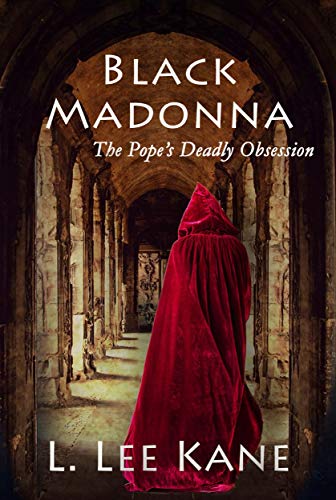
A lifetime of tragedy leads a young woman into a centuries old battle between two ancient orders over a secret that could change the world forever in author Linda Lee Kane’s “Black Madonna: A Pope’s Deadly Obsession”. Here is the synopsis.
The Synopsis
Luci de Foix was nine when her parents were killed in a car accident. But was it an accident? Unbeknownst to Luci, a group known as The Order, under the protection of the Pope, has been watching her family for many years, waiting for the day that a diary written in the thirteenth century would be delivered to her family-a journal that contains a key to a lost codex-and they would do anything to get it. Early one morning, when Luci is twenty-nine, a bloodied young man delivers a book, claiming it’s from her late grandparents.
Plagued by panic attacks that have left her crippled, Luci struggles to overcome her fears, avenge the death of their family, and search for the lost codex. But who can she trust? Everyone seems intent on betraying her, even the gorgeous, enigmatic Max, a man with secrets of his own.
Print Length: 210 Pages
Genre: Historical Mystery
Publisher: Dark Rose Press
ASIN: B07KJR5WBH
The Review
This was a fast paced, action packed history thriller like no other. The mystery of the novel comes in two parts: the first being the mystery behind the secret the church has been chasing all these centuries, and the second being who was being the deaths of Luci’s parents and others in her life. The story thrives when it delves into the mythology aspect of the narrative, which readers will find refreshing as it flips the book on specific aspects of religion and history when it comes to the Catholic Church.
Exploring aspects like how Tarot Cards were marked as “evil” by the Church, the secret teachings of Jesus of Nazareth (whether you believe in him as the Lord or are interested from a historical standpoint, this book will fascinate you regardless), and the lengths an organization will go to in order to maintain power and control, this novel features a truly amazing narrative. While there are some great character developments in this novel, it is the mystery and mythology of the book that really shines through, showcasing a powerful command over history and religion’s impact on humanity overall on the author’s part.
The Verdict
This is a must read novel for any historical fiction and mystery fans out there. Filled with action, suspense and a twisting plot that will leave readers on the edge of their seat, this is a unique read that readers rarely glimpse in the historical fiction genre. If you haven’t yet, be sure to grab your copy of “Black Madonna: A Pope’s Deadly Obsession” by Linda Lee Kane today!
Linda Lee Kane is an author of fantasies, thrillers, and contemporary fiction works. She is the author of Death on the Vine, Chilled to the Bones and an upcoming re-release of the The Black Madonna ‘A Popes Deadly Obsession’. She lives with her husband, two dogs, and seven horses in California. “Whether I am writing for adults or children, the war between my days and nights is reflected in my books. Although the tendency to acknowledge the light and dark sides of life is often disguised in my work, it’s always there, lurking just out of sight.”
You can follow the author’s blog tour using the dates and links below!
— Blog Tour Dates
April 1st @ The Muffin
What goes better in the morning than a muffin? Come by today and celebrate the launch of Linda Lee Kane’s book Black Madonna: A Pope’s Deadly Obession. Read an interview with the author and also enter to win a copy of the book.
Stop by Anjanette’s bookworm blog where you can read author Linda Lee Kane’s post about creating suspense. Plus, be sure to check out the interview with the author as well!
Be sure to stop by Anthony’s blog today where you can read his opinion about Linda Lee Kane’s exciting historical mystery Black Madonna: A Pope’s Deadly Obsession.
May the 4th be with you on this day! Be sure to visit Anthony’s blog again where you can read Linda Lee Kane’s guest post on the anatomy of a thriller as well as an interview with this incredible author.
Visit Cassandra’s blog again where you can read her review of Linda Lee Kane’s book Black Madonna: A Pope’s Deadly Obsession. Plus you can also enter to win a copy of the book!
1) Tell us a little bit about yourself. How did you get into writing?
I wrote my first stage play when I was ten years old. It was set during the Civil War, and one-by-one, a group of slaves, sitting around a bonfire, snuck off into the night while they sang Nobody Knows the Trouble I’ve Seen. Two years later, I started my first novel and showed what I’d written to my mother. She told me it was dirty. (A young couple was having a picnic on a blanket in a park when WWII bomber jets flew overhead? Dirty?) I didn’t know what my mother exactly meant, but I knew dirty wasn’t good, and that rather crimped my writing habit for some thirty years.
During that time, I grew up and had an exciting career. I definitely wasn’t a frustrated writer working hated day jobs. Instead, I was traveling all over the world working on projects to help lower income people (through such organizations as USAID, the World Bank, and the UN). My last job before deciding to become a full-time writer was to manage the US Government’s first significant project to help Palestinians following the Oslo Accords and the start of the peace process.
At the end of that contract, I felt that I had done what I set out to accomplish in my career. I was only forty-six years old and had time to do something entirely different. I had observed and experienced the Israeli-Palestinian conflict from multiple perspectives, and I wanted to tell that story. That’s when I wrote my first novel, A Vision of Angels, in which a suicide bomb plot sets into motion events that weave together the lives of an Israeli war hero, Palestinian farmer, American journalist and Arab-Christian grocer.
After writing that first book, I’ve just kept going.
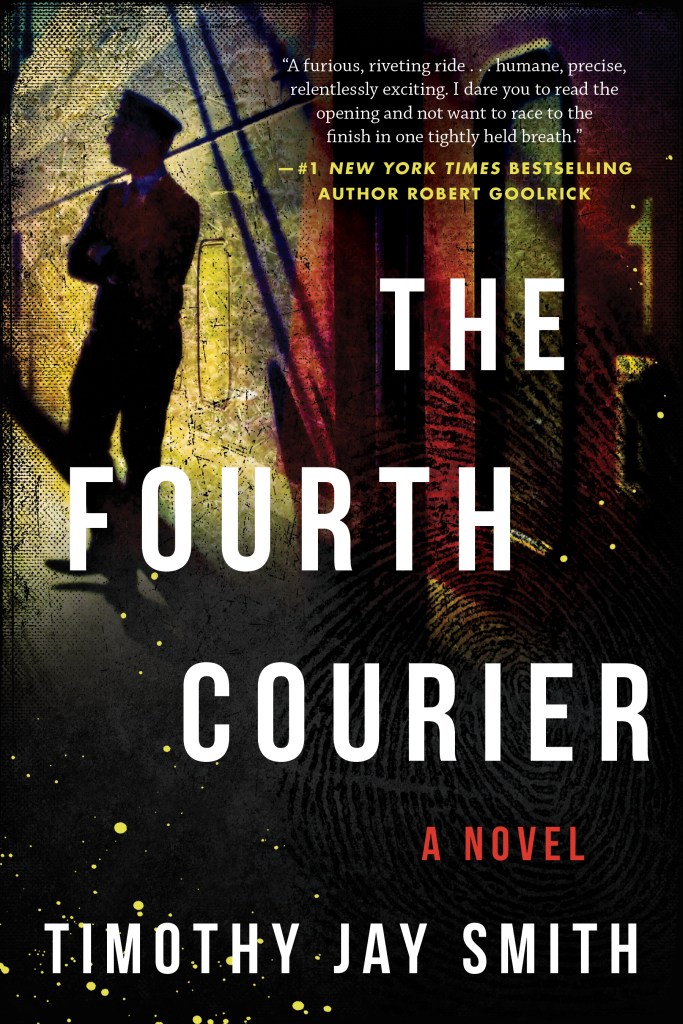
2) What inspired you to write The Fourth Courier?
In 1989, the Berlin Wall fell and Solidarity won the first free election in Poland in over sixty years. In the same year, Mikhail Gorbachev introduced new cooperative laws in the Soviet Union, which was an area of my expertise. I was invited to the Soviet Union as a consultant, which led to my consulting throughout the former Soviet bloc, eventually living for over two years in Poland.
At the time, there was a lot of smuggling across the border between Russia and Poland, giving rise to fears that nuclear material, too, might be slipping across. While on assignment in Latvia, I met a very unhappy decommissioned Russian general, who completely misunderstood my purpose for being there. When an official meeting concluded, he suggested we go for a walk where we could talk without being overheard.
I followed him deep into a forest. I couldn’t imagine what he wanted. Finally we stopped, and he said, “I can get you anything you want.” I must have looked puzzled because he added, “Atomic.”
Then I understood. In an earlier conversation, there had been some passing remarks about the Soviets’ nuclear arsenal in Latvia, for which he had had some responsibility, and apparently still some access. While my real purpose for being there was to design a volunteer program for business specialists, he assumed that was a front and I was really a spy.
I didn’t take him up on his offer for something atomic, but I did walk away with the seed for a story that germinated years later when I decided to write a novel set during that period in Poland.
3) What theme or message do you hope readers will take away from your book?
I wrote The Fourth Courier wanting to portray what life was like in Poland at the end of the Cold War, which officially ended Christmas Day 1991 when the Soviet Union was legally disbanded. (The Poles had actually managed to cast off communist rule two years earlier, but for plotting purposes I set the story in 1992.) The Poles had lived for forty-five years under Soviet domination, the last few years under a harsh military regime. The country was broken and communism’s inefficiency left them destitute. In the two years that I lived there, I developed a tremendous respect for the Polish people and their struggle for liberty. I hope my readers close the book with a better understanding of what that meant.
I write what I like to read, and that’s relatively fast-paced stories but not all action, which have depth and verge on literary. Suspenseful plotting with good writing and good character development: that defines a literary thriller. I also like my novels to bring some awareness to an issue of social importance. So I take an event or threat and examine what it means through the eyes of the people it involves.
In The Fourth Courier, through a nuclear smuggling operation, I give the reader an insight into how ordinary families in Poland coped with the country’s collective hangover from communism. In A Vision of Angels, I look at how the lives of four families become interwoven by a suicide bomb plot in Jerusalem. Cooper’s Promise is the story of a soldier’s redemption through a tale about human trafficking.
I don’t think another genre would let me entertain and enlighten in the same way.
5) If you could sit down with any character in your book, what would you ask them and why?
It would definitely be Basia Husarska, Director of Poland’s Bureau of Organized Crime. She’s an enigmatic character with hints of a colorful past. I’d like to know the details of her past.
6) What social media site has been the most helpful in developing your readership?
Facebook.
7) What advice would you give to aspiring or just starting authors out there?
You’re not a writer unless you write.
Learn the craft.
Write some more.
Share your work, listen to criticism, and don’t be defensive.
Write some more.
8) What does the future hold in store for you? Any new books/projects on the horizon?
I have two new novels underway. I’m working on the penultimate edits to Fire on the Island in which an arsonist threatens to burn down a Greek island village, which will put out of commission a Coast Guard station vital in the rescue of refugees crossing a narrow channel from Turkey. To try to prevent that, the FBI sends a Special Agent to investigate, who finds himself in a village wracked by conflicts, some dating back a hundred years, and any one of which might make someone want to destroy the village. I expect to deliver the final draft to my agent in mid-May.
I’m well into a new novel, The Syrian Pietà, set in Istanbul. In it, the CIA recruits a Syrian refugee to go deep undercover to— I’m going to stop myself there because the idea is too good to share until it’s written. I already love this book and character.
I actually have two styles of writing: a story told from many perspectives, or a story told entirely from one character’s perspective in which the reader knows nothing more than the character. People have different names for the two approaches. I know them as an open mystery (the reader knows there’s a bogeyman in the next room but the protagonist does not) and a closed mystery (the bogeyman is revealed only when the protagonist encounters him).
The Syrian Pietà is a closed mystery, as was my novel Cooper’s Promise. It’s an enormous challenge to write a closed mystery because you have only one character to reveal information. Of course, the temptation is to tell instead of show, which is no challenge at all. In the movie world, one of the best examples of a closed mystery is Chinatown. Jack Nicholson is in every scene. In a novel, it’s a great way to get into a character’s head.
About the Author
Raised crisscrossing America pulling a small green trailer behind the family car, Timothy Jay Smith developed a ceaseless wanderlust that has taken him around the world many times. Polish cops and Greek fishermen, mercenaries and arms dealers, child prostitutes and wannabe terrorists, Indian Chiefs and Indian tailors: he hung with them all in an unparalleled international career that saw him smuggle banned plays from behind the Iron Curtain, maneuver through Occupied Territories, represent the U.S. at the highest levels of foreign governments, and stowaway aboard a “devil’s barge” for a three-days crossing from Cape Verde that landed him in an African jail.
These experiences explain the unique breadth and sensibility of Tim’s work, for which he’s won top honors. Fire on the Island won the Gold Medal in the 2017 Faulkner-Wisdom Competition for the Novel. He won the Paris Prize for Fiction (now the Paris Literary Prize) for his novel, A Vision of Angels. Kirkus Reviews called Cooper’s Promise “literary dynamite” and selected it as one of the Best Books of 2012. Tim was nominated for the 2018 Pushcart Prize. His screenplays have won numerous competitions. His first stage play, How High the Moon, won the prestigious Stanley Drama Award. He is the founder of the Smith Prize for Political Theater.
About Arcade Publishing Arcade has been an imprint of Skyhorse Publishing since 2010. We continue doing incredible work discovering, publishing, and promoting new and brilliant voices in literature from around the world. Arcade has published literary giants such as Samuel Beckett, E. M. Cioran, and Leo Tolstoy, alongside new voices such as Ismail Kadar and Andrei Makine. In 2012, Mo Yan won the Nobel Prize for Literature, an exciting achievement for Arcade which had published five of his novels.
Q: Tell us a little about yourself. How did you get into writing?
A: Growing up, I was never into writing stories, or even reading for that matter. I read textbooks and enjoyed movies over books for most of my life. I didn’t into writing until I started working on The Burden of Trust.
Q: What inspired you to write your book?
A: The idea for The Burden of Trust came to me in a dream. The dream was vivid and detailed and refused to leave me. This dream was the first scene where Kate and Chris meet. It continued to play over and over again, and when I was telling a co-worker she suggested that I write it down. When I began writing, the story line started to progress and I couldn’t stop writing.
Q: What theme or message do you hope readers will take away from your book?
A: I hope that readers will discover that love comes in all shapes and sizes. Love is deeper than romance and sometimes it takes a new and unexpected love to give you hope in this world.
Q:What drew you into this particular genre?
A: I’ve always been a sucker for a great romance story, but I wanted to create something different. A love story with something more.
Q: If you could sit down with any character in your book, what would you ask them and why?
A: I would probably sit down with Kate and ask her why she is so resistant to Chris’s affection? I’d want to know why she is so willing to turn away love because it doesn’t come in the right package.
Q: What social media site has been the most helpful in developing your readership?
A: I”m a huge fan of FaceBook and I find it is easier to connect directly with my readers there. Although, I am still learning the ropes of IG.
Q: What advice would you give to aspiring or just starting authors out there?
A: Don’t publish too early! Especially if it’s your first novel, have it gone over from a reputable editor. Then reach out to book reviewers and avid readers to see what their perspective is. When I first self published The Burden of Trust, my first review from a reviewer was so bad, she couldn’t publish it. Basically, I got told I had a good story, but the writing was horrible. Write and rewrite your book!
Q:What does the future hold in store for you? Any new books/projects on the horizon?
A: Currently, I’m finishing up the second book in The Burden of Trust series. Keep your fingers crossed, it might be out in early 2020!
About the Author
Tabitha grew up in Virginia, outside of Washington D.C., but moved to Orlando to attend UCF (Go Knights!) where she received a Bachelor of Science in Business Management. It was five years ago when she met her husband, who is a graduate from Deland High; two years ago, they moved back to Deland. During this time, she has fallen in love with the town and community.
Currently, she is an active alumna of Kappa Alpha Theta and serves on the Advisory Board as the Facility Management Advisor for the Epsilon Theta Chapter at Stetson University. During her free time, she loves being with her family (although they are usually working on their small family farm), traveling, and of course, watching college football.