Heartsong by Annie Douglass Lima Review

I received a free copy of this book in exchange for a fair and honest review. All opinions are my own.

What would you do if you found yourself on a new world filled with intelligent alien life, but you were now the alien? In a world of half truths and no answers, Liz must discover who she can trust and who she is when faced with the life or death circumstances that come with space travel in author Annie Douglass Lima’s YA novel, Heartsong. Here is the synopsis:

Synopsis

Two alien worlds.

One teen emissary.

No reality she can trust.

Thirteen-year-old Liz Smith has been ripped away from one foster family after another for years, so the idea of a permanent home is tantalizing. Who cares if that home is a colony sixty-five thousand light-years from Earth? The friends in her trusty e-reader will keep her company just fine on her interstellar relocation. 

But when the adventure of a lifetime turns into the disaster of the cosmos, Liz can only retreat so far into the books that have always sheltered her from loneliness and loss. Trapped in half-truths and secrets that leave her questioning reality, can one orphaned bookworm find a way to stop two races from destroying each other … and somehow write a happy ending to her own story?

If you like books about space travel, aliens, or cross-cultural transitions, you’ll love this poignant science fiction adventure. Get your copy of Heartsong now to start the journey today! 

This novel was really unique, as it explored what would happen if the human was the alien from another world, and the “aliens” had to decide whether or not the human was hostile or a friend. The author did an amazing job exploring a universal truth, which is the distrust and fear that comes from the unknown, and how sometimes opening ourselves up to new possibilities and finding common ground is the only way to avoid unnecessary violence and come together as one people. The unique differences highlighted between Liz and the alien people she comes into contact with made this an engaging, thought provoking YA adventure like no other.

The exploration of these new worlds highlights the different environments that would allow life to thrive and grow on other worlds, and puts our own history on Earth of conquering and taking what’s not ours, as well as the distrust we have for anyone or anything different than us, into a whole new light. The imagery used was breathtaking to imagine, and the emotional struggle of Liz and the people she meets is something a lot of people will be able to relate to.

Overall this was a fantastic story. Filled with heart, emotion and amazing sci-fi goodness that was kind of reminiscent of Lost in Space, this was a one of a kind novel that deserves to be read. If you haven’t yet be sure to pick up your copy of Annie Douglass Lima’s novel Heartsong today!

Rating: 10/10

https://www.amazon.com/gp/product/B07DB6DKRY/ref=as_li_tl?ie=UTF8&camp=1789&creative=9325&creativeASIN=B07DB6DKRY&linkCode=as2&tag=jabla-20&linkId=f371eb4fbb911be6ad7fcf5b2f236cf5

Author Bio:

cape cropped

I was born in the United States of America but raised mostly in Kenya, which was my home for 14 years.  Upon returning to the US, I attended Biola University in Southern California, where I majored in elementary education with an emphasis on Intercultural Studies.  Shortly after graduating, I accepted a position as a teacher in a one-room schoolhouse in Papua, Indonesia (a country where I had long dreamed of living).  The job lasted for a year, and not long after my return, I married my wonderful husband Floyd, who I’d met at college.  The two of us lived and worked in California for nearly five years, but when we felt the time was right, it was a joy to move overseas and start a new life in Taiwan.  We return to America every summer, but otherwise, we’ve lived in Taiwan for six wonderful years (and counting).  I love my job teaching fifth grade at Morrison Academy in the city of Taichung.

A few of my blog posts about interesting aspects of life in Taiwan:

Touchdown in Taiwan

Linguistic Misadventures at the Prawn Palace Restaurant 

Typhooning with Krosa

Christmas Dinner… Sort Of

Swine Flu!

Shui Nan Market (a Poem)

What About my Writing?

I’ve always loved writing.  Reading and writing were my favorite subjects in school, and I was seven years old when I decided I was going to be an author.  My first novel (an untitled piece of Christian science fiction) was as ridiculous as you’d expect from a seven-year-old, and it’s probably a good thing I never finished it.  But it got me excited about the idea of writing a book, and I can’t remember a time after that when I wasn’t working on some novel or other.

I was a college student when I woke up one morning after having an interesting dream and thought, That would make a great story.  I should write it down!  I did, and it turned into the first draft of what is now Prince of Alasia.  I set the manuscript aside and forgot about it for a few years, but later I brought it out again, revised it, added details, and turned the short story into a novel.  It was a dream come true when it was finally (after eleven and a half years and a lot of hard work) published as an eBook and later a paperback.

The more I worked on improving the story, the more I pictured other adventures the characters could have and other events that could happen in that setting.  In the Enemy’s Service grew out of those ideas and was published nine months after I started it.  Next came Prince of Malorn, which tells about the same events (and others) from the perspective of the neighboring kingdom. I have lots more ideas, and am currently working on two more books in the same series.  Stay tuned for excited announcements as soon as they’re done!

Besides writing, my favorite hobby is traveling.  Click here to see pictures and a brief description of my adventures in the nineteen countries I’ve had the joy of visiting so far.

Click here to read 25 random facts that most people don’t know about me.

Twitter

Google+

Facebook page (remember to “like” it to get updates about my writing, new publications, and when my books are on sale or occasionally available for free).
Goodreads 

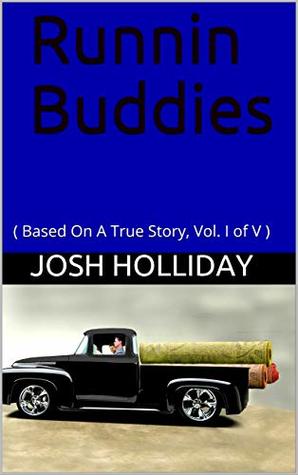
Runnin Buddies: (Based on a True Story, Vol I of V) by Josh Holliday | REVIEW

I received a free copy of this book in exchange for a fair and honest review. All opinions are my own.

Trigger Warning: This is an adult level book. Drug use, as well as some triggering sexual encounters and subject matter is involved in the book. The author has made clear he does not support drug use or the actions herein, but told the story as events occurred. If situations like this trigger you, be warned.

A tale of two young friends lost in a world of petty crimes, drugs and dangerous adventures take center stage in author Josh Holliday’s Runnin Buddies: (Based on a True Story, Vol I of V). Here’s a quick synopsis:

The gripping story of two young adventurers just out of high school in the 1960’s. Drugs are rampant in society in California. Follow them as they barely escape drug deals, confrontations with the police, smuggling across the International Border with Mexico, a risky trip into Arizona, and the final “Bust” at the Mexican border. Your eyes will bulge at some of the true adventures they skated though. Several times they barely escaped death. Based on true lives lived in this book I of V Books, a Series.

The author completely enraptured me with the tales of friends Roby and Roger. As a Southern California resident myself, I could perfectly imagine the chaos and drug fueled life these two led while living and traveling in the area. This book does an excellent job of exploring not only the affects drugs had on the two men, but the various ways this era of history produced some of the issues we still face in this world. From misogony and rampant drug use and addiction to spiking drinks, smuggling and drug deals gone wrong, this book has it all.

The one thing I would recommend for the author would be to be careful of formatting issues. At certain points the story would suddenly shift into dialogue or continue onto a new part of the story without any punctuation to indicate the shift. It’s a minor thing but some readers who focus on technical aspects may notice this throughout the story. However it wasn’t enough to take me completely out of the story. The author was spectacular at showing the lines these two crossed, and the adventures they went on in their drug fueled lives. The author also explores very dark topics that rose as a result of this era of drugs, such as sexual situations that would be appalling in our day and age, but sadly were an everyday part of life in the 60’s and beyond. The author gets inside the mind of someone so lost into this drug fueled state that they rationalize their actions at every turn, leading to some tough and very adult subject matter. It’s written with honesty and gut wrenching detail, bringing to light the mindset and era that defined the lives of so many, and the causes we as a society are now taking up to stop those same practices from repeating themselves today and in the future.

Overall this was an informative, mind blowing look into the 60’s era California drug scene and those caught in it’s addictive embrace. While the subject matter can be tough and difficult to read at times, the importance of learning from the past and exploring the roads that led to these events is important as we move forward as a society, so that we may learn to identify the problems of the past and create a brighter future. It was an engaging tale that has me interested to learn more about the adventures of these two men and how they came out the other side, and whether or not they were able to leave behind that life once and for all. As the first in a series, this book did a great job hooking the reader, and explored this era with detail and attention that it so rightfully needed. If you enjoy adult looks at historical eras and how the drug epidemic impacted the lives of so many in the past, then be sure to grab your copy of author Josh Holliday’s Runnin Buddies: (Based on a True Story, Vol I of V) today!

Rating: 8/10

https://www.amazon.com/Runnin-Buddies-Based-True-Story-ebook/dp/B07GJWZRMF/ref=sr_1_2?ie=UTF8&qid=1536932978&sr=8-2&keywords=%22The+Runnin+Buddies%22

What do you do when you finish your novel? (Guest Blog Post From Author Stefan Vucak)

Here is a guest blog post from author Stefan Vucak from his website. Check this post and more on his official website here!

Lifeliners - Page 2 - V2

The last scene is written, the last piece of dialogue done … and it is finished! After slaving over the damned thing for seven months, I can sit back, heave a huge sigh of relief, and toast myself with a nice tumbler of bourbon. Another novel done and dusted.

Well, not quite.

The cursor is blinking, daring me to change a word, sentence, or paragraph. Glass in hand, I stare at the last page, replaying the book in my mind, savouring the good parts, mulling over the bits that could stand some polishing. Not just yet, my dear characters! I have to finish my bourbon first, and then do some basic maintenance.

First, I make a copy of the manuscript on my internal and external backup drive. If my primary drive packs it in, I haven’t lost anything. I wince at the number of times I read tales of woe on LinkedIn and Facebook where authors have not done ongoing backups as they write. The computer fails and … well, you know what happens: tears, gnashing of teeth, tearing of hair. Not nice. Lesson? Always do backups as you write!

With the book done, it is not ready for publishing, not by a long shot! As I write a section, I always do an edit before moving on to the next bit. After some twenty or thirty pages, I print them out and proofread the stuff. I am always amazed at things I missed editing online. The human mind is tricky, and it will sometimes fool you, automatically correcting errors your eyes pick up. Reading a printed page tends to give a more accurate world view to the brain, enabling me to correct the little bloopers that managed to avoid online obliteration.

Learning to be a stern, objective self-editor takes time and perseverance. Writers can become possessive about their creations, unwilling to admit that the product of their genius could possibly have punctuation, grammar, or word usage errors. Cut out that word or sentence? Cut off my hand instead! But cutting out that word or sentences is exactly what every writer must be prepared to do. Not only cut out that sentence, but a paragraph or page. Every piece of freshly finished writing must be viewed critically and any rough elements polished off. How much polishing is required depends on how good a writer is at writing.

It takes time to go over several hundred pages of manuscript, pen savagely attacking everything out of place, then updating the computer version. Done, ready to be released on unsuspecting readers! Again, not quite. Even though I don’t do a bad job editing my stuff, I am sure there is a little blooper or two grinning with glee that has managed to escape my eyes. To make sure the manuscript is as clean as possible, I send it off to a proofreader to kill off those wayward bloopers. When I get the thing back, sure enough, dead bloopers. After applying the corrections, I print out the whole thing again and, you guessed it, I do a final proofread. As you might expect, by the time it is all finished, I am heartily sick and tired of the book!

Anyway, I can now confidently publish the masterpiece! Confidently? There is never a perfectly finished book. After rereading some of my old novels, I invariably spot a word or phrase that should be cut or changed. I could keep polishing a novel forever, which would mean I would never get around to writing a new one. At some point, I have to let go and let the novel face critical readers and their reviews. Writing a novel is like rearing a child. From initial toddler paragraphs, to developing middle teens, and finally a finished manuscript. Once done, you have to let it make its own way in the world, maybe with a sniff or two.

The final step? Publish, of course!

Well, that is not really the final step. There is the ongoing marketing, but I have suffered enough pain for the moment. Let me recover a bit, okay?

All right, I have finished the novel, the damned thing is published, I push it along with some marketing, and then what? I don’t know about you, but I usually take some time off to clear my head and perhaps start tossing ideas for the next novel. I have several ideas on tap, and it takes a bit of time to sift through them, and nurture an idea that can be developed into a novel, or perhaps a short story. With a short story, I can get stuck into it fairly quickly. For a novel, that takes considerably more effort…and several glasses of bourbon.

You may want to check out the following article on planning a novel.


Author bio and links:

Stefan Vucak

Stefan Vučak has written eight Shadow Gods Saga sci-fi novels and six contemporary political drama books. He started writing science fiction while still in college, but did not get published until 2001. His Cry of Eagles won the Readers’ Favorite silver medal award, and his All the Evils was the prestigious Eric Hoffer contest finalist and Readers’ Favorite silver medal winner. Strike for Honor won the gold medal.

Stefan leveraged a successful career in the Information Technology industry, which took him to the Middle East working on cellphone systems. He applied his IT discipline to create realistic storylines for his books. Writing has been a road of discovery, helping him broaden his horizons. He also spends time as an editor and book reviewer. Stefan lives in Melbourne, Australia.

To learn more about Stefan, visit his:

Website: www.stefanvucak.com

Facebook: www.facebook.com/StefanVucakAuthor

Twitter: @stefanvucak

LinkedIn: https://www.linkedin.com/in/stefan-vucak-65572360

Read more about ‘Lifeliners’ here: https://www.stefanvucak.com/books/lifeliners/

Interview With Author Stefan Vucak

1)     Tell us a little bit about yourself. How did you get into writing?

I was born in Croatia, and when my parents immigrated to Australia, I faced a new world, a new language, and a totally new way of life. My parents found it particularly difficult to integrate, but for me and my sister, as kids, we took it in stride. I had devoured books ever since I learned to read, which helped my transition, but writing in English was a path filled with spelling and grammar potholes. It took me a while to master it, and I am still not sure that I have it all. Anyway, while at the university, still reading avidly, I turned my hand to writing short stories, thinking it didn’t look all that hard. Thankfully, some of my early experiments will never see the light of day, but the process did help me hone my writing skills. I sent some of my stories to U.S. magazines, but without success. One day, I told myself, I will get published.

I always wanted to write. Well, not exactly always, but ever since I came across an illustrated book of Jules Verne’s ‘20,000 Leagues Under the Sea’, the printed word fueled my imagination. In high school and university, I breezed through essay and writing assignments, truly puzzled why some of my classmates struggled. Books, of course, particularly science fiction, got my ideas factory churning. If others could write short stories and novels, so could I. I first turned my hand to writing short stories. I yearned for the day when people would walk past a bookstore and see my books on display. Vanity? Perhaps, but the fire burning deep within me that urged me to write, also compelled me to share the products of my imagination. Regrettably, just making my way in the world, I could not indulge my passion. I had to find a way to live and support myself. Hence my IT career, but that fire never went out, although I did allow it to die down a bit, frustrated at not being able to find a publisher. Publishing is a savage game, as I came to learn, and publishers are not keen to publish my books just because I wanted to see them in bookstores.

2)     What inspired you to write Lifeliners?

Lifeliners - Page 2 - V2

‘Lifeliners’ began as an idea for a short story on a long flight from Europe to Melbourne, Australia, my home. I always have my notebook handy, never knowing when inspiration would strike. Tired of browsing through inflight entertainment, I began jotting down notes to flesh out a story about an emerging new human able to draw energy from someone by touching them. Birthrates in Western countries had been falling for a while, accompanied by growing sterility. A product of our high-pressure technological lifestyle and high density urban living, explained the pundits. Nature decided that lifeliners were the answer who would over time replace the ‘normals’. As expected, this development was not received well by the general population, and governments everywhere began to blame lifeliners for failure of bad economic policies, introducing draconian laws to curtail their rights and freedoms.

Well, I wrote the short story, posted it on my website, and I thought I was done with it. Time to finish what was then my latest book project ‘Legitimate Power’. Once I had it published, I began reviewing ideas for a new book – and kept coming back to the lifeliners story. It was one thing to write a short story, but fleshing it out into a full-length novel was not something I had in mind, wanting to write another contemporary political drama/thriller. But the bug had bitten me and lifeliners began to haunt my days. The only way I would have peace was to write the damned book.

3)     What theme or message do you hope readers will take away from your book?

When I write a novel, I don’t set out to promote a particular message to readers. If something emerges from the story that readers can relate to, it would be a byproduct of the story and the characters in it. Of course, most novels deal with familiar themes: personalities, conflict, betrayal, self-reflection, overcoming adversity; the list goes on. These are all present in any book, whether a crime novel, a political thriller, love story, or just a good adventure yarn. The hard part is for a writer to utilize these themes into what will hopefully end up as an enjoyable and entertaining read. After all, isn’t that the aim of every book?

4)     What drew you into this particular genre?

Although ‘Lifeliners’ is science fiction set in 2032, it is not hard sci-fi of my previous books. I suppose I could have set the novel in present time, but I did not feel comfortable with the idea. It would not feel ‘real’. Moving it slightly into the future and taking advantage of several emerging technologies has, I believe, provided enough time for lifeliners to emerge and generate an impact on societies and governments, and the negative reaction their presence has produced. The story background is also familiar to readers without having to create a new social setting far removed from present time.

5)     If you could sit down with any character in your book, what would you ask them and why?

With a science fiction series and six contemporary political drama/thriller novels behind me, I have created a number of interesting characters. During the writing process, they sometimes say and do unexpected and surprising things, and I allow them a degree of indulgence. I believe it spices up my writing. However, I don’t give them free reign, having to keep in mind the plot and the story. With ‘Lifeliners’, Nash Bannon has turned into a character with whom I could converse at length. Having the society at large after him, and lifeliners in general, his views on life, colored by negative experiences by his fellow humans, would provide a unique perspective on people, ethics, and behavioral norms. Our veneer of civilization is very thin, hiding what is a barely controlled savage. I would enjoy exploring all these things with him.

6)     What social media site has been the most helpful in developing your readership?

I cannot say that any one social media outlet has helped brand my name or acted as a marketing platform for my books, or that any of them have helped boost my book sales. It is a tough game out there where some books do well for no apparent reason, and others simply fade away. I just plug away on several outlets, such as LinkedIn, Facebook, Twitter, and Goodreads, and trust that what I have to say will attract readers and buyers. Doing an occasional interview also helps! I use my website extensively to post general articles of interest, and blogs on writing, and the publishing industry in general.

7)     What advice would you give to aspiring or just starting authors out there?

If there is one thing I learned over the years as a writer, if anyone is contemplating taking this on seriously, he or she should be prepared to spend many lonely hours with a pencil and paper, and sitting behind a computer screen. There will be disappointments, frustration, angst … and moments of sheer exhilaration and satisfaction when the words flow and the creative process produces something wonderful. Writing is a gift, but it can also be a curse. However, once bitten with the urge to create, there is no cure.

These days, it is easy to self-publish, and outlets like Amazon and Smashwords are replete with good books. Unfortunately, they are also full of amateurish efforts, which has contributed to a negative reputation of ebooks. Most authors dream of finding an agent and being published by a traditional publisher. I have those thoughts myself. However, traditional publishers rarely take up new writers, always keeping an eye on the bottom line. They are running a business to make money, not cater to hopeful authors. It is tough, but that is the hard reality. Another tough reality is the ongoing need to market and promote my books. As I mentioned in one of my Tweets, ‘Writing fills my soul, and marketing empties it’.

8)     What does the future hold in store for you? Any new books/projects on the horizon?

Having just finished ‘Lifeliners’, I need a break to recharge. I have a brief outline for a short story, and now that I have the time, I will flesh it out and post it to my website. Like most writers, I have a number of ideas for a new novel, but two stand out that I need to look at closely before deciding which one will end up as a book. For now, I will let both ideas simmer for a while, but not too long. The urge to write, to create, will not allow me to be idle for too long. Before tackling my next project, I will spend some time doing book reviews, hopefully provide editing services on the side, and indulge in reading, golf, and doing odd things around the house that I have been putting off. No hurry.

Author bio and links:

Stefan Vucak

Stefan Vučak has written eight Shadow Gods Saga sci-fi novels and six contemporary political drama books. He started writing science fiction while still in college, but did not get published until 2001. His Cry of Eagles won the Readers’ Favorite silver medal award, and his All the Evils was the prestigious Eric Hoffer contest finalist and Readers’ Favorite silver medal winner. Strike for Honor won the gold medal.

Stefan leveraged a successful career in the Information Technology industry, which took him to the Middle East working on cellphone systems. He applied his IT discipline to create realistic storylines for his books. Writing has been a road of discovery, helping him broaden his horizons. He also spends time as an editor and book reviewer. Stefan lives in Melbourne, Australia.

To learn more about Stefan, visit his:

Website: www.stefanvucak.com

Facebook: www.facebook.com/StefanVucakAuthor

Twitter: @stefanvucak

LinkedIn: https://www.linkedin.com/in/stefan-vucak-65572360

Read more about ‘Lifeliners’ here: https://www.stefanvucak.com/books/lifeliners/

Pre-Order Hottest Top Toys of the Season – order today at BN.com!

Keys of the Origins (The Scions of Balance #1) by Melissa A. Joy Review

I received a free copy of this book in exchange for a fair and honest review. All opinions are my own.

A powerful new high fantasy novel takes flight in author Melissa A. Joy’s novel Keys of the Origins (The Scions of Balance #1). Here’s the synopsis:

Synopsis

In a world where ancient races still dwell, 

the events of an age-old prophecy begin to stir. 

From the pages of an antique tome, 

there is much the ancients themselves have yet to learn.

The time has come for the Keys of the Origin to play their part in restoring balance to Aeldynn; but how will their choices affect the outcome?

Two young men; one a righteous law-abiding servant to the people, the other a distinguished outlaw, don’t yet realise they are to play a part in a foretold bid for the future of Aeldynn. Fate leads them down a road they would never have dreamed of following; a road that leads them into a struggle to bring the world back into a state of balance from the precipice of madness and desolation.

It is not only Zehn and Larkh who are fated to take on the malevolent forces of Aeldynn; there are others who must join with them as they are coaxed into the embrace of the ancient Nays and the fabled Drahknyr, who are also entangled in the masterful puppeteering of a renegade sorceress hell bent on reviving the greatest threat of all; Alymarn.

Review

This book was rich with mythology building, character development and a phenomenal story like no other. The High Fantasy world created by the author is a blend of other series like Game of Thrones, Lord of the Rings and the Throne of Glass series all rolled into one. Far off lands, mystical creatures and various different species all swirl around a powerful and dark force that threatens to tear the world apart. Ancient rivalries, long foretold prophecies and intimate connections between the characters all bring this novel into new and uncharted territory within the genre, making this novel stand out.

The writing was intricate, detailed and yet real all at once. The author speaks through this book with the confidence and creativity that makes readers feel as if they are traveling through Aeldynn themselves. The imagery almost plays out as if you are in a visual work of art only seen in modern day video games, giving it a cinematic feel throughout the novel.

Overall I loved the story. This book is a great step into a fantastic new fantasy series that needs to be told. Filled with maturity, honesty and some of the most intricate and detailed mythology I’ve read in a fantasy series, this is a must read for any high fantasy fan out there. If you haven’t yet be sure to grab your copy of Melissa A. Joy’s novel Keys of the Origins (The Scions of Balance #1) today!

Rating: 10/10

https://www.amazon.com/Keys-Origin-Scions-Balance-book-ebook/dp/B01DLCEIU6/ref=sr_1_1?s=books&ie=UTF8&qid=1536581070&sr=1-1&keywords=Keys+of+the+Origin

http://aeldynnlore.com/

About the Author

melissajoyauthorpic

Melissa A. Joy is a fantasy author who challenges the conventional expectations of fantasy and takes them to a whole new level.  It is no secret that she believes in the existence of all things fantastical, and that anything is possible.

She began building the world of Aeldynn and started writing seriously aged approximately 13, and has since developed it into something truly magical worth sharing.  From the glorious winged Drahknyr and wise and fearsome dragons to pirates of the high seas and a world rich with history and lore, her imagination could be said to be limitless.

When she isn’t locked in a reverie about what’s going on in the world of Aeldynn, she’s probably out sailing the high seas on a tall ship, or perhaps dressed up in costume at an anime convention.

You can connect with Melissa on the following Social Media platforms:-

Facebook:- DefinitiveImaginationMJ (FB)
Twitter:- @DefineImagineMJ (Twitter)
Website:- The Official Website of Melissa A. Joy and Aeldynn Lore

You can buy her books here:-

Canada:- Buy Melissa A. Joy’s books in Canada

UK/Europe:- Buy Melissa A. Joy’s books in UK/Europe

US/Rest of the World:- Buy Melissa A. Joy’s books in US/Rest of the World

Buy 2, Get the 3rd Free – Tor Sci Fi & Fantasy Novels

Why A Book Series Is So Good For Non-Readers | Guest Blog Post by Fiona Ingram

What many of us take for granted is reading, being able to read properly and fluently, and the availability of books. I am sure most people never even think about how they learned to read. For many people, including myself, it seemed that you just ‘knew’ how to read. How many people can remember growing up with books and more books and still more books in the house. I remember shelves and shelves of books, and I still have many of those beloved old friends with me.

What many parents don’t realise, however, is that the enjoyment of reading is not automatic; it is learned by association. When a parent reads with a child, that feeling of togetherness, that special time, creates in the child a sense of enjoyment that they then associate with reading, and thus as they grow up, reading is associated with pleasure.

However, for several reasons, a child just might not ‘click’ with reading. It can be disappointing when your child expresses absolutely no interest in reading. But, you can change that by coming up with new and interesting ways to ‘package’ the art of reading. Reading is a skill, just like any other skill. It has to be introduced, nurtured, and developed. A wise parent will pique their child’s interest in reading by taking the time to find out what kinds of stories interest them. There is so much on offer these days that it shouldn’t be hard to find a book series that your child will relate to.

  • So why do children love an exciting series? In a good, entertaining children’s series, children will suddenly discover a hero they can relate to and whose actions keep them riveted. Isn’t it wonderful when a child begs, nay, commands its parents to go out and buy the next in a favorite series because they ‘absolutely must know’ what is going to happen next.
  • A gifted author will be able to create characters that readers can relate to, and either love or hate. Young readers get to know the characters well as the action evolves and, as each book comes out, can explore something new about their heroes. If they ‘bond’ with a character such as a young hero/ine, they’ll be eager to continue reading the series as each new book comes out. Three of the most popular that spring to mind immediately are Chronicles of Narnia, Diary of a Wimpy Kid and Harry Potter. You can cement this enthusiasm by buying hard cover books for your child as ‘collectibles’—something to be cherished and read again and again. Movies (even better) and merchandising such as T-shirts, mugs, badges etc. keep the enthusiasm going.
  • Most successful book series have websites with interesting aspects to explore. Is the series set in a real or fantasy place? Do the characters have important choices to make? Don’t be afraid to let your child get onto the computer and read all about the series, the author, the movie, the actors, the settings, and the characters. Ask your child questions about what they have learned and praise their research.
  • Characters become friends to the avid young reader, who shares in the hopes, dreams and choices the characters make. Readers are amazingly loyal to their favorite characters, even though they may often disagree with the character’s choices. A good writer will explore these further, enabling young readers to begin to make their own choices, especially in a moral dilemma or emotional conflict.
  • Parents who make the time to read with their children, or who are interested in their children’s book choices, will be able to discuss these issues further. It’s a great way of dealing with ‘sticky’ issues because the discussion is less focused on the child and more on a fictional character. It may be easier for a child to express an opinion if discussing a topic via a character’s choices.

Books remain an integral part of boosting a child’s chance of a fuller, more imaginative and successful life. So, don’t be frugal when it comes to the printed word. A series is a great way to keep a child’s interest in reading alive. If you have kids, splash out and get them all the books their hearts desire!
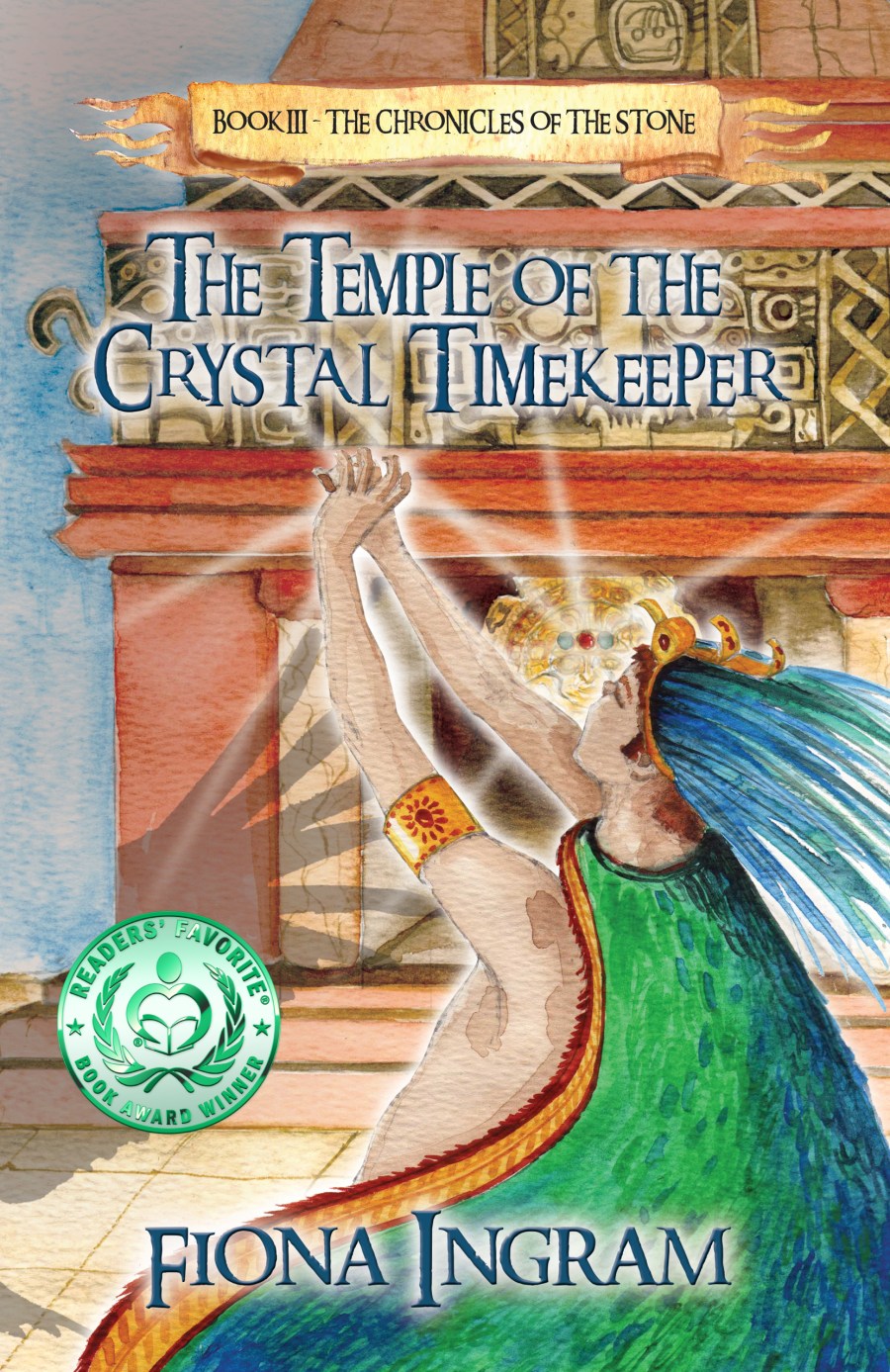
The Temple of the Crystal Timekeeper is available to purchase on Amazon.com. 

About the Author

FionaIngram.jpg (1)

Fiona Ingram is a children’s author, but up until a few years ago, she was a journalist and editor. Something rather unexpected sparked her new career as an author—a family trip to Egypt with her mother and two young nephews. They had a great time and she thought she’d write them a short story as a different kind of souvenir…. Well, one book and a planned book series later, she had changed careers. She has now published Book 3 (The Temple of the Crystal Timekeeper) in her middle grade adventure series Chronicles of the Stone, with many awards for the first book,

The Secret of the Sacred Scarab, and a few for Book 2, The Search for the Stone of Excalibur, and one already for Book 3! She also teaches online novel writing for aspiring authors and she finds that very satisfying. Relaxation time finds her enjoying something creative or artistic, music, books, theatre or ballet. She loves doing research for her book series. Fiona loves animals and has written two animal rescue stories. She has two adorable (naughty) little dogs called Chloe and Pumpkin, and a beautiful black cat called Bertie.

You can find Fiona at –

Facebook: https://www.facebook.com/secretofthesacredscarab/

Website: www.chroniclesofthestone.com

Twitter: http://twitter.com/FionaRobyn

Author Site: http://www.FionaIngram.com

Blog: http://fionaingramauthor.blogspot.com

GoodReads: https://www.goodreads.com/author/show/2868182.Fiona_Ingram

The Temple of the Crystal Timekeeper by Fiona Ingram Review

I received a free copy of this book in exchange for a fair and honest review. All opinions are my own.

A dangerous mission strands three young kids in the Mexican Jungle where myth and tradition divide the people who call the jungle home in author Fiona Ingram’s third novel in the Chronicles of the Stone series, “The Temple of the Crystal Timekeeper”. Here’s the synopsis:

A plane crash! Lost in the jungle! Hunted by their old enemy, will Adam, Justin, and Kim survive long enough to find the Third Stone of Power? With only a young boy, Tukum, as their guide, the kids make their way through the dense and dangerous jungle to find the lost city of stone gods, where the Stone of Power might be located. River rafting on a crocodile-infested river and evading predators are just part of this hazardous task. Of course, their old adversary Dr. Khalid is close behind as the kids press on. But he is not the worst of their problems. This time Adam will clash with a terrible enemy who adopts the persona of an evil Aztec god, Tezcatlipoca, and is keen to revive the ancient tradition of human sacrifice. Adam, Justin, and Tukum must play a dreadful ball game of life and death and maybe survive. Will they emerge alive from the jungle? Will Dr. Khalid find the third Stone of Power before they do?

While I hadn’t read the previous two books before this, this novel did a great job of making the story stand out on it’s own feet. Finding solid ground within the jungles of Mexico, the story and characters mesh well with one another, building the overlaying backstory of the stones and their mysterious power, as well as the hunt by the modern day adventurers. The author did an amazing job exploring the complex mythology of both the Aztecs and Mayan people, as well as the culture of Mexico as a whole and the people who call it home.

The writing here is wonderful, giving middle grade readers and beyond a clear image of the scenes presented throughout the novel. While fans of the series will love the continued adventures of Adam and his group, the book does a wonderful job of bringing a new supporting character like Tukum and his people to life beautifully. The blend of culture and mythology adds to the series overall building mythos, and by books end gives the reader a nod to the next possible adventure as the mission to recover the stones.

Overall this was a fantastic read. Filled with richly developed characters, a wonderful setting filled with vivid imagery, and a detailed, suspenseful story of mythological proportions. If you enjoy a good adventure story with relatable heroes, powerful villains and a setting filled with rich culture, then you should pick up a copy of author Fiona Ingram’s The Temple of the Crystal Timekeeper today!

Rating: 10/10

The Temple of the Crystal Timekeeper is available to purchase on Amazon.com. 

About the Author

FionaIngram.jpg (1)

Fiona Ingram is a children’s author, but up until a few years ago, she was a journalist and editor. Something rather unexpected sparked her new career as an author—a family trip to Egypt with her mother and two young nephews. They had a great time and she thought she’d write them a short story as a different kind of souvenir…. Well, one book and a planned book series later, she had changed careers. She has now published Book 3 (The Temple of the Crystal Timekeeper) in her middle grade adventure series Chronicles of the Stone, with many awards for the first book,

The Secret of the Sacred Scarab, and a few for Book 2, The Search for the Stone of Excalibur, and one already for Book 3! She also teaches online novel writing for aspiring authors and she finds that very satisfying. Relaxation time finds her enjoying something creative or artistic, music, books, theatre or ballet. She loves doing research for her book series. Fiona loves animals and has written two animal rescue stories. She has two adorable (naughty) little dogs called Chloe and Pumpkin, and a beautiful black cat called Bertie.

You can find Fiona at –

Facebook: https://www.facebook.com/secretofthesacredscarab/

Website: www.chroniclesofthestone.com

Twitter: http://twitter.com/FionaRobyn

Author Site: http://www.FionaIngram.com

Blog: http://fionaingramauthor.blogspot.com

GoodReads: https://www.goodreads.com/author/show/2868182.Fiona_Ingram

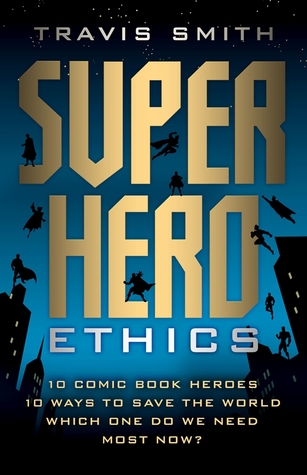
Interview with Travis Smith

1) Tell us a little bit about yourself. How did you get into writing?

I got into writing about superheroes and philosophy after reading an article by Adam Barkman published in Comment magazine. I could give that a try, I thought. Why not? Barkman looked at superheroes from a “mythological” point of view; I would prefer to look at them from a somewhat more human perspective. When I discovered an article by Jonathan V. Last in The Weekly Standard that I disagreed with I took it as an opportunity to respond. Last argued for the timeliness of the Christopher Nolan trilogy of Batman films; I argued that Spider-Man was a better hero for our times, in commemoration of what was then the fiftieth anniversary of Spider-Man’s first appearance. Little did I know that this one article would lead to an entire book on the subject.

2) What inspired you to write your book?

University professors are asked to find ways to engage in the public dissemination of knowledge. Most of our research is written for an academic audience. How does someone like myself take what I study and teach in the history of political philosophy and make it relevant for a wider audience? Well, if Plato can discuss the popular heroes of his time, whose adventures are depicted in the epic poems of Homer, then why can’t I look into superheroes, whose stories have become popularized lately in so many feature films? I look at them to find out what they might teach us about ourselves and our ideals—who we imagine ourselves to be at our best, or who we would become if only we could be better than we are?

3) What theme or message do you hope readers will take away from your book?

I’d point to the value of thinking critically about the things we happen to enjoy, and the possibility of thinking critically about ourselves in the process. This is something we can do even with respect to our amusements—the music we like, the TV shows we binge on, the athletes we admire, the vloggers we subscribe to. Focusing on questions of ethics when doing so leads us to wonder: How does thinking about the character of this or that person, whether real or fictional, help me to better understand the worldview and motivations of people similar to them—whether that’s someone I’ve encountered in my private life, or public figures like politicians, leading professionals, or outspoken celebrities? What answers to life’s problems do they represent, and should we heed them? What does whether I like or dislike some particular person or character tell me about myself?

4) What drew you into this particular genre?

In the classroom, I draw on a lot of examples from popular culture in order to make old ideas and arguments seem relevant and familiar to my students. With respect to superhero stories in particular, I’ve read plenty of comic books over the years and re-watched the movies based on them more than enough. I put that hobby to use in Superhero Ethics.

5) If you could sit down with any character in your book, what would you ask them and why?

I would like to know why Tony Stark doesn’t share his most advanced technologies with everyone—whether they want him to or not. Why not save people from ever needing saving again through upgrades and alterations to the human condition? Not that I would want him to—but I don’t really understand why he doesn’t. That said, I’d be concerned that by pushing him on it I might inadvertently convince him to give it a try, or else stop playing the hero entirely. Either way, better to keep my mouth shut, really. The most interesting line of dialogue to me in Avengers: Infinity War occurs when Thanos tells Iron Man, “You are not the only one cursed with knowledge.” In Superhero Ethics I argue that Tony Stark willfully refrains from drawing the furthermost consequences of his views regarding human nature and our place in the cosmos—including, ultimately, that he himself is insignificant. He struggles with a nagging suspicion that his pride—which is substantial—is vanity, and all of his efforts and sacrifices are offered in vain.

I’d also like to hear Wolverine explain his fascination with Japan. I think it’s because culturally, feudal Japan is practically the exact opposite of present-day Canada. We can be glad that imperial Japan at its worst was ended non-fictionally and still romanticize traditional Japanese society in fiction as representing honor-based society at its best. Still, I’d like to hear Logan’s perspective on it over a few bottles of beer, hoping he’ll call me “bub” at least once—and that I’ll be able to sneak out the back door of the dive bar before the inevitable brawl gets underway.

6) What social media site has been the most helpful in developing your readership?

Personally, I avoid using social media. I worry that it’s an engine of incivility.

7) What advice would you give to aspiring or just starting authors out there?

Read. A lot. Read a lot of good books. Even books you imagine you’ll dislike by authors you expect to disagree with. For starters, read about Achilles sulking in his tent in the Iliad if you haven’t already. Also, learn to take criticism well, and be your own harshest critic. Reread everything you write, out loud, and ask yourself if it actually says what you want it to say in the best possible way. Always be revising but recognize that your words will never be perfect. Nothing that you decide today is good enough for now will seem good enough later in retrospect—and that’s okay.

8) What does the future hold in store for you? Any new books/projects on the horizon?

Some people have asked me whether I’ll write about Superheroine Ethics next. Or perhaps Supervillain Ethics. What about something fandom-adjacent, like Pro Wrestling Ethics? Within this genre, I haven’t decided yet. As a professor of political theory, I intend to publish more on the philosophy of Thomas Hobbes, including pieces informed by my analyses of superhero stories, on subjects such as bravery, magic, and the imagination. I’m convinced that Thomas Hobbes himself thinks he’s like a superhero or something.

Bonus/Fun Questions:

Who was your favorite superhero growing up?

On Saturday morning cartoons, I liked Green Lantern best, mainly because of Sinestro. As a teen, I connected most with Rogue. For over a dozen years now though, Ms./Captain Marvel (Carol Danvers) has been my favorite. I await her feature film debut in 2019 with great anticipation.

Do you prefer Marvel or DC? Or do you find them to be on equal footing overall?

When I wrote Superhero Ethics, I didn’t just focus on my favorite characters. I wanted the book to be accessible to casual fans and a general readership. I didn’t want it to be accessible only to those of us who have read a hundred thousand comic books. My book might give the impression that I prefer Marvel, but my analyses weren’t decided by my subjective preferences. I tried to give more generous readings to characters who interest me less and be tougher on characters I like most. Speaking personally, I am a fan of both universe’s characters. I started reading comic books as a pre-teen at the time of Crisis on Infinite Earths, and DC successfully persuaded me to disregard the pre-Crisis multiverse as no longer relevant and too confusing and supposedly unsophisticated. As I have gotten older, however, I have discovered how fantastic Silver Age Superman, Flash, Legion, and Earth-Two stories are. I have also enjoyed exploring DC’s western and war genre comics, too, such as Jonah Hex and Haunted Tank.

Which non-Marvel or -DC hero do you think would fit into the ethical discussion of superheroes? 

Sailor Moon and The Tick were favorites of mine when I was young. Captain Planet probably deserves some critical analysis, too, but I don’t think I could sit through enough episodes to assess the character fully.

If you were to create your own hero based on the ethical discussions raised in your book, what would that hero’s name be, what powers would they have (if any), and what villain/threat would they face to mirror the challenges of our world?

I already have a hero in my wife. [Awwww!] Putting up with me and my hobbies has got to be challenge enough. And who knows what kind of villainy I’d be up to if she wasn’t always asking me, “What are you doing?!?” I try to keep in mind how Aristotle would have told Ajax to listen to Tecmessa.

Thank you, Anthony, for the opportunity to discuss Superhero Ethics with you. I’m glad that you enjoyed the book!

About the Author:
Smith_Travis
Travis Smith is the author of Superhero Ethics (Templeton Press). He received his PhD from Harvard University and is associate professor of political science at Concordia University. He has been collecting comic books since he bought Uncanny X-Men #207 with his allowance in 1986. His writing has appeared in the Weekly Standard and Convivium Magazine. For more information, please visit https://www.templetonpress.org/books/superhero-ethics

Get 50% Off Loads of New Reads at the First-Ever Barnes & Noble Book Haul Blowout!

Interview with Brandon Dragan

1) Tell us a little bit about yourself. How did you get into writing?
I grew up Northeastern New Jersey and have loved writing for as long as I can remember. My mom tells a funny story of a third-grade teacher who said that during writing assignments most of the kids would come to her desk with a few sentences scribbled and ask if they had written enough, but I would walk up asking for more paper. So, there’s always been that desire to write and express myself, although for the better part of my life I had trouble really sticking with it. I ended up focused mainly on writing songs and actually pursued it for a bit in Nashville, Tennessee, but pretty quickly found that I wasn’t a good enough musician to really hack it there. Eventually, I think I was about 25, married and working a regular corporate job when the idea for a story hit me and I just couldn’t shake it. That idea would eventually become my first novel, “The Wages of Grace,” which will hopefully be out later this year.
2) What inspired you to write your book?
As far as the writing of my newest short story “Cast No Shadow,” again it was really just a thought that hit me between the eyes and I couldn’t shake it. I absolutely love complex characters who are capable of enormous good and repulsive evil. I think most human beings are capable of both, so I really wanted to explore the thought of a good, loving, respected family man who also has a propensity toward violence and aggression toward those he finds evil or criminal.
40542213
3) What theme or message do you hope readers will take away from your book?
I don’t particularly want to feed readers what they should they think, so I’ll be careful here. When art is compelling it’s because of what each person brings to it. If anything, I would hope that this story raises questions about the concept of “just” violence. Is there such a thing as “good” violence, or does it all just feed into a nasty cycle? “Cast No Shadow” does touch on several themes-many of which were not intentional when I initially wrote it, such as race, children with guns, the war on drugs, etc. It is a short story, but I feel like there is a lot of meat there and I hope everyone who reads it will come away with something to chew on.
4) What drew you into this particular genre?
I was drawn into this type of story mainly by my admiration for the work of Cormac McCarthy. After reading “No Country For Old Men” I always had the desire to write a kind of “modern western.” 
5) If you could sit down with any character in your book, what would you ask them and why?
If I could sit down with any character, I think it would be Annabelle. Although she maybe comes across as a bit mousy at first, though that’s probably not the best description, I think we find by the end of the story that she’s the strongest character in it. I would love to explore her background and particularly ask why she allowed Beau his vigilante fantasy when it’s clear that was something she never wanted any part of.
6) What social media site has been the most helpful in developing your readership?
I am, unfortunately, not quite a dynamo when it comes to social media, but as far as connecting with actual readers, rather than just followers, I would have to say Facebook has been most helpful.
7) What advice would you give to aspiring or just starting authors out there?
My advise for any upcoming or aspiring writers would be to do it for the love of it. Don’t expect a big pay day, don’t write to try to make a living. Write because something deep in you needs out and don’t give up on it. Write for you and be equal parts honest and kind to yourself.
8) What does the future hold in store for you? Any new books/projects on the horizon?
I have got lots on the radar. My debut novel “The Wages of Grace” is complete, save one last round of nit-picky edits and cover art. I am hoping to release it in the fall or early next year. I’m also about 90% done with a rough draft on a work of Pride and Prejudice fan fiction, which I’ll be sharing some details about soon. I’ve got another novel in the oven and lots of ideas, so I’m sure you’ll be hearing from me again!