

I received a free copy of this book in exchange for a fair and honest review. All opinions are my own.
A young woman struggling with grief and her journey to owning her identity showcases the heart of a psychoanalytical relationship with her therapist in author Roberta Satow’s “Our Time is Up: A Novel”.
The Synopsis
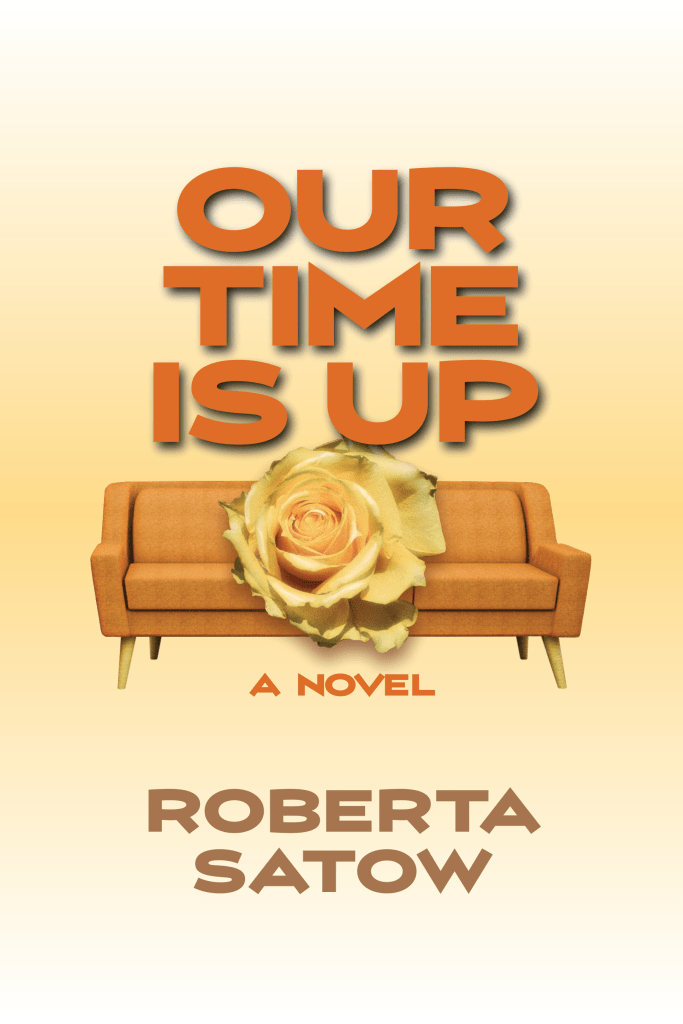
This book is a memoir-like novel that captures an era, an ethos, and a sociopolitical sensibility through the eyes of a young woman struggling with autonomy, guilt, sexuality, and grief in the late 1960s. Both patients and therapists will recognize their own struggles in this depiction of Rose’s gradual blossoming in the sunlight of her analyst’s honesty, integrity, and devotion. I know of no other work that conveys analytic treatment, training, and passion so intimately and in such a pitch-perfect voice.
Our Time is Up is a profoundly moving dive into the nuance and beauty of the psychoanalytic relationship. Written with humor, compassion and an intimate understanding of the analytic process, the book shows love and loss and the true boundaries of time. It is a frank and refreshing fictionalized account of how a person comes comes through psychoanalysis to sit in the psychoanalyst’s chair herself. It is the important and deeply personal story of an interior journey.
The Review
This was a heartfelt and compelling read. The author worked intensely to highlight the rich character dynamics between the protagonist and their psychoanalyst. The balance between the protagonist’s conflicting childhood and her work to better herself and confront that trauma in her adult life was profound and powerfully moving. The honest atmosphere that the author established during the protagonist’s sessions with the analyst and the tension that mounted as each childhood experience was peeled away like a layer in an onion made this narrative feel alive and heartfelt in its delivery.
The relationship and actions taken between the protagonist and her psychoanalyst were the pinnacle of this narrative. Through honest conversations between the patient and analyst, the reader can get a heartening insight into how therapy and working through past conflict can be an enriching experience, not without struggles but emotionally rewarding. The experience of how her past experiences in childhood color her modern experiences with relationships and her understanding of her womanhood were honest and insightful and led the reader to be moved by the author’s world-building and character development in the process.
The Verdict
Ultimately, this was a story about being human and the human experience we all must endure throughout this life. While each person’s experience is unique, the direct nature of the protagonist’s relationship with her mother in childhood and later her psychoanalyst in her adult life made this an engaging, thoughtful, and remarkable story that has quickly become a must-read psychological contemporary American fiction novel. if you haven’t yet, be sure to grab your copy today!
Rating: 10/10
About the Author

Roberta Satow, Ph.D. is a practicing psychoanalyst in Washington, CT. She is a senior member of the faculty and control analyst at the National Psychological Association for Psychoanalysis. Dr. Satow is Professor Emerita of Sociology at Brooklyn College and the Graduate Center of the City University of New York. In addition to her non-fiction book Doing the Right Thing: Taking Care of Your Elderly Parents Even if They Didn’t Take Care of You (Tarcher/Penguin 2006), she is the editor of Gender and Social Life (Allyn
and Bacon, 2000) and she has written a novel Two Sisters of Coyoacan (2017). Dr. Satow writes a blog for Psychology Today:
https://www.psychologytoday.com/us/blog/life-after-50
