I received a free copy of this book in exchange for a fair and honest review. All opinions are my own.
A couple seeks revenge as a sleazy real-estate investor rolls into the small community of Serenity Acres in author Crystal Quast’s “Shafted”, the second book in the Serenity Acres series.
Advertisements
The Synopsis
Fraud. A catfish. And murder on the menu. Welcome to the neighborhood.
Serenity Acres looks picture-perfect, but the secrets and the bodies are stacking up. A slick real estate investor rolls into town with a too-good-to-be-true deal that has the neighbors seeing dollar signs. But one couple isn’t buying in. They’re seeing red…for revenge. In this race to screw each other over, someone’s about to get shafted.
Shafted is book 2 in the Serenity Acres suburban mystery series. Each book can be read as a standalone, so you can dive in anywhere. No prior reading required.
The Review
The author does an incredible job of building on the suspense and drama of the first book while creating a wholly unique story that can be read as a standalone narrative and still pays off plot points from the first novel. The tension and atmospheric nature of each chapter add depth to the secrets and lies that lie beneath the surface of this close-knit community, and the exploration of sex, power, and money as motivations for deadly plots feels both relevant and cinematic in its delivery.
The heart of the novel was what has made this entire series so palpable, which is the character development. While the book featured a significant number of subplots with supporting characters that kept readers invested in the events unfolding in this community, the central focus on Clara and her husband, Evan, made the story all the more compelling to read. The twisted lengths they were willing to go through, especially Clara, made the novel feel visceral and delightfully wicked to get lost in.
The Verdict
Twisted, enthralling, and memorable, author Crystal Quast’s “Shafted” is a must-read suburban crime thriller and a great continuation of this series. The cinematic quality of this narrative felt like a mashup of great shows like Desperate Housewives, Revenge, and Tell Me Lies, while the twists and turns in the story’s final chapters add a bit of suspense that no one will see coming. If you haven’t yet, preorder your copy today or grab a copy of the book on October 15th, 2025!
Rating: 10/10
Advertisements
About the Author
With over twenty years of spinning stories in corporate communications, Dinked: Serenity Acres. Where Secrets Barely Stay Hidden is Crystal Quast’s debut novel. When she’s not writing, Crystal loves playing pickleball and tennis, paddleboarding, hiking, and spending time with her family.
I received a free copy of this book in exchange for a fair and honest review. All opinions are my own.
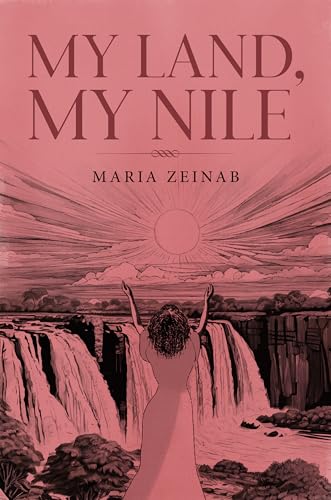
A queen dredges up the past as a young woman must discover her origins and her destiny in author Maria Zeinab’s “My Land, My Nile.”
Advertisements
The Synopsis
For centuries, the river has witnessed kingdoms rise and fall, heroes crowned and crushed. From the golden days of the 10th century to the fading edges of 1970s Sudan, the Nile has held its secrets until now.
Born of two bloodlines Nubian and Abyssinian young Nabra-Isat carries a legacy she doesn’t yet understand. When tragedy strikes, her enigmatic uncle Bantus, a modern-day Kushite king, whisks her away from the only home she’s ever known to the quiet corridors of Geneva.
Before she leaves, a mysterious woman named Tamaya Sufra, with ties to the sacred Nile crocodiles, gives Nabra a gift relic of her past, and a promise:
“You, my child, were born by the Nubian Lake. And you will return. You are the fire rising from the water.”
But the river has all the ancestral stories stored, and picks one in particular that follows Nabra. The story of Queen Gudith-Isat.
Now, as the queen begins to stir the past, Nabra must uncover who she is and what she was born to reclaim.
The Review
This was such a rich and compelling book of mythology, history, and culture. The interwoven stories in this novel mesh together so seamlessly, and the author’s emphasis on Nubian culture and mythology, especially the sacred nature of the crocodiles to the people of that region, was both fascinating and engaging as a reader. The imagery and atmosphere the author brought to life on the page were so artistic and creative, and allowed the reader to feel transported across time and legends through the ancestral lands in which this novel takes place.
The powerful themes the author brought to life in this book, as well as the rich character dynamics and growth the narrative takes, make this a thrilling book to delve into. The author manages to awaken the reader’s senses powerfully with the detail that went into depicting each chapter, with the reader able to visualize colors and hear the tones that each scene brought to life. The way the story shifts between different eras and times and even mythological stories allowed the threads of fate to be clearly woven through these characters and make their arcs feel more pronounced and enthralling. In contrast, the exploration of loss, both of the people closest to us and the loss of land and identity, was profoundly felt throughout this expansive narrative.
The Verdict
Memorable, heartfelt, and engaging, author Maria Zeinab’s “My Land, My Nile” is a must-read historical fiction, mythological, and drama-driven novel. The twists and turns the story takes, the detailed history and culture this story brought to life, and the balance of both the losses and the beauty found in this region of the world made such an impact on the reader that it will drive them to learn more about this area and the people who call it home. If you haven’t yet, be sure to grab your copy on September 2nd, 2025 or preorder your copy today!
Rating: 10/10
Advertisements
About the Author
Maria (Zeinab) is originally Nubian from the North of Sudan. She grew up between the Middle East and Europe. This diverse background gave her a broad perspective to draw from in storytelling.Her writing delves deeply into themes of identity, cultural displacement, and the sense of belonging.
I received a free copy of this book in exchange for a fair and honest review. All opinions are my own.
A man searches for a means of living a more analog life as he goes on a soul-searching journey of life and death in the book “Analog Sun” by Alex Woodard.
Advertisements
The Synopsis
A small book with a big message for anyone searching for life beyond the algorithm.
A lost traveler stumbles onto a hidden path, untouched by code or concrete, in this modern fable about navigating between the world we’ve built and the one that built us.
The Review
This was a thought-provoking, engaging, and compelling read. The author does an incredible job of creating a dream-like, at times chaotic but always driven atmosphere that delves into the core narrative’s themes with ease. The introspective narrative makes an outstanding balance of atmosphere and philosophy, using the protagonist’s story as a lens for a greater societal problem as a whole, and the rich imagery in the author’s writing brings both the beauty and the darker elements of the narrative to life so vividly on the page.
The heart behind this narrative is in the story’s main themes and the rich, character-driven narrative that unfolds. The exploration of addiction, both from substance abuse and technology as a whole, felt honest and visceral on the page, striking at the heart of the lies people tell themselves as they sink more and more into that mindset and behavior. The duality of the protagonist’s personality, from his love of nature and animals to his loss of direction and sense of self as he sinks further and further into his own bad decisions, created a complex character study full of heart and emotion.
The Verdict
Insightful, emotionally-driven, and poignantly written, author Alex Woodard’s “Analog Sun” is a must-read genre fiction drama. The twists and turns in the story, how the story seemed to fuse elements of stories like Requiem for a Dream and The Game with a modern-day twist and yet takes the time to find the glimmers of hope and heart that can be seen when people lend a helping hand, this novel brings both realism and a sense of spirituality to the battle of addiction in fresh and heartfelt ways. If you haven’t yet, be sure to preorder your copy today!
Rating: 10/10
Advertisements
About the Author
Alex Woodard lives with three horses, two dogs, two chickens, and two beautiful humans on a small ranch near the California coast.
His first novel found an early supporter in Woody Harrelson, who said, “Ordinary Soil brings to haunting life the desperate realities of the American heartland, but also offers a glimpse into a better future . . . a call to action for all of us.”
His nonfiction For the Sender book, album, and concert series has garnered praise from Huffington Post (“important, enlightening, and ultimately inspiring”), Deepak Chopra (“a beautiful tribute to the resilience of the human spirit”), Dr. Wayne Dyer (“an inspiring, thought-provoking, and life-changing work”), and Billboard magazine (“one of the year’s most touching, unique releases”), among others. Alex has also toured nationally behind several critically acclaimed albums, earning a few prestigious industry nods while sharing the stage with some of his heroes.
Analog Sun, a sequel to Ordinary Soil, is his second work of fiction.
Tell us a little bit about yourself. How did you get into writing?
We came from very different backgrounds and crossed paths in a writers group near Pensacola, Florida.
Pat: I started out in the New York theater world both as an actress and director. Later, in New England, I ran summer stock and a murder-mystery dinner theater, writing and producing original scripts. But at some point, I found myself more curious about the people behind the characters, the emotions they carried, and what made them tick.
That curiosity steered me toward a career in clinical psychology. Whether in a therapy room or a theater, I’ve always been drawn to the emotional core of people’s stories, their struggles, their turning points, and the strength it takes to grow and heal. That same thread runs through my writing. I’m fascinated by resilience and transformation—those moments when something shifts, when someone finds light in the dark. That’s what guided All the Broken Angels, the novel I co-authored with Steve Hardiman. It’s about characters shaped by the weight of the past and the choices they make to move forward, with resilience, hope, and a fierce sense of survival.
Steve: I discovered my love for writing while drafting research papers in grad school. Those were non-fiction, and I imagined my first book being the same. But the passion required to do a topic justice wasn’t there. Later in life, I moved back near Pensacola, Florida, to take care of my aging parents. In need of a distraction and some social interaction, I joined the Panhandle Writers Group and discovered my love for the creative opportunities in fiction—but still had not found an idea that excited me.
On a whim, I decided to write an extended review for a fellow group-member’s memoir. The theme of addiction drove the narrative for a large chunk of that book. As a clinical psychologist, Pat appreciated how I captured the insidious nature this disease played in the author’s self-deception and unraveling of his life. She figured that if I, a non-addict “normie,” could tease out the essence of how addiction tricks the mind into doing the brain’s bidding, maybe I could help her write a synopsis of the novel she was working on. We found our writing styles highly compatible. Our orbits grew tighter and before you know it, we joined forces —and didn’t finish that synopsis until we’d written the whole damned book!
Advertisements
2) What inspired you to write your novel?
Pat: All the Broken Angels is a deeply personal story. It’s semi-autobiographical in many ways. Cate’s journey echoes aspects of my own, and the characters were inspired by people in my life, including my family and the neighborhood where I grew up. The story is steeped in the emotional landscape of my community, all of which made me who I am today. In addition, as a psychologist, my work with Vietnam veterans profoundly influenced this story. I appreciate their willingness to open up to me and share their experiences.
Co-authoring the book with Steve Hardiman added depth and dimension to the process. He inspired the creation of a supporting character in the story. His poetic style and thoughtful research further enriched the world we built together, helping us bring authenticity and nuance to the characters and setting. We wanted to craft a story that feels lived-in—one that honors the past, speaks to the present, puts the reader in the moment, and sticks with them long after the final page.
Steve: Shucks, Pat. Thanks. I certainly aimed for all of those things, and you and your unfinished novel came along at just the right time. Not only had my mother passed between when Pat and I met and later decided to collaborate, but my wife Angela and I had closed a business that was losing money, which had spillover effects of it’s own. This perfect storm left me on the verge of a breakdown. I desperately needed something to soothe my weary spirit. Very early in our partnership, I vividly remember venting to Pat about my personal situation. Somewhere in the middle of commiserating, I muttered, “I just want to create something beautiful.” I’m quite proud of the result and that we were honored with several awards for our efforts. The catharsis of writing it also helped my wife and I get through a difficult time.
Circumstances aside, that “create something beautiful” sentiment drives me like no other passion. Exquisite beauty goes all the way down: you find it in our novel as a whole, the three parts, sixty-one chapters, all the scenes, many a poignant paragraph, and even in the tiniest of details of word choice and turns of phrase. My love for crafting prose through character development, dialog, action sequences, and teasing out pathos and humor wherever they are hiding became my healing. Because our styles were sympatico, Pat and I had fewer creative differences than I’d expected. And the struggles we did have made the story stronger and helped us find our voice that fused the best of our individual strengths.
3) What theme or message do you hope readers will take away from your book?
Pat: At its core, All the Broken Angels is about quiet resilience, the kind that builds slowly through struggle, forgiveness, connection, and self-discovery. It’s a story of transformation, not in sweeping gestures, but in the small choices we make to move forward. We wanted to offer a sense of hope, even when characters are navigating uncertainty and loss.
Because the story unfolds through Cate’s voice, a young woman caught between past wounds and present challenges, it resonates deeply with younger readers. Her emotional journey reflects the universal themes of seeking belonging, finding identity, and learning to trust both oneself and others.
As a psychologist who has worked with Vietnam veterans, I also felt it was important to honor those stories and recognize the sacrifices made by their families. While the book acknowledges trauma, it doesn’t dwell there. Instead, it explores how people carry their history with grace, grit, and sometimes humor.
Ultimately, I hope readers of all ages walk away feeling that healing is possible, connection matters, and that understanding the past can empower us to shape a stronger, more compassionate future.
Steve: Wow, Pat, you’re a tough act to follow on this question. Because the novel is semiautobiographical, and about half of the first draft was penned when I arrived on the scene, it became my job to honor the emerging themes, then work with Pat to rewrite and shape the story into something even better than either of us had originally conceived for. I believe I speak for both of us that the final version exceeded our expectations. We’re humbled every time another glowing review is posted by a reader. Often, their words mention the very themes we baked into the story. The lesson for me is if a story is strong, its themes shine through more brightly.
4) What drew you into this particular genre?
All the Broken Angels fits comfortably within both women’s fiction and historical fiction, and we’ve been fortunate to receive awards in both categories.
In women’s fiction, there’s a powerful form often referred to as psychological or emotional arc-driven storytelling. Here, the focus isn’t on external plot twists but rather on a woman’s internal journey. It explores how a character grows emotionally, mentally, and relationally over time. That transformation might be sparked by grief, a major life shift, or a moment of reckoning. But at its core, the story is about personal evolution and forging ahead.
Pat: This framework perfectly fits our protagonist Cate. She’s partly me and partly her own person. The book is rooted in the 1960s and ’70s, a turbulent time marked by the Vietnam War, the rise of the women’s movement, civil rights, peace marches, and gay liberation. Since I grew up during that era, and I saw how deeply divided our country was. Many of the rights we fought for then are still being contested today, so there’s a sense of déjà vu that makes the history come alive on the page in surprisingly familiar ways.
Steve: I grew up in that era as well, which turned out to be a big bonus. I brought my own experiences to further flesh out the tableau we were creating for the novel. I knew the music, the culture, what life was like for a kid, and many everyday details that bring the past within the reader’s grasp.
We set a very high bar for ourselves: A time traveler from sixty years ago could read All the Broken Angels and have no idea it hadn’t been written back then; nothing would seem off. A lot of meticulous research went into the history and how people spoke. One of my pet peeves is period prose that uses modern lingo. So we took the “historical” genre quite literally. This meant occasionally trading a slightly more clever way of saying something for era-appropriate language, and even determining the actual weather for a specific date. Crafting a novel that is truly authentic in those respects was a self-imposed challenge that became a deep source of satisfaction for me.
Both of us: As historical fiction authors, our mission is to keep history alive. There’s a real risk that the stories and the hard-earned wisdom of a generation will fade. We want readers of all generations to feel the heartbeat of this history. When we forget where we’ve been, we lose part of ourselves. None of us simply appeared, we arrived through our complicated connection to the past. Through Cate’s journey, shaped by both her family and the time she lived in, we’re offering not just a glimpse of a tumultuous era, but a trip back in time toward an emotional truth that still resonates today.
5) If you could sit down with any character in your book, what would you ask them and why?
Pat: I’d sit down with Cate, not the girl from the beginning, but the woman she became by the end of the book, after everything she’d been through. I’d ask: “You carried anger and mistrust for years, especially toward someone you saw as an enemy. Yet when it mattered most, you chose forgiveness and opened yourself to a painful truth. What shifted inside you? What made you let go and trust someone you never thought you could?”
Steve: While I found our protagonist endlessly intriguing, I’ll pick another who grows into one of the most complex characters: Walter, “the freckle-faced, tow-haired bully from school.” I was bullied as a kid and always avoided those memories. But Walter could offer me some insights from the other side of that power dynamic. So I’d take seat with the older Walter and ask him about his experience of that time in life and his long struggle away from those behaviors. Did he feel that he paid a price for his actions? How did leaving behind that part of himself inform who he became?
I would also thank him. In writing Walter’s character, I discovered how fascinating a bully can be. There’s another world hiding behind all that belligerence, and bullying was his suit of armor. His arc and how it intertwines with Cate’s is one of the most fascinating in the story. And Walter could easily take the lead role in another novel.
6) What social media site has been the most helpful in developing your readership?
The best sites that have worked for me are Instagram, Facebook, and LinkedIn. And, of course, my website.
7) What advice would you give to aspiring or just starting authors out there?
Pat: Surround yourself with a creative community. Writing can feel like a solitary endeavor, just you and the blank page—but it doesn’t have to be. Seek out local writing groups or join a critique circle to get a feel for sharing your work and connecting with other writers.
Beyond that, take classes or attend workshops, in person or online. You’ll meet fellow creatives who understand the ups and downs of the process and will cheer you on even when the words arent’ flowing. I truly can’t imagine my writing life without my trusted circle. They’ve been my sounding board, support system, and inspiration every step of the way.
Steve: Pat’s spot-on about educating yourself and joining a creative community, especially other writers. Naturally, reading stimulates my creativity, as well. But I also find inspiration in other artforms, especially films and television. Body language, lighting, subtleties in dialog; many of these can be adapted for use in fiction writing if you can find a simple way to describe them. For example, I rewatched Toy Story while working on the novel and found inspiration to “punch-up” a few details in chapter one, which helped bring the scene to life even more.
The most specific advice I can offer is about what I learned about writing humor. All the Broken Angels isn’t a humor novel, per se, but there are many funny moments that make the prose more engaging and the characters more endearing.
As I fumbled my way along the humor learning curve, I discovered that a brute-force approach to “just be funnier,” is the hard way, and it blocked my thinking. When I learned to see humor less as a skill and more of a lens through which to view the world, the funny began to flow. I remember helping another novelist “punch-up” his crime thriller that already had some humor as part of the mix. In a pivotal scene, the protagonist, a detective, thinks she has cornered a serial killer in the basement of a house. Gun drawn and heart pounding at the top of the stairs, she flips on the light switch, only to see a brief flash below followed by a soft pop as the sole downstairs bulb burns out. Staring into the inky blackness while contemplating her next move, she mutters a curse and muses that “of all the homicidal maniacs, lucky me gets the loser who never switched to LEDs.” Momentarily normalizing the killer’s horrific hobby in order to shame their wasteful energy choices is a perspective shift as simple as it is absurd. And the brief pause when the protagonist stops to reassess provided the perfect opening to inject a single line of dark humor. Once the protagonist makes her move, the action resumes and comedy is set aside. Humor must meet the moment and the character; no gratuitous laughs allowed.
Finally, I have to thank Pat. Because she was a playwright, the scenes and chapters she had already drafted when I came aboard were well constructed with a strong beginning, middle, and end. We adopted this approach for the rest of the book, and it even spilled into the construction of key paragraphs. She was a source of inspiration I took for granted. As we leaned into these techniques together, they added power to our writing.
8) What does the future hold in store for you? Any new books/projects on the horizon?
Pat: As a playwright, imagine everything I write eventually being in a theater in front of an audience. Readers often say how the writing style of the novel puts them “in the room” with the characters. So, Steve and I are exploring ways to take All the Broken Angels from page to stage, possibly as a full-length play or a series of one-acts. As Steve mentioned in his answer to the previous question, the scenes and chapters, as written, lend themselves to theatrical interpretation, and we’d love the challenge of translating narrative into performance.
I’m working on a new novel set in New York City between the mid-1970s and early 1980s. It follows a woman trying to make it as an actress while teaching theater to inner-city youth. As the women’s movement gains momentum, she’s searching for her voice, just like those around her: Vietnam veterans seeking respect and recognition, young people navigating identity, and the LGBTQ+ community finding visibility while the AIDS crisis begins.
Though All the Broken Angels was semiautobiographical, this new story draws even more closely from my life in New York’s theater world. It blends women’s and historical fiction, exploring belonging, resilience, and how the arts can inspire transformation in uncertain times.
Steve: I still love writing and will explore a stage adaptation of All the Broken Angels with Pat. I’m also focusing on photography and plan to create some instructional or explanatory videos about writing, photography, and music. A couple of projects are just beginning to take shape. After recently moving to Arizona, I’ve been helping my wife Angela get her home-school curricula company off the ground. I’m also spending more time with my fifteen-year-old grandson Landon and recently took him to his first concert: Alice Cooper—he’s still rockin’! Landon has no idea how often “first concerts” will come up in conversation over a lifetime. As his grandpa, I’m over the moon that he’ll always have a great story to tell. 🤘
Advertisements
About the Authors
Pat Black-Gould
Pat Black-Gould is an award-winning author, speaker, and clinical psychologist. Her novel All the Broken Angels, co-written with Steve Hardiman, is a family saga set during the Vietnam War era. As a psychologist, Pat specialized in working with Vietnam Veterans, and the novel pays tribute to those who served and their families. Her children’s book The Crystal Beads, Lalka’s Journey, tells the story of a hidden child of the Holocaust.
Pat’s short stories have appeared in literary anthologies and online journals. Pat’s writing explores themes of compassion, inclusion, and diversity, and she conducts presentations nationally on these topics. WSRE PBS TV featured her on the program Conversations with Jeff Weeks. As a speaker, Pat also conducts workshops on marketing and the craft of writing. In the theater world, Pat was a theater director and producer of a New England summer stock company and a murder mystery dinner theater.
I received a free copy of this book in exchange for a fair and honest review. All opinions are my own.
A grieving father descends into obsession in his search for justice as the past and present collide in author Tamel Wino’s “Visage of Moros”, the first book in the Decay Abloom series.
Advertisements
The Synopsis
A relentless first instalment of the Decay Abloom series that probes into the psychological toll of grief and the blurred lines between justice and vengeance.
In the wake of a vicious and calamitous loss, Drystan Caine finds himself on the verge, his life thrown into chaos. With the law enforcement investigation stagnating, he embarks on a self-imposed crusade. However, as Drystan becomes increasingly consumed by this undertaking, his personal and professional life starts to unravel.
Driven by deep resentment and reckless desperation, this rogue pursuit of justice rapidly takes a treacherous turn. As Drystan draws closer to uncovering the truth, he must confront how far he is willing to go before succumbing to darkness.
The Review
This was such a compelling, haunting, and gripping read. The author does an incredible job of transporting the reader into this visceral and gritty world of grief and vengeance. The chilling imagery and raw emotions the author pours into this story help ground the narrative and emphasize the trauma that so many parents feel when facing such a horrific loss, especially when it comes to a murder investigation.
The balance of suspense, dark thriller, and raw character-driven narrative made this story incredible. Readers get to see both the past and present collide to showcase the horrors of losing a child and the dark path that those in grief will often go to find justice or make sense of what happened to those they love. The horrors, the heartbreak, and the duality of the protagonist being both a loving father and family man who turns to alcohol and obsession in the wake of such trauma all lean into the theme of grief and how it can change anyone, even if it blinds them in the end.
The Verdict
Suspenseful, gripping, and engaging, author Tamel Wino’s “Visage of Moros” is a must-read psychological thriller and dark mystery read. The twists and turns in the narrative, including Drystan’s descent throughout the book and the truth behind his daughter’s death, will stay with readers long after the book ends. They will keep readers invested emotionally and mentally in the protagonist’s heartbreaking struggle. If you haven’t yet, be sure to grab your copy today!
Rating: 10/10
Advertisements
About the Author
Tamel Wino is a Canadian award-winning, dark fiction author from resplendent British Columbia. His works focus largely on the erratic facets of human sanity and morality. He majored in Health Sciences and Psychology, which only furthered his interest in human nature.
With inspirations including Ray Bradbury, Jack Ketchum, Cormac McCarthy, Stephen King, Margaret Atwood and Edgar Allan Poe; Tamel’s expositions are strongly grounded in traditions of dark fiction. Yet, with his bold narrative voice and incisive plot construction, Wino is paving a new movement within the space.
When he is not reading or scribbling away on his laptop, Tamel often indulges in stargazing, rekindling classic shows and unearthing obscure music.
I received a free copy of this book in exchange for a fair and honest review. All opinions are my own.
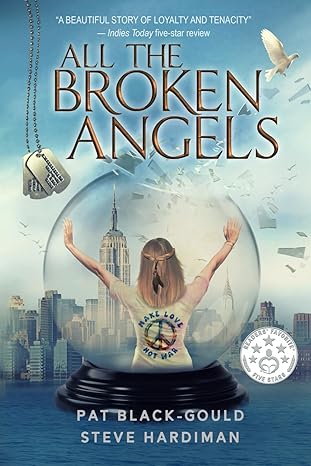
Two cousins are torn apart by the Vietnam War and the tragedies that follow in authors Pat Black-Gould and Steve Hardiman’s “All the Broken Angels.”
Advertisements
The Synopsis
Two cousins. Two paths. One unforgettable era. This award-winning historical fiction novel follows the transformative journey of Cate and Albie. Cousins and best friends, they are raised in 1960s New Jersey under the watchful eyes of their family and strict Catholic school nuns. Their bond seems unbreakable. Then the Vietnam War erupts, tearing them apart.
Albie, driven by faith and patriotism, enlists in the military and is stationed at a base along the South China Sea nicknamed Paradise.
Cate protests the war, challenges her upbringing, and seeks purpose by immersing herself in the bohemian counterculture of New York’s Greenwich Village while enduring life in a low-rent tenement in the gritty Hell’s Kitchen district.
Tragedy strikes, and her world unravels. With the support of her family and an eclectic group of friends—artists, activists, and veterans—Cate embarks on a journey of resilience and personal transformation. Travel back to a pivotal era when men marched off to war and women burned their bras. This compelling novel explores the:
Emotional toll of the Vietnam War
Rise of feminism and LGBTQ+ movements
Conflict between faith, patriotism, rebellion, and personal freedom
Strength in kinship, friends, found family, and community
All the Broken Angels is a profound exploration of love, loss, and the indomitable spirit of a generation that resonates far beyond the final page.
The Review
What a thought-provoking and compelling read. The authors wrote in a way that felt very transportive, allowing the reader to feel transported back in time to an era of war, the fight for peace, and the evolution of a society as a whole. The authors found a perfect balance between character development and historical context, allowing the era to come to life on the page without sacrificing the originality and heart behind each character’s evolution throughout the narrative.
Balance was the key to this book. The authors were able to present each side of this conflict, from the soldiers and veterans impacted physically and mentally from the war, to the protestors and activists who seek to end the war and fight against injustice, while touching upon some important themes. The culture and family dynamics that were explored through these characters were especially unique, as readers were able to not only get a glimpse into how this conflict impacted a family torn apart by differing values, but also connected by a shared belief and a love for one another.
The Verdict
Thoughtful, engaging, and heartfelt, authors Pat Black-Gould and Steve Hardiman’s “All the Broken Angels” is a must-read historical fiction meets drama narrative. The complex themes of social justice, equality, gay pride, veteran rights, and so much more were so subtly yet passionately written about, and the relatability of the character and the depth of detail about the era will resonate with so many readers that they will return to this book again and again. If you haven’t yet, be sure to grab your copy today!
Rating: 10/10
Advertisements
About the Authors
Pat Black-Gould, PhD, is an award-winning author, speaker, and clinical psychologist whose work bridges storytelling and the human psyche. Previously, Pat worked as a director, producer, and playwright in New York and New England.
Steve Hardiman has worked as an IT and communications consultant, and talk-radio host and producer. His writing includes ghost-written nonfiction articles selected as cover stories in multiple industrial trade publications and scripts for over seventy instructional videos.
Recently retired, he and his wife Angela are raising their grandson. In his spare time, he writes, travels, and is an avid photographer. All the Broken Angels is his first work of published fiction.
I received a free copy of this book in exchange for a fair and honest review. All opinions are my own.
A young man returns to the city he grew up in, hoping to reconnect with a lost flame, only to discover she is different than he even knew, and perhaps they both need each other, in author Magdalen Stanhoff’s “The Voice in the Well,” the third book in the Migrant Birds series.
Advertisements
The Synopsis
Kamila never thought she’d need saving. Nor did she peg Taeyeon as romantic hero material. Wrong—on both counts.
At eighteen, Taeyeon had to leave the city where he’d grown up, his laid-back life, his school buddies…and Kamila. He always intended to return and find her again, and now he’s finally free to give that old dream a good chase. But nothing goes as expected.
The unfriendly ghost he meets in Warsaw hardly resembles the dauntless girl from his memories. Something happened to her while he was away, but as Taeyeon digs around for clues, it also becomes clear that he never knew the real Kamila in the first place. And that he needs to make up for it—fast.
Kamila’s life is unraveling: her friends have scattered all over the world, she’s dropped out of college, and what’s left of her family is quickly falling apart. And then, that juvenile player from her teenage years, the devil-may-care boy she never expected to see again appears out of the blue and starts messing with her miserable existence.
Only, Taeyeon’s not a boy anymore, and he will do anything to wake Kamila up. Upon which, she may discover she’s not the only one who needs to be saved…
The Review
Emotionally driven and relatable, the author has crafted a novel that speaks volumes with subtle scenes and powerful character development. The reflective nature of the book’s themes and character arcs was both unique and insightful, allowing the reader to become engulfed in the drama and the heartfelt romance of the story while also reflecting on the real-world experiences the author infused into the fabric of this story, such as the border conflict between Poland and Belarus, as well as the theme of going home again and helping others in their time of need.
The driving force behind this story, though, was the romance between the two protagonists, Kamila and Taeyeon. The hardships they both endure, together and in their respective corners of the world, and how they come together to find solace in one another’s orbit, give the reader a relationship to become hooked on and an emotional connection to the characters. The imagery and poetry of the author’s writing style brought these scenes vividly to life, giving readers a cinematic quality, much like watching an indie romantic drama for the first time.
The Verdict
Heartfelt, emotional, and thoughtful in its delivery, author Magdalena Stanhoff’s “The Voice in the Well” is a must-read novel and a grand entry in the Migrant Birds series. The romance, drama, and complex themes of identity, cultural clashes and cohesion, and the evolution of relationships will keep readers invested until the very last page. If you haven’t yet, be sure to grab your copy today!
Rating: 10/10
Advertisements
About the Author
Magdalena Stanhoff loves traveling and is vividly interested in how diverse cultures coexist, clash, and mix, and how it influences people’s life. Her contemporary novels explore romantic love, family bonds, and friendship in their various forms and shades, and since the author is an incurable dreamer, they always end with the HEA.
I received a free copy of this book in exchange for a fair and honest review. All opinions are my own.
Trigger Warning: Storylines of mental health, suicide, and self-harm are part of this novel. Reader’s Discretion is Advised.
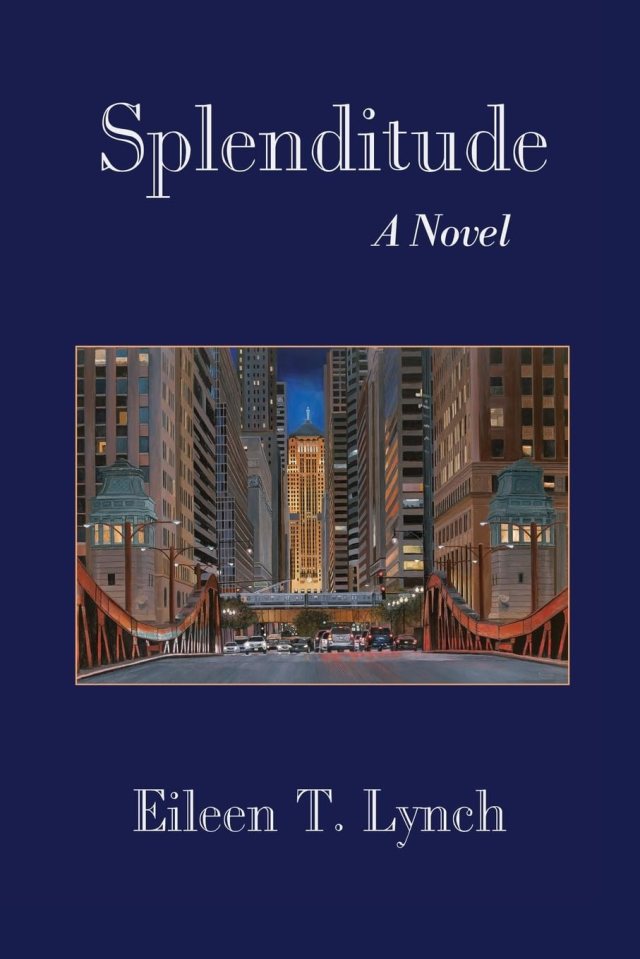
A woman with dreams of being a writer, struggling with her own mental health, finds solace in helping children with similar struggles. However, her world is turned upside down by the reappearance of a long-lost acquaintance whose motivations may be darker than she realizes, as depicted in the novel “Splenditude” by Ellen T. Lynch.
Advertisements
The Synopsis
Version 1.0.0
A book bearing her name on the spine is Deirdre Collins’ driving passion. A book that a reader will remove from a library shelf to take home on a rainy afternoon. A book she can dedicate to her late father. Her dream is to join the Chicago school of writers led by Saul Bellow, Nelson Algren, and Stuart Dybek.
When she is unable to publish her first novel, depression lands her on suicide watch in an Albuquerque behavioral hospital. There she meets Max Fletcher, a handsome young man with drive and genius who is battling demons of his own.
After discharge, they move to different parts of the country and lose track of each other. Max becomes a successful entertainment producer for a late night talk show.
As her father’s health fails, Deirdre leaves the artistic community in New Mexico to lead a quiet life in a rural Illinois town. She writes and tends her great aunt’s garden. One morning she finds a teenager on her property with a gun. After reporting the incident to her local high school, she lands a job supervising a room for at-risk kids. A healthy life style and a commitment to her writing enables her to conquer mood swings that derailed her as a young woman. Working with kids who struggle with depression and anxiety, mood disorders, and other behavioral problems opens her mind and then her heart to the wide range of sorrow and joy on the human spectrum.
A call from Max Fletcher upends Deirdre’s peaceful existence. Max promises publishing connections which have eluded Deirdre. She is flattered by Max’s attention and his desire to help her achieve her dreams. Then she discovers his true intentions. A confrontation in New York reveals Max’s deteriorating health which he believes is untreatable by medication or therapy. When Deirdre discovers that Max has plagiarized her work, she must decide whether to take legal action against him.
The Review
This was a profoundly moving read. The author did an incredible job of creating a heartfelt drama that was character-driven in every aspect. The narrative was very introspective, allowing the reader to feel the inner workings of the protagonist’s mind and their struggles through a slow-burn style of storytelling.
The heart of the story was in the theme and the authenticity the author brought to the story and characters. The importance of focusing on mental health and the artistic process, as well as the nuance that comes with discovering our passions and drives in life, was well-developed in the narrative. The balance of the dark moments the characters faced, combined with the hopeful notes the future brought to their lives, made this story so emotionally heartwarming in its delivery.
The Verdict
Thought-provoking, engaging, and heartfelt, author Eileen T. Lynch’s “Splenditude” is a must-read genre fiction drama. The emotional and vulnerable themes the author explores, along with the wealth of character development and hopeful undertones, create a well-balanced narrative that readers can relate to and identify with. If you haven’t yet, be sure to grab your copy today!
Rating: 10/10
Advertisements
About the Author
Eileen Lynch is a writer, editor, and teacher who has lived in Chicago, IL and New Mexico. The city of Chicago and surrounding suburbs are a backdrop for her work.
I received a free copy of this book in exchange for a fair and honest review. All opinions are my own.
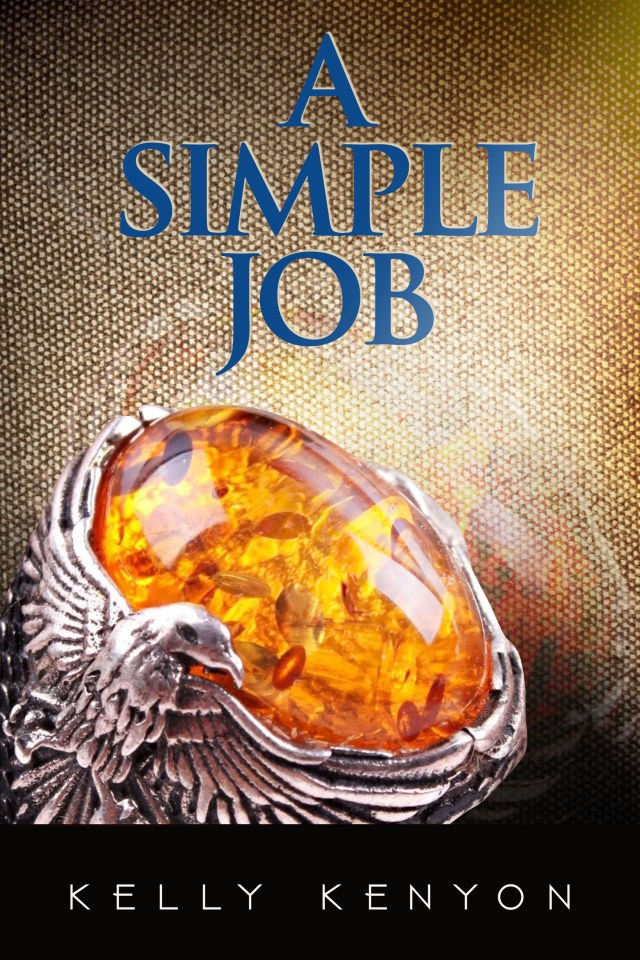
In the novel A Simple Job, a man desperate for a job to support his family finds himself on a cross-country road trip, doing new jobs and getting involved in a secret society.
Advertisements
The Synopsis
Eli Asher is in hot water. He’s not sure which one is adding up faster, the lies he’s told his wife or the past due notices they are getting. He needs a job, a good job with benefits so he can take care of his family. He thinks he has one, but loses it to a member of some secret society that he wants no part of, until his hot water starts to boil and he has no choice but to take a leap of faith. That leap takes him away from his family and on a cross country adventure where he does a series of simple jobs, working with some incredible people. He learns more about what really matters every step of the way adding depth and breadth to his understanding of himself and the world, transforming his very life. This is an easy read that will leave you feeling good and glad you spent the time, so go a head and click the buy now button.
The Review
This was such an engaging and thoughtful read. The author did a fantastic job crafting a relatable and memorable narrative that will resonate with so many people worldwide. Still, especially in the United States, in the economy we are living through right now. The unique difficulties facing so many families right now, from lost jobs and poor prices to health pandemics and much more, the author touches upon some strong themes and balances this out with a unique and fun narrative that will drive the reader forward.
The heart of this story is character development, with protagonist Eli and his family becoming the POV that will resonate powerfully with the overall narrative. The lessons Eli learns along the way showcase the need to get rid of our prejudices and judgements of other people, learn to accept others, and be open to helping one another in life overall, making Eli and his family the everyman level of character growth.
Advertisements
The Verdict
The author makes a good point in this book that no one is all villain, all hero, or all good, but understanding one another is the best way forward for us all. In that tone, author Kelly Kenyon’s “A Simple Job” is a must-read adventure and genre fiction novel. The heart and the passion for this subject matter come through with ease in this story, and the relatability of the characters will keep readers invested until the book’s final chapter. If you haven’t yet, be sure to grab your copy today!