How Schools Make Race: Teaching Latinx Racialization in America by Laura C. Chavez-Moreno Review

I received a free copy of this book in exchange for a fair and honest review. All opinions are my own. 

Author Laura C. Chavez-Moreno shares with readers how race and racism take shape in schools in the book “How Schools Make Race: Teaching Latinx Racialization in America.”

Advertisements

The Synopsis

An investigation into how schooling can enhance and hinder critical-racial consciousness through the making of the Latinx racialized group

In How Schools Make Race, Laura C. Chávez-Moreno uncovers the process through which schools implicitly and explicitly shape their students’ concept of race and the often unintentional consequences of this on educational equity. Chávez-Moreno sheds light on how the complex interactions among educational practices, policies, pedagogy, language, and societal ideas interplay to form, reinforce, and blur the boundaries of racialized groups, a dynamic which creates contradictions in classrooms and communities committed to antiracism.

In this provocative book, Chávez-Moreno urges readers to rethink race, to reconceptualize Latinx as a racialized group, and to pay attention to how schools construct Latinidad (a concept about Latinx experience and identity) in relation to Blackness, Indigeneity, Asianness, and Whiteness. The work explores, as an example, how Spanish-English bilingual education programs engage in race-making work. It also illuminates how schools can offer ambitious teachings to raise their students’ critical consciousness about race and racialization.

Ultimately, Chávez-Moreno’s groundbreaking work makes clear that understanding how our schools teach about racialized groups is crucial to understanding how our society thinks about race and offers solutions to racial inequities. The book invites educators and scholars to embrace ambitious teaching about the ambivalence of race so that teachers and students are prepared to interrogate racist ideas and act toward just outcomes.

The Review

It is no secret that we live in a very tumultuous time. So many injustices are co-occurring, both abroad and in the United States. Without getting political, it is impossible not to recognize the moral failing in recent events in Los Angeles, and as a U.S. Citizen who is of both Caucasian and Hispanic descent, it has never been more clear that educating future generations on Latin culture and creating a better understanding of not only the cultures but the roles social justice plays in our society is essential, and that is the role this book plays for educators and students alike.

Immediately, what stands out is the accessibility of the material in this book. The author showcases a depth of research and expertise that speaks to the importance and relevance of this material, speaking on race, education, and language skills that need to be vital tools in educating future generations. The author introduces concepts and terminology that can benefit educators, from racialization to Latinidad and so much more, allowing the reader to better understand how to navigate bilingual education and how it is meshed together with social and racial justice.

The Verdict

Insightful, engaging, and vital to today’s cultural and social injustices, author Laura Chavez-Moreno’s “How Schools Make Race” is a must-read nonfiction education book on philosophy, morality, and multicultural studies. The insights, detail, and passion with which the author wrote this book and the depth it explores showcase the importance and struggle of this subject matter and why future generations need to better understand the integral nature of multicultural education. If you haven’t yet, be sure to grab your copy today!

Rating: 10/10

Advertisements

About the Author

Laura Chávez-Moreno is an award-winning researcher, qualitative social scientist, and assistant professor in the Departments of Chicana/o & Central American Studies and Education at the University of California, Los Angeles. She received her PhD in Curriculum and Instruction from the University of Wisconsin-Madison School of Education. Dr. Chávez-Moreno’s research has been published in top-tier journals, and she has been recognized with multiple awards, including from the American Educational Research Association and the National Academy of Education/Spencer Foundation. Dr. Chávez-Moreno has taught in all levels of schooling, including elementary, secondary, tertiary, and older-adult education. She was a high school teacher of Spanish in the School District of Philadelphia for five years, wrote district curriculum, and served on boards of community organizations. She grew up in Douglas, Arizona, and Agua Prieta, Sonora, México.

Revive the Interest to Learn Math: A Psychological Approach by Fidelis Mukudi Review

I received a free copy of this book in exchange for a fair and honest review. All opinions are my own.

In “Revive the Interest to Learn Math,” author Fidelis Mukudi provides a psychological perspective on the benefits of learning math. 

Advertisements

The Synopsis

This is a short book written to give students hope that despite having a bad background or beginning in mathematics, they can always do better if they are guided well. It also offers hope to parents that their children can do better despite their background and environment. It lists the steps that students need to revive their prowess in mathematics. The topics in this book include; What You Were Fed With, The Battle in the Mind, Setting a New Beginning, A Guide to Studying Math, Tackling Abstract Concepts, and Application Questions. It also gives a summary of each chapter and highlights key points. The book takes a psychological approach to reviving or boosting the motivation to learn mathematics.

The Review

This book made me feel like the perfect demographic, speaking to audiences with a fundamental disconnect with math. Each of us has a subject in school that they excel in more than others, and for me, I was always more proficient in English and History than in Mathematics. Yet the author writes in a way that allows readers who are not well-versed in math to overcome the hurdles that keep them from pursuing this subject and reinvigorate their interest at the same time.

The amount of detail the author can fit into such a short time is astounding. From allowing readers to define themselves either as math hopefuls or math advisers to understanding that the first step is to face the battles of the mind that keep people from reaching that understanding of math and even gaining a more comprehensive understanding of the language of mathematics overall, the author can get the reader on a multitude of subjects.

Advertisements

The Verdict

Insightful, fast-paced, and educational author Fidelis Mukudi’s “Revive the Interest to Learn Math: A Psychological Approach” is a must-read nonfiction book on merging psychology and mathematics. The guide’s practicality, combined with the mental approach to gaining a firmer understanding of the subject, will keep readers inspired and returning to this book over and over again. If you haven’t yet, be sure to grab your copy today!

Rating: 10/10

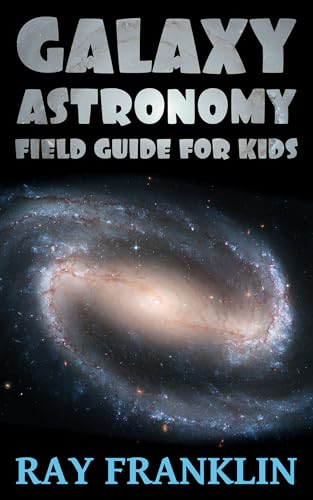
Galaxy Astronomy: Field Guide for Kids by Ray Franklin Review 

I received a free copy of this book in exchange for a fair and honest review. All opinions are my own. 

Author Ray Franklin shares a kid-friendly and educational look into the vast universe and the galaxies that make it up in the book “Galaxy Astronomy: Field Guide for Kids.”

Advertisements

The Synopsis

How many galaxies fill the universe? What is light we can’t see? Are Imperial Space Penguins dangerous? Kids ask such questions every day, and Galaxy Astronomy has answers!

The author’s enthusiasm for NASA and the Hubble Space Telescope ripples through this journal of galactic growth. Forty-eight Kindle-wide, full-color images of spectacular galaxies punctuate the field guide. It’s filled with facts vetted by a professional astrophysicist. Kids learn of galaxy types, light-years, invisible light and galactic feeding frenzies. While identifying galaxies, kids see how these gigantic star formations change and evolve over billions of years. They’ll understand how astronomers use ultraviolet light to locate young stars, and infrared light to find stars hiding inside enormous dust clouds. It’s a fun, fascinating and factual read.

If you know a kid who likes science and goofy jokes, give your young astronomer Galaxy Astronomy today!

AudiobooksNow

The Review

What a fun and educational read. The author does an incredible job of bringing his background and passion for astronomy to the reader. The author’s writing style is very inviting, with the reader able to understand the overall subject matter of each chapter while also getting enough new information to challenge the reader to learn more and do the work to research and engage with this material.

The breathtaking and vibrant illustrations the author provides for the galaxies in this book and the star systems in place make this a compelling book to get lost in. The way the book stokes the flames of curiosity in young readers and the lessons the author could impart, including the fascinating structure of Seyfert galaxies and what makes them so dangerous, allowed the reader to lose themselves in the material.

The Verdict

The heart, passion, and thoughtful presentation of galaxies and their structure to readers made this a remarkable book. The balance the author struck between education and entertainment for young readers and how the author rewarded the reader’s curiosity with information that kept the reader eager to learn more and dive into the subject of space and astronomy. If you haven’t yet, be sure to grab your copy today!

Rating: 10/10

Advertisements

About the Author

Ray Franklin grew up in Houston, Texas, the home of NASA. He followed the space race for years and stayed up late to watch Neil Armstrong step onto the moon. Years later, when stunning images from the Hubble Space Telescope became available, he saw expansive possibilities. Being a father and working with kids as a volunteer had given him an appreciation for how fast children can learn complex topics with the right mix of fun and challenge. This is what drove him to write ‘Galaxy Astronomy: Field Guide For Kids.’

Helioza.com

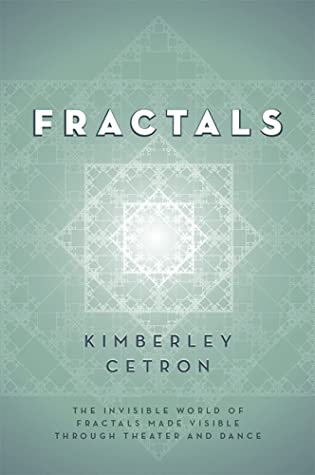
Fractals: The Invisible World of Fractals Made Visible Through Theater and Dance by Kimberley Cetron

I received a free copy of this book in exchange for a fair and honest review. All opinions are my own. 

Author Kimberley Cetron provides a new and unique approach to education in theater and dance utilizing intrinsic patterns known as Fractals in the new educational book, “Fractals: The Invisible World of Fractals Made Visible Through Theater and Dance”.

Advertisements

The Synopsis

Fractals are patterns, infinitely reiterating, self-similar in shape. Benoit Mandelbrot coined the term in the 1970s, but scientists and mathematicians had been exploring the concept for centuries. Mandelbrot developed a geometry to express things found in the natural rather than the man-made world – coastlines, galaxies, anatomy, clouds, trees, snowflakes, and the like. Fractals are intrinsic to Chaos Theory – the science of surprises, of the non-linear and unpredictable. They reveal the order governing the seemingly chaotic in our world. As we learn to recognize them, we gain insight into our world, ourselves, and one another. Especially at this cultural moment, when the whole world has changed and we must re-imagine the ways in which we make art and the ways we educate, Fractals provides resources and approaches for collaborative art and for locating the intersection of arts and academics in ways that illuminate both.

The Review

This was such a different, unique, and thought-provoking read from what I normally feature here on my website. The author does an incredible deep-dive into the world of Fractals, of the patterns that occur in the universe such as anatomy and galaxies, and explores these patterns in connection with performing arts. The use of a system of order that reflects patterns in which the individual parts of these shapes are equal to the overall pattern is a unique educational tool for the author to utilize in this read, as it brings a whole new understanding to the subject material.

Perfectly blending into the current world we live in, the author’s expertise and perfect crafting of the subject matter is well written throughout this book. The balance of the subject matter of dance and theater with the science and technique that Fractals utilize when interacting with the subject matter is great to see unfold here. The concept of nature and order balancing the chaos of the world and the denial of self-serving creation over collaboration was an intriguing idea to explore in this read and really connects with readers who are looking for a new way to approach education and performing arts.

The Verdict

A brilliant, invigorating, and thoughtful read, author Kimberley Certon’s “Fractals” is a must-read book. Educational yet engaging, the author strikes a great and resonating chord with readers and pushes them to think differently to see the order within the chaos and apply it to something as artistic and moving as performing arts. If you haven’t yet, be sure to grab your copy today!

Rating: 10/10

Advertisements