Interview with Author Robert J. Sawyer

1) Tell us a little bit about yourself. How did you get into writing?

My father was an author of books on macroeconometrics, his field of specialty, and my great uncle had written a definitive volume on antique salt shakers, so the concept of writing a book was never daunting to me.

I had some great school teachersโ€”particularly in the fifth and sixth grade, where it happened to be the same woman, although she was Miss Matthews the first year and Mrs. Jones the second!โ€”and also in high school who were very encouraging.

In fact, Iโ€™ve got a phone message on my answering machine right now from one of those high-school teachers, Bill Martyn, that I need to return. Itโ€™s been forty-one years since I graduated from high school, but he just called to say heโ€™d loved my latest novel, The Oppenheimer Alternative.

Advertisements

2) What inspired you to write your book?
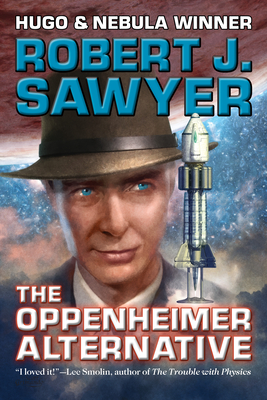
This is the 75th-anniversary year of the birth of the atomic age, with the bombings of Hiroshima and Nagasaki. It seemed like a good time to try to delve, as only a novelist can, into the inner lives of the people who were responsible for unleashing hell on Earth: Edward Teller, Leo Szilard, General Leslie R. Groves, and, most notably, the scientific leader of the Manhattan Project, the mercurial, tortured J. Robert Oppenheimer.

3) What theme or message do you hope readers will take away from your book?

The theme of not just The Oppenheimer Alternative but some of my 23 other novels, too, is that the world would be a far better place if the brightest people simply stopped making the things the stupidest people wanted them to make. No general, president, or dictator can make an atomic bombโ€”only geniuses could do thatโ€”and instead of saying nope, they dove right in.

The great irony is this: itโ€™s arguable that, although Oppenheimer and others were salivating at the notion of an essentially unlimited budgetโ€”the spent two billion 1945 dollars, which is the equivalent of $28 billion todayโ€”to create the atomic bomb, the head of the German bomb project, Werner Heisenberg, knew the folly of letting a madman like Hitler have such a thing and so he may very well have deliberately failed to build one.

4) What drew you into this particular genre?

Well, โ€œthis particular genreโ€ is one that actually I may well have created: hard-science fiction secret/alternate history.

My novel is a real, honest-to-goodness accurate and carefully extrapolated science-fiction tale built on sound science woven into the gaps about what we know really did occur between 1936, when The Oppenheimer Alternative begins, and 1967, when the novel ends. Nothing in it contradicts anything we know to be true, but the reader will be treated to what I hope theyโ€™ll consider a mind-blowing science-fiction tale as well as a heart-wrenching historical-fiction story.

Advertisements

5) If you could sit down with any character in your book, what would you ask them and why?

Perhaps surprisingly, it would not be my main character, the J. Robert Oppenheimer of the bookโ€™s title, but rather his erstwhile friend and then betrayer, Edward Teller.

Although ironically Teller wrote his memoirs and Oppie never did, itโ€™s Tellerโ€”the man often cited as the principal inspiration for the title character in the movie Dr. Strangeloveโ€”who leaves me scratching my head.

Teller really said, โ€œNo amount of fiddling will save our soulsโ€ and he really did go to see his dying colleague, Nobel laureate Enrico Fermi, to, in Tellerโ€™s own words โ€œconfess his sins.โ€

But even with such apparent misgivings he just went right on pushing for bigger and bigger bombsโ€”ranging in size from merely genocidal to ones that would trigger the extinction of most life on our planetโ€”as well as shilling for Ronald Reaganโ€™s fatally flawed Strategic Defense Initiative (โ€œStar Warsโ€) until the day he died.

What the hell was Teller thinking? He was great with kids, often carrying candy for them in his pockets, and he loved his own children and grandchildrenโ€”and yet he was monstrous.

6) What social media site has been the most helpful in developing your readership?

Facebook, for a few reasons.

One: Iโ€™m a long-form writerโ€”a novelist!โ€”and so the character-count constraints of Twitter make it ill-suited for me.

And two, as all good writers know, the heart of good writing is revision: you canโ€™t edit a tweet, and but you can go back even years later and correct typos or ambiguous phrasing on Facebook.

I long ago hit the hard-coded 5,000-friend limit Facebook has built into its architecture, but you can still follow me thereโ€”as 6,500 additional people doโ€”and join in the daily lively discussions and debates we have there.

7) What advice would you give to aspiring or just starting authors out there?

In 1997, I came out of a deli in Los Angeles and saw Gordon Jump, one of the stars of WKRP in Cincinnati standing on the sidewalk, so I went up to him and said, โ€œIโ€™d just like to shake the hand of the man who uttered the funniest line in sitcom history.โ€

We chatted for a bit, and I asked what he was doing just hanging out in front of a deli. He replied a young wannabe actor had said heโ€™d take him to lunch here in exchange for some advice about getting into the industry. I asked, โ€œWhat advice are you going to give him?โ€ And Gordon replied, โ€œDonโ€™t get into the industry.โ€

Seriously, this is an awful time to be a traditionally published author. In the thirty years Iโ€™ve been a novelist now, there have been enormous cost reductions for publishersโ€”no more re-keyboarding typed manuscripts, no more sending page proofs by courier, instead of servicing thousands of small bookstore accounts mostly just servicing a few big ones, having authors do their own promotion via social media instead of publishers advertising their books, etc.

But every penny of those costs savingsโ€”every single oneโ€”has been kept by publishers, with none passed onto authors. Meanwhile, in addition to the production of print books for distribution to bookstoresโ€”the one thing publishers are good atโ€”they also demand ebook rights, audiobooks rights, and theyโ€™re trying to get a piece of the film and TV action, too.

So, my advice is simply this: license your intellectual property as narrowly as possible and only let a licensee have rights to specific aspects of it that they have a great track record with, and make sure theyโ€™re making real money not just for themselves but for you, too.

8) What does the future hold in store for you? Any new books/projects on the horizon?

Iโ€™ve been asked to write a lengthy original audio drama, and I may, or may not, sign the contract for that; weโ€™ll see. But really, the new books on my horizon right now are books that are new to me: Iโ€™m just catching up on my reading!

Advertisements

About the Author

Robert J. Sawyer is one of Canadaโ€™s best known and most successful science fiction writers. He is the only Canadian (and one of only 7 writers in the world) to have won all three of the top international awards for science fiction: the 1995 Nebula Award for The Terminal Experiment, the 2003 Hugo Award for Hominids, and the 2006 John W. Campbell Memorial Award for Mindscan.

Robert Sawyer grew up in Toronto, the son of two university professors. He credits two of his favourite shows from the late 1960s and early 1970s, Search and Star Trek, with teaching him some of the fundamentals of the science-fiction craft. Sawyer was obsessed with outer space from a young age, and he vividly remembers watching the televised Apollo missions. He claims to have watched the 1968 classic film 2001: A Space Odyssey 25 times. He began writing science fiction in a high school club, which he co-founded, NASFA (Northview Academy Association of Science Fiction Addicts). Sawyer graduated in 1982 from the Radio and Television Arts Program at Ryerson University, where he later worked as an instructor.

Sawyerโ€™s first published book, Golden Fleece (1989), is an adaptation of short stories that had previously appeared in the science-fiction magazine Amazing Stories. This book won the Aurora Award for the best Canadian science-fiction novel in English. In the early 1990s Sawyer went on to publish his inventive Quintaglio Ascension trilogy, about a world of intelligent dinosaurs. His 1995 award winning The Terminal Experiment confirmed his place as a major international science-fiction writer.

A prolific writer, Sawyer has published more than 10 novels, plus two trilogies. Reviewers praise Sawyer for his concise prose, which has been compared to that of the science-fiction master Isaac Asimov. Like many science fiction-writers, Sawyer welcomes the opportunities his chosen genre provides for exploring ideas. The first book of his Neanderthal Parallax trilogy, Hominids (2002), is set in a near-future society, in which a quantum computing experiment brings a Neanderthal scientist from a parallel Earth to ours. His 2006 Mindscan explores the possibility of transferring human consciousness into a mechanical body, and the ensuing ethical, legal, and societal ramifications.

A passionate advocate for science fiction, Sawyer teaches creative writing and appears frequently in the media to discuss his genre. He prefers the label โ€œphilosophical fiction,โ€ and in no way sees himself as a predictor of the future. His mission statement for his writing is โ€œTo combine the intimately human with the grandly cosmic.โ€

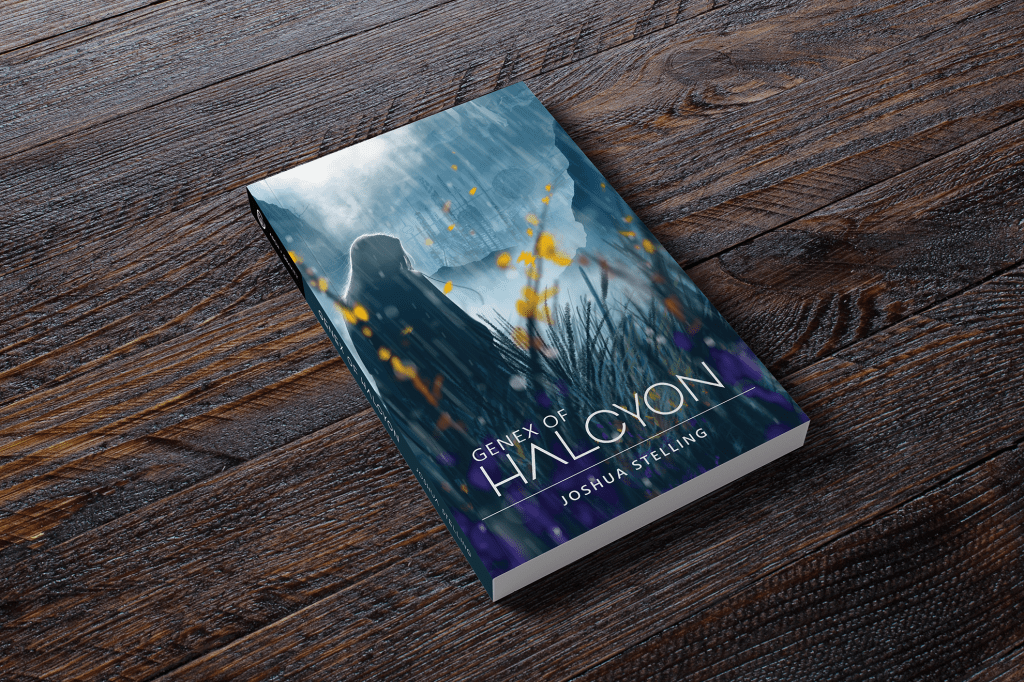
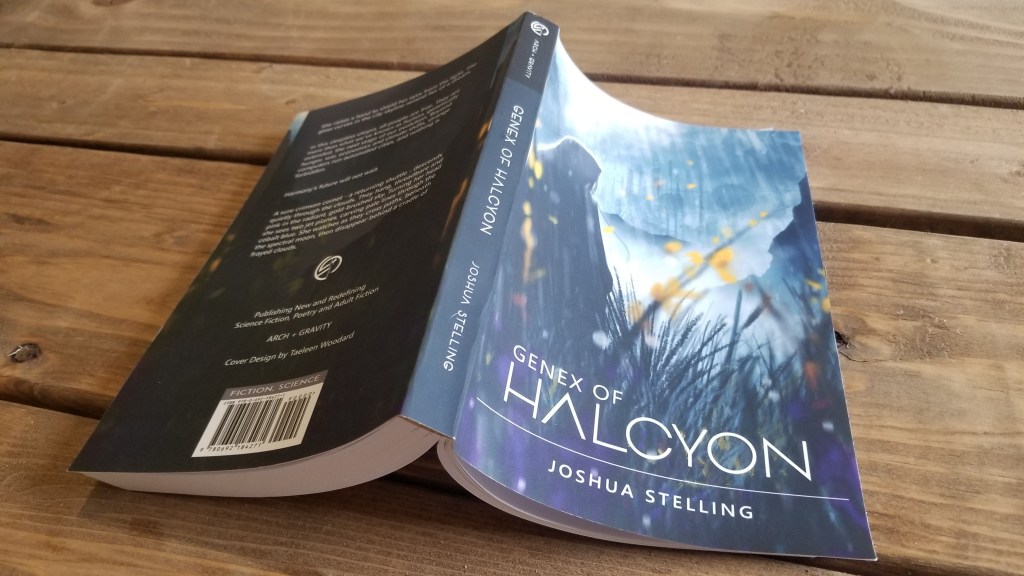
Interview with Author Joshua Stelling

1) Tell us a little bit about yourself. How did you get into writing?ย ย 

The world needs storytellers.ย  It’s no exaggeration that we live in strange times, and the direction we take matters, for so many generations after us.ย  Sci-fi authors are daydreamers, wondering what comes next.ย  If we take this path, or another, do we choke or thrive, enslaved to the machine or learning to swim?ย  At Arch & Gravity Publishing we don’t believe in macguffins.ย  If there’s a doomsday device in our book, it has a function, a purpose and a theory.ย  And there is a real chance it might go off.ย  If there’s science, we’re not going to dumb it down for you.ย  And where there’s a story, there’s a reason why.ย  I published my first work in the elementary school library in first grade, about a giant frog keeping people as pets, and I’ve been fascinated by character, plot, drama, science and philosophy all my life.ย  We desperately need storytellers, characters and paradigms that might shine a light for our times.ย  If I can be a part of that tradition, it would be no less than a dream fulfilled.

Advertisements

2) What inspired you to write your book?ย ย 

Halcyon is a city in Spain, in the future, run by psychic computers.ย  Basically it’s a utopian vision, fifty years off, in a post-economic world where the laws have been stripped to rights, people don’t need to work and are free to do what they want.ย  The Genex are genetically extended.ย  Some have wings.ย  Exploring the lives of the ensemble cast, we get a city in the throes of climate change, a love triangle stronger than death, competitive laser duels, and a mute who may defy time, among other things.ย  Genex of Halcyon is the first publication by Arch & Gravity, Denver’s new voice in science fiction.ย  I suppose, in short, I am inspired by the hole I see in the world, where these ideas could belong.

3) What theme or message do you hope readers will take away from your book?ย ย 

Nothing we do is going to be ordinary, no story we print is going to be safe.ย  That’s our promise to the reader.ย  Genex of Halcyon is about the wildly different world that could be right around the corner, as we potentially come of age technologically.ย  It’s about science fiction that isn’t afraid to push boundaries and expect something of its readers.ย  Mostly of course it’s a love story, but it’s really all about the characters, the choices they make, and those they choose to forsake.ย  I hope readers come away from Genex of Halcyon, thoughtful and imaginative, with something new and unique on their minds.

4) What drew you into this particular genre?ย ย 

I’ve been a fan of science fiction and poetry for as long as I can remember.ย  I revere creativity and intelligence, and am very curious about the future.ย  I’ve been influenced by Wells, Gaiman, Stephenson, LeGuin, Vandermeer, Burgess, Huxley and Bradbury, but there’s no denying some Thoreau in there, even Shakespeare, and definitely Neruda and Coelho.

5) If you could sit down with any character in your book, what would you ask them and why?ย ย 

Azad, Harmony’s brother, the mute.ย  I would just ask him, “What are you thinking?”

6) What social media site has been the most helpful in developing your readership?ย ย 

Arch & Gravity has a following on Facebook that is about 4k strong, as of this writing.ย  Look us up and join the conversation!ย  We’re also active on Instagram, and I’m in the process of starting a WordPress blog for reviews and announcements as well.ย ย www.ArchandGravity.comย is a great hub for exploring what we’re doing.

Advertisements

7) What advice would you give to aspiring or just starting authors out there?ย ย 

Take your time, but keep going.ย  My spirit animal, depending on the day, is either a wolf or a tortoise.ย  Self Reliance and Perseverance.ย  These will get you there.ย  And don’t be afraid to write the story you really have to tell.ย  The world needs characters, drama and real imagination far more than we need another successful, formulaic series, imho.ย  It’s going to be hard, but any story that is not even a little dangerous to the teller, probably isn’t worth the time.

8) What does the future hold in store for you? Any new books/projects on the horizon?ย ย 

I’m currently hard at work on my next novel, about a young Korean girl with a katana and a connection to an ancient force, as well as an epic, years in the making, detailing a far future on a distant planet, where the star’s radiation brings out latent psychic powers in the castaway colonists, where their dreams come to life around them, as with their nightmares.ย  Beyond this I have two short collaborations in the works with a Denver production company, and a board game soon to hit Kickstarter.ย  Look for Quin, which you might think of as a hybrid between Chess and Stratego, loosely based on principles of Optics and Quantum Mechanics, to go live on Kickstarter sometime this fall, published by Arch & Gravity.

About the Author

Joshua Stelling is a poet and music lover who has spent a lot of his time running record stores around Denver, building his own art on the side. In time, the stories inside the man have boiled over, becoming worlds, and his pages turned into books. Combining hard sci-fi and adult fiction with a fluent love of metaphor and poetry, his work will challenge you but leave you wanting more.

www.ArchandGravity.com

Interview with Michael J Bowler

Tell us a little bit about yourself. How did you get into writing?

I always loved reading and telling stories to others, even as a young child. For years, as I lay awake at night, I played out in my mind new chapters of an ongoing serialized supernatural story that I wish Iโ€™d written down at the time, because I no longer recall any specifics. But I did write short stories in elementary school and continued through high school and beyond, so I guess writing was always in my blood.

What inspired you to write your book?

I kept returning to this idea of a character who somehow knew when others would die. In some of my iterations, the character used the power for evil, but ultimately I decided that readers, especially teens, should see a character who doesnโ€™t want this ability, but who will never abuse it. That old line from Spiderman infused my thinking while crafting the story: โ€œWith great power comes great responsibility.โ€ I think my main character learns this truth during the course of the story.

What theme or message do you hope readers will take away from your book?

Iโ€™d say there are several themes. 1. Nothingโ€™s written in stone โ€“ the choices we make guide our destiny. 2. People are not always what they appear to be on the outside, so donโ€™t be so quick to judge or label them. 3. Doing the right thing can often be complicated.

What drew you into this particular genre?

Iโ€™ve spent my life working with children and teens as a teacher and volunteer, so itโ€™s only natural Iโ€™d gravitate towards stories about and for that demographic. Iโ€™ve also always loved mysteries and thriller/horror tales, so melding the two was a no-brainer for me.

If you could sit down with any character in your book, what would you ask them and why?

I would ask Leo this question: As you go through life, how often do you think youโ€™ll be tempted to look into the eyes of people you care about to either warn them of the day and time or help them elude death like you did with J.C.?

What social media site has been the most helpful in developing your readership?

I donโ€™t have as large a readership as Iโ€™d like, but Iโ€™d say Instagram and Twitter have gotten me the most attention. Iโ€™ve found Facebook mostly useless in marketing books for teens.

What advice would you give to aspiring or just starting authors out there?

I used to say โ€œwrite what makes you happy,โ€ but based on the nature of publishing today, Iโ€™d suggest writing a book thatโ€™s in a similar vein to titles that have proven themselves to be popular in the marketplace because youโ€™re going to have to produce โ€œcompโ€ titles anyway when you apply to an agent or publisher.

What does the future hold in store for you? Any new books/projects on the horizon?

I have two finished and edited books for the teen/young adult market (one is action adventure and the other mystery/sci-fi), as well as an adventure tale aimed at middle grade readers. Iโ€™m not certain what will happen with them, but they will hopefully be released one day.

About the Author

Michael J. Bowler is a former teacher, adoptive parent, lifelong child advocate, author of Theย Lance Chroniclesย seriesโ€”books with multi-racialย and LGBTย characters that deal with significant issues facing American youth today, and Spinner, a horror thriller featuring teens with disabilities as the heroes. ย 

www.michaeljbowler.com

FB: michaeljbowlerauthor

Twitter: MichaelJBowler

Blog: www.michaeljbowler.com

tumblr:http://michaeljbowler.tumblr.com/

Goodreads:https://www.goodreads.com/author/show/6938109.Michael_J_Bowler

Amazon:http://www.amazon.com/Michael-J.-Bowler/e/B0075ML4M4/ref=sr_ntt_srch_lnk_1?qid=1417379614&sr=1-1

Web: www.michaeljbowler.com

I Know When Youโ€™re Going To Die 

Pre-Order Links:

Amazon: https://www.amazon.com/dp/B07Z48BHH4?ref_=pe_3052080_276849420

Apple: https://books.apple.com/us/book/id1484221699

Kobo: https://www.kobo.com/us/en/ebook/i-know-when-you-re-going-to-die

Barnes and Noble: https://www.barnesandnoble.com/w/i-know-when-youre-going-to-die-michael-j-bowler/1134221152;jsessionid=ACEF0B8A8DBF47B8C52210F233FF2F1F.prodny_store01-atgap15?ean=2940163679256

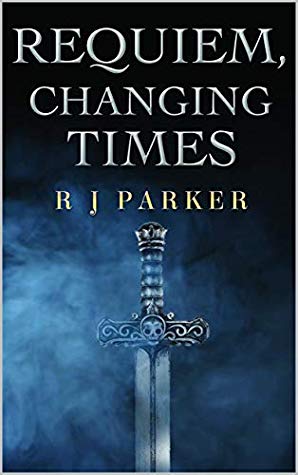
Interview with Author RJ Parker

1) Tell us a little bit about yourself. How did you get into writing?

Hey, I am RJ Parker. I don’t think that there is really anything interesting about me. But my family, that is fascinating! I have the most wonderful wife with a great right hook. I constantly say things that test her skill at hitting me. We have four great kids who make everyday an adventure. Two of these little angles have mutated into what doctors call teenagers. 

I got into writing kind of by accident. I had some health issues which left me on my back for months. In that time I read a lot of books and it got to a point where I wished I could change them just a little. In some cases, a lot. Before I lost what little sanity I had, (some would say to late) I began writing my own novel. I wanted to write one that I wished I could read. I researched as much as I could in the things I wished to put in a book and ever since then, I cant stop writing. 

2) What inspired you to write your book?

When I was in Jr. High they had some writing contests. One of my teachers encouraged me to enter and I won. I loved it. I didn’t know what I did that was right but it worked. In reading and wishing to change stories that were done by others, I was inspired by those who were so patinate about their stories.

3) What theme or message do you hope readers will take away from your book?

That everyone is special and there is no problem that can not be overcome with family and friends. 

4) What drew you into this particular genre?

I love urban fantasy. The fact that we each have are own reality and we can tell a story about it with our dreams added to it. That is a place where anything can happen. 

5) If you could sit down with any character in your book, what would you ask them and why?

I would go with O’Neil. I would just to love to hear him talk about anything. I love his accent.

6) What social media site has been the most helpful in developing your readership?

They are each great! I am still new to this work and everyone of them is fantastic in its own way.

7) What advice would you give to aspiring or just starting authors out there?

Get as much education and advice as you can. Find out what works for you and keep at it. There have been some who I have met, who would plan every little thing they want to write in their books. They would go to such detail to write down what food their characters eat. Even when there is nothing in their book that involves food. They know ever part of the book before they begin to write it. Then there are some who just write. They just sit down and start writing, they let the story unfold as they go on. When they are done they go back and twic it to fit what they want. There are so many ways to do it, find what works for you, have at it, keep at it and enjoy it.

8) What does the future hold in store for you? Any new books/projects on the horizon?

I have another the first of another series coming out soon called, “Crystal Shadows, Gripping New Blood.” I also have three more on the way.ย 

About the Author

Russell Parker was born in Bountiful, Utah. As his father was safety manager he had to move around until his senior year of high school, when he came to Cache Valley, Utah to stay. He married the most wonderful woman in the world and they are the parents of four fantastic kids, with one crazy dog.

Russell played all kinds of sports and was an outdoorsman until an accident brought him to writing. A writer since high school, encouragement brought his stories to life.

https://rjparkerwrights.wixsite.com/mysite

https://amzn.to/2UkaGNB

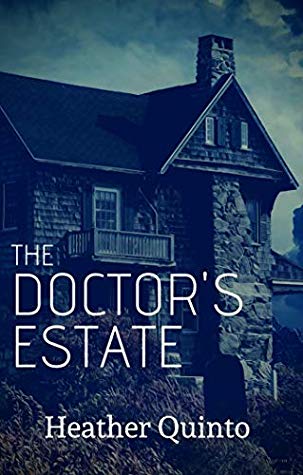
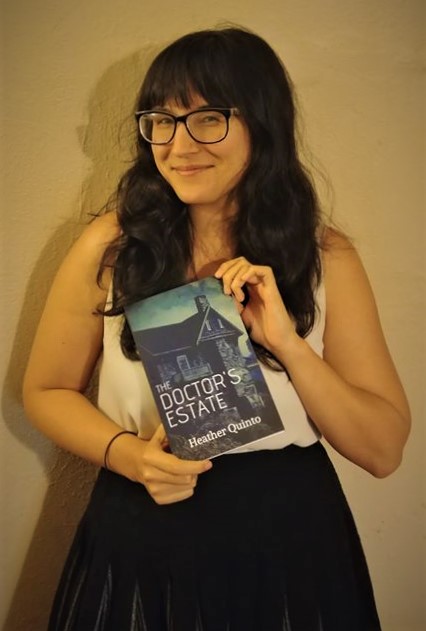
Interview with Author Heather Quinto

1) Tell us a little bit about yourself. How did you get into writing?

I grew up in a Catholic household, but being Native American, my Catholic upbringing was much different. We were more open-minded about communicating with spirit and feeling energy. We had a unique combination of both spirituality and religion. However, I never entirely agreed with the Catholic faith. I used to pick and choose what I believed in and put my own unique spin on things. For me, writing was something I enjoyed even at a small age, which I know is clichรฉd. Almost every writer will say they started writing stories the second they could pick up a pencil, but I had a harder time learning to read and write. I stuck to making picture stories because I barely knew how to formulate a simple sentence or how to write my name even at six-years-old. I got a grasp on my writing at eight, but my reading skills were much to be desired. However, writing helped with my reading because Iโ€™d read my own short stories to my uncle. I wrote my first novel at twelve, which was an awful time traveling story about ninjas (haha!). However, the novel I wrote at fifteen, I ended up publishing at twenty. Writing was something I always knew I was meant to do with my life.

Advertisements

2) What inspired you to write your book?


For The Doctorโ€™s Estate, it was actually the publisher and friend of mine, Jesus Martinez, who approached me about the plot. He was the original creator of the entire thing, and he wanted me to write the novel for him. I like to spin it as I was the ghost writer for a horror novel. We worked together before on a documentary about a local haunted house called the Wolfe Manor that was unfortunately demolished, so he was familiar with my writing. I added on to his original plot a bit because he allowed me to have complete creative control, but I needed to keep the essential theme the same. It was a collaborative effort, and none of this would have happened without him. 

Without giving too much away, my inspiration for the mental illness aspect of the book was that I wanted the reader to sympathize with Ted, and I wanted to add that struggling with any kind of mental illness is always far more gut-wrenching than a ghost in your house. At least in my experience. For myself, I found the fear of possibly losing your sanity to be far more horrifying, and I know there would be other readers who would feel the same. Struggling with your inner thoughts is no joke, and I wanted to stress the back-and-forth that some people go through. I wanted to leave the reader guessing if it was all real in the first place in order to open a discussion about reality and how bendable it is. Also, someone who is going through a neurodegenerative condition like Alzheimerโ€™s or a mental illness like depression, anxiety, or anything else isnโ€™t something to be fearful of. Like you said, they are far more likely to be the victim than the perpetrator. 

3) What theme or message do you hope readers will take away from your book?

The creator of the story, Jesus, wanted to stress the theme of the fight between the light and the dark. You canโ€™t have one without the other, and I too agree with that. You cannot know happiness without sadness. We need contrast in order to learn and grow, which is how Humans are. We live in a world of polarity. We are such creative creatures, but at the same time we can destructive. I wanted the readers to see the polarity we live with on a daily basis, and you decide which reality you want to live in. Like I said before, realities are entirely bendable depending on your perspective and how you choose to see life. Tedโ€™s struggle with his thoughts was one of my favorite parts of this story because it is something we can all relate to.ย 

4) What drew you into this particular genre?

Horror has always been a favorite of mine growing up. In fact, my favorite movie of all time when I was a kid was The Ring, and I would reenact all the scenes. I was a morbid child growing up since all I ever watched were horror movies. I never actually sat down to read the genre. I find that I donโ€™t write the genre that I read, and Iโ€™m not sure why that is. I read a few horror stories and thrillers as research for The Doctorโ€™s Estate because I needed to educate myself on the style. How do you write a scary scene with a ghost anyway? At the same time, I found what I wanted to change about the genre to make it more unique. I tend to combine genres into one, and each one of my works has a bit of a philosophical twist to it. At least, I try to implement that.ย 

5) If you could sit down with any character in your book, what would you ask them and why?

Thatโ€™s a tough one! I thought about Ted for a second, but honestly, I would talk to Monica. She jumped on board from the start about the possibility of the paranormal, and I would love to ask her how she could do that without second-guessing her sanity or thinking if it was at all real or not. For myself, I doubt so much. I second-guess every little thing in my life, and I have had bizarre experiences that I cannot explain. I get โ€œknowingsโ€ about things or people that I couldnโ€™t possibly know, and I struggle with knowing if it is a serious mental illness or if I am truly doing what I am doing. I am a lot like Ted in that I have to compartmentalize and explain everything logically, and sometimes that isnโ€™t possible. Thatโ€™s when I am shaken to the core. What advice can Monica give me for that?

6) What social media site has been the most helpful in developing your readership?

Aside from my own blog, I would say Facebook has helped me greatly. Mostly, because I spend the bulk of my time on there, so I am always plugging my novels. Being an author is a full-time gig, and you have to be prepared to market and promote not only your books, but yourself. Knowing your audience is key because maybe you write young adult contemporary novels, so your readership is on Instagram more than Facebook. Therefore, you would have better luck there.

7) What advice would you give to aspiring or just starting authors out there?

Honestly, I consider myself barely starting out despite my three publications. Only because I have yet to sign with a literary agent. That is my goal, but that takes time and a lot of hard work. My advice would be: be open to learning new unique ways to break into the industry. It can be unforgiving and harsh just like any other industry out there. You will develop a thick skin, trust me. You are going to have to, so never give up. Confide in other writers because they are going to be your lifeline, and connections are everything. Most writers have social anxiety like myself, but put yourself out there no matter how frightening it is. You never know what will happen, and I would know because that is how I was able to publish The Doctorโ€™s Estate. Building a writing career you can live off of is like building an empire. It takes time, so be patient. Acquire as much knowledge as you can, and when you feel you know everything, acquire more. There is always more to be learned and always room for growth in your writing. Writing is a form of art, and it is entirely subjective, so be patient with your work because the energy you put into it is worth it. No matter whether your go the traditional route or the self-publishing route, your art is always worth it. 

Advertisements

8) What does the future hold in store for you? Any new books/projects on the horizon?

I am currently in search of a literary agent for a dystopian novel I wrote. When I say dystopian, most think of the young adult novels like Hunger Games, but this is more of a literary piece with some commercialism in it called Upmarket fiction. Like The Doctorโ€™s Estate, it has a philosophical twist to it. It is an allegorical novel based off of the United Statesโ€™ political climate. Other than that, I am outlining a new novel, which is a sci-fi romance, and I am also applying to the MFA program at Fresno State. Fingers crossed I get in!ย 

About the Author

Heather Quinto is a Pascua Yaqui Native, and she resides in Fresno, California. She has a BA in Creative Writing/English with a minor in Marketing from Southern New Hampshire University. She is a self-published author of the paranormal/fantasy novel, Inhuman, and a spiritual/romance short story titled In Love and Death. Recently, she published a horror novel with TruRealm Media titled The Doctorโ€™s Estate. Currently, she is seeking representation for her unpublished novel, Eleutheria, which is an adult allegorical novel on todayโ€™s society that has universal truths deeply rooted within its themes.

โ€‹

Heather always had a strong urge to write and create imaginative stories ever since she could pick up a pencil. She started off by drawing picture books when she was four before transitioning to writing short stories when she was eight years old. Heatherโ€™s main inspiration behind writing is to be able to leave the greatest impact on whomever picks up one of her books by influencing a more positive and spiritual outlook on life. She strives to create fresh and original stories that grasps a readerโ€™s attention, and hooks them with her strong and compassionate characters. Heather brings in unique storylines that no one has ever read before, and this is what caters to her originality. Her writing uses humor to teach self-confidence by encouraging her readers to laugh at themselves every once in a while. She writes of relatable hardships that help her readers feel less alone, and makes them feel more accepted.

โ€‹

Although, Heatherโ€™s current target audience are teens, she doesnโ€™t stick to one given genre or age group. Her genre varies from book to book. She is currently working on a new science fiction novel, and has a mystery/romance novel sitting in her documents waiting to be edited. Heatherโ€™s ultimate goal is to be a major impact on the world for the better while teaching the morals and values passed down in her tribe. She hopes that her books challenge others to think both philosophically and spiritually like her tribal elders push her to do. She also strives to eventually make a comfortable living off of being a full time writer.


Author Website:  https://www.heatherquinto.com/

Publisher Website:  https://trurealmmedia.com/

Facebook: ย https://www.facebook.com/HeathertheQ/

Interview with Author Faramond Frie

1) Tell us a little bit about yourself. How did you get into writing?

I have always written, short stories and small standalone scenes just for myself and as storylines for artwork projects that I undertake but after my friend, author Jhedron Luckspar published his novel, Revenge of the Hrym, I was inspired to publish my own book and started with the short story Yankaiโ€™s Skull which I was writing at the time.


Advertisements

2) What inspired you to write your book?

I had recently visited the Ashmoleon Museum in Oxford, UK which is like Indiana Jonesโ€™s locker. There are all sorts of random exhibits from all over the world and jumbled together in such just such a way as to make it seem as if it were collected by groups of adventurers from a more romantic age. In one exhibit, there was a human skull that had been taken as a trophy after a brutal fight, the writing on the skull describes it as the skull of Yankai of the Nienching tribe somewhere in the Himalayan region. The story is my take on why Yankaiโ€™s Skull was removed from the rest of him and how it ended up in a museum.

3) What theme or message do you hope readers will take away from your book?

Thatโ€™s easy. If you look at the dark side, it looks back. I think that may have been a quote from Yoda but that is essentially the message of the book. Even those with good intentions who study the dark side of the world will end up getting corrupted.

4) What drew you into this particular genre?

The story unfolded itself and it turned out to be a mash up. I had no idea how to pigeon hole it but horror seemed closest and if you look at what Yankai experiences, that really is a horrific experience for him. Forget blood and guts, true horror likes in human behaviour and the demons that drive it.

5) If you could sit down with any character in your book, what would you ask them and why?

I would sit with The Poet and ask him about his experiences with Buddha. I would ask him what kind of man he was and what it was like to be around him.

6) What social media site has been the most helpful in developing your readership?

I have not done any traditional social media advertising as of yet so I canโ€™t answer that but looking at them all, I would say Facebook seems to be the best way to develop a targeted readership. My current approach is to send copies of the work to people who may say something good about it and I hope old fashioned word of mouth, on whatever medium will lead to a growth in readership. It may seem counter intuitive but Iโ€™m going to see what happens in this approach, it allows me more time to be creative.

7) What advice would you give to aspiring or just starting authors out there?

Write for yourself as an artist. It may not seem like it but there are people in the world who will love your work and that will connect with what you are doing. How they connect to it in the first place is a dfferent thing entirely but I believe that if you are writing from a place of truth, then the story will resonate as a truth and its core message or experience will shine through.


Advertisements

8) What does the future hold in store for you? Any new books/projects on the horizon?

I have just come back from the Gothenburg Book Festival which was a huge success for many independant authors and publishing houses so judging by that, the future is exciting. Creatively, there are a combination of art projects and more stories that I will continue to advertise in weird and wonderful ways. Astrum, has also been published and is available on Amazon and there are 3 more stories just waiting to be published once the proofing and art have been finalized. Itโ€™s all very exciting.


https://amzn.to/2oJzwsz

www.faramondfrie.com

Interview with Author Azariah Scott

1) Tell us a little bit about yourself. How did you get into writing?


My love for writing started when I was in elementary school. It happened after years of pushing by my mom to get me to read. I hated reading because I couldn’t read. She had to work really hard to teach me to read. We would practice. She would take me to a tutor. I would cry. She would push. Once I learned to read I fell in love with reading and would get into trouble for reading too much. I had to go to special reading classes until 6th grade, though.


Anyway, I wrote all kinds of stories. The stories, at that time, I wrote the most were ones that included my friends as characters.ย 


Everyone I knew was part of the story from us all being superheroes to murder mysteries about how one of my friends died and one of us did it. I would write a little bit every week and they would want me to read it to them because they got a kick out of it. It was like a TV series.ย 


Later when I was a waiter, I did the same thing. I wrote a stories with the people I worked with as heroes and villains. I also did that on a forum I spent a lot of time on. I took the people that frequented that form and wrote a huge epic superhero tale.ย 


I wrote poems, silly lyrics, short stories, and movie reviews. Then I decided to write a novel like story about sheep. I called it a fairy fable. Then I wrote Jeremiah Jericho: Allowance.ย 


Writing allows me to create a world with words. I like to read out loud when I read, so the sound of words creating worlds or displaying ideas or sharing a story is just without parallel. When I read an article, a book, or a simple post that elicits a feeling, I take note, because I think, wow, that was great writing. I can only hope my writing moves people as much as I am moved by other people’s writing.ย 


I like talking about how I couldn’t read and how hard it was for me to learn to read (it was frustrating for me and my mom) because it shows that hard work and pushing through does achieve something great. If she didn’t push me to read I could’ve been left to not knowing and I wouldn’t be where I am with how much I love to write and read.ย 


But I don’t like to (despite how long this answer is) talk about me because I would rather my writing be more famous than me. If my work could become famous and leave me in the dark, I would be quite happy with that.


Advertisements

ย 2) What inspired you to write your book?


This is a dark answer because it’s one of the darkest moments in the book. I don’t want to spoil it, but since it is referenced in the first chapter I can mention what the scene is about without spoiling too much.ย 
I wanted to create a scene that was so dark that would be a terrible thing for someone to be part of at a sensitive time during their life and them choosing to be better than that moment. It was a rape scene that begin the idea of this book. I thought what kind of person would be created because of that? I came up with Jeremiah’s personality after that.ย ย 


That’s as much as I can say about that scene without ruining the significance of it.ย 


I never wrote something like that and I wanted to see how difficult it would be to write it without being pornographic. I wanted to write something displaying evil without glorifying evil. It’s a fine line as is writing this answer. I couldn’t just say well a rape happened because that didn’t explain how terrible what happened was.ย 


What I wanted to create was a reluctant hero. Someone that didn’t want to be one, but is put in the position to be because of circumstances that just won’t leave him alone. The pushing and the prodding that would set people off to be bad, but making it where Jeremiah would pick good despite how tempting bad would make itself. Also, giving him so much power that he could create a path to win so easily, but chooses not to because morally it’s not right to take someone’s free will away.

3) What theme or message do you hope readers will take away from your book?


When we read books or short stories for class, I disliked when we would give an answer and the teacher would be like, well that’s not what the writer meant. This happened with Shakespeare’s work a lot.ย 


I touched on this already, but I made the villain in this book pure evil on purpose. There is not a single redeeming quality about him. Maybe he’s really good at his job, however, it’s at cost. I wanted a villain that was just evil. I was sick of reading how certain villains have redeeming qualities and how if you don’t write one like that, that your villain is going to be bleh.ย 
There has to be a reason why your villain chooses to be this way and maybe, maybe that reason will have your readers sympathize with him and at least undrstand why he’s the way he is. Not what I wanted.


I wanted there to be a good vs evil feel to this. But in reality it’s more like a well mannered boy vs evil. Proving you don’t have to be pure good to defeat evil. Which is the theme I would like people to see. There’s this monster that’s just out to ruin everything, who could stop this? Well just this average boy that just rather not be bothered can do it, anyone can do it.ย 
Sure he has abilities no one has, but it’s the power of the mind. He has to fight through many mental things to accomplish anything and anyone that has to deal with anything mentally understands how exhausting that is to do.ย 


I think that whatever the reader pulls from reading my book is valid. My idea may not be what anyone sees. It may be what a few see. It may be that the reader sees a totally different theme all together. That’s fine. I hope when they read my book they laugh, they cry a little, and they walk away thinking how cool it would be to have someone like Christopher talking to them in their head.


Advertisements

4) What drew you into this particular genre?


This is a really good question because I don’t have a specific answer. I’ve thought about why I was drawn to YA. I can’t totally clear it up.ย 


SciFi is easy. I love Star Trek. I’m not that smart in the sciences. I had to do a bit of research for what I did in this book. I didn’t go into this wanting to be super accurate with scientific things outside of the normal storytelling. I didn’t want to get detailed as to why the chip worked. But I didn’t have magic or anything that would label this a fantasy. I like SciFi because it is grounded more. It’s not super factual on every account, but it’s good enough.ย 


As for Young Adult, I guess that has to do with how interesting that time period is. I had a hard time as a teen for multiple reasons. It allows me to write about someone that isn’t well put together, but at least can go about life better than I did. It gives me a chance to do things better, but not perfect.ย 


Jeremiah goes about things differently than I did in high school, but he’s going about it in a way I wish I had done. He is braver than I was. He’s not more sure than I am, though. I think that that’s what I like about YA. The characters are more unsure because they are less experienced than their adult counterparts. I like writing characters that are young, inexperienced, and such. It’s fun. It’s like I know where they could go because I’m older than them. I think it keeps my mind young writing characters like this.
I wanted to make sure that my adult characters were treated with respect to their age and knowledge and not treated like secondary characters that were dumber than my main character. I dislike that about certain YA stories.ย 


Jeremiah is all of these negative aspects of that age and some good ones, but he is ultimately a teenager that respects adults to a point that they don’t cross a line.ย 

5) If you could sit down with any character in your book, what would you ask them and why?


I like all of my characters except for one. I purposefully made him someone not to like and I dislike him so much I wouldn’t wanna even talk to him let alone be near him.ย 


I would love to speak with Christopher and he was my initial answer. Then I thought about Jeremiah. He went through a lot prior to even getting to the first line in the book. I would ask him what he thought the difference between a villain and a hero is. I’d ask him that because his past could be the past of a villain, instead he became a reluctant hero.ย ย 

6) What social media site has been the most helpful in developing your readership?


I don’t have an answer for this.

7) What advice would you give to aspiring or just starting authors out there?


I went to a writers group every week for almost two years. Then I had a writers group that split from that one that I went to for every week for 9 months. Then I had an online writers group that we met on Google Hangout for almost 2 years.ย 


Those groups helped a lot. The unique formatting in my book came from a suggestion from a writers group. A lot of suggestions came from every writers group that helped form my novel into what it is now. I did do a lot of editing myself, but the help of other people was significant.ย 


The face to face contact matters and it works in helping you take criticism and to learn not to defend your writing. I witnessed other people defending their writing and it’s not pretty. It feels personal, but most people want to help and they are giving suggestions to strengthen your writing.ย 


Even if you think the suggestion is the dumbest suggestion the world over (and I thought this often) don’t reply. Just listen and think about it for a day before you form a thought on whether or not that was a good suggestion. Sometimes you realize that the suggestion was pretty awesome.


Most of the time the person that gave you the suggestion you end up not liking will never know if you implemented it. Therefore, there is no need to tell them their suggestion is stupid. You can just not use it.


As a writer you have to understand everyone isn’t going to like what you wrote and you have to have the ability to split from your writing and learn to accept suggestions, dismiss trash, and not take any of it too personally. If, while you’re in a writers group, you cannot take criticism from a few people, how are you going to be able to stand a book review that just tears into your book?ย 


Advertisements

8) What does the future hold in store for you? Any new books/projects on the horizon?

I am going through Jeremiah Jericho: Forty-Two (Book 2) at the moment. Once I go through it, then I’ll send it to get professionally edited and then work with the edits.ย 


Goodreads link

 Amazon link

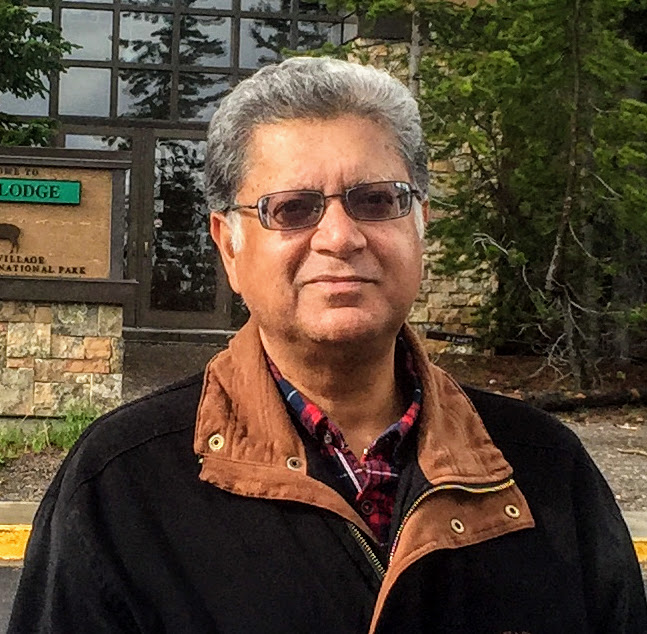
Interview with Author Chandra Lahiri

1) Tell us a little bit about yourself. How did you get into writing?

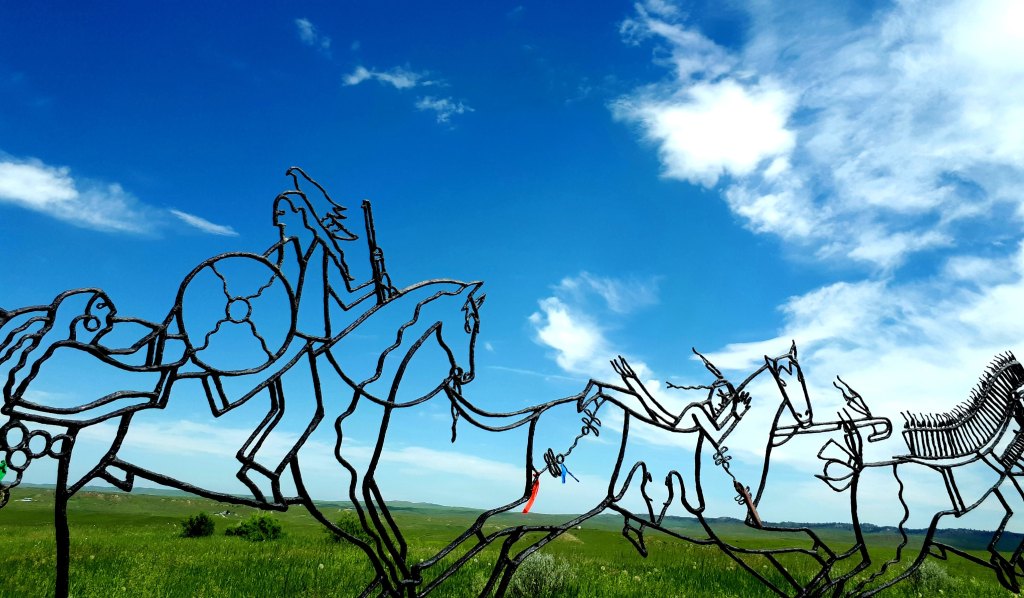
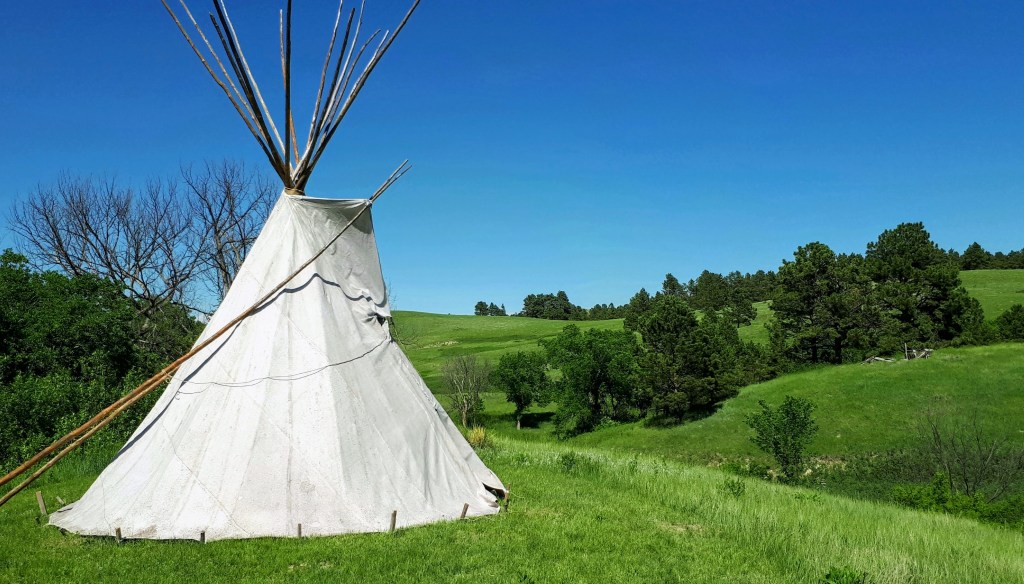
Purely by accident! I have always enjoyed writing the odd freelance article for a newspaper or magazine, but never even thought about writing a book – until now! I have spent over 45 years working for a variety of companies, from transnational giants like Unilever and Nivea, to small family-owned ones like the luxury perfumer Amouage. For a third of that time, I led those companies and, eventually, specialized in turning around sick companies. I have run businesses in over 40 countries around the world, dealing in a wide variety of products. However, all my life, I have had an inexplicable passion for the Native Americans, and read, researched and watched a mountain of material. Perhaps, the Great Mystery was gently preparing me, all my life, for this odyssey and the vicarious experience of re-living parts of their history, participating in their heritage. As is my habit, I made extensive notes in my diary during the trip – not least because I wrote a daily column from the road, for the leading English newspaper in the Sultanate of Oman. On my return home, I realized I had so much material that I simply had to try and turn it into a full-length book. And, I desperately wanted more people to know the real story of these remarkable people.


Advertisements

2) What inspired you to write your book?

The people I met, and their story. People like Carney Saupitty, Lisa Snell, Vernell White Thunder, Peter Catches, Mark St.Pierre and so many others. Theirs is a story of quiet heroism, of fighting impossible odds to regain their identity and proud heritage, of an elemental daily struggle. I realized they, perhaps more than anyone else, deserve a voice for the unborn generations. They must never be allowed to be forgotten or marginalized, but brought into the American mainstream instead.

3) What theme or message do you hope readers will take away from your book?

The thing that strikes me most powerfully is the sheer apathy (at best; frequently it is outright discrimination) of America, and the world, to them. The downright untruths of Hollywood created a fantasy savage, not even a noble one, while the media stereotypes present them as hopeless, violent, suicidal substance-abusers on miserable Reservations, subsisting on Government money. I hope my book will contribute something to showing people just how shamefully untrue and unjust this portrayal this is of a truly noble people winning small triumphs on their way to recovering their civilization from genocide. History cannot be true if written only by the victors.

4) What drew you into this particular genre?

Strangely, it was not a conscious choice! Looking back now, it seems some sort of cosmic Force seems to have guided my life to this experience and the decision to write about it. The whole effort is as mystifying and intriguing to me as was my completely unexplainable experience on their very sacred Bear Butte. To me, it seems to be more important than anything else to disseminate a knowledge and awareness of the Native Americans, so they are never consigned to the footnotes of history.

5) For those who aren’t as well acquainted with the history of the Native American people and their history, why do you think it’s so important to understand the history of the Native American people and what they endured during the formation of the United States? What are some of the biggest misconceptions people have from a historical standpoint from that time period and the history of the Native American tribes overall?

If even a part of humanity is destroyed, all of humanity is damaged. The creation of the United States was, without doubt, one of the greatest achievements in human history, creating the most powerful military and economic entity in just a couple of centuries, something never achieved before. While admiring the people, and effort, that made it possible, it is equally vital not to lose sight of the disastrous cost of that effort. And, above all, the fact that the genocide was, in reality, completely unnecessary.
People usually think “the West had to be won” because the “savage Indians” stood in the way of “civilization”. The truth is exactly the opposite. The Pilgrims survived only through the generosity and welcome shown them by the Wampanoag. In return, the settlers enslaved these friendly people, killed their chief, and sold his wife and children as slaves for thirty pieces of silver. In later years, the children of Native nations were forcibly removed to distant Christian schools to be “civilized” – under such terrible, abusive conditions that well over half of them actually committed suicide.
Perhaps the biggest misconception is that the West was “won” through the strength of American arms. In reality, the US Army lost most battles and frequently spun massacres of defenseless civilians into stories of victorious battles. Custer is the most famous such fantasy hero. In reality, about an equal number died on both sides, despite the overwhelming superiority of firepower and manpower with the Army. What actually defeated the Native Nations was the terrible scorched earth policy of General Sherman which almost entirely wiped out the buffalo, their only source of food, shelter, weapons, occupation, toys and everything else. Starvation, not bullets, brought them to their knees.

6) What social media site has been the most helpful in developing your readership?

Its early days yet, but so far I think Facebook and Instagram have been useful in getting the word out. I have also been fortunate to benefit from the massive distributive reach of Ingram. My social media links are:
www.dawnvoyager.com
www.facebook.com/redroadacrossthegreatplains
www.twitter.com/RoadPlains     
www.instagram.com/redroadacrossthegreatplains     
www.pinterest.com/redroadacrossthegreatplains 
www.youtube.com/channel/UCUcBgnPnoXltv0baXWAM8Qw/featured?view_as=public

7) What advice would you give to aspiring or just starting authors out there?

This is one of the steepest mountains you will ever climb, with huge amounts of pain – but it is worth it! Don’t lose heart and bash on. If you have something worth telling, there are people out there who are keen to hear it – it’s just a hard road reaching them! The only thing to do is enjoy the ride!


Advertisements

8) What does the future hold in store for you? Any new books/projects on the horizon?

Whew! After working on this book for well over a year, I am now going to pause for breath and see how it works out. I would, ideally, like to do another book on the same subject, as there is such a wealth of history and heritage to write about, and so many incredible misconceptions to try and uproot. Fingers crossed!

About the Author

Chandra Lahiri is an โ€œIndian from Indiaโ€ who lives in the Sultanate of Oman. After many years as a global CEO, he now focuses on his lifelong passion for Native American heritage. His wife is a Special Needs Educator in Oman, and his two sons live in the USA. He loves hearing from like-minded readers, at www.dawnvoyager.com

https://amzn.to/2Raojxj

Interview With Author Jessica Leed

1) Tell us a little bit about yourself. How did you get into writing?ย 

As far as I can remember I have loved story tellingโ€”in all forms. As a child I would spend every Saturday at the library, devouring books like there was no tomorrow! This quickly led to writing short stories wherever that had a surface! I think there is so much beauty in the world with many stories to tell and feel like there are endless possibilities of ways to communicate them. 

Advertisements

2) What inspired you to write your book? 

I love creating different worlds in my head. There is such a freedom in writing. A lot of inspiration was drawn from real life experiences, lived out by fictional characters, and of course, the fictional town of ‘Aringdale’. 

3) What theme or message do you hope readers will take away from your book? 

This book weaves together themes of self-identity and toxic relationshipsโ€” issues I feel are prevalent in society that many people can relate to. It is my hope that my readers know that who they are is enough, that no battlelife has thrown at them defines them or their worth. We are strong, brave, resilient and capable of anything we set our mind to. 

4) What drew you into this particular genre? 

I have always been a bit of romantic. In saying that I realise that life doesnโ€™t always end in โ€˜happily ever afterโ€™ the way most romance movies and fairy-tale books lead us to believe. Letโ€™s face it, Life is complicated, relationships are complicated. I wanted to create a story that highlights this, but in a way that stirs faith and hope within the reader. 

5) If you could sit down with any character in your book, what would you ask them and why? 

I think itโ€™s safe to say that there are a few readers that have been frustrated with Siennaโ€™s decision in tolerating a toxic relationship for so long. Instead of asking Sienna why she didnโ€™t leave, I would ask her what she would be most afraid about if she did. 

6) What social media site has been the most helpful in developing your readership? 

Facebook has been the most beneficial. I started promotion my book months before its release. I found that Facebook ads have really helped drive people to my website and subscribe to my newsletter which is wonderful. 

Advertisements

7) What advice would you give to aspiring or just starting authors out there? 

Read, read, read! The more you read, the better you will be able to refine your craft and gain a deeper insight into the genre that most inspires you. Also know that your writing will never be perfect and that there will always be someone who doesn’t like your work. You could be the juiciest, sweetest, ripest peach in the world, but not everyone likes peaches! This is true with writing, too. Understand that your debut book will not be your best, which is actually exciting because it means you will only continue to grow as a writer! 

8) What does the future hold in store for you? Any new books/projects on the horizon? 

I have very recently launched my debut novel NINE YEARS and about to embark on the sequel; HERE I STAND. I will be spending a lot of the summer in hibernation, writing! Stay tuned. ๐Ÿ™‚ย 

About the Author

Jessica is a 30-year-old school teacher, former fitness professional and dancer. She was born and raised in Bendigo, Victoria before moving to Melbourne in 2008. For as long as she can remember she has had a passion for storytellingโ€”in all forms. 

From writing countless short stories as a child to later completing a creative writing course, written by her favourite and best-selling author, Karen Kingsbury, Jessica was adamant to become a published author. NINE YEARS is the first book in the two-part series BENEATH THE CLOUDS.

AMAZON:https://www.amazon.com.au/Nine-Years-novel-Jessica-Leed/dp/0648679721/ref=sr_1_fkmr3_1?keywords=nine+years+jessica+lead&qid=1573102696&sr=8-1-fkmr3

GOOD READS: https://www.goodreads.com/book/show/48556916-nine-years

Website: http://jessleed.com

Facebook: https://www.facebook.com/jessicaleedaโ€ฆ

Instagram: @jessicaleedauthor