Interview with Author Henning Kuersten 

1) Tell us a little bit about yourself. How did you get into writing?

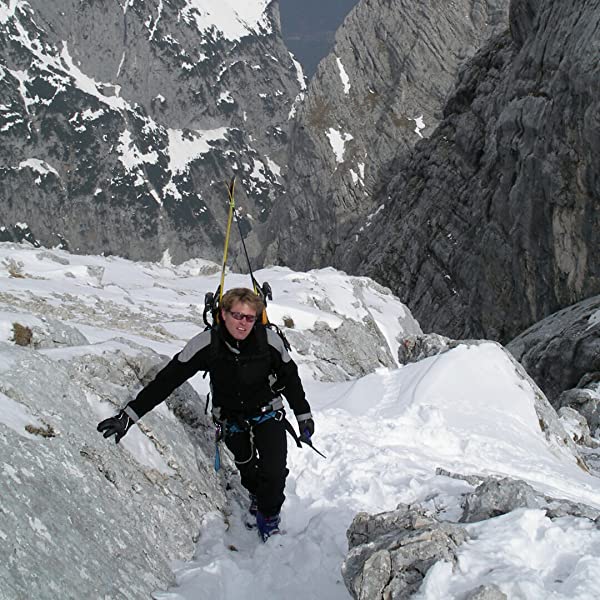
My father was a physicist, so I was raised in a scientific environment. I studied Computer & Information Science and Psychology at Queen’s University in Canada and the Technical University in Munich. I have been a mountaineer, sailor, and adventurer all my life, and as an entrepreneur, I created a software company specializing in image analysis & editing software. When I heard about the Dyatlov Pass Incident, which is probably the most famous mountaineering mystery of all time, I was of course clueless like everyone, but the case lingered in my mind. I then found present-day video material describing exactly what the hikers saw on the slope of Mt. Kholat Syakhl. I analyzed the last photos from the cameras and discovered that they were not showing a lab window in the morgue, as suggested by case experts. The incident then suddenly made complete sense to me, but still, I did not anticipate writing a book about it.

Advertisements

2) What inspired you to write your book?
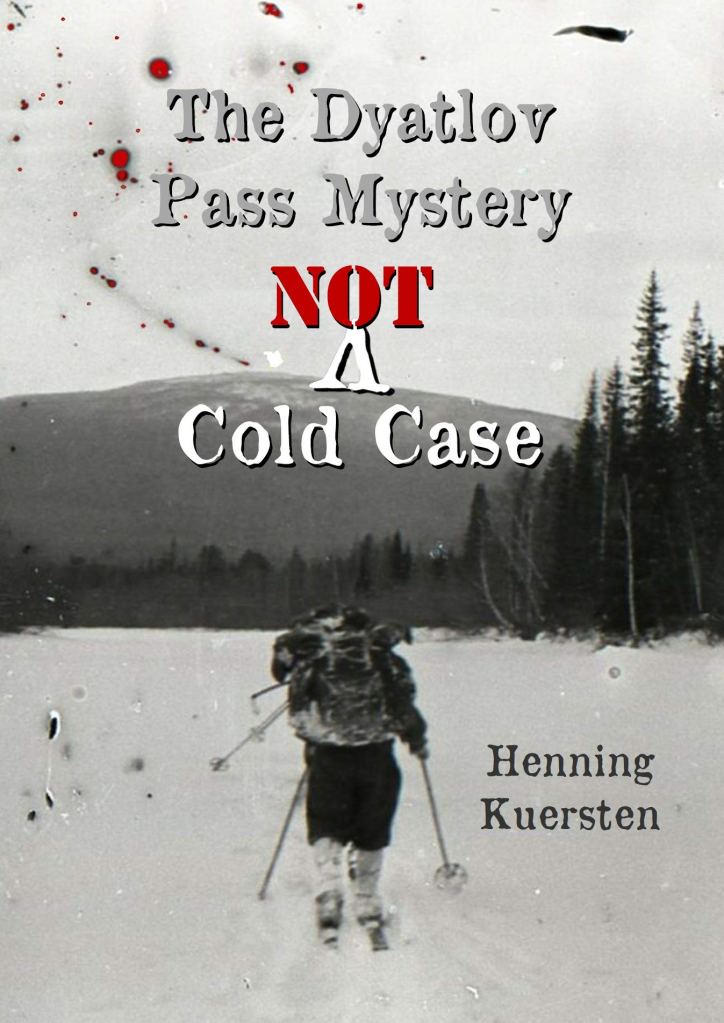
In the years following my initial discovery, I saw a number of TV documentaries about the tragedy. I have always been intrigued by real-life mysteries, like the Franklin expedition, the fate of MH370 or the Skinwalker Ranch. Since I’m a mountaineer myself, the Dyatlov mystery didn’t leave me alone. I then did two years of intense research and the big picture slowly emerged, like a long-hidden puzzle. I never wanted to write a book about my suspicion, but the revival of the avalanche theory by the mainstream media stirred me up. I knew from my ski hiking experience and professional analysis of photos from the Dyatlov camp site, that the reason for the escape and the injuries of the hikers could not have been an avalanche.

3) What theme or message do you hope readers will take away from your book?

When I decided to write a book, I tried not to succumb to prejudice and bias, but to analyze the case from the ground up. So I concentrated on original evidence like the case files, eyewitness testimonies and the “famous last frames”. Whatever evidence I came up with, it always fit the picture that started to appear. I had to discard nothing, and every question was answered, without layered assumptions or by ignoring Occam. He was philosopher from the 14the century who proposed, that the most likely answer to a problem is always the simplest one. This message is an important one for life. Try to always be open minded, keep it simple and avoid confirmation bias.

4) What drew you into this particular genre?

The surviving relatives have the right to know, that the young mountaineers didn’t die in vain. The conclusions to the case open up one of the last mysteries in modern science, which has an high relevance for UFOlogy, aviation and new energy sources. The solution to the Dyatlov Pass Incident is actually quite spectacular. All of this together made it impossible for me to ignore this mystery.

Advertisements

5) What social media site has been the most helpful in developing your readership?

I did a lot of research and discussion on Facebook, as there are several groups about the Dyatlov Pass Incident. Quora is also a good site to ask for opinions and get answers to questions.

6) What advice would you give to aspiring or just starting authors out there?

If you want to be successful with a nonfiction book, try to stay away from confirmation bias and motivated reasoning. Meaning, that you should never ignore evidence or arguments that do not fit your line of thought. Take your time, show respect to other theories, ideas and people involved in the topic, and expect to get rich only in experience. Don’t be arrogant but open-minded, test your thoughts on social media, accept criticism and the fact that there will always be people who disagree. I would have never been able to develop my theory without discussion and disagreement.

7) What does the future hold in store for you? Any new books/projects on the horizon?

I have thought about writing a sequel, but I believe any theory should be simple enough to be presentable in a single book. If it takes two or more books, then it becomes confusing and tedious to understand. However, the scientific research concerning my theory is far from complete, and since the launch of my book in 2021 the number of pages has doubled in newer editions. In addition to ongoing research and expeditions to locations on the planet with similar anomalies, I am working on a TV documentary with a renowned UK film company, who believes my book has finally solved the mystery.

Advertisements

About the Author

Henning Kuersten studied Computer & Information science at the Technical University of Munich, Germany, and Psychology at Queen’s University in Kingston, Canada. He is owner of a company specialized in software for image analysis. He is also a dedicated mountaineer who has survived a horrific incident on the 4049 meter high Piz Bernina, which, together with his professional experience in Photography and Psychology, has helped him to understand the mystery of the Dyatlov Pass Incident.

Interview with Author Giancarlo Roversi

Tell us a little bit about yourself. How did you get into writing?

I’m a musician and a computer engineer. Since I was a child, I loved art. I dreamed of being a singer and an actor. Maybe it’s a coincidence, but when I was ten years old, I suffered an accident on a small train—I was unable to walk for a year and almost lost a foot. During those months when I couldn’t even get up, I wolfed down dozens of books by Agatha Christie and other authors. I also wrote my first short story. It was in the horror genre, and I always pictured the main character running away from a horde of zombie with the first part of the song “Magnetic Fields I” by Jean Michel Jarré playing as a background music.

Advertisements

What inspired you to write your book?

During my teenage years, at my sister’s birthdays, a party guest talked about an intrinsic and mysterious subject. That’s where the idea for Pulstar came from. I felt I had to write about it somehow, heavily influenced by Blade Runner and my favorite books. I published the novels Astralvia I and II in Spanish in early 2000. Then I stopped writing and focused fully on my band Fractaler until 2012.

The social, economic, and political disaster in my country, Venezuela, influenced Pulstar and one of its prequels heavily.

What theme or message do you hope readers will take away from your book?

Thank you for this question. For me, the greatest achievement of an author is when they connect with their readers. The primary message of Pulstar I is that we know so little about anything, also that humans are so insignificant on a universal scale, and how lethal a species can be when it’s slightly more intelligent than the rest, and when it can do whatever it wants because it owns the laws.

Introducing BookBaby Editing Services. The first truly affordable book editing solution designed for self-publishing authors.

What drew you into this particular genre?

The Pulstar trilogy is science fiction, alternate reality, and dystopia with a touch of romance. Nerve is science fiction with thriller, mystery, and a tinge of horror, perhaps.

Science fiction gives you thousands of possibilities. It’s thought-provoking and presents a range of philosophical issues I love. But what I like most about science fiction—hard-but-not-that-hard—is that it allows me to talk about one of my favorite subjects: the cosmos.

What social media site has been the most helpful in developing your readership?

Well, this one is quite easy, as I don’t have social media. 😊 I manage everything through my mailing list, and now I’m entering the world of Goodreads.

ABN Banner

What advice would you give to aspiring or just starting authors out there?

Wow, this is a tough one.

They have to love writing, otherwise, there’s no point. It’s hours of solitude and requires an extreme sacrifice on a social, economic, and emotional level that perhaps only other writers or people connected to the literary scene would be able to fully understand. However, if the uneasiness and the inner burning are there and never go away, we have no choice but toss it out, hoping our message connects with other people.

What does the future hold in store for you? Any new books/projects on the horizon?

Thank you, future, for holding something in store for me. I hope you rock!

At the moment, I need to finish editing Pulstar II and III. Also, the prequel Marlenh is also in the editing process. Another project I have to complete is the music for all these books; although it’s quite advanced. I have other ideas floating around in my head, of course; only one is science fiction, and all of them would take place in Astralvia. One of these stories is about a young girl drummer who wants to make it; I’m a wanna-be drummer. What can I say?

Advertisements

About the Author

Venezuela-born Giancarlo Roversi isn’t only a writer. He’s also a computer engineer and a musician who shared stages with artists such as REM, Oasis, Travis, Duran Duran, and Maroon Five.

When his band Fractaler broke up in 2011, he devoted the next ten years to cue the Pulstar Trilogy and three prequels in that universe.

He surrendered his personal life and wrote these manuscripts in his native language, Spanish, and then he translated them into English. He also composed a soundtrack for each book; they’re currently in production.

When he’s not living and breathing in his Pulstarverse, he loves family time, cooking, astronomy, animals, and having philosophical discussions—especially about the meaning of life—with anyone who cares to join him.

Interview with Author Brady Koch

1) Tell us a little bit about yourself. How did you get into writing?

I used to have a train commute that would take an hour in and out of the city each way. I’ve always been drawn to golden-era science fiction and horror and started writing short stories every day on the train. Eventually, I had enough to select from for my first collection Guns Gods & Robots. Reviews and feedback from my readers inspired me to keep at it.  

Advertisements

2) What inspired you to write your book?

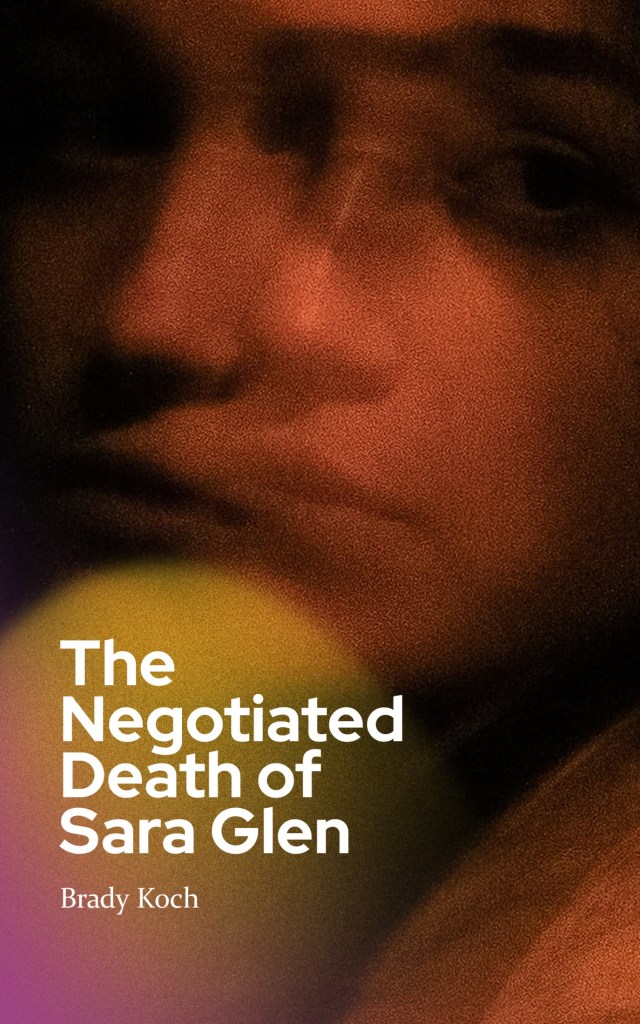
I always like to ground my science fiction stories with an ethical dilemma and have been interested in the tragic Typhoid Mary story for a while. She was a woman immune to typhoid fever, but still transmitting it to everyone she came into contact with. She worked as a cook but couldn’t continue doing that and it ruined her livelihood. Her crime was being a carrier. Sara Glen started as a version of that. What if she had the opposite challenge? What if she carried a cure? But what if the only way the world could benefit from it would destroy her?  

3) What theme or message do you hope readers will take away from your book?

Sara is indecisive, as I would think anyone would be in her situation. I want readers to see how they think they would act in the same situation. Are they empathetic? Frustrated? There’s no right answer, but I want people to consider what they would choose for themselves. That’s been my favorite feedback. People enjoying your stories is nice, but if they feel like they are actively involved, that’s even better.  

4) What drew you into this particular genre?

My favorite science fiction is rooted in possibility. Day after tomorrow type of technology. In the case of The Negotiated Death of Sara Glen, the tech is commercial DNA testing, genetic mapping, and ultimately personal health data privacy. If this kind of tech we have in our lives today turns against us, then it’s easy to make the case that this also bleeds into psychological horror.

BookBaby's Complete Self-Publishing Package includes eBooks, Printed Books and more - everything you need for your book launch!

5) If you could sit down with any character in your book, what would you ask them and why?

Sara has enough on her mind so I wouldn’t want to bother her. There is a side character, Dr. Reggie, that I would love to check in with to verify the medical information I’ve included in the book. I’m no Michael Crichton and needed to streamline the disease explainer, but wanted to guarantee it was grounded in actual science.

6) What social media site has been the most helpful in developing your readership?

I started writing and distributing short stories for free through platforms like OpenBook (RIP) and Noise Trade (RIP again). These were great because I would get the contact information for each person who would download the book. Now I use Drive-thru Fiction for the same purpose. It’s also been good to have these lists to get some advance readers willing to give me honest feedback.

ABN Banner

7) What advice would you give to aspiring or just starting authors out there?

Knock out that first draft warts and all. It feels great to get to the end. Then put it away for a while before revisiting it for your first edit. I’ve found that editing as I go makes something fun into an absolute chore.

8) What does the future hold in store for you? Are any new books/projects on the horizon?

The Negotiated Death of Sara Glen is the first of four novels I’m releasing this year. They’re each distinct capsule stories that are all part of a larger narrative called All Our Forgotten Futures. That larger volume will be going to print in the fall. After that, I’ve completed a weird mystery/suspense novel that should be coming out in 2024 then a short story collection later that same year.

Advertisements

About the Author

Feel free to read over Brady’s shoulder if you see him working on a new novel or short story at the coffee shop or library. Despite his penchant for crime, horror, and the unusual in his writing, he’s actually a nice guy and welcomes your feedback. Brady Koch’s first collection of short works, Guns, Gods & Robots, is now available. His debut novel, All our Forgotten Futures, will be available in Winter 2023.

Website: www.BradyKoch.com

Email: BradyKochBooks@gmail.com

Interview with Author Zeb Beck

Tell us a little bit about yourself. How did you get into writing?

I did a lot of writing in college and graduate school as a student of history. I learned the basics there of how to make a point and how to strengthen a sentence and paragraph. I also took a couple creative writing courses but didn’t learn the kinds of things I needed to create a story. I really learned how to write a story by re-reading many times over a handful of treasured novels: Pride and Prejudice, Great Expectations, McTeague, The Great Gatsby, and The Catcher in the Rye were all fundamental to my understanding of character and how to develop a good plot. Once I had a story in mind — that is, a beginning, middle, and ending somewhat outlined in my head — I was ready to get to work.

Advertisements

What inspired you to write your book?

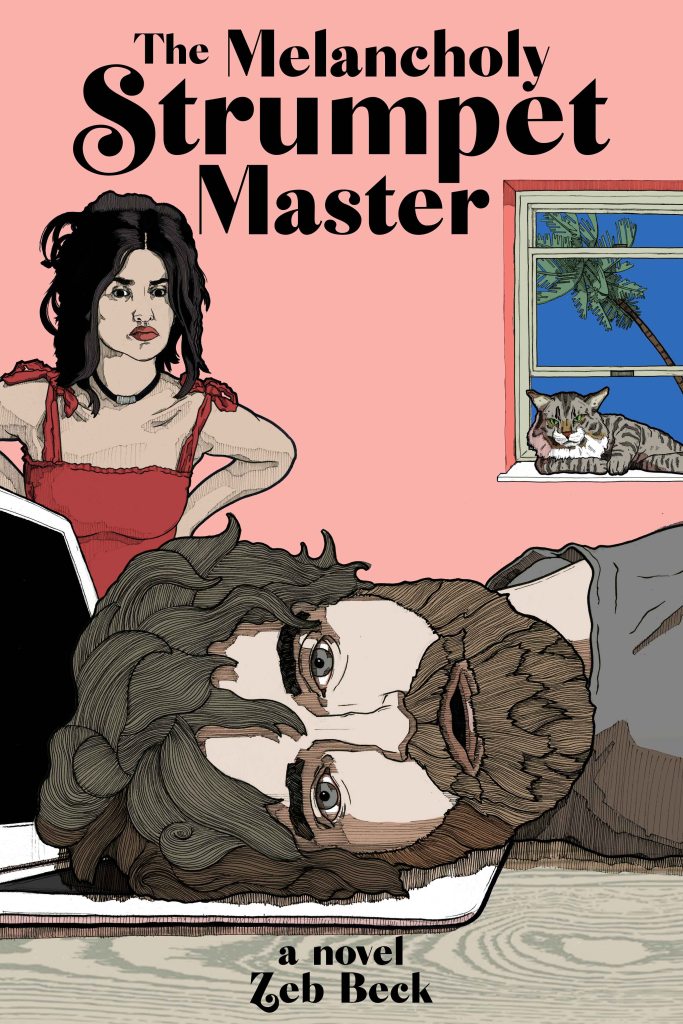
I traveled extensively throughout Mexico when I was younger. In my twenties, I used to go down to Tijuana to buy and consume hard drugs. Those substances were acquired in the same neighborhoods where women worked the streets. I got to know a few of them as friends and – surprise, surprise — came to discover they were real people with wit, intelligence, problems, and dreams like the rest of us. I should clarify, I have not done a single drug in many years so please don’t misconstrue my answer.

What theme or message do you hope readers will take away from your book?

I think that’s a question best unanswered, at least by an author. There are obvious themes of class, work,  and the burdens the universe sets up for us to overcome as we pursue goals, but I think I should leave it at that. 

What drew you into this particular genre?

I have felt strongly that there is not enough literary fiction for men out there. I hope that isn’t taken as a controversial statement. I don’t mean it as one. There’s a reason 85% of book buyers are women; the market is set up to satisfy women readers. Unless a regular guy is into nonfiction, science fiction, thrillers, or fantasy, there aren’t too many places to turn. My hope is that there’s an untapped niche for humorous literary fiction, the kind of stuff Exley wrote, that Fante and Bukowski wrote. The Lecturer’s Tale comes to mind, something that goes a bit beyond wacky Florida murder mysteries. English, August by Upamanyu Chatterjee is a wonderful example of the kind of novel I wish there were more of.

Bookbaby.com helping independents – whether authors, publishers, musicians, filmmakers, or small businesses – bring their creative efforts to the marketplace.

If you could sit down with any character in your book, what would you ask them and why?

I like the question. To me, Ava is the most interesting character in the book. I think I might ask her, as brilliant as she is, what made her drop out of college and turn to sex work. I have an idea what she might say, but I’m not sure. 

What social media site has been the most helpful in developing your readership?

I’m not sure; I’m still developing my readership. I’m going to be posting some stuff on Instagram in the next couple months. 

ABN Banner

What advice would you give to aspiring or just starting authors out there?

Come up with a story and keep it moving. We have enough novels exploring characters’ feelings about an early and traumatizing past experience. Be careful to include the odd detail. The odd detail is what makes writing believable. Camus was a master of the odd detail. Finally, I would say resist the advice of those authors who have made a fortune churning out multiple books each year. I’m sure there’s money in that, but there’s money in sex work, too. 

What does the future hold in store for you? Any new books/projects on the horizon?

I’m outlining a book in my head. I think it will overlap YA and psychological thriller. There will be laughs, too, be sure of that. Give me a few years to make it good.

Advertisements

About the Author

Zeb Beck lives in Los Angeles with his lovely wife and difficult pets. He likes and dislikes the same things you do.

Interview with Author Greta Uehling

Greta Uehling, tell us a little bit about yourself. How did you get into writing?

As a young person, I was more drawn to paint brushes than pens. In college, however, I was lucky to have superb mentors who encouraged me find my own voice. I began to experience writing as a form of creativity that was both enjoyable and empowering. 

I first became interested in eastern Europe through language and literature courses I took as an undergraduate. I was captivated by universal themes like love, loss, loyalty, and betrayal as seen through eastern European lenses. Those courses inspired me to participate in an exchange program in Ukraine, where I lived with a family and attended classes at the local university.  

My experience in Ukraine opened my eyes to myriad themes that are relevant today including the differing interpretations of national history, the importance of a national language, and the damaging effects of human rights violations. 

Since then, I have traveled and lived in eastern Europe and Central Asia extensively. I have gathered material in Uzbekistan, Kazakhstan, Tajikistan, and Russia, Moldova and other countries. 

Throughout my work, I have benefited enormously from the warmth, care, and support that people extended. That, too, kept me writing. In fact, Everyday War would not have been possible without Ukrainians’ willingness to speak with me about the difficult topic of war. For me, the publication of this book with Cornell University Press is accompanied by gratitude toward the many people who shared their thoughts and lives with me. It is a privilege – and a responsibility – to bring their stories to readers. 

Advertisements

What inspired you to write your book?

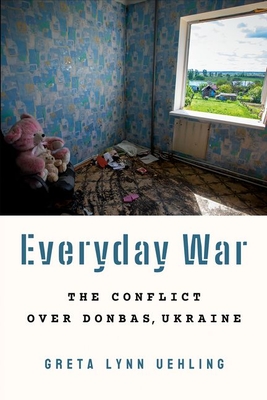
I was inspired to write Everyday War by my experiences living and working in Ukraine. Interviews with people all across that country between 2015 and 2017 revealed civilians were engaging with the war in very conscious and creative ways. What struck me the most in that first phase of the war was that one of people’s greatest concerns was how friend and family relationships were being adversely affected by the war. 

My research showed that in addition to the humanitarian crisis brought about by Russian aggression against Ukraine, there is a relational crisis characterized by families and friendships acquiring their own fault lines. This is important because as I describe in the book, personal relationships are usually treated as backdrops or tangents for the “real” action. The book illustrates that when kinship becomes “tactical,” to use my term from the book, it matters. 

Get FREE SHIPPING on all custom printed books at BookBaby.


What theme or message do you hope readers will take away from your book?

Many readers will have heard about Ukrainian resilience in the face of Russian aggression. Everyday War: The Conflict over Donbas Ukraine unpacks the significance of this resilience as well as its limitations. The stories I tell in the book demonstrate, among other things, how the time-honored distinction between combatants and non-combatants is being eroded. What readers may be less likely to hear in the news is the tremendous cost of this resilience. I explain this in the book through personal stories that vividly dramatize the normalization of violence. 

In short, I hope readers will take away a greater appreciation the significance of civilians during war. 


What drew you into this particular genre?

I grew up in a very diverse neighborhood in Madison, Wisconsin near the University of Wisconsin where my father worked. Students from all over the world sat next to me at school, became my friends, and invited me to their homes. I think that experience primed me for later travel and fieldwork because I began to feel increasingly at home away from home. 

Travel experiences became the basis of a career as a cultural anthropologist when I discovered I could have a profession centered in listening to peoples’ stories and learning about the world experientially. Perhaps a helpful way to think about what cultural anthropologists do is that they practice the art of stepping inside other peoples’ worlds to experience them from within.

What social media site has been the most helpful in developing your readership?

Well, I am still in the early days of promoting the book and my preference is subject to change. Recently, I’ve been most effective on Twitter. If readers want to find me there, the correct handle is @uehlingumiched1. My tweets on book-related events and also humanitarian and human rights news have garnered positive responses. In the future, I hope to reach a larger audience on Instagram. If readers are interested in following me there, they can find me at greta.uehling. 

ABN Banner

What advice would you give to aspiring or just starting authors out there?

Aspiring writers will likely already have learned that it is a good practice to write every day. I agree and there are so many ways to make writing a habit, from journaling to sharing “morning pages,” and participating in writers’ groups. Advice aspiring writers may not have heard is to think about writing as a physical activity in addition to a cerebral one. My best strategy for easing the mental gridlock that can set in with long hours at a computer is to walk, run, or cycle. Fresh ideas then come easily, providing solutions to writing problems that are harder to resolve behind a desk. A related strategy is to try pen and paper. Our brains are connected to our hands and there is abundant scientific evidence that shows the benefits of writing by hand. Far from slow or primitive, writing by hand can unlock thinking. 

What does the future hold in store for you? Any new books/projects on the horizon? 

Yes, and thank you for asking. I’m working on a book manuscript about what it means to be indigenous in Ukraine. Like my current book, Everyday War, my forthcoming book will have significance beyond Ukraine. A major theme in this work is the importance of political recognition for indigenous rights, and how humanitarian “politics of pity” aren’t enough to truly advance indigenous interests. I’ve been especially inspired by the writing of indigenous scholars in Canada during this project. I’m looking forward to the future publication of the manuscript because I have greatly enjoyed connecting with the readers of Everyday War. I can’t wait to share my next book with readers when its ready!

Advertisements

About the Author

Greta Uehling began her career by working directly with refugees, helping them find work in the United States. Her experiences in refugee resettlement motivated her to pursue a PhD in cultural anthropology, and have informed her career ever since.

After earning her PhD, she became a consultant with the UN refugee agency (UNHCR) in Geneva, Switzerland, working in the Evaluation and Policy Analysis Unit. Her work on irregular migration there led to another migration-related position as a Family Reunification Coordinator for minors smuggled across United States borders from Latin America and China, in Washington, DC.

Named after the globe-trotting Swedish actress Greta Garbo, she has traveled and worked in many regions. Her interviewees have often remarked about the rapport they feel during conversations. Her colleagues in anthropology note how this rapport, and Uehling’s writing, centers previously unheard voices.

With her current project, Uehling sought to tell the story of internal displacement in Ukraine in a way that is multivocal. She uses the language of lived experience to take readers on a journey through Ukraine that deepens understanding and solidarity.

Uehling dedicated Everyday War to her students because they inspire her to write with their many and insightful questions.

Home

Interview with Author Thomas More

Tell us a little bit about yourself. How did you get into writing?

I’ve written all my life. Little stories when I was a kid, bigger stories as an adult. It has always been my dream to live the life of a writer and I’ve always imagined my books on shelves and tables in every bookstore I’ve ever entered.

Advertisements

What inspired you to write your book?

It was literally a moment of inspiration while riding the subway. It came to me in bits and pieces and once I started to write the book, it kept getting bigger and bigger and more detailed. But honestly, it felt as if someone was dictating the story to me. The words just flowed.

What theme or message do you hope readers will take away from your book?

Believe in yourself! No matter what other people say. The only way to live a good life is to pursue your dreams.

What drew you into this particular genre?

I’ve been a science fiction fan from birth, practically. I loved sci-fi television shows, movies, and books. Every sf book I’ve read pulled me in and had me imagine a different world as if it were real. I loved it!

ABN Banner

If you could sit down with any character in your book, what would you ask them and why?

Well, of course it would be the protagonist, Sakima. I’d ask her what she was thinking in her darkest moments, her moments of sadness and defeat. And then I’d ask her how she moved past it to secure her future and live her dream life.

What social media site has been the most helpful in developing your readership?

I’m not that good at social media, but Instagram has been mildly successful. I’ve been told, however, that TikTok #BookTok is the way to go.

What advice would you give to aspiring or just starting authors out there?

Never give up! Never stop believing in yourself. Just keep writing. And don’t wait for inspiration to hit (although it does sometimes). Just write and the Muses will join you there.

What does the future hold in store for you? Any new books/projects on the horizon?

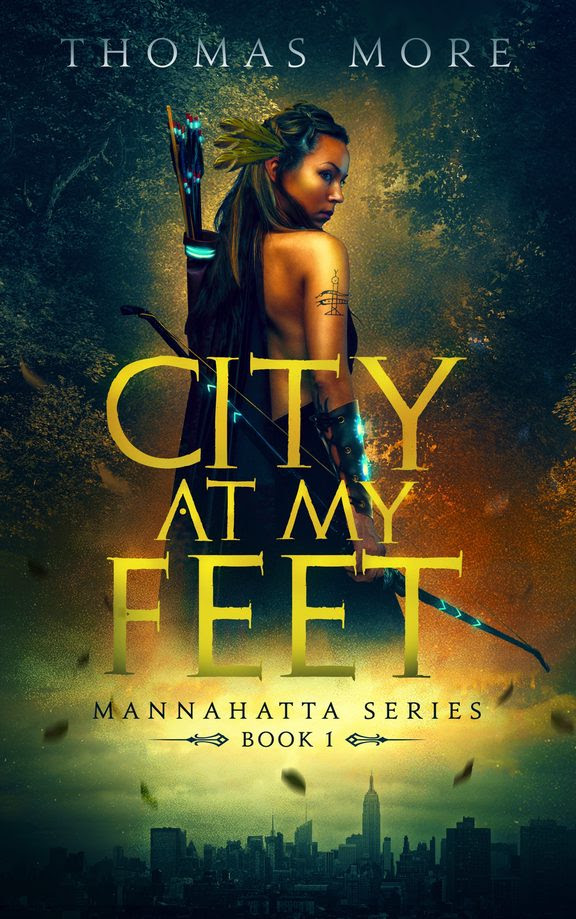
City At My Feet is the first book in the Manahatta Series. Book 2 comes out this Fall (fingers crossed). And I’ve done initial work on Book 3 in terms of new characters, plot outline, and more. So hopefully Book 3 will be out in a year or so after Book 2!

Advertisements

About the Author

Thomas More holds an advanced degree in English with an emphasis in Creative Writing. Although college-educated in the art, craft, and labor of writing novels, he is self-taught when it comes to science fiction and its associated tropes, its readers, and the best of its writers. His favorite pastime is going for long motorcycle rides on city streets, country roads, and beaches (where allowed, of course!).

Website:

Home

Instagram:

https://www.instagram.com/thomasmorewriter/

Pinterest

Preview of City At My Feet:

https://cityatmyfeetfreepreview.com/

Interview with Author Jill K. Thomas

Tell us a little bit about yourself. How did you get into writing?

Even though I have written 3 full-length books and several hundred blog posts, I still don’t really consider myself to be a writer.  I think of myself more as a Hypnotherapist who writes.  When you own a business writing becomes a necessary part of getting your message out and I love doing it..so maybe I am a writer…Hum, you are making me think, I love that!!.. I will say, it’s fun, people I am not related to say I am good at it so I will keep it up.

But to answer your question about how I got into it I will say I have been journaling since I was a young child.  I used it as a way to handle difficult emotions and over time as I got better and better at crafting a concise message, I started to use it in my pre-hypnotherapist professional life and career.  As in “We need someone to write a blog or 10 for the company website, who will take on that task..”  Me, always me.  

Advertisements

What inspired you to write your book?

The book, which is about how to create a successful healing arts practice, came out of frustration.  I kept seeing new hypnotherapists, reiki masters, massage therapists and even a few psychics in my office trying to figure out how to turn their gifts into a business and I kept repeating the same advice over and over again. Eventually, I thought “What if I just write all this down and tell them to read the book” It took a few years but here it is.

What theme or message do you hope readers will take away from your book?

You are important, your dreams of financially freedom and creating a successful business of your own are important and most especially you and your gifts really needed right now. Its time to get started making your dreams a reality. Entrepreneurship it’s not as hard as you think, this book shows you how to do it.

What drew you into this particular genre?

HA! Because I don’t know how to write books about vampires with a lot of sex in them.  Love reading those books thought, wish I could write like that but I’m more of a “this is how you solve your problems” kind of writer.  

Bookbaby.com helps independent authors bring their creative vision to the marketplace. Sell eBooks online in the biggest retail stores.

What social media site has been the most helpful in developing your readership?

Well, I am embarrassed to admit this but, not so savvy on the social media.  The only one I have used with any kind of success is Pinterest because my “7 ways to solve… (insert problem here)” posts seem to do better on Pinterest than on any platform.   And frankly wading through Facebook, Instagram and whatever todays latest trending social media site, just isn’t fun for me and I figured out a long time ago that if it isn’t fun, I won’t do it.  

What advice would you give to aspiring or just starting authors out there?

Therapy, lots of therapy.  HA! There will be a lot of “no” and even more common, silence when you send out inquiries about finding a home for the books and or articles you are writing.  Know that this is part of the game and is not a reflection of who you are as a person or your value in the world.  Every writer has gone through this.  Learn who you are as a person and create a practice of loving yourself no matter what before you really start wading into the very cold pool of book agents, publishers and radio show producers.

Also, Work on getting a good social media following, years before you have a book to sell.  That is one of the first questions the publishers ask, and my career would have been much easier if I had done that work before I released my books.  

What does the future hold in store for you? Any new books/projects on the horizon?

Yes, actually I have a book about Emotional overconsumption that keeps waking me up at night wanting to be worked on.  As many writers will tell you, a book can be a bit like a petulant child pestering you and wanting your attention.  I keep having to tell it at 3AM that it needs to wait its turn, its very impatient but I need to launch my current project first then I will give it my full attention.

But yes, I appear to be pregnant again with another book.  

Advertisements

About the Author

As an Intuitive Hypnotherapist, Clairvoyant Reader, Author, Medium and Vocal Channel, Jill K Thomas, CHT has over 18 years’ experience helping clients move past limiting beliefs, discover their authentic selves, and create a life of peace and harmony. Jill has helped thousands of people realize lifestyle and wellness goals they could never before achieve, including attracting prosperity and success, overcoming debilitating phobias, healing toxic relationships, and losing weight.

Among many of her accomplishments, her most recent book, “The High Income Healer: How to Turn your Healing Gift into a Full-time Business” helps healers take their business to the next level. Her other books include “Tales From the Trance”, published by Ozark Mountain Publishing, and her well known weight loss book “Feed Your Real Hunger: Getting off the Emotional Treadmill that Keeps you Overweight”.

She has appeared on numerous radio shows, maintains her popular online blog “Confessions of a Hypnotherapist”, and has authored articles for magazines read across the nation. Her “30 Day weight loss Jumpstart” CD has also helped many people finally lose the pounds, after years of trying.

https://www.jillkthomas.com/

Interview with Author Maggie Lovange 

1) Tell us a little about yourself. How did you get into writing?

I am a person of action. I always have to have a goal. To do something useful. I don’t know if it’s my ADHD, nature, or upbringing, but I’m always looking for challenges. I have achieved many things in my life, professionally and personally, but I am most proud of raising my 3 children.

Looking back on my life, everything has led me to this moment to become a writer. Now I am in that period of my life when I have achieved everything I could possibly want; a home, family, and career. While many people will say this is the time to sit back and enjoy your achievements, I felt weightless. You know, like, “Now what?” So the idea for the first book Dealing With Teen Anxiety, came to me at just the right time. 

Advertisements

2) What inspired you to write your book?

A year ago, our family found itself in crisis. A crisis caused by the anxiety of our youngest child – Renee. As always, I turned to the books to find a solution to the problem. But the more I read, the more depressed I became. Because I couldn’t see the solution to our problem. I continued to look for answers in parenting forums and in scientific studies. But the solution came when I came across the speeches of teenagers. It was so painful to read them that I cried. But then I realized what the solution was. After 3 months, I already had my child back. We had a lot of work to do with the anxiety, but at least I could talk to her now.

This inspired me to write a book for parents who want to help their children not just deal with anxiety but also become stronger.

The book is short, and I can see from the readers’ feedback that they have many questions. Visit my site and www.maggielovange.com and contact me. I will be happy to give you more information about everything.

3) What theme or message do you hope readers will take away from your book?

This is a book about hope and love. The strongest love – is the love of a parent for a child. It is no coincidence that the last two chapters are about how to make deep bonds with our kids. It’s important because soon your teenagers will grow up and go their separate ways, but if you have a strong relationship, they will always be close to you.

4) What drew you to this particular genre?

As I said before, I am most proud of my children. Not because they are intelligent and beautiful but because they have achieved their goals and found happiness.

In the last 10 years, there has been a lot of talk about positive parenting. Well, I’m 2 steps ahead. My grandparents on both sides raised my parents this way. My parents added something to that upbringing, and I added more. I think I can help many parents by telling them about these 2 steps forward.

In my opinion, parents’ job is not just to feed and educate their children but to teach them to deal with life’s problems. And something more important: It is unproductive to raise children in an environment without consequences.

ABN Banner

5) Which social media site has been most helpful in growing your readership?

Well, I’m still at the beginning. I am still developing my marketing strategy and looking for a way to reach more parents. Perhaps on Facebook, it is easiest to contact parents. But if I want to reach younger people, it’s Instagram and Tik Tok.

6) What advice would you give to aspiring or budding writers?

Do your target audience research. Do thorough research on the topic that interests you. Don’t write just to write something – be useful, and write from the heart.

7) What does the future hold for you? Are any new books/projects on the horizon?

I already have several projects in my head. I am currently working on my website, Make Parenting Easier

The next is about the stages of a child’s development from a psychological point of view – not just how to deal with the crises that children go through, but what we need to teach them to build a strong psyche.

The other project is about ADHD – this is something that needs to be addressed early on – in the early years of development. How to turn weaknesses into strengths because of how we were raised.

You can look at www.MaggieLovange.com for those who want to receive notifications about my new projects. There you can also leave the questions and opinions you have. The more honest they are, the better my next book will be.

Advertisements

About the Author

Hi, I’m Maggie.

My name is Maggie Lovange, and I am an M.S. in mathematics, graphic designer and author. But what makes me proud are my three wonderful children.

Why my work will be helpful to you

I have experience raising children, not just as a stay-at-home mom but as a working mom. I was a single mother with my first child. I am the parent of a stepson, and of course, I am familiar with the problems when two parents raise children. The experience I gained, the issues I faced and the final result I achieved are helpful.

In today’s informational world, we are overwhelmed by a lot of information. Very often, the information you can find about a problem needs to be more consistent or made up. I am a mathematician, and my logic is very highly developed. On the other hand, I love reading and discovering new concepts and ideas. What I do is find the connections between different scientific studies and explain them in a way that is practical and easy to understand. A great example of this is cognitive behavioural therapy – which is complex. It took me about three months to research it and find different sources to be able to explain it as something utterly applicable in every person’s daily life.

Of course, being an author and a mother is not always easy. There are days when I feel like I am pulled in a million different directions. Seeing the impact that my writing has on others is the most rewarding thing I could ever ask for. But I wouldn’t trade it for anything.

As my children grow older, I know that new challenges and topics will require my attention as a writer. But I am ready for whatever comes my way. Writing is not just a job or a hobby for me; it’s a calling. It’s a way to connect with others and make a difference in the world.

Writing a book is not easy, but the rewards are immeasurable. And as a mother, there is nothing more satisfying than knowing that you have positively impacted your child’s life and the lives of others.

http://maggielovange.com/

https://www.facebook.com/miminiki1234

Interview with Author Arthur Hartz

Tell us a little bit about yourself. How did you get into writing?

I’m an MD PhD, medical researcher who no one imagined would write social commentary, especially using cartoons. They didn’t know that my secret identity is a Margaret Meade type anthropologist fascinated by how the people in my primitive society interact. I first began creating cartoons as a tool for teaching medical students. Later, after writing some research papers as a wannabe anthropologist, I found that cartoons could present observations in a simple, entertaining, and relatable way that were clunky to present in words. I later added aphorisms and commentary to focus or expand interpretations of the cartoons. 

Advertisements

What inspired you to write your book?

I read a lot of social psychology about how people treated each other. My observations were often inconsistent with what I read. I thought that these observations may be interesting to others.

What theme or message do you hope readers will take away from your book?

Being a good guy doing the right things does not solve relationship problems. Our genetics and our culture make good relationships much more difficult than simply behaving well.

What drew you into this particular genre?

So much of the conventional wisdom about how to have good relationships didn’t fit with what I was seeing. I wanted people to think harder about what their needs really were and how they behaved.

ABN Banner

What social media site has been the most helpful in developing your readership?

I have not developed a successful social media site.

What advice would you give to aspiring or just starting authors out there?

I hope that in a year or so I will have had enough success that I am qualified to give advice.

What does the future hold in store for you? Are any new books/projects on the horizon?

For several months, I have been marketing my books.  I hope that I will now have more time to spend time writing creating new cartoon books and other books that will be interesting to a mass audience. 

Advertisements

About the Author

After retiring from a career as a medical researcher, Arthur Hartz worked with a team of artists to produce a series of cartoon books, the Slings and Arrows of Mundane Fortune. Slings and arrows in the title of this series refers to the daily attacks most people face on their self-esteem and relationships. From a distance these attacks are interesting and often funny. Four books have been completed with cartoons and aphorisms grouped according to the sources of the slings and arrows:

1. Winners and Losers, Heretical Cartoons About the American Religion of Winning

2. The Autumn Years, Cartoons from the Front Lines of the Battle Against Aging

3. Love and Marriage, Cartoons About Imperfect People Managing Their Most Important Relationship

4. Friendship, How Hard Can That Be

The talented artistic team for the series of cartoon books includes Aleksandar Jovic from Serbia, Mike Wolfe from Salt Lake City, and Heroud Ramos from Peru. Hartz describes what he wants, the artists draw what they like, and then they work it out — amicably.

Dr. Hartz was born in Baltimore; raised in Farmington, New Mexico, and worked in medical schools in Milwaukee, Iowa City, and Salt Lake City. Currently he and his wife, Ellen, live in St. Louis. He enjoys his grandchildren and talking to people in Latin America who can tolerate his Spanish.

https://mundanefortune.com/