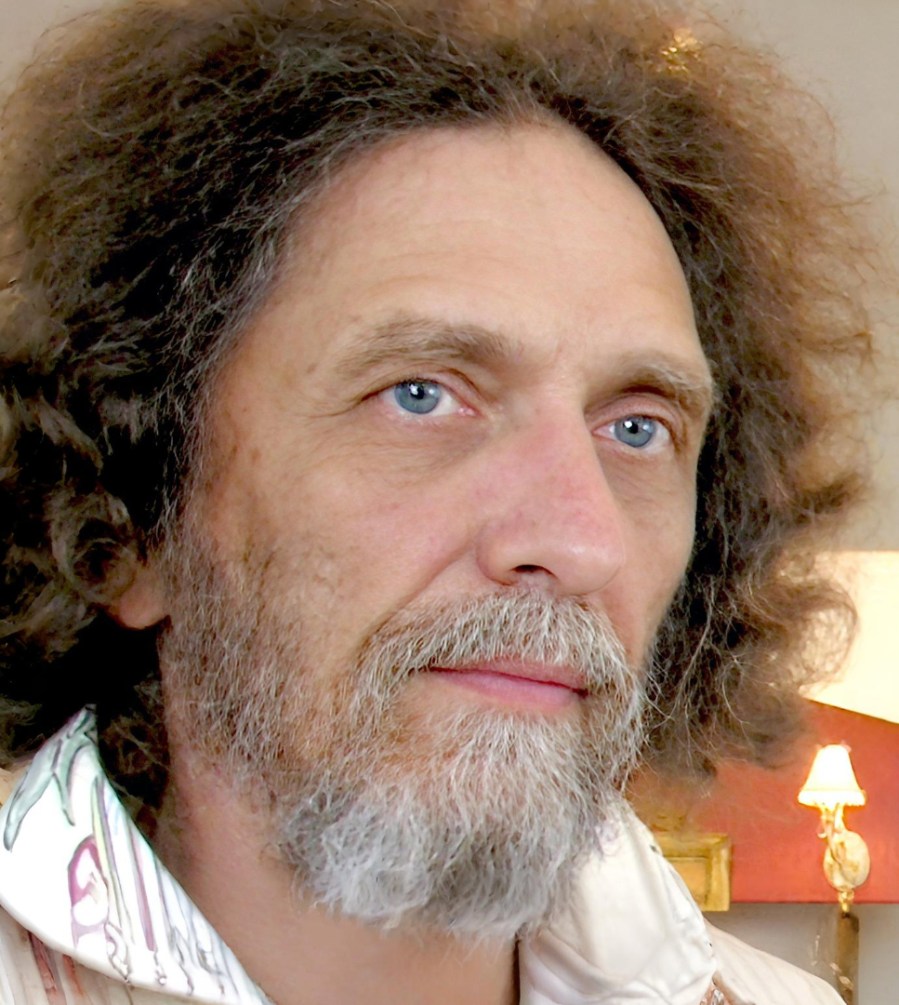
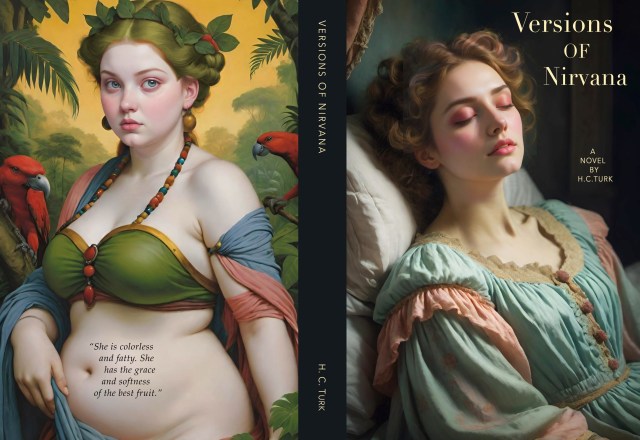
1) Tell us a little bit about yourself. How did you get into writing?
I began writing because I enjoyed it and found I was good at it. The fact that major publishers agreed is scarcely pertinent. In the end, I do this better than anything else, and it’s easy. It’s easy to give utter effort to writing day after day, year after year, because that is how magic is made, not by casting spells or incanting charms.
Advertisements
2) What inspired you to write your book?
I wanted to write a novel that is warmer in the emotions the characters experience than is my norm. That entails developing settings and scenes less intense than my usual, but no less involving.
3) What theme or message do you hope readers will take away from your book?
“Pay forward” is a profound idea. If you’re a witch, you can extend the substance of your spirit centuries ahead to find a subject worthy of your suicide.
4) What drew you into this particular genre?
See #2. Above and beyond that, the genre is literary fiction, the only type of writing I know, even when working on a kids’ book.
Advertisements
5) If you could sit down with any character in your book, what would you ask them and why?
Screenshot
I would ask Connie if she thinks she’s a brat, because a lot of people feel that way about her, including the murderous jungle denizens who keep her alive. If I asked her that, however, it would make her cry; and I would hold her hand and say that things are just fine, because she may be a brat, but absolutely she is a hero. Then she would cry again, but she would be smiling now.
6) What social media site has been the most helpful in developing your readership?
The answer is none. I hate social media, and they hate me. If it weren’t made of pixels, I would like to burn SocialMedia down to the ground.
7) What advice would you give to aspiring or just starting authors out there?
First, read more. More than that. Read books and plays and poetry that are unfamiliar to you. Then, ask yourself why you want to be a writer. Because you want to do something pretty much like the last something you read? Because you can add to the world of expression and understanding? Because you grasp that the word “literature” wasn’t coined by authors who have created the most vital and valuable writings of their eras, but by their admirers? Because you wanna make a buck? The most important thing I can say is this: If you are truly a writer, you were born a writer. It has nothing to do with publishing.
8) What does the future hold in store for you? Any new books/projects on the horizon?
I’m working on a series of children’s picture books starting with COLORBLIND DOGS: a kids’ book that kids would buy for their parents.
Advertisements
About the Author
H. C. Turk is a writer, sound artist, and visual artist. His novels have been published by Villard and Tor. His short fiction, sound pieces, movies, and visual art have appeared in numerous magazines, web-sites, podcasts, and film festivals. He used to paint houses (not as an art form.)
I received a free copy of this book in exchange for a fair and honest review. All opinions are my own.
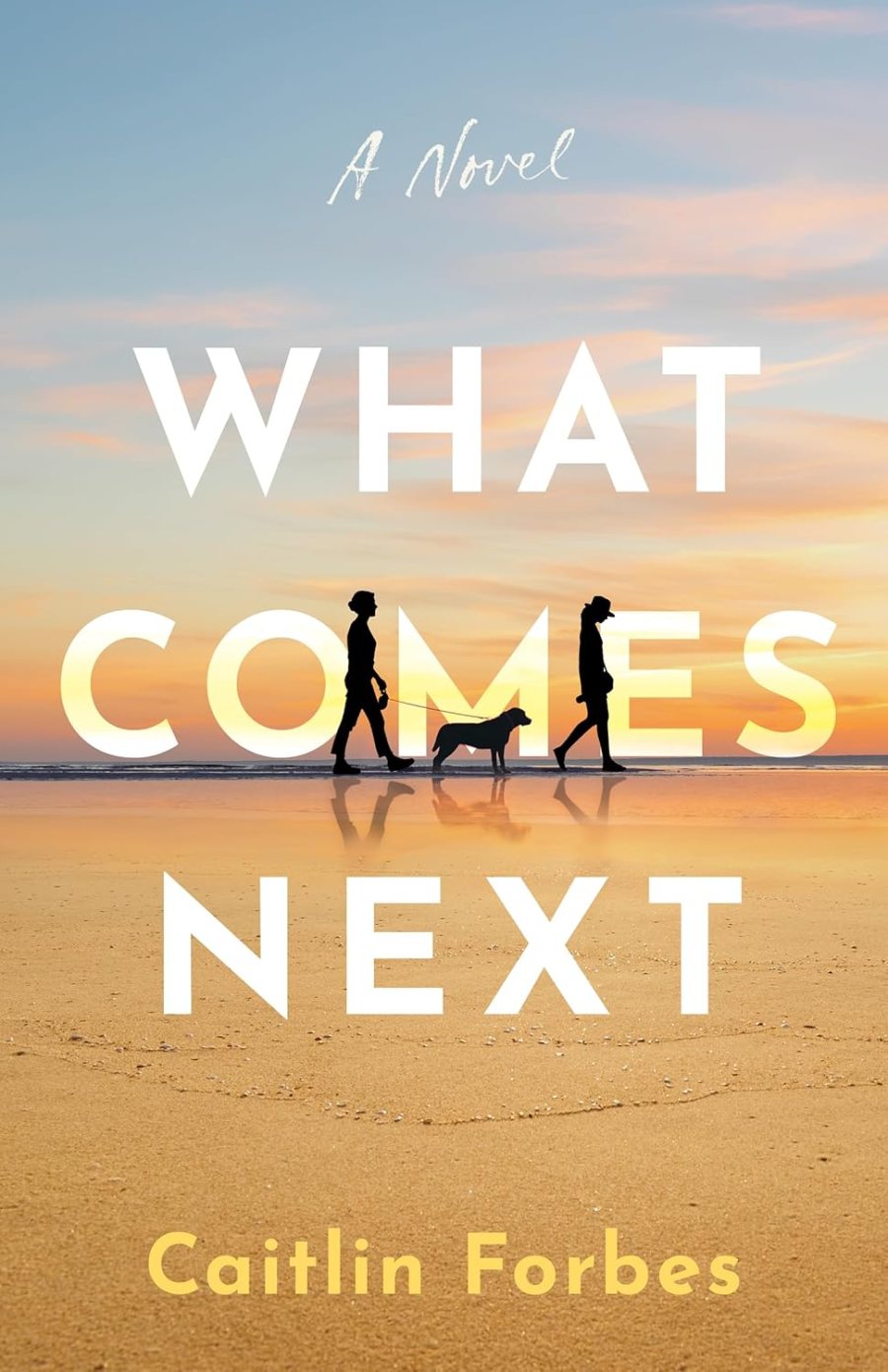
A woman pushes herself to experience more of life after the sudden loss of her mother in author Caitlin Forbes’s “What Comes Next.”
Advertisements
The Synopsis
An empowering and heartfelt novel about the complexities of family, the power of sisterhood, and the bravery it takes to choose happiness when all seems lost.
“My life is perfectly fine.”
Alex has pretended this for years―despite an emotionally absent father, a best friend drifting away, and a floundering dog-training business. At least Alex has her sister, Meredith, a driven polar opposite. But both their lives are upended when their estranged mother dies of a genetic condition that the sisters have a fifty-fifty chance of inheriting. For Alex, a world without her mother is uncomfortable. But a world without Meredith is unthinkable.
Alex suggests a pact to which Meredith tentatively agrees: In three months they’ll get tested. Until then they go after everything they’ve ever wanted. Alex is finally stepping out of her comfort zone and opening herself up to new relationships. Or maybe reconnecting with an old one. Nathan, a boy who once broke her heart, needs a trainer for his mixed-breed rescue. Alex can’t resist.
As sparks rekindle, and time passes much too quickly, Alex discovers more about herself, her sister, and her mother than she ever imagined. And that everything in life―especially happiness―comes with a risk worth taking.
The Review
What a heartfelt and emotional read. The author finds such a delicate yet perfect balance between exploring the grieving process, the intricacies of relationships, and the power of self-discovery. The juxtaposition of animal care with the protagonist’s life, especially with Remy and the frequency of animal abandonment due to past trauma, making it difficult to train or home them, mirrors the protagonist’s own abandonment issues and really speaks volumes throughout this story.
Yet it was the relationship between Alex and Meredith that really stood out to the reader. The way they learned to lean on one another in the absence of their parents, the loss they share, and the shock of a shared illness lingering as a possibility is something that felt so relatable as someone who inherited several ailments and the dangers that come with genetic diseases. The author artfully navigates these troubled waters by exploring the path to finding hope again in a person’s life amidst the trauma.
The Verdict
Memorable, heartfelt, and engaging, author Caitlin Forbes’s “What Comes Next” is a must-read women’s fiction-meets-family-drama novel. The imagery and atmosphere the author brought to life on the page, along with the compelling blend of emotional storytelling and hopeful tones, will keep readers engaged until the book’s final chapters. If you haven’t yet, be sure to grab your copy today!
Rating: 10/10
Advertisements
About the Author
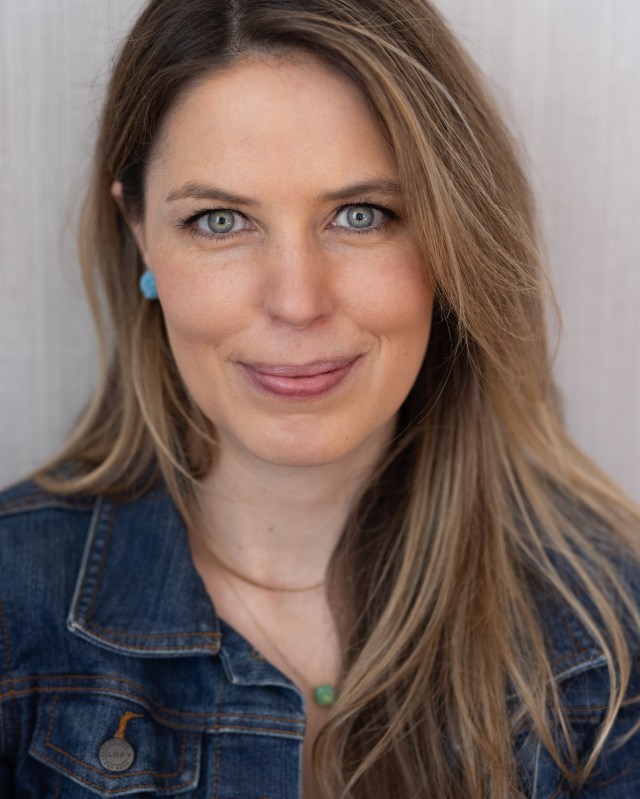
Photography by Molly Haley, mollyhaley.com
Caitlin Forbes is a Maine-based author who writes stories that explore the messiness of relationships—from sisterhood to romance to the tricky relationship we have with ourselves. When not writing, you can find her chasing after her toddler (or her dog) and exploring small-town New England life.
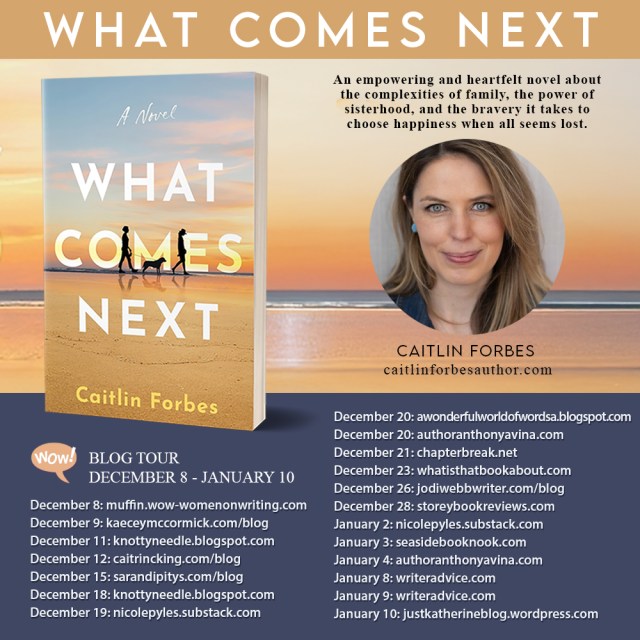
Join us at the Muffin as we celebrate the launch of What Comes Next by Caitlin Forbes. We interview the author and give you a chance to win a copy of the book.
Stop by B. Lynn Goodwin’s blog for a guest post by author Caitlin Forbes about the question of inheritance – of what we inherit versus what we get to choose.
Stop by Katherine’s blog for her review of What Comes Next by Caitlin Forbes. You’ll also have a chance to read her response to our tour-themed prompt about whether if she had an incurable condition and if she would want to find out.
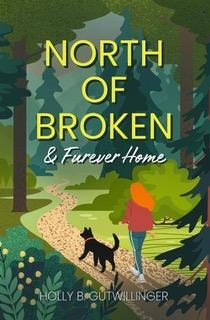
A stunning debut that truly shows the importance of the complex relationship between dogs and humans by Holly B. Gutwillinger
Released this February in e-book and paperback format by Ramblings From The Little Shed Publishing.
Renley Nelson is struggling with midlife melancholy and fractured family bonds. Her marriage is crumbling, her sons are distant, and her mother’s mind is slipping into places Renley can’t follow. When her best friend begs her to join a dog rescue mission in Ontario’s northern wilderness, Renley sees a chance to escape her failing life.
As she helps the dogs heal and adopts not one, but two high-needs dogs, she finds the strength to mend her relationships and reclaim her place in the world.
In this dual narrative between woman and dog, both must learn that healing requires the bravery to stay—even when everything inside you wants to run.
Holly B. Gutwillinger is an author and podcaster from a small northern Ontario town. Her debut novel, North of Broken & Furever Home, launches February 14, 2026, exploring a woman’s complex relationship with her rescue dogs.
Holly’s writing is shaped by her deep love of family—she is the proud mother of two adult sons—and her commitment to the animals who enrich our lives.
She holds a certificate in creative writing from the University of Toronto’s School of Continuing Studies and is currently completing her MFA in fiction at the University of King’s College. Holly serves on the board of her local writers’ guild and volunteers with the Women’s Fiction Writers Association.
I received a free copy of this book in exchange for a fair and honest review. All opinions are my own.
Author Betty Jane Hegerat shares a collection of short stories that explore the regrets and lessons people learn in life in the book “Elephants in the Room.”
Advertisements
The Synopsis
Fourteen jewel-like stories unveil the tender chaos of lives unlived and loves unspoken
In Elephants in the Room, Betty Jane Hegerat masterfully uncovers the quiet fractures of ordinary lives—the unspoken regrets, the buried griefs, and the fragile threads of connection that bind families across generations.
From a devoted son’s frantic dash to help his mother glimpse the Queen to a reluctant father’s stunned reunion with the daughter he never knew, from a woman dressing her mother-in-law for an eternal rest to a boy’s guilty reckoning with a bully’s untimely death, these unforgettable stories illuminate the elephants in our lives we ignore at our peril.
With tender wit and unflinching insight, Hegerat explores the weight of what we leave unsaid: the ache of lost chances, the solace of small mercies, and the stubborn grit that carries us through. As poignant as a stolen glance, as resonant as a half-forgotten lullaby, the stories in Elephants in the Room whisper the unvarnished secrets of family ties—where regrets loom large, and small acts of grace light the way home.
The Review
These stories have such a significant impact on the reader. The relatability and depth of emotion each story brings to life are fantastic, and the vivid imagery it uses really brings the settings and characters to life on the page. The versatility of the characters and the way each felt unique and different from those in previous stories made the narrative’s pacing feel fast-paced and the atmosphere enveloping.
The heart of the story was the introspective journey each story took readers on. The story Jawbreaker stood out, as the reader is presented with a tense parental situation that a great-grandmother witnesses. The story not only highlighted the tension and wrongs both parties were part of, but also the feeling of helplessness in a situation with no winners and a child caught in the middle. This story reflected the open-ended nature of many of these stories, as if catching snapshots of people’s lives in a moment in time.
The Verdict
Thought-provoking, engaging, and memorable, author Betty Jane Hegerat’s “Elephants in the Room” is a must-read anthology of unforgettable genre fiction stories. The creativity and the relatability of these characters and their stories will resonate with so many readers and keep them engaged until the final story’s end. If you haven’t yet, be sure to grab your copy today!
Rating: 10/10
Advertisements
About the Author
Calgary author Betty Jane Hegerat was a social worker in a long-ago life. The stories she has written since she left that career behind reflect an ongoing need to make sense of conflict and chaos in relationships, and to find moments of laughter and even glimmers of redemption. That seriousness aside, she loves the Calgary writing community. She has taught at the Alexandra Writers’ Centre, Fernie Writers’ Conference, for Continuing Education at the U of C, and was Writer in Residence for the Calgary Public Library. In 2015 she was honoured to receive the Writers Guild of Alberta Golden Pen Award for lifetime achievement in writing. Betty Jane’s stories have been published in anthologies and magazines. She has five previous books: a novel, Running Toward Home (Newest Press), collection of stories, A Crack in the Wall (Oolichan Books), another novel, Delivery (Oolican Books), and two YA novels, Odd One Out (Oolichan Books) and The Boy (Oolichan Books). The Boy is a French braid of investigative journalism, fiction, memoir, and meta-fiction. The book was shortlisted for the Calgary Book Prize, High Plains Book Awards, and Alberta Writers Guild Wilfrid Eggleston Non-Fiction award.
I received a free copy of this book in exchange for a fair and honest review. All opinions are my own.
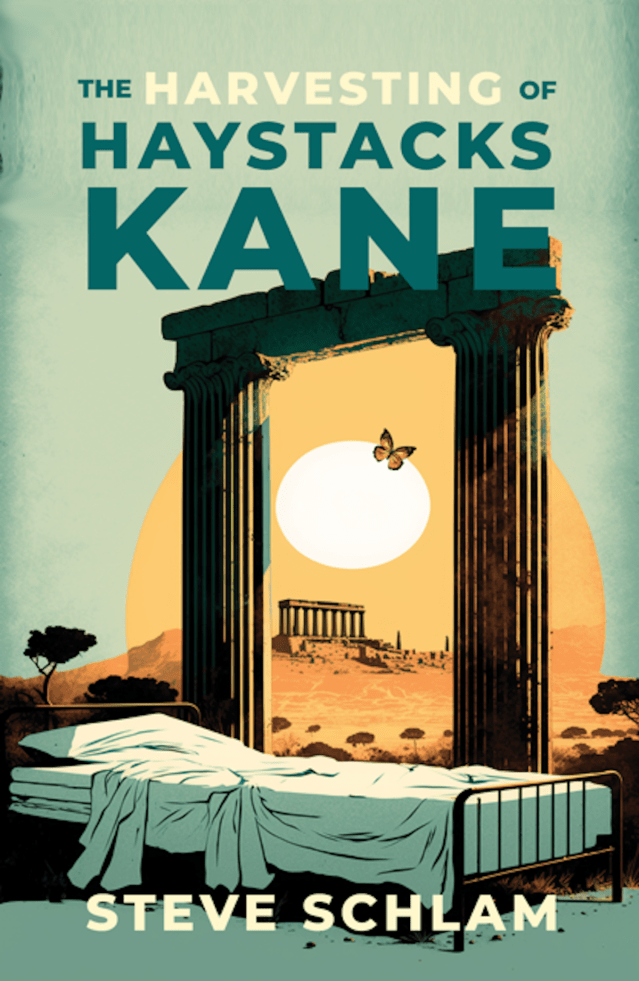
A broken and used man must contemplate the truth behind his own existence in author Steve Schlam’s “The Harvesting of Haystacks Kane.”
Advertisements
The Synopsis
Haystacks Kane is a professional wrestler. A 607-pound professional wrestler. He has been preyed upon, handled, his innate kindness and gentle good nature harvested by unscrupulous promoters and his conniving manager, an ex-wife and fellow denizens of the seamy netherworld he inhabits, the ravenous crowds with a thirst for violent cheap thrills-and sometimes for blood.
Now, gravely injured and unable to speak, he lies motionless in his hospital bed, immobilized, his body broken. Visitors from his past and present enter and leave the room-or perhaps only his disordered inner world. They offer up counterpoint to his own silent ruminations as he drifts in and out of consciousness seeking to uncover the deeper truth of his existence, rummaging through the trunk of his memories to discover exactly what ‘it’ is-the ‘it’ that has deprived him of his wife, taken every member of his family from him, laid him low, and the ‘it’ that will release him from the bonds of his history and transport him to Greece, the Eden he dreams of, his true self set free at last.
The novel’s final moments prompt the reader to decide for him- or herself what Haystacks’ ultimate fate will be-a decision that will reveal in turn the reader’s own worldview, where he or she can be found on the continuum of hope vs. fear.
The Review
What instantly stood out in this story was the unique writing style the author deployed here, giving readers a stream of consciousness style of writing that really did a fantastic job of invoking that sense of an out-of-body experience that someone in the hospital, either in a coma or on death’s door can experience as they dip in and out of memories and the present day. The narrative’s reflective nature was a direct result of this writing style, and the reader was left reeling with emotion and curiosity about Haystack’s journey that brought him to this pivotal moment.
The concepts of legacy and dreams are well-woven into this narrative. Haystacks and his ambitions, and how others manipulate those ambitions and good intentions to use him, are pivotal to the story. The introspective nature of his time reflecting on those choices and the purpose of his life overall is a stark reminder for everyone to live life with intention and no regrets, and to consider the path we tread every day carefully.
The Verdict
Heartfelt, thought-provoking, and engaging, author Steve Schlam’s “The Harvesting of Haystacks Kane” is a must-read literary fiction novel. The profound emotional depth and compelling character study this narrative offers, and the skillful, almost haunting writing style and detailed imagery the author pours into it, will keep readers invested until the book’s contemplative, open-ended finale. If you haven’t yet, be sure to grab your copy today!
Rating: 10/10
Advertisements
About the Author
STEVE SCHLAM first gained entry to the City of Words through the doors of the public library in Brooklyn, New York, where he was born and spent a good part of his childhood; and has maintained his residency ever since while living in cities and towns across the United States and in Mexico. An actor as well as an author, he has performed on stages in all the places he has called home, and earned a Master’s Degree in Creative Writing and English under the tutelage of Joseph Heller, renowned author of “Catch-22.” He lives currently in Southern California in a pretty little Craftsman bungalow with orange and lemon trees growing in the backyard, in the company of his wife, Liora. “The Harvesting of Haystacks Kane” is his first published novel.
I received a free copy of this book in exchange for a fair and honest review. All opinions are my own.
Author Annmarie SanSevero leads readers into a collection of speculative fiction that explores mystery and the supernatural in “The Butterfly’s Stroke and Other Stories.”
Advertisements
The Synospis
An Intricate and Harmonious Dance Between Humanity and Technology
Dive into Annmarie SanSevero’s gripping collection of speculative fiction, where suspense, mystery, and the supernatural collide with the frontiers of science. Each story pulses with themes of hope, resilience, and the ethical complexities of technological advancements.
A testament to the human spirit, these tales weave suspense, mystery, and supernatural elements into a tapestry of speculative fiction that resonates with contemporary societal issues. Don’t miss your chance to experience these unforgettable narratives and embark on a journey that both challenges and inspires.
The Review
This was such a powerful collection of short stories. The speculative fiction genre always knows how to push the envelope and get readers really thinking critically and taking in all considerations. The dynamic character development and fast-paced yet monumental story points in each short story really hit both emotional and psychological notes, resonating with readers as they dive deeper into the collection.
The powerful imagery and strong themes really were the backbone of this collection. The stories each brought a profound discussion to the table, from the titular story’s exploration of technology left unregulated, to the story “Heresy of Peace” delving into the topic of division and war amongst groups of people, whether it be due to politics, religion, or ideology as a whole, and how that division could be the undoing of everyone. The heartfelt emotional pull of these stories and the thrilling twists each one houses make this collection truly shine.
The Verdict
Engaging, thoughtful, and uniquely human in a very genre-specific collection of stories, author Annmarie SanSevero’s “The Butterfly’s Stroke and Other Stories” is a must-read short story collection of speculative fiction. The twists and turns, the compelling characters, and the thought-provoking themes will keep readers invested in every tale. If you haven’t yet, be sure to grab your copy today!
Rating: 10/10
Advertisements
About the Author
Annmarie SanSevero grew up in New York City but was transplanted to the south in high school. She writes stories about hope, courage, and resilience in fantasy, science fiction, steampunk, and mystery. She loves exploring the human experience and wants readers to feel like they can do more than survive. They can be world changers.
When she’s not writing, Annmarie enjoys learning just about everything (yep, she’s a nerd), playing violin, tap dancing, and singing. One day, she wants to go LARPing.
I received a free copy of this book in exchange for a fair and honest review. All opinions are my own.
A man searches for a means of living a more analog life as he goes on a soul-searching journey of life and death in the book “Analog Sun” by Alex Woodard.
Advertisements
The Synopsis
A small book with a big message for anyone searching for life beyond the algorithm.
A lost traveler stumbles onto a hidden path, untouched by code or concrete, in this modern fable about navigating between the world we’ve built and the one that built us.
The Review
This was a thought-provoking, engaging, and compelling read. The author does an incredible job of creating a dream-like, at times chaotic but always driven atmosphere that delves into the core narrative’s themes with ease. The introspective narrative makes an outstanding balance of atmosphere and philosophy, using the protagonist’s story as a lens for a greater societal problem as a whole, and the rich imagery in the author’s writing brings both the beauty and the darker elements of the narrative to life so vividly on the page.
The heart behind this narrative is in the story’s main themes and the rich, character-driven narrative that unfolds. The exploration of addiction, both from substance abuse and technology as a whole, felt honest and visceral on the page, striking at the heart of the lies people tell themselves as they sink more and more into that mindset and behavior. The duality of the protagonist’s personality, from his love of nature and animals to his loss of direction and sense of self as he sinks further and further into his own bad decisions, created a complex character study full of heart and emotion.
The Verdict
Insightful, emotionally-driven, and poignantly written, author Alex Woodard’s “Analog Sun” is a must-read genre fiction drama. The twists and turns in the story, how the story seemed to fuse elements of stories like Requiem for a Dream and The Game with a modern-day twist and yet takes the time to find the glimmers of hope and heart that can be seen when people lend a helping hand, this novel brings both realism and a sense of spirituality to the battle of addiction in fresh and heartfelt ways. If you haven’t yet, be sure to preorder your copy today!
Rating: 10/10
Advertisements
About the Author
Alex Woodard lives with three horses, two dogs, two chickens, and two beautiful humans on a small ranch near the California coast.
His first novel found an early supporter in Woody Harrelson, who said, “Ordinary Soil brings to haunting life the desperate realities of the American heartland, but also offers a glimpse into a better future . . . a call to action for all of us.”
His nonfiction For the Sender book, album, and concert series has garnered praise from Huffington Post (“important, enlightening, and ultimately inspiring”), Deepak Chopra (“a beautiful tribute to the resilience of the human spirit”), Dr. Wayne Dyer (“an inspiring, thought-provoking, and life-changing work”), and Billboard magazine (“one of the year’s most touching, unique releases”), among others. Alex has also toured nationally behind several critically acclaimed albums, earning a few prestigious industry nods while sharing the stage with some of his heroes.
Analog Sun, a sequel to Ordinary Soil, is his second work of fiction.
Tell us a little bit about yourself. How did you get into writing?
We came from very different backgrounds and crossed paths in a writers group near Pensacola, Florida.
Pat: I started out in the New York theater world both as an actress and director. Later, in New England, I ran summer stock and a murder-mystery dinner theater, writing and producing original scripts. But at some point, I found myself more curious about the people behind the characters, the emotions they carried, and what made them tick.
That curiosity steered me toward a career in clinical psychology. Whether in a therapy room or a theater, I’ve always been drawn to the emotional core of people’s stories, their struggles, their turning points, and the strength it takes to grow and heal. That same thread runs through my writing. I’m fascinated by resilience and transformation—those moments when something shifts, when someone finds light in the dark. That’s what guided All the Broken Angels, the novel I co-authored with Steve Hardiman. It’s about characters shaped by the weight of the past and the choices they make to move forward, with resilience, hope, and a fierce sense of survival.
Steve: I discovered my love for writing while drafting research papers in grad school. Those were non-fiction, and I imagined my first book being the same. But the passion required to do a topic justice wasn’t there. Later in life, I moved back near Pensacola, Florida, to take care of my aging parents. In need of a distraction and some social interaction, I joined the Panhandle Writers Group and discovered my love for the creative opportunities in fiction—but still had not found an idea that excited me.
On a whim, I decided to write an extended review for a fellow group-member’s memoir. The theme of addiction drove the narrative for a large chunk of that book. As a clinical psychologist, Pat appreciated how I captured the insidious nature this disease played in the author’s self-deception and unraveling of his life. She figured that if I, a non-addict “normie,” could tease out the essence of how addiction tricks the mind into doing the brain’s bidding, maybe I could help her write a synopsis of the novel she was working on. We found our writing styles highly compatible. Our orbits grew tighter and before you know it, we joined forces —and didn’t finish that synopsis until we’d written the whole damned book!
Advertisements
2) What inspired you to write your novel?
Pat: All the Broken Angels is a deeply personal story. It’s semi-autobiographical in many ways. Cate’s journey echoes aspects of my own, and the characters were inspired by people in my life, including my family and the neighborhood where I grew up. The story is steeped in the emotional landscape of my community, all of which made me who I am today. In addition, as a psychologist, my work with Vietnam veterans profoundly influenced this story. I appreciate their willingness to open up to me and share their experiences.
Co-authoring the book with Steve Hardiman added depth and dimension to the process. He inspired the creation of a supporting character in the story. His poetic style and thoughtful research further enriched the world we built together, helping us bring authenticity and nuance to the characters and setting. We wanted to craft a story that feels lived-in—one that honors the past, speaks to the present, puts the reader in the moment, and sticks with them long after the final page.
Steve: Shucks, Pat. Thanks. I certainly aimed for all of those things, and you and your unfinished novel came along at just the right time. Not only had my mother passed between when Pat and I met and later decided to collaborate, but my wife Angela and I had closed a business that was losing money, which had spillover effects of it’s own. This perfect storm left me on the verge of a breakdown. I desperately needed something to soothe my weary spirit. Very early in our partnership, I vividly remember venting to Pat about my personal situation. Somewhere in the middle of commiserating, I muttered, “I just want to create something beautiful.” I’m quite proud of the result and that we were honored with several awards for our efforts. The catharsis of writing it also helped my wife and I get through a difficult time.
Circumstances aside, that “create something beautiful” sentiment drives me like no other passion. Exquisite beauty goes all the way down: you find it in our novel as a whole, the three parts, sixty-one chapters, all the scenes, many a poignant paragraph, and even in the tiniest of details of word choice and turns of phrase. My love for crafting prose through character development, dialog, action sequences, and teasing out pathos and humor wherever they are hiding became my healing. Because our styles were sympatico, Pat and I had fewer creative differences than I’d expected. And the struggles we did have made the story stronger and helped us find our voice that fused the best of our individual strengths.
3) What theme or message do you hope readers will take away from your book?
Pat: At its core, All the Broken Angels is about quiet resilience, the kind that builds slowly through struggle, forgiveness, connection, and self-discovery. It’s a story of transformation, not in sweeping gestures, but in the small choices we make to move forward. We wanted to offer a sense of hope, even when characters are navigating uncertainty and loss.
Because the story unfolds through Cate’s voice, a young woman caught between past wounds and present challenges, it resonates deeply with younger readers. Her emotional journey reflects the universal themes of seeking belonging, finding identity, and learning to trust both oneself and others.
As a psychologist who has worked with Vietnam veterans, I also felt it was important to honor those stories and recognize the sacrifices made by their families. While the book acknowledges trauma, it doesn’t dwell there. Instead, it explores how people carry their history with grace, grit, and sometimes humor.
Ultimately, I hope readers of all ages walk away feeling that healing is possible, connection matters, and that understanding the past can empower us to shape a stronger, more compassionate future.
Steve: Wow, Pat, you’re a tough act to follow on this question. Because the novel is semiautobiographical, and about half of the first draft was penned when I arrived on the scene, it became my job to honor the emerging themes, then work with Pat to rewrite and shape the story into something even better than either of us had originally conceived for. I believe I speak for both of us that the final version exceeded our expectations. We’re humbled every time another glowing review is posted by a reader. Often, their words mention the very themes we baked into the story. The lesson for me is if a story is strong, its themes shine through more brightly.
4) What drew you into this particular genre?
All the Broken Angels fits comfortably within both women’s fiction and historical fiction, and we’ve been fortunate to receive awards in both categories.
In women’s fiction, there’s a powerful form often referred to as psychological or emotional arc-driven storytelling. Here, the focus isn’t on external plot twists but rather on a woman’s internal journey. It explores how a character grows emotionally, mentally, and relationally over time. That transformation might be sparked by grief, a major life shift, or a moment of reckoning. But at its core, the story is about personal evolution and forging ahead.
Pat: This framework perfectly fits our protagonist Cate. She’s partly me and partly her own person. The book is rooted in the 1960s and ’70s, a turbulent time marked by the Vietnam War, the rise of the women’s movement, civil rights, peace marches, and gay liberation. Since I grew up during that era, and I saw how deeply divided our country was. Many of the rights we fought for then are still being contested today, so there’s a sense of déjà vu that makes the history come alive on the page in surprisingly familiar ways.
Steve: I grew up in that era as well, which turned out to be a big bonus. I brought my own experiences to further flesh out the tableau we were creating for the novel. I knew the music, the culture, what life was like for a kid, and many everyday details that bring the past within the reader’s grasp.
We set a very high bar for ourselves: A time traveler from sixty years ago could read All the Broken Angels and have no idea it hadn’t been written back then; nothing would seem off. A lot of meticulous research went into the history and how people spoke. One of my pet peeves is period prose that uses modern lingo. So we took the “historical” genre quite literally. This meant occasionally trading a slightly more clever way of saying something for era-appropriate language, and even determining the actual weather for a specific date. Crafting a novel that is truly authentic in those respects was a self-imposed challenge that became a deep source of satisfaction for me.
Both of us: As historical fiction authors, our mission is to keep history alive. There’s a real risk that the stories and the hard-earned wisdom of a generation will fade. We want readers of all generations to feel the heartbeat of this history. When we forget where we’ve been, we lose part of ourselves. None of us simply appeared, we arrived through our complicated connection to the past. Through Cate’s journey, shaped by both her family and the time she lived in, we’re offering not just a glimpse of a tumultuous era, but a trip back in time toward an emotional truth that still resonates today.
5) If you could sit down with any character in your book, what would you ask them and why?
Pat: I’d sit down with Cate, not the girl from the beginning, but the woman she became by the end of the book, after everything she’d been through. I’d ask: “You carried anger and mistrust for years, especially toward someone you saw as an enemy. Yet when it mattered most, you chose forgiveness and opened yourself to a painful truth. What shifted inside you? What made you let go and trust someone you never thought you could?”
Steve: While I found our protagonist endlessly intriguing, I’ll pick another who grows into one of the most complex characters: Walter, “the freckle-faced, tow-haired bully from school.” I was bullied as a kid and always avoided those memories. But Walter could offer me some insights from the other side of that power dynamic. So I’d take seat with the older Walter and ask him about his experience of that time in life and his long struggle away from those behaviors. Did he feel that he paid a price for his actions? How did leaving behind that part of himself inform who he became?
I would also thank him. In writing Walter’s character, I discovered how fascinating a bully can be. There’s another world hiding behind all that belligerence, and bullying was his suit of armor. His arc and how it intertwines with Cate’s is one of the most fascinating in the story. And Walter could easily take the lead role in another novel.
6) What social media site has been the most helpful in developing your readership?
The best sites that have worked for me are Instagram, Facebook, and LinkedIn. And, of course, my website.
7) What advice would you give to aspiring or just starting authors out there?
Pat: Surround yourself with a creative community. Writing can feel like a solitary endeavor, just you and the blank page—but it doesn’t have to be. Seek out local writing groups or join a critique circle to get a feel for sharing your work and connecting with other writers.
Beyond that, take classes or attend workshops, in person or online. You’ll meet fellow creatives who understand the ups and downs of the process and will cheer you on even when the words arent’ flowing. I truly can’t imagine my writing life without my trusted circle. They’ve been my sounding board, support system, and inspiration every step of the way.
Steve: Pat’s spot-on about educating yourself and joining a creative community, especially other writers. Naturally, reading stimulates my creativity, as well. But I also find inspiration in other artforms, especially films and television. Body language, lighting, subtleties in dialog; many of these can be adapted for use in fiction writing if you can find a simple way to describe them. For example, I rewatched Toy Story while working on the novel and found inspiration to “punch-up” a few details in chapter one, which helped bring the scene to life even more.
The most specific advice I can offer is about what I learned about writing humor. All the Broken Angels isn’t a humor novel, per se, but there are many funny moments that make the prose more engaging and the characters more endearing.
As I fumbled my way along the humor learning curve, I discovered that a brute-force approach to “just be funnier,” is the hard way, and it blocked my thinking. When I learned to see humor less as a skill and more of a lens through which to view the world, the funny began to flow. I remember helping another novelist “punch-up” his crime thriller that already had some humor as part of the mix. In a pivotal scene, the protagonist, a detective, thinks she has cornered a serial killer in the basement of a house. Gun drawn and heart pounding at the top of the stairs, she flips on the light switch, only to see a brief flash below followed by a soft pop as the sole downstairs bulb burns out. Staring into the inky blackness while contemplating her next move, she mutters a curse and muses that “of all the homicidal maniacs, lucky me gets the loser who never switched to LEDs.” Momentarily normalizing the killer’s horrific hobby in order to shame their wasteful energy choices is a perspective shift as simple as it is absurd. And the brief pause when the protagonist stops to reassess provided the perfect opening to inject a single line of dark humor. Once the protagonist makes her move, the action resumes and comedy is set aside. Humor must meet the moment and the character; no gratuitous laughs allowed.
Finally, I have to thank Pat. Because she was a playwright, the scenes and chapters she had already drafted when I came aboard were well constructed with a strong beginning, middle, and end. We adopted this approach for the rest of the book, and it even spilled into the construction of key paragraphs. She was a source of inspiration I took for granted. As we leaned into these techniques together, they added power to our writing.
8) What does the future hold in store for you? Any new books/projects on the horizon?
Pat: As a playwright, imagine everything I write eventually being in a theater in front of an audience. Readers often say how the writing style of the novel puts them “in the room” with the characters. So, Steve and I are exploring ways to take All the Broken Angels from page to stage, possibly as a full-length play or a series of one-acts. As Steve mentioned in his answer to the previous question, the scenes and chapters, as written, lend themselves to theatrical interpretation, and we’d love the challenge of translating narrative into performance.
I’m working on a new novel set in New York City between the mid-1970s and early 1980s. It follows a woman trying to make it as an actress while teaching theater to inner-city youth. As the women’s movement gains momentum, she’s searching for her voice, just like those around her: Vietnam veterans seeking respect and recognition, young people navigating identity, and the LGBTQ+ community finding visibility while the AIDS crisis begins.
Though All the Broken Angels was semiautobiographical, this new story draws even more closely from my life in New York’s theater world. It blends women’s and historical fiction, exploring belonging, resilience, and how the arts can inspire transformation in uncertain times.
Steve: I still love writing and will explore a stage adaptation of All the Broken Angels with Pat. I’m also focusing on photography and plan to create some instructional or explanatory videos about writing, photography, and music. A couple of projects are just beginning to take shape. After recently moving to Arizona, I’ve been helping my wife Angela get her home-school curricula company off the ground. I’m also spending more time with my fifteen-year-old grandson Landon and recently took him to his first concert: Alice Cooper—he’s still rockin’! Landon has no idea how often “first concerts” will come up in conversation over a lifetime. As his grandpa, I’m over the moon that he’ll always have a great story to tell. 🤘
Advertisements
About the Authors
Pat Black-Gould
Pat Black-Gould is an award-winning author, speaker, and clinical psychologist. Her novel All the Broken Angels, co-written with Steve Hardiman, is a family saga set during the Vietnam War era. As a psychologist, Pat specialized in working with Vietnam Veterans, and the novel pays tribute to those who served and their families. Her children’s book The Crystal Beads, Lalka’s Journey, tells the story of a hidden child of the Holocaust.
Pat’s short stories have appeared in literary anthologies and online journals. Pat’s writing explores themes of compassion, inclusion, and diversity, and she conducts presentations nationally on these topics. WSRE PBS TV featured her on the program Conversations with Jeff Weeks. As a speaker, Pat also conducts workshops on marketing and the craft of writing. In the theater world, Pat was a theater director and producer of a New England summer stock company and a murder mystery dinner theater.
I received a free copy of this book in exchange for a fair and honest review. All opinions are my own.
A young rapper’s world unravels after the events of a deadly shooting in author Darius Cache’s “Bernard’s Song.”
Advertisements
The Synopsis
Scorned, revenge is no longer a dish best served cold for Bernard Woods leaving blood on the streets of Northside Atlanta.
Darius Cache is a voice for people of color who are teenagers, people of color who are young adults, and parents of these groups. This novel is a true to life tale centering conversations around mental health and repairing family structure related to conflict resolution, conquering substance abuse, and anger management. Bernard’s Song is an account of his actual life that can be described as biographical urban fiction. Bernard wants to be rich but doesn’t have any real goals. Bernard’s love interest is equally addicted to the fast life and takes a job working as a strip club bottle girl. Bernard and his cousin talk with thick Atlanta accents. The reader might understand what goes through the mind of Bernard—he raps with a crew called DVS. Bernard is a fraudster and thief, a robber and crack dealer who kills Teddie. Doraville becomes the site of a major shootout and Bernard is critically wounded. In his final thoughts, he walks back memories. Parallel themes of love, loyalty, and resilience mimic the life of everyday people.
Nardo is the protagonist in Bernard’s Song. Nardo is a wannabe rapper/trapper who is the main character. Nardo is a 23-year-old, black male with close-cropped black hair, athletic build and medium height. Nardo is shady. Teddie is the antagonist in Bernard’s Song. Teddie is a drug trafficker who supplies the main character. Teddie is a white male, 25 years old with blonde hair. Teddie runs a wholesale marijuana distribution operation. Alicia is the love interest in Bernard’s Song. Alicia is an aspiring chef who smokes weed and likes to drink. Alicia is a 24-year-old black female, long dark hair, athletic build with large breasts and wide hips. Alicia is scandalous. Marco, the main character’s cousin, is the confidant/ally in Bernard’s Song. Marco is the father of one child, a son. Marco is a 23-year-old black male with close-cropped black hair and similar body attributes as the main character although slightly more muscular. Marco is cunning.
The main character faces copious amounts of adversity. He endures all things until the end; most of his problems are his own doing. The main character could be a victim or a hero depending on the reader’s perspective. Inevitably, every person must face their own battles individually. Bernard’s Song does a good job of unmasking the main character and relating similarities between our common existence.
The Review
This was a powerful, honest, and visceral read. The author did a marvelous job of infusing the setting, culture, and tone of life in Atlanta in a refreshingly compelling way. The strong language and relatability many readers will have with this cast of characters help reinforce Atlanta itself as a character of sorts, capturing the gritty heart of what life in the city is like for many people while also utilizing powerful imagery in the author’s writing style to make these iconic landmarks and streets come to life on the page.
The driving force of this narrative was the complex character development and the strong themes the story featured. The author’s exploration of the protagonist’s struggles and morality in the face of adversity and hardship was insightful, as it highlighted the clash of culture, mental health, and identity all at once. The tension and violence often endured in this Atlanta community were visceral in nature, keeping the reader in suspense as the narrative raced towards its explosive conclusion.
The Verdict
Memorable, honest, and compelling, author Darius Cache’s “Bernard’s Song” is a must-read urban fiction and genre fiction novel. The twists and turns in the story, along with the realism the author infused into this tense and heartbreaking narrative, tell a compelling and essential tale as one man struggles to make the right choices in his life when the world around him is crumbling, keeping the reader invested in the story until the very end. If you haven’t yet, be sure to grab your copy today!
Rating: 10/10
Advertisements
About the Author
Darius Cache (pronounced kash) published his first book, Bernard’s Song, which mirrored his life and tumultuous circumstances. His company, Darius Cache Company LLC and Noah’s Fund for Mental Health Research & Education, Inc., a nonprofit organization, represent his entrepreneur mindset. He has committed 100% of Amazon book sale earnings to Noah’s Fund.
Darius Cache is the father of one son, Nahledge. He often participates in school programs and donated his children’s book, The Adventures of Veggies with Jam. His focus is brand identity and financial literacy encouraging teenagers and young adults who are people of color and their parents to pay close attention to credit scores, saving habits, and wise investments.